
Public meetings about carbon pipeline safety are being held today and tomorrow in Des Moines. These meetings are sponsored by the Pipeline and Hazardous Materials Safety Administration (PHMSA). (See: https://quakersandreligioussocialism.com/2023/05/19/co2-pipeline-safety-meeting/ ).
CO2 Safety Public Meeting 2023
This public public meeting and forum on carbon dioxide (CO2) pipeline safety is entitled: “CO2 Public Meeting 2023.” The public meeting will serve as an opportunity for pipeline stakeholders to help inform pipeline safety-related rulemaking decisions and share information surrounding CO2 pipeline safety. Key stakeholders include the public, states, tribal governments, other federal agencies, industry, and international regulators and/or organizations. Key topics are expected to include:
- Safety expectations for pipeline operators.
- General state of CO2 pipeline infrastructure – current mileage and forecasts.
- Federal and state jurisdictions and authorities.
- Public awareness, engagement, and emergency notification.
- Emergency equipment, training, and response.
- Dispersion modeling.
- Safety measures to address other constituents besides CO2 in CO2 pipelines.
- Leak detection and reporting.
- Geohazards.
- Conversion to service.
- Environmental justice
Satartia, Mississippi
February 22, 2020, a carbon capture pipeline ruptured in Satartia, Mississippi, which brought attention to the multiple hazards of carbon pipeline ruptures.
Just after 7pm on February 22, 2020, a carbon capture pipeline ruptured in Satartia, Mississippi. Shortly after a greenish cloud settled into the valley surrounding the little town. Within minutes, people were inside the cloud, gasping for air, nauseated, and dazed. What follows are firsthand accounts of the victims and first responders.
PHMSA Announces New Safety Measures to Protect Americans From Carbon Dioxide Pipeline Failures After Satartia, MS Leak
WASHINGTON – The U.S. Department of Transportation’s Pipeline and Hazardous Materials Safety Administration (PHMSA) today announced it is taking steps to implement new measures to strengthen its safety oversight of carbon dioxide (CO2) pipelines around the country and protect communities from dangerous pipeline failures. The new measures, as well as an enforcement action taken today are a result of PHMSA’s investigation into a CO2 pipeline failure in Satartia, Mississippi in 2020 that resulted in local evacuations and caused almost 50 people to seek medical attention.
To strengthen CO2 pipeline safety, PHMSA is undertaking the following:
- initiating a new rulemaking to update standards for CO2 pipelines, including requirements related to emergency preparedness, and response;
- issuing a Notice of Probable Violation, Proposed Civil Penalty, and Proposed Compliance Order (NOPV) to Denbury Gulf Coast Pipeline, LLC for multiple probable violations of Federal pipeline safety regulations (PSRs). The proposed civil penalties amount to $3,866,734.
- completing a failure investigation report for the 2020 pipeline failure in Satartia, Mississippi;
- issuing an updated nationwide advisory bulletin to all pipeline operators underscoring the need to plan for and mitigate risks related to land-movements and geohazards that pose risks to pipeline integrity like the 2020 incident in Satartia, Mississippi; and
- conducting research solicitations to strengthen pipeline safety of CO2 pipelines.
“I recently visited with the first responders in Satartia to hear firsthand of the pipeline failure so that we can improve safety and environmental protections for CO2 pipelines and work to protect communities from experiences like this,” said PHMSA Deputy Administrator Tristan Brown. “The safety of the American people is paramount and we’re taking action to strengthen CO2 pipeline safety standards to better protect communities, our first responders, and our environment.”
PHMSA’s investigation identified a number of probable violations in connection with the 2020 accident, including the following alleged failures:
- the lack of timely notification to the National Response Center to ensure the nearby communities were informed of the threat;
- the absence of written procedures for conducting normal operations, as well as those that would allow the operator to appropriately respond to emergencies, such as guidelines for communicating with emergency responders; and
- a failure to conduct routine inspections of its rights-of-way, which would have fostered a better understanding of the environmental conditions surrounding its facilities that could pose a threat to the safe operation of the pipeline.
PHMSA Announces New Safety Measures to Protect Americans From Carbon Dioxide Pipeline Failures After Satartia, MS Leak. Thursday, May 26, 2022
Although carbon capture and storage is a false solution to reduce greenhouse gas emissions, there is tremendous pressure from many sources to build these systems so companies can claim they are meeting requirements to reduce emissions.
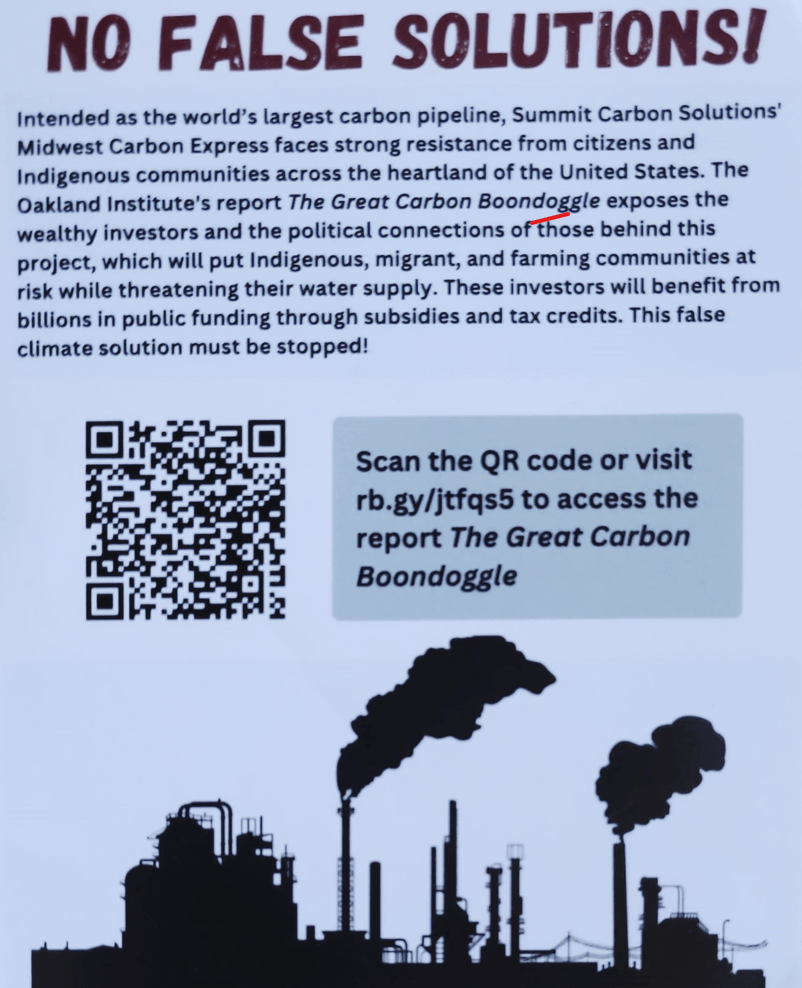
Great Plains Action Society’s Statement on C02 Pipelines
Great Plains Action Society is firmly opposed to proposed carbon capture and sequestration or storage (CCS) projects (aka, CO2 Pipelines) such as Summit’s Midwest Carbon Express, Navigator’s Heartland Greenway, and Wolf Carbon Solutions’ ADM pipelines. The reasons for our opposition are numerous, however, our greatest concern is that CCS only serves the interests of the fossil fuel industry and that the government will sanction further land theft and harm to communities on Indigenous territories. Carbon capture and sequestration is by design a way to prolong the usage of fossil fuels while reducing CO2 emissions. Amidst this climate emergency, we must demand a reduction and phase out fossil fuels as a wider part of a just transition.
We are also concerned about intense water usage as drought and warmer temperatures are greatly affecting access to clean water. Fossil fuel companies have known that their products were contributing to climate change for over forty years and now they see CCS as a government bail-out with many governmental subsidies providing just the type of perverse incentive for CCS operators to manipulate the system. Additionally, there are the same concerns present with other pipeline projects in the area regarding degradation of the land, disturbance of sacred ceremonial and burial sites. CO2 pipelines are also dangerous because when they rupture, they can spread over 1300 ft in under 4 min making it impossible to breathe and for vehicles to drive. First responders are not at all prepared to deal with such a catastrophe and many have been pushing back C02 pipelines for this reason alone. Furthermore, Indigenous communities will inevitably face encroachment on to treaty land, including environmentally racist moves on behalf of individual states to make sure that CCS does not negatively affect wealthy, white communities with influential power.
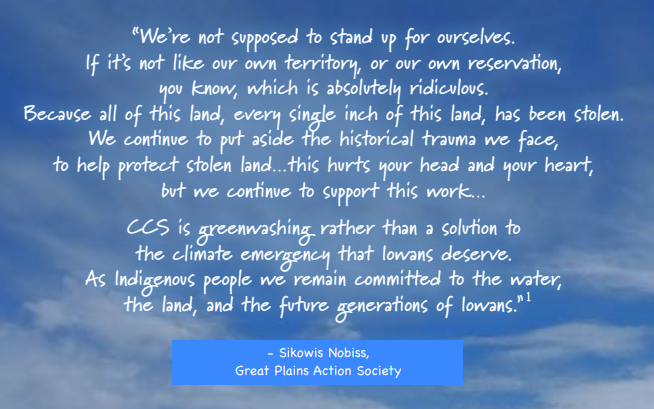
CCS is greenwashing rather than a solution to the climate emergency that Iowans deserve, as Indigenous people, we remain committed to the water, the land, and the future generations of Iowans.
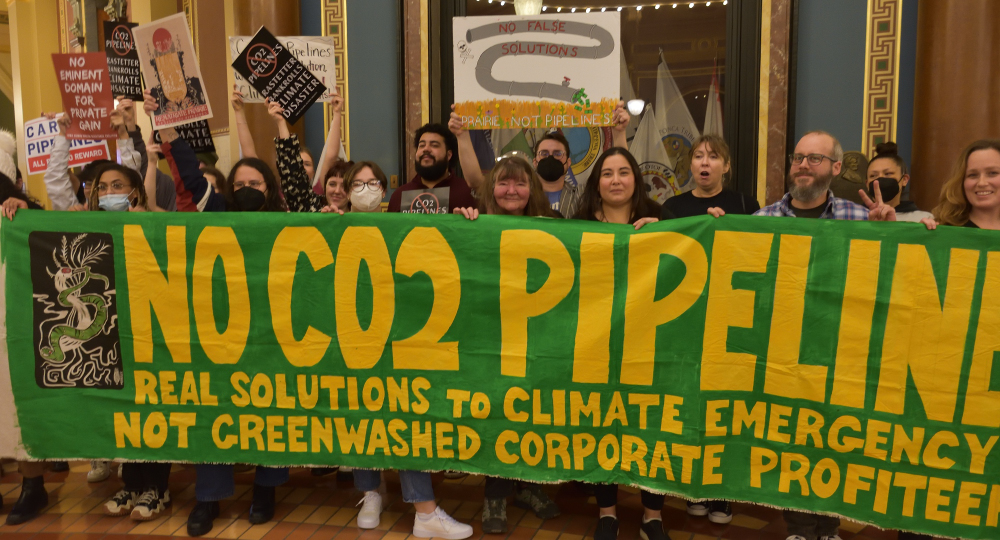
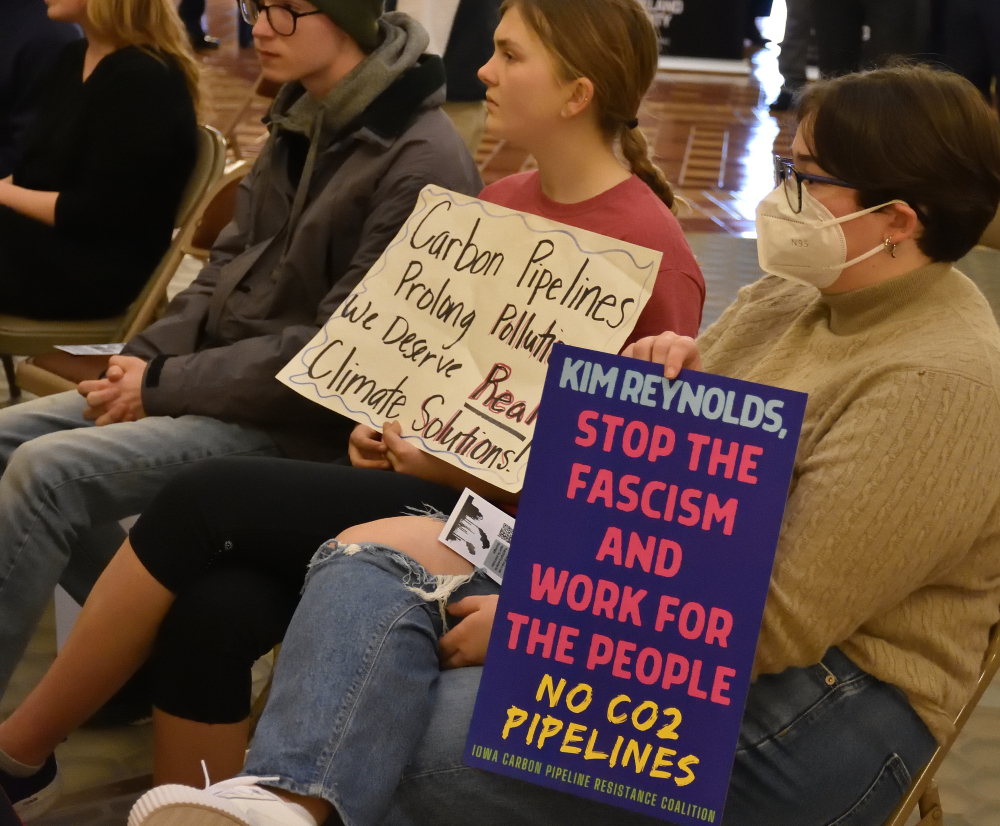
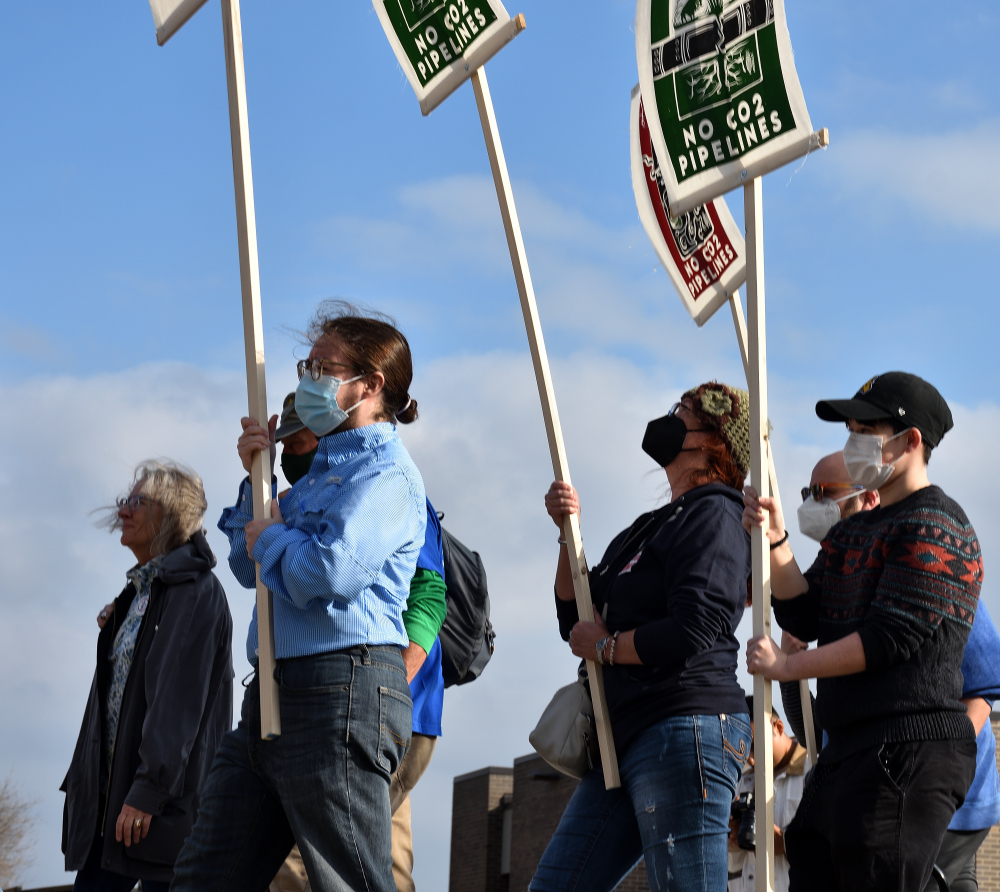
Locally we have held multiple events to raise awareness of the dangers of carbon pipelines.
(See: https://quakersandreligioussocialism.com/?s=carbon+pipeline )



 Quakers and Mutual Aid
One thought on “Carbon pipeline safety meeting”