
As a follow-up to yesterday’s post about bail funds, a fellow Quaker abolitionist told me about the Atlanta Solidarity Fund.
Support the Atlanta Solidarity Fund as its organizers face targeted political repression.
The National Bail Fund Network is collecting donations for the Atlanta Solidarity Fund on a temporary basis as of May 31, 2023.
All funds raised here will be used to support bail and legal defense funds of those being arrested and prosecuted in Atlanta.
The National Bail Fund Network is made up of over 90 local community-based bail and bond funds that free people from local jails and immigration detention centers. More information at bit.ly/localbailfunds


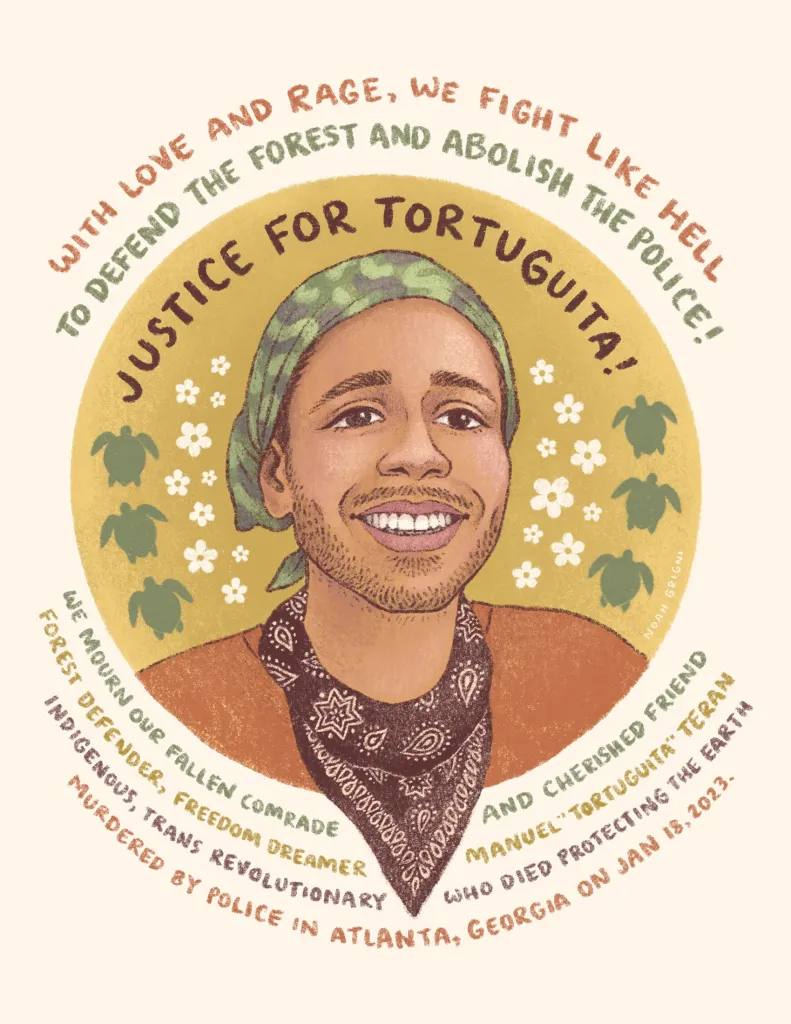
There are, of course, risks to being involved in activism. Manuel Esteban Paez Terán also known as Tort or Tortuguita (Little Turtle), was a tree-sitter in the Atlanta forest and was killed by police on January 18, 2023. You can read the moving tributes to Tort here: Memories of Tort.
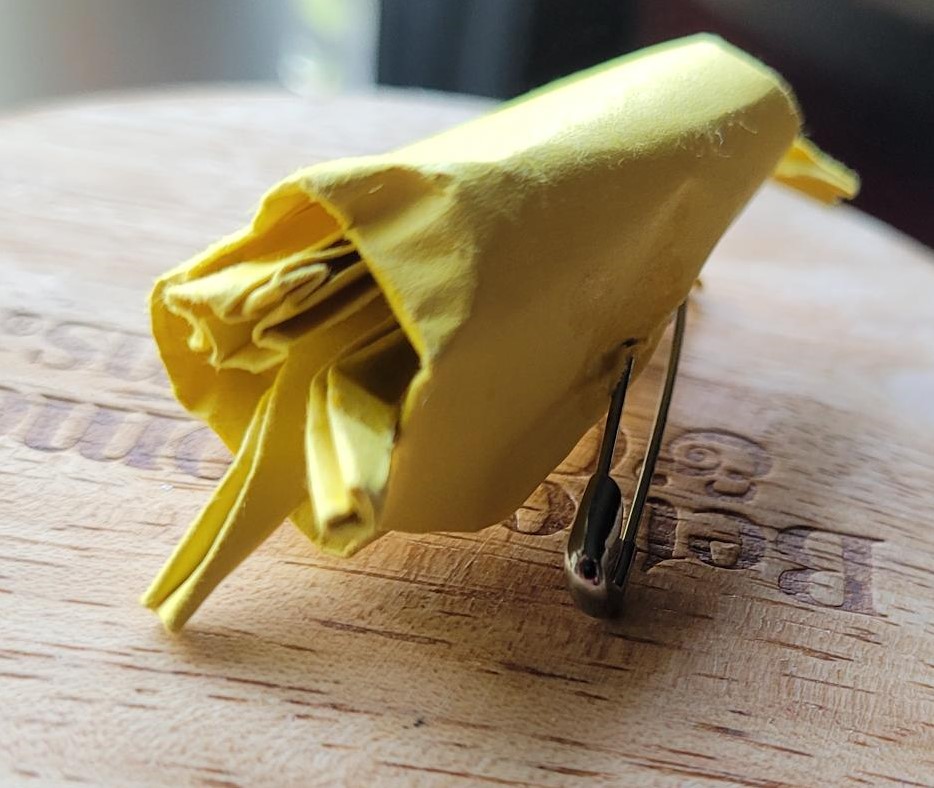
During our latest demonstration related to Stop Cop City, someone made turtles for us to pin on our shirts in remembrance of Tortuguita.
The issue of environmental activism is becoming increasingly urgent and dangerous in the face of the climate crisis. According to a report by Global Witness, more than 1,700 environmental activists have been killed “trying to protect their land and resources” over the past decade. In 2020 alone, a record number of 227 people were murdered around the world for defending their environment and land rights. (see: https://en.wikipedia.org/wiki/List_of_environmental_killings)
Indigenous resistance
It’s important that enterprising reporters cover Native issues in the right way. Today, I’m happy to highlight a solid example of such reporting. When protest is a crime, part one: the Standing Rock effect is the first of a multi-part podcast from the talented team at Outside/In, a division of New Hampshire Public Radio. It examines the criminalization of protest in America through the lens of Indigenous resistance. Both my father, Lakota Law co-director Chase Iron Eyes, and I sat down with reporter and producer Justine Paradis to lend our perspectives. I encourage you to listen to what we had to say.
Wopila tanka — thank you for being a part of our resistance.
Tokata Iron Eyes, Organizer
The Lakota People’s Law Project
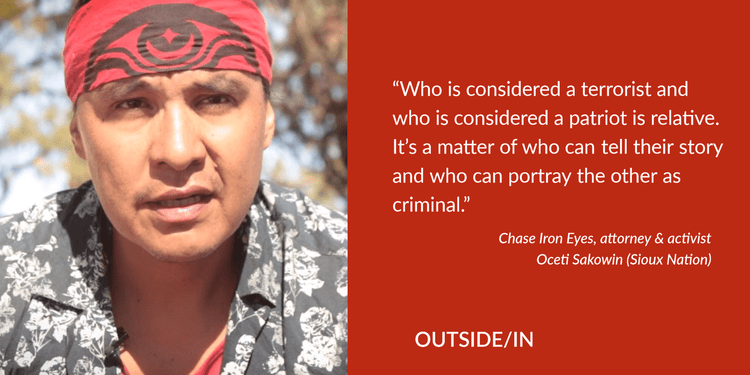
“Who is considered a terrorist and who is considered a patriot is relative. It’s a matter of who can tell their story and who can portray the other as criminal,” said Chase Iron Eyes, an attorney and activist and member of the Oceti Sakowin (Sioux Nation). Photo by Treetops Productions on Wikimedia Commons (CC BY 3.0).
Not the first time the people were betrayed
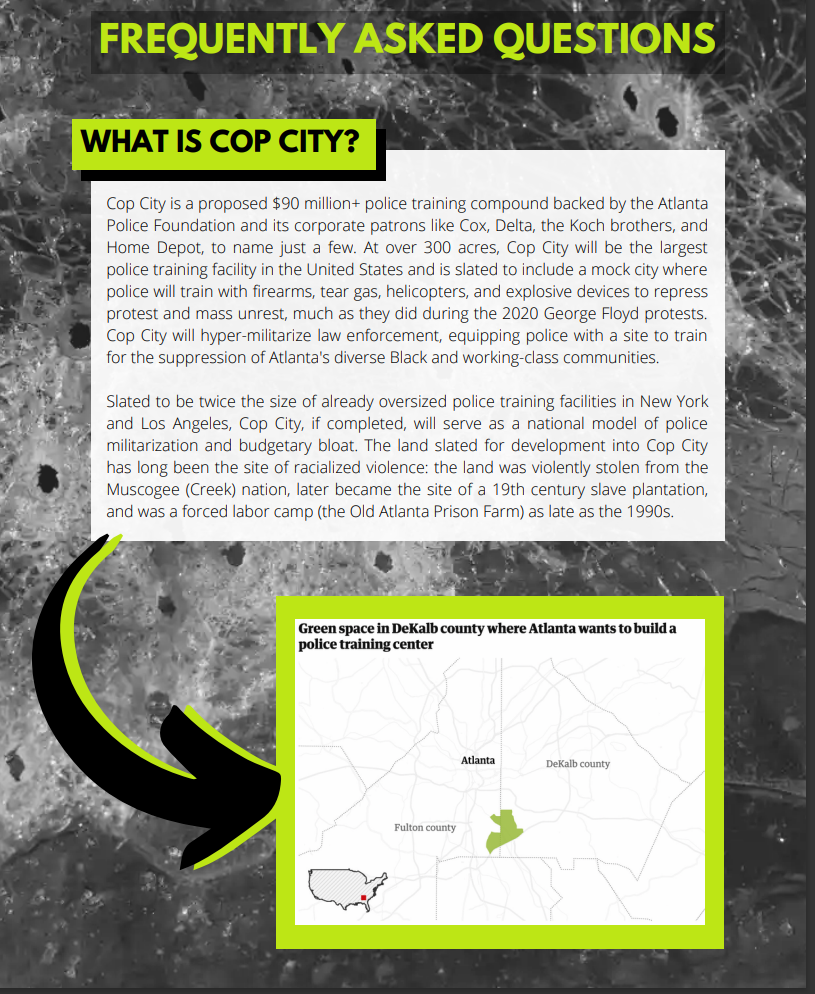
Weelaunee Forest was the historic home of Muscogee Creek peoples for untold generations. In the 1830s they were forcibly removed by the U.S. military on the Trail of Tears; and the land, some 3,500 acres, was transferred to the hands of enslaving plantation elites. Enslaved Africans toiled their lives away and were undoubtedly buried there.
Then in 1918, during the Jim Crow era, the Bureau of Prisons and the nearby Atlanta federal penitentiary bought over 1,000 acres for a prison farm to grow crops to feed inmates. Mainly Black prisoners, convicted of low-level “crimes” like vagrancy, loitering and public drunkenness, labored for free in horrible living conditions and were subjected to brutal treatment. It is believed their unmarked graves lie among the trees that cover the Atlanta Prison Farm’s acres.
In 1965 the city of Atlanta appears to have acquired the property, which is the largest existing expanse of green space in the area. The Atlanta Prison Farm was finally closed in 1995.
The killing of Forest Defender Tortuguita in Atlanta by Dianne Mathiowetz, Workers World, January 24, 2023
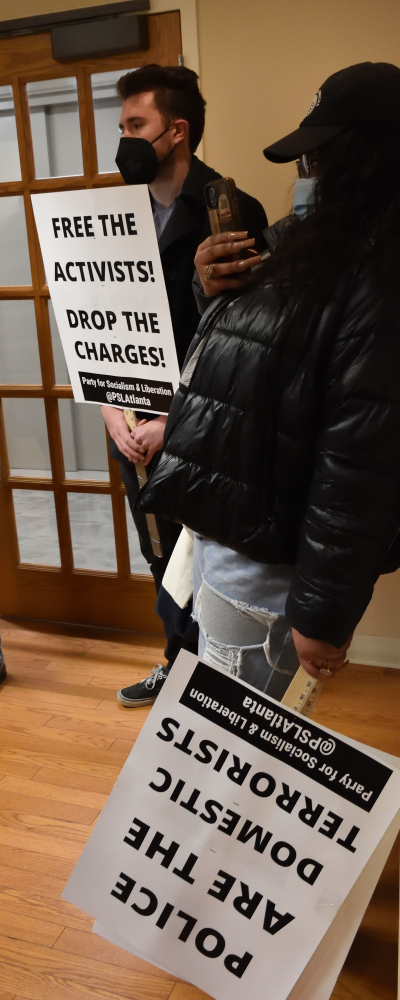


#StopCopCity
 Quakers and Mutual Aid