
As our politics are making a hard turn to the right, as the US Congress, the US Supreme Court, and multiple states pass legislation based upon White supremacy and authoritarianism, protest is how we who disagree with these trends were once able to try to make our voices heard. But authoritarianism cannot allow questioning its authority and violently suppresses protest and other civil liberties. Tensions will only increase if authoritarianism deepens. Will only increase because of the accelerating urgency to respond to increasing environmental devastation and chaos.
A pair of articles have just been published about Indigenous views of “when protest is a crime”. Part 1 is the Standing Rock effect, and part 2 is about the efforts to Stop Cop City from being constructed in Atlanta.
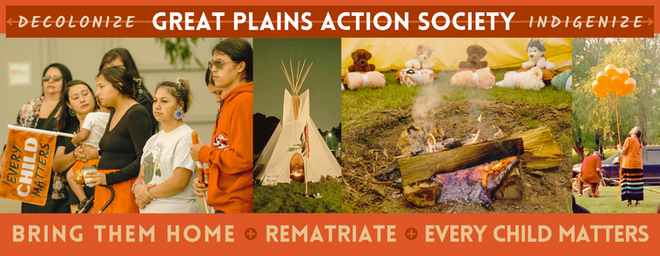
I’ve been learning about Indigenous views from my friends at the Great Plains Action Society (GPAS) and Des Moines Mutual Aid (DMMA). On GPAS’s Mechanism of Engagement graphic are direct action (protest) and mutual aid. The articles below are about direct action. I’ve been learning mutual aid is a way for a community to care for each other, especially when the government does not.

The audio episodes and transcripts below are available on OUTSIDE/IN. A SHOW ABOUT THE NATURAL WORLD AND HOW WE USE IT. The host is Nate Hegyi.
When protest is a crime, part 1: the Standing Rock effect
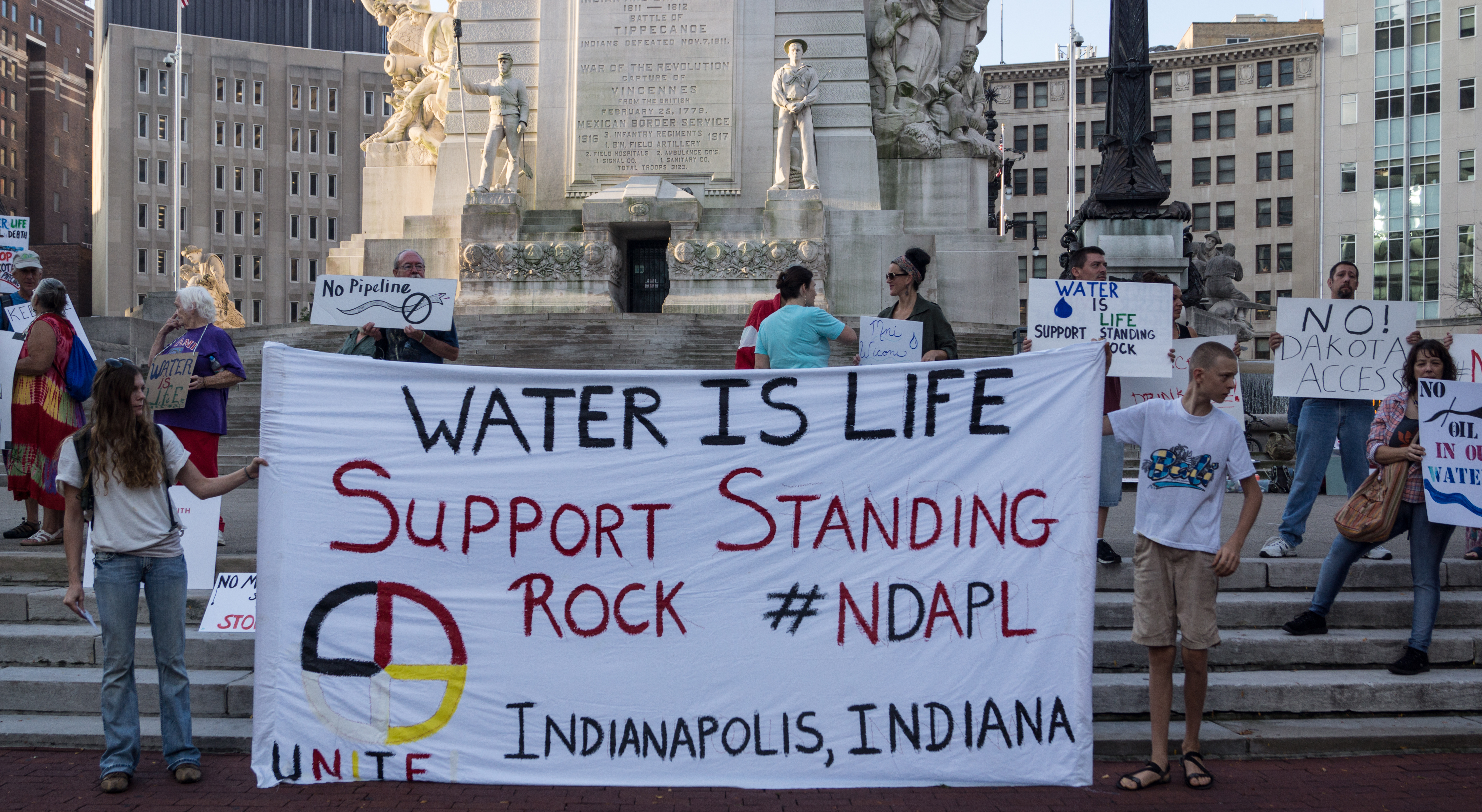
When members of the Oceti Sakowin gathered near the Standing Rock Reservation to protest the Dakota Access Pipeline, they decided on a strategy of nonviolent direct action. No violence… against people.
But sabotage of property – well, that’s another question entirely.
Since the gathering at Standing Rock, anti-protest legislation backed by the fossil fuel industry has swept across the country.
What happened? When is environmental protest considered acceptable… and when is it seen as a threat?
This is the first of two episodes exploring the changing landscape of environmental protest in the United States, from Standing Rock to Cop City and beyond.
http://outsideinradio.org/shows/when-protest-is-a-crime-part-1
Nate Hegyi: There are certain moments that become part of our collective story. Flash points. When our past and our future feel like they’re talking to each other. Standing Rock was a moment like that.
Chase Iron Eyes: The smell of fire, of campfire, permeated the entire Oceti Sakowin camp.
Nate Hegyi: That’s Chase Iron Eyes. He’s an attorney, and a member of the Oglala Sioux and Standing Rock Nations, though he says these are colonial names.
Chase Iron Eyes: Yeah, I would say Oceti Sakowin or Sioux Nation.
Nate Hegyi: The protesters, including Chase, first gathered in 2016. They were there to stop DAPL, the Dakota Access Pipeline. Because pipelines spill. Because millions of people depend on the integrity of the Missouri River. Because even when a pipeline works as intended, the result… is more greenhouse gas emissions. But the main reason why Chase and members of the Sioux Nation were camping at Standing Rock was: they were defending their sovereignty.
Chase Iron Eyes: We had been disallowed from expressing our sovereign identity in that territory since 1889. That’s when the state of North Dakota and South Dakota were admitted to statehood.
Nate Hegyi: It was the largest gathering of Indigenous people in recent history. People came from all over.
Chase Iron Eyes: Tens of thousands of people cycled through that camp. This is why one elder called it an ongoing international spiritual monument.
Producer Justine Paradis takes it from here.
Lesley Wood: Most protests are extremely straightforward, and sometimes even boring.
Justine Paradis: This is Lesley Wood. She researches the dynamics between policing and social movements.
Lesley Wood: Um. But some protests are not.
The activists at Standing Rock described the protest as a nonviolent, direct action.
And, historically, “direct action” can mean a lot of things.
Lesley Wood: it can be something like if we want better health care, we have to set up clinics…
It’s saying we’re not going to ask for the government to solve the problems… We’re going to do it ourselves.
Justine Paradis: Direct action as a strategy often comes after trying to participate in the democratic process – and finding it unresponsive. And it might involve acts of civil disobedience: deliberately breaking a law, like stopping traffic, or maybe because the law itself is unjust, like sitting at a segregated lunch counter. Speaking generally, that’s very different from a permitted, police-protected protest, the kind Lesley calls “marching in a circle.”
Lesley Wood: There’s no political threat posed by them… the idea that you have a right to protest, but only in certain ways and in certain places doesn’t really understand what protest is trying to do, which is on the fundamental say the system isn’t working. And to show that it’s not working. To impose some sort of potential cost to the system.
http://outsideinradio.org/shows/when-protest-is-a-crime-part-1
When protest is a crime, part 2: city in a forest
After the gathering at Standing Rock, legislators across the United States passed laws in the name of “protecting critical infrastructure,” especially pipelines.
At the same time, attacks on the electrical grid have increased almost 300%. But that threat isn’t coming from environmental activists.
It’s coming from neo-Nazis.
This is the second episode in our series examining the landscape of environmental protest in the United States, from Standing Rock to Cop City and beyond. Listen to the first episode here.
As the space for protest in the United States shrinks, this year marked a major escalation: the first police killing of an environmental protestor in the United States, plus the arrests of dozens of people at protests under the charge of domestic terrorism.
https://outsideinradio.org/shows/when-protest-is-a-crime-part-2
The Atlanta Police Foundation is planning a “public safety training facility” on at least 85 acres of this forest in southeast Atlanta. Their plan includes a mock city for training police in, essentially, urban warfare – complete with a mock convenience store, nightclub, a motel/apartment building, a gas station.
Activists call it Cop City.
Justine Paradis: There are a lot of reasons people are opposed to Cop City.
Because of the environment, for one: trees are good for air and water, and cooling things down, which is especially important in a hotter climate.
And then there’s the fact that this project would be an expansion and investment in the police.
The Weelaunee Forest is in a majority Black neighborhood. And this is only about a year after people were marching in the streets calling for a defunding of the police.
Reverend Keyanna Jones at Atlanta City Council on March 6, 2023: …we don’t want Cop City. I live in East Atlanta. I don’t want Cop City. I got five black children. I don’t want Cop City. I like breathing clean air. I don’t want Cop City… I don’t want black Black Hawk helicopters landing around the corner from my house. I don’t want Cop City.
Justine Paradis: In the decisive meeting to approve the project, 70% of comments were opposed – but the Atlanta City Council approved it anyway.
That was in September 2021.
After that, a group of activists moved into the forest to try to prevent this project from happening. They called themselves “forest defenders.”
They’d been living there for over a year – in tents and tree platforms – when police raided the camp. During one of those raids, law enforcement killed a forest defender, a Venezuelan Indigenous person who went by the name Tortuguita. They shot them at least 57 times. This was the first police killing of an environmental protestor in the United States.
https://outsideinradio.org/shows/when-protest-is-a-crime-part-2




 Quakers and Mutual Aid