
Today there is a lot of attention on what were called the Indian Boarding Schools in the U.S. and Canada. This is in large part because of the uncovering of remains of children on the grounds of many of those institutions using ground-penetrating radar. These searches began in order to document the known history of native children dying or being killed at these schools. Thousands of remains have been found, and the searches continue.
Stories about this are beginning to be told in many mainstream news articles, films, and books.
The National Native American Boarding School Healing Coalition (NABS) is an excellent source of information.
The New York Times recently published this extensive multimedia story, ‘WAR AGAINST THE CHILDREN’. The Native American boarding school system — a decades-long effort to assimilate Indigenous people before they ever reached adulthood — robbed children of their culture, family bonds and sometimes their lives. By Zach Levitt, Yuliya Parshina-Kottas, Simon Romero and Tim Wallace, The New York Times, Aug. 30, 2023
The Department of the Interior is investigating under the leadership of Secretary Deb Haaland, an enrolled member of the Laguna Pueblo.
Quaker Indian Boarding Schools
This is causing a lot of soul-searching in Quaker communities because some of those institutions were run by Quakers. My friend Paula Palmer published the article Quaker Indian Boarding Schools. Facing Our History and Ourselves, in Friends Journal, October 1, 2016
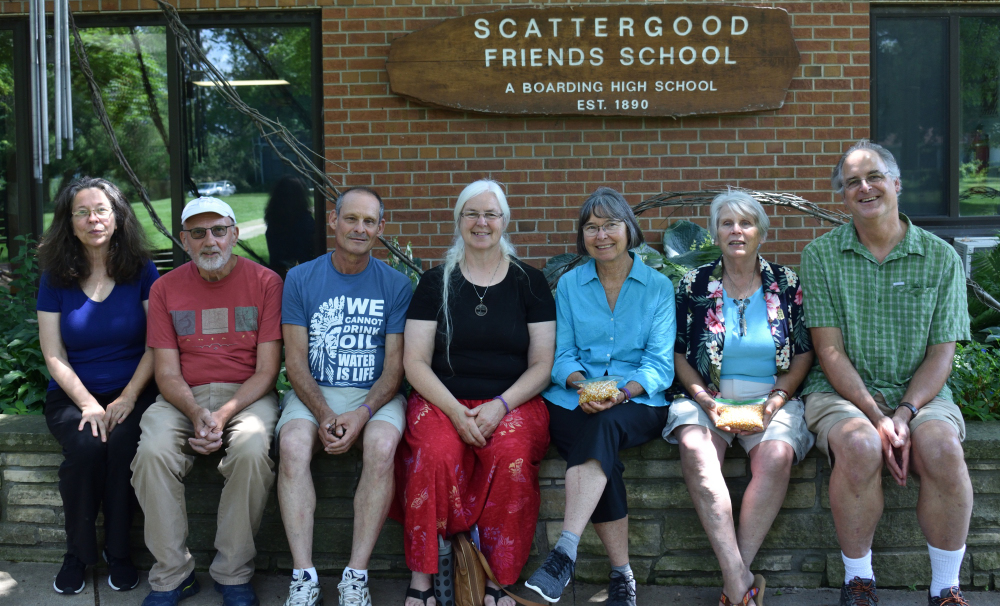
In this image at Scattergood Friends School are those of us who helped Paula Palmer (third from the right) give presentations and workshops related to her work, Toward Right Relationship with Native Peoples.
I was ignorant of this history until about a decade ago. But since then, this has become a focus of my prayers and work. I’ve written a lot about what I’ve been learning. https://quakersandreligioussocialism.com/forced-assimilation/.

I’ve sought opportunities to find ways to build relationships with Indigenous people because we cannot begin to heal until we all come together and begin to know one another. This is a list of what I have learned from spending time in Black, Indigenous, and other people of color (BIPOC) communities. Offered in the hope that many more people begin to make these connections.
This takes a real commitment to spend a lot of time in diverse communities. Until I recently moved from Iowa, I joyfully participated in our (Des Moines Mutual Aid) free food project every Saturday morning for over three years. Over that time I heard every one of my friends say these Saturday mornings were the highlight of their week. Every person became a close friend.
This takes a real commitment to keep showing up, even when we make mistakes, which I did, and you undoubtedly will. But showing our vulnerabilities is an important part of building trust. Showing we are willing to risk awkwardness.
How do we decolonize ourselves?
During a recent discussion, a Friend asked, how do we decolonize ourselves? I believe this is one of the right questions to ask. This changes the focus from what our ancestors might have done and directs it to “what we can do now?” The question correctly begins from the point that we are colonized.
Decolonizing Quakers
A group of North American Friends, Decolonizing Quakers explores these questions and offers resources for our education.
The Stories We Weren’t Told
Many Quakers have learned that our Quaker ancestors and predecessors had good relationships with the Indigenous peoples who were on this continent when Quakers arrived from England and other European lands. We have read about how William Penn was respectful of the Native people and offered to pay “rent” for the land occupied by the new settlement that became Philadelphia. We have heard about Quaker missionaries who went out to “help” Native children learn the ways of European Christians.
There are threads of truth in these stories and others that we tell ourselves, but those small threads are too weak to tie together a benign story. As we look with open eyes at the history that white, European, Christian settlers and Indigenous peoples walked through since the time of “first contact,” we can’t help but see a different picture. In truth, we must acknowledge that Quakers participated in — and sometimes led — attempts to force Indigenous people to assimilate into an inflexible mold that fit the vision that Quakers shared with other white, European, Christian settlers.
This website offers resources to help all of us set aside the myths that come between us — as settlers and Indigenous peoples –and to find joy in knowing all our relatives better and more honestly.
Mutual Aid is a way to decolonize ourselves

A fundamental part of the answer to how we can decolonize ourselves is to understand that colonization is a hierarchy of power. In the simplest terms, in our society, White supremacy. To decolonize ourselves, we must work to eliminate hierarchies and their resulting power structures.
It was a leading of the Spirit that connected me with Ronnie James, an Indigenous organizer who is part of the Great Plains Action Society (GPAS) nearly four years ago. His work on Mutual Aid is supported by GPAS. Mutual Aid is a key method of the Great Plains Action Society’s Mechanism of Engagement. (https://quakersandreligioussocialism.com/mutual-aid/)
There is often a tepid response when I talk about Mutual Aid. The key to understanding the radical nature of Mutual Aid is showing this is not just another social justice idea. Mutual Aid is a fundamentally different way to live and relate to each other. There are hierarchies in even the most progressive organizations. Which means they perpetuate dominance, which leads to oppression.
Mutual Aid is a total break from that. It is a revolutionary way to be.


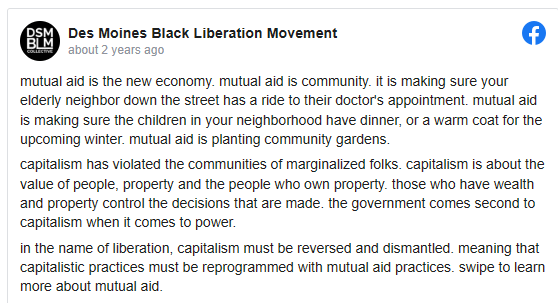
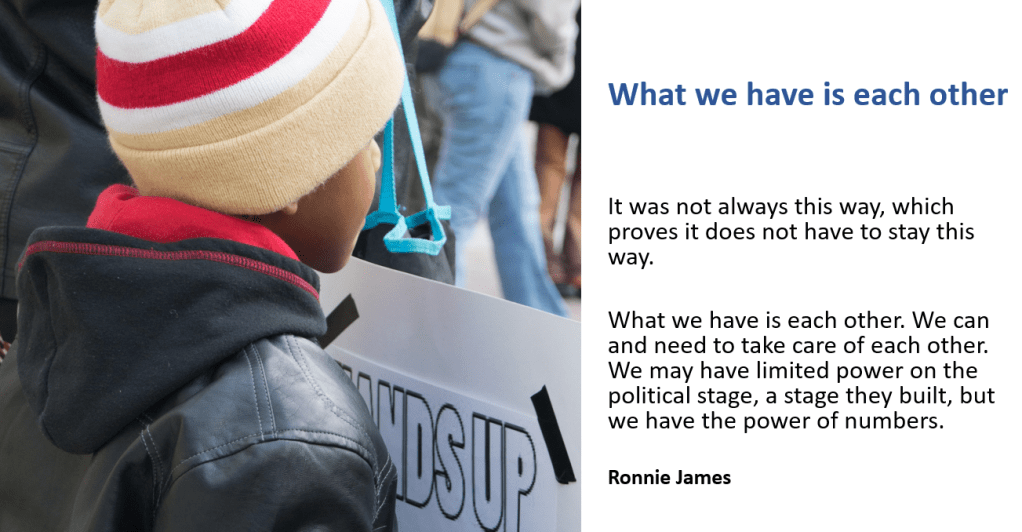
In the Midwest you can find information on the Iowa Mutual Aid Network website: https://iowamutualaid.org/
 Quakers and Mutual Aid
One thought on “Asking the right questions”