Spiritual Activism 2

Previously, in Spiritual Activism, I referred to an article from the Pachamama Alliance, part one of a three-part series, Spirit in Action. Following is a continuation of what Pat McCabe said during Part 1.

Pat talks about learning how to let go of what is thought of as “rational” and “logical”. It used to irritate me when people would suggest that scientists (like me) have trouble believing in spirituality, implying since things of the Spirit could not be proven by the scientific method, we might not believe in the Spirit. I have heard medical colleagues say the (scientific) complexities we work so hard to understand convince them there must be a higher power.

But as she says, “Spirit rationale is different from academic rationale.”

The Challenge of Embracing Spiritual Wisdom

Pat (McCabe) made it clear that listening to and being guided by spirit is challenging work that takes practice.

As Pat pointed out, spirit rationale is different from academic rationale, which is why it can be so difficult to know how to listen to spirit. She went on to describe her own personal journey of learning how to let go of what is typically thought of as “rational” and “logical,” and instead embrace the wisdom of spirit. She acknowledged that she didn’t learn to do so of her own accord. Rather, Pat learned how to do this through what she calls “forced surrender” during a time when she was experiencing loss in her life. Despite the difficulties she was experiencing, Pat continued to engage in ceremony, through which she was able to learn how to be in a state of receptivity and trust spirit to guide her.

Spirit in Action, Part One: A Conversation with Woman Stands Shining by the Pachamama Alliance, FEBRUARY 10, 2023

the consciousness that is the root cause of injustice for the planet is the same consciousness that is the root cause of injustice for people. And this consciousness is connected to the ways in which humanity has claimed supremacy over the planet and all life while placing everything—including each other—in a hierarchy

Reverend Deborah Johnson

Part two of the Spirit in Action series is a conversation with Reverend Deborah Johnson. I really appreciate her description of the root cause of injustice for the planet being the same consciousness that is the root of injustice for people. And that root cause is hierarchy, which comes from the concept of supremacy.

This is why I’m so invested in Mutual Aid because it is about having no hierarchy. Which avoids many of the problems that occur in groups organized with hierarchies. Problems related to power relationships and authority.

How Relationships Are at the Center of Spirit and Justice

Rev. D (Reverend Deborah Johnson) began the conversation by reframing Pachamama Alliance’s 3-part mission around environmental sustainability, spiritual fulfillment, and social justice. 

She reflected on how people often relate to the three parts of the mission as three “pillars,” but this actually reinforces a sense of separation between sustainability, spirit, and justice. As Rev. D put it, “pillars” by definition are separate and do not intersect. But she sees sustainability, spirit, and justice as innately interdependent, inseparable parts that can’t exist outside of their connection to the whole.

Rev. D went on to explain how the consciousness that is the root cause of injustice for the planet is the same consciousness that is the root cause of injustice for people. And this consciousness is connected to the ways in which humanity has claimed supremacy over the planet and all life while placing everything—including each other—in a hierarchy. 

Rev. D made it clear that relationships are at the center of spirit and at the center of justice, and that injustice for the planet and social injustice are the result of “poor relationships” rooted in these constructs of supremacy and hierarchy. 

Spirit in Action, Part Two: A Conversation on Spirit and Justice with Reverend Deborah Johnson by the Pachamama Alliance, MARCH 01, 2023


Rev. D then discusses why many people do not have spiritual fulfillment today.

She explained how many people relate to spiritual fulfillment as a “byproduct” that comes as a result of achieving justice and environmental sustainability. But, Rev. D is encouraging everyone to think the inverse, that starting with spiritual fulfillment is what leads to justice for people and for the environment. 

She went on to explain why many people today feel a lack of spiritual fulfillment. As Rev. D put it, people see widespread environmental degradation and social injustice, and wonder how they could have “any kind of spiritual fulfillment in a world like this.” She described this experience as people making their connection to spirit conditioned upon “what humanity is doing in its amnesia, in its lack of recognition of relationship.” 

Rev. D warned that obtaining spiritual fulfillment won’t be possible if it’s dependent on human behavior in this way. Instead, Rev. D asserted that starting with spiritual fulfillment and the belief in the inherent interconnectedness of all life—and putting that into action—is the pathway to achieving justice for people and the planet. 

Spirit in Action, Part Two: A Conversation on Spirit and Justice with Reverend Deborah Johnson by the Pachamama Alliance, MARCH 01, 2023


The third part of this series, Spirit in Action, is a video found here: https://connect.pachamama.org/group/314/topic/recording-spirit-action-3

Wednesday’s recording of Resilience and Possibility is ready for you to review or share. It is the third–and final–in a series around spirit in action. Our discussion touched on the relationship between inner peace and activism, and how spiritual practice increases our capacity to bring clarity and love to our activism as we push back against injustice.

We used a recording of Rev. angel Kyodo Williams as inspiration to delve deeper into how we can use spirit to further our commitment to bring forth more justice and sustainability into the world. Enjoy! 


End Police Violence

Art by Moselle Singh, Drawn From Water

Although the daily news is flooded with stories of police violence toward Black people, the incidence of police violence against Indigenous peoples is higher.

When I began to spend time with Indigenous people, I was surprised to find out about the epidemic of missing and murdered Indigenous relatives (MMIR). And how that is related to oil pipelines and capitalism. That became easy to understand as I learned about the environmental racism of building pipelines near Indigenous reservations. The man camps, construction worker camps, were thus near Indigenous communities.

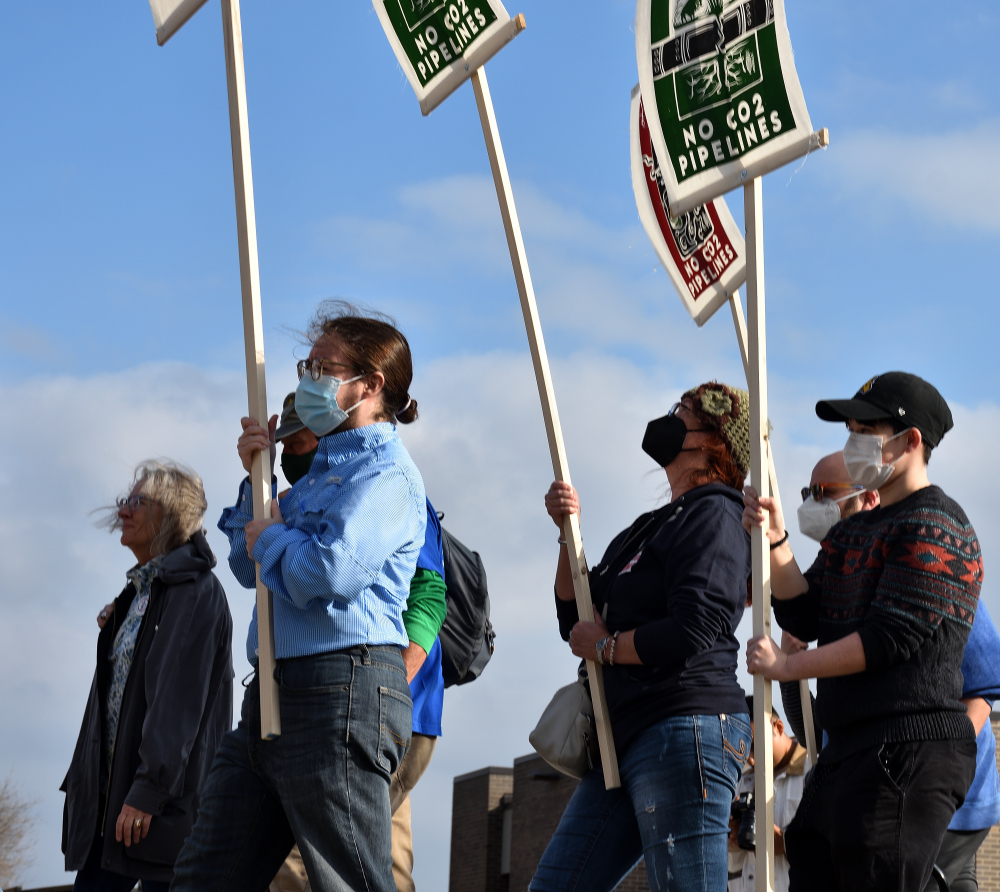
One of the first actions I was involved with after retiring to Iowa was to rally against USBank’s funding of fossil fuel projects. But besides demonstrating against the Dakota Access Pipeline, a number of people held signs, and spoke about MMIR.


Our heart goes out to Bemi (Shyla Wolf) – Meskwaki – who was assaulted on March 30, 2023 by Officer Kyle Howe while three of her young children watched from the car and screamed in fear. She ended up with contusions on her lip, neck, arms, and full body soreness. Officer Howe is known for targeting Meskwaki folks in Tama and represents the continuation of a long history of police violence and injustice perpetrated on Indigenous Peoples across Turtle Island. Though Indigenous Peoples are targeted at alarming rates by cops, these disturbing statistics are not being heard by the rest of society due to the intense efforts to erase us and our place in the US.

Maggie Koerth from FiveThirtyEight, reports that “depending on the year, either Native Americans or African-Americans have the highest rate of deaths by law enforcement. The fact that Indigenous Peoples have such high police murder rates is not a well-known statistic because the population is smaller and because violence to Indigenous folx is not of particular interest to mainstream media. According to a CNN review of the Center for Diseases Control, “for every 1 million Native Americans, an average of 2.9 of them died annually from 1999 to 2015 as a result of a legal intervention”. For the Black population the number is 2.6, for Latinx it is 1.7, for Whites it is 0.9 and for Asians it is 0.6.”

This is a startling statistic because Native Americans only make up 0.9% (2.9 million people) of the population. Furthermore, these deaths are most likely under-reported just like the other epidemics that Native Americans face, such as missing and murdered women, abuse, rape, stalking, runaway children and violence committed by non-tribal members. In fact, the deadliest mass shooting in US history, known as the Wounded Knee Massacre, occurred in 1890 when United States Army troops murdered up to 300 Lakota, including women and children. According to Matthew Fletcher, director of the Indigenous Law and Policy Center, “The data available likely does not capture all Native American deaths in police encounters due to people of mixed race and a relatively large homeless population that is not on the grid.” (CNN) In a paper written by B Perry in 2006 titled, “Nobody trusts them! Under- and over-policing Native American communities”, they presented evidence from 278 individual interviews with eight separate Native Nations that police action toward Native people ranged from ignoring victims to outright brutality against suspects. (Fatal Encounters Between Native Americans and the Police)

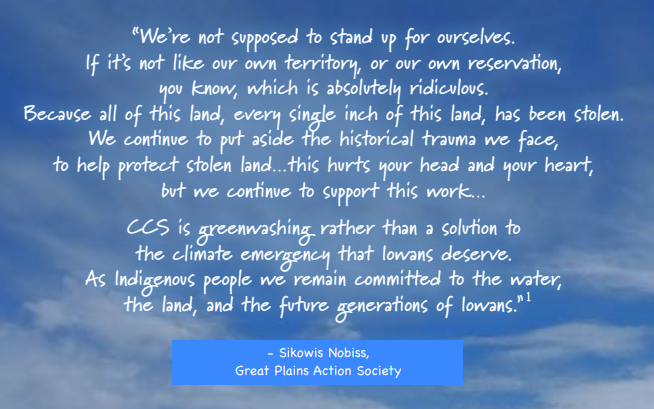
Collective Action Will End Police Violence to Indigenous Peoples by Sikowis Nobiss, Great Plains Action Society


Policing in this country began in the 1700’s with “slave patrols” to capture and return those fleeing their enslavement or planning uprisings. Policing has always been about protecting capitalists and their property.

The only way to end police violence and abolish this inherently white supremacist institution built on colonization and the greed of capitalism is for communities to take collective action. Centering mutual aid and radical healing in our communities will take back power and end erasure of us, our history and our culture. Taking back power builds strength and increases resources, which we need to oust violent cops and create our own culturally appropriate systems of accountability and wellness programs. Great Plains Action Society remains committed to this goal and will continue to work diligently towards abolition of systems set up to eradicate us.

Collective Action Will End Police Violence to Indigenous Peoples by Sikowis Nobiss, Great Plains Action Society

Mutual Aid

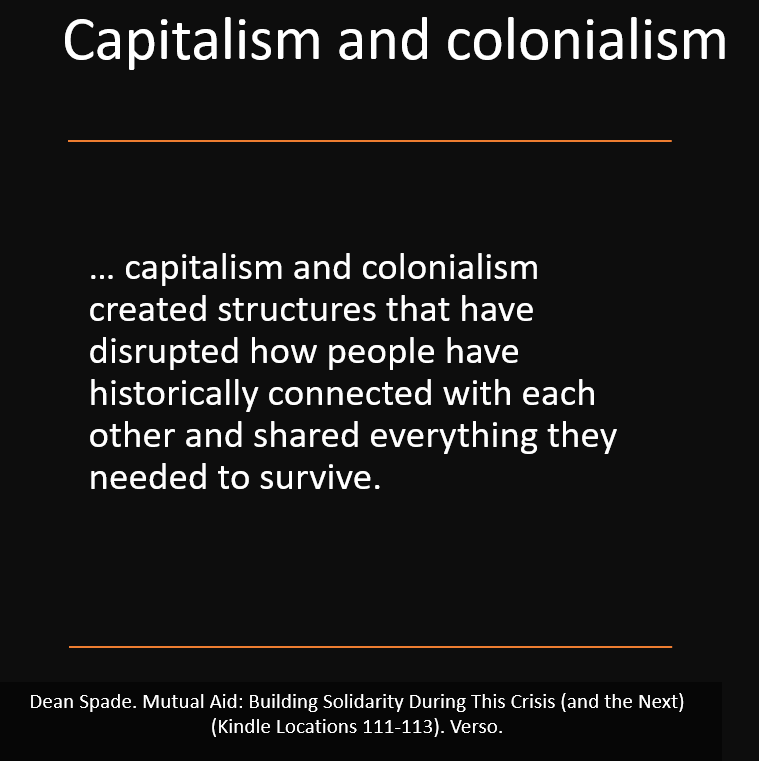
It is by building mutual aid communities that we take back our power from “inherently white supremacist institution built on colonization and the greed of capitalism”.

I’m of the firm opinion that a system that was built by stolen bodies on stolen land for the benefit of a few is a system that is not repairable. It is operating as designed, and small changes (which are the result of huge efforts) to lessen the blow on those it was not designed for are merely half measures that can’t ever fully succeed.

So, the question is now, where do we go from here? Do we continue to make incremental changes while the wealthy hoard more wealth and the climate crisis deepens, or do we do something drastic that has never been done before? Can we envision and create a world where a class war from above isn’t a reality anymore?”

Ronnie James, Des Moines Mutual Aid

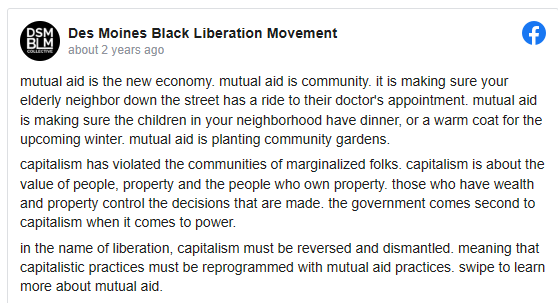
mutual aid is the new economy. mutual aid is community. it is making sure your elderly neighbor down the street has a ride to their doctor’s appointment. mutual aid is making sure the children in your neighborhood have dinner, or a warm coat for the upcoming winter. mutual aid is planting community gardens.

capitalism has violated the communities of marginalized folks. capitalism is about the value of people, property and the people who own property. those who have wealth and property control the decisions that are made. the government comes second to capitalism when it comes to power.

in the name of liberation, capitalism must be reversed and dismantled. meaning that capitalistic practices must be reprogrammed with mutual aid practices.

Des Moines Black Liberation


I belong to the Quakers for Abolition Network, described in this excerpt from Western Friend.

Mackenzie: Let’s start with: What does being a police and prison abolitionist mean to you?

Jed: The way I think about abolition is first, rejecting the idea that anyone belongs in prison and that police make us safe. The second, and larger, part of abolition is the process of figuring out how to build a society that doesn’t require police or prisons.

M: Yes! The next layer of complexity, in my opinion, is looking at systems of control and oppression. Who ends up in jail and prison? Under what circumstances do the police use violence?

As you start exploring these questions, it becomes painfully clear that police and prisons exist to maintain the white supremacist, heteronormative, capitalist status quo. The racial dynamics of police violence are being highlighted by the recent uprisings and the Black Lives Matter movement.

We are in the same place, with a call to imagine a culture radically different than the one in which we live. Abolishing police and prisons, like abolishing slavery, would change the structure of our society: dramatically decreasing violence and undoing one set of power relationships that create domination and marginalization. And in place of this violence, we could, instead, have care.

Abolish the Police by Mackenzie Barton-Rowledge and Jed Walsh, Western Friend, Nov 2020

Des Moines Mutual Aid

Des Moines Mutual Aid

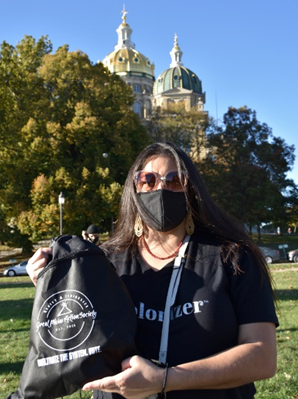
Support for Atlanta Forest Defenders, Des Moines, Iowa, 2023

Eyes of the Future

How can Friends achieve the 2022 theme of World Quaker Day, “Becoming the Quakers the World Needs,” while functioning in a blatantly and politically corrupt, racialized world?

Black Quaker Project

Introduction

These are times of upheaval, with greater changes rapidly approaching. Times of uncertainty and fear. These are also times of opportunity. Can we use this collapse to envision and build more just communities?

I believe we can. But first, we need to understand the injustices the capitalist economic system is based upon. And use this understanding to guide the development of mutual aid communities. which reject capitalism.

It is difficult to escape the status quo. But that is the only way we can protect and heal Mother Earth and build communities for future generations. The status quo in this country is about preserving the capitalist economic system and White superiority. Maintaining the status quo will only deepen environmental devastation and collapse. And collapse of the systems built on capitalism.


The eyes of the future are looking back at us, and they are praying for us to see beyond our own time. They are kneeling with hands clasped that we might act with restraint, that we might leave room for the life that is destined to come.

Terry Tempest Williams

The Seventh Generation Principle is based on an ancient Haudenosaunee (Iroquois) philosophy that the decisions we make today should result in a sustainable world seven generations into the future.

Climate Justice March, Des Moines, Iowa

Then

Environment

I’ve had my own experiences of looking back and trying to help people “to see beyond our own time“. Over fifty years ago, I moved to Indianapolis, a big change for a farm boy. I was not prepared for the noxious clouds of auto exhaust enshrouding the city. I was led to live without a car. Of course, that was not the status quo.

Looking back to that time, I feel sorrow for what might have been. How different the world would be if we had rejected the car culture in this country. Our cities and towns would have been built to be walkable. Land would not be covered by asphalt and concrete. Most importantly, we would have been able to live in a sustainable manner and would not be on a path toward extinction.

Looking back now, who doesn’t wish we had rejected the car culture in this country? Wish we had not let banks and fossil fuel companies rape the earth?

If those who lived prior to the rise of the car culture could have visited our world today, to see the disastrous consequences we are dealing with now, I believe many people who lived then would have chosen to live a different (sustainable) lifestyle.


Capitalism

Wealth is attended with power, by which bargains and proceedings, contrary to universal righteousness, are supported; and hence oppression, carried on with worldly policy and order, clothes itself with the name of justice and becomes like a seed of discord in the soul.

John Woolman, “A Plea for the Poor.”

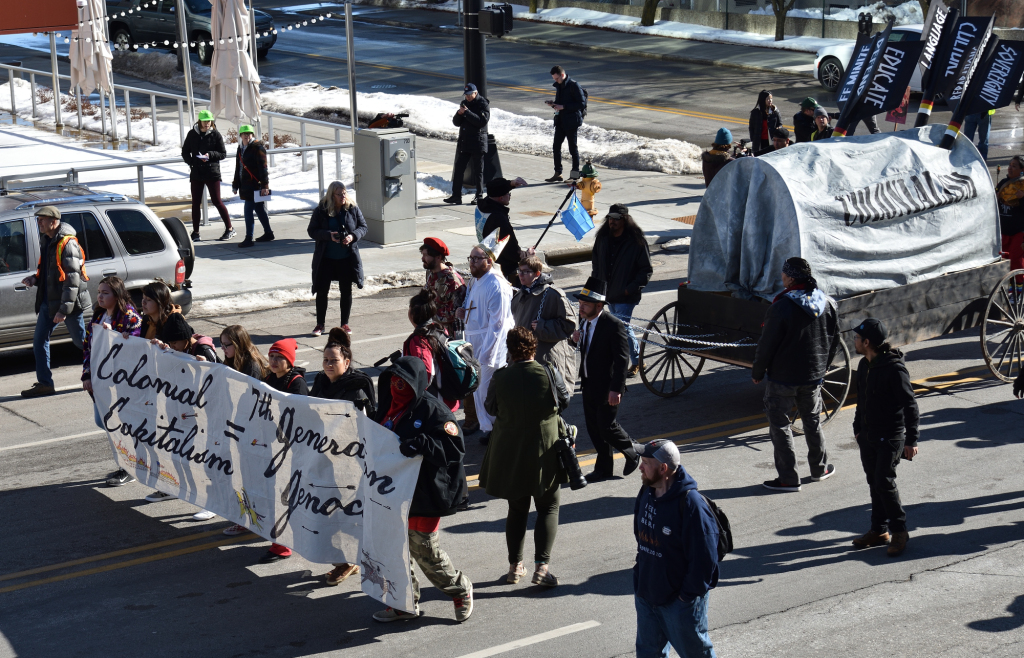
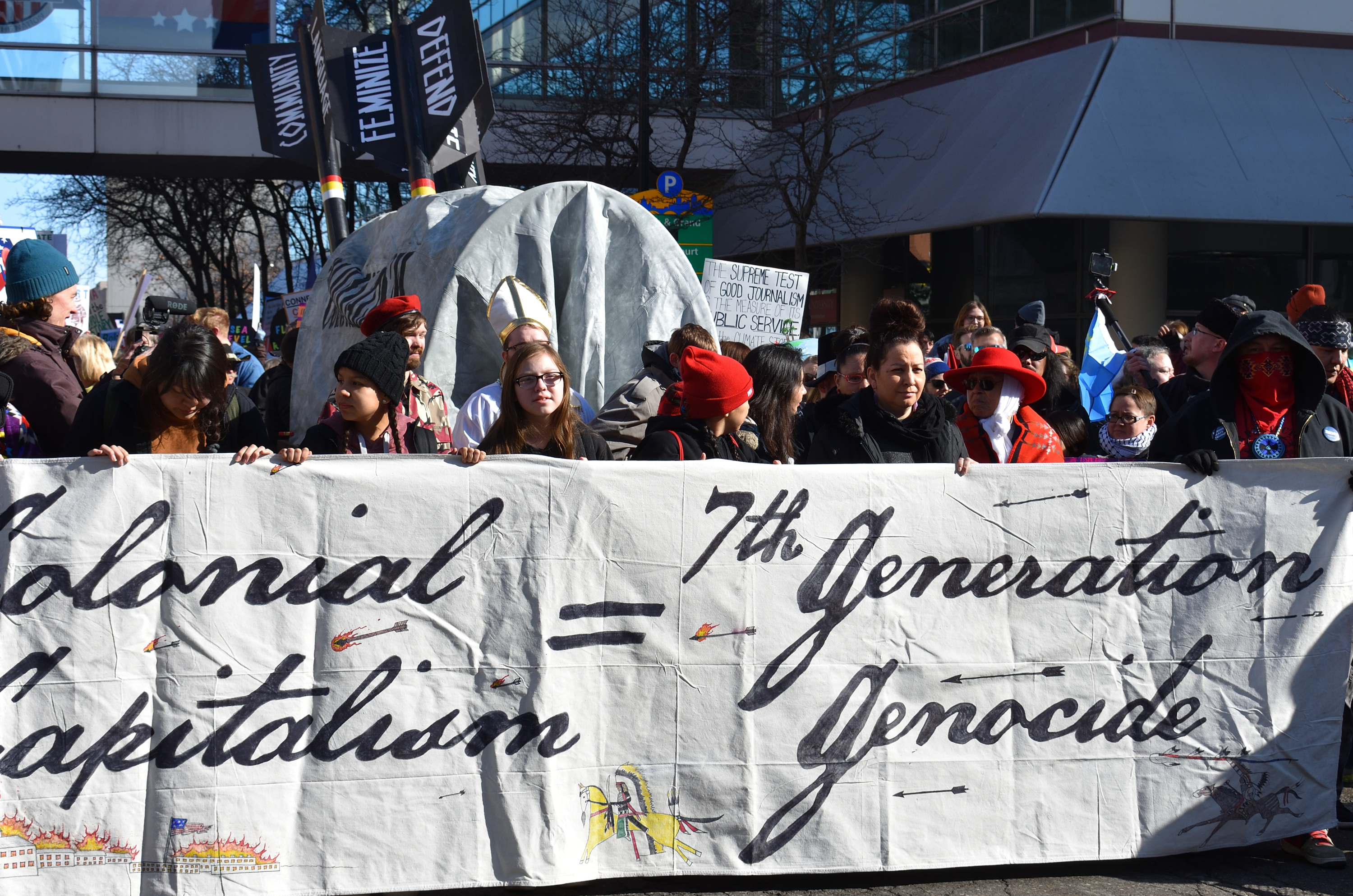
As the sign in the photo above says, Colonial Capitalism = 7th Generation Genocide

Despite trying every way I could think of, regardless of my prayers, I was not able to convince others to give up their car. People chose convenience over care for Mother Earth and future generations.

It is the same when I urge others to build alternatives to capitalism. Those who are comfortable economically strongly resist any suggestion to abandon capitalism. Capitalism is the materialism Martin Luther King warned about. “The giant triplets of racism, materialism and militarism”.

How has hunger for millions become acceptable? Houselessness? Lack of access to medical care? Police brutality? Locking people away for years for nonviolent crime? Profligate consumption of nonrenewable fossil fuels? Poisoning water?

As Americans honor King on his birthday, it is important to remember that the civil rights icon was also a democratic socialist, committed to building a broad movement to overcome the failings of capitalism and achieve both racial and economic equality for all people.

Capitalism “has brought about a system that takes necessities from the masses to give luxuries to the classes,” King wrote in his 1952 letter to Scott. He would echo the sentiment 15 years later in his last book, Where Do We Go From Here: Chaos or Community?: “Capitalism has often left a gap of superfluous wealth and abject poverty [and] has created conditions permitting necessities to be taken from the many to give luxuries to the few.”

In his famous 1967 Riverside Church speech, King thundered, “When machines and computers, profit motives and property rights are considered more important than people, the giant triplets of racism, materialism and militarism are incapable of being conquered.”

“What good is having the right to sit at a lunch counter,” King is widely quoted as asking, “if you can’t afford to buy a hamburger?” In King’s view, the Greensboro lunch counter sit-ins, the voter registration drives across the South and the Selma to Montgomery march comprised but the first phase of the civil rights movement. In Where Do We Go From Here, King called the victories of the movement up that point in 1967 “a foothold, no more” in the struggle for freedom. Only a campaign to realize economic as well as racial justice could win true equality for African-Americans. In naming his goal, King was unflinching: the “total, direct, and immediate abolition of poverty.”

THE FORGOTTEN SOCIALIST HISTORY OF MARTIN LUTHER KING JR. By Matthew Miles Goodrich, In These Times, January 16, 2023


Now

What will the eyes of the future see when they look back upon us today? How will they feel about the state of the world we are leaving them?

What are we willing to do now to make the world a better place for ourselves and future generations?

Will we:

  • Radically reduce our fossil fuel consumption?
  • Continue to build renewable energy infrastructure?
  • Resist false solutions such as carbon capture?
  • Reject capitalism?
  • Reject White superiority?
  • Build Mutual Aid communities?

There is an urgent need for reflection on these questions. And to seek and implement ways to answer them.


mutual aid is the new economy. mutual aid is community. it is making sure your elderly neighbor down the street has a ride to their doctor’s appointment. mutual aid is making sure the children in your neighborhood have dinner, or a warm coat for the upcoming winter. mutual aid is planting community gardens.

capitalism has violated the communities of marginalized folks. capitalism is about the value of people, property and the people who own property. those who have wealth and property control the decisions that are made. the government comes second to capitalism when it comes to power.

in the name of liberation, capitalism must be reversed and dismantled. meaning that capitalistic practices must be reprogrammed with mutual aid practices.

Des Moines Black Liberation

“Quakers will only be truly prophetic when they risk a great deal of their accumulated privilege and access to wealth. Prophets cannot have a stake in maintaining the status quo. Any attempt to change a system while benefiting and protecting the benefits received from the system reinforces the system. Quakers as much as anyone not only refuse to reject their white privilege, they fail to reject the benefits they receive from institutionalized racism, trying to make an unjust economy and institutionalized racism and patriarch more fair and equitable in its ability to exploit. One cannot simultaneously attack racist and patriarchal institutions and benefit from them at the same time without becoming more reliant upon the benefits and further entrenching the system. Liberalism at its laziest.”   

Scott Miller

How can Friends achieve the 2022 theme of World Quaker Day, “Becoming the Quakers the World Needs,” while functioning in a blatantly and politically corrupt, racialized world? In engagement with this exciting theme, offered by the Friends World Committee for Consultation (FWCC), the Black Quaker Project would like to remind Friends of the tools at our disposal to challenge those aspects of society which we wish to change and to see changed. Our fractured societies are further divided by enormous gaps of inequality in almost every imaginable category—psychological, social, political, cultural, economic. How might we, as Quakers, achieve justice, equity, and peace under these circumstances? 

Black Quaker Project

New Perspectives

I grew up in Quaker communities, which defined my justice work for much of my life.

Then a decade ago I was led to engage with a number of communities, working outside Quaker meetings. By engagement I mean spending significant time in these communities. These experiences have taught me decidedly different approaches to justice work. These new perspectives convince me that Quakers, particularly White Quakers, need to change how we think about and do justice work.

My perspectives include:

  • The need to advocate for Indigenous leadership to help protect and heal Mother Earth.
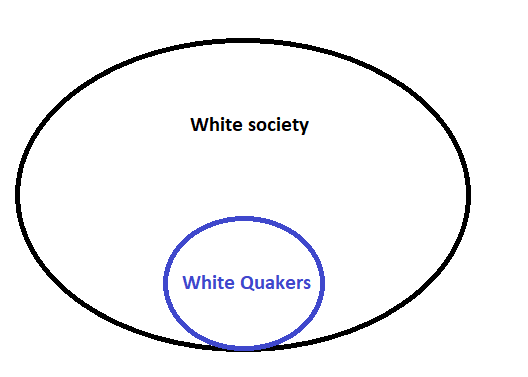
  • Black, Indigenous and other people of color (BIPOC) do not see any distinction between White Quakers and other White people in this country.
  • The capitalist economic system is fundamentally unjust.
    • Capitalism transfers great wealth to the wealthy by exploiting and oppressing those who aren’t.
    • Capitalism impoverishes millions of people
    • Capitalism is economic slavery
    • Capitalism treats natural resources as commodities to be exploited for profit
    • Capitalist systems do not feel the need to conserve resources
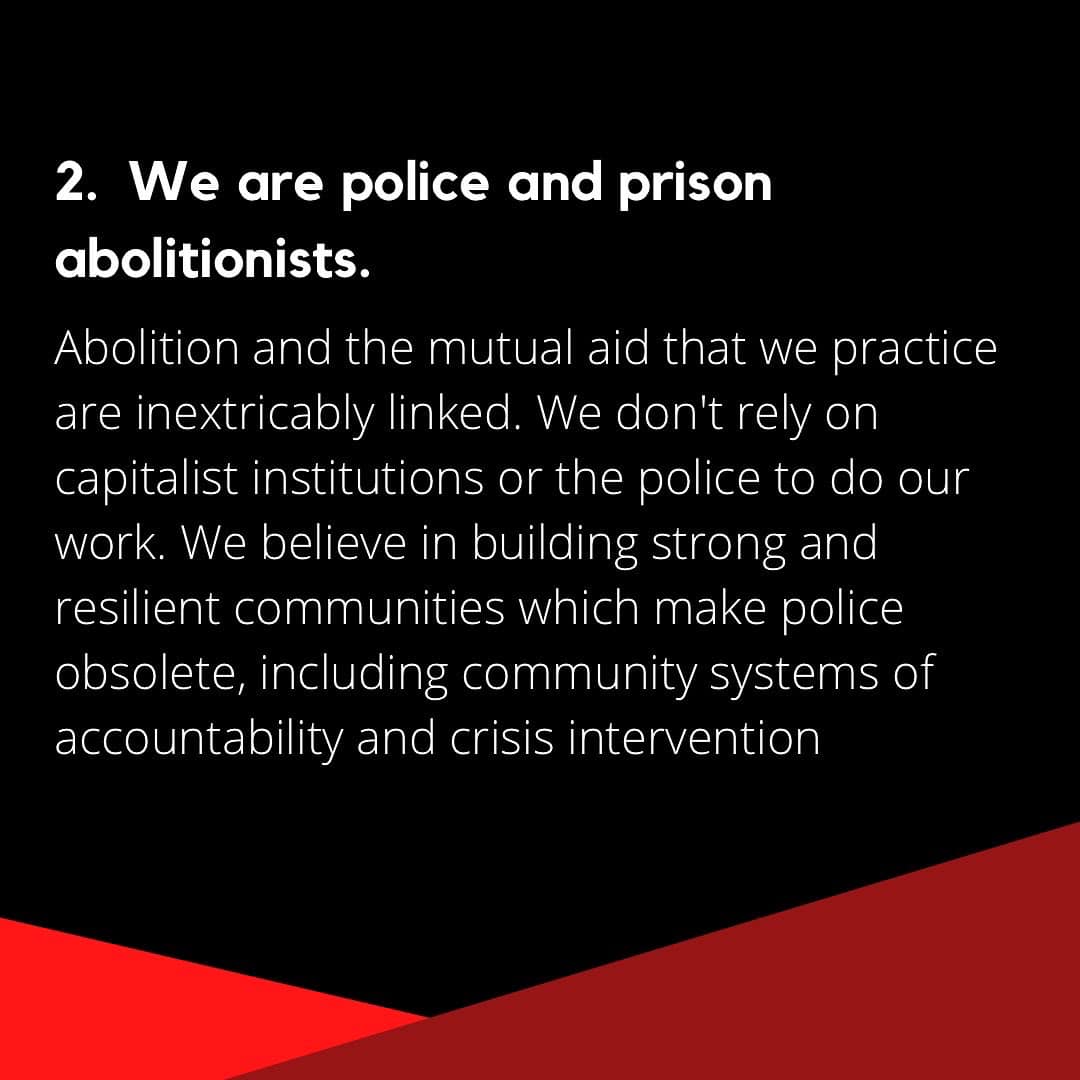
  • Police and prisons must be abolished.
    • The criminal justice system enforces the policies of the White dominant culture.
    • The criminal justice system violently targets BIPOC people
    • It is inhumane to lock people in cages.
  • White Quakers are settler-colonists. We continue to live on and profit from Indigenous lands.
  • The involvement of some White Quakers in the native boarding schools and how to begin healing related to that, is crucial for authentic relations between White Quakers and native peoples.
    • I have witnessed the multigenerational trauma affecting Indigenous people today.
  • Increasingly, as environmental chaos worsens, responding to the disastrous consequences will consume our attention and resources.
Black, Indigenous and other people of color (BIPOC) do not see any distinction between White Quakers and other White people in this country.

The most significant new perspectives are about the capitalist economic system. I hadn’t been as aware of many of the injustices fueled by capitalism prior to spending time in oppressed communities. Now I have witnessed the devastating effects of capitalism in these communities.

The nearly universal resistance to my attempts to convince White people to build systems not based upon capitalism is because the system works for them.

Capitalism is an unjust system. A different system is required. Mutual Aid is such a system.

Justice cannot be attained by incremental changes to an unjust system.

Accelerating environmental chaos is increasingly disrupting life as we know it. Which means, among other things, that the current political and economic systems in this country will continue to collapse. Now is the time to envision and build alternatives such as mutual aid.

Justice cannot be attained within an unjust system

Our Quaker Queries recognize the injustices of our capitalist economic system.

‘We are part of an economic system characterized by inequality and exploitation. Such a society is defended and perpetuated by entrenched power. “

The advice also says “we envision a system of social and economic justice that ensures the right of every individual to be loved and cared for…” 

Faith and Practice, Iowa Yearly Meeting (Conservative)

This is well summarized by my friend Ronnie James. We work together at Des Moines Mutual Aid.

I’m of the firm opinion that a system that was built by stolen bodies on stolen land for the benefit of a few is a system that is not repairable. It is operating as designed, and small changes (which are the result of huge efforts) to lessen the blow on those it was not designed for are merely half measures that can’t ever fully succeed.

So the question is now, where do we go from here? Do we continue to make incremental changes while the wealthy hoard more wealth and the climate crisis deepens, or do we do something drastic that has never been done before? Can we envision and create a world where a class war from above isn’t a reality anymore?”

Ronnie James, Des Moines Mutual Aid

This is a simplified schematic of the consequences of White dominance (Red), and the alternatives for a transition to justice and disaster preparedness (Green).


Implementing the transition to a more just society will be impeded by

  • Environmental chaos
  • Corrupt and failing institutions
  • Authoritarianism

This diagram shows the current systems in the column labeled White.
The column under Black, Indigenous and other people of color shows the injustices resulting from the current systems.
The Red/Green New Deal shows how we can address these injustices.
The solid red column indicates the challenges to moving to systems of justice, sustainability, and resilience.


I’ve written about these concepts on my blog: https://quakersandreligioussocialism.com/

My new friend, AI

With many tools becoming available to work with Artificial Intelligence (AI), I thought I’d see how this could help me with research for thought and writing. Many things I think and write about have little documentation.

Spirituality and Mutual Aid has been frustrating to explore because I’ve found little information so far.

I was pleasantly surprised at what the copy.ai Artificial Intelligence interface uncovered in response to my questions. I was really surprised at what was discovered when I asked about groups incorporating spirituality into Mutual Aid”. One answer was:

LANDBACK Friends is a Quaker community that discusses mutual aid and spirituality. They suggest that mutual aid can be a spiritual practice, and that it is a way to build peaceful, abolitionist communities. [4]

NOTE: LANDBACK FRIENDS is another of my websites. https://landbackfriends.com/


This is the chat I had with copy.ai about Spirituality and Mutual Aid:

Spirituality and Mutual Aid

Mutual aid is a practice of community support and solidarity, and spirituality can be a powerful tool in practicing mutual aid. Spiritual beliefs and practices can provide a sense of purpose, meaning, and connection to something greater than oneself, which can motivate and sustain mutual aid efforts.

Many spiritual traditions prioritize the values of compassion, generosity, and service to others, which align with the principles of mutual aid. For example, in Christianity, the concept of “love thy neighbor” is a central tenet that encourages Christians to care for one another and help those in need. In Buddhism, the practice of “metta” or loving-kindness meditation is a way to cultivate a sense of compassion and empathy towards all beings, which can inspire acts of mutual aid.

Spiritual practices can also provide a sense of grounding and resilience in the face of adversity. Practices such as prayer, meditation, and mindfulness can help individuals cope with stress and trauma and provide a sense of inner peace and strength. This can be especially important for those who are participating in mutual aid efforts, as they may be dealing with challenging situations and emotions.

In addition, spirituality can inspire a sense of interconnectedness and unity among people, regardless of their backgrounds or beliefs. This can promote a sense of solidarity and mutual support that is essential for successful mutual aid efforts.

Overall, spirituality can play an important role in mutual aid by providing a sense of purpose, grounding, resilience, and connection. By incorporating spiritual practices and beliefs into mutual aid efforts, individuals and communities can deepen their sense of commitment to helping others and building stronger, more resilient communities.

Groups incorporating spirituality into Mutual Aid

One group that incorporates spirituality into mutual aid is the Catholic left, which has been practicing spiritual mutual aid since Vatican II. This takes place at the grassroots level of the church, where people gather in egalitarian house churches and prayer groups and consecrate the Eucharist communally or at the hands of a person who would be denied ordination by the Catholic hierarchy. [1]

Another example is the mutual aid group “Higher Power” in Northern California, which is a culturally adapted 12-step program for Latinos with substance use problems and other mental health concerns. This group incorporates spirituality and cultural adaptation into their recovery methods. [2][3]

LANDBACK Friends is a Quaker community that discusses mutual aid and spirituality. They suggest that mutual aid can be a spiritual practice, and that it is a way to build peaceful, abolitionist communities. [4]

Sources:

  1. https://www.cta-usa.org/perspectives/spiritual-material-mutual-aid
  2. https://www.cambridge.org/core/journals/bjpsych-bulletin/article/spirituality-and-cultural-adaptation-in-a-latino-mutual-aid-group-for-substance-misuse-and-mental-health/7D6FC66386B2C1813E15DAF878CEB052
  3. https://www.cambridge.org/core/services/aop-cambridge-core/content/view/7D6FC66386B2C1813E15DAF878CEB052/S2056469400000978a.pdf/spirituality-and-cultural-adaptation-in-a-latino-mutual-aid-group-for-substance-misuse-and-mental-health.pdf
  4. https://landbackfriends.com/2022/01/05/spirituality-and-mutual-aid/

MUTUAL AID MONTHLY

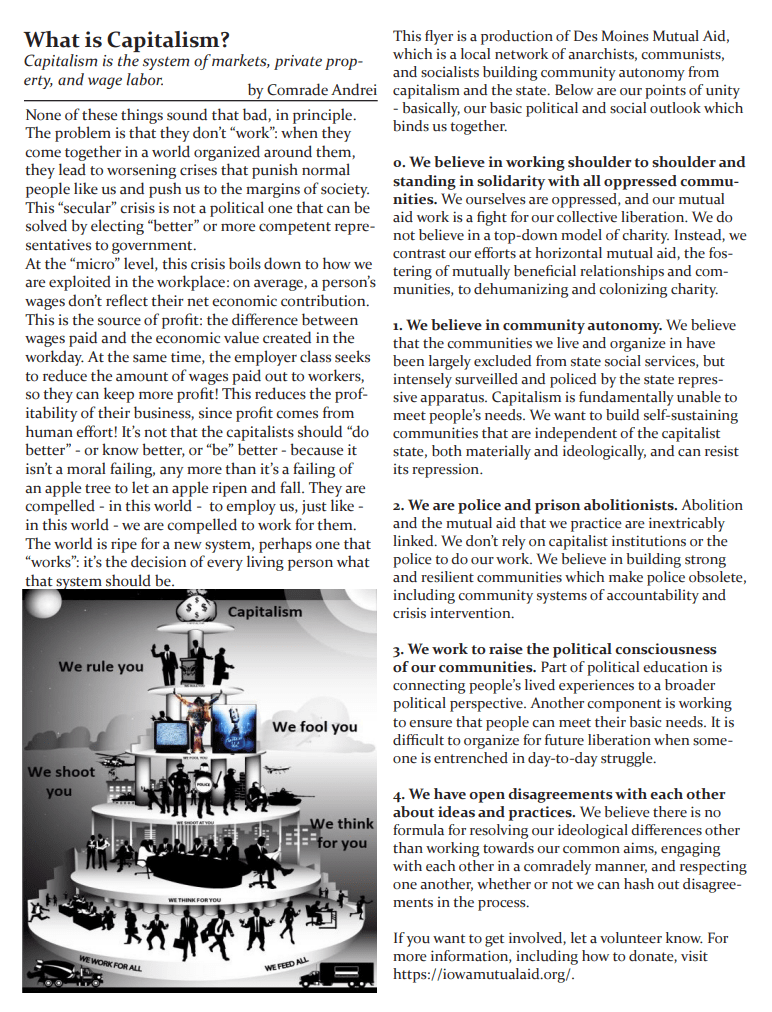
One of the principles of Mutual Aid is political education. As part of this education, found below is the March 2023 edition of MUTUAL AID MONTHLY, A Production of Des Moines Mutual Aid. You can download it using the DOWNLOAD button on the PDF file display window at the end.

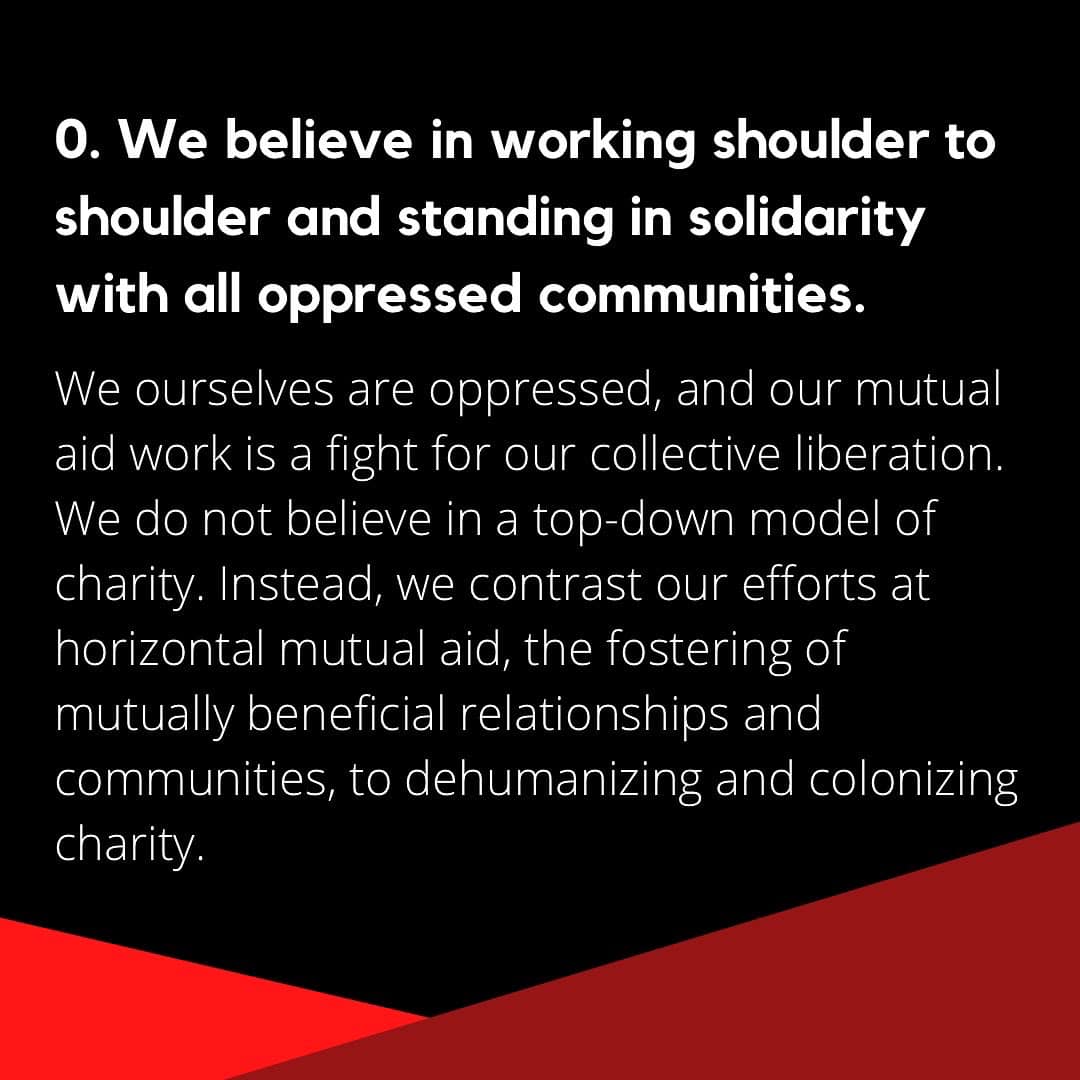
“This flyer is a production of Des Moines Mutual Aid, which is a local network of anarchists, communists, and socialists building community autonomy from capitalism and the state. Below are our points of unity – basically, our basic political and social outlook which binds us together.”

Des Moines Mutual Aid

This is a good description of Des Moines Mutual Aid. We are a network of anarchists, communists, and socialists. Understanding these terms applied to a community I belong to has been part of my political education. My life has been a rebellion against capitalism and the state. But am I an anarchist, communist and/or socialist? I learned that those are parts of me. It’s a step to not only learn what you are not, but also what you are. It’s easy enough to say I’m not a capitalist, but am I a so-called enemy of the state? Yes, I am, in the nonviolent sense. The state is becoming increasingly oppressive and authoritarian. But I’ve learned that even when the capitalist system was “working”, it was and is still a system built on supremacy, violence, abuse, and oppression.

Several years ago, I changed the name of this blog to QUAKERS AND RELIGIOUS SOCIALISM as part of my evolving political education.

I learned about the Democratic Socialists of America’s (DSA) Religious Socialism Committee from my friend Fran Quigley, director of the Health and Human Rights Clinic at Indiana University McKinney School of Law and a religioussocialism.org editorial team member.

Fran wrote in response to a blog post I had written, The Evil of Capitalism, December 31, 2020.

This post of yours struck me close to home. I too have become fully convinced of the evils of capitalism. Moreover, I have come to the conclusion that my faith dictates that I work to replace it. Turns out I am far from alone, so I’ve been devoting much of my time this past year to the Religion and Socialism Committee of the DSA, www.religioussocialism.org

My Introduction to Religious Socialism, Jeff Kisling

I like the Points of Unity of Des Moines Mutual Aid. I like the emphasis on the positive, “our basic political and social outlook which binds us together“. We are tightly bound together. I often hear my friends say how much they look forward to being together, working alongside each other, being directly connected to those who come for help. And knowing there is no judgement, because we are all aware that we might one day need help ourselves. I like the stories of those putting together boxes of food tell me they once came for food, themselves. I like the expectation that anyone of us should take food ourselves. It took me a while to realize my mistake in not taking any food. (As a result, my friends now know of my sweet tooth.)

One of our principles of unity is:
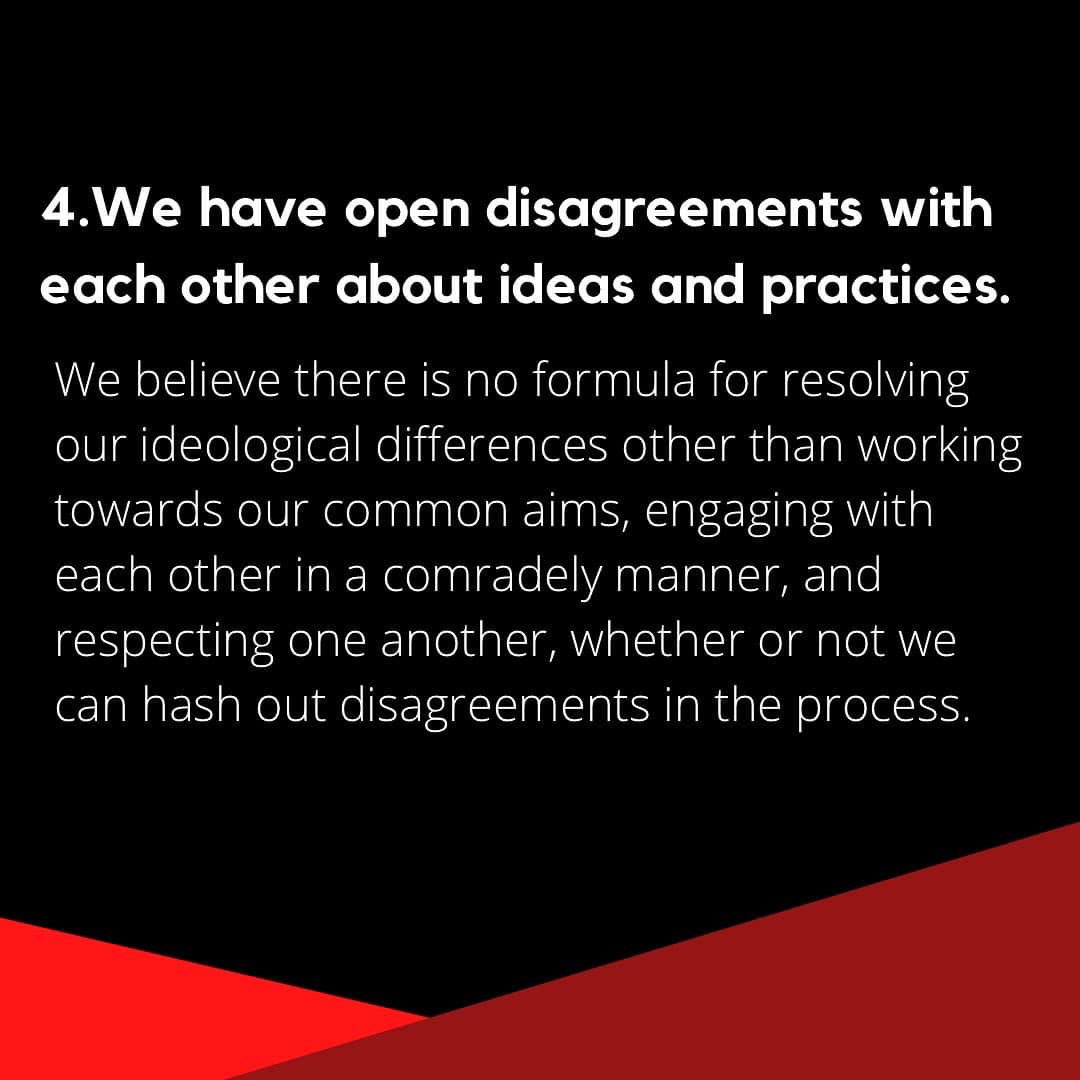
We have open disagreements with each other about ideas and practices.
“We believe there is no formula for resolving our ideological differences other than working towards our common aims, engaging with each other in a comradely manner, and respecting one another whether or not we can hash out disagreements in the process.”

The publication of MUTUAL AID MONTHLY relates to another of our Points of Unity, political consciousness.

We work to raise the political consciousness of our communities.
Part of political education is connecting people’s lived experiences to a broader political perspective. Another component is working to ensure that people can meet their basic needs. It is difficult to organize for future liberation when someone is entrenched in day-to-day struggle.

from Points of Unity, Des Moines Mutual Aid

Political ignorance is one of the main reasons this country is falling into chaos and authoritarianism. People would be less susceptible to falling for cults of personality and understand the threats to freedom posed by culture wars if they had a better education, including critical thinking skills. You might think of sharing MUTUAL AID MONTHLY with others in furtherance of their/your political consciousness. As a resource to stimulate discussions.


Quakers and Change

Quakers have a long history of working for justice and social change. But what do we (Quakers) do when we realize change is necessary now? Throughout our history we have been led to see we are implicated in injustice. “Led” means the Spirit has shown what the injustices are, and what changes should be made. Most commonly, individuals discern what change is needed, and over time they and the Spirit convince others.

As my friend Lucy Duncan writes, “we as White Quakers like to think of ourselves as ahead or better than dominant culture, but we have been complicit in a system and mindset that are ubiquitous.”

The myths we tell ourselves and the lies those myths uphold are embedded in our contemporary faith practice. When we believe and perpetuate falsehoods about ourselves, it not only disconnects us from the truth, it also limits our ability to act with full integrity today. Telling the truth about ourselves and our White Quaker ancestors grounds us in reality, in a sense of the complexity of our identity. It allows us to create a different future, not built from delusion and half of the story but from an honest and grounded reckoning with who we are and who we have been. My friend Mila Hamilton calls this “intergenerational transformative justice.” As we deal with the uncomfortable truths of our White Quaker ancestors, we release them from the amber in which our myths have captured them. As we allow them to become the full, flawed humans they were, we also free ourselves to reckon with our present, which arises from their past, and to tell the full truth of who we are.

We as White Quakers like to think of ourselves as ahead or better than dominant culture, but we have been complicit in a system and mindset that are ubiquitous. Claiming the full truth of our history and committing to repair the harms done are deeply spiritual acts of healing our own wounds of disconnection. I would argue it is the pathway upon which we can, perhaps for the first time, discover and invigorate our faith with its full promise.

What would it mean for us to take seriously and collectively as a Religious Society a call to finish the work of abolition, hand in hand and side by side with those affected and their loved ones? What would it mean for us to stand fully with the calls to abolish the police and fully fund community needs instead? What would it mean to reckon with our past complicity with harm and fully dedicate ourselves to the creation of a liberating Quaker faith that commits to build the revolutionary and healing faith we long to see come to fruition? What would it look like to finally and fully abolish slavery?

A Quaker Call to Abolition and Creation by Lucy Duncan, Friends Journal, April 1, 2021

It can take a long time for change to occur. Personally, I’ve been working since the early 1970’s to convince Friends to consider my spiritual leading to drastically reduce our carbon footprint, including not having an automobile.

Most of our values, beliefs and assumptions regarding livelihoods need to be radically transformed in order to move into activities that are sustainable. If this transition is ever to occur, we must be able to visualize and share the details of these alternative occupations and embrace new social metrics to support those occupations.

I try to imagine myself making a move into a livelihood that would be fundamentally sustainable like the critical but overlooked work done by a young man I know who shuttles vegetable waste from homes in his neighborhood to a small composting center in his community by bicycle. He then sells and delivers by bike finished compost to neighbors with gardens. If I chose to move into this “career” my friends would think I had lost my mind. My friends might ridicule me. Certainly, they would worry about me! And worse, some people, perhaps even including my spouse, might simply think they no longer had anything in common with me. It’s like giving up alcohol in an alcohol inundated world. You stand outside, you are not one of the groups any longer. In reality, I would need to build an entirely new social network with different values and notions of success, a network that would respect my choices and understand their importance. Because living and working, having lifestyles and livelihoods that are truly regenerative and sustainable look nothing like how most of us live and work now. The cultural transition and change in our values and the metrics we use to measure our sense of success, therefore our identities, is hard to imagine, not to mention implement.

Nevertheless, I have interviewed people with very low carbon livelihoods and lifestyles, highly moral people who work and live outside of mainstream jobs and careers. And guess what? They did indeed initially have to suffer social backlash from family and friends for their lifestyle and work choices. 

Against the Economic Grain: Addressing the Social Challenges of Sustainable Livelihoods by Kim Kendall, Resilience.org, January 27, 2023

One of the things I appreciate in our spiritual practice is for the Quaker meeting to use questions to consider where we are today in our faith. For example, the following are the queries related to social and economic justice.

11.  SOCIAL AND ECONOMIC JUSTICE


“For when I was hungry you gave me food, when thirsty you gave me drink, when I was a stranger you took me into your home, when naked you clothed me, when in prison you visited me.”     Matthew 25:35‑36

ADVICE 

We are part of an economic system characterized by inequality and exploitation. Such a society is defended and perpetuated by entrenched power. 

Friends can help relieve social and economic oppression and injustice by first seeking spiritual guidance in our own lives. We envision a system of social and economic justice that ensures the right of every individual to be loved and cared for; to receive a sound education; to find useful employment; to receive appropriate health care; to secure adequate housing; to obtain redress through the legal system; and to live and die in dignity. Friends maintain historic concern for the fair and humane treatment of persons in penal and mental institutions.

Wide disparities in economic and social conditions exist among groups in our society and among nations of the world. While most of us are able to be responsible for our own economic circumstances, we must not overlook the effects of unequal opportunities among people. Friends’ belief in the Divine within everyone leads us to support institutions which meet human needs and to seek to change institutions which fail to meet human needs. We strengthen community when we work with others to help promote justice for all. 

QUERIES 

  • How are we beneficiaries of inequity and exploitation? How are we victims of inequity and exploitation? In what ways can we address these problems?
  • What can we do to improve the conditions in our correctional institutions and to address the mental and social problems of those confined there?
  • How can we improve our understanding of those who are driven to violence by subjection to racial, economic or political injustice? In what ways do we oppose prejudice and injustice based on gender, sexual orientation, class, race, age, and physical, mental and emotional conditions? How would individuals benefit from a society that values everyone? How would society benefit?


“We are part of an economic system characterized by inequality and exploitation. Such a society is defended and perpetuated by entrenched power. How are we beneficiaries of inequity and exploitation? How are we victims of inequity and exploitation? In what ways can we address these problems?”


Injustice cannot be addressed as long as we are involved in the system of injustice, in this case, capitalism. As my good friend Ronnie James says:

I’m of the firm opinion that a system that was built by stolen bodies on stolen land for the benefit of a few is a system that is not repairable. It is operating as designed, and small changes (which are the result of huge efforts) to lessen the blow on those it was not designed for are merely half measures that can’t ever fully succeed.

So, the question is now, where do we go from here? Do we continue to make incremental changes while the wealthy hoard more wealth and the climate crisis deepens, or do we do something drastic that has never been done before? Can we envision and create a world where a class war from above isn’t a reality anymore?”

Ronnie James


The following is a diagram I’ve been working on for several years to visualize unjust systems and possible alternatives. On the left is capitalism, built on colonialism. The red vertical bar indicates forces that interfere with making changes. Failing and corrupt institutions, authoritarianism, and environmental chaos. If we can move past those resistances, we can build communities for a viable and just future.

I’ve been part of a Mutual Aid community for the past three years. That experience convinces me the Mutual Aid is a vital component of a more just future for us all. It is a way to escape the capitalist economic system, which I’ve written about extensively.
(See: https://quakersandreligioussocialism.com/mutual-aid/ )


Contradictions of the Imperialist ‘Rules-Based Order’

Have your views about our environmental situation changed? It is more difficult to deny environmental damage in the face of all kinds of climate chaos occurring globally.

Did you know the U.S. Military emits more carbon dioxide than many nations?

This leads to an existential paradox. If we are ever going to begin to mitigate greenhouse gas emissions, we must end military operations. Could this be a path to peace? Or will imperialism continue to feed increasing environmental devastation?

The new document described below, “Eight Contradictions in the Imperialist ‘Rules-Based Order’” identifies conflicts between imperialist nations and the rest of the world.


The Bulletin of the Atomic Scientists has now moved the Doomsday Clock to 90 seconds to midnight, the closest it has been to the symbolic time of the annihilation of humanity and the Earth since 1947. This is alarming, which is why leaders in the Global South have been making the case to halt the warmongering over Ukraine and against China. As Namibia’s Prime Minister Saara Kuugongelwa-Amadhila said, ‘We are promoting a peaceful resolution of that conflict so that the entire world and all the resources of the world can be focused on improving the conditions of people around the world instead of being spent on acquiring weapons, killing people, and actually creating hostilities’.

In line with the alarm from the Doomsday Clock and assertions from people such as Kuugongelwa-Amadhila, the rest of this newsletter features a new text called Eight Contradictions in the Imperialist ‘Rules-Based Order’ (which you can download as a PDF here). It was drafted by Kyeretwie Opoku (the convenor of the Socialist Movement of Ghana), Manuel Bertoldi (Patria Grande /Federación Rural para la producción y el arraigo), Deby Veneziale (senior fellow, Tricontinental: Institute for Social Research), and me, with inputs from senior political leaders and intellectuals from across the world. We are offering this text as an invitation to a dialogue. We hope that you will read, circulate, and discuss it.

We are now entering a qualitatively new phase of world history. Significant global changes have emerged in the years since the Great Financial Crisis of 2008. This can be seen in a new phase of imperialism and changes in the particularities of eight contradictions.

CONTRADICTIONS OF THE IMPERIALIST ‘RULES-BASED ORDER’ by Vijay Prashad, Tricontinental: Institute For Social Research, March 10, 2023

Eight Contradictions in the Imperialist ‘Rules-Based Order’

  • The contradiction between moribund imperialism and an emerging successful socialism led by China.
  • The contradiction between the ruling classes of the narrow band of imperialist G7 countries and the political and economic elite of capitalist countries in the Global South.
  • The contradiction between the broad urban and rural working class and sections of the lower petty bourgeoisie (collectively known as the popular classes) of the Global South versus the US-led imperial power elite.
  • The contradiction between advanced rent-seeking finance capital versus the needs of the popular classes, and even some sections of capital in non-socialist countries, regarding the organisation of societies’ requirements for investment in industry, environmentally sustainable agriculture, employment, and development.
  •  The contradiction between the popular classes of the Global South and their domestic political and economic power elites.
  •  The contradiction between US-led imperialism versus nations strongly defending national sovereignty.
  • The contradiction between the millions of discarded working-class poor in the Global North versus the bourgeoisie who dominate these countries.
  • The contradiction between Western capitalism versus the planet and human life.

In my mind, Indigenous nations, Indigenous homespaces, Indigenous homelessness must be engaged in a radical and complete overturning of the nation-state’s political formations and a refusal of racial capitalism. My vision to create Nishnaabeg futures and presences must structurally refuse and reject the structures, processes and practices that end Indigenous life, Black life and result in environmental desecration. This requires societies that function without policing, prisons, and property.

Nishnaabeg formations of nationhood mean a radical overturning of the current conditions and configurations within which we live—an absolute refusal of capitalism.

Maynard, Robyn; Simpson, Leanne Betasamosake. Rehearsals for Living (Abolitionist Papers) (p. 125). Haymarket Books. Kindle Edition.

Epic battle

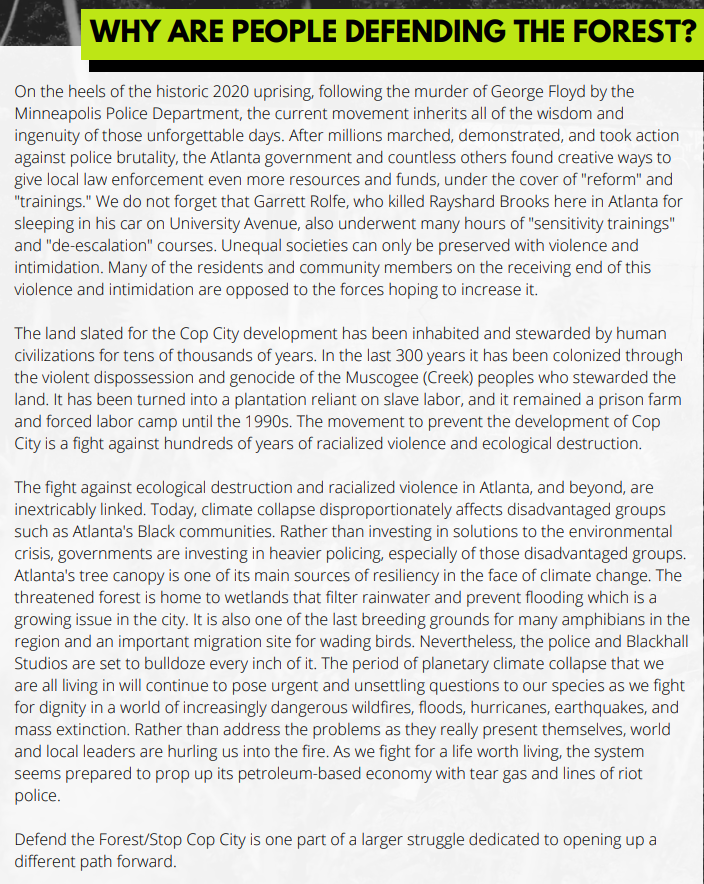
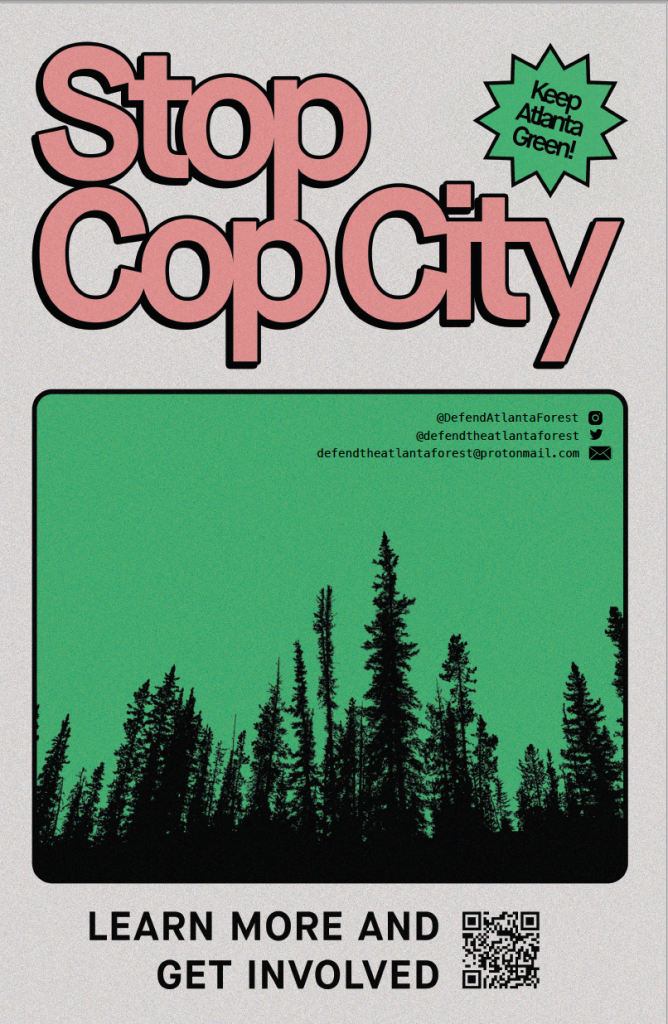
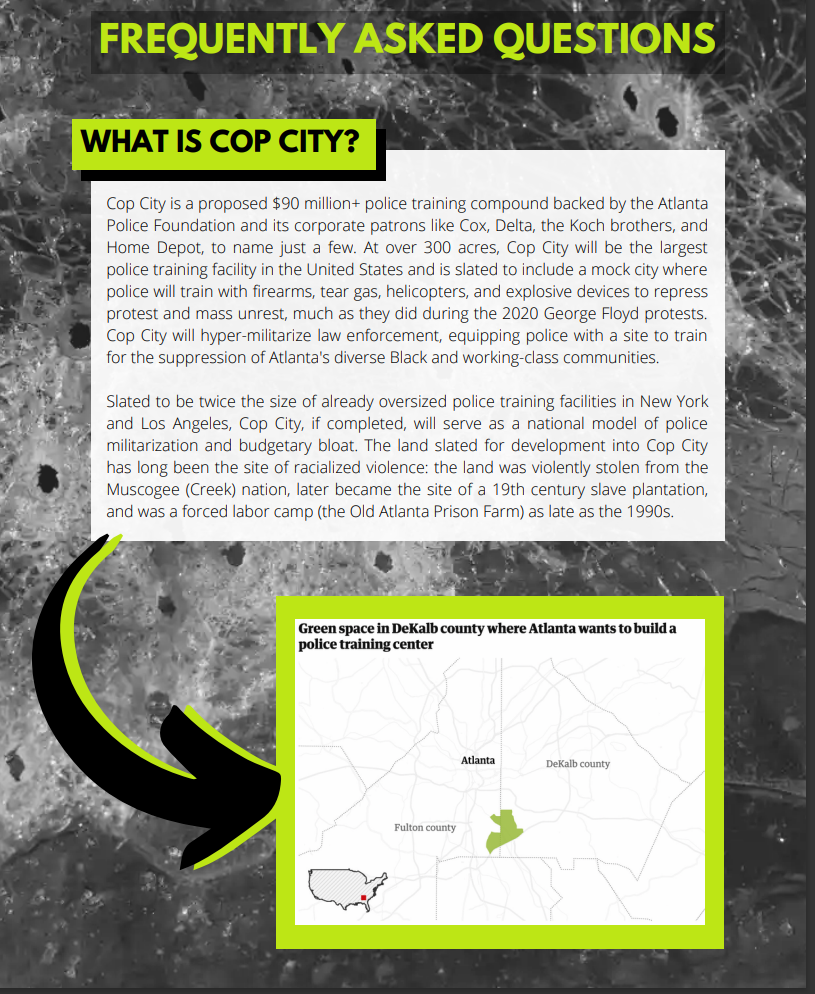
The battle to stop construction of the proposed militarized police training facility being referred to as “Cop City” in the Atlanta Forest has many components.

    Militarized policingAt this time of endless instances of militarized policing the last thing we need is a facility to train police to use these tactics. To train police from all over the country. International?
    Training will be provided for urban warfare. Including helicopter pads and a mock city.
    Of course, the location chosen was right next to communities of Black, Indigenous, and other people of color. Where men, women and children who are already traumatized by policing would hear all the shooting from the training facility.
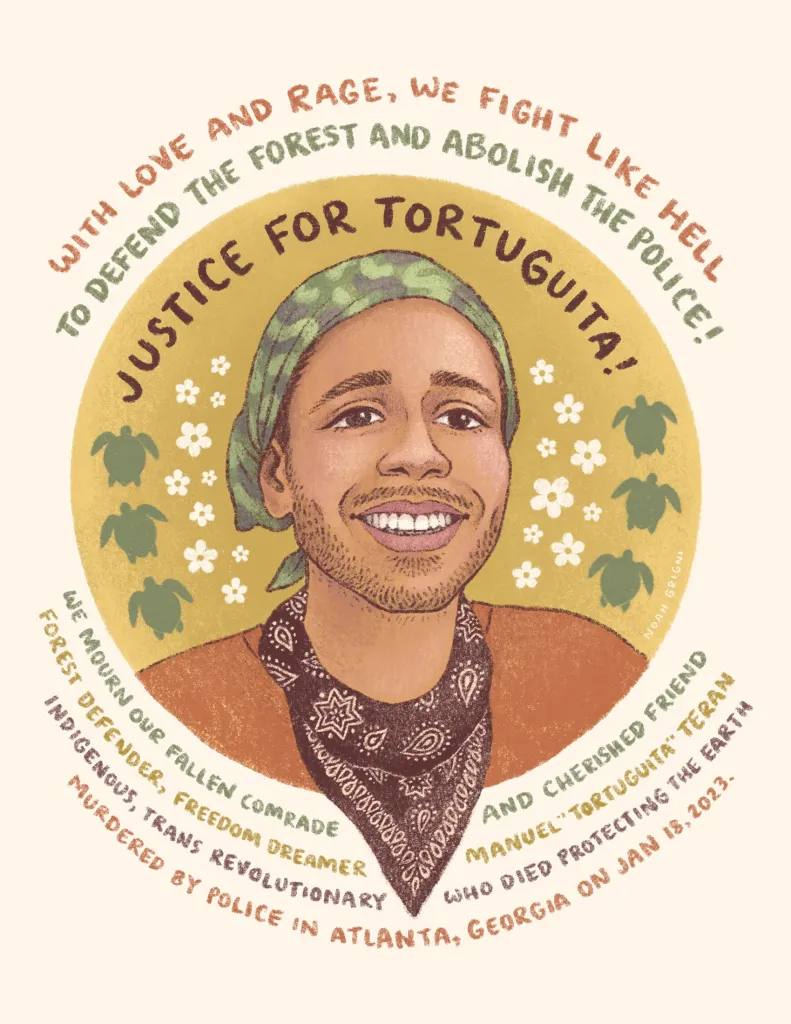
    Police from multiple agencies have continually harassed tree defenders. Manuel Teran (Tortuguita) was killed by police.
    Indigenous rights“You must immediately vacate Mvskoke homelands and cease violence and policing of Indigenous and Black people in Mvskoke lands” (Atlanta Forest)
    Civil libertiesAs is occurring all over the country, civil disobedience and protest is being threatened by elevating charges to domestic terrorism.
    66 Organizations Urge that Domestic Terrorism Charges Against Defend the Atlanta Forest Protesters Be Dropped
    EnvironmentTrees are more important now than ever to pull carbon dioxide out of the air.

    DEFEND THE ATLANTA FOREST
    an autonomous movement for the future of South Atlanta

    We call on all people of good conscience to stand in solidarity with the movement to stop Cop City and defend the Weelaunee Forest in Atlanta.

    DEFEND THE ATLANTA FOREST


    MY GOODMAN: On Wednesday, a group of Mvskoke Creek activists interrupted a Regional Commission meeting and attempted to give an eviction notice to the Atlanta mayor.

    MVSKOKE CREEK ACTIVIST 1: Objection. Objection. We have a letter being delivered from the Mvskoke Creek Nation on behalf of Mvskoke Creek spiritual leadership in opposition to Cop City.

    MVSKOKE CREEK ACTIVIST 2: I came all the way on the Trail of Tears to deliver this letter to you folks.

    UNIDENTIFIED: You’re welcome to leave.

    MVSKOKE CREEK ACTIVIST 2: We want you to know that the contemporary Mvskoke people are now making their journey back to our homelands and hereby give notice to Mayor Andre Dickens, the Atlanta City Council, the Atlanta Police Department, the Atlanta Police Foundation, the Dekalb County Sheriff’s Office, and so-called Cop City, that you must immediately vacate Mvskoke homelands and cease violence and policing of Indigenous and Black people in Mvskoke lands. We also ask for an independent investigation into the assassination of our relative Tortuguita and that the charges be dropped against Weelaunee Forest defenders.

    Opposition Grows to Atlanta “Cop City” as More Forest Defenders Charged with Domestic Terrorism


    A number of people and organizations are calling for the cancellation of “Cop City”
    Students of the Atlanta University Center Denounce the Building of the Atlanta Public Safety Training Center
    Forest Defenders Vow Resistance After Court Okays Phase I Of ‘Cop City’
    Detroit ‘Cop City’ rally held in solidarity with Atlanta environmental defenders – BridgeDetroit
    CrimethInc. : The Forest in the City : Two Years of Forest Defense in Atlanta, Georgia
    Sign the petition: No massive police training complex. Stop Cop City!
    CITIES ACROSS THE US TAKE PART IN ‘WEEK OF ACTION’ AGAINST COP CITY
    RALLY IN SOLIDARITY WITH RESISTANCE TO COP CITY IN AVON, MASSACHUSETTS
    Elders Say Stop Cop City!
    Multiple State and Local Police Agencies Violently Raid Weelanuee Forest Music Festival, Week of Action Perseveres  

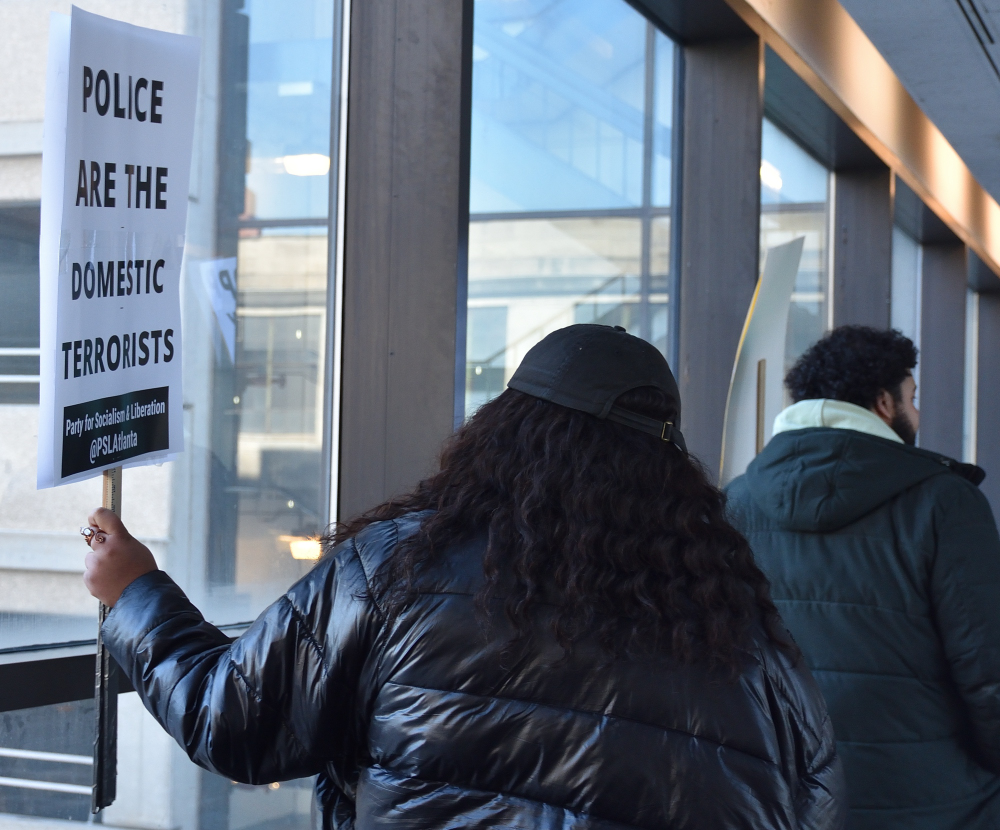
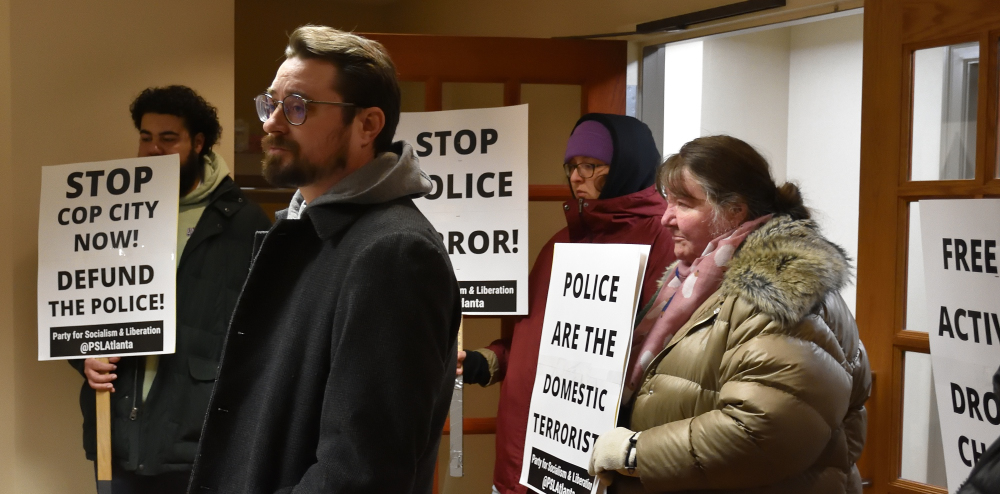
    On 1/31/2023, a number of people who are involved in justice work in central Iowa gathered at the offices of the law firm that represents Corporation Services Company. Which in turn represents U.S. Multifamily Capital Markets at Cushman and Wakefield. John O’Neill is the President of U.S. Multifamily Capital Markets. He sits on the executive committee board for the Atlanta Police Foundation, which is building “Cop City” in Atlanta. Where Manuel Teran (Tortuguita) was killed by police who were clearing tree sitters from the proposed construction area.

    Following are some of the photos I took at our action that morning.


    See more about “Cop City” here:
    https://quakersandreligioussocialism.com/?s=%22cop+city%22


    An Alternative to Capitalist Hierarchies

    I previously began to describe the Cecosesola Co-op (See: http://bit.ly/3mrdtop). I had been doing research to find examples of large mutual aid communities when I started to see stories about Cecosesola. This InfoGraphic from Venequelanalysis shows there are one thousand three hundred people involved.

    Basic information about Cecosesola (Venezuelanalysis)

    On September 29, 2022, Cecosesola received the Right Livelihood Award, a Swedish prize often known as the “Alternative Nobel Prize.” This award honors people and organizations that encourage social change. According to a statement issued by the Right Livelihood Foundation, the prize was given to Cecosesola for “establishing an equitable and cooperative economic model as a robust alternative to profit-driven economies.”

    In what follows, we talk to three of the cooperative’s associates – Lizeth Vargas, Ender Duarte, and Gustavo Salas – about their project which serves hundreds of thousands of people and is a model for non-hierarchical organizational practices.

    An Alternative to Capitalist Hierarchies: A Conversation with the Cecosesola Co-op. A Venezuelan cooperative network that recently received the “Alternative Nobel Prize” tells its story By Cira Pascual Marquina – Venezuelanalysis, Nov 20th 2022.


    maps.google.com

    Can you tell us the story of Cecosesola?

    Gustavo Salas: Cecosesola was born in the 1960s when the Centro Gumilla [a Catholic investigation center for social action] promoted the organizing of cooperatives in the most precarious barrios of Barquisimeto [Lara state, center-western Venezuela]. That is when poor, working-class people began to set aside a bit of money every month to build their own cooperatives.

    In other countries, co-ops have a middle-class base, but many Venezuelan cooperatives have a working-class one: that is, co-ops here often begin to take shape in the poorest barrios.

    The first cooperatives in Barquisimeto were founded by people with a great deal of commitment to social work and community work. They eventually came together in Cecosesola, a co-op center or a co-op of co-ops [the acronym stands for Central Cooperativa de Servicios Sociales de Lara]. The first Cecosesola project was one that addressed an immediate need of the people: funerary services.

    An Alternative to Capitalist Hierarchies: A Conversation with the Cecosesola Co-op. A Venezuelan cooperative network that recently received the “Alternative Nobel Prize” tells its story By Cira Pascual Marquina – Venezuelanalysis, Nov 20th 2022.

    This first iteration of building the community didn’t succeed. Interestingly, it was a bus boycott that re-initiated Cecosesola, which brings to mind the Montogomery bus boycott of 1955-56.

    National coverage of the boycott and King’s trial resulted in support from people outside Montgomery. In early 1956 veteran pacifists Bayard Rustin and Glenn E. Smiley visited Montgomery and offered King advice on the application of Gandhian techniques and nonviolence to American race relations. Rustin, Ella Baker, and Stanley Levison founded In Friendship to raise funds in the North for southern civil rights efforts, including the bus boycott. King absorbed ideas from these proponents of nonviolent direct action and crafted his own syntheses of Gandhian principles of nonviolence. He said: “Christ showed us the way, and Gandhi in India showed it could work” (Rowland, “2,500 Here Hail”). 

    On 5 June 1956, the federal district court ruled in Browder v. Gayle that bus segregation was unconstitutional, and in November 1956 the U.S. Supreme Court affirmed Browder v. Gayle and struck down laws requiring segregated seating on public buses. The court’s decision came the same day that King and the MIA were in circuit court challenging an injunction against the MIA carpools. Resolved not to end the boycott until the order to desegregate the buses actually arrived in Montgomery, the MIA operated without the carpool system for a month. The Supreme Court upheld the lower court’s ruling, and on 20 December 1956 King called for the end of the boycott; the community agreed. The next morning, he boarded an integrated bus with Ralph Abernathy, E. D. Nixon, and Glenn Smiley. King said of the bus boycott: “We came to see that, in the long run, it is more honorable to walk in dignity than ride in humiliation. So … we decided to substitute tired feet for tired souls, and walk the streets of Montgomery”

    Montgomery Bus Boycott, Stanford University, The Martin Luther King, Jr. Research and Education Institute

    A few years after the foundation of Cecosesola, in 1974, there was a feeling of dissatisfaction brewing among workers and members. Enthusiasm and hopes had vanished, and Cecosesola was now closer to a capitalist enterprise than a social movement or a community-based organization.

    As it happens, Cecosesola was immersed in an internal debate. At the time, people of Barquisimeto were on the streets en masse, protesting a hike in bus fares. That is when the Cecosesola bases, those who were pushing to reinstate the original grassroots logic of the organization saw an opportunity to rekindle the cooperative project. Following Cecosesola’s early footsteps and grassroots mission, we built a transportation project that would keep fares down. There were no bosses in this project, which thus reactivated our on-the-ground work. In the end, we ended up assuming many transport routes in Barquisimeto.

    Even though the transportation initiative was associated with Cecosesola, it didn’t reproduce the existing hierarchical order. The project became an opportunity to reorganize things and do away with bosses. In fact, the transport initiative would hold massive meetings on a regular basis, and all 300 associated workers would participate in each meeting!

    In the beginning, the whole thing was very chaotic: collective decision-making isn’t easy when society is completely based on hierarchies. However, as the transport project became consolidated, it began to leave its imprint on Cecosesola. Eventually, we displaced the conventional top-down model with a system of direct participation that integrates workers and associates alike.

    That is how Cecosesola, including its funerary services, was returned to the community, to its origins. Now we have an open administration without intermediation and with direct participation.

    An Alternative to Capitalist Hierarchies: A Conversation with the Cecosesola Co-op. A Venezuelan cooperative network that recently received the “Alternative Nobel Prize” tells its story By Cira Pascual Marquina – Venezuelanalysis, Nov 20th 2022.


    What are the principles behind Cecosesola’s modus operandi?

    Ender Duarte: Rather than principles set out on paper, we have a set of ideas or principles that organize and regulate our day-to-day practices.

    Our key ideas are mutuality, respect, and transparency, which are all important to building relationships of trust. In other words, mutual care and solidarity are our driving forces.

    These practices guide our day-to-day activities, be they funerary services, healthcare, or food production and distribution. If we break away from our fundamentals, we would break the relationships of trust that we have been developing with so much care and love.

    As we work, we are doing away with relations based on exploitation and domination. Ours is an organization without bosses. Over the years we have learned that the ever-present shadow of hierarchies can only be abolished with mutual respect and trust.

    An Alternative to Capitalist Hierarchies: A Conversation with the Cecosesola Co-op. A Venezuelan cooperative network that recently received the “Alternative Nobel Prize” tells its story By Cira Pascual Marquina – Venezuelanalysis, Nov 20th 2022.


    What are the main teachings that Cecosesola can share with people about how to make a better world?

    Gustavo Salas: If we want to transform our society, we have to do away with hierarchies. When Cecosesola was born, it generated a great deal of enthusiasm and passion. However, when a conventional, top-down administration emerged, that flower wilted. The hierarchical structure separated people from the organization and they went back home. Why? Even when a boss or leader figure has good intentions, the other vanishes: he or she is erased.

    When Cecosesola was re-initiated, we did so by going back to the basics. We rebuilt an organization where everyone has a voice and everyone counts. If we really want to live in a more just society, we have to break away from the prevailing logic, and we have to find new organizational models.

    Capitalist enterprises are not a model for us; the same goes for governmental enterprises. At Cecosesola we are exploring a new model based on mutuality. The model works, so now we are working hard to perfect it.

    An Alternative to Capitalist Hierarchies: A Conversation with the Cecosesola Co-op. A Venezuelan cooperative network that recently received the “Alternative Nobel Prize” tells its story By Cira Pascual Marquina – Venezuelanalysis, Nov 20th 2022.