Gas Prices

I have no idea how high gas prices will go or how long they will remain high.

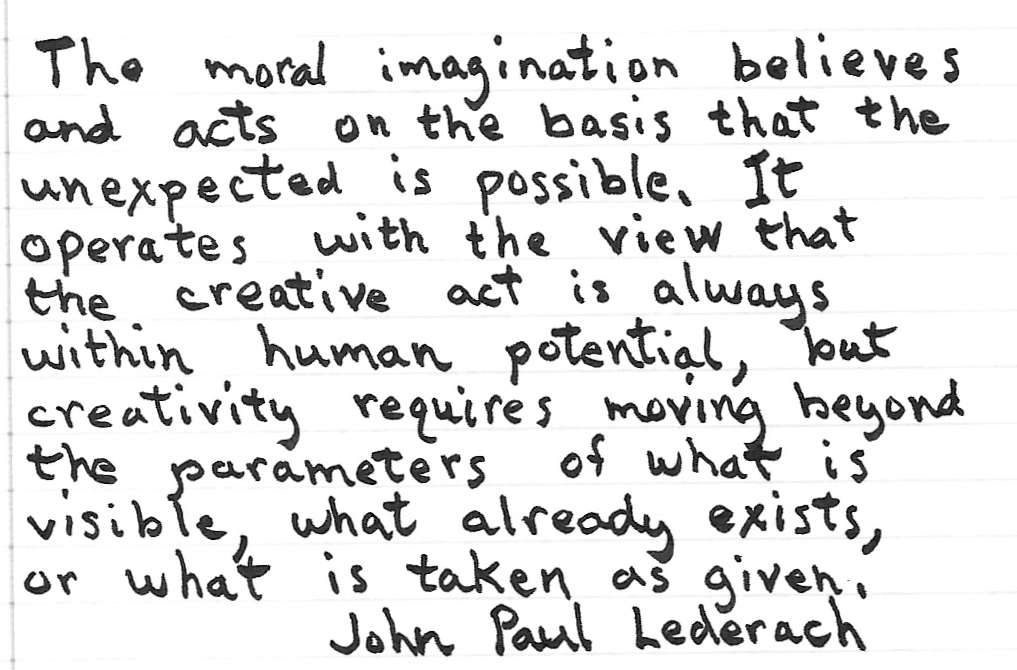
“High” is a relative term. Shouldn’t gas prices reflect the environmental damage from both the horrendous destruction of the land and water from fossil fuel extraction and the many and extensive damages from burning fossil fuels?

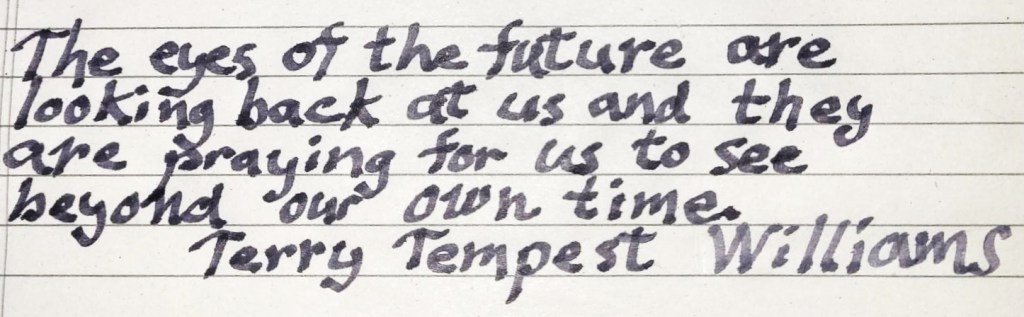
What I find fascinating today is hearing so many people saying if gas prices go much higher, they will walk or take public transportation! Exactly what should have been done decades ago. I always thought there should have been high government gas taxes to try to drive this behavior modification.

Thinking of the impacts on those who are impoverished, this population tends not to have personal automobiles. Are already using public transportation. Similar to food subsidies there might be a need for something similar for transportation.

Most of us have gotten used to remote video/audio conferencing because of the pandemic. If gas prices remain high or go even higher, that will probably result in a return to that. It is likely even more people will work remotely.

This has the potential to significantly reduce fossil fuel emissions.


I love this story about Barry Lopez.

How could we convince lawmakers to pass laws to protect wilderness? Lopez argued that wilderness activists will never achieve the success they seek until they can go before a panel of legislators and testify that a certain river or butterfly or mountain or tree must be saved, not because of its economic importance, not because it has recreational or historical or scientific value, but because it is so beautiful. His words struck a chord in me. I left the room a changed person, one who suddenly knew exactly what he wanted to do and how to do it. I had known that love is a powerful weapon, but until that moment I had not understood how to use it. What I learned on that long-ago evening, and what I have counted on ever since, is that to save a wilderness, or to be a writer or a cab driver or a homemaker—to live one’s life—one must reach deep into one’s heart and find what is there, then speak it plainly and without shame.

Reid, Robert Leonard. Because It Is So Beautiful . Counterpoint. Kindle Edition.

We can’t put a price on beauty. I hadn’t thought of it this way, but if we believe in preserving beauty, wouldn’t it have been amazing if we demanded any resource mining could not be done if it harmed the beauty?

Instead, there are hundreds of square miles of filthy pits from tar sands extraction. Instead, the tops of mountains were blown off.

Instead, the fossil fuel industry receives billions of dollars in government subsidies. How insane is that? Environmental and Energy Study Institute

Likewise, a price cannot be put on all the damage done by burning fossil fuels.

And there is the incomprehensible situation of an energy returned on investment of only 3:1 for tar sands mining. The unit of energy it takes to extract tar sands produces only 3 units of energy. In other words, it takes almost as much energy to mine tar sands as the energy produced. Unbelievable.
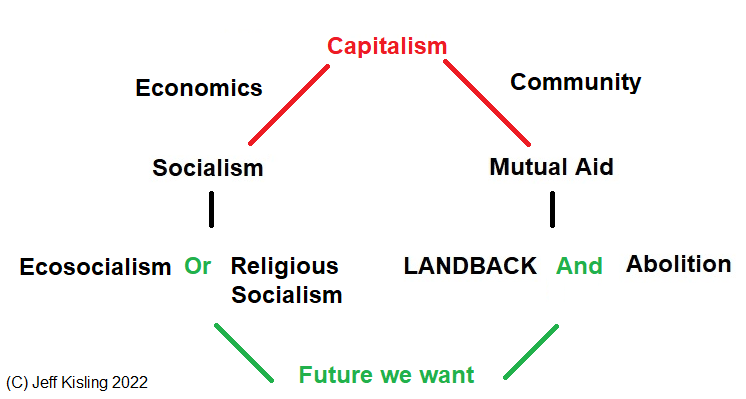
The future we want

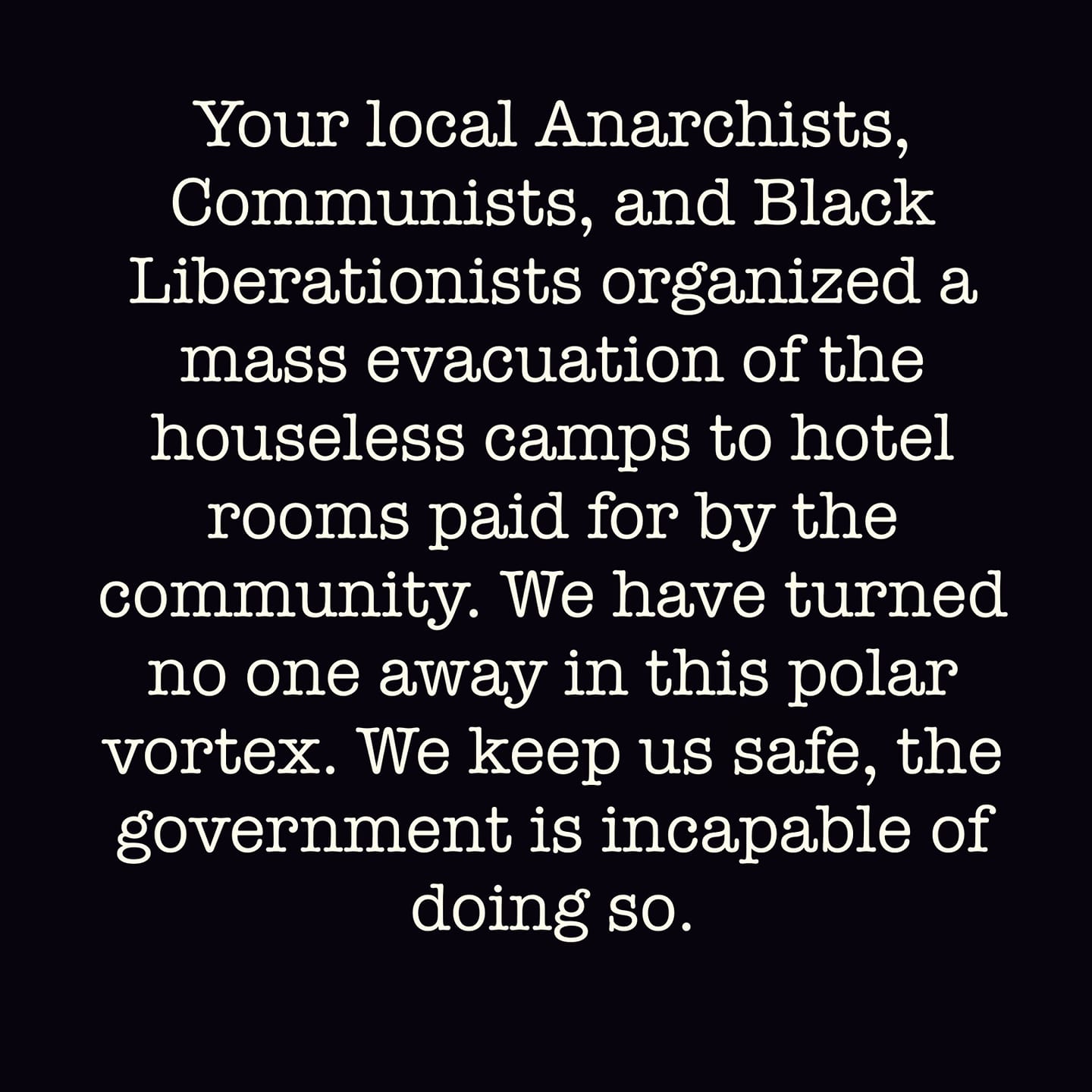
I’ve been trying to integrate all that I’ve been learning about Mutual Aid, #LANDBACK, Abolition, Religious Socialism, Ecosocialism, photography, forced assimilation and Indigenous worldview. There are many intersections among these. This is stimulated in part as I reflect on yesterday. It was a spiritual time when I stopped at Easter Lake to take photos there, despite, or because of the bitter cold. Then continuing to be with my Mutual Aid friends as we filled boxes of food to distribute in the neighborhood. To witness people coming together to share stories. Each moving from one friend to another. This is part of the future we (I) want that exists now. That is the wonderful thing about Mutual Aid, as the focus is on addressing survival needs in the present. As my friend Ronnie says, you work intensely for an hour and a half, and when you’re done you feel sweaty, tired and good.

As I hear so many friends expressing feelings of hopelessness and despair, I feel fortunate to be involved in a community that gives us a sense of doing something good together. Which is one reason I’m trying to get more people involved in Mutual Aid.

I heard some of this discouragement when those in the Quakers for Abolition Network met via ZOOM yesterday.

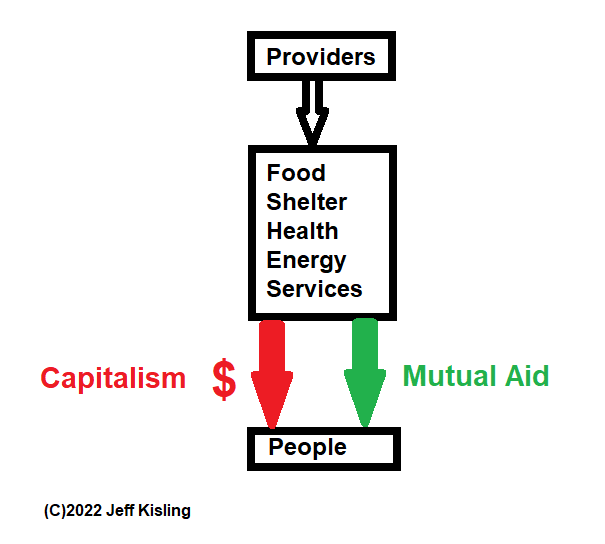
I’ve been working on a new diagram to help me visualize the relationships between the concepts mentioned at the beginning. The root cause of so much suffering is the capitalist economic system. Socialism is an alternative to capitalism. Ecosocialism is about how environmental devastation will be the end of capitalism. Or faith communities can help bring about socialism as an alternative to capitalism from a moral lens. Or both.

Mutual Aid is a framework to replace vertical hierarchies and the unjust power structures they enforce. LANDBACK, returning to Indigenous relationships with the land, and abolition of police and prisons are part of building communities that represent the future we want.

EPSON MFP image

Eco Socialism

I’m spending hours searching for information about religion and socialism since learning about the idea of Religious Socialism.

Socialism has a negative connotation for many that is related to Marxism and its support of revolution by any means.

In one of our nation’s best moments, the civil rights movement of the mid-20th century, Christian socialists played major roles. A. Philip Randolph and Bayard Rustin were very open about their socialism, and Dr. Martin Luther King Jr., who praised democratic socialism both publicly and privately, stood on the shoulders of previous generations of socialist African American social gospel leaders.

These Christian socialists agreed with Karl Marx’s ground-breaking analysis of the devastating impact capitalism wreaks on working people. But they parted ways when it came to Marx’s antipathy to religion, and they rejected Marx’s exhortations to revolution by any means. For religious socialists, the instrument of revolutionary reform is a political one at the ballot box and nonviolently in the streets. That approach works. Consider the many nations comparable to the United States, particularly in western and northern Europe, where socialist advocacy within the democratic process has led to universal healthcare, progressive taxation, and comprehensive social services that assure safe housing and a minimum income. Compared to the United States, life there is far closer to the kingdom of God on earth.

Christian Socialist by MAXINE PHILLIPS and FRAN QUIGLEY

I’ve long known evolving environmental chaos would be the end of capitalism. This chaos will increasingly lead to the physical destruction of the infrastructure that produces and distributes goods and the shops where they are sold, resulting in widespread financial ruin. The impact of severe drought and storms will significantly impact food production and supplies of clean water. These things will increasingly impact housing, energy, healthcare, education, finance, transportation, and other social and political systems.

We are finally at a place where the public can no longer refuse to recognize the impacts of climate change. The fear that generates, and the realization things will only get worse, is fueling social unrest. Movement toward authoritarianism, and domestic violence and terrorism.

I have become interested in religious socialism to create communities to support each other as current systems fail. This interests me as an opportunity to revitalize my Quaker communities. Or for more people to turn to whichever spiritual community meets their needs.

But it is unclear how many people will turn to spirituality, especially those who previously felt disenfranchised from churches and religious organizations.

As I’ve searched for information about religious socialism I’ve found a lot of information about Eco socialism, a term new to me. But which encapsulates what I’ve always believed about environmental chaos and the need for socialism to respond.

In the wake of Australian fire storms, global crop loss and catastrophic climate shifts, billions of people are recognizing the dangers to society and life itself presented by capitalism’s profit-driven despoiling of nature. At the same time, the last 40 years of deepening inequality inside virtually all nations have undermined their social cohesion, and increasingly, capitalism’s mechanisms are being blamed. Anti-capitalism is exploding across many political landscapes.

One broad socialist response to ecological crisis has produced a global eco-socialist movement and a rich set of eco-socialist writings. They rightly argue that a solution to the ecological crisis requires a transition from capitalism to socialism. Profit-driven capitalism is the problem that socialism can solve. Likewise, socialists argue, today’s extreme economic inequalities flow from capitalism. Socialism’s traditionally egalitarian focus on state redistributions of wealth and income has attracted mass interest and support.

Will Climate Change Provoke a Widespread Revival of Socialism? by Richard D. Wolff, TRUTHOUT, Feb 13, 2020