The Silence of the Damned is the title of an article written by Chris Hedges yesterday. It is devastating reading. The title says it all. Here are a few excerpts.
Robert Jay Lifton in his book “The Nazi Doctors: Medical Killing and the Psychology of Genocide” writes that “genocidal projects require the active participation of educated professionals — physicians, scientists, engineers, military leaders, lawyers, clergy, university professors and other teachers — who combine to create not only the technology of genocide but much of its ideological rationale, moral climate, and organizational process.”…
There is a cost to denouncing this genocide, a cost they (U S Medical Schools and organizations) do not intend to pay. They fear being attacked. They fear destroying their careers. They fear losing funding. They fear a loss of status. They fear persecution. They fear social isolation. This fear makes them complicit…
The danger is not only that the Israeli crimes are denounced. The danger, more importantly, is that the moral bankruptcy and cowardice of the institutions and their leaders are exposed…
The dehumanization of Palestinians is lifted from the playbook of all settler colonial projects, including our own. This racism, where people of color are branded as “human animals,” is coded within the DNA of our institutions. It infects those chosen to lead these institutions. It lies at the core of our national identity. It is why the two ruling parties and the institutions that sustain them side with Israel. It feeds the perverted logic of funneling weapons and billions of dollars in support to sustain Israel’s occupation and genocide.
History will not judge us kindly. But it will revere those who, under siege, found the courage to say no.
The Silence of the Damned. Our Leading Humanitarian and Civic Institutions, Including Major Medical Institutions, Refuse to Denounce Israel’s Genocide in Gaza by Chris Hedges, Scheer Post, February 1, 2024
There is a sense of hopelessness, helplessness, and despair in the face of the horrors of the Israeli-Hamas war.
Coming of age in the 1960s, during the Vietnam War, I witnessed and was part of the massive antiwar movement in this country. But for the past several decades I’ve wondered what happened to the antiwar movement. A movement sorely needed in these times. I’m beginning to understand that the antiwar movement has morphed into the movement to build resilient, Mutual Aid communities.
As I’ve been writing about resilience and Mutual Aid recently, I see more clearly that resilience is not only a way to prepare for the future but also a way to build better communities now. That includes the way to break the cycle of war.
It might seem counterintuitive to work locally in the face of global war and disaster, but I believe that is the only effective thing we can do now.
In January 2020, just before I joined, Des Moines Mutual Aid participated in a march protesting the potential for war or increased hostilities with Iran that followed the fallout of the assassination of Qassem Soleimani by a drone strike in Baghdad.
In January 2020, Des Moines Mutual Aid participated in a march protesting the potential for war or increased hostilities with Iran that followed the fallout of the assassination of Qassem Soleimani by drone strike in Baghdad.
That was an example of the principle to think globally, act locally.
January 3, 2024
Now there is the tragic news of many people who attended the fourth anniversary of Soleimani’s death being killed by explosives.
Now there have been two explosions that killed nearly 100 people and wounded scores at a ceremony in Iran on Wednesday to commemorate commander Qassem Soleimani who was killed by a U.S. drone in 2020, Iranian officials said, blaming unspecified “terrorists”.
Iranian state television reported a first and then a second blast after 20 minutes during a crowded fourth-anniversary event at the cemetery where Soleimani is buried in the southeastern city of Kerman.
Yesterday a US airstrike killed an Iran-linked militia commander in Baghdad
BAGHDAD — A U.S. airstrike here on Thursday killed an Iran-linked militia commander and risked accelerating the regional fallout from Washington’s support for Israel’s military operation in Gaza, even as the Biden administration scrambles to contain the bloodshed.
While the United States has targeted militia-affiliated locations in Iraq and Syria several times in recent months, an American operation in such a central location of Iraq’s capital is exceedingly rare. Harakat Hezbollah al-Nujaba falls under the command of the Iraqi army, which responded swiftly — and in anger — saying agreements between Baghdad and Washington had been violated.
The Biden administration has bypassed Congress twice to approve emergency weapons sales to Israel. The first instance was a sale of nearly 14,000 rounds of tank ammunition worth more than $106 million. The second instance involved a $147.5 million sale for equipment, including fuses, charges, and primers, needed to make the 155 mm shells that Israel had already purchased functional.
The United States killed a high-profile commander of Iran’s secretive Quds Force with a drone strike in Iraq early Friday, the Department of Defense said.
“At the direction of the President, the U.S. military has taken decisive defensive action to protect U.S. personnel abroad,” the department said in a statement announcing the death of Gen. Qassem Soleimani, a commander of Iran’s military forces in Iraq, Syria, Lebanon and elsewhere throughout the Middle East.
Now I understand that working for peace today is to work for justice in oppressed communities in our own country.
Where is the peace movement now?
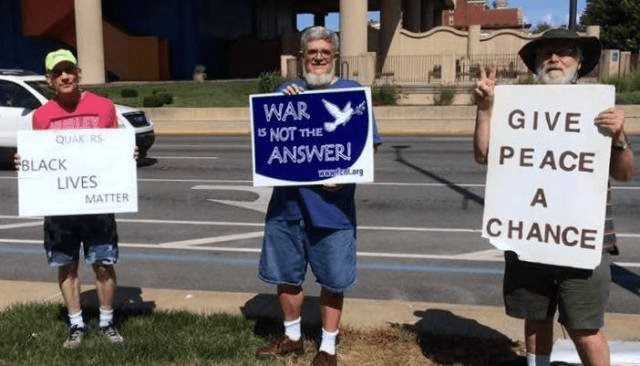
After the Vietnam War, it seemed the peace movement in this country had died. Now I understand that working for peace today is to work for justice in oppressed communities in our own country. In this photo, I’m holding a sign related to Black Lives Matter (circa 2016). It took a while for others at the peace vigil to become comfortable with the divergence from the usual anti-war emphasis.
Although the West’s imperialism is not new, the U.S. is increasingly viewed as a global evil Empire. The most recent example, of course, is the Biden administration’s continuing massive support for Israel’s genocide in Gaza. Even bypassing Congress to send more military aid.
And on the global stage is the outrage of seeing the U.S. block the United Nations call for a ceasefire in Gaza.
Des Moines Mutual Aid protests the assassination of Qassem Soleimani (2020)
A Love Letter to Y’all
One year ago yesterday Des Moines Mutual Aid participated in a march protesting the potential for war or increased hostilities with Iran that followed the fallout of the assassination of Qassem Soleimani by drone strike in Baghdad.
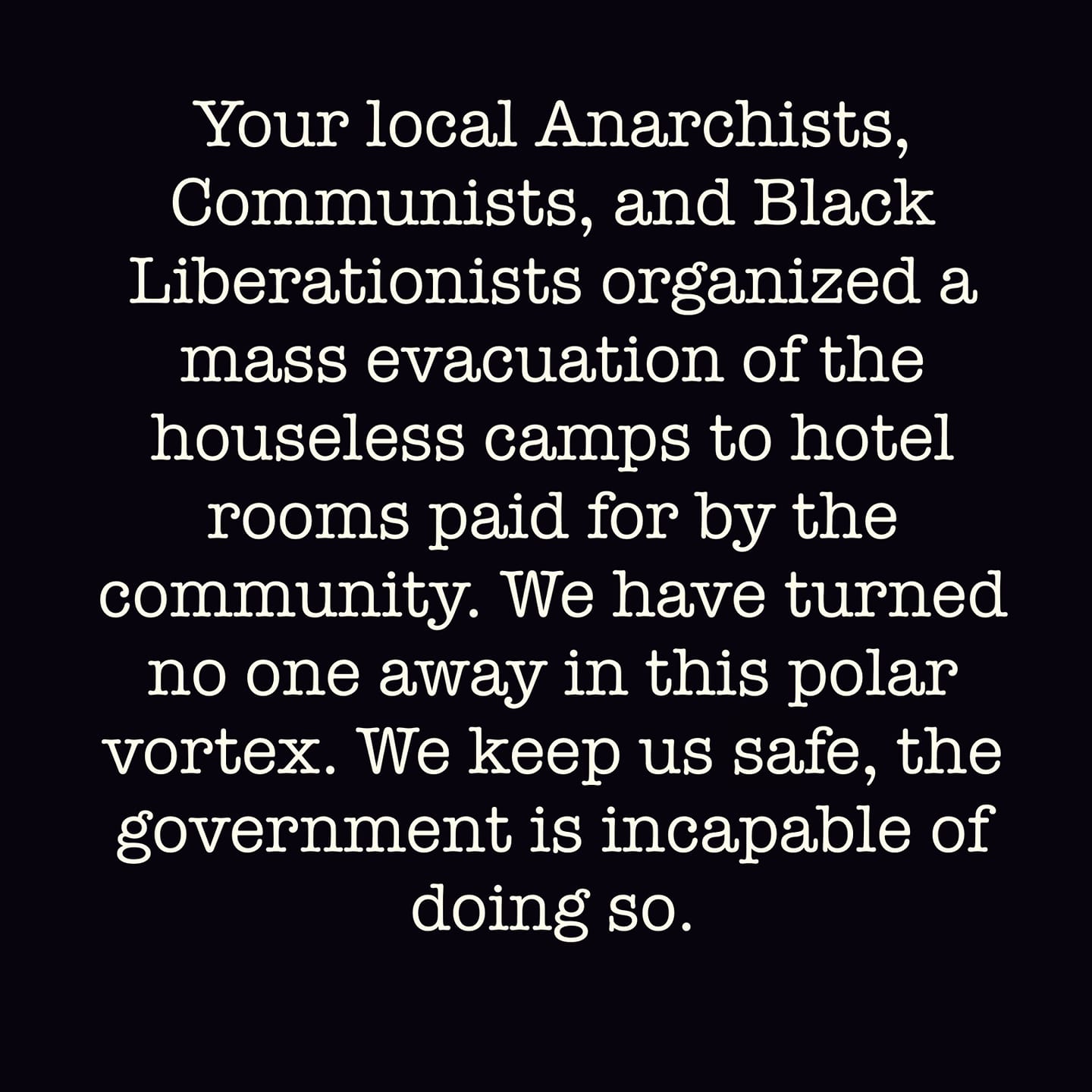
This was our first “public” event since adopting the name Des Moines Mutual Aid, a name we gave our crew during our growing work with our relatives at the houseless camps throughout the city and our help with coordinating a weekly free grocery store that has a 50 year history, founded by the Des Moines Chapter of The Black Panther Party For Self Defense.
A year ago we started laying the foundation for work we had no idea what was coming.
As we were adjusting our work with the camps and grocery re-distribution in response to the Covid-19 pandemic, both that continued to grow in need and importance, the police continued their jobs and legacy of brutality and murder.
This nation exploded in righteous rage in response to the pig murders of Breonna Taylor and George Floyd.
DMMA realized we were in a position to organize a bail fund to keep our fighters out of jail, both to keep the streets alive as a new phase of The Movement was being born, and because jails are a hotspot of COVID-19 spread.
Not to mention the racial and economic oppression that is the cash bail system.
In the past year, DMMA has expanded its work in multiple directions and gained many partners and allies.
We partnered with the Des Moines Black Liberation Movement (@DesMoinesBLM) to create the DSM BLM Rent Relief initiative to help keep families in their homes in the midst of a pandemic and the winter.
The camp work has grown exponentially but is being managed with our collaboration with Edna Griffin Mutual Aid (@egma_dsm), DSM Black Liberation Movement (@DesMoinesBLM), and The Great Plains Action Society (@PlainsAction).
The bail fund remains successful because of desire from the public and a partnership with Prairielands Freedom Fund (@prairielandsff) (formerly The Eastern Iowa Community Bond Project).
The weekly free food store has maintained itself, carrying on the legacy it inherited.
Every one of our accomplishments are directly tied to the support of so many people donating time, talent, and funds to the work. We are overwhelmed with all of your support and hope you feel we are honoring what we promised.
All of these Mutual Aid projects are just a few of many that this city has created in the last year in response to the many crises we face, not only confronting the problems and fulfilling the needs directly in front of us, but creating a sustainable movement that will be capable of responding to what’s next and shaping our collective futures as we replace the systems that fail us.
These last 12 months have been wild and a real test of all of our capabilities to collectively organize.
But it is clear that we as a city have what it takes to do what is needed in 2021, no matter what crisis is next.
Much gratitude to you all. In love and rage, Des Moines Mutual Aid January 6, 2021
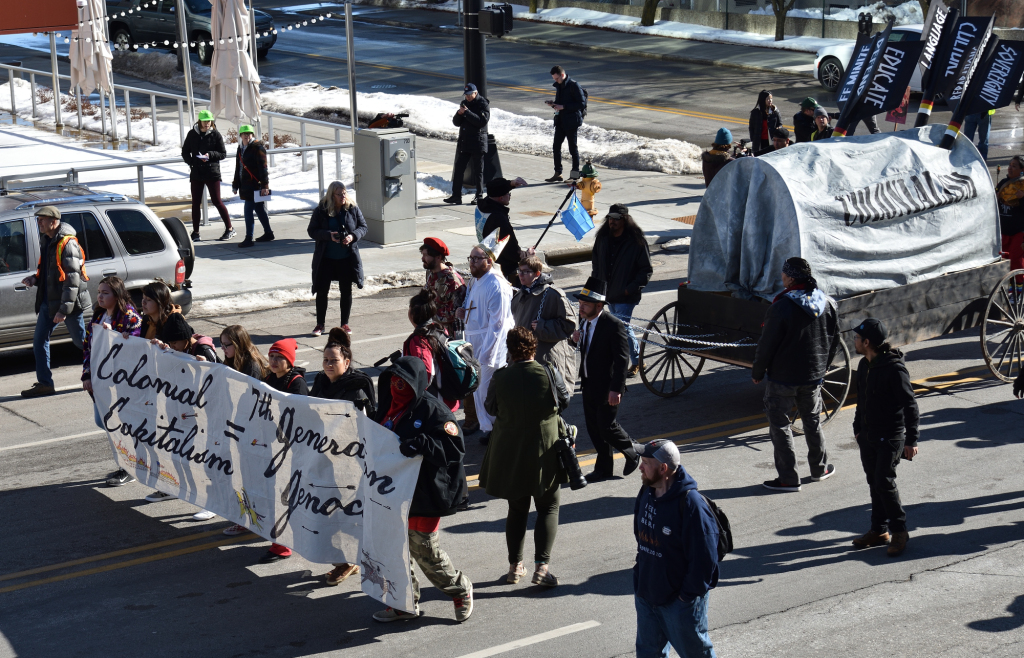
Today is a day that is always remembered in Indian Country. On the day after Christmas some 160 years ago, the largest single-day mass execution in the United States occurred in Mankato, Minnesota. It is often referred to as the “Dakota 38+2” for the 38 Dakota warriors and two others who were hanged in Mankato.
As journalists, part of our job is to “write the first draft of history” with stories about what is happening among Native Americans in contemporary times. But we also feel that there are several times each year where we should be remembering the historic events that brought us here today. That is why we are sharing this story in a standalone newsletter with you on this somber day of remembrance. Because history needs to be told so it is not forgotten.
This Day in History: Dec. 26, 1862 —Most commonly revered as the United States President who freed the slaves, Abraham Lincoln is known for something different in Indian Country. On this day 160 years ago, 38 Dakota men were hanged following orders from Lincoln in the largest mass-hanging in U.S. history.
The execution happened in Mankato, Minnesota in front of some 4,000 spectators. Some historical accounts say that the men each held hands and sang a traditional Dakota song in the moments leading up to their deaths.
Often erased from history, the men’s hangings were direct consequences of the U.S. and Dakota War of 1862. The war was the result of broken treaties and broken promises from the U.S. government after Dakota land continued to be diminished.
This Day in History – Dec. 26, 1862:38 Dakota Men Executed by Order of Abraham Lincoln by Levi Ricket and Neely Bardwell, Native News Online, December 26, 2023
The Dakota War of 1862, also known as the Sioux Uprising, the Dakota Uprising, the Sioux Outbreak of 1862, the Dakota Conflict, or Little Crow’s War, was an armed conflict between the United States and several eastern bands of Dakota collectively known as the Santee Sioux. It began on August 18, 1862, when the Dakota, who were facing starvation and displacement, attacked white settlements at the Lower Sioux Agency along the Minnesota River valley in southwest Minnesota. The war lasted for five weeks and resulted in the deaths of hundreds of settlers. In the aftermath, the Dakota people were exiled from their homelands, forcibly sent to reservations in the Dakotas and Nebraska, and the State of Minnesota confiscated and sold all their remaining land in the state. The war also ended with the largest mass execution in United States history with the hanging of 38 Dakota men.
All four bands of eastern Dakota had been pressured into ceding large tracts of land to the United States in a series of treaties and were reluctantly moved to a reservation strip twenty miles wide, centered on Minnesota River. There, they were encouraged by U.S. Indian agents to become farmers rather than continue their hunting traditions. A crop failure in 1861, followed by a harsh winter along with poor hunting due to depletion of wild game, led to starvation and severe hardship for the eastern Dakota. In the summer of 1862, tensions between the eastern Dakota, the traders, and the Indian agents reached a breaking point.
On August 17, 1862, four young native men killed five white settlers in Acton, Minnesota. That night, a faction led by Chief Little Crow decided to attack the Lower Sioux Agency the next morning in an effort to drive all settlers out of the Minnesota River valley. In the weeks that followed, Dakota men attacked and killed hundreds of settlers, causing thousands to flee the area, and took hundreds of “mixed-blood” and white hostages, almost all women and children. The demands of the Civil War slowed the U.S. government response, but on September 23, 1862, an army of volunteer infantry, artillery and citizen militia assembled by Governor Alexander Ramsey and led by Colonel Henry Hastings Sibley finally defeated Little Crow at the Battle of Wood Lake.
The amazing video about this history, Dakota 38, is based on the vision of Jim Miller, a Native spiritual leader. “This film was created in line with Native healing practices. In honoring this ceremony, we are screening and distributing “Dakota 38″ as a gift rather than for sale. This film was inspired by one individual’s dream and is not promoting any organization or affiliated with any political or religious groups. It was simply created to encourage healing and reconciliation.” Smooth Feather
Composers Jay McKay and Jay Parrotta spent three years fusing sound and visuals into a cinematic experience that takes the viewer onto the Northern Plains and through a relentless pounding blizzard. Sound has the ability to transport, and the mix of chants, drums and melody is spellbinding.
In the spring of 2005, Jim Miller, a Native spiritual leader and Vietnam veteran, found himself in a dream riding on horseback across the great plains of South Dakota. Just before he awoke, he arrived at a riverbank in Minnesota and saw 38 of his Dakota ancestors hanged. At the time, Jim knew nothing of the largest mass execution in United States history, ordered by Abraham Lincoln on December 26, 1862. “When you have dreams, you know when they come from the creator… As any recovered alcoholic, I made believe that I didn’t get it. I tried to put it out of my mind, yet it’s one of those dreams that bothers you night and day.”
Now, four years later, embracing the message of the dream, Jim and a group of riders retrace the 330-mile route of his dream on horseback from Lower Brule, South Dakota to Mankato, Minnesota to arrive at the hanging site on the anniversary of the execution. “We can’t blame the wasichus anymore. We’re doing it to ourselves. We’re selling drugs. We’re killing our own people. That’s what this ride is about, is healing.” This is the story of their journey- the blizzards they endure, the Native and Non-Native communities that house and feed them along the way, and the dark history they are beginning to wipe away.
This film was created in line with Native healing practices. In honoring this ceremony, we are screening and distributing “Dakota 38″ as a gift rather than for sale. This film was inspired by one individual’s dream and is not promoting any organization or affiliated with any political or religious groups. It was simply created to encourage healing and reconciliation.
The day after Christmas, Dec. 26, 1862, President Abraham Lincoln ordered the largest execution in United States history — the hanging of 38 Dakota men. At the heart of this is the genocide and land theft of the tribal nations by the white settler-colonialists. #LANDBACK
“Today, all the people of the region continue to be affected by this traumatic event. We take the youth on the ride, so that they may connect with their culture in a more physical way. By being apart of the ride they are connecting themselves with their ancestors and their horse relatives. It is through the ride that they are able to see the beauty in the history and their culture.” SUNKTANKA
The Dakota 38 Plus 2 Memorial Ride is a ride that honors the 38 Dakota men who were hung in Mankato in December of 1862. The ride began from the vision of a Dakota elder and warrior. In this vision riders would ride from Crow Creek, SD to Mankato, MN. Ever since then the ride has continued to happen annually from the beginning year December 2005 to present collecting supporters and new riders along the way.
My name is Winona Goodthunder. My Dakota name is Wambde Ho Waste Win, Eagle Woman with a Good Voice. I have ridden in this ride since 2006, the second year. I was in eighth grade when I started. As the years have gone by the riders that we’ve met every year have become a part of a new kind of family. We are all different even though we are all somehow related. Those of us who are from the Lower Sioux region are used to different types of living than those who come from Canada, Nebraska, South Dakota, and other parts of the world. The differences that we have are forgotten when we come to this ride. We get up early in the morning to get our horses ready together. We ride all day together, and we eat together at night. It is then that our differences merge and we teach each other. The thing that seems to bind us the most is the fact that we can laugh. Humor may not be what is expected on a memorial ride, but it is encouraged for it is stressed that this ride is for forgiveness.
Although our group goes only for the last four days it is enough to establish that sense of family amongst each other. It is from these riders that I’ve learned most about my culture. I have read books, but they cannot foster the feeling that one gets when they are living in an experience such as the ride.
I have watched this video, “Dakota 38”, many times, and again today. My classmate from Scattergood Friends School, Lee Tesdell, taught in Mankato, and has spoken about this history with me.
The photography and especially the story, are just excellent and very moving. I’ve been learning how trauma is passed from generation to generation. The events shown in the film “Dakota 38” occurred in 1862.
“Today, all the people of the region continue to be affected by this traumatic event.” SUNKTANKA
Forgive Everyone Everything
FORGIVE EVERYONE EVERYTHING is inscribed on a bench in Reconciliation Park, Mankato, Minnesota, where the ride ends. The photo of the memorial shows a list of the names of the 38 Dakota men who were all hanged at the same time in what is now Mankato, Minnesota. A raised wooden platform, with 38 nooses along the sides, was constructed. It is said nearly 4,000 people witnessed this, the largest execution in U.S. history, on December 26, 1862.
As to who needs to be forgiven, there are many answers to that.
At the heart of this is the genocide and land theft of the tribal nations by the white settler-colonialists.
More specifically this history came about as the Dakota were forced into smaller and smaller areas of land, to the point they could not sustain themselves.
Glory to God in the highest, and on earth peace, good will toward men.
Luke 2:14
I am deeply distressed by the dichotomy between ‘peace on earth, good will toward men’ and the blatant opposition to that by the forces of global dominance. I cannot fathom the massacre in Gaza and the silence of the people in this country. The overwhelming majority of people in other countries are not silent.
This has been the pattern that began when the Europeans landed. The enslavement of those brought here from Africa continues with economic injustice and mass incarceration. White settler colonialism continues as Indigenous lands remain occupied today.
The rapid rise of authoritarianism is the next stage of dominance over us all.
The silence is astounding.
That silence is ruthlessly enforced, not only against opposition to war but also for the rape of Mother Earth. Or for a reckoning about past injustices such as the Indian schools of forced assimilation or structural racism.
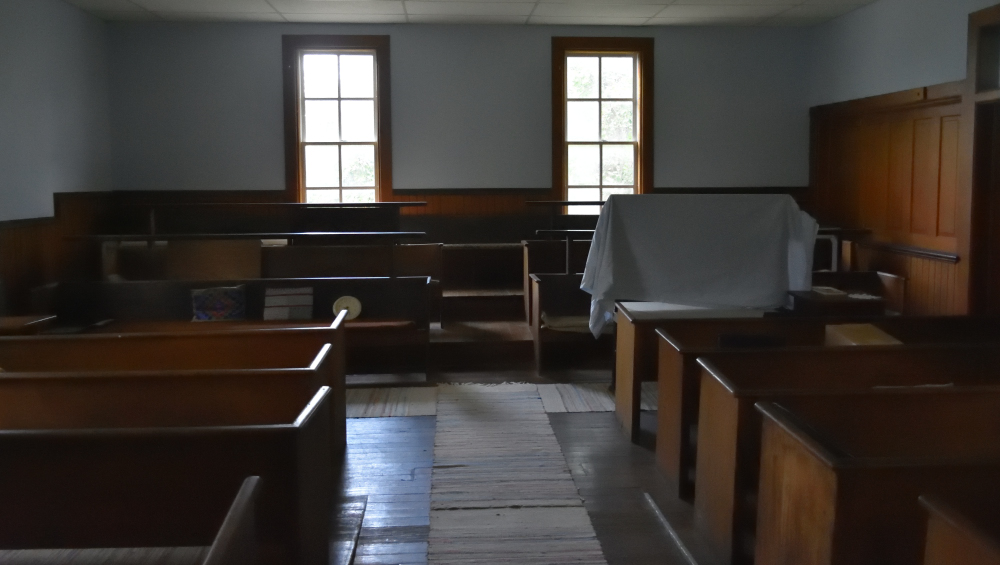
I told my Quaker meeting I have this sense of being threatened by simply writing about these things. Which is proof that authoritarianism is working. Quelling dissent. I wonder if I might be imprisoned one day.
All we are saying is give peace a chance.
John Lennon
The message of Christmas has traditionally involved prayers for goodwill toward all and “peace on Earth,” but through their opposition to ceasefire in Gaza, most Western Christians are affirming the opposite values: that violence, weapons and destruction are the only response to real and perceived enemies.
The U.S. Christian Palestinian communities that I am a part of are truly puzzled at the behavior of the many Western Christians who seem to see no dissonance between the message of love and peace that is at the heart of our shared religion, and their backing for Israeli’s military assault against Palestinian civilians, which has killed more than 20,000 people in Gaza alone within the last three months.
Anytime an attack occurs, or lives are lost, we are called to choose between two worldviews in our response. One worldview holds that violence, bombings and brutal force is the only method available and should be pursued relentlessly until the enemy is vanquished, regardless of the cost in lives and destruction for civilians on both sides.
But an alternative worldview insists on the way of peace, reconciliation, justice and tolerance.
United States diplomats once again held up a vote on a watered-down United Nations Security Council resolution on Wednesday aimed at bringing more aid and relief to civilians in the besieged Gaza Strip as reports of starvation, mass killings, and other war crimes allegedly committed by the Israeli military continue to pile up.
Despite massive international support for a ceasefire at the UN, on December 8, the U.S. blocked a previous attempt by the Security Council to leverage international law and secure a humanitarian ceasefire so more aid can enter Gaza.
I recently attended the Zoom meeting hosted by the Pachamama Alliance, Insights for Earth Activists, with Arkan Lushwala. That video recording can be found below.
Arkan Lushwala is a Peruvian ceremonial leader and author who focuses on teaching others practices that can restore balance to the planet. He was adopted by a Lakota elder named Basil Brave Heart and carries spiritual traditions from the Andes and the Amazon. He has written three books: The Time of the Black Jaguar, Deer and Thunder, and The Spirit of the Glacier Speaks. You can read the Epilogue of The Spirit of the Glacier Speaks here.
I value what Arkan says because of the way he expresses his spirituality. I find it similar to how I try to express my own.
He speaks of ancestral wisdom having more to offer than technology, that technology cannot illuminate nor improve what lives inside people. I am blessed to have wisdom from my Quaker ancestors.
Introduction
While singing to the spirits of the mountains and preparing sacred offerings to feed our Mother Earth, I am seeing the paths that the Universe has opened for us lately—paths of spiritual and human development that we are going to need to walk in order to continue living. In the midst of so many disasters affecting humanity, I have seen something beautiful that I can no longer hide. Even more, I feel a longing to give birth to something new. And as mothers know well, this can only be done with full conviction, like a whale that crosses an ocean. Among my convictions, one comes from my relationship with the ancestral world I grew up surrounded by, having been born in the Andes. I am convinced that anything new, to have real power, needs an ancestral root.
When seeking new and better solutions for the great social problems and natural catastrophes of the present moment, I believe that ancestral wisdom has more to offer than technological advances. Because technology does not have the ability to illuminate nor improve what lives inside people—the true source of the problems that are harming the world. Social injustice, the destruction of nature, excessive wealth, and extreme poverty come as a result of excessive human ambition. Such greed will not disappear with new technologies. We need greed to stop being fashionable, to cease being the marker of human progress. Only with wisdom will it be possible to resolve the problems of our time, with sensible cultural proposals that can help us aspire to reach happiness in another way. Therefore, I have no doubt that the ancestral wisdom of our Andean-Amazonian communities has much to contribute to the development of a new world culture.
Lushwala, Arkan. The Spirit of the Glacier Speaks: Ancestral Teachings of the Andean World for the Time of Natural Disorder (pp. 7-8). Disruption Books. Kindle Edition.
Arkan writes about the early European settlers being only interested in gold and being afraid of the Indigenous sacred world.
Just as they (Europeans) lost interest in being healed by our food, they could no longer see our hearts. Their eyes sought only gold, and they could not see us. They saw our sacred world from afar and, afraid of it, did not come closer. Their lack of experience in the art of entering into good relationships did not allow them to love us. Their only experience was with fighting, and they waged a terrible war in order to legalize the theft of our lands through their triumph. And despite the fact that they made our lands their own, they were never able to know their true treasures. Given that those who cannot be satisfied also don’t know how to stop, they didn’t consider taking the time to get to know the deepest secrets and the real treasures of the place they had come to. They continued on their way, looking for something new to appropriate. If they had simply let themselves sit down for a moment amid the pastures of these lands, they might have felt something in their hearts, and they might have become enamored of the beautiful people here who were one with the land. But they were too busy and could not take notice of what lay right in front of them. And so they lost the chance of encountering our mother, the mother we all have in common, the one they had forgotten—our Mother Earth.
Lushwala, Arkan. The Spirit of the Glacier Speaks: Ancestral Teachings of the Andean World for the Time of Natural Disorder (pp. 8-9). Disruption Books. Kindle Edition.
The most spiritual thing now is action. This action needs to be born from a place in ourselves.
Arkan Lushwala
One day a brother from another country who was becoming a good friend came to see me. He was very affected by these same questions, tired of feeling himself separated from the beauty of the world. He had a great spiritual hunger and was searching for something different. I remember him asking me, “What can we do to change, those of us who have lost the memory of the original design for good living?” And aware that I didn’t have an answer for such a big question, I managed to not go to my head and look for one. I just responded spontaneously, “My brother, stop dedicating yourselves with so much enthusiasm to digging the holes you are going to fall into. Stop for a moment, brother, stop so much doing. Look, brother, let’s share some food, and let’s taste the earth.” I passed him some Kuka leaves and said to him: “Hallpaykusunchis wayq’echay” (Let us be the land—with tender affection—for our benefit, my little brother). And after a long silence, I smiled and said to him, “Saksachikuy wawq’ey,” which means “Make yourself satiated with tender affection for your benefit, my brother.
Arkan Lushwala, The Spirit of the Glacier Speaks
aware that I didn’t have an answer for such a big question, I managed to not go to my head and look for one
Arkan Lushwala
What can I do?
Speaking about what is happening on Earth right now, many of the conditions of life that we used to take for granted, now are really out of balance. Hopefully we still have time to get back into balance so life may continue. I travel around the world and meet people and talk to people from all different cultures. And everywhere people ask, “what can we do?” The question, what can we do, is the second question. The first question is “what can we be?” Because what you can do is a consequence of who you are. Once you know what you can be, you know what you can do, and we cannot afford wasting time; we have little time. We need to be precise now. When someone sincerely asks, “what can I do?” my humble answer, the only answer that I find in my heart to be sincere is, “First find out what you can be.” Action is extremely necessary at this time. This is not a time just to talk about it. The most spiritual thing now is action. To do something about what’s happening. To go help where help is needed. To stand up when we need to stand up, and protect what is being damaged. And still, this action needs to be born from a place in ourselves that has real talent, real intelligence, real power, real connection to the heart of the Earth, to universal wisdom, so our actions are not a waste of time. So our actions are precise, our actions are in harmony with the movement, the sacred movement, of that force that wants to renew life here on Earth and make it better for the following generations
The most spiritual thing now is action. This action needs to be born from a place in ourselves.
Arkan Lushwala
Arkan talks about caring for our “sacred pot,” which made me want to visualize what that might look like. I’ve been learning to use a graphics tool, Microsoft Designer, to share about spirituality since words are usually inadequate.
I’m not sure why I’m led to revisit and re-edit photos I’ve taken of war memorials over the years. I think this is in part because war has become so sanitized and remote in this country. Even killing is done remotely by drone operators in the US.
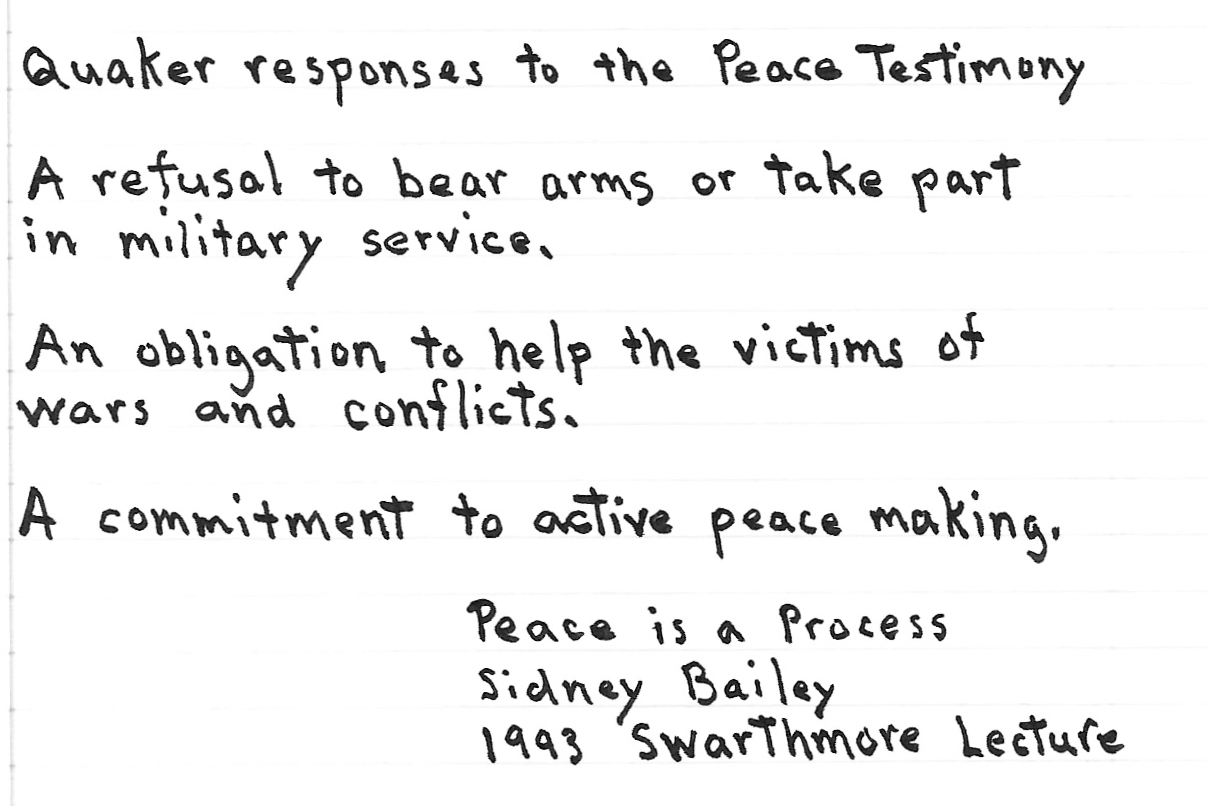
I was raised in Quaker communities, which oppose war. The Vietnam War was a significant influence on me as I was coming of age, a high school student at the Quaker boarding school, Scattergood Friends School, in Eastern Iowa. I spent many days, weeks, and months, studying and praying about what to do and eventually turned in my draft cards.
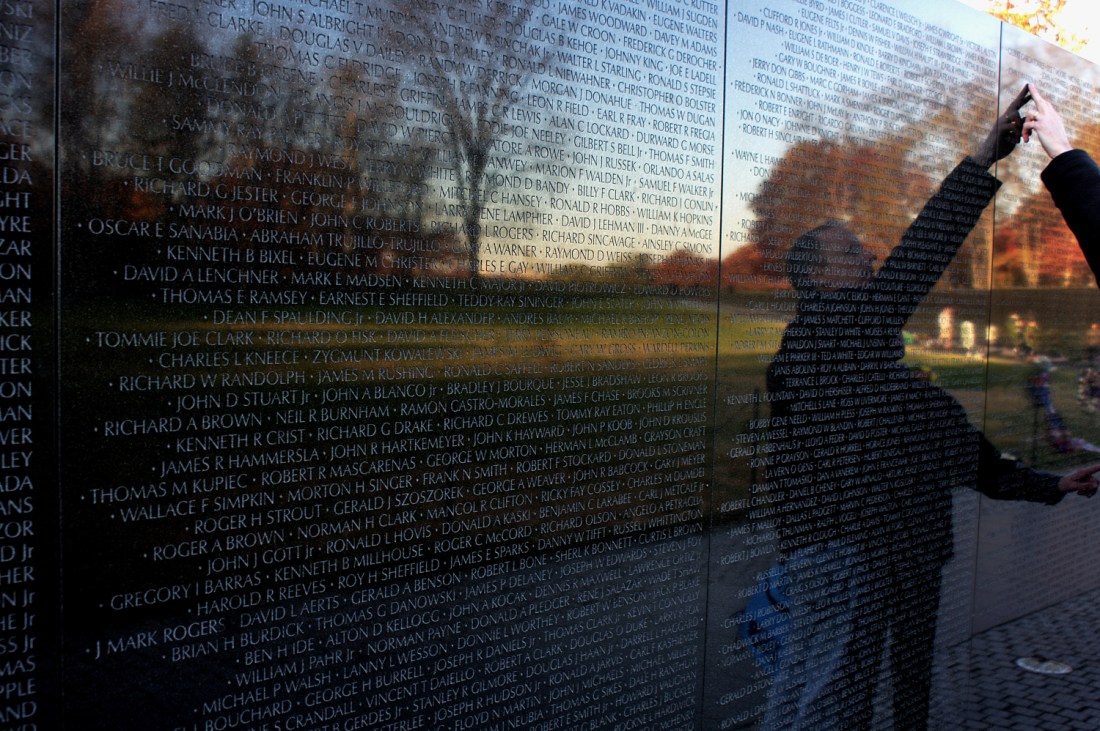
My most recent post, “Now shall I walk, or should I ride?” included a reference to this new album about the Vietnam War memorial. It is interesting to see the diversity of the designs of the memorials for this country’s wars. The Vietnam War Memorial is profoundly striking.
Next, I’ve been re-editing photos I took of the Korean War Memorial over the years. For about a decade, I would go to Washington DC as a member of the General Committee of the Friends Committee on National Legislation (FCNL), and looked forward to taking photos while I was there.
The Korean War Memorial is very moving, as well. The artist, Frank Gaylord, was an American sculptor who created the 19 stainless steel statues of soldiers and sailors that represent the U.S. military personnel who served in that war (1950-1953).
As with the Vietnam War Memorial, visitors speak in hushed tones, if at all.
The group of life-sized sculptures is very disturbing in several ways. You get the sense of what it would be like to have them come upon you.
But what struck me most was the utter weariness and exhaustion on the soldiers’ faces. Even as a pacifist myself, I am always mindful of the courage it takes to be in the military. I can never fault anyone for making such sacrifices when they believe in the military as the way to protect their country and their loved ones. And are willing to risk life-long, debilitating injury or death.
In the photos below, the mural wall can be seen that depicts the faces of soldiers, nurses, and other personnel who served in the war. There is also one photo of the Pool of Remembrance, which is a shallow circular pool at the apex of the triangle of soldiers. The pool has the names of the countries that participated in the war and the numbers of casualties engraved on its walls.
Gaylord based some of the faces of the soldiers on the men he served with during World War II, such as William A. Callaway and John Erdman. He said he wanted to represent an ethnic cross-section of America and all branches of the military. https://en.wikipedia.org/wiki/Frank_Gaylord
My friends at the Great Plains Action Society (GPAS) have done a lot of work to call out the whitewashed history of Thanksgiving, one of many colonial mythologies about Indigenous Peoples and the founding of the US and Canada, which I wrote about yesterday.
But of course, there is nothing wrong with reflecting on what we are thankful for.
I am grateful for many things.
My first thought went to something I recently heard someone say. That he was a draft resister in the Vietnam War era, and that was the best thing he’d ever done. I was astonished to hear that fifty years later. I know what he was saying because I was a draft resister then, as well. As an 18-year-old, I knew this decision would set the course of my life. It would be easy to accept conscientious objector status and do two years of alternative service. Fortunately, though, I was aware of the stories of many Quaker men I knew who refused to participate in the war machine. Knowing they risked imprisonment and often were. But I saw how that choice defined the rest of their lives.
It was a clear choice that Robert Frost’s poem, The Road Not Taken, tells so eloquently.
At that same time, I found I had another decision to make. Moving to Indianapolis, I was horrified by the noxious clouds of smog pouring from every tailpipe; this was before catalytic converters covered up the damage being done to Mother Earth. I made another decision that was definitely a road less traveled (so to speak): to live without a car. That was another of the best decisions of my life, defining so much of what happened thereafter. Affecting every day of my life as I was able to witness the wonder of what I was walking through.
So the phrase ‘Now shall I walk, or shall I ride?’ in Metaphors of Movement caught my attention.
The Best Friend
Now shall I walk Or shall I ride? “Ride”, Pleasure said; “Walk”, Joy replied.
William Henry Davies 1871 – 1940
In his 1914 poemThe Best Friend, the Welsh poet and occasional vagabond W.H. Davies pondered a timeless question: “Now shall I walk, or should I ride?” This seemingly simple dilemma encapsulates the modern industrial choice between slow-paced ageless wandering on foot or embracing the thrill of motorized transport, along with the attendant speed and freedom it offers, which has become such an integral part of our contemporary lifestyle. It likewise speaks volumes about us and about the nature of the choices we make daily.
Gone perhaps are the days of poetic musings over the merits of walking versus riding. Yet one can’t help but wonder if we have lost something essential along the way—a connection with the world that only a leisurely walk can provide.
C.S. Lewis, while growing up in the outskirts of Belfast, Northern Ireland, counted it among his blessings that his father had no car, so the deadly power of rushing about wherever he pleased had not been given to him. He thus measured distance by the standard of a man walking on his two feet and not by the standard of the internal combustion engine, for it is here where both space and time is annihilated by the deflowering of distance. In return, he possessed “infinite riches” in comparison to what would have been to motorists a “little room.” Key to those riches was what he came to call, and experience throughout life as, “joy,” and walking became a portal through which he sought it. A participatory engagement with life and living which I contend is as vital to our survival as breathing itself.
“I hope that in this year to come, you make mistakes. Because if you are making mistakes, then you are making new things, trying new things, learning, living, pushing yourself, changing yourself, changing your world. You’re doing things you’ve never done before, and more importantly, you’re doing something.”
Neil Gaiman
The Road Not Taken
Two roads diverged in a yellow wood, And sorry I could not travel both And be one traveler, long I stood And looked down one as far as I could To where it bent in the undergrowth;
Then took the other, as just as fair, And having perhaps the better claim, Because it was grassy and wanted wear; Though as for that the passing there Had worn them really about the same,
And both that morning equally lay In leaves no step had trodden black. Oh, I kept the first for another day! Yet knowing how way leads on to way, I doubted if I should ever come back.
I shall be telling this with a sigh Somewhere ages and ages hence: Two roads diverged in a wood, and I— I took the one less traveled by, And that has made all the difference.
What do you think about what is happening in the Middle East?
The mainstream media is siding with Israel. The narrative is anything Israel does is justified in response to the horrific attacks by Hamas on October 7. Ignoring 75 years of oppression by Israel against the Palestinian people. Ignoring that Hamas is separate from the Palestinian people.
Empire
Nothing can justify the relentless bombing of Gaza. The United States believes and acts otherwise. Sending U.S. military might to the region. Besides sending additional billions of dollars to Israel, the U.S. has vetoed calls for a ceasefire at the United Nations.
UNITED NATIONS (AP) — The U.S. vetoed a U.N. resolution Wednesday to condemn all violence against civilians in the Israel-Hamas war and to urge humanitarian aid to Palestinians in Gaza, saying it was too early to craft an appropriate Security Council response to the crisis.
What the U.S. and Israel are doing is a blatant display of empire, which highlights the contrast with those who have been struggling against empire for centuries.
The settler states that dispossess and occupy our lands support Israel in dispossessing and occupying Palestine.
The Red Nation
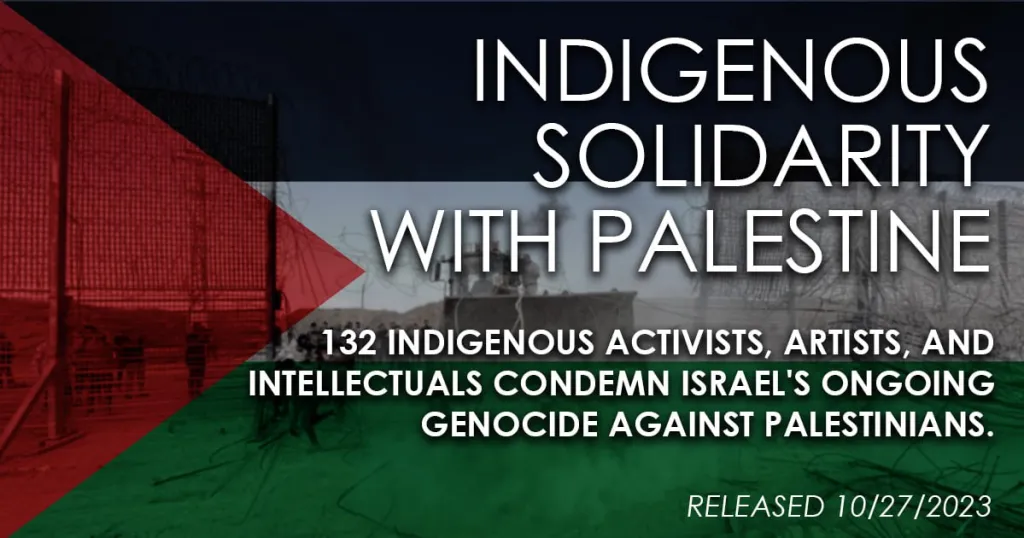
Indigenous Solidarity with Palestine
The past two weeks of horrific violence in Gaza resulted from 75 years of Israeli settler colonial dispossession, 56 years of military occupation, and 16 years of an open-air prison for 2.2 million people, half of whom are children. The atrocities of the Israeli apartheid regime in Palestine are relentless, illegal under international law, and consistent with settler-colonial projects globally.
The settler states that dispossess and occupy our lands support Israel in dispossessing and occupying Palestine.
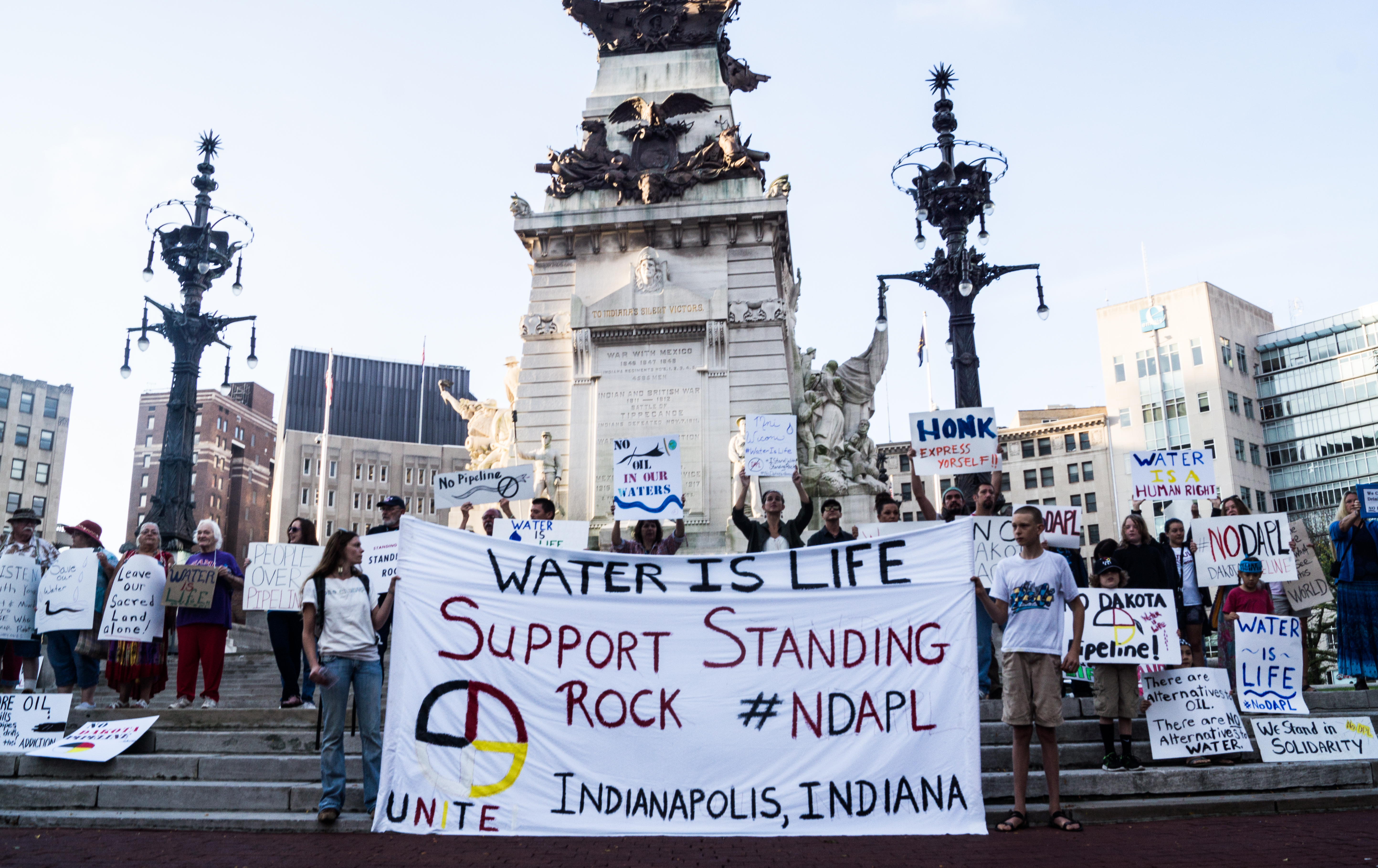
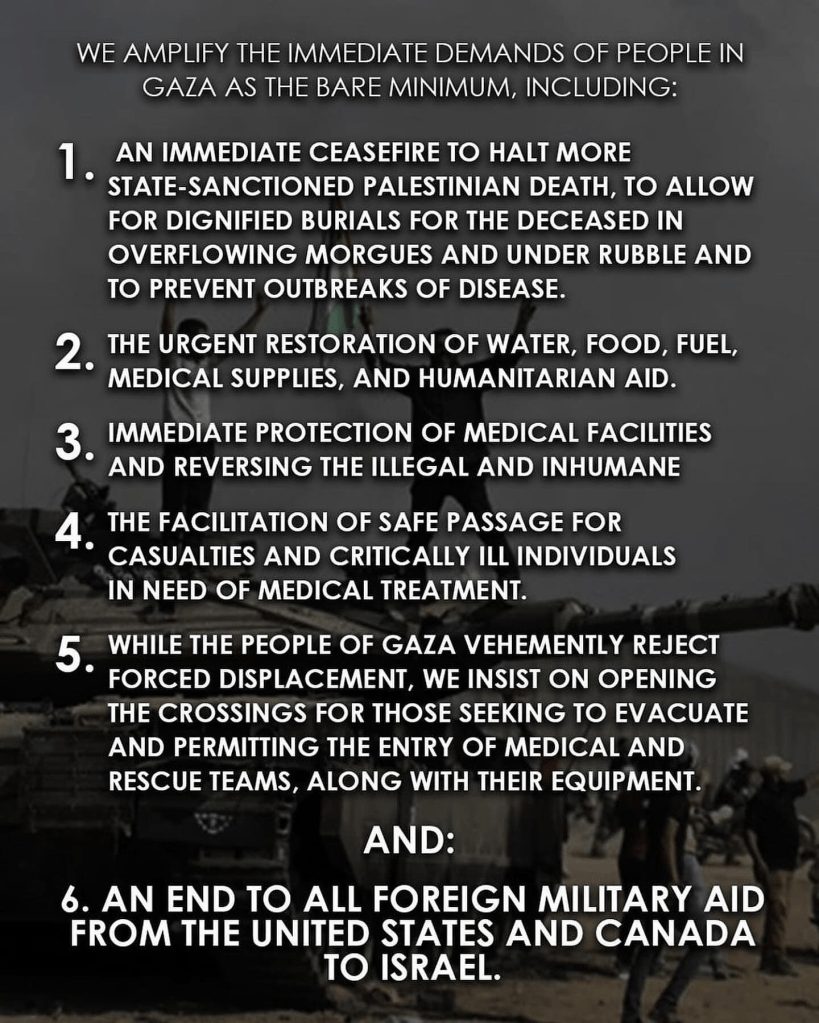
132 Indigenous activists, artists, and intellectuals, including WPLC Executive Director Natali Segovia, condemn Israel’s ongoing genocide against Palestinians. They call for an end to U.S. and Canadian military aid to Israel, an immediate ceasefire, uplifting the Palestinian call to Boycott, Divest, and Sanction (BDS) Israel and Israeli institutions complicit in apartheid and settler colonialism, freedom for political prisoners, land back, and the right of return.
What questions do you ask these days? Ask yourself or others? Are you brave enough to ask anything at all? Such as what can we do about accelerating authoritarianism? Runaway global burning? Why is the US complicit in the Israeli carpet bombing of Gaza? These things can only happen if authority is not questioned. There is a palpable sense of fear for anyone to question empire today. People who question are beaten, jailed, killed.
Yesterday I wrote about asking the right questions. As a spiritual person, I have been, and believe I will continue to receive answers from the Spirit or Inner Light. I appreciate the spirituality of the following.
From my career in medical research, the first thing I learned was the most important thing is to ask the right questions.
So, during a recent discussion about Quakers and the Indian Boarding Schools, I recognized the significance of the question that was asked, “how can we decolonize ourselves?” Prior to that, we were lost as we tried to understand our ancestor’s involvement in those institutions. It seemed the subtext of the question is “is it even possible to decolonize ourselves?” Which I tried to answer yesterday.
That question immediately brought to mind something that I had heard the Indigenous spiritual leader, Arkan Lushwala, say.
The answer to “what can I do?”
“Everywhere people ask, “what can we do?” The question, what can we do, is the second question. The first question is “what can we be?” Because what you can do is a consequence of who you are. Once you know what you can be, you know what you can do.”
Arkan Lushwala
Speaking about what is happening on Earth right now, many of the conditions of life that we used to take for granted, now are really out of balance. Hopefully we still have time to get back into balance so life may continue. I travel around the world and meet people and talk to people from all different cultures. And everywhere people ask, “what can we do?” The question, what can we do, is the second question. The first question is “what can we be?” Because what you can do is a consequence of who you are. Once you know what you can be, you know what you can do, and we cannot afford wasting time; we have little time. We need to be precise now. When someone sincerely asks, “what can I do?” my humble answer, the only answer that I find in my heart to be sincere is, “First find out what you can be.” Action is extremely necessary at this time. This is not a time just to talk about it. The most spiritual thing now is action. To do something about what’s happening. To go help where help is needed. To stand up when we need to stand up, and protect what is being damaged. And still, this action needs to be born from a place in ourselves that has real talent, real intelligence, real power, real connection to the heart of the Earth, to universal wisdom, so, our actions are not a waste of time. So, our actions are precise, our actions are in harmony with the movement, the sacred movement, of that force that wants to renew life here on Earth and make it better for the following generations.
Arkan Lushwala
Arkan says we are facing life threatening situations related to environmental damage. We are facing such severe challenges that we cannot solve them only by ourselves.
We must move beyond thinking and talking. Action now is essential.
Action is spiritual.
We need to practice trying to reach our sacred space. We need a higher universal intelligence to help solve these problems.
We must open a sacred space for prayer so we may be open to the warrior spirit.
The importance of prayer.
We pray as a form of connecting to other forms of communication
We need to be aware of what is happening in the moment, elevate ourselves, move closer to the sacred
I first have to reach deep into my own heart
You start praying while you are also listening. I become aware of, remembering, what I pray about at that moment. We need to rely on our own ancient indigenous memory. Stop being isolated. Fully become part of the earth and water and plants and air. This is an immense source of knowledge about these problems.
I am in front of the sacred fire of all who are listening. Let’s say that I am thinking now. I am remembering. The notion of intelligence and to understand refers to memory. Intelligence means learning, but also achieving that state in your mind when you are remembering. The air that we are breathing carries the memories of the ages, the movement of energy. Deepest intelligence in our culture is memory. There are always memories of the ages in all that surrounds us.
The state of being, the prayer, makes us open to receiving. If we are really open, and not blocking ourselves, and connected to what is around us, with our eyes, breath, sensations, and feeling that arrive in our heart, through our antenna, if we are open in this way while we are doing something, our action is being infused with guidance or instructions. There is something there that is watching what you are doing and helping guide you. Sometimes we need the help of the elders or others to understand these experiences.
We ask for help. When we put ourselves in that elevated space, that makes it much easier for us to receive help. Help is always there but we often miss the messages.
If I am open and receptive to other frequencies and the higher state of my being, I’ll have much more help in my work.
The correct way is not to take credit, but the joy is the moment itself, by feeling integrated to life while you are doing the action.
When we sit with others in a circle, when we all change the state of our being together, we move up to the sacred together. Working with others in community, much, much more can be accomplished.
If a person expresses an experience that is from a sacred space of high resonance, I am activated by that. It resonates in my own heart and mind and spirit, and it triggers my memory, too. by the presence of something sacred.
We sit in a circle and witness someone remembering. We receive the same spirit together. Our individual self and agenda slips away. Joining our hearts. Mother Earth is the One, all of us become the One together. A lot of wisdom comes south. We are all impressed by the presence of something sacred.
It is becoming clearer and clearer, with every passing day, that walking a prayerful, peaceful spiritual path is the only way forward to a just, sustainable, and harmonious world.”
A taboo against a subject or activity is a social custom to avoid doing that activity or talking about that subject, because people find them embarrassing or offensive.
I got to the part where he began to explain why it is taboo to talk about our civilization’s meltdown.
You see, right now, at this juncture in human history, a New Set of Taboos have emerged. Taboos exist for a reason—to hide truths we’d rather not see the light of day, because they’re too uncomfortable, painful, shameful, difficult, or challenging. As we do that, social bonds rupture. And so taboos, while they hide Issues that We Have to Face, do so precisely because they keep our tribes and hierarchies intact. There’s a form of short-term stability in them, even if the price, over the long-term, is steep, as it has been for so many civilizations before us.
What are the New Taboos of the Age of Extinction? Well, we’re not supposed to discuss How Bad Things Really Are. In what way? In almost any way. Economically—how our economies are sputtering out. Hey, billionaires are getting richer! Whee! Socially—how predators of the human soul and body both are skyrocketing to power, from abusers of women, to Manfluencers leading young men to become…abusers. How our social contracts have been ripped apart by crackpots who think nobody should have anything. Biologically–how life on the planet is undergoing a literal mass extinction. And—hey, what exactly are we going to do about climate change, and do you think the summer a decade from now is going to…be…pretty…let alone…survivable…for many?
He goes on to describe in detail the taboos we are facing and their many profound, negative, consequences. But you get the idea as soon as it is put in the context of taboo.
Just in the last few months, high-temperature records have been broken multiple times, around the globe. Extreme drought has made it hopeless to even plant crops, which means famine will be increasing. Water supplies for cities and states are drying up. Out-of-control wildfires pollute the air for hundreds of miles. Prices of everything are skyrocketing at the same time many people are losing their jobs to automation and artificial intelligence.
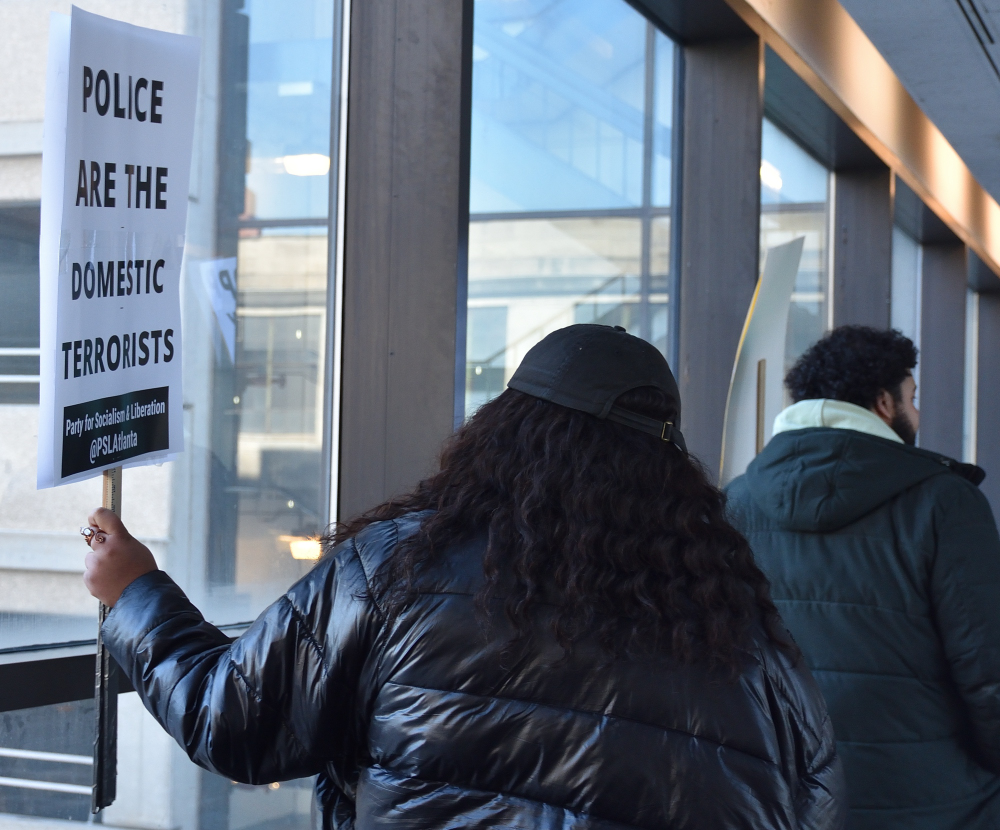
To talk about police brutality. Prisons that function to remove Black men and women from society. Structural racism.
The party in control of the US Congress is nonfunctional. The President of the other party is war-mongering. The expansion of NATO increases the threat felt by Russia. We are pouring billions of dollars into Ukraine as a proxy for this country’s war machine. It is taboo to point out that a small fraction of the military budget could completely fund all social programs.
It is taboo to talk about the rapid rise of Authoritarianism.
It is taboo to even talk about the theft of land from Indigenous peoples, the epidemic of Missing and Murdered Indigenous relatives, and the horrors of the institutions of forced assimilation of native children.
And just now the widening war in the Middle East. It is taboo to even suggest Israel’s policies of apartheid had anything to do with that.
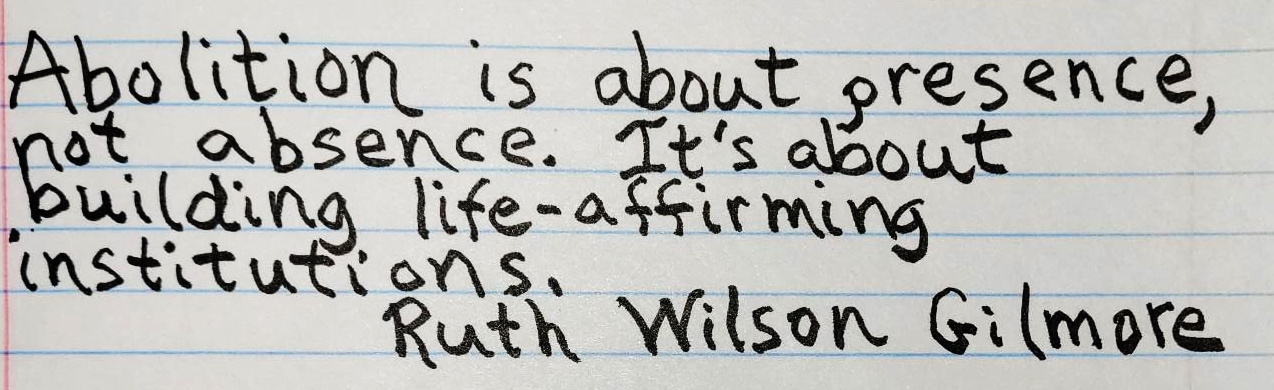
In our Quaker communities, it is taboo to talk about continued racism, involvement with the Indian boarding schools, the abolition of police and prisons, or allowing conveniences to stop us from confronting our use of fossil fuels. To suggest there is anything wrong with capitalism and hierarchies of power.
The minute you even start talking about any of this stuff seriously? Repeatedly? Urgently? You’re met with the Greatest Wall in Human History. It’s not made of bricks or stone. But of something far stronger. Hegemony and ideology. Power. Conformity and social pressure






















 Quakers and Mutual Aid