Critical thinking

This is a continuation of an article I recently wrote about critical skills to prepare for collapse. It is telling that the idea of collapse is more widely accepted, but not surprising as the signs are appearing in so many ways. Rather than being something environmentalists just talk about, the actual damage is occurring everywhere.

But simply applying critical thinking to a problem or situation doesn’t necessarily mean you arrive at the best solution. The more you know about the situation you are facing, the better. Which is why banning books and all the other restrictions being placed on education is so tragic. It also explains why that is being done. Those working to control us don’t want us to have that knowledge. They want us to be dependent on what they want and say.

The point of critical thinking is that as you learn more, you can integrate that into your knowledge base and make better decisions. Which is going to be crucial in the face of the rapid and dramatic changes that will be, already are occurring.

And there are many situations that involve our values, which are not subject to critical thinking.

Several people have asked me why I put ‘critical thinking’ on this list. My sense, from reading works like the Davids’ The Dawn of Everything and Peter Brody’s The Other Side of Eden is that what most distinguishes our civilization from most prehistoric and indigenous ones is that, before education became something that we ‘did’ to people, most people naturally acquired this essential skill, by facing the many existential challenges that life outside our synthetic, infantilizing, prosthetic, standardized culture presented to them every day. In short, they learned how to learn because they had to; they didn’t have to be ‘taught’.

My experience has been that, given that it is no longer a prerequisite for survival, critical thinking is now something that has to be specifically nurtured in people, which probably happens most often by parents’ encouragement. Lacking that, there’s a natural propensity, I think, for simplification and uncritical reaction. But if you’re taught the value and importance of critical thinking, I think you figure out this process of weighing and assessing and challenging what the world throws at you.

But I’m not so sure about this. Maybe, just as we can learn to make our own clothes and grow much of our own food if and when we have to (as millions discovered during the Great Depression), we can also learn to learn, to think critically, to challenge unsupported rhetoric, to think for ourselves instead of relying on increasingly-incompetent media to tell us what we should and should not believe.

When it begins to dawn on us, in five years or twenty-five, that we are going to have to quickly instill the above (see the article) currently rare skills in many or even most of our people, how might we go about it? As pessimistic as I am, I just can’t believe it’s already too late to do so.

So I’m thinking about these questions:

  1. What’s the most effective way to voluntarily get billions of people to the point they are capable of exercising the above skills?
  2. How do we get the timing right: Not so early that there’s not yet a sense of urgency, but not so late that we’re trying to do it in an environment of chaos?
  3. How might we begin to identify, improve the competencies of, and empower the right people to do the mentoring, teaching, training, demonstrating, connecting, modelling, and other hands-on imparting of knowledge and skills needed to make it happen?
  4. How can we make this new, crucial learning easier, and fun?

 ‘How Do We Teach the Critical Skills Needed to Face Collapse?” by Dave Pollard, How To save the world, September 10, 2022.


So I don’t see any top-down ‘professional’ answer to developing the above essential skills in the coming decades, not even the skill of ‘helping people cope’ with collapse. I think the answer has to emerge bottom up, from within each community as that community establishes itself.

 ‘How Do We Teach the Critical Skills Needed to Face Collapse?” by Dave Pollard, How To save the world, September 10, 2022.

So, we arrive at my experience with Mutual Aid. A future article will discuss how Mutual Aid is providing skills and developing communities to face collapse.


We need settlers to organize and join the campaign

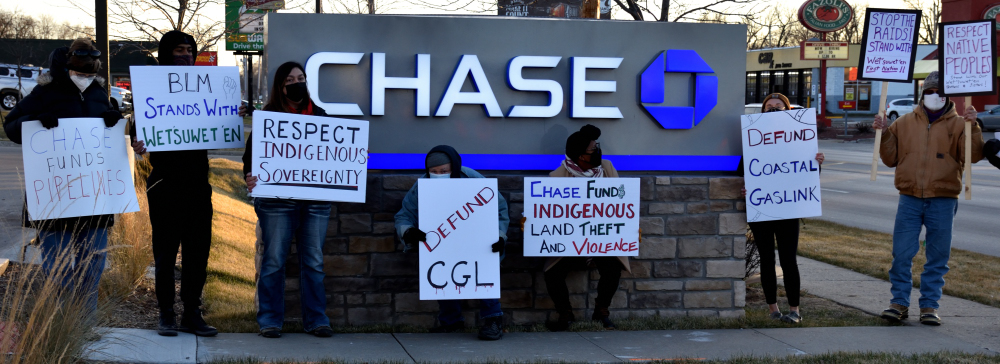
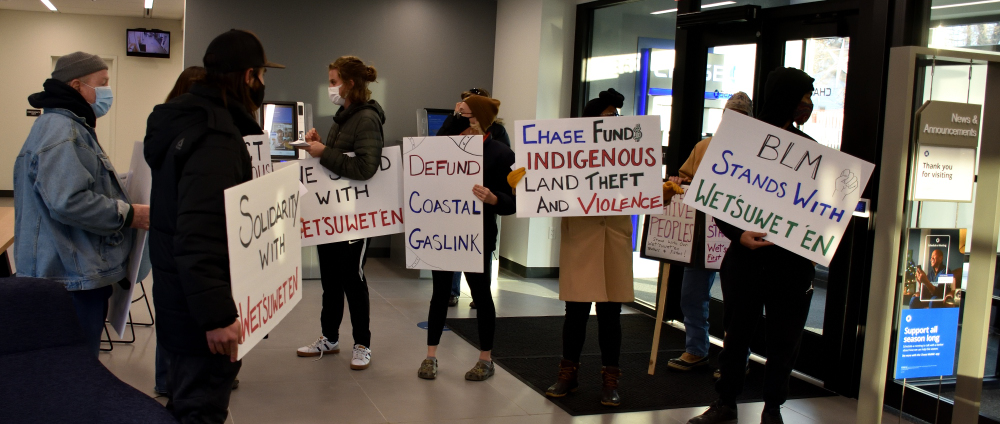
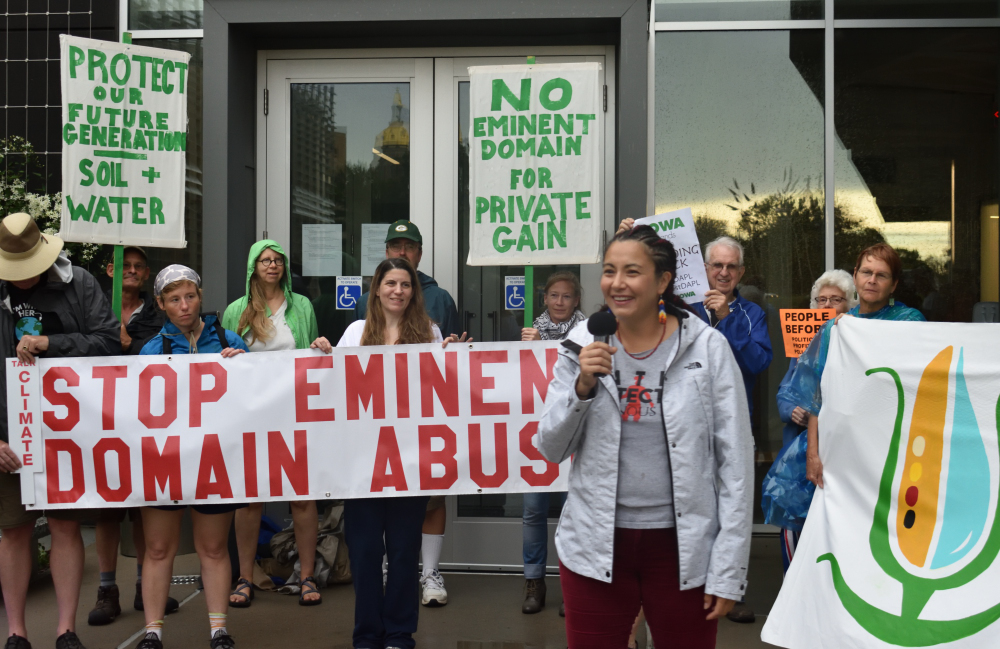
Yesterday I wrote about a solidarity organizing call to support the Wet’suwet’en peoples that will occur this Wednesday, October 19, 2022. Yesterday’s post included links to the many articles I’ve written over the past several years in solidarity with the Wet’suwet’en peoples’ struggles to protect their lands from the construction of the Coastal GasLink pipeline.

A fundamental principle of solidarity is to follow the leadership of those who are experiencing injustice. Settlers are at this moment being asked to join the campaign. We need settlers to organize and join the campaign – please click here to register

But we are all suffering the injustices of the fossil fuel industry’s rape of Mother Earth.

The drilling under the Wedzwin Kwa has begun, bringing greater urgency to stop the pipeline construction. It is heartbreaking to watch Wet’suwet’en Chief Na’Moks see the gigantic pipeline hole in this video.


The struggle of the Wet’suwet’en and the solidarity actions must also be seen in the broader international context. In the past year we have seen mass movements erupt in country after country—in Hong Kong, France, Catalonia, Haiti, Chile, Bolivia, Ecuador, Lebanon, Iraq, and Iran, to mention a few. We also saw the mass climate change protests and movements that swept the world, including a large demonstration in Toronto and a truly massive one in Montreal.

For the Wet’suwet’en, other Indigenous communities, and their allies it’s not just about questions of title and pipelines, but centuries of colonialism, subjugation, and genocide, as well as decades of austerity, growing poverty and inequality, the lack of jobs, unaffordable housing, and poor pay. Enough is enough—and after people saw the recent RCMP invasion of Wet’suwet’en lands, they had had enough.

The power of the people is on display across the world. There is a renewed sense of confidence in those fighting inequality and injustice and a growing realization that we are fighting against common enemies—the capitalist class and its state. The Wet’suwet’en are at the forefront of this struggle in Canada, literally on the front lines, and this is why many people—who face the same enemies—have come out to support them and join the fight.

Solidarity with the Wet’suwet’en: Revolution, not Reconciliation! by ROB LYON
Socialist Revolution, FEBRUARY 24, 2020

Dear allies of the Wet’suwet’en,

Teaming up with Decolonial Solidarity, we have decided to merge our press conference with their organizing call on October 19th. I am writing to invite you to join us.

We need a large number of allies to carry our message. Drilling under Wedzwin Kwa is illegal and must stop. We are staying in this fight despite this setback.

The call will feature Wet’suwet’en hereditary chiefs statements as well as an invitation to settler allies to become accomplices.

Please click here to register for the updated webinar on October 19th 2022 at 8pm ET / 5pm PST.

I am inviting you to join us in pushing back against this injustice. We need settlers to organize and join the campaign – please click here to register.

Misiyh,
Jen Wickham


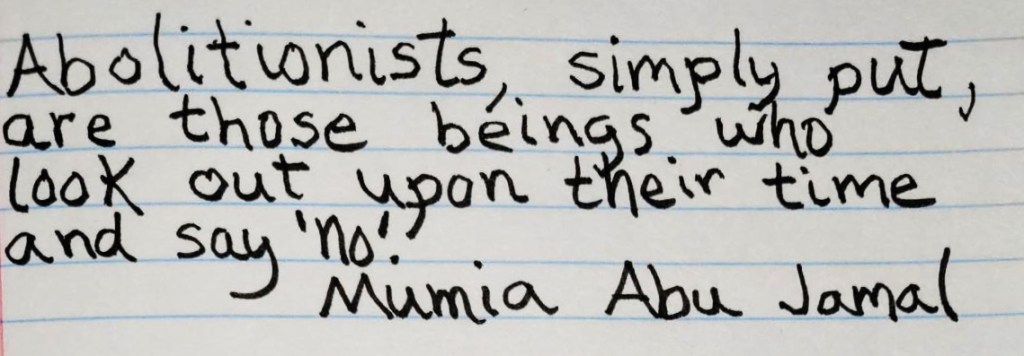
Societies that function without policing, prisons, and property

Rather than dwelling on all the current and oncoming catastrophes, we can recognize the crossroads we are at, and choose to live in a better way.

We only have a finite amount of energy personally and must use it wisely. I’m led to believe we should stop wasting energy trying to make incremental changes in existing systems of oppression. And instead turn our attention and energy to building more just alternatives. Living out our spiritual guidance.

I’m of the firm opinion that a system that was built by stolen bodies on stolen land for the benefit of a few is a system that is not repairable. It is operating as designed, and small changes (which are the result of huge efforts) to lessen the blow on those it was not designed for are merely half measures that can’t ever fully succeed.

So, the question is now, where do we go from here? Do we continue to make incremental changes while the wealthy hoard more wealth and the climate crisis deepens, or do we do something drastic that has never been done before? Can we envision and create a world where a class war from above isn’t a reality anymore?”

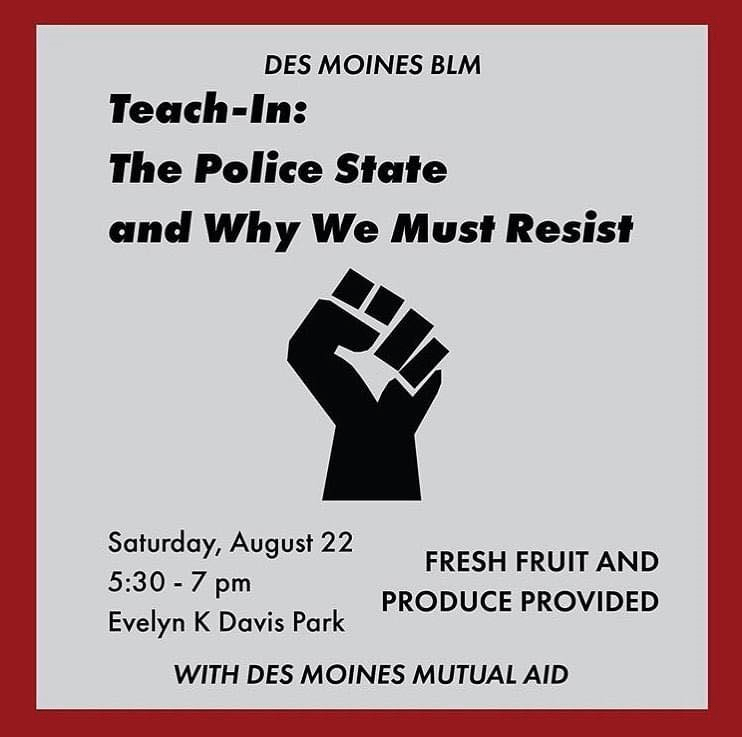
Ronnie James, Des Moines Mutual Aid

As Grace Lee Boggs writes below, “it is about acknowledging that we Americans have enjoyed middle-class comforts at the expense of other peoples all over the world.” We, especially White Quakers, can end our complicity in the systems of oppression, colonialism, and White supremacy.

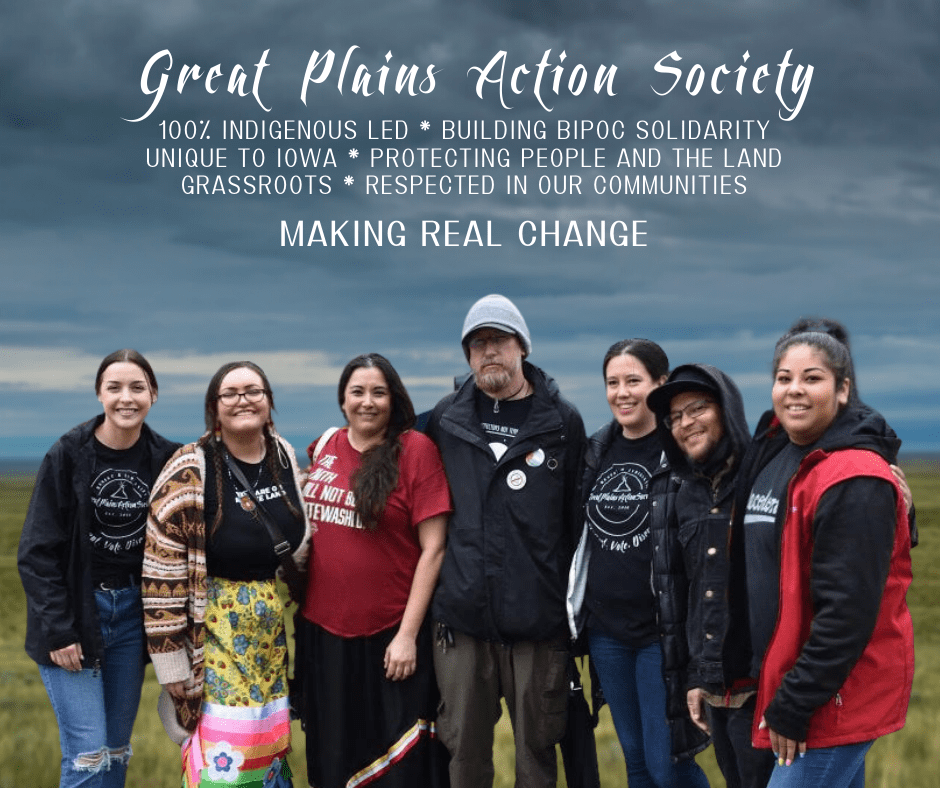
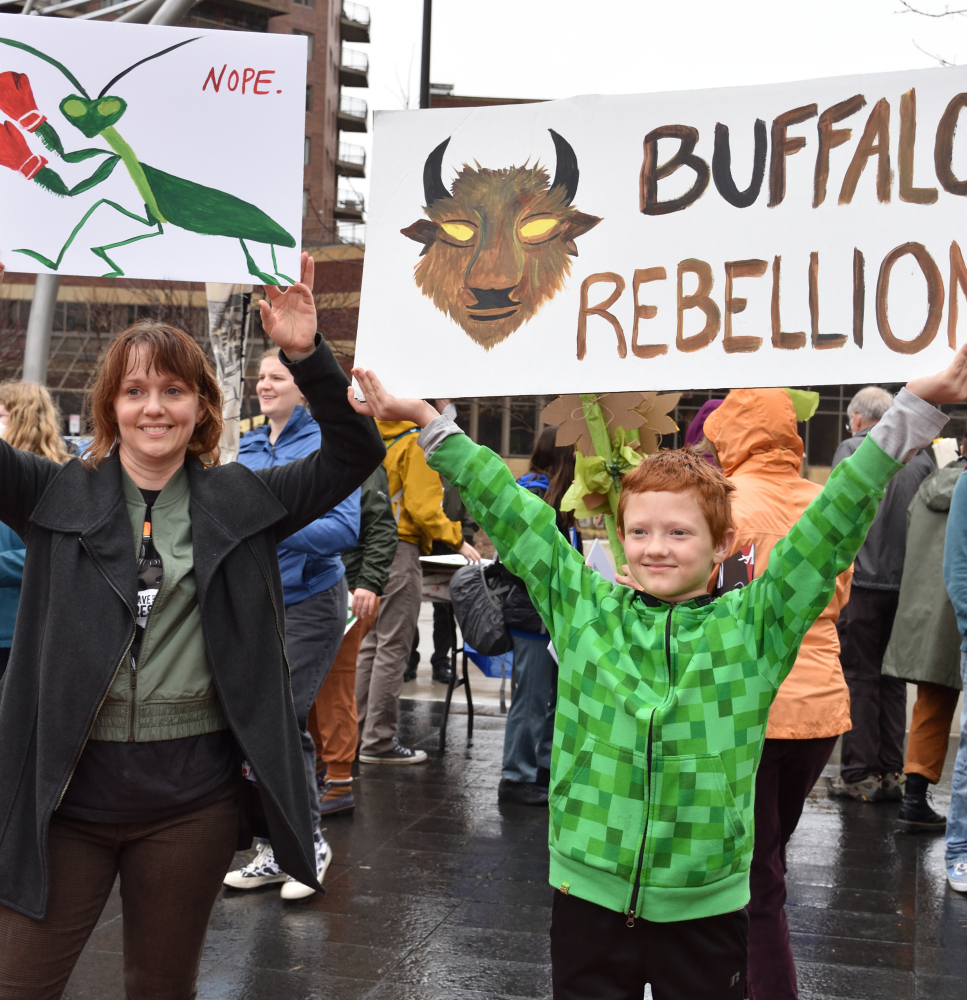
I’ve been blessed to be part of several communities building such alternatives. These include the Kheprw Institute, Des Moines Mutual Aid, and the Buffalo Rebellion.

These experiences have helped me understand something black, Indigenous, and other people of color (BIPOC) have always known. That the systems of racial capitalism and white supremacy have never worked for anyone who is not a wealthy white male.

Robyn Maynard and Leanne Betasamosake Simpson have succinctly captured what needs to happen in their book Rehearsals for Living (Abolitionist Papers).

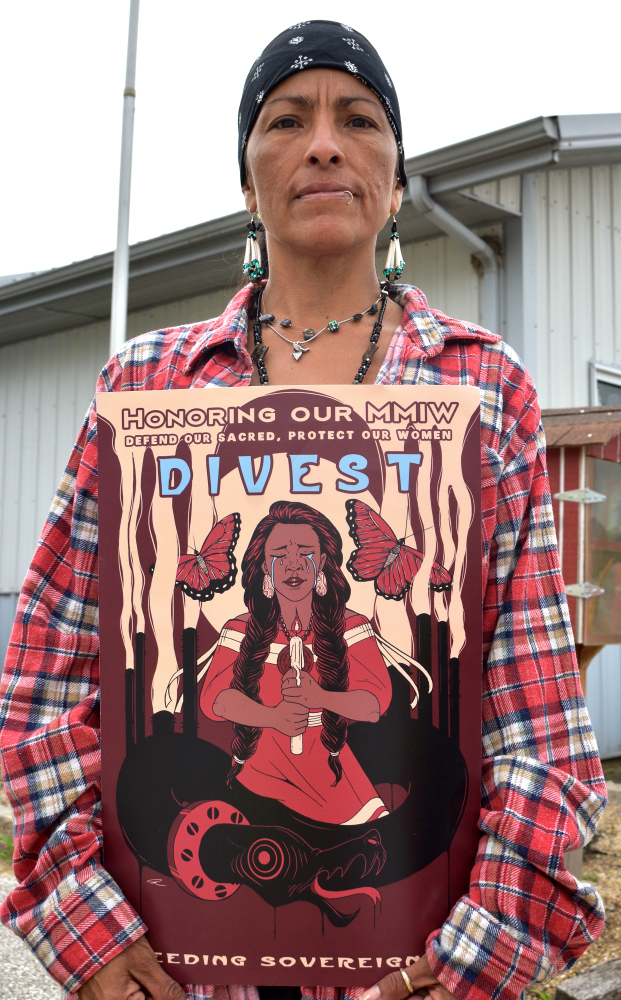
In my mind, Indigenous nations, Indigenous homespaces, Indigenous homelessness must be engaged in a radical and complete overturning of the nation-state’s political formations and a refusal of racial capitalism. My vision to create Nishnaabeg futures and presences must structurally refuse and reject the structures, processes and practices that end Indigenous life, Black life and result in environmental desecration. This requires societies that function without policing, prisons, and property.

Nishnaabeg formations of nationhood mean a radical overturning of the current conditions and configurations within which we live—an absolute refusal of capitalism.

Maynard, Robyn; Simpson, Leanne Betasamosake. Rehearsals for Living (Abolitionist Papers) (p. 125). Haymarket Books. Kindle Edition.

What we need now are societies that function without policing, prisons, and property. That is how we build alternatives to what is collapsing. Owning land, property is not an Indigenous concept. The commons are meant for community use.

  • Property is the basis for accumulation of wealth.
  • Policing is how this concept of property is protected.
  • Prison is how those who threaten property and landowners are removed from society.

Des Moines Mutual Aid


The next American Revolution, at this stage in our history, is not principally about jobs or health insurance or making it possible for more people to realize the American Dream of upward mobility. It is about acknowledging that we Americans have enjoyed middle-class comforts at the expense of other peoples all over the world. It is about living the kind of lives that will not only slow down global warming but also end the galloping inequality both inside this country and between the Global North and the Global South. It is about creating a new American Dream whose goal is a higher Humanity instead of the higher standard of living dependent on Empire. It is about practicing a new, more active, global, and participatory concept of citizenship. It is about becoming the change we wish to see in the world.

The courage, commitment, and strategies required for this kind of revolution are very different from those required to storm the Winter Palace or the White House. Instead of viewing the U.S. people as masses to be mobilized in increasingly aggressive struggles for higher wages, better jobs, or guaranteed health care, we must have the courage to challenge ourselves to engage in activities that build a new and better world by improving the physical, psychological, political, and spiritual health of ourselves, our families, our communities, our cities, our world, and our planet.

Grace Lee Bogg. The Next American Revolution

How can Friends achieve the 2022 theme of World Quaker Day, “Becoming the Quakers the World Needs,” while functioning in a blatantly and politically corrupt, racialized world? In engagement with this exciting theme, offered by the Friends World Committee for Consultation (FWCC), the Black Quaker Project would like to remind Friends of the tools at our disposal to challenge those aspects of society which we wish to change and to see changed. Our fractured societies are further divided by enormous gaps of inequality in almost every imaginable category—psychological, social, political, cultural, economic. How might we, as Quakers, achieve justice, equity, and peace under these circumstances? 

The Black Quaker Project

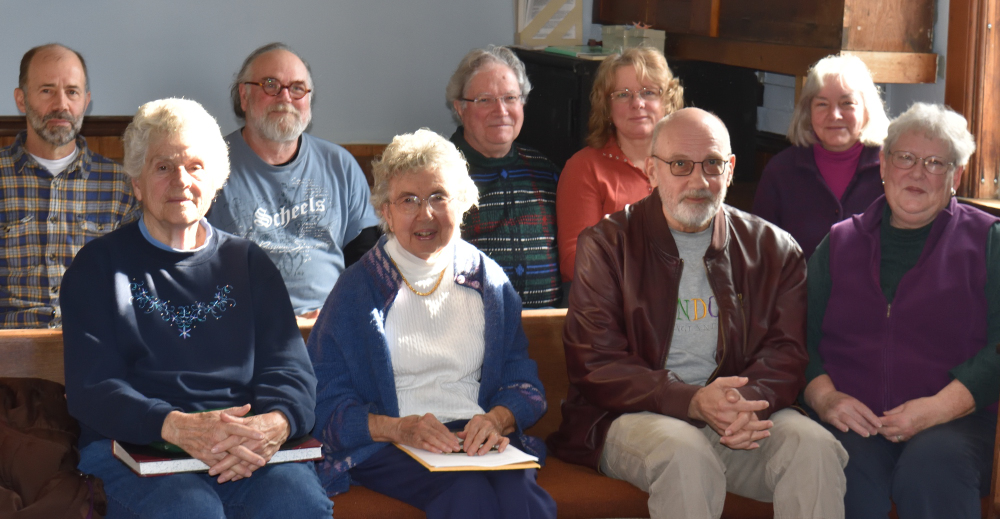
In late 2020, the two of us wrote an article for this magazine, called “Abolish the Police.” Through writing the piece, we realized we wanted to convene a larger space where Friends with an interest in police and prison abolition could have conversations with one another. Quaker abolitionists today face major pushback from our Meetings; we hoped that drawing Friends together would support and strengthen our work.

In this context, the Quakers for Abolition Network is being born. We are a collection of Friends from at least five Yearly Meetings; we range in age from high school to our 80s; we are disproportionately queer and trans. While AFSC and FCNL staff are participating, this is a grassroots project without any formal connections to existing organizations. We are in the process of defining our mission statement, structure, and our methods for addressing white supremacy when it shows up in our work, while building relationships with each other as we go. Below, four Friends write about their approaches to abolition, their lessons, and their visions for where Quakers might be headed.

Jeff Kisling: Mutual Aid and Abolition

I grew up in rural Iowa, where there was very little racial diversity and interactions with police and the court system were rare. About ten years ago, I was blessed to become involved with the Kheprw Institute, a Black youth mentoring and empowerment community. I’ll never forget how shocked I was when a Black mother broke down in tears, explaining how terrified she was every minute her children were away from home. It was obvious that every other person of color in the discussion knew exactly what she was saying.

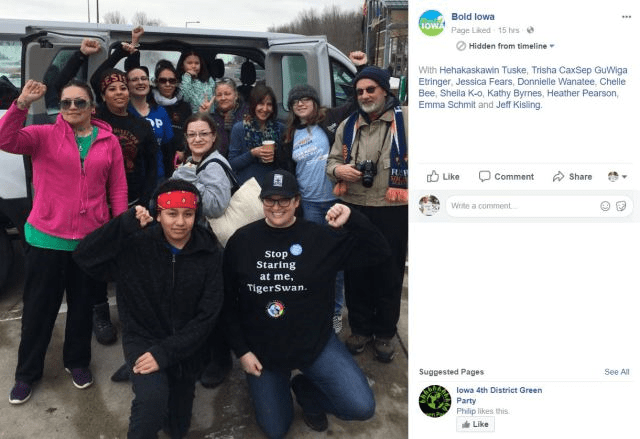
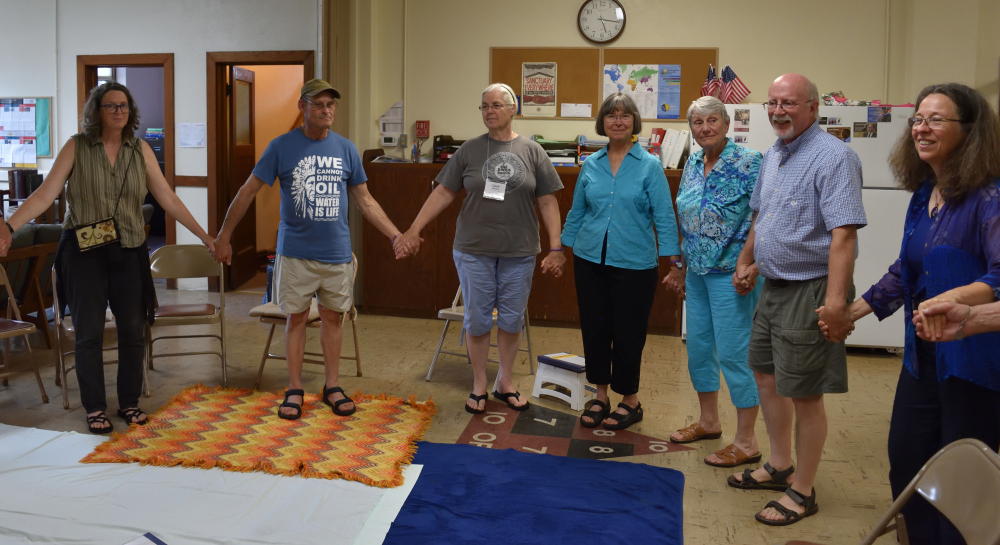
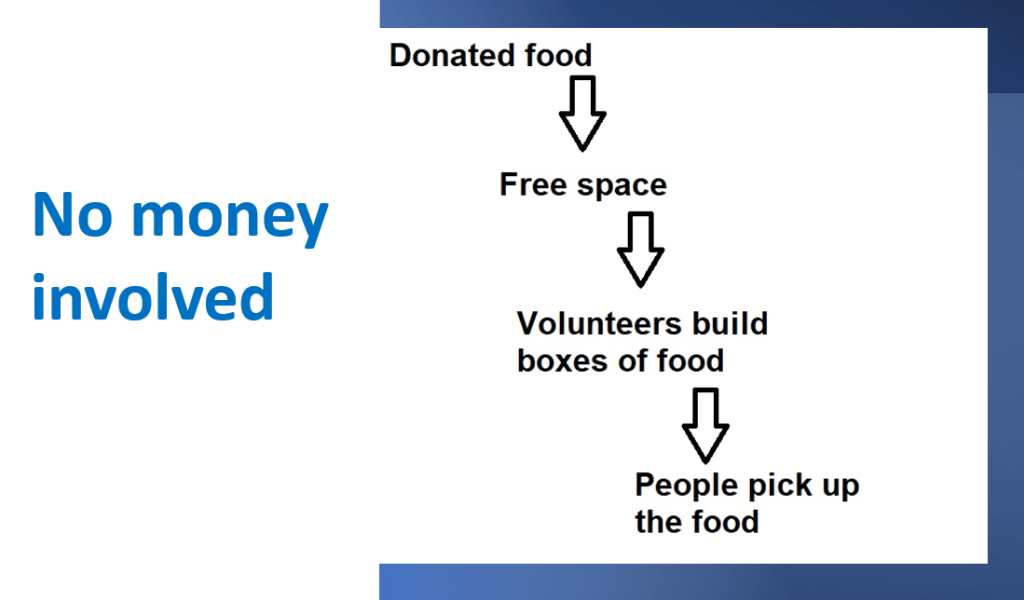
After retiring, I was led to connect with Des Moines Mutual Aid, a multiracial organization founded to support houseless people. For over a year, I’ve helped my friends fill and distribute boxes of donated food, while continuing to learn about the framework of mutual aid.

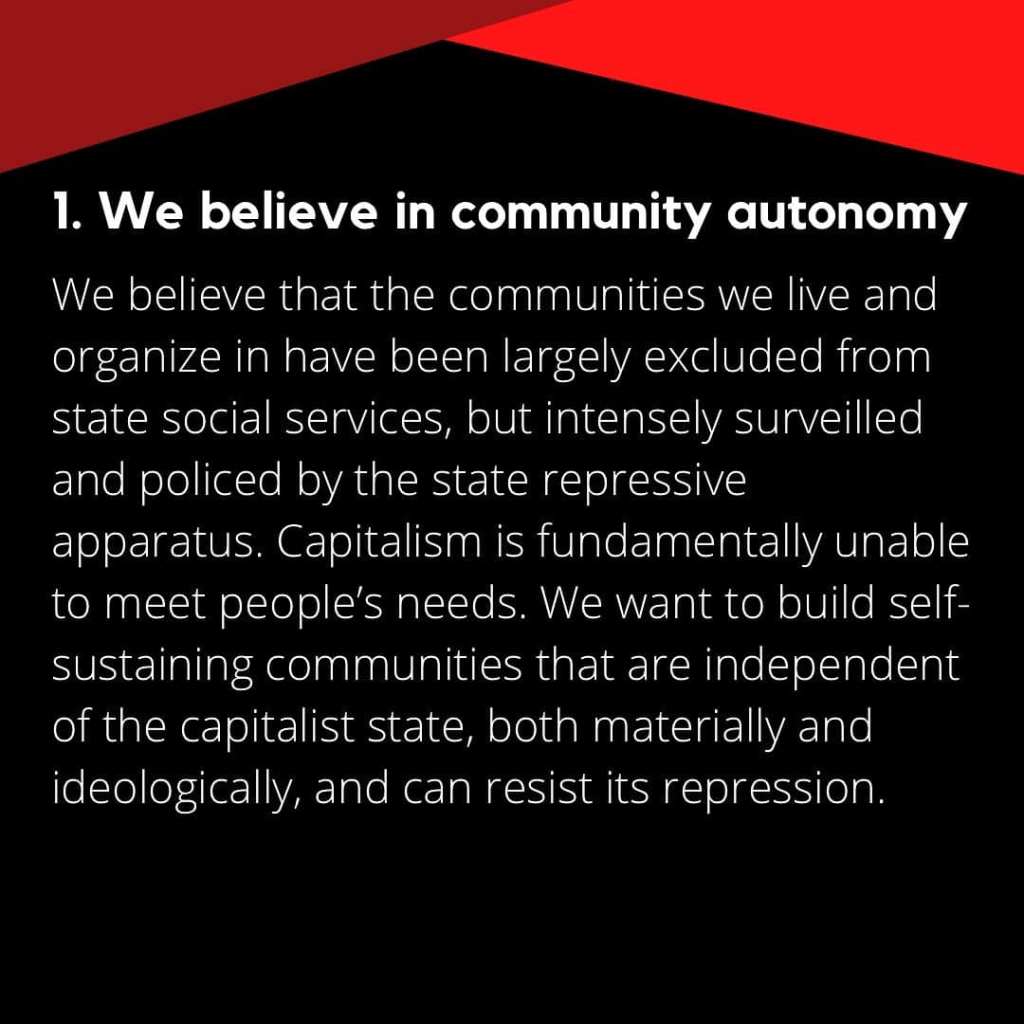
To me, mutual aid is about taking back control of our communities. Besides the food giveaway, we support houseless people and maintain a bail fund to support those arrested agitating for change. We also work for the abolition of police and prisons.

Mackenzie Barton-Rowledge and Jed Walsh: Introducing the Quakers for Abolition Network, Western Friend, Sept 2021


Des Moines Mutual Aid

Des Moines Mutual Aid

Global

It is obvious that environmental devastation is a global problem which demands a global response. But I’ve been so discouraged by the paralysis in this country, that I haven’t had the energy to think globally. Didn’t think a global response was ever going to be possible.

But in a recent article umair haque writes about the speech Secretary General of the United Nations, Antonio Guterres recently gave to the General Assembly. Which gives me a little hope that a global response might be possible.

The Secretary General of the UN just called for a Global New Deal. And nobody listened. But they should have, because this is precisely the idea we need if our civilization is going to survive. What he means by Global New Deal is all the above — taxing windfall profits, so that investments can be made, now, urgently, in basic systems for all, which we so clearly need, from food to water to energy and so on.

But he doesn’t stop there. He’s not just proposing, but demanding, a reinvention of the global financial system to invest even more. He calls on the IMF to expand its Special Drawing Rights, and create a Global Stimulus Package.

The Alarm Bells of Civilizational Collapse Are Ringing — But Are We Listening? If Our Civilization Is Going to Survive, It’s Going to Have to Change Like This — Fast by umair haque, Eudaimonia and Co, Sep 22, 2022


In this latest version of a diagram I’ve been working on, newly added are attention to the global aspects of environmental chaos and the need for a global new deal.


We have a duty to act. And yet we are gridlocked in colossal global dysfunction.

The international community is not ready or willing to tackle the big dramatic challenges of our age. These crises threaten the very future of humanity and the fate of our planet.

Let’s have no illusions. We are in rough seas. A winter of global discontent is on the horizon. A cost-of-living crisis is raging. Trust is crumbling. Inequalities are exploding. Our planet is burning. People are hurting — with the most vulnerable suffering the most.

Our world is in peril — and paralyzed. Geopolitical divides are undermining the work of the Security Council. Undermining international law. Undermining trust and people’s faith in democratic institutions. Undermining all forms of international cooperation. We cannot go on like this. Even the various groupings set up outside the multilateral system by some members of the international community have fallen into the trap of geopolitical divides, like in the G-20.

But the reality is that we live in a world where the logic of cooperation and dialogue is the only path forward. No power or group alone can call the shots. No major global challenge can be solved by a coalition of the willing. We need a coalition of the world.

There is another battle we must end — our suicidal war against nature. The climate crisis is the defining issue of our time. It must be the first priority of every government and multilateral organization. And yet climate action is being put on the back burner — despite overwhelming public support around the world. Global greenhouse gas emissions need to be slashed by 45 percent by 2030 to have any hope of reaching net zero emissions by 2050. And yet emissions are going up at record levels — on course to a 14 percent increase this decade.

Secretary General of the United Nations, Antonio Guterres

Excellencies, let’s tell it like it is. Our world is addicted to fossil fuels. It’s time for an intervention. We need to hold fossil fuel companies and their enablers to account. That includes the banks, private equity, asset managers and other financial institutions that continue to invest and underwrite carbon pollution.

And it includes the massive public relations machine raking in billions to shield the fossil fuel industry from scrutiny. Just as they did for the tobacco industry decades before, lobbyists and spin doctors have spewed harmful misinformation. Fossil fuel interests need to spend less time averting a PR disaster — and more time averting a planetary one.

Of course, fossil fuels cannot be shut down overnight. A just transition means leaving no person or country behind. But it is high time to put fossil fuel producers, investors and enablers on notice.

Polluters must pay.

Today, I am calling on all developed economies to tax the windfall profits of fossil fuel companies. Those funds should be re-directed in two ways: to countries suffering loss and damage caused by the climate crisis; and to people struggling with rising food and energy prices.

Secretary General of the United Nations, Antonio Guterres


Joy is the sunrise
breaking through night’s remains,
bright shone new
on a shell-wracked shore;
a fresh tide-scrubbed world
redeems what was,
to is.

J. Drew Lanham Joy is the Justice We Give Ourselves. (excerpt)

Running and activism

Yesterday I was moved by the stories of survivors of the Indian Boarding Schools. The stories were shared by the National Native American Boarding School Healing Coalition (NABS) during a two hour Zoom online seminar titled Seven Weeks of Action for Seven Generations, Week One! The purpose is to support the passage of the Truth and Healing Commission on Indian Boarding School Policies in the United States Act (S. 2907/H.R. 5444)

I really related to the story told by Ku Stevens.

Kutoven “Ku” Stevens and his family organized a 50-mile run honoring the survivors and victims of the Stewart Indian School in Carson City over the weekend. He recently spoke to KUNR’s Gustavo Sagrero about the ultramarathon at his family’s home on the Yerington Paiute Reservation.

I’m able to represent my people, and one of the best ways I know how, which is through running. So to be able to combine two things that I’m very passionate about, which is running and activism for my people, I’m able to really make a difference and an impact in a way that I could see, in a way that other people can understand, and in a way that I feel like is reaching a lot of people’s hearts, which is ultimately what the goal is.

Yerington teen and family organized run to remember survivors, victims of Indian boarding schools By Gustavo Sagrero, KUNR Public Radio, August 17, 2022

You were almost like … you were sent there to die.

Ku Stevens

Sagrero: The trauma of Indian boarding schools is just starting to get the national attention it deserves. What do you wish people understood more about this history?

Stevens: You were almost like … you were sent there to die. You know, the Native American in you was supposed to be killed or yourself; if you couldn’t conform to modern society, then you would die. These schools were built with graveyards in mind. They were built with the thought of having a cemetery on campus because they knew that kids would die. That’s not a school; that’s like a camp.

Sagrero: When you say camp, what do you mean?

Stevens: Like Nazi Germany, man. The roads and the building blocks that it took to make America what it is today are filled with the blood and bones of my people. And people need to understand that.

Yerington teen and family organized run to remember survivors, victims of Indian boarding schools By Gustavo Sagrero, KUNR Public Radio, August 17, 2022


I relate to this story for several reasons. I, too, have always been a runner. I was on the track team in Junior High School, with one school record (OK, it was for the 440 yd relay). And at the Quaker boarding high school I attended, Scattergood Friends School, a few of us ran instead of playing soccer. We ran a path of gravel roads for five miles. I apologize for the description of Scattergood as a boarding school. Much different from the Indian boarding schools.

The reason running was activism for me is because that was one of my main modes of transportation, because I refused to own a car for environmental and spiritual reasons.

Most of these photos were taken during the Indianapolis 500 Mini Marathon. Mini means half-marathon, which is 13.1 miles. Which didn’t seem very “mini” to me. The Mini was part of the festivities each May related to the running of the Indianapolis 500 (auto) race. I ran the race every year for twenty-three years. I realize the irony of running being related to race cars.


Ideological commitment to destroying life on Earth

The recent article by George Monbiot (excerpts below) explains that the multitude of recent government policies and judicial capitulations that are dismantling any efforts to protect Mother Earth are not based on financial interests. The ideology of the ultra-rich is one committed to destroying life on Earth. “It’s no longer about money for them. It’s about brute power: about watching the world bow down before them. For this rush of power, they would forfeit the Earth.”

As Monbiot writes below, the changes needed to protect Mother Earth and all our relations cannot happen until we change our political systems.

Indigenous peoples have always known how to protect our environment. Which makes the policies of forced assimilation of native children and peoples all the more ignorant and reprehensible. We would not be in this catastrophic situation now if settler colonists had learned from native peoples. Can you imagine what that would have looked like?

What would be the political system that would allow us to honor the earth and each other? One alternative would be to build communities based on the concepts of mutual aid. (see: https://quakersandreligioussocialism.com/mutual-aid/ )

The following is from my mutual aid community, Des Moines Mutual Aid (DMMA).


But the final straw for me was a smaller decision. After two decades of disastrous policies that turned its rivers into open sewers, Herefordshire county council, following a shift from Tory to independent control, finally did the right thing. It applied to the government to create a water protection zone, defending the River Wye against the pollution pushing it towards complete ecological collapse. But in a letter published last week, the UK’s environment minister, Rebecca Pow, refused permission, claiming it “would impose new and distinct regulatory obligations on the farmers and businesses within the catchment”. This is, of course, the point.

When I began work as an environmental journalist in 1985, I knew I would struggle against people with a financial interest in destructive practices. But I never imagined that we would one day confront what appears to be an ideological commitment to destroying life on Earth. The UK government and the US supreme court look as if they are willing the destruction of our life support systems.

But even financial interests fail fully to explain what’s going on. The oligarchs seeking to stamp out US democracy have gone way beyond the point of attending only to their net worth. It’s no longer about money for them. It’s about brute power: about watching the world bow down before them. For this rush of power, they would forfeit the Earth.

Since 1985, I’ve been told we don’t have time to change the system: we should concentrate only on single issues. But we’ve never had time not to change the system. In fact, because of the way in which social attitudes can suddenly tip, system change can happen much faster than incrementalism. Until we change our political systems, making it impossible for the rich to buy the decisions they want, we will lose not only individual cases. We will lose everything.

It’s democracy v plutocracy – this is the endgame for our planet by George Monbiot, the Guardian, July 6, 2022


The Worker’s Summit of the Americas

As often as I think about why we need to move toward Mutual Aid communities and know that Mutual Aid is far from a new idea, I haven’t spent much time learning about the many cultures and countries that live this way, that are not based on capitalism.

Even though there has been little mainstream media coverage in this country, the Summit of the Americas was a dismal failure because so many countries boycotted it when the Biden administration refused to invite Cuba, Nicaragua and Venezuela.

The alternative summit, the Summit of the Americas of the Working Men and Women Workers declares they will, “take concrete action to combat the labor and social violence applied to our peoples by the U.S. and Canadian governments.” I don’t yet know what the power of this group is.

More leaders of Latin American countries have announced they will not attend the Summit of the Americas, which is taking place in Los Angeles. The summit has been mired in controversy after the Biden administration refused to invite Cuba, Nicaragua and Venezuela. On Monday, Mexican President Andrés Manuel López Obrador announced he would boycott the talks over Biden’s decision. The presidents of Bolivia, Honduras, Guatemala and El Salvador have also said they will not attend the summit.

Latin American Leaders Boycott Summit of the Americas, Democracy Now, June 8, 2022

Here is the final declaration of the alternative to the Summit of the Americas, the Summit of the Americas of the Working Men and Women Workers.

We, representatives of Trade Union, Peasant, Political and Social organizations, gathered in Tijuana – Mexico, June 10-12, 2022, on the occasion of the realization of the Summit of the Americas of the Working Men and Women Workers, in immediate response to the exclusion of Venezuela, Cuba, and Nicaragua imposed by the Government of the United States.

There is a systemic and structural crisis of capitalism in its imperialist phase. It is in itself a civilizational crisis. The capitalist economic model and its political arm neoliberalism, as well as its modern cultural foundation, have put the planet’s life in crisis. If not eliminated, imperialism’s necropolitics leads us to the planetary collective suicide, which is more lacerating in the sectors less favored by the current world system. Our position is a bet for life, and the empire offers us death: it is either life or death!

We are witnessing a process of recolonization over the people. This is expressed in the excessive growth of racism, poverty, unemployment, job insecurity, environmental deterioration of territories, criminalization of migration, and gender and cultural violence. For this reason, we call upon the programmatic unity of the American continent’s workers, peasants, and progressive and popular forces to reflect, debate, and take concrete action to combat the labor and social violence applied to our peoples by the U.S. and Canadian governments.

We consider that the working class of the 21st century will only be able to play an independent and central role if – in addition to fighting for the most heartfelt demands of the labor movement – it assumes the struggle against patriarchy together with the feminist movement, the struggle of the native peoples against climate change and the defense of the biosphere together with the youth and the broad spectrum of professionals and scientists.

We must build articulations and alliances in which we structure our common forces for a unique and global struggle. Globalize the struggles. Build new organic forms of the working class from the political-cultural to the socio-productive to overcome capitalism and build socialism.

A robust internationalism is needed to pay adequate and immediate attention to the dangers of extinction: extinction by nuclear war, climate catastrophe, and social collapse.

In this regard, we agree:

  • To promote active solidarity with the peoples and sovereign nations (Cuba, Nicaragua, and Venezuela) and the other peoples of the world “sanctioned” and attacked by economic blockades and unilateral coercive measures imposed by the U.S. and its allies.
  • To hold an annual meeting in Tijuana, Mexico, with the workers and social movements of the Americas to express solidarity with the peoples of Venezuela, Cuba, and Nicaragua and their revolutions to repudiate unilateral coercive measures against sovereign governments.
  • To constitute a Committee for the organization of the Meetings to be held annually in the North and South of Mexico, integrated by: Unión del Barrio of the USA, Movimiento Social Por la Tierra de México (MST), Sindicato Mexicano Electricista (SME), Alianza por la Justicia Global of the USA, Central Bolivariana Socialista de Trabajadores de Venezuela, Central de Trabajadores de Cuba, Asociación de Trabajadores del Campo de Nicaragua (ATC), Movimiento Magisterial Popular de Veracruz Mexico, Fire This Time of Canada, Freedom Road Socialist Organization (FRSO) of the USA, International Action Center (IAC) of the USA, Task Force on the Americas of the USA and the Plataforma de la Clase Obrera Antimperialista (PCOA).
  • Demand the immediate release of Alex Saab. He is a Venezuelan diplomat kidnapped by the U.S. and illegally detained in its territory since October 16, 2021. Saab’s arrest is an action that attacks diplomatic immunity, a right guaranteed by international law to any diplomatic official in the exercise of his duties.
  • Reaffirm the resolutions agreed upon at the Meeting of the Peoples of the Americas, held June 7-8, 2022, in Chiapas, Mexico.
  • To ratify our unwavering solidarity with the Palestinian and Saharawi peoples.
  • Demand that the U.S. Congress immediately cut off military aid funds to El Salvador, Guatemala, Honduras, Colombia, and Haiti.
  • Promote a campaign to hold an international day of action in solidarity with Cuba to be held when the U.N. General Assembly meets to condemn the blockade against the Caribbean island.
  • Expand the “Bridges of Love” program to other countries and international coordinate days on the last Sunday of each month in the form of caravans or other activities.
  • Demand the immediate release of comrades Mumia Abu Jamal, Leonard Peltier, Iman Jamil Abdullah al-Amin and Julian Assange.
  • Demand the immediate release of the social fighter Simón Trinidad from Colombia, who is deprived of liberty in prison in the USA.
  • To promote the regional integration of the anti-imperialist working class of Our America and the participation in the strengthening of ALBA TCP, CELAC, and UNASUR. In this sense, the Bolivarian Socialist Workers Central of Venezuela will call a meeting for the 3rd quarter of 2022.
  • To promote a campaign against the U.S., NATO, and Colombia’s policies of interference and expansionism and to ratify the declaration of Latin America and the Caribbean as a zone of peace promoted by CELAC.
  • We reaffirm the Mexican Electricians Union workers’ demands for their reinstatement in the Federal Electricity Commission.
  • We stand in solidarity with the Puerto Rican people and their dignified struggle for independence and sovereignty.

ONLY THE WORKERS’ STRUGGLE WILL SAVE HUMANITY, NATURE, AND THE PLANET!!!!

FINAL DECLARATION OF THE WORKERS’ SUMMIT OF THE AMERICAS By Fight Back News, June 16, 2022