To my white friends

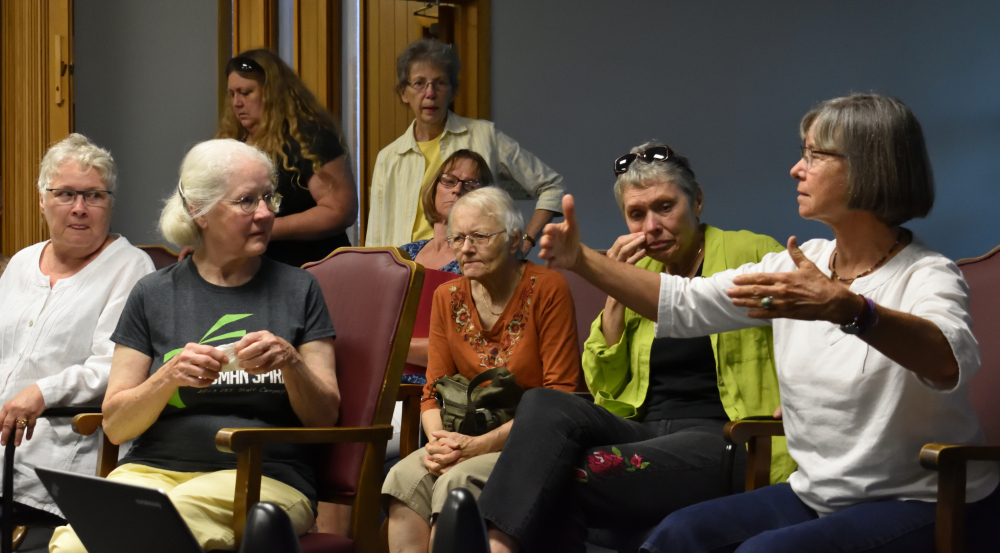
I especially hope many of my white friends, especially Quakers, might attend the Fourth of He Lies community potluck. If you are a white person, like me, try to imagine how black, indigenous, and other people of color (BIPOC) feel about all the celebrations and speeches going on now related to the 4th of July.

You can find out how some BIPOC folks feel by attending the Fourth of He Lies community potluck Sunday, July 3rd at Cheatom Park, 1100 Day Street, Des Moines, from 4 – 7 pm. Children welcome.

In 2017 I retired to Iowa after my career at Indiana University Medical Center. It was difficult to leave the many friends I have in numerous justice communities in Indianapolis.

I am blessed to have made so many new friends in the Midwest and work with their/our organizations today. That includes working, directly or indirectly with all of the organizations below that are sponsoring the community potluck, with the exception of Satanic Iowa. I made an assumption that didn’t turn out to be true, i.e., that they were related to what I thought Satanic was. All I know is what I found on Wikipedia this morning. “The Satanic Temple, often abbreviated TST, is a nontheistic religious and human rights organization that is primarily based in the United States,[1][2][3][4] I hope I can make it to the potluck and learn more.

Before I learned what The Satanic Temple really was about, I had no doubt my friends in the other organizations below approved of them being included as sponsors of the potluck.

This also brings to mind the term “fusion politics” that I learned from Rev. William Barber. The concept is to unite disparate organizations around the issues they agree on and can work on together.

Finally, I’m working to get Quaker communities to embrace the concepts of Mutual Aid. An important part of Mutual Aid is to work with all of the justice organizations in the vicinity of the Mutual Aid community. This potluck is an opportunity for Friends to learn about organizations doing great work in our communities. Organizations they might become involved with in their own Mutual Aid communities.
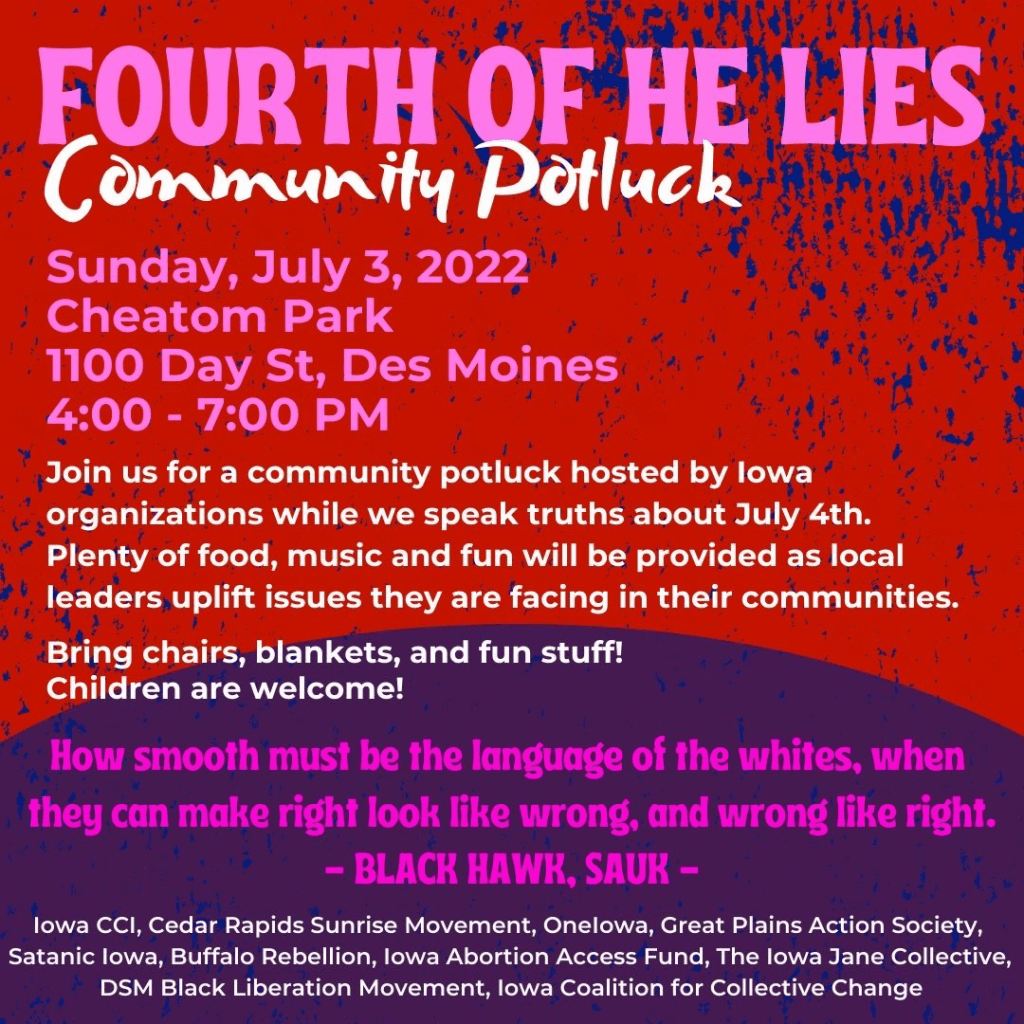

Join us for a community potluck hosted by Iowa organizations while we speak truths about July 4th. Plenty of food, music, and fun will be provided as local leaders uplift issues they are facing in their communities.

Bring chairs, blankets, and fun stuff!
Children are welcome!

Hosted by Great Plains Action Society, Iowa CCI, Cedar Rapids Sunrise. Other organizations are welcome to join–to bring some food, to table and speak! Please contact Sikowis at sikowis@greatplainsaction.org for more information.
https://www.facebook.com/events/369803928574457

The colonists obsessed about British regulations on immigration and trade and what they considered an excessive number of British officials present in the colonies. They ignored the injustices they inflicted on others. They rose up against figurative enslavement by the Crown while literally enslaving people in America.

What we get wrong about the Fourth of July. If our deepest values are democracy and equality, then why do we celebrate a slaveholders’ rebellion as the birth of our nation? By Kermit Roosevelt III, The Boston Globe, June 30, 2022

Sponsors of the Fourth of He Lies
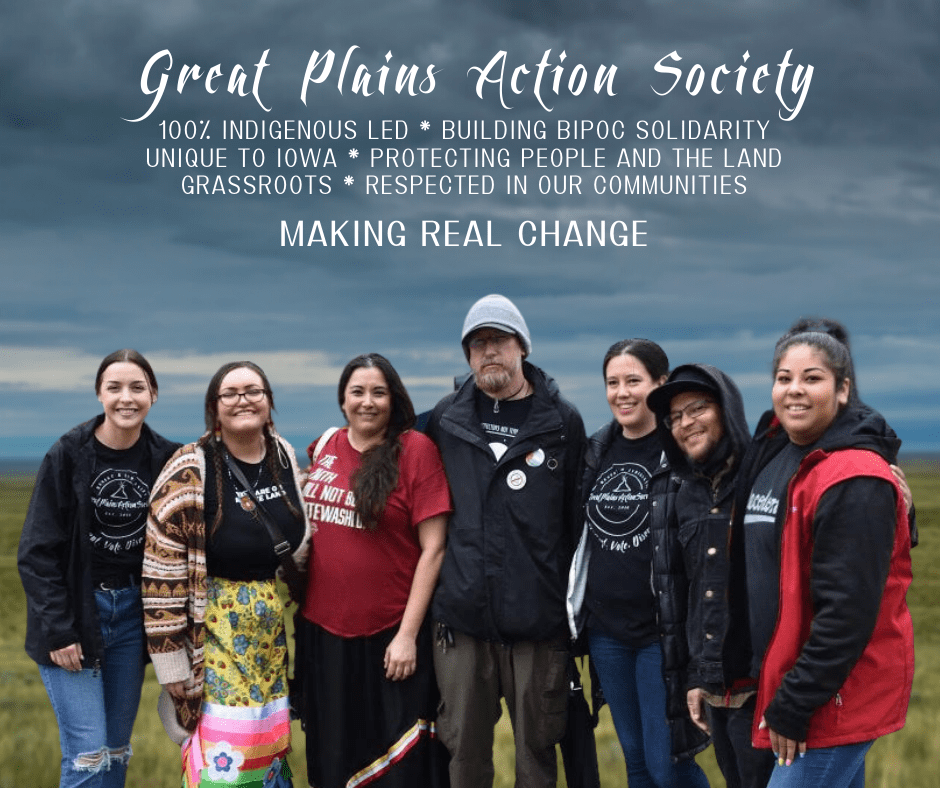
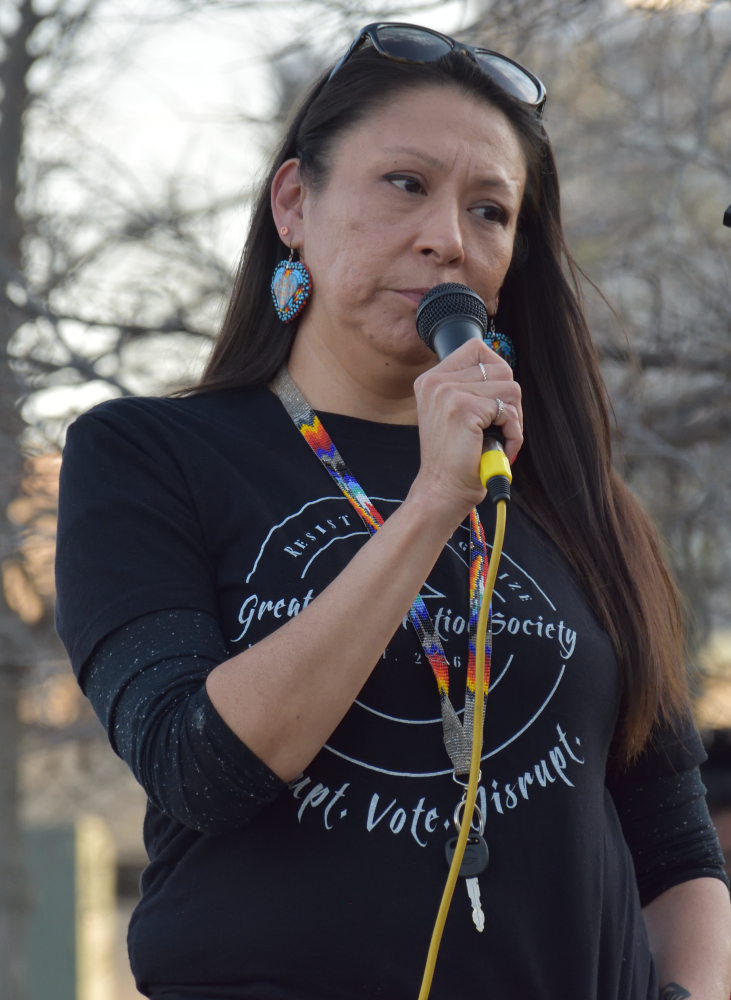
Great Plains Action Society. An indigenous collective working to resist and indigenize colonial institutions, ideologies, and behaviors. https://www.facebook.com/GreatPlainsActionSociety
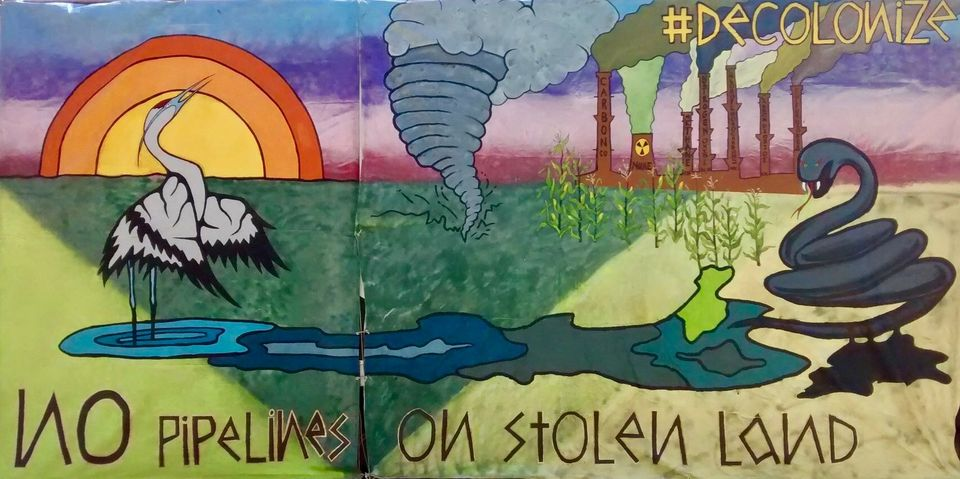

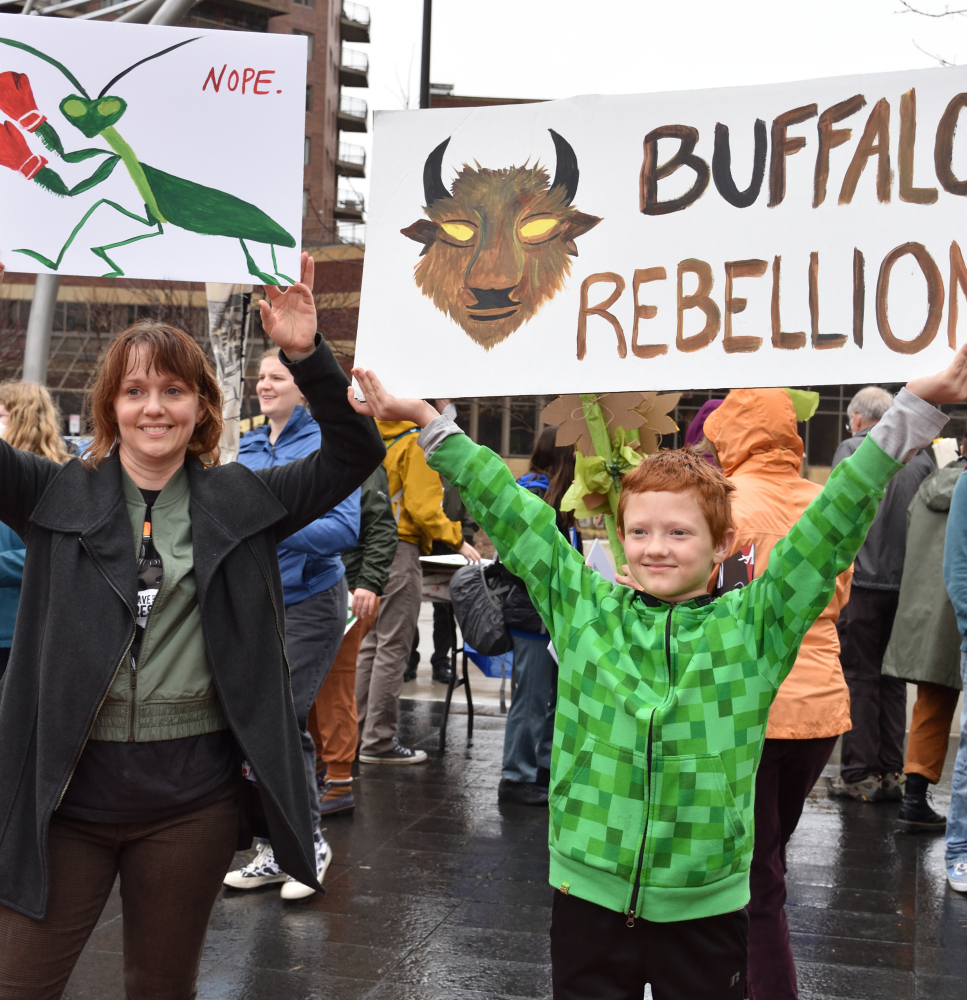
Buffalo Rebellion is a coalition of Iowa grassroots organizations that are growing a movement for climate action that centers racial and economic justice!

Formed in 2021, Buffalo Rebellion is comprised of seven Iowa organizations: Great Plains Action Society, DSM Black Liberation Movement, Iowa Migrant Movement for Justice, Sierra Club Beyond Coal, Cedar Rapids Sunrise Movement, SEIU Local 199, and Iowa CCI
https://www.facebook.com/IowaBuffaloRebellion


Iowa Coalition for Collective Change. Uniting communities. Promoting equality. Transforming organizations.
https://www.facebook.com/ICCCdsm


We are the Des Moines Black Liberation Movement. #DSMBLM
https://www.facebook.com/desmoinesblm

Iowa Citizens for Community Improvement
With thousands of members from all walks of life, we get things done on critical issues https://www.facebook.com/iowacci


We are Sunrise Cedar Rapids, a group dedicated to fight climate change. https://www.facebook.com/sunrisemvmtCR


Not to be confused with the Church of Satan.

The Satanic Temple, often abbreviated TST, is a nontheistic religious and human rights organization that is primarily based in the United States,[1][2][3][4] with additional congregations in CanadaAustralia, and the United Kingdom.[5][6] Co-founded by Lucien Greaves, the organization’s spokesperson, and Malcolm Jarry,[7][8] the organization uses Satanic imagery to promote egalitarianismsocial justice, and the separation of church and state, supporting their mission “to encourage benevolence and empathy [among all people].”[9] The Satanic Temple has utilized satire, theatrical ploys, humor, and legal action in their public campaigns to “generate attention and prompt people to reevaluate fears and perceptions”,[10] and to “highlight religious hypocrisy and encroachment on religious freedom.”[7][11][12][13]

The Satanic Temple does not believe in a supernatural Satan; instead it employs the literary Satan as a metaphor to promote pragmatic skepticism, rational reciprocity, personal autonomy, and curiosity.[8] Satan is thus used as a symbol representing “the eternal rebel” against arbitrary authority and social norms.[14][15] Adherents generally refer to their religion as “Satanism” or “Modern Satanism“,[16] while others refer to TST’s religion as Compassionate Satanism or Seven Tenet Satanism.[17][18]

The organization’s participation in public affairs includes political actions as well as lobbying efforts,[19][20] with a focus on exposing Christian privilege when it interferes with personal religious freedom. It considers marriage a religious sacrament that should be governed under the First Amendment’s protection of religious liberty which should prevail over state laws.[21] Because the group regards inviolability of the body as a key doctrine, it also views all restrictions on abortion, including mandatory waiting periods, as an infringement on the rights of Satanists to practice their religion.[22]

Wikipedia – The Satanic Temple

Satanic Iowa
https://www.facebook.com/SatanicIowa


The crown and the colonists were both determined to seize lands from native peoples and to continue enslavement. But their interests were also hostile to one another and war was the inevitable result. White settlers wanted full independence for themselves and no control over their actions at all.

The indigenous populations were nearly eradicated in the decades long quest for conquest. Expanding slavery was an integral part of those efforts against native peoples. Genocide could not be carried out completely nor could any accommodation be made with European nations in the quest to control land from sea to shining sea. That is why the settlers declared their independence. 

The process of decolonizing ourselves is a difficult one. We have been cut off from our history and we don’t know where or how our people played a part. As we try to educate ourselves we may find it difficult to give up traditions that we have claimed as our own. Regardless of personal choices made on July 4th, the causes of the Declaration of Independence must be known and acknowledged. That is the beginning of true independence for Black people.

THE TERRIBLE ORIGINS OF JULY 4TH By Margaret Kimberley, Black Agenda Report.
July 3, 2021
A crisis of Spirit

Yesterday I wrote, “for millennia, people lived in sustainable ways. Life was often a struggle. But people did not use more resources than what could be replenished. They lived sustainably. What has been different over the past several generations has been the wealthy and powerful asserting their dominance not only over people, but over Mother Earth herself with disastrous consequences.”

The reason I wanted for so long to find connections with indigenous peoples was because of their sustainable lifestyles. And from what little I knew, how spirituality was the basis of their lives.

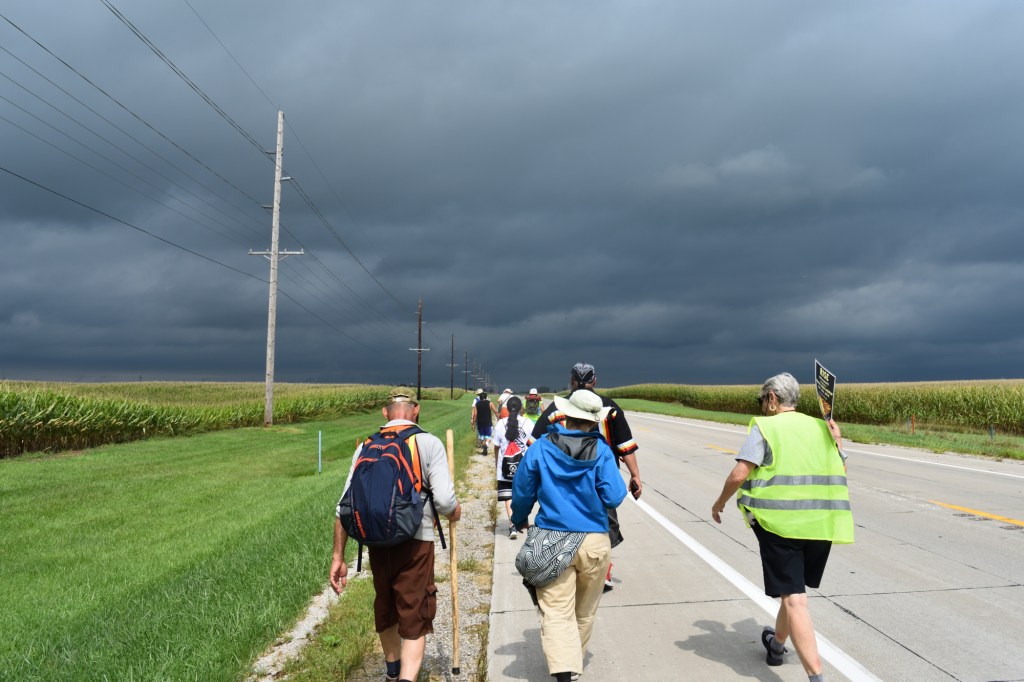
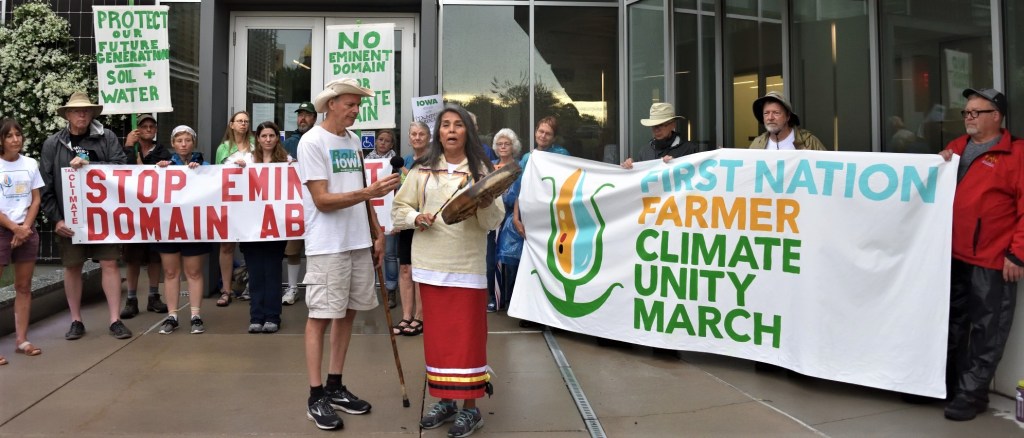
I am blessed to now have many indigenous friends. Most of those friendships began as we walked and camped together along the path of the Dakota Access pipeline for eight days in 2018 on the First Nation-Farmer Climate Unity March. https://firstnationfarmer.com/

I really wanted to learn about the spirituality of my indigenous friends, but I didn’t know how to bridge the barriers between us, because of the Quaker involvement in the Indian boarding/residential schools. The Spirit led me to speak to some of these friends about the Quaker involvement in forced assimilation. I won’t say more than that, in fear of others doing something similar without first having deep relationships, and Spiritual guidance to do so.

I will say this has resulted in opportunities for further Spiritual sharing. Recently one friend said she was glad to hear Quakers grieved for Friend’s participation in forced assimilation. Among other things, this made it possible for her to ask me if Quakers might support a video documentary being made about the residential school of her nation. Which we did.

I don’t like to use a lot of quotes. but yesterday I was led to re-read from the book CLIMATE SENSE: Changing the Way We Think & Feel About Our Climate in Crisis by Zhiwa Woodbury. Which expresses what I’ve been trying to write about Spirituality, and our environmental crisis.

Zhiwa Woodbury is an Earth Protector. Wildlife Advocate. Doctor of Natural Law(yer), Ecopsychologist, Long-time devoted dharma practitioner and hospice volunteer. Motivated by compassion. View all posts by ecopsi2day

The climate crisis we face is not an environmental problem, and there is no environmental solution. It is not a political issue, and there will be no timely political solutions forthcoming. It is certainly a moral issue, as recognized by Pope Francis and every religion should treat this as such. But given the deep psychological roots of our behavior, moralizing about climate change is also not the solution. No, this is a crisis of spirit, a crisis in relationship, raising the question who we humans really are. We can think of it as a kind of collective identity crisis-one that will only be resolved when a critical mass of human beings heal the split between our Psyche, or collective soul, and nature, the soul of the world.

In gaining mastery over nature, asserting unimaginable control over the very forces of creation and destruction, we seem to have severed our connection to nature at its very root, objectifying the earth and each other, commodifying our lives, designing artificial living environments called suburbs, and creating an entirely new, virtual reality to soothe our aching souls. In the process, we unintentionally isolated ourselves from our own true nature as earthlings – creatures of the earth. We created a social and cultural matrix of isolation, and then we proceeded to act out this story of separation, objectification, modification, and alienation in increasingly harmful ways, until now we are unraveling the very fabric of life and assaulting the global ecosystem that has nourished and supported us, and all beings since beginningless time.

That locomotive force of ignorance and greed rolled right over and through the ancient inhabitants of this new world, and quickly laid waste to the natural abundance that they had been caretakers of for millennia. Certainly, it would be difficult to imagine a more traumatic war against nature than the genocide that Europeans visited on the Earth-based cultures of the indigenous tribes of Turtle Island, or a more heart-breaking ecocide than reducing the dominant species here when we landed, the majestic and socially developed American Buffalo, bison bison, from 60 million to fewer than 6000 today-a thousand-fold reduction via slaughter.

While we see the result in the extreme polarization of society, this split is not irreparable, we humans are not irredeemable, and the truth and reconciliation process that needs to happen is not all that complicated. To become whole again, to restore the natural part of “human nature,” requires only that we hear the deafening call of the natural world, and recognize that something is terribly amiss within, as well as reflected without. Only then can we actively engage in a concerted, conscientious effort to heal the psychic wound we can all still feel in our hearts whenever we stop numbing ourselves to the dreadful pain inherent in our present predicament.

CLIMATE SENSE: Changing the Way We Think & Feel About Our Climate in Crisis by Zhiwa Woodbury

“In our prophecies they say we are now at the crossroads: we either unite spiritually as a global nation, or face chaos, disasters, sickness and tears from our relatives’ eyes.”

Chief Arvol Looking Horse, from the Standing Rock Tribe of Lakota Nation

Indigenous, Quaker Mutual Aid

We’re at the intersection of so many things we could once rely on and have no choice but to find different ways to move into the future. We’re bewildered by the collapse of so many things we took for granted. Such as our political, education, healthcare, and economic systems. Our communities, including family, neighborhoods, and faith. Mother Earth herself.

Above I first wrote “find new ways to move into the future”. But part of what follows is about returning to “old ways”. But not as nostalgia.

I’m excited to hear what Quakers will say about work they’re doing at a meeting tonight, which is why I’m praying about this now. This meeting is an invitation to Friends to talk about the history, and current relationships among Quakers and Indigenous peoples.

One part of this will be to research the history of Quaker involvement in the Indian boarding, or residential schools. Quakers were involved in some of these institutions of forced assimilation. We don’t know what individuals did and aren’t judging them. But looking back from here, we are learning of the terrible damage done to native children and their families and nations by these attempts to make children fit into white society. Devastating feelings are triggered as the remains of thousands of children continue to be located on the grounds of those residential schools.

In order for native peoples and Friends to work together, this history must somehow be acknowledged. In my own case, I only raised this with those I was becoming friends with. Then I said, “I know about Quakers’ involvement in the residential schools, and I’m sorry that happened.” And wait for their response. In every case I learned they and their families had been affected by those schools. I’m not sure that was the right way. I’ve since heard such apologies might better be done with more of a ceremony. In my case raising this was important for deepening friendships.

This is also in part the idea behind the title of this article. I’ve become increasingly involved in the work of Des Moines Mutual Aid, a concept I wasn’t aware of. It was a Spirit led meeting that brought my now good friend, Ronnie James, and I together two years ago. Ronnie is an Indigenous organizer and I’m very grateful he has been willing to be my Mutual Aid mentor. Ronnie is also part of the Great Plains Action Society (GPAS) established by another friend of mine, Sikowis Nobiss. Several other Indigenous friends of mine are involved with GPAS.

All that is why I believe the concept of Mutual Aid is the way Friends and Indigenous peoples can work together.

It is a bit confusing when you first learn about Mutual Aid, because it is essentially a framework to return to the ways of life of our grandparents. Communities where the people knew and cared for each other. Communities that were self-sufficient.

The basic concept of Mutual Aid is to remove vertical hierarchies, which by definition removes power structures of dominance and superiority. No matter what you call it, vertical hierarchies cannot exist if Quakers are going to be able to work with Indigenous peoples.

Mutual is the key concept, which is easiest to see in contrast to charity. Charity is not mutual. Resources are given to someone or some organization with no expectation of anything returning to the giver. The recipient never sees the giver.

Mutuality is essential, so there are no separate groups. So there are not, for example, people designated as providers or clients. So there is not a stigma associated with need. Mutual Aid communities teach us we are not in need through our own fault, but because systems have failed us. Those of us distributing food, for example, emphasize we ourselves may need food in the future. This type of political education is part of Mutual Aid.

The other thing that makes Mutual Aid communities so successful is the focus on meeting immediate needs, such as food, shelter or court support. Besides meeting urgent needs, this focus is highly motivating to those involved. This makes for long-term engagement and satisfaction. And attracts people to expand Mutual Aid communities. In the two years I’ve been involved I can’t remember a single instance of conflict among us. When everyone is there, voluntarily, to help, what would there be to complain about?

This is the background for my proposal for Indigenous peoples and Quakers to work together as Mutual Aid communities. Endeavoring to avoid hierarchies and instead facilitate working together on mutual, immediate needs has worked excellently in my experience.

Of course this requires Friends to build friendships with native people. This is happening more often now, as Indigenous peoples are emerging to reassert their authority and leadership on so many issues. How else can Quakers be guided how to contribute to this work? How else will we be welcome by Indigenous peoples?

I talked with an Indigenous friend of mine who indicated his support for these ideas.

Other articles about Mutual Aid can be found here: https://quakersandreligioussocialism.com/mutual-aid/


First Nation-Farmer Climate Unity March, September 2018

The Worker’s Summit of the Americas

As often as I think about why we need to move toward Mutual Aid communities and know that Mutual Aid is far from a new idea, I haven’t spent much time learning about the many cultures and countries that live this way, that are not based on capitalism.

Even though there has been little mainstream media coverage in this country, the Summit of the Americas was a dismal failure because so many countries boycotted it when the Biden administration refused to invite Cuba, Nicaragua and Venezuela.

The alternative summit, the Summit of the Americas of the Working Men and Women Workers declares they will, “take concrete action to combat the labor and social violence applied to our peoples by the U.S. and Canadian governments.” I don’t yet know what the power of this group is.

More leaders of Latin American countries have announced they will not attend the Summit of the Americas, which is taking place in Los Angeles. The summit has been mired in controversy after the Biden administration refused to invite Cuba, Nicaragua and Venezuela. On Monday, Mexican President Andrés Manuel López Obrador announced he would boycott the talks over Biden’s decision. The presidents of Bolivia, Honduras, Guatemala and El Salvador have also said they will not attend the summit.

Latin American Leaders Boycott Summit of the Americas, Democracy Now, June 8, 2022

Here is the final declaration of the alternative to the Summit of the Americas, the Summit of the Americas of the Working Men and Women Workers.

We, representatives of Trade Union, Peasant, Political and Social organizations, gathered in Tijuana – Mexico, June 10-12, 2022, on the occasion of the realization of the Summit of the Americas of the Working Men and Women Workers, in immediate response to the exclusion of Venezuela, Cuba, and Nicaragua imposed by the Government of the United States.

There is a systemic and structural crisis of capitalism in its imperialist phase. It is in itself a civilizational crisis. The capitalist economic model and its political arm neoliberalism, as well as its modern cultural foundation, have put the planet’s life in crisis. If not eliminated, imperialism’s necropolitics leads us to the planetary collective suicide, which is more lacerating in the sectors less favored by the current world system. Our position is a bet for life, and the empire offers us death: it is either life or death!

We are witnessing a process of recolonization over the people. This is expressed in the excessive growth of racism, poverty, unemployment, job insecurity, environmental deterioration of territories, criminalization of migration, and gender and cultural violence. For this reason, we call upon the programmatic unity of the American continent’s workers, peasants, and progressive and popular forces to reflect, debate, and take concrete action to combat the labor and social violence applied to our peoples by the U.S. and Canadian governments.

We consider that the working class of the 21st century will only be able to play an independent and central role if – in addition to fighting for the most heartfelt demands of the labor movement – it assumes the struggle against patriarchy together with the feminist movement, the struggle of the native peoples against climate change and the defense of the biosphere together with the youth and the broad spectrum of professionals and scientists.

We must build articulations and alliances in which we structure our common forces for a unique and global struggle. Globalize the struggles. Build new organic forms of the working class from the political-cultural to the socio-productive to overcome capitalism and build socialism.

A robust internationalism is needed to pay adequate and immediate attention to the dangers of extinction: extinction by nuclear war, climate catastrophe, and social collapse.

In this regard, we agree:

  • To promote active solidarity with the peoples and sovereign nations (Cuba, Nicaragua, and Venezuela) and the other peoples of the world “sanctioned” and attacked by economic blockades and unilateral coercive measures imposed by the U.S. and its allies.
  • To hold an annual meeting in Tijuana, Mexico, with the workers and social movements of the Americas to express solidarity with the peoples of Venezuela, Cuba, and Nicaragua and their revolutions to repudiate unilateral coercive measures against sovereign governments.
  • To constitute a Committee for the organization of the Meetings to be held annually in the North and South of Mexico, integrated by: Unión del Barrio of the USA, Movimiento Social Por la Tierra de México (MST), Sindicato Mexicano Electricista (SME), Alianza por la Justicia Global of the USA, Central Bolivariana Socialista de Trabajadores de Venezuela, Central de Trabajadores de Cuba, Asociación de Trabajadores del Campo de Nicaragua (ATC), Movimiento Magisterial Popular de Veracruz Mexico, Fire This Time of Canada, Freedom Road Socialist Organization (FRSO) of the USA, International Action Center (IAC) of the USA, Task Force on the Americas of the USA and the Plataforma de la Clase Obrera Antimperialista (PCOA).
  • Demand the immediate release of Alex Saab. He is a Venezuelan diplomat kidnapped by the U.S. and illegally detained in its territory since October 16, 2021. Saab’s arrest is an action that attacks diplomatic immunity, a right guaranteed by international law to any diplomatic official in the exercise of his duties.
  • Reaffirm the resolutions agreed upon at the Meeting of the Peoples of the Americas, held June 7-8, 2022, in Chiapas, Mexico.
  • To ratify our unwavering solidarity with the Palestinian and Saharawi peoples.
  • Demand that the U.S. Congress immediately cut off military aid funds to El Salvador, Guatemala, Honduras, Colombia, and Haiti.
  • Promote a campaign to hold an international day of action in solidarity with Cuba to be held when the U.N. General Assembly meets to condemn the blockade against the Caribbean island.
  • Expand the “Bridges of Love” program to other countries and international coordinate days on the last Sunday of each month in the form of caravans or other activities.
  • Demand the immediate release of comrades Mumia Abu Jamal, Leonard Peltier, Iman Jamil Abdullah al-Amin and Julian Assange.
  • Demand the immediate release of the social fighter Simón Trinidad from Colombia, who is deprived of liberty in prison in the USA.
  • To promote the regional integration of the anti-imperialist working class of Our America and the participation in the strengthening of ALBA TCP, CELAC, and UNASUR. In this sense, the Bolivarian Socialist Workers Central of Venezuela will call a meeting for the 3rd quarter of 2022.
  • To promote a campaign against the U.S., NATO, and Colombia’s policies of interference and expansionism and to ratify the declaration of Latin America and the Caribbean as a zone of peace promoted by CELAC.
  • We reaffirm the Mexican Electricians Union workers’ demands for their reinstatement in the Federal Electricity Commission.
  • We stand in solidarity with the Puerto Rican people and their dignified struggle for independence and sovereignty.

ONLY THE WORKERS’ STRUGGLE WILL SAVE HUMANITY, NATURE, AND THE PLANET!!!!

FINAL DECLARATION OF THE WORKERS’ SUMMIT OF THE AMERICAS By Fight Back News, June 16, 2022

OPPOSE CRIMINALIZATION OF LAND DEFENDERS

OPPOSE CRIMINALIZATION OF LAND DEFENDERS:
CONTACT BC ATTORNEY GENERAL DAVID EBY

We are outraged that the B.C. Prosecution Service plans to pursue criminal contempt charges against the 15 people arrested at Gidimt’en Checkpoint Village during the RCMP raid on November 18, 2021.

What’s more, the Crown has until July 7th to decide whether to charge 10 others, including Sleydo’, who were arrested at Coyote Camp on November 19, 2021, with criminal contempt. This criminalization of Wet’suwet’en Land Defenders goes against their inherent rights and title on their unceded territory.

Will you call/email Attorney General David Eby and tell him to refuse intervention? AG.Minister@gov.bc.ca, 205-387-1866. Sample email here

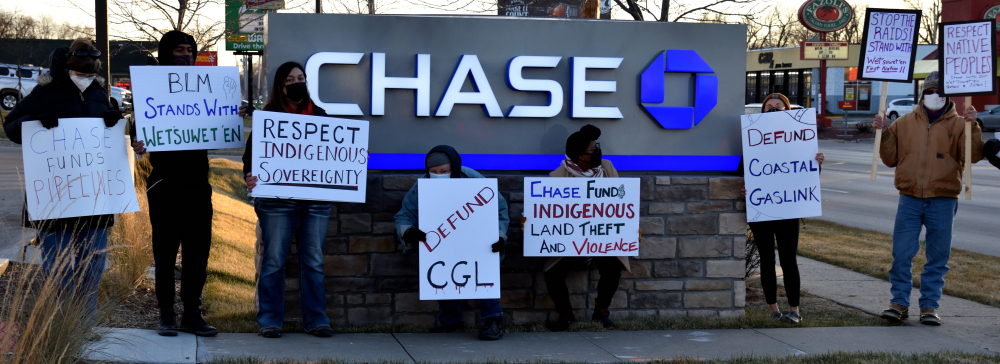
While Wet’suwet’en Land Defenders are grappling with unjust criminal charges, daily RCMP harassment, and imminent drilling under the Wedzin Kwa RBC held a huge golf tournament, the RBC Canadian Open. Luckily, activists were there to show the guests RBC’s true colours. Last Saturday, Decolonial Solidarity organizers joined activists and ravers in solidarity with the Wet’suwet’en people for a rave against RBC!

RBC is the title sponsor of the Canada Open golf tournament in Etobicoke, Toronto. We took the streets and marched to the gates of St. George’s Golf Club to let golf fans know what else their tournament sponsor funds. Equipped with a giant inflatable of RBC CEO Dave McKay, DJs, rappers, megaphones, and bubbles, we brought noise and energy to an otherwise quiet and low-key sport.
 
As the largest investor in the CGL pipeline, RBC needs to be held accountable. Those charged after the arrests in November 2021 include Wet’suwet’en elders, Haudenosaunee members, and legal observers. Recent investigations into the events in November show RCMP officers making racist remarks during the arrests and using coercive tactics to stop the blockade.

These charges are a disgusting and unacceptable demonstration of the law and policing protecting private companies and profits over people, land, and water. In the past, the Crown decided that prosecution of Wet’suwet’en Land Defenders was not in the public interest. We can help this time by telling Attorney General David Eby that it’s not in the public interest now either.
Call/email Attorney General David Eby today and tell him to refuse intervention. AG.Minister@gov.bc.ca, 205-387-1866. Sample email here

You can also check out this map to join an affinity group near you and take part in our Adopt-a-branch campaign targeting RBC.

In Solidarity,
The Decolonial Solidarity Organizing Team

Decolonial Solidarity (DS) is an ally-led Indigenous solidarity campaign. We currently stand in solidarity with Wet’suwet’en land defenders in their fight against the Coastal GasLink pipeline which is being built in their territory without necessary consent and which threatens their lands and waters.

RBC is a primary funder of both Coastal GasLink and fossil fuels more generally. The DS Adopt-a-Branch campaign demands that RBC divest from the Coastal GasLink pipeline and respect Indigenous peoples’ sovereignty and rights. Groups are going to RBC branches regularly and speaking with customers and employees in order to pressure RBC from within.

Our actions are non-violent and completely legal. We are committed to following the guidance of front-line Land Defenders and to long-term solidarity action. Everyone who respects these principles is welcome!

Decolonial Solidarity is an ally-led Indigenous solidarity campaign. Follow us on Instagram @decolonialsolidarity and Twitter @decolonialsol.

https://actionnetwork.org/event_campaigns/looking-for-members-on-cherche-des-membres

Sample email

Honourable David Eby Attorney General
PO Box 9044 Stn Prov Govt
Victoria, BC
V8W 9E2
AG.Minister@gov.bc.ca
Phone: 250 387-1866
Fax: 250 387-6411


Dear Mr. Eby,

I am writing as a concerned citizen about the human rights violations and violations of the UN
Declaration of the Rights of Indigenous People, among other things, that have been happening
in Wet’suwet’en Territory. The Hereditary Chiefs have repeatedly stated they do not consent to
this pipeline and people are being arrested for upholding their laws through their traditional
governance system which has been recognized through the Delgamuukw-Gisdaywa Supreme
Court of Canada victory December 11, 1997.

Recently, your office agreed to intervene to criminalize Indigenous land defenders that were
arrested on November 18th. I urge you to decline intervention on July 7th against Sleydo’ and
others arrested on November 19th, 2021. That would further criminalize the land defenders
currently facing charges as Coastal GasLink is requesting. Violently entering homes without
warrants is not the process for dealing with Wet’suwet’en sovereignty. The Hereditary Chiefs of
the Wet’suwet’en Nation have stated their position and are defending their territory and sacred
headwaters Wedzin Kwa as they have done since time immemorial. We as guests on unceded
land need to respect the decisions of the Hereditary Chiefs and enact reconciliation instead of
disrespecting and criminalizing them further for practicing their culture and laws.

Native Americans, Quakers and Mutual Aid

The Department of the Interior has released the first volume of the Federal Indian Boarding School Initiative Report. Interior Secretary Deb Haaland first announced the creation of the Initiative last June, with a primary goal of investigating the loss of human life and the lasting consequences of these schools.

This report, and ongoing news of locating the remains of Native children on the grounds of numerous Indian residential schools has brought attention to Quakers’ role in these institutions in North America.

There are calls for Friends to respond in many ways. To educate ourselves about this history. To seek ways for healing and reparations. To research and publish our own meeting’s history.

But I’m concerned that Friends will follow a common pattern of only working within their meetings. When this is a time we need to reach out to Native peoples.

And I am concerned that many Quakers are not aware of attitudes we could be bringing to this work. In the same the way so many white Quakers have trouble understanding white supremacy and privilege related to racial justice, many are also unaware of how deeply we are immersed in this colonized society. Colonization and white supremacy are the foundation of forced assimilation of native children. And the ideas behind the land theft and genocide of native peoples.

We need to decolonize ourselves. If not, we risk doing more harm than good.

My spiritual vision is of Quakers building personal relationships with native peoples when we are invited to do so. I have been blessed to experience this for the past couple of years while working with my local Mutual Aid community. This diverse community includes a number of native people. It was a Spirit led opportunity that connected me with an Indigenous organizer who is involved in Mutual Aid. We got to know each other over several months of email exchanges (this during the COVID crisis). When I thought we knew each other well enough, I asked if it would be appropriate for me to join this Mutual Aid work, and he said yes. But it wasn’t until I’d been involved for several months that he said, “welcome to the community”. Although I had invited myself to join this work, I wasn’t really part of the community until that moment.

I was blessed to find this community was not only another way to build friendships with native people, but also taught me what a Mutual Aid community is. Based on these experiences, I believe Mutual Aid is a model for how Friends can be involved in work outside the meetinghouse. Mutual Aid is a way we can decolonize ourselves.

What I think is needed in this moment is to show up at events and causes being led by Indigenous peoples near us

Mutual Aid is all about replacing vertical hierarchies with a flat, or horizontal hierarchy. This removes the power structures among members of the community and nearly eliminates friction, in my experience.

An essential part of the truth and healing process should be doing this work together as a Mutual Aid community, with its emphasis on inclusivity and rejecting dominant relationships. It is important that attitudes and practices of superiority not be brought to the work of healing from policies that are based on dominance and colonization.

“We sought to show the power our communities possess when we come together unified under the belief and knowledge that what we do today is both work to heal past generations and lift the spirits of our future generations.”

Matt Remle on the efforts to pass the Indigenous Peoples’ Day resolution

Mutual Aid focuses on meeting community needs now, in the moment. The food project I’m involved with distributes food to those in need every week. Those working with the houseless camps take food and propane tanks there. It is the experience of meeting needs in the present that brings us joy and attracts new members. That also affects our interactions with those who come for the food. We realize it is the failure of capitalism that leaves them hungry. We all know we ourselves might need such help in the future.

There are many suggestions of things Quakers might do related to the Indian Boarding Schools.

What I think is needed in this moment is to show up at events and causes being led by Indigenous peoples near us. Most Quaker meetings and many individuals have such relationships to build upon.

It would be good to have a place to share such information. The following are a few examples that I’m aware of:

There are two general guidelines for interacting with communities.

  1. Don’t expect oppressed peoples to educate you. We shouldn’t add to their burden. I kept this in mind when I was getting to know the native person who was teaching me about Mutual Aid. But he encouraged me to learn from him. He was training me.
  2. The idea behind the two row wampum is two groups, such as Native people and white people, agree to travel together but separately. Neither interfering in the affairs of the other.

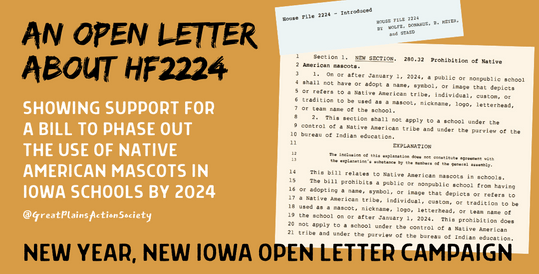
One interesting campaign of the Great Plains Action Society that specifically asks for our support is open letters. These letters express Indigenous people’s views on various topics and are meant to help supporters contact people who have the power to make decisions related to the topic. For example:

Recently, four Iowa Democrats have introduced a bill to phase out the use of Native American mascots in Iowa schools by 2024. Great Plains Action Society’s Director of Operations, Trisha Etringer, was quoted in an article in which she expressed her support for this proposed legislation, which reflects our organization as a whole. This letter is to celebrate this step in the right direction, and to provide more information about the issue at hand. With this Open Letter Campaign, we will be calling upon you to join us in communicating to the people in power that we need to be working toward a New Iowa. Unfortunately, that will often mean calling people out for failing to act, or for acting in harmful ways. Fortunately, in this case, it means asking you to send your support and encouragement to those that are fighting the difficult battles on behalf of our children.

https://www.greatplainsaction.org/single-post/open-letter-regarding-hf2224

There are many things Quakers should be doing in our own meetings related to the Indian Boarding Schools. But I think it is most important to support things native people are asking of us now.


Advocating for climate sanity

I recently discovered papers written by Zhiwa Woodbury, so I don’t yet know how much I will agree with him as I read more. But I agree with the following excerpt. This paragraph strikes a chord in me now, as I am trying to make sense of what is going on in the world today. I recently returned to the concept of sensemaking in Where are we now?

We have a stark choice between our own eventual extermination or a near term transformation. Such a transformation of human culture and the global economy will not come about without a simultaneous shift in collective consciousness. Trauma always raises questions of identity, whether considered at the scale of the individual, a culture, or now with the climate crisis, at the scale of an entire species. The choices we humans are making now – and will continue to make – in response to this spiritual emergency will determine whether we engender spiritual emergence, the messy rebirth of our species, or instead we repeat the kind of Great Dying that once wiped out 95% of all life on the planet, and took 10 million years for the biosphere to recover. My purpose in writing this book is to offer guidance and succor to all who those natural healers and existential professionals in the world, all those who hear the cries of the Earth, and all those advocating for climate sanity in every arena of life, so that we may attend Gaia’s bedside and serve as her spiritual midwives in planetary hospice. Whether Gaia is now dying, just ill, or about to give birth is largely dependent on how we, as a species, respond to her signals and attend to her needs

Climate Trauma, Reconciliation and Recovery by Zhiwa Woodbury

I do believe we are in a spiritual emergency and need a shift in collective consciousness. I often write about spiritual poverty. We spoke about this, too, last night during our weekly (Quaker) Spiritual Sharing Small Group.

We need to be advocating for climate sanity in every arena of life.

I always hesitate to bring this up, but I think we need to speak from our own experience. When I moved to Indianapolis in 1971, I was so horrified by the clouds of smog (before catalytic converters) I decided to live without a car. I know others have done so. But the point is, that was one way of advocating for climate sanity. It is heart wrenching to think of what a different world we would be living in today if fifty years ago we had decided to prioritize mass transit systems. And worked to build our cities and towns as walkable communities.

That was then. What do we do, advocate for, now? Our society clearly continues to refuse to think, let alone do anything about our deepening environmental catastrophe.

Rather than close coal burning plants, more are being built. Rather than stop further fossil fuel pipelines and other infrastructure, more is being built. Crazy schemes like carbon capture are being built. Some of what is captured is used to frack more oil from the ground.

Militaries are the worst polluters. The war in Ukraine and military operations globally need to be stopped immediately. The war in Ukraine is war against Mother Earth.

CLIMATEWIRE | Greenhouse gases trapped 49 percent more heat in 2021 than in 1990, as emissions continued to rise rapidly, according to NOAA.

“Our data show that global emissions continue to move in the wrong direction at a rapid pace,” said NOAA Administrator Rick Spinrad.

NOAA found that carbon dioxide, the most plentiful and long-lived gas, expanded at the most rapid rate over the last 10 years. But the most potent global warmer also broke records: methane increased more than it has since at least the early 1980s, when NOAA began its current measuring record. The methane emitted in 2021 was 15 percent greater than in the 1984-2006 period, and 162 percent greater than preindustrial levels, NOAA found.”
Record Methane Spike Boosts Heat Trapped by Greenhouse Gases. NOAA’s Annual Greenhouse Gas Index finds that greenhouse gases trapped nearly 50 percent more head last year than they did in 1990 by John Fialka, Scientific American, June 1, 2022

We have a stark choice between our own eventual extermination or a near term transformation. Such a transformation of human culture and the global economy will not come about without a simultaneous shift in collective consciousness.”

We are continuing to make this choice now and it’s for our eventual extermination.

What will it take to make the other choice, for a near term transformation? What would this shift in collective consciousness to transform human culture and the global economy be?

This shift in collective consciousness requires a response to our spiritual emergency. Returning to Indigenous ways, the idea of LANDBACK, would be part of a response. For Quakers, fortifying our Spiritual awareness, and acting on what that reveals, could be part of a response. The radical reimagining of our lives, our culture by the concepts of Mutual Aid could also be part of a response.

I was a little surprised when I wrote:

The reason I have been led to experiences with Native people and my Mutual Aid community is because the stories, the value structures I find there are closer to my values than those of White people in general in this country.

And most radical is to change, or return to how we look for and interpret our stories. To embrace spirituality in ourselves and our communities.

Although we rarely speak of it, our shared spirituality is what I have found to be the deepest connection with my Native American and Mutual Aid friends.

Where are we now?


To the future through the past

The consequences of two atrocities in the history of this country continue to impact us today. The institution of slavery, and the genocide of and land theft from Native Americans continue to tear our social fabric because we have not done what is necessary to acknowledge the truth and seek ways for healing.

This book chronicles the efforts of one small group of Friends to achieve some measure of justice for Native people of North America. The Quakers persisted across the centuries, while often realizing-and sometimes denying-that notwithstanding some successes, their goal was fundamentally unattainable. Any justice achieved could only be considered restorative, given that Native peoples’ relationship to their ancestral lands–central to their identity and humanity–was under relentless assault. These activist Friends were guided by the belief, or “testimony” of equality among all humankind.

As They Were Led. Quakerly Steps and Missteps Toward Native Justice 1795-1940 by Martha Claire Catlin, Quaker Heron Press, 2021.

Many questions arise as the remains of thousands of Native children are being located on the grounds of Indian boarding schools.

White Quaker communities are learning about the history of Friends’ involvement in the forced assimilation of Native children. And grappling with questions such as what are the relationships among Quakers and Indigenous peoples today? How do we work to discover and better understand the damage that was done? What can be done to begin to heal? This article by my friend Bobby Trice talks about these questions. Quakers Grapple with Legacy of Indian Boarding Schools by Bobby Trice, FCNL, October 25, 2021.

There are a number of areas of concern.

One is seeing the deep trauma in Native communities as the children’s remains are located. And sometimes returned to their home.

And seeking answers about how this happened. Searching for what Native communities, and White Quakers, can do to act on the truth we find. Discern what healing involves and how we do that. Healing not only for Native peoples, but also for Quakers. Trying to understand what this means for Quakers, past and present. Some of us have relatives who taught in those schools.

[Note: There are objections to calling those institutions of forced assimilation “schools”. And referring to what occurred there as “teaching”.]

I think it is easy, from the place where we are now, to be critical of the attitudes of these Friends. And yet I think we will find that we have much in common with them. I think this research will provide an opening for us to examine ourselves today, and to ask ourselves, “What are we missing in our analysis of the issues of our time? What are blind to? What are the contradictions in our own expression of our religious values? Are we living with integrity in our communities and on the land?”

Well, today, 150 years later, we see the policy of forced assimilation in a very different light. Native people from Australia to Canada and throughout the United States are bearing witness to the damage that was done to generations of Native children, especially in the boarding schools. Whether the children were treated cruelly or kindly, the intention of the schools really was to annihilate Indigenous cultures, to “kill the Indian; save the man.”

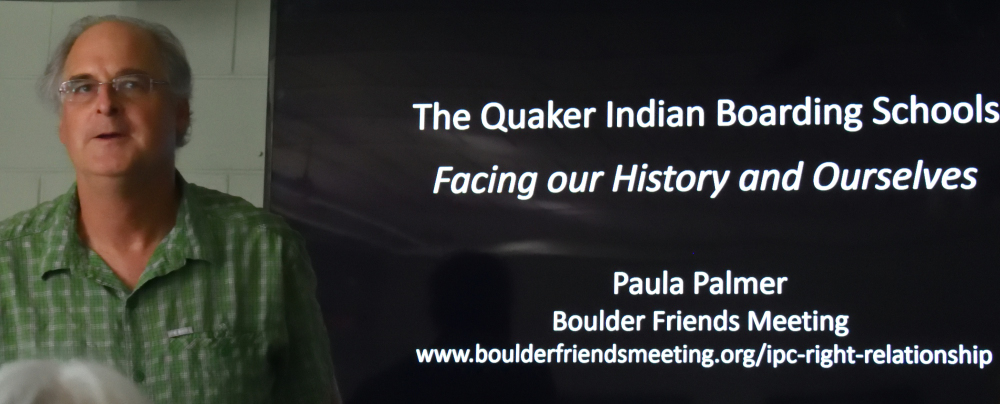
Quakers and the Forced Assimilation of Native Americans by Paula Palmer, Western Friend, July-August 2015

From our twenty-first-century vantage point, we know (or can learn) how Native people suffered and continue to suffer the consequences of actions that Friends committed 150 ago with the best of intentions. Can we hold those good intentions tenderly in one hand, and in the other hold the anguish, fear, loss, alienation, and despair borne by generations of Native Americans?

Native organizations are not asking us to judge our Quaker ancestors. They are asking, “Who are Friends today? Knowing what we know now, will Quakers join us in honest dialogue? Will they acknowledge the harm that was done? Will they seek ways to contribute toward healing processes that are desperately needed in Native communities?” These are my questions, too.

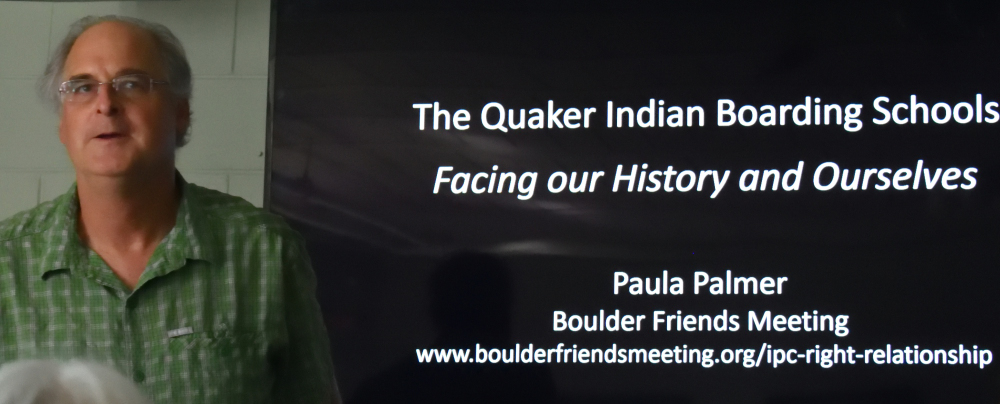
Quaker Indian Boarding Schools, Facing Our History and Ourselves by Paula Palmer, Friends Journal, October 1, 2016

The Department of the Interior has released the first volume of the Federal Indian Boarding School Initiative Report. Interior Secretary Deb Haaland first announced the creation of the Initiative last June, with a primary goal of investigating the loss of human life and the lasting consequences of these schools. The report was assembled with the input of tribal governments, Alaska Native villages, and Native Hawaiian communities.


FCNL welcomed the release of the first volume of the Federal Indian Boarding School Initiative’s long-awaited investigative report. Assembled by the Department of the Interior, this report serves as historic documentation of the trauma inflicted by Indian boarding schools. It also underscores the need for further reckoning on this vital issue, both in Congress and in the Quaker and faith communities.

According to the report, between 1819 and 1969, there were 408 schools across 37 states (or then-territories). Quakers managed at least 30 Indian boarding schools, and the conditions at these institutions were often horrific. These schools aimed to “assimilate” Native children through tactics such as renaming children with English names, cutting their hair, prohibiting the use of Native languages and religions, extensive military drills, and manual labor. Abuse ran rampant, including the withholding of food, solitary confinement, and physical punishment.

The investigation also found 53 burial sites at boarding school locations so far. As the Interior Department continues their investigation, they will produce a list of marked and unmarked burial sites and approximate the total amount of federal funding used to support the Indian boarding school system.

“This new report shines a much-needed light on the atrocities committed at Indian boarding schools, some of which were run by Quakers,” said FCNL General Secretary Bridget Moix. “We commend the Department of the Interior for doing this difficult work and we remain committed to doing our part to advance the reckoning and healing process for this dark chapter in American history.”

“Further, we call on the faith community at large to share records and accounts of their administration of these schools. Only through complete honesty and transparency can we begin moving towards a more just future,” she continued.

Quaker Lobby Welcomes Long-Awaited Report on Indian Boarding Schools by Alex Frandsen, Friends Committee on National Legislation, May 12, 2022


“For far too long, the truth of cultural genocide led by European-Americans at Indian boarding schools has remained hidden in secrecy and ignored,” said (past) FCNL General Secretary Diana Randall. “Christian churches, including Quakers, carry this burden of transgression against Indigenous people.”

I believe we must deal with the past, with these transgressions, before we can know how to move into the future.


Where are we now?

Sometimes when it seems the whole world is collapsing, I try to step back, hoping a wider perspective might help me understand. Unfortunately, doing so today just reinforces the global extent of chaos. I picture the world in flames.

I often return to reflecting on the term sensemaking as described by James Allen.

…there remains the most existential risk of them all: our diminishing capacity for collective sensemaking. Sensemaking is the ability to generate an understanding of world around us so that we may decide how to respond effectively to it. When this breaks down within the individual, it creates an ineffective human at best and a dangerous one at worst. At the collective level, a loss of sensemaking erodes shared cultural and value structures and renders us incapable of generating the collective wisdom necessary to solve complex societal problems like those described above. When that happens the centre cannot hold.

Pontoon Archipelago or: How I Learned to Stop Worrying and Love Collapse. By James Allen, originally published by Medium, June 18, 2019

I didn’t want to go over the list of disasters we are experiencing yet again. But a number of these are escalating. Recently India had experienced temperatures (124 degrees Fahrenheit) close to the point where humans simply cannot survive. We see the relentless march of severe weather across the land. Fierce wildfires. Water levels sinking below the point where water can be taken in at the Hoover Dam. Electricity cannot be produced, nor agricultural land irrigated.

A political party whose only goal is to gain power. An explosion of gun violence and mass shootings with no end in sight. A broken supply chain that can’t even supply baby formula.

Perhaps most concerning is the accelerating increase in gas prices.

As James Allen also writes in the article cited above, “the jumping-off point for this essay is a regrettable acceptance that a forthcoming energy descent combined with multiple ecological crises will force massive societal transformation this century. It’s hardly a leap to suggest that, with less abundant cheap energy and the collapse of the complex political and economic infrastructure that supports our present way of life, this transformation is likely to include the contraction and relocalisation of some (if not most) aspects our daily lives.”

“The contraction and relocalisation of some (if not most) aspects our daily lives” could be Mutual Aid.

I’ve met a great deal of resistance to the idea of replacing capitalism with Mutual Aid. When I asked a (Mutual Aid) friend why people had so much trouble recognizing the evils of capitalism, he said it was because they hadn’t experienced the failures of capitalism in their own lives, yet.

We are experiencing the failures of capitalism now.


The problems before us are emergent phenomena with a life of their own, and the causes requiring treatment are obscure. They are what systems scientists call wicked problems: problems that harbour so many complex non-linear interdependencies that they not only seem impossible to understand and solve, but tend to resist our attempts to do so. For such wicked problems, our conventional toolkits — advocacy, activism, conscientious consumerism, and ballot casting — are grossly inadequate and their primary utility may be the self-soothing effect it has on the well-meaning souls who use them.

If we are to find a new kind of good life amid the catastrophes these myths have spawned, then we need to radically rethink the stories we tell ourselves. We need to dig deep into old stories and reveal their wisdom, as well as lovingly nurture the emergence of new stories into being.

Pontoon Archipelago or: How I Learned to Stop Worrying and Love Collapse. By James Allen, originally published by Medium, June 18, 2019

What does it mean to radically rethink the stories we tell ourselves? This is influenced by who “we” are, what our culture is. But Allen writes of “shared cultural and value structures.”

The reason I have been led to experiences with Native people and my Mutual Aid community is because the stories, the value structures I find there are closer to my values than those of White people in general in this country.

What does it mean to radically rethink the stories we tell ourselves?

I believe that means to search beyond our comfort zone. To stop wasting time advocating for incremental changes in systems that are broken.

Radically rethinking involves searching for the truth of what happened in our history. The land theft, forced assimilation, and genocide of Native peoples. The many atrocities of the institution of slavery. White supremacy today.

And most radical is to change, or return to how we look for and interpret our stories. To embrace spirituality in ourselves and our communities.

Although we rarely speak of it, our shared spirituality is what I have found to be the deepest connection with my Native American and Mutual Aid friends.

This is where I am now.


U.S. Indian Boarding Schools

The Department of Interior recently released the first volume of the Federal Indian Boarding School Initiative’s report. There were 408 schools across 37 states in the United States. 53 burial sites have been found so far.


FCNL welcomed the release of the first volume of the Federal Indian Boarding School Initiative’s long-awaited investigative report. Assembled by the Department of the Interior, this report serves as historic documentation of the trauma inflicted by Indian boarding schools. It also underscores the need for further reckoning on this vital issue, both in Congress and in the Quaker and faith communities.

According to the report, between 1819 and 1969, there were 408 schools across 37 states (or then-territories). Quakers managed at least 30 Indian boarding schools, and the conditions at these institutions were often horrific. These schools aimed to “assimilate” Native children through tactics such as renaming children with English names, cutting their hair, prohibiting the use of Native languages and religions, extensive military drills, and manual labor. Abuse ran rampant, including the withholding of food, solitary confinement, and physical punishment.

The investigation also found 53 burial sites at boarding school locations so far. As the Interior Department continues their investigation, they will produce a list of marked and unmarked burial sites and approximate the total amount of federal funding used to support the Indian boarding school system.

“This new report shines a much-needed light on the atrocities committed at Indian boarding schools, some of which were run by Quakers,” said FCNL General Secretary Bridget Moix. “We commend the Department of the Interior for doing this difficult work and we remain committed to doing our part to advance the reckoning and healing process for this dark chapter in American history.”

Further, we call on the faith community at large to share records and accounts of their administration of these schools. Only through complete honesty and transparency can we begin moving towards a more just future,” she continued.

Quaker Lobby Welcomes Long-Awaited Report on Indian Boarding Schools by Alex Frandsen, Friends Committee on National Legislation, May 12, 2022

Friends Committee on National Legislation
Native American Legislative Update

MAY 2022

The Interior Department also announced the launch of “The Road to Healing,” a year-long tour across the country to allow survivors to share their stories, connect tribal communities with trauma-informed support, and facilitate the collection of a permanent oral history.

Bill Tracker

Truth and Healing Commission on Indian Boarding School Policies Act (H.R. 5444):
On May 12, the House Natural Resources Subcommittee for Indigenous Peoples of the U.S. held a hearing to receive testimony from boarding school survivors, tribal leaders, and the head of the National Native American Boarding School Healing Coalition.

FY2023 Budget Hearings:
On May 11, the Senate Interior and Environment Appropriations Subcommittee received testimony from the Indian Health Service (IHS) on its proposal to move IHS funding from discretionary to mandatory funding in fiscal year 2023. If approved, this change would stabilize the tribal healthcare system.

MONTHLY ACTION

Portia K. Skenandore-Wheelock
Congressional Advocate
Native American Advocacy Program

The following is a searchable list of Indian boarding schools identified by the Department of the Interior as part of the Federal Indian Boarding School Initiative. The information is drawn from Appendix A of Volume 1 of the Federal Indian Boarding School Initiative Investigative Report. It shows the 408 schools were identified in 37 states, including 21 in Alaska and seven in Hawaii. Over time, the schools were located at 431 sites.“The research conducted has resulted in the identification of hundreds of boarding schools that have been considered against four criteria,” the 27-page document reads. “All four criteria must be met for an institution to be considered a FIBS.”
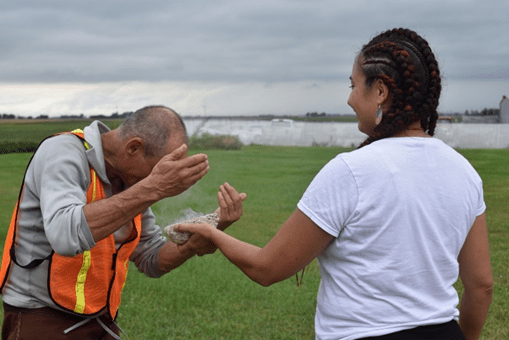
The four criteria follow:

  1. Housing – Institution ever described as providing housing or overnight lodging to attendees on site.
  2. Education – Institution ever described as providing formal academic or vocational training or instruction.
  3. Federal Support – Institution ever described as having federal government funds or other support provided to the institution.
  4. Timeframe – Institution operational at any time prior to 1969.

The schools in Iowa are listed here:

Toledo Industrial Boarding SchoolToledo Sanatorium; Sac & Fox Indian Boarding and Mission School; Sac & Fox Sanatorium; Tama School; Tama SanatoriumToledoIowa
White’s Manual Labor Institute – IowaIowa Boys Training School; Iowa Girls Training School; Indian Boarding School; Home and School for Boys and GirlsHoughtonIowa
Winnebago Mission SchoolYellow River SchoolAllamakee CountyIowa

List of Federal Indian Boarding Schools as of April 1, 2022, Indianz.Com, May 11, 2022


Quaker Statements on Indigenous Justice and Indian Boarding Schools. Minutes, Statements, and Resources from Quaker Organizations, Friends Committee on National Legislation, May 10, 2022

https://www.fcnl.org/updates/2022-05/quaker-statements-indigenous-justice-and-indian-boarding-schools