Conflict with my Quaker meeting

Recently when I wrote about life without a car, I said being led to live without a car and struggling to convince others to not use fossil fuels were the most important spirit-led actions of my life. This is a continuation of the discussion of life without a car.

My grandmother, Lorene Standing, said the will of God is often revealed in a series of steps. Which was the case related to my spiritual leadings to reduce greenhouse gas emissions. Earlier I wrote about the beginnings of my spiritual guidance regarding our environment. But there were many times as life went on when I relied on that and further guidance. The series of steps along the way.

But there were also times when I somehow got off the right path of this journey. I made a lot of mistakes related to this over the years. Among other things, this created a great deal of tension with my Quaker meeting.

It wasn’t that members of the meeting weren’t concerned about Mother Earth. They were concerned and did many things to reduce their carbon footprint and pollution.

But I believed transportation was the single greatest contributor to greenhouse gas emissions that we had personal control over. It was a matter of scale. Emissions from even the minimal use of cars dwarfed the total emissions saved by all other efforts, such as turning off lights, reducing the use of heating and air conditioning, etc., combined. It was disconcerting to see Friends and others using air travel. The skies were full of planes.

There was also collateral damage related to fossil fuel transportation. Urban sprawl was premised on the use of cars for all transportation, including to work, school, grocery, church, healthcare, sports, and entertainment. That would not have occurred, at least to the extent is has, if we had focused on mass transit instead of personal automobiles.

Our communities would not have been fractured as they were when people drove to the suburbs and stayed in their homes when they got there. Not knowing their neighbors, not having a sense of community. Investing in armed police and prisons for a false sense of security. Spending incomprehensible amounts of money for a false sense of national security. And the greater horror of squandering the lives of soldiers on both sides of conflicts. So many civilian casualties. Crushing our souls.

Most importantly, we would not be facing the existential environmental crisis we are in now.

And the U.S. armed forces are the single greatest source of pollution.

Most importantly, we would not be facing the existential environmental crisis we are in now. With the strong storms, flooding, savage wildfires, heat and drought. Leading to mass migration, famine and deaths.

The root of the tensions with my Quaker communities was that many members lived in rural areas, small towns, or cities with no public transportation.

Indianapolis had a public bus system that wasn’t highly rated. The bus routes didn’t cover large areas of the city, didn’t operate during the night, and often not on weekends. They were often not on time.

So it is a paradox that I rarely used Indianapolis’s public transportation system, in part for the reasons mentioned above while being a strong advocate for mass transit. But these problems all need to addressed. Perhaps the most important thing we can do for Mother Earth is create good public transit systems. And stop military operations.

To live without a car, I had to carefully plan where I lived. There needed to be a grocery store and laundry within walking distance. And be within walking distance of the hospital I worked at.

I had to carefully choose the food I bought, limited to the weight and bulk I could walk with. That meant things like rice and not boxes of prepared foods. Another advantage was that also meant I had little trash.

I won’t deny it was often difficult to not have a car. Walking in inclement weather was a challenge. Sometimes I would just be tired. When I did use the bus system, the buses were often not on time. These were times when I would ask for some spiritual support. Some of the small steps my grandmother spoke of. Sometimes I’d receive that support, other times not.

There are many ways not having a car was a blessing. As I walked to and from work, I began to notice flowers and views. The more closely I paid attention, the more detail I saw. I began to carry my camera with me. It soon got to the point that I had to leave a little extra early for work, to account for the time taking the photos.

And there were many times I would run to the places I was going to. Besides my nearly daily runs for pleasure and fitness.

Rural transportation and fossil fuel usage

What did I think people in rural areas could do? The easiest would be to plan trips so multiple things could be accomplished on each. Friends were doing this. Friends could also coordinate trips with each other.

Rural towns could create inter-city transportation using school buses or electric vehicles.

People could install renewable energy systems. Perhaps community renewable systems. Including the meetinghouse.

Use electric powered vehicles or perhaps a return to animals to move things around the farm, pull plows in the fields.

These conversations went on for all of my adult life.

Invite the meeting into my concern

Finally, a f/Friend asked me if I had invited the meeting into my concern. And I realized I had not. We had fallen into a pattern of my expressions of concern, and often irritation actually. The physical separation didn’t help. I lived in Indianapolis my whole adult life.

With this change in perspective, and spiritual guidance as we considered this together, worshipped together, we came up with a statement (minute) we referred to as “ethical transportation”. We asked the yearly meeting (Iowa Yearly Meeting Conservative) to consider the minute, which was approved by the Yearly Meeting (below).

Junior Yearly Meeting, Iowa Yearly Meeting (Conservative)

Our Yearly Meeting has approved other minutes related to our environment. In 2015 we approved this minute.

Minute

We are deeply moved and appreciate the contribution of Junior Yearly Meeting to our ongoing concern regarding changes in our environment.  Their project to raise funds for FCNL’s efforts to address environmental concerns by selling flowers was both spiritually and artistically beautiful.
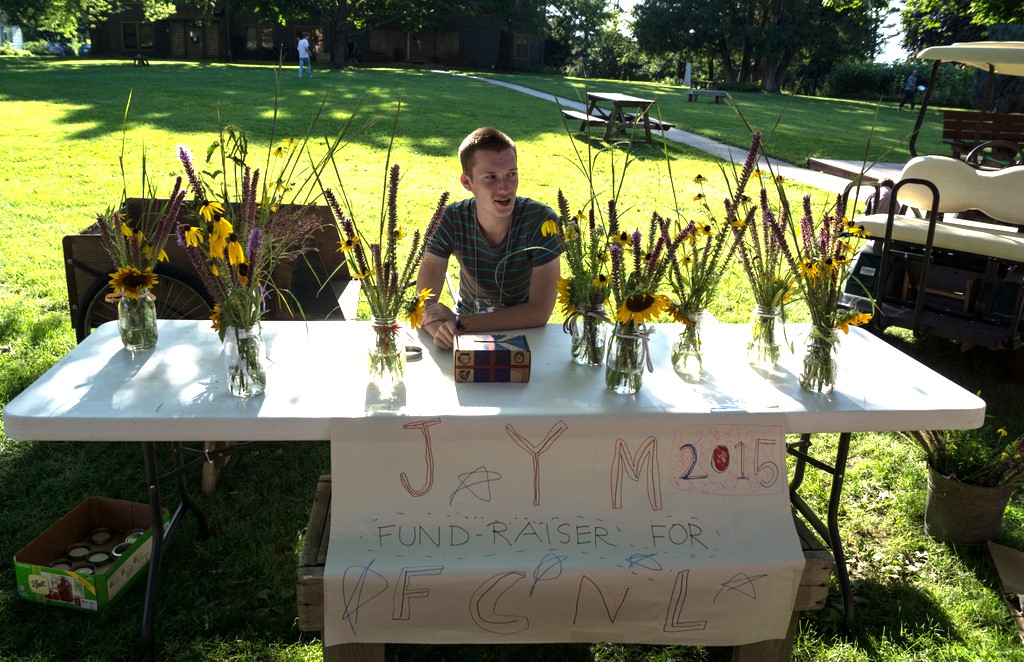
Junior Yearly Meeting sells flowers from the Scattergood prairie to raise money to support FCNL’s work related to our environment

And this was included in the approved Peace and Social Concerns Committee report.

We are exploring concerns of our younger Friends.  Junior Yearly meeting at this Yearly Meeting are concerned about greenhouse gas emissions and rebuilding infrastructure in countries ravaged by war.


Queries

It would have been good if we had reached the point of inviting the meeting into my environmental concerns much sooner than we did. We have a practice that might have helped, which is consideration of queries (questions) related to various parts of our Quaker community lives. There are twelve sets of queries, so commonly each meeting considers one set of queries each month.

4.  HARMONY WITHIN THE MEETING

“This is my commandment: Love one another as I have loved you.”   John 15:1

ADVICE

It is sometimes difficult to remember that love is a gift of the Divine Spirit and not simply a human emotion. As imperfect human beings, it is not always possible for us to feel loving toward one another, but by opening ourselves to the Light Within, we can receive and give love beyond our human abilities.

Relationships among meeting members take time to evolve. Sometimes misunderstandings develop. When differences arise, they should not be ignored for the sake of superficial unity. We believe disagreements which might divide or disrupt a meeting can be resolved through human effort and divine grace, and may result in a stronger and more creative meeting. True harmony depends upon each persons deep respect of and faithful attention to the Divine Spirit within us all. We endeavor to practice humility, attempting to understand positions of others and being aware of the possibility that we may be mistaken.

It is the responsibility of the Ministry and Oversight Committee to be sensitive to needs which may arise. Others in the meeting may be equally concerned, and because of greater understanding in certain cases, be able to give counsel. In reconciliation of differences, a position not previously considered may prove mutually beneficial. At times it may be necessary to confront individuals whose behavior is disruptive. A clearness committee or professional help may be suggested in some situations. We must always remember the power of holding one another in the Light, and the healing that comes from forgiving ourselves as well as others.

QUERY

  • What can we do to deepen our relationships with one another? How does gender affect the way we relate to each other?
  • How does our meeting balance the needs for honesty and kindness? What topics do we avoid for the sake of “unity”?
  • When in conflict with others, do we cultivate a forgiving spirit? Do we look to that of God in ourselves and seek to address that of God in those with whom we disagree?

Ethical Transportation

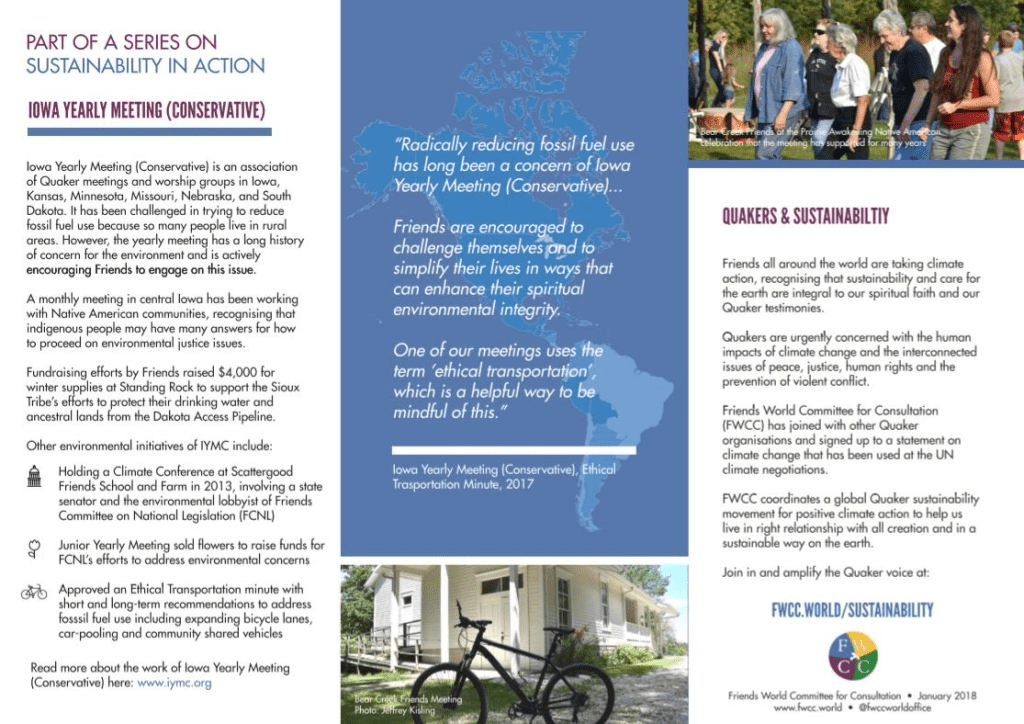
 Radically reducing fossil fuel use has long been a concern of Iowa Yearly Meeting (Conservative).  A previously approved Minute urged us to reduce our use of personal automobiles.  We have continued to be challenged by the design of our communities that makes this difficult.  This is even more challenging in rural areas.  But our environmental crisis means we must find ways to address this issue quickly.
 
 Friends are encouraged to challenge themselves and to simplify their lives in ways that can enhance their spiritual environmental integrity. One of our meetings uses the term “ethical transportation,” which is a helpful way to be mindful of this.
 
 Long term, we need to encourage ways to make our communities “walkable”, and to expand public transportation systems.  These will require major changes in infrastructure and urban planning.
 
 Carpooling and community shared vehicles would help.  We can develop ways to coordinate neighbors needing to travel to shop for food, attend meetings, visit doctors, etc.  We could explore using existing school buses or shared vehicles to provide intercity transportation.  
 
 One immediately available step would be to promote the use of bicycles as a visible witness for non-fossil fuel transportation.  Friends may forget how easy and fun it can be to travel miles on bicycles.  Neighbors seeing families riding their bicycles to Quaker meetings would have an impact on community awareness.  This is a way for our children to be involved in this shared witness.  We should encourage the expansion of bicycle lanes and paths.  We can repair and recycle unused bicycles, and make them available to those who have the need.

Minute approved by Iowa Yearly Meeting (Conservative) 2017


1 . SET CONFLICT RESOLUTION GROUND RULES:

  • Recognize whose lands these are on which we stand.
  • Ask the deer, turtle, and the crane.
  • Make sure the spirits of these lands are respected and treated with goodwill.
  • The land is a being who remembers everything.
  • You will have to answer to your children, and their children, and theirs—
  • The red shimmer of remembering will compel you up the night to walk the perimeter of truth for understanding.
  • As I brushed my hair over the hotel sink to get ready I heard:
  • By listening we will understand who we are in this holy realm of words.
  • Do not parade, pleased with yourself.
  • You must speak in the language of justice.
Harjo, Joy. Conflict Resolution for Holy Beings: Poems. W. W. Norton & Company. Kindle Edition.

Life without a car

Aside from the spiritual leadings that guided me to my career, being led to live without a car and struggling to convince others to not use fossil fuels were the most important spirit-led actions of my life. This also created a great deal of tension with my Quaker meeting. I made a lot of mistakes related to this over the years. When I say “I made mistakes” that’s a clue that I didn’t always hear, or follow what the Spirit was guiding me to do.

Growing up on farms, I had the connections to the land and creatures and the cycles of the seasons common to farmers. Scattergood Friends School is on a farm, the name changed to Scattergood Friends School and Farm since I attended. Working on the farm was an important part of our education. Over the years this has expanded significantly. In the Sophomore year we raised pigs as part of our biology class.

Being led to live without a car was at the intersection of my foundational stories, my Quaker faith, protecting Mother Earth, and photography.


I am very grateful my parents chose to take us on camping trips across the United States for our summer family vacations, specifically selecting National Parks to camp in.  Actually camping in the Parks was key to the whole experience.  Our first camper was a King camper, which was an aluminum trailer with a canvas covered framework that unfolded to form the top half when we stopped at the campsite.  Being in the woods, hearing the sounds of the wind and wildlife and the glacier streams rush over the boulders, feeling the cold at night, and smelling the pine trees made the experience so much better than traveling into the park during the day and returning to a motel at night.

Hiking through the meadows and forests and upon mountainsides with countless, stunning vistas, were life changing experiences for me.  I was overwhelmed by the intense beauty.  Rocky Mountain National Park was our favorite, and we returned there time and again as we were growing up. We quickly found that not many people traveled too far from the parking areas, and with even a short hike we were practically alone in the woods.  Hikes of just a mile or two brought us to lakes, canyons, waterfalls, cliffs, meadows, snowfields, boulder fields, and rock walls to climb. Places we were able to appreciate alone.

Quaker worship was a natural extension of the quiet of the mountains.

I hadn’t reflected much on why we sought opportunities to be by ourselves in the mountains. It just seemed a much better experience that way. Now I think it was related to feeling closer to God when we were deep in the quiet of the forests. Having grown up in Quaker communities, I was used to worshiping in silence, as we do so we can hear the whisper of the Spirit. Being enveloped in the silence of the mountains was a natural extension of Quaker worship. Or rather, Quaker worship was a natural extension of the quiet of the mountains. Quiet rather than silence.

This was also a reciprocal relationship. I was always challenged to find ways to share my spiritual experiences with others. These experiences are ineffable, that is they can’t be adequately expressed with words. But art can often better express spirituality. So I hoped some of my photographs might show glimpses of the Spirit.

The writer’s lonely, harrowing struggle to give shape to his or her elusive vision of the world—to complete a book, to discover among the fragments of a thought or a dream the precise image needed to breathe life into a poem—is a familiar chapter in the annals of pain and grief.

How can we save the wilderness? I was a mountain climber whose affection for the high peaks had evolved gradually into political commitment to the cause of preservation. I was, too, a fledgling writer searching for direction. I knew the importance of craft, experience, doggedness, and the other familiar requisites for literary success, but I lacked vision—an understanding of my relationship to the world.

How could we convince lawmakers to pass laws to protect wilderness? (Barry) Lopez argued that wilderness activists will never achieve the success they seek until they can go before a panel of legislators and testify that a certain river or butterfly or mountain or tree must be saved, not because of its economic importance, not because it has recreational or historical or scientific value, but because it is so beautiful.

I left the room a changed person, one who suddenly knew exactly what he wanted to do and how to do it. I had known that love is a powerful weapon, but until that moment I had not understood how to use it. What I learned on that long-ago evening, and what I have counted on ever since, is that to save a wilderness, or to be a writer or a cab driver or a homemaker—to live one’s life—one must reach deep into one’s heart and find what is there, then speak it plainly and without shame.

Reid, Robert Leonard. Because It Is So Beautiful: Unraveling the Mystique of the American West . Counterpoint. Kindle Edition

One reason I began to write was to explore why I took a given photograph.  I hadn’t appreciated this until I was repeatedly told the same thing, which is that a photograph can help the viewer see the subject in a way they hadn’t before.  So as I prepare to shoot a picture, I think about what I am trying to show with it, how to compose it, and set the exposure and focus in such a way as to create the photograph as closely to the image I am envisioning, as possible. 

Note that I said “envision”. I don’t take photos to be as realistic as possible, which would be like make a Xerox copy of a scene.

My hope is that some of my photographs might help others to see and understand the subject as I understand it, and may see/understand it differently than before viewing the photo.

One of the many things I’m learning from Indigenous ways is the Spirit is in all things, including animals, plants, water, sky and mountains. I felt this deeply when I was in the forests and mountains. I’ve heard others express this in various ways as feeling closer to God, and that was how I felt.

This spiritual connection I developed with the mountains, lakes and forests had profound consequences in my life.

When I moved to Indianapolis in 1971, the city was enveloped in smog. This was before catalytic converters, which began to appear in 1975. When I saw the polluted air, I had a profound spiritual vision of the Rocky Mountains being hidden by clouds of smog. The possibility that I would no longer be able to see the mountains shook me to my core.

Long’s Peak from Moraine Park, Rocky Mountain National Park, Colorado

I was thinking specifically about the photo above, and how terrible it would be to no longer be able to see Long’s Peak. Although I now have many photos of the same view, I was thinking of this black an white photo specifically when I had that vision even though the quality isn’t near what I get now with a digital camera. I developed the film and the print of this in a darkroom. This is the image connected to my vision.

From that moment on I saw cars as evil because of the damage they were doing. I decided I could not be part of that, and have lived without a car since then. I began my lifelong study of environmental science and work to try to bring awareness about the catastrophic damage being done to Mother Earth. Although I give thanks that catalytic converters took care of the visible smog, I knew of the continued damage and consequences of the tons of carbon dioxide and other gases coming from the exhaust of ever increasing numbers of cars.

I saw automobiles as the ‘seeds of war’.  Many wars are literally fought over fossil fuel supplies. But these seeds of war are found in the way we live our lives.

“I told [the Commonwealth Commissioners] I lived in the virtue of that life and power that took away the occasion of all wars… I told them I was come into the covenant of peace which was before wars and strife were.” 

George Fox

“Oh! that we who declare against wars, and acknowledge our trust to be in God only, may walk in the light, and therein examine our foundation and motives in holding great estates! May we look upon our treasures, and the furniture of our houses, and the garments in which we array ourselves, and try whether the seeds of war have nourishment in these our possessions, or not. Holding treasures in the self-pleasing spirit is a strong plant, the fruit whereof ripens fast.” 

John Woolman

It was camping in the national parks, and spiritual connections to the lakes, forests, wildlife, sky and mountains, that made me become a lifelong environmental activist. And photography was how I tried to express that for myself, and others. I knew environmental damage from burning fossil fuels would damage the mountains, forests and rivers, so I tried to preserve those scenes with photographs. Significant damage will happen with higher air temperatures, forest fires, infestation with migrating insects, torrential downpours, and drought.

It is sad to think such photographs might be historic records of the way things used to be, and no longer are. This is actually one of the reasons I am led to write my foundational stories, wondering if I shouldn’t do more to use photography to try to create change.

Recently at the annual meeting of Iowa Yearly Meeting (Conservative) I was grateful to be asked to show my photographs during one of the evening programs. The program was titled “Finding Truth and Beauty.” For about an hour the meetinghouse full Quakers watched the slideshow of photos in silence. Then, as the slideshow continued, Friends (Quakers) were invited to share their thoughts, which many did. I was grateful for this experience of sharing photos that had a spiritual significance for me, with my Quaker community in the context of silent worship.


My story of Cars as weapons of mass destruction was included in this book by my friends at Sustainable Indiana.
https://jeffkisling.com/2015/09/13/cars-as-weapons-of-mass-destruction/

Foundational Stories: Care for Mother Earth

My foundational story is related to the intersections between my Quaker faith, protecting Mother Earth, and photography. This combination has remained a powerful and evolving influence throughout my life. My faith led me to try to share my spiritual experiences and show my love for the beauty of Mother Earth through photography. These three things came into play in many ways throughout my life.

It ended up taking many stories to describe the evolution of these foundational concepts.
[See: https://quakersandreligioussocialism.com/?s=foundational ]

Finally, I’m getting to the state of my foundational stories now.

Care for Mother Earth is brought into focus as we struggle to comprehend the utter devastation from Hurricane Ian. People are forced to finally begin to realize how bad environmental devastation can be, how horrific the chaos is, and will increasingly be.

People are wondering whether they should try to rebuild their homes or businesses in these parts of the country that will see worsening storms. Many have become climate migrants.

Other climate migrants will come from areas of ferocious wildfires. Places that no longer have water or are flooded by storms and/or rising ocean levels. Places too hot to live in.

There will be shrinking habitable areas and increasing numbers of migrants. Where will they go? What can we do to prepare for and welcome them? Will we become climate migrants?

Even if we are not forced to move, life as we know it will change dramatically. We will either choose to or be forced to decarbonize. That will require us to rebuild all our basic systems.

We need to rebuild all our basic systemsAll of themLet’s take food. We have next to no idea how to make food without industrial grade fertilizer, which comes from…fossil fuels. Our entire food system is heavily carbonized. Take energy. Much of the world is struggling without Russian oil and gas — precisely because we’re still dependent as a civilization on dirty fuel. Take water — where are we going to get it, precisely, in places like the American West, or as the temperature crosses 50 degrees? Or take construction — we have no idea, really, how to make the basic material building blocks of our lives, glass, steel, cement, without fossil fuels. Finally, take manufacturing: it’s obvious, painfully so, that we can’t just buy-use-dispose anymore, but that economics need to be made of closed loops — but where’s the infrastructure for it? When is Amazon going to send the Prime Guy over to pick up your rubbish so it can be remanufactured into tomorrow’s stuff?

All our basic systems need to be reinvented for an Age of Extinction. Or it is lights outI mean that quite literally: Europe’s going to struggle to keep the lights on this winter, California was pushed to the brink over the summer, and all that’s emblematic of system failure on a mega scale. Lights out.

The Choice We Face Is Transformation or Extinction. What Trussonomics Vs Bidenomics Says About Building a 21st Century Economy by umair haque, Eudaimonia and Co, Sept 27, 2022


Joy is the soul stirred
underneath the journey,
gaze snagged on wonder,
not knowing final destination,
blessed as a witness,
moored to ground,
worshipful tears
dripped into grateful smile.

J. Drew Lanham Joy is the Justice We Give Ourselves. (excerpt)

Global

It is obvious that environmental devastation is a global problem which demands a global response. But I’ve been so discouraged by the paralysis in this country, that I haven’t had the energy to think globally. Didn’t think a global response was ever going to be possible.

But in a recent article umair haque writes about the speech Secretary General of the United Nations, Antonio Guterres recently gave to the General Assembly. Which gives me a little hope that a global response might be possible.

The Secretary General of the UN just called for a Global New Deal. And nobody listened. But they should have, because this is precisely the idea we need if our civilization is going to survive. What he means by Global New Deal is all the above — taxing windfall profits, so that investments can be made, now, urgently, in basic systems for all, which we so clearly need, from food to water to energy and so on.

But he doesn’t stop there. He’s not just proposing, but demanding, a reinvention of the global financial system to invest even more. He calls on the IMF to expand its Special Drawing Rights, and create a Global Stimulus Package.

The Alarm Bells of Civilizational Collapse Are Ringing — But Are We Listening? If Our Civilization Is Going to Survive, It’s Going to Have to Change Like This — Fast by umair haque, Eudaimonia and Co, Sep 22, 2022


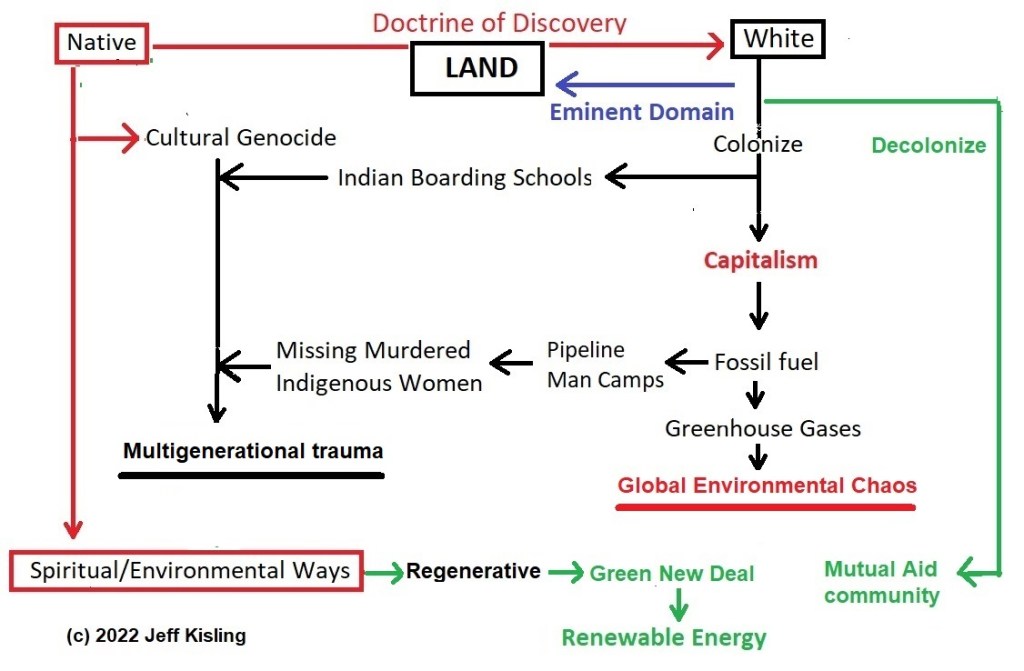
In this latest version of a diagram I’ve been working on, newly added are attention to the global aspects of environmental chaos and the need for a global new deal.


We have a duty to act. And yet we are gridlocked in colossal global dysfunction.

The international community is not ready or willing to tackle the big dramatic challenges of our age. These crises threaten the very future of humanity and the fate of our planet.

Let’s have no illusions. We are in rough seas. A winter of global discontent is on the horizon. A cost-of-living crisis is raging. Trust is crumbling. Inequalities are exploding. Our planet is burning. People are hurting — with the most vulnerable suffering the most.

Our world is in peril — and paralyzed. Geopolitical divides are undermining the work of the Security Council. Undermining international law. Undermining trust and people’s faith in democratic institutions. Undermining all forms of international cooperation. We cannot go on like this. Even the various groupings set up outside the multilateral system by some members of the international community have fallen into the trap of geopolitical divides, like in the G-20.

But the reality is that we live in a world where the logic of cooperation and dialogue is the only path forward. No power or group alone can call the shots. No major global challenge can be solved by a coalition of the willing. We need a coalition of the world.

There is another battle we must end — our suicidal war against nature. The climate crisis is the defining issue of our time. It must be the first priority of every government and multilateral organization. And yet climate action is being put on the back burner — despite overwhelming public support around the world. Global greenhouse gas emissions need to be slashed by 45 percent by 2030 to have any hope of reaching net zero emissions by 2050. And yet emissions are going up at record levels — on course to a 14 percent increase this decade.

Secretary General of the United Nations, Antonio Guterres

Excellencies, let’s tell it like it is. Our world is addicted to fossil fuels. It’s time for an intervention. We need to hold fossil fuel companies and their enablers to account. That includes the banks, private equity, asset managers and other financial institutions that continue to invest and underwrite carbon pollution.

And it includes the massive public relations machine raking in billions to shield the fossil fuel industry from scrutiny. Just as they did for the tobacco industry decades before, lobbyists and spin doctors have spewed harmful misinformation. Fossil fuel interests need to spend less time averting a PR disaster — and more time averting a planetary one.

Of course, fossil fuels cannot be shut down overnight. A just transition means leaving no person or country behind. But it is high time to put fossil fuel producers, investors and enablers on notice.

Polluters must pay.

Today, I am calling on all developed economies to tax the windfall profits of fossil fuel companies. Those funds should be re-directed in two ways: to countries suffering loss and damage caused by the climate crisis; and to people struggling with rising food and energy prices.

Secretary General of the United Nations, Antonio Guterres


Joy is the sunrise
breaking through night’s remains,
bright shone new
on a shell-wracked shore;
a fresh tide-scrubbed world
redeems what was,
to is.

J. Drew Lanham Joy is the Justice We Give Ourselves. (excerpt)

Foundational Stories 9/28/2022

This summer I began writing about my foundational stories. This was in response to a Quaker friend urging us to think back on the beginnings of our stories. Then about how our stories evolved, and what they look like now. That led me to write many stories about this evolution.
[See: https://quakersandreligioussocialism.com/?s=foundational ]

I’ve been looking forward to describing the current state of my foundational story. The article below about Cai Quirk is remarkably similar to parts of my story now.

My foundational story is related to the intersections between my Quaker faith, protecting Mother Earth, and photography. This combination has remained a powerful, yet evolving, influence throughout my life. My faith led me to try to share my spiritual experiences and show my love for the beauty of Mother Earth through photography. These three things came into play in many ways throughout my life.

I continue to rely on my Quaker faith to guide these decisions. Sometimes the guidance is clear. Other times either I’m not discerning what the Spirit is telling me, or there isn’t anything new to hear. It’s all too easy to stay on a path we are comfortable with, to the extent we might not hear, or might ignore leadings that say we need to change direction, to do something we are uncomfortable with. One thing I was blessed to realize early in my life was the times I took risks resulted in significant growth. Which led me to search for ways to take risks.

The reason I invested in the idea of the evolution of my foundational stories is because I’m feeling I might need to change how I think about and put into practice faith, protecting Mother Earth, and photography. I don’t have a way to know how many people read my blog posts but have a better indication of how people see my photography. My impression is that more people see my photographs. I’m sensing I should “focus” more on photography to express my spirituality and encourage more people to work to protect Mother Earth. Although the main reason I write so much is to try to organize and clarify what I discern about my spiritual life, and what that means, how to put these leadings into practice, how to practice hope.

People often mistake hope for a feeling, but it’s not. It’s a mental discipline, an attentional practice that you can learn. Like any such discipline, it’s work that takes time, which you fail at, succeed, improve, fail at again, and build over years inside yourself.

Hope isn’t just looking at the positive things in this world, or expecting the best. That’s a fragile kind of cheerfulness, something that breaks under the weight of a normal human life. To practice hope is to face hard truths, harder truths than you can face without the practice of hope. You can’t navigate dark places without a light, and hope is that light for humanity’s dark places. Hope lets you study environmental destruction, war, genocide, exploitative relations between peoples. It lets you look into the darkest parts of human history, and even the callous entropy of a universe hell bent on heat death no matter what we do. When you are disciplined in hope, you can face these things because you have learned to put them in context, you have learned to swallow joy and grief together, and wait for peace.

IT IS BITTER TEA THAT INVOLVES YOU SO: A SERMON ON HOPE by Quinn Norton, April 30, 2018

I recently found the article “Cai Quirk Invites Friends to Expand Our Faith” by Emma Hulbert, FCNL, July 12, 2022. Cai Quirk speaks about faith, risks, and art.

“One of the pieces of Quaker witness I have been carrying in the world for many years now is around gender diversity and using art and storytelling as a way to explore that. This is some of the ministry that I carry.”

Cai Quirk 

Cai Quirk (they/them or ey/em pronouns) shared this reflection with FCNL staff in a late-June Zoom lunch, along with the ways Spirit has been leading them to explore gender, faith, and nature through art.

Cai is a life-long Quaker. After years of spiritual deepening through writing poetry and creating self-portraits, Cai will soon release their first book. “Transcendence: Queer Restoryation” includes words and images that offer an expansive understanding of faith.

In speaking to FCNL staff, Cai showed many of their self-portraits, focusing especially on those exploring gender in the natural world. “I was finding new ways to create new stories that are empowering,” they told us. “Through these self-portraits, I found how far I can go in following Spirit. A lot of these photos were very freeing and empowering and have given me more connection to Spirit.” Cai explained that nature itself holds some inherent queerness; “Even when society tries to erase queer stories, they are still there in the landscape.”

Growing up Quaker, Cai learned the history of the social disruption inherent in Quaker faith. Yet today, Cai has noticed that only certain kinds of social disruption and ministry are accepted within some circles of Friends. “My art is an invitation to see how Spirit invites us all in different ways,” they said. While not all Quaker communities can feel welcome to those who rock the boat, social disruption and rage can be sacred as well. Changemaking occurs in many ways for many different people, and Cai is working to create more spaces where this kind of expansion and ministry are accepted, where more people can exist as their true selves.

“If I change myself to match society’s conventions, then I am not being authentic, I am not being faithful to Spirit,” Cai told us. Can we as the Religious Society of Friends expand our ideas of faith and community to invite everyone in? What would it take to seek and live into that welcoming Quakerism moving forward?

“Cai Quirk Invites Friends to Expand Our Faith” by Emma Hulbert, FCNL, July 12, 2022

Minute
There is that of God in every being. We support those of all gender identities and sexual orientation. And respect and will endeavor to use the pronouns each person identifies themselves by.

Approved by Iowa Yearly Meeting (Conservative) 2022

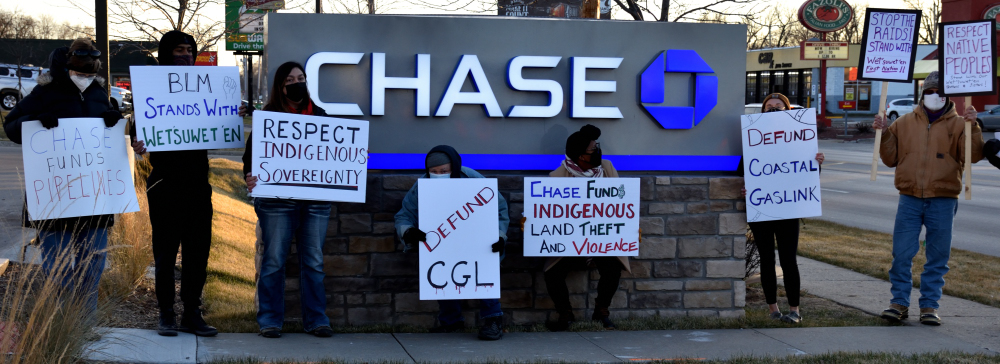
Dear allies of Gidim’ten checkpoint

Dear allies of Gidim’ten checkpoint,

As you will know, we have reached another flashpoint in the Wet’suwet’en’s struggle against the CGL pipeline. Having fought to protect the sacred headwaters of Wedzwin kwa, they are now faced with the possibility of imminent drilling. Today, the hereditary chiefs are holding a press conference and issuing an eviction notice. They are issuing a call to action, which we are relaying to you.

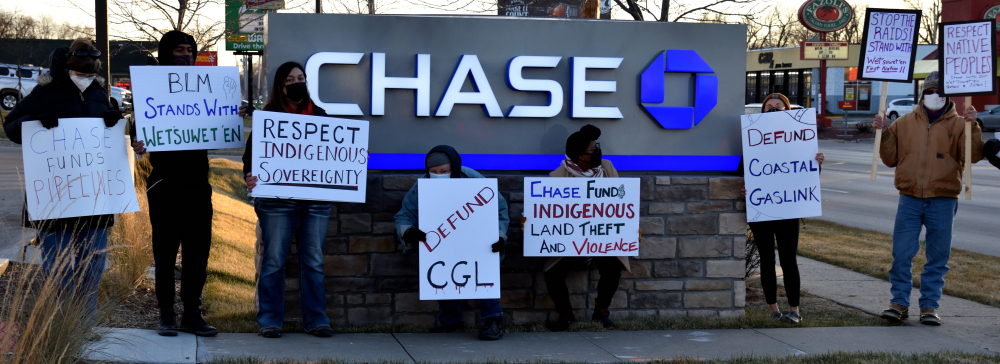
The chiefs are calling for people to take on three targets: BC government, contractors, and the funder, RBC. Decolonial Solidarity members will rally to pressure the latter. For organized groups, we are issuing a call for in-person action. For everyone else, we are inviting you to call the global head of sustainability at RBC.

Click here to access a one-click-to-call action

We have managed to get this man’s personal phone number. It is important that we stay polite and firm in denouncing the actions of the bank. Remember: it can freeze its investment until the hereditary chiefs consent to the project. It can stop the drilling. It is this man’s job to ensure that the bank is sustainable. Let’s remind him there’s a ways to go.

Call the head of sustainability!

Wet’suwet’en Land Defenders have not given up and nor will we. We will continue to build our movement, to show solidarity, to turn up at branches, to talk to our neighbors and to passers by, to mobilize in protest, to confront RBC executives, and to send our love to the admirable Land Defenders whose leadership has inspired us throughout these difficult times.

In solidarity,
The organizing team

(This message from decolonial solidarity on behalf of the Gidimt’en land and water protectors is forwarded with the permission of the Unist’ot’en  in solidarity with their neighboring clan within the Wet’suwet’en Nation.)

Unist’ot’en Solidarity Brigade robertages@telus.net


ecology, culture, and spirituality

Spirituality is rarely spoken of in the tsunami of information and stories found on all types of media, related to the dangerous times we are living in. And the future our children face. The unfolding apocalyptic reality.

As the reality of escalating environmental chaos becomes impossible to ignore, vast numbers of people are demanding immediate solutions. And with the realization there are no quick fixes, panic spreads. Dystopian stories emerge. Hopelessness sets in.

I’m glad to have found Emergence Magazine, which asks the question “what does living in an unfolding apocalyptic reality look like?”

”Emergence is an essential and exquisite addition to our way of seeing and honoring this extraordinary planet.”

-Camille Dungy, editor of B1ack Nature: Four Centuries of African American Nature Poetry

Launched in Spring 2018, Emergence Magazine is an award-winning quarterly online publication with an annual print edition exploring the threads connecting ecology, culture, and spirituality.

My last blog post was about one of the stories from Emergence Magazine. Joy is the justice we give ourselves.

“If we are to find a new kind of good life amid the catastrophes these myths have spawned, then we need to radically rethink the stories we tell ourselves.”

James Allen

Stories are the way we share our lived experiences, thoughts, and calls for change. And express our views of the present and the future. The stories in Emergence Magazine explore these things.


Some of the ways I’m involved in sharing stories include:


“The end of the world as we know it is not the end of the world full stop. Together, we shall find the hope beyond hope, the paths that lead to the unknown world ahead of us.” Paul Kingsnorth & Dougald Hine

Most of us lack the stories that help imagine a future where we thrive in the midst of unstoppable ecological catastrophe. To borrow a phrase from storyteller Martin Shaw, this is because our imaginations have been colonised by things that don’t always mean us well.

We have been propelled to this point by the myths of progress, limitless growth, our separateness from nature and god-like dominion over it. These myths have shown up in our stories in peculiar ways of late. Since around the turn of the millennium there has been a surge in post-apocalyptic fiction. A steady stream of films, television series and novels have portrayed desolate and barely habitable future landscapes, often roamed by marauding bands of psychopaths, flesh-eating zombies or similar agents of malevolence. The frequent appearance of post-apocalyptic themes undoubtedly reflects our rising collective existential anxiety about our future. But perhaps more telling is the recurring themes of horror, deprivation and dystopian political order that nearly always characterise these depictions of the future. It seems our minds have been so thoroughly colonised by the myths of growth and progress that we cannot imagine how the collapse of the current order could possibly produce a future that resembles anything short of hell.

If we are to find a new kind of good life amid the catastrophes these myths have spawned, then we need to radically rethink the stories we tell ourselves. We need to dig deep into old stories and reveal their wisdom, as well as lovingly nurture the emergence of new stories into being. This will not be easy. The myths of this age are deeply rooted in our culture. The talking heads (even the green ones) echo these myths with the dogmatic fervour of zealots. They talk of “saving the planet” through transitioning to a “sustainable” future, primarily through new renewable energy technologies. They seem only able to conceive of a good life that mirrors our lives more or less as they are now, where the living standard continues to improve and rate of consumption continues to grow, yet somehow decoupled from all the pollution, destruction and guilt.

Pontoon Archipelago or: How I Learned to Stop Worrying and Love Collapse by James Allen, originally published by Medium, June 18, 2019


Let this darkness be a bell tower

Quiet friend who has come so far,
feel how your breathing makes more space around you.
Let this darkness be a bell tower
and you the bell. As you ring,
what batters you becomes your strength.
Move back and forth into the change.
What is it like, such intensity of pain?
If the drink is bitter, turn yourself to wine.
In this uncontainable night,
be the mystery at the crossroads of your senses,
the meaning discovered there.
And if the world has ceased to hear you,
say to the silent earth: I flow.
To the rushing water, speak: I am.

Sonnets to Orpheus II, 29. By Rainer Maria Rilke

ALL OUT FOR WEDZIN KWA

There is fatigue with the constant struggle to protect the water and Mother Earth. And yet, there is a true emergency now as Coastal Gaslink is on the brink of drilling under the Wedzin Kwa in the Wet’suwet’en territories in British Columbia.

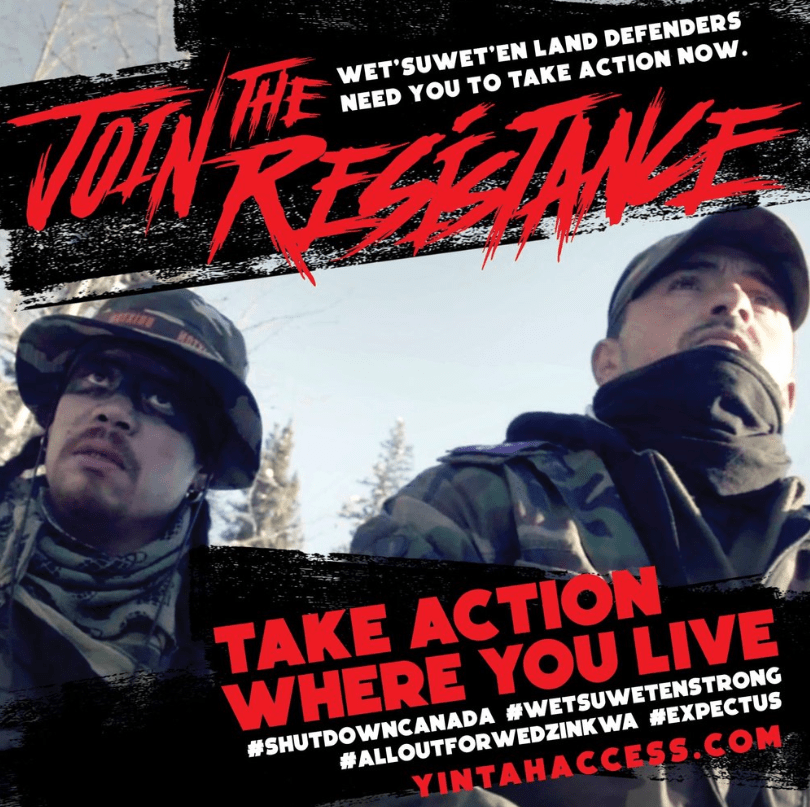
READY TO TAKE ACTION?

In the long work of elevating Wet’suwet’en hereditary governance, there are many ways that supporters can step into movement through action.

Ways you can help: https://www.yintahaccess.com/take-action-1

Please continue to organize in support of #wetsuwetenstrong. Thank you to everyone who has stood up.

A toolkit can be found here:
https://docs.google.com/document/d/1xenvlytUvfA5OIthZTaCfoUjjtCrcZNy3RCsVzlWGEQ/preview


Urgent Update: Coastal Gaslink Poised to Drill Wet’suwet’en Headwaters

2022-09-18 – Coastal Gaslink equipment is now in position to drill beneath the Wedzin Kwa river, which provides drinking water for Wet’suwet’en villages and has served as a key salmon spawning area for millenia.

Wet’suwet’en territory is unceded, unsurrendered, and sovereign, and Wet’suwet’en people have never provided Free, Prior, and Informed Consent to the Coastal Gaslink pipeline’s destructive construction operations.

To date, Wet’suwet’en resistance to drilling beneath Wedzin Kwa has delayed the destruction of Wet’suwet’en waters for approximately two years. In the fall of 2021, Wet’suwet’en and allies sustained a two-month long blockade of this drill site called Coyote camp, until a series of militarized RCMP attacks on Wet’suwet’en community members and supporters resulted in dozens of arrests.

In advance of CGL’s drilling operations, Wet’suwet’en community members have faced increased surveillance and harassment from RCMP’s C-IRG unit (a police unit created to facilitate pipeline construction) and a series of private security contractors. Wet’suwet’en village sites remain under 24 hour surveillance, while police have made several arbitrary violent arrests, including with pepper spray.

RCMP and CGL’s private security contractor Forsythe were served a lawsuit by Wet’suwet’en community members who have been subject to this continuous surveillance and harassment.

Wet’suwet’en hereditary chiefs and community members recently hosted a week of ceremony to protect and honour Wedzin Kwa, included rafting tours of a historic Wet’suwet’en village site within the headwaters area.

We will never stop defending our yintah the way our ancestors have done for thousands of years. The pipeline will never be put into service.

Urgent Update: Coastal Gaslink Poised to Drill Wet’suwet’en Headwaters


RCMP Refuses to Respond to Gidimt’en Lawsuit, Continue Surveillance and Harassment of Land Defenders as Coastal GasLink Poised to Drill Headwaters


A detailed account of much of what has been done, and ways you can help, can be found here: https://quakersandreligioussocialism.com/2022/05/27/wetsuweten-emergency/

Radio interview this June with Ed Fallon about the Wet’suwet’en.

Ed Fallon and I discuss the Wet’suwet’en struggles on the Fallon Forum

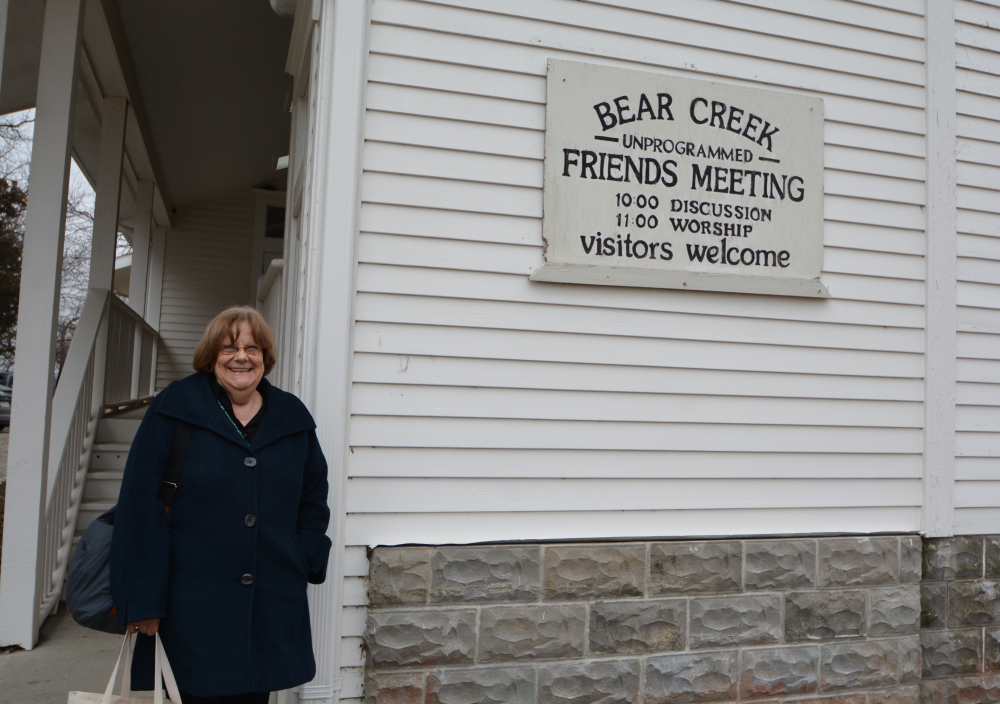
January, 2020, Bear Creek Friends (Quaker) meeting sent the following letter to British Columbia Premier, John Horgan.

John Horgan.
PO BOX 9041 STN PROV GOVT
VICTORIA, BC V8W 9E1.
Email premier@gov.bc.ca

John Horgan,

We’re concerned that you are not honoring the tribal rights and unceded Wet’suwet’en territories and are threatening a raid instead.
We ask you to de-escalate the militarized police presence, meet with the Wet’suwet’en Hereditary Chiefs, and hear their demands:
That the province cease construction of the Coastal Gaslink Pipeline project and suspend permits.
That the United Nations Declaration on the Rights of Indigenous Peoples (UNDRIP) and tribal rights to free, prior and informed consent (FPIC) are respected by the state and RCMP.
That the Royal Canadian Mounted Police (RCMP) and associated security and policing services be withdrawn from Wet’suwet’en lands, in agreement with the most recent letter provided by the United Nations Committee on the Elimination of Racial Discrimiation’s (CERD) request.
That the provincial and federal government, RCMP and private industry employed by Coastal GasLink (CGL) respect Wet’suwet’en laws and governance system, and refrain from using any force to access tribal lands or remove people.

Bear Creek Monthly Meeting of Friends (Quakers)
19186 Bear Creek Road, Earlham, Iowa, 50072


#RCMPOffTheYinta #KillTheDrill #WetsuwetenStrong #AllOutForWedzinKwa

Reflections on Reflections

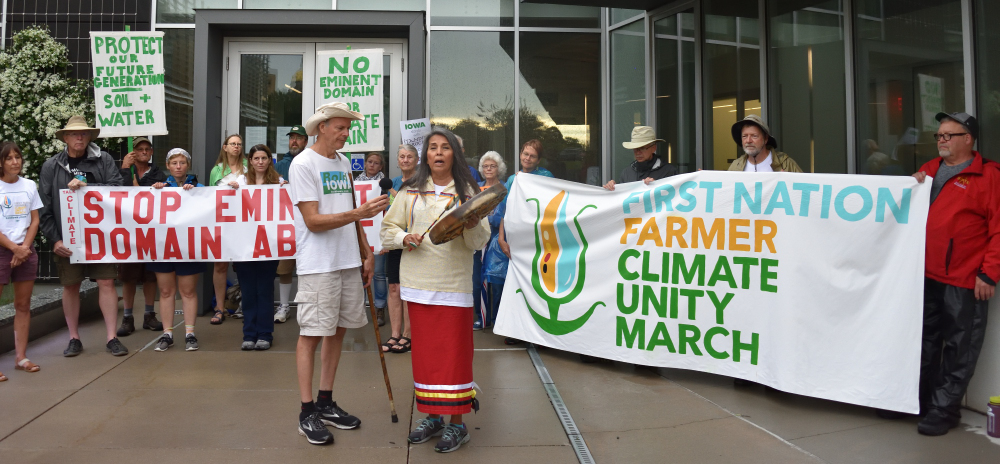
The First Nation-Farmer Climate Unity March involved a group of about thirty native and non-native people walking, eating, and camping together for 8 days. We walked ninety-four miles from Des Moines to Fort Dodge Iowa, along the route of the Dakota Access Pipeline during the first week of September 2018.

It was a bit amazing when I read the following as I’m reflecting on my experiences and friendships from the March.

Roughly a year later, in 2019, as part of my work at the Dechinta Centre for Research and Learning in Denendeh, I helped organize a solidarity gathering that took place in March, in the territory of the Yellowknives Dene First Nation (YKDFN). Our idea was simple—to invite a small group of Black, Brown and Indigenous activists, thinkers, writers, and organizers to spend time with us, in the spring, on an island in what the Yellowknives Dene known as Tindeè, or “big lake.” Together we fished nets under the ice, travelled by snowmobile and sleigh across the frozen lake, shared moose ribs cooked over the fire, stories from YKDFN Elders, our own ideas, and time with each other.

We wanted to invest in our relationship with each other and our affinities, outside of the institution, the internet, and crises, because we believed that the land would pull out a different set of conversations and gift us with a different way of relating. We wanted to sit together on the land, immersed in a Dene world, engage in a practice of Dene hospitality to see if we related to each other in a different way. This is exactly what happened. The land nurtured a set of conversations and way of relating to each other outside of the institution and its formations.

Maynard, Robyn; Simpson, Leanne Betasamosake. Rehearsals for Living (Abolitionist Papers) (p. 35). Haymarket Books. Kindle Edition.

In many ways the March was transformative for me. I wrote a long blog post of reflections on the March in early 2020. See: Reflections on the March.

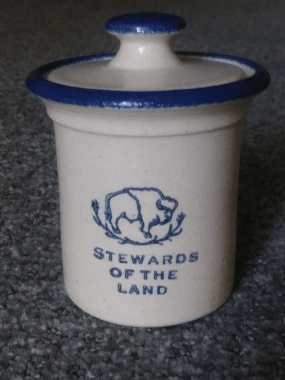
The world, and I, have changed a lot in just the two years since those reflections were written. These two images represent the time span between the March and work we are doing today.


The first time I attended Quaker meeting after the March (2018), Russ Leckband gave me this piece of pottery, which was still warm from the kiln. The graphic on the right is about the Buffalo Rebellion, a climate justice summit, that I attended earlier this year.
(See: https://quakersandreligioussocialism.com/?s=Buffalo+rebellion )

I suppose this blog post is more reflections on the prior reflections.
(As a photographer, I envision what that might look like)

Indy Art Jeff Kisling

Changes since the March in 2018

Environmental devastation and chaos are occurring much more rapidly than expected. In some ways not anticipated. The havoc from increasingly ferocious and frequent wildfires, violent storms, floods, and development of large areas of drought are overwhelming our social, economic, and political systems. Continued wars ruin or prevent the transport of vast quantities of agricultural products.

So many of the systems we used to depend on, we no longer can. Municipal services such as water, power, sewage, and trash processing will fail, are failing.  Food will no longer be available in grocery stores. Medical services will collapse. What will happen to those in prisons and long-term care facilities? Financial failures will wreck the economy and end social safety nets.

There are other compelling reasons to design and build new communities. Our economic system has not adapted to the loss of jobs overseas and to automation. There are simply not enough jobs for millions of people, and many of those who do have work are paid at poverty levels. Forced to depend upon increasingly diminishing social safety nets.

The judicial and law enforcement systems work with extreme bias against people of color. What will the response of militarized police, armed forces, armed militias be as social unrest escalates?


How do we respond? Some lessons learned from and since the March.

It is one thing to talk about change, but it is becoming increasingly difficult to avoid the reality of the changes described above. So, this is not an intellectual exercise.

Almost none of the White people I know, or have observed, are thinking of the radical changes necessary to deal with this evolving chaos. They are trapped in these failing systems and ways of being. Even those who recognize the many injustices of those systems.

For many reasons I believe our responses will be a return toward Indigenous ways and the sustainable ways of our ancestors.

White settler colonists must learn the true history, which was not taught to us. We can’t begin repair if we don’t know the underlying sources of injustice. We must stop treating the symptoms and instead focus on the causes, the underlying disease.
I FEEL THAT I NEED TO go backward in order to go forward. If we are going to find a way to make livable lives in these times, it is necessary to move beyond “human-related activities”: the climate crisis is tethered to its origins in slavery and colonialism, genocide and capitalism.
Maynard, Robyn; Simpson, Leanne Betasamosake. Rehearsals for Living (Abolitionist Papers) (p. 25). Haymarket Books. Kindle Edition.

I’ve been learning about the #LANDBACK movement, but I hadn’t consciously made the connection to the land we walked and slept upon during the March. We were deeply affected when we crossed the pipeline. And were aware of how different it was to spend hours outside and away from the busy-ness of technology. Many more hours than usual for many of us. And yet time had that elastic property that made hours seem like minutes and vice versa as we traveled through space together. Hearing stories of the past that can help us face the future.

Most of my White friends are horrified as they are learning more about the atrocities committed at the Indian boarding schools. Can hardly believe thousands of children died there. But they are being forced to as the remains of the children are being located.

White people cannot process these things and begin healing as long as they remain in the their White spaces and thinking. And deny any responsibility for what was done in the past.

My hope and prayer is a mass movement of us build Mutual Aid networks.

As William Shakespeare wrote, “what’s past is prolog”. Native children are still being taken from their families in the guise of child welfare. Native children are still forcefully assimilated when they are forced to read the White settler colonist view of history.

My involvement in Mutual Aid for the past two years has resulted in significant changes in my life. Changes that can be done now and help us move into the future. Another quote from the book Rehearsals for Living eloquently describes Mutual Aid.

My hope and prayer is a mass movement of us build Mutual Aid networks.

You and your relations, my friend, are (still) busy building a different world at the end of this one. This is something I’ve emphasized over and over again in my own work. I cherish the belief and practice that it is never enough to just critique the system and name our oppression. We also have to create the alternative, on the ground and in real time. In part, for me, because Nishnaabeg ethics and theory demand no less. In part because in Nishnaabeg thinking, knowledge is mobilized, generated, and shared by collectively doing. It’s more than that, though. There is an aspect of self-determination and ethical engagement in organizing to meet our peoples’ material needs. There is a collective emotional lift in doing something worthwhile for our peoples’ benefit, however short-lived that benefit might be. These spaces become intergenerational, diverse places of Indigenous joy, care and conversation, and these conversations can be affirming, naming, critiquing, as well as rejecting and pushing back against the current systems of oppression. This for me seems like the practice of movement-building that our respective radical practices have been engaged with for centuries.

Maynard, Robyn; Simpson, Leanne Betasamosake. Rehearsals for Living (Abolitionist Papers) (p. 39). Haymarket Books. Kindle Edition.

Following is the latest version of a diagram I’ve been working on to visualize some of what I’ve expressed above.

Court: First Nation Farmer Climate Unity March

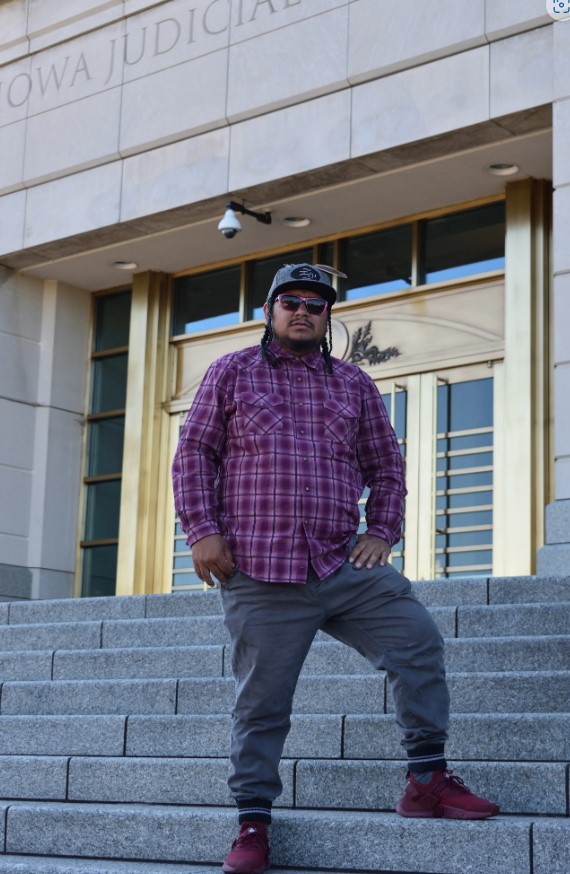
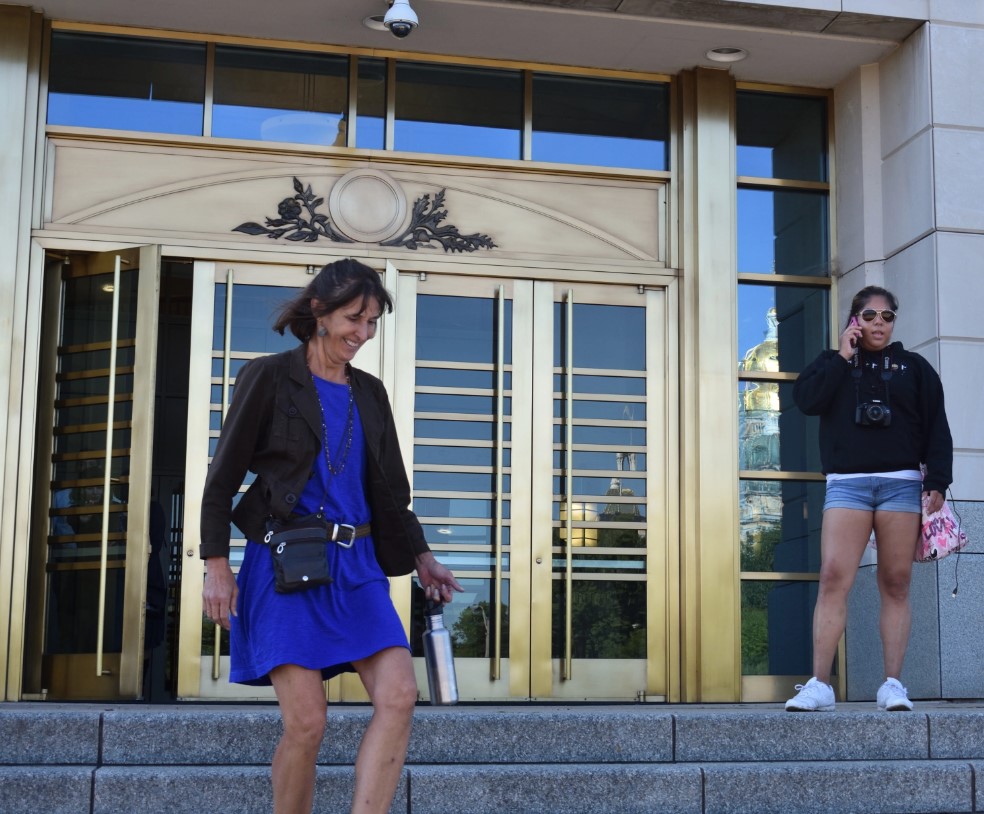
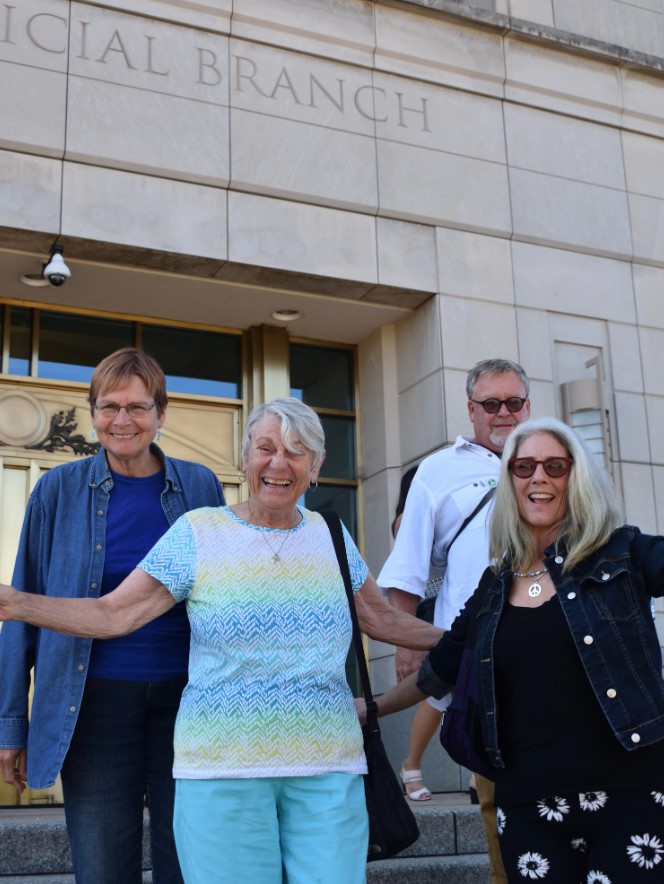
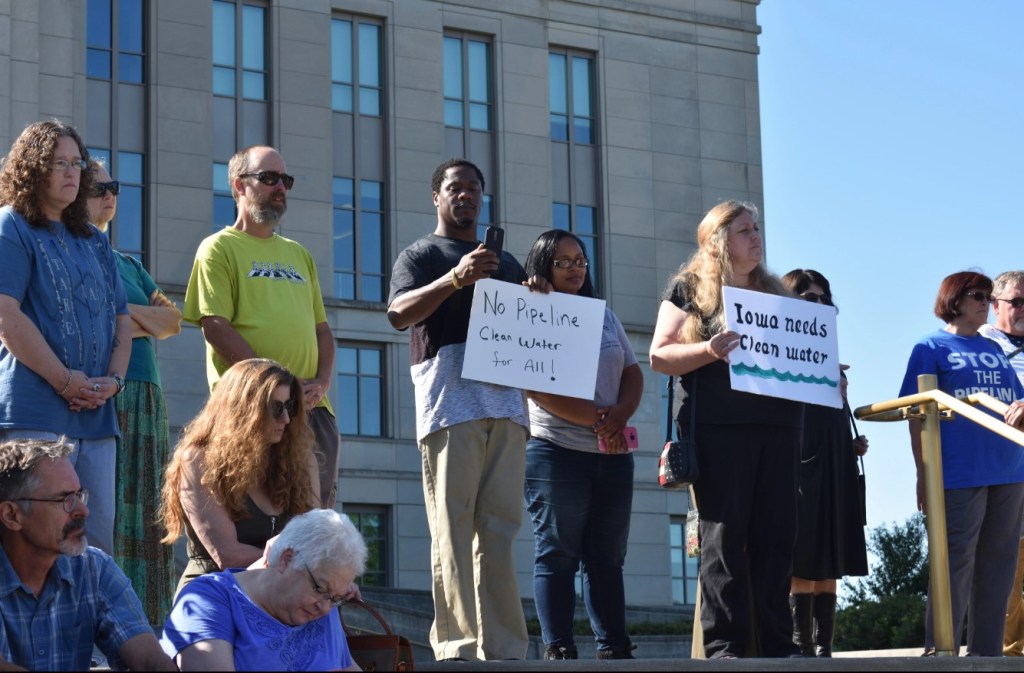
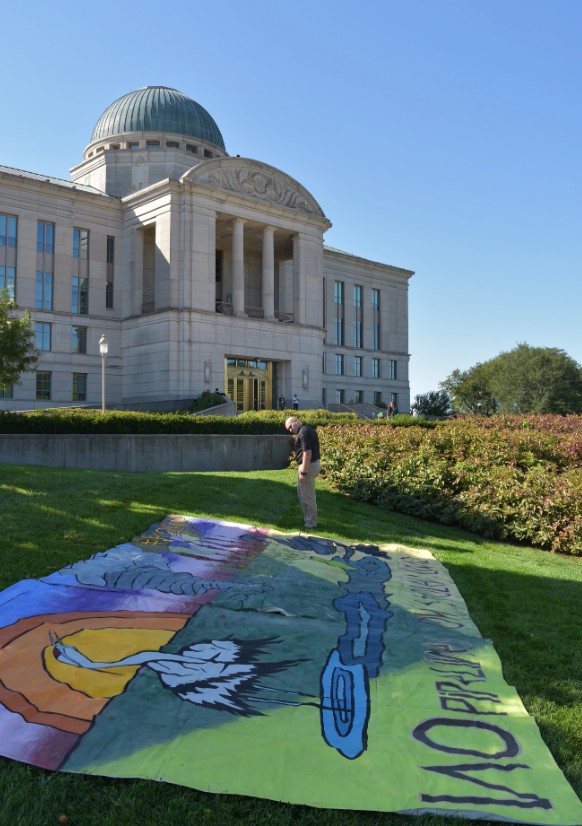
Iowa Supreme Court September 12, 2018

September 12, 2018 was the day Iowa landowners and the Sierra Club’s oral arguments in the case against the Iowa Public Utilities Board (IUB) were heard before the Iowa Supreme Court. The landowners and Sierra Club contend that the Public Utilities Board improperly allowed Energy Transfer Partners to use eminent domain to force Iowa landowners to let the Dakota Access Pipeline be constructed on their land.

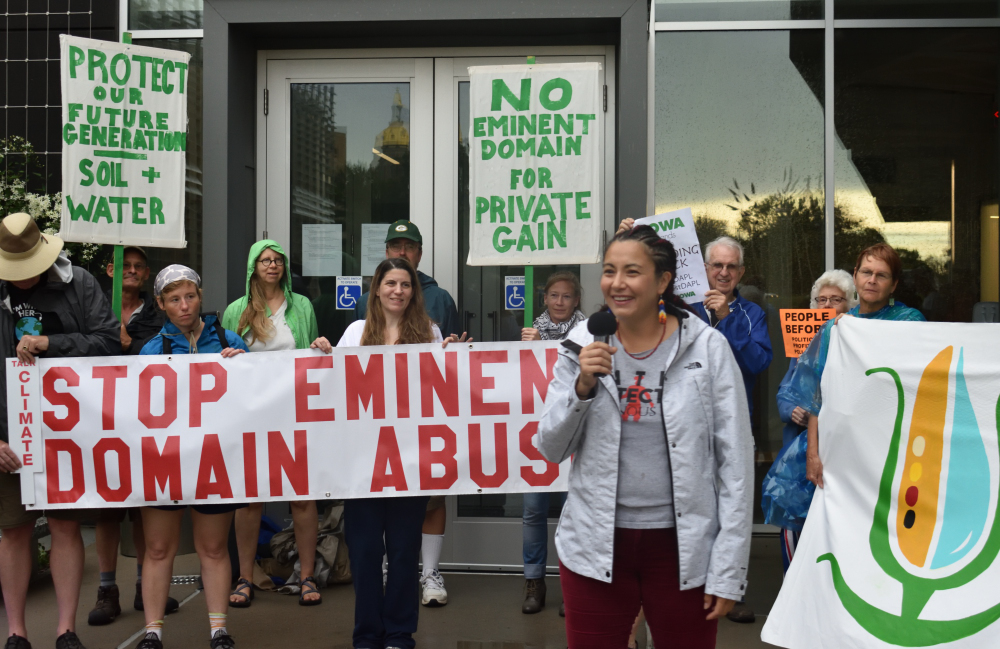
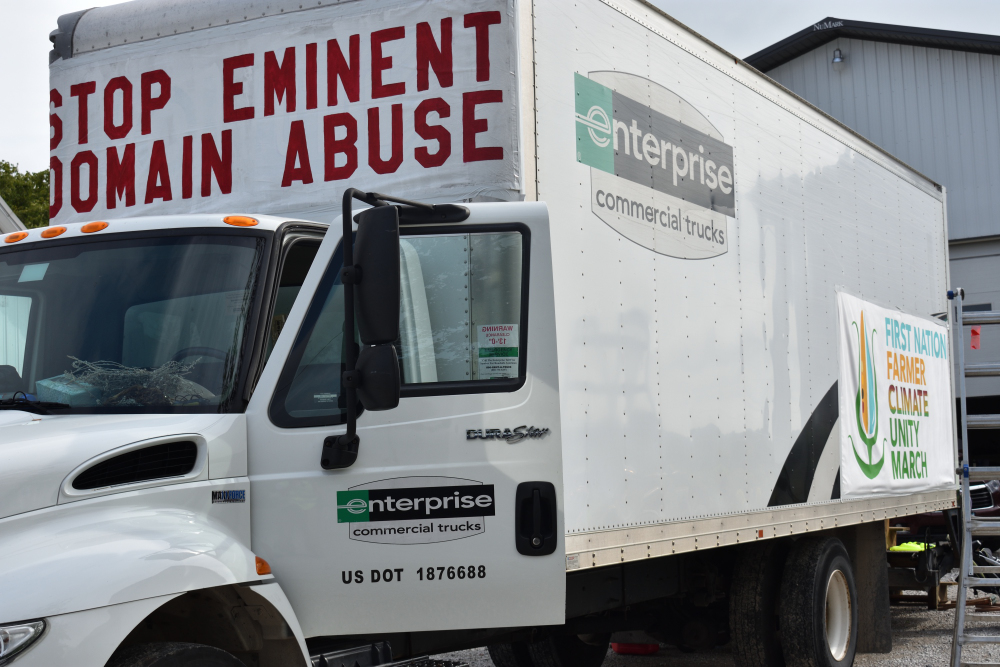
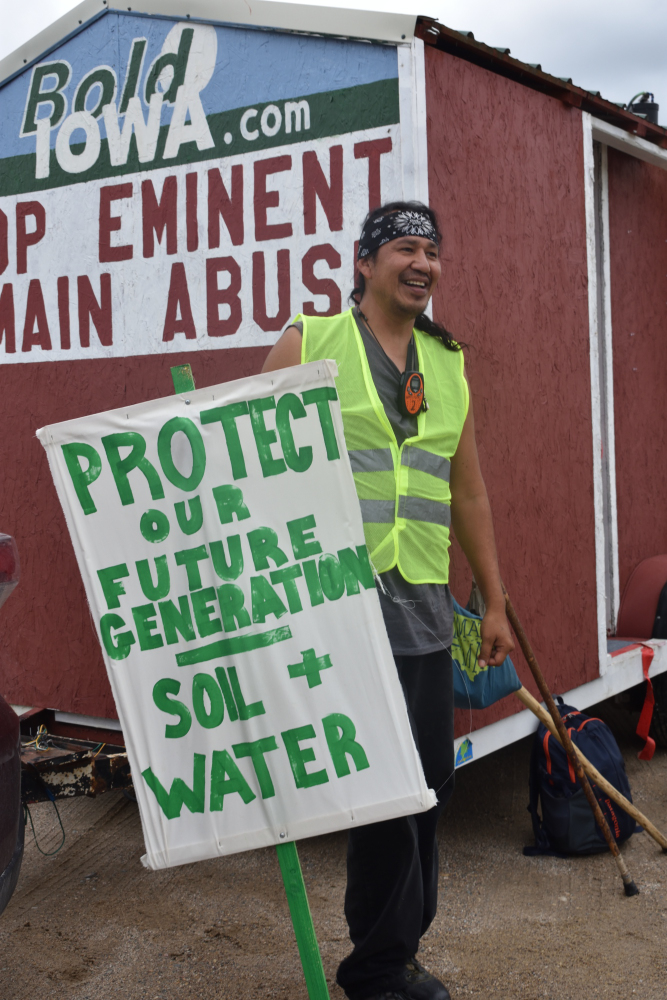
One of the main objectives of the First Nation-Farmer Climate Unity March was to call attention to this court case.  We had a large banner saying Stop Eminent Domain Abuse with us on the March. A similar sign was painted on our portable rest room/shower.


I didn’t enter the Court that day because I had my camera with me, and photos weren’t allowed inside. As my friends left the Court, they told me the justices seemed pretty well informed about the issues. The Court’s decision may not come for weeks or months. It is unclear what will happen if the Court decides for the landowners.

The other primary purpose of the March was to build a community of activists who began to know each other so we could work together. This court date was the first opportunity for that to happen, and I was very glad to see quite a few of my fellow Marchers at the Court this morning.

The decision several months later was against the landowners and for the pipeline.


Back at the Iowa Utilities Board

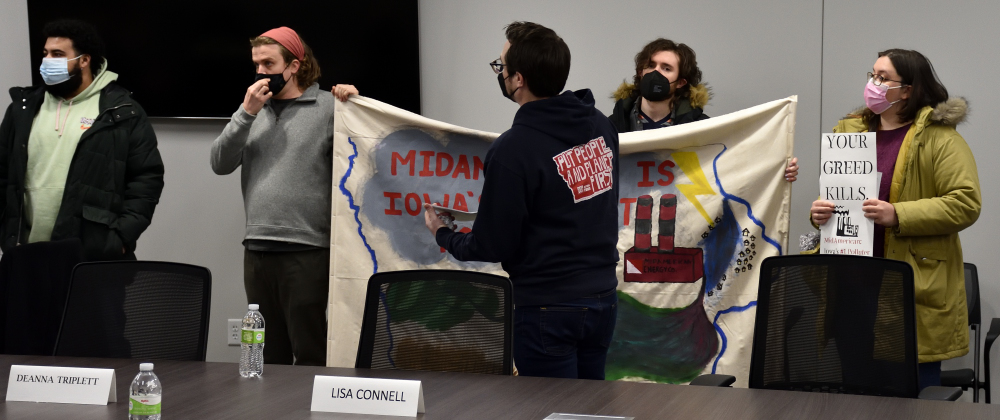
We’re back at the Iowa Utilities Board (IUB) these days, this time to object to proposed carbon pipelines.


Another pipeline and the courts

In a decisive victory for Native American rights, a federal judge just ordered an energy company to completely remove a natural gas pipeline.

Seventeen years after the expiration of an easement, a federal judge has ordered an energy company to completely remove its pipeline from the properties of 38 Native American landowners — none of whom have been compensated for the company’s use of their land since the year 2000.

Now, the pipeline company will have just six months to dismantle and completely remove the structure.

“Having carefully reviewed the parties’ submissions, and in light of the facts and circumstances in this case,” Judge Vicki Miles-LaGrange wrote in the 10-page decision for the U.S. District Court for the Western District of Oklahoma, “the court finds that a permanent injunction should be entered in this case. Specifically, it is plaintiffs’ interests in the exclusive possession of their land which has been invaded by the presence of the pipeline and defendants’ continued use of the pipeline.

JUDGE ORDERS REMOVAL OF GAS PIPELINE FROM NATIVE AMERICAN PROPERTY By Staff, nativefire.blogspot.com, November 25, 2017

I’m having trouble finding much more information beyond this article saying the US 10th Circuit Court of Appeals stayed the permanent injunction of the case cited above.

While Enable Midstream Partners LP recently lost a U.S. 10th Circuit Court of Appeals ruling regarding its pipeline operation near Anadarko, the company will not be forced to rip up 1,300 feet of the pipeline.

It came out of the Tenth Circuit court this week in a case involving a group of tribal landowners who filed suit a few years ago and accused the company of trespassing.

The Tenth Circuit ruling this week stayed a permanent injunction handed down earlier by Oklahoma City U.S. District Judge Vicki Miles-LaGrange in which the company had been ordered to remove the pipeline by May 5.

Enable Won’t Be Forced to Remove Pipeline After Losing Lawsuit, OK Energy Today, April 26, 2018