My foundational stories: 1970’s

My previous post was a description of the beginnings of my foundational stories, which related to the intersection between my Quaker faith, protecting Mother Earth, and photography. The intention of this series of articles is to show how these foundational stories changed over time.

The beginnings of the stories were about my struggles and eventual decision to resist the draft. Although I wasn’t prosecuted for that felony offense, there were other consequences. During the time it took for my family to adjust to my intention to resist the draft, I joined the Friends Volunteer Service Mission (VSM) in inner city Indianapolis in 1971. This was a Quaker part of my foundational story.

Quaker

VSM was set up to provide alternative service work for conscientious objectors. The two-year program involved working at the type of job that qualifies for alternative service, most often in a hospital. And saving enough money from that job to support yourself to work full time in the community. Others, not doing alternative service, were also able to apply.
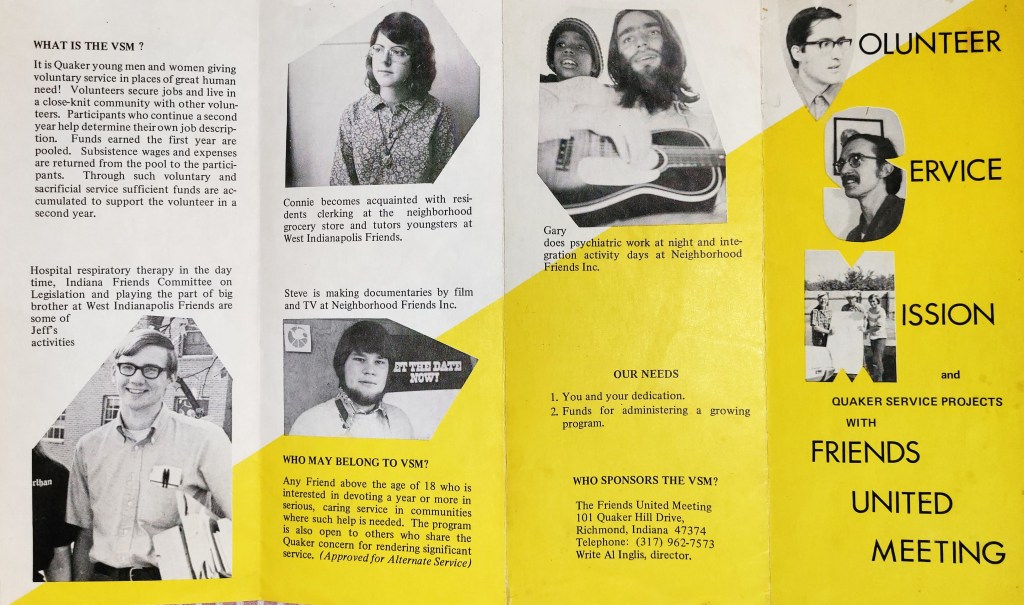
VSM was impactful in my life in two ways. The work I found was in respiratory therapy, then called “inhalation therapy”. I received on-the-job training to do this work during my first year at VSM. After my VSM experience, I obtained a degree in respiratory therapy and worked for about five years as a neonatal respiratory therapist. And for the rest of my career worked in an infant pulmonary function research lab.

VSM was also where I began to learn important (foundational) lessons about community organizing, Quaker faith in action. Others at VSM did what I thought of as traditional organizing, which included many meetings about setting up a neighborhood health clinic or trying to prevent the construction of an interstate highway through the local community.

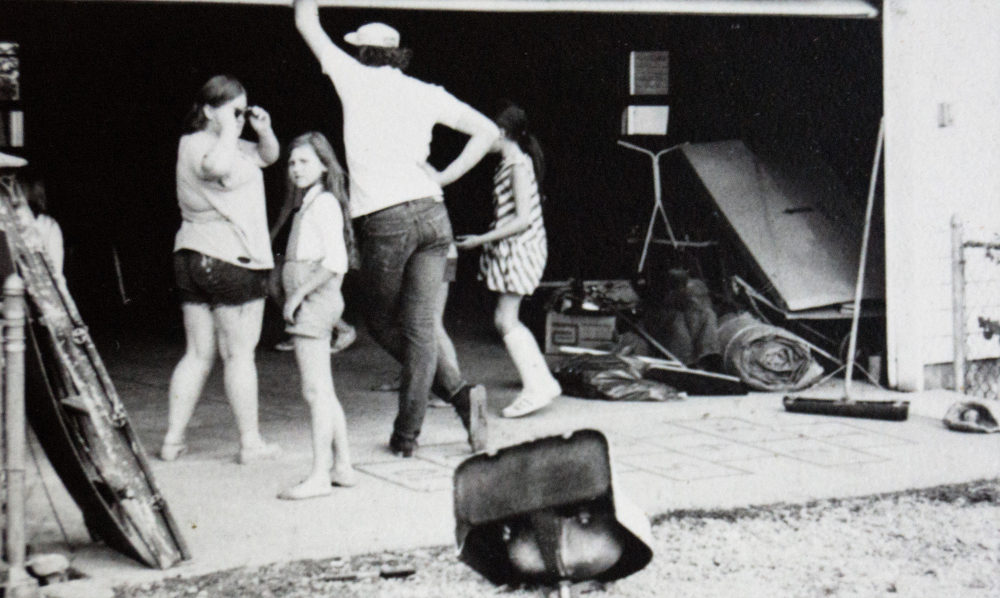
I quickly found I didn’t like that type of community organizing. And felt a little guilty that I didn’t. But I eventually discovered what kind of community organizing I was led to do. During my first year at VSM I spent a lot of time with the kids in the neighborhood. The VSM house was next to Second Friends Church, which had a nice yard where we played games like capture the flag. One of our VSM projects involved setting up a basketball hoop in front of the garage of the church.

There were no programs for kids in the neighborhood and I really enjoyed working with them. When thinking about what to do during my second year at VSM, it became clear I should continue to work with the kids full time. We organized a 4-H club, went swimming, and rode bicycles to shopping centers, where we played “wall ball” on the walls at the back of the stores.

This would determine my approach to social justice work for the rest of my life. What was important was being in the communities where the work was to be done. And to focus on building friendships.


Photography

At VSM, there became another way photography became important in my life. I knew how to set up a basic darkroom and did that in the VSM house bathroom. Photography became one of the kids’ favorite things to do. We would ride around the city on bicycles with a couple of (film) cameras. Then develop the negatives and print the photos. I can still see the wonder in their faces as the image gradually appeared on the paper (in the red light of the darkroom).

Now, fifty years later, on two separate occasions, kids from that time found me on Facebook. They both talked about those darkroom experiences.


Protecting Mother Earth and photography

During this time in Indianapolis (early 1970’s) I didn’t have a car, simply because I couldn’t afford one. So, riding a bicycle everywhere, including to the hospital for work, was my routine.

But moving to Indianapolis had a major (foundational) impact on me, which influenced the rest of my life. I couldn’t believe how foul the air was. I saw clouds of fumes pouring out of the exhaust of every car. This was before the availability of catalytic converters, which cut out the visibility of the exhaust, but didn’t stop the greenhouse gas emissions. No one was talking about global warming and greenhouse gases then.

But I had a profound vision of clouds of pollution blocking the view of my beloved mountains. Specifically, obscuring Long’s Peak in this photo I took and developed around the time I moved to Indianapolis. That horrific vision stayed with me the rest of my life. As a consequence, I refused to have a personal automobile for the rest of my life. (Protecting Mother Earth).

Long’s Peak, Rocky Mountain National Park, Colorado

These are more of the ways my foundational stories are about the intersection between my Quaker faith, protecting Mother Earth, and photography.

Trying to face environmental meltdown

I’m still working on my foundational story. It is taking much longer than expected. I’ve been following a recent suggestion to examine my foundational story at its beginning, how it has evolved along the way, and what it is now.

Much of my foundational story is about care for Mother Earth. I lived my entire adult life without owning a car, being able to do so in part because of the barely adequate city bus system in Indianapolis. I don’t keep bringing this up for self-promotion. Rather, to point out everyone living in the early 1970’s could see the damage being done by the clouds of noxious fumes coming out of tailpipes. Since then, catalytic converters hid the visible damage, but the greenhouse gases continue to spew out.

We each made a choice.

  • either stop the pollution
  • or deem fouling the air with automobile exhaust an acceptable choice for our convenience

If we had decided to tackle the pollution and greenhouse gases then, we would not be in this environmental catastrophe now.

No one knows what the future holds, but it is no longer possible to hide the consequences of greenhouse gas emissions. High temperature records are broken daily. We see shrinking lakes and rivers, violent storms, flooding, and forest fires.

I’ve studied and prayed about this my whole life. I’m broken down by the continuous stress of knowing. At times I’ve felt like giving up. Wanting to stop thinking about all of this.

I don’t have a plan for what to do when water stops flowing from the faucet. When the grocery stores no longer have food. When no one picks up the trash. When there is no gas for cars and trucks. When hospitals close. When houses are destroyed by fires, winds, or floods. When there is no Internet. No electricity.

But I do have two tools to help me make a plan. For some hope.

  • My Quaker faith and faith community
  • And my Mutual Aid accomplices, who are not just making plans but implementing solutions now

People often mistake hope for a feeling, but it’s not. It’s a mental discipline, an attentional practice that you can learn. Like any such discipline, it’s work that takes time, which you fail at, succeed, improve, fail at again, and build over years inside yourself.

Hope isn’t just looking at the positive things in this world, or expecting the best. That’s a fragile kind of cheerfulness, something that breaks under the weight of a normal human life. To practice hope is to face hard truths, harder truths than you can face without the practice of hope. You can’t navigate dark places without a light, and hope is that light for humanity’s dark places. Hope lets you study environmental destruction, war, genocide, exploitative relations between peoples. It lets you look into the darkest parts of human history, and even the callous entropy of a universe hell bent on heat death no matter what we do. When you are disciplined in hope, you can face these things because you have learned to put them in context, you have learned to swallow joy and grief together, and wait for peace.

IT IS BITTER TEA THAT INVOLVES YOU SO: A SERMON ON HOPE by Quinn Norton, April 30, 2018

Our country is primed for an overthrow of power within rapidly shifting currents. The land has seen devastation over the winter’s long night, but now sings songs of rebirth inside the blossoms of the cherry tree. At least in this hemisphere. The people…well, we’re all a little worn out thanks to a heavy hitting astrological and planetary realignment. Does anyone else feel like they’ve hardly had a moment to process and catch a breath before Mercury went Gatorade? Again? We’re being tested. Within each survivor is a warrior. Can we captain this ship through unknown waters? Are we braver than our fears? Will we earn a seat at the table, our place as a future ancestor? Oh, hell yes.

Nahko Bear

When I realized this, I felt even more hopeless, but, thankfully, my Quakerism led me to another definition, which is also in the dictionary. In addition to defining hope in terms of desire, expectation, and fulfillment, most dictionaries provide a secondary, archaic definition based on faith. This older and much less common meaning is about trusting life, without the expectation of attaining particular outcomes any time soon. This type of hope has a quiet but unshakeable faith in whatever happens and in the human capacity to respond to it constructively. It is a positive, but not necessarily optimistic, attitude to life that does not depend on external conditions or circumstances.

I call this “intrinsic hope” because it comes from deep inside us. Václav Havel, former president of Czechoslovakia, said in Disturbing the Peace that hope “is a dimension of the soul, and it’s not essentially dependent on some particular observation of the world or estimate of the situation. . . . It is an orientation of the spirit, and orientation of the heart; it transcends the world that is immediately experienced, and is anchored somewhere beyond its horizons.” To me, intrinsic hope is also that of God in everyone; the inner light; the quiet, still voice; and the experience of the Great Mystery.

A Quaker Perspective on Hope By Kate Davies, Friends Journal, September 1, 2018

Eco-despair

I’m finding it difficult to put into words what I think and feel now.

I say this not as “I told you so”, but to put environmental devastation into some context related to time. Fifty years ago, this farm boy moved to Indianapolis, and was horrified by the thick, noxious clouds of smog pouring out of thousands of cars. And was led to a spiritual vision of a life without owning a car. Though I still needed them, or city buses, occasionally for transportation. But I planned where I lived so I had a walkable environment. Grocery store, laundry and work within walking distance.

Of course, I am not the only one to do so, but vast numbers of people chose the path of the automobile. The path of least resistance, or most convenience.

Indigenous peoples have lived with a fraction of my carbon footprint for thousands of years. That was one of the reasons I wanted to develop relationships with Indigenous peoples. And am blessed that happened.

So, for fifty years I’ve tried all different ways to warn of what we were doing to Mother Earth. As far as I know, I didn’t convince anyone to give up their car. In 2015 I wrote about cars as weapons of mass destruction. Seven years ago, I wrote “now is the time.” The common refrain from all of us warning of what was coming. Every year we would say now is the time.

It is now painfully obvious that we must stop burning fossil fuel now if we are to avoid the extinction of the human race.  We are out of time.  We have to stop using personal transportation now.  We have to lead the movement to embrace mass transit now.  Cars are the seeds of war.  I ask you to join me in rejecting personal automobiles.  I’m not really comfortable being this assertive now, but I regret not being assertive enough thirty years ago.  Now is the time.

Cars as weapons of mass destruction, Jeff Kisling, 9/13/2015

It was easy for people to ignore what we were doing to Mother Earth because so much of the damage was invisible or occurring slowly. Catalytic converters covered up auto emissions. Carbon dioxide and methane are invisible gases. Air temperatures were increasing gradually and helped by the oceans absorbing so much of the heat.

But the signs began to be visible. Polar bears on tiny pieces of ice. Mountain snows disappearing. Islands being covered by rising waters. Water levels of lakes and rivers falling dramatically. Forests burning, frequent, wild storms.

But this summer we can no longer hide from the earth on fire.

Those of us who paid attention had an idea of what to expect from rising greenhouse gas emissions. The devastation unfolded as we anticipated.

But we are in new territory now. I think we have all been caught by surprise at the pervasive and prolonged record-breaking air temperatures. These will likely trigger tipping points, like unthawing methane deposits in the oceans, which would cause a rapid escalation of air temperatures.

Who knows what will happen now? People assume the heat will relent. But will it?


 It took me almost a year to figure out, first, what ailed me and then to develop a remedy for it. I was, it turned out, like the miners’ canary, among the early victims of an emerging virus, the one that causes eco-despair. Unlike the canary I was still walking and talking, though my spirit had a hard time getting out of bed. The first symptom was a growing awareness that our way of life had put us on a high-speed train headed for a nasty ecological crash. Then came the question that felled me: was there any reason to hope that we would be able to change course in time to avoid it, or at least to slow the train enough to minimize the damage?

I feared the answer was no. The train was propelled by a hyper-consumption lifestyle that we equated with progress and success for us as both individuals and as a species. We were addicted to it. I didn’t think enough people could be convinced to quit or quit aspiring to it. In developed countries it would mean giving up too many conveniences that we considered our birthright. Like cars and air conditioning and ever-increasing supplies of electricity and running water, both cold and hot. In the developing ones it would mean letting go of the dream of attaining that lifestyle.

A case of eco-despair by A.J. Chopra


Ideological commitment to destroying life on Earth

The recent article by George Monbiot (excerpts below) explains that the multitude of recent government policies and judicial capitulations that are dismantling any efforts to protect Mother Earth are not based on financial interests. The ideology of the ultra-rich is one committed to destroying life on Earth. “It’s no longer about money for them. It’s about brute power: about watching the world bow down before them. For this rush of power, they would forfeit the Earth.”

As Monbiot writes below, the changes needed to protect Mother Earth and all our relations cannot happen until we change our political systems.

Indigenous peoples have always known how to protect our environment. Which makes the policies of forced assimilation of native children and peoples all the more ignorant and reprehensible. We would not be in this catastrophic situation now if settler colonists had learned from native peoples. Can you imagine what that would have looked like?

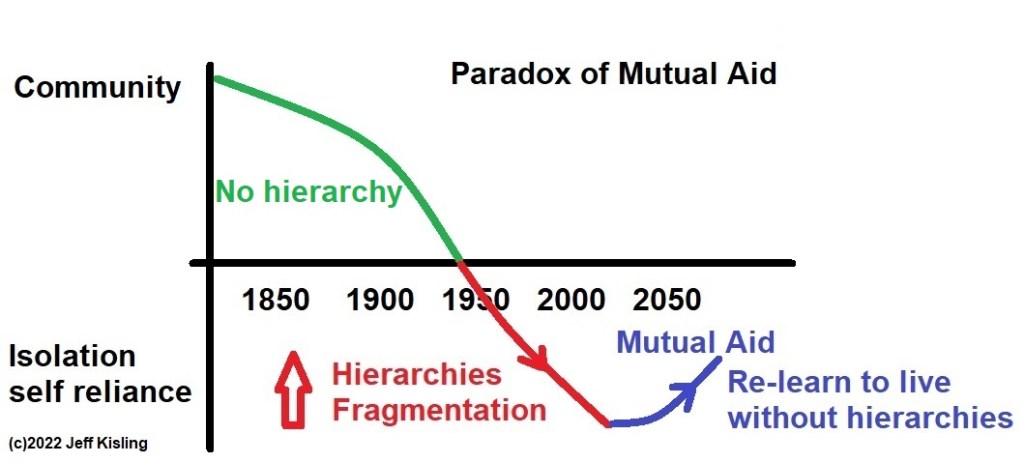
What would be the political system that would allow us to honor the earth and each other? One alternative would be to build communities based on the concepts of mutual aid. (see: https://quakersandreligioussocialism.com/mutual-aid/ )

The following is from my mutual aid community, Des Moines Mutual Aid (DMMA).


But the final straw for me was a smaller decision. After two decades of disastrous policies that turned its rivers into open sewers, Herefordshire county council, following a shift from Tory to independent control, finally did the right thing. It applied to the government to create a water protection zone, defending the River Wye against the pollution pushing it towards complete ecological collapse. But in a letter published last week, the UK’s environment minister, Rebecca Pow, refused permission, claiming it “would impose new and distinct regulatory obligations on the farmers and businesses within the catchment”. This is, of course, the point.

When I began work as an environmental journalist in 1985, I knew I would struggle against people with a financial interest in destructive practices. But I never imagined that we would one day confront what appears to be an ideological commitment to destroying life on Earth. The UK government and the US supreme court look as if they are willing the destruction of our life support systems.

But even financial interests fail fully to explain what’s going on. The oligarchs seeking to stamp out US democracy have gone way beyond the point of attending only to their net worth. It’s no longer about money for them. It’s about brute power: about watching the world bow down before them. For this rush of power, they would forfeit the Earth.

Since 1985, I’ve been told we don’t have time to change the system: we should concentrate only on single issues. But we’ve never had time not to change the system. In fact, because of the way in which social attitudes can suddenly tip, system change can happen much faster than incrementalism. Until we change our political systems, making it impossible for the rich to buy the decisions they want, we will lose not only individual cases. We will lose everything.

It’s democracy v plutocracy – this is the endgame for our planet by George Monbiot, the Guardian, July 6, 2022


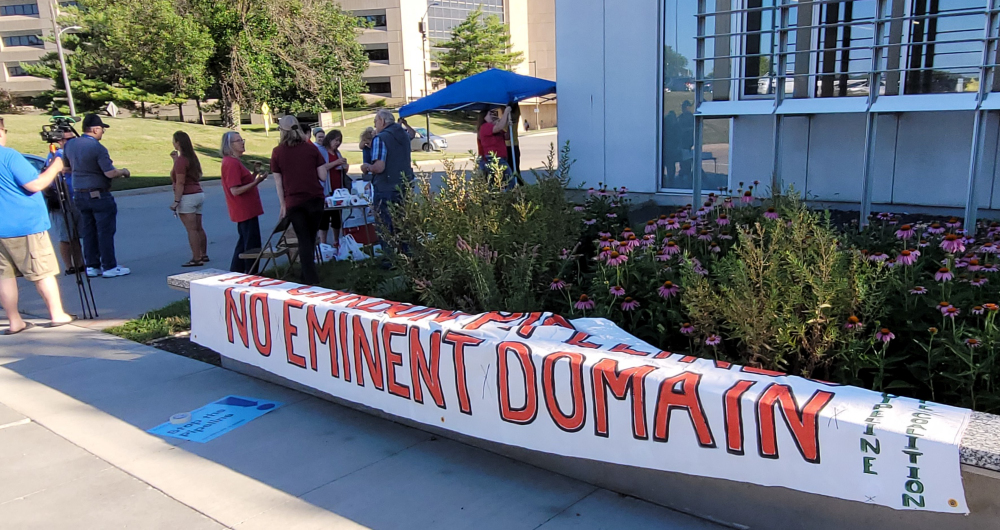
Public comments at Iowa Utilities Board

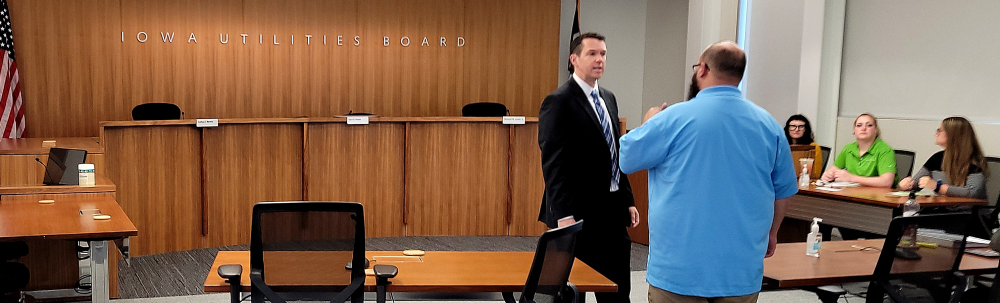
I was glad to see a number of friends, and others I don’t know, at yesterday’s monthly Iowa Utilities Board Meeting (IUB). Some traveled some distance. From Iowa City, for example.

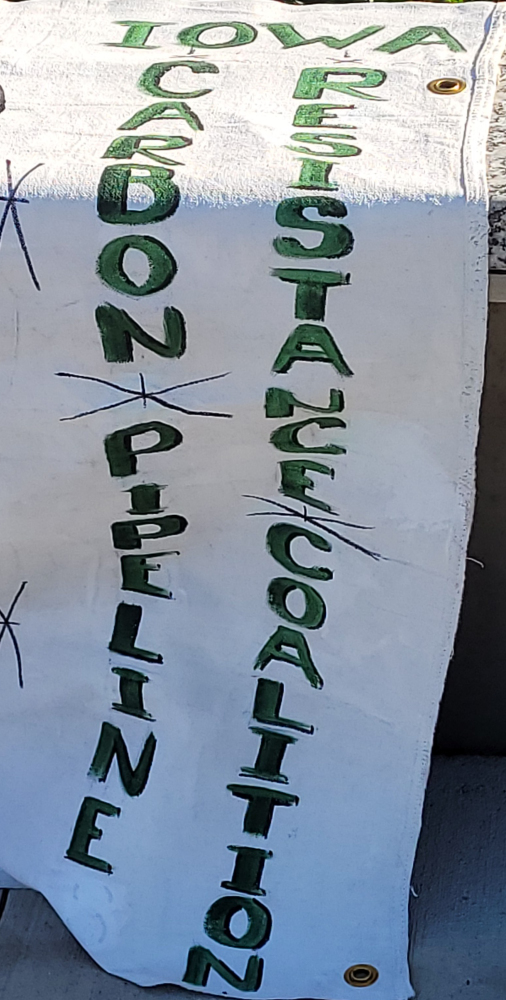
And yet, it is discouraging to see so few people engaged with things like this carbon pipeline resistance. Additionally, it is crazy to see the US Supreme court gut the ability of the Environmental Protection Agency to protect almost anything. And the Biden administration doing all it can to stimulate oil production.

There was the expected Iowa State Patrol presence at the IUB, both outside and in the hearing room.

I was struck by the symbolism of the board versus the crowd. The board members on a dais, everyone dressed in suits. The participants dressed casually. Seated a long way from the board members.

Video monitors were all over the place. Initially displaying the agenda. But then during open comments, showing the time clicking down from three minutes, the limit for each person to comment. You could feel the reluctance of the board members to hear the comments. And yet, the instructions from the board to individual participants were polite.

I wish I could have stayed longer, but all the comment I heard were articulate expressions of strong opposition to the carbon pipelines. One county supervisor said he was convinced that the approval was a foregone conclusion, and these hearings were a sham. A farmer described how the pipeline would not only destroy his tile system but impact the farms upstream from his.


Awaken and remember…

This is a continuation of yesterday’s blog post, A crisis of Spirit. As I quoted yesterday, Zhiwa Woodbury says our environmental crisis is a crisis of spirit.

As a Quaker, spirituality has been central to how I’ve lived my life.

It was a spiritual vision that set me on my lifelong path of environmental activism.

This is the photo that was and still is my spiritual vision, literally. I took this photo of Long’s Peak in the early 1970’s. I printed it in my darkroom and kept it near me, a reminder of the mountains. Looking forward to returning.

Long’s Peak, Rocky Mountain National Park, Colorado

When I moved to Indianapolis in 1971, I was just shocked by the clouds of noxious smog. That was before catalytic converters. I could not, and still cannot understand how people could continue to drive when they were destroying our environment. I kept seeing an image of my beloved mountains obscured by smog. I would look at the photo above and imagine not being able to see that in the future. That was incomprehensible and devastating and led me to refuse to have a car for the rest of my life.

September 13, 2015, I wrote “Cars as Weapons of Mass Destruction”, which was later published in the book, Explore Sustainable Indiana.

But I felt I had failed when I was unable to convince anyone else at all to give up their car. However, the strong spiritual force I felt throughout my life related to our environment never waned.


Now that I’m reading CLIMATE SENSE: Changing the Way We Think & Feel About Our Climate in Crisis, I’m getting a new perspective on this.

The book speaks of our lost connection with nature.

I was raised on farms. And the Quaker boarding high school I attended, Scattergood Friends School, is on the land of a working farm. Some of our daily work crews included working on the farm, raising pigs and pruning the apple trees in the orchard.

It was amazing that our family vacations were camping trips to National Parks. Our favorite was Rocky Mountain National Park, where the photo above was taken.

Not having a car meant I spent hours every day in nature. Walking to and from work. And running nearly every day. That walking took much longer than it would have otherwise because I carried my camera with me and would stop to take photos. Walking made me pay close attention to where I was (in nature) as I looked for images to capture. The more experience I had, the more variety and detail I was able to see and capture. Being out in all kinds of light and weather provided opportunities to learn to photograph in difficult situations.

All this meant I didn’t completely lose my connection with nature.

Again, Woodbury points out the importance of spirituality.

“If we have an appropriate spiritual container for processing this natural grief, then we will be transformed by the expression of our repressed grief. We will have greater joy. So…
Do not be afraid.”


The American Dream has become the natural world’s worst nightmare. We must rouse ourselves from this suicidal slumber…

Over the course of our lives, we have all repressed natural feelings of grief over our lost connection to nature herself, our true nature, and we all harbor deep fears as a result. When we get in touch with these feelings and fears, there is a tremendous release of tension, anxiety, and depression. If we have an appropriate spiritual container for processing this natural grief, then we will be transformed by the expression of our repressed grief. We will have greater joy. So…

Do not be afraid.

By acknowledging the losses we have experienced in relation to nature, by embracing our fears and seeing them as intelligent guides along our spiritual path, we have nothing more to lose, really, and everything in the world to gain.

Awaken and remember…

CLIMATE SENSE: Changing the Way We Think & Feel About Our Climate in Crisis by Zhiwa Woodbury

It is in the hearts and minds of human beings that the causes and cures of the ecocatastrope are to be found.

Ralph Metzner

While it would be lovely if we would all awaken together, the truth of the matter is that we can only do this one mind at a time. No one will lead us out of this crisis to some new promised land. We will only emerge from the climate crisis by taking responsibility for it upon ourselves–by assuming authority for our own psychological state of well being, and by reconnecting to this amazing planet through our very personal connections to the natural world-no matter where we live-and to our collective psyche, which will look different for each one of us.

CLIMATE SENSE: Changing the Way We Think & Feel About Our Climate in Crisis by Zhiwa Woodbury

A crisis of Spirit

Yesterday I wrote, “for millennia, people lived in sustainable ways. Life was often a struggle. But people did not use more resources than what could be replenished. They lived sustainably. What has been different over the past several generations has been the wealthy and powerful asserting their dominance not only over people, but over Mother Earth herself with disastrous consequences.”

The reason I wanted for so long to find connections with indigenous peoples was because of their sustainable lifestyles. And from what little I knew, how spirituality was the basis of their lives.

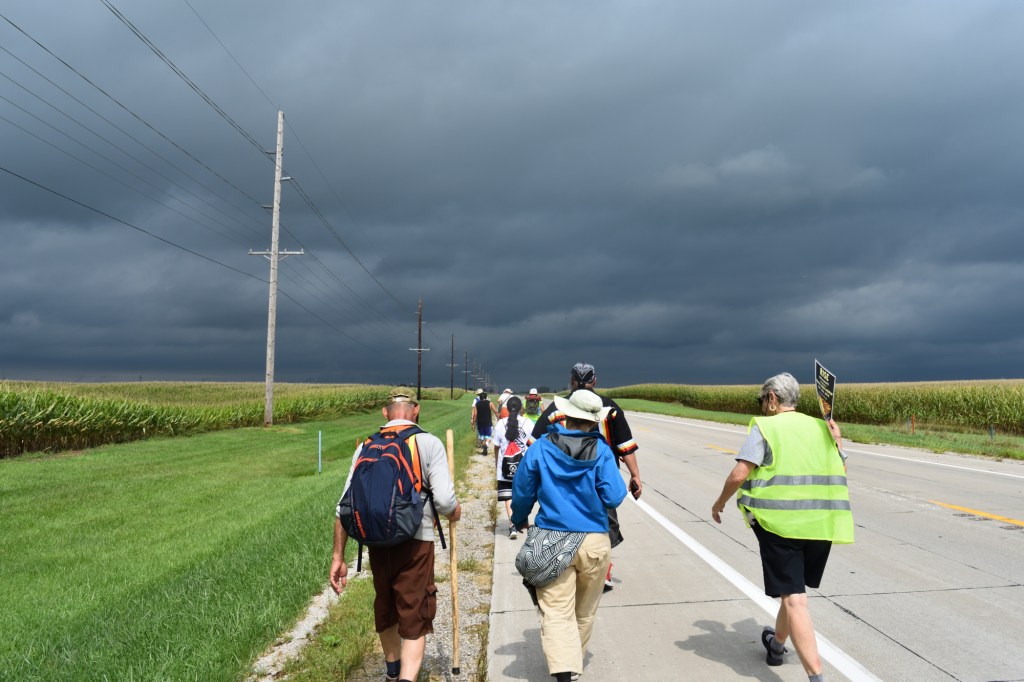
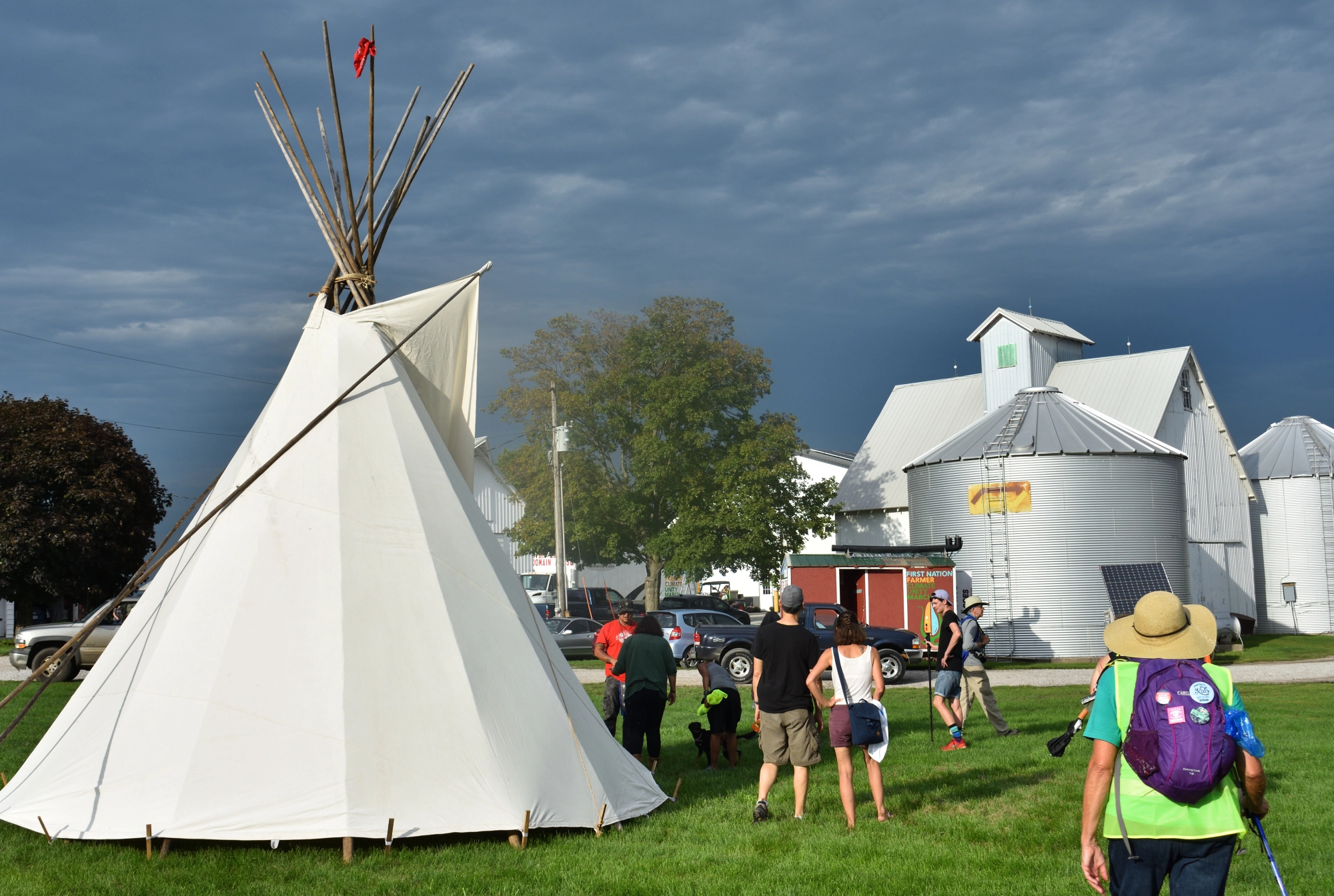
I am blessed to now have many indigenous friends. Most of those friendships began as we walked and camped together along the path of the Dakota Access pipeline for eight days in 2018 on the First Nation-Farmer Climate Unity March. https://firstnationfarmer.com/

I really wanted to learn about the spirituality of my indigenous friends, but I didn’t know how to bridge the barriers between us, because of the Quaker involvement in the Indian boarding/residential schools. The Spirit led me to speak to some of these friends about the Quaker involvement in forced assimilation. I won’t say more than that, in fear of others doing something similar without first having deep relationships, and Spiritual guidance to do so.

I will say this has resulted in opportunities for further Spiritual sharing. Recently one friend said she was glad to hear Quakers grieved for Friend’s participation in forced assimilation. Among other things, this made it possible for her to ask me if Quakers might support a video documentary being made about the residential school of her nation. Which we did.

I don’t like to use a lot of quotes. but yesterday I was led to re-read from the book CLIMATE SENSE: Changing the Way We Think & Feel About Our Climate in Crisis by Zhiwa Woodbury. Which expresses what I’ve been trying to write about Spirituality, and our environmental crisis.

Zhiwa Woodbury is an Earth Protector. Wildlife Advocate. Doctor of Natural Law(yer), Ecopsychologist, Long-time devoted dharma practitioner and hospice volunteer. Motivated by compassion. View all posts by ecopsi2day

The climate crisis we face is not an environmental problem, and there is no environmental solution. It is not a political issue, and there will be no timely political solutions forthcoming. It is certainly a moral issue, as recognized by Pope Francis and every religion should treat this as such. But given the deep psychological roots of our behavior, moralizing about climate change is also not the solution. No, this is a crisis of spirit, a crisis in relationship, raising the question who we humans really are. We can think of it as a kind of collective identity crisis-one that will only be resolved when a critical mass of human beings heal the split between our Psyche, or collective soul, and nature, the soul of the world.

In gaining mastery over nature, asserting unimaginable control over the very forces of creation and destruction, we seem to have severed our connection to nature at its very root, objectifying the earth and each other, commodifying our lives, designing artificial living environments called suburbs, and creating an entirely new, virtual reality to soothe our aching souls. In the process, we unintentionally isolated ourselves from our own true nature as earthlings – creatures of the earth. We created a social and cultural matrix of isolation, and then we proceeded to act out this story of separation, objectification, modification, and alienation in increasingly harmful ways, until now we are unraveling the very fabric of life and assaulting the global ecosystem that has nourished and supported us, and all beings since beginningless time.

That locomotive force of ignorance and greed rolled right over and through the ancient inhabitants of this new world, and quickly laid waste to the natural abundance that they had been caretakers of for millennia. Certainly, it would be difficult to imagine a more traumatic war against nature than the genocide that Europeans visited on the Earth-based cultures of the indigenous tribes of Turtle Island, or a more heart-breaking ecocide than reducing the dominant species here when we landed, the majestic and socially developed American Buffalo, bison bison, from 60 million to fewer than 6000 today-a thousand-fold reduction via slaughter.

While we see the result in the extreme polarization of society, this split is not irreparable, we humans are not irredeemable, and the truth and reconciliation process that needs to happen is not all that complicated. To become whole again, to restore the natural part of “human nature,” requires only that we hear the deafening call of the natural world, and recognize that something is terribly amiss within, as well as reflected without. Only then can we actively engage in a concerted, conscientious effort to heal the psychic wound we can all still feel in our hearts whenever we stop numbing ourselves to the dreadful pain inherent in our present predicament.

CLIMATE SENSE: Changing the Way We Think & Feel About Our Climate in Crisis by Zhiwa Woodbury

“In our prophecies they say we are now at the crossroads: we either unite spiritually as a global nation, or face chaos, disasters, sickness and tears from our relatives’ eyes.”

Chief Arvol Looking Horse, from the Standing Rock Tribe of Lakota Nation

The Worker’s Summit of the Americas

As often as I think about why we need to move toward Mutual Aid communities and know that Mutual Aid is far from a new idea, I haven’t spent much time learning about the many cultures and countries that live this way, that are not based on capitalism.

Even though there has been little mainstream media coverage in this country, the Summit of the Americas was a dismal failure because so many countries boycotted it when the Biden administration refused to invite Cuba, Nicaragua and Venezuela.

The alternative summit, the Summit of the Americas of the Working Men and Women Workers declares they will, “take concrete action to combat the labor and social violence applied to our peoples by the U.S. and Canadian governments.” I don’t yet know what the power of this group is.

More leaders of Latin American countries have announced they will not attend the Summit of the Americas, which is taking place in Los Angeles. The summit has been mired in controversy after the Biden administration refused to invite Cuba, Nicaragua and Venezuela. On Monday, Mexican President Andrés Manuel López Obrador announced he would boycott the talks over Biden’s decision. The presidents of Bolivia, Honduras, Guatemala and El Salvador have also said they will not attend the summit.

Latin American Leaders Boycott Summit of the Americas, Democracy Now, June 8, 2022

Here is the final declaration of the alternative to the Summit of the Americas, the Summit of the Americas of the Working Men and Women Workers.

We, representatives of Trade Union, Peasant, Political and Social organizations, gathered in Tijuana – Mexico, June 10-12, 2022, on the occasion of the realization of the Summit of the Americas of the Working Men and Women Workers, in immediate response to the exclusion of Venezuela, Cuba, and Nicaragua imposed by the Government of the United States.

There is a systemic and structural crisis of capitalism in its imperialist phase. It is in itself a civilizational crisis. The capitalist economic model and its political arm neoliberalism, as well as its modern cultural foundation, have put the planet’s life in crisis. If not eliminated, imperialism’s necropolitics leads us to the planetary collective suicide, which is more lacerating in the sectors less favored by the current world system. Our position is a bet for life, and the empire offers us death: it is either life or death!

We are witnessing a process of recolonization over the people. This is expressed in the excessive growth of racism, poverty, unemployment, job insecurity, environmental deterioration of territories, criminalization of migration, and gender and cultural violence. For this reason, we call upon the programmatic unity of the American continent’s workers, peasants, and progressive and popular forces to reflect, debate, and take concrete action to combat the labor and social violence applied to our peoples by the U.S. and Canadian governments.

We consider that the working class of the 21st century will only be able to play an independent and central role if – in addition to fighting for the most heartfelt demands of the labor movement – it assumes the struggle against patriarchy together with the feminist movement, the struggle of the native peoples against climate change and the defense of the biosphere together with the youth and the broad spectrum of professionals and scientists.

We must build articulations and alliances in which we structure our common forces for a unique and global struggle. Globalize the struggles. Build new organic forms of the working class from the political-cultural to the socio-productive to overcome capitalism and build socialism.

A robust internationalism is needed to pay adequate and immediate attention to the dangers of extinction: extinction by nuclear war, climate catastrophe, and social collapse.

In this regard, we agree:

  • To promote active solidarity with the peoples and sovereign nations (Cuba, Nicaragua, and Venezuela) and the other peoples of the world “sanctioned” and attacked by economic blockades and unilateral coercive measures imposed by the U.S. and its allies.
  • To hold an annual meeting in Tijuana, Mexico, with the workers and social movements of the Americas to express solidarity with the peoples of Venezuela, Cuba, and Nicaragua and their revolutions to repudiate unilateral coercive measures against sovereign governments.
  • To constitute a Committee for the organization of the Meetings to be held annually in the North and South of Mexico, integrated by: Unión del Barrio of the USA, Movimiento Social Por la Tierra de México (MST), Sindicato Mexicano Electricista (SME), Alianza por la Justicia Global of the USA, Central Bolivariana Socialista de Trabajadores de Venezuela, Central de Trabajadores de Cuba, Asociación de Trabajadores del Campo de Nicaragua (ATC), Movimiento Magisterial Popular de Veracruz Mexico, Fire This Time of Canada, Freedom Road Socialist Organization (FRSO) of the USA, International Action Center (IAC) of the USA, Task Force on the Americas of the USA and the Plataforma de la Clase Obrera Antimperialista (PCOA).
  • Demand the immediate release of Alex Saab. He is a Venezuelan diplomat kidnapped by the U.S. and illegally detained in its territory since October 16, 2021. Saab’s arrest is an action that attacks diplomatic immunity, a right guaranteed by international law to any diplomatic official in the exercise of his duties.
  • Reaffirm the resolutions agreed upon at the Meeting of the Peoples of the Americas, held June 7-8, 2022, in Chiapas, Mexico.
  • To ratify our unwavering solidarity with the Palestinian and Saharawi peoples.
  • Demand that the U.S. Congress immediately cut off military aid funds to El Salvador, Guatemala, Honduras, Colombia, and Haiti.
  • Promote a campaign to hold an international day of action in solidarity with Cuba to be held when the U.N. General Assembly meets to condemn the blockade against the Caribbean island.
  • Expand the “Bridges of Love” program to other countries and international coordinate days on the last Sunday of each month in the form of caravans or other activities.
  • Demand the immediate release of comrades Mumia Abu Jamal, Leonard Peltier, Iman Jamil Abdullah al-Amin and Julian Assange.
  • Demand the immediate release of the social fighter Simón Trinidad from Colombia, who is deprived of liberty in prison in the USA.
  • To promote the regional integration of the anti-imperialist working class of Our America and the participation in the strengthening of ALBA TCP, CELAC, and UNASUR. In this sense, the Bolivarian Socialist Workers Central of Venezuela will call a meeting for the 3rd quarter of 2022.
  • To promote a campaign against the U.S., NATO, and Colombia’s policies of interference and expansionism and to ratify the declaration of Latin America and the Caribbean as a zone of peace promoted by CELAC.
  • We reaffirm the Mexican Electricians Union workers’ demands for their reinstatement in the Federal Electricity Commission.
  • We stand in solidarity with the Puerto Rican people and their dignified struggle for independence and sovereignty.

ONLY THE WORKERS’ STRUGGLE WILL SAVE HUMANITY, NATURE, AND THE PLANET!!!!

FINAL DECLARATION OF THE WORKERS’ SUMMIT OF THE AMERICAS By Fight Back News, June 16, 2022

OPPOSE CRIMINALIZATION OF LAND DEFENDERS

OPPOSE CRIMINALIZATION OF LAND DEFENDERS:
CONTACT BC ATTORNEY GENERAL DAVID EBY

We are outraged that the B.C. Prosecution Service plans to pursue criminal contempt charges against the 15 people arrested at Gidimt’en Checkpoint Village during the RCMP raid on November 18, 2021.

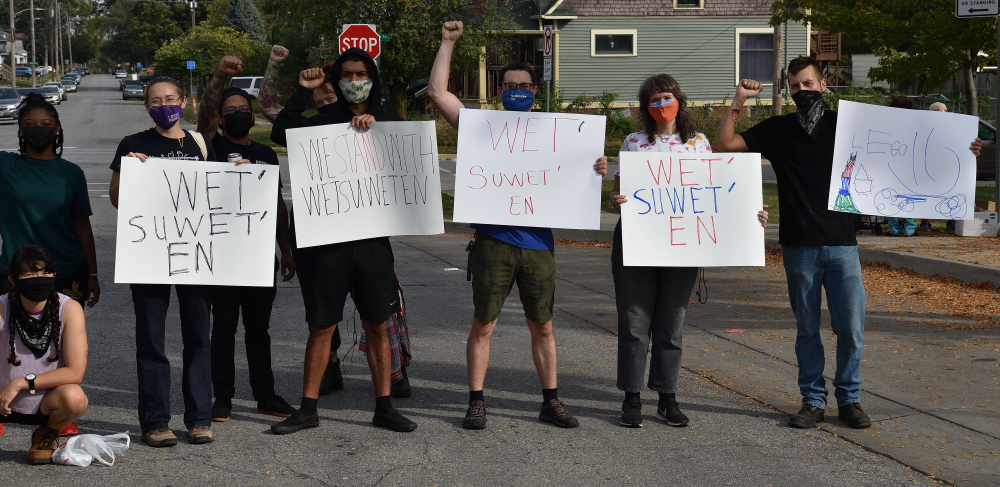
What’s more, the Crown has until July 7th to decide whether to charge 10 others, including Sleydo’, who were arrested at Coyote Camp on November 19, 2021, with criminal contempt. This criminalization of Wet’suwet’en Land Defenders goes against their inherent rights and title on their unceded territory.

Will you call/email Attorney General David Eby and tell him to refuse intervention? AG.Minister@gov.bc.ca, 205-387-1866. Sample email here

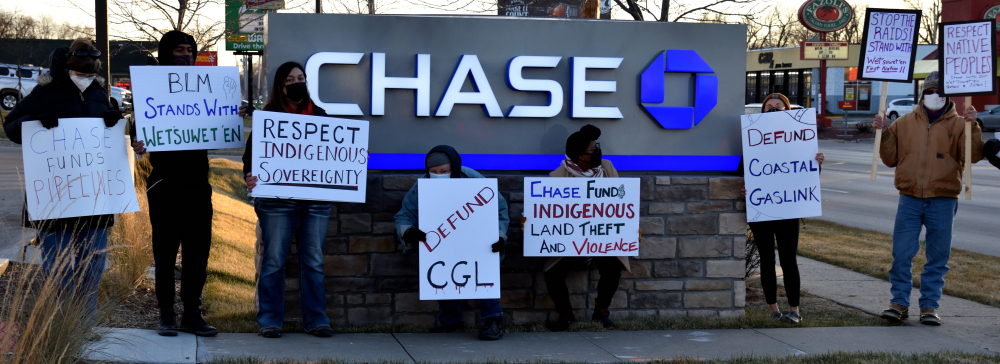
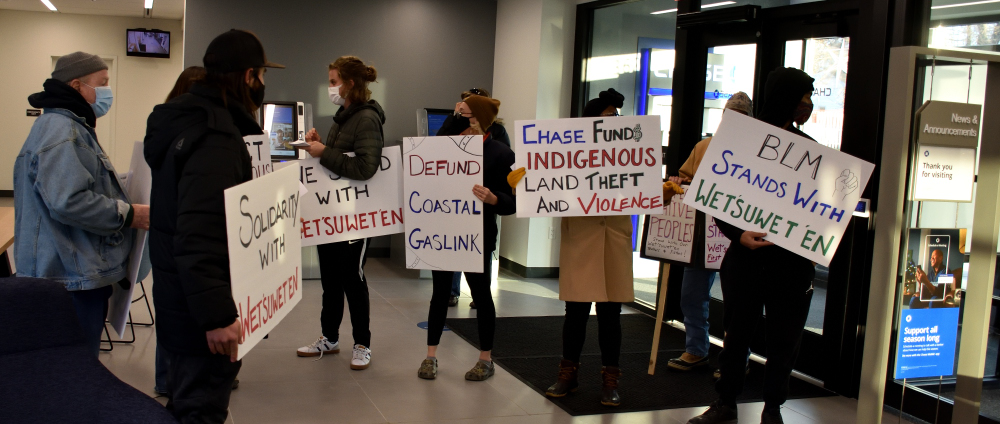
While Wet’suwet’en Land Defenders are grappling with unjust criminal charges, daily RCMP harassment, and imminent drilling under the Wedzin Kwa RBC held a huge golf tournament, the RBC Canadian Open. Luckily, activists were there to show the guests RBC’s true colours. Last Saturday, Decolonial Solidarity organizers joined activists and ravers in solidarity with the Wet’suwet’en people for a rave against RBC!

RBC is the title sponsor of the Canada Open golf tournament in Etobicoke, Toronto. We took the streets and marched to the gates of St. George’s Golf Club to let golf fans know what else their tournament sponsor funds. Equipped with a giant inflatable of RBC CEO Dave McKay, DJs, rappers, megaphones, and bubbles, we brought noise and energy to an otherwise quiet and low-key sport.
 
As the largest investor in the CGL pipeline, RBC needs to be held accountable. Those charged after the arrests in November 2021 include Wet’suwet’en elders, Haudenosaunee members, and legal observers. Recent investigations into the events in November show RCMP officers making racist remarks during the arrests and using coercive tactics to stop the blockade.

These charges are a disgusting and unacceptable demonstration of the law and policing protecting private companies and profits over people, land, and water. In the past, the Crown decided that prosecution of Wet’suwet’en Land Defenders was not in the public interest. We can help this time by telling Attorney General David Eby that it’s not in the public interest now either.
Call/email Attorney General David Eby today and tell him to refuse intervention. AG.Minister@gov.bc.ca, 205-387-1866. Sample email here

You can also check out this map to join an affinity group near you and take part in our Adopt-a-branch campaign targeting RBC.

In Solidarity,
The Decolonial Solidarity Organizing Team

Decolonial Solidarity (DS) is an ally-led Indigenous solidarity campaign. We currently stand in solidarity with Wet’suwet’en land defenders in their fight against the Coastal GasLink pipeline which is being built in their territory without necessary consent and which threatens their lands and waters.

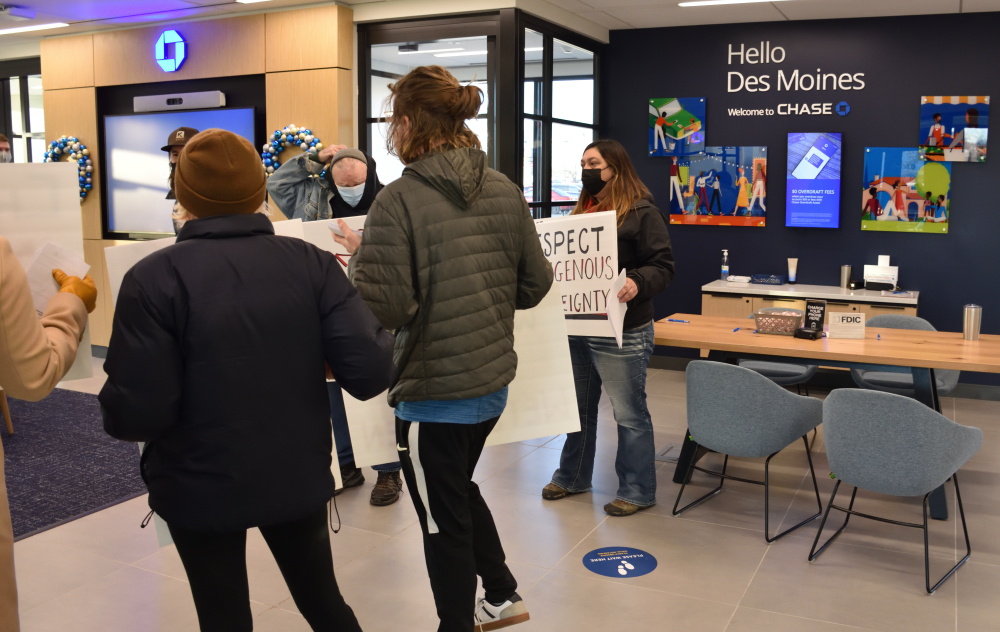
RBC is a primary funder of both Coastal GasLink and fossil fuels more generally. The DS Adopt-a-Branch campaign demands that RBC divest from the Coastal GasLink pipeline and respect Indigenous peoples’ sovereignty and rights. Groups are going to RBC branches regularly and speaking with customers and employees in order to pressure RBC from within.

Our actions are non-violent and completely legal. We are committed to following the guidance of front-line Land Defenders and to long-term solidarity action. Everyone who respects these principles is welcome!

Decolonial Solidarity is an ally-led Indigenous solidarity campaign. Follow us on Instagram @decolonialsolidarity and Twitter @decolonialsol.

https://actionnetwork.org/event_campaigns/looking-for-members-on-cherche-des-membres

Sample email

Honourable David Eby Attorney General
PO Box 9044 Stn Prov Govt
Victoria, BC
V8W 9E2
AG.Minister@gov.bc.ca
Phone: 250 387-1866
Fax: 250 387-6411


Dear Mr. Eby,

I am writing as a concerned citizen about the human rights violations and violations of the UN
Declaration of the Rights of Indigenous People, among other things, that have been happening
in Wet’suwet’en Territory. The Hereditary Chiefs have repeatedly stated they do not consent to
this pipeline and people are being arrested for upholding their laws through their traditional
governance system which has been recognized through the Delgamuukw-Gisdaywa Supreme
Court of Canada victory December 11, 1997.

Recently, your office agreed to intervene to criminalize Indigenous land defenders that were
arrested on November 18th. I urge you to decline intervention on July 7th against Sleydo’ and
others arrested on November 19th, 2021. That would further criminalize the land defenders
currently facing charges as Coastal GasLink is requesting. Violently entering homes without
warrants is not the process for dealing with Wet’suwet’en sovereignty. The Hereditary Chiefs of
the Wet’suwet’en Nation have stated their position and are defending their territory and sacred
headwaters Wedzin Kwa as they have done since time immemorial. We as guests on unceded
land need to respect the decisions of the Hereditary Chiefs and enact reconciliation instead of
disrespecting and criminalizing them further for practicing their culture and laws.

Wet’suwet’en emergency

Last night I attended the online Wet’suwet’en organizing call, along with eight hundred others. We heard from Sleydo’ (Molly Wickham), Chief Woos and Chief Na’ Moks, all of whom I’ve seen in videos and read their writings over the past several years. Below are ways you can support the Wet’suwet’en.

There is great urgency now to #KKillTheDrill, referring to Coastal GasLink’s preparations to start drilling under the Wedzin Kwa, the sacred headwaters of the Wet’suwet’en.


Why do we need your help to #KillTheDrill?

After a decade of fierce resistance, Coastal GasLink is currently preparing the site to  start drilling under the Wedzin Kwa, the sacred headwaters of the Wet’suwet’en since time immemorial. Now is the time to come together and demand drilling stop.

The Coastal Gaslink pipeline and associated LNG terminal is the largest private fracked gas investment in Canadian history. The Wet’suwet’en Hereditary Chiefs have been resisting the construction of the fracked gas pipeline on their territories for more than a decade, and the hereditary chiefs of all five Wet’suwet’en clans have refused to give their consent to the project.

In late April, the UN Committee on the Elimination of Racial Descrimination (CERD) issued Canada a third letter urging Canada to end their colonial violence on the territory. CERD urged Canada to cease construction of the Coastal GasLink pipeline, as well as the TMX pipeline, until free, and prior informed consent was received from the Wet’suwet’en and Secwepemc people (respectively); engage in negotiations with these impacted communities; and end forced evictions from traditional territories. 

And yet, key decision makers continue to ignore these recommendations, continue construction on Coastal GasLink, and condone violence against the Wet’suwet’en on their traditional lands. In late November 2021, the world watched as RCMP conducted militarized raids against Wet’suwet’en Land Protectors at Gidimt’en Checkpoint. Shocking images of assault rifles being pointed at unarmed protectors and doors being hacked down circulated widely, as did reports of humiliating treatment and abuse by RCMP. Now, tensions are rising as drilling beneath the sacred headwaters of the Wedzin Kwa river edges closer. 


The Big Picture: How do we stop the drilling? 

The UN is once again calling out Canada for their colonial violence, and it’s time to strike while there is international attention. So who are those key players? The contractors on the ground, the government officials who condone RCMP harassment and break their own promises of title negotiations and reconciliation,  and the funders behind the scenes.

Taking action during key moments when an issue is in the news cycle or on people’s news feeds can be very impactful in building momentum on a campaign. It helps bring people along who care about the issue but aren’t sure where or how to start. Digital actions are also a great way to mobilize people to take more action in the future! 

Contractors:

NameKey peopleSocials
OJ Pipelines
(Annual General Meeting May 27th 2022, 8am)
Russell Keller, President, Linkedin
Blaine Collet, Senior Director of Indigenous Relations and Community Relations, Linkedin
Phone: 1 780 955 3900
Fax: 1 780 955 3518
Parent Company: Quanta Services Steve Sousa, Managing Director and Chief commercial officer, LinkedinTwitter: @Quanta_Services, Instagram: @Quantaservices, Facebook: Quanta Services

Below are a list of financial institutions in the USA involved in the financing of the CGL pipeline. 

Name of investor/bankTwitter handleEmail address
USA
JP Morgan Chase@jpmorganCEO jamie.dimon@jpmchase.com 
Bank of America@BankofAmericaCEO brian.t.moynihan@bankofamerica.com 
Citi@CitiCEO jane.fraser@citi.com
CEO North America sunil.garg@citi.com
Chief of staff margo.pilic@citi.com
Chief risk officer  zdenek.turek@citicorp.com General counsel rohan.weerasinghe@citigroup.com 
Truist@TruistNews
Fluor Corp@FluorCorp

Sample tweet

I stand with  Wet’suwet’en and demand your immediate divestment + withdrawal of financing for Coastal GasLink and LNG Canada @jpmorgan @BankofAmerica @Citi @TruistNews @FluorCorp @KKR_Co. Stop financing climate chaos and Indigenous rights violation. #WetsuwetenStrong


Government targets: 

NamesKey Locations Socials 
Justin Trudeau, Prime Minister80 Wellington StreetOttawa, ON K1A 0A2Fax: 613-941-6900@JustinTrudeau
John Horgan, Premier of BCBC Legislative Building: 501 Belleville St, Victoria, BC V8V 2L8
Community office, 122 – 2806 Jacklin RoadVictoria, BC V9B 5A4
john.horgan.mla@leg.bc.ca.Telephone: 250-391-2801 Fax: 250-391-2804
@jjhorgan
David Eby, BC Attorney GeneralMLA David Eby’s Community Office
2909 West Broadway (at Bayswater, two blocks west of MacDonald)
Vancouver, BC V6K 2G6Phone: 604-660-1297Email: david.eby.mla@leg.bc.ca 
@Dave_Eby
Mike Farnworth
BC Minister of Public Safety 
MLA Consultancy office:

107A – 2748 Lougheed HwyPort Coquitlam, BC   V3B 6P2
@mikefarnworthbc
Marc Miller, Minister of Crown-Indigenous RelationsMain office – Montréal3175 Saint-Jacques Street, Montréal, Quebec, H4C 1G7Telephone: 514-496-4885Fax: 514-496-8097 Marc.Miller@parl.gc.ca@MarcMillerVM

January, 2020, Bear Creek Friends (Quaker) meeting sent the following letter to British Columbia Premier, John Horgan.

John Horgan.
PO BOX 9041 STN PROV GOVT
VICTORIA, BC V8W 9E1.
Email premier@gov.bc.ca

John Horgan,

We’re concerned that you are not honoring the tribal rights and unceded Wet’suwet’en territories and are threatening a raid instead.
We ask you to de-escalate the militarized police presence, meet with the Wet’suwet’en Hereditary Chiefs, and hear their demands:
That the province cease construction of the Coastal Gaslink Pipeline project and suspend permits.
That the United Nations Declaration on the Rights of Indigenous Peoples (UNDRIP) and tribal rights to free, prior and informed consent (FPIC) are respected by the state and RCMP.
That the Royal Canadian Mounted Police (RCMP) and associated security and policing services be withdrawn from Wet’suwet’en lands, in agreement with the most recent letter provided by the United Nations Committee on the Elimination of Racial Discrimiation’s (CERD) request.
That the provincial and federal government, RCMP and private industry employed by Coastal GasLink (CGL) respect Wet’suwet’en laws and governance system, and refrain from using any force to access tribal lands or remove people.

Bear Creek Monthly Meeting of Friends (Quakers)
19186 Bear Creek Road, Earlham, Iowa, 50072


Gidimt’en social media accounts

Tiktok: Mention @RCMPoffyintah in your caption!


#KillTheDrill #WetsuwetenStrong #AllOutForWedzinKwa