The Silence of the Damned

The Silence of the Damned is the title of an article written by Chris Hedges yesterday. It is devastating reading. The title says it all. Here are a few excerpts.

Robert Jay Lifton in his book “The Nazi Doctors: Medical Killing and the Psychology of Genocide” writes that “genocidal projects require the active participation of educated professionals — physicians, scientists, engineers, military leaders, lawyers, clergy, university professors and other teachers — who combine to create not only the technology of genocide but much of its ideological rationale, moral climate, and organizational process.”…

There is a cost to denouncing this genocide, a cost they (U S Medical Schools and organizations) do not intend to pay. They fear being attacked. They fear destroying their careers. They fear losing funding. They fear a loss of status. They fear persecution. They fear social isolation. This fear makes them complicit…

The danger is not only that the Israeli crimes are denounced. The danger, more importantly, is that the moral bankruptcy and cowardice of the institutions and their leaders are exposed…

The dehumanization of Palestinians is lifted from the playbook of all settler colonial projects, including our own. This racism, where people of color are branded as “human animals,” is coded within the DNA of our institutions. It infects those chosen to lead these institutions. It lies at the core of our national identity. It is why the two ruling parties and the institutions that sustain them side with Israel. It feeds the perverted logic of funneling weapons and billions of dollars in support to sustain Israel’s occupation and genocide.

History will not judge us kindly. But it will revere those who, under siege, found the courage to say no.

The Silence of the Damned. Our Leading Humanitarian and Civic Institutions, Including Major Medical Institutions, Refuse to Denounce Israel’s Genocide in Gaza by Chris Hedges, Scheer Post, February 1, 2024

There is a sense of hopelessness, helplessness, and despair in the face of the horrors of the Israeli-Hamas war.

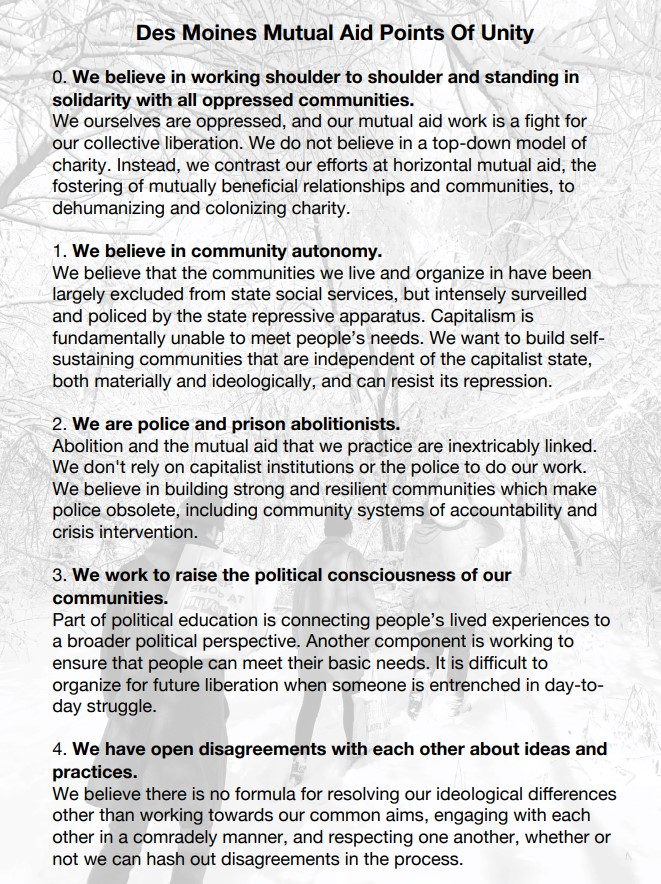
Coming of age in the 1960s, during the Vietnam War, I witnessed and was part of the massive antiwar movement in this country. But for the past several decades I’ve wondered what happened to the antiwar movement. A movement sorely needed in these times. I’m beginning to understand that the antiwar movement has morphed into the movement to build resilient, Mutual Aid communities.

As I’ve been writing about resilience and Mutual Aid recently, I see more clearly that resilience is not only a way to prepare for the future but also a way to build better communities now. That includes the way to break the cycle of war.

It might seem counterintuitive to work locally in the face of global war and disaster, but I believe that is the only effective thing we can do now.

“Ain’t Gonna Study War No More” by Jeff Kisling, Polycrisis Center, 11/11/2023


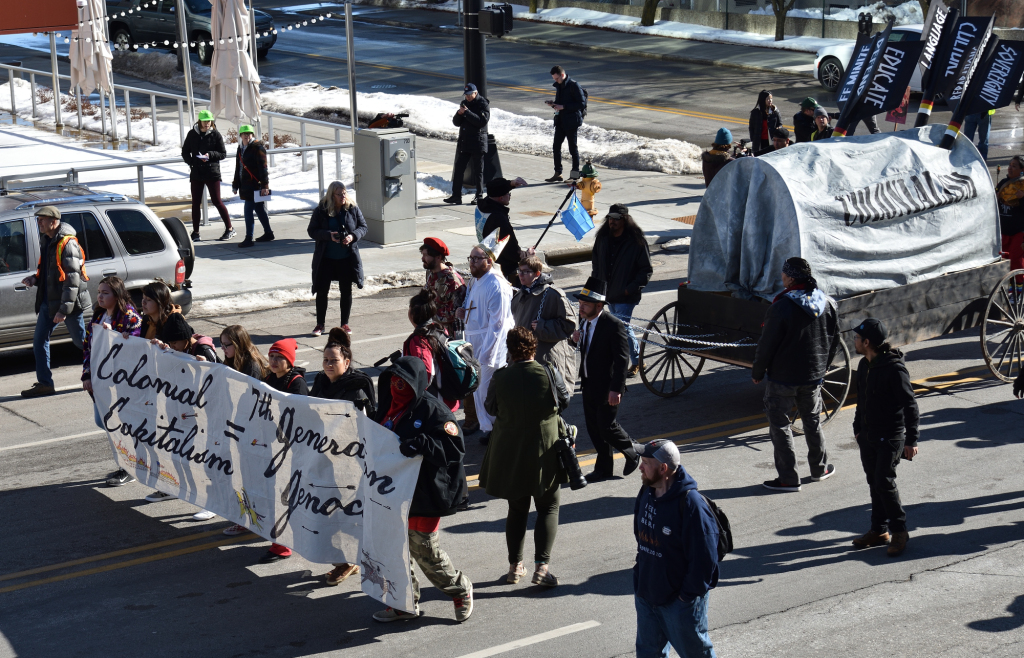
In January 2020, just before I joined, Des Moines Mutual Aid participated in a march protesting the potential for war or increased hostilities with Iran that followed the fallout of the assassination of Qassem Soleimani by a drone strike in Baghdad.

Des Moines Mutual Aid Anti-war Actions

In January 2020, Des Moines Mutual Aid participated in a march protesting the potential for war or increased hostilities with Iran that followed the fallout of the assassination of Qassem Soleimani by drone strike in Baghdad.
That was an example of the principle to think globally, act locally.

January 3, 2024

Now there is the tragic news of many people who attended the fourth anniversary of Soleimani’s death being killed by explosives.

Now there have been two explosions that killed nearly 100 people and wounded scores at a ceremony in Iran on Wednesday to commemorate commander Qassem Soleimani who was killed by a U.S. drone in 2020, Iranian officials said, blaming unspecified “terrorists”.

Iranian state television reported a first and then a second blast after 20 minutes during a crowded fourth-anniversary event at the cemetery where Soleimani is buried in the southeastern city of Kerman.

Blasts kill nearly 100 at slain commander Soleimani’s memorial, Iran vows revenge by Parisa Hafezi, Reuters, January 3, 2024


January 4, 2024

Yesterday a US airstrike killed an Iran-linked militia commander in Baghdad

BAGHDAD — A U.S. airstrike here on Thursday killed an Iran-linked militia commander and risked accelerating the regional fallout from Washington’s support for Israel’s military operation in Gaza, even as the Biden administration scrambles to contain the bloodshed.

While the United States has targeted militia-affiliated locations in Iraq and Syria several times in recent months, an American operation in such a central location of Iraq’s capital is exceedingly rare. Harakat Hezbollah al-Nujaba falls under the command of the Iraqi army, which responded swiftly — and in anger — saying agreements between Baghdad and Washington had been violated.

U.S. strike in Baghdad raises specter of wider regional war. Iraq says the strike violated agreements between Baghdad and Washington. The Pentagon described it as ‘necessary’ and ‘proportionate.’ By Mustafa Salim, Louisa Loveluck, Dan Lamothe and Alex Horton, The Washington Post, January 4, 2024

Biden Administration Bypasses Congress

The Biden administration has bypassed Congress twice to approve emergency weapons sales to Israel. The first instance was a sale of nearly 14,000 rounds of tank ammunition worth more than $106 million. The second instance involved a $147.5 million sale for equipment, including fuses, charges, and primers, needed to make the 155 mm shells that Israel had already purchased functional.

The Biden administration once again bypasses Congress on an emergency weapons sale to Israel by By MATTHEW LEE, Associated Press, 12/30/2024

Gen. Qassem Soleimani assassinated 1/3/2020

The United States killed a high-profile commander of Iran’s secretive Quds Force with a drone strike in Iraq early Friday, the Department of Defense said.

“At the direction of the President, the U.S. military has taken decisive defensive action to protect U.S. personnel abroad,” the department said in a statement announcing the death of Gen. Qassem Soleimani, a commander of Iran’s military forces in Iraq, Syria, Lebanon and elsewhere throughout the Middle East.

U.S. airstrike kills top Iran general, Qassem Soleimani, at Baghdad airport by By Phil HelselKen Dilanian and Josh Lederman, NBC News, January 3, 2020


Now I understand that working for peace today is to work for justice in oppressed communities in our own country.

Where is the peace movement now?

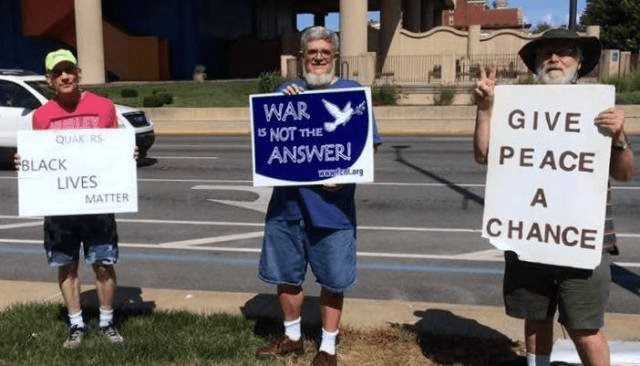
After the Vietnam War, it seemed the peace movement in this country had died. Now I understand that working for peace today is to work for justice in oppressed communities in our own country. In this photo, I’m holding a sign related to Black Lives Matter (circa 2016). It took a while for others at the peace vigil to become comfortable with the divergence from the usual anti-war emphasis.

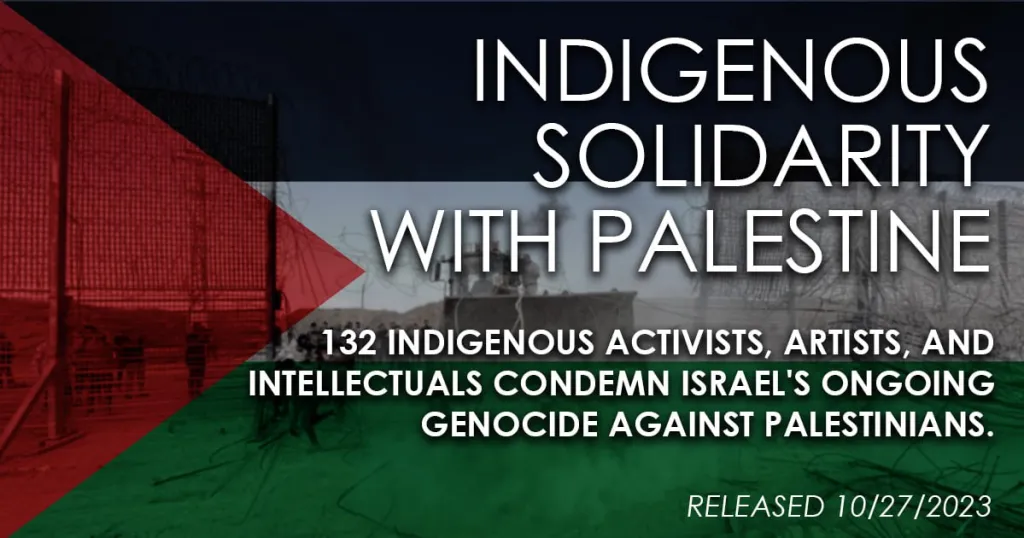
Although the West’s imperialism is not new, the U.S. is increasingly viewed as a global evil Empire. The most recent example, of course, is the Biden administration’s continuing massive support for Israel’s genocide in Gaza. Even bypassing Congress to send more military aid.

And on the global stage is the outrage of seeing the U.S. block the United Nations call for a ceasefire in Gaza.

Des Moines Mutual Aid protests the assassination of Qassem Soleimani (2020)

A Love Letter to Y’all

One year ago yesterday Des Moines Mutual Aid participated in a march protesting the potential for war or increased hostilities with Iran that followed the fallout of the assassination of Qassem Soleimani by drone strike in Baghdad.
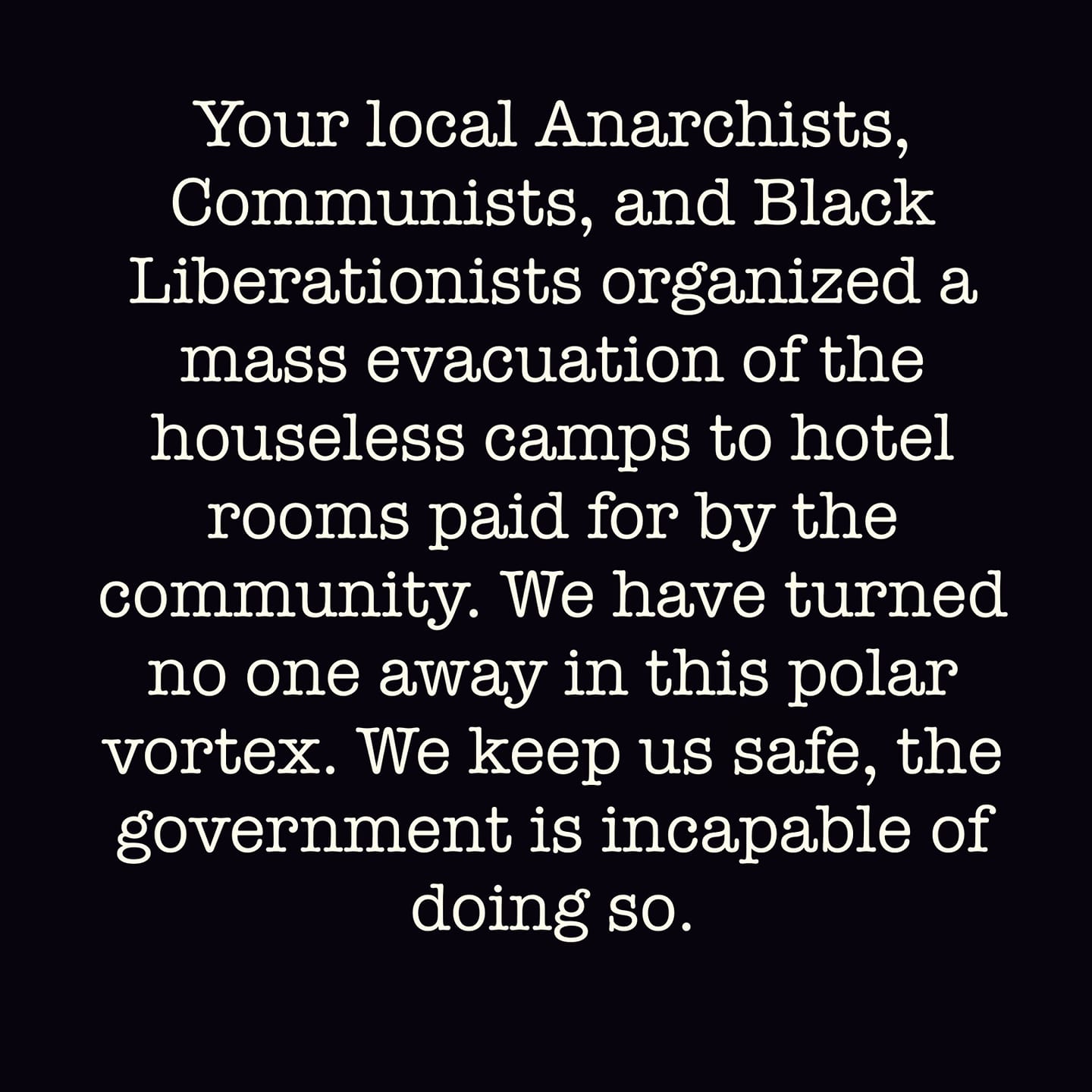
This was our first “public” event since adopting the name Des Moines Mutual Aid, a name we gave our crew during our growing work with our relatives at the houseless camps throughout the city and our help with coordinating a weekly free grocery store that has a 50 year history, founded by the Des Moines Chapter of The Black Panther Party For Self Defense.

A year ago we started laying the foundation for work we had no idea what was coming.

As we were adjusting our work with the camps and grocery re-distribution in response to the Covid-19 pandemic, both that continued to grow in need and importance, the police continued their jobs and legacy of brutality and murder.

This nation exploded in righteous rage in response to the pig murders of Breonna Taylor and George Floyd.

DMMA realized we were in a position to organize a bail fund to keep our fighters out of jail, both to keep the streets alive as a new phase of The Movement was being born, and because jails are a hotspot of COVID-19 spread.
Not to mention the racial and economic oppression that is the cash bail system.

In the past year, DMMA has expanded its work in multiple directions and gained many partners and allies.

We partnered with the Des Moines Black Liberation Movement (@DesMoinesBLM) to create the DSM BLM Rent Relief initiative to help keep families in their homes in the midst of a pandemic and the winter.

The camp work has grown exponentially but is being managed with our collaboration with Edna Griffin Mutual Aid (@egma_dsm), DSM Black Liberation Movement (@DesMoinesBLM), and The Great Plains Action Society (@PlainsAction).

The bail fund remains successful because of desire from the public and a partnership with Prairielands Freedom Fund (@prairielandsff) (formerly The Eastern Iowa Community Bond Project).

The weekly free food store has maintained itself, carrying on the legacy it inherited.

Every one of our accomplishments are directly tied to the support of so many people donating time, talent, and funds to the work. We are overwhelmed with all of your support and hope you feel we are honoring what we promised.

All of these Mutual Aid projects are just a few of many that this city has created in the last year in response to the many crises we face, not only confronting the problems and fulfilling the needs directly in front of us, but creating a sustainable movement that will be capable of responding to what’s next and shaping our collective futures as we replace the systems that fail us.

These last 12 months have been wild and a real test of all of our capabilities to collectively organize.

But it is clear that we as a city have what it takes to do what is needed in 2021, no matter what crisis is next.

Much gratitude to you all.
In love and rage,
Des Moines Mutual Aid
January 6, 2021

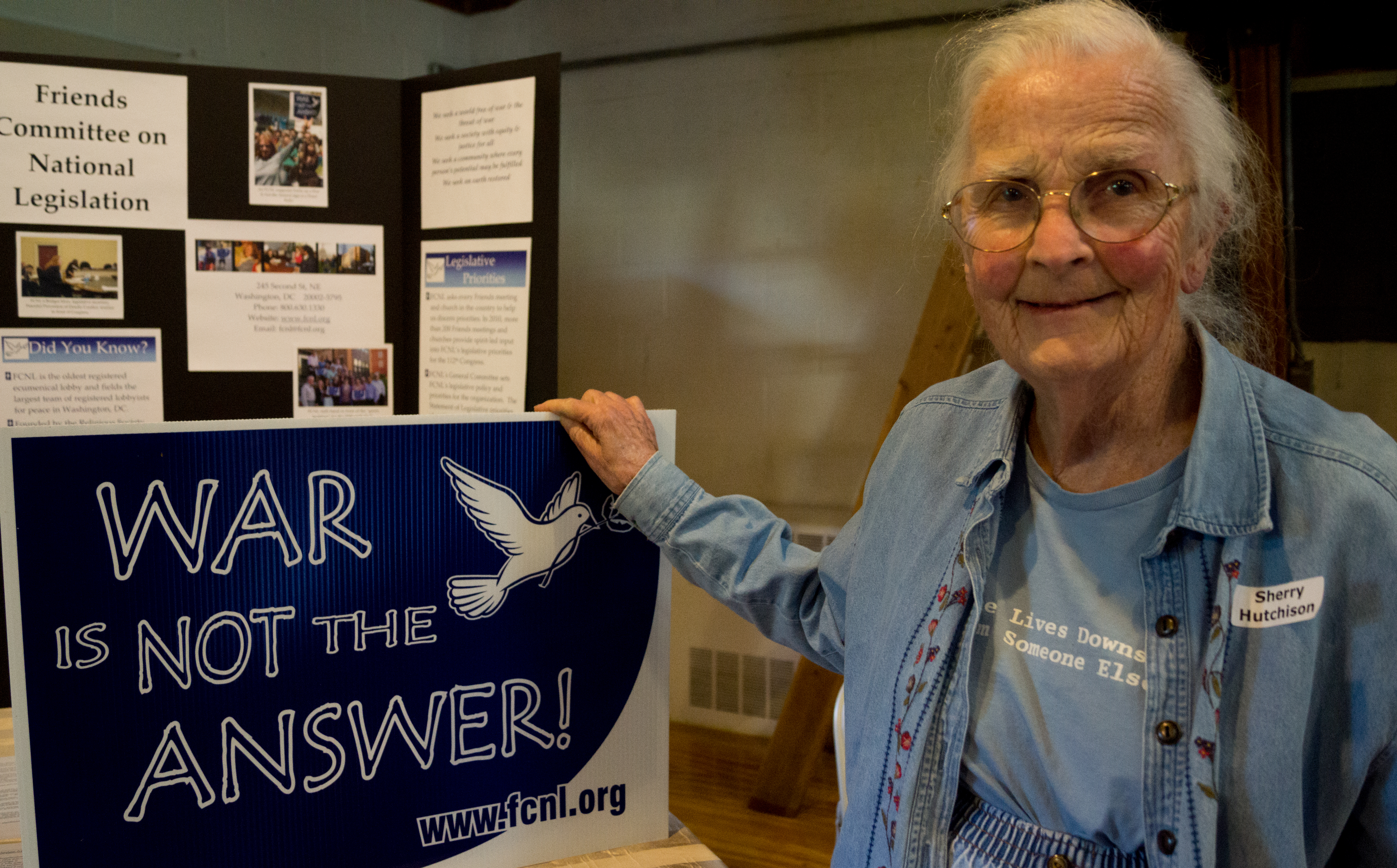
Friends Committee on National Legislation

The Friends Committee on National Legislation (FCNL) is a national, nonpartisan organization that lobbies Congress for peace, justice, and environmental stewardship.

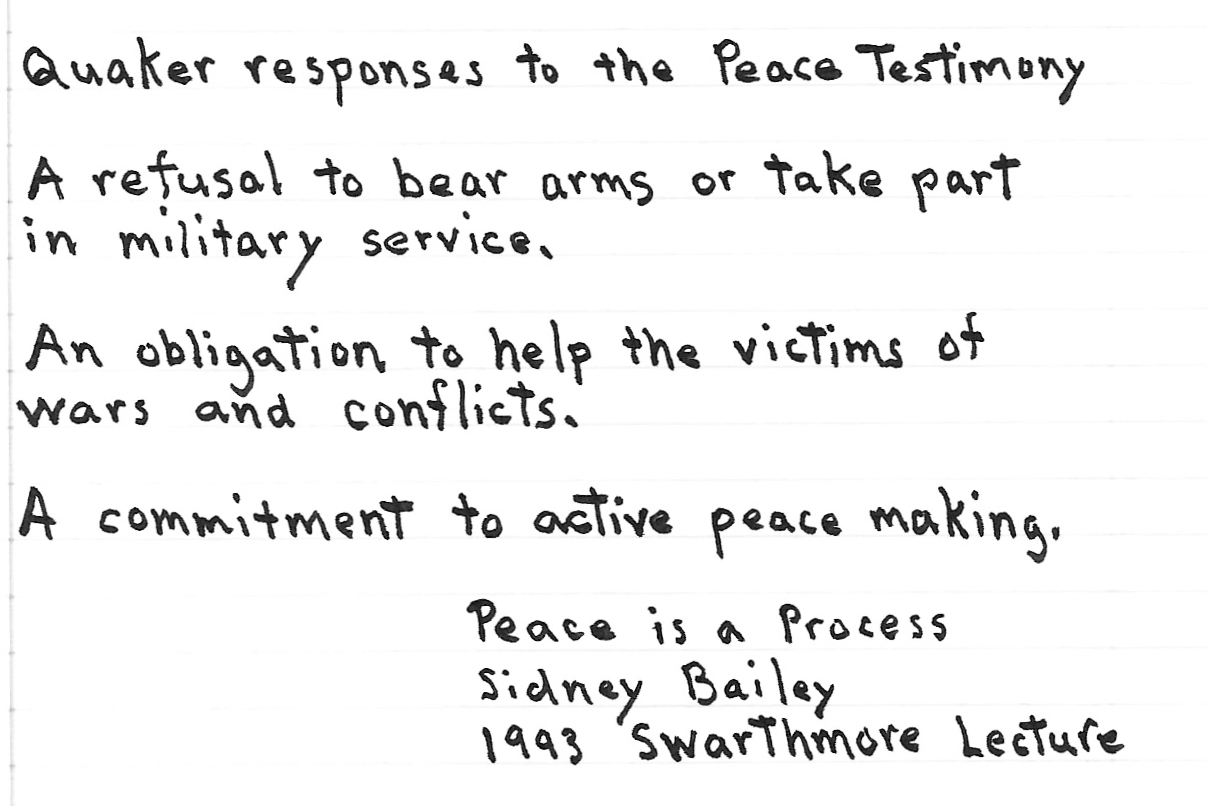
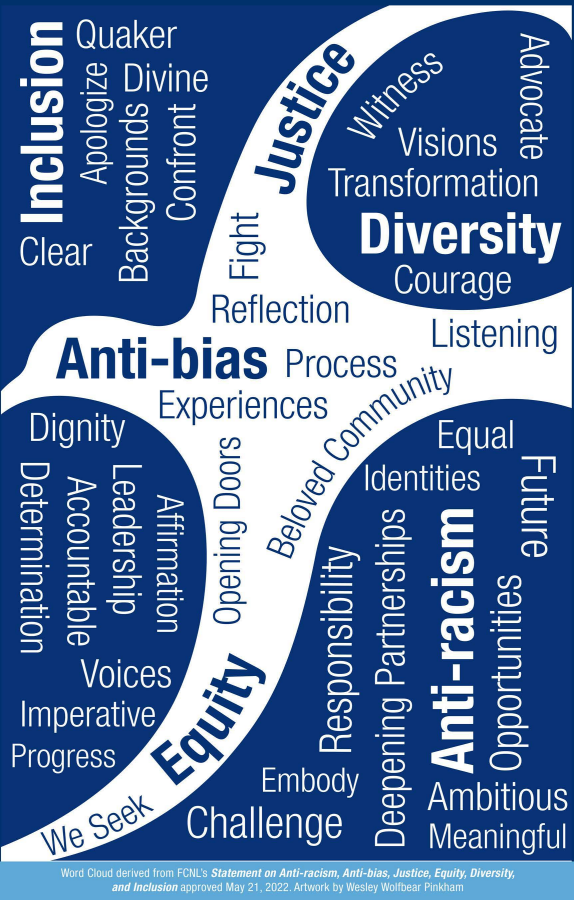
FCNL has an 80-year-old history of bringing the concerns of Quakers and Quaker meetings to the US Congress. The following four principles guide this work.


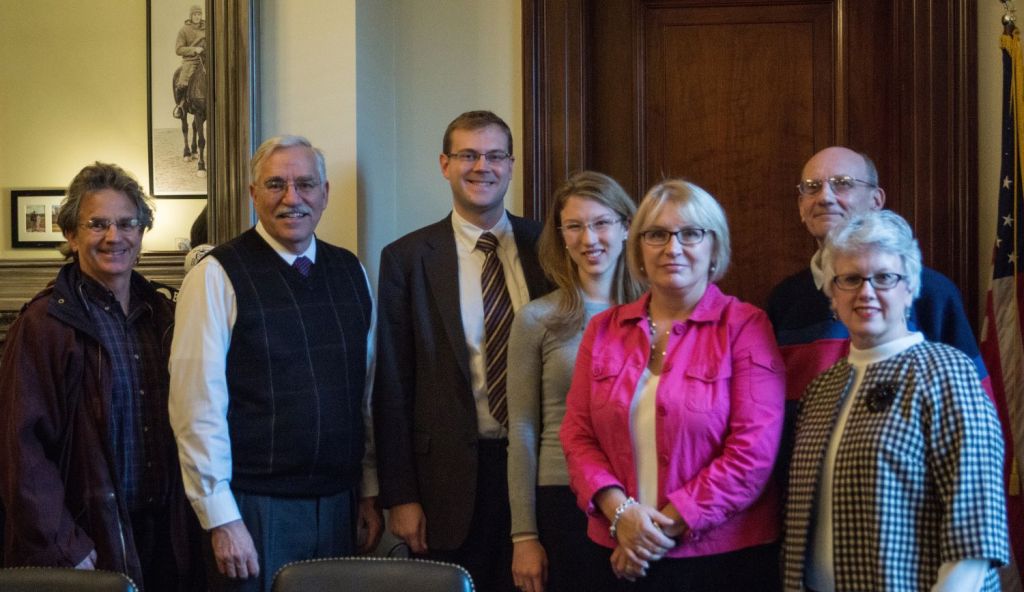
I have been blessed to be involved in the work of FCNL in a number of ways over the years. For nine years I was a member of the General Committee, which meets annually to help determine what priorities FCNL’s lobbyists should bring to Congress. One of the unique aspects of FCNL’s approach is to train Quakers and others how to lobby Congress themselves. I’m second from the right at this visit to a Congressperson’s office.

Training sessions for FCNL Advocacy are provided online monthly. The next session will be January 18, 2024. You can register here: Intro to Advocacy with FCNL


Following are several updates I’d like to share about FCNL’s work.


Addressing Patterns of Racial Wounding and Racial Justice in Quaker Communities

Join FCNL’s Lauren Brownlee and Zenaida Peterson, both members of the Steering Committee of the Quaker Coalition for Uprooting Racism, online for Pendle Hill’s First Monday lecture on Jan. 8, 2024.

Members of the Steering Committee of the Quaker Coalition for Uprooting Racism believed they had a responsibility to name the pain from patterns of white supremacy culture and racism that they have experienced, witnessed, and heard throughout the Religious Society of Friends and associated organizations. To that end, they created a guide with examples of harm and interventions towards racial justice. This guide, inspired by the work of Tema Okun and several Quaker institutions, points to the ways that they see white supremacy culture weaving its way into Quaker culture and suggests methods to disrupt it.

In this lecture, Lauren Brownlee and Zenaida Peterson will share ways that the guide has been and can be used in Quaker communities.

You can view that guide here: https://friendsgc.wpenginepowered.com/wp-content/uploads/2023/08/Racial-Wounding-and-Racial-Justice-In-Quaker-Communities-Guide.pdf

Register for the event here: https://pendlehill.org/events/addressing-patterns-of-racial-wounding-and-racial-justice-in-quaker-communities/


Virtual Witness Wednesday Silent Reflection

FCNL hosts a Virtual Witness Wednesday Silent Reflection. This event is in line with the Quaker practice of silent worship. It’s an opportunity for participants to join virtually via Zoom or by phone for a period of shared reflection.

I’ve been attending Witness Wednesday for several years, (including yesterday) and find it to be a powerful way to reflect on faith, peace, and justice work. I highly recommend it. Simply use this link to attend online any Wednesday at 4:15 pm Central time. http://fcnl.org/ww-stream


Spring Lobby Weekend

Spring Lobby Weekend brings hundreds of young adults to Washington, DC, where they learn about a specific issue, and then actually go to their Congressional offices to lobby related to that issue.

Several years ago my good friend Rezadad Mohammadi attended one spring lobby weekend. The next year he organized a group of fellow students at Simpson College to attend, successfully obtaining funding from the College to help with expenses. If you know of young adults who might be interested, please share this with them.

In March 2024, hundreds of young adults will gather again for Spring Lobby Weekend—our young adult advocacy conference and day of action. This year, we’ll be lobbying Congress to address the harmful legacy of the Indian Boarding School era.

We know that our strength comes from the stories we tell and the community we build, so we hope that you will join us March 16-19, 2024—in Washington, D.C. or online—to advocate for change!

Please check this page for more updates in the coming weeks. If you are not already signed up for our Young Adult Program updates, please sign up here to receive emails about Spring Lobby Weekend 2024.

https://www.fcnl.org/events/spring-lobby-weekend-2024


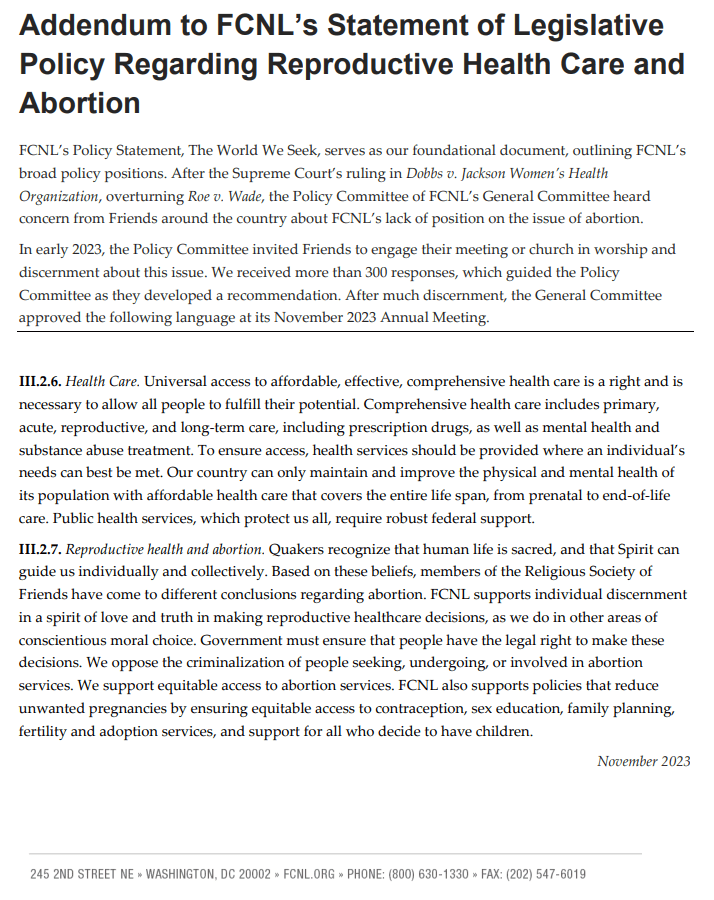
Reproductive Health Care and Abortion

In an example of how FCNL engages with Quaker communities in this country, FCNL asked Quaker meetings about their views regarding reproductive health and abortion. This came about because there are different beliefs about abortion among Quakers, so FCNL did not have a policy related to that. But with the recent national debate about abortion, FCNL asked Quakers to share what they thought about this issue today. Following is the statement that came out of this national discussion among Quakers.


The War in Israel-Palestine

Working for peace has always been a fundamental belief among Quakers. “We seek a world free of war and the threat of war” is one of the guiding principles of FCNL.

We are heartbroken by the violence in Israel and Palestine. As Quakers, we deeply mourn the loss of all lives and pray for those who have lost loved ones due to this latest escalation. We unequivocally condemn Hamas’ attacks and inhumane treatment of civilians and call for the release of all hostages. We also condemn Israel’s indiscriminate bombing of Gaza that has claimed thousands of civilian lives. More war and weapons won’t bring peace. In the face of growing violence, lawmakers must push for a permanent ceasefire and address the root causes underlying this explosion of violence.

https://www.fcnl.org/issues/middle-east-iran/israelpalestine/israel-palestine-war

Following is a statement calling for a ceasefire from the national Quaker organizations.

https://www.fcnl.org/sites/default/files/2023-10/quaker-statement-10-17-23.pdf

Indigenous Land Acknowledgement

As we bear witness and lobby in solidarity with Native Americans, we also honor the Nacotchtank tribe on whose ancestral land the FCNL, FCNL Education Fund, and Friends Place on Capitol Hill buildings stand. They are also known as the Anacostans, the Indigenous people who lived along the banks of the Anacostia River, including in several villages on Capitol Hill and what is now Washington, D.C. By the 1700s, the Nacotchtank tribe had merged with other tribes like the Pamunkey and the Piscataway, both of which still exist today.

Peace on Earth?

Glory to God in the highest, and on earth peace, good will toward men.

Luke 2:14

I am deeply distressed by the dichotomy between ‘peace on earth, good will toward men’ and the blatant opposition to that by the forces of global dominance. I cannot fathom the massacre in Gaza and the silence of the people in this country. The overwhelming majority of people in other countries are not silent.

This has been the pattern that began when the Europeans landed. The enslavement of those brought here from Africa continues with economic injustice and mass incarceration. White settler colonialism continues as Indigenous lands remain occupied today.

The rapid rise of authoritarianism is the next stage of dominance over us all.

The silence is astounding.

That silence is ruthlessly enforced, not only against opposition to war but also for the rape of Mother Earth. Or for a reckoning about past injustices such as the Indian schools of forced assimilation or structural racism.

I told my Quaker meeting I have this sense of being threatened by simply writing about these things. Which is proof that authoritarianism is working. Quelling dissent. I wonder if I might be imprisoned one day.

All we are saying is give peace a chance.

John Lennon

The message of Christmas has traditionally involved prayers for goodwill toward all and “peace on Earth,” but through their opposition to ceasefire in Gaza, most Western Christians are affirming the opposite values: that violence, weapons and destruction are the only response to real and perceived enemies.

The U.S. Christian Palestinian communities that I am a part of are truly puzzled at the behavior of the many Western Christians who seem to see no dissonance between the message of love and peace that is at the heart of our shared religion, and their backing for Israeli’s military assault against Palestinian civilians, which has killed more than 20,000 people in Gaza alone within the last three months.

Anytime an attack occurs, or lives are lost, we are called to choose between two worldviews in our response. One worldview holds that violence, bombings and brutal force is the only method available and should be pursued relentlessly until the enemy is vanquished, regardless of the cost in lives and destruction for civilians on both sides.

But an alternative worldview insists on the way of peace, reconciliation, justice and tolerance.

Christmas Wishes for “Peace on Earth” Are Empty Without Ceasefire in Gaza. How can so many US Christians sing “peace on Earth” without opposing US support for the genocide unfolding in Gaza? By Jonathan Kuttab , TRUTHOUT, December 25, 2023

United States diplomats once again held up a vote on a watered-down United Nations Security Council resolution on Wednesday aimed at bringing more aid and relief to civilians in the besieged Gaza Strip as reports of starvation, mass killings, and other war crimes allegedly committed by the Israeli military continue to pile up.

Despite massive international support for a ceasefire at the UN, on December 8, the U.S. blocked a previous attempt by the Security Council to leverage international law and secure a humanitarian ceasefire so more aid can enter Gaza.

Allegations of Israeli War Crimes Grow as US Again Delays Security Council Vote. UNICEF has declared Gaza to be the “world’s most dangerous place to be a child.”
By Mike Ludwig , TRUTHOUT, December 20, 2023

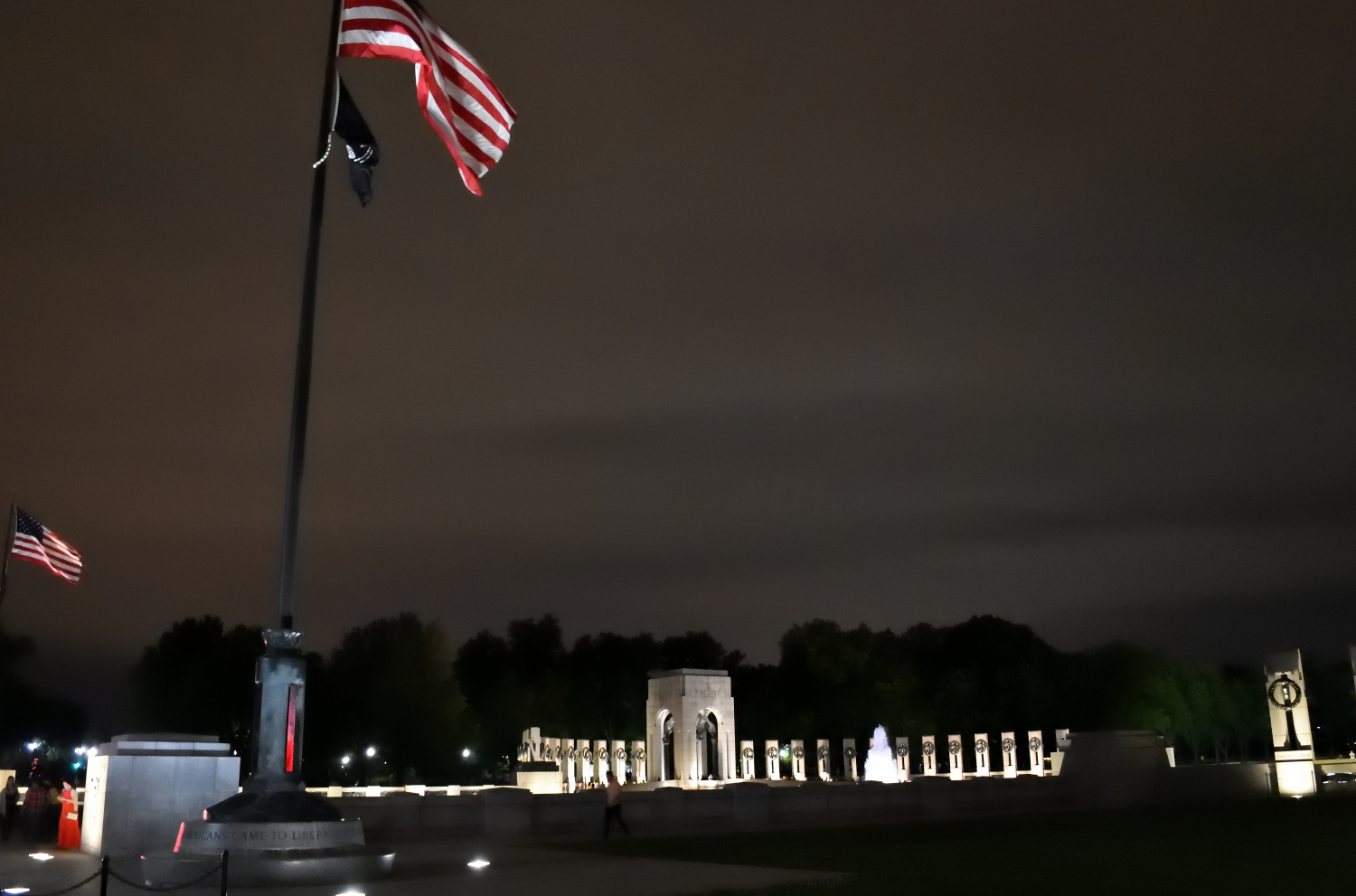
WW II Memorial

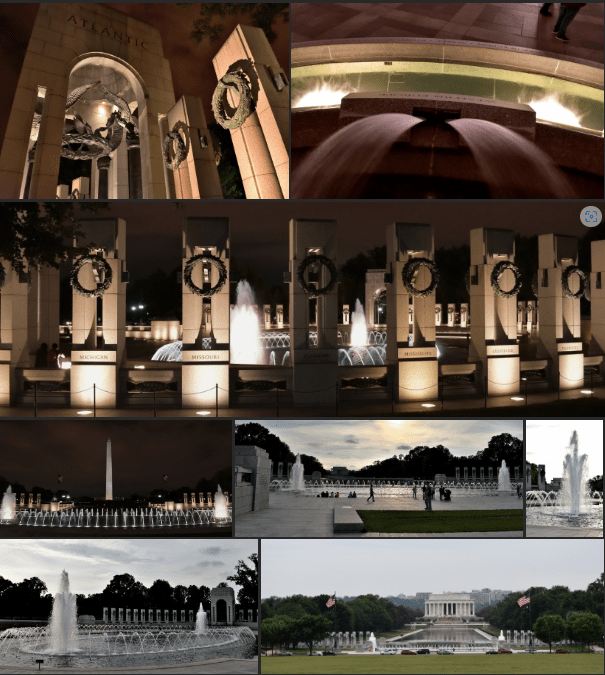
I’ve developed a collection of photographs of memorials in Washington, DC, taken while in the city to attend annual meetings of the Friends Committee on National Legislation (FCNL). I’ve begun to build a new site for my photography: https://jeffkislingphotography.wpcomstaging.com/.

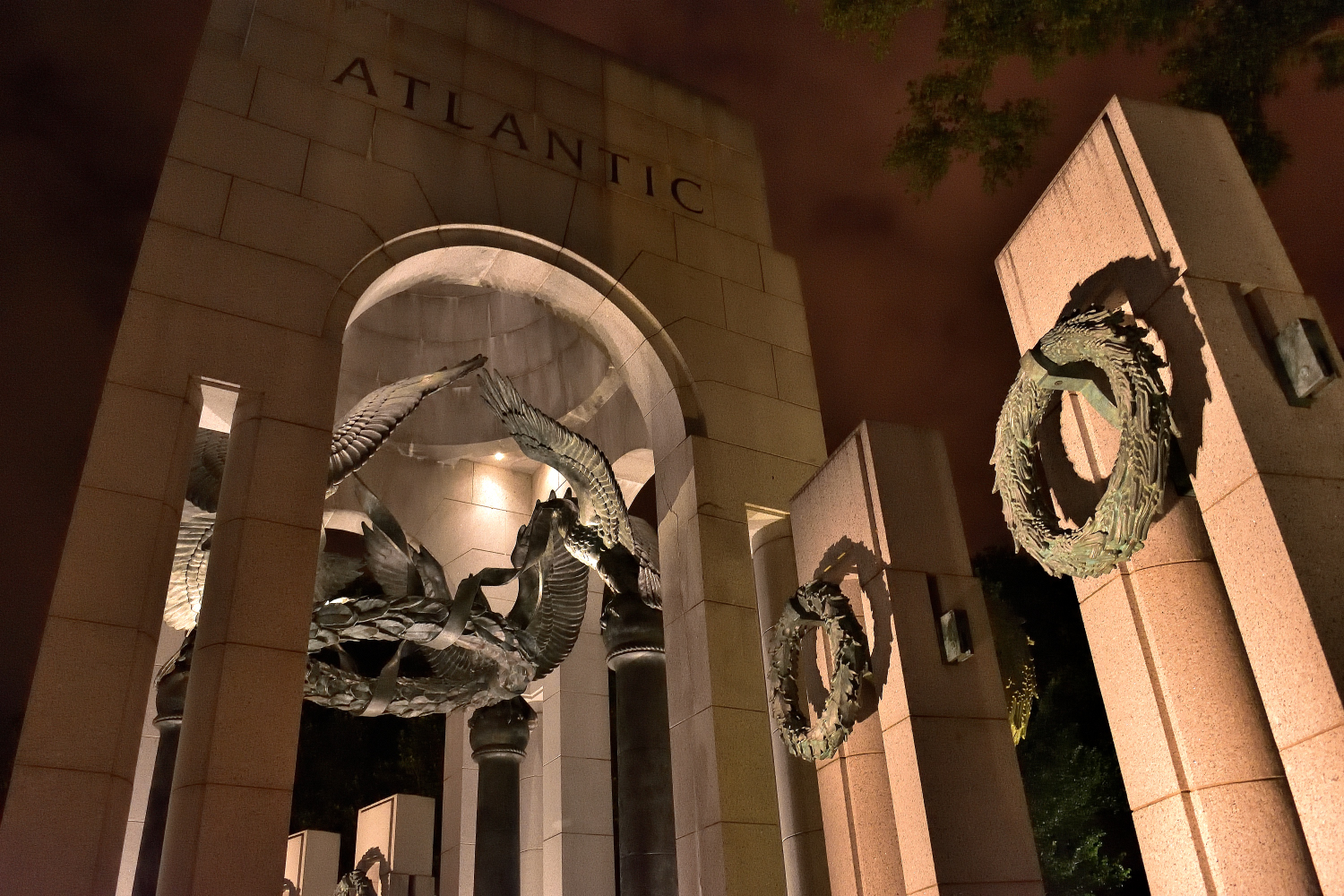
Tomorrow marks a date which will live in infamy (Franklin D Roosevelt), when Japan attacked Pearl Habor, leading the United States to enter World War II. Following is a link to that photo gallery.

As I’ve been putting these galleries together, I noticed some photos included shadows or distant images of people. I make a point of not including people if at all possible in photos I take in nature. But the visitor is a part of the memorial. They make me wonder what the memorial means to them. Did a loved one serve?

The thought often arises, where are the memorials to those who worked for peace?

World War II photo gallery

Link to the WWII photo gallery: https://jeffkislingphotography.wpcomstaging.com/2023/11/17/washington-dc/nggallery/washington-dc/ww-ii-memorial

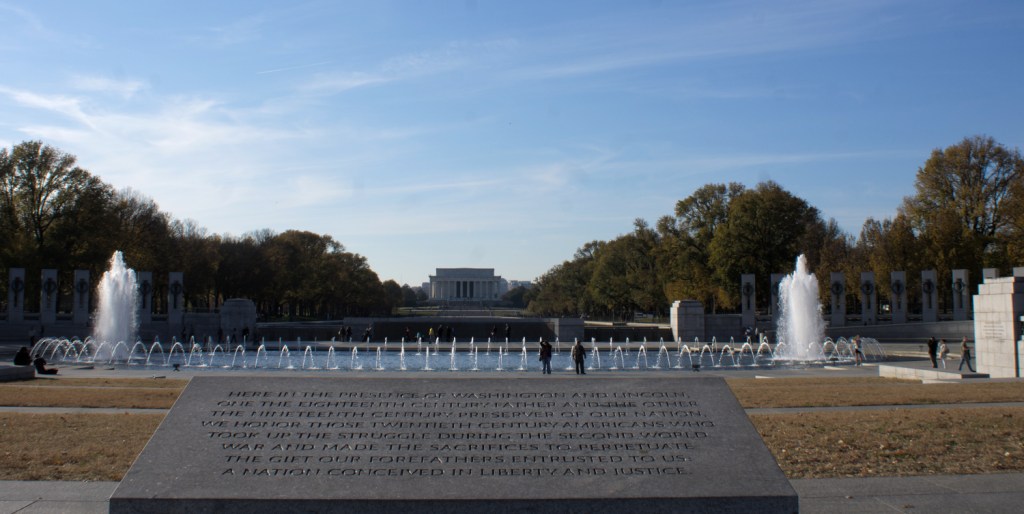
Announcement Stone

HERE IN THE PRESENCE OF WASHINGTON AND LINCOLN,
ONE THE EIGHTEENTH CENTURY FATHER AND THE OTHER
THE NINETEENTH CENTURY PRESERVER OF OUR NATION,
WE HONOR THOSE TWENTIETH CENTURY AMERICANS WHO
TOOK UP THE STRUGGLE DURING THE SECOND WORLD
WAR AND MADE THE SACRIFICES TO PERPETUATE
THE GIFT OUR FOREFATHERS ENTRUSTED TO US:
A NATION CONCEIVED IN LIBERTY AND JUSTICE.

Jeff Kisling

Dedicated in 2004, the World War II Memorial is a large stone plaza designed by architect Friedrich St. Florian. The plaza forms a ring of columns representing the U.S. states and territories, joined together by a bronze cord symbolizing their united effort.

Bas relief artwork by Ray Kaskey Studios depicts the many facets of the American war effort both on the homefront and the battle front. Two victory pavilions, repesenting the Atlantic and Pacific theaters where the war was fought, house massive bronze sculptures of eagles laying laurel wreaths above a representation of the Victory Medal. At the base of each pavilion is a pool with the names of campaigns and battles of each theater of the war.

At the west side of the memorial, 4,048 gold stars each represent 100 American servicemen who gave their lives in the conflict.

The World War II Memorial is located on 17th Street NW between Independence and Constitution avenues, at the east end of the Lincoln Memorial Reflecting Pool. The nearest metro stop is Smithsonian; walk west from the station past the Washington Monument and cross 17th Street at the crosswalk to enter the memorial.

World War II Memorial, National Mall and Memorial Parks, National Park Service


Previous blog posts that include photos of other war memorials in Washington, DC.

Korean War

I’m not sure why I’m led to revisit and re-edit photos I’ve taken of war memorials over the years. I think this is in part because war has become so sanitized and remote in this country. Even killing is done remotely by drone operators in the US.

I was raised in Quaker communities, which oppose war. The Vietnam War was a significant influence on me as I was coming of age, a high school student at the Quaker boarding school, Scattergood Friends School, in Eastern Iowa. I spent many days, weeks, and months, studying and praying about what to do and eventually turned in my draft cards

I’ve been re-editing photos I took of the Korean War Memorial over the years. For about a decade, I would go to Washington DC as a member of the General Committee of the Friends Committee on National Legislation (FCNL), and looked forward to taking photos while I was there.

The Korean War Memorial is very moving, as well. The artist, Frank Gaylord, was an American sculptor who created the 19 stainless steel statues of soldiers and sailors that represent the U.S. military personnel who served in that war (1950-1953).

Korean War Memorial


Vietnam War

I am grateful for many things.

My first thought went to something I recently heard someone say. That he was a draft resister in the Vietnam War era, and that was the best thing he’d ever done. I was astonished to hear that fifty years later. I know what he was saying because I was a draft resister then, as well. As an 18-year-old, I knew this decision would set the course of my life. It would be easy to accept conscientious objector status and do two years of alternative service. Fortunately, though, I was aware of the stories of many Quaker men I knew who refused to participate in the war machine. Knowing they risked imprisonment and often were. But I saw how that choice defined the rest of their lives.

Now shall I walk, or should I ride?


https://jeffkislingphotography.wpcomstaging.com/2023/11/17/washington-dc/nggallery/washington-dc/ww-ii-memorial

Korean War Memorial

I’m not sure why I’m led to revisit and re-edit photos I’ve taken of war memorials over the years. I think this is in part because war has become so sanitized and remote in this country. Even killing is done remotely by drone operators in the US.

I was raised in Quaker communities, which oppose war. The Vietnam War was a significant influence on me as I was coming of age, a high school student at the Quaker boarding school, Scattergood Friends School, in Eastern Iowa. I spent many days, weeks, and months, studying and praying about what to do and eventually turned in my draft cards.

I’ve been developing a new website for my photography.

https://jeffkislingphotography.wpcomstaging.com/

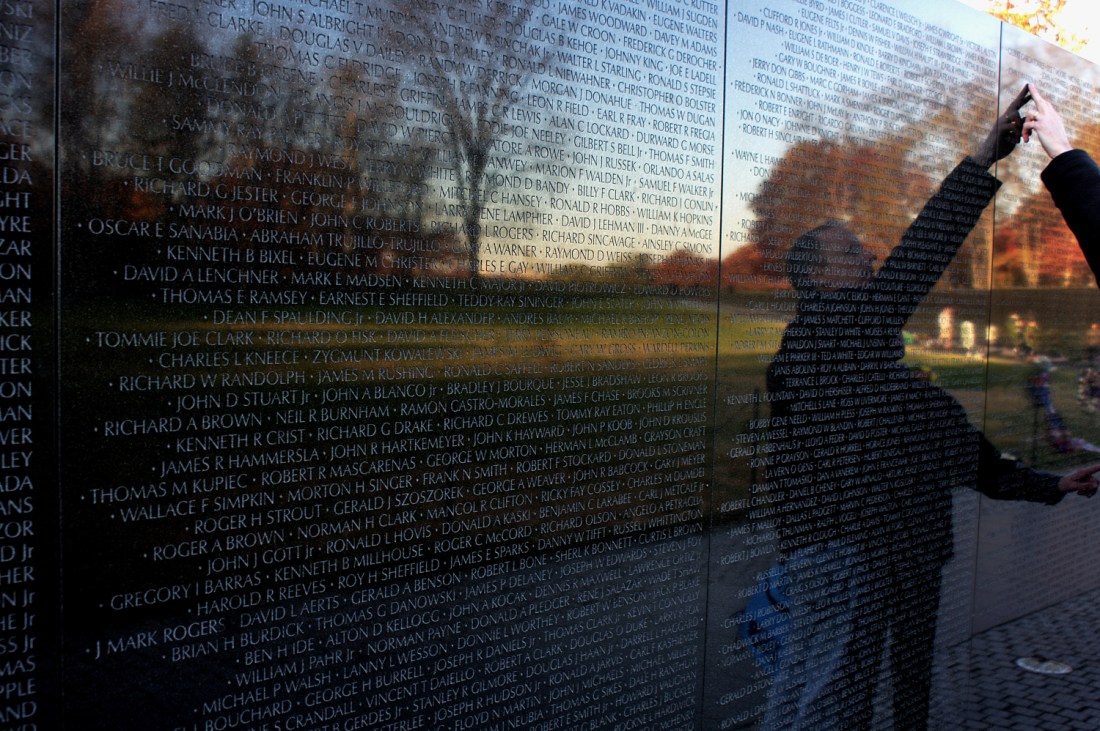
My most recent post, “Now shall I walk, or should I ride?” included a reference to this new album about the Vietnam War memorial. It is interesting to see the diversity of the designs of the memorials for this country’s wars. The Vietnam War Memorial is profoundly striking.

Next, I’ve been re-editing photos I took of the Korean War Memorial over the years. For about a decade, I would go to Washington DC as a member of the General Committee of the Friends Committee on National Legislation (FCNL), and looked forward to taking photos while I was there.

The Korean War Memorial is very moving, as well. The artist, Frank Gaylord, was an American sculptor who created the 19 stainless steel statues of soldiers and sailors that represent the U.S. military personnel who served in that war (1950-1953).

https://jeffkislingphotography.wpcomstaging.com/2023/11/17/washington-dc/nggallery/washington-dc/korean-war-memorial

As with the Vietnam War Memorial, visitors speak in hushed tones, if at all.

The group of life-sized sculptures is very disturbing in several ways. You get the sense of what it would be like to have them come upon you.

But what struck me most was the utter weariness and exhaustion on the soldiers’ faces. Even as a pacifist myself, I am always mindful of the courage it takes to be in the military. I can never fault anyone for making such sacrifices when they believe in the military as the way to protect their country and their loved ones. And are willing to risk life-long, debilitating injury or death.

In the photos below, the mural wall can be seen that depicts the faces of soldiers, nurses, and other personnel who served in the war. There is also one photo of the Pool of Remembrance, which is a shallow circular pool at the apex of the triangle of soldiers. The pool has the names of the countries that participated in the war and the numbers of casualties engraved on its walls.

Gaylord based some of the faces of the soldiers on the men he served with during World War II, such as William A. Callaway and John Erdman. He said he wanted to represent an ethnic cross-section of America and all branches of the military. https://en.wikipedia.org/wiki/Frank_Gaylord

You can see my photos of the Korean War Memorial here: https://jeffkislingphotography.wpcomstaging.com/2023/11/17/washington-dc/nggallery/washington-dc/korean-war-memorial

Now shall I walk, or should I ride?

My friends at the Great Plains Action Society (GPAS) have done a lot of work to call out the whitewashed history of Thanksgiving, one of many colonial mythologies about Indigenous Peoples and the founding of the US and Canada, which I wrote about yesterday.

But of course, there is nothing wrong with reflecting on what we are thankful for.

I am grateful for many things.

My first thought went to something I recently heard someone say. That he was a draft resister in the Vietnam War era, and that was the best thing he’d ever done. I was astonished to hear that fifty years later. I know what he was saying because I was a draft resister then, as well. As an 18-year-old, I knew this decision would set the course of my life. It would be easy to accept conscientious objector status and do two years of alternative service. Fortunately, though, I was aware of the stories of many Quaker men I knew who refused to participate in the war machine. Knowing they risked imprisonment and often were. But I saw how that choice defined the rest of their lives.

It was a clear choice that Robert Frost’s poem, The Road Not Taken, tells so eloquently.

At that same time, I found I had another decision to make. Moving to Indianapolis, I was horrified by the noxious clouds of smog pouring from every tailpipe; this was before catalytic converters covered up the damage being done to Mother Earth. I made another decision that was definitely a road less traveled (so to speak): to live without a car. That was another of the best decisions of my life, defining so much of what happened thereafter. Affecting every day of my life as I was able to witness the wonder of what I was walking through.

So the phrase ‘Now shall I walk, or shall I ride?’ in Metaphors of Movement caught my attention.

The Best Friend

Now shall I walk
Or shall I ride?
“Ride”, Pleasure said;
“Walk”, Joy replied.

William Henry Davies
1871 – 1940

In his 1914 poem The Best Friend, the Welsh poet and occasional vagabond W.H. Davies pondered a timeless question: “Now shall I walk, or should I ride?” This seemingly simple dilemma encapsulates the modern industrial choice between slow-paced ageless wandering on foot or embracing the thrill of motorized transport, along with the attendant speed and freedom it offers, which has become such an integral part of our contemporary lifestyle. It likewise speaks volumes about us and about the nature of the choices we make daily.

Gone perhaps are the days of poetic musings over the merits of walking versus riding. Yet one can’t help but wonder if we have lost something essential along the way—a connection with the world that only a leisurely walk can provide.

C.S. Lewis, while growing up in the outskirts of Belfast, Northern Ireland, counted it among his blessings that his father had no car, so the deadly power of rushing about wherever he pleased had not been given to him. He thus measured distance by the standard of a man walking on his two feet and not by the standard of the internal combustion engine, for it is here where both space and time is annihilated by the deflowering of distance. In return, he possessed “infinite riches” in comparison to what would have been to motorists a “little room.” Key to those riches was what he came to call, and experience throughout life as, “joy,” and walking became a portal through which he sought it. A participatory engagement with life and living which I contend is as vital to our survival as breathing itself. 

Metaphors of Movement by Keith Badger, Parabola, Nov 22, 2023


I hope that in this year to come, you make mistakes. Because if you are making mistakes, then you are making new things, trying new things, learning, living, pushing yourself, changing yourself, changing your world. You’re doing things you’ve never done before, and more importantly, you’re doing something.

Neil Gaiman

The Road Not Taken

Two roads diverged in a yellow wood,
And sorry I could not travel both
And be one traveler, long I stood
And looked down one as far as I could
To where it bent in the undergrowth;

Then took the other, as just as fair,
And having perhaps the better claim,
Because it was grassy and wanted wear;
Though as for that the passing there
Had worn them really about the same,

And both that morning equally lay
In leaves no step had trodden black.
Oh, I kept the first for another day!
Yet knowing how way leads on to way,
I doubted if I should ever come back.

I shall be telling this with a sigh
Somewhere ages and ages hence:
Two roads diverged in a wood, and I—
I took the one less traveled by,
And that has made all the difference.

Robert Frost

Vietnam War Memorial, Washington, DC (c) 2023 Jeff Kisling

This is a link to my photos of the Vietnam War Memorial. https://jeffkislingphotography.wpcomstaging.com/2023/11/17/washington-dc/nggallery/washington-dc/vietnam-war-memorial

FCNL’s “Calling for a Ceasefire: Israel-Palestine Briefing”

Over one thousand people registered for FCNL’s “Calling for a Ceasefire: Israel-Palestine Briefing” held last night.

I encourage you to watch the powerful and informative briefing recording below. FCNL’s General Secretary, Bridget Moix, led the discussion with three panelists: Joyce Ajlouny, AFSC General Secretary; Odeliya Matter, FCNL program assistant for the Middle East Policy team, and Hassan El-Tayyab, FCNL’s Legislative Director for Middle East Policy.


As you heard this evening, our collective advocacy is working to shift the conversation and open up space for calls to end the violence. But we need your help to continue building momentum for a ceasefire to protect the lives of Palestinian civilians and Israeli and other hostages. We also need your help to ensure that humanitarian aid can reach those in dire need.

Take Action

What Actions Will You Take?

Please click the link below to tell us what action(s) you want to take and what kind of support (if any) you need. Your voice is vital to us as we continue to advocate for a ceasefire. You can also email us at Lobby@fcnl.org.

Sincerely,
Bridget Moix
General Secretary


The U.S. Must Act to De-Escalate the Violence in Israel and Palestine

51856 actions taken

We are heartbroken by the recent violence in Israel and Gaza. As Quakers, we deeply mourn the loss of all lives and pray for those who have lost loved ones due to this latest escalation. We unequivocally condemn Hamas’ attacks and inhumane treatment of civilians and call for the immediate release of all hostages. We also condemn the indiscriminate and violent Israeli response that has already claimed hundreds of civilian lives.

More war and weapons won’t bring peace. In the face of growing violence, lawmakers must:

  • Work to de-escalate this situation by calling for restraint, ceasefire, de-escalation, and respect for international law.
  • Protect lives—those of the Israeli hostages and the roughly 1 million children who live in Gaza.
  • Address the root causes underlying this explosion of violence, including decades of institutionalized oppression and collective punishment of Palestinians through brutal military occupation and a 16-year Gaza blockade.

Urge Congress to call for an immediate ceasefire, de-escalation, and restraint to prevent further civilian harm in Israel and the occupied Palestinian territories.

Friends Committee on National Legislation


Transcript of the video above, FCNL: Calling for a Ceasefire: Israel-Palestine Briefing.


Origins of T-MAPs

As global chaos erupts in so many ways and places, I feel pressure (on myself) to write about that, as I would have in the past.

(There is information below about a Friends Committee on National Legislation event, Calling for a Ceasefire: Israel-Palestine Briefing.)

Instead, I’m led to continue to write about transformative mutual aid practices (T-MAPs) because we need to support each other, especially in perilous times like these.


T-MAPS and Mutual Aid

Some time ago, at our Des Moines Mutual Aid food project, one of my friends asked how I was doing. Which turned into an opportunity to share about T-MAPs. She agreed that no one asks how those of us doing justice work are doing. At least, no one outside our Mutual Aid community, where checking in with each other is an important part of our work together.


The Icarus Project

T-MAPs was originally dreamed up in the early years of The Icarus Project (TIP), a community of people working at the intersection of mental health and social justice. Over the years, TIP has created peer-based mental health support groups, alternative publications and educational resources, and new language outside the conventional “mental illness” paradigm. One tool developed by TIP, which has partly inspired T-MAPs, is called Mad Maps. Mad Maps began as creative and supportive conversations on the Icarus website about strategies for friends and strangers to communicate about how to take better care of each other. Mad Maps has evolved into a set of guides on navigating different topics like intergenerational trauma and madness and oppression.

https://tmapscommunity.net/the-origins-of-this-tool/

The Icarus Project is now the Fireweed Collective.

Fireweed Collective offers mental health education and mutual aid through a Healing Justice and Disability Justice lens. We support the emotional wellness of all people and center QTBIPOC folks in our internal leadership, programs, and resources.

Our work seeks to disrupt the harm of systems of abuse and oppression, often reproduced by the mental health system. Our model for understanding ‘severe mental illness’ is community and relationship-based and divests from the prison industrial complex and psych wards.

Healing Justice (HJ) is a framework rooted in racial justice, disability justice, and economic justice. Healing Justice provides us with tools we can use to interrupt the systems of oppression that impact our mental health. Fireweed Collective uses HJ as a guide to help redefine what medicine is, and increase who has access to it.

We are honored to be a part of a larger community of organizations guided by the  principles of Healing Justice:

  • responding to and intervening in generational trauma and violence (Kindred)  
  • collective practices that can impact and transform the consequences of oppression (Kindred)
  • imagining a generative and co-created future (Healing By Choice!)
  • being in right relationship with ourselves, each other, and the land (Healing By Choice)
  • centering disability justice, people of color, and economic justice (Leah Lakshmi Piepzna-Samarasinha’s history of healing justice)
Fireweed Collective

Calling for a Ceasefire

Yesterday, at our weekly FCNL Witness Wednesday Silent Reflection, we considered the following:

Prompt:
“An individual has not started living until he can rise above the narrow confines of his individualistic concerns to the broader concerns of all humanity.”
– Martin Luther King, Jr.

Query:
How can we best serve as witnesses and holders of humanity in times of great and increasing pain? How can we witness and hold joy and solidarity in moments of humanity’s grief?

You can join this weekly reflection at 4:15 pm Central time here:  fcnl.org/ww-stream

Calling for a Ceasefire: Israel-Palestine Briefing

When:Wednesday, October 25, 6:30 PM Eastern

In war, civilians always pay the highest price. As the crisis in Israel and Palestine deepens following the attack by Hamas on Israel and Israel’s retaliatory violence, our voices are needed.

As Quakers and advocates for peace, we have an important role to play in advocating for a ceasefire to prevent the tragic loss of more innocent Palestinian and Israeli lives. On Oct. 25, we will gather as a community in grief and action. Join FCNL’s Bridget Moix, Hassan El-Tayyab, and Odeliya Matter, and Joyce Ajlouny, General Secretary for the American Friends Service Committee, for insights into what is happening in Israel-Palestine, the response from U.S. lawmakers, and what we can do as advocates to respond.

https://act.fcnl.org/event/quaker-welcome-center-events-watch-home/3221/signup/


Quaker organizations call for a ceasefire and humanitarian protections in Gaza

The American Friends Service Committee, Canadian Friends Service Committee, Friends Committee on National Legislation, Quakers in Britain, and the Quaker United Nations Office call for a ceasefire and humanitarian protections in Gaza