
What is the condition of your mental health today? I’ve been thinking about this more recently when I read this quote.
“Everyone is depressed. It’s not just you. It’s everywhere and everyone. It is the state of the world.”
Tracy Collins
Until recently, I had not allowed myself to pay attention to my mental health. I grew up when there was a significant stigma related to mental health.
I recently read that a hallmark of White supremacy is individualism, wanting to fix things on your own. That had been my approach until very recently. I think it’s only fair to say that was because I had so little success getting others to join my work. But, difficult as it is to admit, I can now see that was largely because of my White supremacy approach.
One of the many benefits of being in my Mutual Aid community has been becoming aware of that. And learning ways to deal with my White supremacy.
Prefigurative politics
Prefigurative politics is based on the idea that the means and the ends of social change are interconnected and that the way we organize ourselves in the present should reflect the kind of society we want to create in the future. I’ve experienced prefigurate politics in practice in my Mutual Aid community. So, prefigurative mental health support means applying Mutual Aid principles to mental health care. Which means rejecting hierarchies.
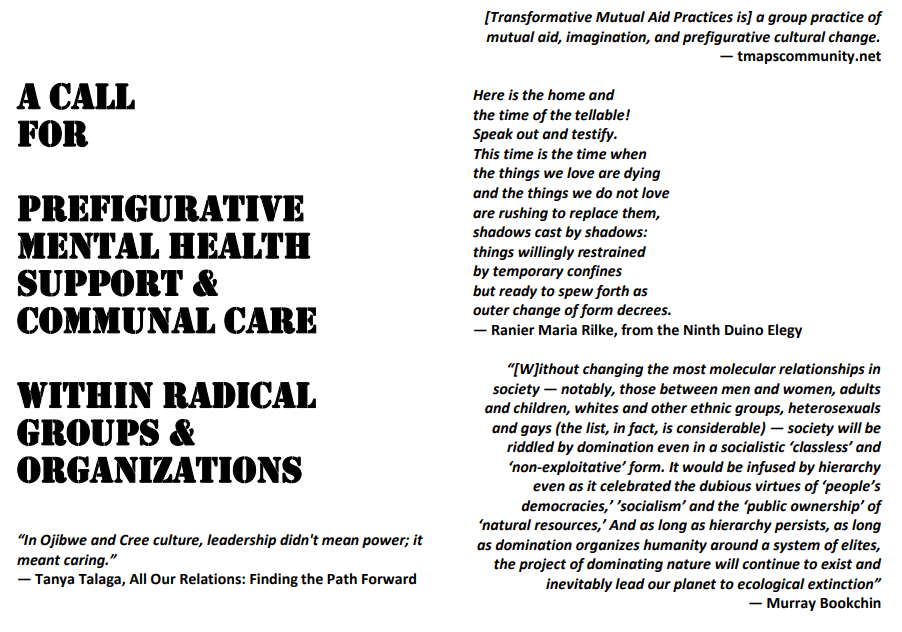
Without changing the most molecular relationships in society — notably, those between men and women, adults and children, whites and other ethnic groups, heterosexuals and gays (the list, in fact, is considerable) — society will be riddled by domination even in a socialistic ‘classless’ and ‘non-exploitative’ form. It would be infused by hierarchy even as it celebrated the dubious virtues of ‘people’s democracies,’ ‘socialism’ and the ‘public ownership’ of ‘natural resources.’ And as long as hierarchy persists, as long as domination organises humanity around a system of elites, the project of dominating nature will continue to exist and inevitably lead our planet to ecological extinction.
Toward an Ecological Society (1980). Murray Bookchin
Prefigurative mental health
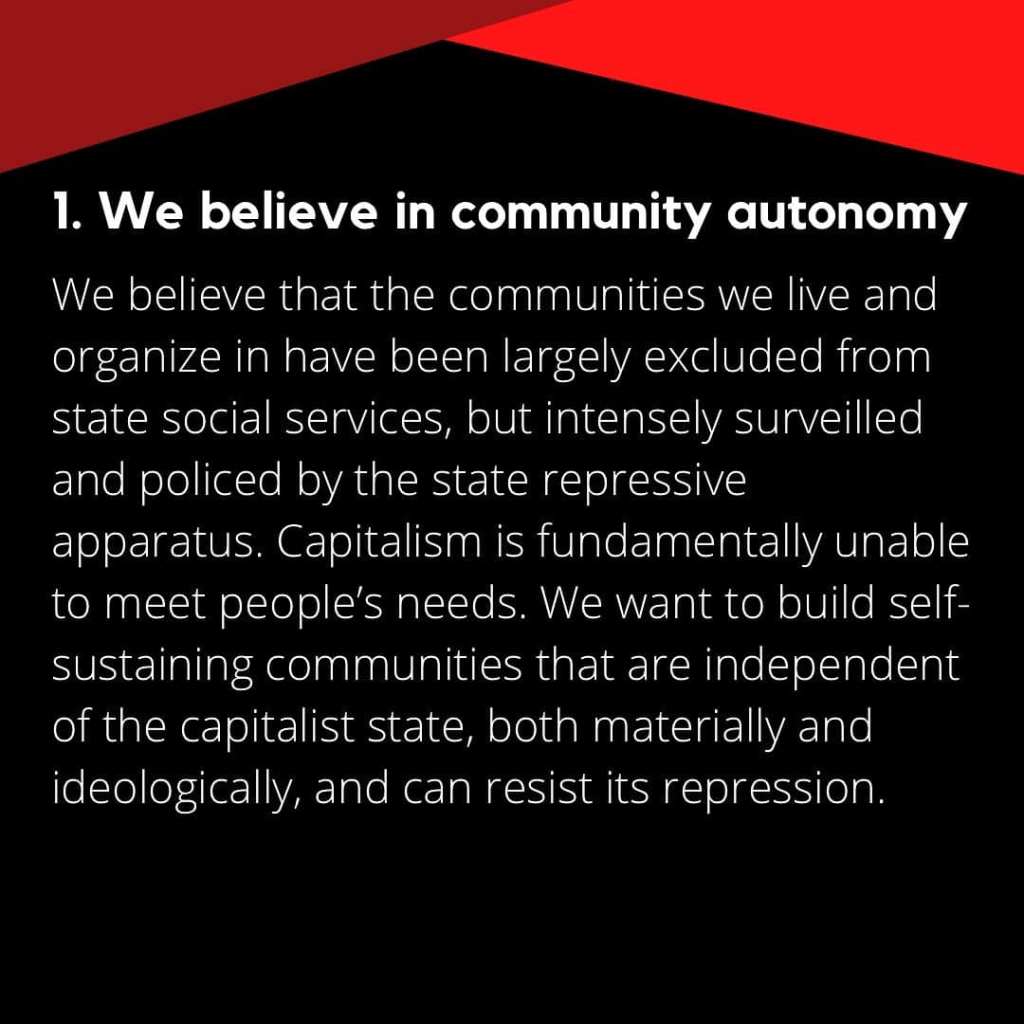
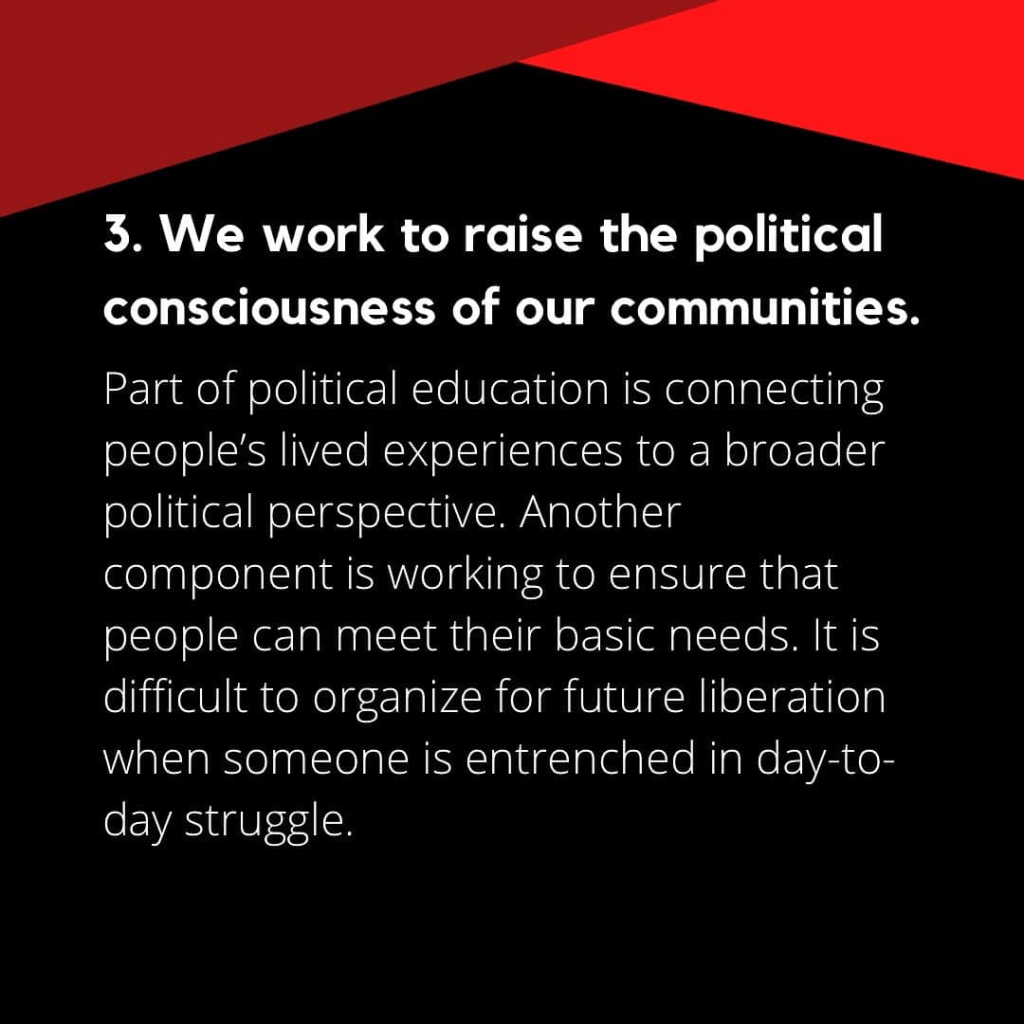
The zine below has a lengthy mental health and communal care-related list. Here are a few.
- Many of us experienced childhood and adolescent traumas and continue to experience traumas based on our individual intersectionalities
- We understand the mechanics of the harms and traumas inflicted by the prevailing social order’s oppressive and exploitative systems
- We must recondition ourselves towards caring for each other; communal care is ongoing radical action
- Alone we are vulnerable, but together we are strong; therefore, genuine community is paramount
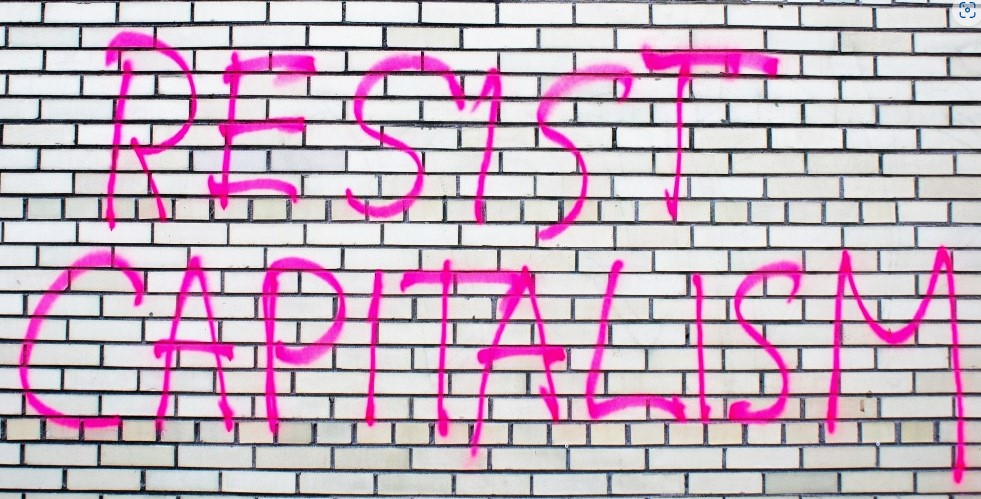
- We acknowledge that the architecture of capitalist society is colonizing white supremacy culture; it is an architecture of domination, abuse and exclusion
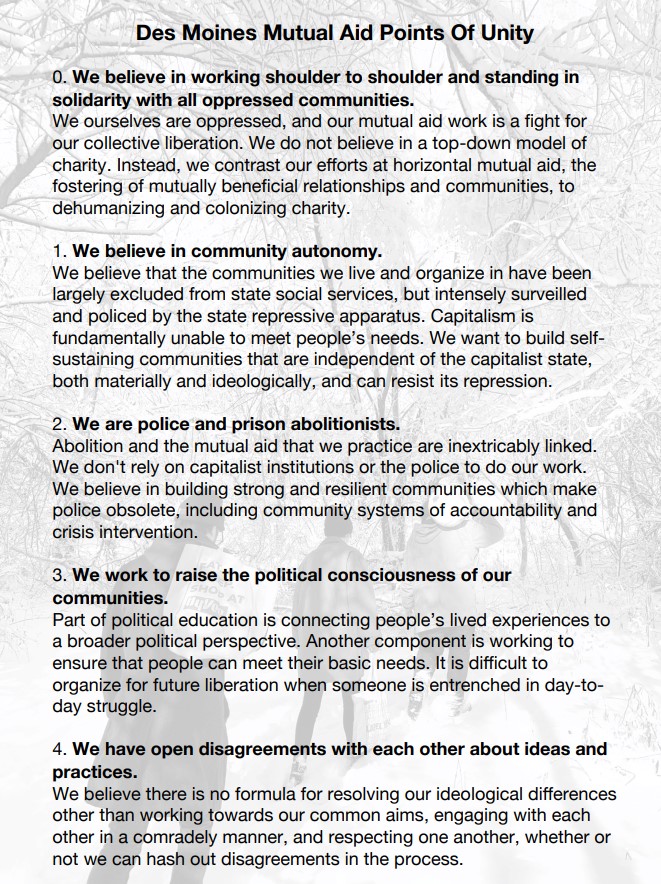
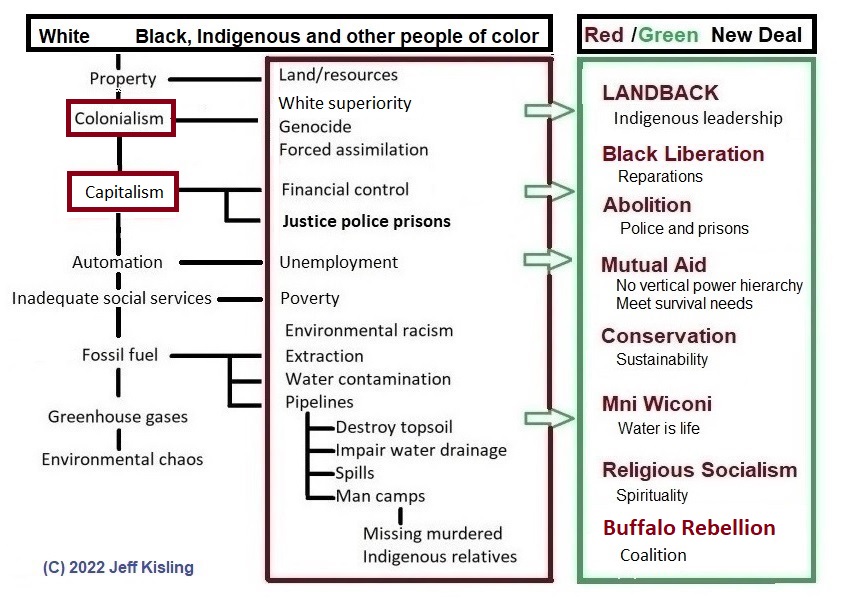
- We focus intensely on the concept and practice of mutual aid
- We endeavor to decolonize our thinking, group interactions, and architecture of group processes
- We center acting in solidarity across groups in ways that build unity through diversity
- We emphasize prefiguration within our organizations as necessary to counteract the abuses of prevailing society and manifest community and liberatory ways of being and living
- When we do not prefigure communal care into our group structures and routines, we unconsciously recreate the alienation, racism, homophobia and transphobia, hierarchical ableisms, and neuro-homogeneities of capitalist society, along with their negative effects
- If we don’t practice solidarity with our own comrades, we cannot expect to practice solidarity with others
- Knowing what we know about how prevailing society operates to oppress, exploit, and traumatize vulnerable people, a group or org that does not actively engage and support the mental and emotional wellbeing of its members is not revolutionary
- Many folx who show up to our groups do not stay because they sense the group is non-supportive or unsafe for their being
















 Quakers and Mutual Aid