Friends Committee on National Legislation

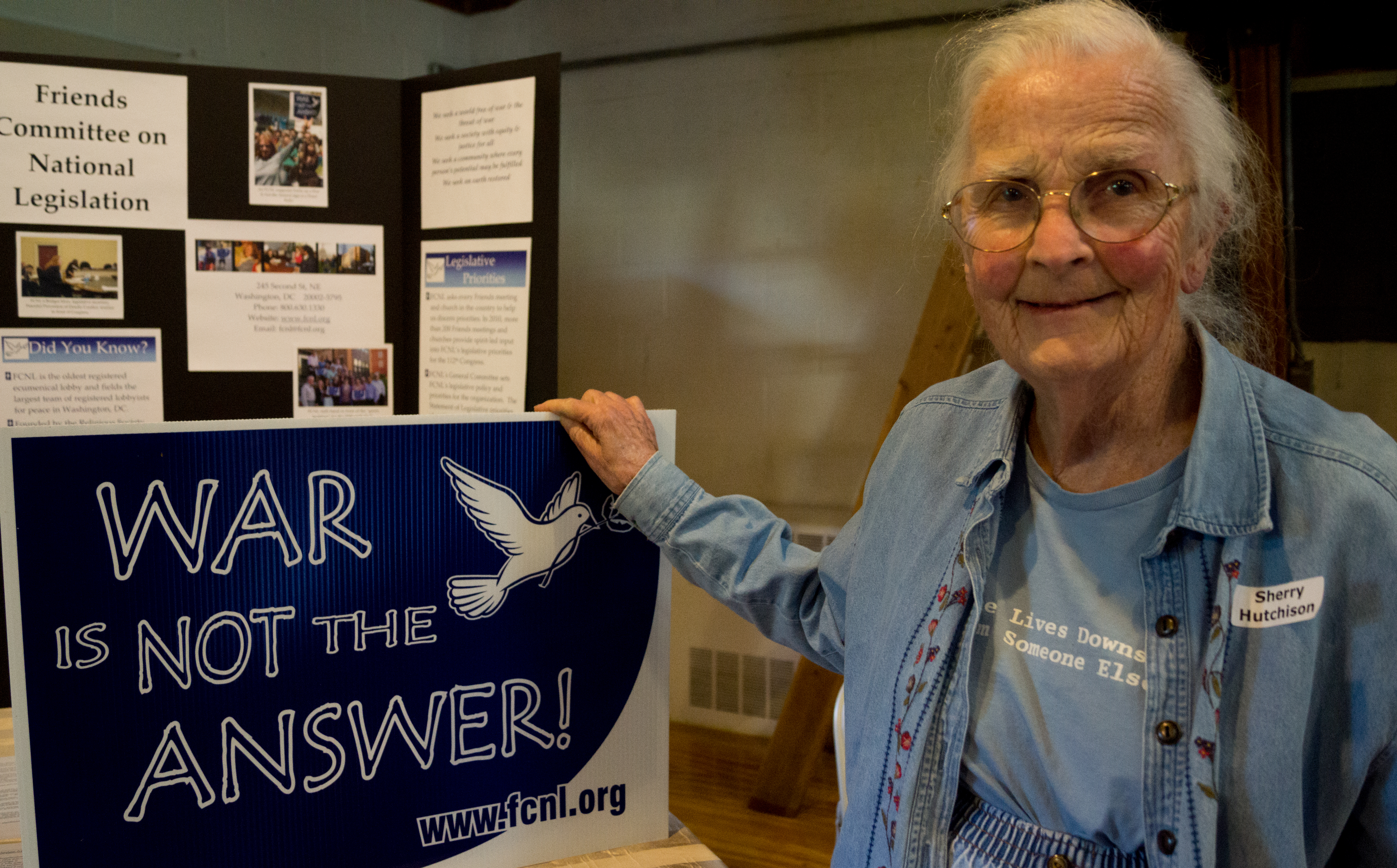
The Friends Committee on National Legislation (FCNL) is a national, nonpartisan organization that lobbies Congress for peace, justice, and environmental stewardship.

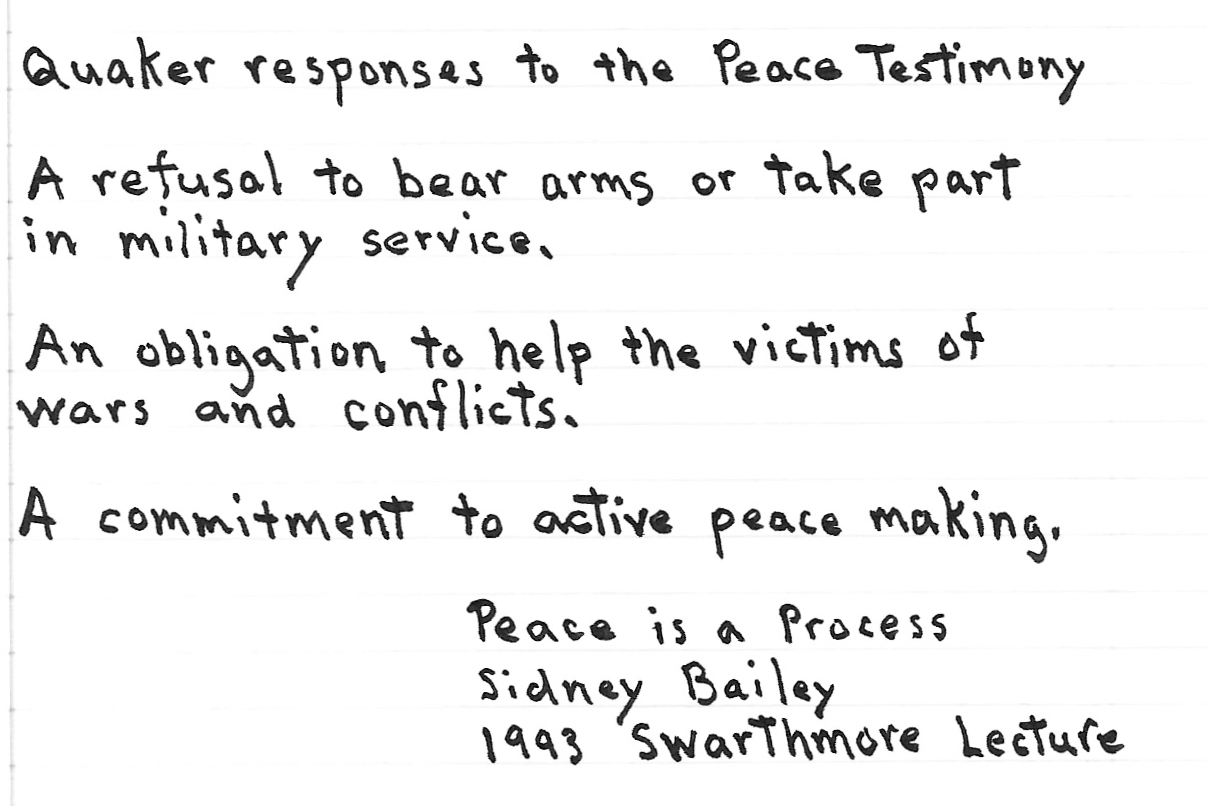
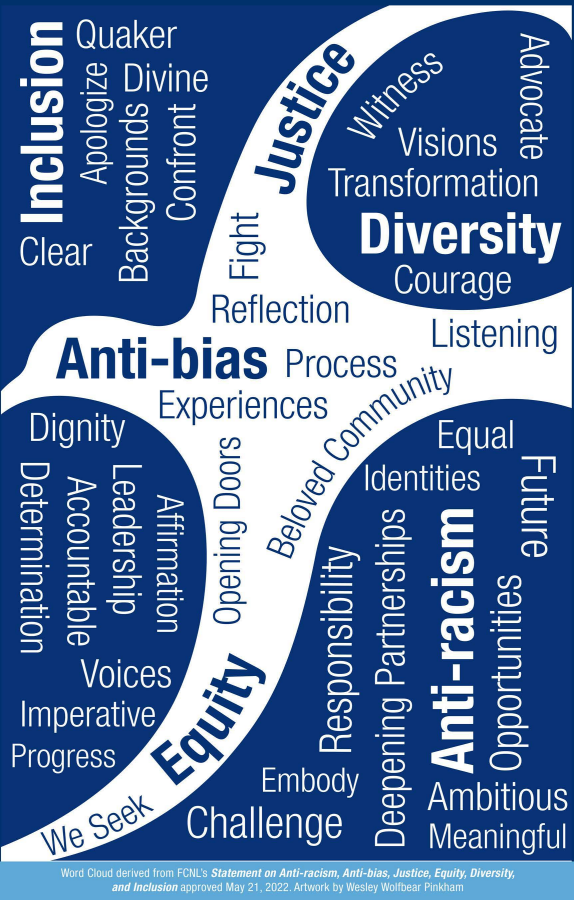
FCNL has an 80-year-old history of bringing the concerns of Quakers and Quaker meetings to the US Congress. The following four principles guide this work.

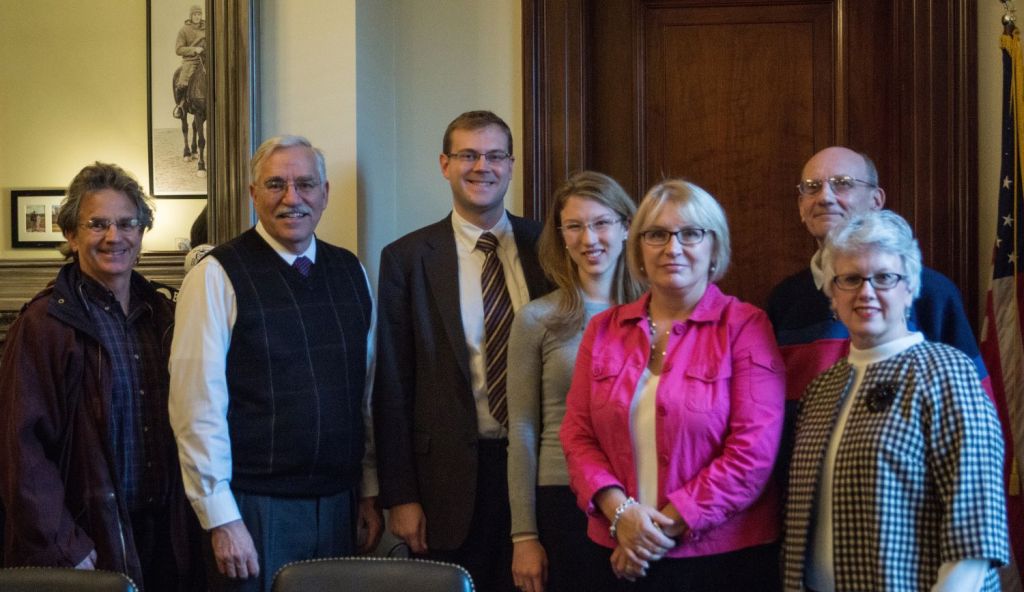
I have been blessed to be involved in the work of FCNL in a number of ways over the years. For nine years I was a member of the General Committee, which meets annually to help determine what priorities FCNL’s lobbyists should bring to Congress. One of the unique aspects of FCNL’s approach is to train Quakers and others how to lobby Congress themselves. I’m second from the right at this visit to a Congressperson’s office.

Training sessions for FCNL Advocacy are provided online monthly. The next session will be January 18, 2024. You can register here: Intro to Advocacy with FCNL


Following are several updates I’d like to share about FCNL’s work.


Addressing Patterns of Racial Wounding and Racial Justice in Quaker Communities

Join FCNL’s Lauren Brownlee and Zenaida Peterson, both members of the Steering Committee of the Quaker Coalition for Uprooting Racism, online for Pendle Hill’s First Monday lecture on Jan. 8, 2024.

Members of the Steering Committee of the Quaker Coalition for Uprooting Racism believed they had a responsibility to name the pain from patterns of white supremacy culture and racism that they have experienced, witnessed, and heard throughout the Religious Society of Friends and associated organizations. To that end, they created a guide with examples of harm and interventions towards racial justice. This guide, inspired by the work of Tema Okun and several Quaker institutions, points to the ways that they see white supremacy culture weaving its way into Quaker culture and suggests methods to disrupt it.

In this lecture, Lauren Brownlee and Zenaida Peterson will share ways that the guide has been and can be used in Quaker communities.

You can view that guide here: https://friendsgc.wpenginepowered.com/wp-content/uploads/2023/08/Racial-Wounding-and-Racial-Justice-In-Quaker-Communities-Guide.pdf

Register for the event here: https://pendlehill.org/events/addressing-patterns-of-racial-wounding-and-racial-justice-in-quaker-communities/


Virtual Witness Wednesday Silent Reflection

FCNL hosts a Virtual Witness Wednesday Silent Reflection. This event is in line with the Quaker practice of silent worship. It’s an opportunity for participants to join virtually via Zoom or by phone for a period of shared reflection.

I’ve been attending Witness Wednesday for several years, (including yesterday) and find it to be a powerful way to reflect on faith, peace, and justice work. I highly recommend it. Simply use this link to attend online any Wednesday at 4:15 pm Central time. http://fcnl.org/ww-stream


Spring Lobby Weekend

Spring Lobby Weekend brings hundreds of young adults to Washington, DC, where they learn about a specific issue, and then actually go to their Congressional offices to lobby related to that issue.

Several years ago my good friend Rezadad Mohammadi attended one spring lobby weekend. The next year he organized a group of fellow students at Simpson College to attend, successfully obtaining funding from the College to help with expenses. If you know of young adults who might be interested, please share this with them.

In March 2024, hundreds of young adults will gather again for Spring Lobby Weekend—our young adult advocacy conference and day of action. This year, we’ll be lobbying Congress to address the harmful legacy of the Indian Boarding School era.

We know that our strength comes from the stories we tell and the community we build, so we hope that you will join us March 16-19, 2024—in Washington, D.C. or online—to advocate for change!

Please check this page for more updates in the coming weeks. If you are not already signed up for our Young Adult Program updates, please sign up here to receive emails about Spring Lobby Weekend 2024.

https://www.fcnl.org/events/spring-lobby-weekend-2024


Reproductive Health Care and Abortion

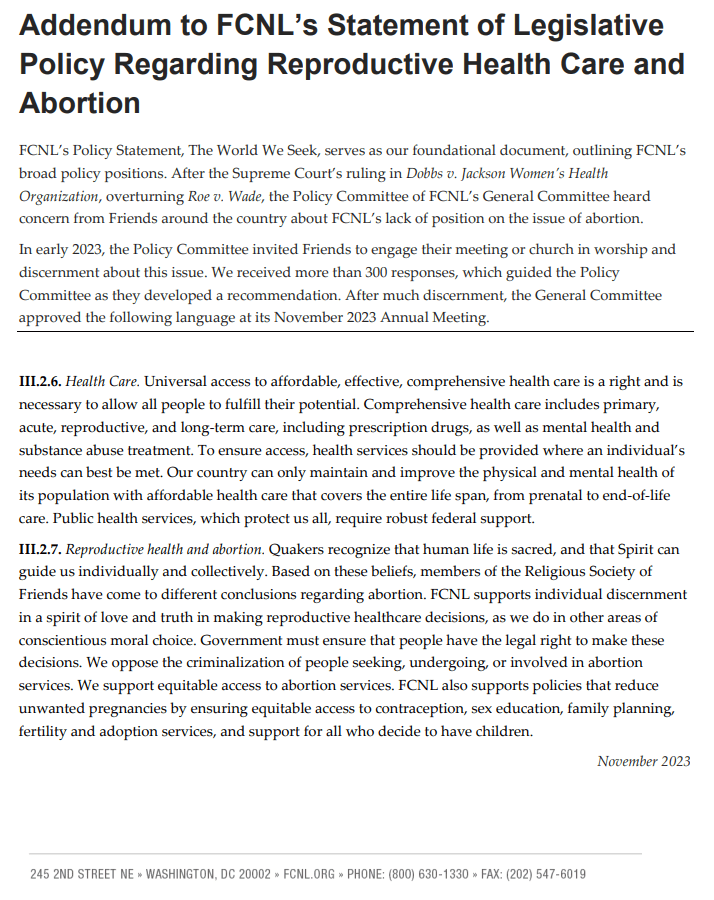
In an example of how FCNL engages with Quaker communities in this country, FCNL asked Quaker meetings about their views regarding reproductive health and abortion. This came about because there are different beliefs about abortion among Quakers, so FCNL did not have a policy related to that. But with the recent national debate about abortion, FCNL asked Quakers to share what they thought about this issue today. Following is the statement that came out of this national discussion among Quakers.

The War in Israel-Palestine

Working for peace has always been a fundamental belief among Quakers. “We seek a world free of war and the threat of war” is one of the guiding principles of FCNL.

We are heartbroken by the violence in Israel and Palestine. As Quakers, we deeply mourn the loss of all lives and pray for those who have lost loved ones due to this latest escalation. We unequivocally condemn Hamas’ attacks and inhumane treatment of civilians and call for the release of all hostages. We also condemn Israel’s indiscriminate bombing of Gaza that has claimed thousands of civilian lives. More war and weapons won’t bring peace. In the face of growing violence, lawmakers must push for a permanent ceasefire and address the root causes underlying this explosion of violence.

https://www.fcnl.org/issues/middle-east-iran/israelpalestine/israel-palestine-war

Following is a statement calling for a ceasefire from the national Quaker organizations.

https://www.fcnl.org/sites/default/files/2023-10/quaker-statement-10-17-23.pdf

Indigenous Land Acknowledgement

As we bear witness and lobby in solidarity with Native Americans, we also honor the Nacotchtank tribe on whose ancestral land the FCNL, FCNL Education Fund, and Friends Place on Capitol Hill buildings stand. They are also known as the Anacostans, the Indigenous people who lived along the banks of the Anacostia River, including in several villages on Capitol Hill and what is now Washington, D.C. By the 1700s, the Nacotchtank tribe had merged with other tribes like the Pamunkey and the Piscataway, both of which still exist today.

Peace on Earth?

Glory to God in the highest, and on earth peace, good will toward men.

Luke 2:14

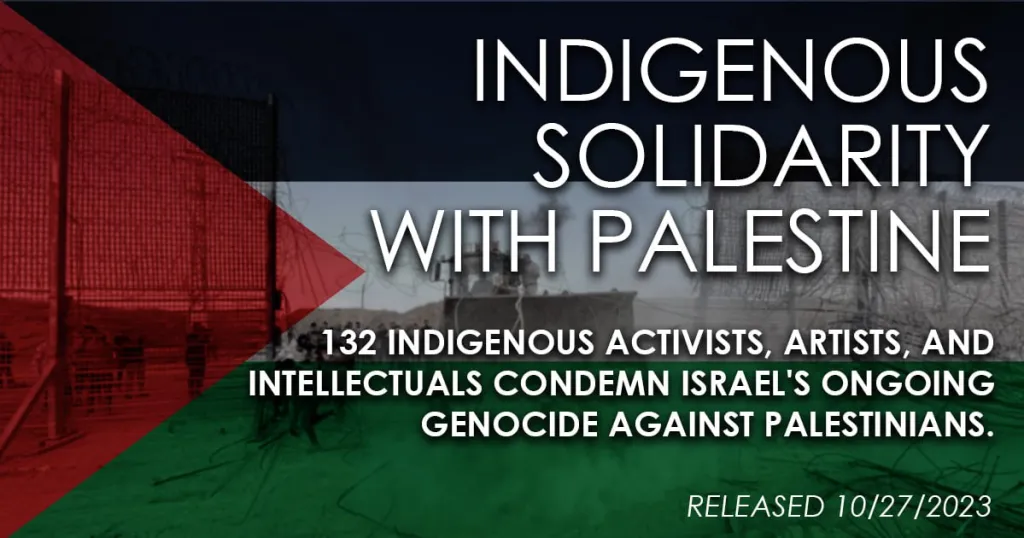
I am deeply distressed by the dichotomy between ‘peace on earth, good will toward men’ and the blatant opposition to that by the forces of global dominance. I cannot fathom the massacre in Gaza and the silence of the people in this country. The overwhelming majority of people in other countries are not silent.

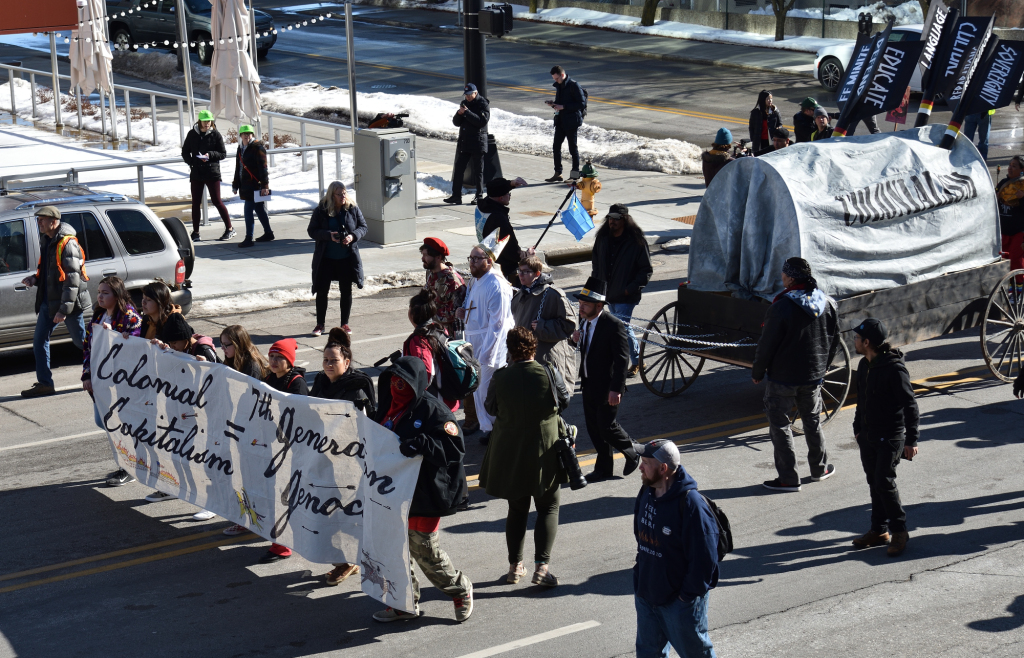
This has been the pattern that began when the Europeans landed. The enslavement of those brought here from Africa continues with economic injustice and mass incarceration. White settler colonialism continues as Indigenous lands remain occupied today.

The rapid rise of authoritarianism is the next stage of dominance over us all.

The silence is astounding.

That silence is ruthlessly enforced, not only against opposition to war but also for the rape of Mother Earth. Or for a reckoning about past injustices such as the Indian schools of forced assimilation or structural racism.

I told my Quaker meeting I have this sense of being threatened by simply writing about these things. Which is proof that authoritarianism is working. Quelling dissent. I wonder if I might be imprisoned one day.
All we are saying is give peace a chance.

John Lennon

The message of Christmas has traditionally involved prayers for goodwill toward all and “peace on Earth,” but through their opposition to ceasefire in Gaza, most Western Christians are affirming the opposite values: that violence, weapons and destruction are the only response to real and perceived enemies.

The U.S. Christian Palestinian communities that I am a part of are truly puzzled at the behavior of the many Western Christians who seem to see no dissonance between the message of love and peace that is at the heart of our shared religion, and their backing for Israeli’s military assault against Palestinian civilians, which has killed more than 20,000 people in Gaza alone within the last three months.

Anytime an attack occurs, or lives are lost, we are called to choose between two worldviews in our response. One worldview holds that violence, bombings and brutal force is the only method available and should be pursued relentlessly until the enemy is vanquished, regardless of the cost in lives and destruction for civilians on both sides.

But an alternative worldview insists on the way of peace, reconciliation, justice and tolerance.

Christmas Wishes for “Peace on Earth” Are Empty Without Ceasefire in Gaza. How can so many US Christians sing “peace on Earth” without opposing US support for the genocide unfolding in Gaza? By Jonathan Kuttab , TRUTHOUT, December 25, 2023

United States diplomats once again held up a vote on a watered-down United Nations Security Council resolution on Wednesday aimed at bringing more aid and relief to civilians in the besieged Gaza Strip as reports of starvation, mass killings, and other war crimes allegedly committed by the Israeli military continue to pile up.

Despite massive international support for a ceasefire at the UN, on December 8, the U.S. blocked a previous attempt by the Security Council to leverage international law and secure a humanitarian ceasefire so more aid can enter Gaza.

Allegations of Israeli War Crimes Grow as US Again Delays Security Council Vote. UNICEF has declared Gaza to be the “world’s most dangerous place to be a child.”
By Mike Ludwig , TRUTHOUT, December 20, 2023

Now shall I walk, or should I ride?

My friends at the Great Plains Action Society (GPAS) have done a lot of work to call out the whitewashed history of Thanksgiving, one of many colonial mythologies about Indigenous Peoples and the founding of the US and Canada, which I wrote about yesterday.
But of course, there is nothing wrong with reflecting on what we are thankful for.

I am grateful for many things.

My first thought went to something I recently heard someone say. That he was a draft resister in the Vietnam War era, and that was the best thing he’d ever done. I was astonished to hear that fifty years later. I know what he was saying because I was a draft resister then, as well. As an 18-year-old, I knew this decision would set the course of my life. It would be easy to accept conscientious objector status and do two years of alternative service. Fortunately, though, I was aware of the stories of many Quaker men I knew who refused to participate in the war machine. Knowing they risked imprisonment and often were. But I saw how that choice defined the rest of their lives.

It was a clear choice that Robert Frost’s poem, The Road Not Taken, tells so eloquently.

At that same time, I found I had another decision to make. Moving to Indianapolis, I was horrified by the noxious clouds of smog pouring from every tailpipe; this was before catalytic converters covered up the damage being done to Mother Earth. I made another decision that was definitely a road less traveled (so to speak): to live without a car. That was another of the best decisions of my life, defining so much of what happened thereafter. Affecting every day of my life as I was able to witness the wonder of what I was walking through.

So the phrase ‘Now shall I walk, or shall I ride?’ in Metaphors of Movement caught my attention.

The Best Friend

Now shall I walk
Or shall I ride?
“Ride”, Pleasure said;
“Walk”, Joy replied.

William Henry Davies
1871 – 1940

In his 1914 poem The Best Friend, the Welsh poet and occasional vagabond W.H. Davies pondered a timeless question: “Now shall I walk, or should I ride?” This seemingly simple dilemma encapsulates the modern industrial choice between slow-paced ageless wandering on foot or embracing the thrill of motorized transport, along with the attendant speed and freedom it offers, which has become such an integral part of our contemporary lifestyle. It likewise speaks volumes about us and about the nature of the choices we make daily.

Gone perhaps are the days of poetic musings over the merits of walking versus riding. Yet one can’t help but wonder if we have lost something essential along the way—a connection with the world that only a leisurely walk can provide.

C.S. Lewis, while growing up in the outskirts of Belfast, Northern Ireland, counted it among his blessings that his father had no car, so the deadly power of rushing about wherever he pleased had not been given to him. He thus measured distance by the standard of a man walking on his two feet and not by the standard of the internal combustion engine, for it is here where both space and time is annihilated by the deflowering of distance. In return, he possessed “infinite riches” in comparison to what would have been to motorists a “little room.” Key to those riches was what he came to call, and experience throughout life as, “joy,” and walking became a portal through which he sought it. A participatory engagement with life and living which I contend is as vital to our survival as breathing itself. 

Metaphors of Movement by Keith Badger, Parabola, Nov 22, 2023


I hope that in this year to come, you make mistakes. Because if you are making mistakes, then you are making new things, trying new things, learning, living, pushing yourself, changing yourself, changing your world. You’re doing things you’ve never done before, and more importantly, you’re doing something.

Neil Gaiman

The Road Not Taken

Two roads diverged in a yellow wood,
And sorry I could not travel both
And be one traveler, long I stood
And looked down one as far as I could
To where it bent in the undergrowth;

Then took the other, as just as fair,
And having perhaps the better claim,
Because it was grassy and wanted wear;
Though as for that the passing there
Had worn them really about the same,

And both that morning equally lay
In leaves no step had trodden black.
Oh, I kept the first for another day!
Yet knowing how way leads on to way,
I doubted if I should ever come back.

I shall be telling this with a sigh
Somewhere ages and ages hence:
Two roads diverged in a wood, and I—
I took the one less traveled by,
And that has made all the difference.

Robert Frost

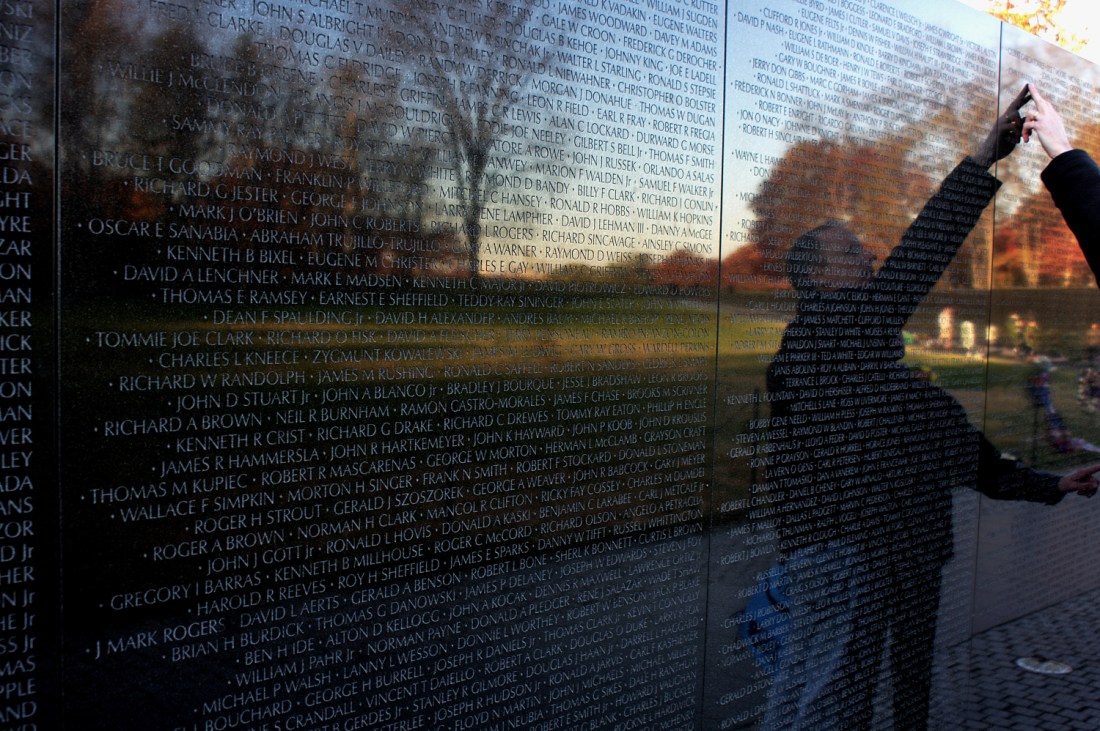
Vietnam War Memorial, Washington, DC (c) 2023 Jeff Kisling

This is a link to my photos of the Vietnam War Memorial. https://jeffkislingphotography.wpcomstaging.com/2023/11/17/washington-dc/nggallery/washington-dc/vietnam-war-memorial

Why I’m going to stop publishing in Quaker spaces

Rather than just leaving Quaker spaces, I’m led to share some reasons.

I didn’t learn much from over fifty years of trying and failing to convince Friends and others to reject the automobile culture. I don’t regret writing almost daily about that and similar things. Writing is a tool that helps me make sense of the world. I’ve never worried about anyone else seeing what I wrote.

The same is true for the past decade’s work to stop the construction of fossil fuel pipelines and related environmental and justice concerns.

I’m forced to realize writing, and public vigils aren’t enough to convince people to change. That only happens from a person’s own lived and spiritual experiences.

I am so blessed to have been led to be part of communities of people of color, Indigenous friends, and those who are building and living in Mutual Aid communities. I wish I could share what I’ve learned in all those places with my White Friends in a way that would be useful to them. I tried to do that with writing, but that wasn’t enough.

Quakers believe how we live our lives should be our example to the world. I’ve tried to be faithful in doing that.

The following is a Link Tree with links to most places where I publish things. The reason for so many is the variety of audiences/subject matter for each link. If you’re interested, I still plan to share writings and photography in most of those places.

You need to go here for the tree with the working links. https://linktr.ee/jeffkisling

https://linktr.ee/jeffkisling

FCNL’s “Calling for a Ceasefire: Israel-Palestine Briefing”

Over one thousand people registered for FCNL’s “Calling for a Ceasefire: Israel-Palestine Briefing” held last night.

I encourage you to watch the powerful and informative briefing recording below. FCNL’s General Secretary, Bridget Moix, led the discussion with three panelists: Joyce Ajlouny, AFSC General Secretary; Odeliya Matter, FCNL program assistant for the Middle East Policy team, and Hassan El-Tayyab, FCNL’s Legislative Director for Middle East Policy.


As you heard this evening, our collective advocacy is working to shift the conversation and open up space for calls to end the violence. But we need your help to continue building momentum for a ceasefire to protect the lives of Palestinian civilians and Israeli and other hostages. We also need your help to ensure that humanitarian aid can reach those in dire need.

Take Action

What Actions Will You Take?

Please click the link below to tell us what action(s) you want to take and what kind of support (if any) you need. Your voice is vital to us as we continue to advocate for a ceasefire. You can also email us at Lobby@fcnl.org.

Sincerely,
Bridget Moix
General Secretary


The U.S. Must Act to De-Escalate the Violence in Israel and Palestine

51856 actions taken

We are heartbroken by the recent violence in Israel and Gaza. As Quakers, we deeply mourn the loss of all lives and pray for those who have lost loved ones due to this latest escalation. We unequivocally condemn Hamas’ attacks and inhumane treatment of civilians and call for the immediate release of all hostages. We also condemn the indiscriminate and violent Israeli response that has already claimed hundreds of civilian lives.

More war and weapons won’t bring peace. In the face of growing violence, lawmakers must:

  • Work to de-escalate this situation by calling for restraint, ceasefire, de-escalation, and respect for international law.
  • Protect lives—those of the Israeli hostages and the roughly 1 million children who live in Gaza.
  • Address the root causes underlying this explosion of violence, including decades of institutionalized oppression and collective punishment of Palestinians through brutal military occupation and a 16-year Gaza blockade.

Urge Congress to call for an immediate ceasefire, de-escalation, and restraint to prevent further civilian harm in Israel and the occupied Palestinian territories.

Friends Committee on National Legislation


Transcript of the video above, FCNL: Calling for a Ceasefire: Israel-Palestine Briefing.


Asking the right questions

Today there is a lot of attention on what were called the Indian Boarding Schools in the U.S. and Canada. This is in large part because of the uncovering of remains of children on the grounds of many of those institutions using ground-penetrating radar. These searches began in order to document the known history of native children dying or being killed at these schools. Thousands of remains have been found, and the searches continue.

Stories about this are beginning to be told in many mainstream news articles, films, and books.

The National Native American Boarding School Healing Coalition (NABS) is an excellent source of information.

The New York Times recently published this extensive multimedia story, ‘WAR AGAINST THE CHILDREN’. The Native American boarding school system — a decades-long effort to assimilate Indigenous people before they ever reached adulthood — robbed children of their culture, family bonds and sometimes their lives. By Zach Levitt, Yuliya Parshina-Kottas, Simon Romero and Tim Wallace, The New York Times, Aug. 30, 2023

The Department of the Interior is investigating under the leadership of Secretary Deb Haaland, an enrolled member of the Laguna Pueblo.

Quaker Indian Boarding Schools

This is causing a lot of soul-searching in Quaker communities because some of those institutions were run by Quakers. My friend Paula Palmer published the article Quaker Indian Boarding Schools. Facing Our History and Ourselves, in Friends Journal, October 1, 2016

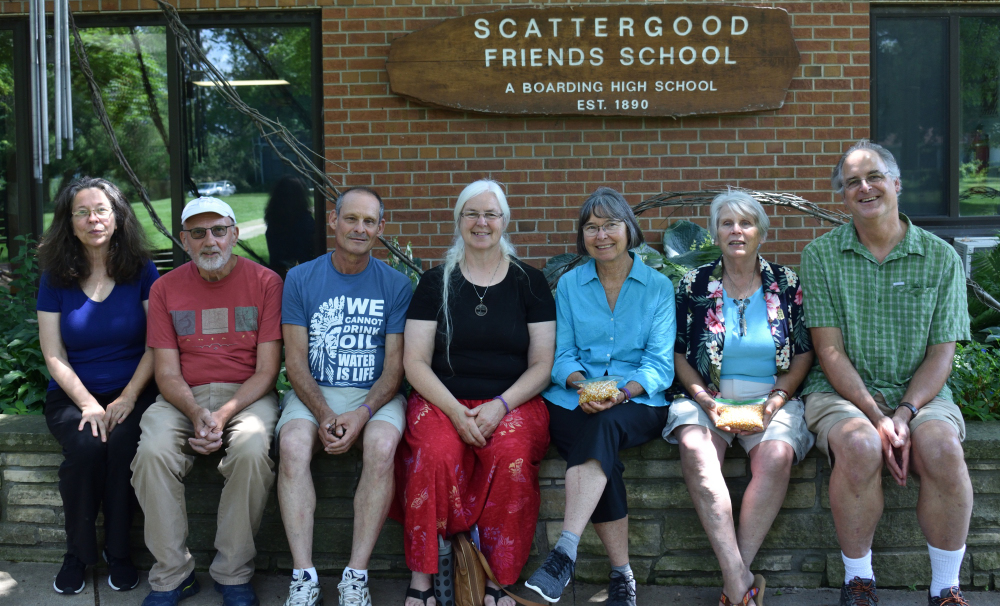
In this image at Scattergood Friends School are those of us who helped Paula Palmer (third from the right) give presentations and workshops related to her work, Toward Right Relationship with Native Peoples.

I was ignorant of this history until about a decade ago. But since then, this has become a focus of my prayers and work. I’ve written a lot about what I’ve been learning. https://quakersandreligioussocialism.com/forced-assimilation/.

I’ve sought opportunities to find ways to build relationships with Indigenous people because we cannot begin to heal until we all come together and begin to know one another. This is a list of what I have learned from spending time in Black, Indigenous, and other people of color (BIPOC) communities. Offered in the hope that many more people begin to make these connections.

This takes a real commitment to spend a lot of time in diverse communities. Until I recently moved from Iowa, I joyfully participated in our (Des Moines Mutual Aid) free food project every Saturday morning for over three years. Over that time I heard every one of my friends say these Saturday mornings were the highlight of their week. Every person became a close friend.

This takes a real commitment to keep showing up, even when we make mistakes, which I did, and you undoubtedly will. But showing our vulnerabilities is an important part of building trust. Showing we are willing to risk awkwardness.


How do we decolonize ourselves?

During a recent discussion, a Friend asked, how do we decolonize ourselves? I believe this is one of the right questions to ask. This changes the focus from what our ancestors might have done and directs it to “what we can do now?” The question correctly begins from the point that we are colonized.

Decolonizing Quakers

A group of North American Friends, Decolonizing Quakers explores these questions and offers resources for our education.

The Stories We Weren’t Told

Many Quakers have learned that our Quaker ancestors and predecessors had good relationships with the Indigenous peoples who were on this continent when Quakers arrived from England and other European lands. We have read about how William Penn was respectful of the Native people and offered to pay “rent” for the land occupied by the new settlement that became Philadelphia. We have heard about Quaker missionaries who went out to “help” Native children learn the ways of European Christians.

There are threads of truth in these stories and others that we tell ourselves, but those small threads are too weak to tie together a benign story. As we look with open eyes at the history that white, European, Christian settlers and Indigenous peoples walked through since the time of “first contact,” we can’t help but see a different picture. In truth, we must acknowledge that Quakers participated in — and sometimes led — attempts to force Indigenous people to assimilate into an inflexible mold that fit the vision that Quakers shared with other white, European, Christian settlers.

This website offers resources to help all of us set aside the myths that come between us — as settlers and Indigenous peoples –and to find joy in knowing all our relatives better and more honestly.

Decolonizing Quakers https://www.decolonizingquakers.org/

Mutual Aid is a way to decolonize ourselves

A fundamental part of the answer to how we can decolonize ourselves is to understand that colonization is a hierarchy of power. In the simplest terms, in our society, White supremacy. To decolonize ourselves, we must work to eliminate hierarchies and their resulting power structures.

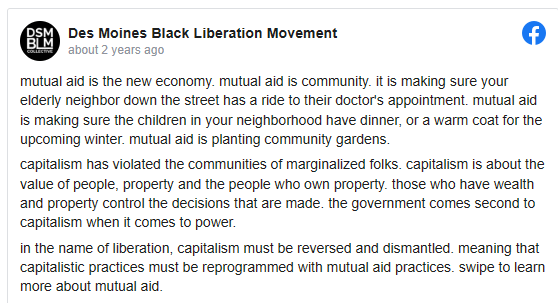
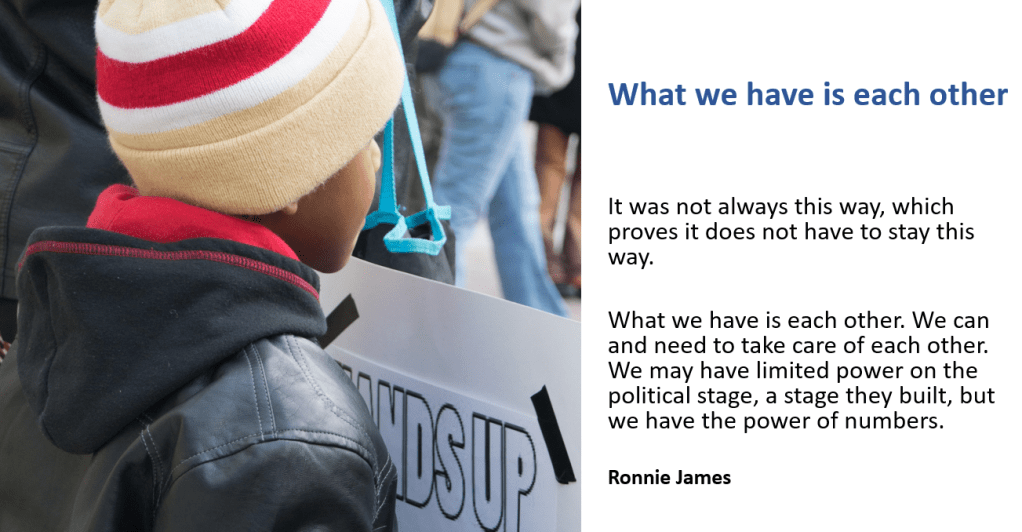
It was a leading of the Spirit that connected me with Ronnie James, an Indigenous organizer who is part of the Great Plains Action Society (GPAS) nearly four years ago. His work on Mutual Aid is supported by GPAS. Mutual Aid is a key method of the Great Plains Action Society’s Mechanism of Engagement. (https://quakersandreligioussocialism.com/mutual-aid/)

There is often a tepid response when I talk about Mutual Aid. The key to understanding the radical nature of Mutual Aid is showing this is not just another social justice idea. Mutual Aid is a fundamentally different way to live and relate to each other. There are hierarchies in even the most progressive organizations. Which means they perpetuate dominance, which leads to oppression.

Mutual Aid is a total break from that. It is a revolutionary way to be.


In the Midwest you can find information on the Iowa Mutual Aid Network website: https://iowamutualaid.org/

Origins of T-MAPs

As global chaos erupts in so many ways and places, I feel pressure (on myself) to write about that, as I would have in the past.

(There is information below about a Friends Committee on National Legislation event, Calling for a Ceasefire: Israel-Palestine Briefing.)

Instead, I’m led to continue to write about transformative mutual aid practices (T-MAPs) because we need to support each other, especially in perilous times like these.


T-MAPS and Mutual Aid

Some time ago, at our Des Moines Mutual Aid food project, one of my friends asked how I was doing. Which turned into an opportunity to share about T-MAPs. She agreed that no one asks how those of us doing justice work are doing. At least, no one outside our Mutual Aid community, where checking in with each other is an important part of our work together.


The Icarus Project

T-MAPs was originally dreamed up in the early years of The Icarus Project (TIP), a community of people working at the intersection of mental health and social justice. Over the years, TIP has created peer-based mental health support groups, alternative publications and educational resources, and new language outside the conventional “mental illness” paradigm. One tool developed by TIP, which has partly inspired T-MAPs, is called Mad Maps. Mad Maps began as creative and supportive conversations on the Icarus website about strategies for friends and strangers to communicate about how to take better care of each other. Mad Maps has evolved into a set of guides on navigating different topics like intergenerational trauma and madness and oppression.

https://tmapscommunity.net/the-origins-of-this-tool/

The Icarus Project is now the Fireweed Collective.

Fireweed Collective offers mental health education and mutual aid through a Healing Justice and Disability Justice lens. We support the emotional wellness of all people and center QTBIPOC folks in our internal leadership, programs, and resources.

Our work seeks to disrupt the harm of systems of abuse and oppression, often reproduced by the mental health system. Our model for understanding ‘severe mental illness’ is community and relationship-based and divests from the prison industrial complex and psych wards.

Healing Justice (HJ) is a framework rooted in racial justice, disability justice, and economic justice. Healing Justice provides us with tools we can use to interrupt the systems of oppression that impact our mental health. Fireweed Collective uses HJ as a guide to help redefine what medicine is, and increase who has access to it.

We are honored to be a part of a larger community of organizations guided by the  principles of Healing Justice:

  • responding to and intervening in generational trauma and violence (Kindred)  
  • collective practices that can impact and transform the consequences of oppression (Kindred)
  • imagining a generative and co-created future (Healing By Choice!)
  • being in right relationship with ourselves, each other, and the land (Healing By Choice)
  • centering disability justice, people of color, and economic justice (Leah Lakshmi Piepzna-Samarasinha’s history of healing justice)
Fireweed Collective

Calling for a Ceasefire

Yesterday, at our weekly FCNL Witness Wednesday Silent Reflection, we considered the following:

Prompt:
“An individual has not started living until he can rise above the narrow confines of his individualistic concerns to the broader concerns of all humanity.”
– Martin Luther King, Jr.

Query:
How can we best serve as witnesses and holders of humanity in times of great and increasing pain? How can we witness and hold joy and solidarity in moments of humanity’s grief?

You can join this weekly reflection at 4:15 pm Central time here:  fcnl.org/ww-stream

Calling for a Ceasefire: Israel-Palestine Briefing

When:Wednesday, October 25, 6:30 PM Eastern

In war, civilians always pay the highest price. As the crisis in Israel and Palestine deepens following the attack by Hamas on Israel and Israel’s retaliatory violence, our voices are needed.

As Quakers and advocates for peace, we have an important role to play in advocating for a ceasefire to prevent the tragic loss of more innocent Palestinian and Israeli lives. On Oct. 25, we will gather as a community in grief and action. Join FCNL’s Bridget Moix, Hassan El-Tayyab, and Odeliya Matter, and Joyce Ajlouny, General Secretary for the American Friends Service Committee, for insights into what is happening in Israel-Palestine, the response from U.S. lawmakers, and what we can do as advocates to respond.

https://act.fcnl.org/event/quaker-welcome-center-events-watch-home/3221/signup/


Quaker organizations call for a ceasefire and humanitarian protections in Gaza

The American Friends Service Committee, Canadian Friends Service Committee, Friends Committee on National Legislation, Quakers in Britain, and the Quaker United Nations Office call for a ceasefire and humanitarian protections in Gaza

Rethinking the Hero’s Journey

It’s difficult to not feel overwhelmed and deep despair. On top of everything else, it looks like a global civil war erupting between supporters of Israel and those of Palestine. I hope those reports are exaggerated. It’s hard to trust any type of media these days.

Although it might not seem much compared to living without food, water, shelter, power, and constant bombardment, awaiting a ground invasion, I’m deeply concerned about my friends and neighbors. For a long time, I’ve been aware of the impact of our own traumas. Isolation, increased rates of suicide, and giving up. There is a sense that things will only get worse on multiple fronts.

There are the usual calls to contact our Congresspeople, but they can’t even organize themselves, let alone listen to us.

I’ve been intrigued by this recent post, White men’s roles in anti-racism work: Rethinking the Hero’s Journey, Healing Minnesota Stories, Sept 25, 2023. The blog’s main author is Scott Russell, so I assume he wrote this.

He begins by saying “This essay is written for white men written by a white man. It’s a working draft. Comments welcome.” Keeping that in mind, I believe there are things he says that can be helpful to a broader audience, for those of us who struggle to find ways to work for justice. Who feel there isn’t anything we do that might make a difference.

The struggle to end racism and white supremacy is heroic work, but where do white men fit into the movement?

White men are at the top of the white supremacy hierarchy. It shouldn’t be surprising if some Black, Indigenous, and other people of color (BIPOC) don’t trust us.

Some might reasonably worry that asking white men to be heroes in this work would trigger ‘White Savior’ behavior, where a white man acts from a presumed position of superiority to “rescue” BIPOC.

That would be a big step in the wrong direction.

More white men are needed in the struggle against racism. I believe we can be anti-racism heroes, but it means undoing old programming and rethinking what it means to be a hero.

White men’s roles in anti-racism work: Rethinking the Hero’s Journey, Healing Minnesota Stories, Sept 25, 2023

The Hero’s Journey

I am trying to wake up to ways that my culture – including white supremacy and patriarchy – has shaped me, a white man born in the late 1950s. Growing up, I read comic books – Batman, Superman, Spiderman, Flash, the Green Lantern and more. I watched Gunsmoke on TV, in which Marshall Matt Dillon single-handedly dealt with the violence of the Old West.

They informed my understanding of a hero as a lone actor who rarely if ever asked for help.

These stories have a hallmark of white supremacy: Individualism.

In the end, it’s about one lone white guy (or white Hobbit) accomplishing a seemingly impossible task. In the three stories above, they save humanity.

Those stories have the hallmark of white supremacy: Individualism.


Rethinking the Hero’s Journey

The hero often doesn’t realize they need a challenge. Thus, they don’t know they must search for their own challenge. They need to be aware of friends and mentors who can shed some light and point them on a new path. This path has different challenges: more self awareness, self control, and compassion.

Who is a hero in this context? Someone who faces the truth, stays grounded, and doesn’t let himself get lost in either self criticism or defensiveness.

A hero takes risks, and has the integrity to admit mistakes.

I aspire to talk less and listen more.

A hero is humble.

Finding your power

The message of that blog post, the message I want to share with you, is we need to find where our particular talents connect with the justice work. This work is difficult enough to do without forcing yourself to do things you think you should do, but don’t excite you.

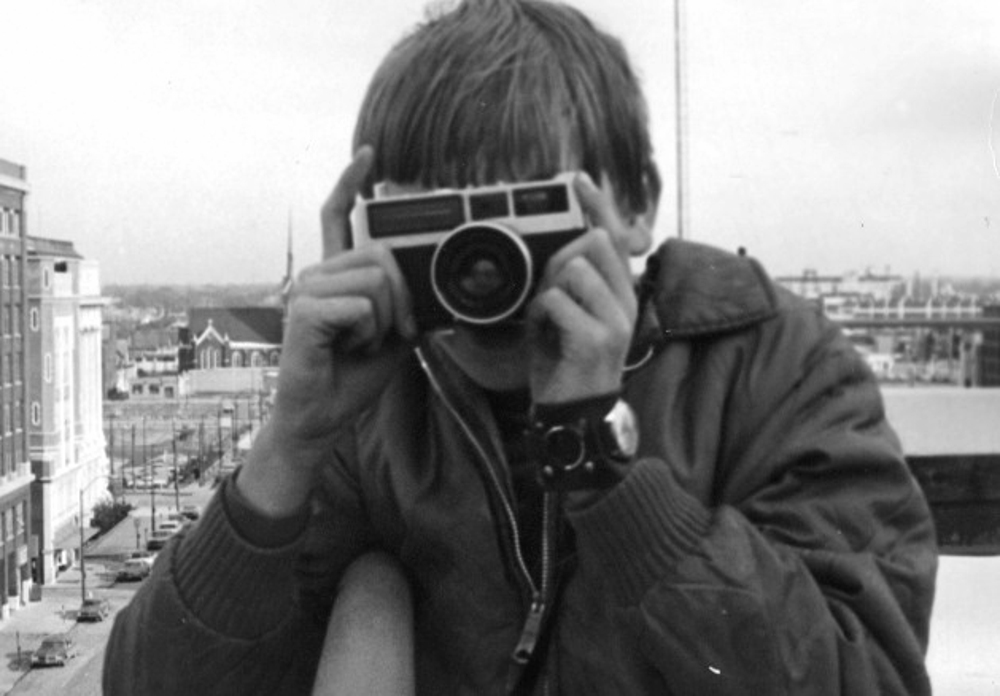
I was blessed to discover this early in my justice work, though it took some time to realize it. In my case, my passion is photography. In the PDF file below I go into this in great detail. But to summarize:

  • I learned how to work in a photographic darkroom while in high school, Scattergood Friends School
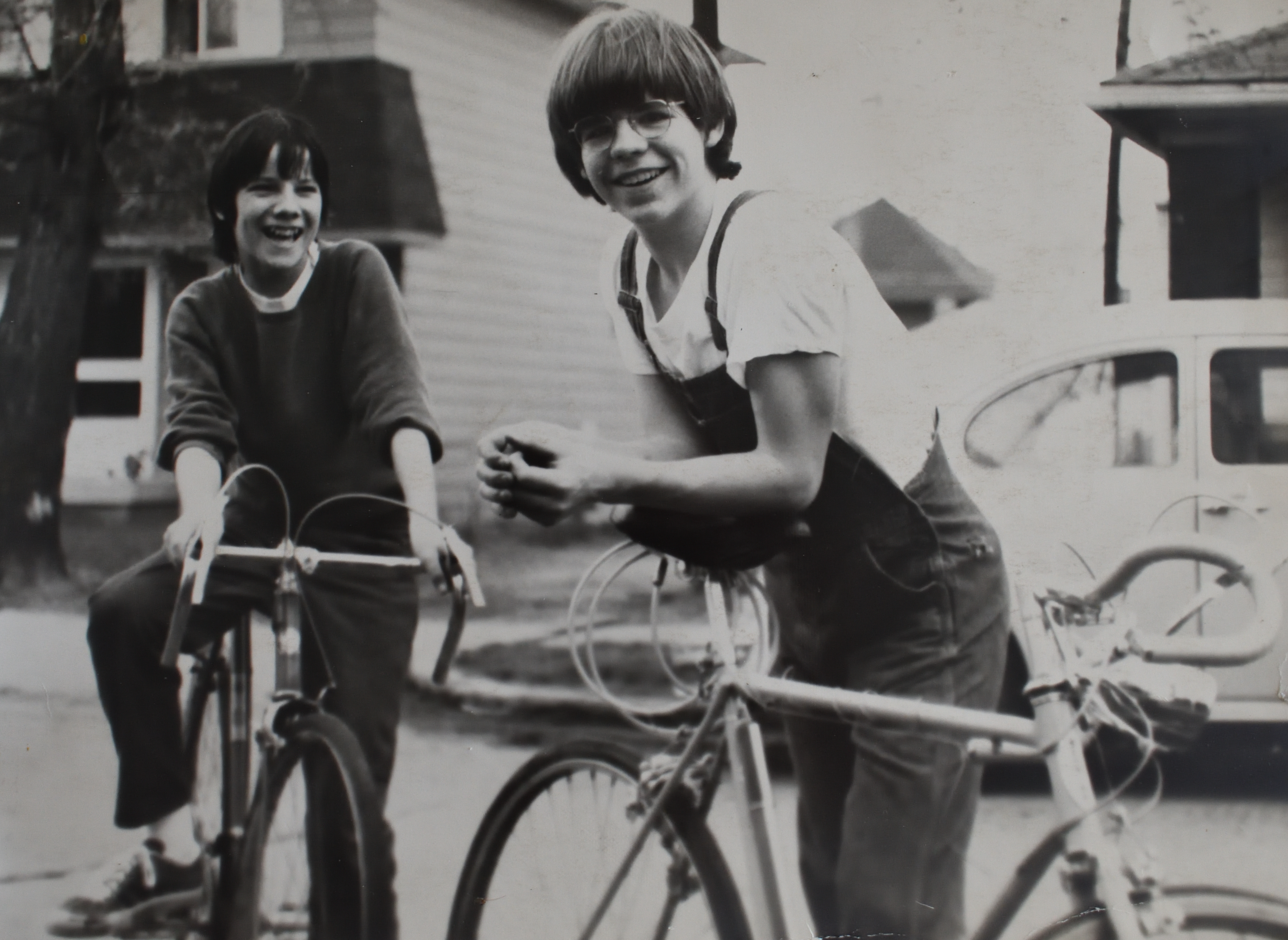
  • At twenty years of age, I joined the Friends Volunteer Service Mission in inner-city Indianapolis, where I was led to work with kids. One of the things we did was ride our bicycles around the city, taking photos (35 mm film). Then we developed the negatives and printed the images in a bathroom darkroom
  • My photos were published in a book about the new addition to the Indianapolis Central Library.
  • Other photos were published on an Indiana state government website to attract filmmakers to the city.
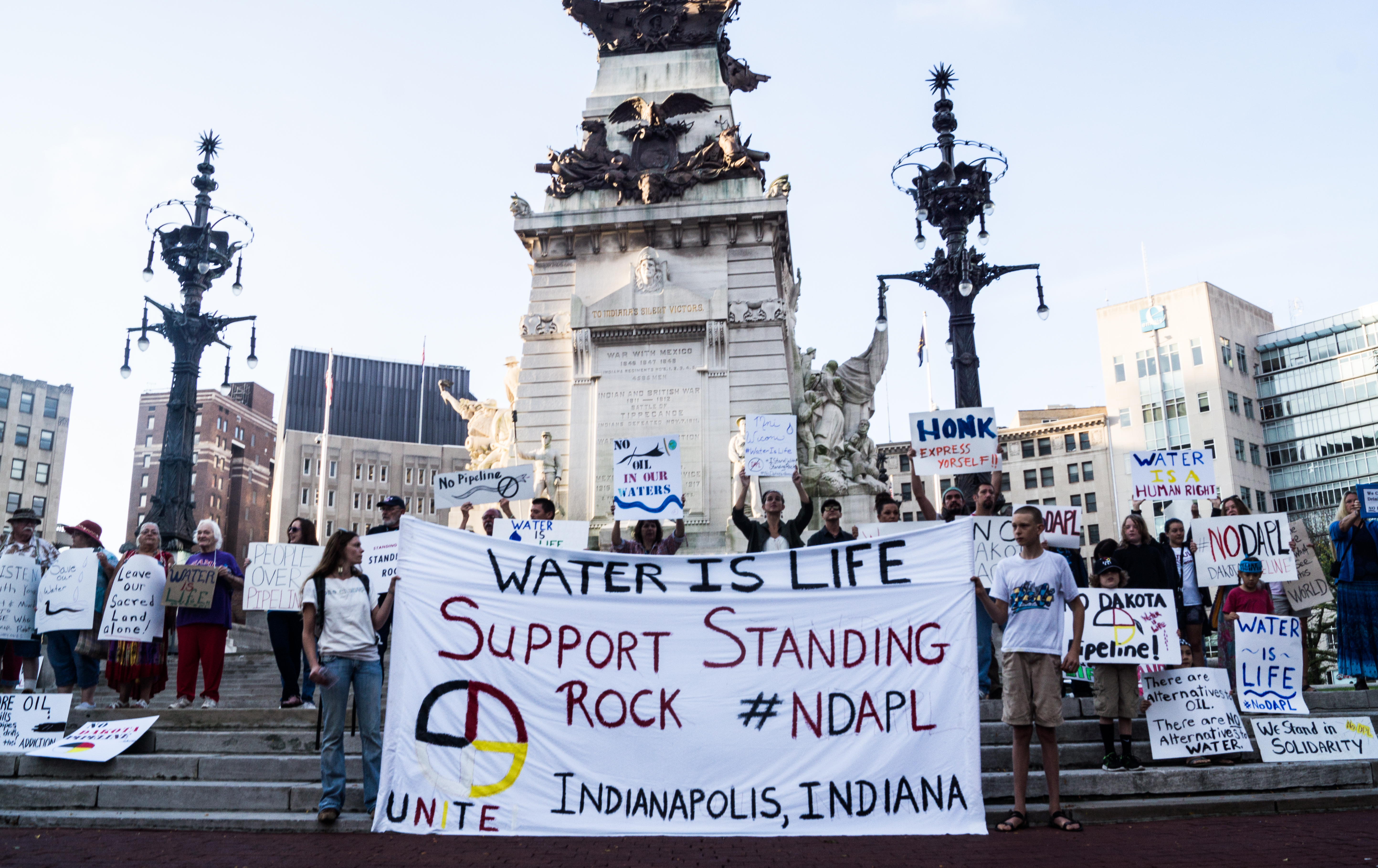
  • I took and shared a lot of photos of public demonstrations related to the Keystone XL and Dakota Access pipelines in Indianapolis
  • Working with the Kheprw Institute, a black youth mentoring community, I was asked to give photography classes.
  • I continued to take photos of similar events when I moved to Iowa. I was honored when my justice advocate friends began to ask me to come to their/our events in order to document them.

I found my power in photography. I urge you to focus on what your power is. You already have your power, but you might not be seeing it in this context. If you don’t love what you are doing, you should make a change.


This is the story, not yet complete, of my journey related to justice and photography.


Judy Plank

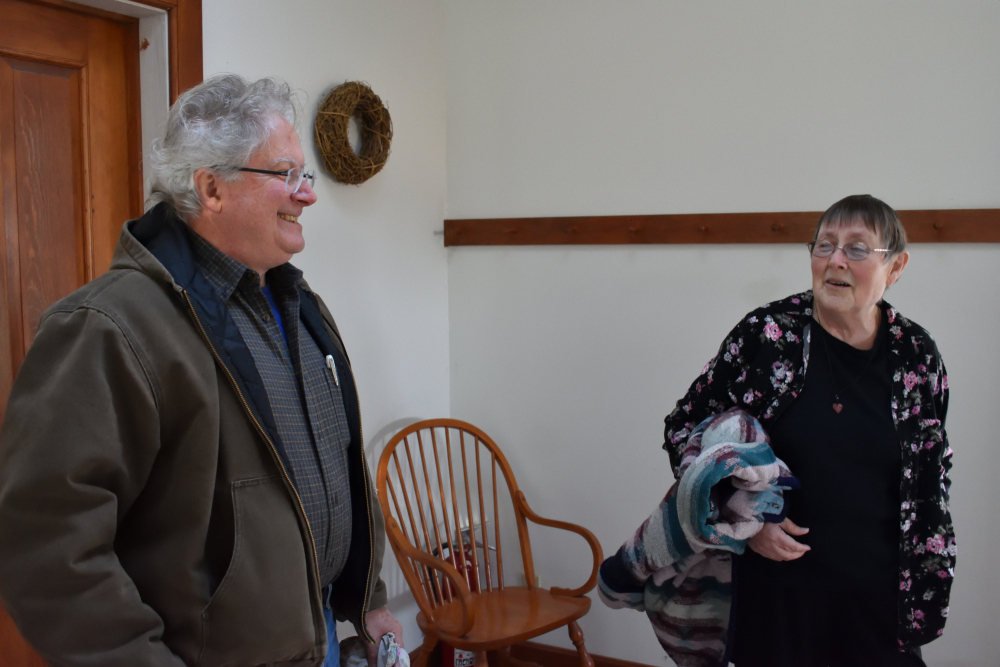
Judy Plank was a good friend of mine. She was always present and helpful as we worked together on peace and justice issues for Iowa Yearly Meeting (Conservative).

I was glad she asked me to take photos of her for the jacket of her book, Paradise Still Has Snakes. (the first of the photos below).

I will miss her.


Judy Ann Plank

Dec 14, 1942 – Oct 12, 2023

Obituary

Judy Plank, 80 of Le Mars, Iowa, passed away on Thursday, October 12, 2023 at the Good Samaritan Society of Le Mars. 

There will be a Memorial Service at a later date. Expressions of sympathy may be expressed to the family through www.rexwinkelfh.com

Judy Ann Juhl was born on December 14, 1942, the oldest child of Howard ‘Bud’ and Jean (Stowater) Juhl of rural Remsen. Judy grew up on the family farm between Marcus and Remsen. She had fond memories of her childhood pet Holstein milk cow, ‘Coke’.

She started school at Meadow Township county school and when it closed, she then attended Marcus Public School and graduated in 1960. She then attended Westmar College in Le Mars for one year. While at Westmar, Judy met her husband to be, Kenneth Paul Plank. They were united in marriage at Faith Lutheran Church in Marcus, Iowa on December 27, 1961.

Twenty years later she graduated with a BA degree in sociology from Southwest State University in Marshall, MN. She later also received an associate degree in accounting. Judy’s sporadic work history included: working in a welfare department briefly, in a residence for the mentally handicapped for three years, and primarily providing childcare in her home.

Judy and Paul enjoyed traveling, from Costa Rica to Alaska. At a young age, Judy was always an avid reader. This led her to writing prose and poetry. It also culminated in the writing of her autobiographical published book, Paradise Still Has Snakes. She enjoyed gardening and having her hands in the dirt. She also enjoyed baking and sharing her ever-present zucchini bread.

Judy’s spiritual journey led her to the Religious Society of Friends (Quakers). As a member of the Paullina Friends Meeting, she served on many committees and was also actively involved in the Iowa Yearly Meeting. She was a longtime member of the Northwest Iowa Peace Links.

Judy was always a champion for the downtrodden. She described herself as a progressive/socialist peace activist and was an avid protestor. Her strong belief in peace, nonviolence, and social justice was the guiding light in her political and social involvement. After Paul’s retirement, they began wintering near Douglas, Arizona. There she was at the founding of Healing our Borders, a group attempting to stop the increasing deaths of migrants crossing the borders and to change the nation’s immigration policies. She attended weekly vigils remembering those who perished at the border and handed out blankets to protect migrants from the cold. Judy was also proud of the work she did co-facilitating teaching ‘Alternative to Violence Project’ workshops at the Ford Dodge Correctional Facility. She was also a part of the ‘New Roads Reentry’ team helping men back into society following a prison sentence. 

Judy was an active member of the Plymouth County Democrats. She was not afraid to knock on doors or hold up a sign on a street corner for her cause.

Judy’s greatest joy was spending time with her family and friends.

Judy will be lovingly missed by her husband, Paul; son: Kipp Plank of Sioux City; 4 grandchildren: Nick Plank, Lacey Overman, Athena Marshall (Mason Bakker) all of Le Mars, and Rick Plank of Los Angeles, California; 4 great grandchildren: Jade, Alex, Boston, and Pierce; brothers: Mark (Cheryl) Juhl and Dale (Faith) Juhl both of Remsen, IA; nieces, nephews, cousins, and friends.

Judy is preceded in death by her parents; daughter, Kristine Redhouse; and granddaughter in law, Jen Plank.