Foundational stories now: Protecting Mother Earth

[My foundational stories are related to the intersections between my Quaker faith, protecting Mother Earth, and photography. My faith led me to try to share my spiritual experiences and show my love for the beauty of Mother Earth through photography.]

Yesterday I described where my story related to photography is at this time. Today I write about where I am regarding protecting Mother Earth. The beginning of my stories about protecting Mother Earth and the water can be found here: Foundational stories about care for Mother Earth.

Concern for Mother Earth has been a constant in my life. I was 20 years old when I moved to Indianapolis and was horrified by the thick, noxious exhaust from cars. I couldn’t be part of that and have lived without a car since then (1970).


My foundational stories now

Protecting Mother Earth

It took a while for me to become comfortable with the term Mother Earth. But vocabulary can affect how you feel about something. Having Earth as your Mother describes a living relationship. This is one of the many things I’ve learned from my Indigenous friends.

It is a dichotomy that today, despite knowing the many ways our environment and so many other things are collapsing, I have more hope than I’ve had for years. That’s because of the coalitions of people coming together to heal each other and Mother Earth. We can’t be so paralyzed with fear about what may be coming that we don’t enjoy the beauty all around us.

Following are some ways I’m involved in protecting Mother Earth now.

  • Buffalo Rebellion
  • Mutual Aid
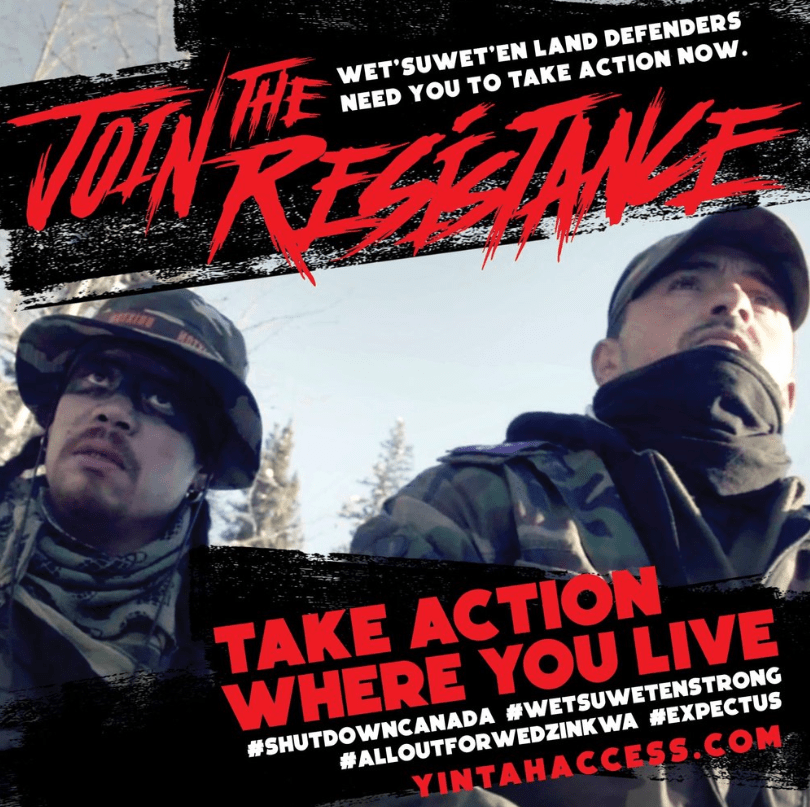
  • Wet’suwet’en
  • Bear Creek Friends Meeting

Buffalo Rebellion

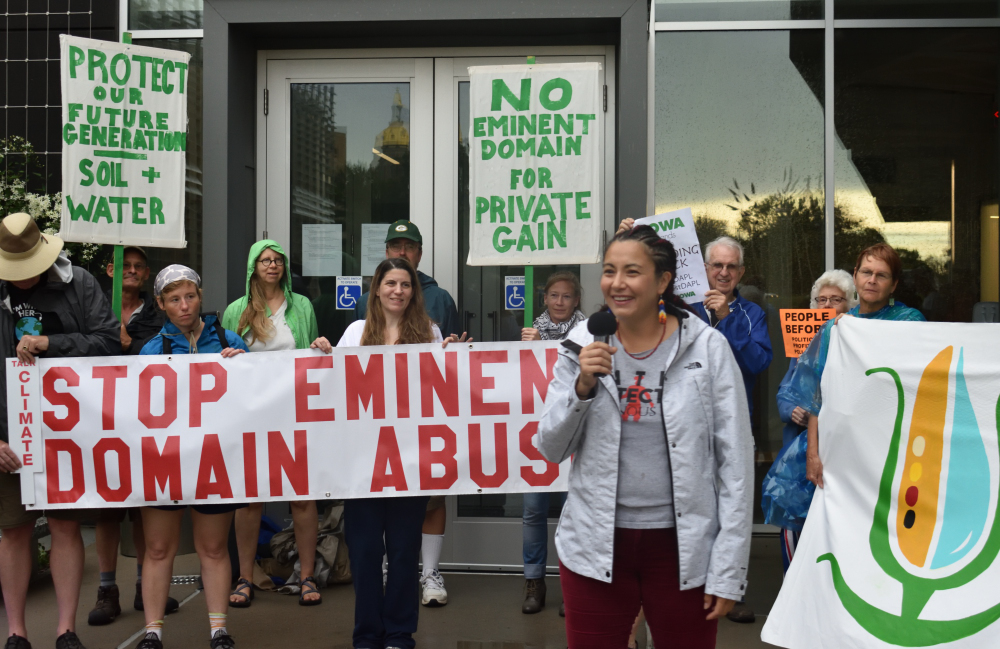
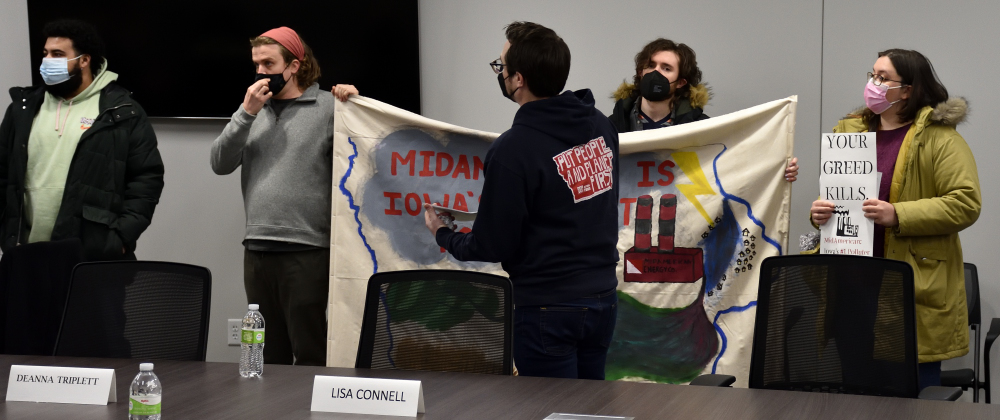
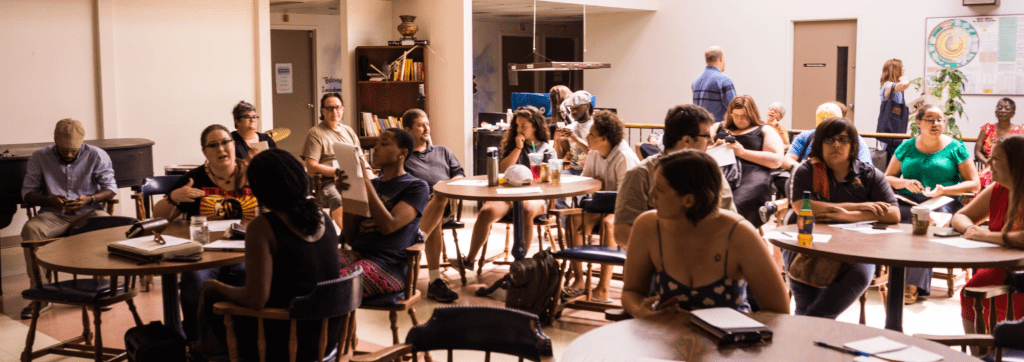
Last night I participated in a meeting of the Buffalo Rebellion, which I’m proud to be a part of. This coalition of environmental activists is one of the things that gives me hope. Realizing we are all working on similar things, this coalition is being built to empower our work and support one another. Last night someone remarked that we’ve all suffered trauma and are all in need of healing.

Following is a description of the Buffalo Rebellion, including a link to a recording of my friend Sikowis Nobiss describing it.

The topic this month is on a newly formed Green New Deal coalition in Iowa called Buffalo Rebellion formed to protect the planet by demanding change from politicians and convincing the public that climate should be a priority. Buffalo Rebellion, is a coalition of grassroots, labor, and climate justice organizations growing a movement to pass local, state, and national policies that create millions of family-sustaining union jobs—ensuring racial and gender equity and taking action on climate at the scale and scope the crisis demands. It was formed in November 2021 and consists of: 


The root causes of what we are fighting against are capitalism and colonialism


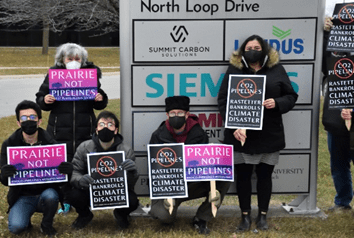
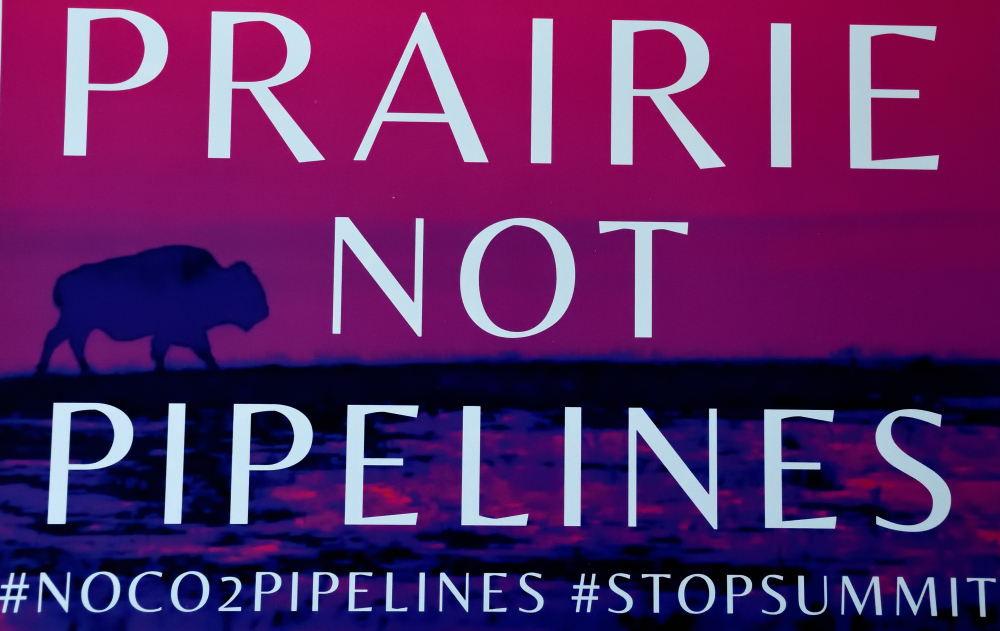
The subject of last night’s gathering (at Iowa CCI and via Zoom) was CO2 (carbon) pipelines, the latest man-made environmental threat. Iowa is at the center of this problem because most of the ethanol plants are located here, because ethanol is produced from corn, and releases carbon emissions in the process. The carbon dioxide in the carbon pipelines is a hazardous material and could cause deaths if there is a rupture. A CO2 pipeline in Satartia, Mississippi ruptured last year, sickening dozens of people. First responders’ vehicles could not run because of the absence of oxygen. READ: The Gassing Of Satartia” (Huffington Post, August 2021)

Sikowis talked about what is below the crust of the earth also being a sacred space, and we don’t know what disturbing that with pipelines and fracking will cause.

The only way to address fossil fuel emissions is to stop burning fossil fuels.

Mutual Aid

Des Moines Mutual Aid has been the focus of my work for the past couple of years. How is this related to the protection of Mother Earth?

  • Being in a Mutual Aid community, we support each other and help each other heal.
  • Mutual Aid members are encouraged to use critical thinking to anticipate and solve problems. And immediately implement solutions, not waiting for permission from anyone.
  • Mutual Aid is about eliminating vertical hierarchies and the damage those hierarches do to a community. And how they harm Mother Earth.
  • Mutual Aid communities are explicitly local. There is no need for fossil fuel transportation and energy production. Our Mutual Aid communities are or will be “walkable”.
  • Our Mutual Aid communities are an example to others of how we can escape capitalism and colonialism that are the root causes of injustice
  • Our Mutual Aid practices are about sustainability and protection of Mother Earth
  • “These spaces become intergenerational, diverse places of Indigenous joy, care and conversation, and these conversations can be affirming, naming, critiquing, as well as rejecting and pushing back against the current systems of oppression”. Maynard, Robyn; Simpson, Leanne Betasamosake.
  • “…capitalism and colonialism created structures that have disrupted how people have historically connected with each other and shared everything they needed to survive. As people were forced into systems of wage labor and private property, and wealth became increasingly concentrated, our ways of caring for each other have become more and more tenuous.” Dean Spade
Ronnie James, Des Moines Mutual Aid

…in Nishnaabeg thinking, knowledge is mobilized, generated, and shared by collectively doing. It’s more than that, though. There is an aspect of self-determination and ethical engagement in organizing to meet our peoples’ material needs. There is a collective emotional lift in doing something worthwhile for our peoples’ benefit, however short-lived that benefit might be. These spaces become intergenerational, diverse places of Indigenous joy, care and conversation, and these conversations can be affirming, naming, critiquing, as well as rejecting and pushing back against the current systems of oppression. This for me seems like the practice of movement-building that our respective radical practices have been engaged with for centuries.

Maynard, Robyn; Simpson, Leanne Betasamosake. Rehearsals for Living (Abolitionist Papers) (p. 39). Haymarket Books. Kindle Edition.

In another example of how our work is interrelated, my Mutual Aid friends support the Wet’suwet’en.

Wet’suwet’en

The Wet’suwet’en peoples have been struggling for years to prevent the construction of the Coastal GasLink liquified natural gas pipeline from being built through their pristine, unceded lands.

https://quakersandreligioussocialism.com/?s=wetsuweten+wet%27suwet%27en
https://jeffkisling.com/?s=wetsuweten+wet%27suwet%27en

There was one particularly significant Spirit-led event in my life related to the Wet’suwet’en. When I first became involved with the Wet’suwet’en peoples was when they were asking allies to spread the news about their struggles, since there was no mainstream media coverage.

In February 2020, some of us were already planning to be at Friends House in Des Moines. We decided to hold a vigil for the Wet’suwet’en on the street in front of Friends House prior to that meeting. I created an event announcement on Facebook, that was shared by my friend Ed Fallon or Bold Iowa, an Iowa Citizens for Community Improvement.

As anticipated just those few of us who were planning to attend the meeting at Friends House anyway showed up. But the Spirit-led part of this is that Ronnie James, who I didn’t know at the time, joined us. Ronnie is an Indigenous organizer with twenty years of experience. He was surprised anyone in Iowa knew about the Wet’suwet’en peoples, so he came to see who was attending, a good organizing technique.

Ronnie and I began to exchange messages over the next couple of months. I was intrigued with the stories he was telling me about Des Moines Mutual Aid community he was involved with. When I felt we had begun to know each other well enough, I tentatively asked if I could attend the food giveaway that Ronnie/Des Moines Mutual Aid held every Saturday morning. This was a continuation of a variation of the Black Panther Party’s free school breakfast program in Des Moines from the 1970’s.

I thought I would just attend a time or two to see how that worked. Instead, I’ve been there almost every Saturday morning for over two years now, and Ronnie is one of my best friends. One of the many good things about Mutual Aid is how it attracts and keeps people engaged.


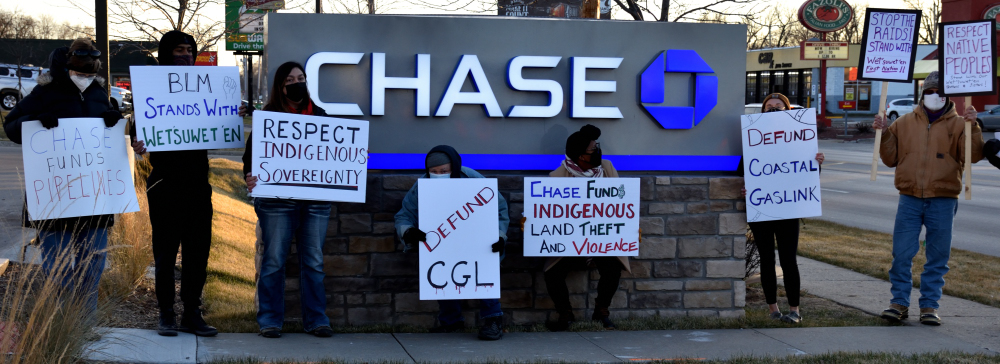
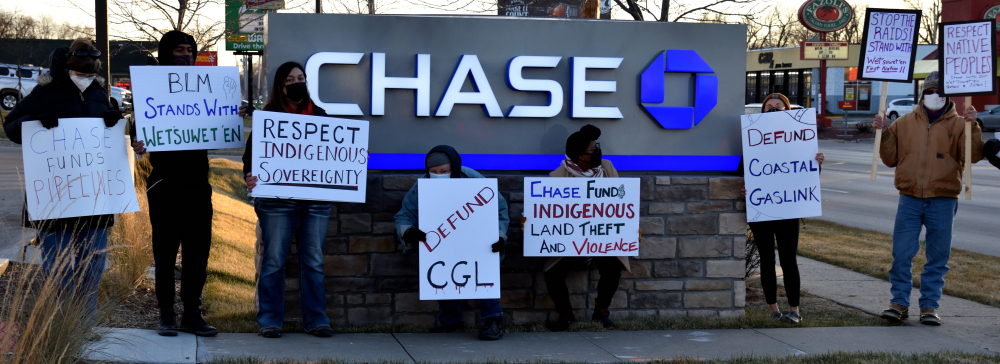
I continue to do what I can to support the Wet’suwet’en. We are presently organizing another gathering at Chase bank to call attention to their funding fossil fuel projects. Some others from the Buffalo Rebellion will be involved.
Bear Creek Friends Meeting

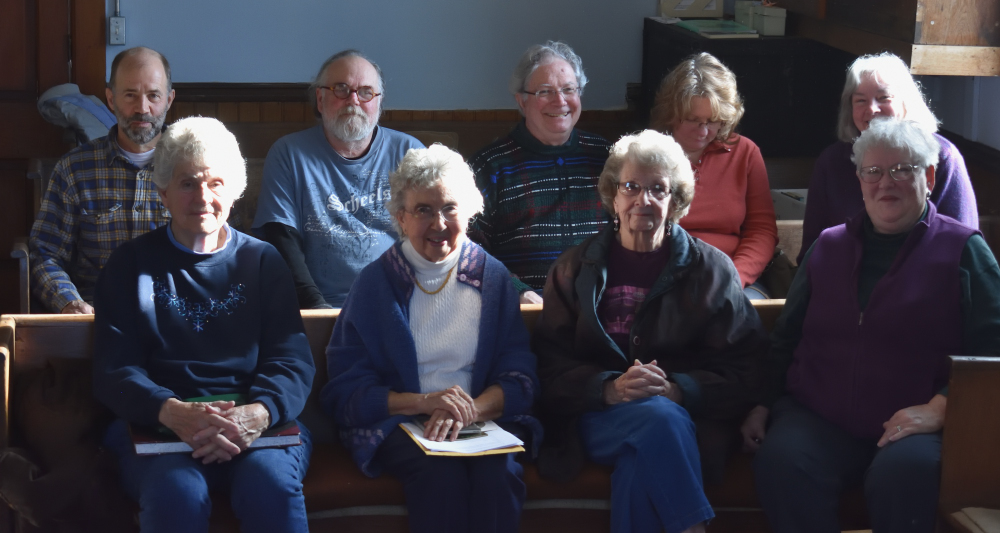
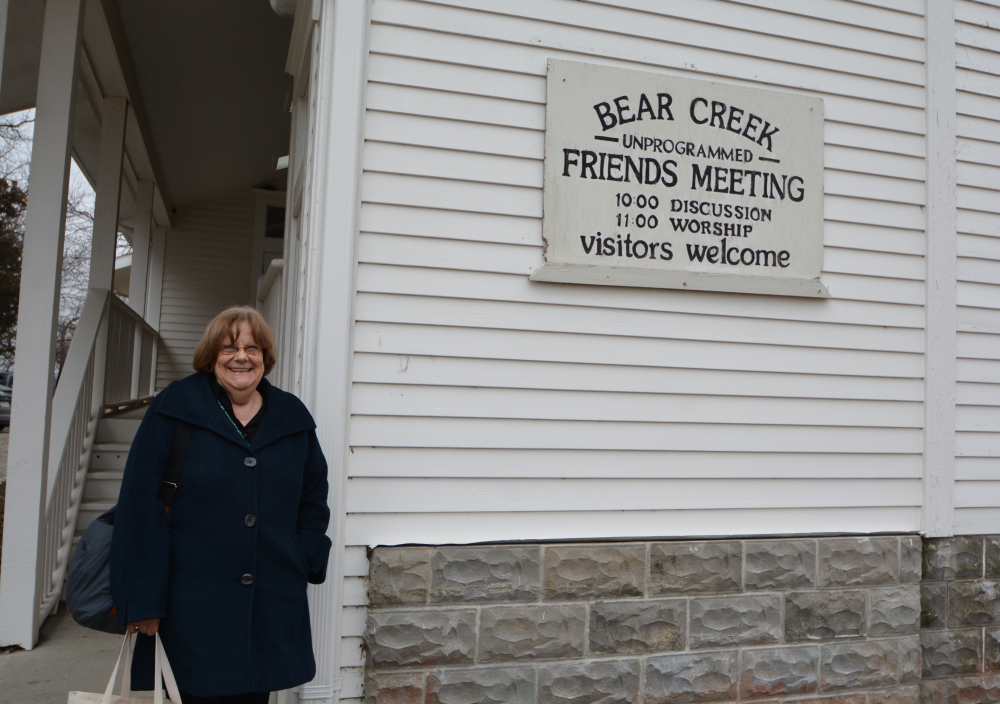
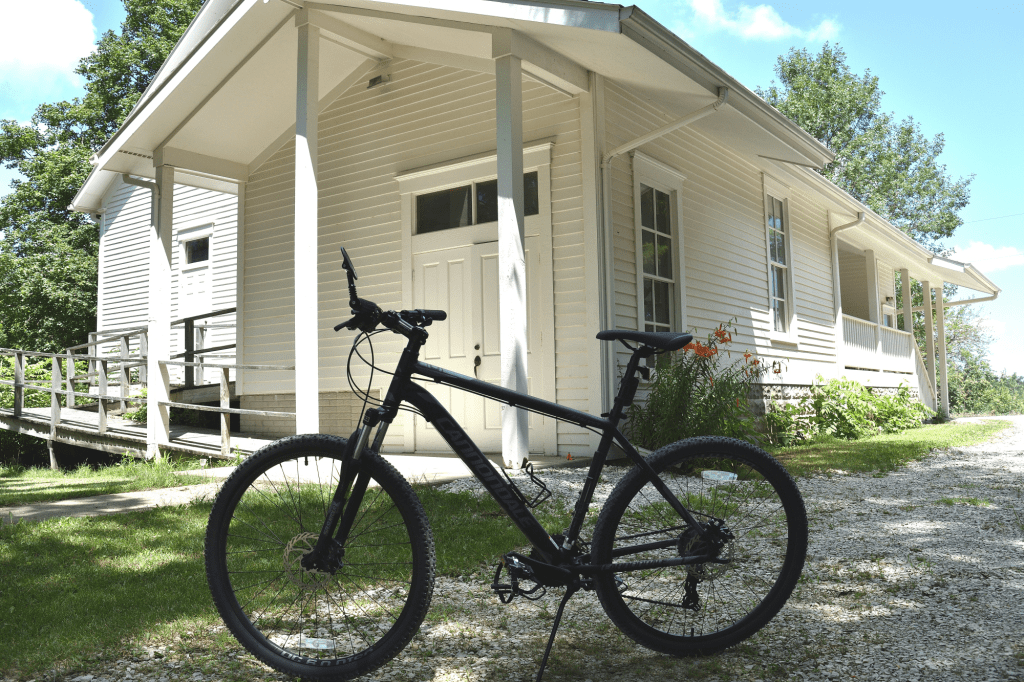
The small, rural Quaker meeting I’m a member of continues today to try to find ways we can help protect Mother Earth. This is one way to bring a Spiritual approach to these problems which I believe is very important.

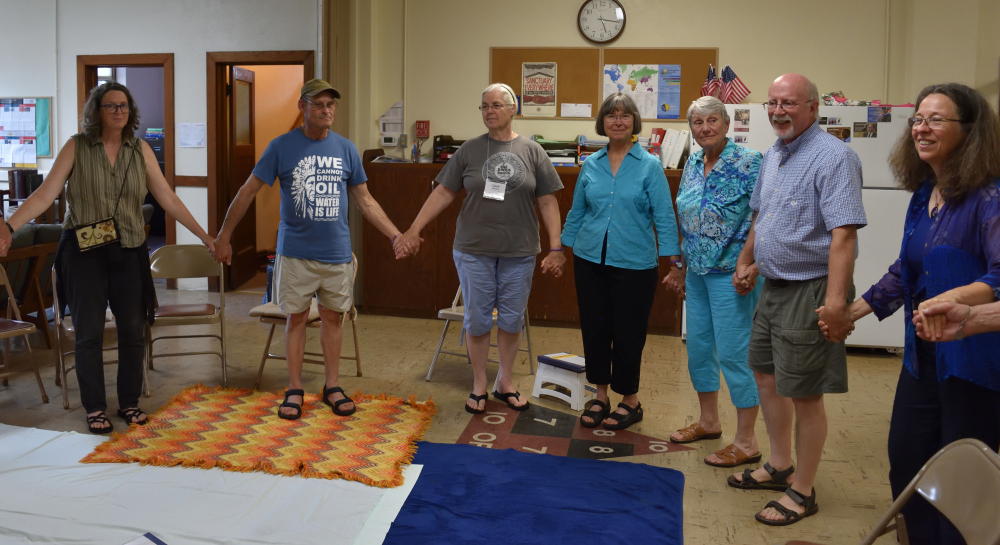
Members of the meeting have supported the annual Prairie Awakening/Prairie Awoke ceremony that takes place at the Kuehn Conservation Area, just a few miles from the meetinghouse.
Bear Creek Friends Meeting

It is difficult to reduce fossil fuel use in rural areas.

One thing we realized we could do was encourage more use of bicycles, since many members lived close to the meetinghouse just north of Earlham, Iowa. And encourage Friends in urban meetings to use bicycles when possible.

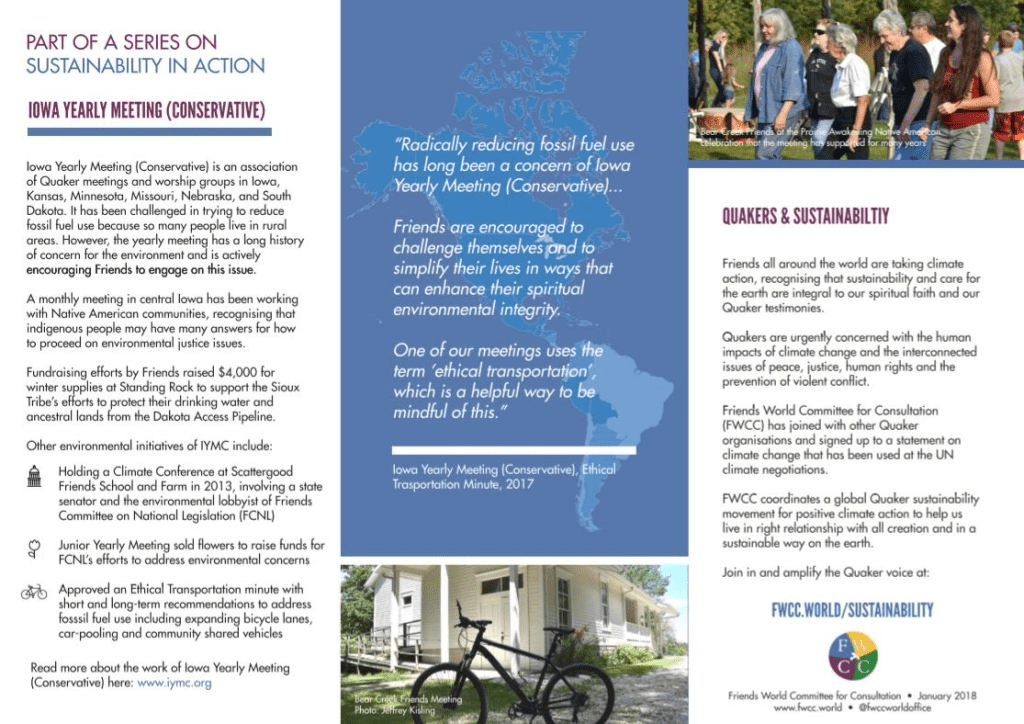
The Minute we wrote, and that was approved by Iowa Yearly Meeting of Friends (Conservative) was referred to as a Minute on “Ethical Transportation”.

 Radically reducing fossil fuel use has long been a concern of Iowa Yearly Meeting (Conservative).  A previously approved Minute urged us to reduce our use of personal automobiles.  We have continued to be challenged by the design of our communities that makes this difficult.  This is even more challenging in rural areas.  But our environmental crisis means we must find ways to address this issue quickly.
 
 Friends are encouraged to challenge themselves and to simplify their lives in ways that can enhance their spiritual environmental integrity. One of our meetings uses the term “ethical transportation,” which is a helpful way to be mindful of this.
 
 Long term, we need to encourage ways to make our communities “walkable”, and to expand public
transportation systems.  These will require major changes in infrastructure and urban planning.
 
 Carpooling and community shared vehicles would help.  We can develop ways to coordinate neighbors needing to travel to shop for food, attend meetings, visit doctors, etc.  We could explore using existing school buses or shared vehicles to provide intercity transportation.  
 
 One immediately available step would be to promote the use of bicycles as a visible witness for non-fossil fuel transportation.  Friends may forget how easy and fun it can be to travel miles on bicycles.  Neighbors seeing families riding their bicycles to Quaker meetings would have an impact on community awareness.  This is a way for our children to be involved in this shared witness.  We should encourage the expansion of bicycle lanes and paths.  We can repair and recycle unused bicycles, and make them available to those who have the need.
Minute approved by Iowa Yearly Meeting (Conservative) 2017

Foundational stories now: Photography

At this summer’s annual sessions of Iowa Yearly Meeting (Conservative), held at Scattergood School and Farm, we were challenged to examine our foundational stories. How they began, how they evolved, and what they are now. I was led to accept that challenge, especially because I had been sensing spiritual leadings that suggested I might change not the stories themselves, but a change in focus.

My foundational stories are related to the intersections between my Quaker faith, protecting Mother Earth, and photography. My faith led me to try to share my spiritual experiences and show my love for the beauty of Mother Earth through photography.

I described the beginnings of my foundational stories in the first blog post in the series, Our Foundational Stories: Beginning.

The path of my foundational stories was not a straight line. Which is the reason for the many stories I wrote about the path of my stories. My grandmother, Lorene Standing, told me the will of God is often revealed in a series of steps. That has been the case for me.

Many things I’ve read and my own experiences have shown me that stories are perhaps the most effective way to engage in discussions, especially when there are disagreements. And stories, of the past and present, are going to be important as we all try to find our way through the coming challenges.


If we are to find a new kind of good life amid the catastrophes these myths have spawned, then we need to radically rethink the stories we tell ourselves. We need to dig deep into old stories and reveal their wisdom, as well as lovingly nurture the emergence of new stories into being.

Pontoon Archipelago or: How I Learned to Stop Worrying and Love Collapse. By James Allen, originally published by Medium, June 18, 2019

My foundational stories now

Photography


We’re all aware of the revolution of digital photography. Besides being glad I no longer have to use a darkroom, digital photography has made me a much better photographer. Having the freedom to capture many images, not limited to 12 or 36 exposures, and such control with digital editing, I learn so much.

In the past I used photography in a lot of justice types of activities, but that has changed recently. I no longer take many photos at demonstrations and rallies because law enforcement uses such photos posted online to identify people to arrest.

There are demonstrations where there is no concern about the police. My new friends since I’ve moved back to Iowa have found out about my love of photography and I’m glad to be invited to take photos for them.

I still carry my camera everywhere. Now that I’m retired, I have a new daily routine. First thing in the morning I spend about two hours writing, while my mind is still “fresh”. Then I walk about three miles with my camera. For the exercise of my body and photographic eye. For some reason I usually end up with about seventy photos each day. Some days I have to force myself to stop.

After lunch I look forward to spending about two hours editing the photos I took that day. I really enjoy that. So all this fills about six hours a day.

One of the reasons I was led to accept the challenge of reflecting on my foundational stories was because I had noticed some changes. It is difficult to know, even with statistics provided, how many people read my blog posts. Or look at my photos.

The numbers aren’t important, other than making me wonder how I can most effectively tell my stories. Whether I should do more work related to writing, or photography. Facebook especially makes it possible to get an idea of how many people look at photos. And makes it easy for people to comment on them.

I’m comfortable with the current mix of this.

But there is something sad about one aspect of this. I love the photographs of Ansel Adams and others from his day that helped people appreciate nature and sometimes affected government policies. I just learned he was awarded the Presidential Medal of Freedom in 1980.

I had hoped in some small way the photos I was sharing would make people pay attention to the beauty all around us and sensitize them to advocate for protection of Mother Earth.

It makes me sad to think the photographs we’ve taken over the past several decades might be what people in the (near) future look at to see the beauty that once was and is no more. That is one reason I take so many photos today.

I’ve been so blessed to have made a number of Indigenous friends since returning to Iowa in 2017. One of the things I’ve learned from them is to recognize the spirit in all things, human and non-human. This has changed the relationship between myself and what I am photographing.


I post photos daily on Facebook. https://www.facebook.com/jeff.kisling.3/


(Barry) Lopez could not have known the effect he was having on one impressionable member of the audience. Yet I believe he established a connection with me that evening—a thin strand in the elaborate web that is community—by describing a path that was utterly new to me, and by suggesting that, as others had walked that path, it was safe for me to do so as well. This all happened in the space of a few seconds, as he mulled over the central question plaguing the men and women at the conference, namely: How could we convince lawmakers to pass laws to protect wilderness? Lopez argued that wilderness activists will never achieve the success they seek until they can go before a panel of legislators and testify that a certain river or butterfly or mountain or tree must be saved, not because of its economic importance, not because it has recreational or historical or scientific value, but because it is so beautiful.

His words struck a chord in me. I left the room a changed person, one who suddenly knew exactly what he wanted to do and how to do it. I had known that love is a powerful weapon, but until that moment I had not understood how to use it. What I learned on that long-ago evening, and what I have counted on ever since, is that to save a wilderness, or to be a writer or a cab driver or a homemaker—to live one’s life—one must reach deep into one’s heart and find what is there, then speak it plainly and without shame.

Reid, Robert Leonard. Because It Is So Beautiful: Unraveling the Mystique of the American West . Counterpoint. Kindle Edition.

Collective emotional lift

As often happens, when I sat down to write this morning, I wasn’t sure what the subject would be. I’m aware of looking forward to being with my Mutual Aid friends this morning. I know they feel the same from comments I’ve heard over the past couple of years. I’ve heard my friends say this is the best part of their week.

In contrast, I sense so many people don’t have much joy in their lives. So many things are going wrong, things we could once rely on, we no longer can. We are entering a time of collapse. There is a general malaise, a fear for our future, the feeling we have no control, a spiritual poverty.

David Pollard has identified skills needed to deal with this developing collapse (listed below). I wrote about that and included my own vision of dealing with collapse here: https://quakersandreligioussocialism.com/2022/10/18/critical-skills-to-face-collapse/

Pollard asks four questions related to how we deal with collapse.

Dave Pollard, in How Do We Teach the Critical Skills Needed to Face Collapse? raises these questions.

  1. What’s the most effective way to voluntarily get billions of people to the point they are capable of exercising the skills below?
  2. How do we get the timing right: Not so early that there’s not yet a sense of urgency, but not so late that we’re trying to do it in an environment of chaos?
  3. How might we begin to identify, improve the competencies of, and empower the right people to do the mentoring, teaching, training, demonstrating, connecting, modelling, and other hands-on imparting of knowledge and skills needed to make it happen?
  4. How can we make this new, crucial learning easier, and fun?

What caught my attention is how can we make this new learning fun? I think of endless committee meetings related to justice work, for example, and how they were not fun. And usually not effective. My friend Alvin at the Kheprw Institute always asks, “what actually changed as a result of what was done?”

Those of us who have organized rallies and marches know how difficult it is to get people to participate. If participating in something isn’t fun in the sense of being enjoyable, exciting, fulfilling, and meaningful, there will be little enthusiasm for people to participate and they won’t.

Our Mutual Aid work is fun and effective. We enjoy working together to put boxes of food together and enjoy our interactions with those who come for food. We are meeting an immediate survival need. But it does require a commitment to be present as often as possible. And it is very physical work. I remember when Ronnie was explaining this to me, he said at the end of the food distribution you were tired, sweaty, and feeling good. And so it was.

That is captured in this quote. “There is an aspect of self-determination and ethical engagement in organizing to meet our peoples’ material needs. There is a collective emotional lift in doing something worthwhile for our peoples’ benefit, however short-lived that benefit might be.

You and your relations, my friend, are (still) busy building a different world at the end of this one. This is something I’ve emphasized over and over again in my own work. I cherish the belief and practice that it is never enough to just critique the system and name our oppression. We also have to create the alternative, on the ground and in real time. In part, for me, because Nishnaabeg ethics and theory demand no less. In part because in Nishnaabeg thinking, knowledge is mobilized, generated, and shared by collectively doing. It’s more than that, though. There is an aspect of self-determination and ethical engagement in organizing to meet our peoples’ material needs. There is a collective emotional lift in doing something worthwhile for our peoples’ benefit, however short-lived that benefit might be. These spaces become intergenerational, diverse places of Indigenous joy, care and conversation, and these conversations can be affirming, naming, critiquing, as well as rejecting and pushing back against the current systems of oppression. This for me seems like the practice of movement-building that our respective radical practices have been engaged with for centuries.

Maynard, Robyn; Simpson, Leanne Betasamosake. Rehearsals for Living (Abolitionist Papers) (p. 39). Haymarket Books. Kindle Edition.

I imagine you have experienced this. As I think of this in my life, I remember how significant it was at Scattergood Friends School when we did our assigned, rotating crews together. Such as preparing meals, baking bread, pruning trees in the orchard, even laundry crew that did the laundry for the entire student body. We had to have name tags sewn into every piece of our clothing so the laundry crew could separate everything out when the clothes were dry.

We experience this when we respond to community needs, such as weather disasters.

This is why I urge us to create our own, local Mutual Aid communities. Perhaps as important as providing essential resources to people is the experience of doing something meaningful. People have a desperate yearning to feel they are doing something worthwhile, something that fulfills their need to feel appreciated.

Collapse is coming at us far more quickly than we had anticipated.

In response to Pollard’s questions (above), the right timing is now. The way to get billions of volunteers to engage is to build Mutual Aid communities everywhere now, in part because Mutual Aid work is fun, meaningful, satisfying.


Soft skills

  • Critical thinking
  • Group facilitation
  • Helping people cope
  • Preparing healthy food
  • Caring for the young, old, and sick
  • Imaginative, reflective and creative skills
  • Mentoring
  • Listening, noticing and attention skills
  • Conversation
  • Community-building

Hard skills (that require some specific technical knowledge/experience

  • Growing and harvesting food
  • Making and repairing clothing and shelter from the elements
  • Accessing clean, safe water
  • Weaving, fabric-making, pottery and other crafting skills tha that make life much more pleasant and comfortable
  • Medical, medicinal, and injury-healing knowledge and skills
  • Food preservation
  • Bicycle construction and repair
  • Basic engineering skills
  • Ecological skills
  • Decommissioning-nuclear reactors and petrochemical sites

How Do We Teach the Critical Skills Needed to Face Collapse? by Dave Pollard, How To save the world, September 10, 2022


    I’m reading a book about the lives of people in the most polluted, least educated, most disadvantaged, and most dangerously toxic (and most conservative) part of Louisiana (more about that in an upcoming article). What emerges from the author’s study is that (1) these people are living in a ‘world’ that is already in a very advanced state of economic and ecological collapse, one that may foretell what the rest of us in ‘affluent’ nations will soon face; (2) they are far more of a ‘community’ than most people living in cities could claim; and (3) they are not particularly interested in paternalistic ‘grief professionals’ ‘coaching’ them on how to manage the massive grief and other emotions they and their families have been dealing with for generations.

    How Do We Teach the Critical Skills Needed to Face Collapse? by Dave Pollard, How To save the world, September 10, 2022


      But capitalism and colonialism created structures that have disrupted how people have historically connected with each other and shared everything they needed to survive. As people were forced into systems of wage labor and private property, and wealth became increasingly concentrated, our ways of caring for each other have become more and more tenuous. Today, many of us live in the most atomized societies in human history, which makes our lives less secure and undermines our ability to organize together to change unjust conditions on a large scale. We are put in competition with each other for survival, and we are forced to rely on hostile systems— like health care systems designed around profit, not keeping people healthy, or food and transportation systems that pollute the earth and poison people— for the things we need. More and more people report that they have no one they can confide in when they are in trouble. This means many of us do not get help with mental health, drug use, family violence, or abuse until the police or courts are involved, which tends to escalate rather than resolve harm. In this context of social isolation and forced dependency on hostile systems, mutual aid— where we choose to help each other out, share things, and put time and resources into caring for the most vulnerable— is a radical act.
      Dean Spade. Mutual Aid: Building Solidarity During This Crisis (and the Next) (Kindle Locations 111-121). Verso.


      Sikowis Nobiss speaking at the beginning of the First Nation-Farmer Climate Unity March https://firstnationfarmer.com/

      Life without a car

      Aside from the spiritual leadings that guided me to my career, being led to live without a car and struggling to convince others to not use fossil fuels were the most important spirit-led actions of my life. This also created a great deal of tension with my Quaker meeting. I made a lot of mistakes related to this over the years. When I say “I made mistakes” that’s a clue that I didn’t always hear, or follow what the Spirit was guiding me to do.

      Growing up on farms, I had the connections to the land and creatures and the cycles of the seasons common to farmers. Scattergood Friends School is on a farm, the name changed to Scattergood Friends School and Farm since I attended. Working on the farm was an important part of our education. Over the years this has expanded significantly. In the Sophomore year we raised pigs as part of our biology class.

      Being led to live without a car was at the intersection of my foundational stories, my Quaker faith, protecting Mother Earth, and photography.


      I am very grateful my parents chose to take us on camping trips across the United States for our summer family vacations, specifically selecting National Parks to camp in.  Actually camping in the Parks was key to the whole experience.  Our first camper was a King camper, which was an aluminum trailer with a canvas covered framework that unfolded to form the top half when we stopped at the campsite.  Being in the woods, hearing the sounds of the wind and wildlife and the glacier streams rush over the boulders, feeling the cold at night, and smelling the pine trees made the experience so much better than traveling into the park during the day and returning to a motel at night.

      Hiking through the meadows and forests and upon mountainsides with countless, stunning vistas, were life changing experiences for me.  I was overwhelmed by the intense beauty.  Rocky Mountain National Park was our favorite, and we returned there time and again as we were growing up. We quickly found that not many people traveled too far from the parking areas, and with even a short hike we were practically alone in the woods.  Hikes of just a mile or two brought us to lakes, canyons, waterfalls, cliffs, meadows, snowfields, boulder fields, and rock walls to climb. Places we were able to appreciate alone.

      Quaker worship was a natural extension of the quiet of the mountains.

      I hadn’t reflected much on why we sought opportunities to be by ourselves in the mountains. It just seemed a much better experience that way. Now I think it was related to feeling closer to God when we were deep in the quiet of the forests. Having grown up in Quaker communities, I was used to worshiping in silence, as we do so we can hear the whisper of the Spirit. Being enveloped in the silence of the mountains was a natural extension of Quaker worship. Or rather, Quaker worship was a natural extension of the quiet of the mountains. Quiet rather than silence.

      This was also a reciprocal relationship. I was always challenged to find ways to share my spiritual experiences with others. These experiences are ineffable, that is they can’t be adequately expressed with words. But art can often better express spirituality. So I hoped some of my photographs might show glimpses of the Spirit.

      The writer’s lonely, harrowing struggle to give shape to his or her elusive vision of the world—to complete a book, to discover among the fragments of a thought or a dream the precise image needed to breathe life into a poem—is a familiar chapter in the annals of pain and grief.

      How can we save the wilderness? I was a mountain climber whose affection for the high peaks had evolved gradually into political commitment to the cause of preservation. I was, too, a fledgling writer searching for direction. I knew the importance of craft, experience, doggedness, and the other familiar requisites for literary success, but I lacked vision—an understanding of my relationship to the world.

      How could we convince lawmakers to pass laws to protect wilderness? (Barry) Lopez argued that wilderness activists will never achieve the success they seek until they can go before a panel of legislators and testify that a certain river or butterfly or mountain or tree must be saved, not because of its economic importance, not because it has recreational or historical or scientific value, but because it is so beautiful.
      I left the room a changed person, one who suddenly knew exactly what he wanted to do and how to do it. I had known that love is a powerful weapon, but until that moment I had not understood how to use it. What I learned on that long-ago evening, and what I have counted on ever since, is that to save a wilderness, or to be a writer or a cab driver or a homemaker—to live one’s life—one must reach deep into one’s heart and find what is there, then speak it plainly and without shame.

      Reid, Robert Leonard. Because It Is So Beautiful: Unraveling the Mystique of the American West . Counterpoint. Kindle Edition

      One reason I began to write was to explore why I took a given photograph.  I hadn’t appreciated this until I was repeatedly told the same thing, which is that a photograph can help the viewer see the subject in a way they hadn’t before.  So as I prepare to shoot a picture, I think about what I am trying to show with it, how to compose it, and set the exposure and focus in such a way as to create the photograph as closely to the image I am envisioning, as possible. 

      Note that I said “envision”. I don’t take photos to be as realistic as possible, which would be like make a Xerox copy of a scene.

      My hope is that some of my photographs might help others to see and understand the subject as I understand it, and may see/understand it differently than before viewing the photo.

      One of the many things I’m learning from Indigenous ways is the Spirit is in all things, including animals, plants, water, sky and mountains. I felt this deeply when I was in the forests and mountains. I’ve heard others express this in various ways as feeling closer to God, and that was how I felt.

      This spiritual connection I developed with the mountains, lakes and forests had profound consequences in my life.

      When I moved to Indianapolis in 1971, the city was enveloped in smog. This was before catalytic converters, which began to appear in 1975. When I saw the polluted air, I had a profound spiritual vision of the Rocky Mountains being hidden by clouds of smog. The possibility that I would no longer be able to see the mountains shook me to my core.

      Long’s Peak from Moraine Park, Rocky Mountain National Park, Colorado

      I was thinking specifically about the photo above, and how terrible it would be to no longer be able to see Long’s Peak. Although I now have many photos of the same view, I was thinking of this black an white photo specifically when I had that vision even though the quality isn’t near what I get now with a digital camera. I developed the film and the print of this in a darkroom. This is the image connected to my vision.

      From that moment on I saw cars as evil because of the damage they were doing. I decided I could not be part of that, and have lived without a car since then. I began my lifelong study of environmental science and work to try to bring awareness about the catastrophic damage being done to Mother Earth. Although I give thanks that catalytic converters took care of the visible smog, I knew of the continued damage and consequences of the tons of carbon dioxide and other gases coming from the exhaust of ever increasing numbers of cars.

      I saw automobiles as the ‘seeds of war’.  Many wars are literally fought over fossil fuel supplies. But these seeds of war are found in the way we live our lives.

      “I told [the Commonwealth Commissioners] I lived in the virtue of that life and power that took away the occasion of all wars… I told them I was come into the covenant of peace which was before wars and strife were.” 

      George Fox

      “Oh! that we who declare against wars, and acknowledge our trust to be in God only, may walk in the light, and therein examine our foundation and motives in holding great estates! May we look upon our treasures, and the furniture of our houses, and the garments in which we array ourselves, and try whether the seeds of war have nourishment in these our possessions, or not. Holding treasures in the self-pleasing spirit is a strong plant, the fruit whereof ripens fast.” 

      John Woolman

      It was camping in the national parks, and spiritual connections to the lakes, forests, wildlife, sky and mountains, that made me become a lifelong environmental activist. And photography was how I tried to express that for myself, and others. I knew environmental damage from burning fossil fuels would damage the mountains, forests and rivers, so I tried to preserve those scenes with photographs. Significant damage will happen with higher air temperatures, forest fires, infestation with migrating insects, torrential downpours, and drought.

      It is sad to think such photographs might be historic records of the way things used to be, and no longer are. This is actually one of the reasons I am led to write my foundational stories, wondering if I shouldn’t do more to use photography to try to create change.

      Recently at the annual meeting of Iowa Yearly Meeting (Conservative) I was grateful to be asked to show my photographs during one of the evening programs. The program was titled “Finding Truth and Beauty.” For about an hour the meetinghouse full Quakers watched the slideshow of photos in silence. Then, as the slideshow continued, Friends (Quakers) were invited to share their thoughts, which many did. I was grateful for this experience of sharing photos that had a spiritual significance for me, with my Quaker community in the context of silent worship.


      My story of Cars as weapons of mass destruction was included in this book by my friends at Sustainable Indiana.
      https://jeffkisling.com/2015/09/13/cars-as-weapons-of-mass-destruction/

      Foundational Stories 9/28/2022

      This summer I began writing about my foundational stories. This was in response to a Quaker friend urging us to think back on the beginnings of our stories. Then about how our stories evolved, and what they look like now. That led me to write many stories about this evolution.
      [See: https://quakersandreligioussocialism.com/?s=foundational ]

      I’ve been looking forward to describing the current state of my foundational story. The article below about Cai Quirk is remarkably similar to parts of my story now.

      My foundational story is related to the intersections between my Quaker faith, protecting Mother Earth, and photography. This combination has remained a powerful, yet evolving, influence throughout my life. My faith led me to try to share my spiritual experiences and show my love for the beauty of Mother Earth through photography. These three things came into play in many ways throughout my life.

      I continue to rely on my Quaker faith to guide these decisions. Sometimes the guidance is clear. Other times either I’m not discerning what the Spirit is telling me, or there isn’t anything new to hear. It’s all too easy to stay on a path we are comfortable with, to the extent we might not hear, or might ignore leadings that say we need to change direction, to do something we are uncomfortable with. One thing I was blessed to realize early in my life was the times I took risks resulted in significant growth. Which led me to search for ways to take risks.

      The reason I invested in the idea of the evolution of my foundational stories is because I’m feeling I might need to change how I think about and put into practice faith, protecting Mother Earth, and photography. I don’t have a way to know how many people read my blog posts but have a better indication of how people see my photography. My impression is that more people see my photographs. I’m sensing I should “focus” more on photography to express my spirituality and encourage more people to work to protect Mother Earth. Although the main reason I write so much is to try to organize and clarify what I discern about my spiritual life, and what that means, how to put these leadings into practice, how to practice hope.

      People often mistake hope for a feeling, but it’s not. It’s a mental discipline, an attentional practice that you can learn. Like any such discipline, it’s work that takes time, which you fail at, succeed, improve, fail at again, and build over years inside yourself.

      Hope isn’t just looking at the positive things in this world, or expecting the best. That’s a fragile kind of cheerfulness, something that breaks under the weight of a normal human life. To practice hope is to face hard truths, harder truths than you can face without the practice of hope. You can’t navigate dark places without a light, and hope is that light for humanity’s dark places. Hope lets you study environmental destruction, war, genocide, exploitative relations between peoples. It lets you look into the darkest parts of human history, and even the callous entropy of a universe hell bent on heat death no matter what we do. When you are disciplined in hope, you can face these things because you have learned to put them in context, you have learned to swallow joy and grief together, and wait for peace.

      IT IS BITTER TEA THAT INVOLVES YOU SO: A SERMON ON HOPE by Quinn Norton, April 30, 2018

      I recently found the article “Cai Quirk Invites Friends to Expand Our Faith” by Emma Hulbert, FCNL, July 12, 2022. Cai Quirk speaks about faith, risks, and art.

      “One of the pieces of Quaker witness I have been carrying in the world for many years now is around gender diversity and using art and storytelling as a way to explore that. This is some of the ministry that I carry.”

      Cai Quirk 

      Cai Quirk (they/them or ey/em pronouns) shared this reflection with FCNL staff in a late-June Zoom lunch, along with the ways Spirit has been leading them to explore gender, faith, and nature through art.

      Cai is a life-long Quaker. After years of spiritual deepening through writing poetry and creating self-portraits, Cai will soon release their first book. “Transcendence: Queer Restoryation” includes words and images that offer an expansive understanding of faith.

      In speaking to FCNL staff, Cai showed many of their self-portraits, focusing especially on those exploring gender in the natural world. “I was finding new ways to create new stories that are empowering,” they told us. “Through these self-portraits, I found how far I can go in following Spirit. A lot of these photos were very freeing and empowering and have given me more connection to Spirit.” Cai explained that nature itself holds some inherent queerness; “Even when society tries to erase queer stories, they are still there in the landscape.”

      Growing up Quaker, Cai learned the history of the social disruption inherent in Quaker faith. Yet today, Cai has noticed that only certain kinds of social disruption and ministry are accepted within some circles of Friends. “My art is an invitation to see how Spirit invites us all in different ways,” they said. While not all Quaker communities can feel welcome to those who rock the boat, social disruption and rage can be sacred as well. Changemaking occurs in many ways for many different people, and Cai is working to create more spaces where this kind of expansion and ministry are accepted, where more people can exist as their true selves.

      “If I change myself to match society’s conventions, then I am not being authentic, I am not being faithful to Spirit,” Cai told us. Can we as the Religious Society of Friends expand our ideas of faith and community to invite everyone in? What would it take to seek and live into that welcoming Quakerism moving forward?

      “Cai Quirk Invites Friends to Expand Our Faith” by Emma Hulbert, FCNL, July 12, 2022

      Minute
      There is that of God in every being. We support those of all gender identities and sexual orientation. And respect and will endeavor to use the pronouns each person identifies themselves by.

      Approved by Iowa Yearly Meeting (Conservative) 2022

      Dear allies of Gidim’ten checkpoint

      Dear allies of Gidim’ten checkpoint,

      As you will know, we have reached another flashpoint in the Wet’suwet’en’s struggle against the CGL pipeline. Having fought to protect the sacred headwaters of Wedzwin kwa, they are now faced with the possibility of imminent drilling. Today, the hereditary chiefs are holding a press conference and issuing an eviction notice. They are issuing a call to action, which we are relaying to you.

      The chiefs are calling for people to take on three targets: BC government, contractors, and the funder, RBC. Decolonial Solidarity members will rally to pressure the latter. For organized groups, we are issuing a call for in-person action. For everyone else, we are inviting you to call the global head of sustainability at RBC.

      Click here to access a one-click-to-call action

      We have managed to get this man’s personal phone number. It is important that we stay polite and firm in denouncing the actions of the bank. Remember: it can freeze its investment until the hereditary chiefs consent to the project. It can stop the drilling. It is this man’s job to ensure that the bank is sustainable. Let’s remind him there’s a ways to go.

      Call the head of sustainability!

      Wet’suwet’en Land Defenders have not given up and nor will we. We will continue to build our movement, to show solidarity, to turn up at branches, to talk to our neighbors and to passers by, to mobilize in protest, to confront RBC executives, and to send our love to the admirable Land Defenders whose leadership has inspired us throughout these difficult times.

      In solidarity,
      The organizing team

      (This message from decolonial solidarity on behalf of the Gidimt’en land and water protectors is forwarded with the permission of the Unist’ot’en  in solidarity with their neighboring clan within the Wet’suwet’en Nation.)

      Unist’ot’en Solidarity Brigade robertages@telus.net


      ecology, culture, and spirituality

      Spirituality is rarely spoken of in the tsunami of information and stories found on all types of media, related to the dangerous times we are living in. And the future our children face. The unfolding apocalyptic reality.

      As the reality of escalating environmental chaos becomes impossible to ignore, vast numbers of people are demanding immediate solutions. And with the realization there are no quick fixes, panic spreads. Dystopian stories emerge. Hopelessness sets in.

      I’m glad to have found Emergence Magazine, which asks the question “what does living in an unfolding apocalyptic reality look like?”

      ”Emergence is an essential and exquisite addition to our way of seeing and honoring this extraordinary planet.”

      -Camille Dungy, editor of B1ack Nature: Four Centuries of African American Nature Poetry

      Launched in Spring 2018, Emergence Magazine is an award-winning quarterly online publication with an annual print edition exploring the threads connecting ecology, culture, and spirituality.

      My last blog post was about one of the stories from Emergence Magazine. Joy is the justice we give ourselves.

      “If we are to find a new kind of good life amid the catastrophes these myths have spawned, then we need to radically rethink the stories we tell ourselves.”

      James Allen

      Stories are the way we share our lived experiences, thoughts, and calls for change. And express our views of the present and the future. The stories in Emergence Magazine explore these things.


      Some of the ways I’m involved in sharing stories include:


      “The end of the world as we know it is not the end of the world full stop. Together, we shall find the hope beyond hope, the paths that lead to the unknown world ahead of us.” Paul Kingsnorth & Dougald Hine

      Most of us lack the stories that help imagine a future where we thrive in the midst of unstoppable ecological catastrophe. To borrow a phrase from storyteller Martin Shaw, this is because our imaginations have been colonised by things that don’t always mean us well.

      We have been propelled to this point by the myths of progress, limitless growth, our separateness from nature and god-like dominion over it. These myths have shown up in our stories in peculiar ways of late. Since around the turn of the millennium there has been a surge in post-apocalyptic fiction. A steady stream of films, television series and novels have portrayed desolate and barely habitable future landscapes, often roamed by marauding bands of psychopaths, flesh-eating zombies or similar agents of malevolence. The frequent appearance of post-apocalyptic themes undoubtedly reflects our rising collective existential anxiety about our future. But perhaps more telling is the recurring themes of horror, deprivation and dystopian political order that nearly always characterise these depictions of the future. It seems our minds have been so thoroughly colonised by the myths of growth and progress that we cannot imagine how the collapse of the current order could possibly produce a future that resembles anything short of hell.

      If we are to find a new kind of good life amid the catastrophes these myths have spawned, then we need to radically rethink the stories we tell ourselves. We need to dig deep into old stories and reveal their wisdom, as well as lovingly nurture the emergence of new stories into being. This will not be easy. The myths of this age are deeply rooted in our culture. The talking heads (even the green ones) echo these myths with the dogmatic fervour of zealots. They talk of “saving the planet” through transitioning to a “sustainable” future, primarily through new renewable energy technologies. They seem only able to conceive of a good life that mirrors our lives more or less as they are now, where the living standard continues to improve and rate of consumption continues to grow, yet somehow decoupled from all the pollution, destruction and guilt.

      Pontoon Archipelago or: How I Learned to Stop Worrying and Love Collapse by James Allen, originally published by Medium, June 18, 2019


      Let this darkness be a bell tower

      Quiet friend who has come so far,
      feel how your breathing makes more space around you.
      Let this darkness be a bell tower
      and you the bell. As you ring,
      what batters you becomes your strength.
      Move back and forth into the change.
      What is it like, such intensity of pain?
      If the drink is bitter, turn yourself to wine.
      In this uncontainable night,
      be the mystery at the crossroads of your senses,
      the meaning discovered there.
      And if the world has ceased to hear you,
      say to the silent earth: I flow.
      To the rushing water, speak: I am.

      Sonnets to Orpheus II, 29. By Rainer Maria Rilke

      Preserving Subpoena Power

      One September 1, I had a Skype meeting with Reid Willis in Senator Grassley’s Washington, DC, office. Reid was familiar with the history of Indian Boarding Schools. He told me Senator Grassley agreed with intent of S 2907 with two exceptions. Or, as a friend says, he doesn’t support it.

      • He feels the commission would duplicate work already being done by the Department of Interior’s Federal Indian Boarding School Initiative.
      • And particularly because he is the Ranking Member of the Senate Judiciary Committee, he doesn’t think that such a commission should have subpoena power.

      The Federal Indian Boarding School Initiative lays the groundwork for continued work of the Interior Department.

      Federal Indian Boarding School Initiative

      In June 2021, Secretary of the Interior Deb Haaland announced the Federal Indian Boarding School Initiative, a comprehensive effort to recognize the troubled legacy of federal Indian boarding school policies with the goal of addressing their intergenerational impact and to shed light on the traumas of the past.

      The announcement directed the Department, under the leadership of Assistant Secretary for Indian Affairs Bryan Newland, to prepare a report detailing available historical records relating to federal Indian boarding schools and to develop the first official list of sites. On May 11, 2022, Secretary Haaland and Assistant Secretary Newland released Volume 1 of the investigative report. This report lays the groundwork for the continued work of the Interior Department to address the intergenerational trauma created by historical federal Indian boarding school policies. It reflects an extensive and first-ever inventory of federally operated schools, including profiles and maps.

      Federal Indian Boarding School Initiative

      I am pleased to release the first volume of the report, which represents the first attempt to produce a historical list of all Federal Indian boarding schools, to collect information about known and possible student burial sites, and to lay out a critical historical overview that sheds light on the damaging consequences of these policies and marks a path toward redressing their lasting consequences. A second volume will follow and will serve as a roadmap for continuing the compilation of records, in order to further efforts to heal the intergenerational trauma and associated economic, health, social, spiritual, and political impacts created by these failed policies.

      Deb Halland,
      Secretary of the Interior


      https://secureservercdn.net/198.71.233.187/ee8.a33.myftpupload.com/wp-content/uploads/2022/03/2022-Truth-and-Healing-Commission-on-Indian-Boarding-School-Policies-Act-FINAL.pdf

      Preserving Subpoena Power

      One area of particular concern is whether the Truth and Healing Commission would have subpoena power. The bill, in its current form, allows for the commission to subpoena organizations involved in the operation of Native boarding schools. Some lawmakers have expressed concern that this would grant too much power to the investigation, outside of what is legally necessary.

      Supporters of the bill, however, argue that without subpoena powers, the ability of the commission to conduct its investigation would be severely hindered.

      “I do believe there needs to be some requirement that any entity, including state governments and churches, who operated boarding schools and received Federal funding or support must make any relevant documentation available to the Commission,” said Kirk Francis, chief of the Penobscot Nation, during the Senate hearing.

      “I do believe there needs to be some requirement that any entity, including state governments and churches, who operated boarding schools and received Federal funding or support must make any relevant documentation available to the Commission,” said Kirk Francis, chief of the Penobscot Nation, during the Senate hearing.

      The House Education and Labor Committee will consider the Truth and Healing bill next before it can go to the House floor for vote. This is a critical time for faith communities, Quaker meetings, and lawmakers in Congress to support the commission and uphold support for subpoena powers. Without access to records and documents, the commission cannot effectively bring justice to the countless victims and their families.

      Lawmakers Make Progress on Native Boarding School Legislation by Seneca Ransom, Friends Committee on National Legislation, July 12, 2022


      Open Letter Campaign: Truth and Healing with Friends

      The Great Plains Action Society has published an “Open Letter Campaign: Truth and Healing with Friends”, which includes information about using FCNL’s letter writing templates for supporters of the bill to use to contact their representatives in Congress about this legislation.

      Open Letter Campaign: Truth and Healing with Friends, Great Plains Action Society


      National Native American Boarding School Healing Coalition

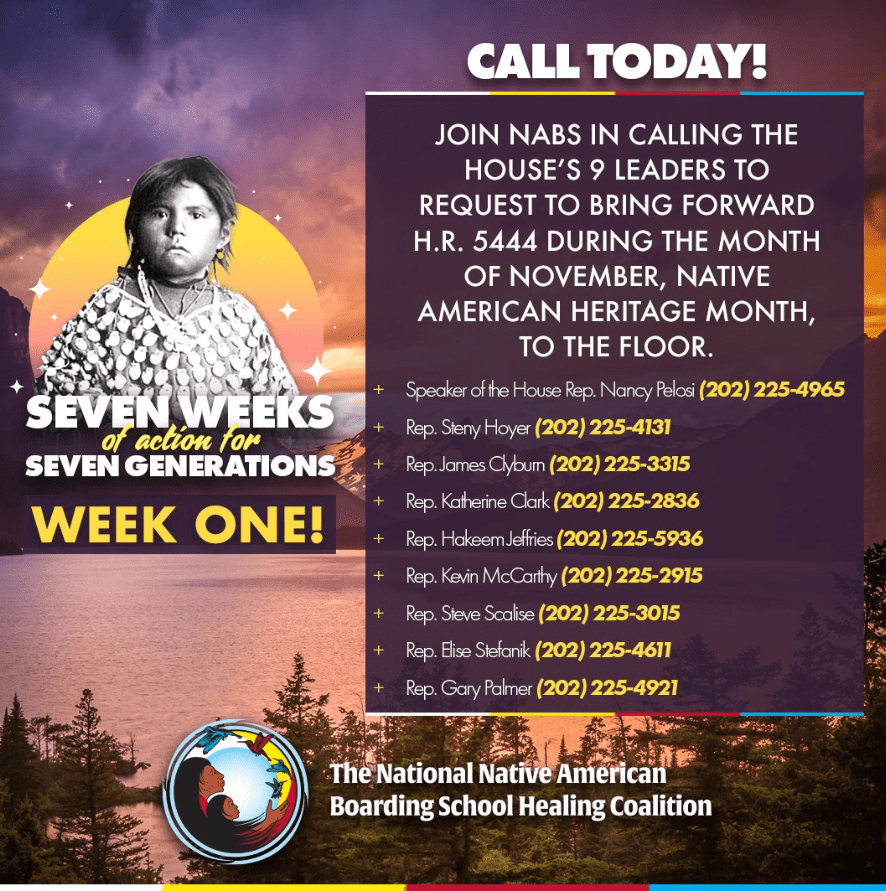
      Week One of Seven: Help us bring justice, accountability, awareness, and healing by telling the unvarnished truth about America’s history and genocide committed against Indigenous Peoples by way of Federal Indian boarding school policies. NABS asks that you please call the U.S. House leadership and request “they bring forward HR. 5444, the Truth and Healing Commission to the floor to vote on during November which is Native American Heritage Month.” #NABS#Time4Justice


      Lobbying Senator Ernst’s staff about S. 2907

      Reflections on Reflections

      The First Nation-Farmer Climate Unity March involved a group of about thirty native and non-native people walking, eating, and camping together for 8 days. We walked ninety-four miles from Des Moines to Fort Dodge Iowa, along the route of the Dakota Access Pipeline during the first week of September 2018.

      It was a bit amazing when I read the following as I’m reflecting on my experiences and friendships from the March.

      Roughly a year later, in 2019, as part of my work at the Dechinta Centre for Research and Learning in Denendeh, I helped organize a solidarity gathering that took place in March, in the territory of the Yellowknives Dene First Nation (YKDFN). Our idea was simple—to invite a small group of Black, Brown and Indigenous activists, thinkers, writers, and organizers to spend time with us, in the spring, on an island in what the Yellowknives Dene known as Tindeè, or “big lake.” Together we fished nets under the ice, travelled by snowmobile and sleigh across the frozen lake, shared moose ribs cooked over the fire, stories from YKDFN Elders, our own ideas, and time with each other.

      We wanted to invest in our relationship with each other and our affinities, outside of the institution, the internet, and crises, because we believed that the land would pull out a different set of conversations and gift us with a different way of relating. We wanted to sit together on the land, immersed in a Dene world, engage in a practice of Dene hospitality to see if we related to each other in a different way. This is exactly what happened. The land nurtured a set of conversations and way of relating to each other outside of the institution and its formations.

      Maynard, Robyn; Simpson, Leanne Betasamosake. Rehearsals for Living (Abolitionist Papers) (p. 35). Haymarket Books. Kindle Edition.

      In many ways the March was transformative for me. I wrote a long blog post of reflections on the March in early 2020. See: Reflections on the March.

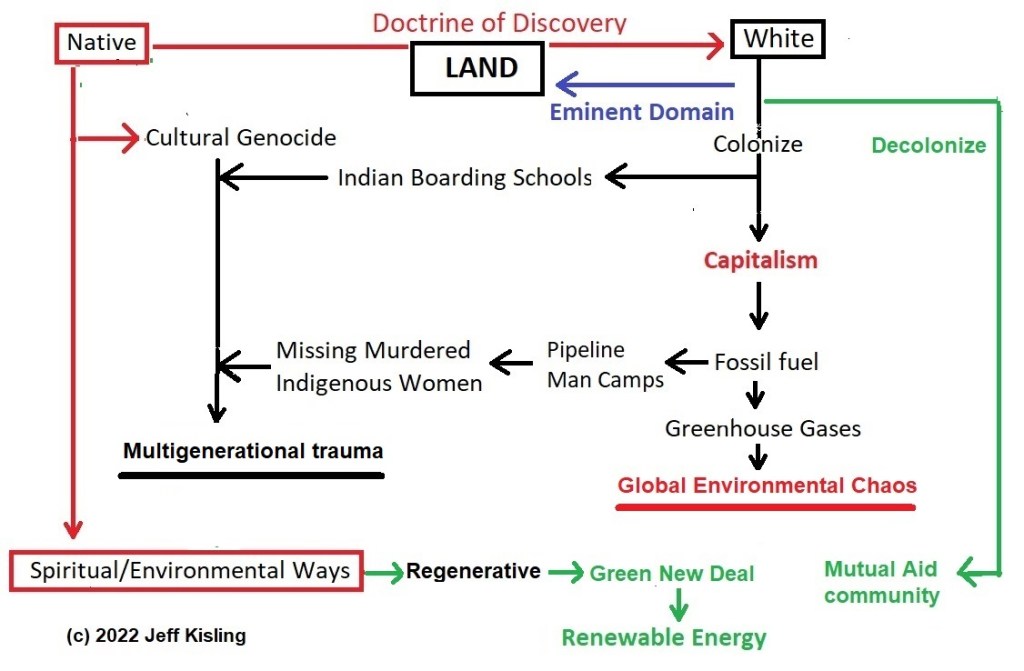
      The world, and I, have changed a lot in just the two years since those reflections were written. These two images represent the time span between the March and work we are doing today.


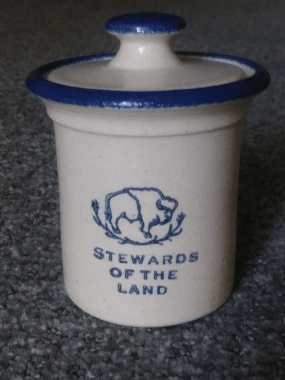
      The first time I attended Quaker meeting after the March (2018), Russ Leckband gave me this piece of pottery, which was still warm from the kiln. The graphic on the right is about the Buffalo Rebellion, a climate justice summit, that I attended earlier this year.
      (See: https://quakersandreligioussocialism.com/?s=Buffalo+rebellion )

      I suppose this blog post is more reflections on the prior reflections.
      (As a photographer, I envision what that might look like)

      Indy Art Jeff Kisling

      Changes since the March in 2018

      Environmental devastation and chaos are occurring much more rapidly than expected. In some ways not anticipated. The havoc from increasingly ferocious and frequent wildfires, violent storms, floods, and development of large areas of drought are overwhelming our social, economic, and political systems. Continued wars ruin or prevent the transport of vast quantities of agricultural products.

      So many of the systems we used to depend on, we no longer can. Municipal services such as water, power, sewage, and trash processing will fail, are failing.  Food will no longer be available in grocery stores. Medical services will collapse. What will happen to those in prisons and long-term care facilities? Financial failures will wreck the economy and end social safety nets.

      There are other compelling reasons to design and build new communities. Our economic system has not adapted to the loss of jobs overseas and to automation. There are simply not enough jobs for millions of people, and many of those who do have work are paid at poverty levels. Forced to depend upon increasingly diminishing social safety nets.

      The judicial and law enforcement systems work with extreme bias against people of color. What will the response of militarized police, armed forces, armed militias be as social unrest escalates?


      How do we respond? Some lessons learned from and since the March.

      It is one thing to talk about change, but it is becoming increasingly difficult to avoid the reality of the changes described above. So, this is not an intellectual exercise.

      Almost none of the White people I know, or have observed, are thinking of the radical changes necessary to deal with this evolving chaos. They are trapped in these failing systems and ways of being. Even those who recognize the many injustices of those systems.

      For many reasons I believe our responses will be a return toward Indigenous ways and the sustainable ways of our ancestors.

      White settler colonists must learn the true history, which was not taught to us. We can’t begin repair if we don’t know the underlying sources of injustice. We must stop treating the symptoms and instead focus on the causes, the underlying disease.

      I FEEL THAT I NEED TO go backward in order to go forward. If we are going to find a way to make livable lives in these times, it is necessary to move beyond “human-related activities”: the climate crisis is tethered to its origins in slavery and colonialism, genocide and capitalism.

      Maynard, Robyn; Simpson, Leanne Betasamosake. Rehearsals for Living (Abolitionist Papers) (p. 25). Haymarket Books. Kindle Edition.

      I’ve been learning about the #LANDBACK movement, but I hadn’t consciously made the connection to the land we walked and slept upon during the March. We were deeply affected when we crossed the pipeline. And were aware of how different it was to spend hours outside and away from the busy-ness of technology. Many more hours than usual for many of us. And yet time had that elastic property that made hours seem like minutes and vice versa as we traveled through space together. Hearing stories of the past that can help us face the future.

      Most of my White friends are horrified as they are learning more about the atrocities committed at the Indian boarding schools. Can hardly believe thousands of children died there. But they are being forced to as the remains of the children are being located.

      White people cannot process these things and begin healing as long as they remain in the their White spaces and thinking. And deny any responsibility for what was done in the past.

      My hope and prayer is a mass movement of us build Mutual Aid networks.

      As William Shakespeare wrote, “what’s past is prolog”. Native children are still being taken from their families in the guise of child welfare. Native children are still forcefully assimilated when they are forced to read the White settler colonist view of history.

      My involvement in Mutual Aid for the past two years has resulted in significant changes in my life. Changes that can be done now and help us move into the future. Another quote from the book Rehearsals for Living eloquently describes Mutual Aid.

      My hope and prayer is a mass movement of us build Mutual Aid networks.

      You and your relations, my friend, are (still) busy building a different world at the end of this one. This is something I’ve emphasized over and over again in my own work. I cherish the belief and practice that it is never enough to just critique the system and name our oppression. We also have to create the alternative, on the ground and in real time. In part, for me, because Nishnaabeg ethics and theory demand no less. In part because in Nishnaabeg thinking, knowledge is mobilized, generated, and shared by collectively doing. It’s more than that, though. There is an aspect of self-determination and ethical engagement in organizing to meet our peoples’ material needs. There is a collective emotional lift in doing something worthwhile for our peoples’ benefit, however short-lived that benefit might be. These spaces become intergenerational, diverse places of Indigenous joy, care and conversation, and these conversations can be affirming, naming, critiquing, as well as rejecting and pushing back against the current systems of oppression. This for me seems like the practice of movement-building that our respective radical practices have been engaged with for centuries.

      Maynard, Robyn; Simpson, Leanne Betasamosake. Rehearsals for Living (Abolitionist Papers) (p. 39). Haymarket Books. Kindle Edition.

      Following is the latest version of a diagram I’ve been working on to visualize some of what I’ve expressed above.

      Day 8: First Nation Farmer Climate Unity March

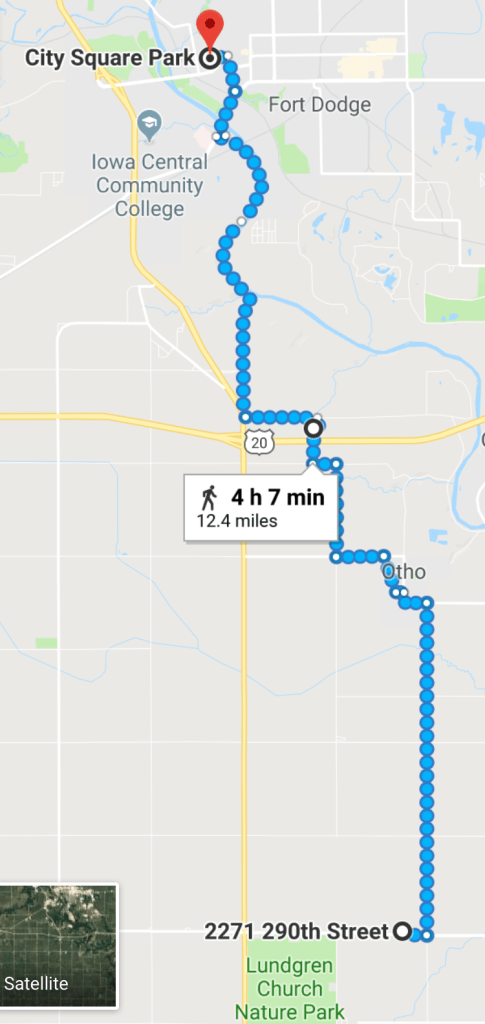
      Eighth and final day.  September 8, 2018.  Walk 12.4 miles from Otho to the end of the march at Fort Dodge, Iowa.

      It was cold when we awoke this morning at 6:00 a.m. and broke camp in the dark. I didn’t want to get out of the sleeping bag. But this was the big day, one we were both looking forward to, and not. Fortunately, hot coffee was ready. Last night we talked about the need to get going early, because people would be expecting us to arrive in Fort Dodge by 1:30 pm. Many of us were skeptical that we could leave early enough to walk the 12.4 miles to get there in time, but we managed to do so.

      One way this will be an interesting day for me is because my camera battery finally died. I thought it would last and hadn’t brought my battery charger. So, the photos of this final day of the march were taken with my cell phone camera.

      Before we started walking, we had a nice ceremony where we gave the money we had collected to Alton and Foxy as a gift for their upcoming wedding. Fintan decorated the envelope.


      Alton and Foxy didn’t know about the money we collected for their upcoming wedding

      Many times I heard people talking about how sad they will be when the March is finished. Many friendships had been made, as you can see from all the smiles in the photos.


      Among my many new friends were Matt and Alton, so I was glad to have the selfie Alton took of us, and the photo Miriam took of Matt and I. Matt and I talked much of this final day of the March. Since the end of the March we have chatted via Messenger. I’m glad we’re keeping in touch. He is editing more of the video he took during the March and I look forward to seeing them.


      Alton and I
      Matt and I

      We had a police escort through downtown Fort Dodge. At the City Square Park the tipi had been set up.

      Foxy and Donnielle

      Arriving at park in Fort Dodge

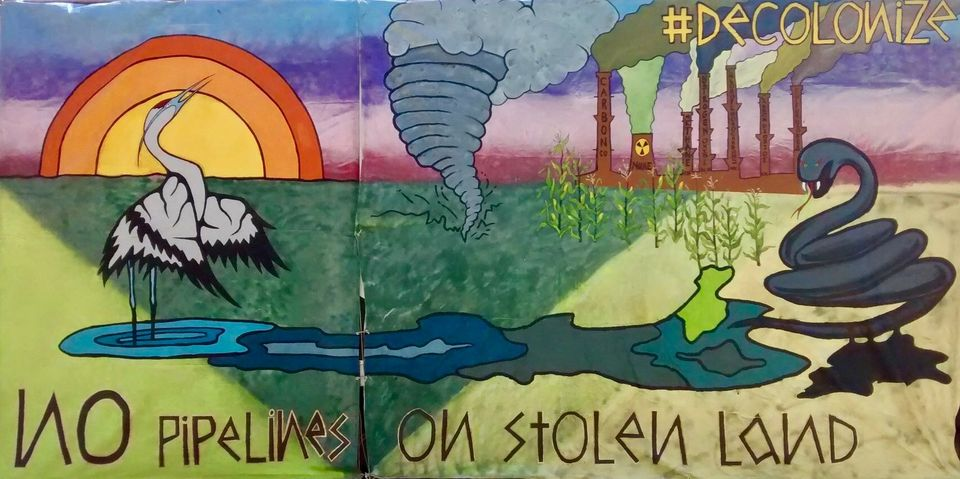
      I was amazed by the huge mural that hung on the side of the gear truck. Several people had been working on this all during the week.


      Sikowis (Christine) Nobiss

      Donnielle EWanatee

      Drummers played and sang the “Mni Wiconi Song.” According to The Messenger newspaper, the English translation of the lyrics is:

      “Grandmother earth gives life
      The water is sacred
      The water that gives life is sacred
      DAPL is very bad
      The Nation needs to take heart and be brave.”


      The Messenger published a nice summary of the March and celebration, with photos, including one of my bandaged foot and shoes. “Many steps. One journey”, September 10, 2018.

      http://www.messengernews.net/news/local-news/2018/09/many-steps-one-journey/

      The band Brutal Republic performed. All of their equipment was being powered by the solar system that had accompanied us all week. My brother Randy, who was there to give me a ride home, thought they sounded really good and would have like to stay for a while. But I was way too tired to enjoy it.

      During the week we came to understand how much work was involved in planning and guiding this March, and are very grateful. So many people contributed in so many ways.

      I hope we can be together again soon. As our environmental chaos gets worse, I think a combination of the knowledge and wisdom of Indigenous people and progressive farmers, thinkers and activists will be crucial.


      Two-eyed seeing “recognizes the benefits of seeing from one eye with the strengths of Indigenous ways of knowing, from the other eye the strengths of the Western ways of knowing, and using both of these eyes together to create new forms of understanding and insight.” 

      Elder Albert Marshall (Mi’kmaq, Eskasoni First Nation) from Urban Tribes, edited by Lisa Charleyboy and Mary Beth Leatherdale