Our path to planetary rebirth is paved with fear. …These unacknowledged fears feed our depression, and if allowed to fester in our unconscious mind, they will eventually drown us in a sea of despair. But there is a great secret in all this that makes it a lot less intimidating. Like the darkness which is now consuming our world, fear cannot withstand the light. In this case, the bright light shines forth in the form of simple awareness. In politics, information is power. But when it comes to the climate crisis, awareness is where our power lies. Please do not underestimate it.
Consider that the only power fear has is in its unacknowledged state. As psychologists have appreciated for some time now, our actions are largely controlled by our shadow selves, and our shadow selves are shaped by our unacknowledged fears. By acknowledging, confronting, and processing these fears, through awareness we emerge from the self-imposed darkness, into the warm glow of that light, we human beings can do anything we put our minds to. Thus, in every emergency, there is the potential for emergence into some transformed state of being. That is the latent, unlimited power of awareness.
I look forward to worshiping with my Quaker meeting this morning. We speak of the Inner Light as the expression of the presence of the Spirit in our lives. Knowing this Spirit is in all things, human and nonhuman, helps us value everything. In our silent Quaker meetings, we seek to hear what this Spirit is telling us in the present moment. We have this awareness of the Spirit which can conquer our fears. “By acknowledging, confronting, and processing these fears, through awareness we emerge from the self-imposed darkness, into the warm glow of that light, we human beings can do anything we put our minds to.”
To practice hope is to face hard truths, harder truths than you can face without the practice of hope. You can’t navigate dark places without a light, and hope is that light for humanity’s dark places.
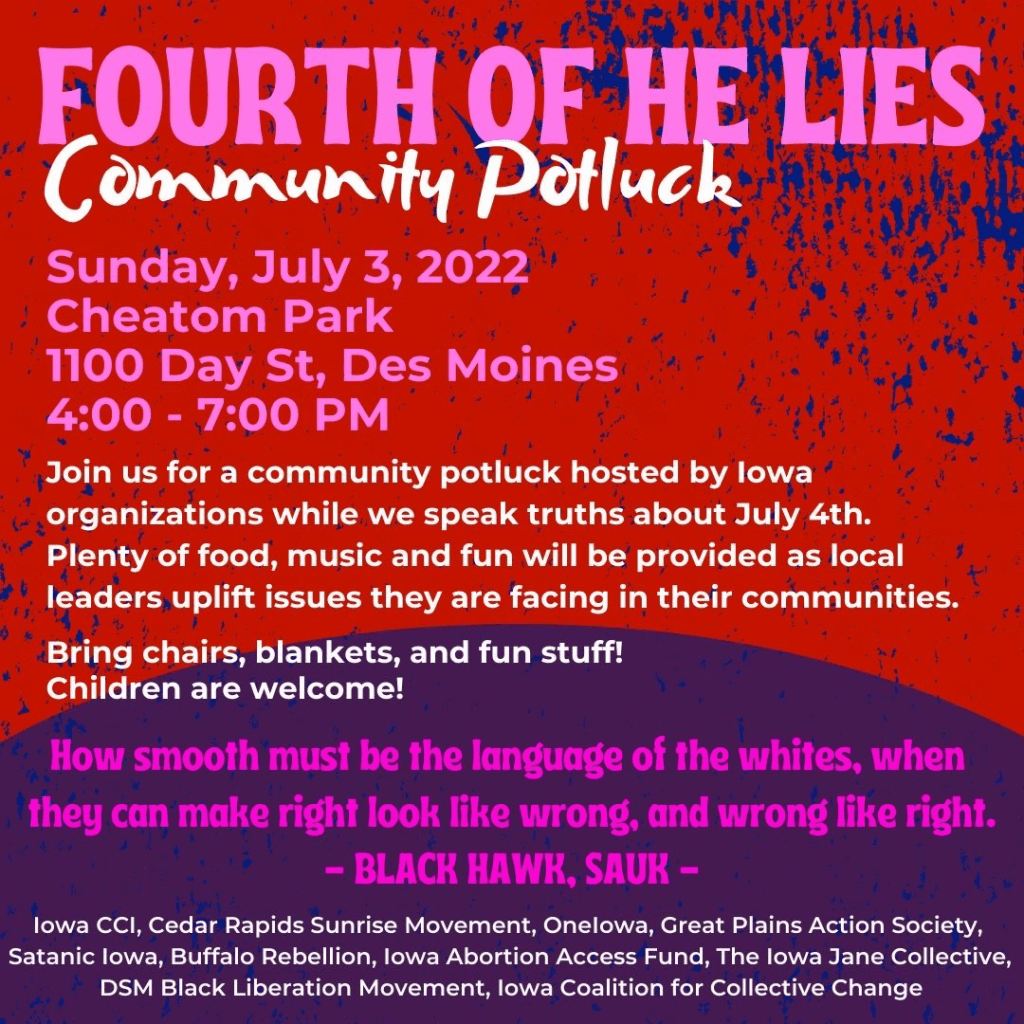
I especially hope many of my white friends, especially Quakers, might attend the Fourth of He Lies community potluck. If you are a white person, like me, try to imagine how black, indigenous, and other people of color (BIPOC) feel about all the celebrations and speeches going on now related to the 4th of July.
You can find out how some BIPOC folks feel by attending the Fourth of He Lies community potluck Sunday, July 3rd at Cheatom Park, 1100 Day Street, Des Moines, from 4 – 7 pm. Children welcome.
In 2017 I retired to Iowa after my career at Indiana University Medical Center. It was difficult to leave the many friends I have in numerous justice communities in Indianapolis.
I am blessed to have made so many new friends in the Midwest and work with their/our organizations today. That includes working, directly or indirectly with all of the organizations below that are sponsoring the community potluck, with the exception of Satanic Iowa. I made an assumption that didn’t turn out to be true, i.e., that they were related to what I thought Satanic was. All I know is what I found on Wikipedia this morning. “The Satanic Temple, often abbreviated TST, is a nontheistic religious and human rights organization that is primarily based in the United States,[1][2][3][4] I hope I can make it to the potluck and learn more.
Before I learned what The Satanic Temple really was about, I had no doubt my friends in the other organizations below approved of them being included as sponsors of the potluck.
This also brings to mind the term “fusion politics” that I learned from Rev. William Barber. The concept is to unite disparate organizations around the issues they agree on and can work on together.
Finally, I’m working to get Quaker communities to embrace the concepts of Mutual Aid. An important part of Mutual Aid is to work with all of the justice organizations in the vicinity of the Mutual Aid community. This potluck is an opportunity for Friends to learn about organizations doing great work in our communities. Organizations they might become involved with in their own Mutual Aid communities.
Join us for a community potluck hosted by Iowa organizations while we speak truths about July 4th. Plenty of food, music, and fun will be provided as local leaders uplift issues they are facing in their communities.
Bring chairs, blankets, and fun stuff! Children are welcome!
Hosted by Great Plains Action Society, Iowa CCI, Cedar Rapids Sunrise. Other organizations are welcome to join–to bring some food, to table and speak! Please contact Sikowis at sikowis@greatplainsaction.org for more information. https://www.facebook.com/events/369803928574457
The colonists obsessed about British regulations on immigration and trade and what they considered an excessive number of British officials present in the colonies. They ignored the injustices they inflicted on others. They rose up against figurative enslavement by the Crown while literally enslaving people in America.
What we get wrong about the Fourth of July. If our deepest values are democracy and equality, then why do we celebrate a slaveholders’ rebellion as the birth of our nation? By Kermit Roosevelt III, The Boston Globe, June 30, 2022
Buffalo Rebellion is a coalition of Iowa grassroots organizations that are growing a movement for climate action that centers racial and economic justice!
Formed in 2021, Buffalo Rebellion is comprised of seven Iowa organizations: Great Plains Action Society, DSM Black Liberation Movement, Iowa Migrant Movement for Justice, Sierra Club Beyond Coal, Cedar Rapids Sunrise Movement, SEIU Local 199, and Iowa CCI https://www.facebook.com/IowaBuffaloRebellion
Iowa Citizens for Community Improvement With thousands of members from all walks of life, we get things done on critical issues https://www.facebook.com/iowacci
The Satanic Temple, often abbreviated TST, is a nontheistic religious and human rights organization that is primarily based in the United States,[1][2][3][4] with additional congregations in Canada, Australia, and the United Kingdom.[5][6] Co-founded by Lucien Greaves, the organization’s spokesperson, and Malcolm Jarry,[7][8] the organization uses Satanic imagery to promote egalitarianism, social justice, and the separation of church and state, supporting their mission “to encourage benevolence and empathy [among all people].”[9] The Satanic Temple has utilized satire, theatrical ploys, humor, and legal action in their public campaigns to “generate attention and prompt people to reevaluate fears and perceptions”,[10] and to “highlight religious hypocrisy and encroachment on religious freedom.”[7][11][12][13]
The Satanic Temple does not believe in a supernatural Satan; instead it employs the literary Satan as a metaphor to promote pragmatic skepticism, rational reciprocity, personal autonomy, and curiosity.[8] Satan is thus used as a symbol representing “the eternal rebel” against arbitrary authority and social norms.[14][15] Adherents generally refer to their religion as “Satanism” or “Modern Satanism“,[16] while others refer to TST’s religion as Compassionate Satanism or Seven Tenet Satanism.[17][18]
The organization’s participation in public affairs includes political actions as well as lobbying efforts,[19][20] with a focus on exposing Christian privilege when it interferes with personal religious freedom. It considers marriage a religious sacrament that should be governed under the First Amendment’s protection of religious liberty which should prevail over state laws.[21] Because the group regards inviolability of the body as a key doctrine, it also views all restrictions on abortion, including mandatory waiting periods, as an infringement on the rights of Satanists to practice their religion.[22]
The crown and the colonists were both determined to seize lands from native peoples and to continue enslavement. But their interests were also hostile to one another and war was the inevitable result. White settlers wanted full independence for themselves and no control over their actions at all.
The indigenous populations were nearly eradicated in the decades long quest for conquest. Expanding slavery was an integral part of those efforts against native peoples. Genocide could not be carried out completely nor could any accommodation be made with European nations in the quest to control land from sea to shining sea. That is why the settlers declared their independence.
The process of decolonizing ourselves is a difficult one. We have been cut off from our history and we don’t know where or how our people played a part. As we try to educate ourselves we may find it difficult to give up traditions that we have claimed as our own. Regardless of personal choices made on July 4th, the causes of the Declaration of Independence must be known and acknowledged. That is the beginning of true independence for Black people.
THE TERRIBLE ORIGINS OF JULY 4TH By Margaret Kimberley, Black Agenda Report. July 3, 2021
This is a continuation of yesterday’s blog post, A crisis of Spirit. As I quoted yesterday, Zhiwa Woodbury says our environmental crisis is a crisis of spirit.
As a Quaker, spirituality has been central to how I’ve lived my life.
It was a spiritual vision that set me on my lifelong path of environmental activism.
This is the photo that was and still is my spiritual vision, literally. I took this photo of Long’s Peak in the early 1970’s. I printed it in my darkroom and kept it near me, a reminder of the mountains. Looking forward to returning.
Long’s Peak, Rocky Mountain National Park, Colorado
When I moved to Indianapolis in 1971, I was just shocked by the clouds of noxious smog. That was before catalytic converters. I could not, and still cannot understand how people could continue to drive when they were destroying our environment. I kept seeing an image of my beloved mountains obscured by smog. I would look at the photo above and imagine not being able to see that in the future. That was incomprehensible and devastating and led me to refuse to have a car for the rest of my life.
But I felt I had failed when I was unable to convince anyone else at all to give up their car. However, the strong spiritual force I felt throughout my life related to our environment never waned.
The book speaks of our lost connection with nature.
I was raised on farms. And the Quaker boarding high school I attended, Scattergood Friends School, is on the land of a working farm. Some of our daily work crews included working on the farm, raising pigs and pruning the apple trees in the orchard.
It was amazing that our family vacations were camping trips to National Parks. Our favorite was Rocky Mountain National Park, where the photo above was taken.
Not having a car meant I spent hours every day in nature. Walking to and from work. And running nearly every day. That walking took much longer than it would have otherwise because I carried my camera with me and would stop to take photos. Walking made me pay close attention to where I was (in nature) as I looked for images to capture. The more experience I had, the more variety and detail I was able to see and capture. Being out in all kinds of light and weather provided opportunities to learn to photograph in difficult situations.
All this meant I didn’t completely lose my connection with nature.
Again, Woodbury points out the importance of spirituality.
“If we have an appropriate spiritual container for processing this natural grief, then we will be transformed by the expression of our repressed grief. We will have greater joy. So… Do not be afraid.”
The American Dream has become the natural world’s worst nightmare. We must rouse ourselves from this suicidal slumber…
Over the course of our lives, we have all repressed natural feelings of grief over our lost connection to nature herself, our true nature, and we all harbor deep fears as a result. When we get in touch with these feelings and fears, there is a tremendous release of tension, anxiety, and depression. If we have an appropriate spiritual container for processing this natural grief, then we will be transformed by the expression of our repressed grief. We will have greater joy. So…
Do not be afraid.
By acknowledging the losses we have experienced in relation to nature, by embracing our fears and seeing them as intelligent guides along our spiritual path, we have nothing more to lose, really, and everything in the world to gain.
It is in the hearts and minds of human beings that the causes and cures of the ecocatastrope are to be found.
Ralph Metzner
While it would be lovely if we would all awaken together, the truth of the matter is that we can only do this one mind at a time. No one will lead us out of this crisis to some new promised land. We will only emerge from the climate crisis by taking responsibility for it upon ourselves–by assuming authority for our own psychological state of well being, and by reconnecting to this amazing planet through our very personal connections to the natural world-no matter where we live-and to our collective psyche, which will look different for each one of us.
Yesterday I wrote, “for millennia, people lived in sustainable ways. Life was often a struggle. But people did not use more resources than what could be replenished. They lived sustainably. What has been different over the past several generations has been the wealthy and powerful asserting their dominance not only over people, but over Mother Earth herself with disastrous consequences.”
The reason I wanted for so long to find connections with indigenous peoples was because of their sustainable lifestyles. And from what little I knew, how spirituality was the basis of their lives.
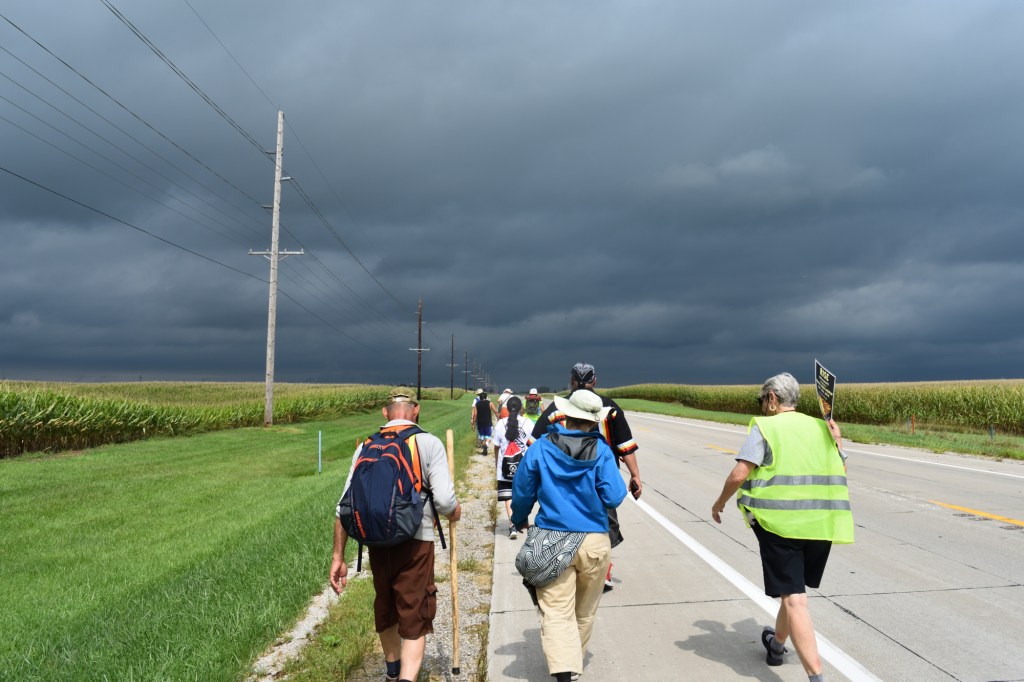
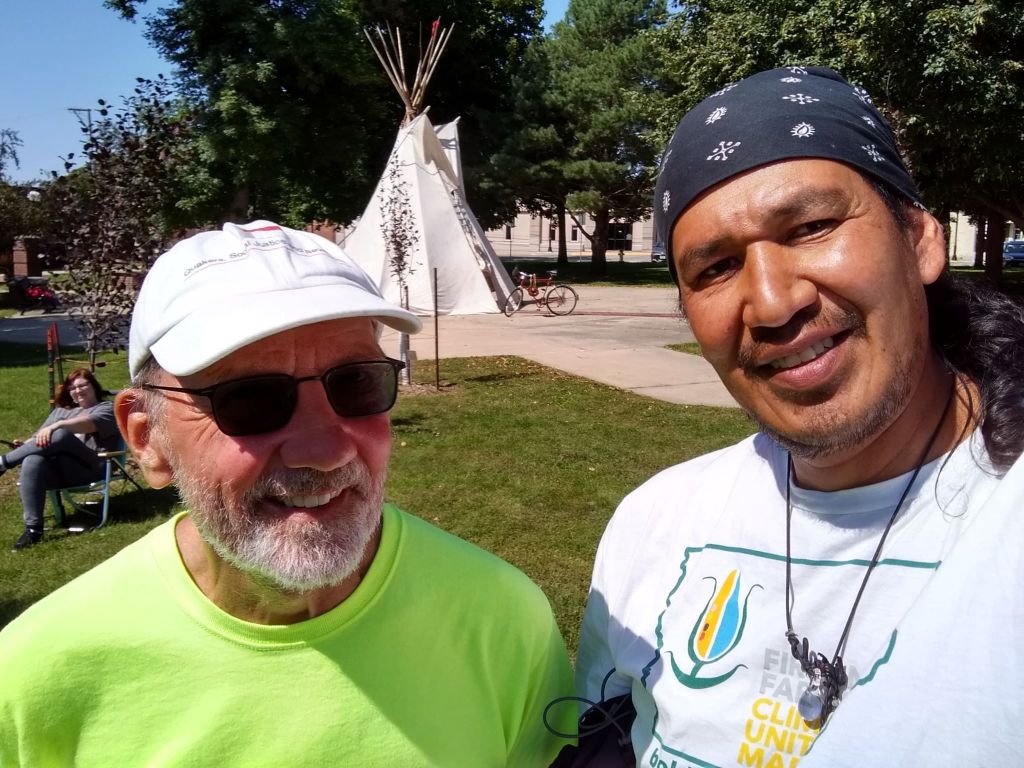
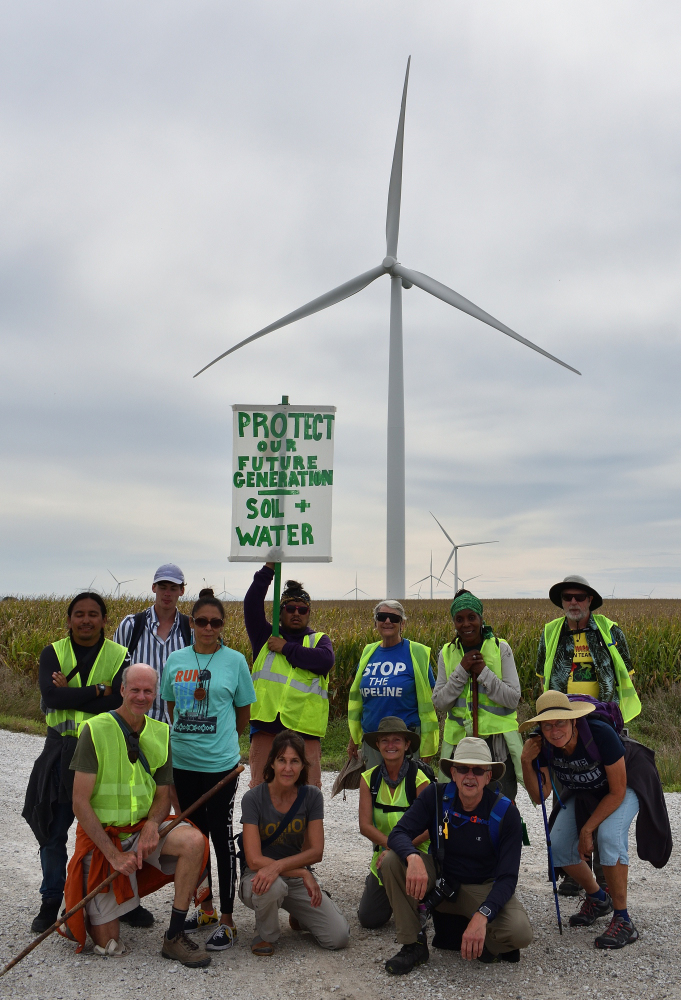
I am blessed to now have many indigenous friends. Most of those friendships began as we walked and camped together along the path of the Dakota Access pipeline for eight days in 2018 on the First Nation-Farmer Climate Unity March. https://firstnationfarmer.com/
I really wanted to learn about the spirituality of my indigenous friends, but I didn’t know how to bridge the barriers between us, because of the Quaker involvement in the Indian boarding/residential schools. The Spirit led me to speak to some of these friends about the Quaker involvement in forced assimilation. I won’t say more than that, in fear of others doing something similar without first having deep relationships, and Spiritual guidance to do so.
I will say this has resulted in opportunities for further Spiritual sharing. Recently one friend said she was glad to hear Quakers grieved for Friend’s participation in forced assimilation. Among other things, this made it possible for her to ask me if Quakers might support a video documentary being made about the residential school of her nation. Which we did.
Zhiwa Woodbury is an Earth Protector. Wildlife Advocate. Doctor of Natural Law(yer), Ecopsychologist, Long-time devoted dharma practitioner and hospice volunteer. Motivated by compassion. View all posts by ecopsi2day
The climate crisis we face is not an environmental problem, and there is no environmental solution. It is not a political issue, and there will be no timely political solutions forthcoming. It is certainly a moral issue, as recognized by Pope Francis and every religion should treat this as such. But given the deep psychological roots of our behavior, moralizing about climate change is also not the solution. No, this is a crisis of spirit, a crisis in relationship, raising the question who we humans really are. We can think of it as a kind of collective identity crisis-one that will only be resolved when a critical mass of human beings heal the split between our Psyche, or collective soul, and nature, the soul of the world.
In gaining mastery over nature, asserting unimaginable control over the very forces of creation and destruction, we seem to have severed our connection to nature at its very root, objectifying the earth and each other, commodifying our lives, designing artificial living environments called suburbs, and creating an entirely new, virtual reality to soothe our aching souls. In the process, we unintentionally isolated ourselves from our own true nature as earthlings – creatures of the earth. We created a social and cultural matrix of isolation, and then we proceeded to act out this story of separation, objectification, modification, and alienation in increasingly harmful ways, until now we are unraveling the very fabric of life and assaulting the global ecosystem that has nourished and supported us, and all beings since beginningless time.
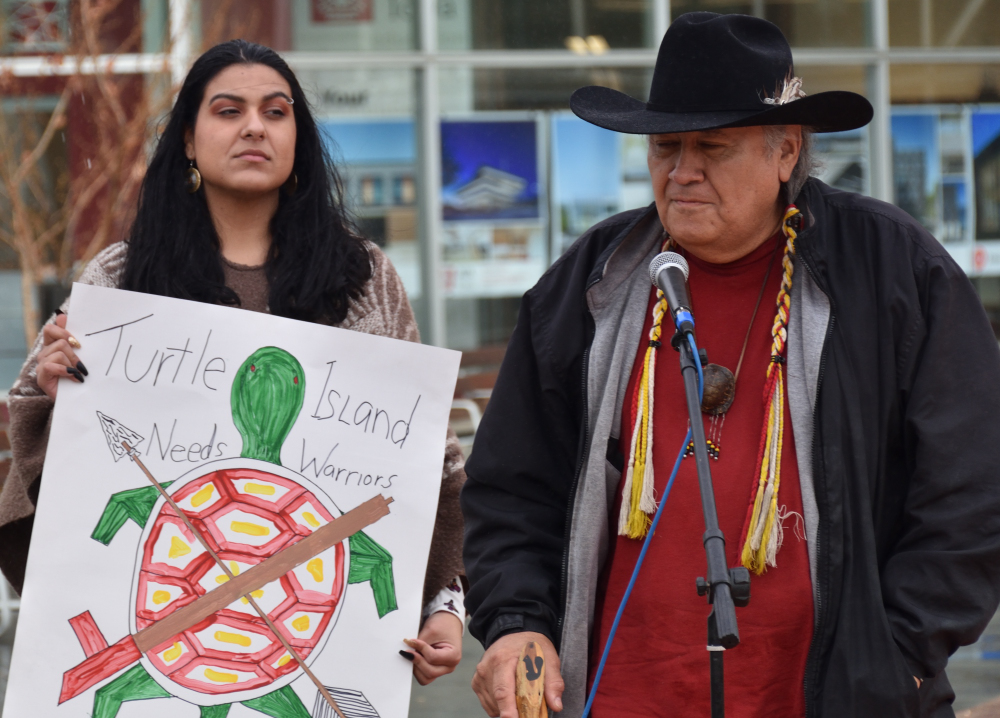
That locomotive force of ignorance and greed rolled right over and through the ancient inhabitants of this new world, and quickly laid waste to the natural abundance that they had been caretakers of for millennia. Certainly, it would be difficult to imagine a more traumatic war against nature than the genocide that Europeans visited on the Earth-based cultures of the indigenous tribes of Turtle Island, or a more heart-breaking ecocide than reducing the dominant species here when we landed, the majestic and socially developed American Buffalo, bison bison, from 60 million to fewer than 6000 today-a thousand-fold reduction via slaughter.
While we see the result in the extreme polarization of society, this split is not irreparable, we humans are not irredeemable, and the truth and reconciliation process that needs to happen is not all that complicated. To become whole again, to restore the natural part of “human nature,” requires only that we hear the deafening call of the natural world, and recognize that something is terribly amiss within, as well as reflected without. Only then can we actively engage in a concerted, conscientious effort to heal the psychic wound we can all still feel in our hearts whenever we stop numbing ourselves to the dreadful pain inherent in our present predicament.
“In our prophecies they say we are now at the crossroads: we either unite spiritually as a global nation, or face chaos, disasters, sickness and tears from our relatives’ eyes.”
Chief Arvol Looking Horse, from the Standing Rock Tribe of Lakota Nation
I continue to pray how to express what I’ve been learning about Mutual Aid, especially because I will be speaking about this in several weeks. What is confusing is Mutual Aid will not seem like a new concept. That is because it is not. What I need to convey is why we are at a point where we have no choice but to change. And that change is back to supportive local communities (Mutual Aid communities).
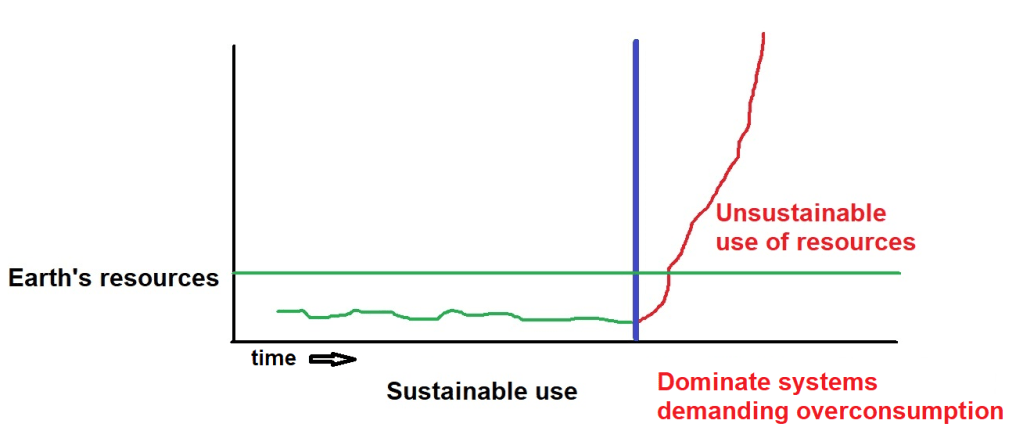
For millennia, people lived in sustainable ways. Life was often a struggle. But people did not use more resources than what could be replenished (up to the blue line in the graph below). They lived sustainably.
What has been different over the past several generations has been the wealthy and powerful asserting their dominance not only over people, but over Mother Earth herself with disastrous consequences.
The mistake the elites made was to view money as power. They achieved their goal to accumulate massive amounts of money and the material things that could be bought. In the process they impoverished the masses who would have kept the cycles of capitalism moving. Now their wealth is worthless.
The other mistake the elites made was to disregard the conservation of resources that fed the machines that built their wealth. Conservation necessary to sustain the very lives of everything on the planet. Now that the disastrous consequences from that overconsumption can no longer be ignored, the elites build fortresses to hide in. Those shelters cannot sustain them for long. Thus, even the elites are being forced to realize they face extinction along with the rest of us.
The elites could only have done these things by turning their back on the Creator. Perhaps the gravest mistake they made.
I’ve been praying and thinking about all these things since I moved to Indianapolis in 1970 where I was horrified by the foul clouds of smog. There was obviously something very wrong happening. In the years since, I’ve asked the Creator what I could do. I was led to live without a car. To fight against pipelines.
And yet, here we are.
We’re at an intersection where we can no longer rely on so many things we once could. We’re bewildered by the collapse of so many things we took for granted. Such as our educational, healthcare, and economic systems. The dramatic turn of our political and justice systems to destroy our freedoms, to increasingly oppress us. Collapse of our communities, including family, neighborhoods, and faith. Desecration of Mother Earth herself.
When I look at the world today, I see something chilling. Collapse is already here — and it’s spreading. And next to it is the curious juxtaposition of pretending that life will go on “normally.” I’ve warned forsome time now that we’re entering an age of collapse, where our great systems will fail — and if you look around now, you can see it beginning to happen.
We’re going to talk about this in three forms — political, economic, and social systems — and on two levels, national and global systems. What’s alarming — oh no, am I an alarmist? — is that now our systems are visibly beginning to fail, and fail incredibly swiftly, in all of those ways.
We have no choice but to change our ways as we move into the future. Those changes involve returning to the beloved communities of our ancestors. And that is what Mutual Aid is all about.
Mutual Aid
What do we do now? We rebuild our communities in ways not based upon money and dominance. Such communities thrive all over the world. Indigenous peoples have always lived this way. Even generations of white people once did so. Simply stated, Mutual Aid is a framework that can help return to those ways of living.
The concept of Mutual Aid is simple to explain but can result in transformative change. Mutual Aid involves everyone coming together to find a solution for problems we all face. This is a radical departure from “us” helping “them”. Instead, we all work together to find and implement solutions. To work together means we must be physically present with each other. Mutual Aid cannot be done by committee or donations. We build Beloved communities as we get to know each other. Build solidarity. An important part of Mutual Aid is creating these networks of people who know and trust each other. When new challenges arise, these networks are in place, ready to meet them.
Another important part of Mutual Aid is the transformation of those involved. This means both those who are providing help, and those receiving it.
With Mutual Aid, people learn to live in a community where there is no vertical hierarchy. A community where everyone has a voice. A model that results in enthusiastic participation. A model that makes the vertical hierarchy required for white supremacy impossible.
Commonly there are several Mutual Aid projects in a community. The initial projects usually relate to survival needs. One might be a food giveaway. Another helping those who need shelter. Many Mutual Aid groups often have a bail fund, to support those arrested for agitating for change. And accompany those arrested when they go to court.
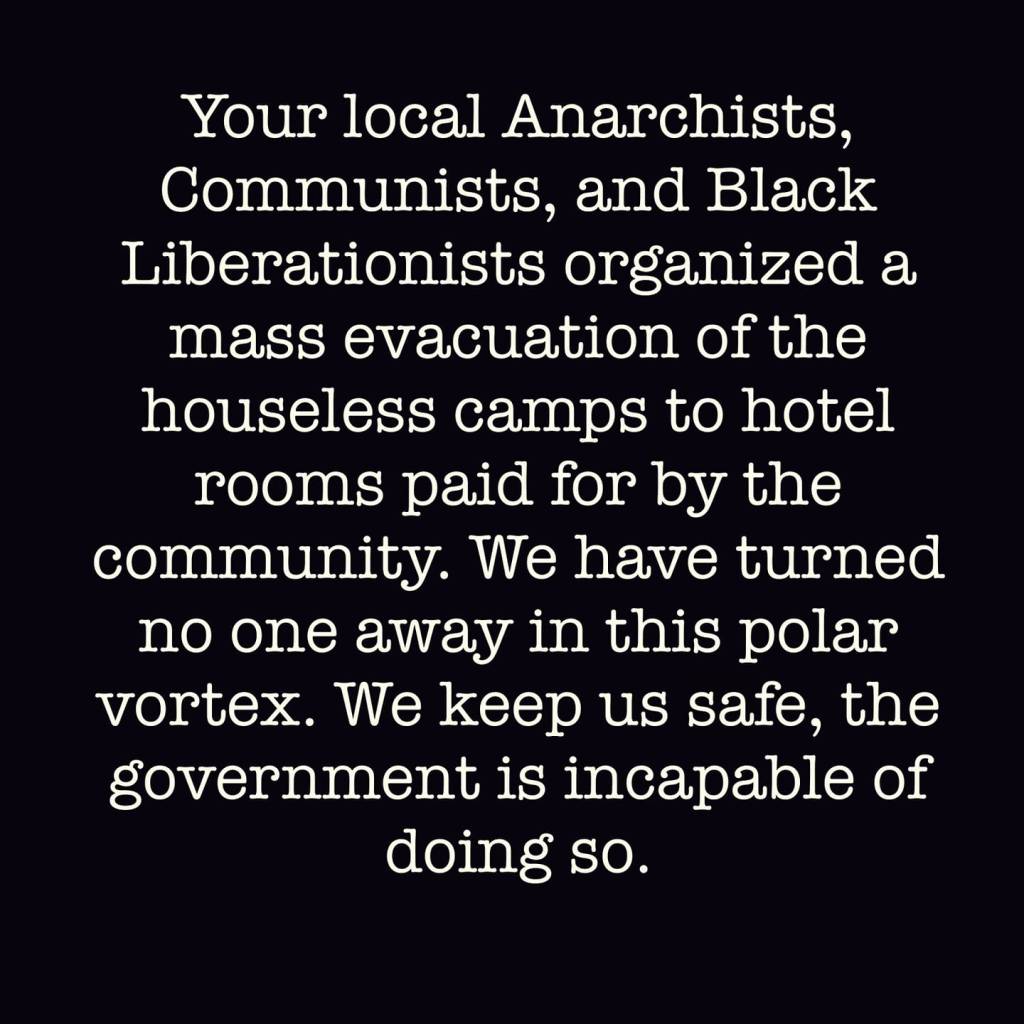
Recently I came upon this Love Letter written by my Mutual Aid community in Des Moines, that expresses this so well.
One year ago yesterday Des Moines Mutual Aid participated in a march protesting the potential for war or increased hostilities with Iran that followed the fallout of the assassination of Qassem Soleimani by drone strike in Baghdad.
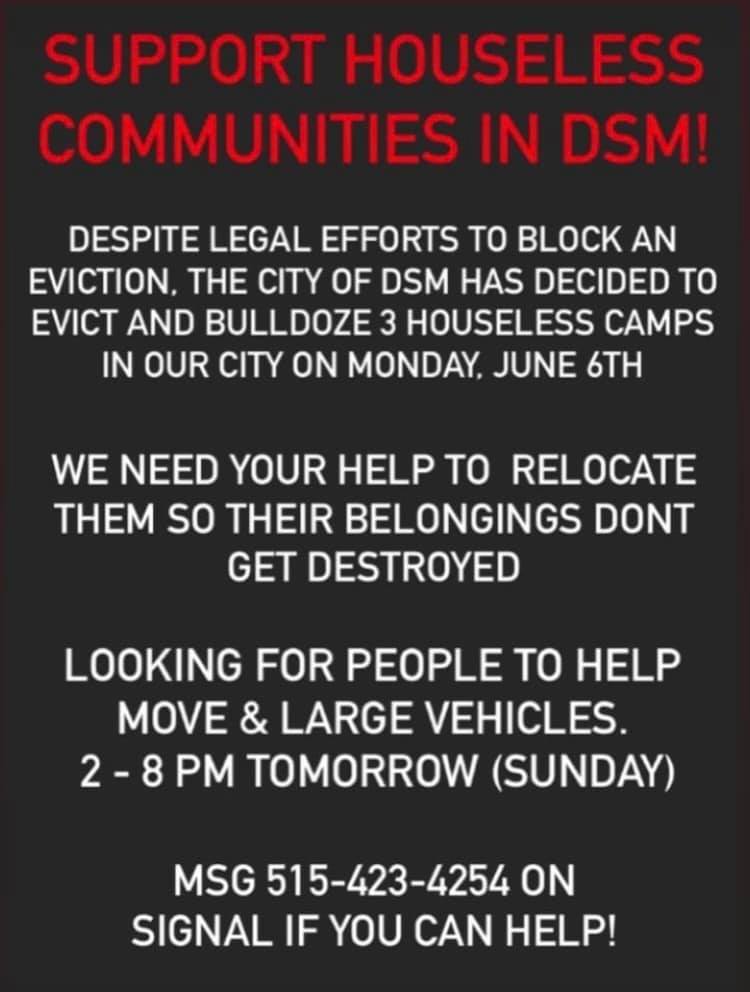
This was our first “public” event since adopting the name Des Moines Mutual Aid, a name we gave our crew during our growing work with our relatives at the houseless camps throughout the city and our help with coordinating a weekly free grocery store that has a 50 year history, founded by the Des Moines Chapter of The Black Panther Party For Self Defense.
A year ago we started laying the foundation for work we had no idea what was coming.
As we were adjusting our work with the camps and grocery re-distribution in response to the Covid-19 pandemic, both that continued to grow in need and importance, the police continued their jobs and legacy of brutality and murder.
This nation exploded in righteous rage in response to the pig murders of Breonna Taylor and George Floyd.
DMMA realized we were in a position to organize a bail fund to keep our fighters out of jail, both to keep the streets alive as a new phase of The Movement was being born, and because jails are a hotspot of Covid-19 spread.
Not to mention the racial and economic oppression that is the cash bail system.
In the past year DMMA has expanded it’s work in multiple directions and gained many partners and allies.
We partnered with the Des Moines Black Liberation Movement (@DesMoinesBLM) to create the DSM BLM Rent Relief initiative to help keep families in their homes in the midst of a pandemic and the winter.
The camp work has grown exponentially, but is being managed with our collaboration with Edna Griffin Mutual Aid (@egma_dsm), DSM Black Liberation Movement (@DesMoinesBLM), and The Great Plains Action Society (@PlainsAction).
The bail fund remains successful because of desire from the public and a partnership with Prairielands Freedom Fund (@prairielandsff) (formerly The Eastern Iowa Community Bond Project).
The weekly free food store has maintained itself, carrying on the legacy it inherited.
Every one of our accomplishments are directly tied to the support of so many people donating time, talent, and funds to the work. We are overwhelmed with all of your support and hope you feel we are honoring what we promised.
All of these Mutual Aid projects are just a few of many that this city has created in the last year in response to the many crises we face, not only confronting the problems and fulfilling the needs directly in front of us, but creating a sustainable movement that will be capable of responding to what’s next and shaping our collective futures as we replace the systems that fail us.
These last 12 months have been wild and a real test of all of our capabilities to collectively organize.
But it is clear that we as a city have what it takes to do what is needed in 2021, no matter what crisis is next.
We’re at the intersection of so many things we could once rely on and have no choice but to find different ways to move into the future. We’re bewildered by the collapse of so many things we took for granted. Such as our political, education, healthcare, and economic systems. Our communities, including family, neighborhoods, and faith. Mother Earth herself.
Above I first wrote “find new ways to move into the future”. But part of what follows is about returning to “old ways”. But not as nostalgia.
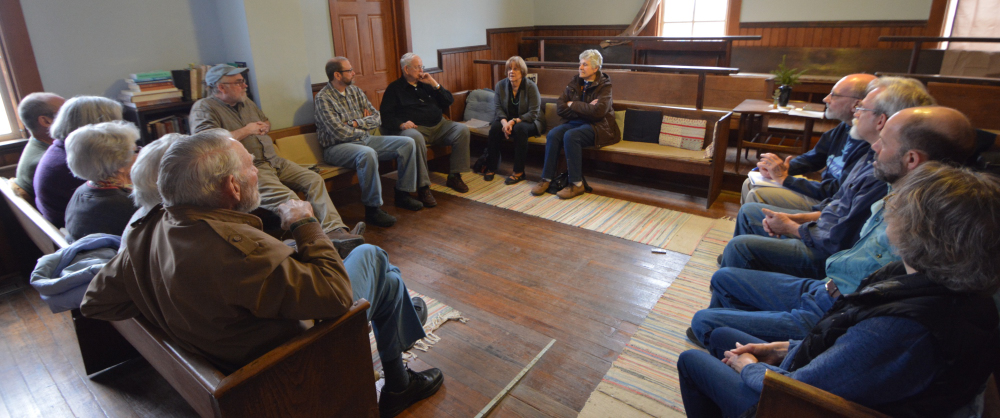
I’m excited to hear what Quakers will say about work they’re doing at a meeting tonight, which is why I’m praying about this now. This meeting is an invitation to Friends to talk about the history, and current relationships among Quakers and Indigenous peoples.
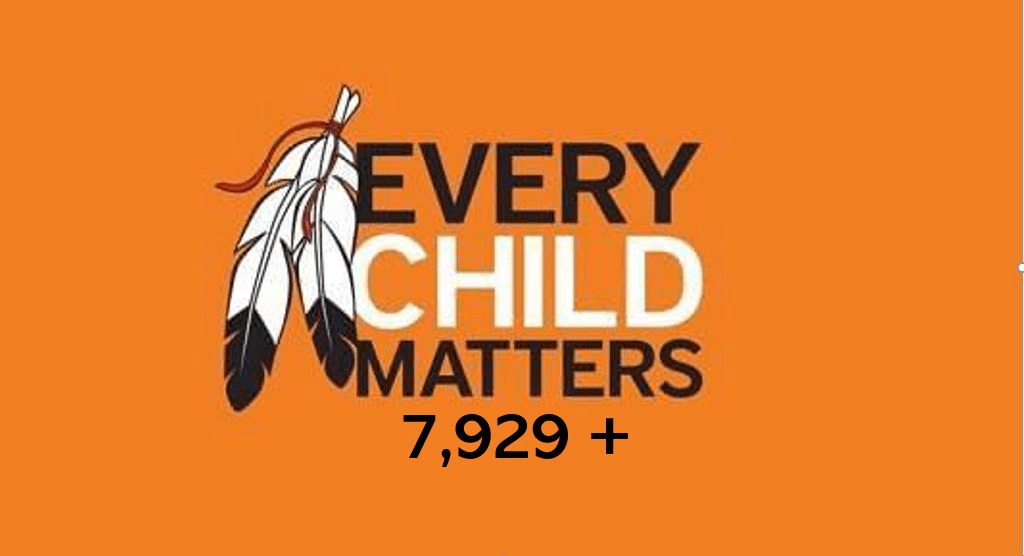
One part of this will be to research the history of Quaker involvement in the Indian boarding, or residential schools. Quakers were involved in some of these institutions of forced assimilation. We don’t know what individuals did and aren’t judging them. But looking back from here, we are learning of the terrible damage done to native children and their families and nations by these attempts to make children fit into white society. Devastating feelings are triggered as the remains of thousands of children continue to be located on the grounds of those residential schools.
In order for native peoples and Friends to work together, this history must somehow be acknowledged. In my own case, I only raised this with those I was becoming friends with. Then I said, “I know about Quakers’ involvement in the residential schools, and I’m sorry that happened.” And wait for their response. In every case I learned they and their families had been affected by those schools. I’m not sure that was the right way. I’ve since heard such apologies might better be done with more of a ceremony. In my case raising this was important for deepening friendships.
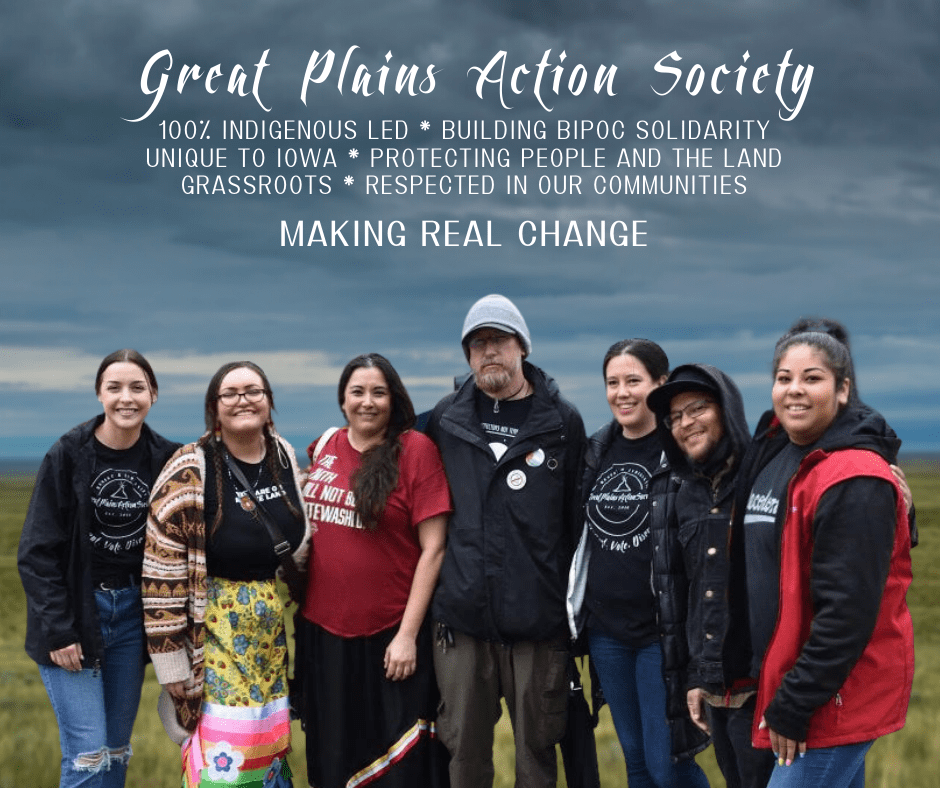
This is also in part the idea behind the title of this article. I’ve become increasingly involved in the work of Des Moines Mutual Aid, a concept I wasn’t aware of. It was a Spirit led meeting that brought my now good friend, Ronnie James, and I together two years ago. Ronnie is an Indigenous organizer and I’m very grateful he has been willing to be my Mutual Aid mentor. Ronnie is also part of the Great Plains Action Society (GPAS) established by another friend of mine, Sikowis Nobiss. Several other Indigenous friends of mine are involved with GPAS.
All that is why I believe the concept of Mutual Aid is the way Friends and Indigenous peoples can work together.
It is a bit confusing when you first learn about Mutual Aid, because it is essentially a framework to return to the ways of life of our grandparents. Communities where the people knew and cared for each other. Communities that were self-sufficient.
The basic concept of Mutual Aid is to remove vertical hierarchies, which by definition removes power structures of dominance and superiority. No matter what you call it, vertical hierarchies cannot exist if Quakers are going to be able to work with Indigenous peoples.
Mutual is the key concept, which is easiest to see in contrast to charity. Charity is not mutual. Resources are given to someone or some organization with no expectation of anything returning to the giver. The recipient never sees the giver.
Mutuality is essential, so there are no separate groups. So there are not, for example, people designated as providers or clients. So there is not a stigma associated with need. Mutual Aid communities teach us we are not in need through our own fault, but because systems have failed us. Those of us distributing food, for example, emphasize we ourselves may need food in the future. This type of political education is part of Mutual Aid.
The other thing that makes Mutual Aid communities so successful is the focus on meeting immediate needs, such as food, shelter or court support. Besides meeting urgent needs, this focus is highly motivating to those involved. This makes for long-term engagement and satisfaction. And attracts people to expand Mutual Aid communities. In the two years I’ve been involved I can’t remember a single instance of conflict among us. When everyone is there, voluntarily, to help, what would there be to complain about?
This is the background for my proposal for Indigenous peoples and Quakers to work together as Mutual Aid communities. Endeavoring to avoid hierarchies and instead facilitate working together on mutual, immediate needs has worked excellently in my experience.
Of course this requires Friends to build friendships with native people. This is happening more often now, as Indigenous peoples are emerging to reassert their authority and leadership on so many issues. How else can Quakers be guided how to contribute to this work? How else will we be welcome by Indigenous peoples?
I talked with an Indigenous friend of mine who indicated his support for these ideas.
She writes of the sanitized version of the history of this country we white people were taught in school. This has been a deep concern of mine for years. It is jarring that every time I think of my Quaker boarding school, I think of the Indian boarding schools, as they were called. It hurts to realize how difficult it is for native children to hear the white version of history that continues to be taught in most schools today. And the absence of discussion of their history and culture. Forced assimilation continues. It is wonderful that native schools exist.
This is now in the news as the remains of thousands of children are being located on the grounds of those residential schools in this country and Canada. And as Bridget’s excellent article discusses, a reckoning is long overdue.
What are we, white Quakers, called to do in response now?
There are calls for Friends to respond in many ways. To educate ourselves about this history. To seek ways for healing and reparations. To research our own meeting’s history.
I am concerned that many people are not aware of attitudes we could be bringing to this work. In the same the way so many white Quakers have trouble understanding white supremacy and privilege related to racial justice, many are also unaware of how deeply we are immersed in this colonized society. Colonization and white supremacy are the foundation of forced assimilation of native children. And the ideas behind the land theft and genocide of native peoples.
We need to decolonize ourselves. If not, we risk doing more harm than good. We can begin by deeply considering what our motivations are for becoming involved in this work. And educating ourselves to give us more insight into what was done and why. And hopefully avoid the mistakes of the past.
As painful as it can be, we simply cannot create a more just nation without filling in those gaps with the complicated truth of our past.
Bridget Moix
Bridget discusses one thing we can do.
Congress must build upon the work done by the Boarding School Initiative. Lawmakers can do so by swiftly passing the Truth and Healing Commission on Indian Boarding School Policies in the U.S. Act (H.R. 5444/S. 2907), which will be marked up this month. If enacted, it would establish the first formal commission in our history to investigate and address the harms committed — and critically, ensure progress isn’t derailed by any change in administrations.
But the more we learn, the more we see gaping holes between our country’s traditional narrative and the realities of how our nation was built and who paid the costs. As painful as it can be, we simply cannot create a more just nation without filling in those gaps with the complicated truth of our past.
Between 1819 and 1969, across 37 states, there were 408 schools and more than 1,000 other institutions involved in educating Native children, including day schools, orphanages and asylums. These institutions were sponsored by the federal government and administered by a number of Christian denominations, including my current faith community, Quakers.
The “assimilation” tactics employed at the schools were brutal. They included renaming children with English names, cutting their hair, prohibiting the use of Native languages and religions, extensive military drills and manual labor. Abuse was commonplace, including the use of solitary confinement and the withholding of food.
A number of these schools were established and run by the Religious Society of Friends. In an 1869 letter, Edward Shaw, a Friend from Richmond, Indiana, wrote that Quakers aimed “to protect, to Civilize, and to Christianize our Red Brethren.” Charles Eastman, a Lakota physician, described the treatment he experienced at the Santee School, a Quaker-run institution in Nebraska: “We youthful warriors were held up and harassed … until not a semblance of our native dignity and self-respect was left.”
This reckoning must also extend beyond the government. Faith communities, including Quakers, were undeniably complicit in the historic trauma of the boarding school era. We have a moral obligation to share records and accounts of the administration of these schools as investigations continue. In the Quaker community, which does not have a centralized governing body, individual meetings have begun taking on this responsibility.
The truth is we cannot undo the harm caused by these institutions. It is a permanent stain on our history. But by fully acknowledging the sins of the past, we can begin taking steps to chart a more just relationship with Native communities nationwide. It’s time, at long last, to shine a light on this dark chapter of American history and take the next steps toward reckoning and repair.
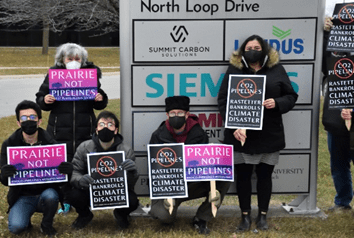
Great Plains Action SocietyBuffalo Rebellion 2022Buffalo RebellionPerer Clay and Sikowis on First Nation-Farmer Climate Unity March 2018Alton Onefeather and I on First Nation-Farmer Climate Unity March 2018No CO2 pipelines 2022First Nation-Farmer Climate Unity March 2018
In response to a recent blog post, Rising Tensions with North Korea and Farm Diplomacy, Jon Krieg (American Friends Service Committee) who played a key role in this endeavor, wrote, “Isn’t it pretty cool how one thing that feels relatively small at the time can send bigger waves?”
I also heard from another key participant, Dan Jasper who wrote “You’ve done a lot to keep the history alive and I think you documented some important stuff on that post. It was a good trip when Linda and I came to Iowa and this retelling is very timely. We’re in the middle of our Korea peace advocacy week (an annual event where we set up meetings for grassroots folks to speak to their members of congress on Korea related bills). I also recently presented my sabbatical research on the connections between food, climate, and peace at AFSC. I’ve come to believe that it’s no accident that ag offers a place for communities and even adversaries to come together.
We could also set up a meeting with your congressional delegation as a sort of extension of the Korea peace advocacy week.”
Isn’t it pretty cool how one thing that feels relatively small at the time can send bigger waves?
Jon Krieg, American Friends Service Committee
This AFSC website will help you send a letter about tensions in North Korea to your US Congressional representatives.
The U.S. must act now to build peace and humanitarian cooperation with North Korea.
June 25, 2022 marks the 72nd anniversary of the beginning of the Korean War. Though there was a ceasefire in 1953, the United States and North Korea have yet to sign a peace treaty to officially end the Korean War. This open wound is a root cause of the conflict and hostilities still present on the Korean Peninsula today.
This “forever war” risks further military conflict, fuels arms races, exacerbates global humanitarian crises, and keeps families separated. And it’s time for it to end.
Join us in calling for peace and humanitarian cooperation today!
This is the letter that is created from that link. And the response from Senator Chuck Grassley.
As someone concerned about the well-being of the people on the Korean Peninsula and as a supporter of the American Friends Service Committee (AFSC), I ask you to please co-sponsor H.R. 1504 – the Enhancing North Korea Humanitarian Assistance Act. The bill expedites the provision of nongovernmental humanitarian assistance, including life-saving medical care, to the people of North Korea. In the weeks following the COVID-19 outbreak in North Korea, it is critical that you support these measures, which will help private aid organizations respond when the borders reopen.
Please also co-sponsor S. 2688, the Korean War Divided Families Reunification Act, which would require the State Department to work toward reuniting Korean-American families separated by the Korean War.
Help us respond to critical humanitarian needs and reunite Korean Americans with their families in North Korea.
Thank you for your consideration.
Jeff Kisling
June 16, 2022
Dear Mr. Kisling:
Thank you for taking the time to contact me with your support for the Enhancing North Korea Humanitarian Assistance Act (S.690) and the Korean War Divided Families Reunification Act (S.2688). As your senator, it is important to me that I hear from you.
I appreciate hearing your support for the Enhancing North Korea Humanitarian Assistance Act which was introduced by Senator Edward Markey. This legislation, if enacted, would require the Treasury Department to expand existing humanitarian licenses for North Korea to include larger humanitarian projects as opposed to medical supplies and food.
In response to the COVID-19 pandemic, the Treasury Department and the Department of State have expanded licensees for the provision of humanitarian assistance to vulnerable populations in sanctioned countries. That said, I do not believe that the wholesale removal of sanctions on North Korea would alter the regime’s behavior or ensure adequate distribution of relief within the country. Rather, it would provide Kim Jong-Un with resources to continue persecuting the North Korean people and antagonizing the United States and the rules-based international order.
I also appreciate hearing your support for the Korean War Divided Families Reunification Act. This bill was introduced by Senator Mazie Hirono and if enacted, would require the State Department to report to Congress on its consultations with South Korea about potential opportunities to reunite Korean Americans with family in North Korea.
Both of these bills have been referred to the Senate Committee on Foreign Relations. Should either of these pieces of legislation come before the full Senate, I will be sure to keep your thoughts in mind.
Again, thank you for taking the time to contact me. Please keep in touch.
Sincerely, Chuck Grassley United States Senator
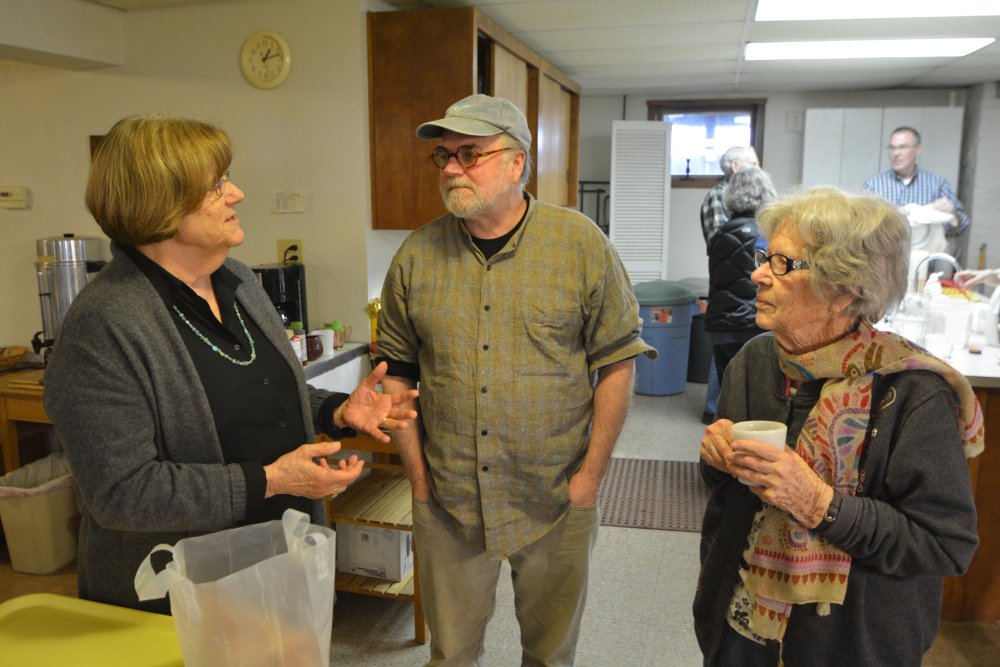
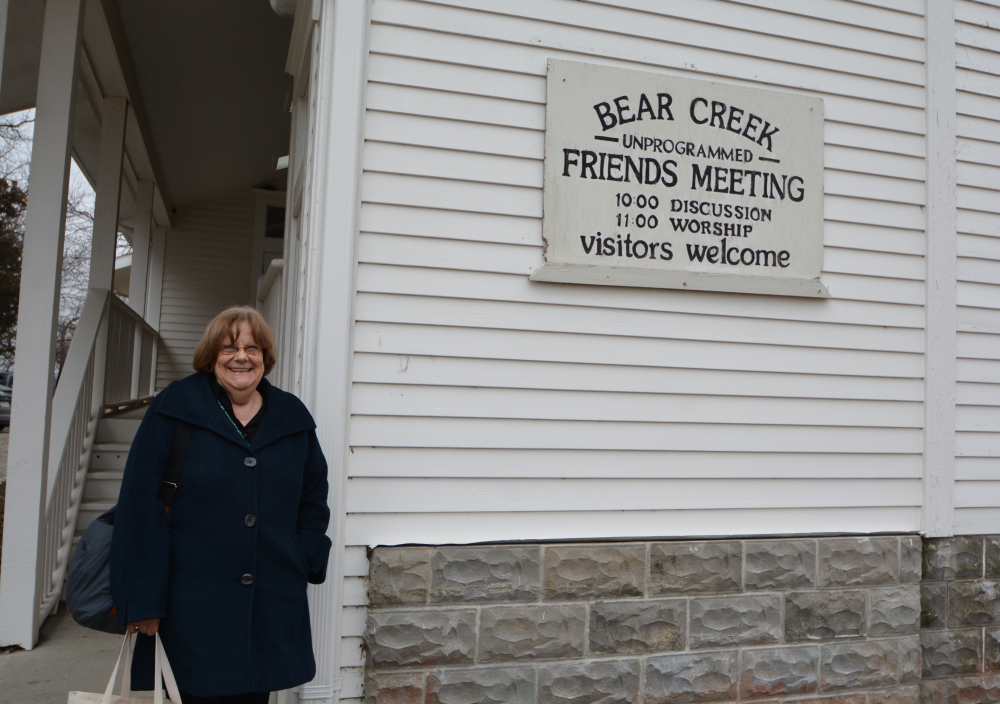
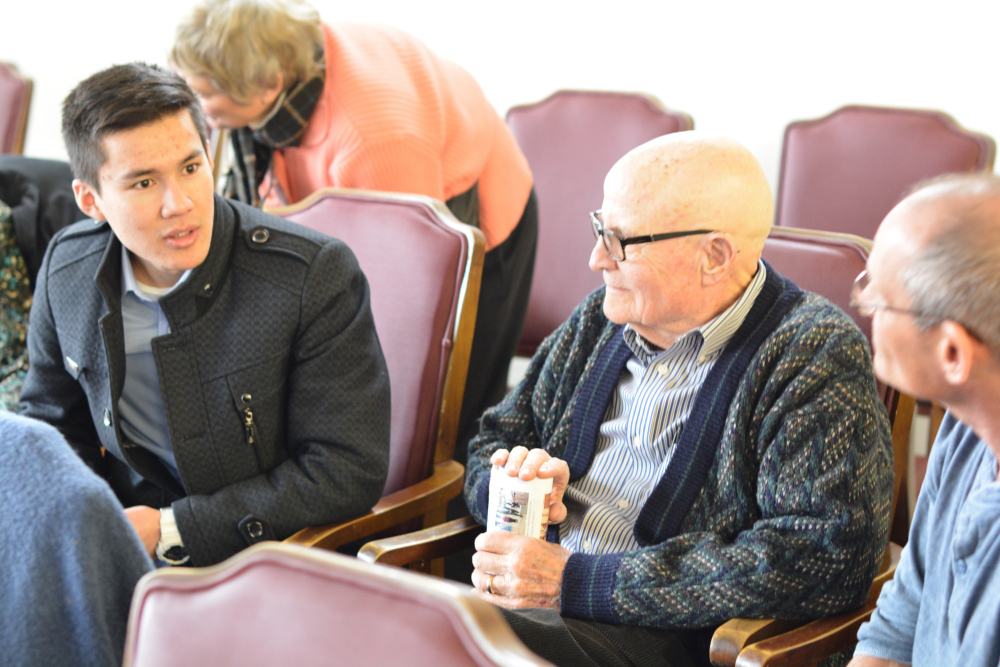
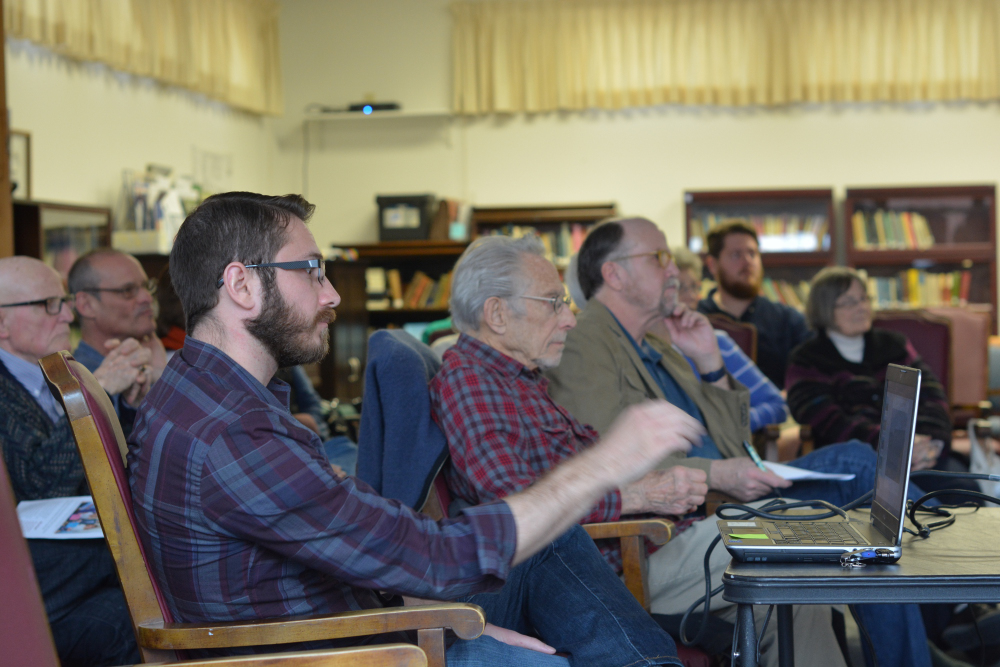
My great thanks to my fellow activist photographer, Jon Krieg, of the American Friends Service Committee (AFSC) for these photos of the visit of Linda Lewis and Dan Jasper, of AFSC, to Iowa to tell us about their work in North Korea, March 2018. (Another activist videographer, Rodger Routh joined us. His video of this visit can be found below). You can see Linda and Dan visited us at Bear Creek Meeting. Russ Leckband presented them with a gift of his pottery. Linda and Dan also spoke at Des Moines Valley Friends Meeting. Also attending was my friend Reza Mohammadi. Ed Fallon interviewed them on his radio program. And I’m glad they were able to visit Scattergood Friends School and Farm where they spoke with Mark Quee and Thomas Weber.
Photos by Jon Krieg, AFSC
Linda Lewis, AFSC Country Representative for China/North Korea, and Dan Jasper, AFSC Public Education and Advocacy Coordinator for Asia, visited Iowa at the invitation of Jeff Kisling, clerk of the Peace and Social Concerns Committee of Iowa Yearly Meeting (Conservative) and Patti McKee, director of Catholic Peace Ministry. Linda spoke at Bear Creek Friends Meeting in Earlham, Iowa. Linda and Dan both spoke at Des Moines Valley Friends Meeting House. They were interviewed by WHO-TV, local videographer Rodger Routh, and talk show host Ed Fallon. They met Iowa Immigrant Rights Program staff Jody Mashek, Erica Johnson and Berenice Nava and travelled to Scattergood Friends School to meet Thomas Weber, Head of School, and Mark Quee, Farm Manager. Mark gave them a tour of the school’s farm. In 2001, AFSC hosted a North Korean agricultural tour of Iowa.Linda Lewis, AFSC Country Representative for China/North Korea, and Dan Jasper, AFSC Public Education and Advocacy Coordinator for Asia, visited Iowa at the invitation of Jeff Kisling, clerk of the Peace and Social Concerns Committee of Iowa Yearly Meeting (Conservative) and Patti McKee, director of Catholic Peace Ministry. Linda spoke at Bear Creek Friends Meeting in Earlham, Iowa. Linda and Dan both spoke at Des Moines Valley Friends Meeting House. They were interviewed by WHO-TV, local videographer Rodger Routh, and talk show host Ed Fallon. They met Iowa Immigrant Rights Program staff Jody Mashek, Erica Johnson and Berenice Nava and travelled to Scattergood Friends School to meet Thomas Weber, Head of School, and Mark Quee, Farm Manager. Mark gave them a tour of the school’s farm. In 2001, AFSC hosted a North Korean agricultural tour of Iowa.Linda Lewis, AFSC Country Representative for China/North Korea, and Dan Jasper, AFSC Public Education and Advocacy Coordinator for Asia, visited Iowa at the invitation of Jeff Kisling, clerk of the Peace and Social Concerns Committee of Iowa Yearly Meeting (Conservative) and Patti McKee, director of Catholic Peace Ministry. Linda spoke at Bear Creek Friends Meeting in Earlham, Iowa. Linda and Dan both spoke at Des Moines Valley Friends Meeting House. They were interviewed by WHO-TV, local videographer Rodger Routh, and talk show host Ed Fallon. They met Iowa Immigrant Rights Program staff Jody Mashek, Erica Johnson and Berenice Nava and travelled to Scattergood Friends School to meet Thomas Weber, Head of School, and Mark Quee, Farm Manager. Mark gave them a tour of the school’s farm. In 2001, AFSC hosted a North Korean agricultural tour of Iowa.Linda Lewis, AFSC Country Representative for China/North Korea, and Dan Jasper, AFSC Public Education and Advocacy Coordinator for Asia, visited Iowa at the invitation of Jeff Kisling, clerk of the Peace and Social Concerns Committee of Iowa Yearly Meeting (Conservative) and Patti McKee, director of Catholic Peace Ministry. Linda spoke at Bear Creek Friends Meeting in Earlham, Iowa. Linda and Dan both spoke at Des Moines Valley Friends Meeting House. They were interviewed by WHO-TV, local videographer Rodger Routh, and talk show host Ed Fallon. They met Iowa Immigrant Rights Program staff Jody Mashek, Erica Johnson and Berenice Nava and travelled to Scattergood Friends School to meet Thomas Weber, Head of School, and Mark Quee, Farm Manager. Mark gave them a tour of the school’s farm. In 2001, AFSC hosted a North Korean agricultural tour of Iowa.Linda Lewis, AFSC Country Representative for China/North Korea, and Dan Jasper, AFSC Public Education and Advocacy Coordinator for Asia, visited Iowa at the invitation of Jeff Kisling, clerk of the Peace and Social Concerns Committee of Iowa Yearly Meeting (Conservative) and Patti McKee, director of Catholic Peace Ministry. Linda spoke at Bear Creek Friends Meeting in Earlham, Iowa. Linda and Dan both spoke at Des Moines Valley Friends Meeting House. They were interviewed by WHO-TV, local videographer Rodger Routh, and talk show host Ed Fallon. They met Iowa Immigrant Rights Program staff Jody Mashek, Erica Johnson and Berenice Nava and travelled to Scattergood Friends School to meet Thomas Weber, Head of School, and Mark Quee, Farm Manager. Mark gave them a tour of the school’s farm. In 2001, AFSC hosted a North Korean agricultural tour of Iowa.Linda Lewis, AFSC Country Representative for China/North Korea, and Dan Jasper, AFSC Public Education and Advocacy Coordinator for Asia, visited Iowa at the invitation of Jeff Kisling, clerk of the Peace and Social Concerns Committee of Iowa Yearly Meeting (Conservative) and Patti McKee, director of Catholic Peace Ministry. Linda spoke at Bear Creek Friends Meeting in Earlham, Iowa. Linda and Dan both spoke at Des Moines Valley Friends Meeting House. They were interviewed by WHO-TV, local videographer Rodger Routh, and talk show host Ed Fallon. They met Iowa Immigrant Rights Program staff Jody Mashek, Erica Johnson and Berenice Nava and travelled to Scattergood Friends School to meet Thomas Weber, Head of School, and Mark Quee, Farm Manager. Mark gave them a tour of the school’s farm. In 2001, AFSC hosted a North Korean agricultural tour of Iowa.Linda Lewis, AFSC Country Representative for China/North Korea, and Dan Jasper, AFSC Public Education and Advocacy Coordinator for Asia, visited Iowa at the invitation of Jeff Kisling, clerk of the Peace and Social Concerns Committee of Iowa Yearly Meeting (Conservative) and Patti McKee, director of Catholic Peace Ministry. Linda spoke at Bear Creek Friends Meeting in Earlham, Iowa. Linda and Dan both spoke at Des Moines Valley Friends Meeting House. They were interviewed by WHO-TV, local videographer Rodger Routh, and talk show host Ed Fallon. They met Iowa Immigrant Rights Program staff Jody Mashek, Erica Johnson and Berenice Nava and travelled to Scattergood Friends School to meet Thomas Weber, Head of School, and Mark Quee, Farm Manager. Mark gave them a tour of the school’s farm. In 2001, AFSC hosted a North Korean agricultural tour of Iowa.Linda Lewis, AFSC Country Representative for China/North Korea, and Dan Jasper, AFSC Public Education and Advocacy Coordinator for Asia, visited Iowa at the invitation of Jeff Kisling, clerk of the Peace and Social Concerns Committee of Iowa Yearly Meeting (Conservative) and Patti McKee, director of Catholic Peace Ministry. Linda spoke at Bear Creek Friends Meeting in Earlham, Iowa. Linda and Dan both spoke at Des Moines Valley Friends Meeting House. They were interviewed by WHO-TV, local videographer Rodger Routh, and talk show host Ed Fallon. They met Iowa Immigrant Rights Program staff Jody Mashek, Erica Johnson and Berenice Nava and travelled to Scattergood Friends School to meet Thomas Weber, Head of School, and Mark Quee, Farm Manager. Mark gave them a tour of the school’s farm. In 2001, AFSC hosted a North Korean agricultural tour of Iowa.Linda Lewis, AFSC Country Representative for China/North Korea, and Dan Jasper, AFSC Public Education and Advocacy Coordinator for Asia, visited Iowa at the invitation of Jeff Kisling, clerk of the Peace and Social Concerns Committee of Iowa Yearly Meeting (Conservative) and Patti McKee, director of Catholic Peace Ministry. Linda spoke at Bear Creek Friends Meeting in Earlham, Iowa. Linda and Dan both spoke at Des Moines Valley Friends Meeting House. They were interviewed by WHO-TV, local videographer Rodger Routh, and talk show host Ed Fallon. They met Iowa Immigrant Rights Program staff Jody Mashek, Erica Johnson and Berenice Nava and travelled to Scattergood Friends School to meet Thomas Weber, Head of School, and Mark Quee, Farm Manager. Mark gave them a tour of the school’s farm. In 2001, AFSC hosted a North Korean agricultural tour of Iowa.Linda Lewis, AFSC Country Representative for China/North Korea, and Dan Jasper, AFSC Public Education and Advocacy Coordinator for Asia, visited Iowa at the invitation of Jeff Kisling, clerk of the Peace and Social Concerns Committee of Iowa Yearly Meeting (Conservative) and Patti McKee, director of Catholic Peace Ministry. Linda spoke at Bear Creek Friends Meeting in Earlham, Iowa. Linda and Dan both spoke at Des Moines Valley Friends Meeting House. They were interviewed by WHO-TV, local videographer Rodger Routh, and talk show host Ed Fallon. They met Iowa Immigrant Rights Program staff Jody Mashek, Erica Johnson and Berenice Nava and travelled to Scattergood Friends School to meet Thomas Weber, Head of School, and Mark Quee, Farm Manager. Mark gave them a tour of the school’s farm. In 2001, AFSC hosted a North Korean agricultural tour of Iowa.Linda Lewis, AFSC Country Representative for China/North Korea, and Dan Jasper, AFSC Public Education and Advocacy Coordinator for Asia, visited Iowa at the invitation of Jeff Kisling, clerk of the Peace and Social Concerns Committee of Iowa Yearly Meeting (Conservative) and Patti McKee, director of Catholic Peace Ministry. Linda spoke at Bear Creek Friends Meeting in Earlham, Iowa. Linda and Dan both spoke at Des Moines Valley Friends Meeting House. They were interviewed by WHO-TV, local videographer Rodger Routh, and talk show host Ed Fallon. They met Iowa Immigrant Rights Program staff Jody Mashek, Erica Johnson and Berenice Nava and travelled to Scattergood Friends School to meet Thomas Weber, Head of School, and Mark Quee, Farm Manager. Mark gave them a tour of the school’s farm. In 2001, AFSC hosted a North Korean agricultural tour of Iowa.Linda Lewis, AFSC Country Representative for China/North Korea, and Dan Jasper, AFSC Public Education and Advocacy Coordinator for Asia, visited Iowa at the invitation of Jeff Kisling, clerk of the Peace and Social Concerns Committee of Iowa Yearly Meeting (Conservative) and Patti McKee, director of Catholic Peace Ministry. Linda spoke at Bear Creek Friends Meeting in Earlham, Iowa. Linda and Dan both spoke at Des Moines Valley Friends Meeting House. They were interviewed by WHO-TV, local videographer Rodger Routh, and talk show host Ed Fallon. They met Iowa Immigrant Rights Program staff Jody Mashek, Erica Johnson and Berenice Nava and travelled to Scattergood Friends School to meet Thomas Weber, Head of School, and Mark Quee, Farm Manager. Mark gave them a tour of the school’s farm. In 2001, AFSC hosted a North Korean agricultural tour of Iowa.Linda Lewis, AFSC Country Representative for China/North Korea, and Dan Jasper, AFSC Public Education and Advocacy Coordinator for Asia, visited Iowa at the invitation of Jeff Kisling, clerk of the Peace and Social Concerns Committee of Iowa Yearly Meeting (Conservative) and Patti McKee, director of Catholic Peace Ministry. Linda spoke at Bear Creek Friends Meeting in Earlham, Iowa. Linda and Dan both spoke at Des Moines Valley Friends Meeting House. They were interviewed by WHO-TV, local videographer Rodger Routh, and talk show host Ed Fallon. They met Iowa Immigrant Rights Program staff Jody Mashek, Erica Johnson and Berenice Nava and travelled to Scattergood Friends School to meet Thomas Weber, Head of School, and Mark Quee, Farm Manager. Mark gave them a tour of the school’s farm. In 2001, AFSC hosted a North Korean agricultural tour of Iowa.Linda Lewis, AFSC Country Representative for China/North Korea, and Dan Jasper, AFSC Public Education and Advocacy Coordinator for Asia, visited Iowa at the invitation of Jeff Kisling, clerk of the Peace and Social Concerns Committee of Iowa Yearly Meeting (Conservative) and Patti McKee, director of Catholic Peace Ministry. Linda spoke at Bear Creek Friends Meeting in Earlham, Iowa. Linda and Dan both spoke at Des Moines Valley Friends Meeting House. They were interviewed by WHO-TV, local videographer Rodger Routh, and talk show host Ed Fallon. They met Iowa Immigrant Rights Program staff Jody Mashek, Erica Johnson and Berenice Nava and travelled to Scattergood Friends School to meet Thomas Weber, Head of School, and Mark Quee, Farm Manager. Mark gave them a tour of the school’s farm. In 2001, AFSC hosted a North Korean agricultural tour of Iowa.Linda Lewis, AFSC Country Representative for China/North Korea, and Dan Jasper, AFSC Public Education and Advocacy Coordinator for Asia, visited Iowa at the invitation of Jeff Kisling, clerk of the Peace and Social Concerns Committee of Iowa Yearly Meeting (Conservative) and Patti McKee, director of Catholic Peace Ministry. Linda spoke at Bear Creek Friends Meeting in Earlham, Iowa. Linda and Dan both spoke at Des Moines Valley Friends Meeting House. They were interviewed by WHO-TV, local videographer Rodger Routh, and talk show host Ed Fallon. They met Iowa Immigrant Rights Program staff Jody Mashek, Erica Johnson and Berenice Nava and travelled to Scattergood Friends School to meet Thomas Weber, Head of School, and Mark Quee, Farm Manager. Mark gave them a tour of the school’s farm. In 2001, AFSC hosted a North Korean agricultural tour of Iowa.Linda Lewis, AFSC Country Representative for China/North Korea, and Dan Jasper, AFSC Public Education and Advocacy Coordinator for Asia, visited Iowa at the invitation of Jeff Kisling, clerk of the Peace and Social Concerns Committee of Iowa Yearly Meeting (Conservative) and Patti McKee, director of Catholic Peace Ministry. Linda spoke at Bear Creek Friends Meeting in Earlham, Iowa. Linda and Dan both spoke at Des Moines Valley Friends Meeting House. They were interviewed by WHO-TV, local videographer Rodger Routh, and talk show host Ed Fallon. They met Iowa Immigrant Rights Program staff Jody Mashek, Erica Johnson and Berenice Nava and travelled to Scattergood Friends School to meet Thomas Weber, Head of School, and Mark Quee, Farm Manager. Mark gave them a tour of the school’s farm. In 2001, AFSC hosted a North Korean agricultural tour of Iowa.Linda Lewis, AFSC Country Representative for China/North Korea, and Dan Jasper, AFSC Public Education and Advocacy Coordinator for Asia, visited Iowa at the invitation of Jeff Kisling, clerk of the Peace and Social Concerns Committee of Iowa Yearly Meeting (Conservative) and Patti McKee, director of Catholic Peace Ministry. Linda spoke at Bear Creek Friends Meeting in Earlham, Iowa. Linda and Dan both spoke at Des Moines Valley Friends Meeting House. They were interviewed by WHO-TV, local videographer Rodger Routh, and talk show host Ed Fallon. They met Iowa Immigrant Rights Program staff Jody Mashek, Erica Johnson and Berenice Nava and travelled to Scattergood Friends School to meet Thomas Weber, Head of School, and Mark Quee, Farm Manager. Mark gave them a tour of the school’s farm. In 2001, AFSC hosted a North Korean agricultural tour of Iowa.Linda Lewis, AFSC Country Representative for China/North Korea, and Dan Jasper, AFSC Public Education and Advocacy Coordinator for Asia, visited Iowa at the invitation of Jeff Kisling, clerk of the Peace and Social Concerns Committee of Iowa Yearly Meeting (Conservative) and Patti McKee, director of Catholic Peace Ministry. Linda spoke at Bear Creek Friends Meeting in Earlham, Iowa. Linda and Dan both spoke at Des Moines Valley Friends Meeting House. They were interviewed by WHO-TV, local videographer Rodger Routh, and talk show host Ed Fallon. They met Iowa Immigrant Rights Program staff Jody Mashek, Erica Johnson and Berenice Nava and travelled to Scattergood Friends School to meet Thomas Weber, Head of School, and Mark Quee, Farm Manager. Mark gave them a tour of the school’s farm. In 2001, AFSC hosted a North Korean agricultural tour of Iowa.
One year ago yesterday Des Moines Mutual Aid participated in a march protesting the potential for war or increased hostilities with Iran that followed the fallout of the assassination of Qassem Soleimani by drone strike in Baghdad.
This was our first “public” event since adopting the name Des Moines Mutual Aid, a name we gave our crew during our growing work with our relatives at the houseless camps throughout the city and our help with coordinating a weekly free grocery store that has a 50 year history, founded by the Des Moines Chapter of The Black Panther Party For Self Defense.
A year ago we started laying the foundation for work we had no idea what was coming.
As we were adjusting our work with the camps and grocery re-distribution in response to the Covid-19 pandemic, both that continued to grow in need and importance, the police continued their jobs and legacy of brutality and murder.
This nation exploded in righteous rage in response to the pig murders of Breonna Taylor and George Floyd.
DMMA realized we were in a position to organize a bail fund to keep our fighters out of jail, both to keep the streets alive as a new phase of The Movement was being born, and because jails are a hotspot of Covid-19 spread.
Not to mention the racial and economic oppression that is the cash bail system.
In the past year DMMA has expanded it’s work in multiple directions and gained many partners and allies.
We partnered with the Des Moines Black Liberation Movement (@DesMoinesBLM) to create the DSM BLM Rent Relief initiative to help keep families in their homes in the midst of a pandemic and the winter.
The camp work has grown exponentially, but is being managed with our collaboration with Edna Griffin Mutual Aid (@egma_dsm), DSM Black Liberation Movement (@DesMoinesBLM), and The Great Plains Action Society (@PlainsAction).
The bail fund remains successful because of desire from the public and a partnership with Prairielands Freedom Fund (@prairielandsff) (formerly The Eastern Iowa Community Bond Project).
The weekly free food store has maintained itself, carrying on the legacy it inherited.
Every one of our accomplishments are directly tied to the support of so many people donating time, talent, and funds to the work. We are overwhelmed with all of your support and hope you feel we are honoring what we promised.
All of these Mutual Aid projects are just a few of many that this city has created in the last year in response to the many crises we face, not only confronting the problems and fulfilling the needs directly in front of us, but creating a sustainable movement that will be capable of responding to what’s next and shaping our collective futures as we replace the systems that fail us.
These last 12 months have been wild and a real test of all of our capabilities to collectively organize.
But it is clear that we as a city have what it takes to do what is needed in 2021, no matter what crisis is next.
As often as I think about why we need to move toward Mutual Aid communities and know that Mutual Aid is far from a new idea, I haven’t spent much time learning about the many cultures and countries that live this way, that are not based on capitalism.
Even though there has been little mainstream media coverage in this country, the Summit of the Americas was a dismal failure because so many countries boycotted it when the Biden administration refused to invite Cuba, Nicaragua and Venezuela.
The alternative summit, the Summit of the Americas of the Working Men and Women Workers declares they will, “take concrete action to combat the labor and social violence applied to our peoples by the U.S. and Canadian governments.” I don’t yet know what the power of this group is.
More leaders of Latin American countries have announced they will not attend the Summit of the Americas, which is taking place in Los Angeles. The summit has been mired in controversy after the Biden administration refused to invite Cuba, Nicaragua and Venezuela. On Monday, Mexican President Andrés Manuel López Obrador announced he would boycott the talks over Biden’s decision. The presidents of Bolivia, Honduras, Guatemala and El Salvador have also said they will not attend the summit.
We, representatives of Trade Union, Peasant, Political and Social organizations, gathered in Tijuana – Mexico, June 10-12, 2022, on the occasion of the realization of the Summit of the Americas of the Working Men and Women Workers, in immediate response to the exclusion of Venezuela, Cuba, and Nicaragua imposed by the Government of the United States.
There is a systemic and structural crisis of capitalism in its imperialist phase. It is in itself a civilizational crisis. The capitalist economic model and its political arm neoliberalism, as well as its modern cultural foundation, have put the planet’s life in crisis. If not eliminated, imperialism’s necropolitics leads us to the planetary collective suicide, which is more lacerating in the sectors less favored by the current world system. Our position is a bet for life, and the empire offers us death: it is either life or death!
We are witnessing a process of recolonization over the people. This is expressed in the excessive growth of racism, poverty, unemployment, job insecurity, environmental deterioration of territories, criminalization of migration, and gender and cultural violence. For this reason, we call upon the programmatic unity of the American continent’s workers, peasants, and progressive and popular forces to reflect, debate, and take concrete action to combat the labor and social violence applied to our peoples by the U.S. and Canadian governments.
We consider that the working class of the 21st century will only be able to play an independent and central role if – in addition to fighting for the most heartfelt demands of the labor movement – it assumes the struggle against patriarchy together with the feminist movement, the struggle of the native peoples against climate change and the defense of the biosphere together with the youth and the broad spectrum of professionals and scientists.
We must build articulations and alliances in which we structure our common forces for a unique and global struggle. Globalize the struggles. Build new organic forms of the working class from the political-cultural to the socio-productive to overcome capitalism and build socialism.
A robust internationalism is needed to pay adequate and immediate attention to the dangers of extinction: extinction by nuclear war, climate catastrophe, and social collapse.
In this regard, we agree:
To promote active solidarity with the peoples and sovereign nations (Cuba, Nicaragua, and Venezuela) and the other peoples of the world “sanctioned” and attacked by economic blockades and unilateral coercive measures imposed by the U.S. and its allies.
To hold an annual meeting in Tijuana, Mexico, with the workers and social movements of the Americas to express solidarity with the peoples of Venezuela, Cuba, and Nicaragua and their revolutions to repudiate unilateral coercive measures against sovereign governments.
To constitute a Committee for the organization of the Meetings to be held annually in the North and South of Mexico, integrated by: Unión del Barrio of the USA, Movimiento Social Por la Tierra de México (MST), Sindicato Mexicano Electricista (SME), Alianza por la Justicia Global of the USA, Central Bolivariana Socialista de Trabajadores de Venezuela, Central de Trabajadores de Cuba, Asociación de Trabajadores del Campo de Nicaragua (ATC), Movimiento Magisterial Popular de Veracruz Mexico, Fire This Time of Canada, Freedom Road Socialist Organization (FRSO) of the USA, International Action Center (IAC) of the USA, Task Force on the Americas of the USA and the Plataforma de la Clase Obrera Antimperialista (PCOA).
Demand the immediate release of Alex Saab. He is a Venezuelan diplomat kidnapped by the U.S. and illegally detained in its territory since October 16, 2021. Saab’s arrest is an action that attacks diplomatic immunity, a right guaranteed by international law to any diplomatic official in the exercise of his duties.
Reaffirm the resolutions agreed upon at the Meeting of the Peoples of the Americas, held June 7-8, 2022, in Chiapas, Mexico.
To ratify our unwavering solidarity with the Palestinian and Saharawi peoples.
Demand that the U.S. Congress immediately cut off military aid funds to El Salvador, Guatemala, Honduras, Colombia, and Haiti.
Promote a campaign to hold an international day of action in solidarity with Cuba to be held when the U.N. General Assembly meets to condemn the blockade against the Caribbean island.
Expand the “Bridges of Love” program to other countries and international coordinate days on the last Sunday of each month in the form of caravans or other activities.
Demand the immediate release of comrades Mumia Abu Jamal, Leonard Peltier, Iman Jamil Abdullah al-Amin and Julian Assange.
Demand the immediate release of the social fighter Simón Trinidad from Colombia, who is deprived of liberty in prison in the USA.
To promote the regional integration of the anti-imperialist working class of Our America and the participation in the strengthening of ALBA TCP, CELAC, and UNASUR. In this sense, the Bolivarian Socialist Workers Central of Venezuela will call a meeting for the 3rd quarter of 2022.
To promote a campaign against the U.S., NATO, and Colombia’s policies of interference and expansionism and to ratify the declaration of Latin America and the Caribbean as a zone of peace promoted by CELAC.
We reaffirm the Mexican Electricians Union workers’ demands for their reinstatement in the Federal Electricity Commission.
We stand in solidarity with the Puerto Rican people and their dignified struggle for independence and sovereignty.
ONLY THE WORKERS’ STRUGGLE WILL SAVE HUMANITY, NATURE, AND THE PLANET!!!!





























 Quakers and Mutual Aid