Rising tensions with North Korea and farm diplomacy

I recently received the following from Dan Jasper of the American Friends Service Committee (AFSC) about rising tensions between the U.S. and North Korea. The state of Iowa and my Quaker meeting, Bear Creek Friends, have a long history related to North Korea. Dan visited us in Iowa in March 2018.

Tensions between the U.S. and the Democratic People’s Republic of Korea (DPRK or “North Korea”) are on the rise once again. In recent weeks, North Korea has conducted missile tests, and the U.S. and South Korea have responded with missile of tests of their own.

To make matters worse, a recent outbreak of COVID-19 in North Korea threatens a population that is already experiencing shortages of food and basic supplies.

A peace agreement would be a crucial step toward nuclear disarmament, and without it renewed military conflict could erupt at any moment. It would also help reunite thousands of families—including many Korean Americans—who have been separated for over 70 years.

As the pandemic further threatens lives and livelihoods in North Korea, the U.S. must also support private aid organizations providing critical humanitarian assistance in the country. 

Call on Congress today to take action. Urge them to pass legislation to end the Korean War, support nongovernmental aid missions, and reunite families.

Dan Jasper 

Asia Public Education and Advocacy Coordinator 
American Friends Service Committee


Farm Diplomacy

Sept. 1, 2017, Kenneth M Quinn, President of the World Food Prize suggested inviting a North Korean delegation to visit the United States as a way of easing tensions.  In 1959 the Des Moines Register invited Soviet Premier Nikita Khrushchev to come to Iowa to discuss agricultural practices.  The Register’s Lauren Soth won a Pulitzer Prize in 1956 for that editorial, in part because Khrushchev accepted the offer. https://www.pulitzer.org/prize-winners-by-year/1956

In 1959, at what was the most dangerous moment of human history as Soviet and U.S. nuclear weapons were poised to be fired at each other, an event on a farm in Iowa contributed indirectly, but crucially, in keeping those missiles from ever being launched.

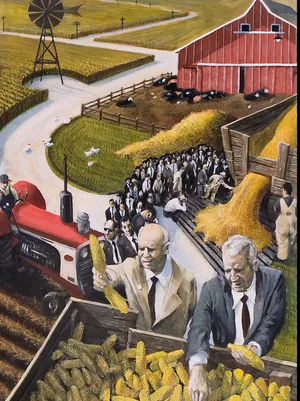
As the artwork that accompanies this essay and hangs in our World Food Prize Hall of Laureates in Des Moines shows, Soviet Premier Nikita Khrushchev traveled to Coon Rapids on Sept. 23 of that year to visit the Roswell Garst Farm. Standing at the corn crib and holding an ear of hybrid corn, the Premier asked Garst why he couldn’t have corn like this in the Soviet Union.

Garst responded by sending his nephew John Chrystal on multiple trips to Russia over the next three-plus decades as an unofficial ambassador of agriculture, sharing aspects of Iowa technology.
Agriculture could be key to easing U.S.-North Korea tensions by Kenneth M. Quinn, Des Moines Register, Sept 1, 2017

After that article was published, Jon Krieg, of the American Friends Service Committee (AFSC) in Des Moines, shared the story below, Growing seeds of relationships with Des Moines Register editor, Lynn Hicks, about AFSC hosting a North Korean agricultural delegation’s visit to Iowa in 2001. October 5, 2017, the Register published the following editorial  Could North Korea’s Kim visit Iowa, as Khrushchev did? 
In 1955, this newspaper invited Soviet leader Nikita Khrushchev to send a delegation to Iowa “to get the lowdown on raising high quality cattle, hogs, sheep and chickens. We promise to hide none of our ‘secrets.’”

The Register’s Lauren Soth won a Pulitzer Prize in 1956 for that editorial, because the Kremlin took note. Exchanges of farmers followed, and hybrid seed-corn entrepreneur Roswell Garst met with Khrushchev in Moscow. And in 1959, Khrushchev shocked the world by accepting Garst’s invitation and visiting his Coon Rapids farm.

Ambassador Kenneth Quinn evoked the Khrushchev visit in a Register op-ed last month. Quinn, president of the World Food Prize, wrote: “With so few good options to defuse the current situation over North Korea’s enhanced strategic capabilities, including possible nuclear-weaponized long-range missiles, using agriculture as a vehicle to reduce tensions would seem worth a try.”  

Could North Korea’s Kim visit Iowa, as Khrushchev did?, the Register’s editorial, Oct 5, 2017

In response to that editorial, Eloise Cranke, the author of the story about the 2001 visit (below) published Farm Diplomacy is a Good Idea, October 6, 2017, in the Des Moines Register.

Thanks to the Register for its Oct. 5 editorial, “Let’s Invite North Korea’s Kim to Iowa.”

It was my distinct pleasure and honor to accompany the five North Koreans who visited an Iowa farm in 2001. What a warm and friendly evening it was, as we gathered for a delicious potluck with friends at the Bear Creek Meeting House.

That kind of one-on-one conversation and exchange of ideas is sorely needed today.

Why not invite Kim Jong Un to Iowa? “Farm diplomacy” helped ease tensions in the 1950s. Why not now? It could be a powerful way to move the conversation with North Korea from bombs and missiles to food and feeding hungry people.

Herb Standing’s words still ring true today, “We must tell people that it is not through missiles and bombs that we find security and peace, but rather through the one-on-one sharing with persons of different countries, cultures and experiences.”

Let’s give it a try.

— Eloise M. Cranke, Des Moines

Growing seeds of relationships, Eloise Cranke, Regional Director, American Friends Service Committee, Spring, 2001
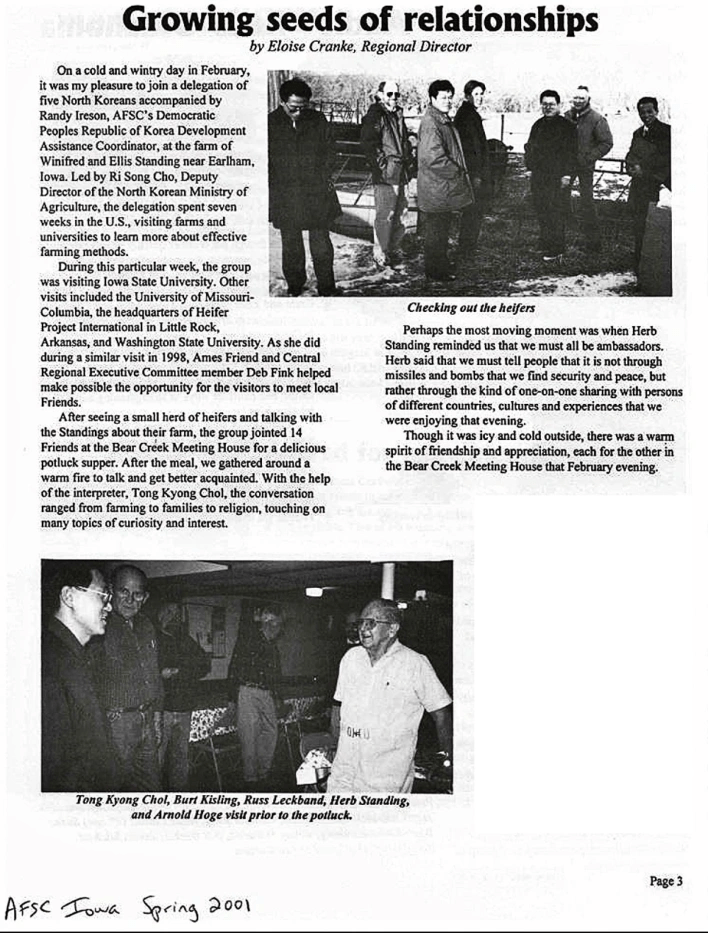
I am fascinated by the story of the 2001 visit to my Quaker meeting, Bear Creek, because I wasn’t living in Iowa at the time.  In the photo above, Burt Kisling is my father, Russ Leckband continues to attend Bear Creek, Herbert Standing was a cousin, and Arnold Hoge was the father of Win Standing, whose husband Ellis, is my mother’s brother.  The delegation visited the farm of Ellis and Win.  Then, after the potluck meal at the meetinghouse, I can easily imagine them gathered around the wood burning stove as described above, “…the conversation ranged from farming to families to religion, touching on many topics of curiosity and interest”.


Several of the people who had participated in that visit in 2001, were at Bear Creek meeting the morning of 10/8/2017.  They shared their memories of that time.  Winifred Standing shared what she had written in her journal that day:

Wednesday, February 28, 2001
2 degrees above zero this morn.  Sunny
I made an Economical Sponge Cake and a soybean casserole.  Browned roast.  Lots of phone calls  this morn about wood and about tonight.  I went to meetinghouse–cleaned a bit, set dishes out, got coffee pot ready, etc.   I started cooking roasts at 2:00.  Peeled potatoes.   Eloise Cranke arrived just  before 4.  We visited with her until Randy Iverson and 5 North Koreans arrived.  They looked at our heifers and quizzed Ellis.  Eloise took me to meetinghouse about 5:15 to get supper started.  Ellis brought Dads and Dorothy later.  A good crowd gathered.  A good supper and questions and answers around fireplace after–Home about 9.  We visited and rested.  Seemed a good evening.

We discussed how this might relate to our current political situation.  I said I had shared a recent blog post about this with Iowa Yearly Meeting (Conservative)’s Peace and Social Concerns Committee, Scattergood Friends School, and several people at the Friends Committee on National Legislation (FCNL).  If another North Korean delegation did come, I thought a visit to Scattergood Friends School’s Farm at West Branch would be very beneficial.

The meeting wanted to support the idea of the Des Moines Register inviting another delegation from North Korea to visit us and approved the following letter, which was published by the Register.

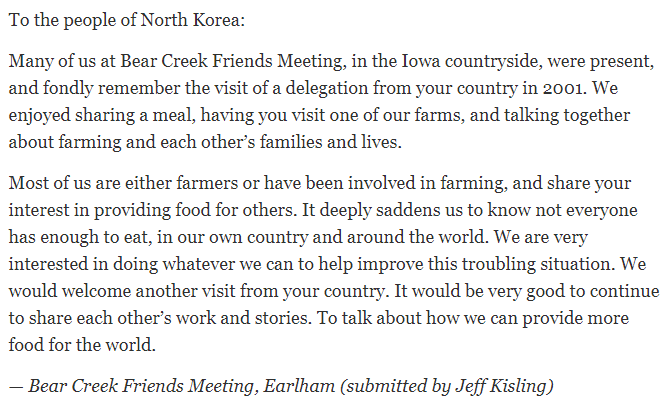
https://www.desmoinesregister.com/story/opinion/readers/2017/10/13/letter-welcome-north-korea/761130001/

When we looked into what was being done regarding North Korea at this time (2018) we were surprised to learn that the American Friends Service Committee (AFSC) had been involved in bringing agricultural practices to North Korea for many years. We contacted the people who had been doing this work, Linda Lewis and Daniel Jasper, and they agreed to visit us in Iowa to share what they had been doing in North Korea.

Jon Krieg, AFSC, recorded the following video of the presentation about work Linda and Daniel have been doing in North Korea that was held at Des Moines Valley Friends Meeting on March 18, 2018. Both have been to North Korea and described how the AFSC has used efforts to improve agricultural practices in North Korea to facilitate understanding and build peace between North Korea and the United States since 1980.


Following is an excellent video by Rodger Routh interviewing Linda and Daniel on March 20, 2018, about their work for peace in North Korea. Linda and Daniel were in Iowa to discuss their work with agricultural projects in North Korea and to talk with us about how we might arrange for another North Korean agricultural delegation to Iowa, as happened in 2001, to try to reduce tensions between North Korea and the United States. Unfortunately, another visit has not occurred, so far.


Returning to Dan Jasper’s email about present day tensions with North Korea, Call on Congress today to take action. Urge them to pass legislation to end the Korean War, support nongovernmental aid missions, and reunite families.

Dangerous disconnect

I’m heeding the suggestion that it isn’t good for young people to continuously hear proclamations of near-term extinction. And nobody really knows what will happen as we move further into environmental devastation and chaos.

But there are many things we do know about our evolving environmental disaster.

Daily breaking high temperature records for large areas of the world is directly linked to increasing greenhouse gases in the atmosphere. As are the increasingly frequent and severity of storms. And the increasing severity of drought conditions over larger areas of land. All of which will increasingly stress, or cause failures of power, water, and waste management infrastructure.

And yet, the Biden administration is aggressively pressuring oil companies to increase oil and natural gas production and releasing millions of barrels of crude oil from the Strategic Petroleum Reserve. A dangerous, disastrous disconnect.

WASHINGTON, D.C.—The U.S. Department of Energy’s (DOE) Office of Fossil Energy and Carbon Management (FECM) today announced an additional Notice of Sale of up to 40.1 million barrels of crude oil from the Strategic Petroleum Reserve (SPR). This Notice of Sale is part of President Biden’s announcement on March 31, 2022, to release one million barrels of crude oil a day for six months to address the significant global supply disruption caused by Putin’s war on Ukraine and help stabilize volatile energy costs for American families. 

DOE Announces Additional Notice of Sale of Crude Oil From The Strategic Petroleum Reserve, May 24, 2022

New funding for fossil fuel exploration and production infrastructure is delusional.

U.N. Secretary−General António Guterres

U.N. Secretary−General António Guterres warned Tuesday of a “dangerous disconnect” between what scientists and citizens are demanding to curb climate change, and what governments are actually doing about it.

Guterres said global greenhouse gas emissions need to drop by 45% this decade, but are currently forecast to increase by 14%.

“We are witnessing a historic and dangerous disconnect: science and citizens are demanding ambitious and transformative climate action,” he said at a climate conference in Austria. “Meanwhile many governments are dragging their feet. This inaction has grave consequences.”

New funding for fossil fuel exploration and production infrastructure is delusional,” he said in a video message to the Austrian World Summit, initiated by former California Gov. Arnold Schwarzenegger. “It will only further feed the scourge of war, pollution and climate catastrophe.”

Guterres urged countries to instead end all coal use by 2040, with rich nations doing so by 2030, and focus on replacing fossil fuels with renewable sources of energy, such as solar and wind power.

“Renewables are the peace plan of the 21st century,” he said.

Inaction on climate is ‘dangerous’, warns U.N.’s Guterres, By Associated Press | News | June 14th 2022


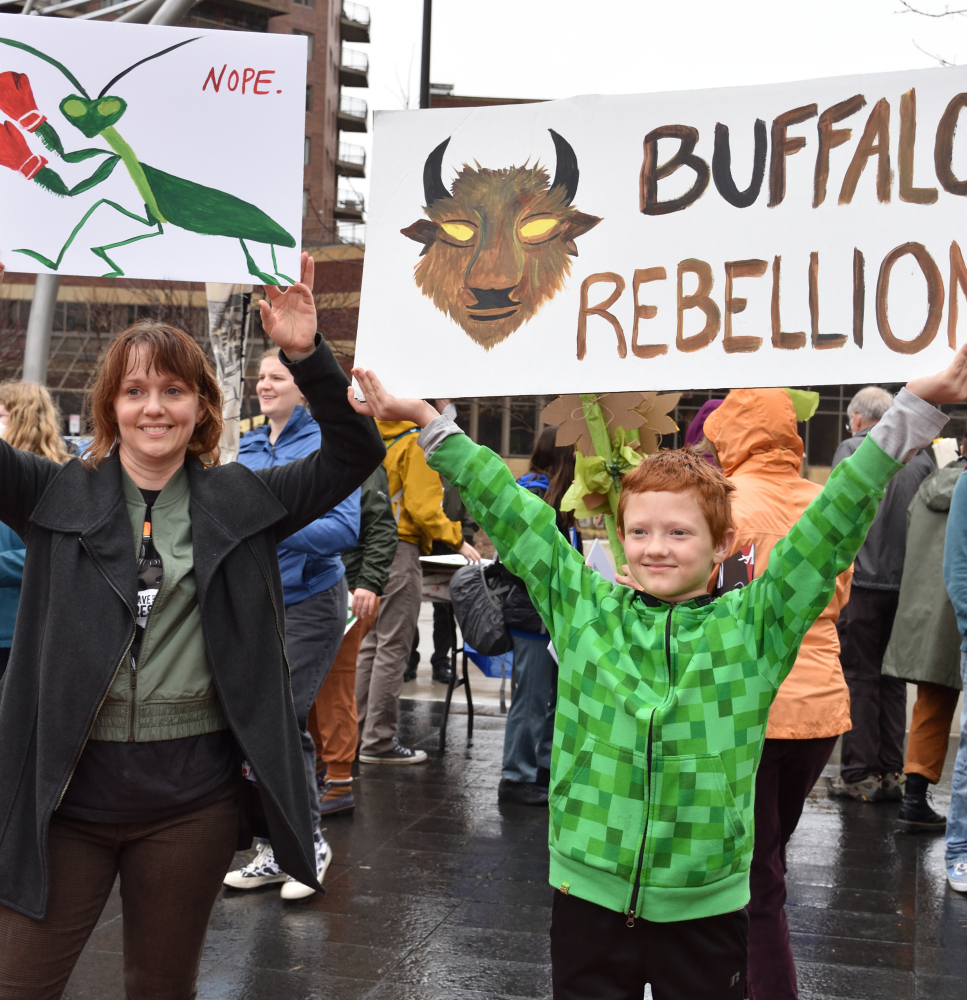
https://www.facebook.com/IowaBuffaloRebellion

OPPOSE CRIMINALIZATION OF LAND DEFENDERS

OPPOSE CRIMINALIZATION OF LAND DEFENDERS:
CONTACT BC ATTORNEY GENERAL DAVID EBY

We are outraged that the B.C. Prosecution Service plans to pursue criminal contempt charges against the 15 people arrested at Gidimt’en Checkpoint Village during the RCMP raid on November 18, 2021.

What’s more, the Crown has until July 7th to decide whether to charge 10 others, including Sleydo’, who were arrested at Coyote Camp on November 19, 2021, with criminal contempt. This criminalization of Wet’suwet’en Land Defenders goes against their inherent rights and title on their unceded territory.

Will you call/email Attorney General David Eby and tell him to refuse intervention? AG.Minister@gov.bc.ca, 205-387-1866. Sample email here

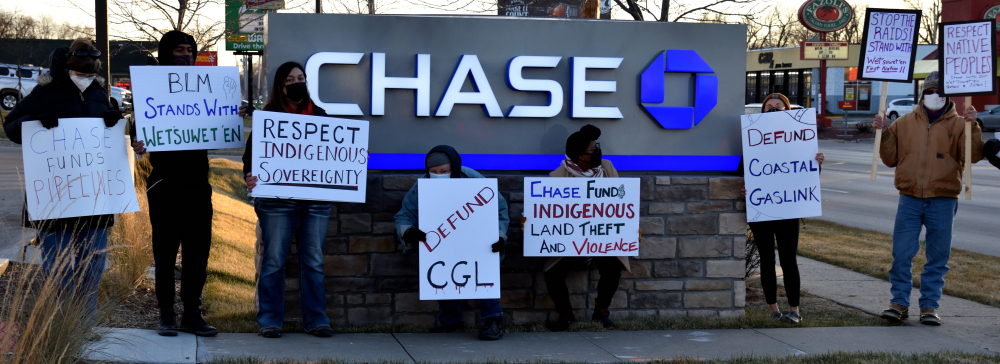
While Wet’suwet’en Land Defenders are grappling with unjust criminal charges, daily RCMP harassment, and imminent drilling under the Wedzin Kwa RBC held a huge golf tournament, the RBC Canadian Open. Luckily, activists were there to show the guests RBC’s true colours. Last Saturday, Decolonial Solidarity organizers joined activists and ravers in solidarity with the Wet’suwet’en people for a rave against RBC!

RBC is the title sponsor of the Canada Open golf tournament in Etobicoke, Toronto. We took the streets and marched to the gates of St. George’s Golf Club to let golf fans know what else their tournament sponsor funds. Equipped with a giant inflatable of RBC CEO Dave McKay, DJs, rappers, megaphones, and bubbles, we brought noise and energy to an otherwise quiet and low-key sport.
 
As the largest investor in the CGL pipeline, RBC needs to be held accountable. Those charged after the arrests in November 2021 include Wet’suwet’en elders, Haudenosaunee members, and legal observers. Recent investigations into the events in November show RCMP officers making racist remarks during the arrests and using coercive tactics to stop the blockade.

These charges are a disgusting and unacceptable demonstration of the law and policing protecting private companies and profits over people, land, and water. In the past, the Crown decided that prosecution of Wet’suwet’en Land Defenders was not in the public interest. We can help this time by telling Attorney General David Eby that it’s not in the public interest now either.
Call/email Attorney General David Eby today and tell him to refuse intervention. AG.Minister@gov.bc.ca, 205-387-1866. Sample email here

You can also check out this map to join an affinity group near you and take part in our Adopt-a-branch campaign targeting RBC.

In Solidarity,
The Decolonial Solidarity Organizing Team

Decolonial Solidarity (DS) is an ally-led Indigenous solidarity campaign. We currently stand in solidarity with Wet’suwet’en land defenders in their fight against the Coastal GasLink pipeline which is being built in their territory without necessary consent and which threatens their lands and waters.

RBC is a primary funder of both Coastal GasLink and fossil fuels more generally. The DS Adopt-a-Branch campaign demands that RBC divest from the Coastal GasLink pipeline and respect Indigenous peoples’ sovereignty and rights. Groups are going to RBC branches regularly and speaking with customers and employees in order to pressure RBC from within.

Our actions are non-violent and completely legal. We are committed to following the guidance of front-line Land Defenders and to long-term solidarity action. Everyone who respects these principles is welcome!

Decolonial Solidarity is an ally-led Indigenous solidarity campaign. Follow us on Instagram @decolonialsolidarity and Twitter @decolonialsol.

https://actionnetwork.org/event_campaigns/looking-for-members-on-cherche-des-membres

Sample email

Honourable David Eby Attorney General
PO Box 9044 Stn Prov Govt
Victoria, BC
V8W 9E2
AG.Minister@gov.bc.ca
Phone: 250 387-1866
Fax: 250 387-6411


Dear Mr. Eby,

I am writing as a concerned citizen about the human rights violations and violations of the UN
Declaration of the Rights of Indigenous People, among other things, that have been happening
in Wet’suwet’en Territory. The Hereditary Chiefs have repeatedly stated they do not consent to
this pipeline and people are being arrested for upholding their laws through their traditional
governance system which has been recognized through the Delgamuukw-Gisdaywa Supreme
Court of Canada victory December 11, 1997.

Recently, your office agreed to intervene to criminalize Indigenous land defenders that were
arrested on November 18th. I urge you to decline intervention on July 7th against Sleydo’ and
others arrested on November 19th, 2021. That would further criminalize the land defenders
currently facing charges as Coastal GasLink is requesting. Violently entering homes without
warrants is not the process for dealing with Wet’suwet’en sovereignty. The Hereditary Chiefs of
the Wet’suwet’en Nation have stated their position and are defending their territory and sacred
headwaters Wedzin Kwa as they have done since time immemorial. We as guests on unceded
land need to respect the decisions of the Hereditary Chiefs and enact reconciliation instead of
disrespecting and criminalizing them further for practicing their culture and laws.

Mutual Aid and money

The role money plays in Mutual Aid is what I had the most questions about, and the question most often asked of me when I talk about Mutual Aid.

The Mutual Aid project I’m involved with is the free food distribution, which has been in place pretty much continuously since the Black Panthers in Des Moines organized the Free Breakfast for School Children program. It was when this program looked like it might have to close several years ago that Des Moines Mutual Aid to over the program.

The first Survival Program was the Free Breakfast for Children Program, which began in January 1969 at one small Catholic church in the Fillmore district of San Francisco, and spread to many cities in America where there were Party chapters. Thousands of poor and hungry children were fed free breakfasts every day by the Party under this program. The Program became so popular that by the end of the year, the original Black Panther Party set up kitchens in cities across the nation, feeding over 10,000 children every day before they went to school.

Bobby Seale
All Power To All The People!
http://bobbyseale.com/
#blackpantherparty#blackpanthers#bobbyseale#blackhistory


Food from local farms, and dated food from local grocery stores is the source of our food to distribute to the community.


What Is Mutual Aid?

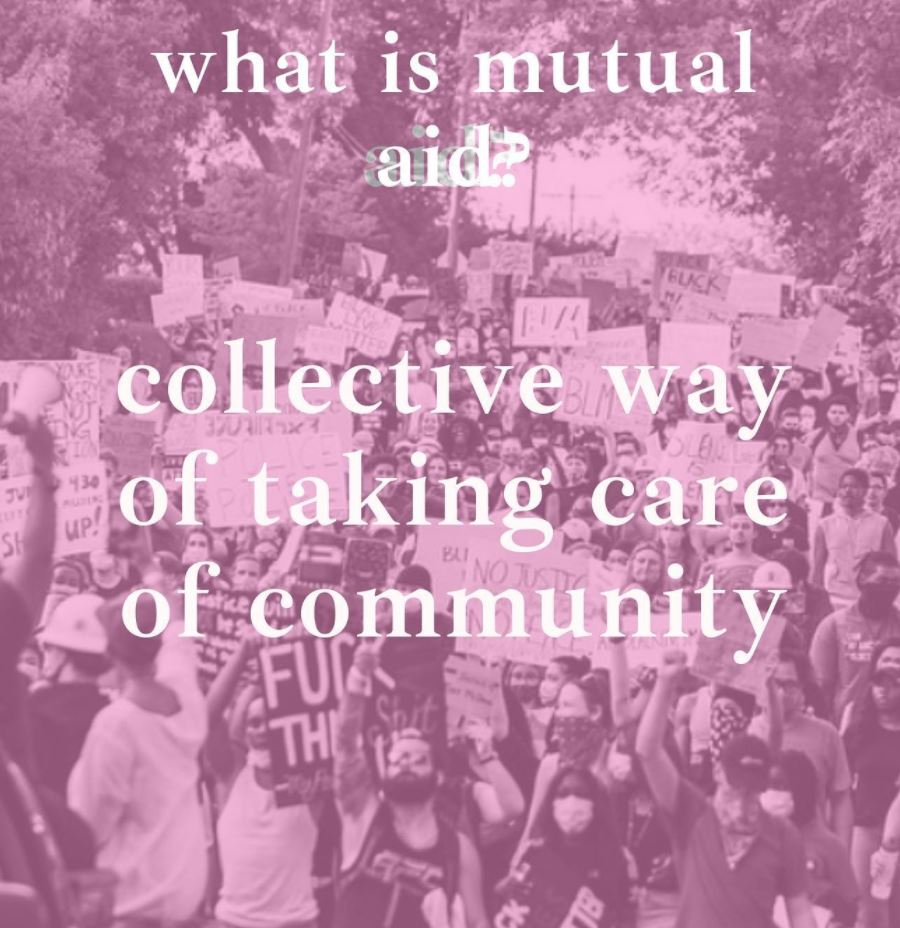
Mutual aid is collective coordination to meet each other’s needs, usually from an awareness that the systems we have in place are not going to meet them. Those systems, in fact, have often created the crisis, or are making things worse. We see examples of mutual aid in every single social movement, whether it’s people raising money for workers on strike, setting up a ride-sharing system during the Montgomery Bus Boycott, putting drinking water in the desert for migrants crossing the border, training each other in emergency medicine because ambulance response time in poor neighborhoods is too slow, raising money to pay for abortions for those who can’t afford them, or coordinating letter-writing to prisoners. These are mutual aid projects. They directly meet people’s survival needs, and are based on a shared understanding that the conditions in which we are made to live are unjust.

There is nothing new about mutual aid— people have worked together to survive for all of human history. But capitalism and colonialism created structures that have disrupted how people have historically connected with each other and shared everything they needed to survive. As people were forced into systems of wage labor and private property, and wealth became increasingly concentrated, our ways of caring for each other have become more and more tenuous.

In this context of social isolation and forced dependency on hostile systems, mutual aid— where we choose to help each other out, share things, and put time and resources into caring for the most vulnerable— is a radical act.

Dean Spade. Mutual Aid: Building Solidarity During This Crisis (and the Next) (Kindle Locations 104-120). Verso.


The key is when we think about money, we are thinking within the context of capitalism, which is the system we (Mutual Aid) are working to replace. Think how the communities of our grandparents depended so little on money. Where everyone knew everyone else. Where people just naturally helped when there was a need. Came together to harvest the crops, going from one farm to the next with the machines to do the harvesting.

Since then, increasingly, “people were forced into systems of wage labor and private property.”

The key is when we think about money, we are thinking within the context of capitalism, which is the system we (Mutual Aid) are working to replace

Handling Money

Handling money can be one of the most contentious issues for mutual aid groups. Because of this, it can be very useful for groups to consider whether this is something they want to do. Some groups can do their work without raising money at all. Some groups can do their work just raising money through grassroots fundraising in their communities, taking small donations from many people. That kind of fundraising can avoid the problem with grant-making foundations attaching strings to grant money and trying to control the direction of the work. Grassroots fundraising can help build a sense that the community controls the organizations rather than an elite funder and doing grassroots fundraising can be a way of spreading the ideas of the group and raising awareness about the problems the group works on. However, even if money is raised in this way, managing money still comes with pitfalls. Handling money brings logistical issues that can cause stress and take time, such as figuring out how to do it fairly and transparently and figuring out how to avoid a problem with the IRS or otherwise expose group members to legal problems. Because most people in our society have a tangled, painful relationship with money that includes feelings and behaviors of secrecy, shame, and desperation, a lot of otherwise awesome people will misbehave when money is around or get suspicious of others’ behavior.

Dean Spade. Mutual Aid: Building Solidarity During This Crisis (and the Next) (Kindle Locations 1199-1209). Verso.

Our Mutual Aid group appeals to the community for funds for a need in the moment.


Native Americans, Quakers and Mutual Aid

The Department of the Interior has released the first volume of the Federal Indian Boarding School Initiative Report. Interior Secretary Deb Haaland first announced the creation of the Initiative last June, with a primary goal of investigating the loss of human life and the lasting consequences of these schools.

This report, and ongoing news of locating the remains of Native children on the grounds of numerous Indian residential schools has brought attention to Quakers’ role in these institutions in North America.

There are calls for Friends to respond in many ways. To educate ourselves about this history. To seek ways for healing and reparations. To research and publish our own meeting’s history.

But I’m concerned that Friends will follow a common pattern of only working within their meetings. When this is a time we need to reach out to Native peoples.

And I am concerned that many Quakers are not aware of attitudes we could be bringing to this work. In the same the way so many white Quakers have trouble understanding white supremacy and privilege related to racial justice, many are also unaware of how deeply we are immersed in this colonized society. Colonization and white supremacy are the foundation of forced assimilation of native children. And the ideas behind the land theft and genocide of native peoples.

We need to decolonize ourselves. If not, we risk doing more harm than good.

My spiritual vision is of Quakers building personal relationships with native peoples when we are invited to do so. I have been blessed to experience this for the past couple of years while working with my local Mutual Aid community. This diverse community includes a number of native people. It was a Spirit led opportunity that connected me with an Indigenous organizer who is involved in Mutual Aid. We got to know each other over several months of email exchanges (this during the COVID crisis). When I thought we knew each other well enough, I asked if it would be appropriate for me to join this Mutual Aid work, and he said yes. But it wasn’t until I’d been involved for several months that he said, “welcome to the community”. Although I had invited myself to join this work, I wasn’t really part of the community until that moment.

I was blessed to find this community was not only another way to build friendships with native people, but also taught me what a Mutual Aid community is. Based on these experiences, I believe Mutual Aid is a model for how Friends can be involved in work outside the meetinghouse. Mutual Aid is a way we can decolonize ourselves.

What I think is needed in this moment is to show up at events and causes being led by Indigenous peoples near us

Mutual Aid is all about replacing vertical hierarchies with a flat, or horizontal hierarchy. This removes the power structures among members of the community and nearly eliminates friction, in my experience.

An essential part of the truth and healing process should be doing this work together as a Mutual Aid community, with its emphasis on inclusivity and rejecting dominant relationships. It is important that attitudes and practices of superiority not be brought to the work of healing from policies that are based on dominance and colonization.

“We sought to show the power our communities possess when we come together unified under the belief and knowledge that what we do today is both work to heal past generations and lift the spirits of our future generations.”

Matt Remle on the efforts to pass the Indigenous Peoples’ Day resolution

Mutual Aid focuses on meeting community needs now, in the moment. The food project I’m involved with distributes food to those in need every week. Those working with the houseless camps take food and propane tanks there. It is the experience of meeting needs in the present that brings us joy and attracts new members. That also affects our interactions with those who come for the food. We realize it is the failure of capitalism that leaves them hungry. We all know we ourselves might need such help in the future.

There are many suggestions of things Quakers might do related to the Indian Boarding Schools.

What I think is needed in this moment is to show up at events and causes being led by Indigenous peoples near us. Most Quaker meetings and many individuals have such relationships to build upon.

It would be good to have a place to share such information. The following are a few examples that I’m aware of:

There are two general guidelines for interacting with communities.

  1. Don’t expect oppressed peoples to educate you. We shouldn’t add to their burden. I kept this in mind when I was getting to know the native person who was teaching me about Mutual Aid. But he encouraged me to learn from him. He was training me.
  2. The idea behind the two row wampum is two groups, such as Native people and white people, agree to travel together but separately. Neither interfering in the affairs of the other.

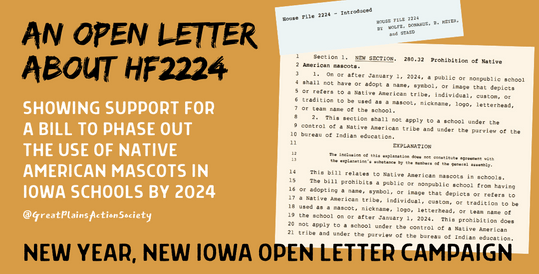
One interesting campaign of the Great Plains Action Society that specifically asks for our support is open letters. These letters express Indigenous people’s views on various topics and are meant to help supporters contact people who have the power to make decisions related to the topic. For example:

Recently, four Iowa Democrats have introduced a bill to phase out the use of Native American mascots in Iowa schools by 2024. Great Plains Action Society’s Director of Operations, Trisha Etringer, was quoted in an article in which she expressed her support for this proposed legislation, which reflects our organization as a whole. This letter is to celebrate this step in the right direction, and to provide more information about the issue at hand. With this Open Letter Campaign, we will be calling upon you to join us in communicating to the people in power that we need to be working toward a New Iowa. Unfortunately, that will often mean calling people out for failing to act, or for acting in harmful ways. Fortunately, in this case, it means asking you to send your support and encouragement to those that are fighting the difficult battles on behalf of our children.

https://www.greatplainsaction.org/single-post/open-letter-regarding-hf2224

There are many things Quakers should be doing in our own meetings related to the Indian Boarding Schools. But I think it is most important to support things native people are asking of us now.


Advocating for climate sanity

I recently discovered papers written by Zhiwa Woodbury, so I don’t yet know how much I will agree with him as I read more. But I agree with the following excerpt. This paragraph strikes a chord in me now, as I am trying to make sense of what is going on in the world today. I recently returned to the concept of sensemaking in Where are we now?

We have a stark choice between our own eventual extermination or a near term transformation. Such a transformation of human culture and the global economy will not come about without a simultaneous shift in collective consciousness. Trauma always raises questions of identity, whether considered at the scale of the individual, a culture, or now with the climate crisis, at the scale of an entire species. The choices we humans are making now – and will continue to make – in response to this spiritual emergency will determine whether we engender spiritual emergence, the messy rebirth of our species, or instead we repeat the kind of Great Dying that once wiped out 95% of all life on the planet, and took 10 million years for the biosphere to recover. My purpose in writing this book is to offer guidance and succor to all who those natural healers and existential professionals in the world, all those who hear the cries of the Earth, and all those advocating for climate sanity in every arena of life, so that we may attend Gaia’s bedside and serve as her spiritual midwives in planetary hospice. Whether Gaia is now dying, just ill, or about to give birth is largely dependent on how we, as a species, respond to her signals and attend to her needs
Climate Trauma, Reconciliation and Recovery by Zhiwa Woodbury

I do believe we are in a spiritual emergency and need a shift in collective consciousness. I often write about spiritual poverty. We spoke about this, too, last night during our weekly (Quaker) Spiritual Sharing Small Group.

We need to be advocating for climate sanity in every arena of life.

I always hesitate to bring this up, but I think we need to speak from our own experience. When I moved to Indianapolis in 1971, I was so horrified by the clouds of smog (before catalytic converters) I decided to live without a car. I know others have done so. But the point is, that was one way of advocating for climate sanity. It is heart wrenching to think of what a different world we would be living in today if fifty years ago we had decided to prioritize mass transit systems. And worked to build our cities and towns as walkable communities.

That was then. What do we do, advocate for, now? Our society clearly continues to refuse to think, let alone do anything about our deepening environmental catastrophe.

Rather than close coal burning plants, more are being built. Rather than stop further fossil fuel pipelines and other infrastructure, more is being built. Crazy schemes like carbon capture are being built. Some of what is captured is used to frack more oil from the ground.

Militaries are the worst polluters. The war in Ukraine and military operations globally need to be stopped immediately. The war in Ukraine is war against Mother Earth.

CLIMATEWIRE | Greenhouse gases trapped 49 percent more heat in 2021 than in 1990, as emissions continued to rise rapidly, according to NOAA.

“Our data show that global emissions continue to move in the wrong direction at a rapid pace,” said NOAA Administrator Rick Spinrad.

NOAA found that carbon dioxide, the most plentiful and long-lived gas, expanded at the most rapid rate over the last 10 years. But the most potent global warmer also broke records: methane increased more than it has since at least the early 1980s, when NOAA began its current measuring record. The methane emitted in 2021 was 15 percent greater than in the 1984-2006 period, and 162 percent greater than preindustrial levels, NOAA found.”

Record Methane Spike Boosts Heat Trapped by Greenhouse Gases. NOAA’s Annual Greenhouse Gas Index finds that greenhouse gases trapped nearly 50 percent more head last year than they did in 1990 by John Fialka, Scientific American, June 1, 2022

We have a stark choice between our own eventual extermination or a near term transformation. Such a transformation of human culture and the global economy will not come about without a simultaneous shift in collective consciousness.”

We are continuing to make this choice now and it’s for our eventual extermination.

What will it take to make the other choice, for a near term transformation? What would this shift in collective consciousness to transform human culture and the global economy be?

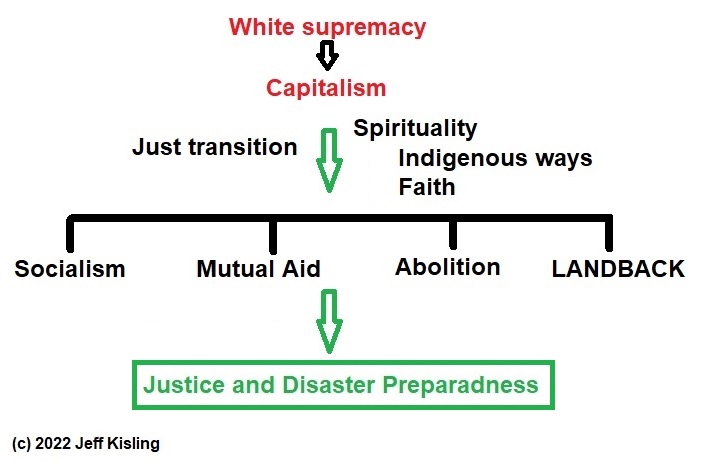
This shift in collective consciousness requires a response to our spiritual emergency. Returning to Indigenous ways, the idea of LANDBACK, would be part of a response. For Quakers, fortifying our Spiritual awareness, and acting on what that reveals, could be part of a response. The radical reimagining of our lives, our culture by the concepts of Mutual Aid could also be part of a response.

I was a little surprised when I wrote:

The reason I have been led to experiences with Native people and my Mutual Aid community is because the stories, the value structures I find there are closer to my values than those of White people in general in this country.

And most radical is to change, or return to how we look for and interpret our stories. To embrace spirituality in ourselves and our communities.

Although we rarely speak of it, our shared spirituality is what I have found to be the deepest connection with my Native American and Mutual Aid friends.

Where are we now?


To the future through the past

The consequences of two atrocities in the history of this country continue to impact us today. The institution of slavery, and the genocide of and land theft from Native Americans continue to tear our social fabric because we have not done what is necessary to acknowledge the truth and seek ways for healing.

This book chronicles the efforts of one small group of Friends to achieve some measure of justice for Native people of North America. The Quakers persisted across the centuries, while often realizing-and sometimes denying-that notwithstanding some successes, their goal was fundamentally unattainable. Any justice achieved could only be considered restorative, given that Native peoples’ relationship to their ancestral lands–central to their identity and humanity–was under relentless assault. These activist Friends were guided by the belief, or “testimony” of equality among all humankind.

As They Were Led. Quakerly Steps and Missteps Toward Native Justice 1795-1940 by Martha Claire Catlin, Quaker Heron Press, 2021.

Many questions arise as the remains of thousands of Native children are being located on the grounds of Indian boarding schools.

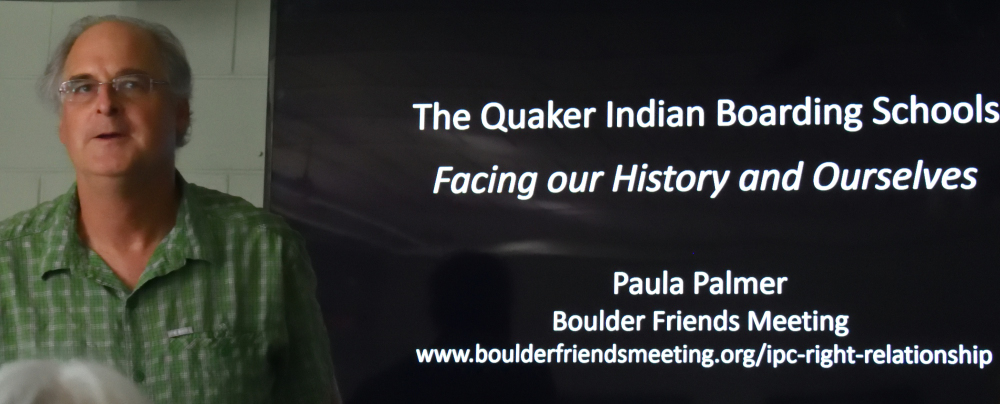
White Quaker communities are learning about the history of Friends’ involvement in the forced assimilation of Native children. And grappling with questions such as what are the relationships among Quakers and Indigenous peoples today? How do we work to discover and better understand the damage that was done? What can be done to begin to heal? This article by my friend Bobby Trice talks about these questions. Quakers Grapple with Legacy of Indian Boarding Schools by Bobby Trice, FCNL, October 25, 2021.

There are a number of areas of concern.

One is seeing the deep trauma in Native communities as the children’s remains are located. And sometimes returned to their home.

And seeking answers about how this happened. Searching for what Native communities, and White Quakers, can do to act on the truth we find. Discern what healing involves and how we do that. Healing not only for Native peoples, but also for Quakers. Trying to understand what this means for Quakers, past and present. Some of us have relatives who taught in those schools.

[Note: There are objections to calling those institutions of forced assimilation “schools”. And referring to what occurred there as “teaching”.]

I think it is easy, from the place where we are now, to be critical of the attitudes of these Friends. And yet I think we will find that we have much in common with them. I think this research will provide an opening for us to examine ourselves today, and to ask ourselves, “What are we missing in our analysis of the issues of our time? What are blind to? What are the contradictions in our own expression of our religious values? Are we living with integrity in our communities and on the land?”

Well, today, 150 years later, we see the policy of forced assimilation in a very different light. Native people from Australia to Canada and throughout the United States are bearing witness to the damage that was done to generations of Native children, especially in the boarding schools. Whether the children were treated cruelly or kindly, the intention of the schools really was to annihilate Indigenous cultures, to “kill the Indian; save the man.”

Quakers and the Forced Assimilation of Native Americans by Paula Palmer, Western Friend, July-August 2015

From our twenty-first-century vantage point, we know (or can learn) how Native people suffered and continue to suffer the consequences of actions that Friends committed 150 ago with the best of intentions. Can we hold those good intentions tenderly in one hand, and in the other hold the anguish, fear, loss, alienation, and despair borne by generations of Native Americans?

Native organizations are not asking us to judge our Quaker ancestors. They are asking, “Who are Friends today? Knowing what we know now, will Quakers join us in honest dialogue? Will they acknowledge the harm that was done? Will they seek ways to contribute toward healing processes that are desperately needed in Native communities?” These are my questions, too.

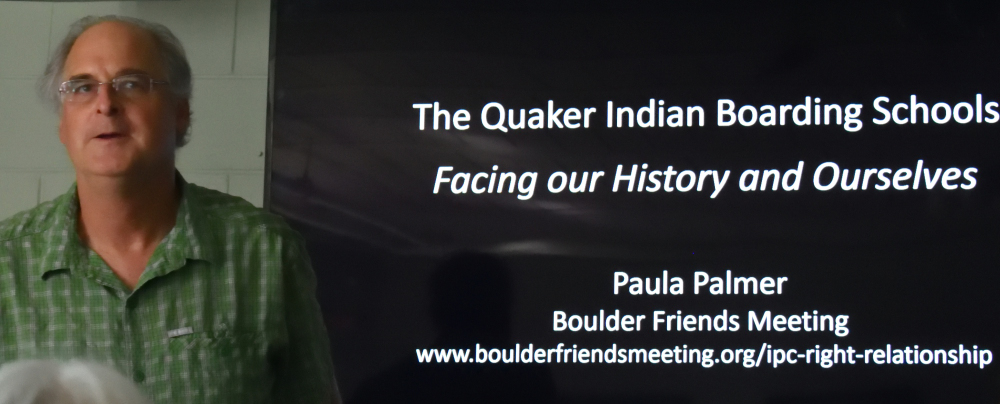
Quaker Indian Boarding Schools, Facing Our History and Ourselves by Paula Palmer, Friends Journal, October 1, 2016

The Department of the Interior has released the first volume of the Federal Indian Boarding School Initiative Report. Interior Secretary Deb Haaland first announced the creation of the Initiative last June, with a primary goal of investigating the loss of human life and the lasting consequences of these schools. The report was assembled with the input of tribal governments, Alaska Native villages, and Native Hawaiian communities.


FCNL welcomed the release of the first volume of the Federal Indian Boarding School Initiative’s long-awaited investigative report. Assembled by the Department of the Interior, this report serves as historic documentation of the trauma inflicted by Indian boarding schools. It also underscores the need for further reckoning on this vital issue, both in Congress and in the Quaker and faith communities.

According to the report, between 1819 and 1969, there were 408 schools across 37 states (or then-territories). Quakers managed at least 30 Indian boarding schools, and the conditions at these institutions were often horrific. These schools aimed to “assimilate” Native children through tactics such as renaming children with English names, cutting their hair, prohibiting the use of Native languages and religions, extensive military drills, and manual labor. Abuse ran rampant, including the withholding of food, solitary confinement, and physical punishment.

The investigation also found 53 burial sites at boarding school locations so far. As the Interior Department continues their investigation, they will produce a list of marked and unmarked burial sites and approximate the total amount of federal funding used to support the Indian boarding school system.

“This new report shines a much-needed light on the atrocities committed at Indian boarding schools, some of which were run by Quakers,” said FCNL General Secretary Bridget Moix. “We commend the Department of the Interior for doing this difficult work and we remain committed to doing our part to advance the reckoning and healing process for this dark chapter in American history.”

“Further, we call on the faith community at large to share records and accounts of their administration of these schools. Only through complete honesty and transparency can we begin moving towards a more just future,” she continued.

Quaker Lobby Welcomes Long-Awaited Report on Indian Boarding Schools by Alex Frandsen, Friends Committee on National Legislation, May 12, 2022


“For far too long, the truth of cultural genocide led by European-Americans at Indian boarding schools has remained hidden in secrecy and ignored,” said (past) FCNL General Secretary Diana Randall. “Christian churches, including Quakers, carry this burden of transgression against Indigenous people.”

I believe we must deal with the past, with these transgressions, before we can know how to move into the future.


Where are we now?

Sometimes when it seems the whole world is collapsing, I try to step back, hoping a wider perspective might help me understand. Unfortunately, doing so today just reinforces the global extent of chaos. I picture the world in flames.

I often return to reflecting on the term sensemaking as described by James Allen.

…there remains the most existential risk of them all: our diminishing capacity for collective sensemaking. Sensemaking is the ability to generate an understanding of world around us so that we may decide how to respond effectively to it. When this breaks down within the individual, it creates an ineffective human at best and a dangerous one at worst. At the collective level, a loss of sensemaking erodes shared cultural and value structures and renders us incapable of generating the collective wisdom necessary to solve complex societal problems like those described above. When that happens the centre cannot hold.

Pontoon Archipelago or: How I Learned to Stop Worrying and Love Collapse. By James Allen, originally published by Medium, June 18, 2019

I didn’t want to go over the list of disasters we are experiencing yet again. But a number of these are escalating. Recently India had experienced temperatures (124 degrees Fahrenheit) close to the point where humans simply cannot survive. We see the relentless march of severe weather across the land. Fierce wildfires. Water levels sinking below the point where water can be taken in at the Hoover Dam. Electricity cannot be produced, nor agricultural land irrigated.

A political party whose only goal is to gain power. An explosion of gun violence and mass shootings with no end in sight. A broken supply chain that can’t even supply baby formula.

Perhaps most concerning is the accelerating increase in gas prices.

As James Allen also writes in the article cited above, “the jumping-off point for this essay is a regrettable acceptance that a forthcoming energy descent combined with multiple ecological crises will force massive societal transformation this century. It’s hardly a leap to suggest that, with less abundant cheap energy and the collapse of the complex political and economic infrastructure that supports our present way of life, this transformation is likely to include the contraction and relocalisation of some (if not most) aspects our daily lives.”

“The contraction and relocalisation of some (if not most) aspects our daily lives” could be Mutual Aid.

I’ve met a great deal of resistance to the idea of replacing capitalism with Mutual Aid. When I asked a (Mutual Aid) friend why people had so much trouble recognizing the evils of capitalism, he said it was because they hadn’t experienced the failures of capitalism in their own lives, yet.

We are experiencing the failures of capitalism now.


The problems before us are emergent phenomena with a life of their own, and the causes requiring treatment are obscure. They are what systems scientists call wicked problems: problems that harbour so many complex non-linear interdependencies that they not only seem impossible to understand and solve, but tend to resist our attempts to do so. For such wicked problems, our conventional toolkits — advocacy, activism, conscientious consumerism, and ballot casting — are grossly inadequate and their primary utility may be the self-soothing effect it has on the well-meaning souls who use them.

If we are to find a new kind of good life amid the catastrophes these myths have spawned, then we need to radically rethink the stories we tell ourselves. We need to dig deep into old stories and reveal their wisdom, as well as lovingly nurture the emergence of new stories into being.

Pontoon Archipelago or: How I Learned to Stop Worrying and Love Collapse. By James Allen, originally published by Medium, June 18, 2019

What does it mean to radically rethink the stories we tell ourselves? This is influenced by who “we” are, what our culture is. But Allen writes of “shared cultural and value structures.”

The reason I have been led to experiences with Native people and my Mutual Aid community is because the stories, the value structures I find there are closer to my values than those of White people in general in this country.

What does it mean to radically rethink the stories we tell ourselves?

I believe that means to search beyond our comfort zone. To stop wasting time advocating for incremental changes in systems that are broken.

Radically rethinking involves searching for the truth of what happened in our history. The land theft, forced assimilation, and genocide of Native peoples. The many atrocities of the institution of slavery. White supremacy today.

And most radical is to change, or return to how we look for and interpret our stories. To embrace spirituality in ourselves and our communities.

Although we rarely speak of it, our shared spirituality is what I have found to be the deepest connection with my Native American and Mutual Aid friends.

This is where I am now.


Social and Economic Justice

One of the things that means the most to me as a Quaker is the practice of considering advices and queries. The queries are sets of questions meant to ask ourselves what we are doing in our own lives, and in the work of our Quaker meetings in the present moment.

This is an example of how Quaker faith is grounded in what is happening in our lives today. And our belief that God, or the Spirit, is present in every being today, human and nonhuman. Can guide us now. The practice in our meeting is for the advice and queries to be read aloud. Then we sit in silent reflection. When we feel we have been given a message to share, we speak.

This helps keep our faith active, rather than passive.

There are twelve sets of queries, each about some part of our lives. The usual practice is for Quaker meetings to reflect on one set, each month. Topics include education, environmental responsibility, outreach, peace and nonviolence. Today at my meeting we will be reflecting on social and economic justice.


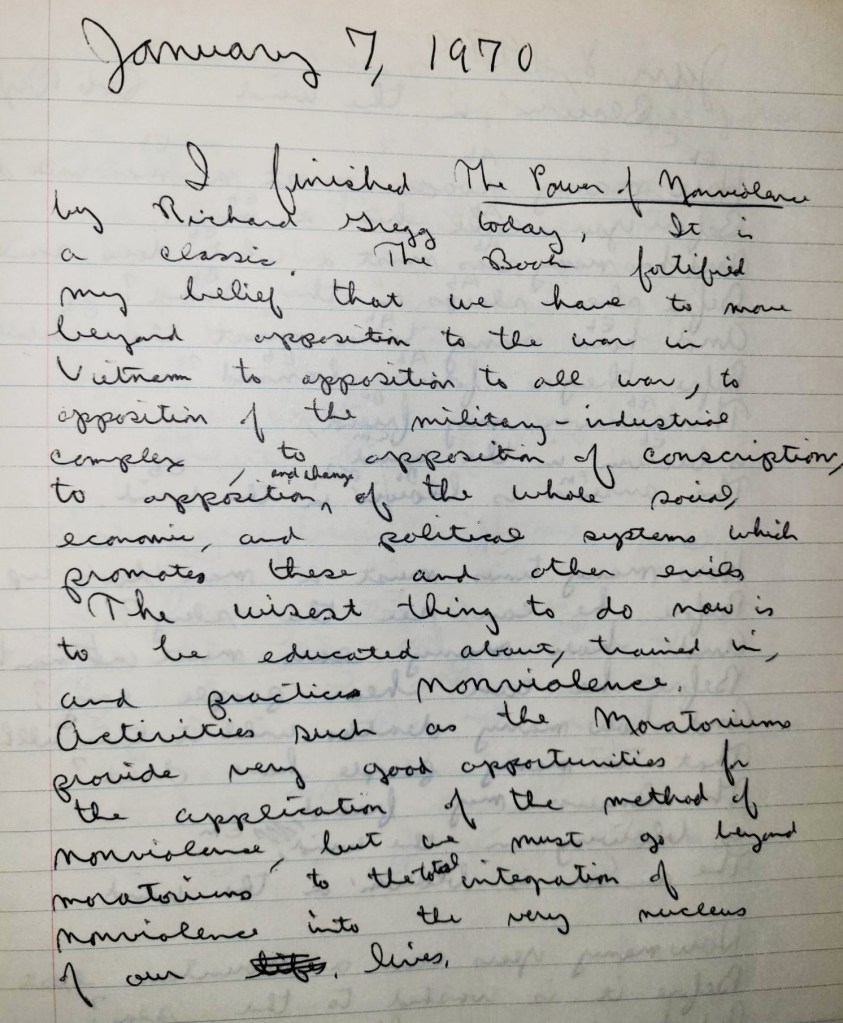
Often, I reflect on these queries outside the Quaker meeting gathering. That is why I write so much. Writing is a Spiritual exercise for me. Writing helps me listen for what the Spirit is saying. And helps me organize my thoughts. This is similar to keeping a journal as I did in the 1970’s. It looks like handwriting was a challenge.

Social and economic justice is something I’ve been thinking and praying about a lot lately. Over the past two years I’ve been deeply involved in Des Moines Mutual Aid. I mean Mutual Aid is something I’ve been studying and thinking a lot about outside the actual time spent at our weekly food giveaway.

A recent summary is this blog post, Mutual Aid is the Quaker way of being in the world.

As the advice says below, “we are part of an economic system characterized by inequality and exploitation. Such a society is defended and perpetuated by entrenched power.”

That is exactly what Mutual Aid is about. The capitalist economic system we are living in is designed to be unequal. Those who are skillful, or ruthless enough, accumulate wealth. Fundamentally, everything and everyone is seen as a resource that can be harnessed to create wealth. The result is millions of people trying to survive on subsistent wages. The result is the rape of the resources of Mother Earth. Which has put us on the road to extinction.

The capitalist economic system is enforced by political and criminal justice systems. Systems built on vertical hierarchies of power.

Mutual Aid is just the opposite. We work to maintain a flat or horizontal hierarchy, where everyone is equal.

One query for today is “how are we beneficiaries of inequity and exploitation? How are we victims of inequity and exploitation? In what ways can we address these problems?” I believe the answer involves building Mutual Aid communities.

I’ve met a great deal of resistance to the idea of replacing capitalism with Mutual Aid. When I asked a (Mutual Aid) friend why people had so much trouble recognizing the evils of capitalism, he said it was because they hadn’t experienced the failures of capitalism in their own lives, yet.


I wrote my own queries about Mutual Aid

Queries related to Mutual Aid
Do we recognize that vertical hierarchies are about power, supremacy and privilege? What are Quaker hierarchies?
Do we work to prevent vertical hierarchies in our peace and justice work?
What are we doing to meet the survival needs of our wider community?
How are we preparing for disaster relief, both for our community, and for the influx of climate refugees?
Are we examples of a Beloved community? How can we invite our friends and neighbors to join our community?

mutual aid is the new economy. mutual aid is community. it is making sure your elderly neighbor down the street has a ride to their doctor’s appointment. mutual aid is making sure the children in your neighborhood have dinner, or a warm coat for the upcoming winter. mutual aid is planting community gardens.

capitalism has violated the communities of marginalized folks. capitalism is about the value of people, property and the people who own property. those who have wealth and property control the decisions that are made. the government comes second to capitalism when it comes to power.

in the name of liberation, capitalism must be reversed and dismantled. meaning that capitalistic practices must be reprogrammed with mutual aid practices.

Des Moines Black Liberation

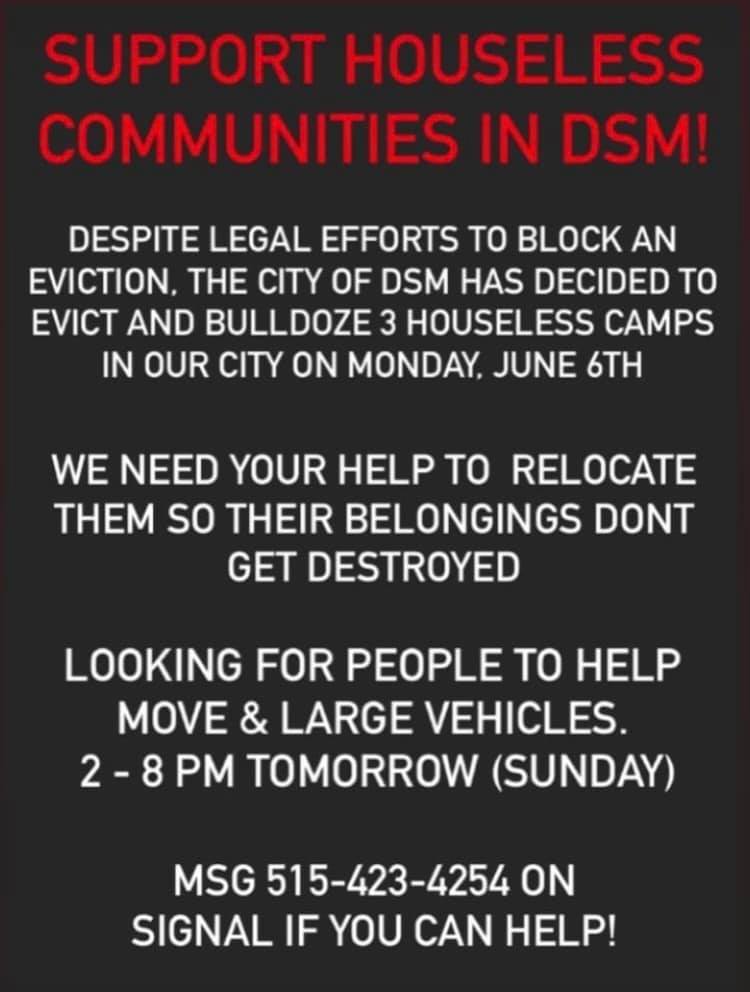
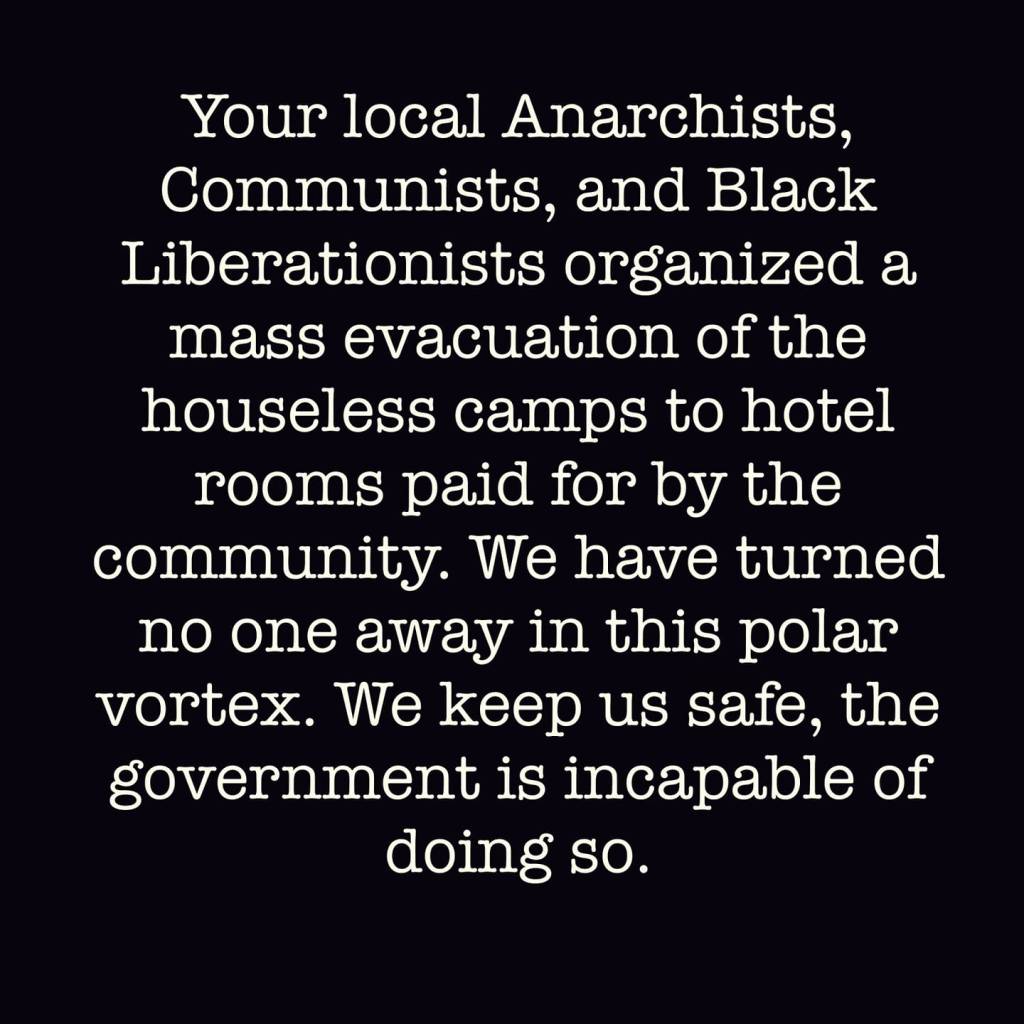
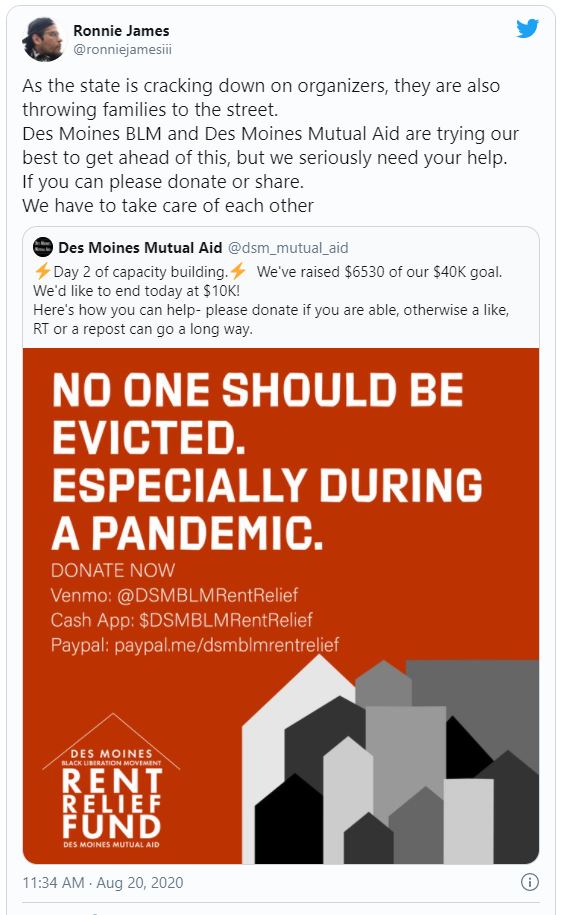
Des Moines Mutual Aid is a collective that does outreach for homeless folks in our community, houseless folks in our community. We also assist BLM with their rent relief fund, and most of the work we’ve done is running the bail fund for the protests over the summer. In the course of that work, we have witnessed firsthand the violence that is done upon people of color, Black people specifically, by the white supremacist forces of the state – in this state, in this city, in this county. There is absolutely a state of emergency for people of color and Black people in Iowa. The state of emergency has been a long time coming. We will support – DMMA will absolutely support any and all efforts of this community – BLM, and the people of color community more generally- to keep themselves safe. Power to the people.

Patrick Stahl, Des Moines Mutual Aid


SOCIAL AND ECONOMIC JUSTICE

Advice and Queries

“For when I was hungry you gave me food, when thirsty you gave me drink, when I was a stranger you took me into your home, when naked you clothed me, when in prison you visited me.”     Matthew 25:35‑36

ADVICE

We are part of an economic system characterized by inequality and exploitation. Such a society is defended and perpetuated by entrenched power.

Friends can help relieve social and economic oppression and injustice by first seeking spiritual guidance in our own lives. We envision a system of social and economic justice that ensures the right of every individual to be loved and cared for; to receive a sound education; to find useful employment; to receive appropriate health care; to secure adequate housing; to obtain redress through the legal system; and to live and die in dignity. Friends maintain historic concern for the fair and humane treatment of persons in penal and mental institutions.

Wide disparities in economic and social conditions exist among groups in our society and among nations of the world. While most of us are able to be responsible for our own economic circumstances, we must not overlook the effects of unequal opportunities among people. Friends’ belief in the Divine within everyone leads us to support institutions which meet human needs and to seek to change institutions which fail to meet human needs. We strengthen community when we work with others to help promote justice for all.

QUERY

  • How are we beneficiaries of inequity and exploitation? How are we victims of inequity and exploitation? In what ways can we address these problems?
  • What can we do to improve the conditions in our correctional institutions and to address the mental and social problems of those confined there?
  • How can we improve our understanding of those who are driven to violence by subjection to racial, economic, or political injustice? In what ways do we oppose prejudice and injustice based on gender, sexual orientation, class, race, age, and physical, mental, and emotional conditions? How would individuals benefit from a society that values everyone? How would society benefit?

Faith and Practice

Dearly Beloved Friends, these things we do not lay upon you as a rule or form to walk by, but that all, with the measure of light which is pure and holy, may be guided and so in the light walking and abiding, these may be fulfilled in the spirit, not the letter, for the letter killeth, but the spirit giveth life. Letter from the meeting of Elders at Balby, 1656

We are seekers but we are also the holders of a precious heritage of discoveries. We, like every generation, must find the Light and Life again for ourselves. Only what we have valued and truly made our own, not by assertion but by lives of faithful commitment, can we hand on to the future. Even then we must humbly acknowledge that our vision of truth will again and again be amended. Quaker Faith and Practice of Britain Yearly Meeting, 1994 page 17

Faith and Practice, The Book of Discipline of Iowa Yearly Meeting of Friends (Conservative) is a statement of principles and beliefs by which our society endeavors to learn and express lessons in Christian living. It provides guidance for the conduct of daily life and for carrying on the business of the meeting. Faith and Practice suggests rather than commands, and raises questions or queries rather than giving specific answers. It places upon the individual and corporate conscience, rather than upon external authority, the responsibility for the discipline of the Spirit.

Faith and Practice is based on an earlier document called the Discipline of Iowa Yearly Meeting (Conservative). It is intended as a handbook and guide for those of the Religious Society of Friends who belong to Iowa Yearly Meeting of Friends (Conservative), also known as Iowa Yearly Meeting (Conservative) or IYM(C). The first written disciplines among Friends appeared in Britain Yearly Meeting in manuscript form in 1718. At about the same period or a little later, in America, minutes of the yearly meetings were gathered in manuscript book form under captions alphabetically listed. The first printed Book of Discipline of Philadelphia Yearly Meeting appeared in 1797. The first Friends settling in Iowa lived under disciplines of Indiana Yearly Meeting and of Ohio Yearly Meeting.


ECONOMIC JUSTICE

May we look upon our treasures, the furniture of our houses, and our garments, and try whether the seeds of war have nourishment in these our possessions. John Woolman, A Word of Remembrance and Caution to the Rich published posthumously, 1793

I will never adjust myself to economic conditions that will take necessities from the many and give luxuries to the few. Martin Luther King, Jr., speaking in Cleveland Heights, Ohio, [St Paul’s Episcopal Church] 1963

Friends’ historical testimony has included the message that all people are equal, and deserve to share equally in the blessings of creation. The world is far from this ideal, and most in Iowa Yearly Meeting (Conservative) have benefited from global and local inequalities, however inadvertently. But we also suffer spiritually and otherwise because of the injustice in which we participate.

Friends believe that we should live in ways that do not “sow seeds of war.” Many are called to act in quiet or public ways to promote lifestyle choices, policies, laws, and treaties that will ensure the basic human rights of all people, including the rights to safe and healthy places to live and work. Historically, Friends have been able to help correct major injustices such as slavery, inhumane conditions for prisoners, and inequality in the treatment of women. The magnitude of current problems caused by economic injustice does not excuse Friends from the struggle against it, but makes obedience to God’s call all the more necessary.

Friends are reminded that there can be no peace without justice, and to live simply, so others may simply live. Many Friends find seeds of war and injustice in their lifestyles. Friends are challenged to participate constructively in the economy by supporting fair trade, choosing investments with attention to their social impact, and purchasing products produced under safe and healthy conditions. What each can do individually may not seem like much, but, guided by the Spirit and added to the efforts of others, it can make a difference.

The Book of Discipline of Iowa Yearly Meeting of Friends (Conservative)
Religious Society of Friends

Ed Fallon interviews me about the Wet’suwet’en emergency

I returned to Iowa in 2017 after spending my entire adult life in Indianapolis. First as a neonatal respiratory therapist, then thirty years doing research related to infant lung development and disease at Riley Hospital for Children, Indiana University Medical Center.

In Indianapolis I was fortunate to have been led to become involved with numerous environmental and social justice organizations, including the Kheprw Institute, a youth mentoring community, and efforts to stop the construction of the Keystone XL and Dakota Access pipelines. I made a lot of close friends. It was hard to leave them.

And I wondered what organizations and people I would find in Iowa. Ed Fallon and Bold Iowa were often mentioned as I looked for environmental groups in Iowa. We began to know each other via social media and email. But we didn’t meet until 7:00 am, February 3, 2018. Ed had organized a group to travel in a van to Minneapolis Super Bowl weekend to protest US Bank’s funding of the Dakota Access pipeline. US Bank’s headquarters are in downtown Minneapolis, and the Super Bowl was played in the US Bank stadium.

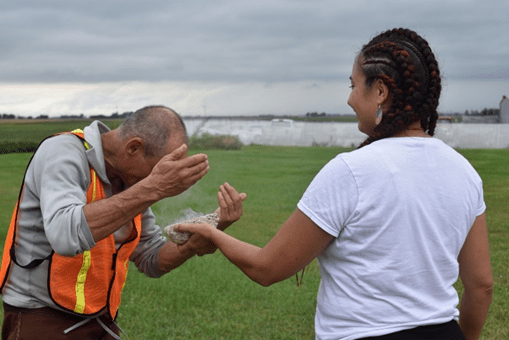
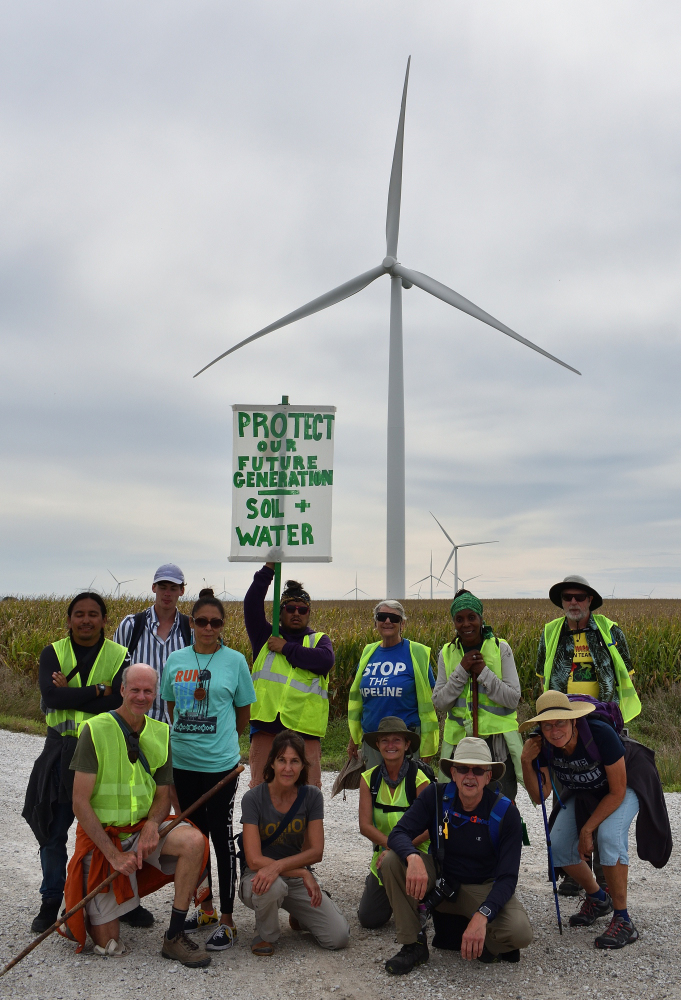
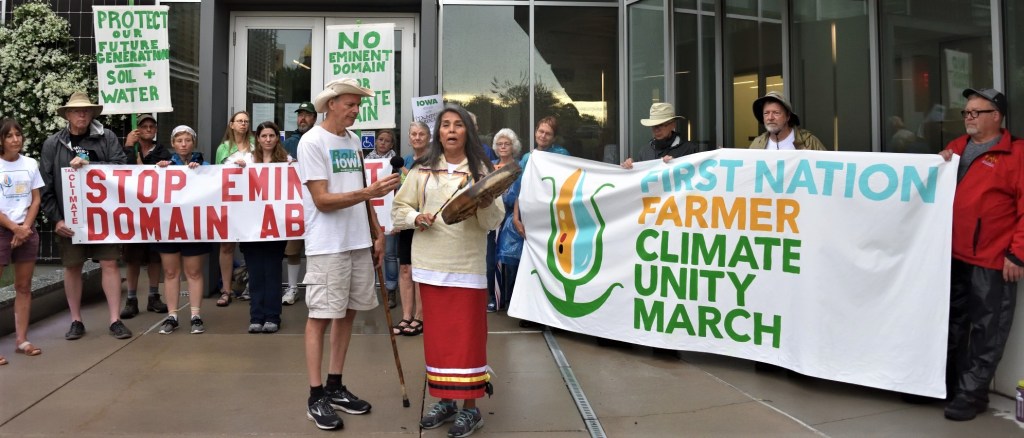
Ed, of Bold Iowa, and Christine Nobiss, of Indigenous Iowa, organized the First Nation-Farmer Climate Unity March, that I participated in. A small group of about a dozen native and a dozen non-native people walked and camped along the route of the Dakota Access pipeline from Des Moines to Ford Dodge, ninety four miles over eight days. See: https://firstnationfarmer.com/

The purpose of the march was for us to share our stories and get to know one another so we could work on things of common concern. That was hugely successful, and we have done many things together since.

Ed is familiar with my involvement with the Wet’suwet’en people’s struggles to keep the Coastal GasLink pipeline from being built through their beautiful lands. When he read my recent blog post, Wet’suwet’en emergency, he asked if I’d like to be interviewed about this on his weekly radio program, the Fallon Forum.

The Wet’suwet’en people of British Columbia have been fighting to stop Coastal GasLink from building a pipeline through their land. That effort takes on additional importance now as the company threatens to drill under a river central to the Wet’suwet’en’s existence. Advocate Jeff Kisling joins me for that discussion.

Ed Fallon interviews Jeff Kisling about the Wet’suwet’en emergency

#KillTheDrill #WetsuwetenStrong #AllOutForWedzinKwa