The Silence of the Damned

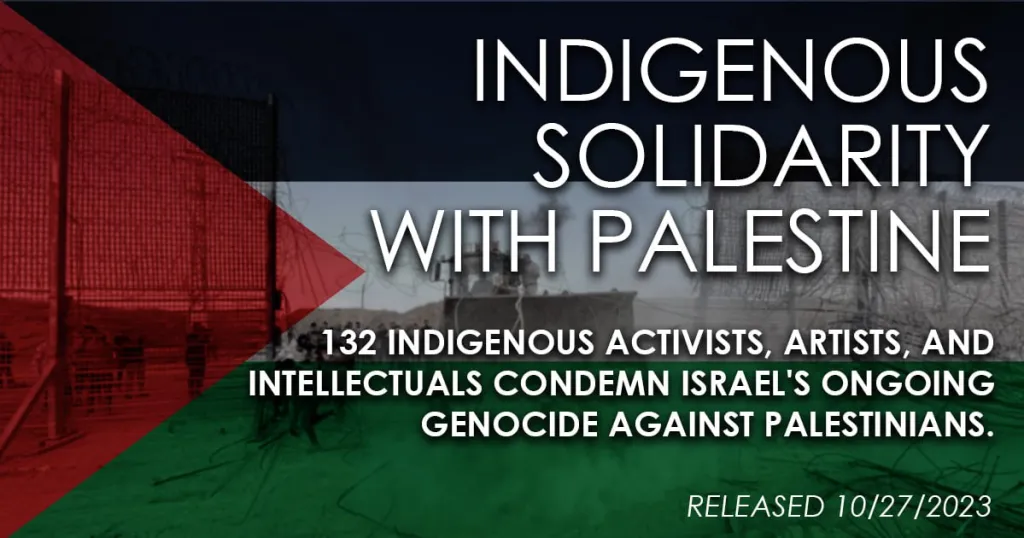
The Silence of the Damned is the title of an article written by Chris Hedges yesterday. It is devastating reading. The title says it all. Here are a few excerpts.

Robert Jay Lifton in his book “The Nazi Doctors: Medical Killing and the Psychology of Genocide” writes that “genocidal projects require the active participation of educated professionals — physicians, scientists, engineers, military leaders, lawyers, clergy, university professors and other teachers — who combine to create not only the technology of genocide but much of its ideological rationale, moral climate, and organizational process.”…

There is a cost to denouncing this genocide, a cost they (U S Medical Schools and organizations) do not intend to pay. They fear being attacked. They fear destroying their careers. They fear losing funding. They fear a loss of status. They fear persecution. They fear social isolation. This fear makes them complicit…

The danger is not only that the Israeli crimes are denounced. The danger, more importantly, is that the moral bankruptcy and cowardice of the institutions and their leaders are exposed…

The dehumanization of Palestinians is lifted from the playbook of all settler colonial projects, including our own. This racism, where people of color are branded as “human animals,” is coded within the DNA of our institutions. It infects those chosen to lead these institutions. It lies at the core of our national identity. It is why the two ruling parties and the institutions that sustain them side with Israel. It feeds the perverted logic of funneling weapons and billions of dollars in support to sustain Israel’s occupation and genocide.

History will not judge us kindly. But it will revere those who, under siege, found the courage to say no.

The Silence of the Damned. Our Leading Humanitarian and Civic Institutions, Including Major Medical Institutions, Refuse to Denounce Israel’s Genocide in Gaza by Chris Hedges, Scheer Post, February 1, 2024

There is a sense of hopelessness, helplessness, and despair in the face of the horrors of the Israeli-Hamas war.

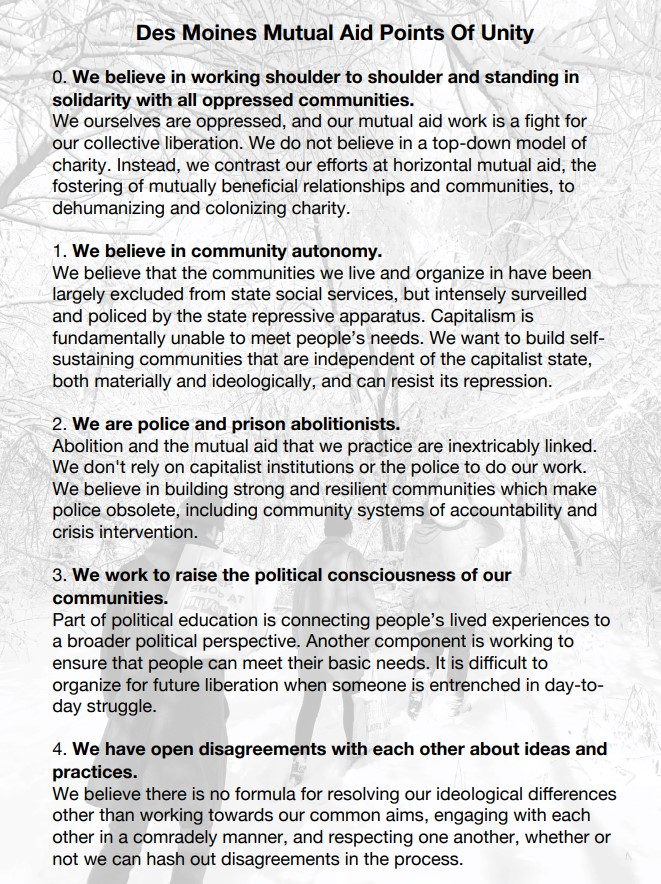
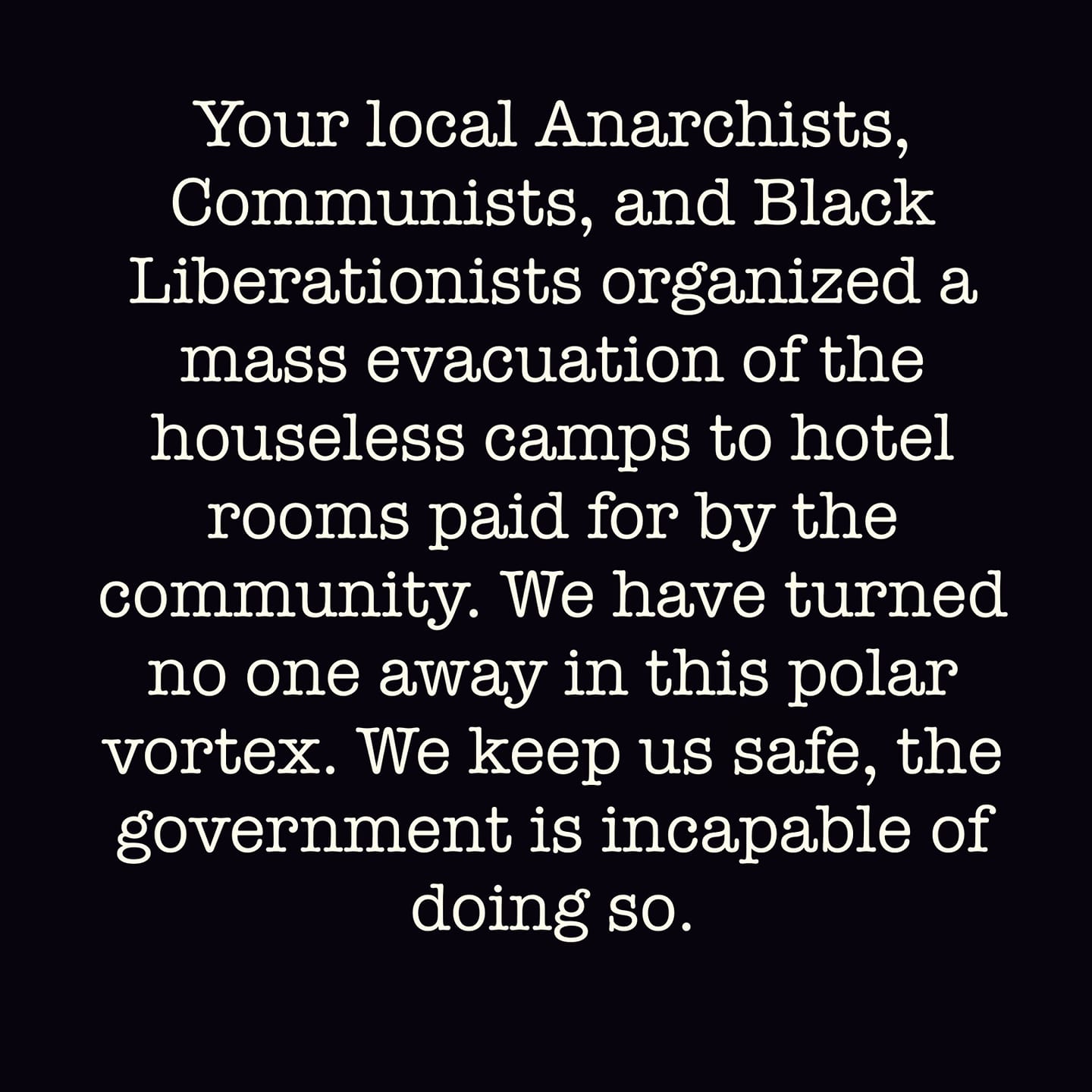
Coming of age in the 1960s, during the Vietnam War, I witnessed and was part of the massive antiwar movement in this country. But for the past several decades I’ve wondered what happened to the antiwar movement. A movement sorely needed in these times. I’m beginning to understand that the antiwar movement has morphed into the movement to build resilient, Mutual Aid communities.

As I’ve been writing about resilience and Mutual Aid recently, I see more clearly that resilience is not only a way to prepare for the future but also a way to build better communities now. That includes the way to break the cycle of war.

It might seem counterintuitive to work locally in the face of global war and disaster, but I believe that is the only effective thing we can do now.

“Ain’t Gonna Study War No More” by Jeff Kisling, Polycrisis Center, 11/11/2023


In January 2020, just before I joined, Des Moines Mutual Aid participated in a march protesting the potential for war or increased hostilities with Iran that followed the fallout of the assassination of Qassem Soleimani by a drone strike in Baghdad.

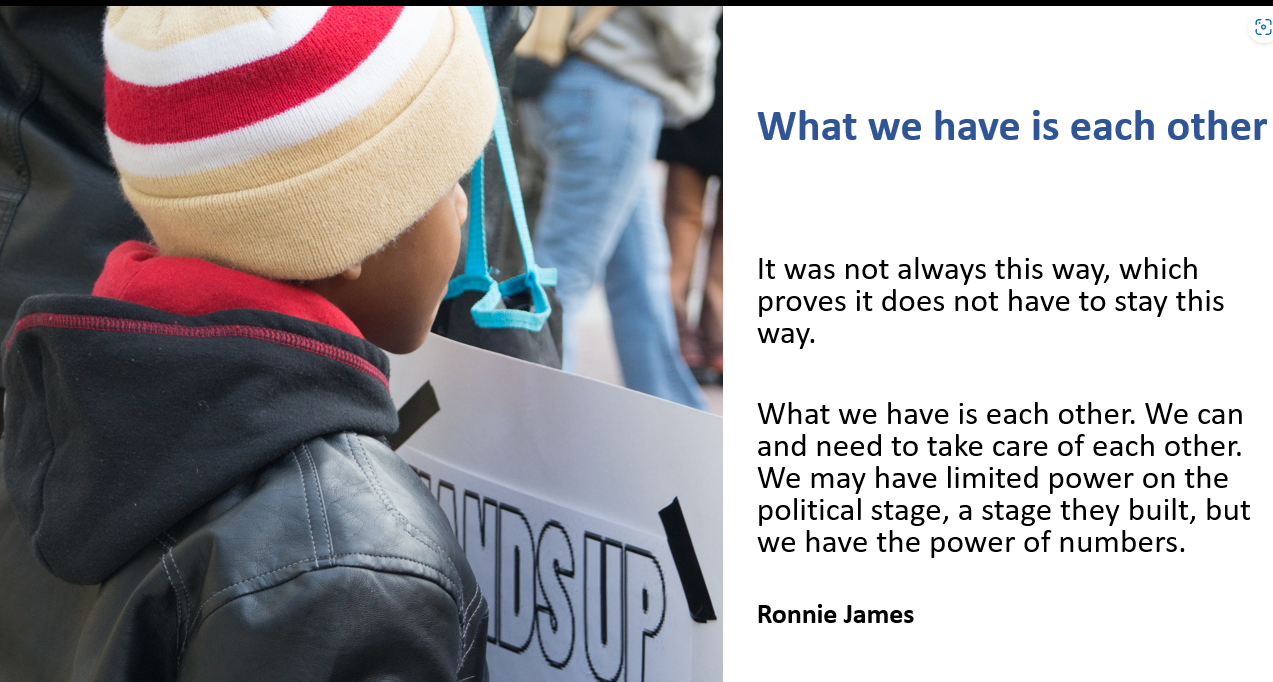
Paradigm shift

Recently, we discussed our peace and justice work at my Quaker meeting. I explained my vision of creating a Mutual Aid community to guide our justice work. And included examples of what the meeting is already doing that are Mutual Aid.

I felt we had a good discussion. I didn’t have answers to some of the questions raised. I believe those questions would be answered as we got experience with implementation. But the meeting is clearly not ready to begin working on Mutual Aid.

As I was preparing for this discussion, I knew it would be difficult to distill my more than three years of experience with Des Moines Mutual Aid (DMMA).

Paradigm shift: an important change that happens when the usual way of thinking about or doing something is replaced by a new and different way

Merriam-Webster Dictionary

Mutual Aid represents a paradigm shift in Quaker’s thinking about spirituality and justice work. How can I help people make this shift happen? What is the Spirit asking of us?

I have no doubt that the Spirit leads me to continue with my involvement with Des Moines Mutual Aid. My friends there know I hope to bring spirituality into the work of Mutual Aid, so I’ll give them an update on our meeting at Bear Creek.

One paradigm shift from my past comes to mind. In the early 1970’s I moved to Indianapolis and was horrified by the foul air from auto exhaust. I was led to live without a car as a result. But I had no success in convincing anyone else to give up their car. So here we are now, facing ever increasing environmental chaos.

During the years’ long struggles with my meeting about cars, which was difficult since many meeting members lived in rural settings, one Friend asked if I had invited the meeting into my concerns about cars. And I realized I had not done so. When I did invite the meeting to join me in our common concerns about fossil fuels, one thing we developed was a concept we called Ethical Transportation (see below).

So, I applied that idea to invite the meeting into Mutual Aid work. I often share my experiences at Des Moines Mutual Aid with the meeting. Our discussion this past weekend is another step that will lead to Mutual Aid. As more communities and people are impacted by environmental and social chaos, we will naturally turn to the idea of Mutual Aid for disaster relief.

I am impressed with the Great Plains Action Society’s Mechanism of Engagement. Mutual Aid is one of the Methods in the model. I wonder what such a model would look like for Quakers. Maybe that is part of the way forward, for my Quaker meeting to become more oriented toward Mutual Aid.


Ethical Transportation Minute

Radically reducing fossil fuel use has long been a concern of Iowa Yearly Meeting (Conservative). A previously approved Minute urged us to reduce our use of personal automobiles. We have continued to be challenged by the design of our communities that makes this difficult. This is even more challenging in rural areas. But our environmental crisis means we must find ways to address this issue quickly.
Friends are encouraged to challenge themselves and to simplify their lives in ways that can enhance their spiritual environmental integrity. One of our meetings uses the term “ethical transportation,” which is a helpful way to be mindful of this.
Long term, we need to encourage ways to make our communities “walkable”, and to expand public transportation systems. These will require major changes in infrastructure and urban planning.
Carpooling and community shared vehicles would help. We can develop ways to coordinate neighbors needing to travel to shop for food, attend meetings, visit doctors, etc. We could explore using existing school buses or shared vehicles to provide intercity transportation.
One immediately available step would be to promote the use of bicycles as a visible witness for non-fossil fuel transportation. Friends may forget how easy and fun it can be to travel miles on bicycles. Neighbors seeing families riding their bicycles to Quaker meetings would have an impact on community awareness. This is a way for our children to be involved in this shared witness. We should encourage the expansion of bicycle lanes and paths. We can repair and recycle unused bicycles and make them available to those who have the need.

Ethical Transportation Minute. Approved by Iowa Yearly Meeting (Conservative) 2017