Rally for Reproductive Justice

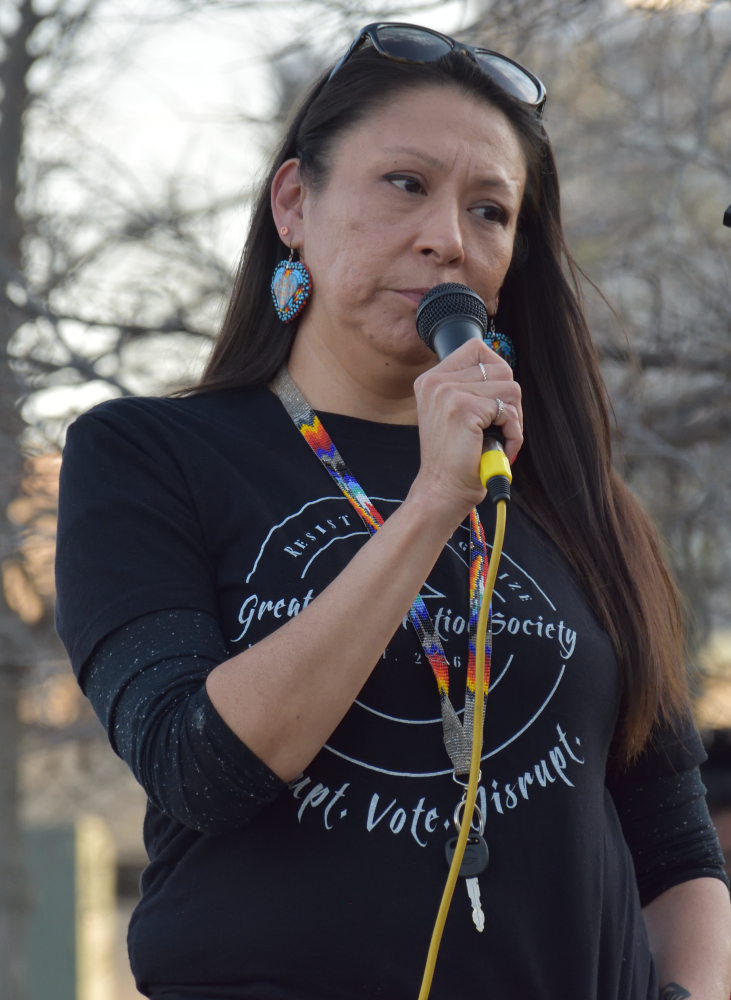
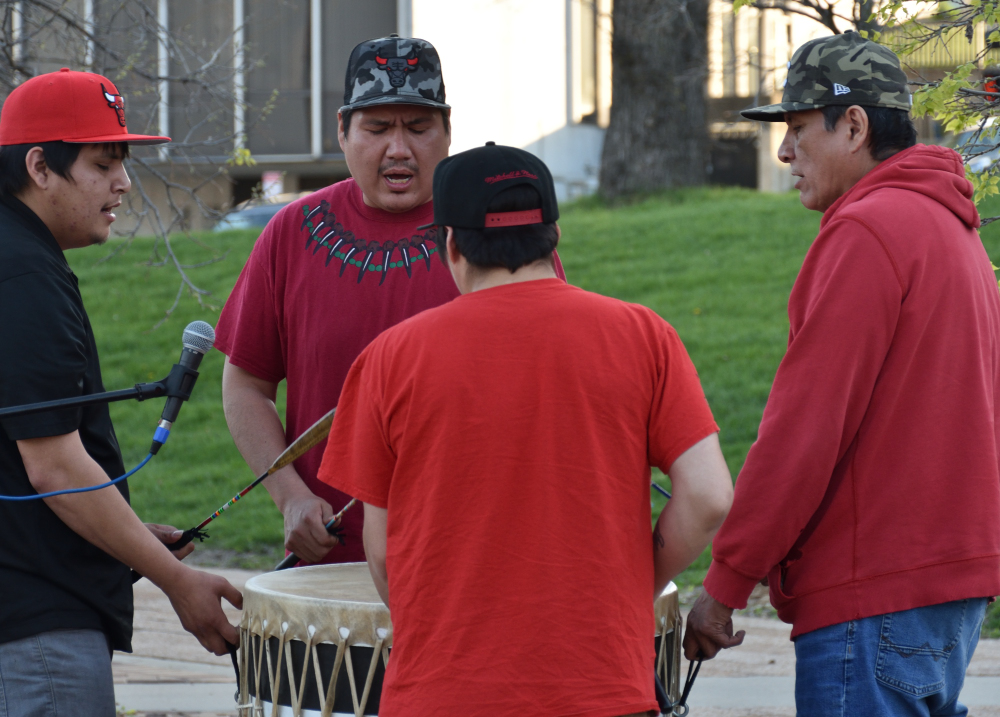
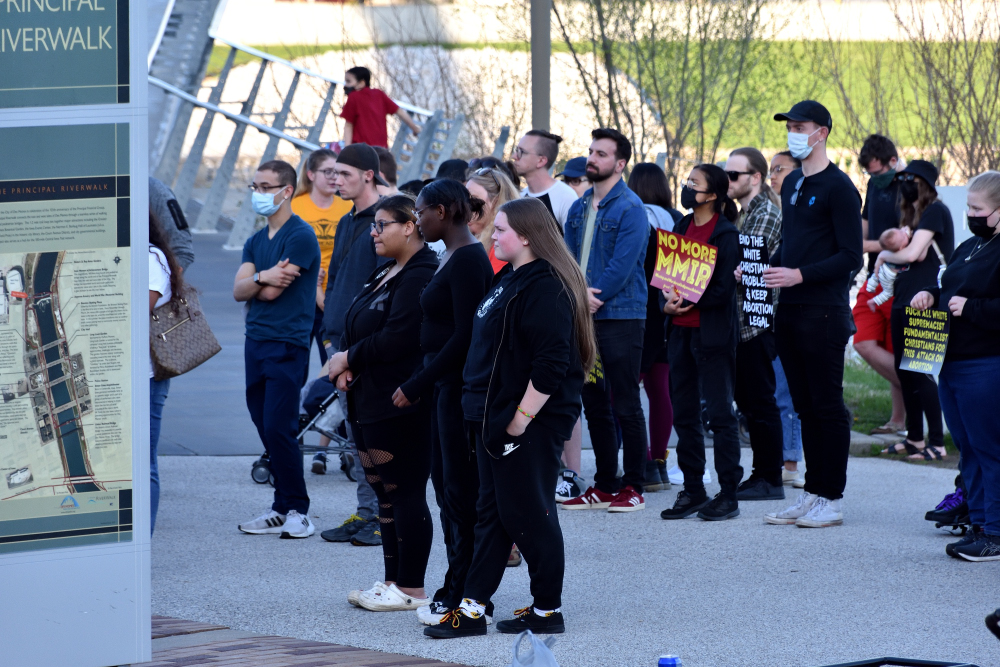
Last night we gathered at the Iowa Women of Achievement Bridge in downtown Des Moines. This was a solidarity rally for Reproductive Justice and awareness for missing and murdered Indigenous relatives (MMIR). The bridge was lit with red, the color associated with MMIR.

I learned two friends were connected to two of the women honored by the bridge.

I was glad to see so many of my friends, from Great Plains Action Society, Des Moines Mutual Aid, Des Moines Black Liberation, Iowa Citizens for Community Improvement, Sierra Club Beyond Coal.

This sign was erected, with the Wells Fargo Arena in the background. Wells Fargo is one of the banks that fund pipelines. Many Indigenous women are taken and/or killed by pipeline construction workers because, as another example of environmental racism, the pipelines are often built near Indigenous communities. I was going to say near Indigenous lands, but it is all Indigenous land.


Whiteness and Quakers

[References to Quakers here pertain to White Quakers. There is little diversity among Quakers in this country.]

There are several reasons I’m led to revisit this today.

  • Our Quaker meetings have dwindling numbers of attenders. Most of those remaining are elderly and white. Many meetings do not have new people joining.
  • I continue to hear stories from people of color, or those identifying as non-binary in gender or sexual orientation not being welcome in some Quaker meetings.
  • Those of us working outside our Quaker communities are often blessed to find beloved communities.
  • I wish others in our Quaker meetings would join these communities.
  • Despite the many wonderful aspects of these ‘external’ communities, I sometimes sense a lack of spiritual support for one another there.
  • There are many who don’t express their spirituality publicly, or in ways “organized” religions do.
  • Quaker presence will not be fully welcome in these communities until we come to terms with our own racism.

We know that those of us who are white must confront racism in ourselves and in the institutions we care about—our faith communities, our schools, our neighborhoods, our families, our Congress.

Racism and Whiteness, Diane Randall

People ask me if I believe in god… I tell them I pray to creator.
They tell me Jesus died for me… I tell them my ancestors did.
They say I will burn in hell for not following the Bible, but it has been used as weapon to colonize and murder my people…
for me it’s spirituality over religion. I don’t hate people for going to church, but I do hate what the churches have done to us…
before colonization we had our own ways and ceremonies, I choose the path of my ancestors.

Indigenous

For a long time, I’ve been in significant spiritual distress. I’ve been learning a great deal from my Native friends and working in Mutual Aid communities. And they tell me the way white people can best support them is by embracing and teaching others about LANDBACK.

I caused conflicts in my Quaker meeting because I wanted them to join me in the work of Mutual Aid and LANDBACK. Despite my efforts to explain this, they haven’t had the experiences that would make them understand all of this, yet.

At the same time I felt I was letting my Native friends down, because I wasn’t making some of the changes I wanted to make in my life that could be an example of how white people can join the work with Mutual Aid and LANDBACK.

As environmental chaos deepens, with the resulting collapse of the colonial capitalist economic system and the political systems propping up white supremacy fail, we will have no choice but to find alternatives. Ideally those would be Mutual Aid and LANDBACK. This is a powerful incentive to embrace these concepts now.

Mutual Aid and LANDBACK

In the same way I can’t understand the involvement of many Quakers in the slave trade, and having enslaved people, I can’t understand Quaker’s involvement in forced assimilation of native children.

What does this mean for Quakers today? No matter what we say about justice for BIPOC (Black, Indigenous, and other people of color) folks, those words are empty as long as we continue to take advantage of colonial capitalism and white supremacy.

The news of 215 Kamloops Native children buried on the grounds of a residential school shocked non-native people, who did not know how many of these residential schools existed in the lands called the United States and Canada. Did not know tens of thousands of Native children were forcibly removed from their families and taken to these institutions where thousands were abused in many ways. Thousands killed or died. Though the stated reason for doing this was to assimilate Native children into white society for their benefit, the real intent was to quell Indigenous resistance to the theft of their land by white settler colonists.

My friend Paula Palmer wrote an excellent article for Friends Journal, Oct 1, 2016. “Quaker Boarding Schools: Facing Our History and Ourselves”.

The growing numbers of remains found at other schools has re-opened deep wounds in Native communities. Many have been triggered by these atrocities. One of my Native friends wrote that she was NOT OK. Another told me, “I’m trying not to be enraged in my mourning.”

A Native friend also told me, “The church is the church’s past, which is its future. It continues to see my people as obstacles in its endless conquest. To be blunt, there is too much damage that the church profits from and needs to protect to have any future there.” Vigorous attempts are made to hide it, but history does not lie. He also told me, regarding what I had been telling him about my efforts with Quakers, “I wish you the best. I imagine it’s a hard struggle.”

I cannot face my BIPOC friends if I don’t continue to seek the Spirit, and act on the leadings I am given. Writing is one thing I am led to do.

“Don’t make orphans stand here covered in the blood of our parents and explain to you how this all came to be without doing something about it. “

The Tragedy of 215. Without truth, there can be no healing, by Sarah Rose Harper, Lakota People’s Law Project, 6/2/2021

I am so grateful to my BIPOC friends for teaching me that Mutual Aid and LANDBACK are alternatives to colonial capitalism and white superiority. LANDBACK is how to restore Native lands and leadership.

As environmental chaos deepens, with the resulting collapse of the colonial capitalist economic system and the political systems propping up white supremacy, we will have no choice but to find alternatives. Ideally those would be Mutual Aid and LANDBACK. This is a powerful incentive to embrace these concepts now.

I wrote the following epistle that is modeled from ‘An Epistle to Friends Concerning Military Conscription’

An Epistle to Friends Regarding Community, Mutual Aid and LANDBACK

Dear Friends,

The measure of a community is how the needs of its people are met. No one should go hungry, or without shelter or healthcare. Yet in this country known as the United States millions struggle to survive. The capitalist economic system creates hunger, houselessness, illness that is preventable and despair. A system that requires money for goods and services denies basic needs to anyone who does not have money. Black, Indigenous, and other people of color (BIPOC) are disproportionately affected. Systemic racism. The capitalist system that supports the white materialistic lifestyle is built on stolen land and genocide of Indigenous peoples, and the labor of those who were enslaved in the past or are forced to live on poverty wages today.

Capitalism is revealed as an unjust, untenable system, when there is plenty of food in the grocery stores, but men, women and children are going hungry, living on the streets outside. White supremacy violently enforces the will of wealthy white people on the rest of us.

It has become clear to some of us who are called Friends that the colonial capitalist economic system and white supremacy are contrary to the Spirit and we must find a better way. We conscientiously object to and resist capitalism and white supremacy.

capitalism has violated the communities of marginalized folks. capitalism is about the value of people, property and the people who own property. those who have wealth and property control the decisions that are made. the government comes second to capitalism when it comes to power.

in the name of liberation, capitalism must be reversed and dismantled. meaning that capitalistic practices must be reprogrammed with mutual aid practices. 
Des Moines Black Liberation Movement

Mutual Aid

How do we resist? We rebuild our communities in ways not based upon money. Such communities thrive all over the world. Indigenous peoples have always lived this way. White people once did so in this country. Mutual Aid is a framework that can help us do this today.

The concept of Mutual Aid is simple to explain but can result in transformative change. Mutual Aid involves everyone coming together to find a solution for problems we all face. This is a radical departure from “us” helping “them”. Instead, we all work together to find and implement solutions.  To work together means we must be physically present with each other. Mutual Aid cannot be done by committee or donations. We build Beloved communities as we get to know each other. Build solidarity. An important part of Mutual Aid is creating these networks of people who know and trust each other. When new challenges arise, these networks are in place, ready to meet them.

Another important part of Mutual Aid is the transformation of those involved. This means both those who are providing help, and those receiving it.

With Mutual Aid, people learn to live in a community where there is no vertical hierarchy. A community where everyone has a voice. A model that results in enthusiastic participation. A model that makes the vertical hierarchy required for white supremacy impossible.

Commonly there are several Mutual Aid projects in a community. The initial projects usually relate to survival needs. One might be a food giveaway. Another helping those who need shelter. Many Mutual Aid groups often have a bail fund, to support those arrested for agitating for change. And accompany those arrested when they go to court.

LANDBACK

The other component necessary to move away from colonial capitalism and white supremacy is LANDBACK.

But the idea of “landback” — returning land to the stewardship of Indigenous peoples — has existed in different forms since colonial governments seized it in the first place. “Any time an Indigenous person or nation has pushed back against the oppressive state, they are exercising some form of landback,” says Nickita Longman, a community organizer from George Gordon First Nation in Saskatchewan, Canada.

The movement goes beyond the transfer of deeds to include respecting Indigenous rights, preserving languages and traditions, and ensuring food sovereignty, housing, and clean air and water. Above all, it is a rallying cry for dismantling white supremacy and the harms of capitalism.

Returning the Land. Four Indigenous leaders share insights about the growing landback movement and what it means for the planet, by Claire Elise Thompson, Grist, February 25, 2020

What will Friends do?

It matters little what people say they believe when their actions are inconsistent with their words.  Thus, we Friends may say there should not be hunger and poverty, but as long as Friends continue to collaborate in a system that leaves many without basic necessities and violently enforces white supremacy, our example will fail to speak to mankind.

Let our lives speak for our convictions.  Let our lives show that we oppose the capitalist system and white supremacy, and the damages that result.  We can engage in efforts, such as Mutual Aid and LANDBACK, to build Beloved community. To reach out to our neighbors to join us.

We must begin by changing our own lives if we hope to make a real testimony for peace and justice.

We remain, in love of the Spirit, your Friends and sisters and brothers,

Note: Modeled from ‘An Epistle to Friends Concerning Military Conscription’


NATIONAL MOBILIZATION FOR REPRODUCTIVE JUSTICE

NOTE: The date has been changed for the Rally for Reproductive Justice I wrote about yesterday. That event will be this Friday, May 6, 6:45 – 8:30 PM Central. More information here: https://quakersandreligioussocialism.com/2022/05/04/reproductive-justice/


Rally for Repro Rights

Saturday 3 PM Central

Iowa State Capitol

Saturday, May 7, 2022
3:00 PM Central
Public · Anyone on or off Facebook
Come and gather with others in response to the leaked SCOTUS draft opinion on Roe v. Wade. Join us on the west side of the Capitol.

𝗪𝗲 𝗿𝗶𝘀𝗲 𝘁𝗼𝗴𝗲𝘁𝗵𝗲𝗿 𝘁𝗼 𝗱𝗲𝗳𝗲𝗻𝗱 𝗮𝗰𝗰𝗲𝘀𝘀 𝘁𝗼 𝗮𝗯𝗼𝗿𝘁𝗶𝗼𝗻 𝗳𝗼𝗿 𝗮𝗹𝗹.
𝗔𝗯𝗼𝗿𝘁𝗶𝗼𝗻 𝗶𝘀 𝗵𝗲𝗮𝗹𝘁𝗵 𝗰𝗮𝗿𝗲.
𝗥𝗲𝗽𝗿𝗼𝗱𝘂𝗰𝘁𝗶𝘃𝗲 𝗿𝗶𝗴𝗵𝘁𝘀 𝗮𝗿𝗲 𝗵𝘂𝗺𝗮𝗻 𝗿𝗶𝗴𝗵𝘁𝘀.

Sponsors of the event include:
Great Plains Action Society
Interfaith Alliance of Iowa
Iowa Abortion Access Fund
Iowa Coalition Against Domestic Violence
Iowa Coalition Against Sexual Assault
Iowa Coalition for Collective Change
League of Women Voters of Iowa
New Frontier
No Justice No Peace
One Iowa
Planned Parenthood Advocates of Iowa
Progress Iowa
The Urban Impact Show
Young Women’s Resource Center


NATIONAL MOBILIZATION FOR REPRODUCTIVE JUSTICE

The National Mobilization for Reproductive Justice was initiated by Radical Women last year. It has been organizing in several states and gearing up for “day of decision” demonstrations for when the Supreme Court ruling is released. We stand together around a strong set of demands that reflect the whole spectrum of reproductive justice, from ending forced sterilization and overturning the Hyde Amendment, to guaranteed affordable childcare and accurate sex education. Mobilization participants including feminists, unionists, people of color and LGBTQ+ activists.

National and local activities, the full set of demands and endorsers, and information about the National Mobilization for Reproductive Justice are posted at www.ReproJusticeNow.org.

What we call for:

  • Protect & expand Roe v. Wade; safe, legal abortion on demand without apology
  • Repeal the Hyde Amendment
  • Overturn state barriers to reproductive choices
  • Stop forced sterilization
  • No to caged kids, forced assimilation, & child welfare abuses
  • End medical & environmental racism; for universal healthcare
  • Defend queer & trans families
  • Guarantee medically sound sex education & affordable childcare
  • Sexual self-determination for people with disabilities
  • Uphold social progress with expanded voting rights & strong unions

Initiated by Radical Women


Radical Women

A trailblazing socialist feminist organization, Radical Women is the revolutionary wing of the women’s movement and a strong feminist voice within the Left. Immersed in the daily fight against racism, sexism, homophobia, anti-trans bigotry, and labor exploitation, Radical Women believes in multi-issue organizing around the needs of the most marginalized. We view the leadership of gender-oppressed people, especially those who are of color, as decisive to social change and we train women to take their place in the forefront of the struggle. Radical Women is an autonomous group of ciswomen, transwomen and non-binary people, united on the basis of shared socialist feminist ideals expressed in The Radical Women Manifesto.

Get involved if you want to change the world and collaborate with a dynamic bunch of feminist rebels of all colors, sexualities and ages. Everyone has something to learn, teach and contribute!

FCNL Native American updates

Following are Native American updates from the Friends Committee on Legislation (FCNL).

Seeking Truth, Healing, and Right Relationship: Quakers and the Legacy of Indian Boarding Schools
MAY 25, 2022, 5:30 – 6:30 PM Central, ONLINE

FCNL and Friends advocate in solidarity with Indigenous peoples. Yet, historically, Quakers played a role in colonization and the cultural genocide of Native people through the operation of more than 30 Indian boarding schools. With legislation now before Congress to investigate the legacy of Indian boarding schools, how are Friends communities engaging to address Quaker complicity in these atrocities?

Join us on Weds. May 25 at 6:30 p.m. EDT to learn how FCNL and F/friends are reckoning with this history and advocating in solidarity with Native communities.

In conversation with Paula Palmer and Jerilyn DeCoteau, FCNL’s Congressional Advocate for Native American Advocacy Portia Kay^nthos Skenandore-Wheelock will discuss FCNL’s work to build support for the bipartisan Truth and Healing Commission on Indian Boarding School Policies in the United States Act (S. 2907/H.R. 5444). Paula and Jerilyn will share from their expertise and experience co-directing Towards Right Relationship with Native Peoples with Friends Peace Teams. Director of Quaker Leadership Alicia McBride will moderate the conversation.


Reauthorize FVPSA with Critical Support for Tribal Domestic Violence Programs

The Family Violence Prevention and Services Improvement Act (FVPSA) is the primary federal grant program for domestic violence shelter and supportive services. This is especially significant for tribal communities, which deal with domestic and sexual violence at unparalleled rates. 

FVPSA will help all tribes provide culturally appropriate and life-saving prevention and treatment resources for their citizens by funding domestic violence programs, shelters, hotlines, resource centers in Alaska and Hawaii, and tribal coalitions. In short, FVPSA is a key piece of legislation to address the crisis of Missing and Murdered Indigenous People.

The House passed their bill (H.R. 2119) in October 2021, but the Senate has yet to vote on their version (S. 1275).

Remind your senators of their responsibility to tribal nations and urge them to pass the Family Violence Prevention and Services Improvement Act.


Historic Funding for Tribal Nations in FY 2023 Budget Proposal

For the first time in history, the president’s budget process included direct consultations with tribal nations. As a result, President Joe Biden’s FY 2023 budget proposal includes increased funding for tribal nations and programs. Notably, it would also significantly invest in the stabilization of the entire tribal healthcare system.

By recategorizing Indian Health Service (IHS) funding as mandatory rather than discretionary spending, IHS funding would automatically keep pace with increasing healthcare costs and population growth. This change would gradually close longstanding shortfalls, address backlogs and inequities, and modernize record systems. The budget proposal recommends $9.1 billion in mandatory funding for tribal healthcare.

“This proposal is a historic step forward towards securing adequate, stable, and predictable funding to improve the overall health status of American Indians and Alaska Natives,” said IHS Acting Director Elizabeth Fowler. “It also ensures we never repeat the disproportionate impacts experienced during the pandemic…and acknowledges the need to implement long-term solutions to address IHS funding challenges, which contribute to the stark health disparities faced by American Indian and Alaska Native people.”

Other wins in the budget proposal include increased funding for tribal programs in general, Violence Against Women Act programs, and the Federal Indian Boarding School Initiative.


Interior Department Reverses Nearly 50 Year Obstacle to Tribal Water Rights

On April 7, Interior Secretary Deb Haaland reversed the Morton Moratorium, a 1975 memorandum directing the Bureau of Indian Affairs to disapprove tribal regulation of water use on reservations. With this change, tribes requiring secretarial approval of tribal water codes will be able to better regulate and protect waters on tribal lands.

“If we are to truly support tribal self-determination, we cannot be afraid to review and correct actions of the past that were designed to create obstacles for tribal nations,” said Haaland. The Interior Department will hold tribal consultations for guidance on an improved review process for tribal water codes.


What we’re reading

Reproductive Justice

NOTE: Date changed to Friday, May 6

The recently unveiled draft of a Supreme Court decision to end Roe and Casey has sparked vigorous national conversations and actions related to reproductive justice.

My thoughts went to White supremacy and colonization because of my past few years of learning from my Indigenous and Mutual Aid friends.

“We must abolish white supremacist and christian institutions that perpetuate colonial harm to oppress those that don’t fall into their manifest destiny paradigm.”

This comes just before the National Day of Awareness for Missing and Murdered Indigenous Relatives, May 6.

Event by Great Plains Action SocietyDes Moines Black Liberation Movement and 2 others

700 Robert D Ray Dr, Des Moines, IA 50316, United States
May 6, 2022
6:45 – 8:30 pm
Public  · Anyone on or off Facebook

Wear red and join us on the east side of the Women of Achievement Bridge (which will be lit red for MMIR day) in the Muto Recreation Area in Des Moines to demand reproductive justice!

The draft to end Roe and Casey was leaked just two days before the National Day of Awareness for Missing and Murdered Relatives (aka, Missing and Murdered Women and Girls). We are honoring this day by uplifting radical solidarity within all communities affected by colonial violence when body sovereignty is stolen from us.

Join our coalition of organizations and grassroots activists for a rally to demand abortion access, which plays a huge role in ending the MMIR crisis. Lack of access increases violence and health disparities in BIPOC, Disabled, LGBTQIA+, and Two-Sprit communities. Learn more from speakers and crowd testimony on how this affects these communities and take action on a wider scope than just abortion. We must abolish white supremacist and christian institutions that perpetuate colonial harm to oppress those that don’t fall into their manifest destiny paradigm.

Thank you to the Iowa Coalition Against Domestic Violence for lighting the bridge and amphitheater red on May 5th in honor of MMIR Day of Awareness! The bridge will also be lit red on May 6th for our event!

ASL provided.
LiveStreamed to this page.

This event was organized by:
– Iowa Coalition for Collective Change
– Great Plains Action Society
– The Disability Caucus of the Iowa Democratic Party
– Iowa CCI
– Des Moines BLM
– Sierra Club Beyond Coal
– Deaf Dome
– The Progressive Caucus of the Iowa Democratic Party
– Iowa Abortion Access Fund
– One Iowa

The leaked draft Supreme Court opinion written by Justice Samuel A. Alito Jr. posits not only the total evisceration of constitutional protection for abortion but of an entire line of substantive due-process cases. Alito’s draft includes a disclaimer that “nothing in this opinion should be understood to cast doubt on precedents that do not concern abortion,” but in ridiculing “appeals to a broader right to autonomy,” he implicitly casts doubt on precedent prohibiting prosecution of gay sexual relations and of same-sex marriage.

The Supreme Court’s religion-driven mission sets off a firestorm by Jennifer Rubin, The Washington Post, 5/3/2022

Over the past 50 years, Americans (and for that matter, citizens of other Western democracies) have become accustomed to a legal system that draws a line between permissible and impermissible government actions. We have become accustomed to a culture in which we are entitled to a degree of personal autonomy, to control of the most meaningful, personal aspects of our own lives. In the U.S., polling repeatedly shows that large majorities believe that a woman should be able to control her own body and make her own reproductive decisions, that people of the same sex or different races should have the right to marry, that decisions to use or forgo contraception is none of government’s business.

A minority of paternalistic religious critics have worked  tirelessly to turn back the clock– to return to a time when these decisions were made by the White Christian Males in charge, those Rubin properly characterized as a “fading racial, religious and political minority.” Alito’s draft represents a massive victory for that minority. If it is seen accurately for what it promises–a steady stream of decisions depriving citizens of hard-won rights to live their “intimate” lives as they see fit– I believe furious Americans will launch a civil revolution of massive proportions.

About That Civil War.. by Sheila Kennedy, Sheila Kennedy blog, 5/4/2022

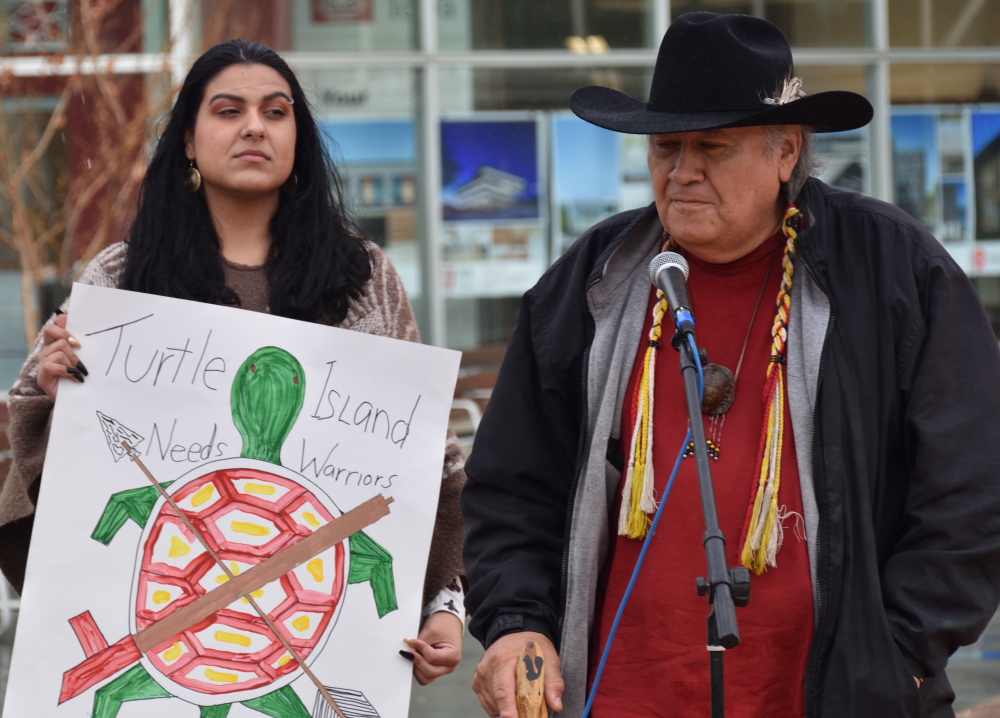
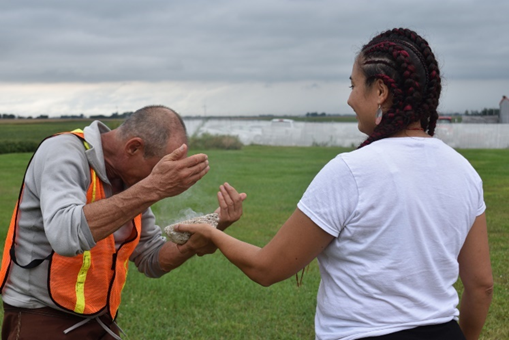
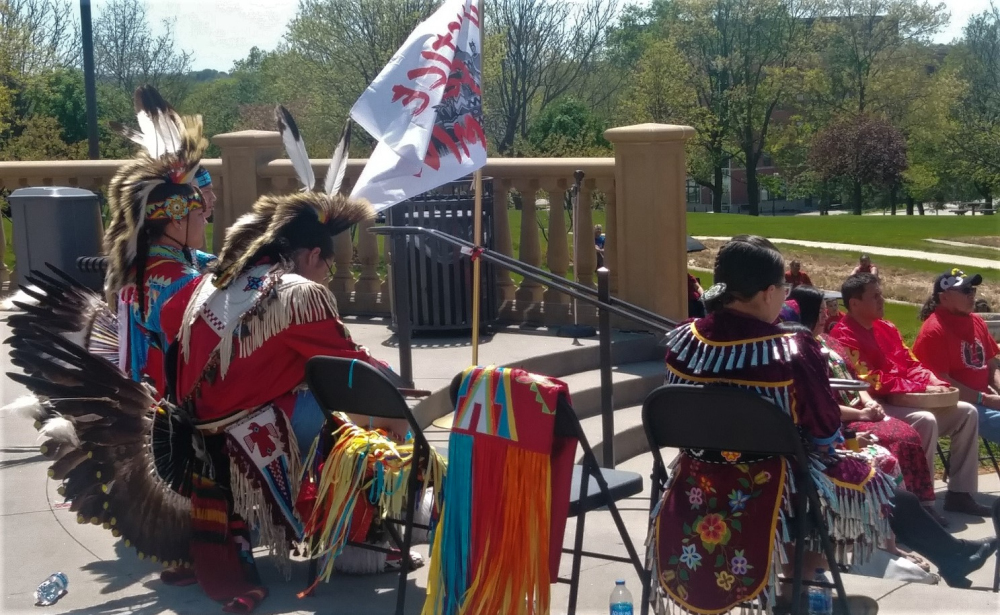
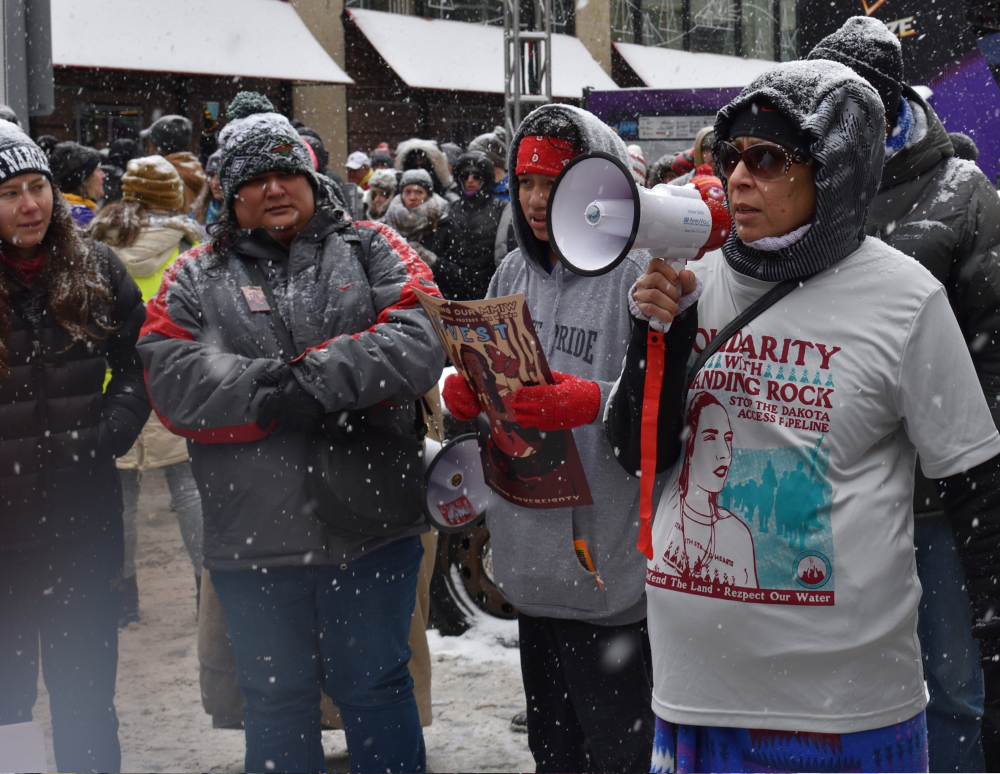
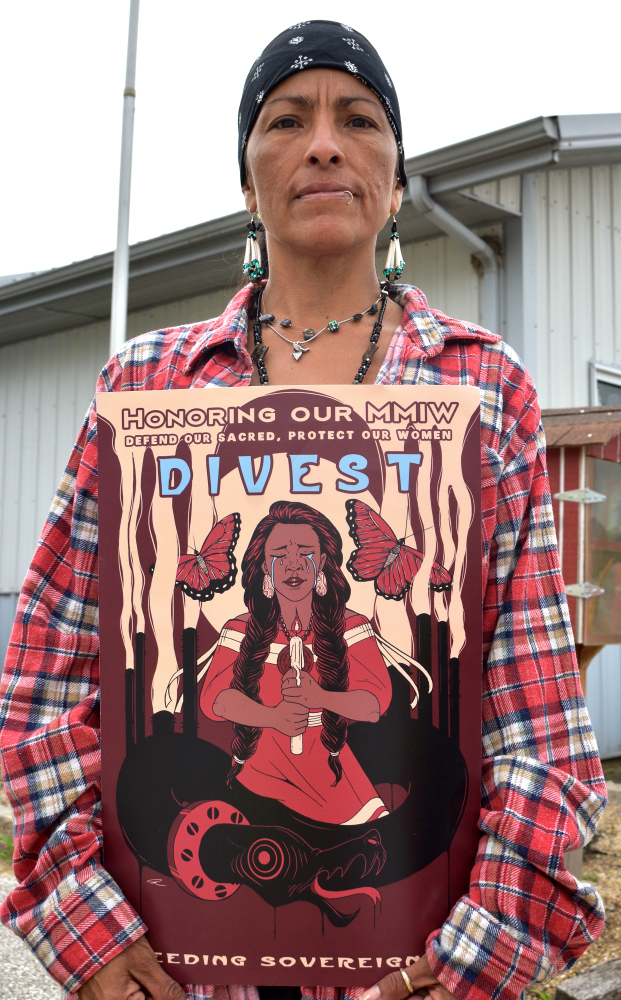
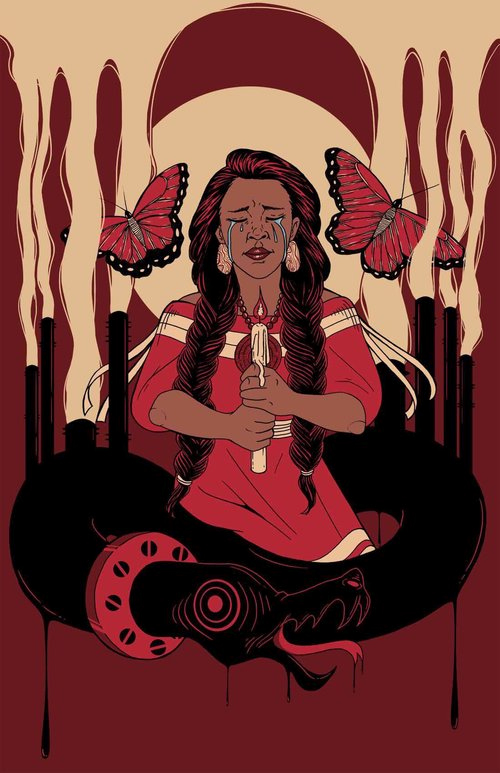
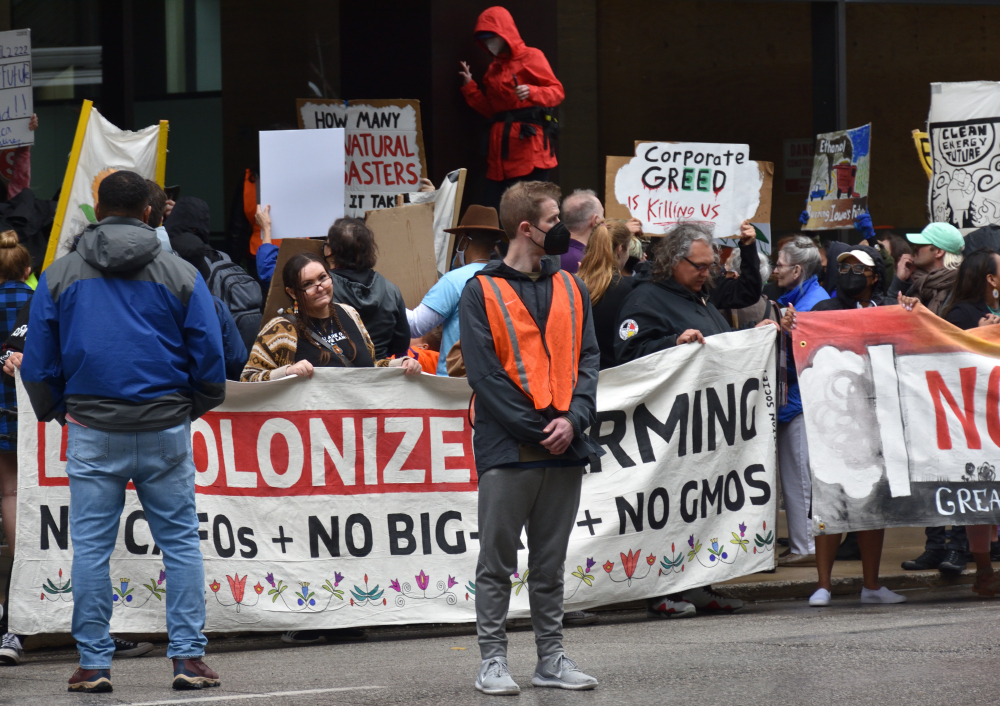
These are photos from previous observations related to awareness about missing and murdered Indigenous relatives.


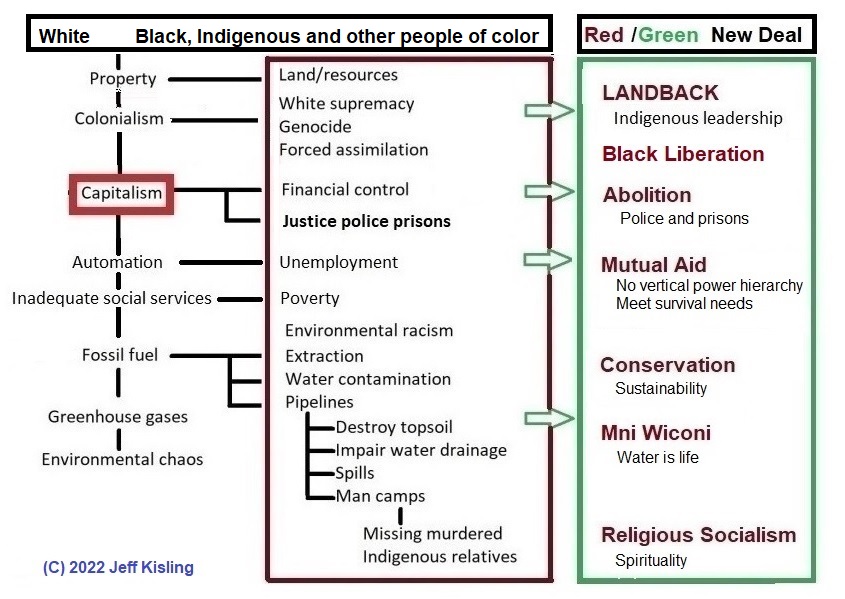
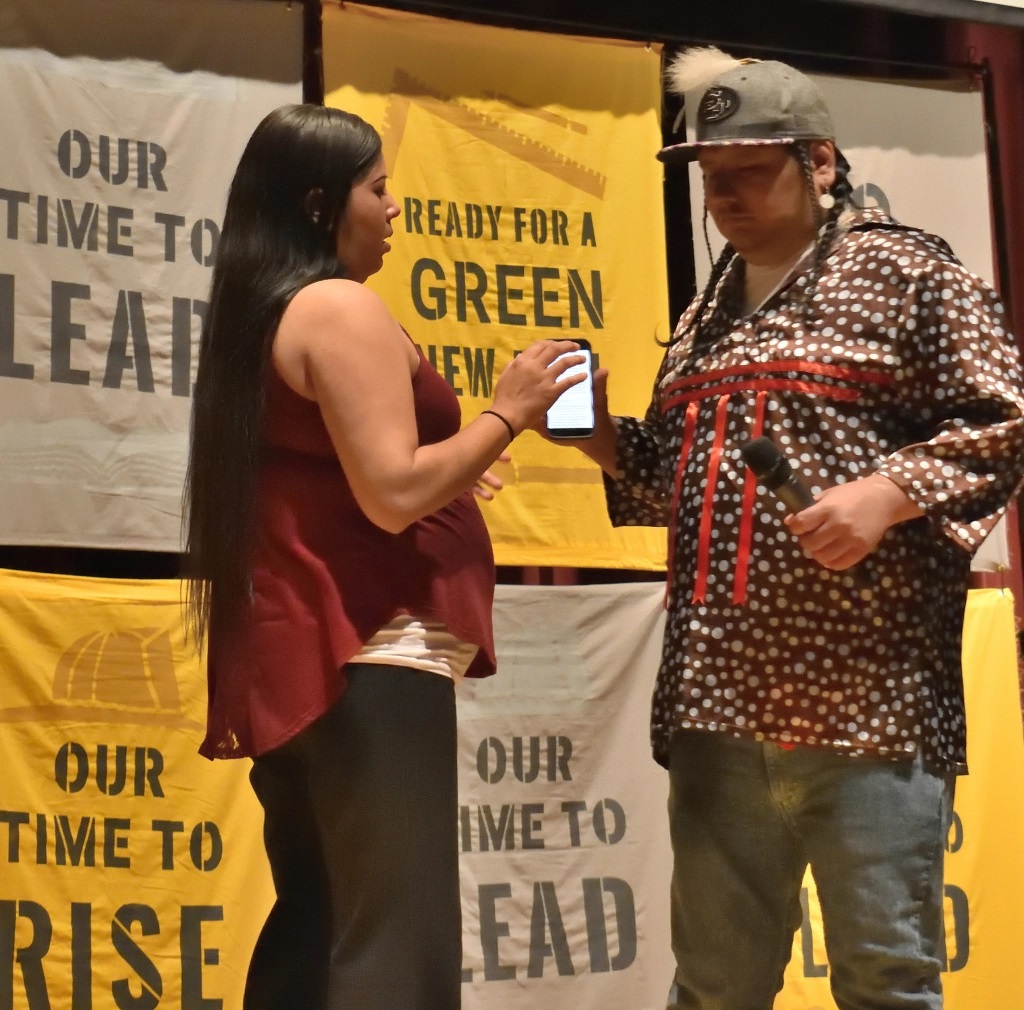
Buffalo Rebellion and Red/Green New Deal

The Sunrise Movement was launched as a national campaign for a Green New Deal (GND) in 2017. From the beginning I heard my native friends talk about the importance of a GND to be Indigenous led. In 2019 Sunrise’s Green New Deal tour began with a stop in Des Moines. There my friends Trisha Cax-Sep-Gu-Wiga Etringer and Lakasha Yooxot Likipt spoke about Indigenous leadership as a requirement for a GND. https://landbackfriends.com/2021/09/01/indigenous-led-green-new-deal/


Last weekend’s Climate Summit of the newly formed Buffalo Rebellion provided an opportunity for organizations and people to come together to share what is being done to address the climate crisis. And lay the groundwork for working together, focusing on action related to the racial and economic consequences of environmental devastation. That requires taking on entrenched white supremacy, systemic racism and rapacious capitalism.

The Buffalo Rebellion is a coalition that includes Iowa Citizens for Community Improvement, Great Plains Action Society, Des Moines Black Liberation Movement, Iowa MMJ, SEIU Iowa, Sierra Club Iowa Beyond Coal, and Cedar Rapids Sunrise Movement.

We believe that we must address the root of climate change, insatiable corporate greed and white supremacy, to make change happen. This will require a multi-racial movement of working people struggling together to upend politics as usual.

Buffalo Rebellion

… what if the question all water protectors and land defenders asked was, why don’t we just overturn the system that makes development a threat in the first place? This system, again, is capitalism. Rather than taking an explicitly conservationist approach, the Red Deal instead proposes a comprehensive, full-scale assault on capitalism, using Indigenous knowledge and tried-and-true methods of mass mobilization as its ammunition. In this way, it addresses what are commonly thought of as single issues like the protection of sacred sites—which often manifest in specific uprisings or insurrections—as structural in nature, which therefore require a structural (i.e., non-reformist reform) response that has the abolition of capitalism via revolution as its central goal. We must be straightforward about what is necessary. If we want to survive, there are no incremental or “non-disruptive” ways to reduce emissions. Reconciliation with the ruling classes is out of the question. Market-based solutions must be abandoned. We have until 2050 to reach net-zero carbon emissions. That’s it. Thirty years. The struggle for a carbon-free future can either lead to revolutionary transformation or much worse than what Marx and Engels imagined in 1848, when they forewarned that “the common ruin of the contending classes” was a likely scenario if the capitalist class was not overthrown. The common ruin of entire peoples, species, landscapes, grasslands, waterways, oceans, and forests—which has been well underway for centuries—has intensified more in the last three decades than in all of human existence.

The Red Nation, The Red Deal (pp. 21-22). Common Notions. Kindle Edition.


My Mutual Aid community models many Green/Red New Deal concepts.

I’m of the firm opinion that a system that was built by stolen bodies on stolen land for the benefit of a few is a system that is not repairable. It is operating as designed, and small changes (which are the result of huge efforts) to lessen the blow on those it was not designed for are merely half measures that can’t ever fully succeed.

So the question is now, where do we go from here? Do we continue to make incremental changes while the wealthy hoard more wealth and the climate crisis deepens, or do we do something drastic that has never been done before? Can we envision and create a world where a class war from above isn’t a reality anymore?”

Ronnie James, Des Moines Mutual Aid, Great Plains Action Society