Foundational Stories: Acts of Faith Part 1

Recently a Quaker friend challenged us to consider what our foundational stories are, how they began, how they changed over time, and what they are now. I’ve been writing a series of blog posts about my foundational stories, which are related to the intersections between my Quaker faith, protecting Mother Earth, and photography.

Earlier I wrote Foundational Stories: Quaker Faith. I said we express our faith by telling stories about our faith-based decisions and actions.  To continue telling my foundational stories related to faith, I’m led to share some of my Spirit-led stories.

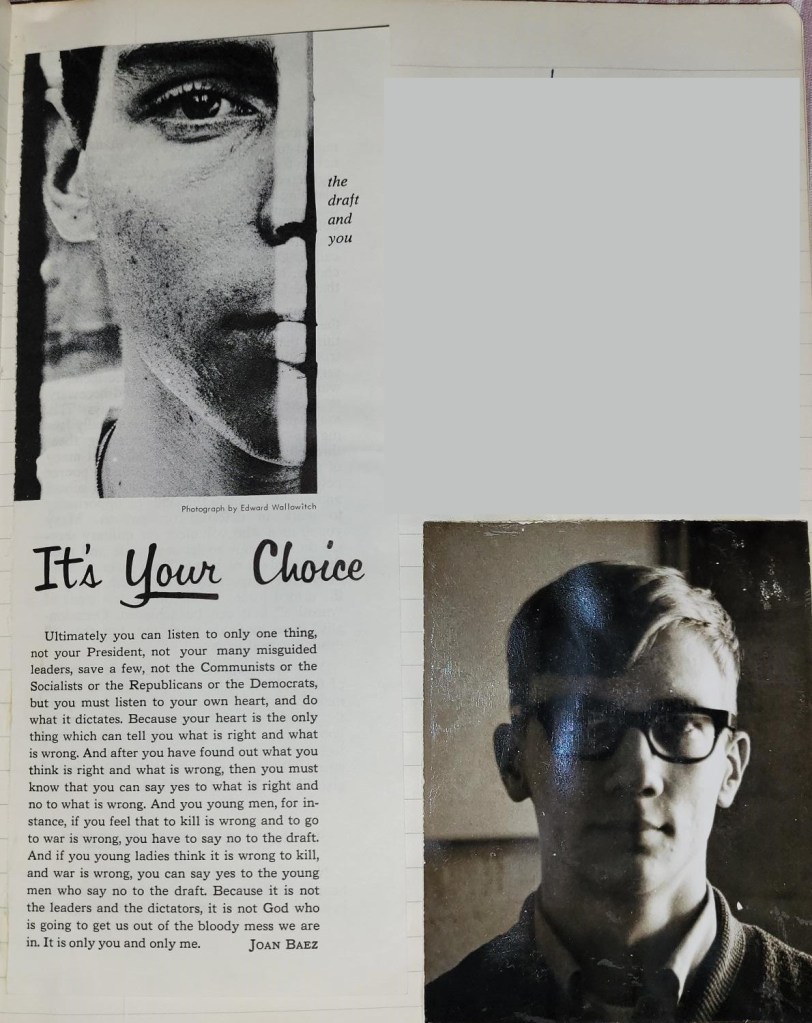
In the last post I wrote about my first spiritual challenge-how I came to be a draft resister at the time of the Vietnam War. I have become aware that many people today have almost no real conception of war, unless someone they love is in the armed forces. Something that happened fifty years ago is relegated to the history books.

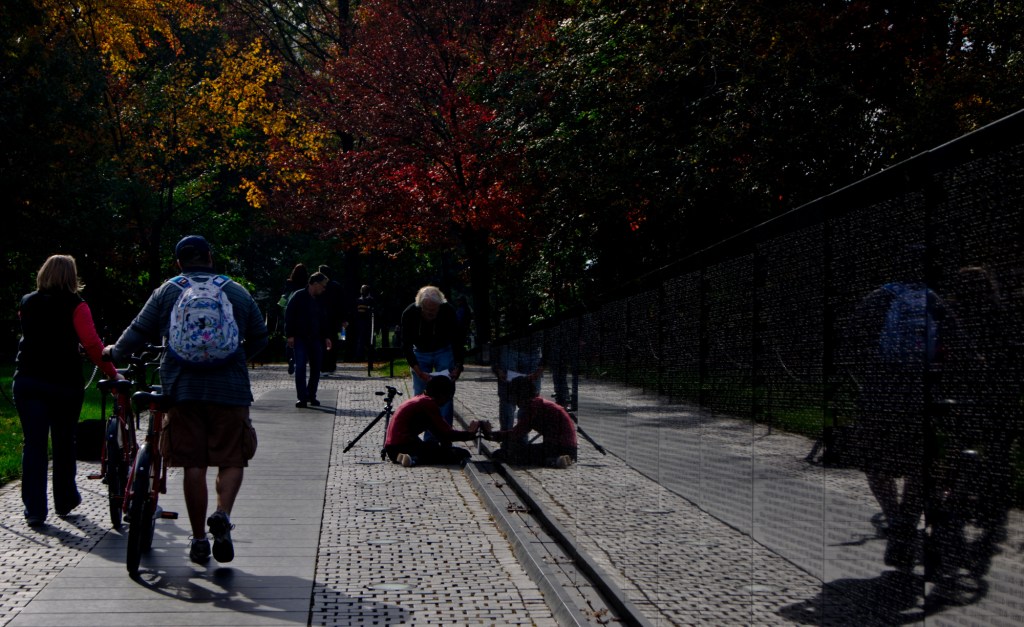
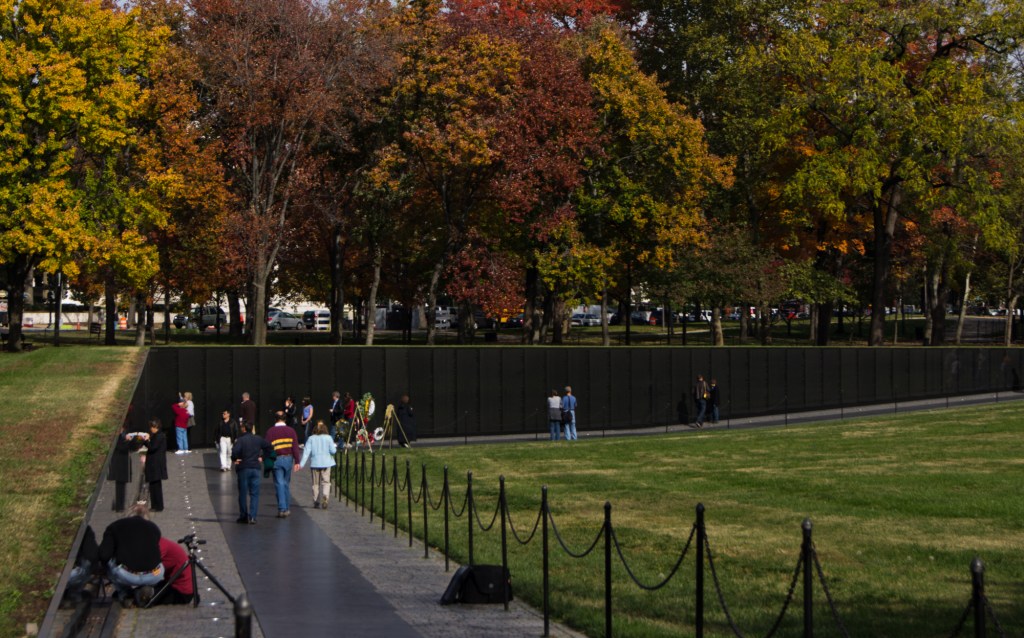
Photography is one of the three pieces of my foundational stories. I’ve taken the photos I share in my blog posts, including these from the Vietnam War Memorial in Washington, DC.
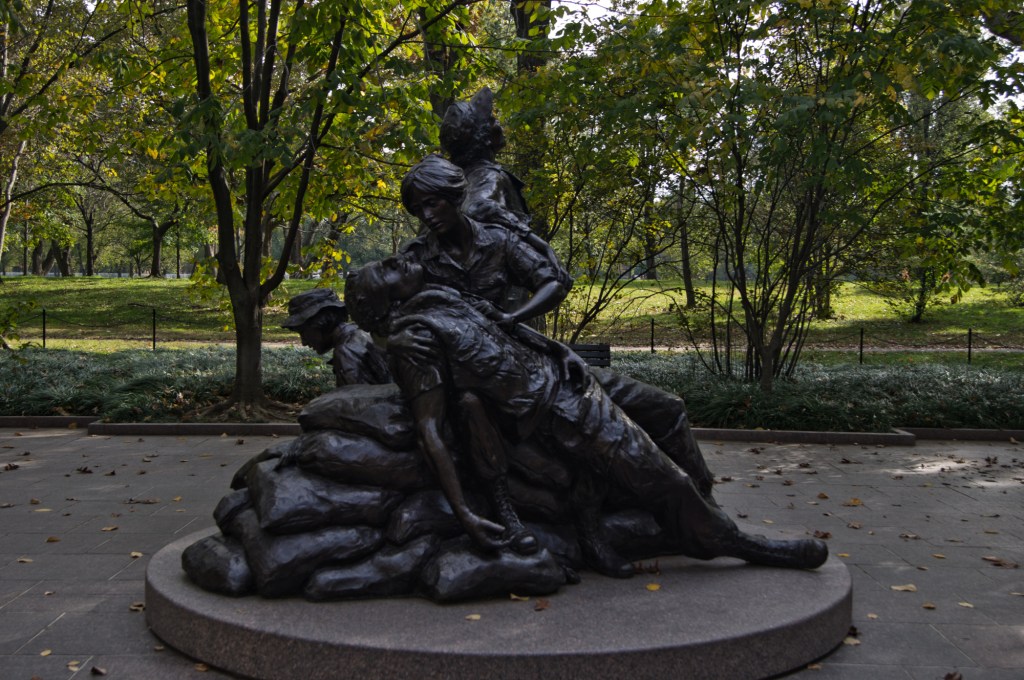
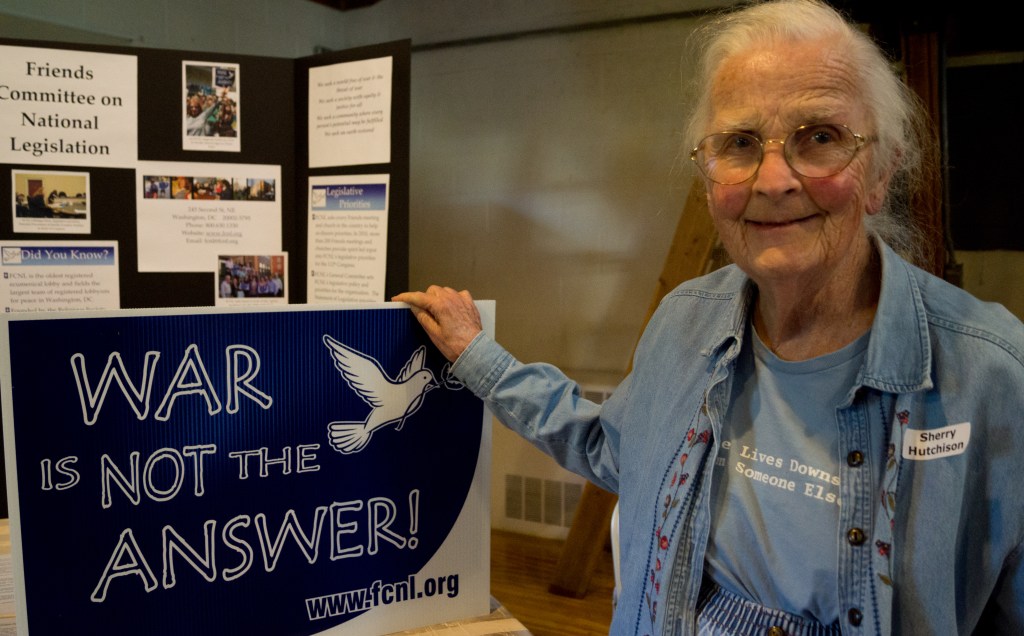
I have so many photos from Washington, DC, because of my years on the Friends Committee on National Legislation’s General Committee, which held annual meetings every November. Agreeing to be on the General Committee was another spirit-led decision. I was concerned about agreeing to do that because of the travel involved. I refused to have a car for environmental reasons (also spirit-led). So I took 22 hour train trips from Indianapolis to Washington for those meetings. Again I had many rich experiences and got to know Friends from all over the country. Today I attend the weekly Zoom worship sharing meeting, FCNL’s Witness Wednesday Silent Reflection. Your are welcome to join every Wednesday at 4:15 Central times.  fcnl.org/ww-stream

In the previous post about Quaker Faith I wrote about my struggles at that time that led me to be a draft resister. That was such a huge issue that there were many stories within the stories about the war.

Vietnam War

Yesterday I wrote in detail about some of my experiences related to the war in Vietnam. I was a student at Scattergood Friends School and really struggled with my leading to resist the draft.

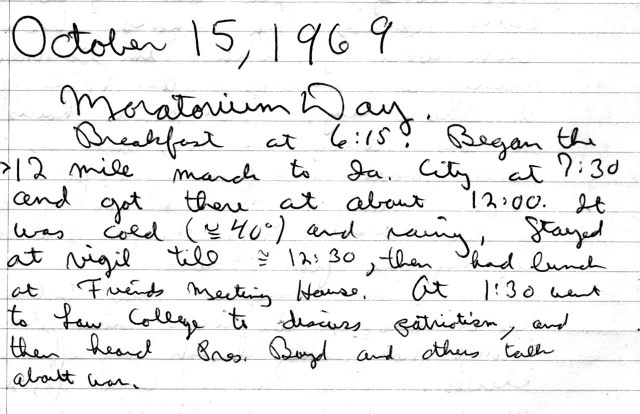
My first experience in organizing occurred at this time, when I helped organize a draft conference at Scattergood. This was held on one of the national days of the Moratorium to End the War in Vietnam.
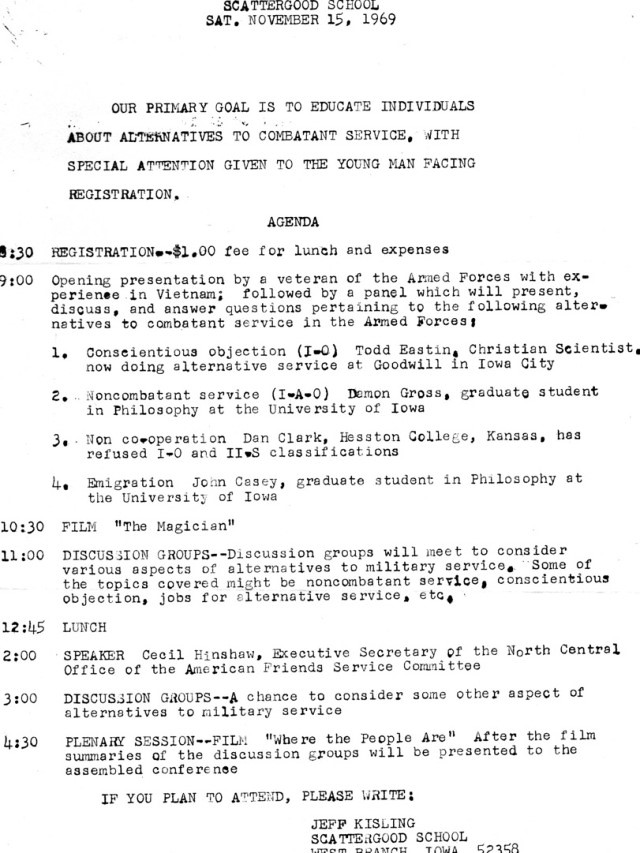
During another of the National Moratorium days to end the war in Vietnam in 1969, Bob Berquist, our Scattergood government teacher, suggested we go to the nearby town of West Branch and talk with people there about the war. (Scattergood is located on a farm.) He drove three of us into town, stopped at a random house, and stayed in the car while we went up to the door. I still remember how scared I was. But it was a real education to find how unpopular the war was at every house we visited. People seemed to appreciate the chance to share their feelings. Although I was very uncomfortable with the idea, because of my strong spiritual feelings against war, I felt I should do this. And as with every other time I followed those leadings, I benefited in many ways. They were/are always growing experiences.

Earlham College

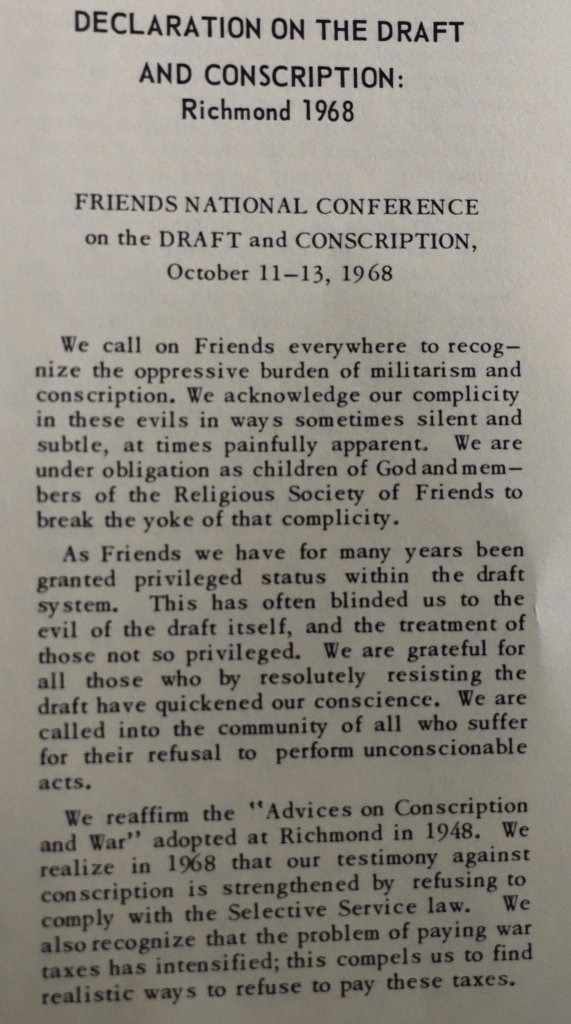
After Scattergood I attended Earlham College, a Quaker school in Richmond, Indiana. I had gone to the college in 1968, while a student at Scattergood, for a conference of Quakers from across the nation who gathered to write what became the Declaration on the Draft and Conscription: Richmond 1968.

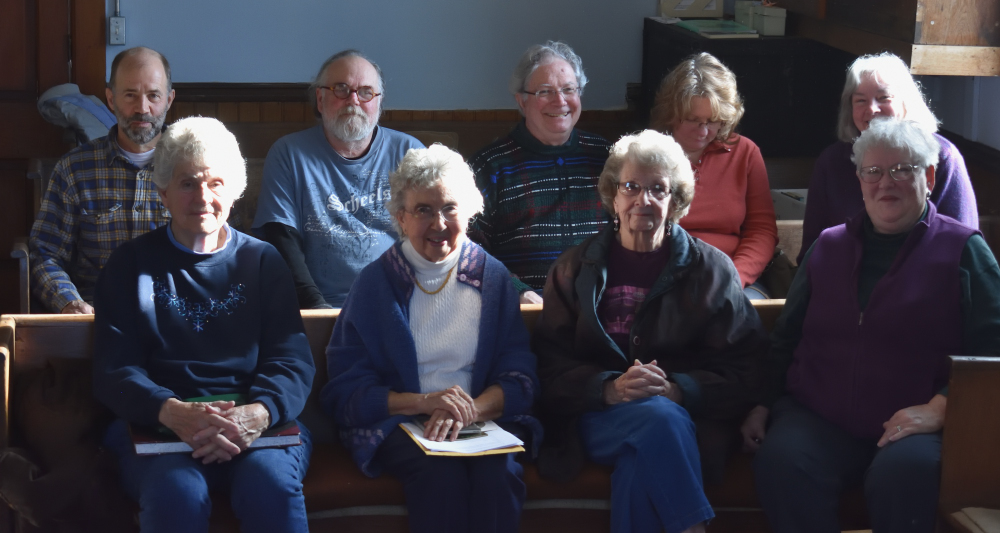
There was a small group of Quaker students, Young Friends, which were an important part of my spiritual life at Earlham. Although I left Earlham after one year, I returned at the time I was preparing to turn in my draft cards. We held the meeting for worship described here.

4:00 pm. Went to Meeting for worship. Jan Cole, Al Ingles, Dav Nagle, Marggie Schutz, Margaret and Lewis Taylor, Becky Gibson, Jim Bay, Ruby, and several others attended.

Al had read my letter to the draft board and my statement on the draft earlier, and asked if I would let him read it during Meeting. I told him that would be alright, so he did.

Al spoke of support and the future and how God spoke through me. I would hope that would be true but felt unworthy.

Margaret Taylor spoke of Iowa Friends who had always spoken against war and done what they felt right. She spoke of her support for me.

Becky Gibson spoke, very movingly, about finding who you are, and how important it is to do what is right.

Then Dav spoke, also very movingly. He is certainly an able minister—one of the people I love and respect very much. He seems always to be close to the center. He said severing ties with Selective Service is a major decision—but ALL decisions are major when they deal with principle and the Spirit. All, each of our decisions must be integral. “Severing ties with Selective Service is not an isolated act in this life of Jeff’s.”

After a good while I felt moved to speak. When confronted with a decision, we are told to do God‘s will. But God’s will is so difficult to discern among many influences—people, law, self (selfishness and pride). Realizing this, Thomas A’ Beckett said, “I am loathsome.” This was how I felt at times. But after he said that, he heard what he believed to be the voice of God saying “Nevertheless, I love.

Journal 1/30/1972


I felt very uncomfortable having a student deferment from the draft. And as can be seen from this letter to my parents, I continued to work through what I was going to do about the war.

You want me to be practical; not so idealistic. But what you might see as idealistic, I see not only as practical, but necessary in order to be true to my code of life. And if you forsake your principles and all that you believe in, what do you have left?

The most difficult part of this decision has been that I would hurt you. But how far should a man go trying to protect those that he loves, at the same time denying the principles that give his life meaning?

Letter to my parents from Earlham College

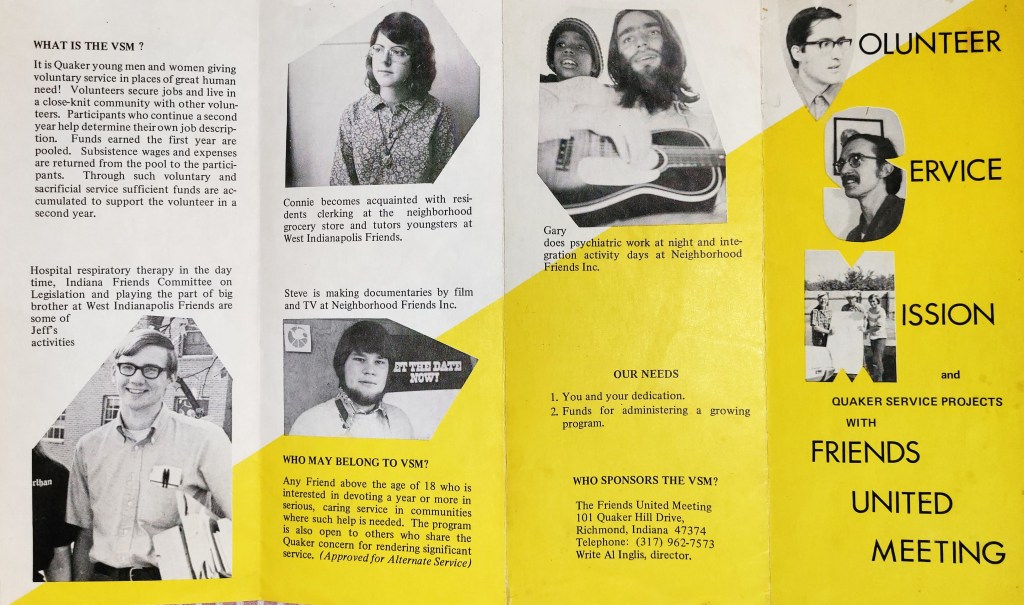
I previous wrote about the Friends Volunteer Service Mission (VSM) that was related to my Vietnam War decisions and actions. One of the significant consequences of my participation in VSM were the friendships I made with the kids in the neighborhood as I described in that post about VSM.

As I found over and over again as I worked in various community organizing situations, the most important thing is to build friendships. When I was about to leave VSM in Indianapolis and return to Iowa, the neighborhood kids made a meal of spaghetti, baked a chocolate cake, and gave me a record album of Jim Croce they knew I liked.

In Iowa I took classes at the community college, including photography (one area of my foundational stories), But I missed the kids in Indianapolis so much that I decided to return there. The family of several of those kids invited me to live with them while I looked for a job and a place to live. There wasn’t a significant difference in our ages, although at that age a difference of a year or two seemed big. I was about 21 and they were around 14 years old.

When I was first in Indianapolis, I received on-the-job training as a respiratory therapy technician. On my return to Indianapolis I got a job in the respiratory therapy department of Indiana University Medical Center.

At the Medical Center I worked with women on the labor and delivery ward. I was at times present for the miracle of birth.

Many of the women referred to the Medical Center had high risk pregnancies. Respiratory therapists from Riley Hospital for Children, which was part of the Medical Center, would come to help stabilize infants who had various conditions that needed to be taken to the Neonatal Intensive Care Unit at Riley.

It was definitely spirit-led that when I saw the skills those respiratory therapists had, I wanted to be trained to do that. I was able to transfer to the respiratory therapy department at the Childrens Hospital. After an introduction to respiratory care for general pediatric patients I was eventually trained to work in the Neonatal Intensive Care Unit (NICU). At one time I was the respiratory therapy supervisor for the NICU.

Permission was obtained to publish this photo, which was part of an article in the Indiana Business Journal

I hadn’t decided what I would study at college. The Medical Center had a degree program for Respiratory Therapy. Much as I loved my work, I hadn’t thought of applying to the Respiratory Therapy program. For one thing there were usually about two hundred applicants for each class of fifteen.

But on the day the applicants were being interviewed, the Clinical Instructor of the program came and pulled me off my patient assignments and took me to be interviewed. He was familiar with my work and wanted me to be in the class. I was selected to enter the program. These spirit-led steps resulted in me getting a degree in Respiratory Therapy and this became my career for my entire working life.

This is enough for today. I can tell it is going to take several more blog posts to tell more of my faith-based stories.


Post Script: I feel blessed to have been led to keep a Journal for a few years. I began that during the time I was struggling with the draft decision. This is a link to some of those Journal entries:

https://jeffkisling.com/?s=%22scattergood+journal%22

Foundational Stories: Quaker Faith

Recently a Quaker friend challenged us to consider what our foundational stories are, how they began, how they changed over time, and what they are now. I’ve been writing about my foundational stories, which are related to the intersections between my Quaker faith, protecting Mother Earth, and photography.

This challenge comes at a time when I’m considering changes in those three things. Thus far my blog posts have been about how these stories began and have evolved.

I’m at the point of considering what those stories are now. A couple of days ago I wrote about the current state of how I care for Mother Earth.

Now I’ll try to express the current state of my Quaker faith, which will be the most difficult of the three parts of my foundational stories to write.

Part of what I was taught is we should not call attention to ourselves. But I have been led, as part of my faith, to share stories about my experiences and faith. The way we live our lives is how we express our faith. We share our faith by telling stories about these faith-based actions. The main reason photography is such a large part of my foundational stories is because photos can be a way to share my spiritual experiences.

I often think about what Noah Baker Merrill, a Quaker, wrote about this.

“We need to be careful when we talk about humility. The kind of humility this work brings isn’t the kind that would have us reject or repress our gifts. This kind of false humility leads us to oppress each other in the name of preventing pridefulness. This happens far too often.”

Noah Baker Merrill, “Prophets, Midwives, and Thieves: Reclaiming the Ministry of the Whole.”

Or as my friend Ronnie James, another storyteller says, “anyways, brag, brag, blah, blah”.


Religious faith is a matter of beliefs and, sometimes, spiritual experiences. I’ve heard not everyone has had, or at least not recognized, spiritual experience(s). I find it very interesting that those Friends (Quakers) who have said they had spiritual experience(s), have all said something like “and that’s all I’ll say about that”. That’s understandable because we don’t have the language to express this. Which makes it difficult to write about faith. Also, there is something about protecting something that is so intimate and profound in our lives.

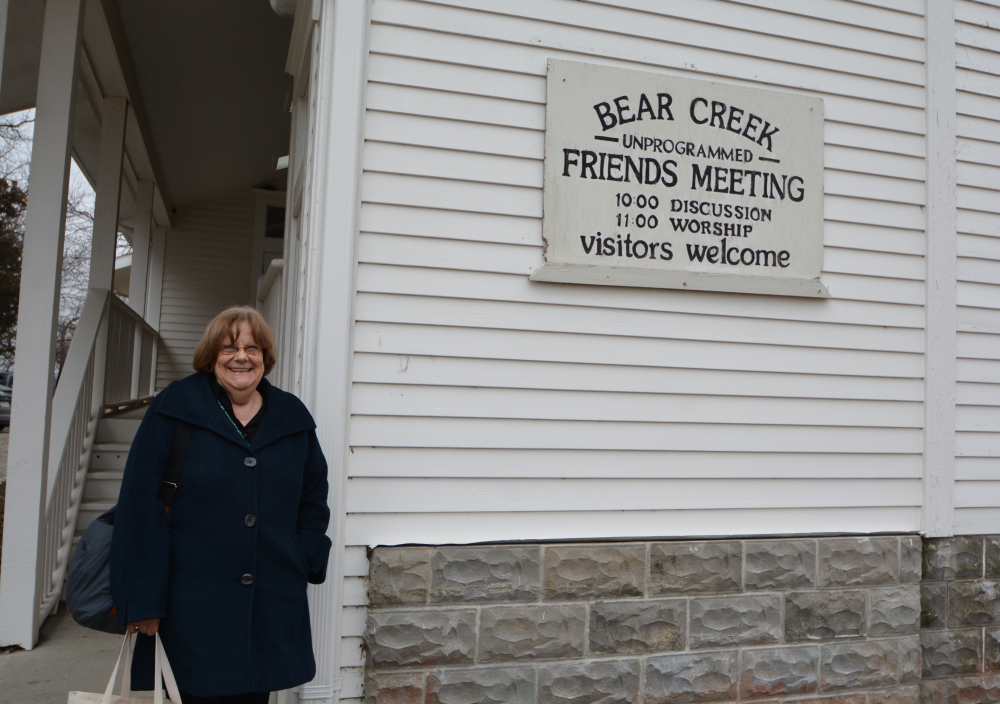
My first spiritual experience was when I was about ten years old during meeting for worship at the Bear Creek meetinghouse. “And that’s all I’ll say about that”. Except to say I had no doubt about the presence of the Spirit in the world from that day on. I know I am blessed to have had that, and subsequent spiritual experiences.

Another Friend said his first spiritual experience came when he was about that age. This makes me realize we should pay attention to what young people experience. I love the native concept of children as sacred beings.

The concrete expression of our faith is seen in our actions in this world. This might mean we are led to act in ways contrary to the laws or conventions of the society we live in. Which is often not easy to do. Peer pressure can be a powerful force. There might be significant monetary costs and/or legal penalties. Quakers were once (still?) known as “peculiar people”. When there are conflicts between our spiritual beliefs and the laws of the government, people of faith try to obey the creator. Unfortunately, many times it is apparent that people who identify themselves as religious do not act according to the beliefs they profess. This lack of spiritual integrity results in many people rejecting organized religion.


The first time I was confronted with a situation where my beliefs were contrary to the laws of the land related to registration for the Selective Service System. I attended Scattergood Friends School, a Quaker boarding high school, during the time of the Vietnam War (1960’s). A military draft was being used to conscript young men into the armed forces. Quakers do not believe in war nor in participating in the military. Those with religious objections to serving in the military could apply for Conscientious Objector (CO) status, which if granted, would allow them to do two years of alternative service, such as working in a hospital instead of military service.


My Quaker friend and mentor, Don Laughlin, collected these stories of Quakers who opposed war and conscription.


I turned eighteen years of age while a Senior at Scattergood (1969). Young men were required to register for the Selective Service System at that age. The choices were either to do so, or apply for Conscientious Objector status, or do neither and face imprisonment.

I really struggled with whether I should accept alternative service, or not cooperate with the Selective Service System. I studied and prayed a great deal. I was convinced that alternative service was going along with the system. The question was whether to take the safer path of conscientious objection, or risk prison by resisting the draft.

I recognized this decision would set the course for the rest of my life. Which is why this is part of my foundational stories. If I compromised about this, I would likely do so in similar circumstances for the rest of my life. I would always be aware that I had not acted according to my beliefs.

The following Epistle, and the examples of the men who refused to cooperate with the military, many of whom did serve time in prison, showed me there were those who acted according to their beliefs despite the consequences.

The following is an excerpt from a statement by a group of Quaker young men at that time, including Iowa Yearly Meeting (Conservative) Quakers Don Laughlin and Roy Knight.

Those of us who are joining in this epistle believe that cooperating with the draft, even as a recognized conscientious objector, makes one part of the power which forces our brothers into the military and into war.  If we Friends believe that we are special beings and alone deserve to be exempted from war, we find that doing civilian service with conscription or keeping deferments as we pursue our professional careers are acceptable courses of action.   But if we Friends really believe that war is wrong, that no man should become the executioner or victim of his brothers, then we will find it impossible to collaborate with the Selective Service System.  We will risk being put in prison before we help turn men into murderers.

It matters little what men say they believe when their actions are inconsistent with their words. Thus we Friends may say that all war is wrong, but as long as Friends continue to collaborate in a system that forces men into war, our Peace Testimony will fail to speak to mankind.

Let our lives speak for our convictions. Let our lives show that we oppose not only our own participation in war, but any man’s participation in it.
In our early history we Friends were known for our courage in living according to our convictions. At times during the 1600’s thousands of Quakers were in jails for refusing to pay any special respect to those in power, for worshiping in their own way, and for following the leadings of conscience.

We may not be able to change our government’s terrifying policy in Vietnam.  But we can try to change our own lives.  We must be ready to accept the sacrifices involved if we hope to make a real testimony for Peace.  We must make Pacifism a way of life in a violent world.

We remain, in love of the Spirit, your Friends and brothers,

An Epistle to Friends Concerning Military Conscription

This story would not be complete without including another important part of this decision, which was the tensions with my parents. They were against the war but wanted me to accept Conscientious Objector status. They were very upset when I said I couldn’t do that. I understood they didn’t want me to face prison and life as a felon, but they didn’t understand why I knew I must resist. I felt betrayed by their lack of support. Looking back from this time, it is easier to accept what they were doing out of love.

I mailed the following to the draft board today (2/6/1972), along with my registration certificate and classification (1-0) card: 

2/6/1972 

Dear members and clerk of the draft board:    

I have received an order to report for civilian work February 1, 1972. 

I want to thank you for your concerned questions at my personal appearance, when we were considering my position as a conscientious objector.  I have appreciated Mrs. Landon’s kindness and consideration, even when I returned my draft cards.  Thank you for giving me more time to consider this decision.  I hadn’t realized what a powerful affect that action would have on some people.  The extra time gave them, and me, a chance to come to grips with the decision and its consequences.  However, my beliefs have remained basically the same and the time has come to act accordingly.    

I am sure none of us really want war.  Many are convinced that was is a ‘necessary evil’—the only way to achieve peace.  I think I can understand that, and I do respect those who sincerely believe it—their sacrifice has been very great.    

But I do not believe war is the way to peace.  True peace is a personal, internal, spiritual matter.  When we come to know and love ourselves and our God, then and only then do we have peace.  From this point, peace and love will flow from us and should engulf those we live and work with.  This is the only way to find and promote peace. 

In this matter, war has no place.    

The enclosed attempts to illustrate my beliefs in relation to the Selective Service System.  I hope this will help you to understand why I feel I cannot cooperate with the Selective Service System.  I want it to be clearly understood that I am not doing alternative service.  It is not my choice.  There is nothing else I can do. 

Love, 
Jeff Kisling 


Letter to my draft board 

I write concerning my relationship with the Selective Service System.  There are many alternatives.  In fact, someone once said the only alternative not open to a young man facing the draft is that of being left alone.  I explored several of these.  I applied for and was granted conscientious objector status (1-0).  Then I had a student deferment, which made me very uneasy.  I am now doing work which should qualify as alternative service, but for reasons I will attempt to explain herein, I find this alternative to be unacceptable. 

I find it difficult to understand why one young man must explain his decision to do civilian work for a non-profit organization while another need make no explanation, indeed is encouraged to fight and perhaps kill other human beings.  But it is one’s duty to explain one’s actions in order that others might understand, and perhaps follow.  Noncooperation is less understood than conscientious objection, so I feel all the more compelled to try to present an explanation.  I must try to explain, to spare my family the burden of doing so, for they neither clearly understand nor agree with my decision.  (Note:  they fully supported alternative service, but didn’t want to see me imprisoned). 

This decision grew out of my experience as a member of the Society of Friends.  Meetings of the Society of Friends can be a source of strength and guidance as one begins and continues to search for meaning in life.  Quakers have always believed that there is that of God in every man, that each of us has the ability to communicate with that of God in us, and the responsibility to respond to that of God in everyone.  It is evident that Jesus had communion with God—evident in the actions of his life and in his teachings—culminating in “not as I will, but as thou wilt.”  This is the essence of Jesus’ teaching—that God’s will can be discerned and should be obeyed even at the cost of doubt and persecution.  Quakers readily accept Jesus as an exceptional person and try to live up to the principles he gave us to live by.  But we are even more concerned that we obey that Inner Light to which He was so sensitive, so we and have personal contact with and guidance from God.  Thus, Quakers try to minimize distractions from “this (secular) world” in order to discern the will of God in their hearts and His presence in their midst.  They gather together in a simple room and settle down together, searching in silence—each contributing to the spirit of the meeting as a whole.  There are times when a member feels he has been ‘moved by the spirit’ to share with the group, in which case the meeting considers the message in further silence. 

There is a spirit which comes from the silence which gives direction to life.  The spirit is often difficult to discern because of our ties to ‘this world.’  We are afraid or too proud to give up our desire to ‘reason through’ decisions.  Thus we develop a system of beliefs and guidelines composed of traditional beliefs, our own reasoning, and as much guidance from the Inner Light as we are willing to seek and accept.  Thus our decisions, being not entirely grounded upon our faith, may not always be ‘right’.  But we can do no more, nor should we do less, than follow our conscience as occasions arise—always seeking to become more attuned to the spirit.    

Adolescence is that period when one begins to seriously consider ‘who he is’ and his purpose in the world.  It is a time when one has so many question and so few answers.  The extent to which a young person searches for, and finds answers to these questions is dependent upon guidance given by parents, peers, school and church; the degree to which this guidance corresponds to his own experience and needs; and his own self-discipline and desire to continue the search.  Too often the leadership and resources are not available; he is ‘turned off’ by inconsistencies or shallowness or insincerity on the part of those he looks to for guidance and example; or materialistic demands distract from the search. 

The draft requires fundamental moral decisions at this time in life.  This may not be bad in itself, but tremendous pressure is brought to bear to influence the decision—tradition, parental and peer pressure, the law, etc.  The Selective Service System tries to attract men to the armed forces by relying on these pressures and by not making alternatives widely known.  The pressures in this case are for action which is contrary to the experience and desires of most young men—frustrating, anguishing when one is searching for truth, honesty and integrity.  This type of experience stifles personal growth and leads to the loss of a spirit of idealism and faith in the goodness of men.  Can there be a graver crime than that of destroying the spirit and dreams of the young?  Only that of destroying life itself, and the Selective Service System is directly implicated in both.    

Most of us agree that conscription and war are unjust-evil.  The question is, how do we deal with evil?  ‘Resist not evil’—a phrase widely known but little understood and less obeyed.  ‘Do not set yourself against one who wrongs you’ (NEB) is a better way to put it, I think.  In setting ourselves against those who harm us, we look, to some extent, for some way to hurt, or at least hinder them.  We look for the worst in others and play upon their weaknesses rather than looking for the best and trying to fortify it.  Out task is to overcome evil by doing good.    

The time we spend ‘resisting evil’ could be better spent in trying to find out where we can do better ourselves.  You do not change others by opposing them—rather, by respecting and trying to understand and learn from them, you can both benefit and move nearer the truth.  A life of example—showing the possibilities and fruits of a life lived in love and concern for others, is the only way to overcome evil. 

I do not want my example to be alliance with evil.  Thus, I cannot serve with the Selective Service System.  However, I will not set myself against it.  I will break my ties with Selective Service, and concentrate on the difficult task of working for peace in whatever way I can.    

The conclusion to my draft story is that I was drafted at a time when men were not being drafted for the armed forces. A Supreme Court case declared this to be illegal, so my order to report for civilian service was invalidated and I wasn’t prosecuted.  I did finish my two years with Friends Volunteer Service Mission in Indianapolis. 


Letters to and from Bear Creek Monthly Meeting 

Homer Moffitt, Clerk 
Bear Creek Monthly Meeting 

Dear Friends, 

I am thankful for your kind letters and encouragement concerning my work in Indianapolis.  I am learning much about love, and as I respond to the love of others, and they to mine, we are all amazed at how it grows. 

I am enclosing a statement I have written concerning conscription, and my decision not to cooperate with the Selective Service System any more.  I sent a copy of that statement, along with my draft cards, to my draft board. 

Again, I tried very hard to follow the leading of the inner light.  If I alone were making the decision, this would probably not be my choice.  Thomas a’ Beckett, torn between his obligations to the Church and those to the State, was searching for guidance.  When he realized all the forces that influence him—selfish desires for power and personal gain, fear of punishment or displeasing people, etc., he said. “I am loathsome.”  But then he heard what he believed to be the voice of God saying, “Nevertheless, I love.” 

I, too, feel shamed when I realize the factors that often influence my decisions and actions.  On this matter, I have tried very hard to be sensitive to the will of God, and hope to do so in the times to come.  Still somewhat uncertain that my choice is right, I am comforted in knowing that He still loves. 

Love, 
Jeff Kisling 

In reply: 

Dear Jeff, 

We have found your statement explaining your relationship to the Selective Service System very moving.  Several of us are aware that your decision on this has been a difficult and lonely one.  We want to assure you of our love and support as you meet the events which result from your courageous stand. 

On behalf of the Peace Committee of Bear Creek Monthly Meeting 


Friends Volunteer Service Mission

As I continue to write about my foundational stories, I was reminded of this document that describes the two years I spent in Indianapolis in the early 1970’s at the Friends Volunteer Service Mission.

“Alternative Service During the Vietnam War’ may be confusing to those who know I was a draft resister. At the time I joined the Indianapolis VSM Unit, I was struggling to discern whether I could accept doing alternative service. Joining VSM was a backup plan if I decided to do that

In the end I was led to turn in my draft cards, to resist the draft. And expected to be arrested as a result. But I was finding VSM so rewarding, I remained there for the two-year period.

During this time, the US Supreme Court case of another draft resister affected my situation, so I was not arrested.

Re-reading this fifty years later, the style and thinking seem a bit awkward, but I guess that is part of the story, as well.


Becoming the Quakers the World Needs

October 2, 2022, is World Quaker Day. The theme this year is Becoming the Quakers the World Needs. Becoming” implies we are not, presently, the Quakers the World Needs, which I agree with. Quakers are too comfortable living in a capitalist system that is inherently unjust. A system whose goal is the accumulation of wealth no matter how unethical the means are to acquire it. A system that commodifies all resources, even those that should be part of the commons. A system not intended to care for those without wealth.

How can Friends achieve the 2022 theme of World Quaker Day, “Becoming the Quakers the World Needs,” while functioning in a blatantly and politically corrupt, racialized world? In engagement with this exciting theme, offered by the Friends World Committee for Consultation (FWCC), the Black Quaker Project would like to remind Friends of the tools at our disposal to challenge those aspects of society which we wish to change and to see changed. Our fractured societies are further divided by enormous gaps of inequality in almost every imaginable category—psychological, social, political, cultural, economic. How might we, as Quakers, achieve justice, equity, and peace under these circumstances? 

Black Quaker Project

“Quakers will only be truly prophetic when they risk a great deal of their accumulated privilege and access to wealth. Prophets cannot have a stake in maintaining the status quo. Any attempt to change a system while benefiting and protecting the benefits received from the system reinforces the system. Quakers as much as anyone not only refuse to reject their white privilege, they fail to reject the benefits they receive from institutionalized racism, trying to make an unjust economy and institutionalized racism and patriarch more fair and equitable in its ability to exploit. One can not simultaneously attack racist and patriarchal institutions and benefit from them at the same time without becoming more reliant upon the benefits and further entrenching the system. Liberalism at its laziest.”      Scott Miller


How can we escape the capitalist society we live in? We build communities that care for one another. Sometimes called beloved communities. An example is Mutual Aid. I’ve been involved in Des Moines Mutual Aid for two years and have written extensively about my experiences. https://quakersandreligioussocialism.com/mutual-aid/


Capitalism is so repugnant that we use other terms to refer to ourselves and the work we do, such are anarchists, communists, Black Liberationists, or accomplices.

Des Moines Mutual Aid

Randomly passing an accomplice on the street and throwing up a fist at each other as we go our separate ways to destroy all that is rotten in this world will never fail to give me extra energy and a single tear of gratitude for what this city is creating.

member of Des Moines Mutual Aid

mutual aid is the new economy. mutual aid is community. it is making sure your elderly neighbor down the street has a ride to their doctor’s appointment. mutual aid is making sure the children in your neighborhood have dinner, or a warm coat for the upcoming winter. mutual aid is planting community gardens.

capitalism has violated the communities of marginalized folks. capitalism is about the value of people, property and the people who own property. those who have wealth and property control the decisions that are made. the government comes second to capitalism when it comes to power.

in the name of liberation, capitalism must be reversed and dismantled. meaning that capitalistic practices must be reprogrammed with mutual aid practices.

Des Moines Black Liberation

World Quaker Day, SUNDAY, 2 OCTOBER 2022 
“Becoming the Quakers the World Needs:”
Taking Action Now for Retrospective Justice.


Dear Friends and friends of Friends,

         How can Friends achieve the 2022 theme of World Quaker Day, “Becoming the Quakers the World Needs,” while functioning in a blatantly and politically corrupt, racialized world? In engagement with this exciting theme, offered by the Friends World Committee for Consultation (FWCC), the Black Quaker Project would like to remind Friends of the tools at our disposal to challenge those aspects of society which we wish to change and to see changed. Our fractured societies are further divided by enormous gaps of inequality in almost every imaginable category—psychological, social, political, cultural, economic. How might we, as Quakers, achieve justice, equity, and peace under these circumstances? 

         Our ministry has long advocated that retrospective justice is the key to bringing peace and equality to the world and to dismantling White Supremacy. As a reminder, retrospective justice is “an attempt to administer justice years after the commission of a severe injustice or series of injustices against persons, communities, or racial and ethnic groups.” Our definition draws upon the 2006 Brown University report, Slavery and Justice, which notes the following three steps as necessary to implement retrospective justice: (1) acknowledge an offense formally and publicly; (2) commit to truth-telling and ensure the facts are uncovered, discussed, and shared; and (3) make amends in the present to give substance to expressions of regret. While the all-too visible injustices of direct violence may command our attention, they are only symptoms of the structural violence deeply rooted in our societies. British Peace Studies founder, Friend Adam Curle, defines structural violence as “the political and economic inequalities which are built into the social structure.”  This violence can be economic, political, cultural, religious, or environmental–classifications outlined in Occupied With Nonviolence: A Palestinian Woman Speaks (2008) by Palestinian Friend Jean Zaru and expanded upon to include educational and health structural violence in our Pendle Hill pamphlet, Race, Systemic Violence, and Retrospective Justice: An African American Quaker Scholar-Activist Challenges Conventional Narratives (2020).  It is these various types of STRUCTURAL violence that we must keep in mind when implementing retrospective justice, not only direct violence. As we reminded readers in our 2008 Beacon Hill Friends pamphlet, Facing Unbearable Truths: “[Violence] must be treated at its roots if we are to abolish it. Just as a doctor must treat the root causes of an illness, not merely the symptoms, so must we act similarly as social, progressive, analytical activists. We must be “anti-violent,” not merely “non-violent.” 

         In recent years, we have seen notable truth-telling initiatives which our ministry recognizes as actions of retrospective justice. A few notable examples include: the groundbreaking New York Times publication and institutionalization of The 1619 Project; the National Museum of African American History and Culture in Washington, DC; the International Slavery Museum in Liverpool, UK; the Apartheid Museum in Johannesburg, South Africa; and the United Nations establishment of an International Day of Remembrance for Victims of Slavery and the Transatlantic Slave Trade, itself a prelude to the UN Decade for People of African Descent (2015-2024). What do we–Quakers and friends of Quakers–have to offer in these needed efforts of Retrospective Justice?  To answer this query, our ministry offers three responses:

Reason #1: Justice
         Drawing again on the words of Friend Adam Curle, we agree that justice has a dual meaning: “one, spiritual—righteousness, the observance of the divine law; the other temporal—fairness, righteous dealing. … [Our] vision of justice is the result of seeking to live [in alignment with] non-violence, compassion, redemption, and love.”  For too long this crucial Quaker testimony has been neglected in favor of acronyms such as “SPICES,” which mislead about the essence of Quakerism and fail to include justice. Can we have peace without justice? Can we have equality without justice? Our ministry challenges Friends to return the justice testimony not only to the front-burner but to front-and-center within the Religious Society of Friends by engaging in this important work of Retrospective Justice.

Reason #2: Truth
         Like justice, truth and integrity are at the root of Quakerism, so much so that early Quakers called themselves the Friends of Truth, a name to keep in mind as we reckon with our own history of past misdeeds. Our ministry encourages Friends to collectively shoulder the responsibility of telling the truth, in all its complexity, including the reality that Quakers, despite our well-known anti-slavery activities, were participants, profiteers, and supporters of the slave trade. A truth Harold D. Weaver has called on the Religious Society of Friends to acknowledge in the past, most recently, in his January 2021 Friends Journal article, “A Proposed Plan for Retrospective Justice.” Friends need to confront and atone for the 400-year legacy of oppression, economic exploitation, and human degradation that affects people of African descent worldwide, such as Jim Crow, colonialism, and apartheid. Perhaps we will never know to what extent current Friends–individuals, Meetings, and organizations– have profited from the inheritance of significant sums of money for the past exploitation of people of African descent worldwide. However, Friends can still work to correct misinformation and disinformation so that we may understand the roots of the issues we seek to resolve. Quakers in some monthly, quarterly, and yearly meetings seem to be grappling with this process.

Reason #3: Reputation, Influence, and Expectations 
         Since the publication of Uncle Tom’s Cabin in 1852, Quakers have had a reputation as being among history’s foremost abolitionists. While we question whether Friends fully deserve this reputation, it is one that has endured. Across history, and around the world, Quakers have been involved in movements of peace and justice. Friends organized relief efforts for the starving masses of the Irish potato famine, cared for the sick and injured as World War I ravaged Europe, and aided interned Japanese Americans during World-War II. Celebrated Quaker human rights activist, writer, and social critic Bayard Rustin emerged as a leading figure in the Civil Rights Movement which Quakers widely participated in (Rustin is just one of the trailblazing African American Quakers we document in Black Fire: African American Quakers on Spirituality and Human Rights). Friends would also make their presence known during South Africa’s struggle against apartheid, peace efforts throughout the “Troubles’’ era of Northern Ireland, and beyond. 

         In 1947, the Friends Service Council in the UK and the American Friends Service Committee were jointly awarded the Nobel Peace prize ON BEHALF OF ALL QUAKERS for post World-War-II peace, reconstruction, and recovery efforts. While some people might forget that Quakers even exist today, many remember our historical image as leaders in truth, peace, justice, abolition, and equity. It is this reputation that we are expected to maintain and which our ministry recommends we live up to.          As the population of Quakers decreases in the Global North, the future of the Religious Society of Friends will be greatly defined by Friends of Color across Asia, South America, and, most prominently, Africa, which, as of 2017, is home to over 180,000 Friends. As we become further unmoored from our Eurocentric roots, the growing majority of Friends in the Global South are vulnerable to the very worst effects of systemic racism and structural violence. We hope Friends participate in plans of Retrospective Justice, “Becoming the Quaker’s The World Needs,” by taking action now.

         What additional reasons might there be for Quakers to be actively involved in USA and worldwide Retrospective Justice efforts?  Please write to us at theblackquakerpoject@gmail.com with your suggestions.

Note: The above narrative is adapted from Dr. Harold D. Weaver’s 21 September 2022 presentation to the Joseph Rowntree Charitable Trust Interim Working Group at Friends  House, London, UK. We appreciate the invitation of collaboration from Friend Nozizwe Madlala-Routledge, the new, dynamic Director of the Quaker United Nations Office-Geneva.

Foundational Stories: Care for Mother Earth

My foundational story is related to the intersections between my Quaker faith, protecting Mother Earth, and photography. This combination has remained a powerful and evolving influence throughout my life. My faith led me to try to share my spiritual experiences and show my love for the beauty of Mother Earth through photography. These three things came into play in many ways throughout my life.

It ended up taking many stories to describe the evolution of these foundational concepts.
[See: https://quakersandreligioussocialism.com/?s=foundational ]

Finally, I’m getting to the state of my foundational stories now.

Care for Mother Earth is brought into focus as we struggle to comprehend the utter devastation from Hurricane Ian. People are forced to finally begin to realize how bad environmental devastation can be, how horrific the chaos is, and will increasingly be.

People are wondering whether they should try to rebuild their homes or businesses in these parts of the country that will see worsening storms. Many have become climate migrants.

Other climate migrants will come from areas of ferocious wildfires. Places that no longer have water or are flooded by storms and/or rising ocean levels. Places too hot to live in.

There will be shrinking habitable areas and increasing numbers of migrants. Where will they go? What can we do to prepare for and welcome them? Will we become climate migrants?

Even if we are not forced to move, life as we know it will change dramatically. We will either choose to or be forced to decarbonize. That will require us to rebuild all our basic systems.

We need to rebuild all our basic systemsAll of themLet’s take food. We have next to no idea how to make food without industrial grade fertilizer, which comes from…fossil fuels. Our entire food system is heavily carbonized. Take energy. Much of the world is struggling without Russian oil and gas — precisely because we’re still dependent as a civilization on dirty fuel. Take water — where are we going to get it, precisely, in places like the American West, or as the temperature crosses 50 degrees? Or take construction — we have no idea, really, how to make the basic material building blocks of our lives, glass, steel, cement, without fossil fuels. Finally, take manufacturing: it’s obvious, painfully so, that we can’t just buy-use-dispose anymore, but that economics need to be made of closed loops — but where’s the infrastructure for it? When is Amazon going to send the Prime Guy over to pick up your rubbish so it can be remanufactured into tomorrow’s stuff?

All our basic systems need to be reinvented for an Age of Extinction. Or it is lights outI mean that quite literally: Europe’s going to struggle to keep the lights on this winter, California was pushed to the brink over the summer, and all that’s emblematic of system failure on a mega scale. Lights out.

The Choice We Face Is Transformation or Extinction. What Trussonomics Vs Bidenomics Says About Building a 21st Century Economy by umair haque, Eudaimonia and Co, Sept 27, 2022


Joy is the soul stirred
underneath the journey,
gaze snagged on wonder,
not knowing final destination,
blessed as a witness,
moored to ground,
worshipful tears
dripped into grateful smile.

J. Drew Lanham Joy is the Justice We Give Ourselves. (excerpt)

Global

It is obvious that environmental devastation is a global problem which demands a global response. But I’ve been so discouraged by the paralysis in this country, that I haven’t had the energy to think globally. Didn’t think a global response was ever going to be possible.

But in a recent article umair haque writes about the speech Secretary General of the United Nations, Antonio Guterres recently gave to the General Assembly. Which gives me a little hope that a global response might be possible.

The Secretary General of the UN just called for a Global New Deal. And nobody listened. But they should have, because this is precisely the idea we need if our civilization is going to survive. What he means by Global New Deal is all the above — taxing windfall profits, so that investments can be made, now, urgently, in basic systems for all, which we so clearly need, from food to water to energy and so on.

But he doesn’t stop there. He’s not just proposing, but demanding, a reinvention of the global financial system to invest even more. He calls on the IMF to expand its Special Drawing Rights, and create a Global Stimulus Package.

The Alarm Bells of Civilizational Collapse Are Ringing — But Are We Listening? If Our Civilization Is Going to Survive, It’s Going to Have to Change Like This — Fast by umair haque, Eudaimonia and Co, Sep 22, 2022


In this latest version of a diagram I’ve been working on, newly added are attention to the global aspects of environmental chaos and the need for a global new deal.


We have a duty to act. And yet we are gridlocked in colossal global dysfunction.

The international community is not ready or willing to tackle the big dramatic challenges of our age. These crises threaten the very future of humanity and the fate of our planet.

Let’s have no illusions. We are in rough seas. A winter of global discontent is on the horizon. A cost-of-living crisis is raging. Trust is crumbling. Inequalities are exploding. Our planet is burning. People are hurting — with the most vulnerable suffering the most.

Our world is in peril — and paralyzed. Geopolitical divides are undermining the work of the Security Council. Undermining international law. Undermining trust and people’s faith in democratic institutions. Undermining all forms of international cooperation. We cannot go on like this. Even the various groupings set up outside the multilateral system by some members of the international community have fallen into the trap of geopolitical divides, like in the G-20.

But the reality is that we live in a world where the logic of cooperation and dialogue is the only path forward. No power or group alone can call the shots. No major global challenge can be solved by a coalition of the willing. We need a coalition of the world.

There is another battle we must end — our suicidal war against nature. The climate crisis is the defining issue of our time. It must be the first priority of every government and multilateral organization. And yet climate action is being put on the back burner — despite overwhelming public support around the world. Global greenhouse gas emissions need to be slashed by 45 percent by 2030 to have any hope of reaching net zero emissions by 2050. And yet emissions are going up at record levels — on course to a 14 percent increase this decade.

Secretary General of the United Nations, Antonio Guterres

Excellencies, let’s tell it like it is. Our world is addicted to fossil fuels. It’s time for an intervention. We need to hold fossil fuel companies and their enablers to account. That includes the banks, private equity, asset managers and other financial institutions that continue to invest and underwrite carbon pollution.

And it includes the massive public relations machine raking in billions to shield the fossil fuel industry from scrutiny. Just as they did for the tobacco industry decades before, lobbyists and spin doctors have spewed harmful misinformation. Fossil fuel interests need to spend less time averting a PR disaster — and more time averting a planetary one.

Of course, fossil fuels cannot be shut down overnight. A just transition means leaving no person or country behind. But it is high time to put fossil fuel producers, investors and enablers on notice.

Polluters must pay.

Today, I am calling on all developed economies to tax the windfall profits of fossil fuel companies. Those funds should be re-directed in two ways: to countries suffering loss and damage caused by the climate crisis; and to people struggling with rising food and energy prices.

Secretary General of the United Nations, Antonio Guterres


Joy is the sunrise
breaking through night’s remains,
bright shone new
on a shell-wracked shore;
a fresh tide-scrubbed world
redeems what was,
to is.

J. Drew Lanham Joy is the Justice We Give Ourselves. (excerpt)

Foundational Stories 9/28/2022

This summer I began writing about my foundational stories. This was in response to a Quaker friend urging us to think back on the beginnings of our stories. Then about how our stories evolved, and what they look like now. That led me to write many stories about this evolution.
[See: https://quakersandreligioussocialism.com/?s=foundational ]

I’ve been looking forward to describing the current state of my foundational story. The article below about Cai Quirk is remarkably similar to parts of my story now.

My foundational story is related to the intersections between my Quaker faith, protecting Mother Earth, and photography. This combination has remained a powerful, yet evolving, influence throughout my life. My faith led me to try to share my spiritual experiences and show my love for the beauty of Mother Earth through photography. These three things came into play in many ways throughout my life.

I continue to rely on my Quaker faith to guide these decisions. Sometimes the guidance is clear. Other times either I’m not discerning what the Spirit is telling me, or there isn’t anything new to hear. It’s all too easy to stay on a path we are comfortable with, to the extent we might not hear, or might ignore leadings that say we need to change direction, to do something we are uncomfortable with. One thing I was blessed to realize early in my life was the times I took risks resulted in significant growth. Which led me to search for ways to take risks.

The reason I invested in the idea of the evolution of my foundational stories is because I’m feeling I might need to change how I think about and put into practice faith, protecting Mother Earth, and photography. I don’t have a way to know how many people read my blog posts but have a better indication of how people see my photography. My impression is that more people see my photographs. I’m sensing I should “focus” more on photography to express my spirituality and encourage more people to work to protect Mother Earth. Although the main reason I write so much is to try to organize and clarify what I discern about my spiritual life, and what that means, how to put these leadings into practice, how to practice hope.

People often mistake hope for a feeling, but it’s not. It’s a mental discipline, an attentional practice that you can learn. Like any such discipline, it’s work that takes time, which you fail at, succeed, improve, fail at again, and build over years inside yourself.

Hope isn’t just looking at the positive things in this world, or expecting the best. That’s a fragile kind of cheerfulness, something that breaks under the weight of a normal human life. To practice hope is to face hard truths, harder truths than you can face without the practice of hope. You can’t navigate dark places without a light, and hope is that light for humanity’s dark places. Hope lets you study environmental destruction, war, genocide, exploitative relations between peoples. It lets you look into the darkest parts of human history, and even the callous entropy of a universe hell bent on heat death no matter what we do. When you are disciplined in hope, you can face these things because you have learned to put them in context, you have learned to swallow joy and grief together, and wait for peace.

IT IS BITTER TEA THAT INVOLVES YOU SO: A SERMON ON HOPE by Quinn Norton, April 30, 2018

I recently found the article “Cai Quirk Invites Friends to Expand Our Faith” by Emma Hulbert, FCNL, July 12, 2022. Cai Quirk speaks about faith, risks, and art.

“One of the pieces of Quaker witness I have been carrying in the world for many years now is around gender diversity and using art and storytelling as a way to explore that. This is some of the ministry that I carry.”

Cai Quirk 

Cai Quirk (they/them or ey/em pronouns) shared this reflection with FCNL staff in a late-June Zoom lunch, along with the ways Spirit has been leading them to explore gender, faith, and nature through art.

Cai is a life-long Quaker. After years of spiritual deepening through writing poetry and creating self-portraits, Cai will soon release their first book. “Transcendence: Queer Restoryation” includes words and images that offer an expansive understanding of faith.

In speaking to FCNL staff, Cai showed many of their self-portraits, focusing especially on those exploring gender in the natural world. “I was finding new ways to create new stories that are empowering,” they told us. “Through these self-portraits, I found how far I can go in following Spirit. A lot of these photos were very freeing and empowering and have given me more connection to Spirit.” Cai explained that nature itself holds some inherent queerness; “Even when society tries to erase queer stories, they are still there in the landscape.”

Growing up Quaker, Cai learned the history of the social disruption inherent in Quaker faith. Yet today, Cai has noticed that only certain kinds of social disruption and ministry are accepted within some circles of Friends. “My art is an invitation to see how Spirit invites us all in different ways,” they said. While not all Quaker communities can feel welcome to those who rock the boat, social disruption and rage can be sacred as well. Changemaking occurs in many ways for many different people, and Cai is working to create more spaces where this kind of expansion and ministry are accepted, where more people can exist as their true selves.

“If I change myself to match society’s conventions, then I am not being authentic, I am not being faithful to Spirit,” Cai told us. Can we as the Religious Society of Friends expand our ideas of faith and community to invite everyone in? What would it take to seek and live into that welcoming Quakerism moving forward?

“Cai Quirk Invites Friends to Expand Our Faith” by Emma Hulbert, FCNL, July 12, 2022

Minute
There is that of God in every being. We support those of all gender identities and sexual orientation. And respect and will endeavor to use the pronouns each person identifies themselves by.

Approved by Iowa Yearly Meeting (Conservative) 2022

Seven Weeks of Action for Seven Generations: Week Three!

We are entering week 3 of NABS’s 7 Weeks of Action! We have been receiving positive feedback from your phone calls so please keep making these calls into the Congressional offices. This week we ask you to call into the Senate Committee on Indian Affairs to ask them to schedule a markup for S.2907, the Truth and Healing Commission on Indian Boarding Schools Policies Act.

NABS thanks you for joining us in this advocacy. Together we will get S.2907 /H.R. 5444, the Truth and Healing Commission on Indian Boarding School Policies Act passed!

Please CALL these Senators Today and Request The SCIA hold a markup session for “S. 2907, the Truth and Healing Commission on Indian Boarding School Policies Act” so the bill may move forward. 

“When we begin to cry, that’s part of the healing process. Our tears are meant to cleanse us, they’re meant to cleanse our spirit, our mind, and our body. When we cried as children, no one was there. We were left to cry alone. But today we have each other.”

SANDY WHITE HAWK (SICANGU LAKOTA), NABS BOARD PRESIDENT

Dear allies of Gidim’ten checkpoint

Dear allies of Gidim’ten checkpoint,

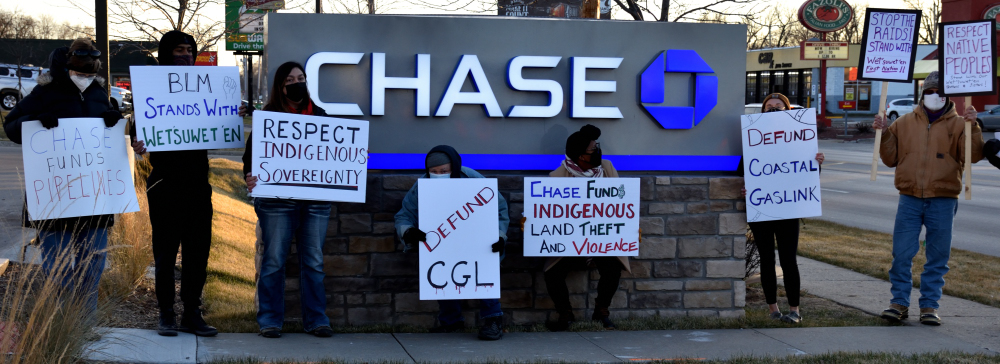
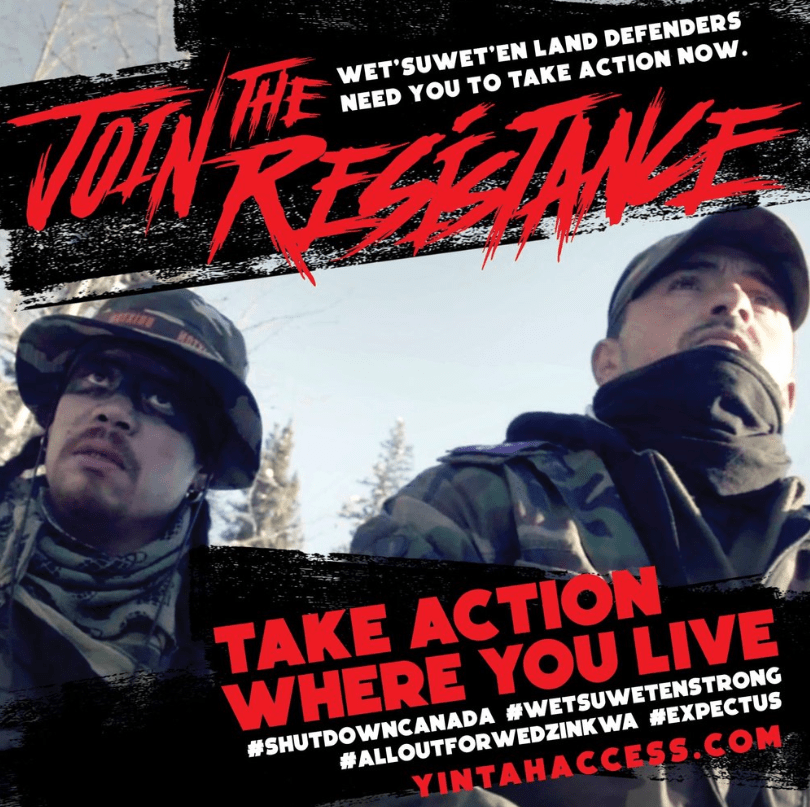
As you will know, we have reached another flashpoint in the Wet’suwet’en’s struggle against the CGL pipeline. Having fought to protect the sacred headwaters of Wedzwin kwa, they are now faced with the possibility of imminent drilling. Today, the hereditary chiefs are holding a press conference and issuing an eviction notice. They are issuing a call to action, which we are relaying to you.

The chiefs are calling for people to take on three targets: BC government, contractors, and the funder, RBC. Decolonial Solidarity members will rally to pressure the latter. For organized groups, we are issuing a call for in-person action. For everyone else, we are inviting you to call the global head of sustainability at RBC.

Click here to access a one-click-to-call action

We have managed to get this man’s personal phone number. It is important that we stay polite and firm in denouncing the actions of the bank. Remember: it can freeze its investment until the hereditary chiefs consent to the project. It can stop the drilling. It is this man’s job to ensure that the bank is sustainable. Let’s remind him there’s a ways to go.

Call the head of sustainability!

Wet’suwet’en Land Defenders have not given up and nor will we. We will continue to build our movement, to show solidarity, to turn up at branches, to talk to our neighbors and to passers by, to mobilize in protest, to confront RBC executives, and to send our love to the admirable Land Defenders whose leadership has inspired us throughout these difficult times.

In solidarity,
The organizing team

(This message from decolonial solidarity on behalf of the Gidimt’en land and water protectors is forwarded with the permission of the Unist’ot’en  in solidarity with their neighboring clan within the Wet’suwet’en Nation.)

Unist’ot’en Solidarity Brigade robertages@telus.net