Day 7, September 7, 2018. 11.7 miles from Dayton to Otho, Iowa.
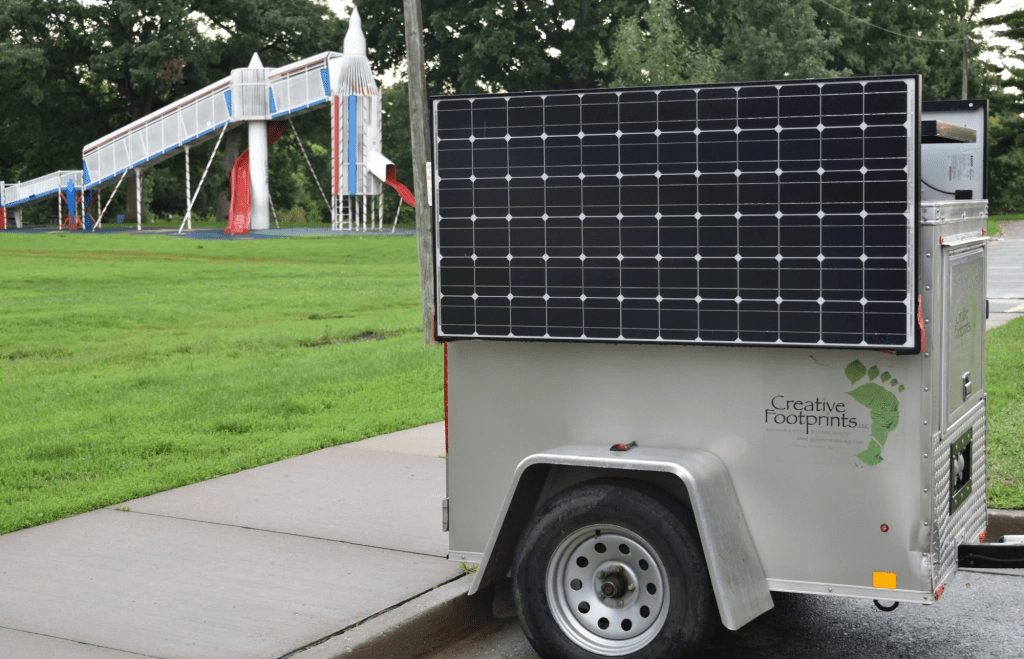
Yesterday evening the solar panel unit was set up because there wasn’t any electricity available in the park. The power strip was full of cell phone power connections. It was nice to see solar power in action. Electricity that didn’t come from fossil fuel.
Solar panels
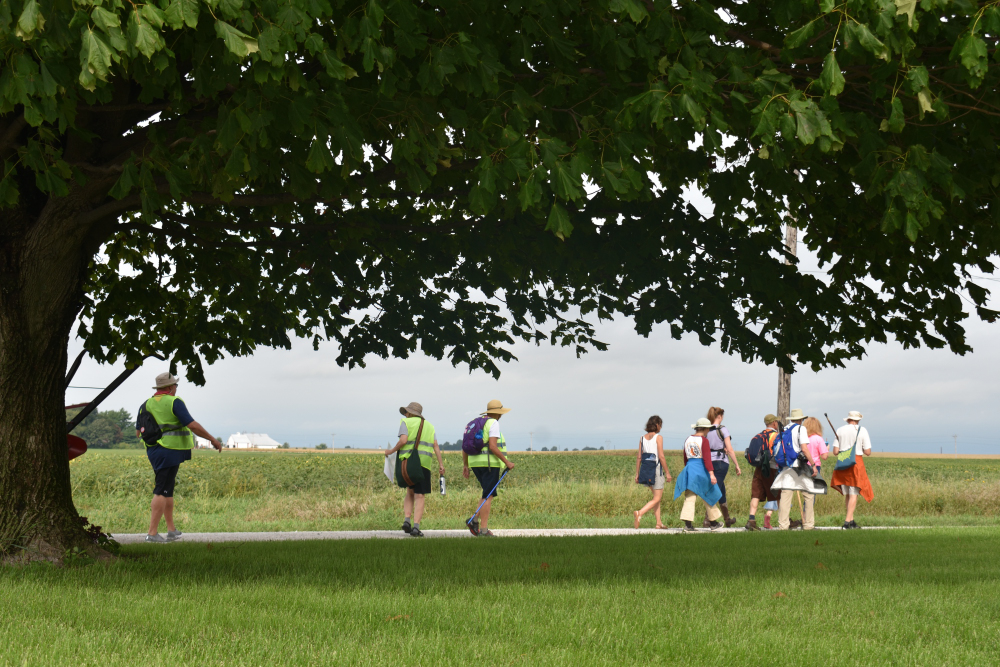
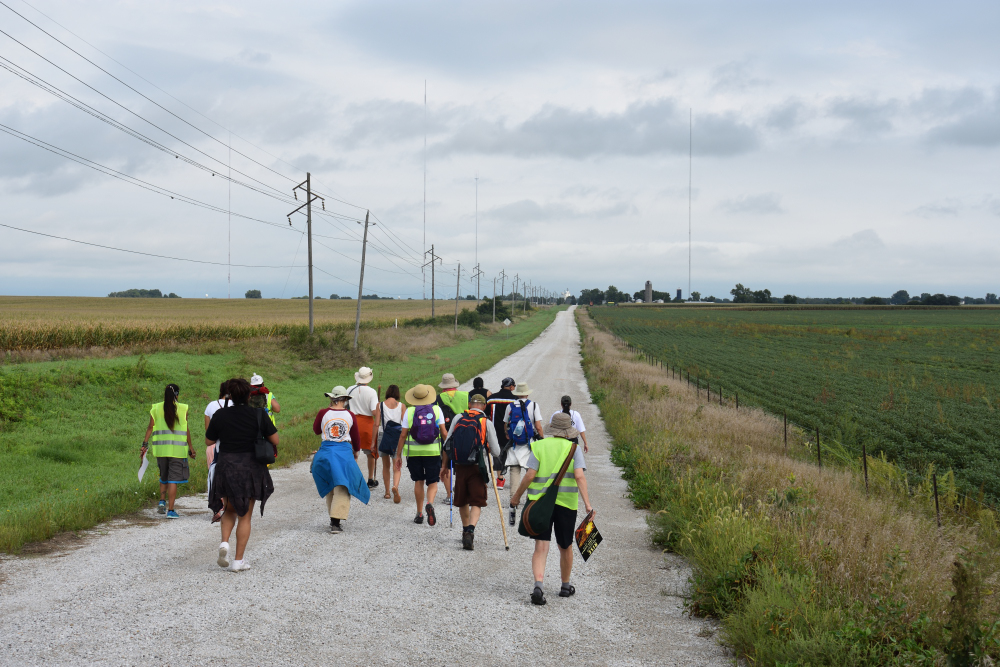
It was cool when we broke camp, but a pretty pleasant day to march, with the sun coming out soon after we started. Since much of the route today wasn’t on busy roads, we were able to walk side by side and share more stories.
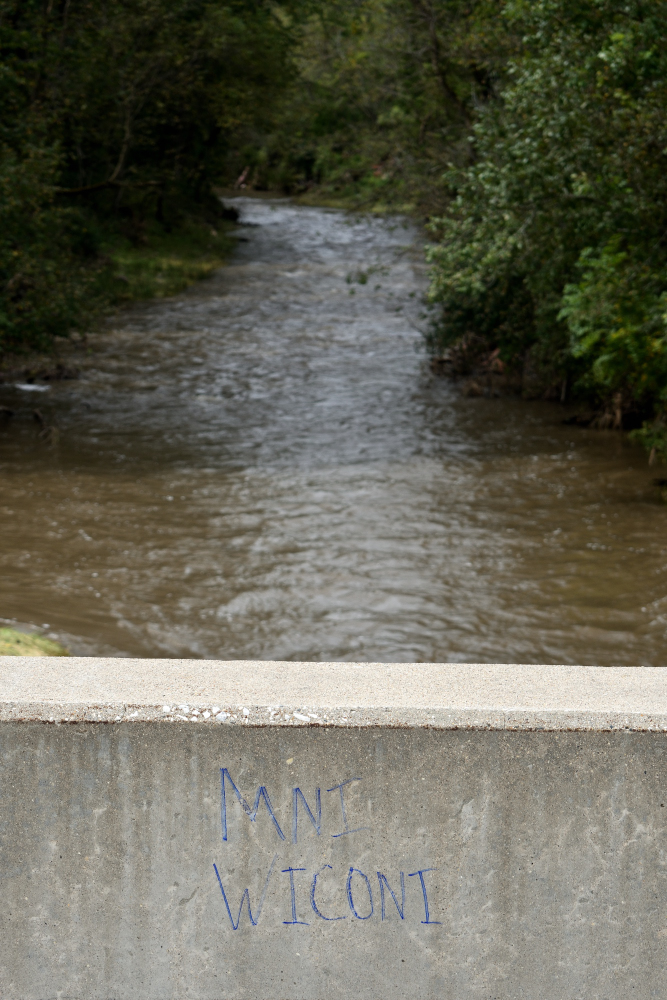
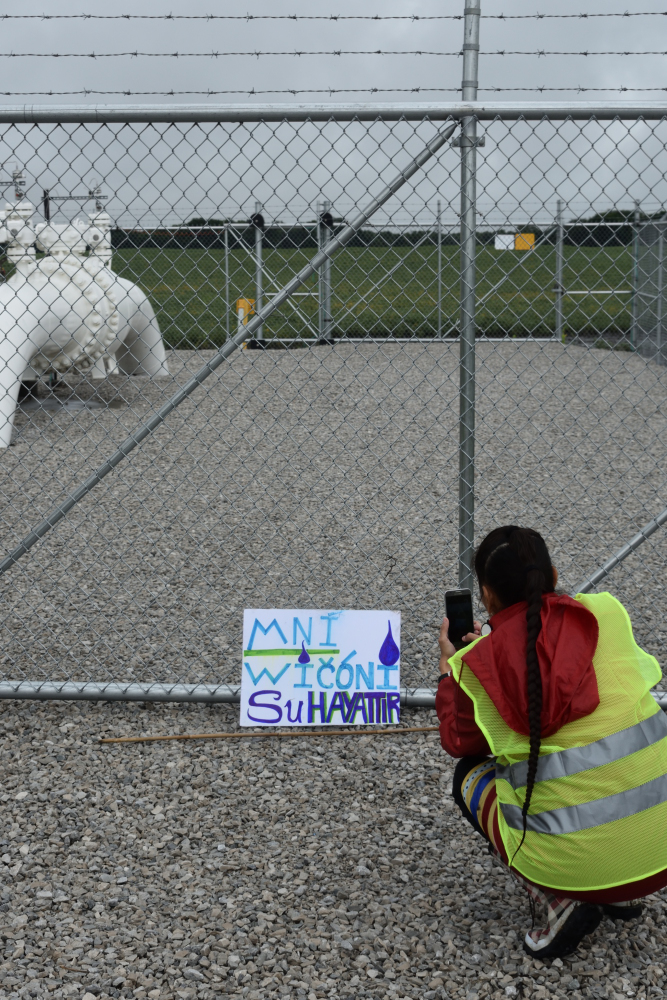
I don’t know if someone just made the name up, but this very steep hill was called ‘suicide hill’. At the bottom was a creek. On the wall of the bridge someone had previously written ‘Mni Wiconi”, Water Is Life.
Also near that creek, Manape showed us wild grapes growing alongside the road, and the fragrance of them when they were crushed.
The last part of the day’s walk was past a field of wind turbines. I didn’t notice sound coming from them as we walked past, but that night as we were sitting around the bonfire there was a noticeable “whoosh” sound. We camped near the turbines.
After dinner it was dark. We sat around a bonfire. Trisha Etringer led a very interesting discussion about decolonization.
Then Manape spoke about sovereignty, and especially sovereignty of yourself. And how he came to the conclusion that he should give up both his United States citizenship and tribal membership to achieve his own sovereignty.
I think we were all feeling sad that this sacred journey would be coming to an end at Ford Dodge tomorrow. I heard numerous comments about that. I was certainly feeling that way.
I am very happy that my friends of the Great Plains Action Society (GPAS) are asking their supporters to use the Friends Committee on National Legislation’s (FCNL) letter writing tool to send letters to support the Truth and Healing Commission on Indian Boarding School Policies in the United States Act (S. 2907/H.R. 5444) to their congressional representatives.
Open Letter Campaign: Truth and Healing with Friends
Support the Establishment of a Truth and Healing Commission on Indian Boarding Schools: Friends Committee on National Legislation (FCNL)
As children are returning to school, we are reminded that school has not always been a safe place for Native children. For many years, Native children were taken from their homes and placed in government and religious run institutions with the aim of stripping away their Native language, culture, and identity. We are only now beginning the painful process of bringing home the children left in unmarked graves at the boarding schools they were sent to (U.S. report identifies burial sites linked to boarding schools for Native Americans). We are still working on healing the damage of boarding school and intergenerational trauma (American Indian Boarding Schools Haunt Many : NPR). Healing from the damage caused by the boarding school system will require effort by not just those harmed, but the institutions that did the harming. There is great work being done by our comrades at the Friends Committee On National Legislation (Native Americans | Friends Committee On National Legislation). For this edition of our Open Letter Campaign, we are directing you to a letter from our friends at FCNL to help you in urging your representatives to support the Truth and Healing Commission on Indian Boarding School Policies in the United States Act (S. 2907/H.R. 5444).
The following is courtesy our much appreciated Quaker friends (esp Jeff!):
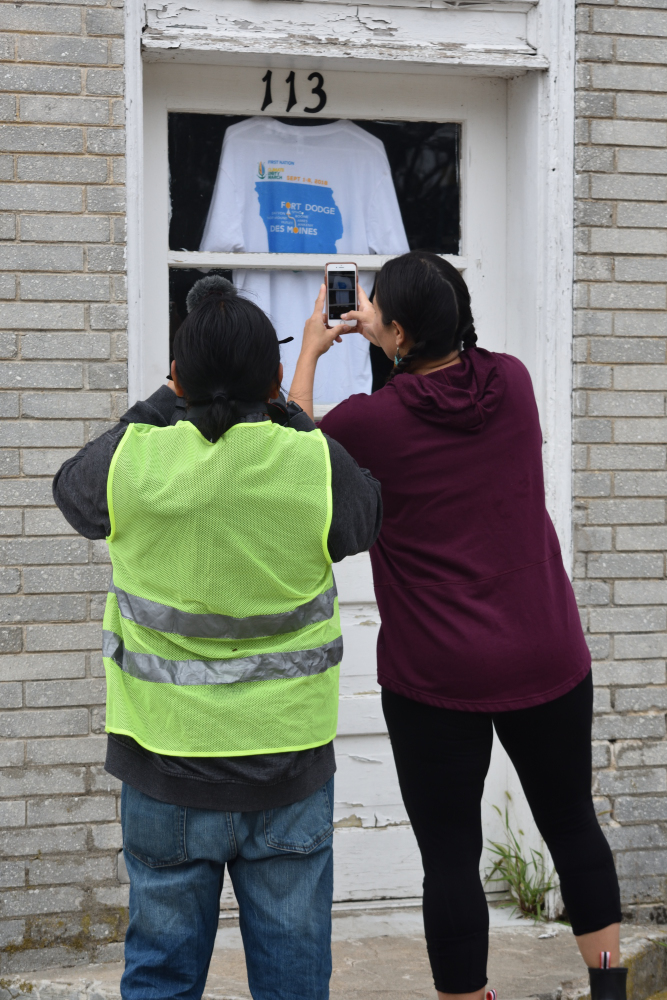
Day 6 of the First Nation-Farmer Climate Unity March began with another awesome breakfast by Lyssa Wade. As we were waiting to start walking we saw one of the March tee-shirts hanging in the window across the street.
Matthew Lone Bear and Sikowis see the March tee shirt
I was again reminded of my reliance on cell phone and Internet access when I couldn’t check the weather, news or email that morning. I hoped my family wasn’t worried that I hadn’t been able to connect with them while we were in Pilot Mound.
Rather than getting more difficult with each passing day, it is getting easier to cover the miles (fortunately!), even now that I’m walking on a blistered foot and my backup shoes.
This was another day of sharing stories and getting to know each other better. I’ll let the photos tell today’s story.
After setting up my tent once we arrived at Oak Park in Dayton, I spent most of the rest of the day at the public golf course’s country club, which was adjacent to the park. I had two days of photos and writing to catch up on. Unfortunately I missed the evening presentation.
The folks at the country club were very nice, allowing us to sit in the club where there was internet service available (which didn’t extend as far as the campground). They also invited those who wanted to use their showers.
Did it come overnight or did it come on slow? It’s out of our hands and it’s out of control I don’t think that this Is the world we used to know
Alan Walker & Winona Oak
Environmental catastrophe is upon us
In years past, those of us who came to believe we could never reduce greenhouse emissions and began to talk about adaptation to evolving hostile conditions were stigmatized as alarmists. And while I wrote about this daily and organized and participated in numerous environmental campaigns and events, I rarely wrote how terrible the dangers were and would become. People quickly grew tired of hearing about these things.
Now I regret that. Fifty years ago, if those of us who advocated living without cars had convinced a critical mass to join us, we would not be in the situation we are now.
I’ve begun reading the new book, “Hothouse Earth” by Bill McGuire, He writes, “there is now no chance of dodging a grim future of perilous, all-pervasive, climate breakdown.” I agree.
The crucial point, he (Bill McGuire) argues, is that there is now no chance of us avoiding a perilous, all-pervasive climate breakdown. We have passed the point of no return and can expect a future in which lethal heatwaves and temperatures in excess of 50C (120F) are common in the tropics; where summers at temperate latitudes will invariably be baking hot, and where our oceans are destined to become warm and acidic. “A child born in 2020 will face a far more hostile world that its grandparents did,” McGuire insists.
In this respect, the volcanologist, who was also a member of the UK government’s Natural Hazard Working Group, takes an extreme position. Most other climate experts still maintain we have time left, although not very much, to bring about meaningful reductions in greenhouse gas emissions. A rapid drive to net zero and the halting of global warming is still within our grasp, they say.
Such claims are dismissed by McGuire. “I know a lot of people working in climate science who say one thing in public but a very different thing in private. In confidence, they are all much more scared about the future we face, but they won’t admit that in public. I call this climate appeasement and I believe it only makes things worse. The world needs to know how bad things are going to get before we can hope to start to tackle the crisis.”
There is now no chance of dodging a grim future of perilous, all-pervasive, climate breakdown.
Bill McGuire, Hothouse Earth
This book takes as its starting premise, then, the notion that, practically, there is now no chance of dodging a grim future of perilous, all-pervasive, climate breakdown. It is no longer a matter of what we can do to avoid it, but of what we should expect in the decades to come, how we can adapt to a hothouse world with more extreme weather and what we can do to stop a bleak situation deteriorating even further.
I ought to make clear here that the terms ‘hothouse Earth’ or ‘greenhouse Earth’ are used formally, in a definitive sense, to describe the state of our planet in the geological past when global temperatures have been so high that the poles have been ice-free. A hothouse state, however, is not required for hothouse conditions, which are already becoming far more commonplace, and fast becoming the trademark of our broken climate. What I mean by hothouse Earth, then, is not an ice-free planet, but a world in which lethal heatwaves and temperatures in excess of 50°C (122°F) in the tropics are nothing to write home about; a world where winters at temperate latitudes have dwindled to almost nothing and baking summers are the norm; a world where the oceans have heated beyond the point of no return and the mercury climbing to 30°C+ (86°F+) within the Arctic Circle is no big deal.
The climate catastrophe was born not from “mankind” but from the slave plantation, the settler town, the prison, the reservation. It is unsurprising, then, that the solutions being forwarded by those in power are more of the same— the border wall, the immigration detention centre, the refugee camp, the open-pit mine. For us to live in anything that I hope we can one day call freedom, it is necessary to put a swift end to the death-drive-disguised-as-worldview—the murderous episteme that is being imposed on us by the master/settler/CEO.
Maynard, Robyn; Simpson, Leanne Betasamosake. Rehearsals for Living (Abolitionist Papers) (p. 29). Haymarket Books. Kindle Edition.
Day 5. September 5, 2018. 14 miles from the Boone County Fairgrounds to Pilot Mound, Iowa.
Once again I was pleasantly surprised to awaken feeling fairly refreshed, despite being pretty tired at the end of yesterday’s 15 miles, and staying up late to write. Since we were all sleeping in the same large room, the lights went out a little after 10 p.m. There were no windows so it was pretty dark. Several others and I were in a smaller ‘media’ room writing. I didn’t get to bed until 11:30. It was a little tricky finding my way through the large darkened room to my sleeping bag
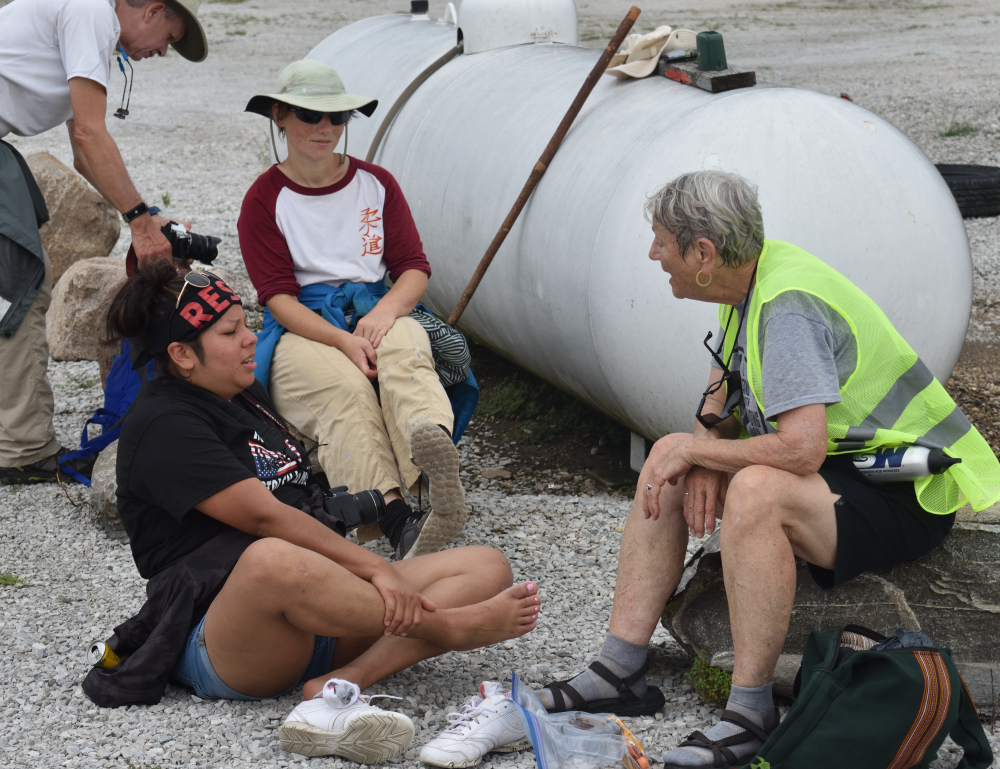
When we arrived yesterday I discovered I had worn a hole into the sole of my shoes, and developed a blister. I would have been more concerned but I had seen Miriam work on a number of other people’s blisters. She cut a piece of adhesive foam larger than the blister, then cut a hole in the middle of that the size of the blister, to help keep pressure off it. Then the ever useful duct tape was wrapped around the foot to hold things in place. And it worked pretty well. A photo of my bandaged foot was included in the article about the March in the Fort Dodge Messenger, Many Steps, One Journey.
Miriam Kashia foot doctor extraordinaire
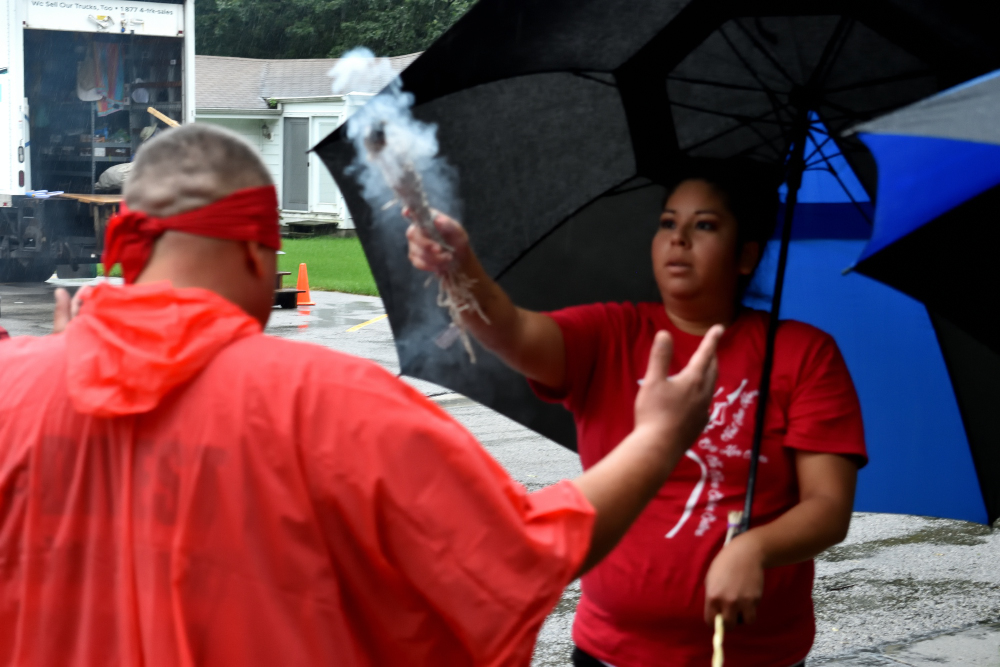
It was raining harder than ever when we started out that morning. But again, I didn’t hear any complaints. We were warned to be more aware of traffic because we started out going through town. Before we started burning sage was brought to each of us. And Alton made a raincoat for his dog Oceti.
Being outside all day, and sometimes sleeping outside (sometimes in some strong thunderstorms) has made me more and more aware of the natural world. I’ve mentioned before how I enjoyed being outside as I trained for this March. Walking has been much more interesting now that I am aware, as Indigenous people have always been, that everything: trees, water, plants, rocks, wind, etc. has the Spirit in them. I found myself focusing on talking to the trees, squirrels and birds as I walked.
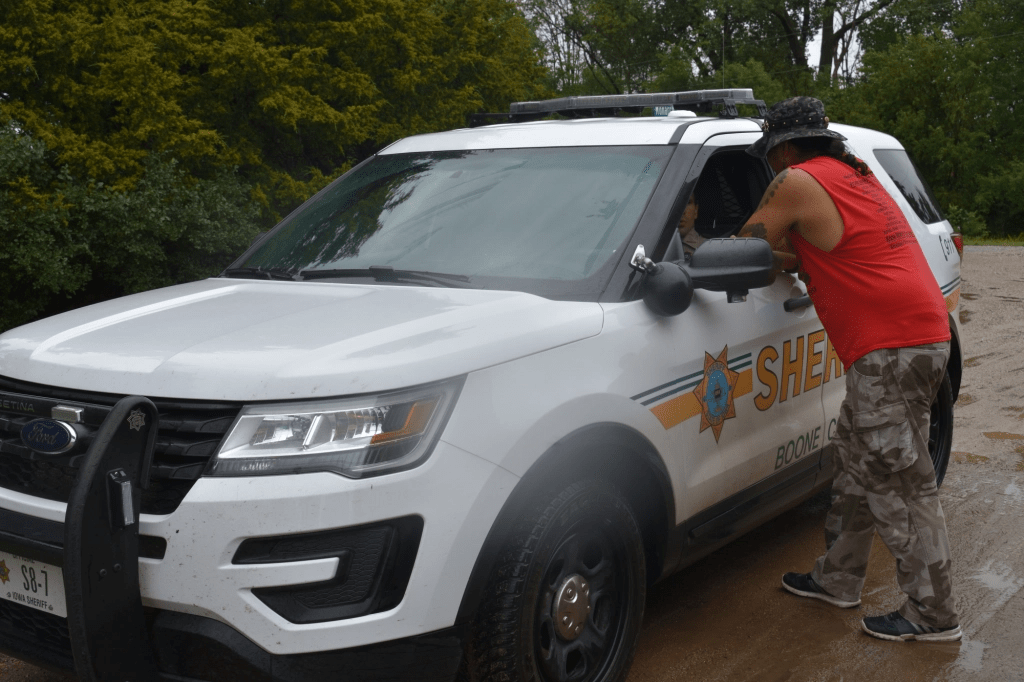
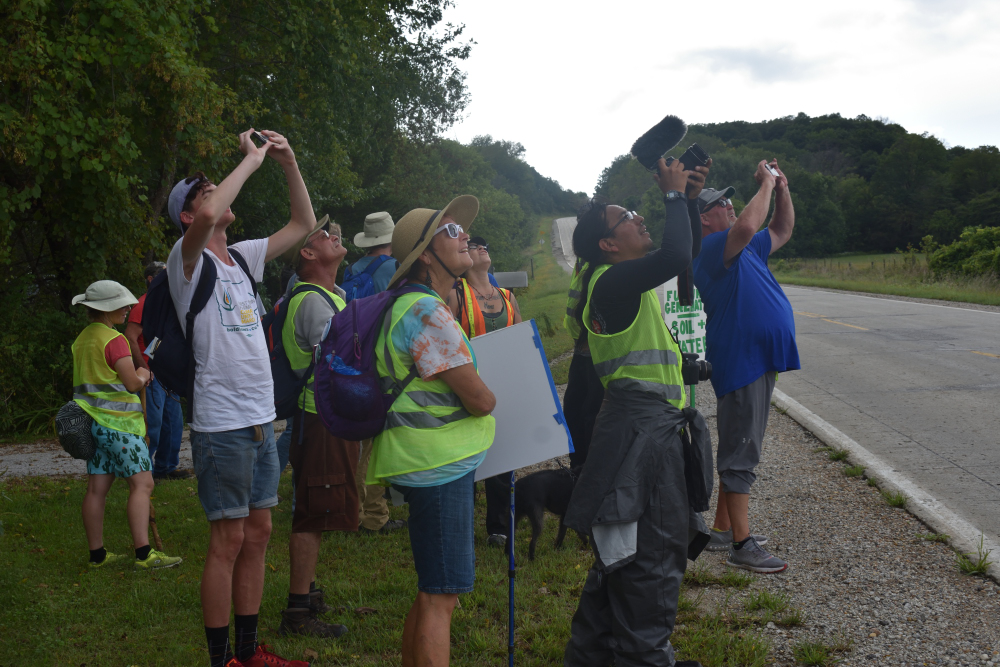
At one rest stop a police officer stopped to see what we were doing. Manape spoke to him. We were careful to use a system to announce when a car was approaching from the front (“car up”) or back (“car back”). Everyone then immediately formed a single file and got as far off the road as possible. Even so, the police often seemed to have heard about us marching, though none of the policemen caused us any trouble.
There wasn’t quite as much talking today since there wasn’t much of a shoulder on the road, so we had to walk in single file.
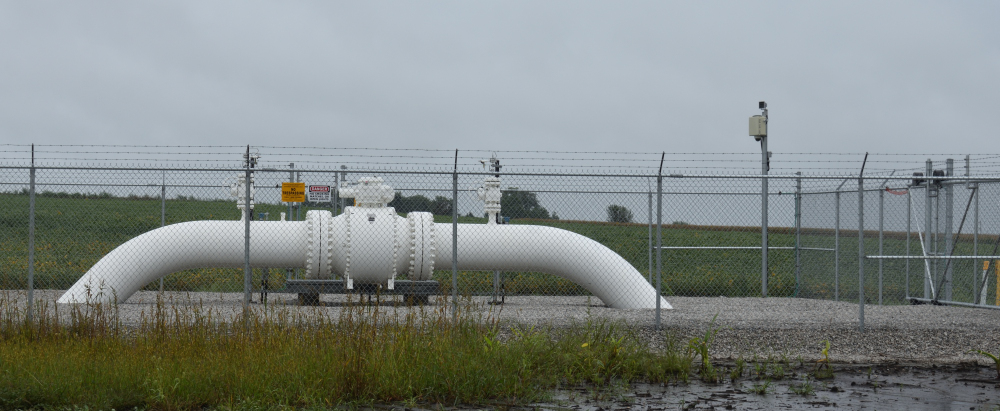
Before crossing the river just before reaching our destination of Pilot Mound, we came to another pipeline crossing. We could see the area where trees had been removed to build the pipeline on the hill on the other side of the river.
As always, we stopped for prayers. This time I was asked to lead them. I was very happy to have this opportunity to share some about Quakers and the Spirit. As we stood in a circle holding hands, I mentioned that Peter Clay, Lee Tesdell, and I were Quakers. And that I hoped they would meet my brother Randy, also a Quaker, when he comes to Fort Dodge at the end of the March, for the celebration and give me a ride home. I’ve been trying to share about Quakers as opportunities come up for several reasons. I think there are many parts of Quakerism that are common with the spirituality of Indigenous people.
And as Manape has said, the reason we are marching together is to make it possible for us to continue to work together in the future. For that to happen, we need to trust each other. And for trust to be established, we need to understand each other. That was why I shared about Quakerism when it seemed appropriate.
As we stood in the circle I said that Quakers do not believe spirituality is just a matter of Sunday morning services. We try to be attentive to the spirit all the time, though we often get distracted. We do also gather together Sunday morning to worship in silence. That sometimes someone is given a spiritual message that they speak into the silence. During the March someone had asked if I was a minister and before I could answer, Miriam said, “he’s a Quaker and all Quakers are ministers.”
During the ceremony at this pipeline crossing I asked the circle of my friends to listen together to the Spirit (saying we wouldn’t do so for a whole hour). But in the time we spent worshiping together, I felt the presence of the spirit among us. Afterward several people gave me hugs and thanked me. As I think about it now, I have felt the spirit among us all week.
Once we arrived in Pilot Mound some of us noticed we were being followed by a car for a while. We learned the driver was Manape’s father, Frank, and he was just enjoying watching us march together. Frank has been a very active activist.
One of the most moving parts of this journey occurred as Frank spoke to us before we ate dinner. He began by saying he was honored to be with us and how blessed he felt as he watched us marching. He said it made his “heart soar like a hawk.” He spoke of the many issues he has worked on in his life. And how it takes many, many years to see results (40, more). That it is not the number of people involved that is important. It is their persistence in raising up the truth. Once a certain concern starts to see a shift toward what is right, others remember the people or person who never went away during all those years.
We found there was no cell phone or internet service available in Pilot Mound. In a way that seemed to symbolize that we were cut off from civilization. The whole marching and camping experience felt like we were back in a simpler time. We felt more in touch with nature. We also knew things like the severe storms and flooding we experienced were related to climate change, and to what we were trying to call attention to by marching.
I believe today is our longest mileage march–15 miles. More rain is predicted for this afternoon and there are flash flood warnings.
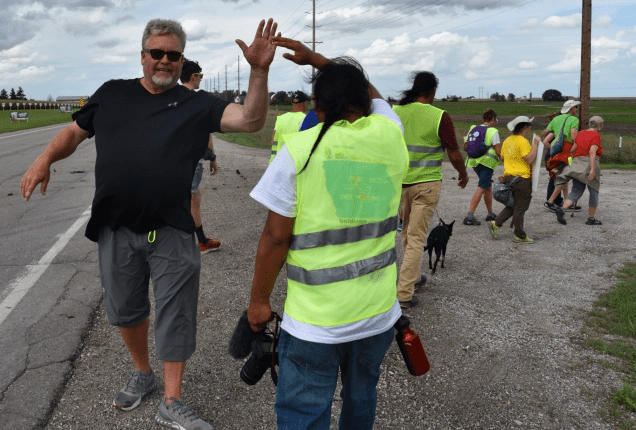
The group is becoming more cohesive as we share our stories. As Donnielle said, “we are a tribe.”
We are a tribe
Tim Dwight walked with us today. He used to play in the National Football League. Now his work relates to solar energy. I learned a lot about how he can work with communities to build solar energy systems. He has been involved in lobbying efforts in the Iowa legislature to support solar energy. Tim is going to talk more about that for the whole group tomorrow or the next night.
Those of you from the Bear Creek area might recognize the name Gary Clague, who grew up in Earlham. He knows the Knights and others.
Gary Clague
Alton was talking about the strong bond that forms between a child and an animal. He spoke fondly of a horse from his youth. When he and his friends went to ride their horses, his was the only one who came up to him every time. He talked about how easy is was to ride the horse that was in tune with where he wanted to go. “I really miss that horse.” I spent a lot of time visiting Foxy Jackson, who we learned is going to marry Alton in a couple of weeks.
Alton Onefeather
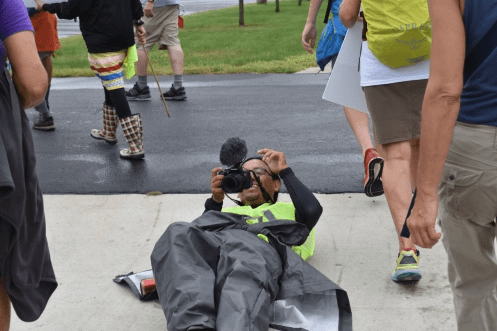
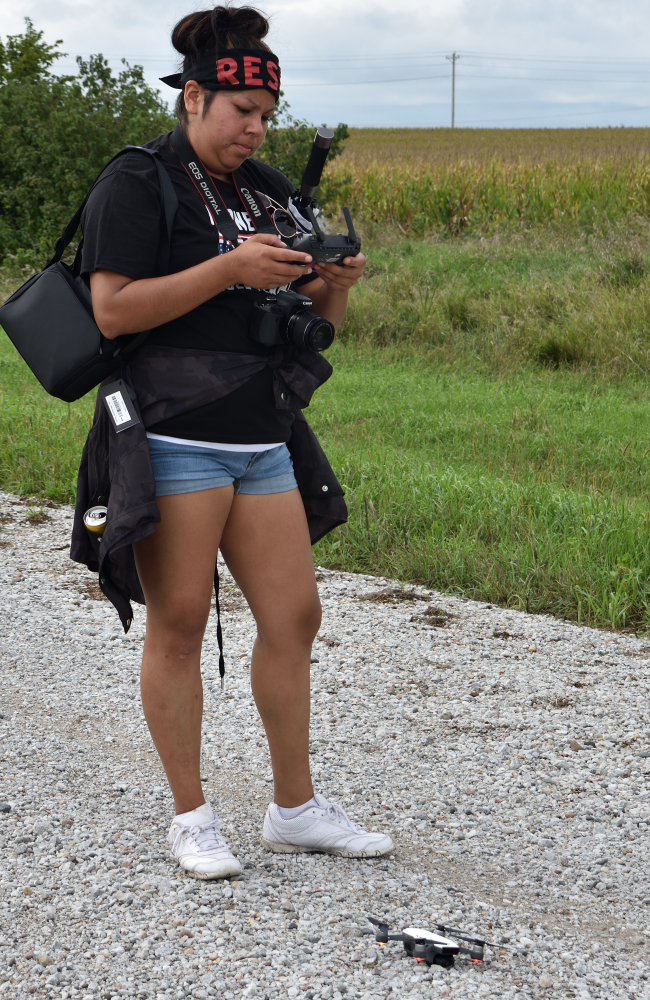
Matthew Lone Bear and I continue to talk a lot about photography, videography, and drones. He sometimes goes for unusual camera angles, for example lying on his back. I think that is a sign of a good photographer.
Matthew Lone Bear
Mahmud Fitil shared stories related to tar sand spills, saying most commercial labs won’t analyze the water samples from tar sand spills because they fear repercussions from the government. Fitil went to Doon, Iowa, site of a train derailment and oil spill of an estimated 230,000 gallons in June. He said there was little activity related to the cleanup. The smell was worse than that of raw gasoline, causing some to vomit.
Mahmud Fitil
Miriam Kashia and I compared my Quakerism to her Universal Unitarian church and community. I told her the Quaker Social Change Ministry program we used at North Meadow Circle of Friends in Indianapolis was modeled after the program created by the Universalists. Miriam says her new church is the greenest church in Iowa.
Miriam Kashia
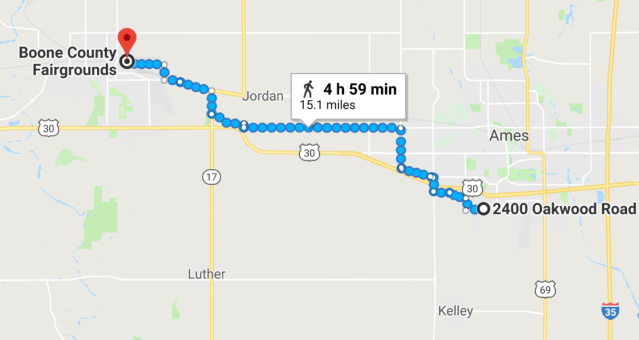
At 5:30 pm we all straggled into the Boone County Fairgrounds, fifteen miles from our Ames camp. Everyone seems to be limping a little. I discovered I had worn a hole in my shoe, which resulted in a blister! Fortunately, we have Miriam, who plugged the hole, and will treat my blister in the morning. Several others also developed blisters. It was a rough day.
The building we are in is actually the site where the Public Utilities Commission had a meeting for public comments about the Dakota Access Pipeline in November, 2015. Peter Clay spoke and Miriam Kashia attended. That was where Peter had his first contact with Native Americans, who came from South Dakota to fight the pipeline.
Before dinner, someone described how they went to the Bakken oil fields to see what tar sands oil looked like. He was able to obtain a couple of quarts of it and found an independent lab to analyze it. As expected, it was full of toxic chemicals. He found that the tar sands product became suspended in water, so a spill cannot be cleanup up simply by skimming it off the top of the water.
Someone else talked about the damage to the fields done by the pipeline construction. Heavy treaded vehicles traveled over the fields in wet weather, compacting the soil. Where the pipeline was laid, the rich topsoil was scraped off. It was supposed to be saved to put pack in place but wasn’t. The clay layer was dug up, then a mixture of the topsoil and clay refilled in the trench. The clay disrupts the flow of water and nutrients through the topsoil/clay mixture. It is common to see ponds of water over areas of the pipeline because of nonporous clay layer.
Standing water in fields
Dinner that included buffalo meat and fry bread followed. Looking around the table I thought it would be nice if this was a “real” Thanksgiving dinner. Manape said, we call it Thanks-taking.
Storms are predicted for tonight and tomorrow so we are glad to be inside. This was the first night we all slept in the same space together, which I thought added another dimension to us growing closer as a group.
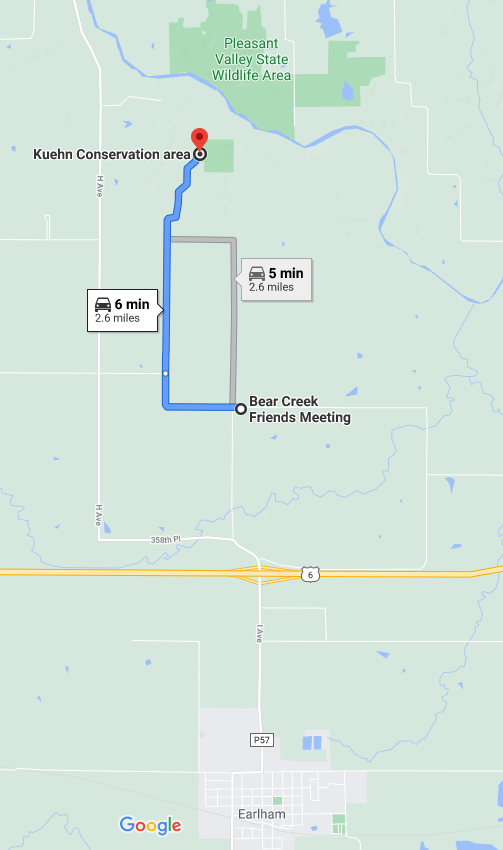
Saturday September 10 3:00 – 9:00 PM Central time Kuehn Conservation Area
“Much can be learned by watching children at play”
Prairie Awakening-Prairie Awoke 2022’s theme is youth, recognizing the challenges we face, seeking hope and healing for the future.
The Meskwaki Nation will be featured with a youth drum group and dancers, Dallas Chief Eagle will share his Hoop Dance presentation with audience participation around a bonfire, plus more traditional drums and dancers in regalia. A rehabilitated raptor and tagged migrating monarchs will be released.
Bring your lawn chair for sitting together in the tallgrass prairie arena, remembering, and visioning a hopeful tomorrow.
The event is free. Concessions will be available on-site.
Slideshow of my photos of Prairie Awakening 2017
Prairie Awakening / Prairies Awoke 2017 Jeff Kisling
Prior to beginning today, Tricia performed smudging for us, to remove negative energy and bring positive energy. That this was offered to all of us, sharing this Native practice, is just one of many examples of all of us sharing with each other. This sharing was crucial to our growing interconnections, and building a single community, together.
This video was shot by Mahmud Fitil who is marching with us. My feet felt better after that. Mahmud told me when he went to the site of a tar sands train derailment the smell was so bad people nearly vomited.
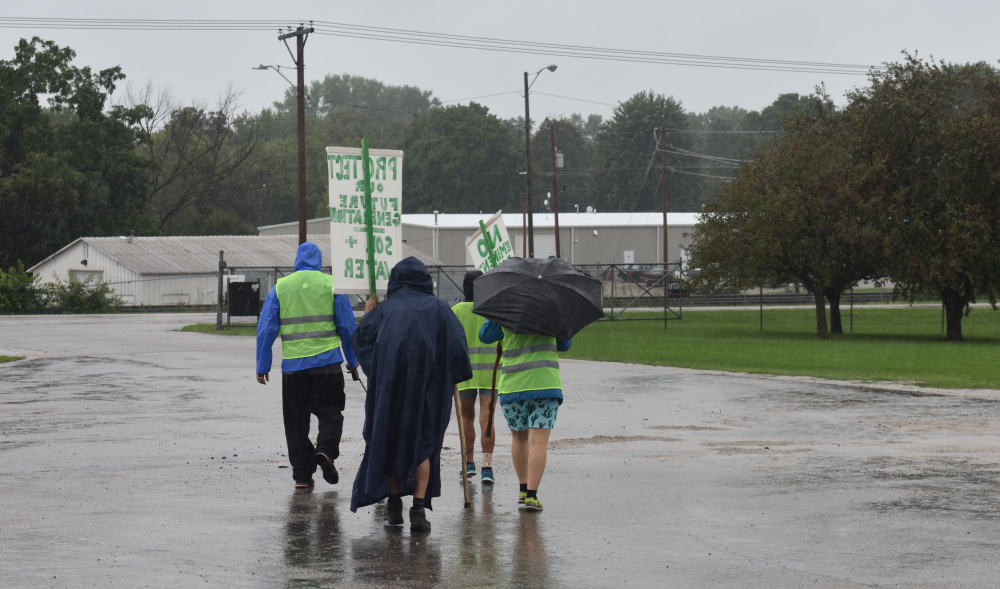
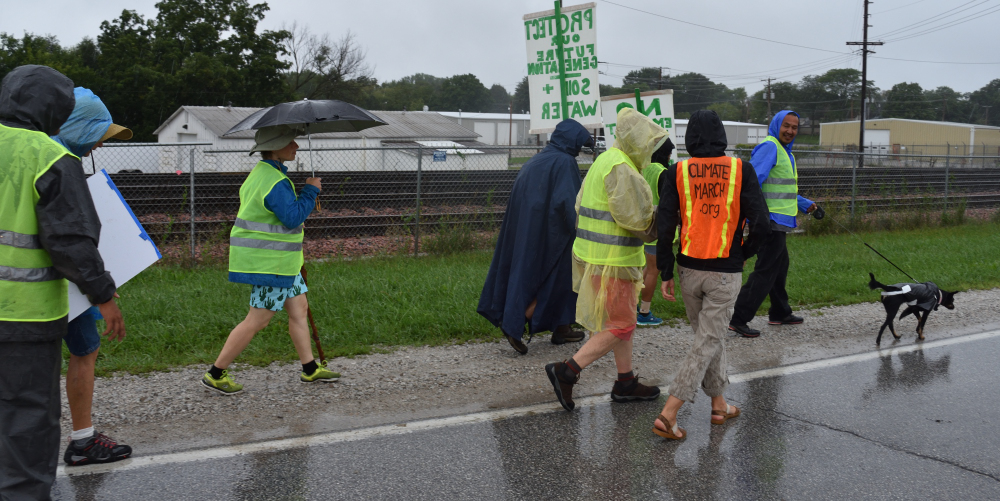
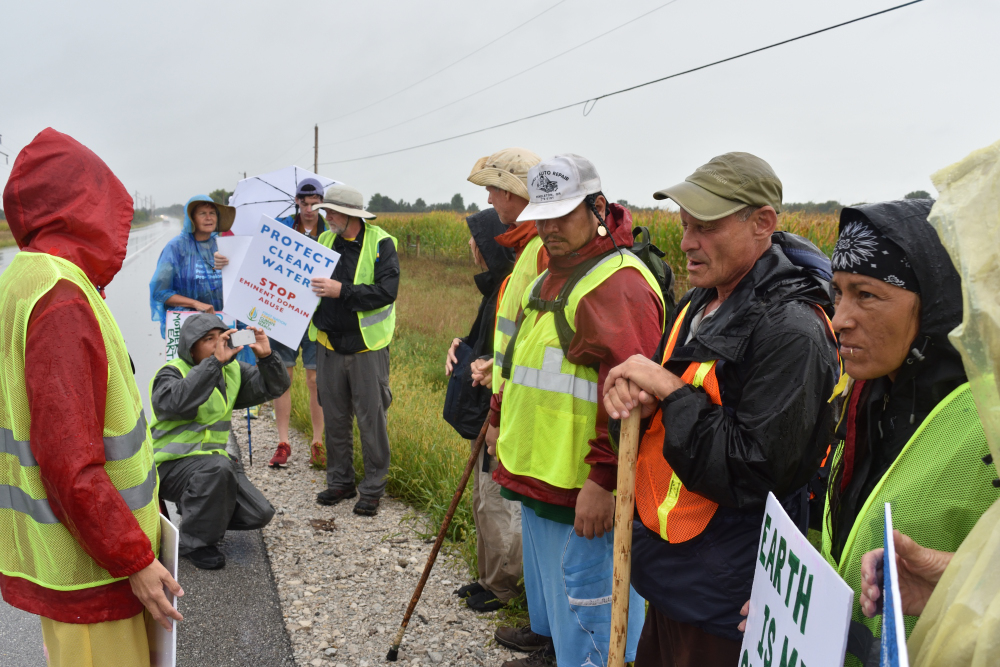
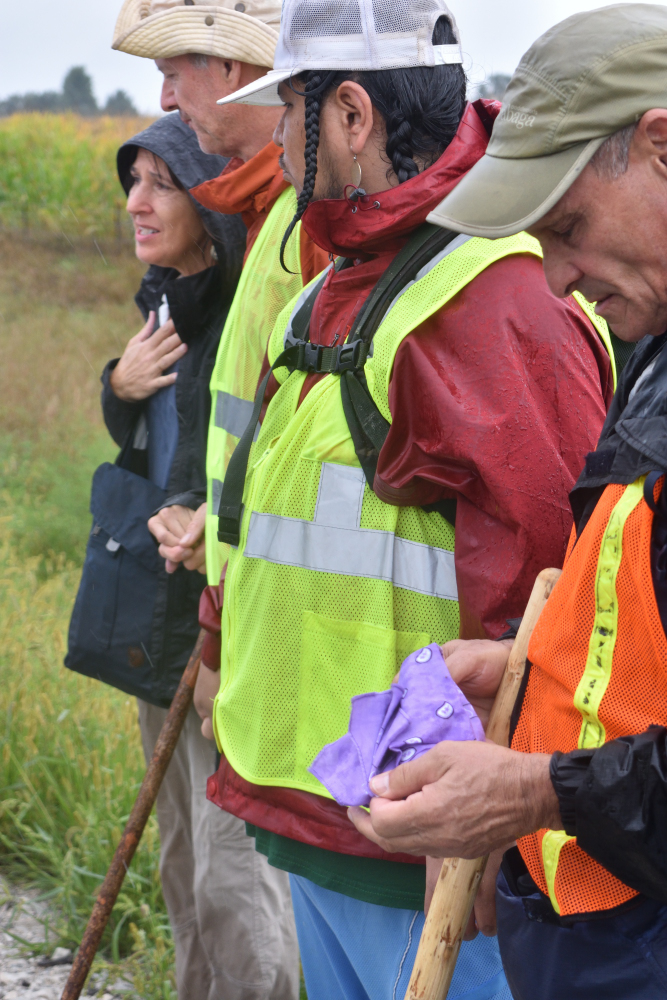
For the first several hours it was raining pretty hard. Prior to this march, I never would have ventured out into such heavy rain. But this morning I didn’t hear one person suggest we should wait until it wasn’t raining so hard. Not one person complaining. We just put on our rain gear, had our morning circle to discuss the day’s route, and began to march and continue sharing our stories. One of the most remarkable and most meaningful things that happened on this march was the extended length of time we were with each other, and the conversations went on almost non-stop.
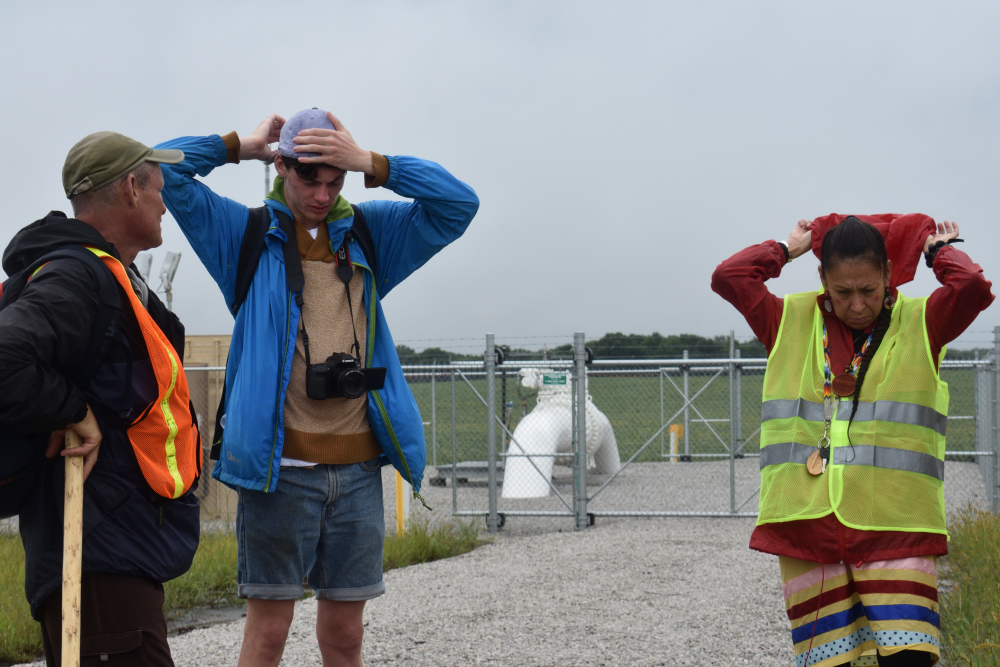
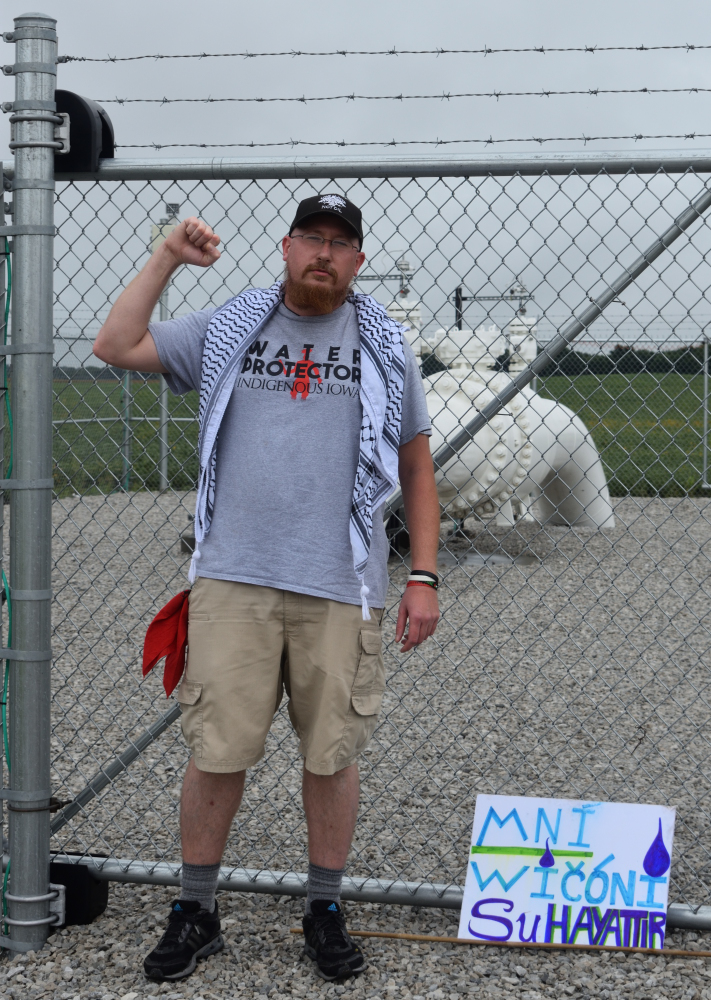
After Lee Tesdell’s presentation last night, he took me to see where the pipeline crossed the highway we would be traveling on when we left Huxley. We planned to have a ceremony when we reached the pipeline. Donnielle Wanatee offered good prayers, asking for protection for the walkers, and for their families at home. I was surprised at what an emotional time this was. It was especially difficult for Kathy Byrnes, bringing back a lot of bad memories of her past experiences with the construction of the pipeline on her neighbor’s land. Many offered her hugs.
I could see from the expressions and body language that every one of us was feeling the trauma of the land and water being desecrated by the black snake.
These deep emotions were felt by all of us every time we crossed the pipeline. I could see from the expressions and body language that every one of us was feeling the trauma of the land and water being desecrated by the black snake.
So today was mostly about walking in the rain, sharing more stories, and experiences at the pipeline sites.
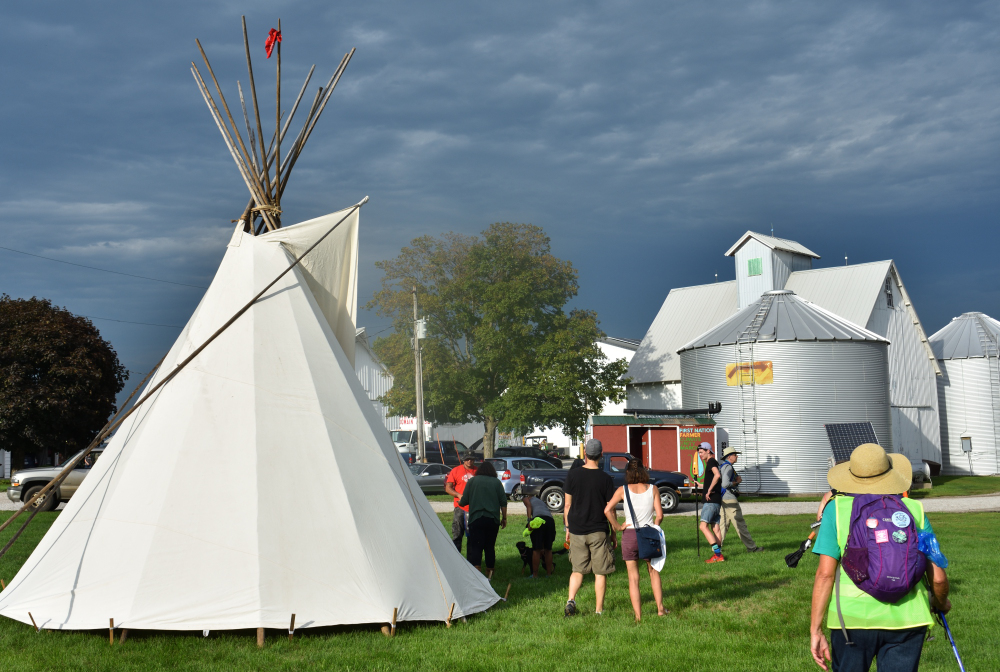
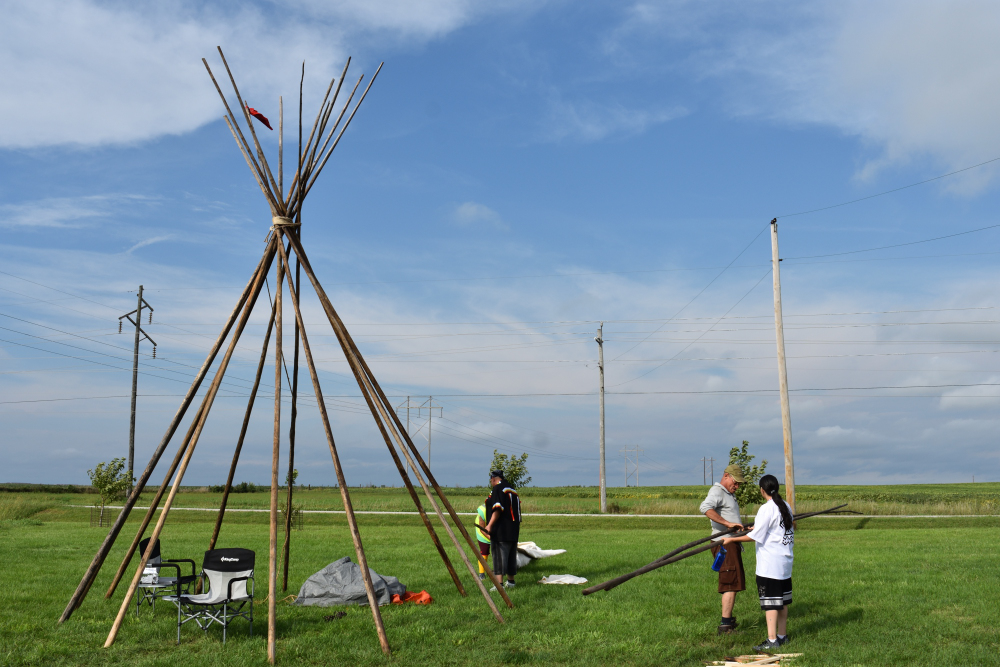
The tipi was set up again in Ames. Here is a short video of putting the cover on the tipi.
This morning my spirit was restless. I wasn’t led to what to write. Those who know me know I have a pretty rigid practice of trying to write first thing in the morning. If I don’t, I can rarely write later in the day. I get distracted by the busy-ness of life. And it doesn’t work to try to force myself to write if I’m not clear about what the subject might be.
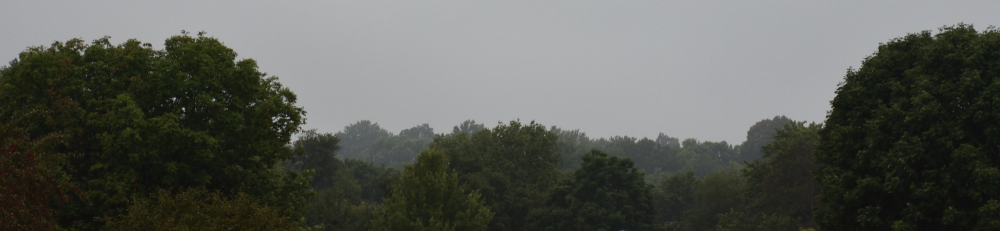
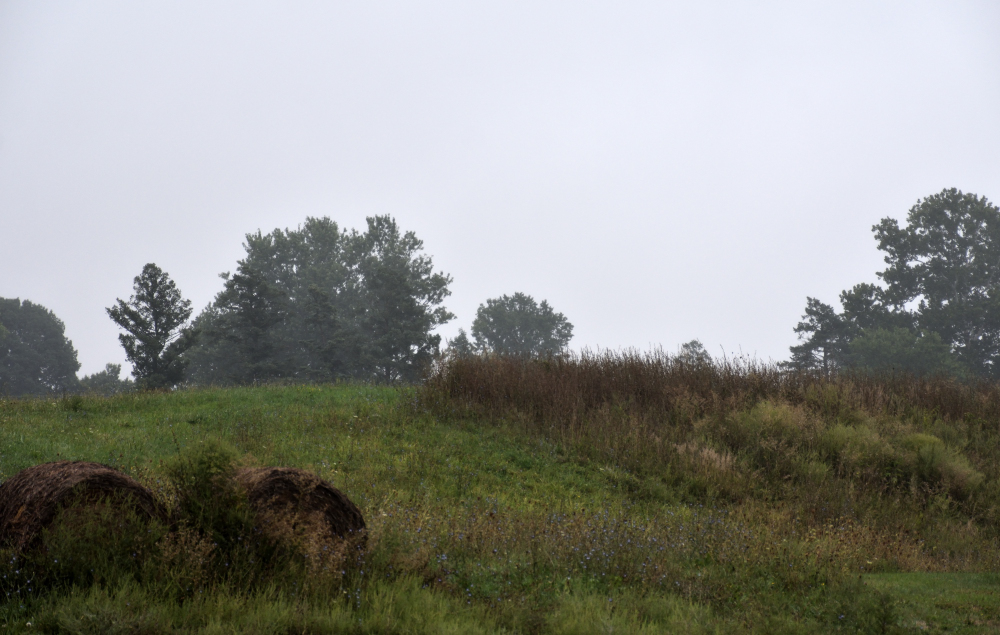
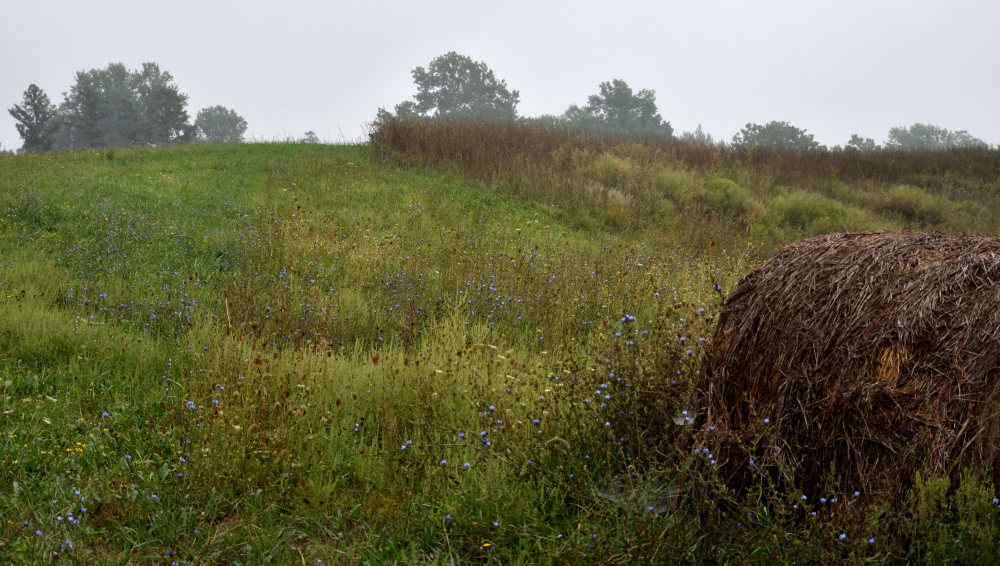
It was a little foggy out this morning and I loved to try to capture photos of that. Even though, or perhaps because, such images are a challenge to capture. So, I took the photography/nature path instead of trying to write. Some of today’s photos are at the end of this.
My Spirit was happy as we traveled together.
I had taken the phrase “the road not taken” literally. Often as I hike and walk, I’m presented with a choice of which way to go.
But of course, that can apply to many other choices. The two roads at the beginning of this day were writing or walking.
I took the road less traveled by, and that has made all the difference.
There have been many times taking the road less traveled by made “all the difference” in my life. Deciding to resist the draft, joining Friends Volunteer Service, choosing to work in neonatal intensive care, and then doing research in the Infant Pulmonary Function Lab. Learning computer programming. Being on the General Committee of FCNL. Connecting with the Kheprw Institute. Joining communities to protect the water including the Keystone Pledge of Resistance and Dakota Access pipeline. Getting in a van of fifteen people I didn’t know to go the Minneapolis on a snowy day to cut off the head of the black snake. Walking and camping ninety four miles with native and nonnative people. Learning to be clerk of peace and social concerns, and more recently Bear Creek Friends meeting. Joining Des Moines Mutual Aid. Many of those were difficult choices for a variety of reasons at the time. But every time they made all the difference.
Two roads diverged in a yellow wood,
And sorry I could not travel both And be one traveler, long I stood And looked down one as far as I could To where it bent in the undergrowth;
Then took the other, as just as fair, And having perhaps the better claim, Because it was grassy and wanted wear; Though as for that the passing there Had worn them really about the same,
And both that morning equally lay In leaves no step had trodden black. Oh, I kept the first for another day! Yet knowing how way leads on to way, I doubted if I should ever come back.
I shall be telling this with a sigh Somewhere ages and ages hence: Two roads diverged in a wood, and I— I took the one less traveled by, And that has made all the difference
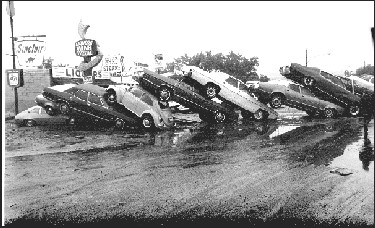
The year was 1972. June was begun and Eldon’s classes at the University of South Dakota that spring had concluded. The Moreys and their two small children were en route on Highway 385 from north of Hot Springs, South Dakota headed to Rapid City. It was a long overdue vacation following two years of intense graduate study by Eldon and night-work at the Vermilion Hospital by Karen as an Emergency Room Nurse. Money was in short supply, so the trip was a tenting excursion with reservations and a documented travel plan which had been formulated over several months. The Rapid City Public Campground was free. Midway between Hot Springs and Deadwood they planned to turn on Highway 16 which goes to Rapid City. Deadwood farther to the northwest was scheduled to be visited after a short stay in Rapid City.
As they approached the turn to Highway 16, it suddenly occurred to Eldon they might change their travel plan and continue on Number 385 directly to Deadwood. So he immediately blurted-out, “Would anyone rather go directly to Deadwood and we can see Rapid City during our return trip to southeastern South Dakota?” Karen was amazed such a sudden thought had entered Eldon’s thinking. Such a change would nullify the dates of their camping reservations and confuse their friends who had been given a schedule of their plans should they need to be contacted. Karen, therefore, remained silent. The children were too small to have opinions. By then Eldon had made the turn to Highway 16. But, lacking family response he immediately turned the car around and re-entered Highway 385 going north. They were headed to Deadwood!
They arrived at Deadwood in time to participate in the final public tour of the “Gold Mine” at Lead, the adjoining city. They then searched for the campground where they had reservations for the next evening. There was plenty of room at the campground and they soon had their tent set and an evening meal cooking. All was well. The children were tired so all four of them took to their sleeping bags as darkness settled.
Soon thereafter it began to rain. Oh my, how it rained. It rained so hard the inside of the tent was coated with moisture from the condensation in the air. Never-the-less, they slept soundly. The rain stopped when breakfast time arrived. So they opened the tent vents, hung the opened sleeping bags on the clothesline to dry and made breakfast. Everything was dry and packed to resume car travel by 10 o’clock.
As they were entering the car, a fellow camper happened to walk past them. “Oh,” he said, “I see you are leaving the campground!” “Yes,” Eldon said, “We’re going back to Deadwood for a “look around,” and then we’ll head to Rapid City. “Rapid City?,” the man questioned. “You can’t go to Rapid City!” “Why not?” Eldon replied. “You don’t know, do you?” the man responded.
“Rapid City during the night of June 9-10, 1972 experienced one of the worst floods in the history of South Dakota. Fifteen inches of extreme rainfall over six hours sent Rapid Creek and other waterways overflowing… The Canyon Lake Dam became clogged with debris and failed, resulting in 238 deaths and 3,057 injuries… There were over 1,335 homes and 5,000 automobiles destroyed” (Wikipedia). They later were told a 12 foot high wall of water rushed down Rapid Creek through the center of Rapid City where the campground was located. Everyone in the campground was drowned”
Four or five years ago Karen and Eldon visited Rapid City for the first time since the flood more than 38 years earlier. In the Campground Park was a brass plated obelisk with the names of those people who perished the night of the flood while camping there. There were more than thirty names on that monument. It was a very sobering moment because the Morey’s knew their family’s four names would have been there had they not been re-directed.
A couple of years ago while en-route to Yearly Meeting, they stopped in Oelwein to visit Eldon’s aunt and his cousins. Don Avenson, one of his cousins, and he were talking about Quakerism. Don is a former Speaker of the Iowa House of Representatives and a past Candidate for Governor. Eldon told him the story of the Rapid City Flood and explained that many “Traditional Quakers” are strongly “convinced” that the Divine Spirit sometimes provides “Leadings” which guide people. Don’s comment was, “If I had been redirected to avoid Rapid City during the night of June 9, 1972, I would be a Quaker too!” (Check Google for detailed information and photographs of the “Rapid City Flood of 1972”.)
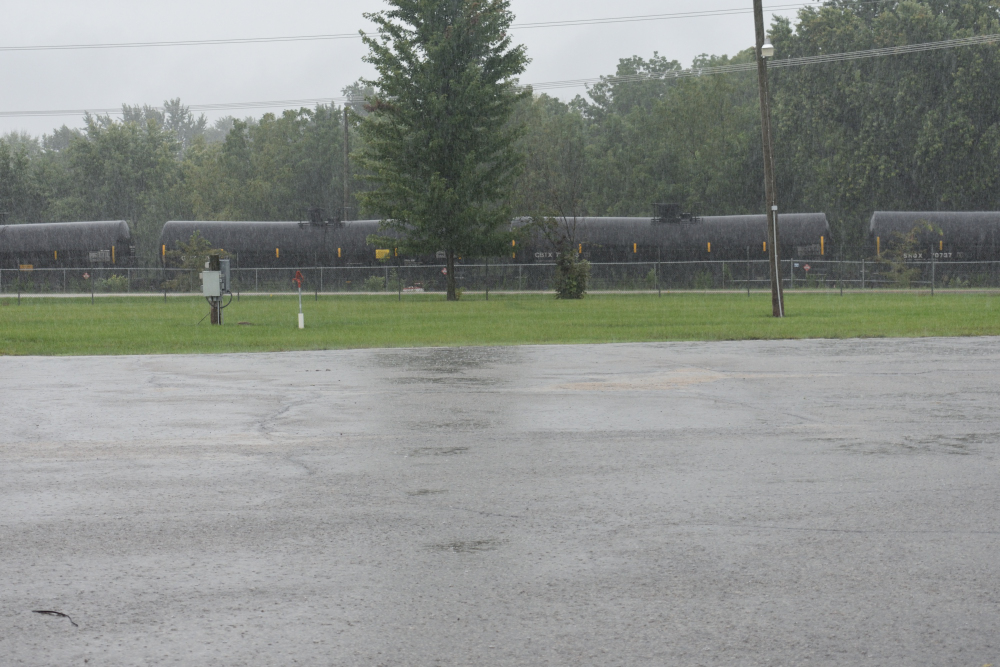
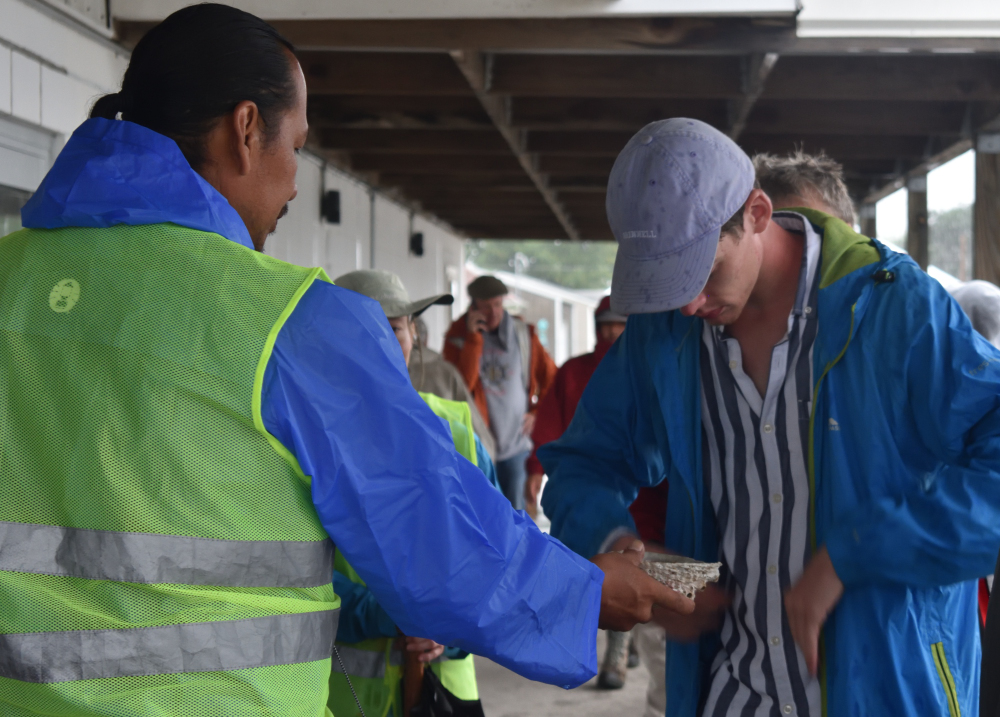
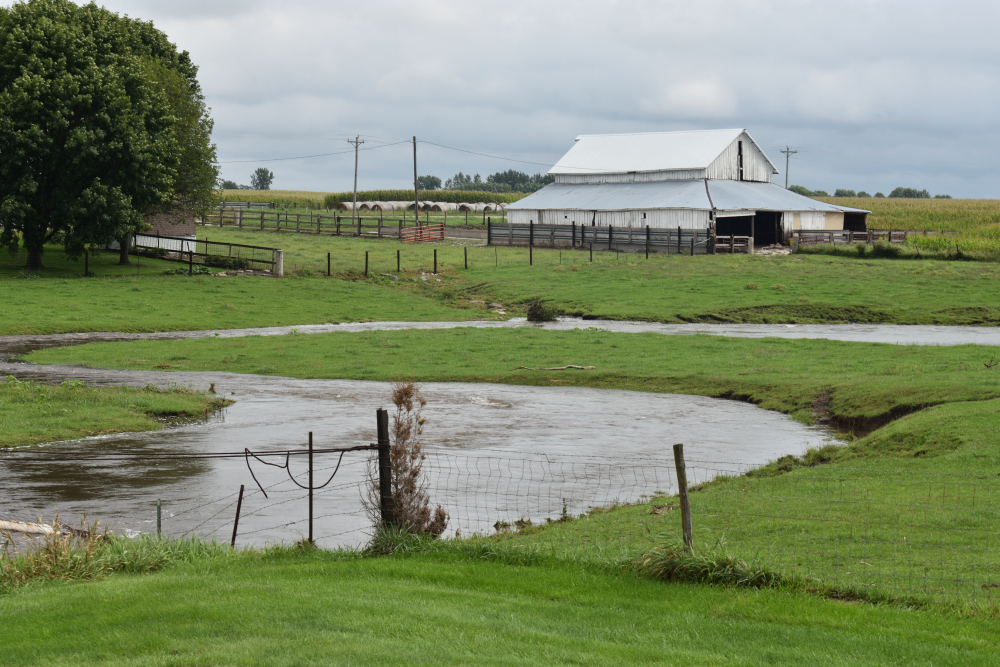
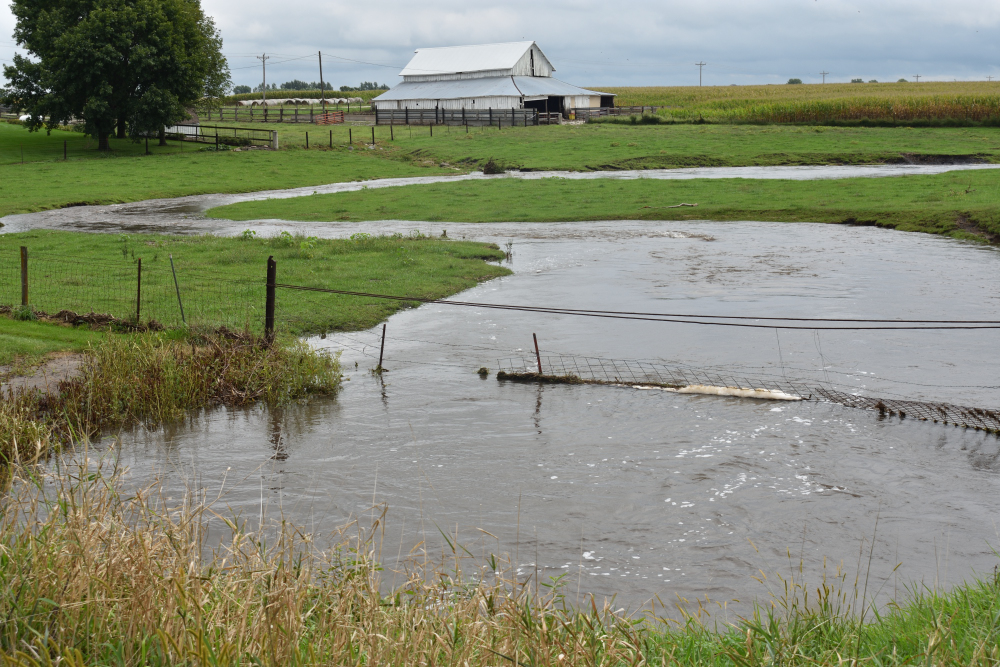
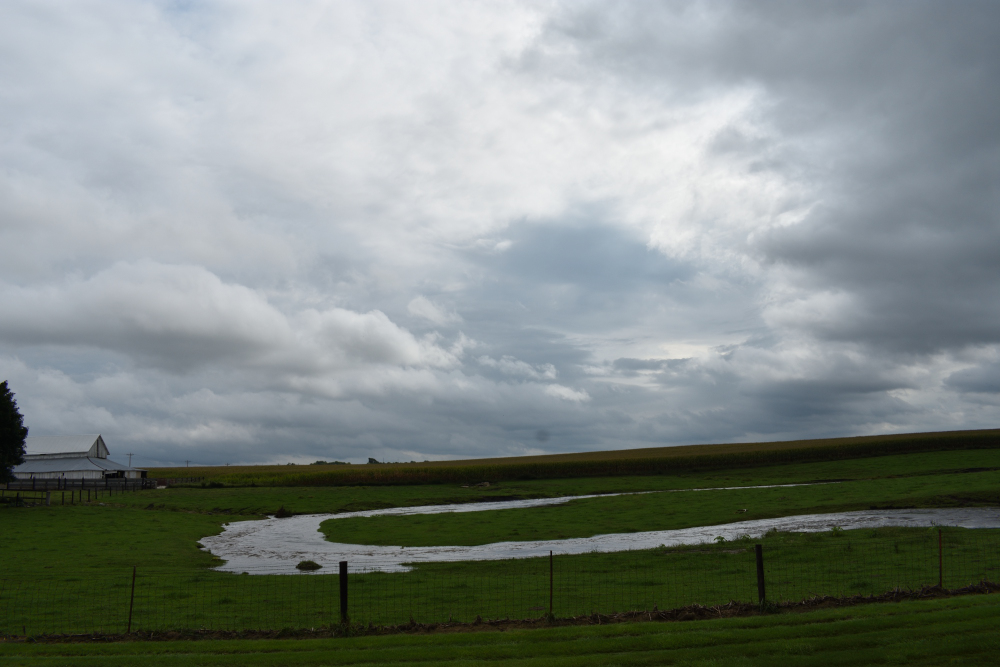
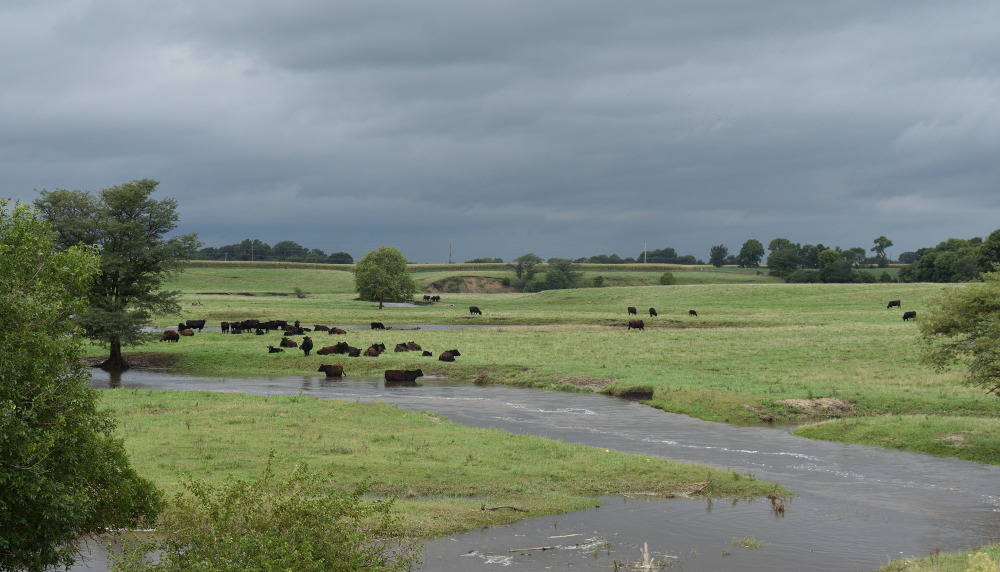
From the photos below you can see we encountered stormy skies and overflowing creeks. The tipi was erected at most of our stops. And we all participated in smudging with burning sage. Learning about each other.
As would happen often, our planned camping site in Huxley was flooded. Sam became adept at finding alternatives. The Fjeldberg Lutheran Church allowed us to sleep there.
The video by my friend Matthew Lone Bear (see link above) was taken during this day of the March and provides a nice overview of our journey.
Each evening there would be a community discussion. This evening my Scattergood roommate, Lee Tesdell, spoke about progressive agricultural practices he’s using on his farm including a denitrifying bioreactor. The link in the above describes an interesting discussion about agricultural practices today compared to Indigenous methods as described by Sikowis Nobiss.





































 Quakers and Mutual Aid