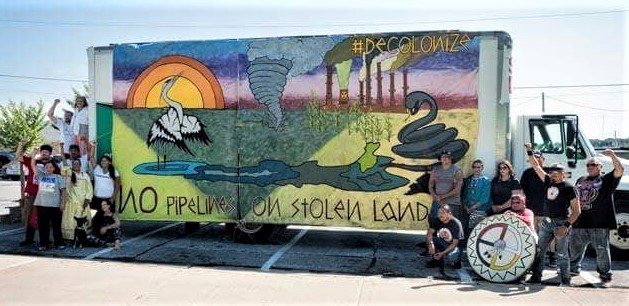
Building a coalition

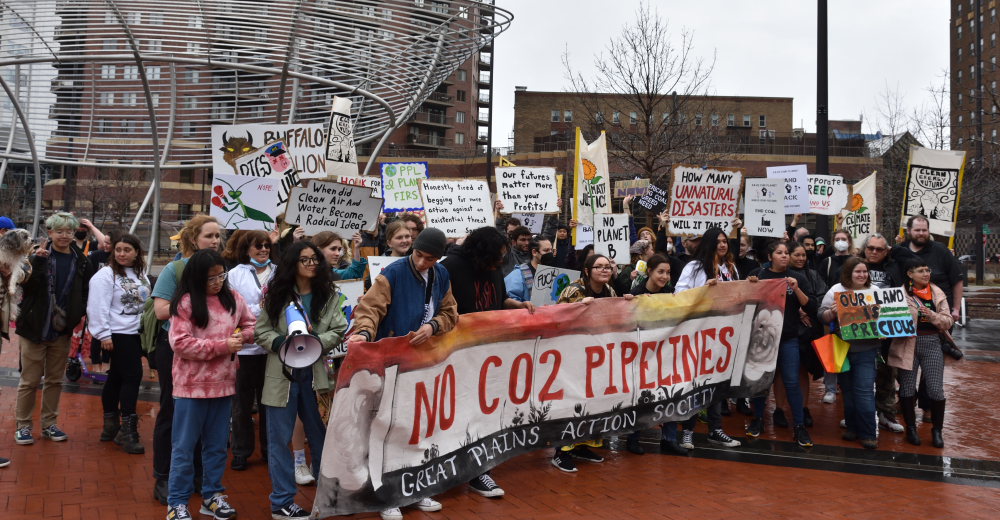
I’m reflecting and praying about what happened this past weekend during the Climate Summit of the newly formed Buffalo Rebellion, a new coalition of Iowa organizations that are growing a movement for climate action that centers racial and economic justice.

Buffalo Rebellion is a new coalition of Iowa organizations that are growing a movement for climate action that centers racial and economic justice. The Earth Day Rally will be an afternoon of honoring Mother Earth through sharing stories and visions for climate justice and taking action together for a world that puts people and the planet before profits for a few.

Following the Earth Day Rally, Buffalo Rebellion will be holding two days of immersive training to develop 100 grassroots leaders who will build local teams to take on climate justice issues in their community and come together to create a thriving state-wide movement.

Formed in 2021, Buffalo Rebellion is comprised of seven Iowa organizations: Great Plains Action Society, DSM Black Liberation Movement, Iowa Migrant Movement for Justice, Sierra Club Beyond Coal, Cedar Rapids Sunrise Movement, SEIU Local 199, and Iowa CCI.

Buffalo Rebellion


Extremely thankful for this community we built this weekend. Looking forward to fighting for the future alongside all of you.
Thank you to the organizers, and big love to the participants.
Keep an eye out for Buffalo Rebellions next move.

Photo by @karl.ajconrad
@iowacci@iowammj@desmoinesblm@greatplainsactionsociety@sunrisemvmtcr
#climatecrisis#climatejustice#landback#racialjustice
Buffalo Rebellion 4/24/2022


How do you build a coalition? You bring together organizations and people who have demonstrated they are effective at building community and organizing for change. And who are aligned in their purpose.

My experience is there are a small number of people and organizations who shoulder justice work in a city or geographical area. Which means they are acquainted with each other. A given individual often belongs to multiple organizations.

But these groups often don’t work together. Building a coalition is how to remedy that. The organizations listed above are growing a movement for climate action that centers racial and economic justice. That is our common purpose. Rapidly evolving environmental chaos is an existential threat that requires radical action now.

Centering on racial and economic justice is crucial for many reasons. Blatant environmental racism is seen over and over again by the location of hazardous infrastructure in Black, Indigenous and other people of color (BIPOC) communities. Conversely, solar panels are not often seen there.

There are many aspects of economic injustice as well. Those economically disadvantaged also tend to live in areas of environmental hazards. And supply the labor for jobs such as coal, oil, and tar sands mining, while white capitalists receive (steal) the profits.

Building a coalition requires us to know and trust each other. And to learn about each other’s work. Tools that we can bring to our organizations. Or know who has expertise we can turn to for help.

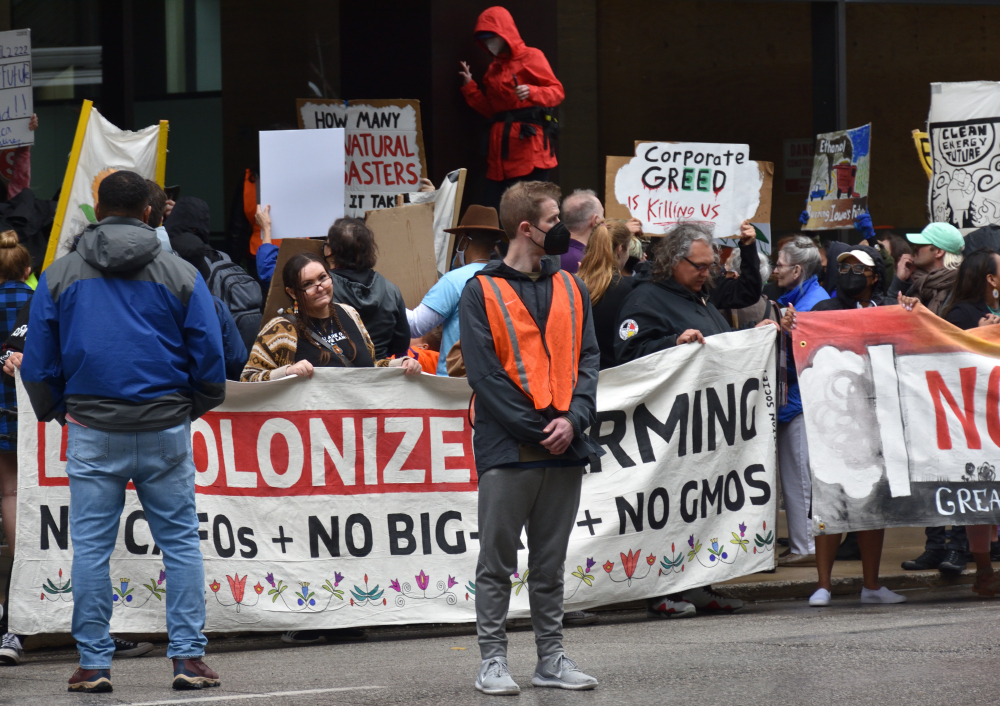
This past weekend of Buffalo Rebellion meetings and action went a long way in beginning to accomplish these goals. It was important to have the action of marching to the offices of MidAmerican Energy. Demonstrating how direct actions work.

The many excellent presentations shared the tools and knowledge of experts in our coalition. The following table of presentations gives an idea of what was done.

Community Building & StorytellingCedar Rapids Sunrise
End-Stage Iowa, Indigenous Land Stewardship & the Green
(Red) New Deal
Great Plains Action Society (GPAS), Iowa Citizens Community Improvement (ICCI)
NoDAPL Reunion Panel
Fundamentals of Organizing (Starting an Issue Based Campaign
and Fundraising 101)
DSM Black Liberation, ICCI, Sierra Club Beyond Coal
Police, Prison, & Military Abolition for Climate JusticeDSM Black Liberation Movement
Lobbying: Get Your Local Green New Deal Passed into LawCedar Rapids Sunrise
Migration in Iowa and Big-AgIowa Migrant Movement for Justice
Art and ActivismSay Poetry, DSM Black Liberation Movement
Frontline Tactical Methods to Protect the Land: From Direct Actions and Resistance Camps
Landscapes: The Kinship of Climate, Wildness, and Community
Mutual Aid: Bail Funds, Court Solidarity, and Incarceration Support in Resistance MovementsGPAS, DSM Mutual Aid
Linking the Origins of Iowa’s Contemporary Environmental Problems to the Extractive Nature of White Settlement
Ending White Supremacy in Climate OrganizingCPAS, DSM Black Liberation Movement, Sierra Club Beyond Coal
Launching the Movement: Strategic Applications of Drones for Grassroots ActionsGPAS
Building Power with Public NarrativeCedar Rapids Sunrise, ICCI, DSM People’s Town Hall
Damn Lies and C02 pipelinesScience and Environmental Health Network
Deep Canvassing ICCI, DSM People’s Town Hall
Urban Farming and Community FridgesSweet Tooth Farms
Bird-Dogging 101Cedar Rapids Sunrise, ICCI, DSM Black Liberation Movement
Youth Caucus ReportSeventh Generation Youth Climate Caucus

You can see the videos of most of these presentations on the Buffalo Rebellion Facebook page.

For example, this is the presentation by my friend Ronnie James of Des Moines Mutual Aid and Great Plains Action Society.

Mutual Aid: Bail Funds, Court Solidarity, and Incarceration Support in Resistance Movements

– Ronnie James, DSM Mutual Aid & Great Plains Action Society

An introduction to the how and why of supporting frontliners that suffer arrest during Movement activities. Instruction will cover the reason for, creation of, and implementation of a Bail Fund. We will also touch on the main phases of the arrest and court process: Arrest, Pre-Trial, Trial, Post-Trial, Sentencing, and Incarceration, and some of the avenues of support the defendant will require during these phases. We will discuss the role of the Defense Committee, and how they compare and contrast with the Legal Defense Team. Finally, there will be a brief summary of how this works in Des Moines, Iowa in the present moment.

Click here to see video.


The goal of this weekend of immersive training was to develop grassroots leaders who will build local teams to take on climate justice issues in their community and come together to create a thriving state-wide movement. I think that was accomplished.


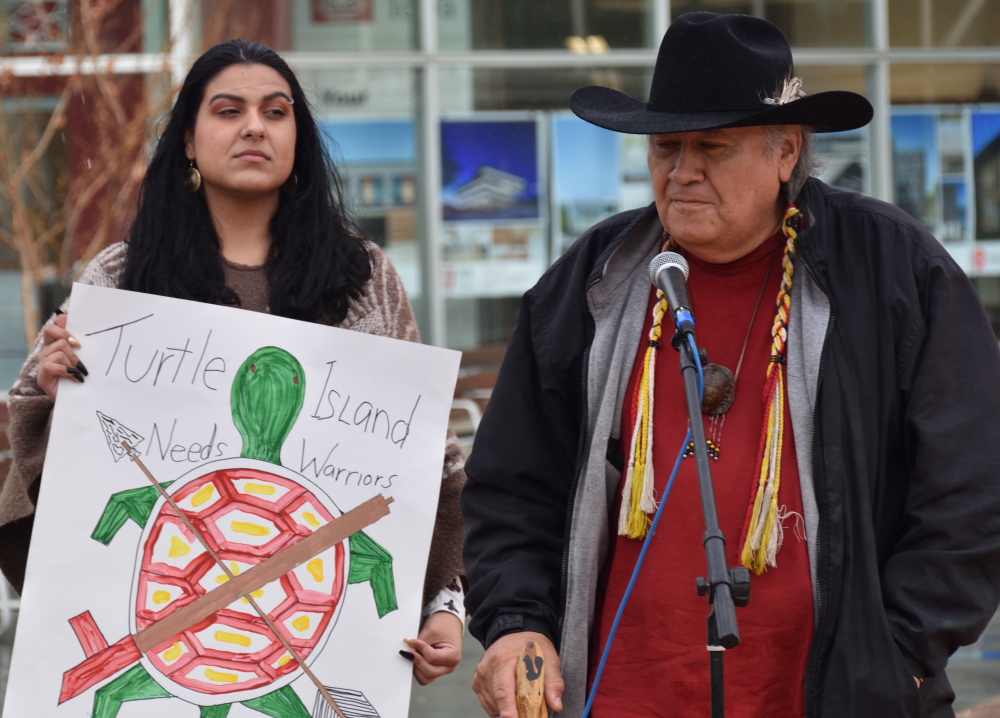
#IAClimateJustice #ClimateJustice @NoCCSIowa

@iowacci @iowammj @desmoinesblm @greatplainsactionsociety @sunrisemvmtcr
#climatecrisis #climatejustice #landback #racialjustice
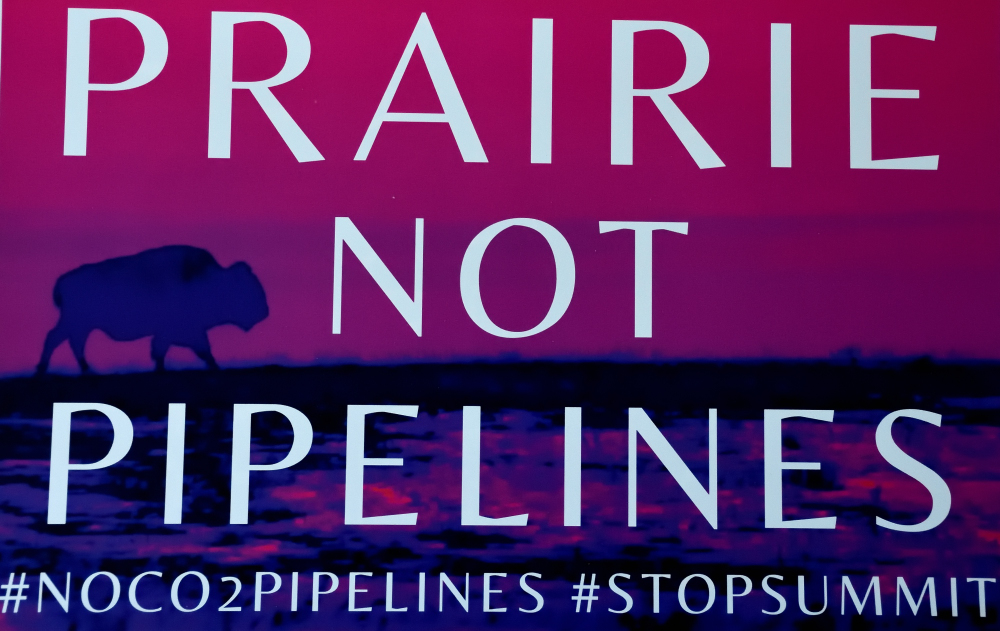
Hazardous liquid carbon pipelines

There are many reasons why carbon, or CO2 pipelines, should not be built.
Some I’ve written: https://quakersandreligioussocialism.com/?s=carbon+co2

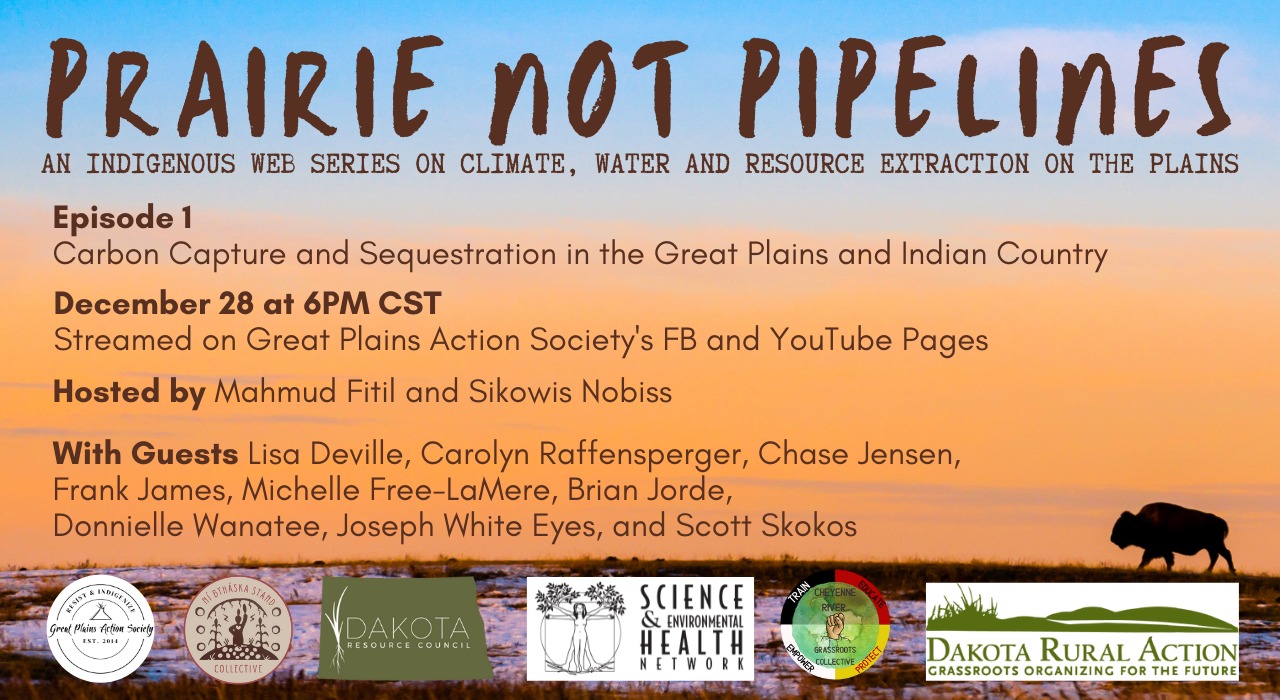
My friend Mahmud Fitil maintains the Facebook group Iowa Carbon Pipeline Resistance Coalition @NoCCSIowa.

Carbon Capture and Storage (CCS) is not the answer to the climate emergency. CCS is unproven, dangerous and delays real solutions to the climate crisis such as energy conservation, regenerative agriculture and renewable energy

The Iowa Sierra Club, Science and Environmental Health Network, Iowa Food and Water Watch, and Great Plains Action Society are all a part of the Iowa Carbon Pipeline Resistance Coalition.

Iowa Carbon Pipeline Resistance Coalition

Mahmud gave an excellent presentation at the Buffalo Rebellion Climate Summit this past weekend, “Launching the Movement: Strategic Applications of Drones for Grassroots Actions” during which he discussed and showed drone videos that documented the damage from leaking pipelines, damaged oil rail cars and toxic ethanol plant waste.

The state requires the hazardous liquid pipeline permit because carbon dioxide in large concentrations can cause illness and asphyxiation.

Donnelle Eller, Des Moines Register

The following article about carbon capture pipelines was published in the Des Moines Register today.

A company that wants to build a controversial carbon capture pipeline across Iowa should tell residents in its path how much danger they face in the event of a leak, the state’s consumer advocate says.

Summit Carbon Solutions should provide an analysis assessing the pipeline’s risk along with the company’s emergency response plan before regulators consider the company’s request for a hazardous liquid pipeline permit, Jennifer Easler, Iowa’s consumer advocate, wrote in a motion filed this month with the Iowa Utilities Board.

The state requires the hazardous liquid pipeline permit because carbon dioxide in large concentrations can cause illness and asphyxiation. 

“Iowa official asks Summit Carbon Solutions for more information about possible pipeline leaks, dangers” by Donnelle Eller, Des Moines Register, April 26, 2022


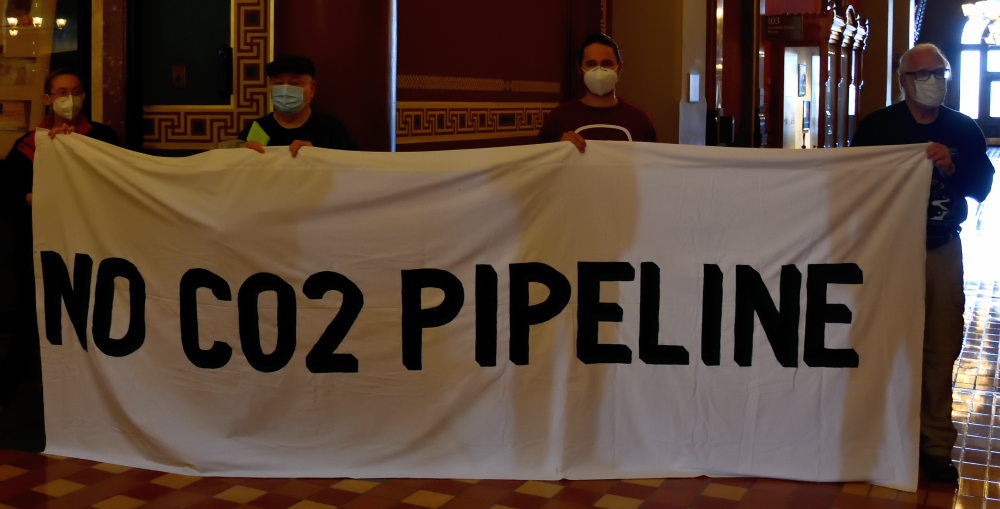
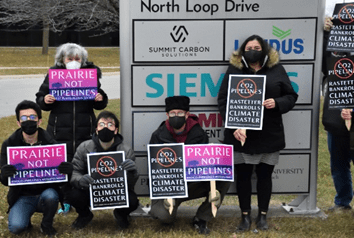
Mahmud and Sikowis Nobiss organized a gathering at the offices of Summit Carbon Solutions in Ames. Following are some of the photos I took at that event.


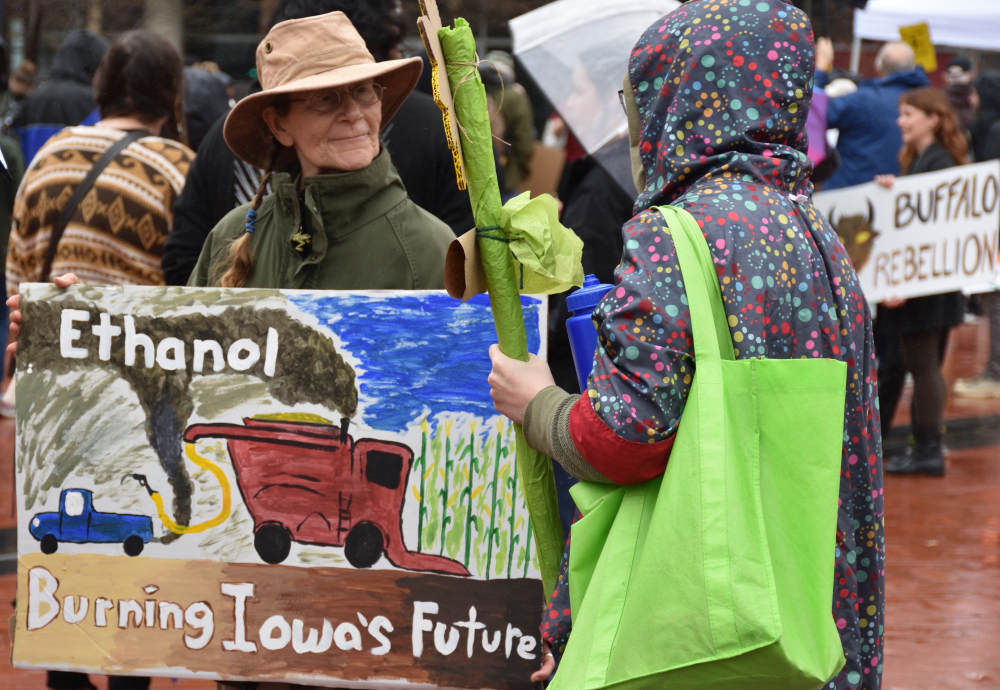
I took these photos at last weekend’s Buffalo Rebellion Climate Summit.

#IAClimateJustice #ClimateJustice @NoCCSIowa

Dare we hope?

I was searching for a way to describe what WE experienced during OUR Buffalo Rebellion Climate Summit this weekend. A moment reminiscent of the times of the civil rights and anti-war movements which brought together thousands of people and created change. This weekend a coalition of people and organizations came together to rise to the challenges of rapidly evolving environmental devastation and collapse of the systems of capitalism and white supremacy.

As I wondered whether to write “what WE experienced” versus “what I experienced” I realized this was emblematic of what the Buffalo Rebellion is about. Dare WE hope? In its simplest expression, we need to change from “I” to “We” in all we do.

Those of us who have been working to protect Mother Earth are more aware than the general public of the breadth and depth of damage being done. More alarmed, more discouraged after years of work with little apparent progress.

The COVID pandemic made us more isolated and made it difficult to safely do our organizing work. Although our Des Moines Mutual Aid community never stopped distributing free food every week. We strictly enforced wearing masks and gloves and attempted to maintain social distancing by limiting the number of volunteers.

As an example of how long some of us have been working to protect our environment, fifty years ago I was led to refuse to own a car. I’m not aware of that changing other people’s lives.

In 2013 the Keystone XL pipeline struggles began to bring some people and organizations together. One group was known as the Cowboy-Indian Alliance.

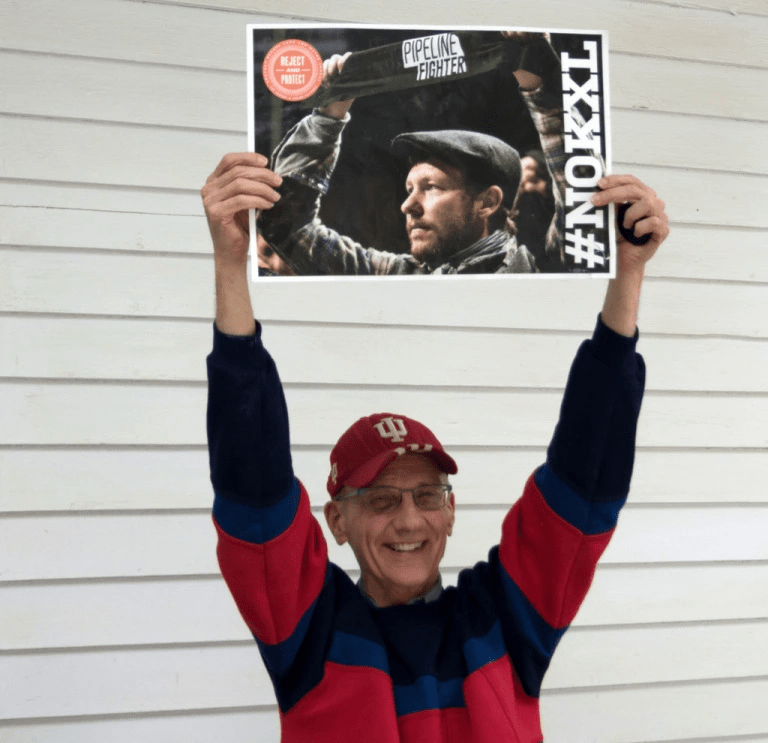
What little I learned about native cultures showed peoples who lived with far more integrity than I was able to. When I first became engaged with fossil fuel and pipeline resistance in 2013, I began to hear stories of Indigenous peoples working to protect the water. The Cowboy-Indian Alliance came together to oppose the Keystone XL pipeline. I was honored to be given this poster from the 2014 Harvest the Hope concert.
[See: The Cowboy and Indian Alliance.]

It was clear to me and others that nonnative folks needed not only to join with Indigenous peoples but be led by them. How to make that happen?

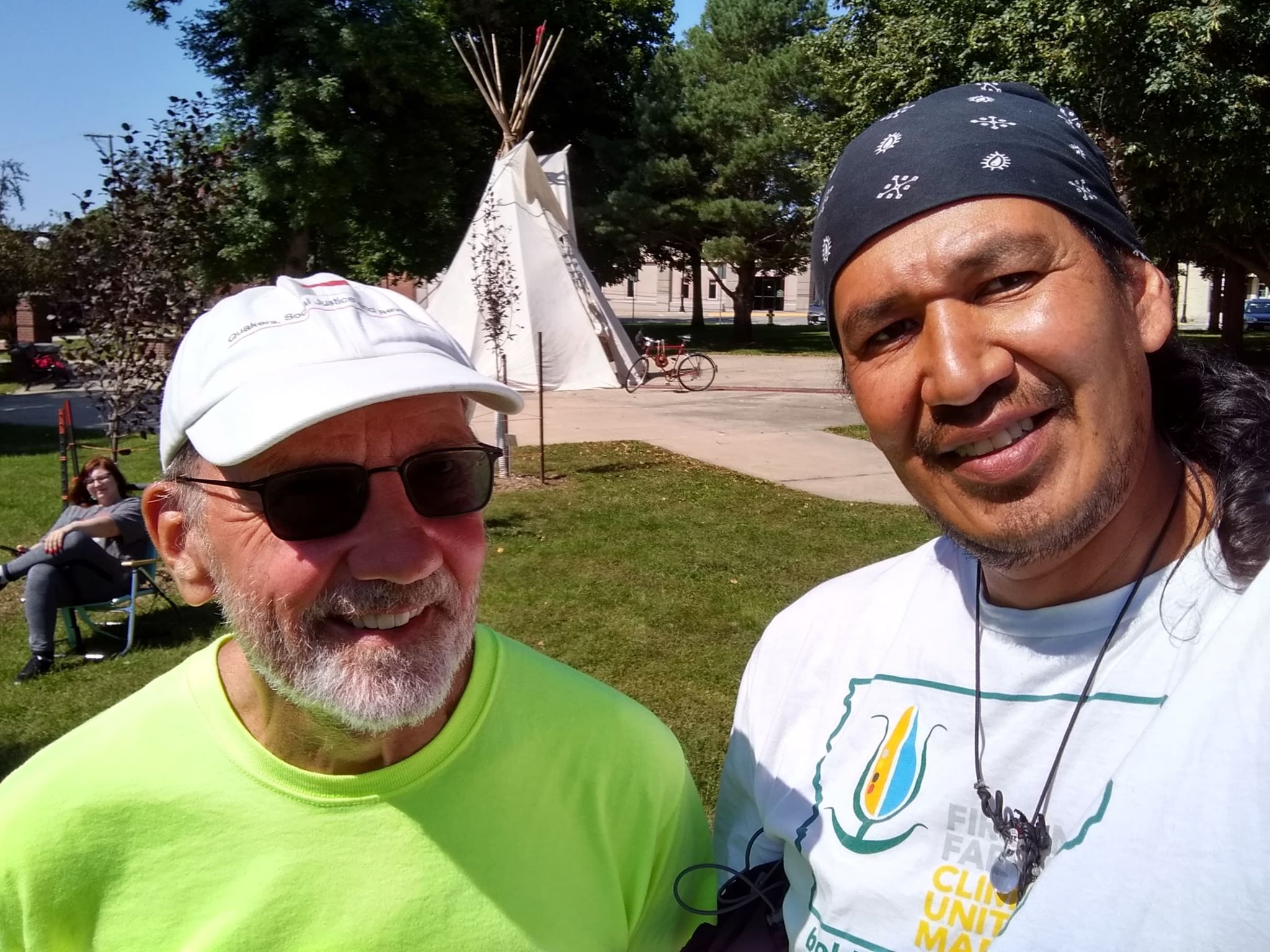
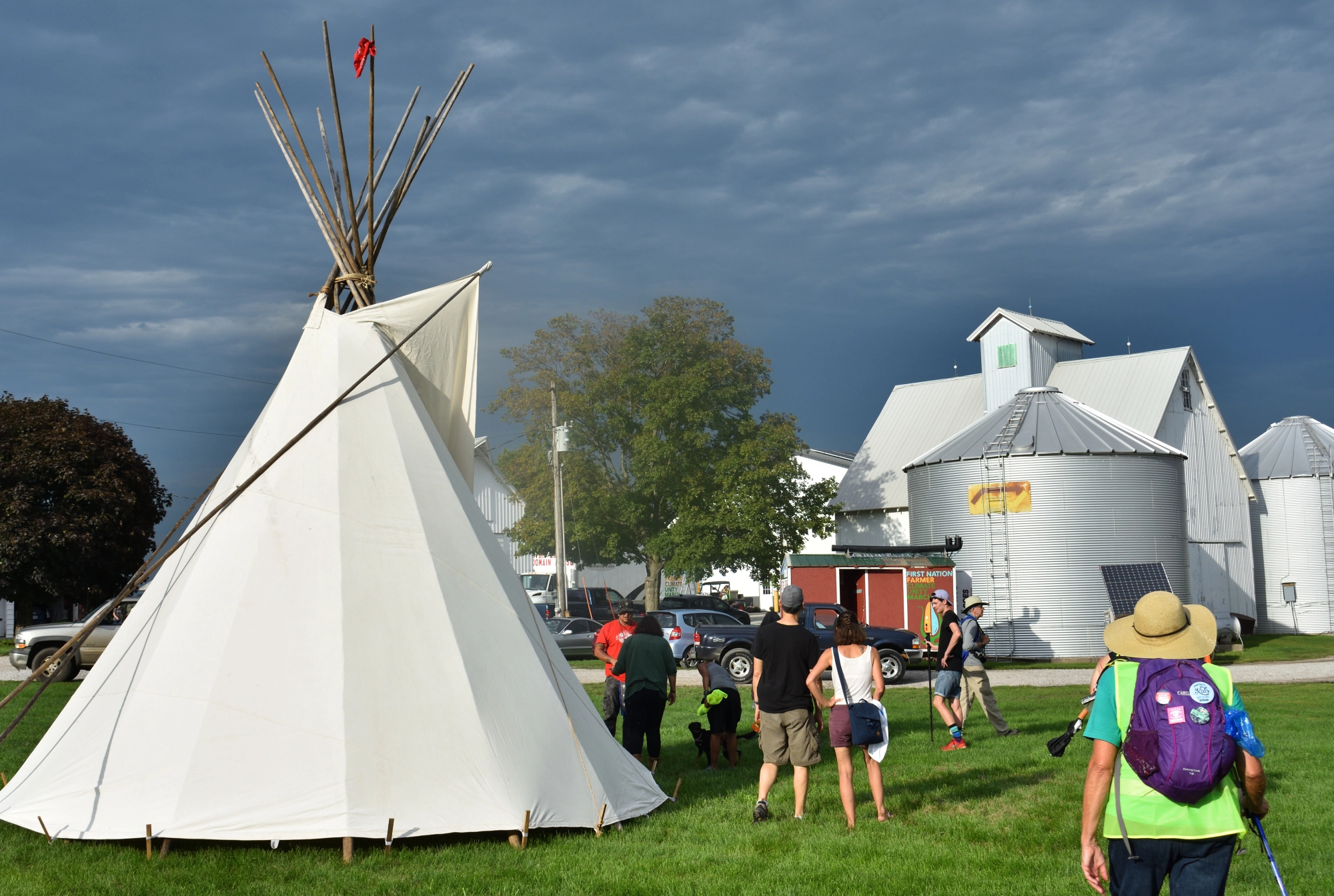
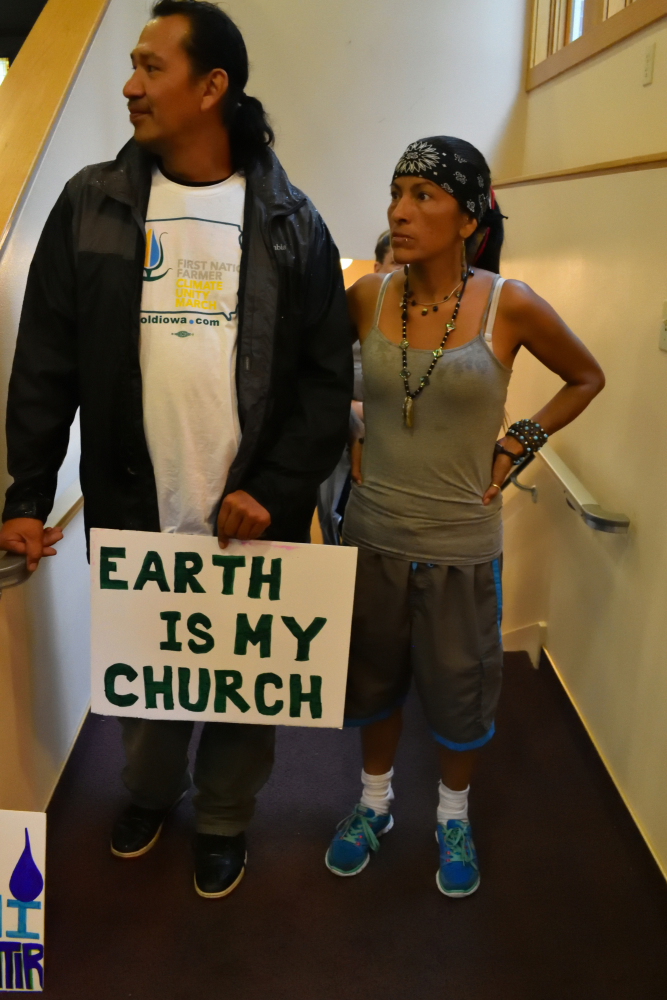
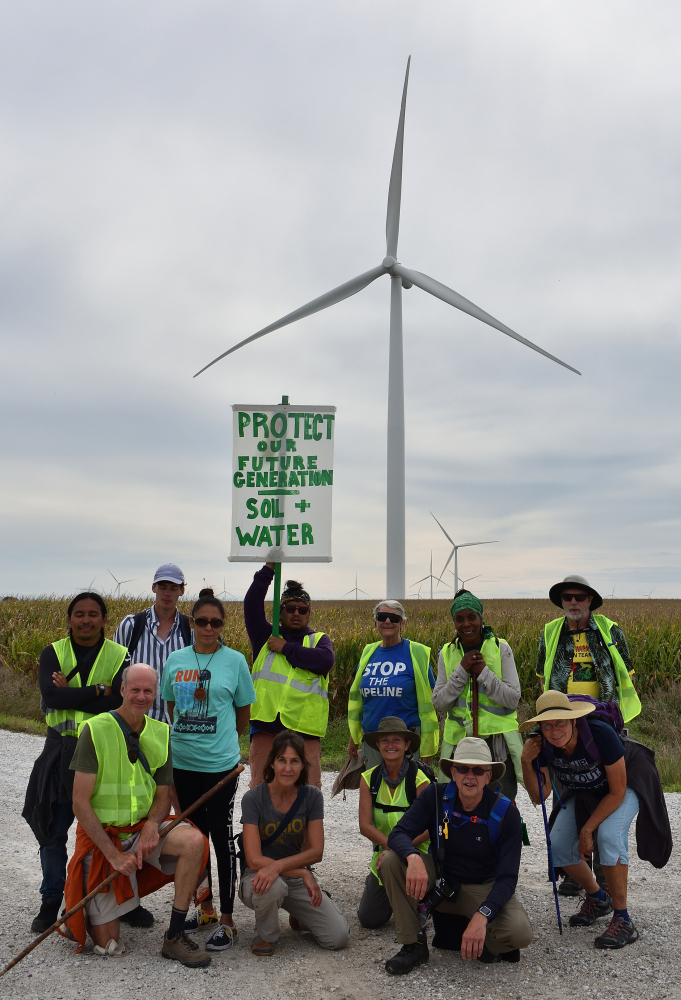
Indigenous Iowa and Bold Iowa organized the First Nation-Farmer Climate Unity March in 2018, with the intent of providing a small group of native and nonnative people the time to get to know each other, so we could begin to work on issues of common interest and concern. We walked and camped for eight days along the path of the Dakota Access pipeline from Des Moines to Fort Dodge, Iowa, ninety-four miles.
[see stories and photos from that sacred journey here: First Nation Famer Climate Unity March]

A number of us worked on various projects together since, strengthening our friendships. A number of those on that March are involved in the new coalition, the Buffalo Rebellion. That includes Sikowis Nobiss, Mahmud Fitil, Trisha Entringer, Donnielle Wanatee, Miriam Kashia, Peter Clay and me.

I plan to write a lot about the Buffalo Rebellion but wanted to begin with this introduction.

I believe the answer to the question posed by this post, Dare WE hope? is yes.

Buffalo Rebellion

#IAClimateJustice

Earth Day Rally Des Moines

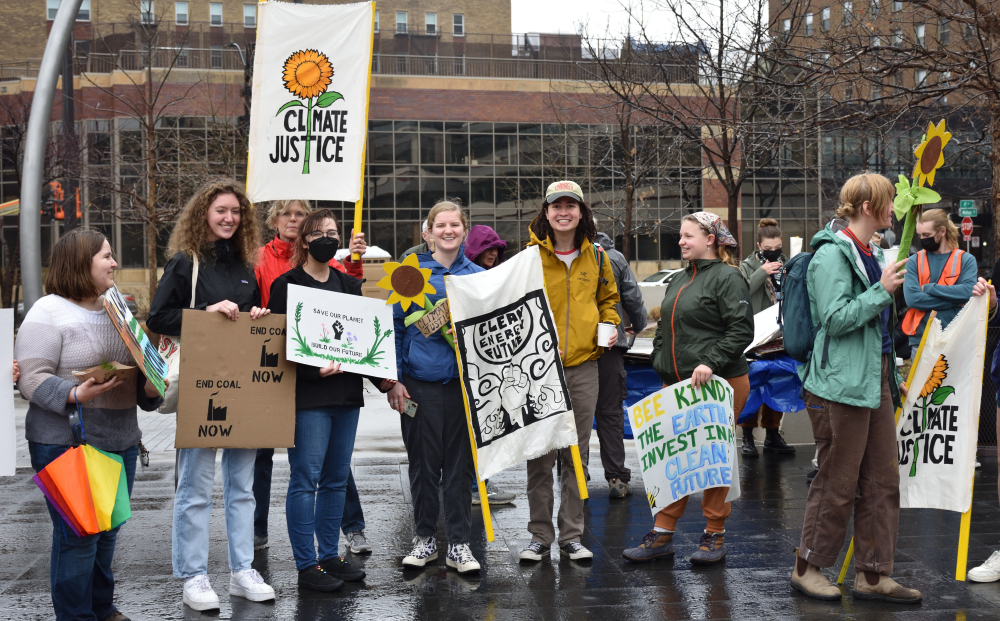
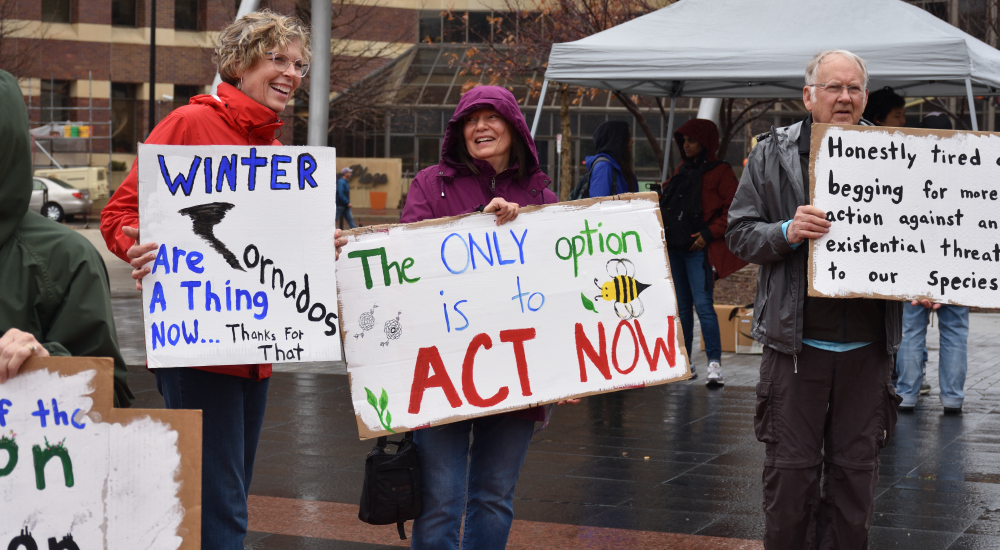
As I’ve written about recently, we held an Earth Day Rally in Des Moines yesterday. The rally was part of the three-day Climate Summit of the Buffalo Rebellion I’m attending.

After a number of people spoke, we walked to the offices of MidAmerican Energy, which has been the focus of climate activists for some time because of their refusal to close their coal burning plants. https://quakersandreligioussocialism.com/?s=midamerican

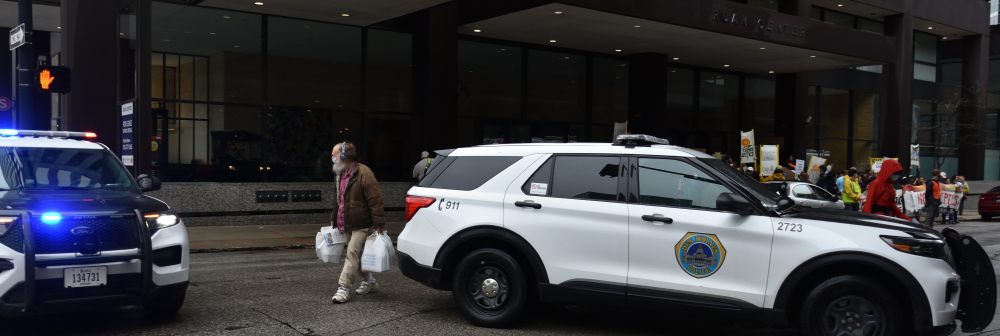
As we chanted outside the building the security guard called the police. Several Des Moines police cars arrived, but then left when they saw we were peaceful and exercising our right of free speech. At least I assume that’s why they left. Then we returned to Cowles Commons.


Earth Day Rally

I’m excited about attending this Earth Day Rally organized by the Buffalo Rebellion. And attending the immersive training Saturday and Sunday. The organizations that make up this coalition can be found below.

We believe that we must address the root of climate change, insatiable corporate greed and white supremacy, to make change happen. This will require a multi-racial movement of working people struggling together to upend politics as usual.

This Earth Day, millions of people are demanding that world leaders take the crises we’re facing seriously.

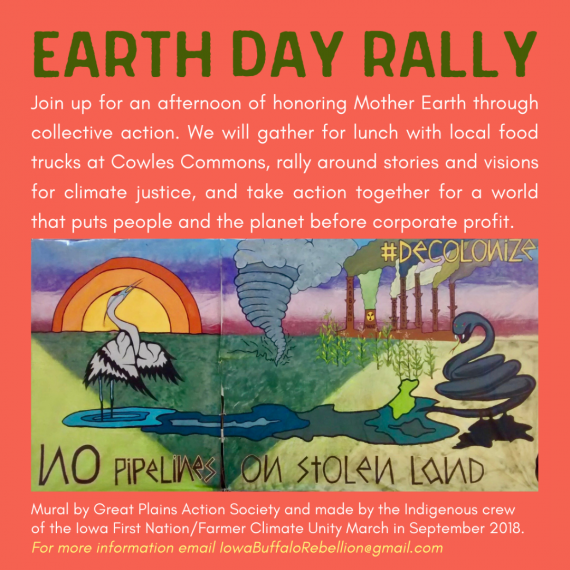
Join us Friday, 12-4pm for an Earth Day Rally & Action!

If you listen to Iowa Public Radio today, you’ll hear about Buffalo Rebellion, an exciting new coalition of Iowa organizations working to grow a movement for climate action that centers racial and economic justice. 

This weekend, Buffalo Rebellion is holding two-days of immersive training to develop 100 grassroots leaders who will build local teams to take on climate justice issues in their community.

But first, we want to come together for an afternoon of honoring Mother Earth through collective action.
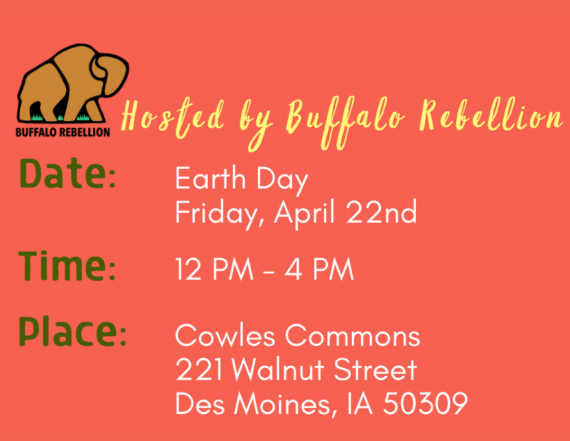
WHAT: Honor Mother Earth Rally & Action! 
WHEN: Friday, April 22 from 12 pm – 4 pm 12 pm – we’ll gather for lunch with local food trucks at Cowles Commons, 1 pm – rally around stories and visions for climate justice, 1:45 pm – we’ll take action together for a world that puts people and the planet before corporate profit.
WHERE: Cowles Commons, 221 Walnut St, Des Moines, IA 50309
DETAILS TO KNOW: The event will happen rain or shine  (forecast looking ok though)! Bring money for lunch (or bring your own) and parking (parking maps and info here). The action will consist of a <1 mile march. Family friendly, the action is youth-led. 
WHY: The latest IPCC report continues to make the path forward very clear: it’s either people and the planet or fossil fuels. It’s up to us to build power and push our leaders to action.  For a brighter future,

Jake Grobe (he/him)
Climate Justice Organizer
——————–

We believe that we must address the root of climate change, insatiable corporate greed and white supremacy, to make change happen. This will require a multi-racial movement of working people struggling together to upend politics as usual.

“Iowa has been made into a sacrifice zone by government sanctioned Big-Ag corporations, which have a stranglehold on the climate and environmental legislation. Colonial-capitalist farming practices are poisoning our water, depleting the soil, and are a leading contributor to Iowa’s greenhouse emissions causing climate chaos.” – Sikowis Nobiss, Plains Cree/Saulteaux, Executive Director, Great Plains Action Society

Buffalo Rebellion was formed in November 2021 and consists of:
Great Plains Action Society
DSM Black Liberation Movement
Iowa Migrant Movement for Justice
Sierra Club Beyond Coal
Sunrise Movement Cedar Rapids
SEIU Local 199
and Iowa CCI.

The coalition is part of the national Green New Deal Network.

If you’re interested in attending the training potion of the summit or have any other questions, please email us at IowaBuffaloRebellion@gmail.com.

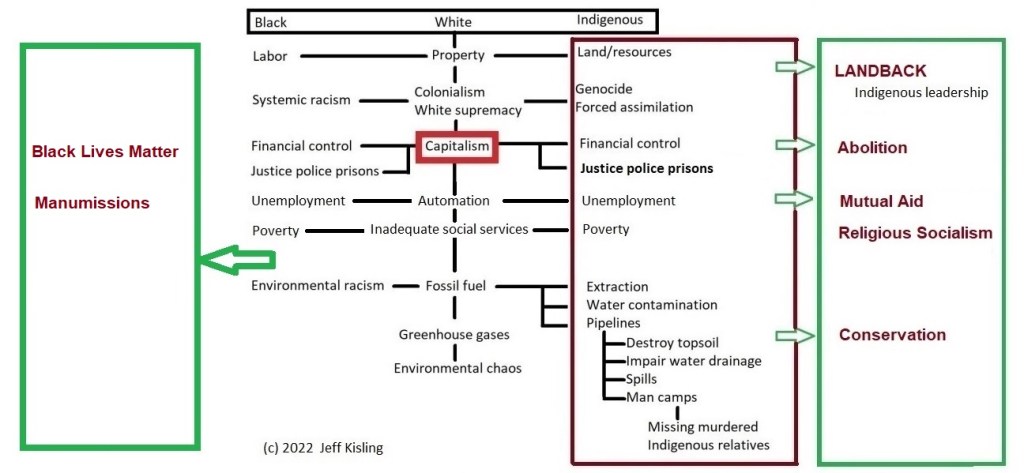
Quaker Slavery and Manumissions

I pray and think about the past a lot. I cannot feel it, but I see some of the impacts of trauma from the past on my friends’ lives today. The intergenerational trauma. A number of White Quakers in the past were involved in the institution of slavery, the theft of land from Indigenous peoples, and/or the forced assimilation of Native children.

This morning I came across the term “intergenerational transformative justice”. “As we deal with the uncomfortable truths of our White Quaker ancestors, we release them from the amber in which our myths have captured them. “

The myths we tell ourselves and the lies those myths uphold are embedded in our contemporary faith practice. When we believe and perpetuate falsehoods about ourselves, it not only disconnects us from the truth, it also limits our ability to act with full integrity today. Telling the truth about ourselves and our White Quaker ancestors grounds us in reality, in a sense of the complexity of our identity. It allows us to create a different future, not built from delusion and half of the story but from an honest and grounded reckoning with who we are and who we have been. My friend Mila Hamilton calls this “intergenerational transformative justice.” As we deal with the uncomfortable truths of our White Quaker ancestors, we release them from the amber in which our myths have captured them. As we allow them to become the full, flawed humans they were, we also free ourselves to reckon with our present, which arises from their past, and to tell the full truth of who we are.

A Quaker Call to Abolition and Creation by Lucy Duncan, Friends Journal, April 1, 2021

Friends Journal senior editor Martin Kelley speaks to my friend, Quaker preservationist Avis Wanda McClinton about her work as a community liaison to Haverford College’s “Manumitted: The People Enslaved by Quakers.”

Inside Haverford’s Manumission Archives by Martin Kelley, Friends Journal, February 1, 2022


A manumission is a legal document that promises to free someone who is enslaved. In this context, we’re talking about American chattel slavery. Manumission has existed in many different forms of slavery, generally referring to the freeing of an enslaved person. But in this context, it’s specifically in the Americas with stolen African people. 

Manumissions are often standard sizes of paper, maybe half sheets at times. It might be a normal-sized piece of paper with two manumissions, one on the top and another on the bottom. 

They are promising to free someone, either immediately or in the future. There aren’t a lot of details on whether that promise was ever fully completed or not. These records were turned over to the yearly meetings and the quarterly meetings, which is why we have them. And so at least in that regard, there was some sort of process that Quaker members would go through, in order to demonstrate to their meeting that they were in agreement with the rules. 

Inside Haverford’s Manumission Archives by Martin Kelley, Friends Journal, February 1, 2022

Bibliography:

  • Block, Kristen. Ordinary Lives in the Early Caribbean: Religion, Colonial Competition, and the Politics of Profit. University of Georgia Press, 2012.
  • Frost, J. William. The Quaker Origins of Antislavery. Norwood Editions, 1980.
  • Gerbner, Katharine. Christian Slavery: Conversion and Race in the Protestant Atlantic World. University of Pennsylvania Press, 2018.
  • Soderlund, Jean R. Quakers & Slavery: a Divided Spirit. Princeton University Press, 1985.

The Duty to Resist

“The Duty to Resist” is an article in a recent edition of Friends Journal, The Duty to Resist by Carlos Figueroa, Friends Journal, April 1, 2022

I had forgotten Bayard Rustin had been incarcerated for draft resistance. He joins the list of those who have written about their prison experiences such as Henry David Thoreau and Martin Luther King, Jr.

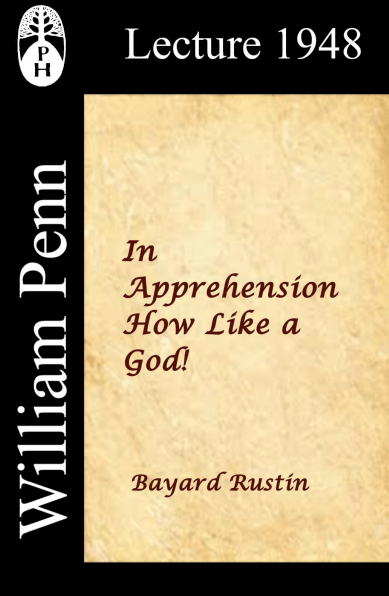
In March 1948, Bayard T. Rustin, in his capacity as secretary of FOR’s Racial-Industrial Department, was honored with the opportunity to deliver the William Penn Lecture as part of the Young Friends Movement of Philadelphia Yearly Meeting. Since its inception in 1916, the William Penn Lecture had been given by several Quaker luminaries. The lecture, titled “In Apprehension How Like a God” (drawing on Shakespeare’s Hamlet), touched on many Quaker values but, more importantly, the moral and pragmatic lessons Rustin had learned while incarcerated for two years in Kentucky and Pennsylvania federal prisons for refusing induction into the military. 

In his lecture, Rustin reminded Friends of the need to uphold their moral responsibility with integrity as individuals and within the broader community whenever witnessing and confronting domestic or global social injustices. Rustin implored Friends toward consistency and truthfulness in the face of violence, war, and oppression.

The Duty to Resist by Carlos Figueroa, Friends Journal, April 1, 2022

In the magazine, Ithaca College’s Carlos Figueroa looks back at an important talk Bayard Rustin gave to the young Friends association in Philadelphia in 1948. It was a pivotal moment in a life that contained so many: Rustin had spent the early 1940s organizing with the Fellowship of Reconciliation and was recently released from a prison term for violating the Selective Service Act. This was his opportunity to lay out a pacifist politics for the Cold War era:

Rustin explicitly sought to persuade others into considering civil disobedience as a social democratic strategy for pursuing structural and policy change. Rustin advocated for a humanitarian, communal, and moralistic approach to change, thus disregarding an individual’s political affiliation, geographic location, or government system.

Bayard Rustin in Friends Journal, A Blog from Martin Kelley, April 7, 2022


Rustin explicitly sought to persuade others into considering civil disobedience as a social democratic strategy for pursuing structural and policy change.


From the introduction of the QuakerSpeak video below: As a gay African-American, civil rights activist Bayard Rustin faced discrimination his entire life—sometimes, Walter Naegle reminds us, among his fellow Friends. Walter, Rustin’s partner and companion in his final decades, discusses his vital contributions to Quaker testimony of peace, integrity and equality.

“Bayard believed in the oneness of the human family, in the brotherhood and sisterhood of all people,” Walter says. “He believed in the power of nonviolence which comes out of that belief in the oneness of all people.… He saw everybody as equal in the eyes of the divine.”


“I put my life on pause, rewound, now I’m pressing play. The come up, grinding until the sun up, knowing it could all be gone if one person puts their guns up. A black Quaker no savior, I’m on my Bayard Rustin to convince all the skeptics and get people to just trust em.”

Sterling Duns

I’m reminded of a teach-in by my friend Ronnie James, The Police State and Why We Must Resist. “As bleak as this is, there is a significant amount of resistance and hope to turn the tide we currently suffer under.”


I’ve been working on this post for days, which is unusual. Not quite sure how these seemingly disparate parts fit together. In part because there will increasingly be direct actions related to environmental devastation. I’ll be attending a Climate Summit this weekend, which will include training for and participation in direct action.


#IAClimateJustice #Climatejustice #Climateaction
Another nail in our coffin

In 2020, President Biden told voters, “no more drilling on federal lands, period.” Yesterday the Biden administration broke that promise, saying it will resume selling leases to drill for oil and gas on federal lands.

The fossil fuel industry has found new life as the energy consequences of the war in Ukraine are being used not as an opportunity to wean off oil production, but the opposite; to ramp up fossil fuel development.

Investing in new fossil fuel infrastructure is moral and economic madness,” UN Secretary-General António Guterres said as the Intergovernmental Panel on Climate Change (IPCC) released part of its latest report on Monday.

Investing in new fossil fuel infrastructure is moral and economic madness

Humanity confronts a great dilemma: to continue on the path of capitalism, depredation, and death, or to choose the path of harmony with nature and respect for life.

Jake Grobe

“It is never a good sign when the President announces something at 5pm on a Friday. But President Biden can’t get away with this disastrous climate decision. The fact of the matter is that more drilling won’t solve high gas prices right now – so why is Biden breaking his campaign promise to stop drilling on public lands? 

“This is why young people are doubting the political process altogether. If Biden wants to solve for voter turnout in 2022, he should actually deliver on the things he promised, not move farther away from them. On November 8, 2022 we don’t want to hear anyone asking why young people didn’t vote. Biden is actively turning voters away. If we’re going to combat fascism and win in 2022, he must be a leader and course correct. This election and our futures depend on it.”

In 2020, President Biden not only ran and won on a bold climate agenda, but told voters, “no more drilling on federal lands, period.” Today, his administration is expanding drilling on public lands, stalling on climate legislation and concurrently, his approval ratings are plummeting, especially among young people. 

Sunrise Responds to Biden Plans to Open More Public Land to Drilling, Sunrise Movement, 4/15/2022

Is there no hope for the future? How can we possibly do this to our children? How long will these questions go unanswered? Is it too late?

Midwest Quakers and Native Peoples

The purpose of this brief history is background for a request from Sikowis (Christine) Nobiss for funds to support the documentary “They Found Us” that’s being done about her reservation’s residential school. George Gordon First Nation had the longest running residential school, which didn’t close until 1996.

During the 2017 annual sessions of Iowa Yearly Meeting (Conservative) there was panel discussion about building bridges with native peoples. The panel consisted of Peter Clay, an Iowa Friend, Donnielle Wanatee from the Meskwaki Settlement, and Sikowis (Christine) Nobiss, one of the most active Indigenous leaders in the Midwest. All three have played a large role in my connections with Native Americans since.

In February 2018, I was part of a group who went to Minneapolis to protest US Bank’s funding of oil pipelines. Sikowis spoke at that gathering.

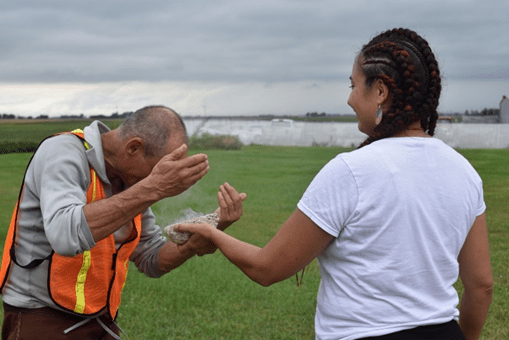
I began to get to know Sikowis when she and I were among a small group of native and non-native people who walked and camped for eight days along the route of the Dakota Access pipeline, from Des Moines to Fort Dodge, Iowa. Iowa Friend Peter Clay was also on this First Nation-Farmer Climate Unity March.  Jon Krieg (AFSC) joined us for the first day. And my Scattergood School roommate Lee Tesdell participated in one of the evening discussions during the March. Another Iowa Yearly Meeting Friend, Liz Oppenheimer, organized a time of worship sharing and prayer among Friends each morning, supporting our sacred journey.

In this photo during the March Sikowis is holding the bowl Peter Clay is smudging from.

The purpose of the March was to create a community of native and non-native people who began to know and trust each other so we could work on things of common concern. That was highly successful, and we have done a number of things together since.

One of the first was when several of us from the March, including Sikowis (in the center of this photo), Iowa Friends Shazi and Fox Knight, and I lobbied Senator Grassley’s staff to support several bills related to native concerns.

Lobbying Iowa Senator Grassley about native legislation

The summer of 2019 Sikowis suggested I attend the National Network Assembly at the Des Moines YMCA Camp near Boone, Iowa, that she helped organize. I was aware that if I wanted to build on relationships with native peoples, I should wait to be invited. Seeing this as one of those opportunities, I did attend.

In early 2020, I began to hear about the struggles of the Wet’suwet’en peoples in British Columbia, as they worked to prevent the construction of a liquid natural gas pipeline (Costal GasLink) through their pristine lands and waters. There was little being written about this in the mainstream media, so supporters were asked to write about what was happening on our social media platforms.

This photo is from a post about a rally I organized to support the Wet’suwet’en in Des Moines on February 7, 2020. Iowa Friend Peter Clay attended.

I’m convinced the Spirit led Ronnie James to come to this rally. Ronnie is an Indigenous organizer with twenty years of experience. He was surprised anyone in Iowa knew about the Wet’suwet’en, so he came to see who we were. Since that day Ronnie has been patiently mentoring me about Des Moines Mutual Aid. Including helping me become involved in the food giveaway project. We’ve become good friends.
This relates to my relationship with Sikowis because Ronnie is a member of the Great Plains Action Society (GPAS) that she organized for Indigenous activism in the Midwest. Several other friends I made during the First Nation-Farmer Climate Unity March also work at Great Plains Action Society.

As often happens, once people know I love photography, I get invited to events for that purpose (even though I’d want to go, anyway). This photo of Sikowis was taken at last year’s Indigenous People’s Day. She’s holding a Great Plains Action Society bag.

Sikowis Nobiss

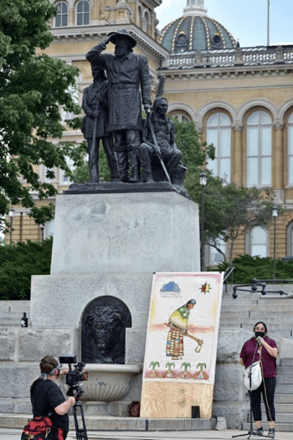
Another event where I took photos was a gathering on the State Capitol grounds related to racist statues. In this photo Sikowis is speaking at the Pioneer statue.

Sikowis Nobiss

Last December, Sikowis asked me to come to Ames for a rally at the office of Summit Carbon, one of the companies that want to build a CO2 pipeline.


Residential institutions of forced assimilation


The legacy of what are sometimes called Indian Boarding Schools has been a concern of mine for years. The involvement of Quakers in establishing and teaching in these institutions has become a source of tension and conflict among Quakers today. I think my past ignorance about these institutions was common for Quakers, thinking Friends involved in those schools were doing the best they could to help native children assimilate into mainstream American society. Not critically thinking why that would be a good thing. But we began to learn more about the great harm this did to native children and their families. And that was before learning about the widespread emotional, physical and sexual abuse of the children.

I was led to make this something I needed to learn more about. And share what I was learning with Quakers and others. Friend Paula Palmer, who has become a friend of mine, was called to a ministry related to these institutions and Quaker’s involvement in them.  Peter Clay and I helped organize events among Iowa Friends, Conservative and FUM, when Paula came to the Midwest.

Prior to the First Nation-Farmer Climate Unity March I was unsure whether I should bring up the subject of forced assimilation, especially as I had learned more about trauma from those institutions being passed from generation to generation. I had hoped to learn about Indigenous spirituality on the March but didn’t see how that could happen without acknowledging Quakers’ involvement in forced assimilation.

Matthew and I began to get to know each other early in the March because he was shooting video of the same things I was taking photos of. We shared quite a bit about this common interest. I believe it was the second day of the March as we were walking and talking together that the Spirit led me to tell him I knew about the Quaker involvement in the residential schools, and I was sorry for what had happened. Of course, I had no idea how he would react. But all he did was nod his head, and we continued to walk and talk together. I didn’t say anything else about that.

But just a few hours later he said he wanted to tell me a story. It involved a traumatic incident related to his mother and the residential schools. I was so grateful he felt he could share that with me. We didn’t talk about that any further.

Since then, when it seemed appropriate, I brought up Quaker involvement in the boarding schools with each of my native friends. Each one had personal experiences related to the schools. I believe that it was an important part of our developing friendships that we shared these stories.

Sikowis told me briefly of family members who had experienced traumas from those institutions. We had that brief discussion several years ago.

I believe this is in part why she invited me to ask Quakers if we would help support making a documentary about her reservation’s (George Gordon First Nation) residential school.

Iowa Yearly Meeting (Conservative)’s Peace and Social Concerns Committee has an annual budget to support peace and justice work. This year it was decided that rather than give token amounts to various peace and justice organizations, we might discern to invest a larger sum, for a more significant impact, to an organization or project. But we didn’t know what that would be.

This request from Sikowis is an opportunity to build on Iowa Yearly Meeting (Conservative)’s relationship with Indigenous peoples in the Midwest. An opportunity to begin truth and healing.

I’m pleased the Peace and Social Concerns Committee unanimously supports using our budget to support the documentary that’s being done about the George Gordon First Nation’s residential school.


March 27, 2022

This letter in regards to a request for financial support for a documentary title “They Found Us”, to support community presentations of this film that I produced.

My name is Curt Young and I a member of the George Gordon’s First Nation.  I am a descendant of Mike Longman, along with my mother Longman-Young; both members of this nation.  The development of this documentary was an intent for myself to learn more about my maternal familial lineage, as I had not grown up on GGFN and wanted more connections to my cultural heritage.  I applied for the “Peoples Investment Grant”, while residing in Calgary and was a successful candidate.  These funds were intended to financially support a compilation of Elder’s narratives, however, during the initial interviews, the findings of the 215 bodies outside of the Kamloops residential schools, inspired myself to change the direction of the documentary.  I decided to focus more on the process that GGFN reserve’s undertaking of a ground search outside of the local residential school; to see if there were any unmarked graves or bodies buried there. 

Over the past year, I have made three trips to GGFN to obtain footage of the community’s initial activities related to the ground search of the area.  Aside from the footage of the community, I also have compiled interviews from GGFN members, and other Indigenous people, including leaders and Elders, that have shared their own narratives and experience with residential schools.  The budget that I was provided by the grant I received was allocated to travel costs associated with these trips to GGFN, along with the rental of video technological equipment, necessary to create the documentary.  I have spent time and effort into producing this documentary and have been promoting it through various online platforms, along with connections I have within Indigenous communities, both urban and rural.  I have much interest in public showings of this documentary, particularly since June is coming up, with it being National Indigenous Peoples month.  One showing that I have confirmed is the first week of June; at Fort Calgary.  Although I am quite excited for the interest and opportunities, I would like to honour my home community and acknowledge the stories that are compiled in my documentary, by having the first public showing of “They Found Us” on GGFN.

In order for myself to bring the documentary to GGFN I am requesting funds to support my travel, accommodation and honorarium for traditional drummers and possibly a dancer to create a healing and culturally safe space for a community show.  My first showing that I have booked for this documentary is June 4, 2022, thus, I am asking to have funds to showcase the documentary on GGFN prior to this date. 

They Found Us

My friend Sikowis (Christine) Nobiss is raising money for a documentary that’s being done about her reservation’s residential school. George Gordon First Nation had the longest running residential school, not closing until 1996.

My relative is working to raise funds for his documentary on elders and the history of the residential school at George Gordon First Nation, which is my nation. He needs to make multiple trips throughout the plains and to GGFN and set up viewing events for the documentary, which will cost around $7,000 CAD. If there are any folks in your community interested in helping him attain this goal, please let me know. Thank you.

Contact: sikowis@greatplainsaction.org

As described in the following letter, the project was originally for a compilation of Elder’s narratives. But during the initial interviews, the findings of the 215 bodies outside the Kamloops residential school changed the direction of the documentary. To focus on the process that George Gordon’s First Nation was undertaking related to the unmarked graves or bodies at the GGFN reserve’s residential school.

March 27, 2022

This letter in regards to a request for financial support for a documentary title “They Found Us”, to support community presentations of this film that I produced.

My name is Curt Young and I a member of the George Gordon’s First Nation.  I am a descendant of Mike Longman, along with my mother Longman-Young; both members of this nation.  The development of this documentary was an intent for myself to learn more about my maternal familial lineage, as I had not grown up on GGFN and wanted more connections to my cultural heritage.  I applied for the “Peoples Investment Grant”, while residing in Calgary and was a successful candidate.  These funds were intended to financially support a compilation of Elder’s narratives, however, during the initial interviews, the findings of the 215 bodies outside of the Kamloops residential schools, inspired myself to change the direction of the documentary.  I decided to focus more on the process that GGFN reserve’s undertaking of a ground search outside of the local residential school; to see if there were any unmarked graves or bodies buried there. 

Over the past year, I have made three trips to GGFN to obtain footage of the community’s initial activities related to the ground search of the area.  Aside from the footage of the community, I also have compiled interviews from GGFN members, and other Indigenous people, including leaders and Elders, that have shared their own narratives and experience with residential schools.  The budget that I was provided by the grant I received was allocated to travel costs associated with these trips to GGFN, along with the rental of video technological equipment, necessary to create the documentary.  I have spent time and effort into producing this documentary and have been promoting it through various online platforms, along with connections I have within Indigenous communities, both urban and rural.  I have much interest in public showings of this documentary, particularly since June is coming up, with it being National Indigenous Peoples month.  One showing that I have confirmed is the first week of June; at Fort Calgary.  Although I am quite excited for the interest and opportunities, I would like to honour my home community and acknowledge the stories that are compiled in my documentary, by having the first public showing of “They Found Us” on GGFN.

In order for myself to bring the documentary to GGFN I am requesting funds to support my travel, accommodation and honorarium for traditional drummers and possibly a dancer to create a healing and culturally safe space for a community show.  My first showing that I have booked for this documentary is June 4, 2022, thus, I am asking to have funds to showcase the documentary on GGFN prior to this date.