Open Letter to Sports Page

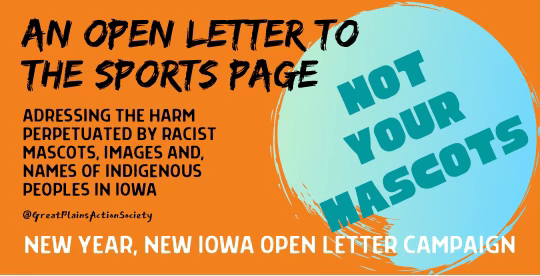
I’ve been writing about the New Year, New Iowa Open Letter Campaign of my friends at the Great Plains Action Society. See: Your Invitation to be an Ally. At the end of this is a statement by GPAS related to a racist image found in the Sports Page restaurant in Indianola.

I called the Sports Page, where someone took a message from me, and passed it on to one of the owners. The message returned was they didn’t know anything about a mascot. Which was an unfortunate way I put the message to them, but I’m sure they got the point of follow-up concern about the imagery in their restaurant.


Great Plains Action Society makes the following points response to this issue, applicable to all persons or establishments that continue to display racist imagery.

THIS IS NOT A MATTER OF ‘OPINION’: FOR DECADES, MULTIPLE SCIENTIFIC STUDIES HAVE SHOWN THAT THESE IMAGES AND MASCOTS HARM INDIGENOUS CHILDREN. Exposure to this racist imagery also correlates to increasing negative views of Native people in non-Native children. Too often this issue gets brushed aside as a matter of “differing opinions” about what is or is not “offensive.” To be very clear, this is not about what is or is not offensive, or whether there is consensus about this among the vastly diverse Indigenous communities. Experts have weighed in and it is clear that children mascots hurt Indigenous children, full stop.

I spent my entire adult life working in a children’s hospital and this concerns me. Following is part of a policy statement on the Impact of Racism on Child and Adolescent Health from the American Academy of Pediatrics.

Racism is a “system of structuring opportunity and assigning value based on the social interpretation of how one looks (which is what we call ‘race’) that unfairly disadvantages some individuals and communities, unfairly advantages other individuals and communities, and saps the strength of the whole society through the waste of human resources.” Racism is a social determinant of health that has a profound impact on the health status of children, adolescents, emerging adults, and their families.  Although progress has been made toward racial equality and equity, the evidence to support the continued negative impact of racism on health and well-being through implicit and explicit biases, institutional structures, and interpersonal relationships is clear. Failure to address racism will continue to undermine health equity for all children, adolescents, emerging adults, and their families.

The Impact of Racism on Child and Adolescent Health, FROM THE AMERICAN ACADEMY OF PEDIATRICS, POLICY STATEMENT, AUGUST 01, 2019

GOOD OR BAD INTENTIONS ALONE DO NOT DETERMINE THE WRONGNESS OR RIGHTNESS OF AN ACTION. So often we see people claim that because they have good intentions, their use of racist imagery and mascots is not problematic. However, it’s still problematic, because regardless of an individual’s intention, it is still an act that harms children.

RETIRING MASCOTS AND DISCARDING STEREOTYPED IMAGE IS NOT AN ERASURE OF ANYONE’S IDENTITY; IN FACT, THE EXISTENCE OF THESE MASCOTS IS A CONTRIBUTING FACTOR TO INDIGENOUS ERASURE. Many supporters of racist images and mascots are under the impression that retiring them is taking away from their identity because being a [insert racist mascot here] is a huge part of who they are. It’s unfortunate that people have built their identity around “being” a [racist mascot], because identifying as something that harms children and society in general is problematic, and that identification should especially cease when they learn about the harmful effects on children.

An Open Letter to Amanda and Joe Ripperger, the owner of the Sports Page restaurant in Indianola, and all other owners of establishments with racist mascot decor:

It was brought to the attention of Great Plains Action Society that an Indianola community member contacted the owners of the Sports Page restaurant about their racist “R*dman” mascot sign hanging at their establishment. Though the owners, Amanda and Joe Ripperger, said they took time to think about removing the sign, they eventually declined to do so based on typical, problematic reasoning. The reasons they gave are among the most common rationalizations in defense of racist images and mascots and so we are taking this opportunity to, once again, clarify some points about the racist images and mascots “debate.” We are including text from their response to the community member for context and transparency. From the community member:

They approached the restaurant owners and this was their answer:

On our first request to remove their racist signs, we were told they were “decor,” nostalgia and history.

In a second response the Ripperger’s said:

I am very sorry for your families hurt that you have experienced in our community, and we do hear your concerns. We have decided that the signs will remain up. Our restaurants are a piece of Indianola’s community, but most importantly they are ours. We have owned and operated these restaurants for 10 years on January1 and we are so proud to be part of the Indianola community that it seems like we would be erasing something that is near to our hearts. Nothing hung on our walls is meant to be derogatory. We hope that you and all our customers know that.

Thank you for sharing your perspective with us.

Sincerely,

Amanda and Joe Ripperger

We believe they would be sensitive to additional feedback and might hopefully change their position. Great Plains Action Society

#greatplainsactionsociety #NotYourMascot #NewYearNewIowa

The Cowboy and Indian Alliance

I imagine many non-native people would like to know how to engage with Indigenous peoples for a variety of reasons. Even as a teenager I wanted to know more about cultures that lived with what I call environmental integrity. Fifty years ago, when I decided I could not own a car, it was a lonely place. I had no success at all in convincing others to give up cars. Worse, I couldn’t get anyone to even agree it was an important idea.

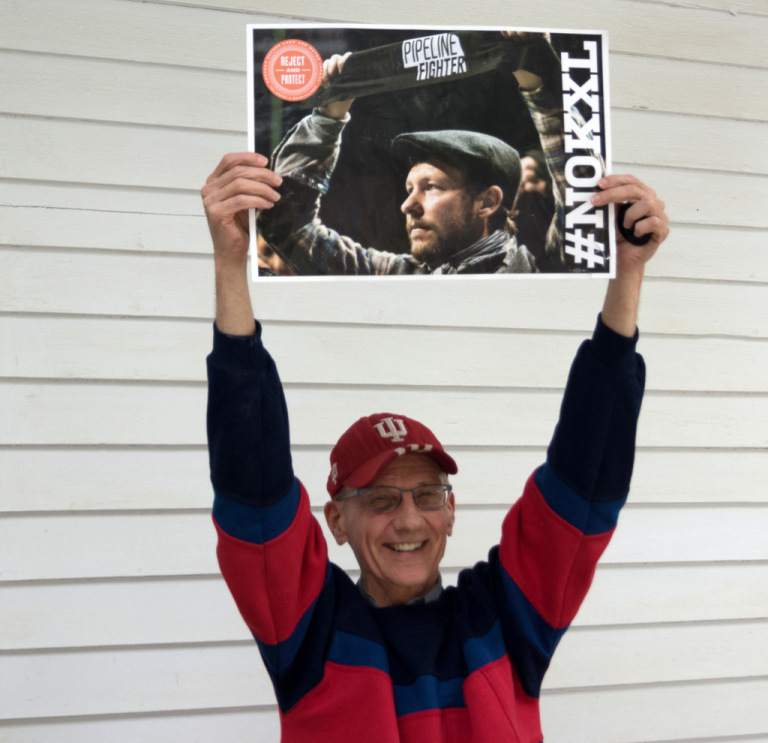
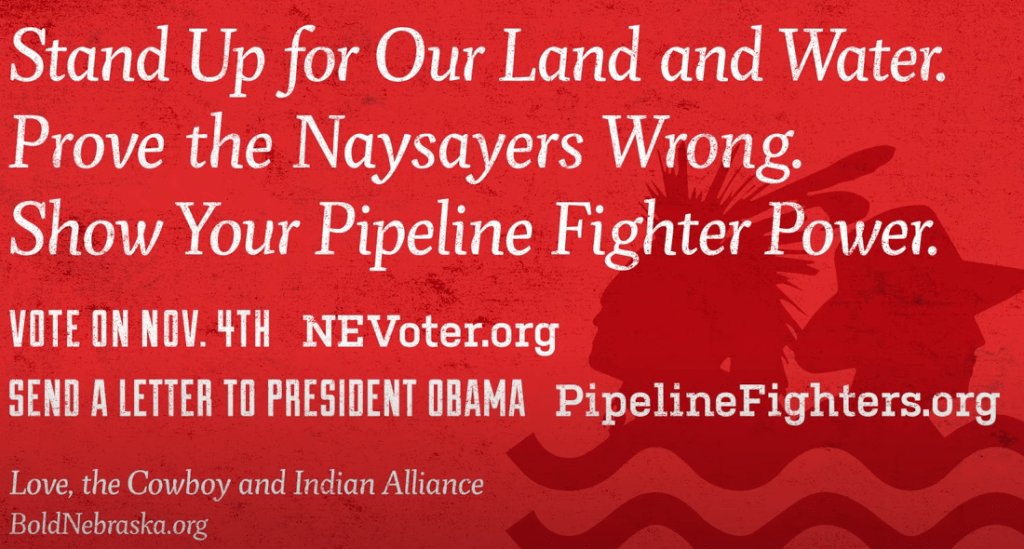
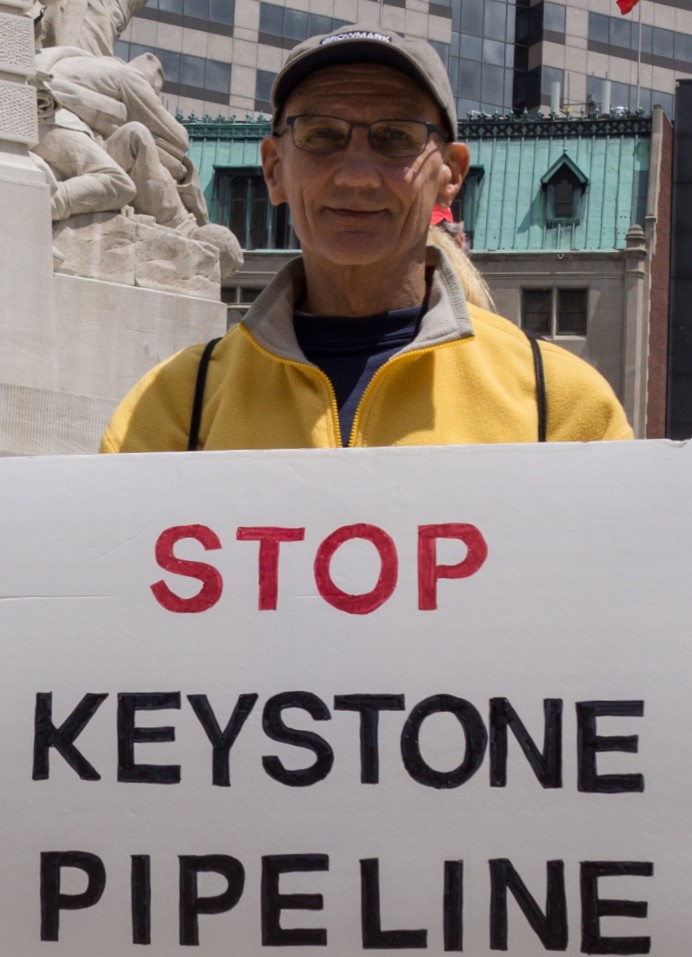
But what little I did learn about native cultures showed peoples who lived with far more integrity than I was able to. When I first became engaged with fossil fuel and pipeline resistance in 2013, I began to hear stories of Indigenous peoples working to protect the water. Then the Cowboy-Indian Alliance came together to oppose the Keystone XL pipeline. I was honored to be given this poster from the Harvest the Hope concert in 2014.


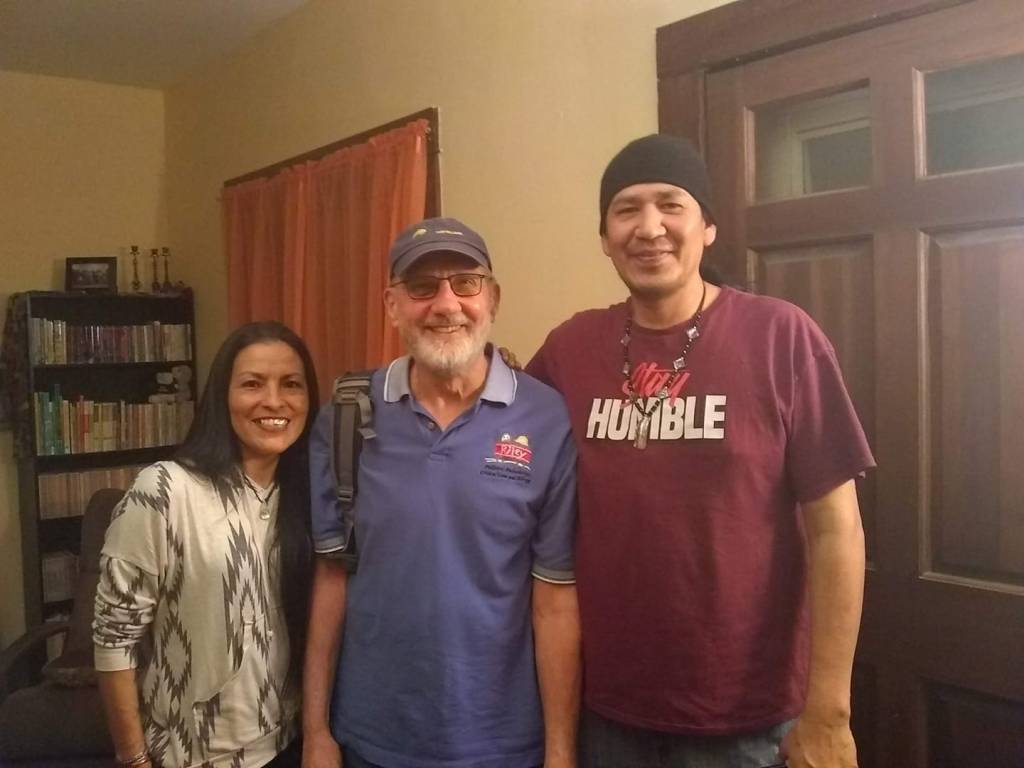
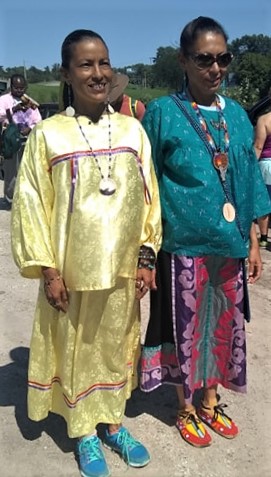
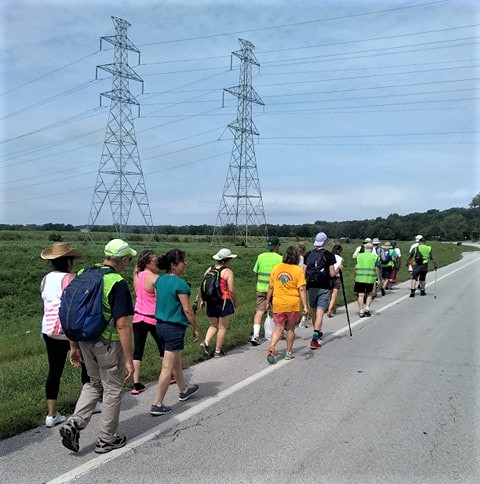
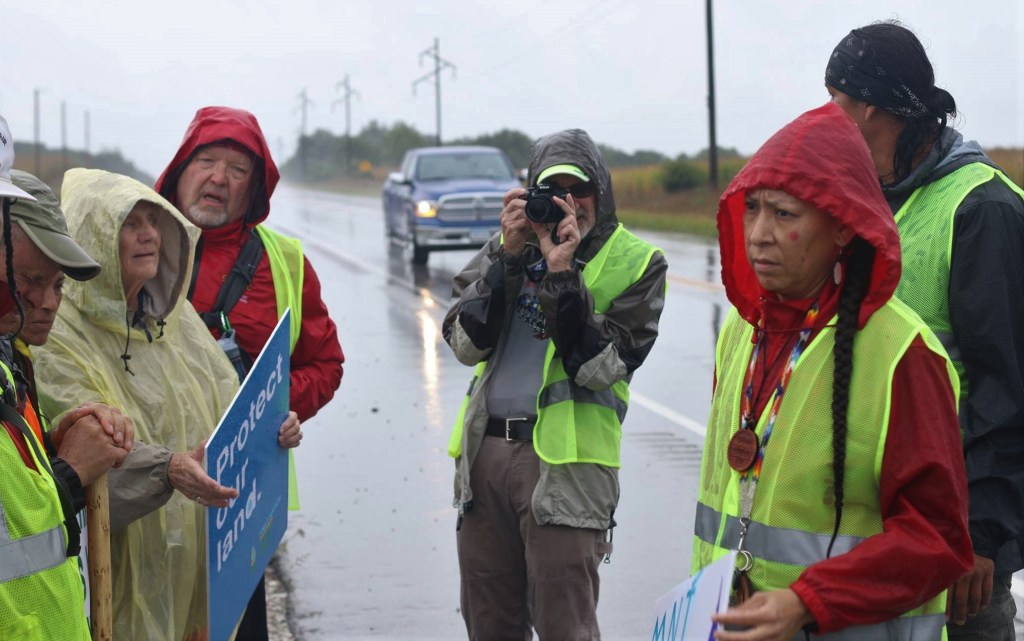
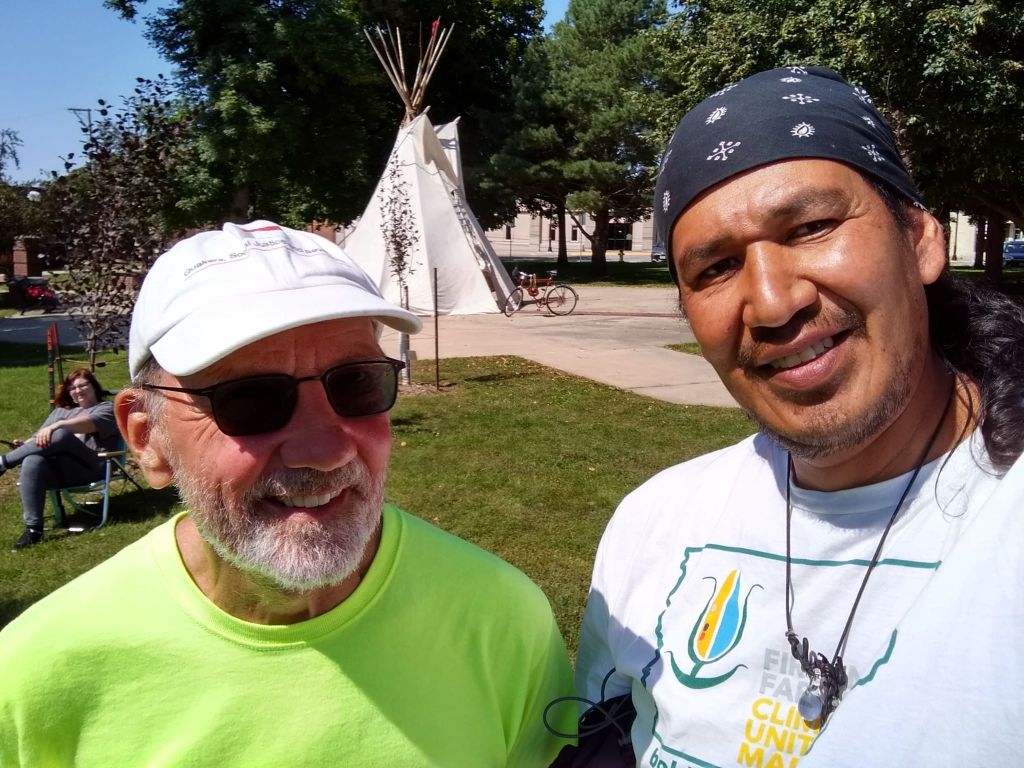
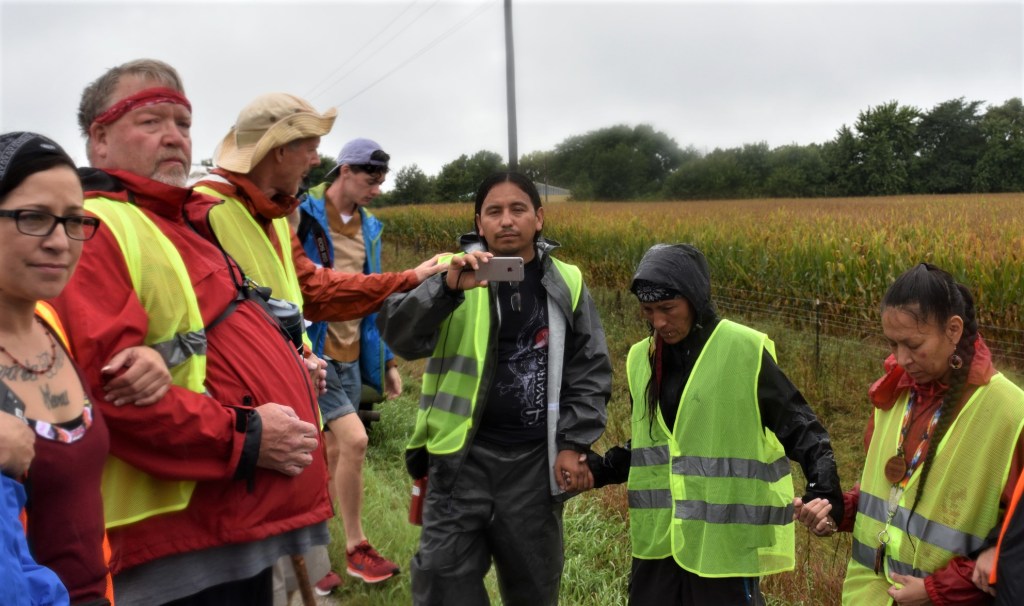
Then I had an amazing opportunity to learn from and become friends with a number of native people as we walked and camped along the route of the Dakota Access pipeline together in 2018. Over eight days and ninety-four miles we shared our stories with each other and built a community that would work together on various issues after the march, the First Nation-Farmer Climate Unity March. https://firstnationfarmer.com/

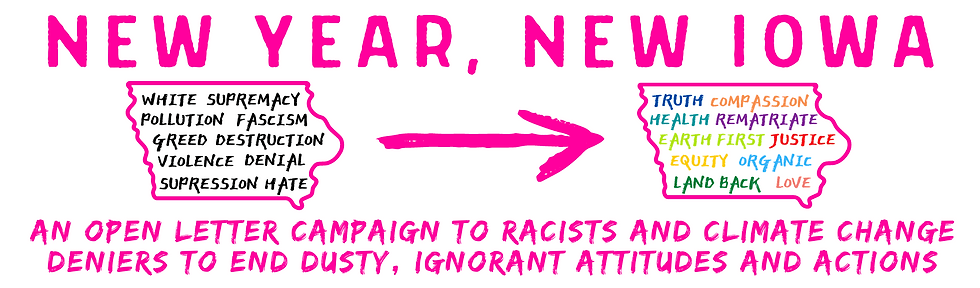
There are appropriate and inappropriate ways for non-native people to engage with native people. It is best for non-native people to wait to be invited into the work of Indigenous peoples. The point of this article is to let people know about such an invitation, in this case from my friends at the Great Plains Action Society (GPAS). Yesterday I wrote Your Invitation to become an ally. New Year, New Iowa is an invitation to non-native people to join in the work of GPAS.

Copy of New Year, New Iowa (2).png
https://www.greatplainsaction.org/newyearnewiowa

I hope you will engage in the open letter campaign, to bring attention to matters of concern to Indigenous, as well as non-native people to those who have the responsibility to make change. Besides supporting Great Plains’ work, you will learn about Indigenous views of their concerns. Yesterday’s post described the New Year, New Iowa open letter campaign. https://www.greatplainsaction.org/newyearnewiowa

We need to stand strong together to create the change that so desperately needs to happen. This Open Letter Campaign is a means for us to unite our voices to call for change. You are welcome to use the words we share, or to express your own. If all you have it in you to do is share an article or use a hashtag, every little bit helps. If you have letters of your own you’d wish to share with us, we’d love to hear from you! Again, we look forward to putting our voices together with you, to call for the New Year/New Iowa we so desperately need. Thank you.

https://www.greatplainsaction.org/newyearnewiowa

First Nation-Farmer Climate Unity March, Sept 1-8, 2018

Your invitation to be an ally

I’ve been blessed to have had many opportunities to become friends with a number of native people, including those from the Great Plains Action Society (GPAS). I’ve been involved in Des Moines Mutual Aid for the past two years. My friend Ronnie James has been mentoring me about Mutual Aid and is a member of GPAS.

The following are ways you can join in this work. New Year/New Iowa is explained below.

We have always appreciated when allies and accomplices approach us to ask how they can be of help. Things can be complicated, and it is considerate to be mindful of how one engages. This is absolutely a situation that we request your help with. We need your voices to make something happen.

Great Plains Action Society
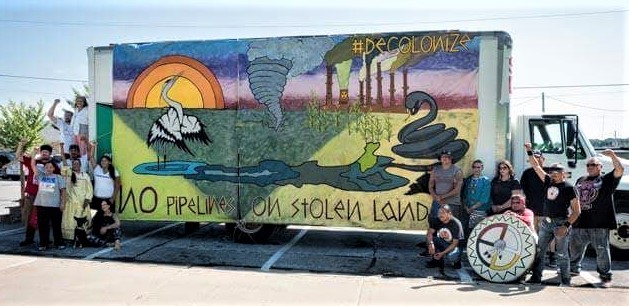
Copy of New Year, New Iowa (2).png

Resolutions are not just for January! As we are gathering momentum for the daunting work 2022 has in store for us, we would like to invite you to join us in ushering in a New Year/New Iowa. Things need to change. The harm we are doing to the environment is devastating. The attack on truth in public education is a contributing factor to our attempted erasure. The ongoing use of racist mascots harms children, and perpetuates dehumanization. Iowa has a lot of issues. The work we need to do to make Iowa better is not going to be easy. But it can be done, and the best chance we have is working together. And that is why we are coming to you with our Open Letter Campaign.​

Over the course of 2022, we will be sharing with you Open Letters we’re addressing to those who are in positions of power. We’re doing this in the format of an Open Letter for a few reasons. First, these issues are important, and this is an opportunity to explain the issues to a broader audience. The more people who understand what is going on, the better. Second, we need numbers. We are mighty, but we are few. The more people we have putting pressure on those with power, the more likely we are to see results. And finally, it’s something that you can do that doesn’t require much of you. Although it’s only February, 2022 can already feel exhausting. The thought of having to leave home to do things can be overwhelming, even frightening as COVID is still a very real threat. But this is something you can do from home, without investing energy you are probably running low on. Working with us can be as simple as tweeting out a hashtag. But it can be more too, if you’d like. It’s an opportunity to write the words that express your frustration and join them in an agitated choir. This is a chance to remind yourself that you deserve to be heard and that you are capable of taking action that affects change.​

We have always appreciated when allies and accomplices approach us to ask how they can be of help. Things can be complicated, and it is considerate to be mindful of how one engages. This is absolutely a situation that we request your help with. We need your voices to make something happen. Our land, our water, our children are under attack. The truth is under attack. We need to stand strong together to create the change that so desperately needs to happen. This Open Letter Campaign is a means for us to unite our voices to call for change. You are welcome to use the words we share, or to express your own. If all you have it in you to do is share an article or use a hashtag, every little bit helps. If you have letters of your own you’d wish to share with us, we’d love to hear from you! Again, we look forward to putting our voices together with you, to call for the New Year/New Iowa we so desperately need. Thank you.

Contact

The New year, New Iowa Open Letter Campaign is led by Jessica Engelking. If you have ideas or thoughts to share, please contact her at jengelking@greatplainsaction.org 

We look forward to putting our voices together with you, to call for the New Year/New Iowa we so desperately need. Thank you.

Great Plains Action Society
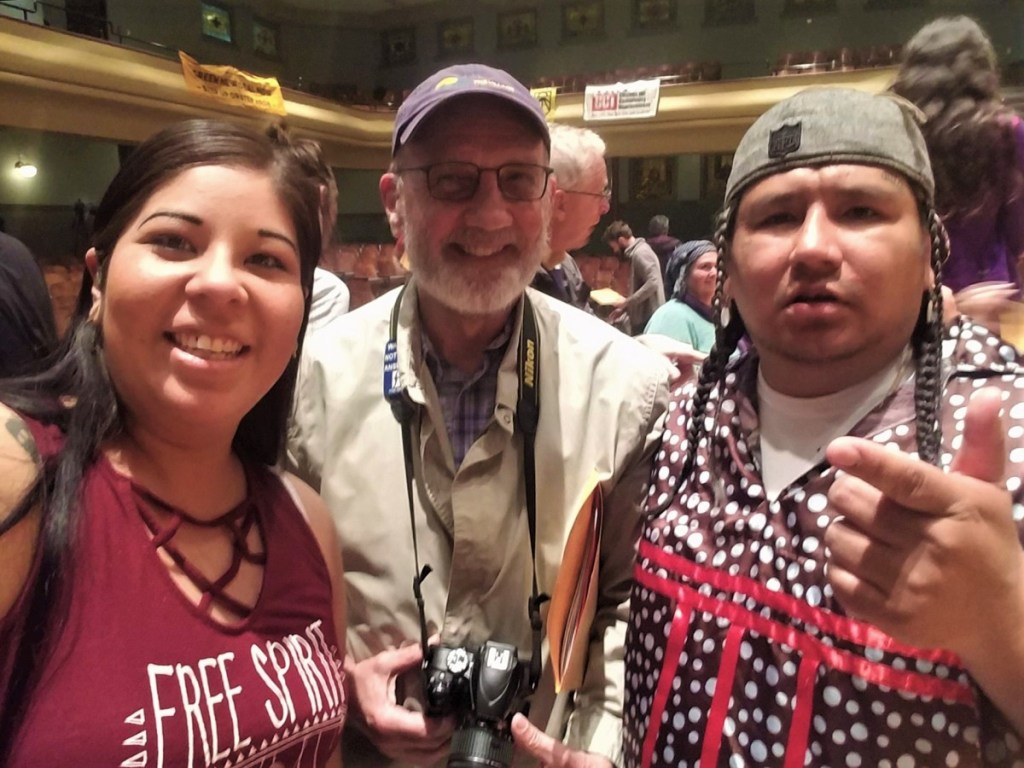
I live in Indianola, where the Sports Page restaurant is located. Imagery at the Sports Page is the subject of the Open Letter that I’ll be writing about soon.

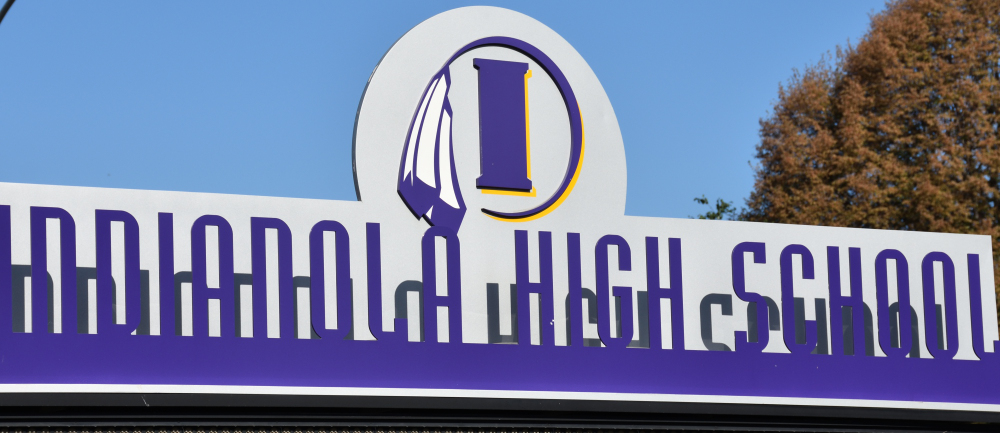
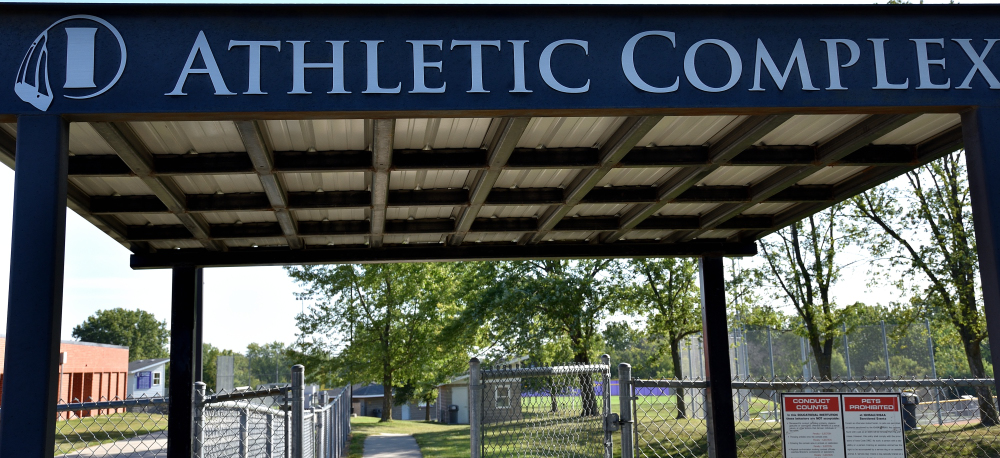
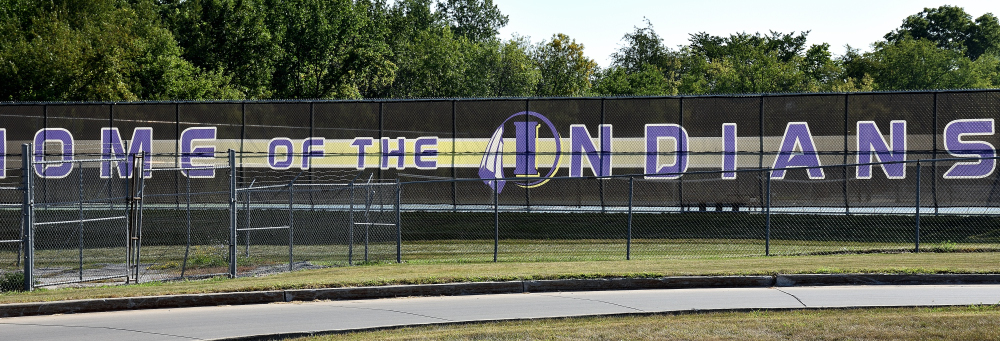
Ronnie James (mentioned above) also once lived in Indianola. He wrote about his experiences with the Indianola School board when he asked them to stop using native imagery for their sports teams. Knowing I am a photographer and live in Indianola, he asked me to take some photos of that imagery, which I was glad to do.

See: Battle of the Indianola “Indians”


#greatplainsactionsociety #NotYourMascot #NewYearNewIowa

The future we want

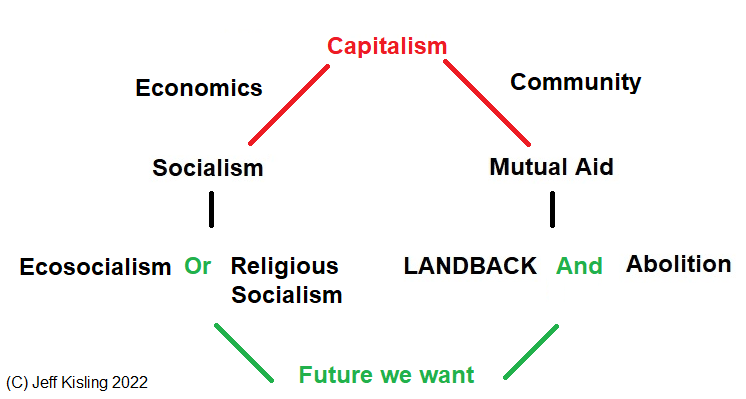
I’ve been trying to integrate all that I’ve been learning about Mutual Aid, #LANDBACK, Abolition, Religious Socialism, Ecosocialism, photography, forced assimilation and Indigenous worldview. There are many intersections among these. This is stimulated in part as I reflect on yesterday. It was a spiritual time when I stopped at Easter Lake to take photos there, despite, or because of the bitter cold. Then continuing to be with my Mutual Aid friends as we filled boxes of food to distribute in the neighborhood. To witness people coming together to share stories. Each moving from one friend to another. This is part of the future we (I) want that exists now. That is the wonderful thing about Mutual Aid, as the focus is on addressing survival needs in the present. As my friend Ronnie says, you work intensely for an hour and a half, and when you’re done you feel sweaty, tired and good.

As I hear so many friends expressing feelings of hopelessness and despair, I feel fortunate to be involved in a community that gives us a sense of doing something good together. Which is one reason I’m trying to get more people involved in Mutual Aid.

I heard some of this discouragement when those in the Quakers for Abolition Network met via ZOOM yesterday.

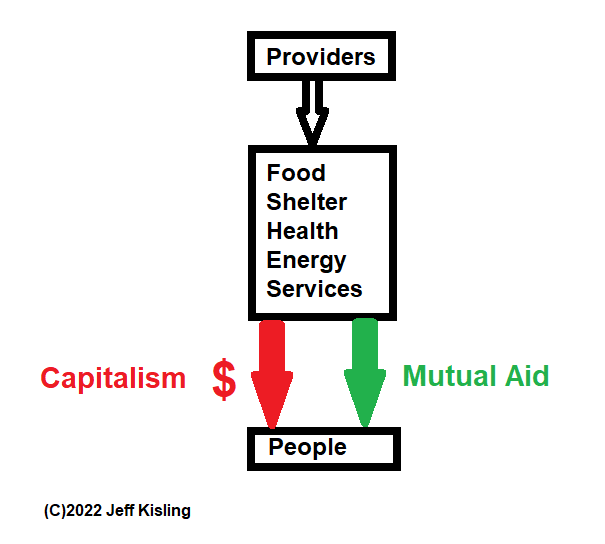
I’ve been working on a new diagram to help me visualize the relationships between the concepts mentioned at the beginning. The root cause of so much suffering is the capitalist economic system. Socialism is an alternative to capitalism. Ecosocialism is about how environmental devastation will be the end of capitalism. Or faith communities can help bring about socialism as an alternative to capitalism from a moral lens. Or both.

Mutual Aid is a framework to replace vertical hierarchies and the unjust power structures they enforce. LANDBACK, returning to Indigenous relationships with the land, and abolition of police and prisons are part of building communities that represent the future we want.

EPSON MFP image

Des Moines Mutual Aid Networking

Yesterday I wrote about the Quakers for Abolition Network I am a member of. We will be meeting this afternoon, so I’m thinking of what I hope our network might do. There is so much that needs to be done.

My friend Jake Grobe, from Iowa Citizens for Community Improvement (ICCI) was at our Des Moines Mutual Aid food distribution this morning. He doesn’t get to attend too often because of his organizing work. He told me about an upcoming action at MidAmerican Energy to demand that they shut down all their coal plants. Here is the story about a previous action.

Protesters gathered outside the MidAmerican Energy headquarters in downtown Des Moines today to demand Iowa’s largest energy company retire all of its coal plants in nine years. They were part of two groups: Iowa Citizens for Community Improvement (Iowa CCI) and the Iowa Sierra Club’s Beyond Coal campaign.

They also want MidAmerican to invest in retrofitting homes for energy efficiency with a focus on families of color and low-income individuals.

Jake Grobe stood on a ledge wearing a bucket hat and a blue T-shirt with “REVOLUTION NOW” printed in all capital letters. He held a megaphone to his mouth, which was covered by a black and white bandana. (All the protesters wore masks.) Grobe asked the crowd who is most hurt by the effects of climate change.

“It’s Black, Indigenous, it’s poor working families that are unable to recover from flash floods, from droughts from wildfires. Climate crisis increases all inequalities,” he answered himself.

Environmental Activists Urge Iowa Energy Company To Retire Coal Energy By Kassidy Arena, Iowa Public Radio, August 18, 2021

One of the things I love about Mutual Aid is how we network about each other’s work. I hadn’t known about the MidAmerican actions, but now I hope to attend the next one. He said it would be good if I could take photos there. This networking lets us know who has skills, like photography, which can help each other’s work.

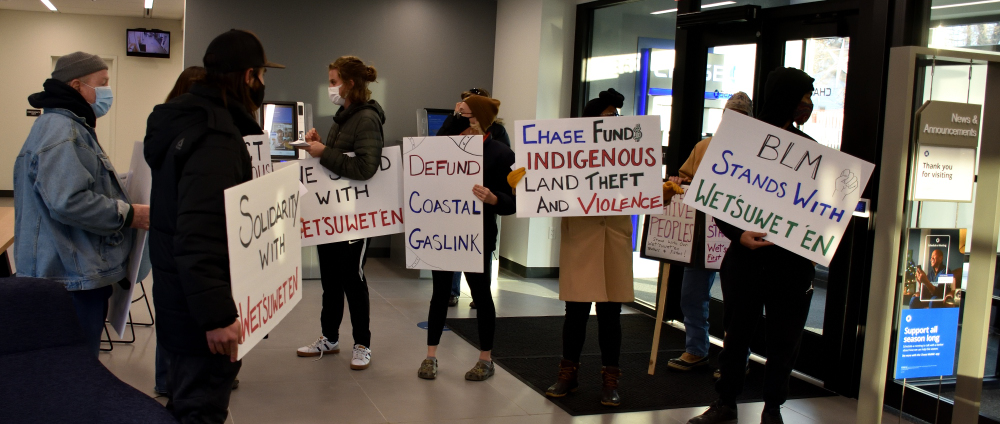
Speaking of photos prompted me to share about a recent action at Chase Bank in support of the Wet’suwet’en peoples fighting against the Coastal GasLink pipeline. He hadn’t been aware of that.

Support for Wet’suwet’en at Chase bank

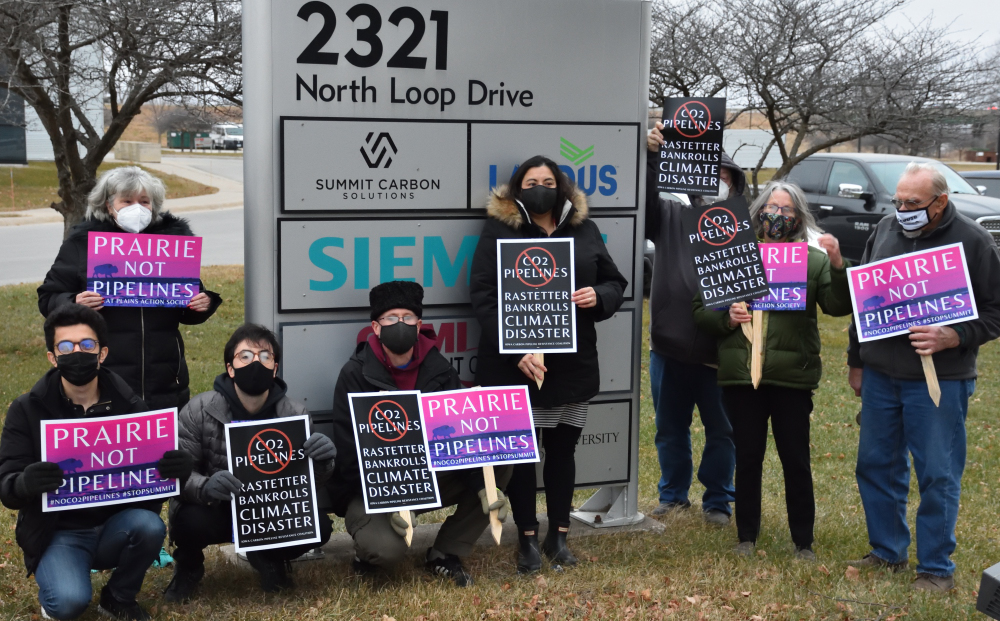
That also reminded me of going to SUMMIT headquarters in Ames, Iowa, recently. SUMMIT is one of the companies proposing to build carbon pipelines in the Midwest. My friends Sikowis Nobiss and Mahmud Fitil know of my photography and asked me to attend the gathering there.

Jake and ICCI are also working to stop CO2 pipelines.

We talked about how bad the Iowa legislature is. He said we need our own socialist party. I told him about the Central Iowa Democratic Socialists of America’s prison letter writing project.

He asked what I had been doing. I described the Quakers for Abolition Network, which interested him. He had been arrested three times last year at direct actions and said you don’t really know how bad prison is until you experience it yourself.

our response and an invitation that we allow the Spirit to awaken our imagination to build a world where we can all be safe(r) and flourish without threats of violence.  

The call for the abolishment of police, policing and the police state is not a new call. For centuries, Black and Indigenous people have called for the end of violence enacted on their bodies and communities by police. They have been calling for other possibilities that move us from the appearance of safety to truly safe and whole communities. In the wake of continued high profile police shootings across the United States, many people in the church pushed for an Anabaptist-oriented response and resources that helped us to move as a church into solidarity with the pain and brutality being felt and witnessed on Black, brown and Indigenous people. This curriculum is our response and invitation that we allow the Spirit to awaken our imagination to build a world where we can all be safe(r) and flourish without threats of violence.  

Defund the Police? An Abolition Curriculum
EPSON MFP image

Quakers for Abolition Network

The tragic news of the recent killings of police officers ratchets up calls for more policing. Demonizing those of us who call for defunding the police. New York City’s mayor refers to defunding the police as a bumper sticker.

President Joe Biden’s meeting with New York City Mayor Eric Adams on February 3, 2022, comes as cities across the U.S. face a rise in violent crimes and represents a politically awkward shift in how the Democratic Party is approaching policing and criminal justice.

As a Senator in the 1990’s, Biden was known to be tough on crime, and Adams, a former NYPD captain, has been vocal about his support for police and the criminal justice system. They both find their long-held positions on policing and crime back in the Democratic mainstream, as some mayors and elected officials have shifted their stance on crime and the “defund the police” movement over the past several months.

During his meeting with Adams, Biden expressed his opposition to defunding the police as he said, “the answer is not the defund the police, it’s to give you the tools, the training, the funding, to be partners [and] to be protectors.”

Joe Biden, Eric Adams Meeting Marks Democrats U-Turn on ‘Defund the Police’ BY MATTHEW IMPELLI, Newsweek, 2/3/22

As an abolitionist, it feels like menace is in the air. I’m reminded of my teen days when I resisted the draft while the Vietnam war was raging. It was great to be living in the Scattergood Friends School community then.

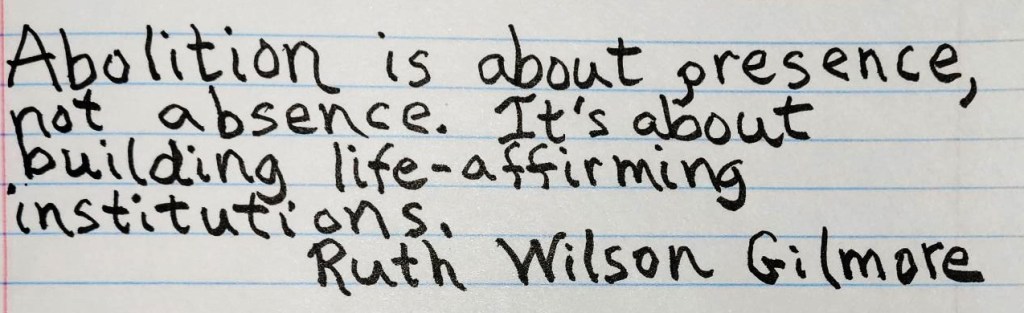
Most people think about abolition in terms of what it is against. Against the institution of slavery, against police and prisons. I like to think about what abolition is for.

I am a member of the Quakers for Abolition Network. Mackenzie Barton-Rowledge and Jed Walsh have been organizing this effort. Following are two articles published in Western Friend. To join the Quakers for Abolition Network, email Jed Walsh (jedwalsh9 [at] gmail.com) or Mackenzie Barton-Rowledge (mbartonrowledge [at] gmail.com).

Mackenzie: Let’s start with: What does being a police and prison abolitionist mean to you?

Jed: The way I think about abolition is first, rejecting the idea that anyone belongs in prison and that police make us safe. The second, and larger, part of abolition is the process of figuring out how to build a society that doesn’t require police or prisons.

M: Yes! The next layer of complexity, in my opinion, is looking at systems of control and oppression. Who ends up in jail and prison? Under what circumstances do the police use violence?

As you start exploring these questions, it becomes painfully clear that police and prisons exist to maintain the white supremacist, heteronormative, capitalist status quo. The racial dynamics of police violence are being highlighted by the recent uprisings and the Black Lives Matter movement.

We are in the same place, with a call to imagine a culture radically different than the one in which we live. Abolishing police and prisons, like abolishing slavery, would change the structure of our society: dramatically decreasing violence and undoing one set of power relationships that create domination and marginalization. And in place of this violence, we could, instead, have care.

Abolish the Police by Mackenzie Barton-Rowledge and Jed Walsh, Western Friend, Nov 2020

Perspectives from the Quakers for Abolition Network

In late 2020, the two of us wrote an article for this magazine, called “Abolish the Police.” Through writing the piece, we realized we wanted to convene a larger space where Friends with an interest in police and prison abolition could have conversations with one another. Quaker abolitionists today face major pushback from our Meetings; we hoped that drawing Friends together would support and strengthen our work.

In this context, the Quakers for Abolition Network is being born. We are a collection of Friends from at least five Yearly Meetings; we range in age from high school to our 80s; we are disproportionately queer and trans. While AFSC and FCNL staff are participating, this is a grassroots project without any formal connections to existing organizations. We are in the process of defining our mission statement, structure, and our methods for addressing white supremacy when it shows up in our work, while building relationships with each other as we go. Below, four Friends write about their approaches to abolition, their lessons, and their visions for where Quakers might be headed.

Jeff Kisling: Mutual Aid and Abolition

I grew up in rural Iowa, where there was very little racial diversity and interactions with police and the court system were rare. About ten years ago, I was blessed to become involved with the Kheprw Institute, a Black youth mentoring and empowerment community. I’ll never forget how shocked I was when a Black mother broke down in tears, explaining how terrified she was every minute her children were away from home. It was obvious that every other person of color in the discussion knew exactly what she was saying.

After retiring, I was led to connect with Des Moines Mutual Aid, a multiracial organization founded to support houseless people. For over a year, I’ve helped my friends fill and distribute boxes of donated food, while continuing to learn about the framework of mutual aid.

To me, mutual aid is about taking back control of our communities. Besides the food giveaway, we support houseless people and maintain a bail fund to support those arrested agitating for change. We also work for the abolition of police and prisons.

To join the Quakers for Abolition Network, email Jed Walsh (jedwalsh9 [at] gmail.com) or Mackenzie Barton-Rowledge (mbartonrowledge [at] gmail.com).

Mackenzie Barton-Rowledge and Jed Walsh: Introducing the Quakers for Abolition Network, Western Friend, Sept 2021

Eco Socialism

I’m spending hours searching for information about religion and socialism since learning about the idea of Religious Socialism.

Socialism has a negative connotation for many that is related to Marxism and its support of revolution by any means.

In one of our nation’s best moments, the civil rights movement of the mid-20th century, Christian socialists played major roles. A. Philip Randolph and Bayard Rustin were very open about their socialism, and Dr. Martin Luther King Jr., who praised democratic socialism both publicly and privately, stood on the shoulders of previous generations of socialist African American social gospel leaders.

These Christian socialists agreed with Karl Marx’s ground-breaking analysis of the devastating impact capitalism wreaks on working people. But they parted ways when it came to Marx’s antipathy to religion, and they rejected Marx’s exhortations to revolution by any means. For religious socialists, the instrument of revolutionary reform is a political one at the ballot box and nonviolently in the streets. That approach works. Consider the many nations comparable to the United States, particularly in western and northern Europe, where socialist advocacy within the democratic process has led to universal healthcare, progressive taxation, and comprehensive social services that assure safe housing and a minimum income. Compared to the United States, life there is far closer to the kingdom of God on earth.

Christian Socialist by MAXINE PHILLIPS and FRAN QUIGLEY

I’ve long known evolving environmental chaos would be the end of capitalism. This chaos will increasingly lead to the physical destruction of the infrastructure that produces and distributes goods and the shops where they are sold, resulting in widespread financial ruin. The impact of severe drought and storms will significantly impact food production and supplies of clean water. These things will increasingly impact housing, energy, healthcare, education, finance, transportation, and other social and political systems.

We are finally at a place where the public can no longer refuse to recognize the impacts of climate change. The fear that generates, and the realization things will only get worse, is fueling social unrest. Movement toward authoritarianism, and domestic violence and terrorism.

I have become interested in religious socialism to create communities to support each other as current systems fail. This interests me as an opportunity to revitalize my Quaker communities. Or for more people to turn to whichever spiritual community meets their needs.

But it is unclear how many people will turn to spirituality, especially those who previously felt disenfranchised from churches and religious organizations.

As I’ve searched for information about religious socialism I’ve found a lot of information about Eco socialism, a term new to me. But which encapsulates what I’ve always believed about environmental chaos and the need for socialism to respond.

In the wake of Australian fire storms, global crop loss and catastrophic climate shifts, billions of people are recognizing the dangers to society and life itself presented by capitalism’s profit-driven despoiling of nature. At the same time, the last 40 years of deepening inequality inside virtually all nations have undermined their social cohesion, and increasingly, capitalism’s mechanisms are being blamed. Anti-capitalism is exploding across many political landscapes.

One broad socialist response to ecological crisis has produced a global eco-socialist movement and a rich set of eco-socialist writings. They rightly argue that a solution to the ecological crisis requires a transition from capitalism to socialism. Profit-driven capitalism is the problem that socialism can solve. Likewise, socialists argue, today’s extreme economic inequalities flow from capitalism. Socialism’s traditionally egalitarian focus on state redistributions of wealth and income has attracted mass interest and support.

Will Climate Change Provoke a Widespread Revival of Socialism? by Richard D. Wolff, TRUTHOUT, Feb 13, 2020

Illusion of Caring

I keep coming back to my failure to convince people we had to give up having personal automobiles if we were going to prevent the environmental catastrophe unfolding now. I was hoping the examples of those of us who refused to have cars combined with the warning signs about greenhouse gas emissions would make change happen.

I am similarly discouraged about the prospects of convincing people of the evils of capitalism, as I summarize here: The Evil of Capitalism.

But the global capitalist systems are collapsing now. The question is whether we will build alternatives before the worst happens.

when we join in a walkathon for the homeless or make an online donation for a food bank, we are relieved from the burden of confronting the underlying injustice of a society where great wealth exists alongside grinding poverty
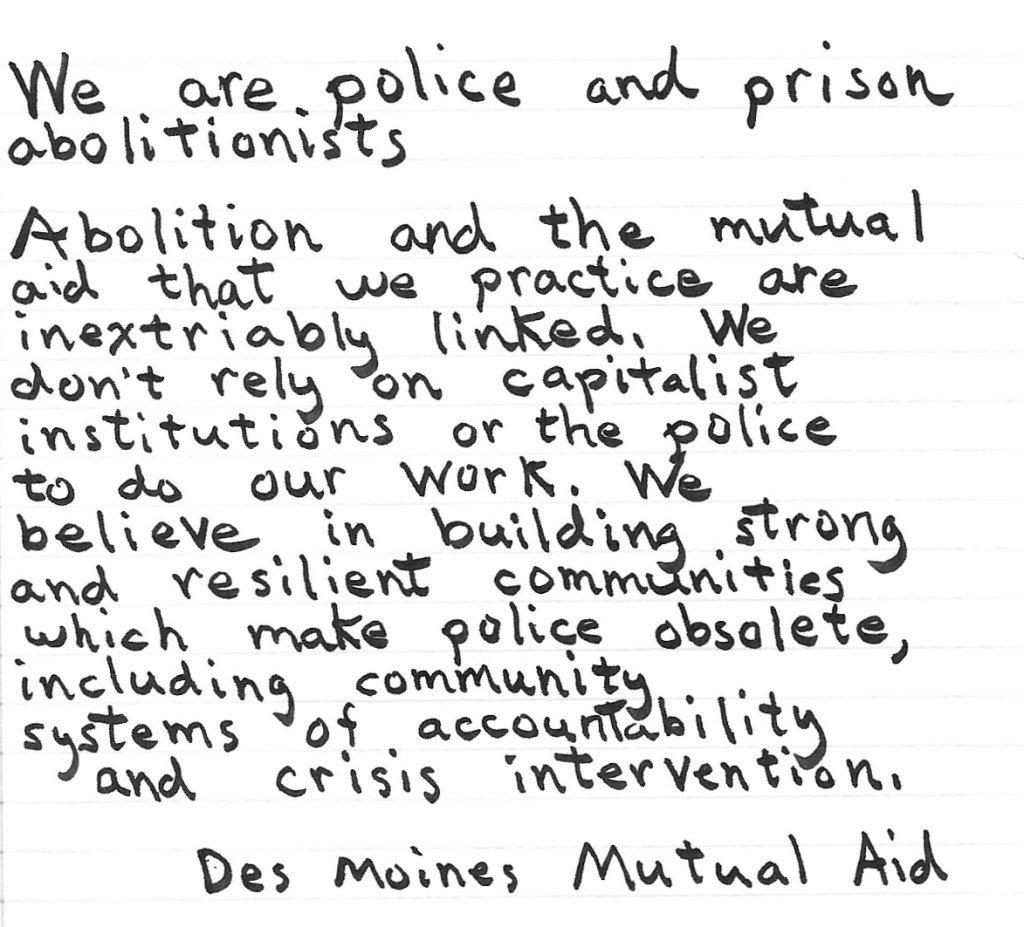
Fran Quigley

My friend Fran Quigley has written Religious Socialism: Faith in Action for a Better World. One of the main premises of his book is “the grim, daily evidence of capitalism’s failures”. The following is from the Introduction of his book.

Rev. George Washington Woodbey is a member of a determined group of Americans who, over the course of 150 years, has insisted that there is an unbreakable connection between their religious values and the political and economic system of socialism. To make their case, they have pointed to the grim, daily evidence of capitalism’s failures. Today, the United States is one of the wealthiest nations in human history yet with far higher poverty rates than similar countries. The disparity reveals itself through health insurance company CEO’s making as much as $83 million per year, while tens of millions of the nation’s residents go without health care. It is shown by the richest Americans owning multiple homes, some worth as much as a quarter-billion dollars, while a half-million Americans are homeless. Three American men own more wealth than the bottom 50 percent of the nation’s population combined. At the same time, one of every six children in America—12 million overall—live below the poverty line.

Every faith tradition condemns this state of affairs. So does socialism. These faith traditions and socialism prescribe the same, straightforward remedy: all humans have the right to the necessities of life.

Note the word right. The capitalist U.S. system has survived its conflict with religious principles in significant part by projecting the illusion of caring about the suffering of the poor, while at the same time rejecting the recognition of any rights that would alleviate poverty. How is that tricky balancing act performed? By promising the U.S. public that the fortunate few will extend their charity to meet all the needs of the poor. If that promise is believed, massive concentrations of wealth do not seem so outrageous.

But that promise is a lie, demonstrated by the millions of American children going hungry while the wealthy luxuriate. Yet the false narrative persists, likely because it is so comforting to all of us who are not poor. In her 1998 book Sweet Charity, the sociologist Janet Poppendieck concludes that the American preference for charity over public welfare programs relieves the pressure for more fundamental solutions. Charity, she writes, acts as a “moral safety valve.”

From an individual perspective, that safety valve effect means that when we join in a walkathon for the homeless or make an online donation for a food bank, we are relieved from the burden of confronting the underlying injustice of a society where great wealth exists alongside grinding poverty. As for our political engagement, high-profile donations of plutocrats make us less likely to demand curbs on their lavish wealth. Charity may not be very effective at alleviating injustice, but it is quite good at relieving our sense of outrage about it.

Quigley, Fran. Religious Socialism: Faith in Action for a Better World (pp. 10-11). Orbis Books. Kindle Edition.

Black Lives have always mattered

Every time I hear this interview, I am reminded of some of my own experiences related to Black Lives Matter.

This is a dream unrealized. MSNBC

Dr. Clarence Jones, former speechwriter and counsel to Martin Luther King, Jr., reflects on what Dr. King would think about the nation today.
Jonathan Capehart
What would Martin Luther King say about what’s going on in the United States today?
Dr. Clarence Jones
He would say Black lives have always mattered, always matter. The challenge has been for us to get the majority of society to recognize and to respect that.

These stories are about white Friends recognizing and respecting that Black Lives have always mattered.

2014

Racial justice, and Black Lives Matter, need vocal, visible and spiritual support from White Quakers now. How often has the Underground Railroad been invoked during discussions of Friends and enslavement and racial justice? Have you wondered what you would have done if you had been alive then? Twenty years from now what will you remember when you think back to this time and what you did, or did not do?

When I was living in Indianapolis, I attended the peace vigil every Friday afternoon in downtown Indianapolis. There were usually just three or four attending. We held signs about peace, including the Friends Committee on National Legislation’s ‘War is Not the Answer’.

I had been thinking a lot about peace building and feel that addressing economic, environmental and racial injustice is what constitutes peace building today in the United States.

After Michael Brown’s killing in 2014, and the ongoing killings of people of color, there were multiple demonstrations in Indianapolis.

I changed my message to Quakers Black Lives Matter. I made the sign below to take to our weekly peace vigil in front of the Federal Building in downtown Indianapolis. I was very unsure of how that sign would be received by people of any race, but felt called to do it

However, I had forgotten the first time I carried the sign to the vigil (I didn’t own a car) was the weekend of Indy Black Expo. As I was walking to the Federal Building and entered the downtown mall, I was suddenly in the middle of thousands of people of color. I was unsure of what the reaction would be. I was tempted to turn around and go home. But I mostly got looks of surprise and puzzlement. No one said anything then (there was music, food, etc.).

But during the hour of the peace vigil that day, there were a lot of interactions, both with people driving and those walking past our group of three, and they were all positive. Many people said “thanks” with smiles. Someone said, “that’s a good sign, a damn good sign”. “Our lives DO matter”, said another.

Carrying the sign on the way home after the peace vigil, I was surprised by the sound of an air horn, and looked up into the cab of the tractor trailer passing by, where two young black men were grinning and waving their arms.

Another day a young Black man stopped, got out of his car, and walked up to us. I wasn’t sure how that was going to go. But he said, “a white man holding a Black Lives Matter sign”. I said, “yes, a white man holding a Black Lives Matter Sign”. He started to go away, but returned and asked, “why are you doing it?” I told him about the Kheprw Institute (KI) that mentors Black youth that I had been involved with for several years now. And how those kids had become friends of mine. And I want a better life for them. He nodded, then said it was a brave thing to do. I only mention this to show how other people might see what you do in public. He went on to say he felt justice had to be grounded in faith.

Many times a car of people of color would honk, and people smile and cheer and wave their hands. Many times take photos with their phones.

Another day an energetic young Black man came and said “Quakers, Black Lives Matter”, and began to take a video of us, then had a friend take more video as he stood with his arms around our shoulders, narrating all the time–“Quakers”, “Black Lives Matter”.

Bear Creek Friend Jenny Cisar created this decal and made 100 copies, which people were eager to obtain.

JennyBLM

Kathy Hall, of Whittier meeting, made this sign. Pictured is the Peace and Social Concerns Committee of Iowa Yearly Meeting (Conservative).

Peace and Social Concerns Committee of Iowa Yearly Meeting (Conservative).

July 12, 2016

Friends, this is a pivotal moment.  Silence means supporting the status quo, which means supporting white privilege and racial injustice.  Black Lives Matter is a nonviolent movement seeking to correct these injustices.

We are all aware of Friends’ history of speaking out publicly to witness against injustice.  Many of us continue our weekly peace vigils and display our “War is Not the Answer” signs.  Peace making now means speaking out for racial justice.

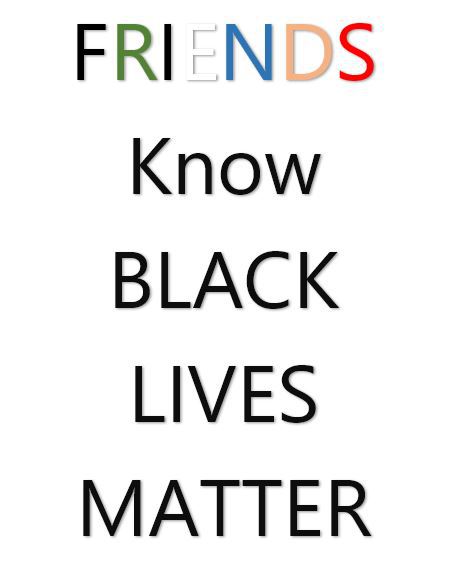
Here is one graphic you can make a sign from.

Friends, our small and rural communities especially need to hear these messages

This is the time to stir up uncomfortable conversations.  My black friends wonder why white people are not helping them.  We need to show visible signs of support.   We need to attend the Black Lives Matter rallies.  We need to put Black Lives Matter signs on our meetinghouse and home lawns.

Dallas surgeon Brian Williams, who helped care for the police shot there, said “I understand the anger and the frustration and distrust of law enforcement. But they’re not the problem. The problem is the lack of open discussions about the impact of race relations in this country. . . . The killing, it has to stop.’’

Please move away from the sidelines and unite together — regardless of your faith or religious practice — to seek an end to hatred and violence . . . What happened to our family is part of a larger attack on Black and Brown bodies . . . We call on all people, public officials, faith leaders and Americans from all walks of life to help address the festering sores of racism as it spurs an unforgiving culture of violence.” -Rev. Waltrina Middleton, longtime organizer, whose cousin Rev. Depayne Middleton, was killed in the massacre at Emanuel AME Church

2016

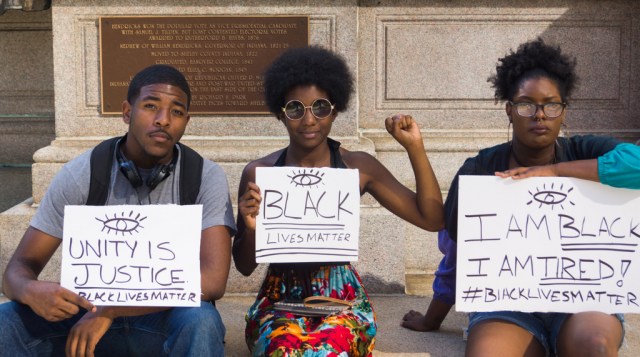
I’ve often looked at, and thought about this photograph I took at a Black Lives Matter protest in Indianapolis in July, 2016.

It was a warm, sunny summer evening, around sunset.  I arrived about half an hour early and there weren’t many people gathered on the lawn of the Indiana Capitol, yet.

I almost walked past the trio above, but something made me stop.  I thought they created an excellent image of the Black Lives Matter Movement…poised, stressed and tired, respectful, determined, nonviolent, hurt, angry, but very, very intent and serious. 

It was important to me that I ask for their permission to take this photo, something I didn’t usually do then at public events. These days I no longer take photos that show people’s faces, because law enforcement uses such photos to bring charges.

They each considered my request for a moment, then each, with varying degrees of enthusiasm, indicated that would be permissible.  I knelt in front of them, framed and then shot the photo, and thanked them.  Silent nods, but also slight smiles.

I like each of the facial expressions, the story each person’s posture tells, and the raised fist salute.  I like the sense of support, leaning in toward each other.  I like the messages on the signs.

But the reason I keep coming back to this is because I also feel a real challenge from them to me/us.  I think they are saying “we’ve taken the time and effort (and I would say courage) to come out in public to support our community and each other, and demand that these injustices stop.”

And they seem to be asking me/us, “what are you going to do?  Do you have a little courage yourself?  Will you make yourself, and others uncomfortable by speaking the truth about these things?”

A Hierarchy Resister

Recently I described why Quakers should dismantle vertical hierarchies. The hierarchies that structure everything Western peoples live, work, and worship by. Every vertical hierarchy creates structures where one, or a select few, take power and benefit from those beneath them. We have been lulled into accepting these structures as the way things are. Such as a supervisor over workers. But the consequences of these hierarchies are more extensive and significant than often realized.

Des Moines Mutual Aid

Reflecting on what I last wrote, Hierarchy and Quakers, I realize I shouldn’t have made such a sweeping statement. When I wrote that means Black, Indigenous, and other people of color (BIPOC) don’t want to be associated with these Friends, I was speaking about the BIPOC people I know. By associate I meant there will be this awareness that there will be frustrations when those who are aware of hierarchies try to work with those who aren’t. Might make it impossible in some cases.

I say this from my two years of experience in a Mutual Aid community. This is not some theory I’ve read somewhere. This has changed me so much I now have trouble being in hierarchical situations myself.

I am a hierarchy resister.

I spend so much time praying and writing about Mutual Aid because I want to share what I am learning with Friends. I believe this can energize our peace and justice work. Mutual Aid is the framework that models the Beloved communities Friends strive to create. Gets to the roots of injustice. Some of the articles I’ve written about Mutual Aid can be found here: https://landbackfriends.com/mutual-aid/

  • My introduction to Mutual Aid was in response to a strong Spiritual leading.
  • Mutual Aid is NOT charity.
  • Maintaining a flat or horizontal hierarchy is what makes Mutual Aid work.
    • MUTUAL is the key.
  • Removing the artificial hierarchies eliminates grouping people by race, class, gender, education, etc. There cannot be white supremacy, for example, if there is no vertical hierarchy.
  • Mutual Aid resists authoritarianism and colonization.
  • I believe Mutual Aid is the Quaker way of being in the world.

Mutual Aid represents a paradigm shift away from capitalism, white supremacy, insurance-controlled healthcare, militarized police and punishment oriented judicial system, prisons, education that resists teaching critical thinking and promotes white supremacy, and domestic and global militarism. Away from commodifying all natural resources and continued extraction and burning of fossil fuels.

Queries related to Mutual Aid
Do we recognize that vertical hierarchies are about power, supremacy and privilege? What are Quaker hierarchies?
Do we work to prevent vertical hierarchies in our peace and justice work?
What are we doing to meet the survival needs of our wider community?
How are we preparing for disaster relief, both for our community, and for the influx of climate refugees?
Are we examples of a Beloved community? How can we invite our friends and neighbors to join our community?

What Is Mutual Aid?

Mutual aid is collective coordination to meet each other’s needs, usually from an awareness that the systems we have in place are not going to meet them. Those systems, in fact, have often created the crisis, or are making things worse. We see examples of mutual aid in every single social movement, whether it’s people raising money for workers on strike, setting up a ride-sharing system during the Montgomery Bus Boycott, putting drinking water in the desert for migrants crossing the border, training each other in emergency medicine because ambulance response time in poor neighborhoods is too slow, raising money to pay for abortions for those who can’t afford them, or coordinating letter-writing to prisoners. These are mutual aid projects. They directly meet people’s survival needs, and are based on a shared understanding that the conditions in which we are made to live are unjust.

There is nothing new about mutual aid— people have worked together to survive for all of human history. But capitalism and colonialism created structures that have disrupted how people have historically connected with each other and shared everything they needed to survive. As people were forced into systems of wage labor and private property, and wealth became increasingly concentrated, our ways of caring for each other have become more and more tenuous.

Today, many of us live in the most atomized societies in human history, which makes our lives less secure and undermines our ability to organize together to change unjust conditions on a large scale. We are put in competition with each other for survival, and we are forced to rely on hostile systems— like health care systems designed around profit, not keeping people healthy, or food and transportation systems that pollute the earth and poison people— for the things we need. More and more people report that they have no one they can confide in when they are in trouble. This means many of us do not get help with mental health, drug use, family violence, or abuse until the police or courts are involved, which tends to escalate rather than resolve harm.

In this context of social isolation and forced dependency on hostile systems, mutual aid— where we choose to help each other out, share things, and put time and resources into caring for the most vulnerable— is a radical act.

Dean Spade. Mutual Aid: Building Solidarity During This Crisis (and the Next) (Kindle Locations 104-120). Verso.