Des Moines Mutual Aid Anti-war Actions

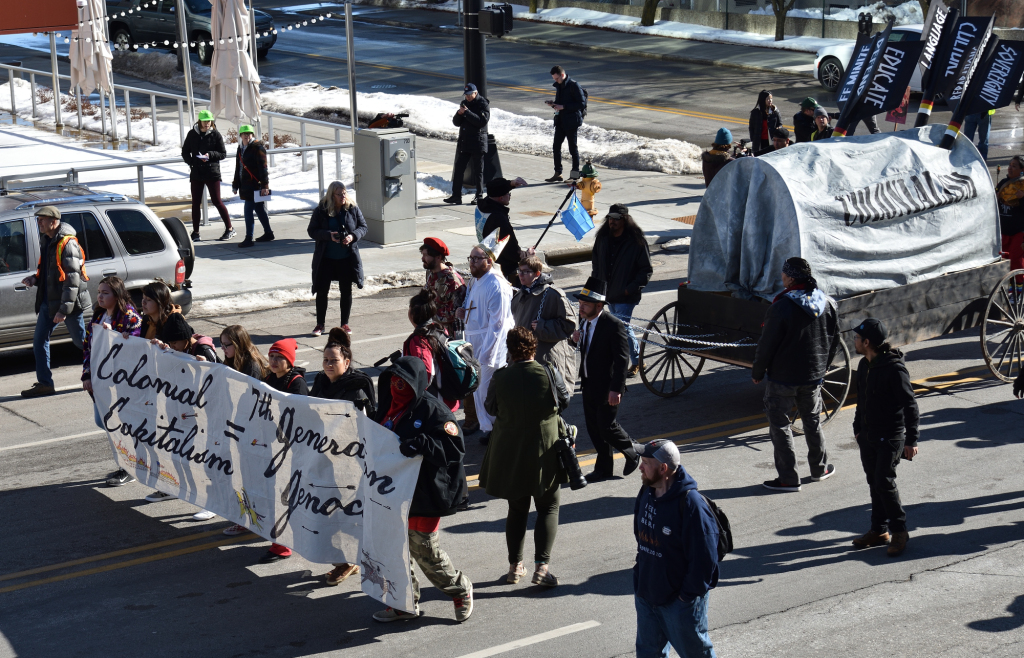
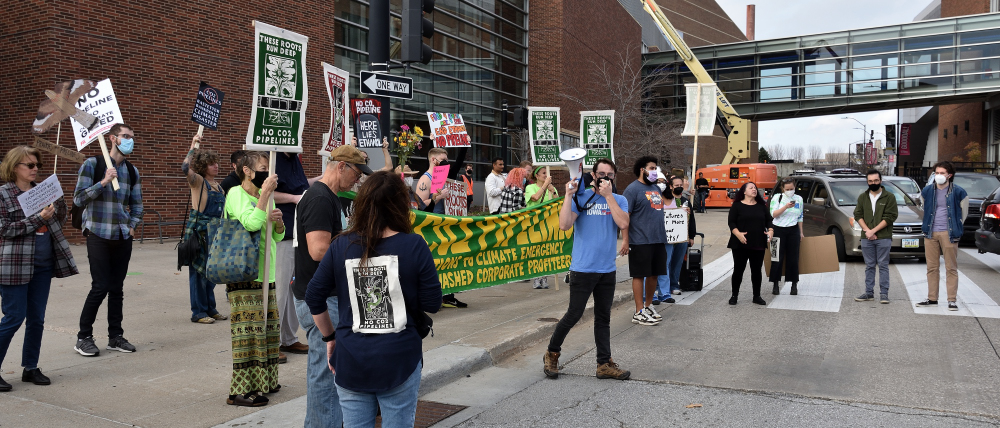
In January 2020, Des Moines Mutual Aid participated in a march protesting the potential for war or increased hostilities with Iran that followed the fallout of the assassination of Qassem Soleimani by drone strike in Baghdad.

That was an example of the principle to think globally, act locally.

January 3, 2024

Now there is the tragic news of many people who attended the fourth anniversary of Soleimani’s death being killed by explosives.

Now there have been two explosions that killed nearly 100 people and wounded scores at a ceremony in Iran on Wednesday to commemorate commander Qassem Soleimani who was killed by a U.S. drone in 2020, Iranian officials said, blaming unspecified “terrorists”.

Iranian state television reported a first and then a second blast after 20 minutes during a crowded fourth-anniversary event at the cemetery where Soleimani is buried in the southeastern city of Kerman.

Blasts kill nearly 100 at slain commander Soleimani’s memorial, Iran vows revenge by Parisa Hafezi, Reuters, January 3, 2024


January 4, 2024

Yesterday a US airstrike killed an Iran-linked militia commander in Baghdad

BAGHDAD — A U.S. airstrike here on Thursday killed an Iran-linked militia commander and risked accelerating the regional fallout from Washington’s support for Israel’s military operation in Gaza, even as the Biden administration scrambles to contain the bloodshed.

While the United States has targeted militia-affiliated locations in Iraq and Syria several times in recent months, an American operation in such a central location of Iraq’s capital is exceedingly rare. Harakat Hezbollah al-Nujaba falls under the command of the Iraqi army, which responded swiftly — and in anger — saying agreements between Baghdad and Washington had been violated.

U.S. strike in Baghdad raises specter of wider regional war. Iraq says the strike violated agreements between Baghdad and Washington. The Pentagon described it as ‘necessary’ and ‘proportionate.’ By Mustafa Salim, Louisa Loveluck, Dan Lamothe and Alex Horton, The Washington Post, January 4, 2024

Biden Administration Bypasses Congress

The Biden administration has bypassed Congress twice to approve emergency weapons sales to Israel. The first instance was a sale of nearly 14,000 rounds of tank ammunition worth more than $106 million. The second instance involved a $147.5 million sale for equipment, including fuses, charges, and primers, needed to make the 155 mm shells that Israel had already purchased functional.

The Biden administration once again bypasses Congress on an emergency weapons sale to Israel by By MATTHEW LEE, Associated Press, 12/30/2024

Gen. Qassem Soleimani assassinated 1/3/2020

The United States killed a high-profile commander of Iran’s secretive Quds Force with a drone strike in Iraq early Friday, the Department of Defense said.

“At the direction of the President, the U.S. military has taken decisive defensive action to protect U.S. personnel abroad,” the department said in a statement announcing the death of Gen. Qassem Soleimani, a commander of Iran’s military forces in Iraq, Syria, Lebanon and elsewhere throughout the Middle East.

U.S. airstrike kills top Iran general, Qassem Soleimani, at Baghdad airport by By Phil HelselKen Dilanian and Josh Lederman, NBC News, January 3, 2020


Now I understand that working for peace today is to work for justice in oppressed communities in our own country.

Where is the peace movement now?

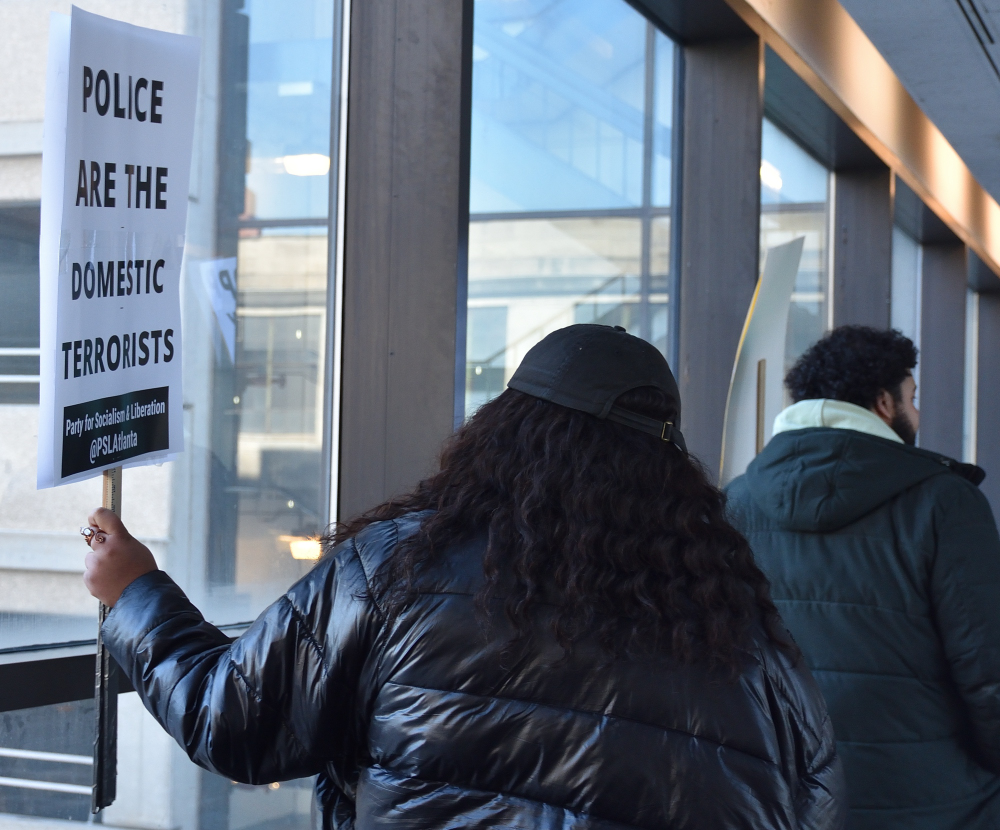
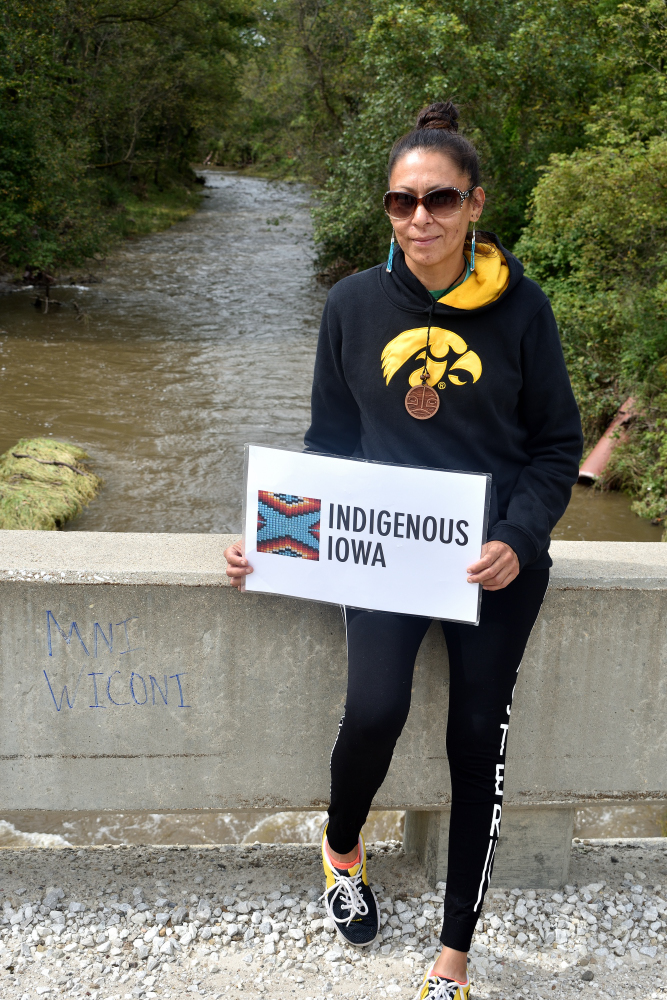
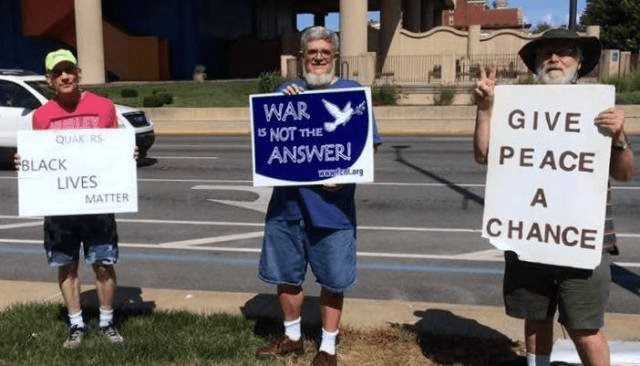
After the Vietnam War, it seemed the peace movement in this country had died. Now I understand that working for peace today is to work for justice in oppressed communities in our own country. In this photo, I’m holding a sign related to Black Lives Matter (circa 2016). It took a while for others at the peace vigil to become comfortable with the divergence from the usual anti-war emphasis.
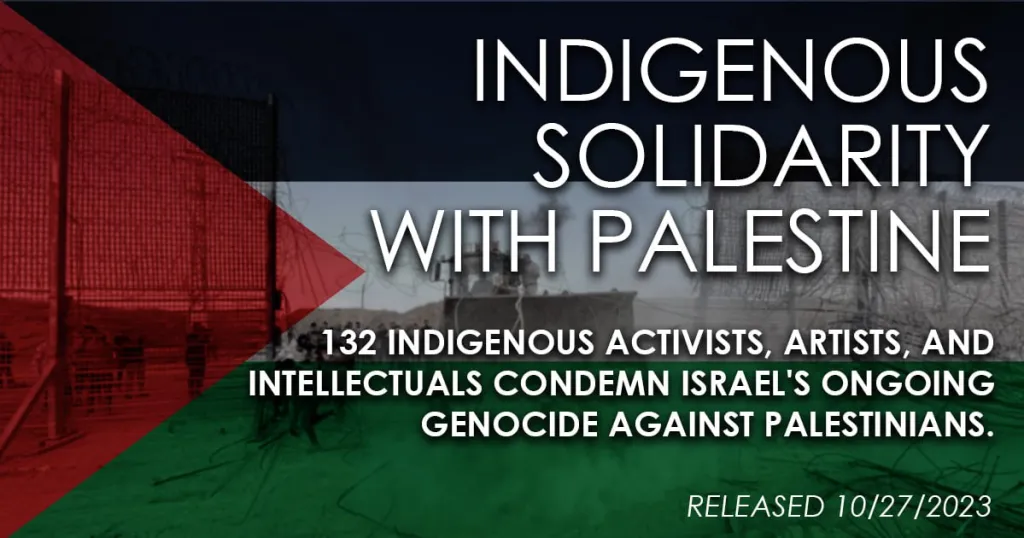
Although the West’s imperialism is not new, the U.S. is increasingly viewed as a global evil Empire. The most recent example, of course, is the Biden administration’s continuing massive support for Israel’s genocide in Gaza. Even bypassing Congress to send more military aid.

And on the global stage is the outrage of seeing the U.S. block the United Nations call for a ceasefire in Gaza.

Des Moines Mutual Aid protests the assassination of Qassem Soleimani (2020)

A Love Letter to Y’all

One year ago yesterday Des Moines Mutual Aid participated in a march protesting the potential for war or increased hostilities with Iran that followed the fallout of the assassination of Qassem Soleimani by drone strike in Baghdad.

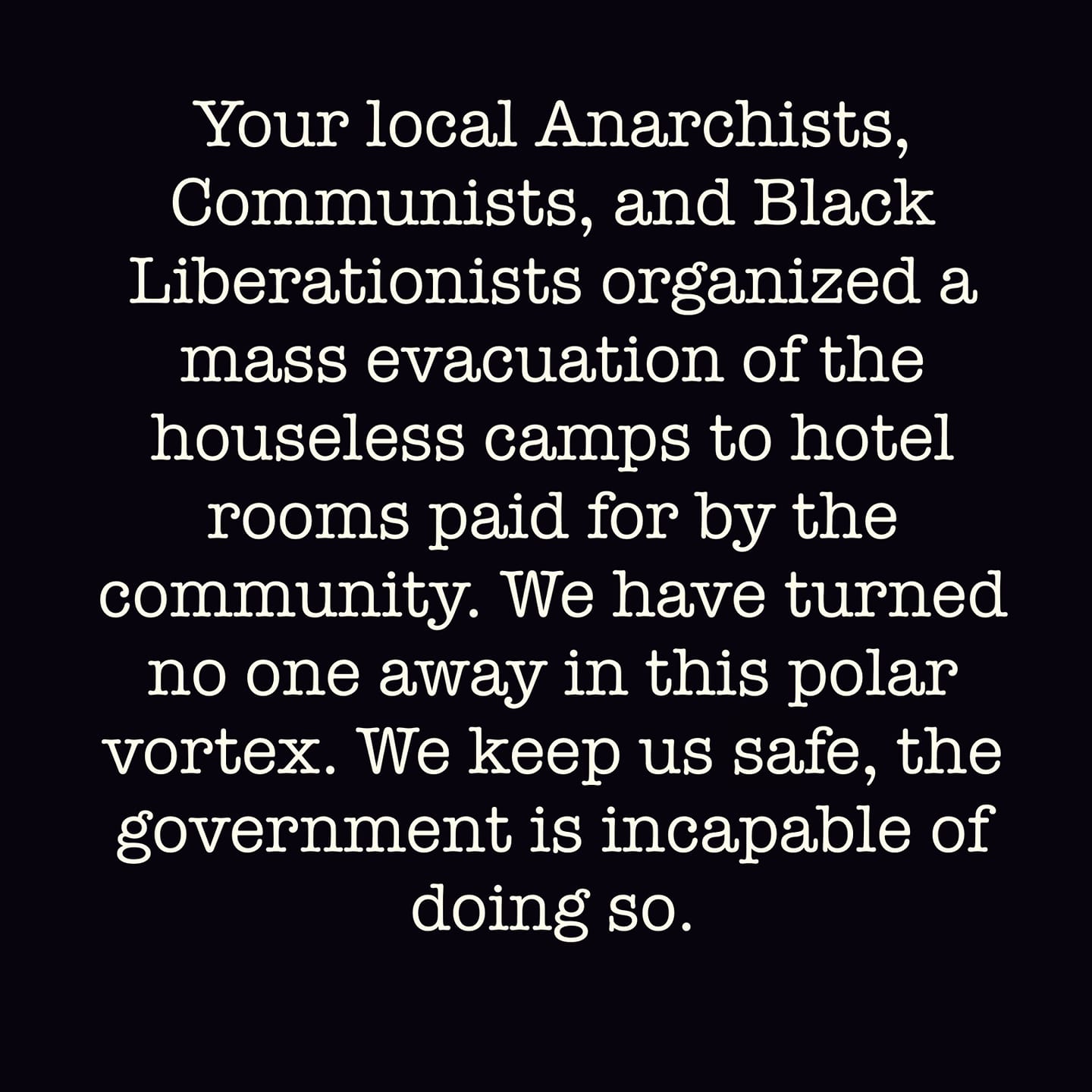
This was our first “public” event since adopting the name Des Moines Mutual Aid, a name we gave our crew during our growing work with our relatives at the houseless camps throughout the city and our help with coordinating a weekly free grocery store that has a 50 year history, founded by the Des Moines Chapter of The Black Panther Party For Self Defense.

A year ago we started laying the foundation for work we had no idea what was coming.

As we were adjusting our work with the camps and grocery re-distribution in response to the Covid-19 pandemic, both that continued to grow in need and importance, the police continued their jobs and legacy of brutality and murder.

This nation exploded in righteous rage in response to the pig murders of Breonna Taylor and George Floyd.

DMMA realized we were in a position to organize a bail fund to keep our fighters out of jail, both to keep the streets alive as a new phase of The Movement was being born, and because jails are a hotspot of COVID-19 spread.

Not to mention the racial and economic oppression that is the cash bail system.

In the past year, DMMA has expanded its work in multiple directions and gained many partners and allies.

We partnered with the Des Moines Black Liberation Movement (@DesMoinesBLM) to create the DSM BLM Rent Relief initiative to help keep families in their homes in the midst of a pandemic and the winter.

The camp work has grown exponentially but is being managed with our collaboration with Edna Griffin Mutual Aid (@egma_dsm), DSM Black Liberation Movement (@DesMoinesBLM), and The Great Plains Action Society (@PlainsAction).

The bail fund remains successful because of desire from the public and a partnership with Prairielands Freedom Fund (@prairielandsff) (formerly The Eastern Iowa Community Bond Project).

The weekly free food store has maintained itself, carrying on the legacy it inherited.

Every one of our accomplishments are directly tied to the support of so many people donating time, talent, and funds to the work. We are overwhelmed with all of your support and hope you feel we are honoring what we promised.

All of these Mutual Aid projects are just a few of many that this city has created in the last year in response to the many crises we face, not only confronting the problems and fulfilling the needs directly in front of us, but creating a sustainable movement that will be capable of responding to what’s next and shaping our collective futures as we replace the systems that fail us.

These last 12 months have been wild and a real test of all of our capabilities to collectively organize.

But it is clear that we as a city have what it takes to do what is needed in 2021, no matter what crisis is next.

Much gratitude to you all.
In love and rage,
Des Moines Mutual Aid
January 6, 2021

Peace on Earth?

Glory to God in the highest, and on earth peace, good will toward men.

Luke 2:14

I am deeply distressed by the dichotomy between ‘peace on earth, good will toward men’ and the blatant opposition to that by the forces of global dominance. I cannot fathom the massacre in Gaza and the silence of the people in this country. The overwhelming majority of people in other countries are not silent.

This has been the pattern that began when the Europeans landed. The enslavement of those brought here from Africa continues with economic injustice and mass incarceration. White settler colonialism continues as Indigenous lands remain occupied today.

The rapid rise of authoritarianism is the next stage of dominance over us all.

The silence is astounding.

That silence is ruthlessly enforced, not only against opposition to war but also for the rape of Mother Earth. Or for a reckoning about past injustices such as the Indian schools of forced assimilation or structural racism.

I told my Quaker meeting I have this sense of being threatened by simply writing about these things. Which is proof that authoritarianism is working. Quelling dissent. I wonder if I might be imprisoned one day.

All we are saying is give peace a chance.

John Lennon

The message of Christmas has traditionally involved prayers for goodwill toward all and “peace on Earth,” but through their opposition to ceasefire in Gaza, most Western Christians are affirming the opposite values: that violence, weapons and destruction are the only response to real and perceived enemies.

The U.S. Christian Palestinian communities that I am a part of are truly puzzled at the behavior of the many Western Christians who seem to see no dissonance between the message of love and peace that is at the heart of our shared religion, and their backing for Israeli’s military assault against Palestinian civilians, which has killed more than 20,000 people in Gaza alone within the last three months.

Anytime an attack occurs, or lives are lost, we are called to choose between two worldviews in our response. One worldview holds that violence, bombings and brutal force is the only method available and should be pursued relentlessly until the enemy is vanquished, regardless of the cost in lives and destruction for civilians on both sides.

But an alternative worldview insists on the way of peace, reconciliation, justice and tolerance.

Christmas Wishes for “Peace on Earth” Are Empty Without Ceasefire in Gaza. How can so many US Christians sing “peace on Earth” without opposing US support for the genocide unfolding in Gaza? By Jonathan Kuttab , TRUTHOUT, December 25, 2023

United States diplomats once again held up a vote on a watered-down United Nations Security Council resolution on Wednesday aimed at bringing more aid and relief to civilians in the besieged Gaza Strip as reports of starvation, mass killings, and other war crimes allegedly committed by the Israeli military continue to pile up.

Despite massive international support for a ceasefire at the UN, on December 8, the U.S. blocked a previous attempt by the Security Council to leverage international law and secure a humanitarian ceasefire so more aid can enter Gaza.

Allegations of Israeli War Crimes Grow as US Again Delays Security Council Vote. UNICEF has declared Gaza to be the “world’s most dangerous place to be a child.”
By Mike Ludwig , TRUTHOUT, December 20, 2023

The second question

What questions do you ask these days? Ask yourself or others? Are you brave enough to ask anything at all? Such as what can we do about accelerating authoritarianism? Runaway global burning? Why is the US complicit in the Israeli carpet bombing of Gaza? These things can only happen if authority is not questioned. There is a palpable sense of fear for anyone to question empire today. People who question are beaten, jailed, killed.

Yesterday I wrote about asking the right questions. As a spiritual person, I have been, and believe I will continue to receive answers from the Spirit or Inner Light. I appreciate the spirituality of the following.

From my career in medical research, the first thing I learned was the most important thing is to ask the right questions.

So, during a recent discussion about Quakers and the Indian Boarding Schools, I recognized the significance of the question that was asked, “how can we decolonize ourselves?” Prior to that, we were lost as we tried to understand our ancestor’s involvement in those institutions. It seemed the subtext of the question is “is it even possible to decolonize ourselves?” Which I tried to answer yesterday.

That question immediately brought to mind something that I had heard the Indigenous spiritual leader, Arkan Lushwala, say.

The answer to “what can I do?”

“Everywhere people ask, “what can we do?”
The question, what can we do, is the second question.
The first question is “what can we be?”
Because what you can do is a consequence of who you are.
Once you know what you can be, you know what you can do.”

Arkan Lushwala

Speaking about what is happening on Earth right now,
many of the conditions of life that we used to take for granted,
now are really out of balance.
Hopefully we still have time to get back into balance
so life may continue.
I travel around the world and meet people and talk to people
from all different cultures.
And everywhere people ask, “what can we do?”
The question, what can we do, is the second question.
The first question is “what can we be?”
Because what you can do is a consequence of who you are.
Once you know what you can be, you know what you can do,
and we cannot afford wasting time;
we have little time.
We need to be precise now.
When someone sincerely asks, “what can I do?”
my humble answer,
the only answer that I find in my heart to be sincere is,
“First find out what you can be.”
Action is extremely necessary at this time.
This is not a time just to talk about it.
The most spiritual thing now is action.
To do something about what’s happening.
To go help where help is needed.
To stand up when we need to stand up,
and protect what is being damaged.
And still, this action needs to be born
from a place in ourselves that has real talent,
real intelligence, real power,
real connection to the heart of the Earth,
to universal wisdom,
so, our actions are not a waste of time.
So, our actions are precise,
our actions are in harmony with the movement,
the sacred movement,
of that force that wants to renew life here on Earth
and make it better for the following generations.

Arkan Lushwala


Arkan says we are facing life threatening situations related to environmental damage.  We are facing such severe challenges that we cannot solve them only by ourselves.

We must move beyond thinking and talking. Action now is essential.

Action is spiritual.

We need to practice trying to reach our sacred space. We need a higher universal intelligence to help solve these problems.

We must open a sacred space for prayer so we may be open to the warrior spirit.

The importance of prayer.

  • We pray as a form of connecting to other forms of communication
  • We need to be aware of what is happening in the moment, elevate ourselves, move closer to the sacred
  • I first have to reach deep into my own heart

You start praying while you are also listening. I become aware of, remembering, what I pray about at that moment. We need to rely on our own ancient indigenous memory. Stop being isolated. Fully become part of the earth and water and plants and air. This is an immense source of knowledge about these problems.

I am in front of the sacred fire of all who are listening. Let’s say that I am thinking now. I am remembering. The notion of intelligence and to understand refers to memory. Intelligence means learning, but also achieving that state in your mind when you are remembering. The air that we are breathing carries the memories of the ages, the movement of energy. Deepest intelligence in our culture is memory. There are always memories of the ages in all that surrounds us.

The state of being, the prayer, makes us open to receiving. If we are really open, and not blocking ourselves, and connected to what is around us, with our eyes, breath, sensations, and feeling that arrive in our heart, through our antenna, if we are open in this way while we are doing something, our action is being infused with guidance or instructions. There is something there that is watching what you are doing and helping guide you. Sometimes we need the help of the elders or others to understand these experiences.

We ask for help. When we put ourselves in that elevated space, that makes it much easier for us to receive help. Help is always there but we often miss the messages.

If I am open and receptive to other frequencies and the higher state of my being, I’ll have much more help in my work.

The correct way is not to take credit, but the joy is the moment itself, by feeling integrated to life while you are doing the action.

When we sit with others in a circle, when we all change the state of our being together, we move up to the sacred together. Working with others in community, much, much more can be accomplished.

If a person expresses an experience that is from a sacred space of high resonance, I am activated by that. It resonates in my own heart and mind and spirit, and it triggers my memory, too. by the presence of something sacred.

We sit in a circle and witness someone remembering. We receive the same spirit together. Our individual self and agenda slips away. Joining our hearts. Mother Earth is the One, all of us become the One together. A lot of wisdom comes south. We are all impressed by the presence of something sacred.


It is becoming clearer and clearer, with every passing day, that walking a prayerful, peaceful spiritual path is the only way forward to a just, sustainable, and harmonious world.”

Prophecies, Unprecedented Change and the Emergence of a New Global Civilization, 2017-2020, WALKING THE RED ROAD·TUESDAY, DECEMBER 20, 2016

T-MAPs and your own story

I sense that I’ve written enough about Transformative Mutual Aid Practices (T-MAPs). This is a link to all that I’ve written about T-MAPs: https://quakersandreligioussocialism.com/t-maps/

You can create your own T-MAP. This can be helpful either for you personally, or as a tool to share with a group you belong to.

Writing down stories about our lives helps us understand who we are, how we got here, and how we relate to the world around us.

  • Download PDF Workbooks and write your answers in them.
  • Or you can use the T-MAPs Online Creator Tool, which is described below. The Tool will save your responses to the questions. You can save what you have done and return to it later. If you enter your email address, you will be mailed a PDF copy of each section you complete.

T-MAPs Online Creator Tool

You can use these questionnaires to create your own T-MAP and have your answers emailed to you in a printable pdf. There are 5 sections. Click one of the images below to try filling out that section, see what you think, and let us know!

Before you start working on creating your T-MAP, take a few minutes to ground yourself – the more centered you are, the better time you’ll have with this process. The T-MAPs workbook is designed to begin with questions that explore who you are and what you care about, and as they go on become more challenging, digging into what it’s like when you’re struggling. Eventually, you’ll want to answer the following questions thoroughly, but you may start out with notes and evolve your answers over time. This is a living document. You don’t need to do it all at once, and it can be really helpful to talk over these questions with other people. If they get too challenging, take a break and come back to it. Remember that you are creating a map for you and other people to be able to follow – it’s worth taking the time to find the right language that will make sense to you, and that you will be able to share with others


T-MAPs are drawn from our collective wisdom. These tools take into account our social, economic, and political context, and create space for thinking through how our histories and backgrounds shape who we are now. As our political climate becomes more heartless and unstable, we feel the need to weave our own safety nets. T-MAPs can be nourishing to everyone from grassroots social justice activists to woke health care practitioners and Peer Specialists working on the front lines of the mental health system.

Writing down stories about our lives helps us understand who we are, how we got here, and how we relate to the world around us. Wellness strategies are things like eating enough food every day and talking to our support people, which help us stay on our path. Resilience practices are things that bring us a feeling of being whole and alive – spending time in nature, singing, hanging out with people we care about – which help us stay grounded. Resources can be things in our local community – like friendly gathering spaces and places where we can watch the stars at night – or our favorite media, like helpful books and podcasts, or international resources like Madness Radio and The Hearing Voices Network. Articulating these things gives us a resource we can share with the people in our lives to guide our conversations and help us support each other through rough times.

https://commedesfous.com/wp-content/uploads/2022/07/T-MAPs-Transformative-Mutual-Aid-Practices.pdf
Creative Commons License

 T-MAPs is licensed by Jacks McNamara and Sascha DuBrul under a Creative Commons Attribution-NonCommercial-NoDerivatives 4.0 International License.


Upskilling for an Uncertain Future

How do you see the future? Do you try to avoid thinking about it at all?

Yesterday, I wrote Rethinking the Hero’s Journey, based on the article, “White men’s roles in anti-racism work: Rethinking the Hero’s Journey,” on the Healing Minnesota Stories blog site. Because it resonated with what I’ve learned about working for peace and justice. Which is the need to find your own power, which is what gives you joy. That provides you with the positive attitude, fortitude, and the skill you can bring to the difficult work of fighting for justice.

This morning, I found the article Upskilling for an Uncertain Future that expands on those ideas. The subtitle is A middle-aged perspective on sparking joy in darkness.

The trifecta of depression, anxiety, and untethered rage are unbearable at times. Even with HRT, micro-dosing, meditation, sleeping pills, and a relatively healthy, active lifestyle, most days are permeated with a deep sense of dread, fear, rage, and sadness. On the plus side, the odd day when my old self surfaces for a day or two feels exquisite.
I wanted to ask my doctor if there were any adjustments to my HRT that might improve my mood.
Exasperated, she said: Everyone is depressed. It’s not just you. It’s everywhere and everyone. It is the state of the world.”
In other words, suck it up.
Then the closer: “Do you need tranquilizers?”

Sparking joy in darkness

Tracy Collins

If I’m honest, there is a darker motivation…

Cooking in and of itself is proving to be a reprieve from my current, sad state of despair. But underneath the self-soothing, there is a deeper purpose.

I don’t talk about it much, but when I do, there are quiet nods of agreement. Friends share their darkest fears as well as their personal preparations for the unthinkable. With the chaos of the world, it is hard not to think about what might happen in the coming decade. The floods, water shortages, famine, and fires are already here.

The way I figure is that if I can master making delicious food, then I’ll be indispensable in the event of a collapse. No one will want to turf the lady who makes the best scones on the planet, the legendary stew, or life-altering casserole. They’ll keep me around so long as I keep everyone fed and happy.

Upskilling for an Uncertain Future. A middle-aged perspective on sparking joy in darkness by Tracy Collins, medium.com, 12/12/2023


For the sake of your own mental health and what you can offer to your community in the uncertain future, find your own power. Even better, put your life-long learning skills to work to learn additional skills and power.


taboo

taboo against a subject or activity is a social custom to avoid doing that activity or talking about that subject, because people find them embarrassing or offensive.

Yesterday I wrote about umair haque’s new publication, the Issue. And began discussing the latest issue (of the Issue): Our Civilization’s Melting Down—But We’re Not Allowed to Talk About It.

I got to the part where he began to explain why it is taboo to talk about our civilization’s meltdown.

You see, right now, at this juncture in human history, a New Set of Taboos have emerged. Taboos exist for a reason—to hide truths we’d rather not see the light of day, because they’re too uncomfortable, painful, shameful, difficult, or challenging. As we do that, social bonds rupture. And so taboos, while they hide Issues that We Have to Face, do so precisely because they keep our tribes and hierarchies intact. There’s a form of short-term stability in them, even if the price, over the long-term, is steep, as it has been for so many civilizations before us.

What are the New Taboos of the Age of Extinction? Well, we’re not supposed to discuss How Bad Things Really Are. In what way? In almost any way. Economically—how our economies are sputtering out. Hey, billionaires are getting richer! Whee! Socially—how predators of the human soul and body both are skyrocketing to power, from abusers of women, to Manfluencers leading young men to become…abusers. How our social contracts have been ripped apart by crackpots who think nobody should have anything. Biologically–how life on the planet is undergoing a literal mass extinction. And—hey, what exactly are we going to do about climate change, and do you think the summer a decade from now is going to…be…pretty…let alone…survivable…for many?

We’re not supposed to talk about itAny of it.

Our Civilization’s Melting Down—But We’re Not Allowed to Talk About It.

He goes on to describe in detail the taboos we are facing and their many profound, negative, consequences. But you get the idea as soon as it is put in the context of taboo.

Just in the last few months, high-temperature records have been broken multiple times, around the globe. Extreme drought has made it hopeless to even plant crops, which means famine will be increasing. Water supplies for cities and states are drying up. Out-of-control wildfires pollute the air for hundreds of miles. Prices of everything are skyrocketing at the same time many people are losing their jobs to automation and artificial intelligence.

To talk about police brutality. Prisons that function to remove Black men and women from society. Structural racism.

The party in control of the US Congress is nonfunctional. The President of the other party is war-mongering. The expansion of NATO increases the threat felt by Russia. We are pouring billions of dollars into Ukraine as a proxy for this country’s war machine. It is taboo to point out that a small fraction of the military budget could completely fund all social programs.

It is taboo to talk about the rapid rise of Authoritarianism.

It is taboo to even talk about the theft of land from Indigenous peoples, the epidemic of Missing and Murdered Indigenous relatives, and the horrors of the institutions of forced assimilation of native children.

And just now the widening war in the Middle East. It is taboo to even suggest Israel’s policies of apartheid had anything to do with that.

In our Quaker communities, it is taboo to talk about continued racism, involvement with the Indian boarding schools, the abolition of police and prisons, or allowing conveniences to stop us from confronting our use of fossil fuels. To suggest there is anything wrong with capitalism and hierarchies of power.


The minute you even start talking about any of this stuff seriously? Repeatedly? Urgently? You’re met with the Greatest Wall in Human History. It’s not made of bricks or stone. But of something far stronger. Hegemony and ideology. Power. Conformity and social pressure

Our Civilization’s Melting Down—But We’re Not Allowed to Talk About It.

Dangers of lack of diversity revisited

I am glad some friends have responded to my post yesterday, Dangers of lack of diversity in Quaker meetings today.

Some comments mention an underlying tone of anger, making broad generalizations and not being clear about what I’m asking Friends to do. All of which I can see now.

As I was writing, I understood I was making generalizations. But if I always said things like “some Friends…”, “male Friends…”, I felt that would dilute what I was trying to say. Some would see those qualifications as an indication that what I was saying was not directed at them. I made the assumption that those who are exceptions would realize they were (exceptions). Now I can see that such an implicit assumption was not good.

I sometimes make the mistake of feeling anger in situations where I am frustrated. That also is not good. I have been deeply frustrated about many things, some for my entire life. Chief among those is a life-long disappointment that many Friends seemed comfortable with the status quo, with many conveniences from being part of the dominant culture in this country.

Some specific examples include my disappointment that few Friends refused to cooperate with the Selective Service System, which meant an acceptance of the validity of the draft, and militarism. Some of the people I most admired were those who refused to cooperate, most of whom were incarcerated. It was their example that helped me make my own decision to not cooperate. These were risky decisions, but I thought that was what Quakers did, take those risks when that was what they were led to do.

There is my life-long attempt to convince Friends to reject the conveniences of the automobile culture that developed in this country. I was led to live without owning a car. That was inconvenient in many ways. I was always aware the reason I could do so was because I lived where mass transit was available. Actually, anytime I moved in Indianapolis, I made sure the new place would be on a city bus line and within walking distance of a grocery store, laundry, and my work.

Of course, mass transit was not an option in rural areas. I hoped Friends living there would work on ways to rely less on fossil-fueled transportation. Why couldn’t there be community based transit systems in rural areas? Most did what they could to otherwise reduce their carbon footprint.

But here is the point. If we had all worked to build mass transit systems and walkable communities, we would not be in our current, dire, rapidly deepening environmental chaos, on the path to our own extinction. How could we do this to our children and Mother Earth? This life-long frustration does leak out as anger at times.

If we had all worked to build mass transit systems and walkable communities, we would not be in our current, dire, rapidly deepening environmental chaos, on the path to our own extinction

Much of this frustration is with myself. Why wasn’t I more effective in getting Friends to see what was happening?

This was a constant in many of the dangers of lack of diversity I wrote about. I am not blameless. Thus, much of the frustration and anger is directed at myself as well.

As I spent years in oppressed communities, I began to understand the deep injustices inflicted on my friends. Injustices hurting them everyday, in so many ways. That’s why I feel such a sense of urgency and frustration that more Friends don’t see these injustices and work to heal them now.

This is not an equivocation about what I wrote yesterday.

As to what I long for Friends to do, it is to find any way they are led to become engaged in diverse communities. And specifically Mutual Aid communities. (I capitalize Mutual Aid to emphasize the difference between “real” Mutual Aid versus charity work. I write about all this extensively on my blog, Quakers and Mutual Aid). Because Mutual Aid communities are founded on the principle of rejecting hierarchies. The power structure of any type of hierarchy always results in a form of dominance. And dominance is the root of injustice. So, any attempt at social justice that has any hierarchical structure simply extends the dominance.

There is an Iowa Mutual Aid Network. You can connect with Mutual Aid communities and projects here: https://iowamutualaid.org/

I included this graphic in yesterday’s post in the hope that you will seek a way to engage with a Mutual Aid or similar community. And hope these points can help you as the Spirit might guide you on your own journey.

Finally, I believe we will be forced to work with communities outside our meetings as the collapse of our social, economic, and political structures accelerates. We will all be forced to find our way through the chaos. Mutual Aid communities already know how to do this because we are doing it now.

Dangers of lack of diversity in Quaker meetings today

Diversity can refer to many things, such as race, ethnicity, gender, sexuality, class, age, ability, and faith background. Both the state of Iowa and our Quaker meetings in the Midwest have very little racial and other types of diversity. This does not reflect the diversity of the wider society nor the diversity in Quaker history and values.

Reasons why Friends need to confront their lack of diversity now

This is a topic that generates significant emotional reactions for numerous reasons. Perhaps one of the most basic is knowing we are not doing what our ancestors had done, what they would probably be doing if alive today.

If we are converging on history and practice, we are missing the point. If we are depending on institutions to create a new society or usher in the Kingdom, then we are deceived. These will not bring the radically egalitarian and Spirit-filled communities that God fostered among early Friends. These are forms, and Friends must follow the Spirit.

I’ve met others who need a Spirit-led Society. We share this vision, and we share the disappointment of being drowned out in meeting by classism, ageism, and racism. Some of us wonder if Quakerism isn’t all that different from the rest of liberal religion. From what we’ve seen, it isn’t apocalyptic. It isn’t radical. It doesn’t sound like Fox or look like Jesus. It works at incremental transformation while simultaneously shushing those who need the system overthrown.

Hye Sung Francis, Seeking a People

  • Many of our Quaker meetings are small and growing smaller.
    • A significant number of Friends are elderly
    • We are failing to attract new members
    • Members are leaving their (Quaker) meetings because
      • Their justice work is not understood or supported
      • They see the harm done to Black, Indigenous, and other people of color (BIPOC) in their meetings.
      • They are frustrated by the meeting’s lack of understanding and involvement around their privilege
      • And the lack of engagement and support for BIPOC communities.
  • Many meetings fail to engage with justice groups that are doing good work, such as Mutual Aid communities.
  • Friends need to engage with Indigenous peoples now

Most White Friends fail to understand their privileges and the consequences.

  • There are a range of justice activities by (Quaker) meeting members. Much of that relates to Friends’ long history of opposing war and violence. But because of our lack of diversity, we fail to understand many other significant and often insidious forms of violence, such as sexual, emotional, psychological, spiritual, cultural, verbal, economic, symbolic, and gender-based violence.
  • Most male Friends are unaware of gender inequality and violence.
  • Much of what passes for justice work are committee meetings, political letter writing, and financial support of Quaker justice organizations such as the Friends Committee on National Legislation and the American Friends Service Committee. That is not enough.
  • Lack of connections with Indigenous peoples is a significant problem for Friends today.
    • Friends are unaware of their ancestors’ settler colonization, including the theft of native lands. Many Friends don’t believe the land they occupy today is stolen land.
    • Unaware of the ongoing crisis of Missing and Murdered Indigenous Relatives. And how this is tied to the construction of fossil fuel pipelines.
    • Just becoming aware of Friends’ involvement with the forced assimilation of native children. Of the many forms of abuse and deaths of thousands of children at those institutions.
    • Friends often don’t have the depth of spiritual awareness of all our relations that we can learn from Indigenous peoples.
  • Structural violence is embedded in the social and economic systems that produce and maintain inequalities and injustices. It is often invisible or rationalized by the dominant groups that benefit from it.
  • Symbolic violence is a form of power exerted through cultural and symbolic means rather than direct physical force. It reinforces social hierarchies and inequalities by imposing the norms and values of the dominant group on the subordinate group. It is often unconsciously accepted by both parties and can be expressed through various practices such as language, representation, body language, and self-presentation. The concept was developed by sociologist Pierre Bourdieu.
    • This is a significant reason why Friends need to support and create Mutual Aid communities which address these very injustices related to symbolic violence.
    • This makes me more aware that Mutual Aid is an expression of nonviolence.


MLK understood — or would have — that all the following things are forms of violence. People forced to “crowdfund” healthcare — to beg their neighbors for pennies for medicine. A workplace culture where being abused and berated by your boss is totally normal. Incomes not rising for half a century — while costs skyrocket to absurd levels. The average American dying in debt. Being forced to choose between healthcare and your life savings. Having to give up your home because you want to educate your kids.

All these things are forms of violence. Violence runs deep. It isn’t just mobs of fascists smearing feces on the walls — though it is also that. It’s what Americans do to one another as everyday interaction — and shrug off as normal. Mental, emotional, social, cultural violence makes up the very fabric of everyday American life. It’s the poisonous residue of slavery. And it’s profoundly traumatic. It has lacerated the American mind, and made violence a legitimate solution to every social problem. But these forms of all-pervasive violence are what a capitalist society is limited to, because everything is competition, rivalry, and ultimately, domination and subjugation.

Americans Don’t Understand What Violence Really Is by umair haque, Eudaimonia and Co, January 17, 2022

This lack of diversity has numerous consequences

  • Excluding or marginalizing people who do not fit the dominant norms or expectations of Quaker culture
  • Limiting the perspectives and experiences that inform Quaker discernment and action
  • Missing out on the richness and joy of learning from and celebrating differences
  • Failing to live up to the Quaker testimonies of equality, peace, and justice

For a long time, I had prayed that my Quaker community would engage with communities like my Mutual Aid community, thinking that would be mutually beneficial. But the clashes and the lack of lived experience with diverse communities of many White Friends have changed that. Now, I feel I need to protect my justice communities from the injuries they would experience from White Friends. It’s not that White Friends wouldn’t try to do what they thought would be helpful, but their lack of knowledge of oppression always results in harm.

For years, I’ve envisioned Quakers and oppressed people working together. But we (White Quakers) have to have enough experience in communities outside our meetinghouses to understand what is happening in these communities. To have a valid perspective. Until that happens, Friends will show they cannot be trusted, and we will be unable to cross the divide.

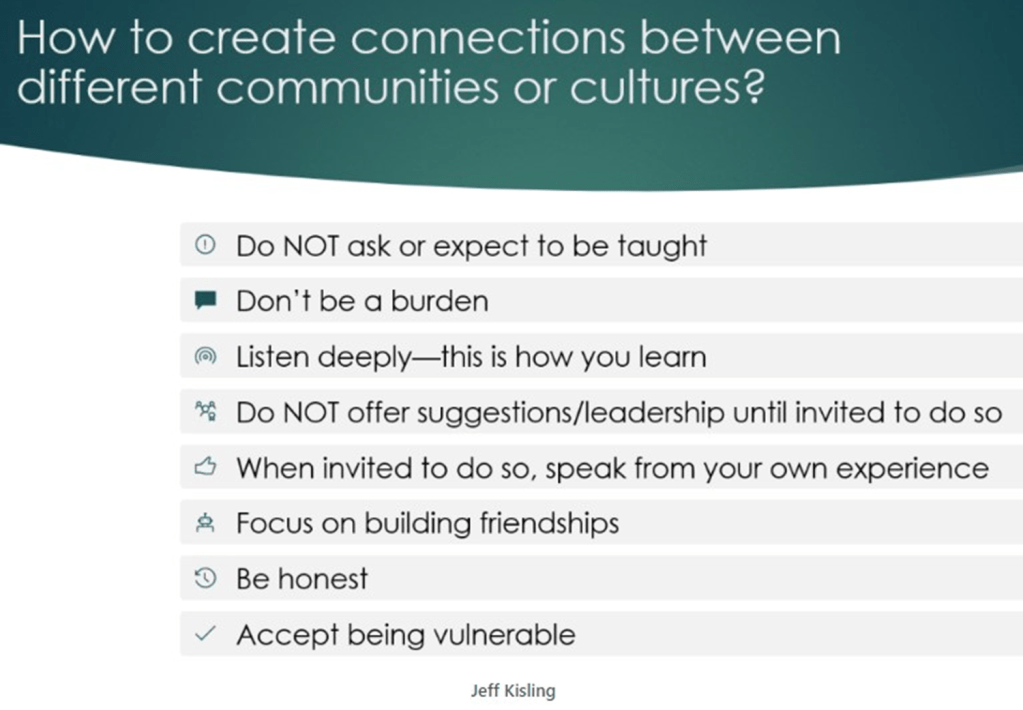
Over the years I’ve built this list of things I’ve learned from my experiences. I hope White Friends who haven’t yet had experiences outside their meetinghouse would keep these things in mind.

By far the most important is to not offer suggestions until the community trusts you enough to ask you for your input. When you are invited to do so, speak from your own experience. Do not talk about things in the abstract. It’s perfectly fine to say you don’t know the answer to a question. This honesty, this vulnerability is crucial. I like to keep in mind “we don’t know what it is that we don’t know.”

Time

It will take much longer than you expect to see this trust begin to develop. I’d been involved with the Kheprw Institute in Indianapolis for three years before I was asked to teach the kids there about photography.


Quakers are pretty white, and that comes with quite a bit of power and privilege. A Quaker in Omaha, Nebraska is going to have probably more weight in what they say to a legislator than a Black Lives Matter activist in Brooklyn, New York. I think there’s a need for Quakers to step out of their meeting and away from a lot of these phenomenal institutions that they’ve created and speak to individuals in an interfaith setting (from Black churches or Black Lives Matter) and have a cross-cultural understanding of what that experience is like because you’ll find that it’s very different, and I think the more we can do of that the more effective we’ll be in addressing these problems. These exchanges and fusion coalitions are what I think it’s going to take, not only for Friends to be effective in dismantling these systems of racism, classism, and white supremacy in American society, but also for all of us to better address these problems in our country.

José Santos Woss (FCNL), Quaker Faith and Justice Reform, QuakerSpeak video

This is another graphic I’ve been working on for years to put things in context.

Why we need different queries

As I’ve been praying about why the Quaker meetings I’m familiar with are slowly dying from attrition and not attracting new attenders, I’m struggling to understand why this is happening. I feel a special urgency, wondering if my Quaker meeting can continue when we lose even one more member. Lose another elderly member, or one who turns away from Quakerism.

I was led to think about our Advices and Queries because they guide the spiritual discussions in our meetings. And they are one concrete thing we can point to for people interested in learning about Quakerism.

It surprised me to be led to the conclusion that our Queries seem rooted in maintaining the status quo of this country’s current economic and political systems. Systems of dominance, systemic racism, and White supremacy. And an implicit view of ‘us versus them.’ (See: Advices and Queries). Today, I hope to explain that more fully and offer suggestions for what we might do differently.

I’m focusing on the abolition of police and prisons, both because this is something I’ve been learning and writing about (https://quakersandreligioussocialism.com/abolition/) and because it is a deep concern of some activist Quakers I know and of my Mutual Aid community. One of my abolitionist Friends is leaving Quakers because of the lack of attention to this concern. This is an example of the attrition I’m concerned about.

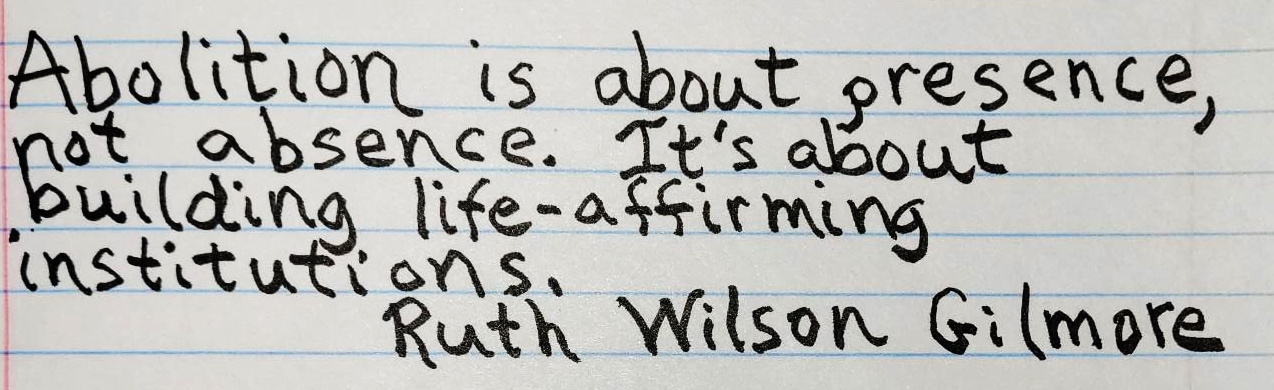
We are police and prison abolitionists. Abolition and the mutual aid that we practice are inextricably linked. We don’t rely on capitalist institutions or the police to do our work. We believe in building strong and resilient communities which make police obsolete, including community systems of accountability and crisis intervention. Des Moines Mutual Aid

What does it mean that abolition is not one of our Query topics?

  • Meeting for Worship
  • Outreach
  • Meeting for Business
  • Harmony within the Meeting
  • Mutual Care
  • Education
  • Home and Family
  • Personal Responsibility
  • Civic Responsibility
  • Environmental Responsibility
  • Social and Economic Justice
  • Peace and Nonviolence

I think that is because abolition touches several of these topics and illustrates why I think we need new queries.


Quakers are pretty white, and that comes with quite a bit of power and privilege. A Quaker in Omaha, Nebraska is going to have probably more weight in what they say to a legislator than a Black Lives Matter activist in Brooklyn, New York. I think there’s a need for Quakers to step out of their meeting and away from a lot of these phenomenal institutions that they’ve created and speak to individuals in an interfaith setting (from Black churches or Black Lives Matter) and have a cross-cultural understanding of what that experience is like because you’ll find that it’s very different, and I think the more we can do of that the more effective we’ll be in addressing these problems. These exchanges and fusion coalitions are what I think it’s going to take, not only for Friends to be effective in dismantling these systems of racism, classism, and white supremacy in American society, but also for all of us to better address these problems in our country.

José Santos Woss (FCNL), Quaker Faith and Justice Reform, QuakerSpeak video

Perhaps the revolutionary Quaker faith we imagine ourselves to inhabit has never really existed, and if we tell the whole truth and commit to the healing the truth-telling calls us to, perhaps together we can embody and create the prophetic religion we thirst for.

Abolitionist thinking is holistic—that ending the system of punishment and incarcerating control itself is necessary—and invites us to imagine a whole new way of not only dealing with harm but of how we think of ourselves in community. It provokes questions like, what does true justice look like? What does it mean to center healing and transforming relationships and create community safety from authentic accountability and relational reconnection? Abolition does not minimize the reality of harm or violence but rather invites us to consider a way of doing things that interrupts cycles of harm, violence, and trauma, and restores perpetrators and victims into community and their humanity.

We as White Quakers like to think of ourselves as ahead or better than dominant culture, but we have been complicit in a system and mindset that are ubiquitous. Claiming the full truth of our history and committing to repair the harms done are deeply spiritual acts of healing our own wounds of disconnection. I would argue it is the pathway upon which we can, perhaps for the first time, discover and invigorate our faith with its full promise.

A Quaker Call to Abolition and Creation by Lucy Duncan, Friends Journal, April 1, 2021

Jed Walsh and Mackenzie Barton-Rowledge are close friends who do police and prison abolition work together. They sent Western Friend a conversation about what abolition means to them, and how it fits into their lives as Quakers.

The way I think about abolition is first, rejecting the idea that anyone belongs in prison and that police make us safe. The second, and larger, part of abolition is the process of figuring out how to build a society that doesn’t require police or prisons.

Abolish the Police by Mackenzie Barton-Rowledge and Jed Walsh, Western Friend, Nov 2020

Jeff Kisling: Mutual Aid and Abolition

I grew up in rural Iowa, where there was very little racial diversity and interactions with police and the court system were rare. About ten years ago, I was blessed to become involved with the Kheprw Institute, a Black youth mentoring and empowerment community. I’ll never forget how shocked I was when a Black mother broke down in tears, explaining how terrified she was every minute her children were away from home. It was obvious that every other person of color in the discussion knew exactly what she was saying.

After retiring, I was led to connect with Des Moines Mutual Aid, a multiracial organization founded to support houseless people. For over a year, I’ve helped my friends fill and distribute boxes of donated food, while continuing to learn about the framework of mutual aid.

To me, mutual aid is about taking back control of our communities. Besides the food giveaway, we support houseless people and maintain a bail fund to support those arrested agitating for change. We also work for the abolition of police and prisons.

Mackenzie Barton-Rowledge and Jed Walsh: Introducing the Quakers for Abolition Network, Western Friend, Sept 2021
Some queries about police and prison abolition:

  • What is your understanding of the term “abolition” and what does it entail? How does it differ from the reform or improvement of the existing system?
  • What are some historical and contemporary examples of abolitionist movements and practices, such as the abolition of slavery, the anti-apartheid struggle, the prison strike movement, the mutual aid networks, and the community defense initiatives?
  • What are some of the root causes of violence, harm, and crime in our society, and how do they relate to the structures of white supremacy, capitalism, heteronormative patriarchy, and settler colonialism?
  • How do the police, courts, and prisons perpetuate and exacerbate violence, harm, and crime rather than prevent or reduce them? How do they disproportionately target and oppress Black, Indigenous, and people of color (BIPOC), poor people, LGBTQIA+ people, immigrants, and other marginalized groups?
  • What are some of the alternatives to policing and incarceration that can address the needs and rights of survivors, perpetrators, and communities more humanely and effectively? How can we build and support these alternatives in our own contexts and networks?
  • What are some of the challenges and barriers to achieving abolition, internally (such as fear, doubt, or attachment) and externally (such as resistance, backlash, or co-optation)? How can we overcome or transform them through education, organizing, and action?

Sources:

Learn more:

1. https://www.newyorker.com/news/our-columnists/the-emerging-movement-for-police-and-prison-abolition
2. https://www.peoplesworld.org/article/prison-and-police-abolition-re-imagining-public-safety-and-liberation/
3. https://www.peoplesworld.org/article/on-becoming-police-and-prison-abolitionists-but-what-about-the-murderers/
4. https://www.autostraddle.com/police-and-prison-abolition-101-a-syllabus-and-faq/
5. https://www.radcliffe.harvard.edu/news-and-ideas/rethinking-incarceration


Advices and Queries

In yesterday’s post, Queries about our future, I made the mistake of concluding by saying “We need to…” That defeats the purpose of queries, intended to help Quakers discern what they are led to do by listening to the Spirit. “We look for our own truths and the truths of our meeting when we discuss the advices and answer the queries.”

Faith and Practice

Becoming aware of how we discern Spirit is important to our worship. The Quaker faith is not written in the form of a creed, but is experienced in our lives as a vibrant, living truth. Advices and queries serve to engage our minds and hearts in a process which may provide openings to the leadings of the Spirit within us. These leadings may speak to our individual and corporate needs. The advices and queries reflect experiences from many lives as they contribute to the gathered wisdom of the group. They serve to guide us on our spiritual journeys by opening our hearts and minds to the possibility of new directions and insights.

Uses of Advices and Queries

We look for our own truths and the truths of our meeting when we discuss the advices and answer the queries.

The Book of Discipline of Iowa Yearly Meeting of Friends (Conservative)
Religious Society of Friends


We refer to our use of queries as Advice and Queries. The ADVICE provides an introduction or the context for considering the subject. There are twelve query topics.

  • Meeting for Worship
  • Outreach
  • Meeting for Business
  • Harmony within the Meeting
  • Mutual Care
  • Education
  • Home and Family
  • Personal Responsibility
  • Civic Responsibility
  • Environmental Responsibility
  • Social and Economic Justice
  • Peace and Nonviolence

Here is an example of an Advice and the Queries related to social and economic justice.

ADVICE

We are part of an economic system characterized by inequality and exploitation. Such a society is defended and perpetuated by entrenched power.

Friends can help relieve social and economic oppression and injustice by first seeking spiritual guidance in our own lives. We envision a system of social and economic justice that ensures the right of every individual to be loved and cared for; to receive a sound education; to find useful employment; to receive appropriate health care; to secure adequate housing; to obtain redress through the legal system; and to live and die in dignity. Friends maintain historic concern for the fair and humane treatment of persons in penal and mental institutions.

Wide disparities in economic and social conditions exist among groups in our society and among nations of the world. While most of us are able to be responsible for our own economic circumstances, we must not overlook the effects of unequal opportunities among people. Friends’ belief in the Divine within everyone leads us to support institutions which meet human needs and to seek to change institutions which fail to meet human needs. We strengthen community when we work with others to help promote justice for all.

QUERIES

How are we beneficiaries of inequity and exploitation? How are we victims of inequity and exploitation? In what ways can we address these problems? What can we do to improve the conditions in our correctional institutions and to address the mental and social problems of those confined there?

How can we improve our understanding of those who are driven to violence by subjection to racial, economic or political injustice?

In what ways do we oppose prejudice and injustice based on gender, sexual orientation, class, race, age, and physical, mental and emotional conditions?How would individuals benefit from a society that values everyone? How would society benefit?

The Book of Discipline of Iowa Yearly Meeting of Friends (Conservative)

I think my Quaker community is going to be upset by the following. But as I look at these Queries and Advices after years of working in diverse communities, they seem rooted in maintaining the status quo of this country’s current economic and political systems. Systems of dominance, systemic racism, and White supremacy. I see an implicit view of ‘us versus them.’

I became so invested in Mutual Aid because our work is about alternatives to those systems of injustice. Mutual Aid is faith in action. Mutual Aid is about meeting survival needs NOW.

Our Advices and Queries are updated every so often. I’m led to believe now is the time to rewrite them. The Mutual Aid Points of Unity are a template for what our Advices might say. And then we can work on queries in the context of those new Advices.


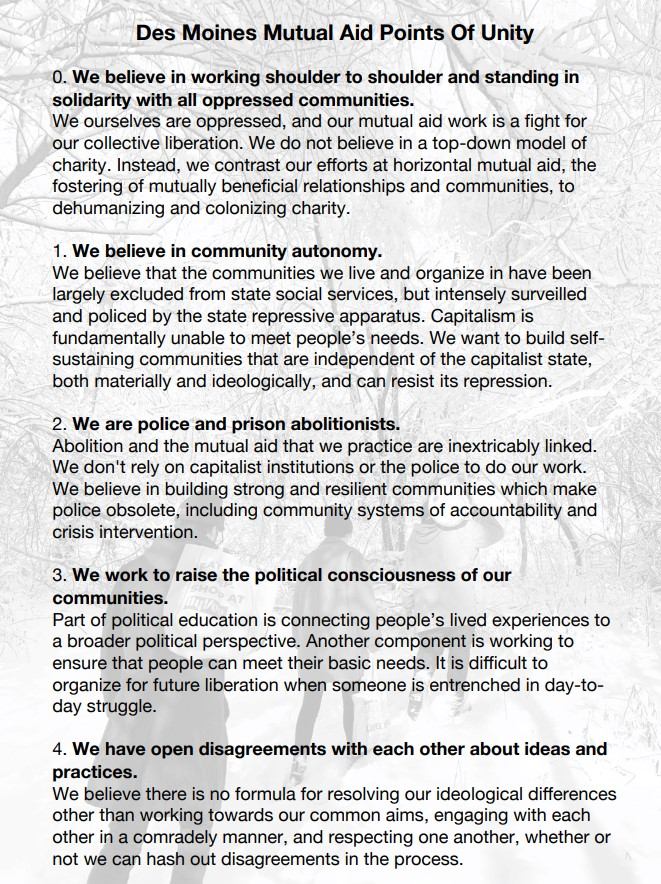
Mutual Aid Points of Unity

We believe in working shoulder to shoulder and standing in solidarity with all oppressed communities.

We ourselves are oppressed, and our mutual aid work is a fight for our collective liberation. We do not believe in a top-down model of charity. Instead, we contrast our efforts at horizontal mutual aid, the fostering of mutually beneficial relationships and communities, to dehumanizing and colonizing charity.

We believe in community autonomy.

We believe that the communities we live and organize in have been largely excluded from state social services, but intensely surveilled and policed by the state repressive apparatus. Capitalism is fundamentally unable to meet people’s needs. We want to build self-sustaining communities that are independent of the capitalist state, both materially and ideologically, and can resist its repression.

We are police and prison abolitionists.

Abolition and the mutual aid that we practice are inextricably linked. We don’t rely on capitalist institutions or the police to do our work. We believe in building strong and resilient communities which make police obsolete, including community systems of accountability and crisis intervention.

We work to raise the political consciousness of our communities.

Part of political education is connecting people’s lived experiences to a broader political perspective. Another component is working to ensure that people can meet their basic needs. It is difficult to organize for future liberation when someone is entrenched in day-to-day struggle.

We have open disagreements with each other about ideas and practices.

We believe there is no formula for resolving our ideological differences other than working towards our common aims, engaging with each other in a comradely manner, and respecting one another whether or not we can hash out disagreements in the process.