T-MAPs and my own story

Sometimes, I miss what is most obvious. I’ve been writing (a lot) about T-MAPs (https://quakersandreligioussocialism.com/t-maps/)

Yesterday (T-MAPs and YOUR own story) I said ‘I sense that I’ve written enough about Transformative Mutual Aid Practices (T-MAPs).’

This morning, I was feeling chaotic, I guess I might say. I won’t present the long list of my concerns. I’m sure we share many of them, especially related to the potential for global war. You might see where this is going. I realized I needed to revisit MY OWN Transformative Mutual Aid Practice document, which I had created less than a year ago. (That’s the obvious thing I realized this morning).

I can see what I did previously because when you use the online tool, you can choose to have your answers emailed to you. The alternative is to download the sections, print them, and write your answers on the forms.

I moved the conclusion to this beginning because it summarizes why T-MAPs can be a tool for Mutual Aid.

Conclusion – T-MAPs as a Tool for Mutual Aid

We hope the process of completing your T-MAP has given you new insights into your own story and inspiration to engage in this process with others. It’s a living document – you can keep revising it and adding to it as you gain more ideas and visions. While T-MAPs can help you map your individual transformation and growth, we think it’s more powerful as a collective practice. T-MAPs is a tool that is designed to be developed in groups, shared with groups, and practiced in groups. Our vision is that T-MAPs and tools like it will play an important role in evolving the ability of creative activist movements and mental health support networks to communicate with each other and build the kinds of stronger, more effective communities and forms of resistance that our current historical moment requires.
By reflecting deeply on our own experiences and developing a stronger connection with ourselves and what’s important to us, we can become more comfortable sharing that knowledge; we can learn from each other and more easily collaborate with one another. By having a better awareness of each other’s personal struggles, it’s easier to understand our similarities and differences and navigate them with respect, love, and understanding. T-MAPs is really our attempt to help operationalize mutual aid.

Crisis = Opportunity

Taking the time to articulate basic needs and desires about wellness and support when someone is in a clear head space can make an enormous difference when any kind of crisis emerges. Having others who already know what your needs and desires are can turn crisis into an opportunity for growth and transformation, for building solidarity and grounded friendship. Understood and articulated, our weaknesses can actually become our strengths.
At the same time, by opening up space to talk about life lessons and personal stories it can become easier to talk about collective dynamics, and things that are often challenging to talk about in groups, like power and larger structures that affect all of us in different ways depending on our social location, like race and class and gender and ability. While there are many ways that our differences can end up separating us, if we can learn to talk about the difference our stories can actually bring us together and raise levels of awareness. T-MAPs is an invitation to a collective practice of transformation and growth. Skillfully facilitated, a group using these questions can evolve to trust and support each other in the hard times on the horizon.


T-MAPs Section 1: Connection and Vision

The purpose of this first section is to help ground us in our strength and resilience before we undertake the T-MAPs process. To reframe the conversation so that it’s not starting from the premise that we are sick and need fixing; instead, we are reminded of what we are like when we’re well — how it feels and how we relate to the world around us. Taking the time to think about these things is generative:  this is less like a form to fill out where we already know the answers and more a starting point to prompt our imaginations.

This is the format of the tool. To introduce each topic and provide checkboxes to help you answer the question, in this case, How do I feel when I’m most alive? And then a free-form box to describe your own experiences.

These were my answers at that time:

There are more pages in this section, but I think you get the idea.


Section 2: Wellness Practices

This section is designed to guide us in building our wellness toolkit – to identify what practices and supports help us manage stress, avoid crisis, and stay grounded and healthy. Once we’ve developed these lists, it is good to return to them on a daily basis and potentially share them with others in our lives. If we notice we’re slipping off track, we can return to this toolbox to help us remember how to get back on course.

My answers
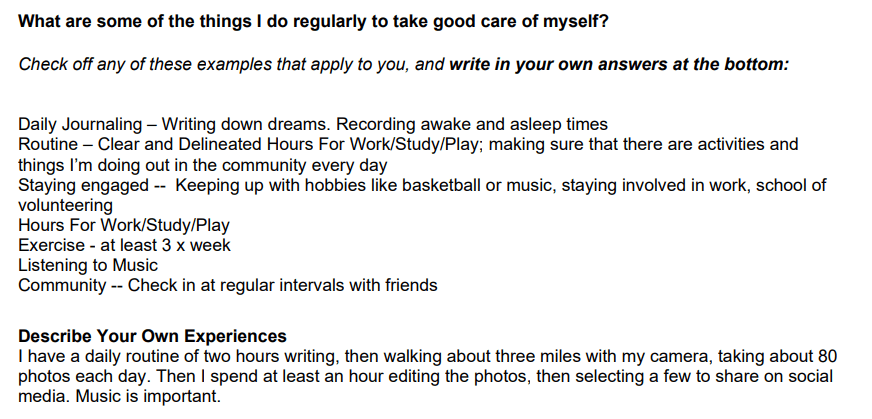
And, again, there are multiple questions in this section.


Section 3: Life Lessons and Personal Stories

Where we come from and how we tell stories about ourselves is so important. In this section we have a series of questions to help you think about your own personal story and find good language for it. Society has so many expectations and frameworks for understanding your life that might not fit at all, or might fit in some ways but not others. There is an incredible power in creating a personal narrative of your life that fits well for you.

This section has two parts – the first is on understanding your journey with mental health and emotional distress, and the second on social and cultural context as it informs mental health. If you don’t identify as someone who’s been through intense mental health struggles and and/or the diagnosis process, some of the questions in the first half might not feel like they apply – it’s fine to skip them. In the second half of this section, some of these questions might be new to you – you might not have thought a lot about your cultural or class background, for example – and that’s ok. Consider these questions a starting point for your explorations.

How I understand the story of my journey with mental health:
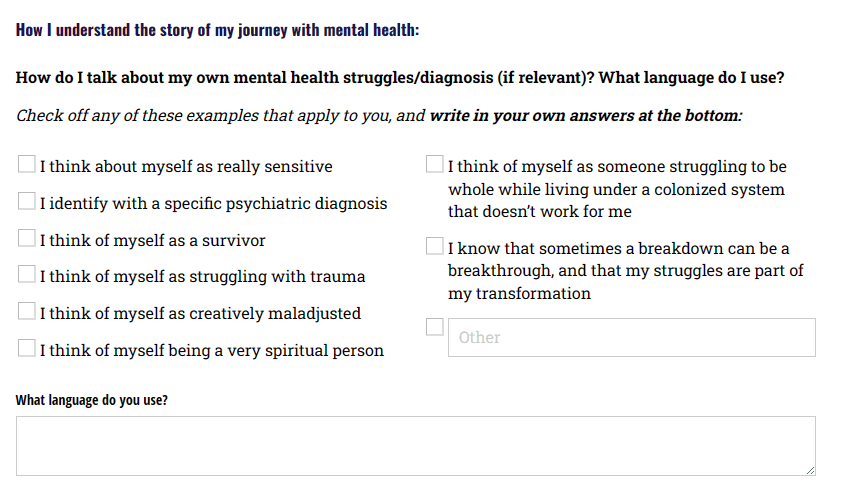
My answers

I think of myself as creatively maladjusted
I think of myself being a very spiritual person
I think of myself as someone struggling to be whole while living under a colonized system that doesn’t work for me

What language do you use?
I think of myself being a very spiritual person. My spirituality is a very important part of my mental health. And language is important because in my culture we don’t have good ways to express spirituality.
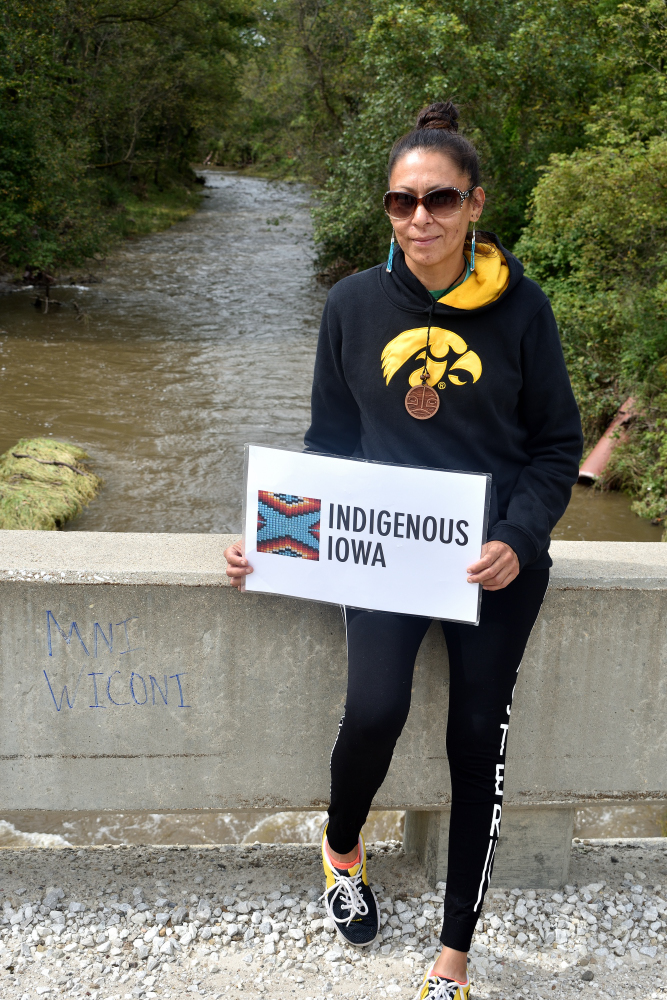
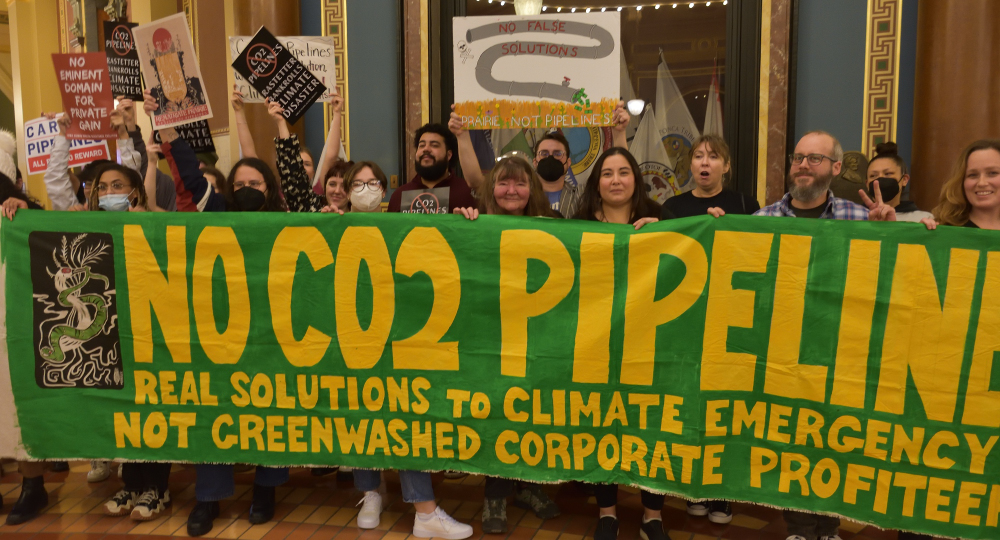
I have been learning a lot about settler colonialism from my Indigenous friends. While I continue to learn of all the ways I benefit from white superiority, life as a Quaker has meant many struggles against white dominance. At 18 years of age, I became a draft resister. I was led to live my life without a car for environmental reasons. I’ve spent the past decade working to protect the water, working against pipelines.
I’ve found a home in my Mutual Aid community that works against systems of dominance and hierarchy.

If I’ve been through serious crisis, what were some of the early indications that I was struggling? How did it all happen?
There has always been something different about me
The truth is I never really felt like I fit in

Add your own:
Quakers used to be referred to as a peculiar people, often refusing to accept the norms of the culture we live in. Living without a car was one of the most visible expressions of that. That periodically created real crisis for me, because it was not only a struggle to live without a car, but this caused conflict with my fellow Quakers, the people I looked to for support, and to be examples of faith in the wider community.
And as I learned more about racism during the years I spent in a Black youth mentoring community, it became a real conflict to find so many Quakers had no idea of their white privileges, and the ways racism was part of their lives.
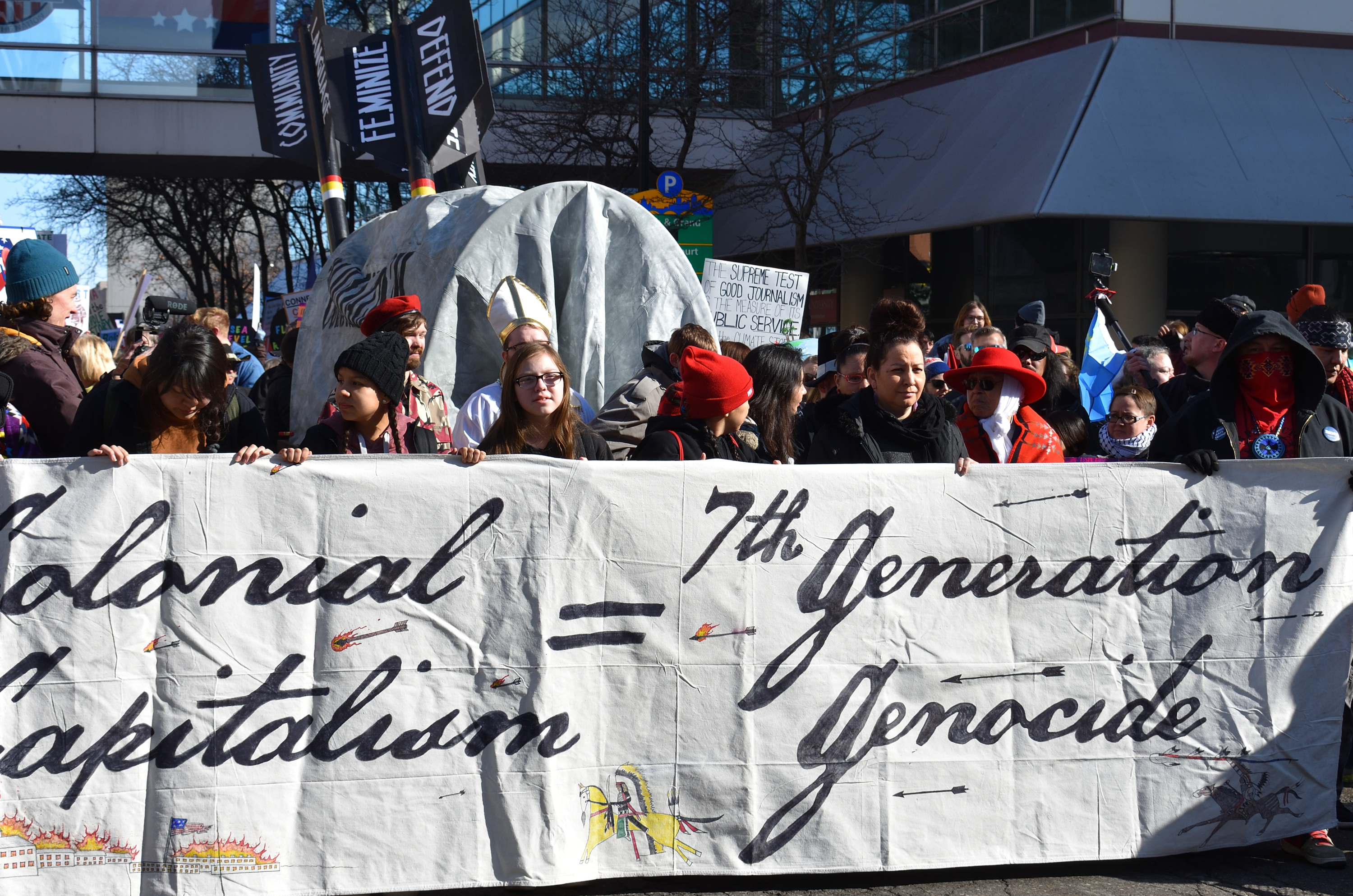
Over the past five years of making and developing friendships with Indigenous people, I’m learning much more about the multigeneration traumas they, and their ancestors have from the genocide of their people as their land was stolen and millions were killed as White people moved across the country.
Again, white Quakers were involved in some of this when they were involved in the forced assimilation of native children. Native children were kidnapped from their homes and taken to institutions where horrendous things were done to try to erase their Indigenous culture and become more like white people.
Over 100,000 children were forced to go to these institutions where there was widespread physical, sexual, and psychological abuse. Thousands died. It is a struggle to be with my Indigenous friends, knowing of this history, as it must be for them to have me in their presence. And it has been another source of significant trauma to me to not only know that, but once again for so many White friends to work so hard to refuse to think about this history, let alone do anything they can to begin any process of healing.
And over the past three years as part of my Mutual Aid community, I see more clearly the systems of white dominance at every level. Learn more about these things in myself. And struggle again to get other white Quakers to understand this and do something about it.
In fairness I must say there are white Quakers who do acknowledge these things and are working to improve them


Section 4: Slipping off the tracks

The point of this section is to map out what is hard for us, what we struggle with, and help us develop the self-knowledge to be able to figure out what to do about it. This section is often the hardest one to fill out because it asks us to think about hard times, but the information we gather is really useful in our journey. Often unresolved things from our past can make us feel unsafe or upset in the present – this is called getting triggered. Sometimes our triggers contain useful information about what needs to heal in us, and what we need to express. If you find yourself getting triggered or overwhelmed as you complete your map, take a break and do one of the practices in your wellness toolkit. It can also help to do the T-MAPs process with other people and realize you are not alone.
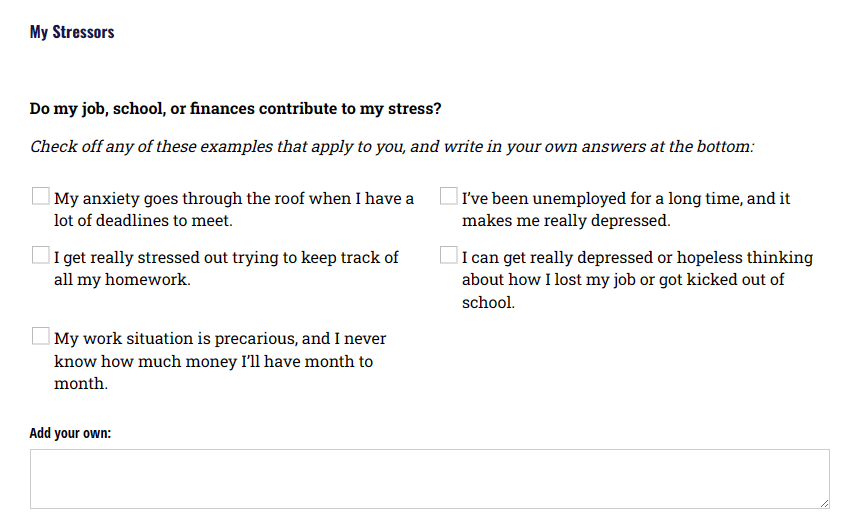
My answers

Add your own:
My stressors relate to conflicts that arise from my spiritual guidance and trying to get Quakers and/or others to understand that guidance and follow it with me. Or for certain guidance, finding out how to implement it, and then do it myself.
I realize this isn’t much compared to the awful things many people have gone, are going through.


Section 5: Support

One of the main benefits of making an T-MAPs document is being able to get clarity on the things that are important to us and being able to share it with other people. In this section, we identify the people, services, and resources that are the most important sources of support for us. This helps us remember where we can turn when things get hard, and who to stay in touch with along the way

My answers

In this section, we are asked questions about who our support people and networks are.


Upskilling for an Uncertain Future

How do you see the future? Do you try to avoid thinking about it at all?

Yesterday, I wrote Rethinking the Hero’s Journey, based on the article, “White men’s roles in anti-racism work: Rethinking the Hero’s Journey,” on the Healing Minnesota Stories blog site. Because it resonated with what I’ve learned about working for peace and justice. Which is the need to find your own power, which is what gives you joy. That provides you with the positive attitude, fortitude, and the skill you can bring to the difficult work of fighting for justice.

This morning, I found the article Upskilling for an Uncertain Future that expands on those ideas. The subtitle is A middle-aged perspective on sparking joy in darkness.

The trifecta of depression, anxiety, and untethered rage are unbearable at times. Even with HRT, micro-dosing, meditation, sleeping pills, and a relatively healthy, active lifestyle, most days are permeated with a deep sense of dread, fear, rage, and sadness. On the plus side, the odd day when my old self surfaces for a day or two feels exquisite.
I wanted to ask my doctor if there were any adjustments to my HRT that might improve my mood.
Exasperated, she said: Everyone is depressed. It’s not just you. It’s everywhere and everyone. It is the state of the world.”
In other words, suck it up.
Then the closer: “Do you need tranquilizers?”

Sparking joy in darkness

Tracy Collins

If I’m honest, there is a darker motivation…

Cooking in and of itself is proving to be a reprieve from my current, sad state of despair. But underneath the self-soothing, there is a deeper purpose.

I don’t talk about it much, but when I do, there are quiet nods of agreement. Friends share their darkest fears as well as their personal preparations for the unthinkable. With the chaos of the world, it is hard not to think about what might happen in the coming decade. The floods, water shortages, famine, and fires are already here.

The way I figure is that if I can master making delicious food, then I’ll be indispensable in the event of a collapse. No one will want to turf the lady who makes the best scones on the planet, the legendary stew, or life-altering casserole. They’ll keep me around so long as I keep everyone fed and happy.

Upskilling for an Uncertain Future. A middle-aged perspective on sparking joy in darkness by Tracy Collins, medium.com, 12/12/2023


For the sake of your own mental health and what you can offer to your community in the uncertain future, find your own power. Even better, put your life-long learning skills to work to learn additional skills and power.


Rethinking the Hero’s Journey

It’s difficult to not feel overwhelmed and deep despair. On top of everything else, it looks like a global civil war erupting between supporters of Israel and those of Palestine. I hope those reports are exaggerated. It’s hard to trust any type of media these days.

Although it might not seem much compared to living without food, water, shelter, power, and constant bombardment, awaiting a ground invasion, I’m deeply concerned about my friends and neighbors. For a long time, I’ve been aware of the impact of our own traumas. Isolation, increased rates of suicide, and giving up. There is a sense that things will only get worse on multiple fronts.

There are the usual calls to contact our Congresspeople, but they can’t even organize themselves, let alone listen to us.

I’ve been intrigued by this recent post, White men’s roles in anti-racism work: Rethinking the Hero’s Journey, Healing Minnesota Stories, Sept 25, 2023. The blog’s main author is Scott Russell, so I assume he wrote this.

He begins by saying “This essay is written for white men written by a white man. It’s a working draft. Comments welcome.” Keeping that in mind, I believe there are things he says that can be helpful to a broader audience, for those of us who struggle to find ways to work for justice. Who feel there isn’t anything we do that might make a difference.

The struggle to end racism and white supremacy is heroic work, but where do white men fit into the movement?

White men are at the top of the white supremacy hierarchy. It shouldn’t be surprising if some Black, Indigenous, and other people of color (BIPOC) don’t trust us.

Some might reasonably worry that asking white men to be heroes in this work would trigger ‘White Savior’ behavior, where a white man acts from a presumed position of superiority to “rescue” BIPOC.

That would be a big step in the wrong direction.

More white men are needed in the struggle against racism. I believe we can be anti-racism heroes, but it means undoing old programming and rethinking what it means to be a hero.

White men’s roles in anti-racism work: Rethinking the Hero’s Journey, Healing Minnesota Stories, Sept 25, 2023

The Hero’s Journey

I am trying to wake up to ways that my culture – including white supremacy and patriarchy – has shaped me, a white man born in the late 1950s. Growing up, I read comic books – Batman, Superman, Spiderman, Flash, the Green Lantern and more. I watched Gunsmoke on TV, in which Marshall Matt Dillon single-handedly dealt with the violence of the Old West.

They informed my understanding of a hero as a lone actor who rarely if ever asked for help.

These stories have a hallmark of white supremacy: Individualism.

In the end, it’s about one lone white guy (or white Hobbit) accomplishing a seemingly impossible task. In the three stories above, they save humanity.

Those stories have the hallmark of white supremacy: Individualism.


Rethinking the Hero’s Journey

The hero often doesn’t realize they need a challenge. Thus, they don’t know they must search for their own challenge. They need to be aware of friends and mentors who can shed some light and point them on a new path. This path has different challenges: more self awareness, self control, and compassion.

Who is a hero in this context? Someone who faces the truth, stays grounded, and doesn’t let himself get lost in either self criticism or defensiveness.

A hero takes risks, and has the integrity to admit mistakes.

I aspire to talk less and listen more.

A hero is humble.

Finding your power

The message of that blog post, the message I want to share with you, is we need to find where our particular talents connect with the justice work. This work is difficult enough to do without forcing yourself to do things you think you should do, but don’t excite you.

I was blessed to discover this early in my justice work, though it took some time to realize it. In my case, my passion is photography. In the PDF file below I go into this in great detail. But to summarize:

  • I learned how to work in a photographic darkroom while in high school, Scattergood Friends School
  • At twenty years of age, I joined the Friends Volunteer Service Mission in inner-city Indianapolis, where I was led to work with kids. One of the things we did was ride our bicycles around the city, taking photos (35 mm film). Then we developed the negatives and printed the images in a bathroom darkroom
  • My photos were published in a book about the new addition to the Indianapolis Central Library.
  • Other photos were published on an Indiana state government website to attract filmmakers to the city.
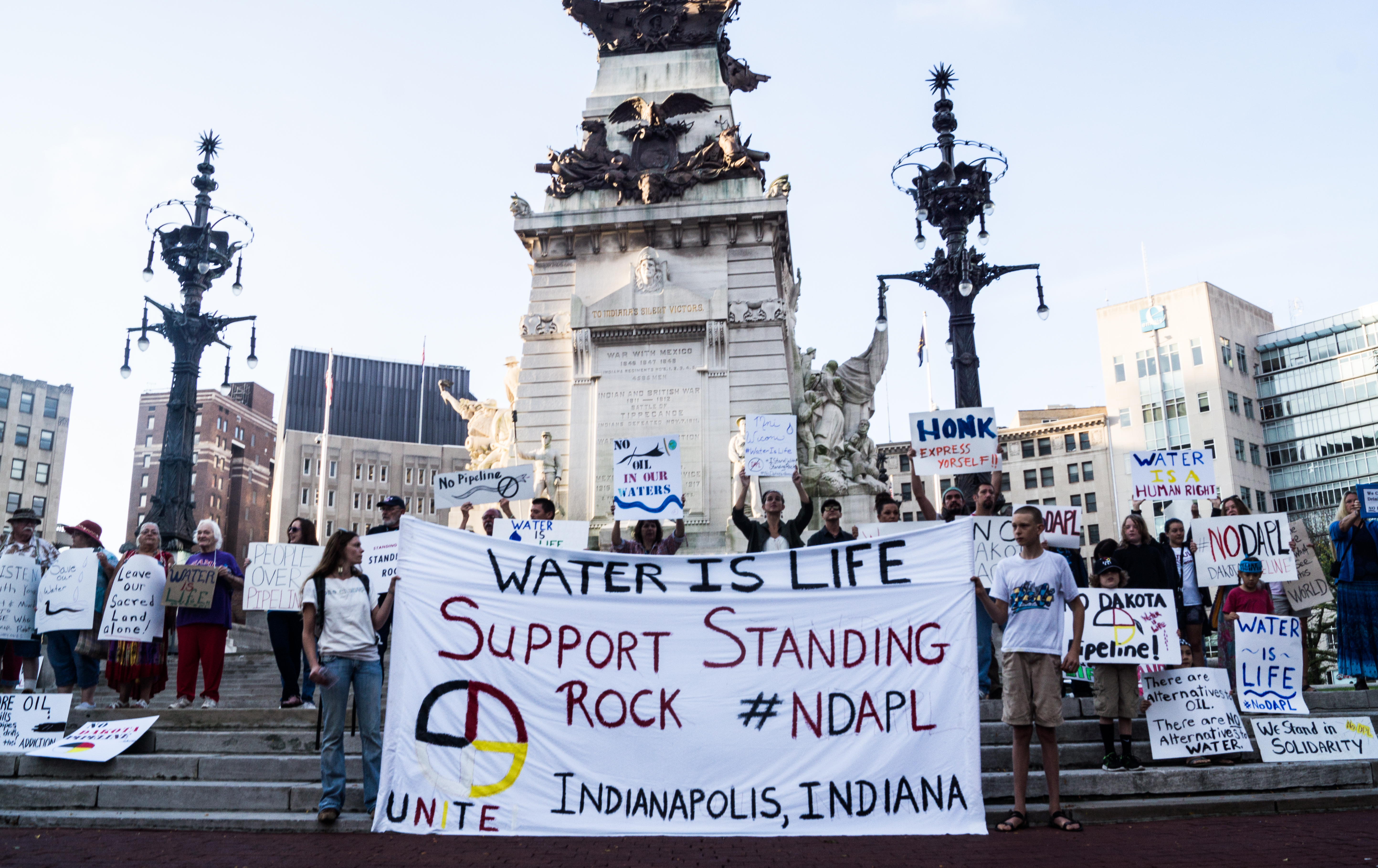
  • I took and shared a lot of photos of public demonstrations related to the Keystone XL and Dakota Access pipelines in Indianapolis
  • Working with the Kheprw Institute, a black youth mentoring community, I was asked to give photography classes.
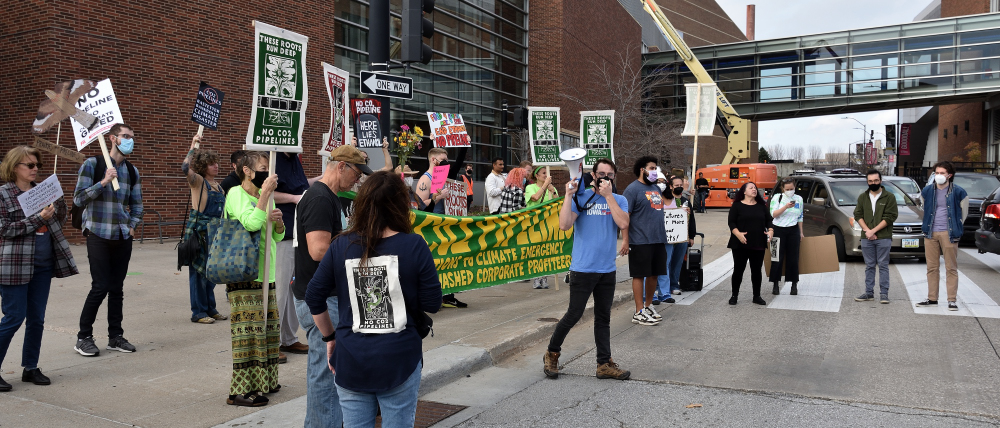
  • I continued to take photos of similar events when I moved to Iowa. I was honored when my justice advocate friends began to ask me to come to their/our events in order to document them.

I found my power in photography. I urge you to focus on what your power is. You already have your power, but you might not be seeing it in this context. If you don’t love what you are doing, you should make a change.


This is the story, not yet complete, of my journey related to justice and photography.


Judy Plank

Judy Plank was a good friend of mine. She was always present and helpful as we worked together on peace and justice issues for Iowa Yearly Meeting (Conservative).

I was glad she asked me to take photos of her for the jacket of her book, Paradise Still Has Snakes. (the first of the photos below).

I will miss her.


Judy Ann Plank

Dec 14, 1942 – Oct 12, 2023

Obituary

Judy Plank, 80 of Le Mars, Iowa, passed away on Thursday, October 12, 2023 at the Good Samaritan Society of Le Mars. 

There will be a Memorial Service at a later date. Expressions of sympathy may be expressed to the family through www.rexwinkelfh.com

Judy Ann Juhl was born on December 14, 1942, the oldest child of Howard ‘Bud’ and Jean (Stowater) Juhl of rural Remsen. Judy grew up on the family farm between Marcus and Remsen. She had fond memories of her childhood pet Holstein milk cow, ‘Coke’.

She started school at Meadow Township county school and when it closed, she then attended Marcus Public School and graduated in 1960. She then attended Westmar College in Le Mars for one year. While at Westmar, Judy met her husband to be, Kenneth Paul Plank. They were united in marriage at Faith Lutheran Church in Marcus, Iowa on December 27, 1961.

Twenty years later she graduated with a BA degree in sociology from Southwest State University in Marshall, MN. She later also received an associate degree in accounting. Judy’s sporadic work history included: working in a welfare department briefly, in a residence for the mentally handicapped for three years, and primarily providing childcare in her home.

Judy and Paul enjoyed traveling, from Costa Rica to Alaska. At a young age, Judy was always an avid reader. This led her to writing prose and poetry. It also culminated in the writing of her autobiographical published book, Paradise Still Has Snakes. She enjoyed gardening and having her hands in the dirt. She also enjoyed baking and sharing her ever-present zucchini bread.

Judy’s spiritual journey led her to the Religious Society of Friends (Quakers). As a member of the Paullina Friends Meeting, she served on many committees and was also actively involved in the Iowa Yearly Meeting. She was a longtime member of the Northwest Iowa Peace Links.

Judy was always a champion for the downtrodden. She described herself as a progressive/socialist peace activist and was an avid protestor. Her strong belief in peace, nonviolence, and social justice was the guiding light in her political and social involvement. After Paul’s retirement, they began wintering near Douglas, Arizona. There she was at the founding of Healing our Borders, a group attempting to stop the increasing deaths of migrants crossing the borders and to change the nation’s immigration policies. She attended weekly vigils remembering those who perished at the border and handed out blankets to protect migrants from the cold. Judy was also proud of the work she did co-facilitating teaching ‘Alternative to Violence Project’ workshops at the Ford Dodge Correctional Facility. She was also a part of the ‘New Roads Reentry’ team helping men back into society following a prison sentence. 

Judy was an active member of the Plymouth County Democrats. She was not afraid to knock on doors or hold up a sign on a street corner for her cause.

Judy’s greatest joy was spending time with her family and friends.

Judy will be lovingly missed by her husband, Paul; son: Kipp Plank of Sioux City; 4 grandchildren: Nick Plank, Lacey Overman, Athena Marshall (Mason Bakker) all of Le Mars, and Rick Plank of Los Angeles, California; 4 great grandchildren: Jade, Alex, Boston, and Pierce; brothers: Mark (Cheryl) Juhl and Dale (Faith) Juhl both of Remsen, IA; nieces, nephews, cousins, and friends.

Judy is preceded in death by her parents; daughter, Kristine Redhouse; and granddaughter in law, Jen Plank. 

taboo

taboo against a subject or activity is a social custom to avoid doing that activity or talking about that subject, because people find them embarrassing or offensive.

Yesterday I wrote about umair haque’s new publication, the Issue. And began discussing the latest issue (of the Issue): Our Civilization’s Melting Down—But We’re Not Allowed to Talk About It.

I got to the part where he began to explain why it is taboo to talk about our civilization’s meltdown.

You see, right now, at this juncture in human history, a New Set of Taboos have emerged. Taboos exist for a reason—to hide truths we’d rather not see the light of day, because they’re too uncomfortable, painful, shameful, difficult, or challenging. As we do that, social bonds rupture. And so taboos, while they hide Issues that We Have to Face, do so precisely because they keep our tribes and hierarchies intact. There’s a form of short-term stability in them, even if the price, over the long-term, is steep, as it has been for so many civilizations before us.

What are the New Taboos of the Age of Extinction? Well, we’re not supposed to discuss How Bad Things Really Are. In what way? In almost any way. Economically—how our economies are sputtering out. Hey, billionaires are getting richer! Whee! Socially—how predators of the human soul and body both are skyrocketing to power, from abusers of women, to Manfluencers leading young men to become…abusers. How our social contracts have been ripped apart by crackpots who think nobody should have anything. Biologically–how life on the planet is undergoing a literal mass extinction. And—hey, what exactly are we going to do about climate change, and do you think the summer a decade from now is going to…be…pretty…let alone…survivable…for many?

We’re not supposed to talk about itAny of it.

Our Civilization’s Melting Down—But We’re Not Allowed to Talk About It.

He goes on to describe in detail the taboos we are facing and their many profound, negative, consequences. But you get the idea as soon as it is put in the context of taboo.

Just in the last few months, high-temperature records have been broken multiple times, around the globe. Extreme drought has made it hopeless to even plant crops, which means famine will be increasing. Water supplies for cities and states are drying up. Out-of-control wildfires pollute the air for hundreds of miles. Prices of everything are skyrocketing at the same time many people are losing their jobs to automation and artificial intelligence.

To talk about police brutality. Prisons that function to remove Black men and women from society. Structural racism.

The party in control of the US Congress is nonfunctional. The President of the other party is war-mongering. The expansion of NATO increases the threat felt by Russia. We are pouring billions of dollars into Ukraine as a proxy for this country’s war machine. It is taboo to point out that a small fraction of the military budget could completely fund all social programs.

It is taboo to talk about the rapid rise of Authoritarianism.

It is taboo to even talk about the theft of land from Indigenous peoples, the epidemic of Missing and Murdered Indigenous relatives, and the horrors of the institutions of forced assimilation of native children.

And just now the widening war in the Middle East. It is taboo to even suggest Israel’s policies of apartheid had anything to do with that.

In our Quaker communities, it is taboo to talk about continued racism, involvement with the Indian boarding schools, the abolition of police and prisons, or allowing conveniences to stop us from confronting our use of fossil fuels. To suggest there is anything wrong with capitalism and hierarchies of power.


The minute you even start talking about any of this stuff seriously? Repeatedly? Urgently? You’re met with the Greatest Wall in Human History. It’s not made of bricks or stone. But of something far stronger. Hegemony and ideology. Power. Conformity and social pressure

Our Civilization’s Melting Down—But We’re Not Allowed to Talk About It.

Dangers of lack of diversity revisited

I am glad some friends have responded to my post yesterday, Dangers of lack of diversity in Quaker meetings today.

Some comments mention an underlying tone of anger, making broad generalizations and not being clear about what I’m asking Friends to do. All of which I can see now.

As I was writing, I understood I was making generalizations. But if I always said things like “some Friends…”, “male Friends…”, I felt that would dilute what I was trying to say. Some would see those qualifications as an indication that what I was saying was not directed at them. I made the assumption that those who are exceptions would realize they were (exceptions). Now I can see that such an implicit assumption was not good.

I sometimes make the mistake of feeling anger in situations where I am frustrated. That also is not good. I have been deeply frustrated about many things, some for my entire life. Chief among those is a life-long disappointment that many Friends seemed comfortable with the status quo, with many conveniences from being part of the dominant culture in this country.

Some specific examples include my disappointment that few Friends refused to cooperate with the Selective Service System, which meant an acceptance of the validity of the draft, and militarism. Some of the people I most admired were those who refused to cooperate, most of whom were incarcerated. It was their example that helped me make my own decision to not cooperate. These were risky decisions, but I thought that was what Quakers did, take those risks when that was what they were led to do.

There is my life-long attempt to convince Friends to reject the conveniences of the automobile culture that developed in this country. I was led to live without owning a car. That was inconvenient in many ways. I was always aware the reason I could do so was because I lived where mass transit was available. Actually, anytime I moved in Indianapolis, I made sure the new place would be on a city bus line and within walking distance of a grocery store, laundry, and my work.

Of course, mass transit was not an option in rural areas. I hoped Friends living there would work on ways to rely less on fossil-fueled transportation. Why couldn’t there be community based transit systems in rural areas? Most did what they could to otherwise reduce their carbon footprint.

But here is the point. If we had all worked to build mass transit systems and walkable communities, we would not be in our current, dire, rapidly deepening environmental chaos, on the path to our own extinction. How could we do this to our children and Mother Earth? This life-long frustration does leak out as anger at times.

If we had all worked to build mass transit systems and walkable communities, we would not be in our current, dire, rapidly deepening environmental chaos, on the path to our own extinction

Much of this frustration is with myself. Why wasn’t I more effective in getting Friends to see what was happening?

This was a constant in many of the dangers of lack of diversity I wrote about. I am not blameless. Thus, much of the frustration and anger is directed at myself as well.

As I spent years in oppressed communities, I began to understand the deep injustices inflicted on my friends. Injustices hurting them everyday, in so many ways. That’s why I feel such a sense of urgency and frustration that more Friends don’t see these injustices and work to heal them now.

This is not an equivocation about what I wrote yesterday.

As to what I long for Friends to do, it is to find any way they are led to become engaged in diverse communities. And specifically Mutual Aid communities. (I capitalize Mutual Aid to emphasize the difference between “real” Mutual Aid versus charity work. I write about all this extensively on my blog, Quakers and Mutual Aid). Because Mutual Aid communities are founded on the principle of rejecting hierarchies. The power structure of any type of hierarchy always results in a form of dominance. And dominance is the root of injustice. So, any attempt at social justice that has any hierarchical structure simply extends the dominance.

There is an Iowa Mutual Aid Network. You can connect with Mutual Aid communities and projects here: https://iowamutualaid.org/

I included this graphic in yesterday’s post in the hope that you will seek a way to engage with a Mutual Aid or similar community. And hope these points can help you as the Spirit might guide you on your own journey.

Finally, I believe we will be forced to work with communities outside our meetings as the collapse of our social, economic, and political structures accelerates. We will all be forced to find our way through the chaos. Mutual Aid communities already know how to do this because we are doing it now.

Dangers of lack of diversity in Quaker meetings today

Diversity can refer to many things, such as race, ethnicity, gender, sexuality, class, age, ability, and faith background. Both the state of Iowa and our Quaker meetings in the Midwest have very little racial and other types of diversity. This does not reflect the diversity of the wider society nor the diversity in Quaker history and values.

Reasons why Friends need to confront their lack of diversity now

This is a topic that generates significant emotional reactions for numerous reasons. Perhaps one of the most basic is knowing we are not doing what our ancestors had done, what they would probably be doing if alive today.

If we are converging on history and practice, we are missing the point. If we are depending on institutions to create a new society or usher in the Kingdom, then we are deceived. These will not bring the radically egalitarian and Spirit-filled communities that God fostered among early Friends. These are forms, and Friends must follow the Spirit.

I’ve met others who need a Spirit-led Society. We share this vision, and we share the disappointment of being drowned out in meeting by classism, ageism, and racism. Some of us wonder if Quakerism isn’t all that different from the rest of liberal religion. From what we’ve seen, it isn’t apocalyptic. It isn’t radical. It doesn’t sound like Fox or look like Jesus. It works at incremental transformation while simultaneously shushing those who need the system overthrown.

Hye Sung Francis, Seeking a People

  • Many of our Quaker meetings are small and growing smaller.
    • A significant number of Friends are elderly
    • We are failing to attract new members
    • Members are leaving their (Quaker) meetings because
      • Their justice work is not understood or supported
      • They see the harm done to Black, Indigenous, and other people of color (BIPOC) in their meetings.
      • They are frustrated by the meeting’s lack of understanding and involvement around their privilege
      • And the lack of engagement and support for BIPOC communities.
  • Many meetings fail to engage with justice groups that are doing good work, such as Mutual Aid communities.
  • Friends need to engage with Indigenous peoples now

Most White Friends fail to understand their privileges and the consequences.

  • There are a range of justice activities by (Quaker) meeting members. Much of that relates to Friends’ long history of opposing war and violence. But because of our lack of diversity, we fail to understand many other significant and often insidious forms of violence, such as sexual, emotional, psychological, spiritual, cultural, verbal, economic, symbolic, and gender-based violence.
  • Most male Friends are unaware of gender inequality and violence.
  • Much of what passes for justice work are committee meetings, political letter writing, and financial support of Quaker justice organizations such as the Friends Committee on National Legislation and the American Friends Service Committee. That is not enough.
  • Lack of connections with Indigenous peoples is a significant problem for Friends today.
    • Friends are unaware of their ancestors’ settler colonization, including the theft of native lands. Many Friends don’t believe the land they occupy today is stolen land.
    • Unaware of the ongoing crisis of Missing and Murdered Indigenous Relatives. And how this is tied to the construction of fossil fuel pipelines.
    • Just becoming aware of Friends’ involvement with the forced assimilation of native children. Of the many forms of abuse and deaths of thousands of children at those institutions.
    • Friends often don’t have the depth of spiritual awareness of all our relations that we can learn from Indigenous peoples.
  • Structural violence is embedded in the social and economic systems that produce and maintain inequalities and injustices. It is often invisible or rationalized by the dominant groups that benefit from it.
  • Symbolic violence is a form of power exerted through cultural and symbolic means rather than direct physical force. It reinforces social hierarchies and inequalities by imposing the norms and values of the dominant group on the subordinate group. It is often unconsciously accepted by both parties and can be expressed through various practices such as language, representation, body language, and self-presentation. The concept was developed by sociologist Pierre Bourdieu.
    • This is a significant reason why Friends need to support and create Mutual Aid communities which address these very injustices related to symbolic violence.
    • This makes me more aware that Mutual Aid is an expression of nonviolence.


MLK understood — or would have — that all the following things are forms of violence. People forced to “crowdfund” healthcare — to beg their neighbors for pennies for medicine. A workplace culture where being abused and berated by your boss is totally normal. Incomes not rising for half a century — while costs skyrocket to absurd levels. The average American dying in debt. Being forced to choose between healthcare and your life savings. Having to give up your home because you want to educate your kids.

All these things are forms of violence. Violence runs deep. It isn’t just mobs of fascists smearing feces on the walls — though it is also that. It’s what Americans do to one another as everyday interaction — and shrug off as normal. Mental, emotional, social, cultural violence makes up the very fabric of everyday American life. It’s the poisonous residue of slavery. And it’s profoundly traumatic. It has lacerated the American mind, and made violence a legitimate solution to every social problem. But these forms of all-pervasive violence are what a capitalist society is limited to, because everything is competition, rivalry, and ultimately, domination and subjugation.

Americans Don’t Understand What Violence Really Is by umair haque, Eudaimonia and Co, January 17, 2022

This lack of diversity has numerous consequences

  • Excluding or marginalizing people who do not fit the dominant norms or expectations of Quaker culture
  • Limiting the perspectives and experiences that inform Quaker discernment and action
  • Missing out on the richness and joy of learning from and celebrating differences
  • Failing to live up to the Quaker testimonies of equality, peace, and justice

For a long time, I had prayed that my Quaker community would engage with communities like my Mutual Aid community, thinking that would be mutually beneficial. But the clashes and the lack of lived experience with diverse communities of many White Friends have changed that. Now, I feel I need to protect my justice communities from the injuries they would experience from White Friends. It’s not that White Friends wouldn’t try to do what they thought would be helpful, but their lack of knowledge of oppression always results in harm.

For years, I’ve envisioned Quakers and oppressed people working together. But we (White Quakers) have to have enough experience in communities outside our meetinghouses to understand what is happening in these communities. To have a valid perspective. Until that happens, Friends will show they cannot be trusted, and we will be unable to cross the divide.

Over the years I’ve built this list of things I’ve learned from my experiences. I hope White Friends who haven’t yet had experiences outside their meetinghouse would keep these things in mind.

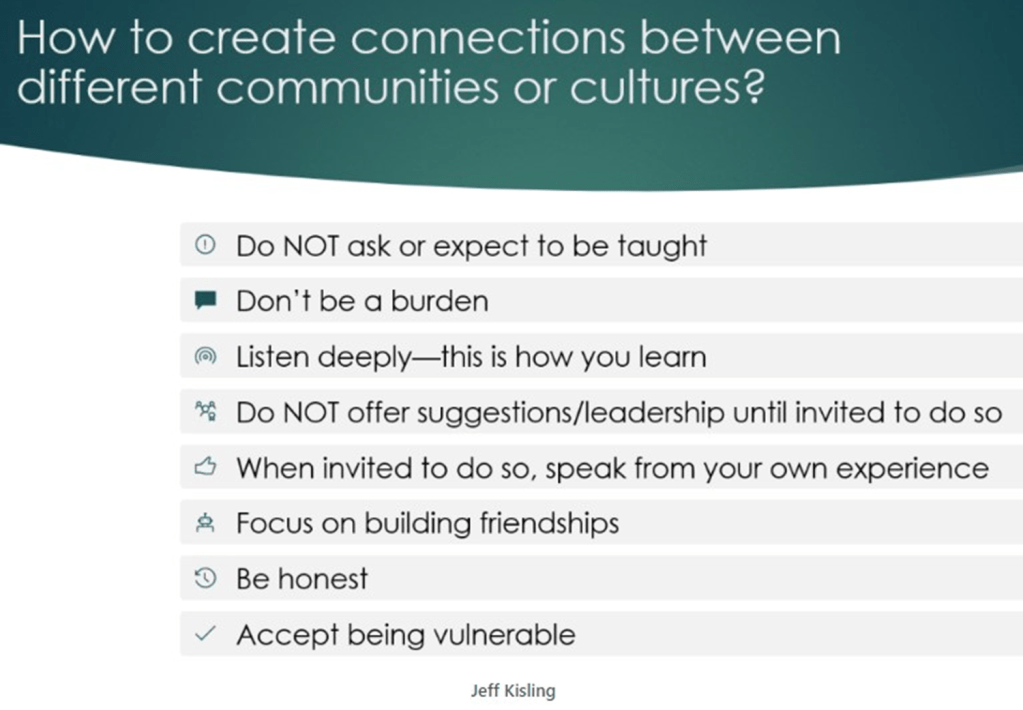
By far the most important is to not offer suggestions until the community trusts you enough to ask you for your input. When you are invited to do so, speak from your own experience. Do not talk about things in the abstract. It’s perfectly fine to say you don’t know the answer to a question. This honesty, this vulnerability is crucial. I like to keep in mind “we don’t know what it is that we don’t know.”

Time

It will take much longer than you expect to see this trust begin to develop. I’d been involved with the Kheprw Institute in Indianapolis for three years before I was asked to teach the kids there about photography.


Quakers are pretty white, and that comes with quite a bit of power and privilege. A Quaker in Omaha, Nebraska is going to have probably more weight in what they say to a legislator than a Black Lives Matter activist in Brooklyn, New York. I think there’s a need for Quakers to step out of their meeting and away from a lot of these phenomenal institutions that they’ve created and speak to individuals in an interfaith setting (from Black churches or Black Lives Matter) and have a cross-cultural understanding of what that experience is like because you’ll find that it’s very different, and I think the more we can do of that the more effective we’ll be in addressing these problems. These exchanges and fusion coalitions are what I think it’s going to take, not only for Friends to be effective in dismantling these systems of racism, classism, and white supremacy in American society, but also for all of us to better address these problems in our country.

José Santos Woss (FCNL), Quaker Faith and Justice Reform, QuakerSpeak video

This is another graphic I’ve been working on for years to put things in context.

Why we need different queries

As I’ve been praying about why the Quaker meetings I’m familiar with are slowly dying from attrition and not attracting new attenders, I’m struggling to understand why this is happening. I feel a special urgency, wondering if my Quaker meeting can continue when we lose even one more member. Lose another elderly member, or one who turns away from Quakerism.

I was led to think about our Advices and Queries because they guide the spiritual discussions in our meetings. And they are one concrete thing we can point to for people interested in learning about Quakerism.

It surprised me to be led to the conclusion that our Queries seem rooted in maintaining the status quo of this country’s current economic and political systems. Systems of dominance, systemic racism, and White supremacy. And an implicit view of ‘us versus them.’ (See: Advices and Queries). Today, I hope to explain that more fully and offer suggestions for what we might do differently.

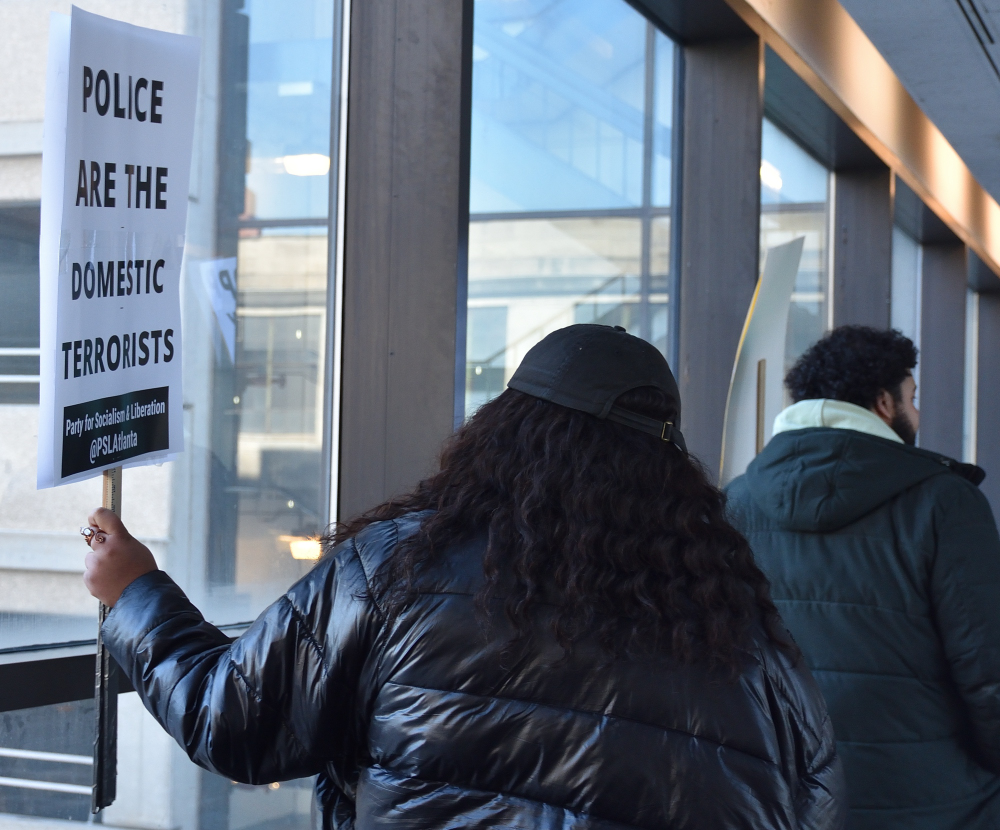
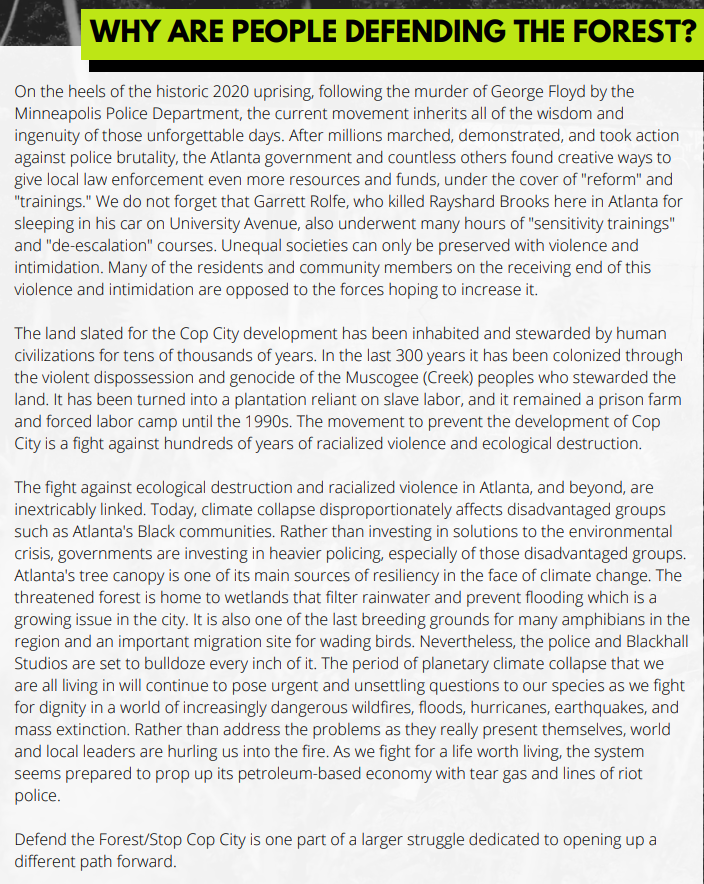
I’m focusing on the abolition of police and prisons, both because this is something I’ve been learning and writing about (https://quakersandreligioussocialism.com/abolition/) and because it is a deep concern of some activist Quakers I know and of my Mutual Aid community. One of my abolitionist Friends is leaving Quakers because of the lack of attention to this concern. This is an example of the attrition I’m concerned about.

We are police and prison abolitionists. Abolition and the mutual aid that we practice are inextricably linked. We don’t rely on capitalist institutions or the police to do our work. We believe in building strong and resilient communities which make police obsolete, including community systems of accountability and crisis intervention. Des Moines Mutual Aid

What does it mean that abolition is not one of our Query topics?

  • Meeting for Worship
  • Outreach
  • Meeting for Business
  • Harmony within the Meeting
  • Mutual Care
  • Education
  • Home and Family
  • Personal Responsibility
  • Civic Responsibility
  • Environmental Responsibility
  • Social and Economic Justice
  • Peace and Nonviolence

I think that is because abolition touches several of these topics and illustrates why I think we need new queries.


Quakers are pretty white, and that comes with quite a bit of power and privilege. A Quaker in Omaha, Nebraska is going to have probably more weight in what they say to a legislator than a Black Lives Matter activist in Brooklyn, New York. I think there’s a need for Quakers to step out of their meeting and away from a lot of these phenomenal institutions that they’ve created and speak to individuals in an interfaith setting (from Black churches or Black Lives Matter) and have a cross-cultural understanding of what that experience is like because you’ll find that it’s very different, and I think the more we can do of that the more effective we’ll be in addressing these problems. These exchanges and fusion coalitions are what I think it’s going to take, not only for Friends to be effective in dismantling these systems of racism, classism, and white supremacy in American society, but also for all of us to better address these problems in our country.

José Santos Woss (FCNL), Quaker Faith and Justice Reform, QuakerSpeak video

Perhaps the revolutionary Quaker faith we imagine ourselves to inhabit has never really existed, and if we tell the whole truth and commit to the healing the truth-telling calls us to, perhaps together we can embody and create the prophetic religion we thirst for.

Abolitionist thinking is holistic—that ending the system of punishment and incarcerating control itself is necessary—and invites us to imagine a whole new way of not only dealing with harm but of how we think of ourselves in community. It provokes questions like, what does true justice look like? What does it mean to center healing and transforming relationships and create community safety from authentic accountability and relational reconnection? Abolition does not minimize the reality of harm or violence but rather invites us to consider a way of doing things that interrupts cycles of harm, violence, and trauma, and restores perpetrators and victims into community and their humanity.

We as White Quakers like to think of ourselves as ahead or better than dominant culture, but we have been complicit in a system and mindset that are ubiquitous. Claiming the full truth of our history and committing to repair the harms done are deeply spiritual acts of healing our own wounds of disconnection. I would argue it is the pathway upon which we can, perhaps for the first time, discover and invigorate our faith with its full promise.

A Quaker Call to Abolition and Creation by Lucy Duncan, Friends Journal, April 1, 2021

Jed Walsh and Mackenzie Barton-Rowledge are close friends who do police and prison abolition work together. They sent Western Friend a conversation about what abolition means to them, and how it fits into their lives as Quakers.

The way I think about abolition is first, rejecting the idea that anyone belongs in prison and that police make us safe. The second, and larger, part of abolition is the process of figuring out how to build a society that doesn’t require police or prisons.

Abolish the Police by Mackenzie Barton-Rowledge and Jed Walsh, Western Friend, Nov 2020

Jeff Kisling: Mutual Aid and Abolition

I grew up in rural Iowa, where there was very little racial diversity and interactions with police and the court system were rare. About ten years ago, I was blessed to become involved with the Kheprw Institute, a Black youth mentoring and empowerment community. I’ll never forget how shocked I was when a Black mother broke down in tears, explaining how terrified she was every minute her children were away from home. It was obvious that every other person of color in the discussion knew exactly what she was saying.
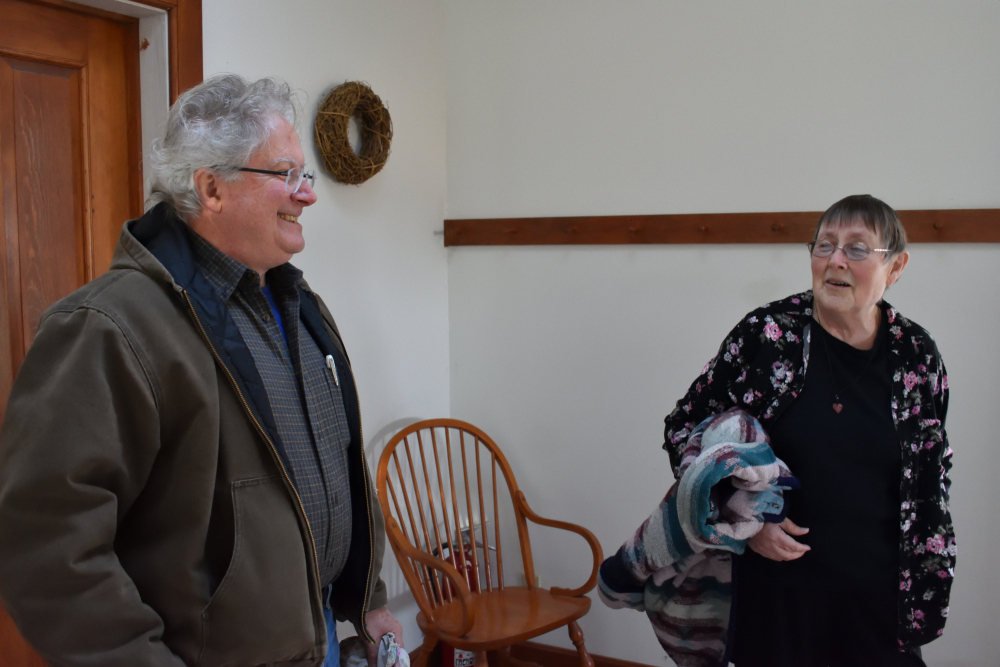
After retiring, I was led to connect with Des Moines Mutual Aid, a multiracial organization founded to support houseless people. For over a year, I’ve helped my friends fill and distribute boxes of donated food, while continuing to learn about the framework of mutual aid.

To me, mutual aid is about taking back control of our communities. Besides the food giveaway, we support houseless people and maintain a bail fund to support those arrested agitating for change. We also work for the abolition of police and prisons.

Mackenzie Barton-Rowledge and Jed Walsh: Introducing the Quakers for Abolition Network, Western Friend, Sept 2021

Some queries about police and prison abolition:

  • What is your understanding of the term “abolition” and what does it entail? How does it differ from the reform or improvement of the existing system?
  • What are some historical and contemporary examples of abolitionist movements and practices, such as the abolition of slavery, the anti-apartheid struggle, the prison strike movement, the mutual aid networks, and the community defense initiatives?
  • What are some of the root causes of violence, harm, and crime in our society, and how do they relate to the structures of white supremacy, capitalism, heteronormative patriarchy, and settler colonialism?
  • How do the police, courts, and prisons perpetuate and exacerbate violence, harm, and crime rather than prevent or reduce them? How do they disproportionately target and oppress Black, Indigenous, and people of color (BIPOC), poor people, LGBTQIA+ people, immigrants, and other marginalized groups?
  • What are some of the alternatives to policing and incarceration that can address the needs and rights of survivors, perpetrators, and communities more humanely and effectively? How can we build and support these alternatives in our own contexts and networks?
  • What are some of the challenges and barriers to achieving abolition, internally (such as fear, doubt, or attachment) and externally (such as resistance, backlash, or co-optation)? How can we overcome or transform them through education, organizing, and action?

Sources:

Learn more:

1. https://www.newyorker.com/news/our-columnists/the-emerging-movement-for-police-and-prison-abolition
2. https://www.peoplesworld.org/article/prison-and-police-abolition-re-imagining-public-safety-and-liberation/
3. https://www.peoplesworld.org/article/on-becoming-police-and-prison-abolitionists-but-what-about-the-murderers/
4. https://www.autostraddle.com/police-and-prison-abolition-101-a-syllabus-and-faq/
5. https://www.radcliffe.harvard.edu/news-and-ideas/rethinking-incarceration


Advices and Queries

In yesterday’s post, Queries about our future, I made the mistake of concluding by saying “We need to…” That defeats the purpose of queries, intended to help Quakers discern what they are led to do by listening to the Spirit. “We look for our own truths and the truths of our meeting when we discuss the advices and answer the queries.”

Faith and Practice

Becoming aware of how we discern Spirit is important to our worship. The Quaker faith is not written in the form of a creed, but is experienced in our lives as a vibrant, living truth. Advices and queries serve to engage our minds and hearts in a process which may provide openings to the leadings of the Spirit within us. These leadings may speak to our individual and corporate needs. The advices and queries reflect experiences from many lives as they contribute to the gathered wisdom of the group. They serve to guide us on our spiritual journeys by opening our hearts and minds to the possibility of new directions and insights.

Uses of Advices and Queries

We look for our own truths and the truths of our meeting when we discuss the advices and answer the queries.

The Book of Discipline of Iowa Yearly Meeting of Friends (Conservative)
Religious Society of Friends


We refer to our use of queries as Advice and Queries. The ADVICE provides an introduction or the context for considering the subject. There are twelve query topics.

  • Meeting for Worship
  • Outreach
  • Meeting for Business
  • Harmony within the Meeting
  • Mutual Care
  • Education
  • Home and Family
  • Personal Responsibility
  • Civic Responsibility
  • Environmental Responsibility
  • Social and Economic Justice
  • Peace and Nonviolence

Here is an example of an Advice and the Queries related to social and economic justice.

ADVICE

We are part of an economic system characterized by inequality and exploitation. Such a society is defended and perpetuated by entrenched power.

Friends can help relieve social and economic oppression and injustice by first seeking spiritual guidance in our own lives. We envision a system of social and economic justice that ensures the right of every individual to be loved and cared for; to receive a sound education; to find useful employment; to receive appropriate health care; to secure adequate housing; to obtain redress through the legal system; and to live and die in dignity. Friends maintain historic concern for the fair and humane treatment of persons in penal and mental institutions.

Wide disparities in economic and social conditions exist among groups in our society and among nations of the world. While most of us are able to be responsible for our own economic circumstances, we must not overlook the effects of unequal opportunities among people. Friends’ belief in the Divine within everyone leads us to support institutions which meet human needs and to seek to change institutions which fail to meet human needs. We strengthen community when we work with others to help promote justice for all.

QUERIES

How are we beneficiaries of inequity and exploitation? How are we victims of inequity and exploitation? In what ways can we address these problems? What can we do to improve the conditions in our correctional institutions and to address the mental and social problems of those confined there?

How can we improve our understanding of those who are driven to violence by subjection to racial, economic or political injustice?

In what ways do we oppose prejudice and injustice based on gender, sexual orientation, class, race, age, and physical, mental and emotional conditions?How would individuals benefit from a society that values everyone? How would society benefit?

The Book of Discipline of Iowa Yearly Meeting of Friends (Conservative)

I think my Quaker community is going to be upset by the following. But as I look at these Queries and Advices after years of working in diverse communities, they seem rooted in maintaining the status quo of this country’s current economic and political systems. Systems of dominance, systemic racism, and White supremacy. I see an implicit view of ‘us versus them.’

I became so invested in Mutual Aid because our work is about alternatives to those systems of injustice. Mutual Aid is faith in action. Mutual Aid is about meeting survival needs NOW.

Our Advices and Queries are updated every so often. I’m led to believe now is the time to rewrite them. The Mutual Aid Points of Unity are a template for what our Advices might say. And then we can work on queries in the context of those new Advices.


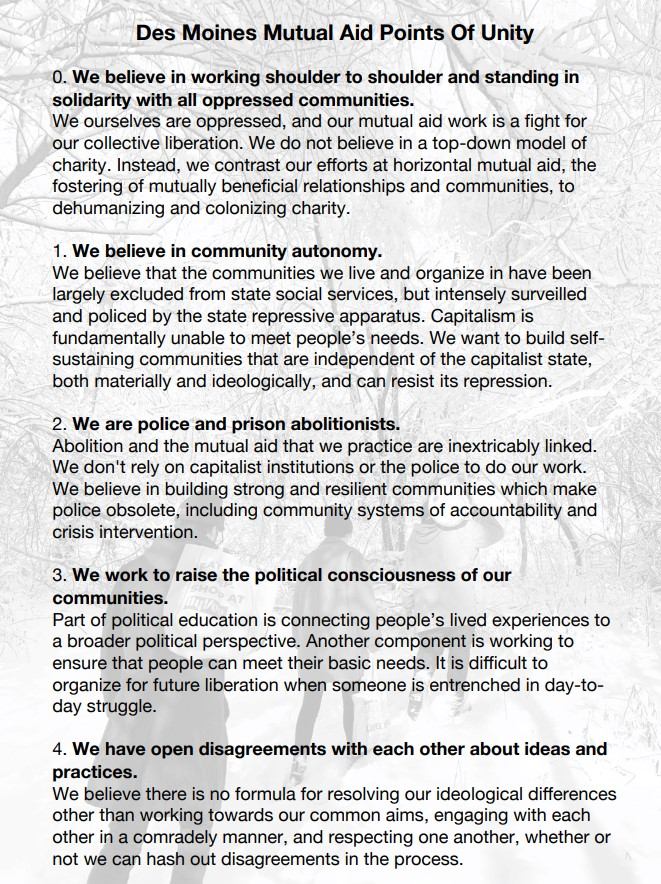
Mutual Aid Points of Unity

We believe in working shoulder to shoulder and standing in solidarity with all oppressed communities.

We ourselves are oppressed, and our mutual aid work is a fight for our collective liberation. We do not believe in a top-down model of charity. Instead, we contrast our efforts at horizontal mutual aid, the fostering of mutually beneficial relationships and communities, to dehumanizing and colonizing charity.

We believe in community autonomy.

We believe that the communities we live and organize in have been largely excluded from state social services, but intensely surveilled and policed by the state repressive apparatus. Capitalism is fundamentally unable to meet people’s needs. We want to build self-sustaining communities that are independent of the capitalist state, both materially and ideologically, and can resist its repression.

We are police and prison abolitionists.

Abolition and the mutual aid that we practice are inextricably linked. We don’t rely on capitalist institutions or the police to do our work. We believe in building strong and resilient communities which make police obsolete, including community systems of accountability and crisis intervention.

We work to raise the political consciousness of our communities.

Part of political education is connecting people’s lived experiences to a broader political perspective. Another component is working to ensure that people can meet their basic needs. It is difficult to organize for future liberation when someone is entrenched in day-to-day struggle.

We have open disagreements with each other about ideas and practices.

We believe there is no formula for resolving our ideological differences other than working towards our common aims, engaging with each other in a comradely manner, and respecting one another whether or not we can hash out disagreements in the process.


Queries about our future

The recent passing of another of our elders brings new urgency to understanding why we are not attracting new attenders to our Quaker meetings and what to do about that.

“I’m so afraid of climate change. I just turned 17 not so long ago and I’m afraid I’ll never get to grow up because of the way our Earth is going.

“Most of my friends and family are apathetic, such as my parents who don’t like me talking about this stuff since they feel we can’t really change anything. My mom thinks it’s completely irreversible. I hate holding it all inside all the time. …

“I guess what I really wanna hear is it’s all gonna be ok even though it’s probably not the truth. I’m just scared. I’d appreciate any positive news or insight from those who feel the same way and how you manage it while doing everything you can. Thanks for reading.”

I’m a teen and I’m really scared for my future

A pair of recent articles by Steve Genco is about what to say to a 17-year-old terrified about their future and poses some queries. These questions are relevant to the future of us all.

  • What predictions can you rely on?
  • What will give your life meaning?
  • What skills and mental habits will you need?
  • How will you live?

What Can You Tell a 17 Year Old Who’s Afraid of Dying from Climate Change? Part 1 by Steve Genco, Aug 29, 2023, Medium

The article lists the following predictions we can rely on:

  • It’s going to get hotter
  • The weather is going to get more unpredictable and more extreme
  • Natural disasters are going to arrive at greater and greater frequency
  • Economic inequality (income and wealth) is going to get worse
  • We will continue depleting the natural world
  • The effects of climate change will be unevenly distributed around the planet
  • We will run out of oil and gas

What will give your life meaning?

Psychologists Edward Deci and Richard Ryan began developing what they called Self-Determination Theory (SDT) in the 1970s. SDT emerged out of Deci’s interest in intrinsic motivation

Deci began searching for the underlying needs that intrinsically motivated behavior seemed to fulfill. He and Ryan discovered three motivators that appeared to represent basic or innate psychological needs

  • A need for autonomy: People need to feel self-directed and in control of our actions. We are more motivated to pursue activities we voluntarily and freely choose for ourselves, as opposed to activities we feel are imposed on us by other people or external circumstances.
  • A need for competence: People need to feel accomplished and capable. We are more motivated to pursue activities we feel competent to accomplish. We are also motivated to pursue activities that allow us to increase our competence through practice and repetition.
  • A need for belonging: People need to feel connected to others. We are more motivated to pursue activities that make us feel closer to others and that can be pursued in a supportive social context. This need is called relatedness by Deci and Ryan.

Throughout their research, Deci and Ryan studied how the goals people pursue on a daily basis and throughout their lives fulfill basic needs and contribute (or not) to personal wellbeing. In these studies, they found compelling evidence that:
placing strong relative importance on intrinsic aspirations was positively associated with well-being indicators such as self-esteem, self-actualization, and the inverse of depression and anxiety, whereas placing strong relative importance on extrinsic aspirations was negatively related to these well-being indicators.

What skills and mental habits will you need?

So, how do you create a life of autonomy, competence, and belonging? You plan your life around goals and activities that make you more self-sufficient, knowledgeable, and socially connected.

In a world of cascading climate crises, shortages, and social and political unrest, people who can think for themselves, have useful practical skills, and are connected to a like-minded community, are going to have significant advantages over the cult followers, the totally-unprepared, and the socially isolated.

What Can You Tell a 17 Year Old Who’s Afraid of Dying from Climate Change? Part 2 by Steve Genco, Aug 29, 2023, Medium

How will you live?

  • Think global, act local
  • Stay mobile
  • Embrace simplicity
  • Learn how to repair/reuse/recycle
  • Don’t tie your happiness to material accumulation

The needs for autonomy, competence, and belonging are exactly what Mutual Aid is about. These are the Points of Unity of my Des Moines Mutual Aid community.

Mutual Aid Points of Unity

We believe in working shoulder to shoulder and standing in solidarity with all oppressed communities.

We ourselves are oppressed, and our mutual aid work is a fight for our collective liberation. We do not believe in a top-down model of charity. Instead, we contrast our efforts at horizontal mutual aid, the fostering of mutually beneficial relationships and communities, to dehumanizing and colonizing charity.

We believe in community autonomy.

We believe that the communities we live and organize in have been largely excluded from state social services, but intensely surveilled and policed by the state repressive apparatus. Capitalism is fundamentally unable to meet people’s needs. We want to build self-sustaining communities that are independent of the capitalist state, both materially and ideologically, and can resist its repression.

We are police and prison abolitionists.

Abolition and the mutual aid that we practice are inextricably linked. We don’t rely on capitalist institutions or the police to do our work. We believe in building strong and resilient communities which make police obsolete, including community systems of accountability and crisis intervention.

We work to raise the political consciousness of our communities.

Part of political education is connecting people’s lived experiences to a broader political perspective. Another component is working to ensure that people can meet their basic needs. It is difficult to organize for future liberation when someone is entrenched in day-to-day struggle.

We have open disagreements with each other about ideas and practices.

We believe there is no formula for resolving our ideological differences other than working towards our common aims, engaging with each other in a comradely manner, and respecting one another whether or not we can hash out disagreements in the process.


Much of the above will be uncomfortable for many Friends because it involves rejecting the status quo. I contend that is why we are not attracting new attenders. If we don’t do so voluntarily these changes will be forced upon us as the status quo continues to collapse.

I believe we are in a time of great spiritual poverty. Friends have a precious gift to offer those needing a spiritual home. But the two will never be connected if Friends continue isolating themselves in their meetinghouses and cling to the status quo. We need to be police and prison abolitionists, find alternatives to capitalism, block the development of fossil fuel infrastructure, reject empire and militarism, and promote and follow the leadership of Indigenous peoples.