International Day of Peace

September 21 is the International Day of Peace.

Each year the International Day of Peace (IDP) is observed around the world on 21 September. The UN General Assembly has declared this as a day devoted to strengthening the ideals of peace, through observing 24 hours of non-violence and cease-fire. Never has our world needed peace more.

This year’s theme is Actions for Peace: Our Ambition for the #GlobalGoals. It is a call to action that recognizes our individual and collective responsibility to foster peace. Fostering peace contributes to the realization of the Sustainable Development Goals (SDGs) and achieving the Sustainable Development Goals will create a culture of peace for all.

2023 Theme Actions for peace: Our ambition for the #GlobalGoals


For some time the Spirit has been calling my attention to peace in many different ways.

  • I was led to take the photo below of the peace symbol on a coffee mug
  • I’ve been concerned but not surprised to learn of the heavy military recruitment of teens in public schools today
  • That made me turn my attention to conscientious objection. I discovered my Quaker meeting, Bear Creek Friends, had done significant work on conscientious objector counseling years ago. I had not known about that because I was living in Indianapolis at that time
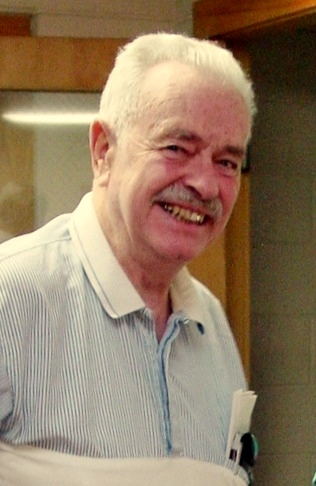
  • I’m thinking of the stories my late friend, Iowa Quaker Don Laughlin collected, Young Quaker Men Facing War and Conscription. Some of the topics in that document include:
    • Richmond Anti-Draft Declaration of 1948 Advices on Conscription and War
    • 1968 Richmond Declaration on the Draft and Conscription that I was involved in writing
    • Don Laughlin and Roy Knight were among those who wrote and signed An Epistle to Friends Concerning Military Conscription
    • My story about my struggles to become a draft resister
    • My Scattergood School classmate’s story of his imprisonment for draft resistance: The Barrett Family’s Peace Testimony by Daniel Barrett
    • The Moral Integrity of Muhammid Ali
  • I remember the day of the National Moratorium to End the War in Vietnam, October 15, 1969, when the entire student body of Scattergood Friends School had a peace march from the school to the University of Iowa (about twelve miles) to participate in actions there
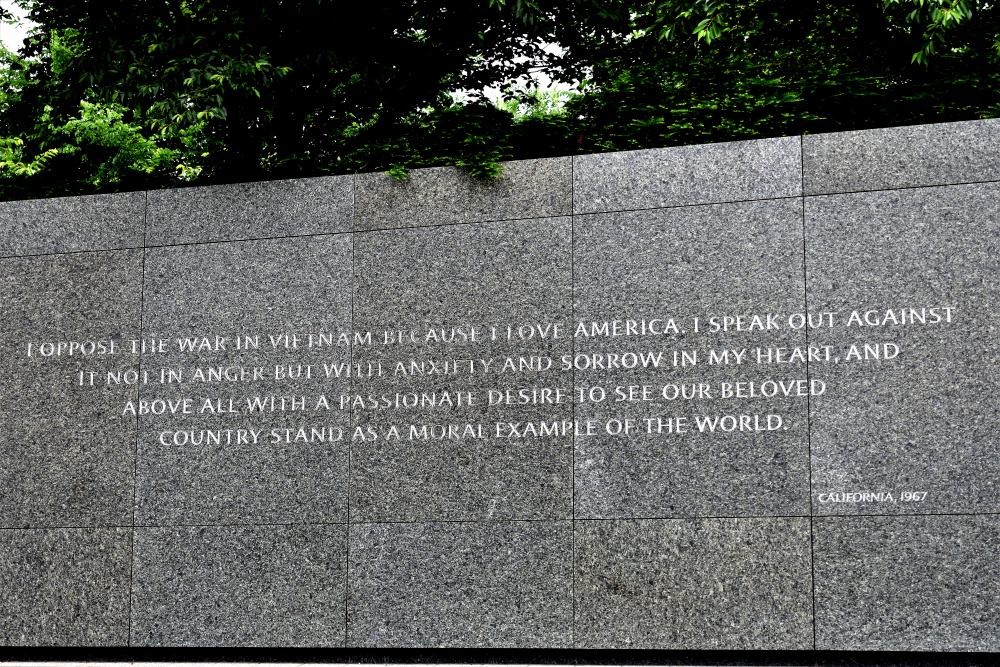
  • I’m reminded of Martin Luther King’s brave stance against the Vietnam War despite objections from his community
  • I was led to read the wonderful book Don’t Think Twice by Alison Lohans, which is a novel about the peace activities of a family set in the time of the Vietnam War. Alison and I have exchanged messages about this.
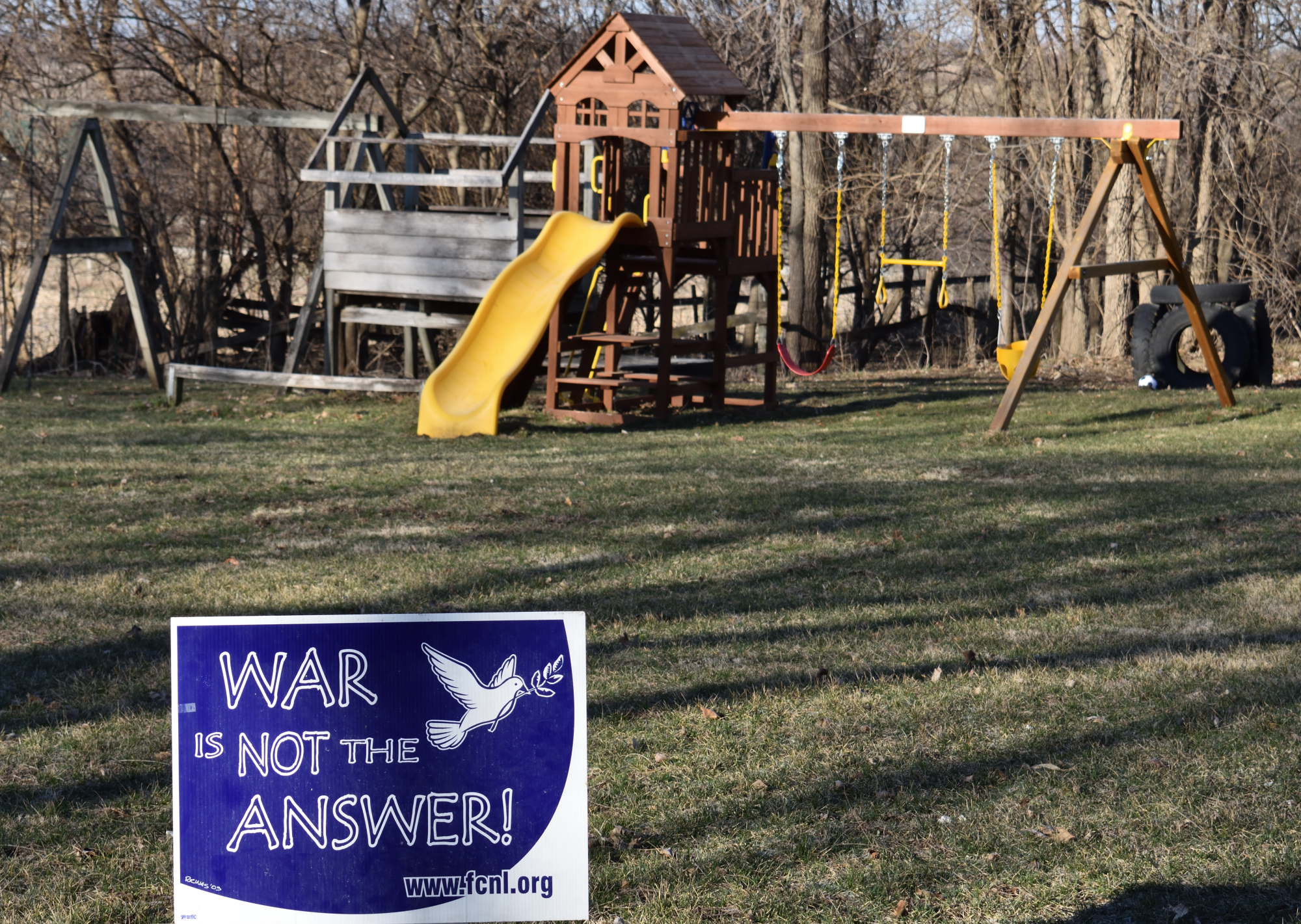
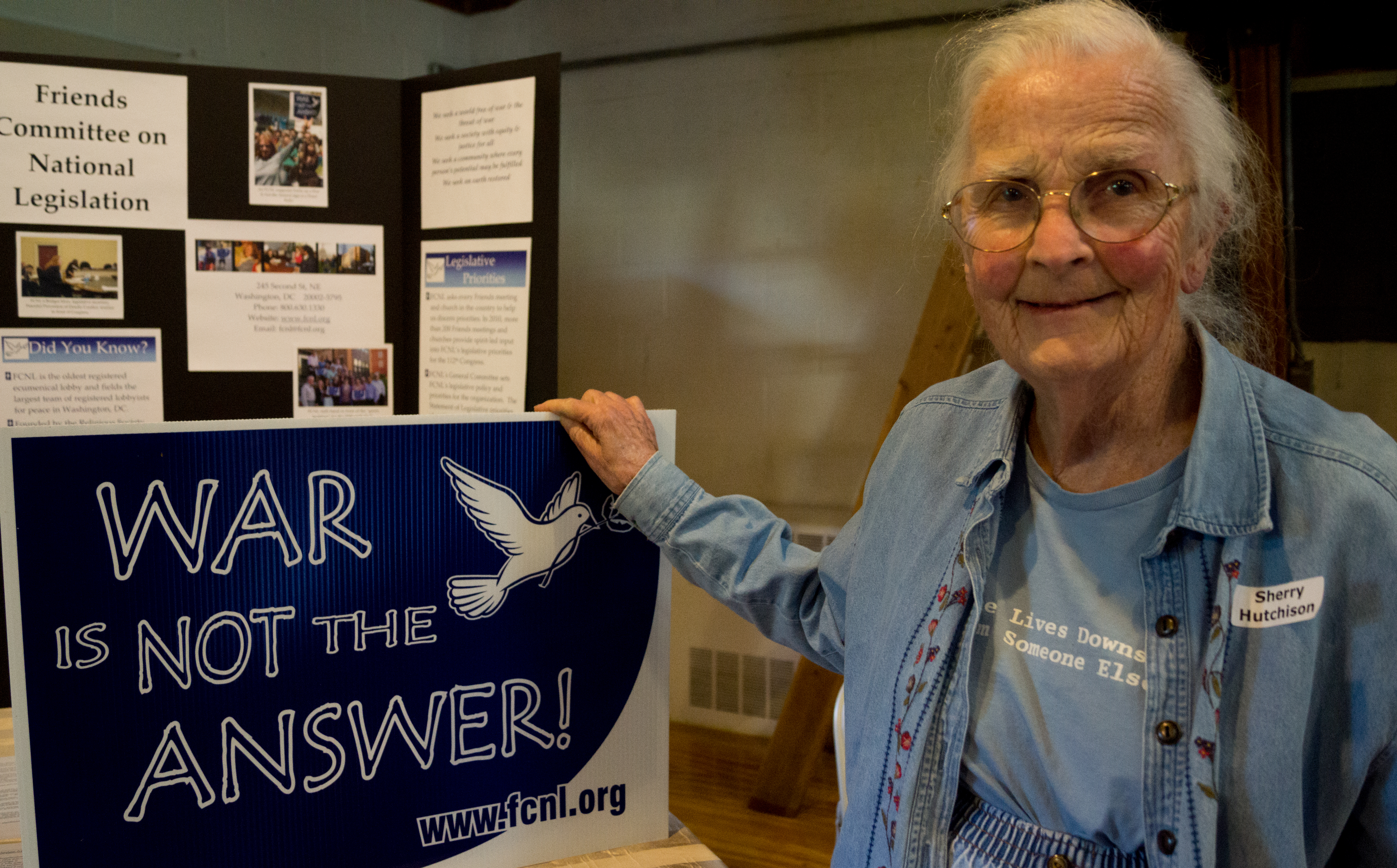
  • Yesterday, during our weekly Friends Committee on National Legislation (FCNL) Witness Wednesday Silent Reflection we considered the following prompt and query.
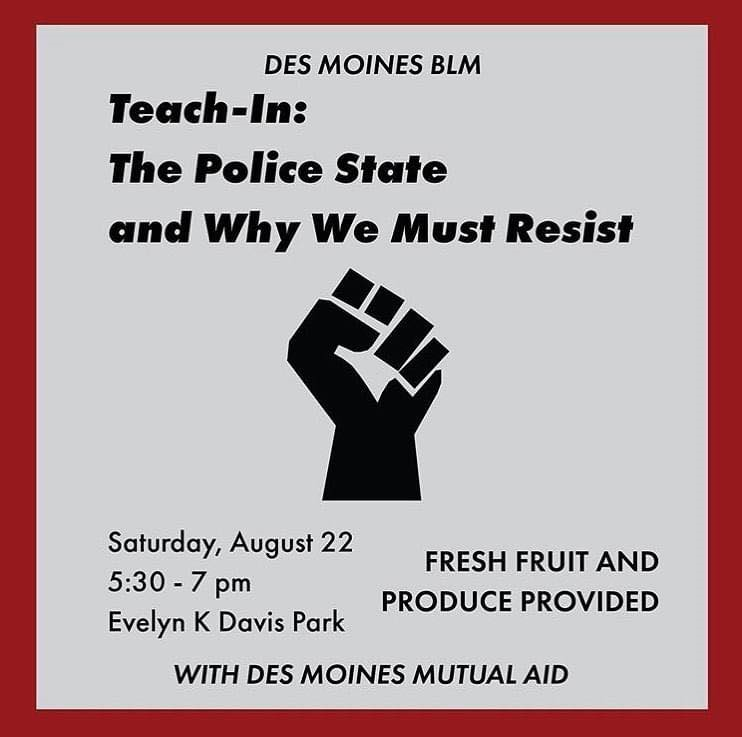
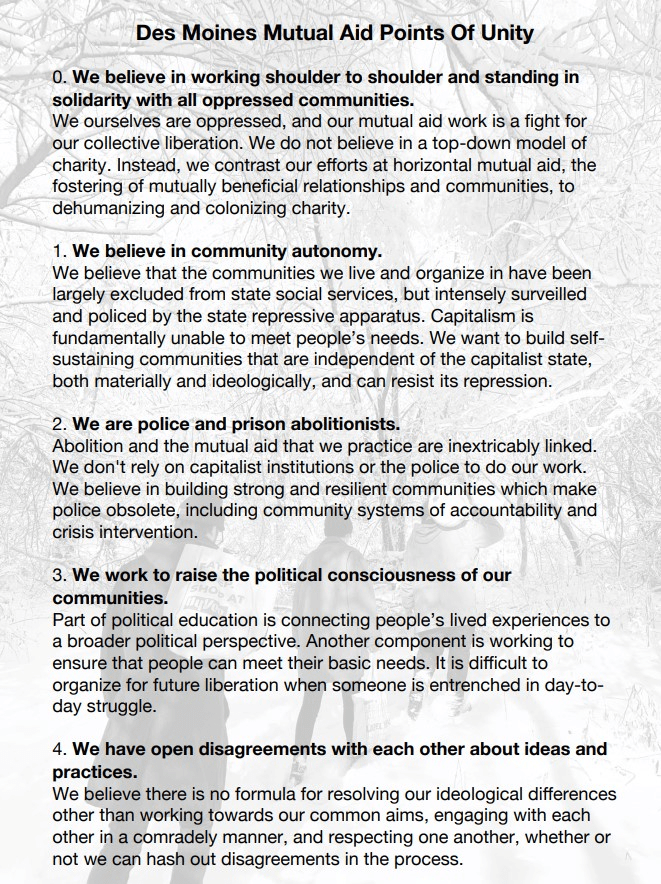
  • During my three years of experience with Des Moines Mutual Aid, I’ve become MUCH more aware of the internal war of the state against us.

FCNL’s Witness Wednesday Silent Reflection 9/20/2023

Prompt

“If, however, the peace testimony is the outward evidence of God’s work among us, then committing to it will lead us into prayerful sacrifice and radical solidarity with victims of violence. The cause of peace will encourage us to take unpopular stands for unpopular causes, because our faith is in a God who does not allow us to use violence even for a noble cause. We will be led to share our faithfulness to the Lamb and His war in a spirit of love and humility, inviting others into a new way of living.”

–Adria Gulizia, “Do Friends Still Need the Peace Testimony?” (Aug. 2022)

Query: How do you live a commitment to peace? How do you invite others into a new way of living?


I don’t know why I was prompted to take this photo of a coffee cup yesterday

An Epistle to Friends Concerning Military Conscription

Dear Friends,

It has long been clear to most of us who are called Friends that war is contrary to the spirit of Christ and that we cannot participate in it.  The refusal to participate in war begins with a refusal to bear arms.  Some Friends choose to serve as noncombatants within the military.  For most of us, however, refusal to participate in war also involves refusal to be part of the military itself, as an institution set up to wage war.  Many, therefore, become conscientious objectors doing alternative service as civilians, or are deferred as students and workers in essential occupations.

Those of us who are joining in this epistle believe that cooperating with the draft, even as a recognized conscientious objector, makes one part of the power which forces our brothers into the military and into war.  If we Friends believe that we are special beings and alone deserve to be exempted from war, we find that doing civilian service with conscription or keeping deferments as we pursue our professional careers are acceptable courses of action.   But if we Friends really believe that war is wrong, that no man should become the executioner or victim of his brothers, then we will find it impossible to collaborate with the Selective Service System.  We will risk being put in prison before we help turn men into murderers.

It matters little what men say they believe when their actions are inconsistent with their words.  Thus we Friends may say that all war is wrong, but as long as Friends continue to collaborate in a system that forces men into war, our Peace Testimony will fail to speak to mankind.

Let our lives speak for our convictions.  Let our lives show that we oppose not only our own participation in war, but any man’s participation in it.  We can stop seeking deferments and exemptions, we can stop filling out Selective Service forms, we can refuse to obey induction and civilian work orders.  We can refuse to register, or send back draft cards if we’ve already registered.

In our early history we Friends were known for our courage in living according to our convictions.  At times during the 1600’s thousands of Quakers were in jails for refusing to pay any special respect to those in power, for worshiping in their own way, and for following the leadings of conscience.  But we Friends need not fear we are alone today in our refusal to support mass murder.  Up to three thousand Americans severed their relations with the draft at nation-wide draft card turn-ins during 1967 and 1968.  There may still be other mass returns of cards, and we can always set our own dates.

We may not be able to change our government’s terrifying policy in Vietnam.  But we can try to change our own lives.  We must be ready to accept the sacrifices involved if we hope to make a real testimony for Peace.  We must make Pacifism a way of life in a violent world.

We remain, in love of the Spirit, your Friends and brothers,

Don Laughlin Roy Knight Jeremy Mott Ross Flanagan Richard Boardman James Brostol George LakeyStephen Tatum Herbert Nichols Christopher Hodgkin Jay Harker Bob Eaton Bill Medlin Alan & Peter Blood

We organized a draft conference at Scattergood Friends School in 1969


Racism on Parade in Muscatine, Iowa

I woke up this morning at 4 am, unable to go back to sleep because of the awful image of a woman in a Native American costume being pulled by a rope behind a horse during the 4th of July parade in Muscatine, Iowa.

I learned of this yesterday from a blog post written by my friend Jessica Engelking, Representation Director at the Great Plains Action Society (GPAS), Racism on Parade in Muscatine, Iowa. Part of Jessica’s blog post follows.

There is also the issue of this act mocking the Missing and Murdered Indigenous Women crisis. Muscatine hosted a parade that featured a bound white woman pretending to be a Native woman in a cheap, sexually provocative Halloween costume being led beside a horse ridden by a white woman

Again, as the Representation Director of GPAS,it is my job to clearly state that great harm that was perpetuated by your parade. This wildly distasteful act that you allowed in your parade was dehumanizing and dangerous for Indigenous Peoples. Your parade represented Native women as 1) sexual and 2) powerless. A Native woman was displayed as a captive servant—a desirable candidate for possession for rape and violence. This was made even more evident by the “sexy” Halloween costume she was wearing, which mocks our traditional regalia and sexualizes us.

Regardless of whether this aspect of the parade was your intent, you allowed it to carry out. It should have been shut down immediately. We live in a world where real women, our not-so-distant ancestors, were bound and pulled beside horses like that. And they were raped and murdered. They watched their babies’ skulls be smashed. They witnessed and experienced unspeakable horrors. And, you allowed a part of that real history to be recreated for entertainment value. Shame on you. We expect an admission of accountability, an apology, and a forever ban for the racist organization who did this.

Miigwech,
Jessica Engelking
Anishinaabe
Representation Director
Great Plains Action Society

To Take Action Please call or email the City of Muscatine and the Greater Muscatine Chamber of Commerce & Industry to register a complaint about what they allowed to happen in their parade. It is important to note that Brad Bark is both the Mayor of Muscatine and the President and CEO of the Chamber of Commerce–so let’s contact him!

Contact Brad Bark though the City at: (563) 506-3161
bbark@muscatineiowa.gov
Contact Brad Bark through the Chamber of Commerce at:
(563) 263-8895
muscatine.com/contact

https://www.greatplainsaction.org/single-post/racism-on-parade-in-muscatine-iowa


Groups and individuals are responding to the display and costume as both shocking and sickening to Indigenous Iowans. A woman is seen dressed in a Native American costume, with her hands bound by a rope, being pulled by a woman on a horse.

Sikowis Nobiss, Executive Director at the Great Plains Action Society, says there’s no excuse for playing what she calls “Pretendian”.

“So, this is absolutely an act of racism. I don’t know how anybody could see it any way else. Excuses don’t change what happened and what everybody saw,” Nobiss said.

Nobiss says the costume was not just offensive because of deep wounds caused by colonization, but modern-day problems that still affect Native Americans.

“We also have a very high rate of being sold and taken into the sex trafficking industry. And so this really reminded me of like how, you know, settlers view us still. Like less than human.”

Nobiss says if you want to celebrate Indigenous heritage, costumes are off the table, but there are still ways to celebrate.

“Go to a powwow, buy from our indigenous-owned stores, support these indigenous-owned businesses. Find your local tribe or organization and ask them if there are ways you can volunteer or help out with any issues or causes they’re working on, Nobiss said

‘An egregious act of racism’ Muscatine Independence Day costume offends Indigenous Iowans By Conner Hendricks, KCRG.com, July 5, 2023

Find your local tribe or organization and ask them if there are ways you can volunteer or help out with any issues or causes they’re working on.

Sikowis Nobiss

In a statement, the Greater Muscatine Chamber of Commerce said:

“It was brought to the attention of the Greater Muscatine Chamber of Commerce and Industry (GMCCI), that there was a parade entry consisting of a woman dressed in Native American attire with a rope around her hands walking alongside a horseback rider holding the rope.

GMCCI does not condone this behavior and this entry does not represent our community.


When Protest is a Crime

As our politics are making a hard turn to the right, as the US Congress, the US Supreme Court, and multiple states pass legislation based upon White supremacy and authoritarianism, protest is how we who disagree with these trends were once able to try to make our voices heard. But authoritarianism cannot allow questioning its authority and violently suppresses protest and other civil liberties. Tensions will only increase if authoritarianism deepens. Will only increase because of the accelerating urgency to respond to increasing environmental devastation and chaos.

A pair of articles have just been published about Indigenous views of “when protest is a crime”. Part 1 is the Standing Rock effect, and part 2 is about the efforts to Stop Cop City from being constructed in Atlanta.

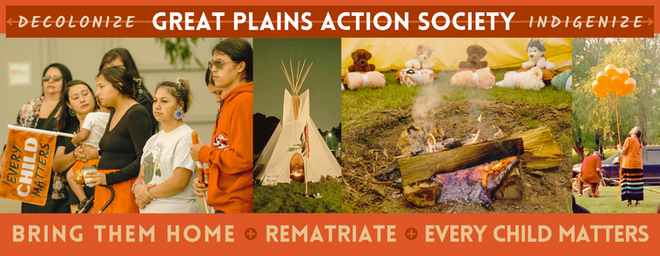
I’ve been learning about Indigenous views from my friends at the Great Plains Action Society (GPAS) and Des Moines Mutual Aid (DMMA). On GPAS’s Mechanism of Engagement graphic are direct action (protest) and mutual aid. The articles below are about direct action. I’ve been learning mutual aid is a way for a community to care for each other, especially when the government does not.

The audio episodes and transcripts below are available on OUTSIDE/IN. A SHOW ABOUT THE NATURAL WORLD AND HOW WE USE IT. The host is Nate Hegyi.


When protest is a crime, part 1: the Standing Rock effect

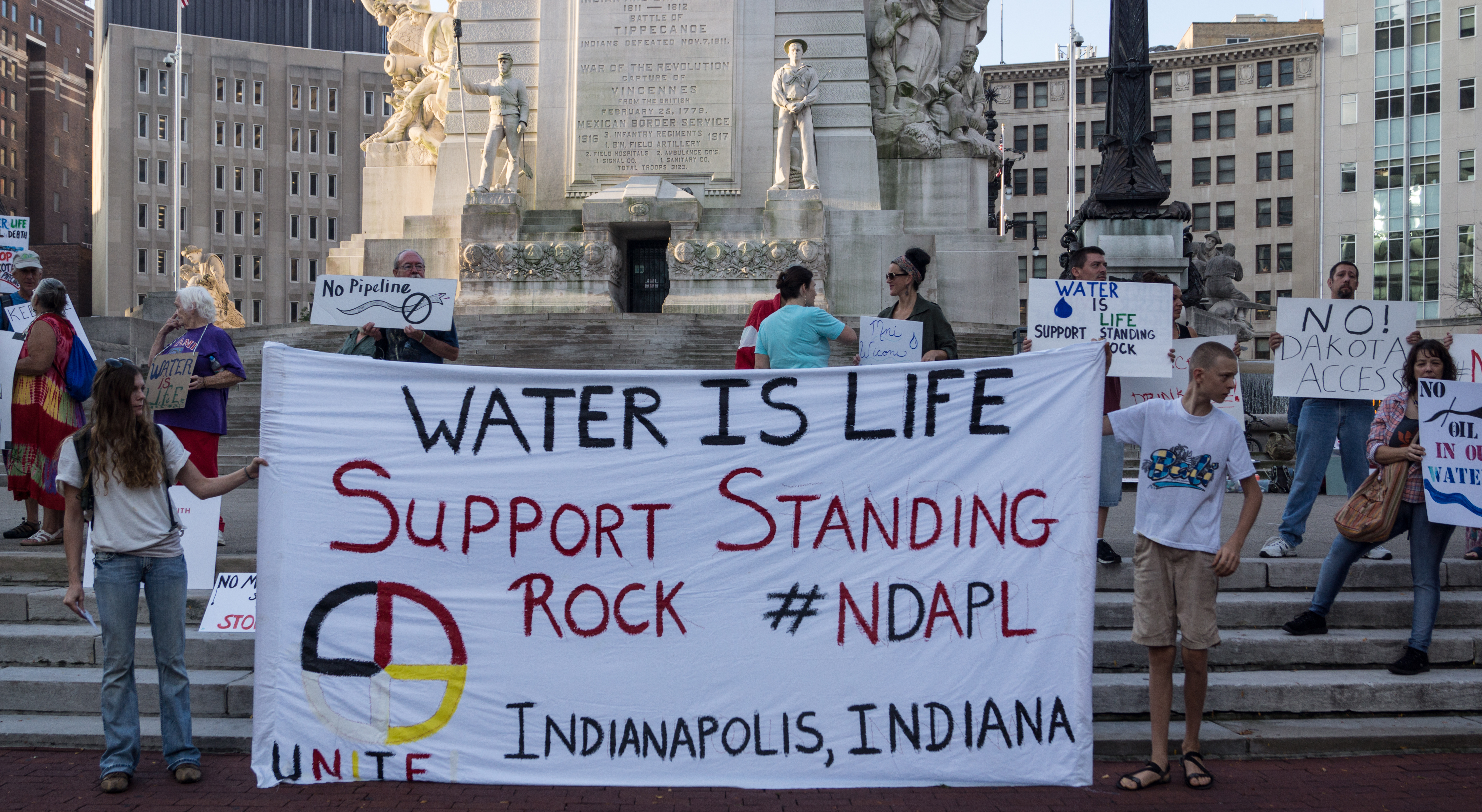
When members of the Oceti Sakowin gathered near the Standing Rock Reservation to protest the Dakota Access Pipeline, they decided on a strategy of nonviolent direct action. No violence… against people.

But sabotage of property – well, that’s another question entirely.

Since the gathering at Standing Rock, anti-protest legislation backed by the fossil fuel industry has swept across the country.

What happened? When is environmental protest considered acceptable… and when is it seen as a threat?

This is the first of two episodes exploring the changing landscape of environmental protest in the United States, from Standing Rock to Cop City and beyond.

http://outsideinradio.org/shows/when-protest-is-a-crime-part-1


Nate Hegyi: There are certain moments that become part of our collective story. Flash points. When our past and our future feel like they’re talking to each other. Standing Rock was a moment like that.

Chase Iron Eyes: The smell of fire, of campfire, permeated the entire Oceti Sakowin camp.

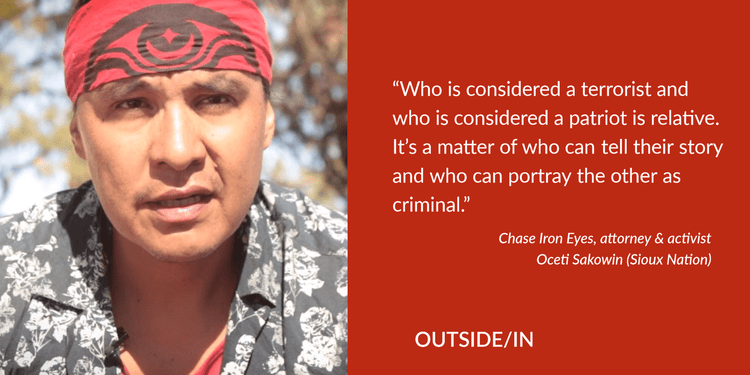
Nate Hegyi: That’s Chase Iron Eyes. He’s an attorney, and a member of the Oglala Sioux and Standing Rock Nations, though he says these are colonial names.

Chase Iron Eyes: Yeah, I would say Oceti Sakowin or Sioux Nation.

Nate Hegyi: The protesters, including Chase, first gathered in 2016. They were there to stop DAPL, the Dakota Access Pipeline. Because pipelines spill. Because millions of people depend on the integrity of the Missouri River. Because even when a pipeline works as intended, the result… is more greenhouse gas emissions. But the main reason why Chase and members of the Sioux Nation were camping at Standing Rock was: they were defending their sovereignty.

Chase Iron Eyes: We had been disallowed from expressing our sovereign identity in that territory since 1889. That’s when the state of North Dakota and South Dakota were admitted to statehood.

Nate Hegyi: It was the largest gathering of Indigenous people in recent history. People came from all over.

Chase Iron Eyes: Tens of thousands of people cycled through that camp. This is why one elder called it an ongoing international spiritual monument.


Producer Justine Paradis takes it from here.

Lesley Wood: Most protests are extremely straightforward, and sometimes even boring.

Justine Paradis: This is Lesley Wood. She researches the dynamics between policing and social movements.

Lesley Wood: Um. But some protests are not.

The activists at Standing Rock described the protest as a nonviolent, direct action.

And, historically, “direct action” can mean a lot of things.

Lesley Wood: it can be something like if we want better health care, we have to set up clinics…

It’s saying we’re not going to ask for the government to solve the problems… We’re going to do it ourselves.

Justine Paradis: Direct action as a strategy often comes after trying to participate in the democratic process – and finding it unresponsive. And it might involve acts of civil disobedience: deliberately breaking a law, like stopping traffic, or maybe because the law itself is unjust, like sitting at a segregated lunch counter. Speaking generally, that’s very different from a permitted, police-protected protest, the kind Lesley calls “marching in a circle.”

Lesley Wood: There’s no political threat posed by them… the idea that you have a right to protest, but only in certain ways and in certain places doesn’t really understand what protest is trying to do, which is on the fundamental say the system isn’t working. And to show that it’s not working. To impose some sort of potential cost to the system.

http://outsideinradio.org/shows/when-protest-is-a-crime-part-1


When protest is a crime, part 2: city in a forest

After the gathering at Standing Rock, legislators across the United States passed laws in the name of “protecting critical infrastructure,” especially pipelines. 

At the same time, attacks on the electrical grid have increased almost 300%. But that threat isn’t coming from environmental activists. 

It’s coming from neo-Nazis. 

This is the second episode in our series examining the landscape of environmental protest in the United States, from Standing Rock to Cop City and beyond. Listen to the first episode here.

As the space for protest in the United States shrinks, this year marked a major escalation: the first police killing of an environmental protestor in the United States, plus the arrests of dozens of people at protests under the charge of domestic terrorism.

https://outsideinradio.org/shows/when-protest-is-a-crime-part-2


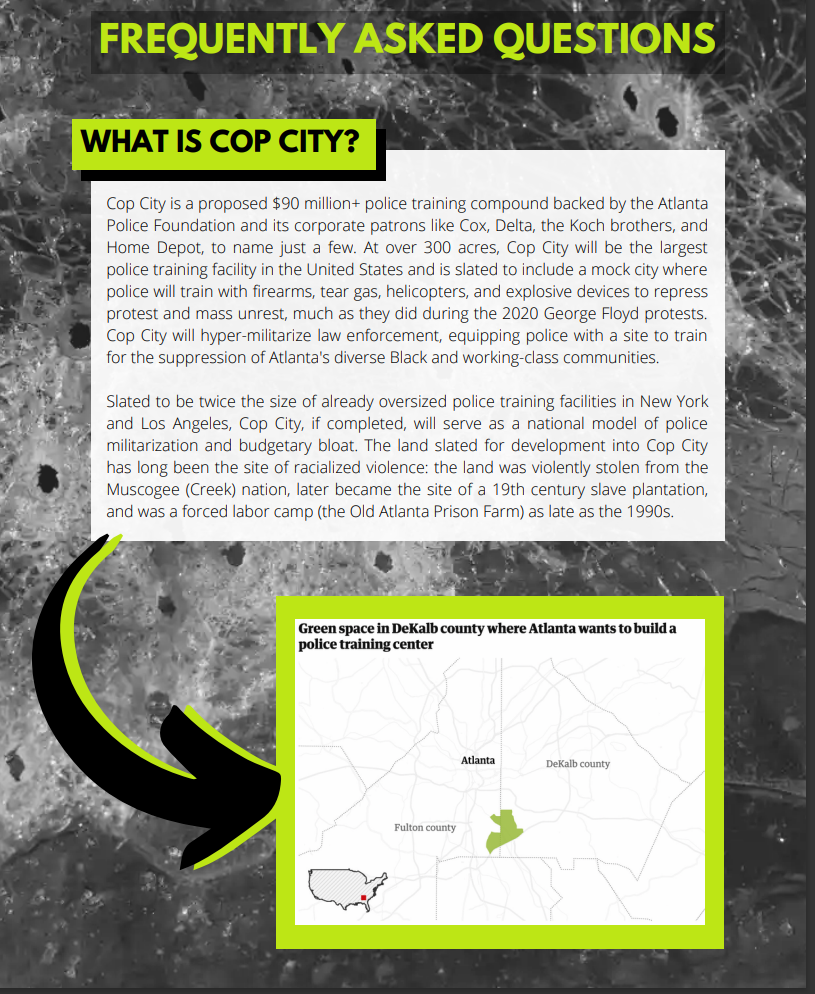
The Atlanta Police Foundation is planning a “public safety training facility” on at least 85 acres of this forest in southeast Atlanta. Their plan includes a mock city for training police in, essentially, urban warfare – complete with a mock convenience store, nightclub, a motel/apartment building, a gas station.

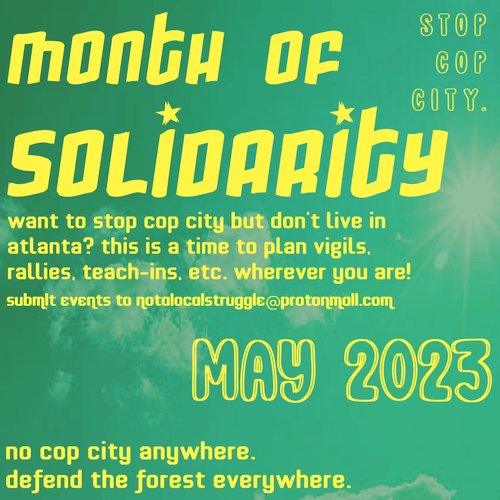
Activists call it Cop City.

Justine Paradis: There are a lot of reasons people are opposed to Cop City.

Because of the environment, for one: trees are good for air and water, and cooling things down, which is especially important in a hotter climate.

And then there’s the fact that this project would be an expansion and investment in the police.

The Weelaunee Forest is in a majority Black neighborhood. And this is only about a year after people were marching in the streets calling for a defunding of the police.

Reverend Keyanna Jones at Atlanta City Council on March 6, 2023: …we don’t want Cop City. I live in East Atlanta. I don’t want Cop City. I got five black children. I don’t want Cop City. I like breathing clean air. I don’t want Cop City… I don’t want black Black Hawk helicopters landing around the corner from my house. I don’t want Cop City.

Justine Paradis: In the decisive meeting to approve the project, 70% of comments were opposed – but the Atlanta City Council approved it anyway.

That was in September 2021.

After that, a group of activists moved into the forest to try to prevent this project from happening. They called themselves “forest defenders.”

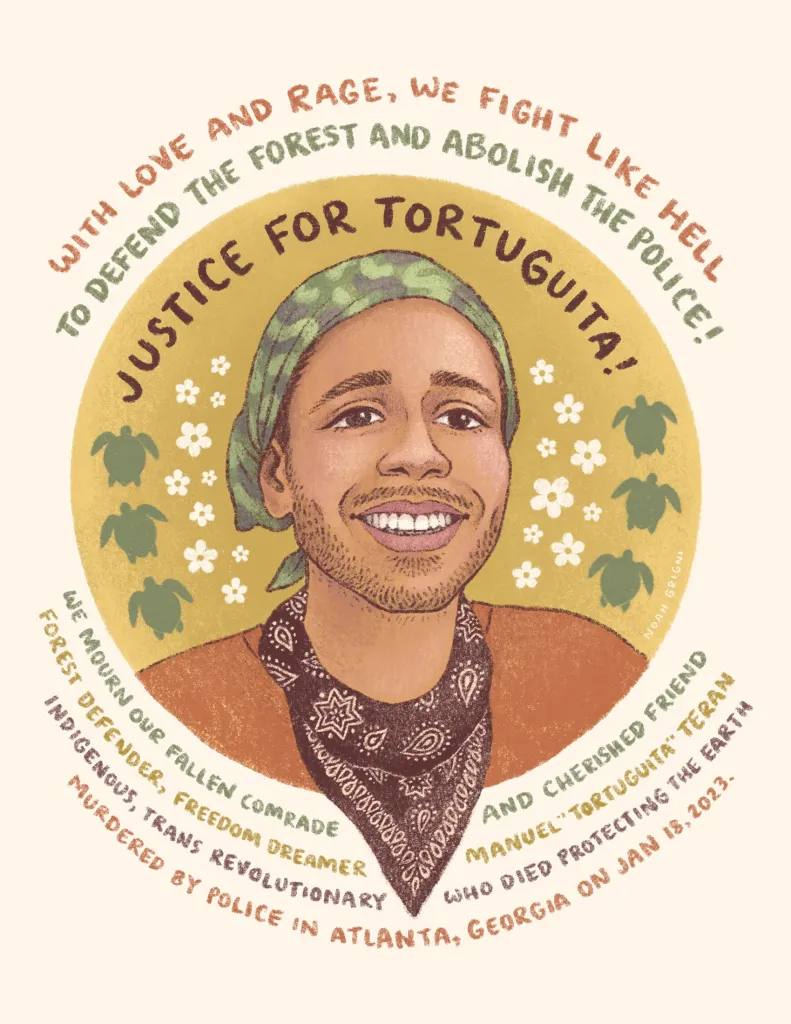
They’d been living there for over a year – in tents and tree platforms – when police raided the camp. During one of those raids, law enforcement killed a forest defender, a Venezuelan Indigenous person who went by the name Tortuguita. They shot them at least 57 times. This was the first police killing of an environmental protestor in the United States.

https://outsideinradio.org/shows/when-protest-is-a-crime-part-2


Risks of Environmental Activism

As a follow-up to yesterday’s post about bail funds, a fellow Quaker abolitionist told me about the Atlanta Solidarity Fund.

Support the Atlanta Solidarity Fund as its organizers face targeted political repression.
The National Bail Fund Network is collecting donations for the Atlanta Solidarity Fund on a temporary basis as of May 31, 2023.
All funds raised here will be used to support bail and legal defense funds of those being arrested and prosecuted in Atlanta.
The National Bail Fund Network is made up of over 90 local community-based bail and bond funds that free people from local jails and immigration detention centers. More information at bit.ly/localbailfunds

Atlanta Solidarity Fund


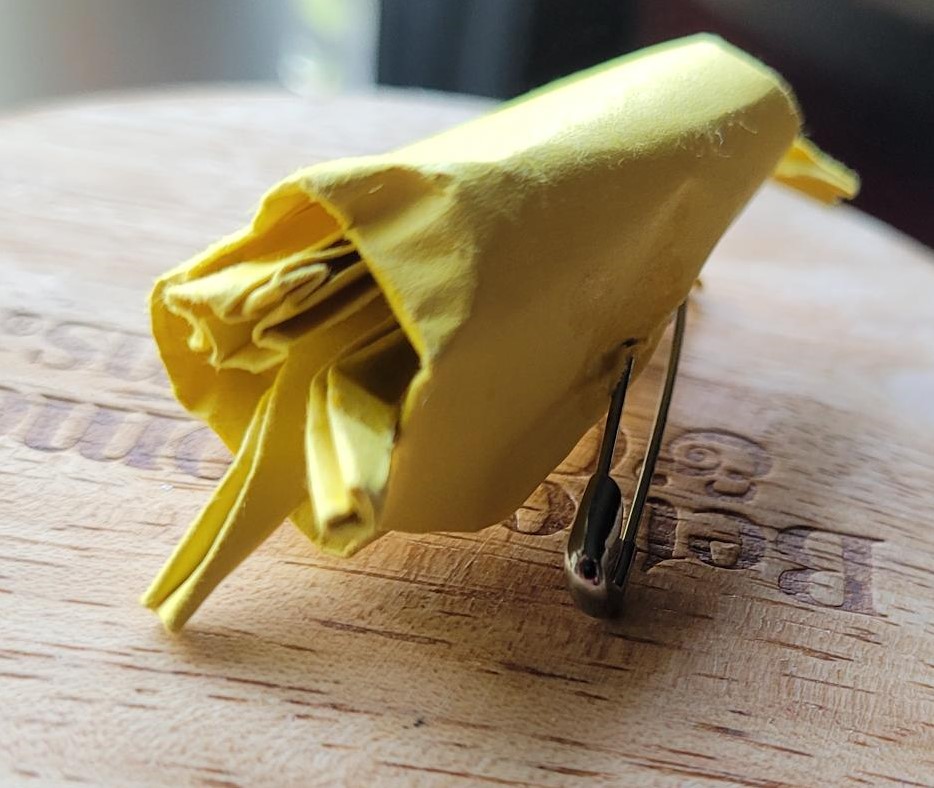
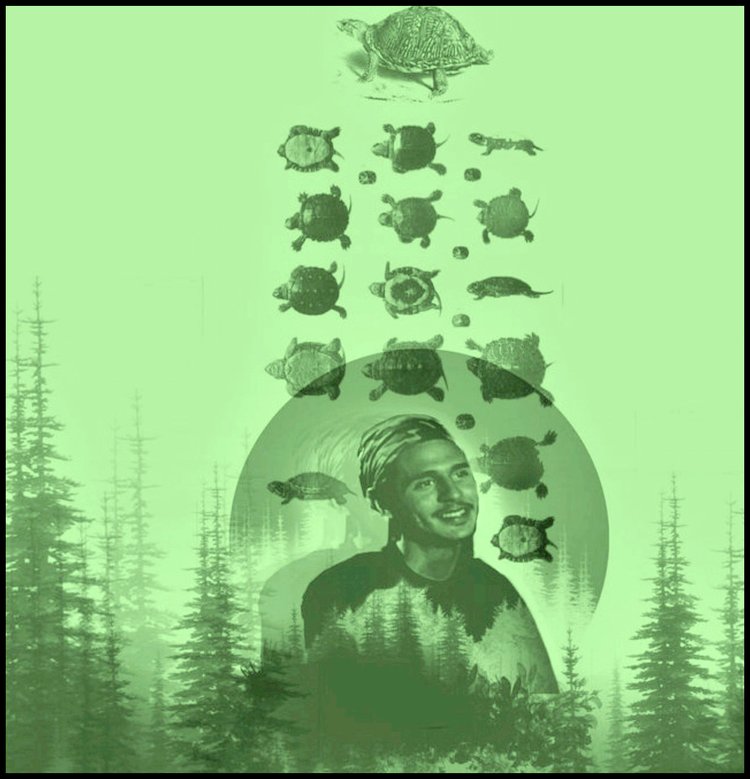
There are, of course, risks to being involved in activism. Manuel Esteban Paez Terán also known as Tort or Tortuguita (Little Turtle), was a tree-sitter in the Atlanta forest and was killed by police on January 18, 2023. You can read the moving tributes to Tort here: Memories of Tort.

During our latest demonstration related to Stop Cop City, someone made turtles for us to pin on our shirts in remembrance of Tortuguita.

The issue of environmental activism is becoming increasingly urgent and dangerous in the face of the climate crisis. According to a report by Global Witness, more than 1,700 environmental activists have been killed “trying to protect their land and resources” over the past decade. In 2020 alone, a record number of 227 people were murdered around the world for defending their environment and land rights. (see: https://en.wikipedia.org/wiki/List_of_environmental_killings)


Indigenous resistance

It’s important that enterprising reporters cover Native issues in the right way. Today, I’m happy to highlight a solid example of such reporting. When protest is a crime, part one: the Standing Rock effect is the first of a multi-part podcast from the talented team at Outside/In, a division of New Hampshire Public Radio. It examines the criminalization of protest in America through the lens of Indigenous resistance. Both my father, Lakota Law co-director Chase Iron Eyes, and I sat down with reporter and producer Justine Paradis to lend our perspectives. I encourage you to listen to what we had to say.

Wopila tanka — thank you for being a part of our resistance.
Tokata Iron Eyes, Organizer
The Lakota People’s Law Project

“Who is considered a terrorist and who is considered a patriot is relative. It’s a matter of who can tell their story and who can portray the other as criminal,” said Chase Iron Eyes, an attorney and activist and member of the Oceti Sakowin (Sioux Nation). Photo by Treetops Productions on Wikimedia Commons (CC BY 3.0).


Not the first time the people were betrayed

Weelaunee Forest was the historic home of Muscogee Creek peoples for untold generations. In the 1830s they were forcibly removed by the U.S. military on the Trail of Tears; and the land, some 3,500 acres, was transferred to the hands of enslaving plantation elites. Enslaved Africans toiled their lives away and were undoubtedly buried there.

Then in 1918, during the Jim Crow era, the Bureau of Prisons and the nearby Atlanta federal penitentiary bought over 1,000 acres for a prison farm to grow crops to feed inmates. Mainly Black prisoners, convicted of low-level “crimes” like vagrancy, loitering and public drunkenness, labored for free in horrible living conditions and were subjected to brutal treatment. It is believed their unmarked graves lie among the trees that cover the Atlanta Prison Farm’s acres.

In 1965 the city of Atlanta appears to have acquired the property, which is the largest existing expanse of green space in the area. The Atlanta Prison Farm was finally closed in 1995.

The killing of Forest Defender Tortuguita in Atlanta by Dianne Mathiowetz, Workers World, January 24, 2023


#StopCopCity

Bail Fund Arrests

Have you ever joined a peaceful protest? Aren’t freedom of speech, freedom of assembly worth protecting?

Clamping down on such freedoms is essential for any movement toward authoritarianism. And sadly this country is rapidly moving in that direction. These are times that call for peaceful protest.

Yesterday I wrote about polycrisis. One of the examples of risks that are commonly associated with polycrisis is the crisis of democracy.

Crisis of Democracy includes issues of corruption, political polarization, decreasing institutional legitimacy, and rising authoritarianism. Falling rates of democratic participation and the diminishing health of democracies exacerbate most other systemic risks, as misalignment between political elites and the public interest make progress on urgent issues less likely. 

The global polycrisis reflects a civilizational crisis that calls for systemic alternatives by Zack Walsh, Omega, June 1, 2023

These days it is hard to be shocked by almost anything, but I am truly shocked to learn about the latest attacks on those who are trying to stop the construction of Cop City in Atlanta. Shocked to learn of the arrest of several people whose crime was organizing a bail fund

Bail Funds

Bail funds are an important part of many activist communities. Many of us who engage in public protests might hesitate to do so if there wasn’t a bail fund. Especially if civil disobedience is planned.

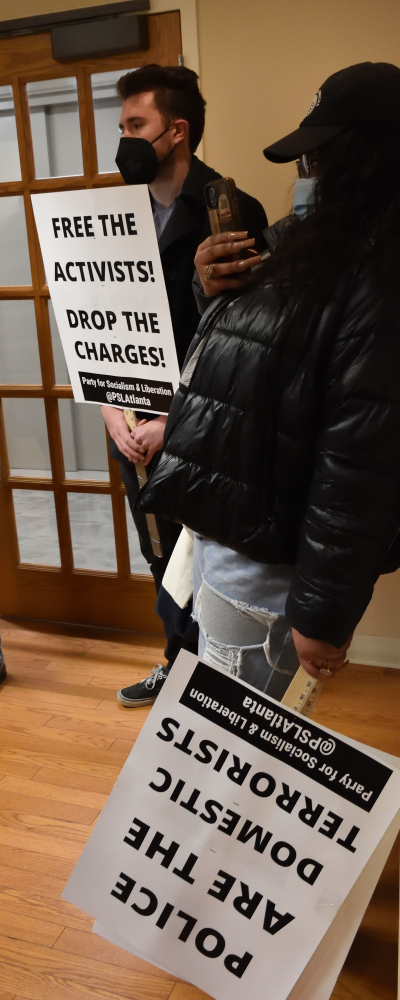
ON WEDNESDAY MORNING, a heavily armed Atlanta Police Department SWAT team raided a house in Atlanta and arrested three of its residents. Their crime? Organizing legal support and bail funds for protesters and activists who have faced indiscriminate arrest and overreaching charges in the struggle to stop the construction of a vast police training facility — dubbed Cop City — atop a forest in Atlanta.

In a joint operation with the Georgia Bureau of Investigation, or GBI, Atlanta cops charged Marlon Scott Kautz, Adele Maclean, and Savannah Patterson — all board members of the Atlanta Solidarity Fund — with “money laundering” and “charity fraud.”

The arrests are an unprecedented attack on bail funds and legal support organizations, a long-standing facet of social justice movements, according to Lauren Regan, executive director of the Civil Liberties Defense Center.

“This is the first bail fund to be attacked in this way,” Regan, whose organization has worked to ensure legal support for people resisting Cop City, told me. “And there is absolutely not a scintilla of fact or evidence that anything illegal has ever transpired with regard to Atlanta fundraising for bail support.”

ATLANTA POLICE ARREST ORGANIZERS OF BAIL FUND FOR COP CITY PROTESTERS. Part of a brutal crackdown on dissent against the police training facility, the SWAT raid and charges against the protest bail fund are unprecedented by Natasha Lennard, The Intercept, May 31, 2023


The fund also aimed to highlight the need for bail reform and challenge the current system that disproportionately affects low-income individuals and communities of color


The organizers of the bail fund sought to provide financial support to protesters who might not otherwise be able to afford bail, allowing them to continue participating in the movement and maintain their freedom while awaiting trial. The fund also aimed to highlight the need for bail reform and challenge the current system that disproportionately affects low-income individuals and communities of color.

The arrest of bail fund organizers is not only an injustice to them, but also a threat to democracy and social justice. It is part of a larger effort to silence and suppress the voices of those who oppose police brutality, racial injustice, environmental destruction, and corporate greed. It is also part of a larger pattern of criminalizing solidarity and mutual aid, which are essential for building strong and resilient communities.


Des Moines Mutual Aid

The campaign to defend the forest in Atlanta, Georgia has become one of the most vibrant movements of the post-Trump era, interweaving environmentalism, abolitionism, and the fight against gentrification. Yet as police shift to employing lethal violence and indiscriminate terrorism charges, it has reached a critical juncture. Participants explore how this struggle has developed over the past year, reflecting on the practices that have given it strength and analyzing the challenges before it.

The Forest in the City. Two Years of Forest Defense in Atlanta, Georgia by CrimethInc., 2/22/2023

Discerning Peace and Social Concerns

This morning my Quaker Meeting (Bear Creek) will be considering how we work for peace and nonviolence. Each month we consider queries from our (Iowa Yearly Meeting Conservative)’s Fath and Practice. This month’s queries relate to peace and nonviolence.

12.  PEACE AND NONVIOLENCE

“[We] seek to live in the virtue of that life and power that takes away the occasion of all wars.”     George Fox

ADVICE

We seek peace within our own lives. Sometimes there are barriers to peace within families and meetings, and among individuals. Anger and frustration may result in hurtfulness which leaves physical, sexual or emotional wounds. Healing and forgiveness are possible when our hearts are opened to the transforming love that comes from the Spirit Within. The violence we oppose is not only war, but all unloving acts.

Friends seek peaceful resolution to conflicts among nations and peoples. Wars can easily erupt when nations depend upon armed forces as an option for defense and order. To oppose war is not enough if we fail to deal with the injustices and inequalities that often lead to violence. We need to address the causes of war, such as aggression, revenge, overpopulation, greed, and religious and ethnic differences.

QUERY

  • What are we doing to educate ourselves and others about the causes of conflict in our own lives, our families and our meetings? Do we provide refuge and assistance, including advocacy, for spouses, children, or elderly persons who are victims of violence or neglect?
  • Do we recognize that we can be perpetrators as well as victims of violence? How do we deal with this? How can we support one another so that healing may take place?
  • What are we doing to understand the causes of war and violence and to work toward peaceful settlement of differences locally, nationally, and internationally? How do we support institutions and organizations that promote peace?
  • Do we faithfully maintain our testimony against preparation for and participation in war?

Faith and Practice. Iowa Yearly Meeting (Conservative)


I have been meaning to read the pamphlet Advice and Queries: Discerning Peace and Social Concerns by Tasmin Rajorte and Matthew Legge, Canadian Friends Service Committee (CFSC), Canadian Quaker Learning Series.

In preparation for our (Bear Creek) worship sharing related to peace and nonviolence this morning, I thought this would be a good time to read that pamphlet. I was impressed with what I read. I try to avoid including too much material from other sources when I write, but the following are very helpful queries from the document.


Discerning Peace and Social Concerns

Several Quaker Meetings have come to us to express challenges in their work on peace and social concerns. They’ve said, in effect: “We’re exhausted. We see so many problems in the world and we try to take action on too many of them. In the end, we’re left feeling frazzled and spread too thin. How does Canadian Friends Service Committee navigate this challenge? How can we decide what causes to take up?”

In response to these questions and requests for help, CFSC has written a new pamphlet. Aimed at Quaker Meetings, the pamphlet explores what discernment is, what a leading is, and how to use Quaker decision-making processes to select what peace and social justice work to take on.

Queries to Test that the Concern or Leading is Grounded in Spirit

“…Appreciate that doubt and questioning can also lead to spiritual growth and to a greater awareness of the Light that is in us all.”

Advices & Queries

Having considered what concerns, leadings, and discernment mean and how Quakers engage in discernment processes, you can now turn to queries that you and the Meeting may find helpful in discerning if a leading or concern is grounded in the Spirit.

Personal reflection

Are you experiencing a concern or a leading? Is it genuinely from God?

The following queries may assist with providing clarity on this:

  • Is it an immediate reaction to something or is it coming from a deeper place? Can you distinguish the concern or leading that has arisen from the range of concerns that you are generally preoccupied with or want to act on?
  • Is the compulsion to do something stemming from your ego’s need for acceptance, belonging, or control? Are you experiencing a compulsion to rescue others, to save the world, or to act on your own? Are there expectations, hopes, assumptions, impulses, and underlying family patterns” shaping your sense of the concern or leading? 27 Is this genuinely motivated by love and compassion? Is it coming from the heart in unity with the mind?
  • What experiences led to this concern or leading?
  • Is this a desire that someone else do something or is it a call to act yourself?
  • Is it associated with an unnerving persistent “turmoil and disquiet that won’t go away?
  • Can you explain the faith basis of the concern or leading and how it is in keeping with Friends’ testimonies?”
  • Is now the time and, if so, will you remain in this for the long
  • Are you willing to accept difficulty and censure.
  • How is this concern or leading currently being addressed?
  • Would acting on this result in any harm to you and/or the community?
  • Once it is clear what you must do, is there a feeling of centredness and peace that is unlike the preceding turmoil?

Role of the Monthly Meeting

“A concern that is brought before a meeting should be considered with the greatest love, kindness and discipline. Much as we like to support our Friends in the things for which they have an unbounded enthusiasm, it is no kindness to recognize as a concern something which has not received the fullest attention possible.”—Britain Yearly Meeting

A broad array of leadings and concerns come to Meetings. These may be referred to a Peace and Social Action Committee (PSAC) or discernment may be done by the Meeting as a whole. If the Meeting has a PSAC, is its role to assist with discernment and:

a) make recommendations to the Meeting and help Friends prioritize and unite on engaging in action together as a Meeting; or
b) provide coordination, guidance, and support for Friends in carrying out, as individuals, leadings and concerns that have been tested?

Whether discernment is done by the Meeting as a whole, or a PSAC, queries to assist with this stage of the discernment process can be found below. In some cases, a Meeting for Clearness can also be useful. Note, too, that a Meeting may choose to act on a concern arising from a partnership (for instance with other faith communities) in addressing a matter of common interest even in the absence of a leading from any individual in the Meeting. The following queries may assist a gathered Meeting or PSAC at this stage of the discernment process:

  • Is the concern or leading and proposed action self-serving?
  • “Knowledge about something generally does not give rise to a true leading or concern. It is when a Friend is intimately acquainted with a situation that the Spirit’s call to action arises.
  • Does the leading come out of direct experience?
  • Does the Friend have an established relationship with those who are the focus of the concern (for example, do they work with incarcerated persons if the concern is about incarceration)?
  • Can the individual be patient for better clarity and others’ guidance, and wait for way to open?
  • What is the faith basis of the concern or leading? Can it be explained?
  • What is distinctively Quaker about the concern or leading, and about the way we might be called to act? Is it in keeping with the testimonies of the Society? Why should Friends be doing this work?
  • Is this individual or group right to believe that this concern or leading has been ‘laid upon’ them by God?
  • Is the individual jumping on a bandwagon or bringing something unique?

Yes, the Concern or Leading is Grounded in Spirit—Now What?

“The way people are going to work together has to reflect and foster sustainability of the outcomes.”

Lucy Lemieux

Once it has been determined that the concern or leading is truly from divine guidance, further discernment is needed around what action to take. Is there a request to the Meeting or PSAC to act on this concern or leading? Are others drawn to the concern, making it necessary to discern whether a larger body of Friends will take this up and what the key focus will be?

from Advice and Queries: Discerning Peace and Social Concerns by Tasmin Rajorte and Matthew Legge, Canadian Friends Service Committee, Canadian Quaker Learning Series


Mother Earth Takes Another Hit

The approval for the construction of the Mountain Valley Pipeline (MVP) remained in the debt ceiling legislative just passed by the US Congress. This is an egregious act on many levels.

The Mountain Valley Pipeline (MVP) is a project proposed in 2014 that would transport fracked gas from West Virginia to southern Virginia through a 300-mile pipeline. The project has sparked widespread opposition for years from environmentalists, civil rights activists, and local residents who are concerned about its impacts on water quality, wildlife, climate change, and Indigenous and property rights.

The MVP was approved by Congress as part of the debt ceiling deal that was just passed. The deal included a provision that declared the MVP as “required in the national interest” and ordered the federal agencies to issue the necessary permits within 21 days and shield the project from legal challenges. The provision also weakened the National Environmental Policy Act (NEPA), a law that requires environmental reviews for major federal actions that affect the environment.

Many of us have criticized the deal that undermines:

  • the rule of law
  • public participation
  • Indigenous approval
  • and environmental justice

The MVP contradicts President Biden’s pledge to combat the climate crisis and transition to clean energy..

I recently wrote “What should be non-negotiable” to try to explain, yet again, why we can not allow continued construction of fossil fuel infrastructure, from pipelines to carbon capture to gas stations.

I know what it’s like to work year after year, fighting to protect Mother Earth from fossil fuels. I was going to say that for me this began in 2013 when I was trained as an Action Lead in the Keystone Pledge of Resistance. But it began much earlier when I was led to live without a car when I moved to Indianapolis in 1970. My love for nature actually began from growing up on farms and camping trips to national parks.

Of course, Indigenous peoples have worked to protect Mother Earth for centuries.

It’s not easy to maintain years-long resistance to a cause. That is one reason why approval of MVP is devastating. It is difficult to find people who are willing to work for justice causes. Difficult to organize and get people to commit to various actions. To get people to move outside their comfort zone. To face all kinds of opposition, time and time again. And all too often the cause is defeated. The pipelines and other infrastructure continue to be built. Mother Earth takes another hit.

Such is the case with the Mountain Valley Pipeline. Its approval hurts not only those who worked so hard against MVP, but everyone working on any environmental cause. It shows yet again the Federal administration and Congress do not understand the gravity of our evolving environmental devastation.

It also shows, again, that environmental solutions will not come from the dominant political culture in this country. Which is why I am so grateful to have been led to my Mutual Aid community. We work locally, within the community, to address basic needs. Instead of talking and having committee meetings, we come together to help our neighbors with food and shelter.

And we strive to advance Indigenous leadership. Indigenous ways can help clean our waters and move toward living sustainably. Help us heal our relationships with Mother Earth and all our relations.

The circle is completed when Indigenous peoples support Mutual Aid, as Des Moines Mutual Aid is supported by the Great Plains Action Society (GPAS). Mutual Aid is one of the methods in the GPAS’s mechanism of engagement.


Multiple Strategies

Yesterday was another episode in the saga of not only carbon pipelines but Indigenous rights more broadly.

There is increasing pressure from many places to use the idea of carbon capture and storage to meet the goals of reducing greenhouse gas emissions. The Biden administration is supporting this unproven technology, which even if it worked would not impact global greenhouse gas concentrations. This is something I’ve written about extensively.
(See: https://quakersandreligioussocialism.com/?s=carbon+pipeline )

PHMSA

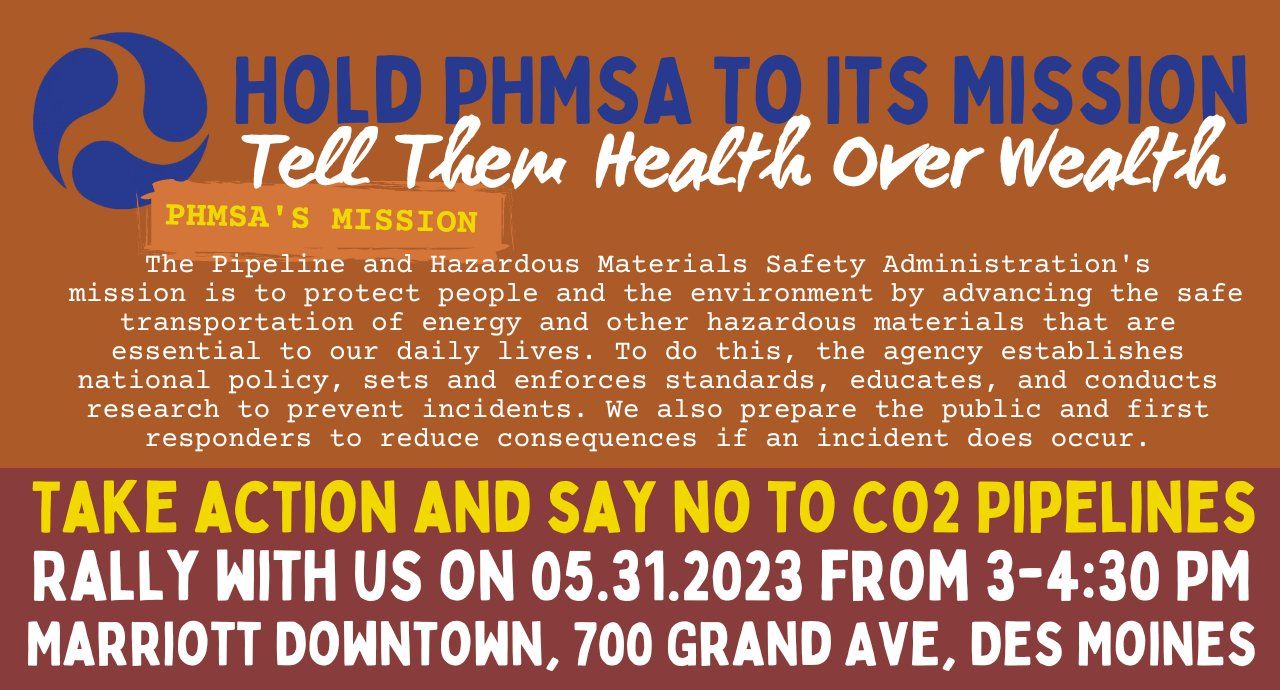
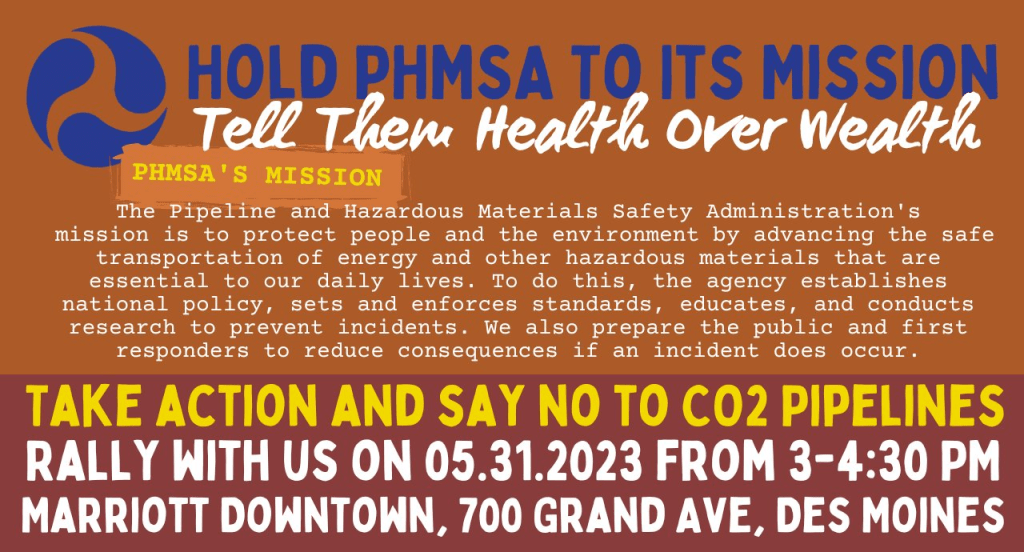
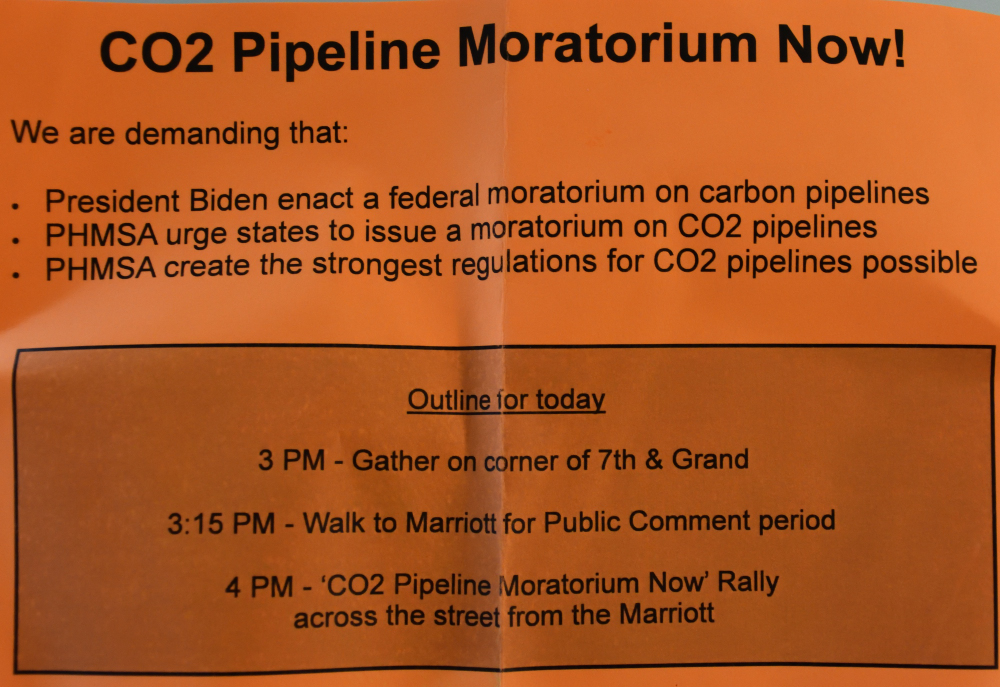
Yesterday and today public meetings are being held in Des Moines by the Pipeline and Hazardous Materials Safety Administration’s (PHMSA) Technical Safety Panel (See: https://quakersandreligioussocialism.com/2023/05/31/carbon-pipeline-safety-meeting/ )

Carbon dioxide (CO2) pipelines are classified as carrying hazardous materials because they pose significant safety risks in case of a rupture. CO2 is a colorless, odorless gas that can displace oxygen and cause asphyxiation at high concentrations. It can also travel long distances from the pipeline after a leak, creating a large danger zone for people and animals. According to the U.S. Department of Transportation’s Pipeline and Hazardous Materials Safety Administration (PHMSA), CO2 pipelines require special safety measures such as corrosion control, leak detection, emergency response plans, and public awareness programs.

There is environmental racism in building pipelines and storage facilities near Indigenous lands. This occurred when the route of the Dakota Access Pipeline was moved away from Bismark, to Standing Rock, when Bismark residents feared contamination of their water.

This environmental racism also facilitates the epidemic of Missing and Murdered Indigenous Relatives because of the “man camps” of pipeline/storage construction workers.

Now there is a similar situation, where landowners, developers, and politicians in Bismark are opposing a proposed carbon dioxide storage project near them.

Not in my backyard

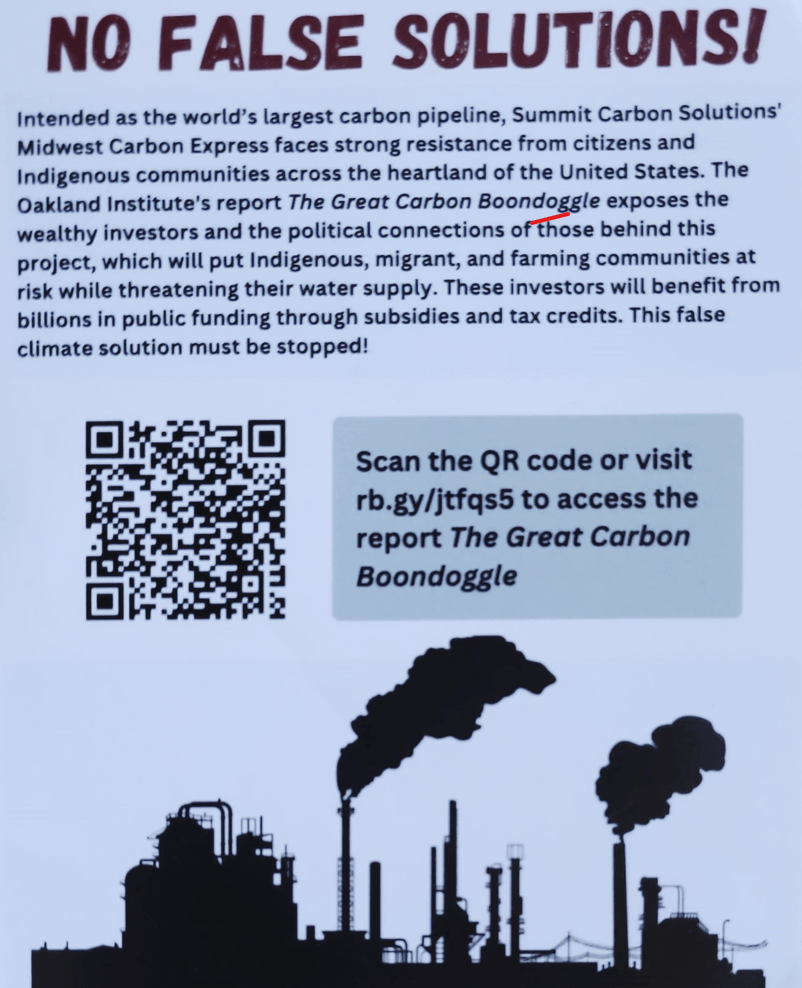
They are showing up in earnest in opposition to the Midwest Carbon Express pipeline, a plan of Summit Carbon Solutions to gather up 12 million tons of CO2 from 31 ethanol plants in five states and send it through pipelines to be sequestered at an underground storage facility in western North Dakota.

The project is well underway, but an apparently well-funded and vocal group of folks, many of them who no doubt appreciate the jobs and tax revenues provided by fossil fuels, are fighting the proposed pipeline tooth and nail.

To be fair, these developers, home builders, politicians and homeowners don’t seem to oppose the pipeline in general, they just don’t want it to be close to places where they live or where they might enrich their businesses with new housing development and construction.

In other words, they don’t mind if the pipeline impacts someone else, they just don’t want it to impact them.

Speaking out: Liking the upside means accepting the downside by Steve Andrist, The Bismark Tribune, 5/31/2023

Great Plains Action Society

My friends at the Great Plains Action Society continue to teach us about Indigenous views and rights. My friend Sikowis Nobiss worked to have a panel discussion related to Indigenous peoples as part of this PHMSA gathering. You can hear her, and others’ remarks here: https://fb.watch/kUlb4S3XCb

Sikowis spoke about most tribal nations not being consulted about these pipelines.

And spoke about the safety equipment that is required for first responders wherever the pipeline is built. Such as oxygen supplies and electric vehicles. Leaked carbon dioxide can spread quickly and stays near the ground, potentially causing asphyxia. Sikowis asks, where is the money going to come from for tribal nations to purchase such safety equipment?

She also spoke about the biome below ground and how we don’t know how pipelines and carbon storage affect that.

Sikowis concluded by pointing out how these are unproven technologies. And asks for a moratorium on these projects until more research is done.

Our Executive Director, Sikowis Nobiss, is speaking today on the Pipeline and Hazardous Materials Safety Administration’s (PHMSA) Technical Safety Panel regarding safety concerns in light of several proposed projects slated for Iowa and the Great Plains region after a recent incident in 2021 at Satartia, Mississippi. Earlier this year PHMSA has stated updated safety regulations tailored specifically for carbon dioxide pipelines are needed and will take 1-3 years to establish—the same timeframe these proposed projects aim for completion.

As such, we call for a federal moratorium until regulations are complete and moreover don’t believe they should be actualized at all! Rather, re-Matriation of Prairie can safely, effectively and efficiently sequester carbon dioxide just as good or better than any of these techno-solutions.

(See video here: https://fb.watch/kUlb4S3XCb/)

#PrairieNotPipelines
#NoCO2Pipelines
#ReMatriate
#NoCCS


Multiple Strategies

It was very important that Sikowis was able to speak during the PHMSA meeting.

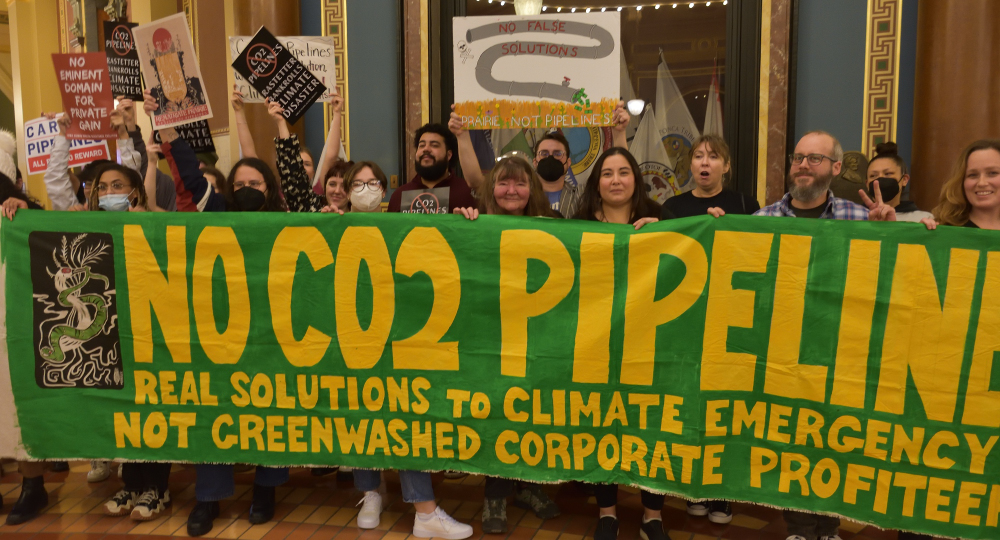
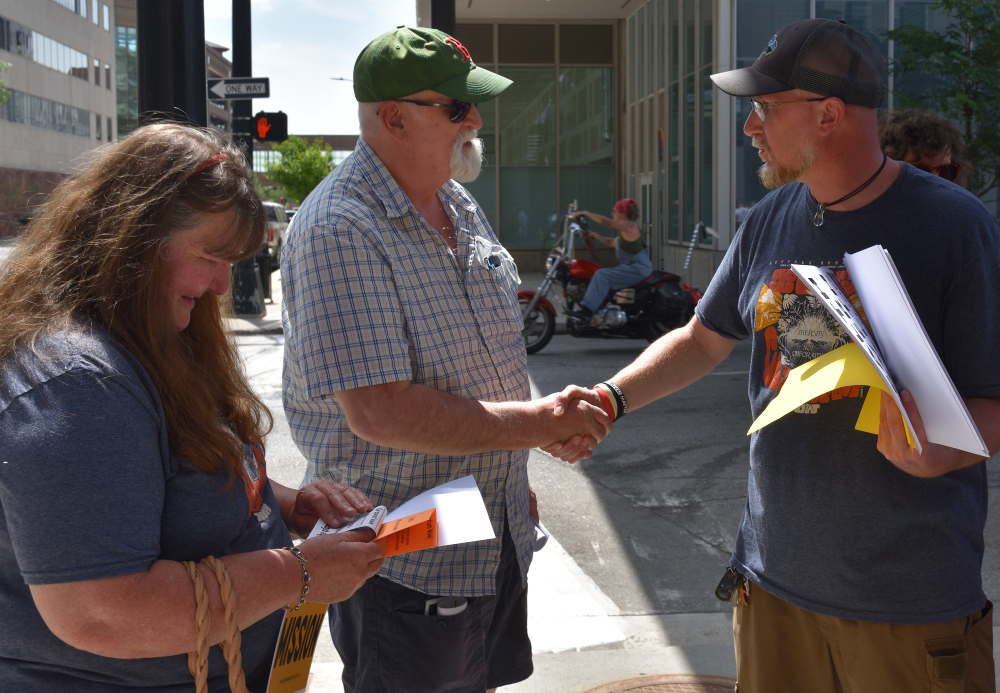
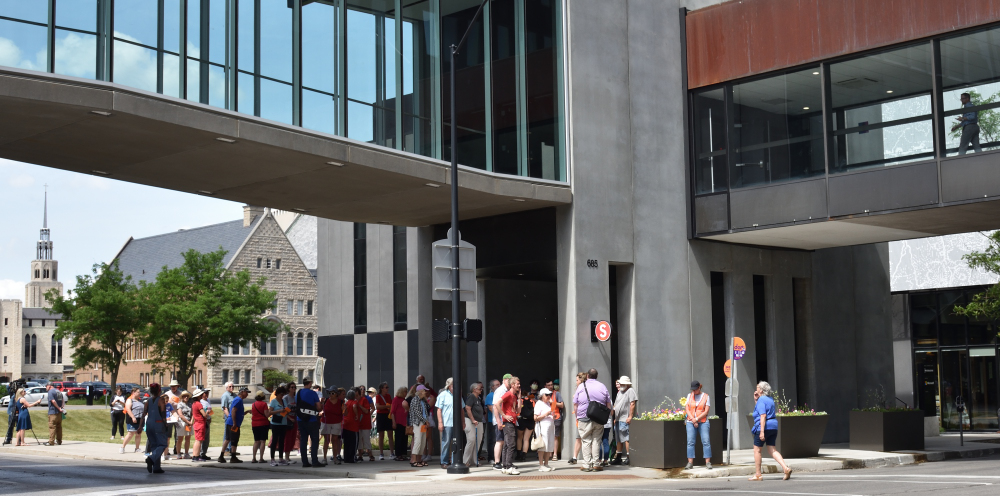
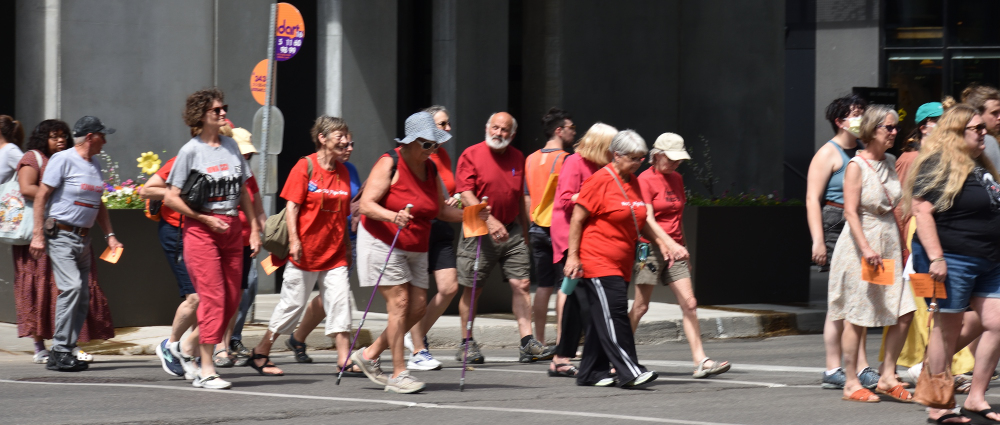
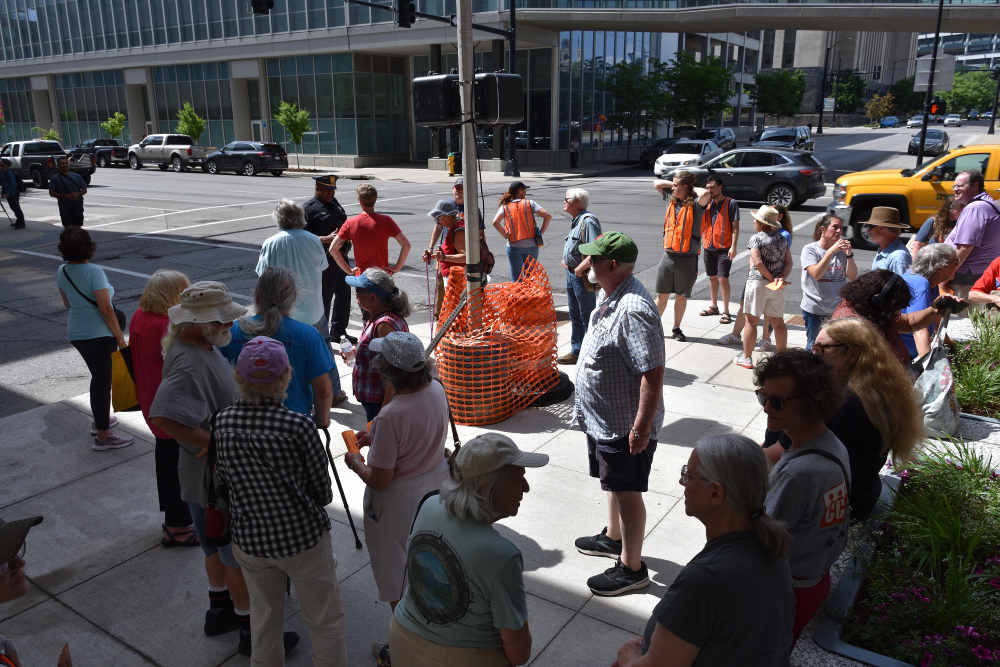
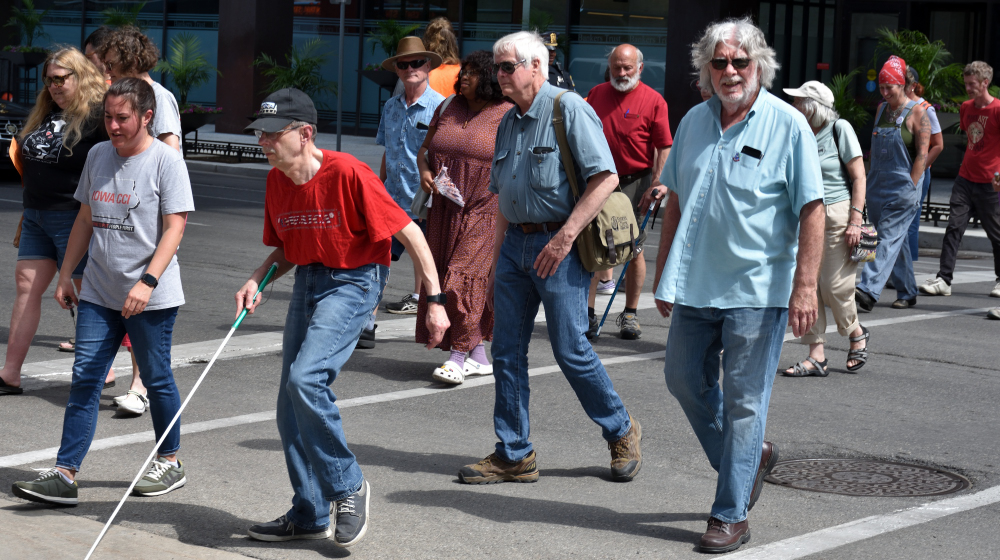
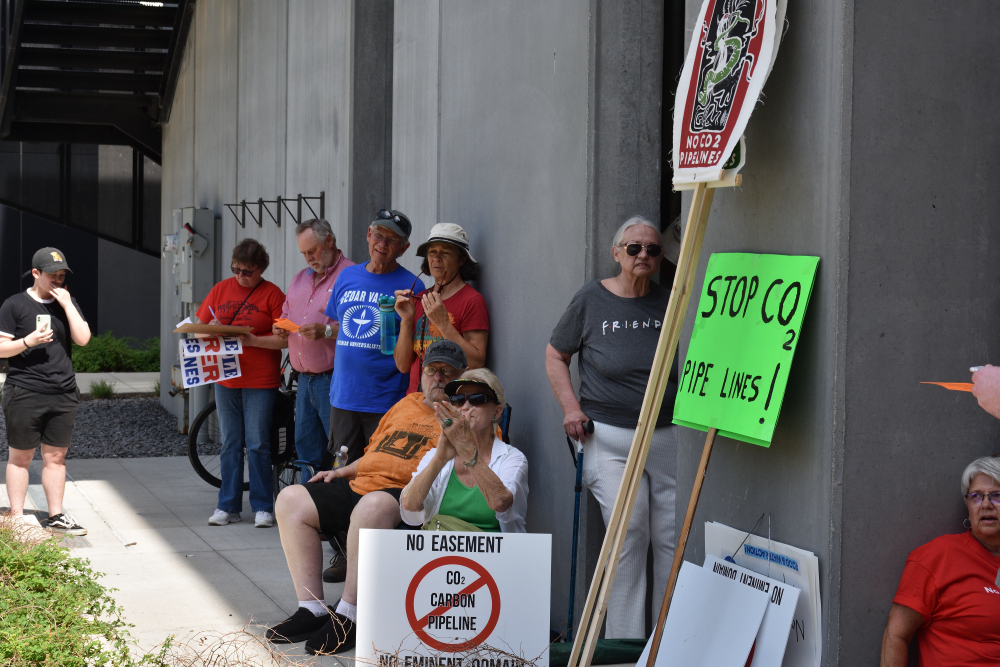
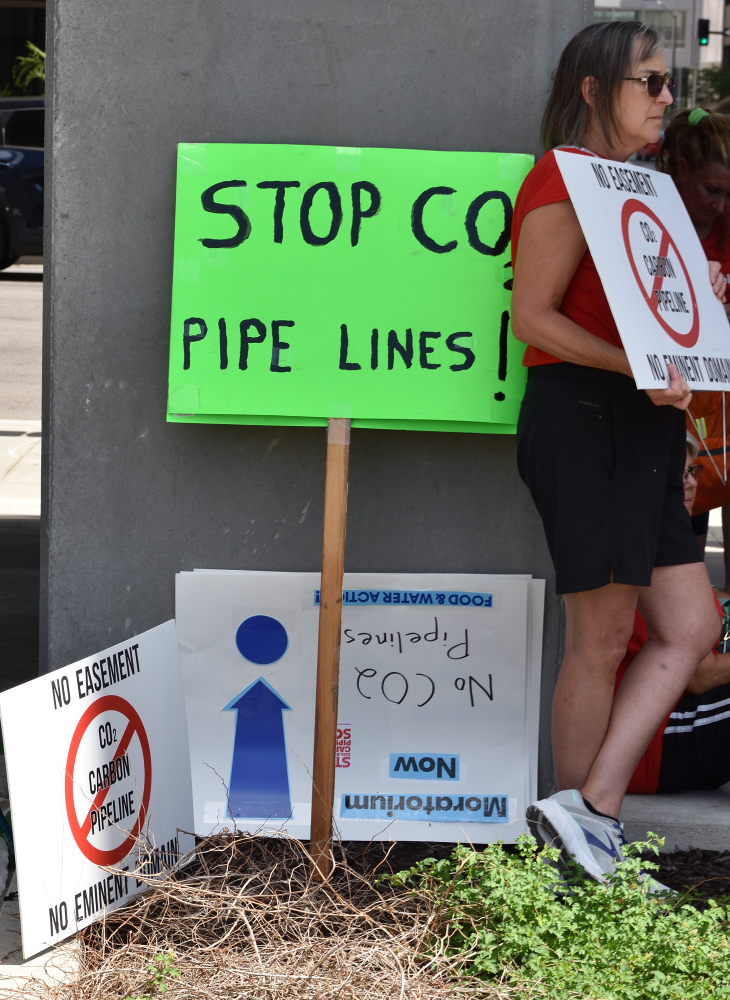
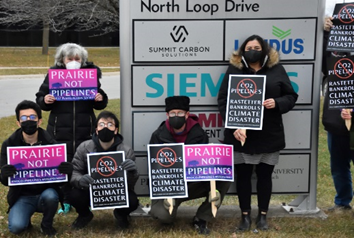
We had also planned to hold a rally outside the Marriott Hotel the meetings were held at. Unfortunately our efforts were thwarted by police who were working for the hotel. So we gathered across the street with our signs, and people spoke about these issues.


Against terrorism charges

Who is a terrorist? One sentiment is “One Man’s Terrorist another Man’s Freedom Fighter“. I’m surprised to learn there is not a widely accepted definition of terrorism. And that lack of definition facilitates the ability of governments to define those who criticize them as terrorists. And to incarcerate or kill them. As they killed forest defender Manuel “Tortuguita” Terán.

In terms of their overall organization and movement strategy, the Cop City protests are in many ways a far cry from the Civil Rights Movement of the ’60s. But it’s still worth asking: if MLK got arrested in Atlanta today during a political demonstration, would he be charged as a domestic terrorist? And would those who lionize him today have remained silent?

The Terrorism Charges Against Cop City Protesters Are Ominous by Ryan Zickgraf, Jacobin, Jan 27, 2023

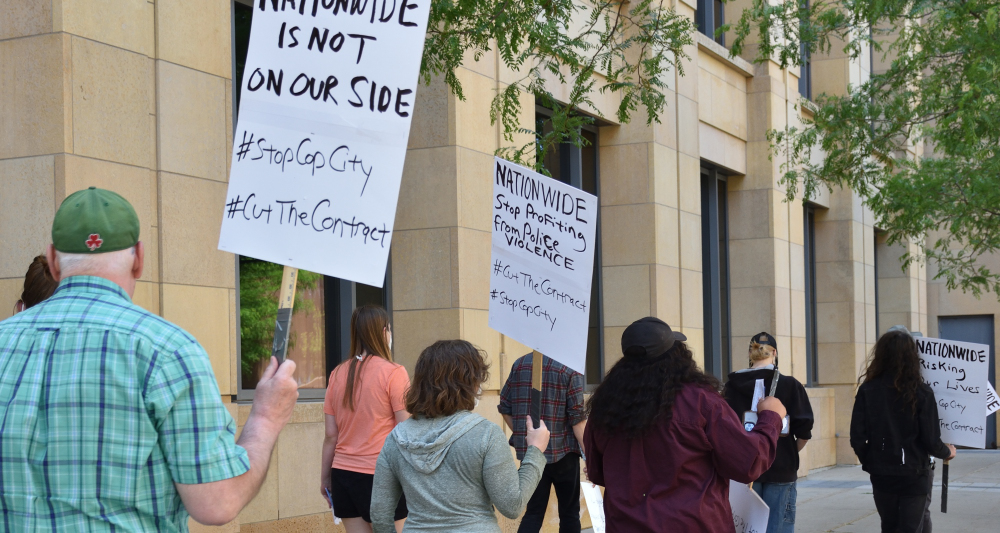
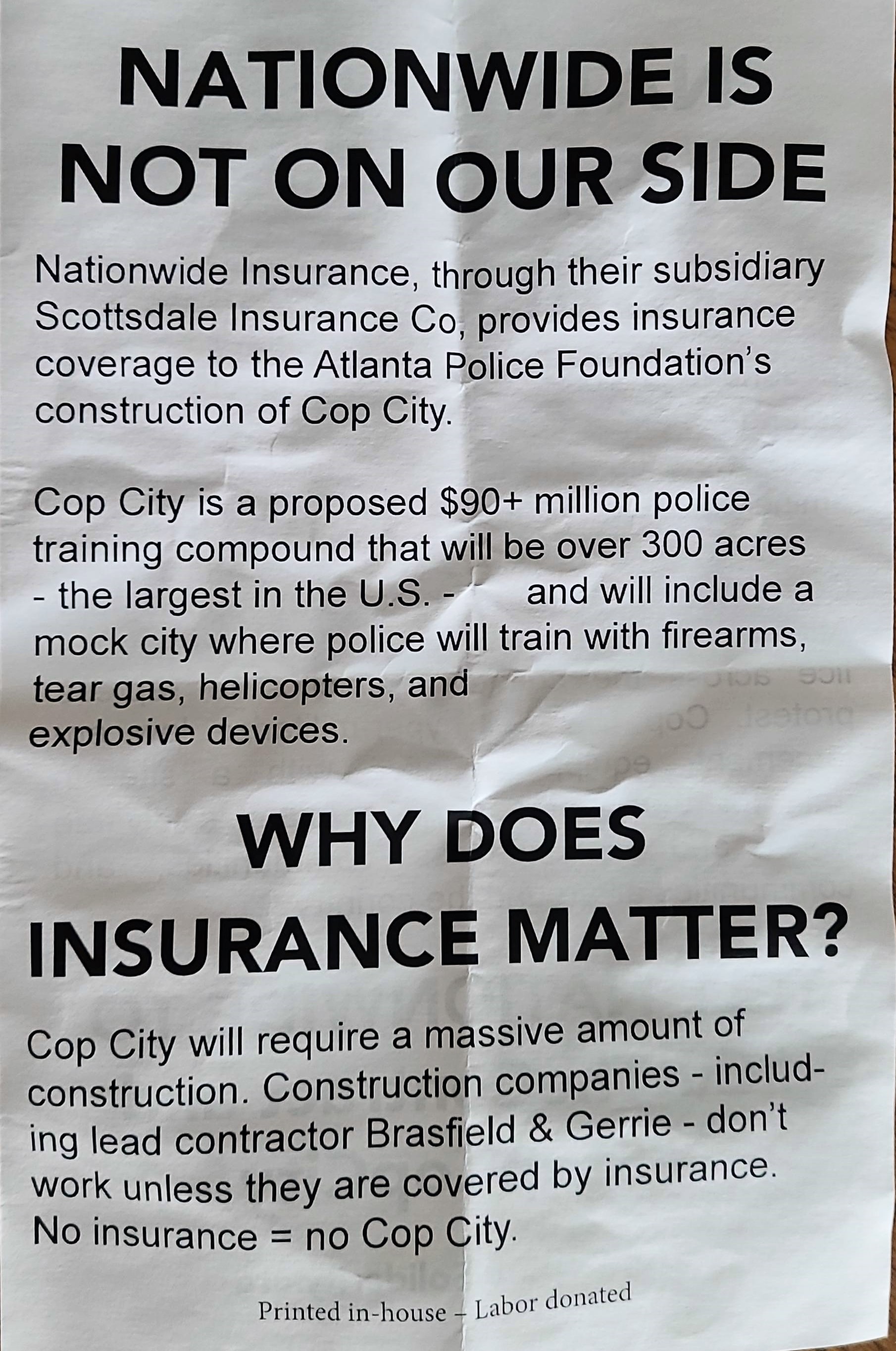
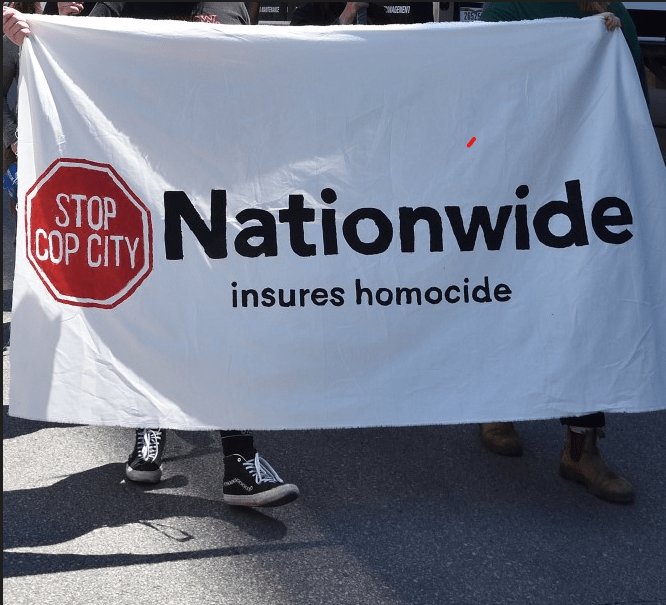
Friday I participated in a demonstration calling for Nationwide insurance company to cut their contract to insure the construction of Cop City.
See: #StopCopCity activists shouldn’t be tried as terrorists

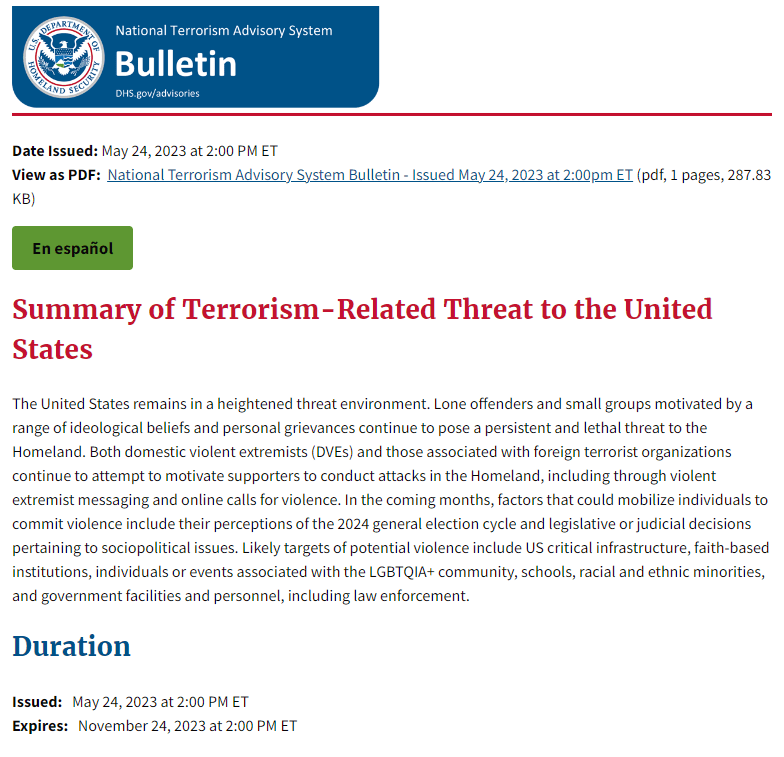
After that, I read the following from the Department of Homeland Security.

“Since spring of 2022, alleged DVEs (Domestic Violent Extremists) in Georgia have cited anarchist violent extremism, animal rights/environmental violent extremism, and anti-law enforcement sentiment to justify criminal activity in opposition to a planned public safety training facility in Atlanta. Criminal acts have included an alleged shooting and assaults targeting law enforcement and property damage targeting the facility, construction companies, and financial institutions for their perceived involvement with the planned facility”

Summary of Terrorism-Related Threat to the United States, Department of Homeland Security


Defining terrorism

In 1988 two European scholars Alex Schmid and Albert Jongman produced one of the more robust definitions of terrorism. They did this by surveying 200 leading academics in the field of terrorism studies. The research asked each expert to define terrorism.

Terrorism is some form of purposive and planned violence that has a political, religious, or ideological motivation. It is intended to coerce or intimidate and is targeted at civilians or government. Legislation prohibiting terrorism ought to have extra-territorial effect.

One man’s freedom fighter… can we ever define terrorism? by Fergal Davis, The Conversation, January 7, 2013

extra-territorial – (of a law or decree) valid outside a country’s territory

Extra-territorial is part of the definition to preclude a definition of terrorism pertaining to a local political situation. Such as local opposition to Cop City. That is, supporters of Stop Cop City would not be classified as terrorists by this definition.


Escalation of charges

Protesters against a massive police militarization complex in Atlanta have been slapped with domestic terrorism charges for throwing bottles and breaking windows. That should be deeply worrisome for anyone who values the right to dissent.

Can you be charged with terrorism for throwing bottles or breaking a window of a bank? You can in Atlanta, where the state of Georgia has slapped serious domestic terrorism charges on eleven people who’ve been demonstrating since December against the construction of a massive police militarization complex known as Cop City.

Governor Brian Kemp justified the severe punishment on Twitter, saying, “Violence and unlawful destruction of property are not acts of protest. They are crimes that will not be tolerated in Georgia and will be prosecuted fully.” On Thursday, Kemp signed an executive order declaring a state of emergency and authorizing the deployment of a thousand National Guard troops to arrest Cop City protesters. The state of emergency lasts two weeks, until February 9.

Kemp’s definition of “prosecuting fully” has changed since 2020. During the George Floyd protests that filled the streets of downtown Atlanta, most protesters arrested were taken to the city jail for offenses that included disorderly conduct, burglary, and criminal property damage.

Now, two years later, Georgia authorities are trumping up property crimes and relatively minor vandalism by Cop City political demonstrators as acts of terrorism. If convicted, the activists could face up to thirty-five years in prison — which in the state of Georgia is a punishment similar to second-degree murder.

The Terrorism Charges Against Cop City Protesters Are Ominous by Ryan Zickgraf, Jacobin, Jan 27, 2023


Atlanta, Georgia – 66 environmental, human rights, and civil liberties organizations sent a letter to Georgia prosecutors urging them to drop domestic terrorism charges against Stop Cop City/Defend the Atlanta Forest protesters. The charges represent a draconian escalation seemingly intended to chill First Amendment protected activity.

The letter reads, in part:

Civil disobedience and disruptive activism are part of the American protest tradition. From the Boston Tea Party to the civil rights movement, Americans have long drawn on civil disobedience tactics akin to the occupation of the Atlanta forest by the Stop Cop City protesters. Based on the information contained in the arrest warrants, many of the people charged with domestic terrorism are accused only of trespassing or other minor crimes. In all cases, application of the domestic terrorism statute is an escalatory intimidation tactic and a draconian step that seems intended to chill First Amendment protected activity.

66 ORGANIZATIONS URGE THAT DOMESTIC TERRORISM CHARGES BE DROPPED by Defending Rights and Dissent, March 8, 2023


Critics of domestic terrorism laws, including some civil rights groups, oppose them “because of the risk of politicization because they can be used against politically disfavored groups by the government,” Patrick Keenan, a professor of law at the University of Illinois, said.

A 2017 Georgia law defines domestic terrorism as a felony intended to kill or harm people; “disable or destroy critical infrastructure, a state or government facility, or a public transportation system”; “intimidate the civil population or any of its political subdivisions”; and change or coerce state policy or affect the conduct of government “by use of destructive devices, assassination, or kidnapping.” Conviction carries a maximum sentence of 35 years in prison.

The allegations against the protesters include trespassing, resisting arrest, throwing rocks and glass bottles and damaging property, including setting fire to a police car. Authorities have also said they found “explosive devices, gasoline, and road flares” in an area in the forest where protesters had makeshift treehouses.

Georgia Gov. Brian Kemp, a Republican, has called the protesters “militant activists” and said “we will bring the full force of state and local law enforcement down on those trying to bring about a radical agenda through violent means.”

Arrests in Atlanta ‘Cop City’ protests raise concerns over domestic terrorism charges. Critics of such laws, including civil rights groups, say they can be politicized and used against marginalized groups or those disliked by government. By Danielle Silva, NBC News, Jan 29, 2022


#StopCopCity activists shouldn’t be tried as terrorists

One of the key tactics of authoritarianism is to brutally suppress dissent.

I’ve been writing about the huge proposed police training facility in Atlanta.
(See: https://quakersandreligioussocialism.com/?s=%22cop+city%22)

This project has generated a great deal of opposition, in part because it furthers the advancement of violent, militarized policing. Just the opposite of what so many of us are working toward, an end to the carceral systems in this country.

The campaign to defend the forest in Atlanta, Georgia has become one of the most vibrant movements of the post-Trump era, interweaving environmentalism, abolitionism, and the fight against gentrification. Yet as police shift to employing lethal violence and indiscriminate terrorism charges, it has reached a critical juncture. Participants explore how this struggle has developed over the past year, reflecting on the practices that have given it strength and analyzing the challenges before it.

The Forest in the City. Two Years of Forest Defense in Atlanta, Georgia by CrimethInc., 2/22/2023

I came of age at the time this country was in the midst of significant unrest related to the war in Viet Nam, and racial injustice. Looking back at the late 1960s, it looks like a different world. A world where dissent and free speech were protected. In the decades since then, I’ve been involved in many acts of protest. It was known that law enforcement was keeping track of this dissent. But most of us didn’t fear the police then. We White people, anyway.

Nonviolent civil disobedience, where an arrest is likely, is a tactic to bring attention to injustice. Those involved in intentional disobedience did so to demonstrate how much we were willing to risk to bring attention to injustice. The Keystone Pledge of Resistance involved training people to hold acts of nonviolent disobedience to stop the approval of the permit for the Keystone XL pipeline to cross the US-Canada border. President Obama denied that permit.

Not one of the activists I know condone any use of violence.

Some activists have decided the threats from increasing greenhouse gas emissions, leading to increasing environmental chaos, are such an existential threat that they had to break the law.

The defense of necessity may apply when an individual commits a criminal act during an emergency situation in order to prevent a greater harm from happening. In such circumstances, our legal system typically excuses the individual’s criminal act because it was justified, or finds that no criminal act has occurred. Although necessity may seem like a defense that would be commonly invoked by defendants seeking to avoid criminal charges, its application is limited by several important requirements:

  • The defendant must reasonably have believed that there was an actual and specific threat that required immediate action
  • The defendant must have had no realistic alternative to completing the criminal act
  • The harm caused by the criminal act must not be greater than the harm avoided
  • The defendant did not himself contribute to or cause the threat

Only if all of these requirements are met, will the defense of necessity be applicable.

The Necessity Defense in Criminal Law Cases


I’ve learned to be careful to not include people’s faces when I take photos at justice events, having learned law enforcement looks at photos to identify people for arrest.

Recent efforts to criminalize protests in the United States have been observed in various states. For instance, 20 states have passed laws that criminalize protesting, including on infrastructure such as pipelines. Since 2016, as many as 225 anti-protest bills have been introduced in 45 states, with over 100 introduced since the Black Liberation demonstrations in June 2020. According to the US Protest Law Tracker, 51 bills were under consideration in 24 state legislatures as of February 2021.

These efforts to criminalize protest have raised concerns about the potential infringement on the right to peaceful assembly. The US Protest Law Tracker provides a comprehensive overview of state and federal legislation introduced since January 2017 that restricts the right to peaceful assembly.

Returning to authoritarianism, recent years have seen the escalation of charges against peaceful protesters. Even so, I was shocked yesterday to learn that those who protest to stop cop city have been designated a terrorism-related threat. I learned that protesters might be considered domestic violent extremists (DVEs).

“Since spring of 2022, alleged DVEs (Domestic Violent Extremists) in Georgia have cited anarchist violent extremism, animal rights/environmental violent extremism, and anti-law enforcement sentiment to justify criminal activity in opposition to a planned public safety training facility in Atlanta. Criminal acts have included an alleged shooting and assaults targeting law enforcement and property damage targeting the facility, construction companies, and financial institutions for their perceived involvement with the planned facility”

Summary of Terrorism-Related Threat to the United States, Department of Homeland Security


Atlanta police on Monday charged 23 people with state domestic terrorism charges, a day after officers detained dozens of people following a violent clash at the proposed construction site of what has been dubbed “Cop City” – a $90m police and firefighter training center in a forest near Atlanta.

Atlanta police charge 23 with domestic terrorism amid ‘Cop City’ week of action. Move follows violent weekend clash at proposed construction site of Georgia police training facility in forest by Edwin Rios, The Guardian, March 6, 2023

THREE ACTIVISTS INVOLVED in the Defend Atlanta Forest movement are facing charges of felony intimidation of an officer of the state and misdemeanor stalking for placing flyers on mailboxes in a neighborhood in Bartow County, Georgia, about 40 miles from Atlanta. The detainees were held for days in solitary confinement, a lawyer working on the case and a relative of one of the activists told The Intercept.

The flyer, according to the lawyer, named a police officer who lives in the area where the activists were arrested and alleged he was connected to the killing in January of forest defender Manuel “Tortuguita” Terán during a multi-agency raid on the Atlanta Forest protest encampment.

Julia Dupuis, an activist named Charley who asked that their last name be withheld for security concerns, and an activist named Wednesday were arrested at a gas station outside the town of Cartersville on Friday. According to their lawyer, Lyra Foster, the activists drove once through the neighborhood and placed flyers on numerous mailboxes without exiting their vehicle or approaching any residents. Foster said Wednesday was a passenger in the car and not posting flyers.

If found guilty, they could each face up to 20 years in prison.

“They were not handing out flyers, they were actually extremely careful in trying to avoid doing anything illegal,” Foster told The Intercept. “They posted the flyers on mailboxes, they did not even get out of the van to put flyers on the doors, and did not open the mailboxes because they thought that was potentially illegal.”

“They posted the flyers on mailboxes, they did not even get out of the van to put flyers on the doors.”

The attorney added that the activists “certainly had no intention to intimidate the officer” and “were trying to spread awareness about the police killing.”

Activists face felonies for distributing flyers on “Cop City” protester killing. The activists face 20 years in prison for handing out flyers that identified a cop they said was linked to the killing of a protester in the Atlanta forest by Natasha Lennard and Akela Lacy, The Intercept, May 2, 2023


Yesterday a group of us concerned about “Cop City” and policing in general, carried signs and a banner calling attention to the Nationwide Insurance company’s insurance coverage for the construction of “Cop City”. In light of the escalation of charges for protesting, I am not including any photos with people’s faces visible. “Insures Homicide” refers to the police killing of Manuel Esteban Paez Terán (Tortuguita) who was tree-sitting in the forest.
(See: https://quakersandreligioussocialism.com/?s=Tortuguita+ )

For more information about Nationwide, see: https://quakersandreligioussocialism.com/2023/05/24/nationwide-insures-cop-city/