Martin Luther King, Jr. 2023

Yesterday, April 4th, was the anniversary of the assassination of Martin Luther King, Jr. Every year there is a solemn gathering at the Kennedy-King Park in downtown Indianapolis to commemorate the speech that Bobby Kenndy gave there in 1968, announcing King’s death. This was in the days before cell phones, and that was the first time most in the crowd heard the news. The Indianapolis police pleaded with him not to go to that neighborhood, fearing they could not protect him from the crowd. Indianapolis was one of the few major cities in the country where riots did not occur that night.

That event in Indianapolis was supposed to have been a campaign stop for Kennedy’s Presidential bid. Kennedy received the news on the plane to Indianapolis. There was no time to prepare a speech. The video at the end of this is the extemporaneous speech Kennedy gave that night.

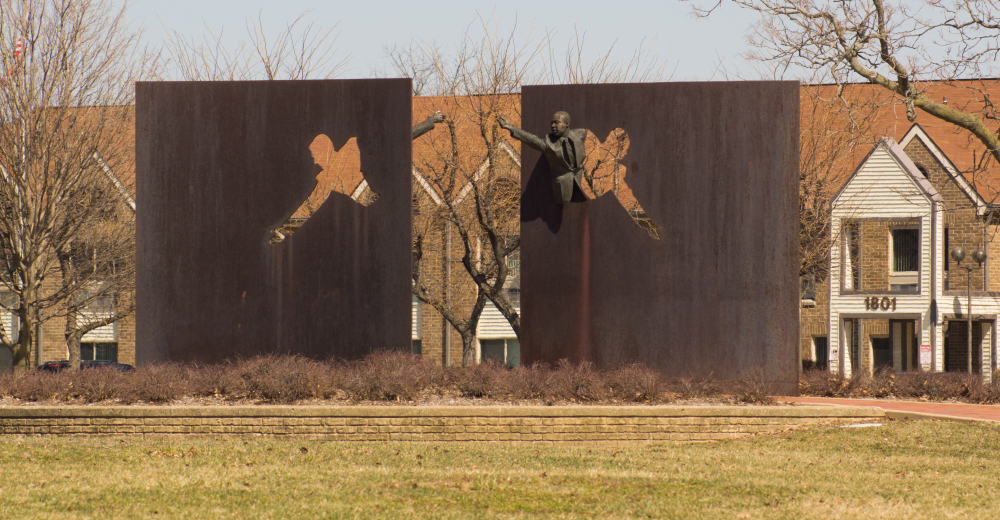
There is a remarkable sculpture at the Kennedy-King Park symbolizing the connections between Martin Luther King, Jr, and Robert Kennedy.

(c)Jeff Kisling, Kennedy-King Park, Indianapolis, IN

Martin Luther King has been an important part of my life. I was coming of age during his time, a Junior at Scattergood Friends School when he was killed. I had so much trouble trying to sort out what I should do about the Vietnam War. Martin Luther King was criticized by people in the civil rights movement when he began to speak out against the war, but that was a great help to me.

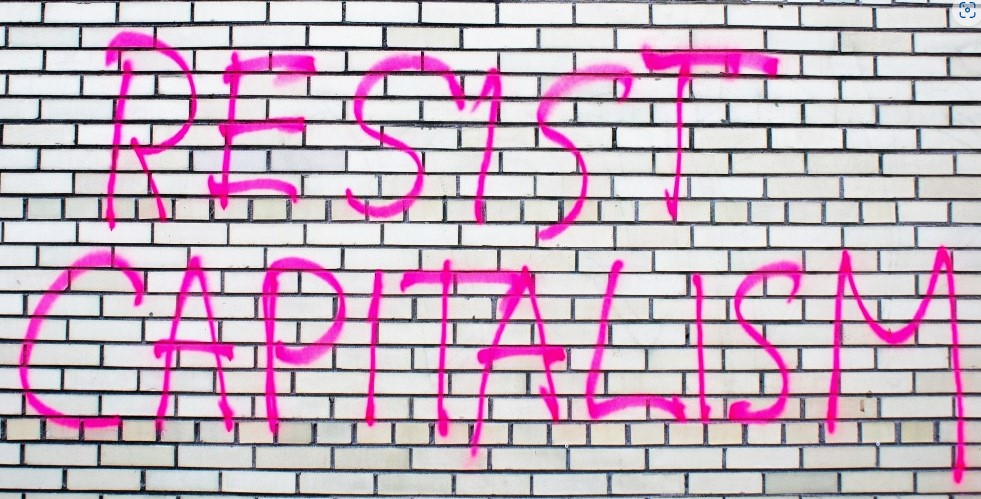
These days I’m working to replace capitalism by building mutual aid communities. Martin Luther King, Jr.’s work was as much about economics and poverty as it was about racial equality.

“I am much more socialistic in my economic theory than capitalistic,” Martin Luther King admitted to Coretta Scott, concluding that “capitalism has outlived its usefulness.”

Speaking at a staff retreat of the SCLC in 1966, King said that “something is wrong … with capitalism” and “there must be a better distribution of wealth” in the country. “Maybe,” he suggested, “America must move toward a democratic socialism.”

For King, the only solution to America’s crisis of poverty was the redistribution of wealth. In a 1961 speech to the Negro American Labor Council, King declared, “Call it democracy, or call it democratic socialism, but there must be a better distribution of wealth within this country for all God’s children.”

The Forgotten Socialist History of Martin Luther King, Jr. by Matthew Miles Goodrich, In These Times, January 16, 2023

“War Is An Enemy Of The Poor.”

Although seldom recognized, Martin Luther King Jr. was anti-war. His politics should be applied to demand an end to NATO and the war in Ukraine, say activists.

“We are here, honoring the legacy of Dr. Martin Luther King Jr.,” said co-executive director of The People’s Forum, Claudia De La Cruz, to a crowd of hundreds gathered in Times Square, in front of the US Army Recruiting Station, on January 14. “We are here to reclaim his legacy and say: no to war.”

The organizers and workers mobilized to demand an end to NATO and a peaceful resolution to the ongoing war in Ukraine. The rally and march was organized by the Act Now to Stop War and End Racism (ANSWER) Coalition, a US anti-war organization, and the People’s Forum. Activists raised slogans to demand a peaceful resolution of the war through negotiations rather than continued US weapons funding. Banners read “Money for our needs/Not the war machine” and “No to NATO/Yes to peace”.

With Congress passing a massive spending bill in December, containing over $44 billion in US aid to Ukraine, the United States is now set to spend over $100 billion total on the Russia–Ukraine War. Activists are demanding that these billions be used instead to fund public services, such as education, jobs and healthcare.

“We have to continue to fight for integration, collaboration, negotiations, because that’s been the only way of resolving conflict. War is a tool of our enemy,” said De La Cruz, in closing, to the crowd assembled inside The People’s Forum. “The only legit war is class war.”

US Activists Honor the Anti-War Legacy of Martin Luther King, Jr by Natalia Marques, People’s Dispatch, January 17, 2023

I’m of the firm opinion that a system that was built by stolen bodies on stolen land for the benefit of a few is a system that is not repairable. It is operating as designed, and small changes (which are the result of huge efforts) to lessen the blow on those it was not designed for are merely half measures that can’t ever fully succeed.

So the question is now, where do we go from here? Do we continue to make incremental changes while the wealthy hoard more wealth and the climate crisis deepens, or do we do something drastic that has never been done before? Can we envision and create a world where a class war from above isn’t a reality anymore?”

Ronnie James

The major threat of Martin Luther King Jr to us is a spiritual and moral one. King’s courageous and compassionate example shatters the dominant neoliberal soul-craft of smartness, money and bombs. His grand fight against poverty, militarism, materialism and racism undercuts the superficial lip service and pretentious posturing of so-called progressives as well as the candid contempt and proud prejudices of genuine reactionaries. King was neither perfect nor pure in his prophetic witness – but he was the real thing in sharp contrast to the market-driven semblances and simulacra of our day.

Martin Luther King Jr turned away from popularity in his quest for spiritual and moral greatness – a greatness measured by what he was willing to give up and sacrifice due to his deep love of everyday people, especially vulnerable and precious black people. Neoliberal soul craft avoids risk and evades the cost of prophetic witness, even as it poses as “progressive”.

If King were alive today, his words and witness against drone strikes, invasions, occupations, police murders, caste in Asia, Roma oppression in Europe, as well as capitalist wealth inequality and poverty, would threaten most of those who now sing his praises.

Today, 50 years later the US imperial meltdown deepens. And King’s radical legacy remains primarily among the awakening youth and militant citizens who choose to be extremists of love, justice, courage and freedom, even if our chances to win are that of a snowball in hell! This kind of unstoppable King-like extremism is a threat to every status quo!

Martin Luther King Jr was a radical. We must not sterilize his legacy by Cornel West, The Guardian, April 4, 2018

YouTube video I created of speeches by Martin Luther King, Jr, and Bobby Kennedy using photos I took at the Kenned-King Park in Indianapolis.


Carbon Capture update 4/4/2023

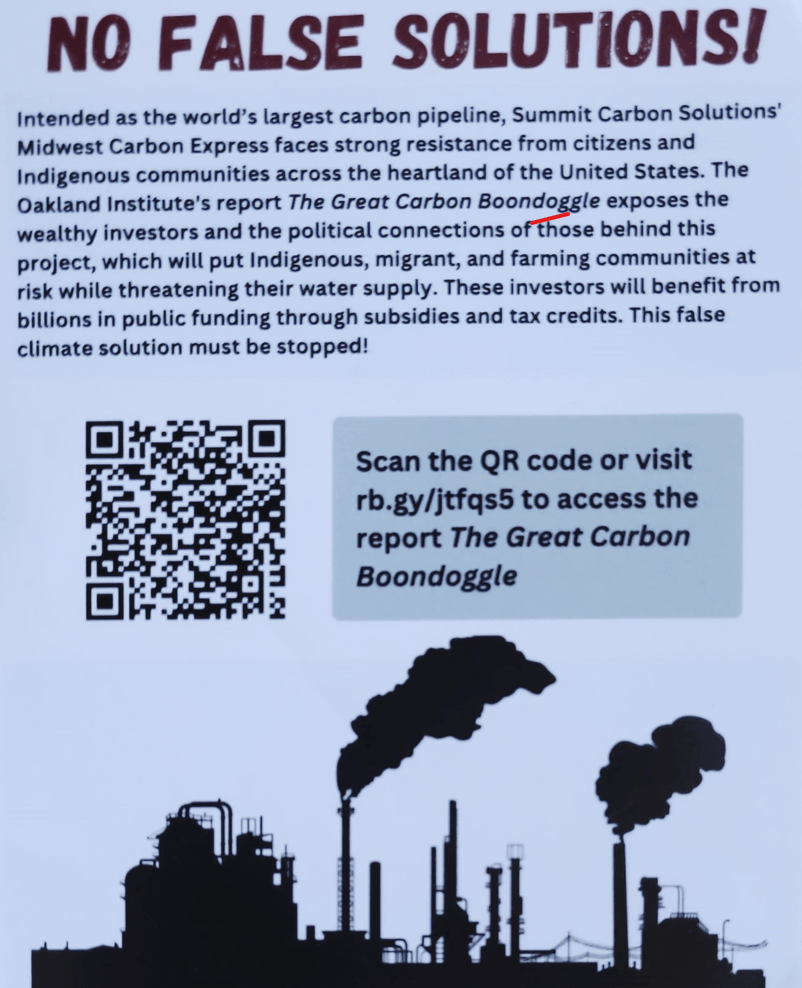
Carbon capture, utilization and storage (CCUS) continues to be promoted as an important way to reduce greenhouse gas emissions, by sucking carbon dioxide out of the atmosphere. There are many reasons why CCUS is not a viable solution, as described in detail in a new report from the Oakland Institute titled The Great Carbon Boondoggle.

I just saw an advertisement from Valero, one of the fossil fuel pipeline companies supporting CCUS. The ad asks why everyone is focused on the past. Then talks about how Valero is saving the planet by removing carbon dioxide from the air. The entire ad was about CCUS.

NAVIGATOR LAUNCHES A NON-BINDING OPEN SEASON TO SOLICIT INTEREST IN FIRM CAPACITY

SAN ANTONIO–(BUSINESS WIRE)– Valero Energy Corporation (NYSE: VLO, “Valero”) and BlackRock Global Energy & Power Infrastructure Fund III announced today that they are partnering with Navigator Energy Services (“Navigator”) to develop an industrial scale carbon capture pipeline system (“CCS”). The initial phase is expected to span more than 1,200 miles of new carbon dioxide gathering and transportation pipelines across five Midwest states with the capability of permanently storing up to 5 million metric tonnes of carbon dioxide per year. Pending third party customer feedback, the system could be expanded to transport and sequester up to 8 million metric tonnes of carbon dioxide per year. Valero, the largest renewable fuels producer in North America, is expected to become an anchor shipper by securing a majority of the initial available system capacity. Navigator is expected to lead the construction and operations of the system and anticipates operations to begin late 2024. In the coming months, Navigator will seek additional commitments to utilize the remaining capacity via a binding open season process.

Valero and BlackRock Partner with Navigator to Announce Large-Scale Carbon Capture and Storage Project


Boondoggle: work or activity that is wasteful or pointless but gives the appearance of having value


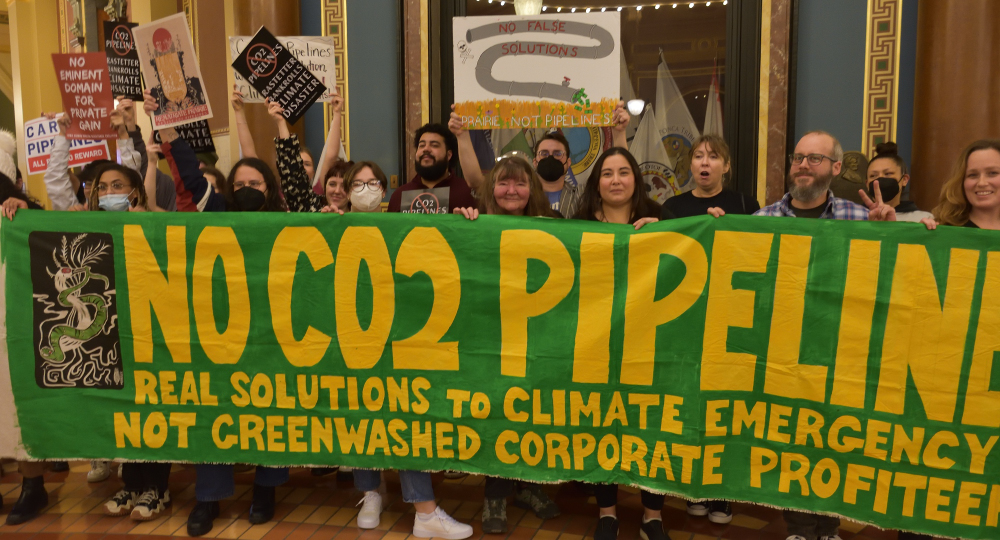
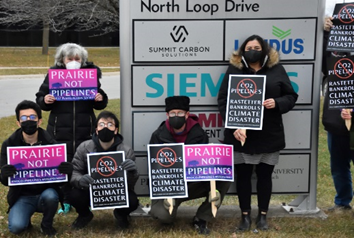
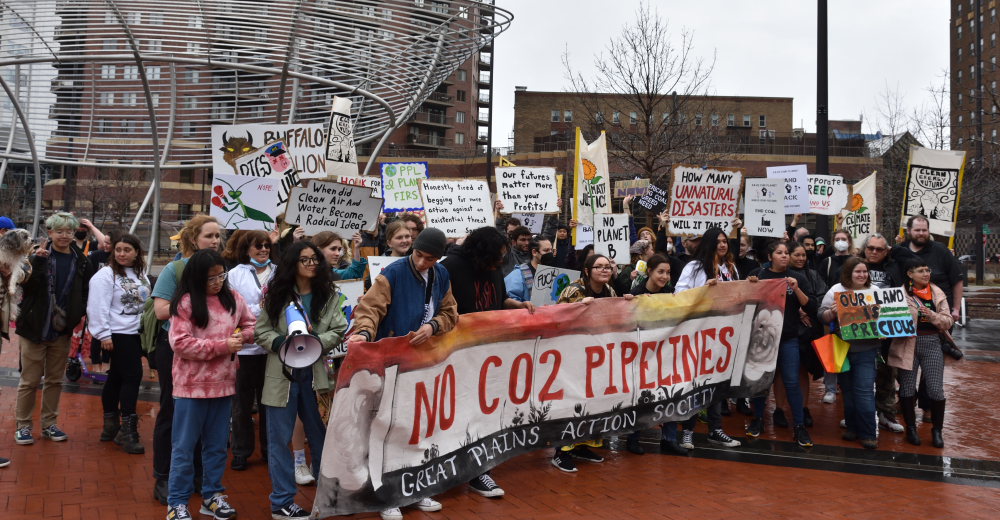
During the current legislative session, the Iowa House passed legislation that would have carbon pipeline companies restrict the use of eminent domain to force landowners to allow pipeline construction on their land. But the Iowa Senate will not vote on it. This photo was taken outside the Iowa State Capitol during a rally against carbon pipelines.

(c)2023 Jeff Kisling

A House bill that would restrict the use of eminent domain for carbon capture pipelines — an idea favored by a strong majority of Iowans — won’t receive a Senate hearing ahead of a key legislative deadline, meaning the bill is effectively dead for the session.

The bill represented the most serious legislative effort this year to address the concerns of farmers and other landowners who fear they could be forced to sell access to their land to companies seeking to build pipelines across the state.

Rep. Steven Holt, R-Denison, the bill’s House floor manager, said the Senate’s decision not to move the bill is disappointing.

“I think the bill we passed was important protections for our landowners and I’m very disappointed that they’re choosing not to move it,” he said Wednesday.

Holt pointed to a Des Moines Register/Mediacom Iowa Poll this month, which found more than three-fourths of Iowans, or 78%, oppose letting carbon pipelines use eminent domain for their projects.

That includes 72% of Republicans, 79% of independents and 82% of Democrats.

Senate won’t curb eminent domain for carbon pipelines; most Iowans say they want limits by Stephen Gruber-Miller, Des Moines Register, March 29, 2023


Why Is Carbon Capture & Storage A False Climate Solution?

The promoters of the Midwest Carbon Express fail to reckon with the growing body of evidence exposing CCS as a false climate solution. CCS projects have systematically overpromised and underdelivered. Despite billions of taxpayer dollars spent on CCS to date, the technology has failed to significantly reduce CO2 emissions, as it has “not been proven feasible or economic at scale.” [27]

Crucially, the ability to capture and safely contain CO2 permanently underground has not been proven, a dangerous uncertainty given CO2 must be stored underground for thousands of years without leaking to effectively reduce emissions. [28]

It also risks permanently contaminating underground aquifers and poisoning precious drinking water for nearby communities.[29]

Additionally, applying CCS to industrial sources such as ethanol plants requires the creation of massive infrastructure and transportation of carbon to storage sites, and injecting it underground poses new environmental, health, and safety hazards in communities targeted for CCS infrastructure. As carbon capture infrastructure needs to be built near emitting sites, facilities would further impact those already burdened by industrial pollution. [30]

In many cases, this disproportionately impacts lower-income,Indigenous, Black, and Brown communities—furthering a vicious cycle of environmental racism.[31] To date, CCS has primarily been used to prop up the ineffective and environmentally unsustainable fossil fuel energy system. In the US, a dozen carbon capture plants are in operation—the majority of which are attached to ethanol, natural gas processing, or fertilizer plants—which generate emissions that are high in CO2. [32] Over 95 percent of the CO2 captured by these plants is currently used for enhanced oil recovery (EOR)—where instead of storing the captured CO2, it is injected into depleted underground oil reservoirs to boost oil production in wells.[33]

There are legitimate concerns that investing billions in carbon capture infrastructure to lower emissions from fossil fuels and ethanol production will reduce incentives for investors and policymakers to transition towards more sustainable and effective solutions. These include investing in wind or solar energy sources, phasing out of industrial agricultural production, developing infrastructure and services such as public transport. [34]

The Great Carbon Boondoggle


Biden Administration strongly supports Carbon Capture and Storage

The Biden administration has hailed CCS and carbon pipelines as vital infrastructure to meet climate targets and claimed that the US needs 65,000 additional miles of pipeline by 2050. [3] The Infrastructure Investment and Jobs Act signed in November 2021 provides over eight billion dollars as federal grants, loans, and loan guarantees for carbon storage and pipelines.[4] In 2022, President Biden signed the Inflation Reduction Act (IRA), which substantially increased the already abundant tax credits for CCS projects and made it easier for projects to qualify for these credits.[5] This flood of public money has resulted in over 40 CCS projects announced in 2021 alone. [6]
In Midwestern US, Archer-Daniel Midlands (ADM), Summit Carbon Solutions, and Navigator CO2 Ventures are currently advancing three major CCS projects. 

The Great Carbon Boondoggle


Endnotes from The Great Carbon Boondoggle

[3] Douglas, L. “U.S. carbon pipeline proposals trigger backlash over potential land seizures.” Reuters, February 7, 2022.
https://www.reuters.com/business/environment/us-carbon-pipeline-proposals-trigger-backlash-over-potential-land-seizures-2022-02-07
[4] Department of Energy. “Fact Sheet: The Infrastructure Investment and Jobs Act – Opportunities to Accelerate Deployment in Fossil Energy and Carbon Management Activities.” September 29, 2022.
https://www.energy.gov/fecm/articles/fact-sheet-infrastructure-investment-and-jobs-act-opportunities-accelerate-deployment
October 10, 2022).
[5] Gibson Dunn. “The Inflation Reduction Act Includes Significant Benefits for the Carbon Capture Industry.” August 12, 2022.
https://www.gibsondunn.com/the-inflation-reduction-act-includes-significant benefits-for-the-carbon-capture-industry/
[6] Paul, S. “Global carbon capture projects surge 50% in 9 months–research.” Reuters, October 11, 2021. https://www.reuters.com/business/sustainable-business/global-carbon-capture-projects-surge-50-9-months-research-2021-10-12


[27] Center for International Environmental Law. Confronting the Myth of Carbon-Free Fossil Fuels: Why Carbon Capture Is Not a Climate Solution. July, 2021.
https://www.ciel.org/wp-content/uploads/2021/07/Confronting-the-Myth-of-Carbon-Free-Fossil-Fuels.pdf
[28] Center for International Environmental Law. Carbon Capture and Storage: An Expensive and Dangerous Plan for Louisiana. June 25, 2021.
https://www.ciel.org/wp-content/uploads/2021/07/Confronting-the-Myth-of-Carbon-Free-Fossil-Fuels.pdf
[29] Physicians for Social Responsibility. “Danger Ahead: The Public Health Disaster That Awaits From Carbon Capture and Sequestration (CCS).” February 10, 2022.
https://www.ciel.org/carbon-capture-and-storage-an-expensive-and-dangerous-proposition-for-louisiana-communities/
[30] Ibid.
[31] For example, in Louisiana, proposed CCS infrastructure would impact Black and Brown, lower-income communities living in “Cancer Alley,” the industrial region named after decades of poor air and water quality from industrial pollution increased cancer rates and other health risks. Ibid.
[32] Kusnetz, N. “Fossil Fuel Companies Are Quietly Scoring Big Money for Their Preferred Climate Solution: Carbon Capture and Storage.” Inside Climate News, August 17, 2021.
https://insideclimatenews.org/news/17082021/carbon-capture-storage-fossil-fuel-companies-climate/
[33] Iowa Chapter of Physicians for Social Responsibility. Fact Sheet: Low Carbon Standard, Ethanol and Carbon Capture. August 24, 2022. https://psriowa.org/event_ccs2022.html
[34] Ibid.


Three Years Later

Don’t you find there are periods of rapid change interspersed among long plateaus in your life? Although those plateaus are becoming fewer and lasting shorter periods of time.

The last three years have been a time of momentous change, both in my life, and in the world. I’m trying to explain what has been happening to me, because these experiences convince me we must all make similar changes if we are going to make the major adjustments needed to try to mitigate deepening environmental damage. The world has been spiraling out of control these past three years, dramatically impacting all our communities and individual lives. I think of these changes as related to the idea of a house of cards. The cards in this case being dollars of the capitalist economy.

(c)2023 Jeff Kisling

Foundational Stories

I was born into a rural Iowa Quaker community and have been a Quaker all my life. I attended Scattergood Friends School, a Quaker boarding high school on a farm in Eastern Iowa.

Recently I was challenged to consider what my foundational stories are, how they began, how they changed over time, and what they are now. I’ve been writing this series of blog posts about these stories, which are related to the intersections between my Quaker faith, protecting Mother Earth, and photography. You can read my foundational stories here: https://quakersandreligioussocialism.com/foundational-stories/

I spent my entire adult life in Indianapolis. I arrived in 1970 to spend two years in a Quaker community organizing project, Friends Volunteer Service Mission. To support myself financially, I received on-the-job training to be a respiratory therapy technician. I later obtained a degree in Respiratory Therapy, and a career in neonatal respiratory therapy, and then thirty years doing research in infant lung development and disease in Indianapolis at Riley Hosptial for Children, Indiana University Medical Center. I retired and returned to Iowa in the summer of 2017.

Part of the Mother Earth piece of my foundational stories was “driven” by a spiritual leading that showed me I could not contribute to the pollution from owning a personal automobile, so I didn’t. That had all kinds of repercussions.

Although my leading to try to live without a personal automobile grew over time, the actual decision came about abruptly. I had a couple of used cars but felt increasingly uncomfortable having one. When my car was totaled in an accident, I took the opportunity to see if I could live without a car in the city. It took some time to work out the bus schedules, especially because I was working all kinds of hours and on weekends. And I had to learn how to shop such that I could carry everything home.
But because we derive our sense of identity and socioeconomic status from work embedded in a profit driven economy, transformative day-to-day self-sufficient activities, when they are applied in an urban or suburban setting, give rise to second set of intangible sociocultural barriers that involve taking significant social risks. Peter Lipman the former (founding) chair of Transition Network and Common Cause Foundation encourages us to take these social and cultural risks. But what exactly are the more difficult risks needed to move us in the right direction? It is important to identify intangible socioeconomic challenges in order to side-step them.

In short, our identities are tied up in what we do for a living and how we do what we do for a living must radically change. Because, let’s be honest, living and working, having lifestyles and livelihoods that are truly regenerative and sustainable look nothing like how most of us currently live and work.

Against the Economic Grain: Addressing the Social Challenges of Sustainable Livelihoods by Kim Kendall, originally published by Resilience.org, January 27, 2023

It was difficult for us (environmentalists) to find pressure points, places where we could call attention to the existential threats of environmental chaos from burning fossil fuels. In 2013, activists recognized the application for approval of the Keystone XL Pipeline as such an opportunity. This decision was solely up to President Obama, allowing us a focus for our efforts. I was trained as an Action Lead in the Keystone Pledge of Resistance in 2013. There I learned many skills related to community organizing. Four of us trained about forty people in the Indianapolis community, and organized many demonstrations and actions against fossil fuel companies and the banks that fund them.
https://jeffkisling.com/2018/06/05/lessons-learned-from-the-keystone-pledge-of-resistance/

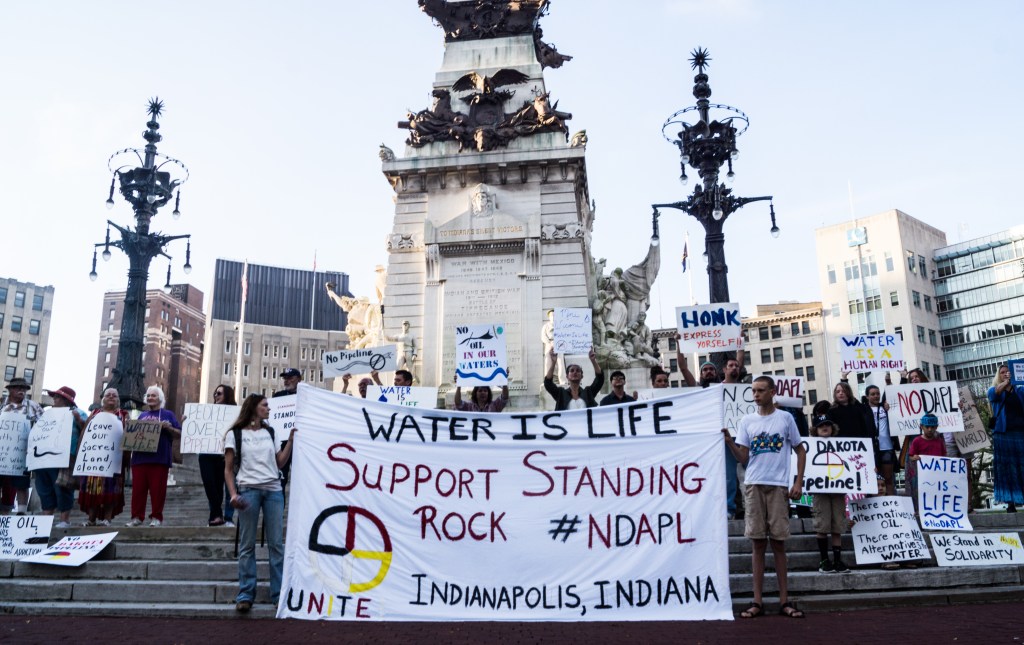
We were able to train others in those skills later when the White Pines Wilderness Academy in Indianapolis wanted to bring attention to the dangers of the Dakota Access Pipeline (DAPL).


Wet’suwet’en peoples

I was always looking for news about fossil fuels and our environment. This blog post from 1/14/2020 describes my discovery of the Wet’suwet’en peoples and their struggles against the Coastal GasLink (CGL) liquid natural gas pipeline being constructed through their pristine territory in British Columbia.

I have just begun to learn about the Wet’suwet’en people. A friend of mine from the First Nation-Farmer Climate Unity March traveled to the Unist’ot’en camp about 4 years ago and found it to be a life-changing experience. I also asked other friends I made during the March about this, and they indicated support for these people.

You may wonder why I am trying to learn and write about the Wet’suwet’en people now. The literal answer is I saw this article recently: Hereditary First Nation chiefs issue eviction notice to Coastal GasLink contractors. TC Energy says it signed agreements with all 20 elected First Nations councils along pipeline’s path. Joel Dryden · CBC News · Posted: Jan 05, 2020.

Any efforts to stop pipelines catch my interest.

Wet’suwt’en People, Jeff Kisling, 1/14/2020

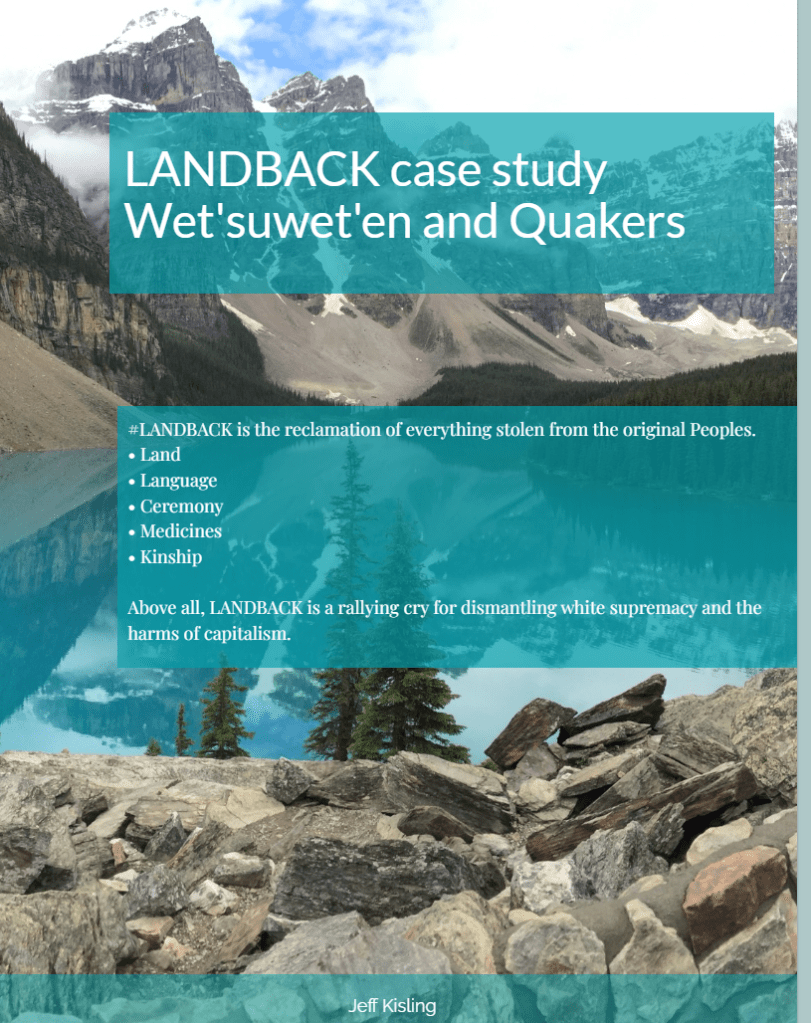
I wrote this booklet about the Wet’suwet’en struggles, including some videos of confrontations with Royal Canadian Mounted Police (RCMP). Assault rifles trained on unarmed youth.


Spirit led connection to Mutual Aid

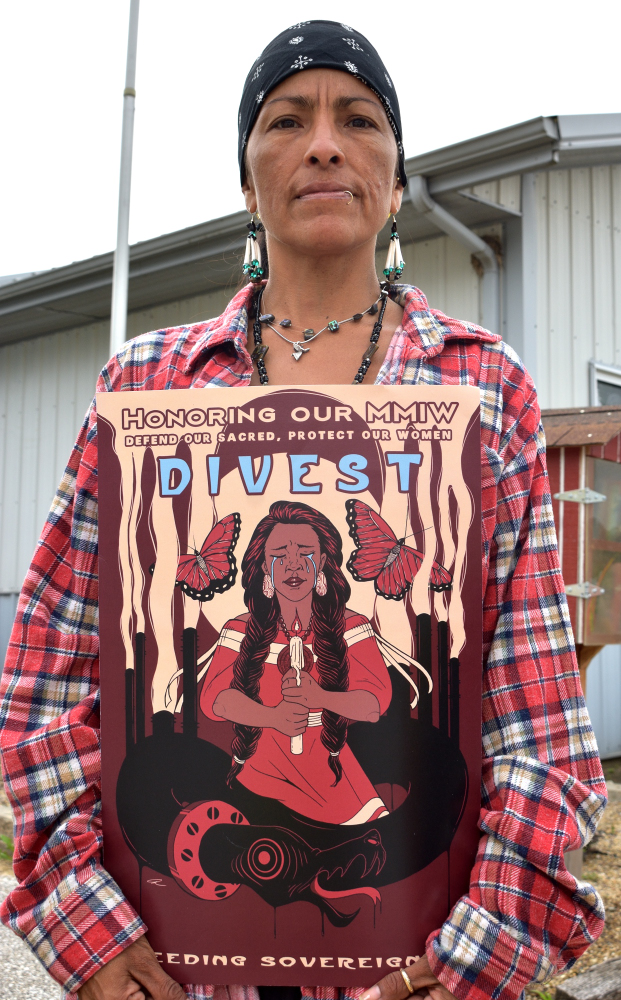
The title THREE YEARS LATER refers to my introduction to Des Moines Mutual Aid a little over three years ago. I took the photo below on Feb 7, 2020, when a small group of us organized a vigil in support of the Wet’suwet’en. I know the Spirit led Ronnie James, from Des Moines Mutual Aid, to join us. He was surprised that anyone outside his circle knew what was happening to the Wet’suwet’en. Ronnie is an Indigenous organizer working with the Great Plains Action Society (GPAS), and as such was interested to see if these were people who could become allies.

That meeting changed my life in many ways, all stemming from what I was learning from Ronnie and others about Mutual Aid, which has become the focus of my justice work since.

Over the years I’ve enjoyed documenting justice actions photographically. I like the challenge of an ever-moving group of people, the varieties of signs, the reactions of the people and the public. But for the past several years posting photos of demonstrations is discouraged if people’s faces are visible. Which police sometimes later use to bring charges against those people.

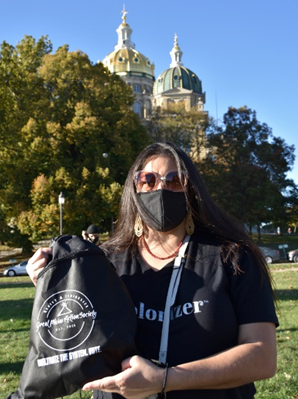
Ronnie and I are both part of Des Moines Mutual Aid’s free food project. The Wet’suwet’en being part of our history, we continue to support them. Because of COVID and people wearing masks, we were comfortable taking this photo during one of our Mutual Aid gatherings for the food project.

Des Moines Mutual Aid supports Wet’suwet’en peoples’ struggle again Coastal GasLink natural gas pipeline

Three Years Later

And yet, three years later, the Wet’suwet’en peoples’ struggles continue.

FOR IMMEDIATE RELEASE
March 29, 2023
Contact: Jennifer Wickham, Media Coordinator, Gidim’ten Checkpoint, yintahaccess@gmail.com, 778-210-0067

URGENT MEDIA ADVISORY: RCMP C-IRG Raid Wet’suwet’en Village Site, Make 5 Arrests 

VIDEO AVAILABLE HERE

WET’SUWET’EN TERRITORY (Smithers, BC) – This morning, a large force of RCMP C-IRG raided a Gidimt’en village site and arrested five land and water defenders, mostly Indigenous women, including Gidimt’en Chief Woos’ daughter. The raid accompanied a search warrant for theft under $5000 with no clear relation to the Gidimt’en village site.

This large-scale action by the RCMP’s Community Industry Response Group (C-IRG) involved more than a dozen police vehicles and officers drawn from throughout British Columbia. The arrests come just weeks after the Civilian Review and Complaints Commission (CRCC) announced they have “initiated a systemic investigation into the activities and operations of the RCMP “E” Division Community-Industry Response Group (C-IRG).”

In the days leading to this police action, RCMP C-IRG have been found patrolling Wet’suwet’en traplines and cultural use areas, harassing and intimidating Wet’suwet’en members and disrupting constitutionally protected Wet’suwet’en cultural activities. Members of a private security firm hired by Coastal Gaslink pipeline, Forsythe, have also escalated harassment and surveillance efforts against Wet’suwet’en members in recent days. 

Both the RCMP’s C-IRG unit and Forsythe are named as defendants in an ongoing lawsuit launched by Wet’suwet’en members, which alleges that police and private security have launched a coordinated campaign of harassment and intimidation in an effort to force Wet’suwet’en people to abandon their unceded territories. 

Sleydo’, spokesperson for Gidimt’en Checkpoint, said: 

“This harassment and intimidation is exactly the kind of violence designed to drive us from our homelands. The constant threat of violence and criminalization for merely existing on our own lands must have been what our ancestors felt when Indian agents and RCMP were burning us out of our homes as late as the 50s in our area. The colonial project continues at the hands of industry’s private mercenaries–C-IRG”

The arrests come days before Indigenous delegates are set to arrive at Royal Bank of Canada’s Annual General Meeting to oppose expansion of fossil fuels without consent on their territories, including Wet’suwet’en Hereditary Chiefs who oppose RBC’s funding of the Coastal Gaslink pipeline.

Wet’suwet’en Hereditary Chief Na’Moks offered the following:

“This is harassment, and exactly what Royal Bank of Canada is funding. Ahead of its shareholder meeting next week, RBC continues to fund corporate colonialism, and displace Indigenous peoples from our lands at gunpoint – all for a fracked gas pipeline we cannot afford now or in the future. In the context of the theft of our ancestral land, alleging stolen saws and clothing is outrageous.”

https://www.yintahaccess.com/?link_id=0&can_id=c209e67251859e28ba86a98fe9ff687a&source=email-take-the-streets-with-us&email_referrer=email_1865847&email_subject=take-the-streets-with-us

Yesterday morning at my Quaker meeting, we considered the following set of questions related to our environmental responsibilities.

ENVIRONMENTAL RESPONSIBILITY

ADVICE

All of creation is divine and interdependent: air, water, soil, and all that lives and grows. Since human beings are part of this fragile and mysterious web, whenever we pollute or neglect the earth we pollute and neglect our own wellsprings. Developing a keen awareness of our role in the universe is essential if we are to live peacefully within creation.

The way we choose to live each day‑‑as we manufacture, package, purchase and recycle goods, use resources, dispose of water, ‑design homes, plan families and travel‑affects the present and future of life on the planet. The thought and effort we give to replenishing what we receive from the earth, to keeping informed and promoting beneficial legislation on issues which affect the earth, to envisioning community with environmental conscience, are ways in which we contribute to the ongoing health of the planet we inhabit.

Preserving the quality of life on Earth calls forth all of our spiritual resources. Listening to and heeding the leadings of the Holy Spirit can help us develop qualities which enable us to become more sensitive to all life

QUERY

  • What are we doing about our disproportionate use of the world’s resources?
  • Do we see unreasonable exploitation in our relationship ‑with the rest of creation?
  • How can we nurture reverence and respect for life?  How I can we become more fully aware of our interdependent relationship with the rest of creation?
  • To what extent are we aware of all life and the role we play? What can we do in our own lives and communities to address environmental concerns?

Faith and Practice, Iowa Yearly Meeting (Conservative)


MUTUAL AID MONTHLY

One of the principles of Mutual Aid is political education. As part of this education, found below is the March 2023 edition of MUTUAL AID MONTHLY, A Production of Des Moines Mutual Aid. You can download it using the DOWNLOAD button on the PDF file display window at the end.

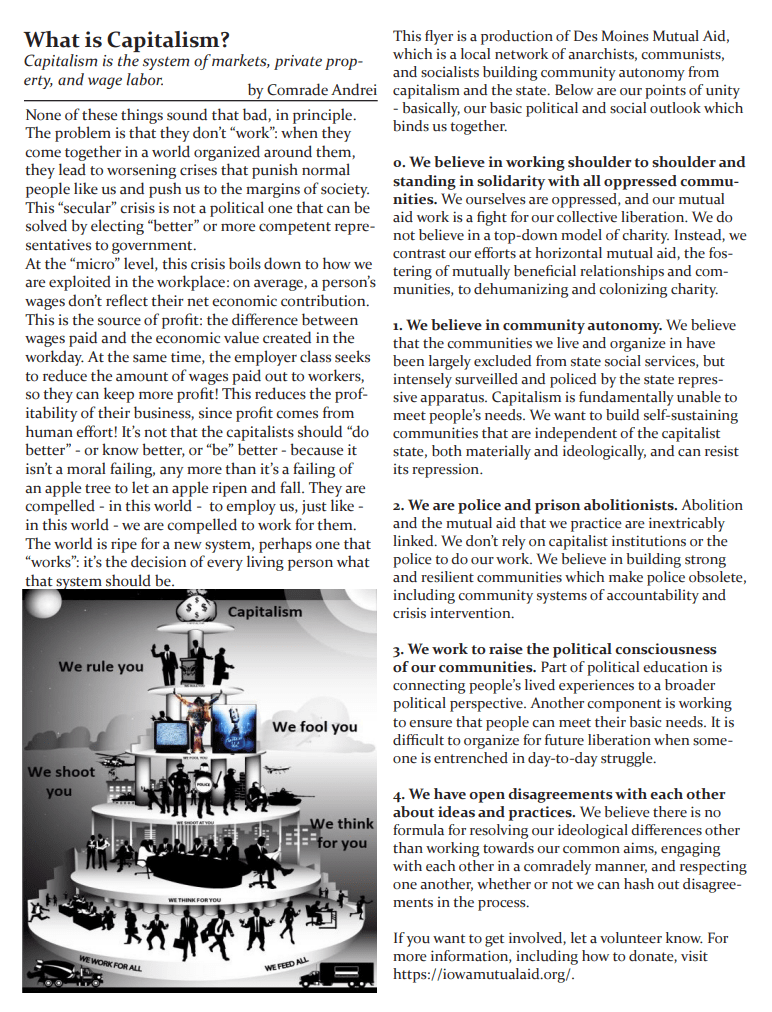
“This flyer is a production of Des Moines Mutual Aid, which is a local network of anarchists, communists, and socialists building community autonomy from capitalism and the state. Below are our points of unity – basically, our basic political and social outlook which binds us together.”

Des Moines Mutual Aid

This is a good description of Des Moines Mutual Aid. We are a network of anarchists, communists, and socialists. Understanding these terms applied to a community I belong to has been part of my political education. My life has been a rebellion against capitalism and the state. But am I an anarchist, communist and/or socialist? I learned that those are parts of me. It’s a step to not only learn what you are not, but also what you are. It’s easy enough to say I’m not a capitalist, but am I a so-called enemy of the state? Yes, I am, in the nonviolent sense. The state is becoming increasingly oppressive and authoritarian. But I’ve learned that even when the capitalist system was “working”, it was and is still a system built on supremacy, violence, abuse, and oppression.

Several years ago, I changed the name of this blog to QUAKERS AND RELIGIOUS SOCIALISM as part of my evolving political education.

I learned about the Democratic Socialists of America’s (DSA) Religious Socialism Committee from my friend Fran Quigley, director of the Health and Human Rights Clinic at Indiana University McKinney School of Law and a religioussocialism.org editorial team member.

Fran wrote in response to a blog post I had written, The Evil of Capitalism, December 31, 2020.

This post of yours struck me close to home. I too have become fully convinced of the evils of capitalism. Moreover, I have come to the conclusion that my faith dictates that I work to replace it. Turns out I am far from alone, so I’ve been devoting much of my time this past year to the Religion and Socialism Committee of the DSA, www.religioussocialism.org

My Introduction to Religious Socialism, Jeff Kisling

I like the Points of Unity of Des Moines Mutual Aid. I like the emphasis on the positive, “our basic political and social outlook which binds us together“. We are tightly bound together. I often hear my friends say how much they look forward to being together, working alongside each other, being directly connected to those who come for help. And knowing there is no judgement, because we are all aware that we might one day need help ourselves. I like the stories of those putting together boxes of food tell me they once came for food, themselves. I like the expectation that anyone of us should take food ourselves. It took me a while to realize my mistake in not taking any food. (As a result, my friends now know of my sweet tooth.)

One of our principles of unity is:
We have open disagreements with each other about ideas and practices.
“We believe there is no formula for resolving our ideological differences other than working towards our common aims, engaging with each other in a comradely manner, and respecting one another whether or not we can hash out disagreements in the process.”

The publication of MUTUAL AID MONTHLY relates to another of our Points of Unity, political consciousness.

We work to raise the political consciousness of our communities.
Part of political education is connecting people’s lived experiences to a broader political perspective. Another component is working to ensure that people can meet their basic needs. It is difficult to organize for future liberation when someone is entrenched in day-to-day struggle.

from Points of Unity, Des Moines Mutual Aid

Political ignorance is one of the main reasons this country is falling into chaos and authoritarianism. People would be less susceptible to falling for cults of personality and understand the threats to freedom posed by culture wars if they had a better education, including critical thinking skills. You might think of sharing MUTUAL AID MONTHLY with others in furtherance of their/your political consciousness. As a resource to stimulate discussions.


What is your vision?

Do you and/or a group you belong to have a vision of how to move into the near future?

I say NEAR future because huge changes, on many levels, are occurring at an accelerating rate. And my sense is most people are feeling increasingly helpless and hopeless.

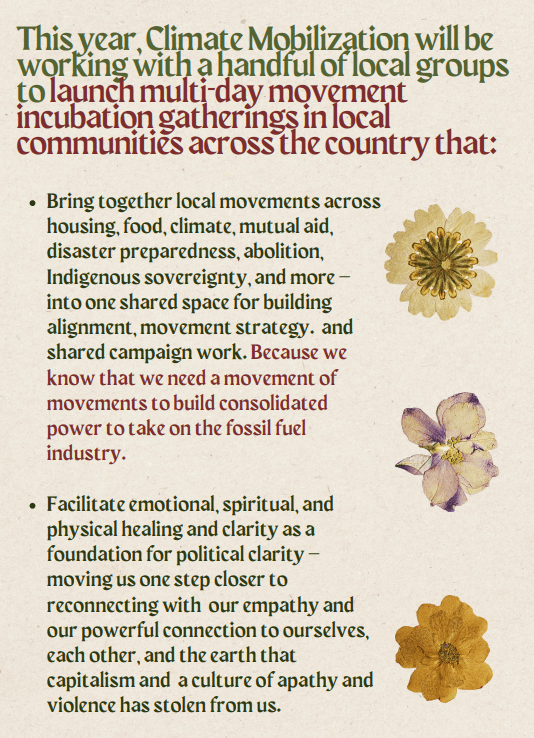
Recently I’ve been in contact with the Climate Mobilization Network, which has re-evaluated their strategies to address our climate emergency. “We are incubating local movements rooted in healing, community care, and climate survival mutual aid that asserts our needs in the face of climate disaster.”

Why We Decide to Pause and Transform our Strategy

  • Congressional failure to take meaningful action on climate
  • The slow pace of local climate programs where policy change is severely limited by what’s considered politically possible
  • Rising inequality amid continued neoliberalism
  • Escalating climate disasters that are hitting global and US-based frontline communities the hardest and will continue accelerating rapidly!
  • And widespread cultural and generational concern about climate change has not yet been tapped into effectively by a mass movement.

This collective visioning, movement incubation and learning gathering will equip you with space for reflection, new ideas, inspiration, and next steps to participate in this new campaign.

Together we will build relationships and explore:

  • How survival and mutual aid programs can grow the movement
  • New, creative approaches to taking action against fossil fuels
  • Ways to integrate healing into our work
  • And how to create space for reflection, intentionality and strategic clarity

Climate Mobilization Network


Why Quakerism is not prophetic

“Quakers will only be truly prophetic when they risk a great deal of their accumulated privilege and access to wealth. Prophets cannot have a stake in maintaining the status quo. Any attempt to change a system while benefiting and protecting the benefits received from the system reinforces the system. Quakers as much as anyone not only refuse to reject their white privilege, they fail to reject the benefits they receive from institutionalized racism, trying to make an unjust economy and institutionalized racism and patriarch more fair and equitable in its ability to exploit. One can not simultaneously attack racist and patriarchal institutions and benefit from them at the same time without becoming more reliant upon the benefits and further entrenching the system. Liberalism at its laziest.”   

Scott Miller

Willow Project

Will the existential threat of environmental devastation ever be taken seriously by capitalist countries?

Approval of the Willow Project is just the latest decision that will result in the emission of tons of carbon dioxide into the atmosphere. Another recent decision by the Biden administration was the release of millions of barrels of oil from the Strategic Petroleum Reserve solely to bring down gas prices.

The administration’s justifications were the valid leases of ConocoPhillips and that the courts would block the rejection of the project. One point is what are “valid rights on the land” in regard to Indigenous peoples?

As long as capitalism is the economic model of a country, fossil fuels will continue to be burned to drive that economy. Which is why we need to move to models such as Mutual Aid where profits are not the goal of society as soon as possible.

The Biden administration was limited by legal restraints in reviewing the Willow oil project, according to a White House official who said the company had valid rights on the land because of decades-old leases.

The administration was convinced the courts would have blocked an outright rejection of the Willow project and potentially imposed fines on the government, said the official, who spoke about the White House’s considerations on the condition of anonymity. 

Biden approves Willow Project. What to know about the move to allow oil drilling in Alaska by Sarah Elbeshbishi, USA Today, March 15, 2023

Instead of sticking to his own climate goals and listening to the people of the Village of Nuiqsut and the millions of us who got #StopWillow to nearly one billion views on TikTok, he let the fossil fuel industry win.

The Willow Project is a dangerous climate bomb — an $8 billion fossil fuel infrastructure project in Alaska, which would emit over 287 metric tons of carbon dioxide into the atmosphere, threaten Indigenous Alaska Native communities and destroy wild landscapes north of the Arctic Circle.

We’re living through an unprecedented climate crisis that will wreak havoc upon the lives of billions of people across the world, and for generations to come. We can’t afford any more drilling on our land.

The decision on Willow is shameful and a devastating blow to our generation. And it’s a reminder that the fossil fuel industry still holds so much power over us and our future. But if we can build enough people power, we know that together, we can defeat them.

We are the generation of a Green New Deal and we will keep fighting for our planet and our futures. 

Sunrise Movement

We are the generation of a Green New Deal and we will keep fighting for our planet and our futures.

Sunrise Movement

The Biden administration on Monday announced that it is approving the largest-ever proposed oil drilling project on U.S. public lands, in a direct repudiation of research warning that new fossil fuel development must cease to preserve a safe climate.

The Interior Department approved ConocoPhillips Alaska’s Willow project, located in one of the fastest-warming regions of the world. If completed, this project would produce the equivalent of an estimated 263 million tons of carbon dioxide over 30 years. This is about the same as building 20 new gas plants and running them for the same time period; burning 8.8 billion pounds of coal every year for 30 years; or adding 1.7 million cars to the road. 

Willow is not just an “environmentalist” concern. HEATED analyzed 30 national news stories about the Willow project and found that 75 percent framed its importance as primarily political by Arielle Samuelson and Emily Atkin, HEATED, March 15, 2023

Quakers and Change

Quakers have a long history of working for justice and social change. But what do we (Quakers) do when we realize change is necessary now? Throughout our history we have been led to see we are implicated in injustice. “Led” means the Spirit has shown what the injustices are, and what changes should be made. Most commonly, individuals discern what change is needed, and over time they and the Spirit convince others.

As my friend Lucy Duncan writes, “we as White Quakers like to think of ourselves as ahead or better than dominant culture, but we have been complicit in a system and mindset that are ubiquitous.”

The myths we tell ourselves and the lies those myths uphold are embedded in our contemporary faith practice. When we believe and perpetuate falsehoods about ourselves, it not only disconnects us from the truth, it also limits our ability to act with full integrity today. Telling the truth about ourselves and our White Quaker ancestors grounds us in reality, in a sense of the complexity of our identity. It allows us to create a different future, not built from delusion and half of the story but from an honest and grounded reckoning with who we are and who we have been. My friend Mila Hamilton calls this “intergenerational transformative justice.” As we deal with the uncomfortable truths of our White Quaker ancestors, we release them from the amber in which our myths have captured them. As we allow them to become the full, flawed humans they were, we also free ourselves to reckon with our present, which arises from their past, and to tell the full truth of who we are.

We as White Quakers like to think of ourselves as ahead or better than dominant culture, but we have been complicit in a system and mindset that are ubiquitous. Claiming the full truth of our history and committing to repair the harms done are deeply spiritual acts of healing our own wounds of disconnection. I would argue it is the pathway upon which we can, perhaps for the first time, discover and invigorate our faith with its full promise.

What would it mean for us to take seriously and collectively as a Religious Society a call to finish the work of abolition, hand in hand and side by side with those affected and their loved ones? What would it mean for us to stand fully with the calls to abolish the police and fully fund community needs instead? What would it mean to reckon with our past complicity with harm and fully dedicate ourselves to the creation of a liberating Quaker faith that commits to build the revolutionary and healing faith we long to see come to fruition? What would it look like to finally and fully abolish slavery?

A Quaker Call to Abolition and Creation by Lucy Duncan, Friends Journal, April 1, 2021

It can take a long time for change to occur. Personally, I’ve been working since the early 1970’s to convince Friends to consider my spiritual leading to drastically reduce our carbon footprint, including not having an automobile.

Most of our values, beliefs and assumptions regarding livelihoods need to be radically transformed in order to move into activities that are sustainable. If this transition is ever to occur, we must be able to visualize and share the details of these alternative occupations and embrace new social metrics to support those occupations.

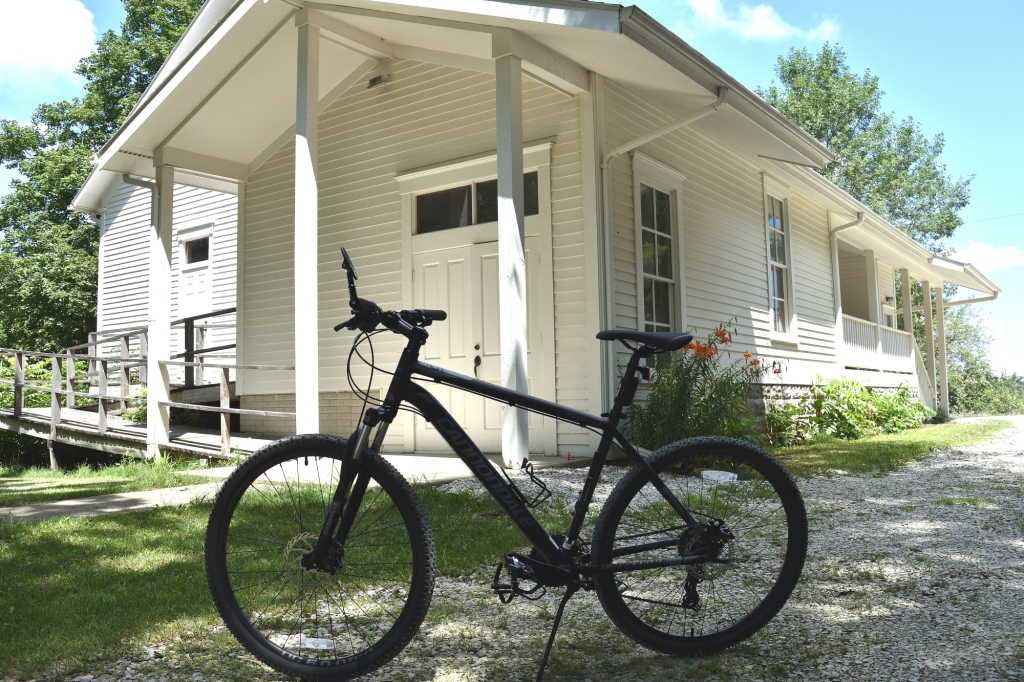
I try to imagine myself making a move into a livelihood that would be fundamentally sustainable like the critical but overlooked work done by a young man I know who shuttles vegetable waste from homes in his neighborhood to a small composting center in his community by bicycle. He then sells and delivers by bike finished compost to neighbors with gardens. If I chose to move into this “career” my friends would think I had lost my mind. My friends might ridicule me. Certainly, they would worry about me! And worse, some people, perhaps even including my spouse, might simply think they no longer had anything in common with me. It’s like giving up alcohol in an alcohol inundated world. You stand outside, you are not one of the groups any longer. In reality, I would need to build an entirely new social network with different values and notions of success, a network that would respect my choices and understand their importance. Because living and working, having lifestyles and livelihoods that are truly regenerative and sustainable look nothing like how most of us live and work now. The cultural transition and change in our values and the metrics we use to measure our sense of success, therefore our identities, is hard to imagine, not to mention implement.

Nevertheless, I have interviewed people with very low carbon livelihoods and lifestyles, highly moral people who work and live outside of mainstream jobs and careers. And guess what? They did indeed initially have to suffer social backlash from family and friends for their lifestyle and work choices. 

Against the Economic Grain: Addressing the Social Challenges of Sustainable Livelihoods by Kim Kendall, Resilience.org, January 27, 2023

One of the things I appreciate in our spiritual practice is for the Quaker meeting to use questions to consider where we are today in our faith. For example, the following are the queries related to social and economic justice.

11.  SOCIAL AND ECONOMIC JUSTICE


“For when I was hungry you gave me food, when thirsty you gave me drink, when I was a stranger you took me into your home, when naked you clothed me, when in prison you visited me.”     Matthew 25:35‑36

ADVICE 

We are part of an economic system characterized by inequality and exploitation. Such a society is defended and perpetuated by entrenched power. 

Friends can help relieve social and economic oppression and injustice by first seeking spiritual guidance in our own lives. We envision a system of social and economic justice that ensures the right of every individual to be loved and cared for; to receive a sound education; to find useful employment; to receive appropriate health care; to secure adequate housing; to obtain redress through the legal system; and to live and die in dignity. Friends maintain historic concern for the fair and humane treatment of persons in penal and mental institutions.

Wide disparities in economic and social conditions exist among groups in our society and among nations of the world. While most of us are able to be responsible for our own economic circumstances, we must not overlook the effects of unequal opportunities among people. Friends’ belief in the Divine within everyone leads us to support institutions which meet human needs and to seek to change institutions which fail to meet human needs. We strengthen community when we work with others to help promote justice for all. 

QUERIES 

  • How are we beneficiaries of inequity and exploitation? How are we victims of inequity and exploitation? In what ways can we address these problems?
  • What can we do to improve the conditions in our correctional institutions and to address the mental and social problems of those confined there?
  • How can we improve our understanding of those who are driven to violence by subjection to racial, economic or political injustice? In what ways do we oppose prejudice and injustice based on gender, sexual orientation, class, race, age, and physical, mental and emotional conditions? How would individuals benefit from a society that values everyone? How would society benefit?


“We are part of an economic system characterized by inequality and exploitation. Such a society is defended and perpetuated by entrenched power. How are we beneficiaries of inequity and exploitation? How are we victims of inequity and exploitation? In what ways can we address these problems?”


Injustice cannot be addressed as long as we are involved in the system of injustice, in this case, capitalism. As my good friend Ronnie James says:

I’m of the firm opinion that a system that was built by stolen bodies on stolen land for the benefit of a few is a system that is not repairable. It is operating as designed, and small changes (which are the result of huge efforts) to lessen the blow on those it was not designed for are merely half measures that can’t ever fully succeed.

So, the question is now, where do we go from here? Do we continue to make incremental changes while the wealthy hoard more wealth and the climate crisis deepens, or do we do something drastic that has never been done before? Can we envision and create a world where a class war from above isn’t a reality anymore?”

Ronnie James


The following is a diagram I’ve been working on for several years to visualize unjust systems and possible alternatives. On the left is capitalism, built on colonialism. The red vertical bar indicates forces that interfere with making changes. Failing and corrupt institutions, authoritarianism, and environmental chaos. If we can move past those resistances, we can build communities for a viable and just future.

I’ve been part of a Mutual Aid community for the past three years. That experience convinces me the Mutual Aid is a vital component of a more just future for us all. It is a way to escape the capitalist economic system, which I’ve written about extensively.
(See: https://quakersandreligioussocialism.com/mutual-aid/ )


Epic battle

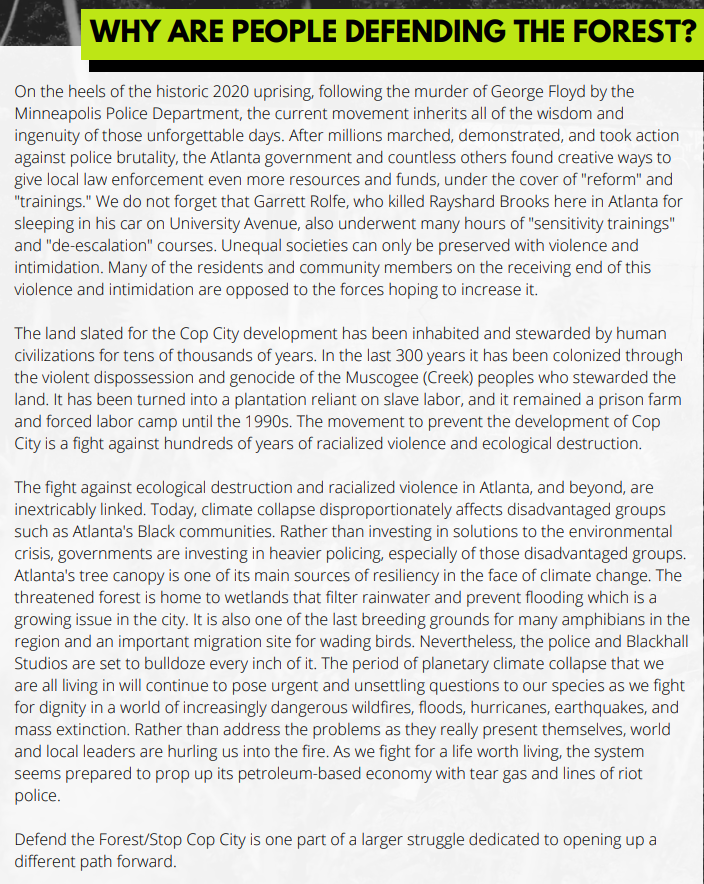
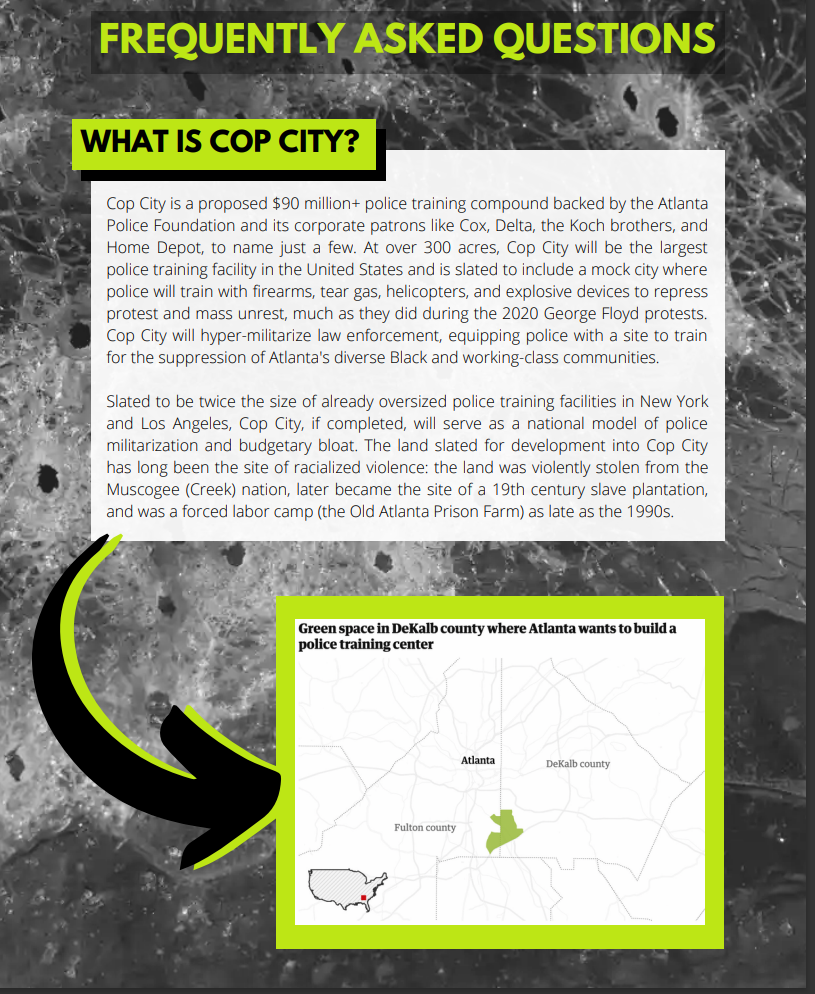
The battle to stop construction of the proposed militarized police training facility being referred to as “Cop City” in the Atlanta Forest has many components.

    Militarized policingAt this time of endless instances of militarized policing the last thing we need is a facility to train police to use these tactics. To train police from all over the country. International?
    Training will be provided for urban warfare. Including helicopter pads and a mock city.
    Of course, the location chosen was right next to communities of Black, Indigenous, and other people of color. Where men, women and children who are already traumatized by policing would hear all the shooting from the training facility.
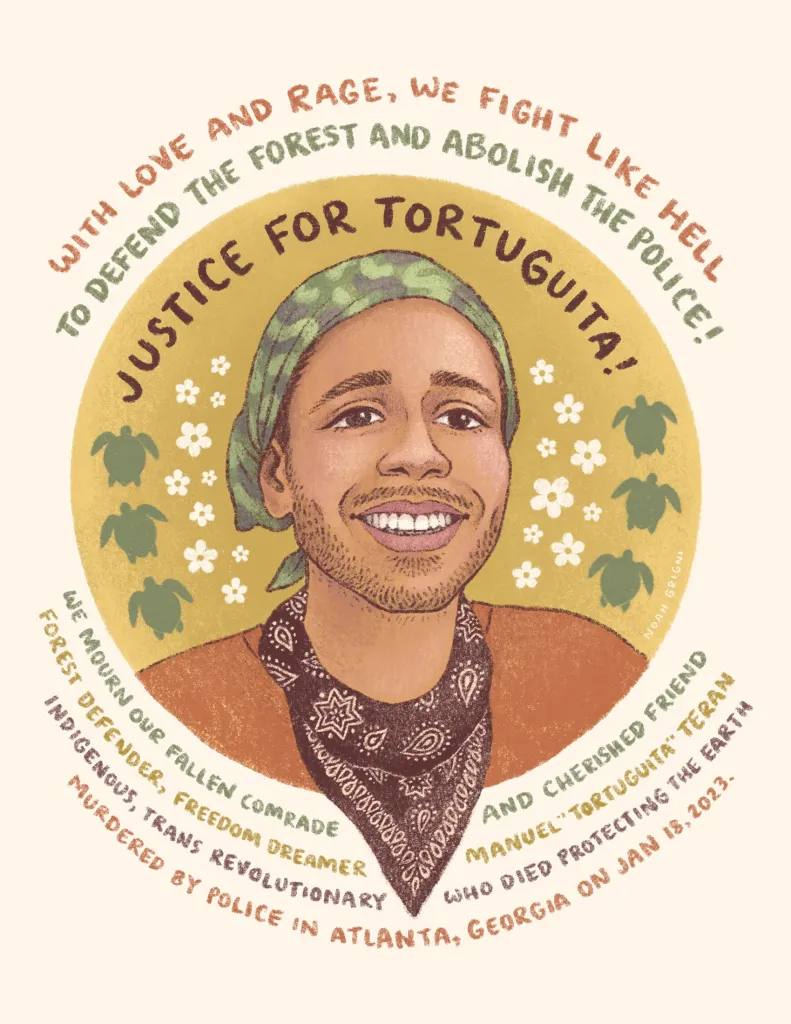
    Police from multiple agencies have continually harassed tree defenders. Manuel Teran (Tortuguita) was killed by police.
    Indigenous rights“You must immediately vacate Mvskoke homelands and cease violence and policing of Indigenous and Black people in Mvskoke lands” (Atlanta Forest)
    Civil libertiesAs is occurring all over the country, civil disobedience and protest is being threatened by elevating charges to domestic terrorism.
    66 Organizations Urge that Domestic Terrorism Charges Against Defend the Atlanta Forest Protesters Be Dropped
    EnvironmentTrees are more important now than ever to pull carbon dioxide out of the air.

    DEFEND THE ATLANTA FOREST
    an autonomous movement for the future of South Atlanta

    We call on all people of good conscience to stand in solidarity with the movement to stop Cop City and defend the Weelaunee Forest in Atlanta.

    DEFEND THE ATLANTA FOREST


    MY GOODMAN: On Wednesday, a group of Mvskoke Creek activists interrupted a Regional Commission meeting and attempted to give an eviction notice to the Atlanta mayor.

    MVSKOKE CREEK ACTIVIST 1: Objection. Objection. We have a letter being delivered from the Mvskoke Creek Nation on behalf of Mvskoke Creek spiritual leadership in opposition to Cop City.

    MVSKOKE CREEK ACTIVIST 2: I came all the way on the Trail of Tears to deliver this letter to you folks.

    UNIDENTIFIED: You’re welcome to leave.

    MVSKOKE CREEK ACTIVIST 2: We want you to know that the contemporary Mvskoke people are now making their journey back to our homelands and hereby give notice to Mayor Andre Dickens, the Atlanta City Council, the Atlanta Police Department, the Atlanta Police Foundation, the Dekalb County Sheriff’s Office, and so-called Cop City, that you must immediately vacate Mvskoke homelands and cease violence and policing of Indigenous and Black people in Mvskoke lands. We also ask for an independent investigation into the assassination of our relative Tortuguita and that the charges be dropped against Weelaunee Forest defenders.

    Opposition Grows to Atlanta “Cop City” as More Forest Defenders Charged with Domestic Terrorism


    A number of people and organizations are calling for the cancellation of “Cop City”
    Students of the Atlanta University Center Denounce the Building of the Atlanta Public Safety Training Center
    Forest Defenders Vow Resistance After Court Okays Phase I Of ‘Cop City’
    Detroit ‘Cop City’ rally held in solidarity with Atlanta environmental defenders – BridgeDetroit
    CrimethInc. : The Forest in the City : Two Years of Forest Defense in Atlanta, Georgia
    Sign the petition: No massive police training complex. Stop Cop City!
    CITIES ACROSS THE US TAKE PART IN ‘WEEK OF ACTION’ AGAINST COP CITY
    RALLY IN SOLIDARITY WITH RESISTANCE TO COP CITY IN AVON, MASSACHUSETTS
    Elders Say Stop Cop City!
    Multiple State and Local Police Agencies Violently Raid Weelanuee Forest Music Festival, Week of Action Perseveres  

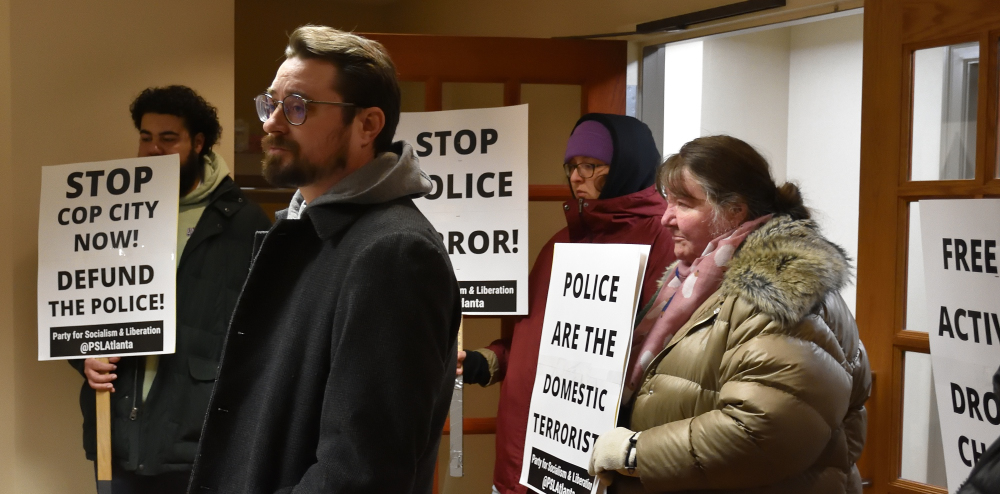
    On 1/31/2023, a number of people who are involved in justice work in central Iowa gathered at the offices of the law firm that represents Corporation Services Company. Which in turn represents U.S. Multifamily Capital Markets at Cushman and Wakefield. John O’Neill is the President of U.S. Multifamily Capital Markets. He sits on the executive committee board for the Atlanta Police Foundation, which is building “Cop City” in Atlanta. Where Manuel Teran (Tortuguita) was killed by police who were clearing tree sitters from the proposed construction area.

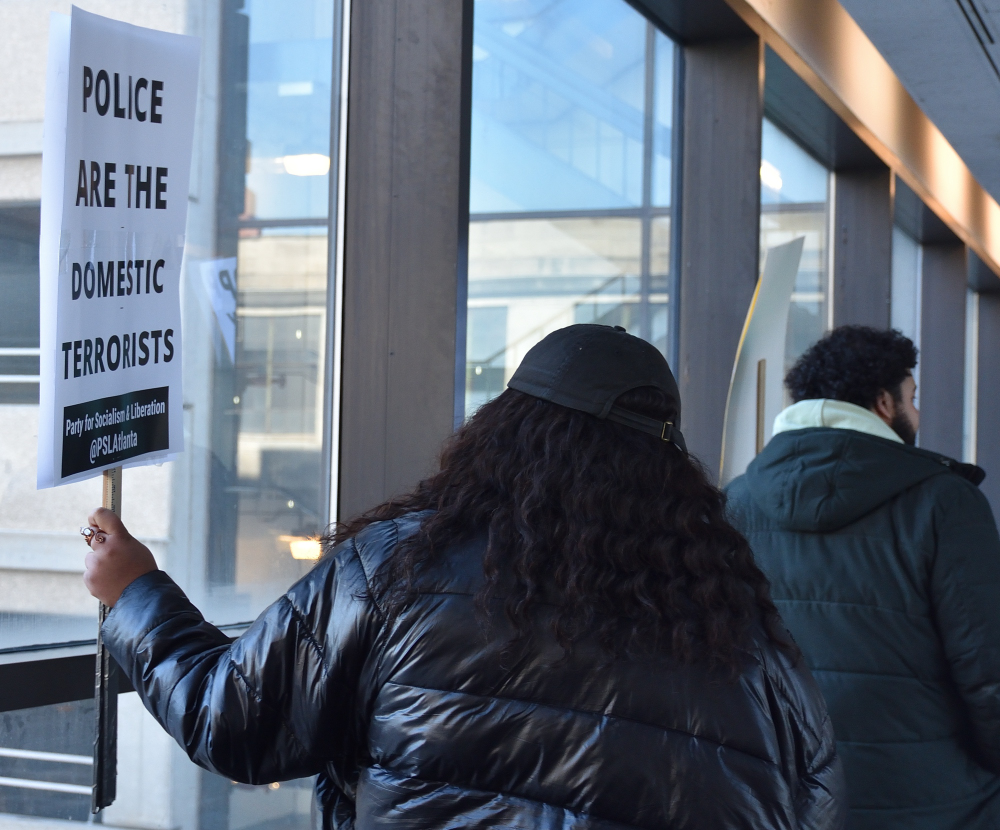
    Following are some of the photos I took at our action that morning.


    See more about “Cop City” here:
    https://quakersandreligioussocialism.com/?s=%22cop+city%22


    An Alternative to Capitalist Hierarchies

    I previously began to describe the Cecosesola Co-op (See: http://bit.ly/3mrdtop). I had been doing research to find examples of large mutual aid communities when I started to see stories about Cecosesola. This InfoGraphic from Venequelanalysis shows there are one thousand three hundred people involved.

    Basic information about Cecosesola (Venezuelanalysis)

    On September 29, 2022, Cecosesola received the Right Livelihood Award, a Swedish prize often known as the “Alternative Nobel Prize.” This award honors people and organizations that encourage social change. According to a statement issued by the Right Livelihood Foundation, the prize was given to Cecosesola for “establishing an equitable and cooperative economic model as a robust alternative to profit-driven economies.”

    In what follows, we talk to three of the cooperative’s associates – Lizeth Vargas, Ender Duarte, and Gustavo Salas – about their project which serves hundreds of thousands of people and is a model for non-hierarchical organizational practices.

    An Alternative to Capitalist Hierarchies: A Conversation with the Cecosesola Co-op. A Venezuelan cooperative network that recently received the “Alternative Nobel Prize” tells its story By Cira Pascual Marquina – Venezuelanalysis, Nov 20th 2022.


    maps.google.com

    Can you tell us the story of Cecosesola?

    Gustavo Salas: Cecosesola was born in the 1960s when the Centro Gumilla [a Catholic investigation center for social action] promoted the organizing of cooperatives in the most precarious barrios of Barquisimeto [Lara state, center-western Venezuela]. That is when poor, working-class people began to set aside a bit of money every month to build their own cooperatives.

    In other countries, co-ops have a middle-class base, but many Venezuelan cooperatives have a working-class one: that is, co-ops here often begin to take shape in the poorest barrios.

    The first cooperatives in Barquisimeto were founded by people with a great deal of commitment to social work and community work. They eventually came together in Cecosesola, a co-op center or a co-op of co-ops [the acronym stands for Central Cooperativa de Servicios Sociales de Lara]. The first Cecosesola project was one that addressed an immediate need of the people: funerary services.

    An Alternative to Capitalist Hierarchies: A Conversation with the Cecosesola Co-op. A Venezuelan cooperative network that recently received the “Alternative Nobel Prize” tells its story By Cira Pascual Marquina – Venezuelanalysis, Nov 20th 2022.

    This first iteration of building the community didn’t succeed. Interestingly, it was a bus boycott that re-initiated Cecosesola, which brings to mind the Montogomery bus boycott of 1955-56.

    National coverage of the boycott and King’s trial resulted in support from people outside Montgomery. In early 1956 veteran pacifists Bayard Rustin and Glenn E. Smiley visited Montgomery and offered King advice on the application of Gandhian techniques and nonviolence to American race relations. Rustin, Ella Baker, and Stanley Levison founded In Friendship to raise funds in the North for southern civil rights efforts, including the bus boycott. King absorbed ideas from these proponents of nonviolent direct action and crafted his own syntheses of Gandhian principles of nonviolence. He said: “Christ showed us the way, and Gandhi in India showed it could work” (Rowland, “2,500 Here Hail”). 

    On 5 June 1956, the federal district court ruled in Browder v. Gayle that bus segregation was unconstitutional, and in November 1956 the U.S. Supreme Court affirmed Browder v. Gayle and struck down laws requiring segregated seating on public buses. The court’s decision came the same day that King and the MIA were in circuit court challenging an injunction against the MIA carpools. Resolved not to end the boycott until the order to desegregate the buses actually arrived in Montgomery, the MIA operated without the carpool system for a month. The Supreme Court upheld the lower court’s ruling, and on 20 December 1956 King called for the end of the boycott; the community agreed. The next morning, he boarded an integrated bus with Ralph Abernathy, E. D. Nixon, and Glenn Smiley. King said of the bus boycott: “We came to see that, in the long run, it is more honorable to walk in dignity than ride in humiliation. So … we decided to substitute tired feet for tired souls, and walk the streets of Montgomery”

    Montgomery Bus Boycott, Stanford University, The Martin Luther King, Jr. Research and Education Institute

    A few years after the foundation of Cecosesola, in 1974, there was a feeling of dissatisfaction brewing among workers and members. Enthusiasm and hopes had vanished, and Cecosesola was now closer to a capitalist enterprise than a social movement or a community-based organization.

    As it happens, Cecosesola was immersed in an internal debate. At the time, people of Barquisimeto were on the streets en masse, protesting a hike in bus fares. That is when the Cecosesola bases, those who were pushing to reinstate the original grassroots logic of the organization saw an opportunity to rekindle the cooperative project. Following Cecosesola’s early footsteps and grassroots mission, we built a transportation project that would keep fares down. There were no bosses in this project, which thus reactivated our on-the-ground work. In the end, we ended up assuming many transport routes in Barquisimeto.

    Even though the transportation initiative was associated with Cecosesola, it didn’t reproduce the existing hierarchical order. The project became an opportunity to reorganize things and do away with bosses. In fact, the transport initiative would hold massive meetings on a regular basis, and all 300 associated workers would participate in each meeting!

    In the beginning, the whole thing was very chaotic: collective decision-making isn’t easy when society is completely based on hierarchies. However, as the transport project became consolidated, it began to leave its imprint on Cecosesola. Eventually, we displaced the conventional top-down model with a system of direct participation that integrates workers and associates alike.

    That is how Cecosesola, including its funerary services, was returned to the community, to its origins. Now we have an open administration without intermediation and with direct participation.

    An Alternative to Capitalist Hierarchies: A Conversation with the Cecosesola Co-op. A Venezuelan cooperative network that recently received the “Alternative Nobel Prize” tells its story By Cira Pascual Marquina – Venezuelanalysis, Nov 20th 2022.


    What are the principles behind Cecosesola’s modus operandi?

    Ender Duarte: Rather than principles set out on paper, we have a set of ideas or principles that organize and regulate our day-to-day practices.

    Our key ideas are mutuality, respect, and transparency, which are all important to building relationships of trust. In other words, mutual care and solidarity are our driving forces.

    These practices guide our day-to-day activities, be they funerary services, healthcare, or food production and distribution. If we break away from our fundamentals, we would break the relationships of trust that we have been developing with so much care and love.

    As we work, we are doing away with relations based on exploitation and domination. Ours is an organization without bosses. Over the years we have learned that the ever-present shadow of hierarchies can only be abolished with mutual respect and trust.

    An Alternative to Capitalist Hierarchies: A Conversation with the Cecosesola Co-op. A Venezuelan cooperative network that recently received the “Alternative Nobel Prize” tells its story By Cira Pascual Marquina – Venezuelanalysis, Nov 20th 2022.


    What are the main teachings that Cecosesola can share with people about how to make a better world?

    Gustavo Salas: If we want to transform our society, we have to do away with hierarchies. When Cecosesola was born, it generated a great deal of enthusiasm and passion. However, when a conventional, top-down administration emerged, that flower wilted. The hierarchical structure separated people from the organization and they went back home. Why? Even when a boss or leader figure has good intentions, the other vanishes: he or she is erased.

    When Cecosesola was re-initiated, we did so by going back to the basics. We rebuilt an organization where everyone has a voice and everyone counts. If we really want to live in a more just society, we have to break away from the prevailing logic, and we have to find new organizational models.

    Capitalist enterprises are not a model for us; the same goes for governmental enterprises. At Cecosesola we are exploring a new model based on mutuality. The model works, so now we are working hard to perfect it.

    An Alternative to Capitalist Hierarchies: A Conversation with the Cecosesola Co-op. A Venezuelan cooperative network that recently received the “Alternative Nobel Prize” tells its story By Cira Pascual Marquina – Venezuelanalysis, Nov 20th 2022.


    Pause and Transform

    I recently attended a Zoom meeting hosted by the Climate Mobilization Network. I was interested because I’ve been following the Climate Mobilization Network’s work for years.

    They articulate what has not been working and that they are looking into different strategies that might be successful. I was especially interested to discover their emphasis on Mutual Aid programs.

    This collective visioning, movement incubation and learning gathering will equip you with space for reflection, new ideas, inspiration, and next steps to participate in this new campaign.

    Together we will build relationships and explore:

    • How survival and mutual aid programs can grow the movement
    • New, creative approaches to taking action against fossil fuels
    • Ways to integrate healing into our work
    • And how to create space for reflection, intentionality and strategic clarity
    https://www.theclimatemobilization.org/


    Why We Decide to Pause and Transform our Strategy

    • Congressional failure to take meaningful action on climate
    • The slow pace of local climate programs where policy change is severely limited by what’s considered politically possible
    • Rising inequality amid continued neoliberalism
    • Escalating climate disasters that are hitting global and US-based frontline communities the hardest and will continue accelerating rapidly!
    • And widespread cultural and generational concern about climate change has not yet been tapped into effectively by a mass movement.

    Climate Mobilization Network


    Movement Analysis

    We reached out to more than 20 leaders across the Just Transition movement to guide our strategic planning process – we asked them about what learnings, gaps, and critical takeaways they saw emerging in their movement work. The opportunities that interviewees identified our movement needs to build on included:

    • We need more support for escalating, disruptive direct actions
    • We need work building a movement of movements
    • We need local organizing & base building as a foundation for larger mass movement
    • We need solutions outside of government
    • We need a more coherent, clear, and unified narrative strategy and message
    • We need more training on healing and community care as the center of our movements – and a politics of empathy and love at the center of our movements

    Climate Mobilization Network


    Climate Mobilization’s 2023 Pilot Programs: Political Education on Climate Survival, Healing Justice, Movement History and the Need for Escalated Direct Action

    After processing our movement analysis, as well as the strengths, weaknesses, opportunities, and challenges of our current focus campaigns and Network – and realizing the need for more radical and inventive approaches to addressing the climate emergency – we decided to build for our pilot program to focus on building out a transformational, motivational and commitment-driven political education training program that builds understanding, alignment and action around the need for climate survival programs and escalated, coordinated, and creative direct action. 

    This includes: 

    • Direct action strategy and tactics from Indigenous struggles, from the Global South & from history, encouraging participants to develop their emergent ideas
    • Why and how to start mutual aid based climate survival programs – pulling case studies for effective models of sustained community resilience 
    • Mass movement history  & state of current climate / need for climate survival 
    • Healing Justice organizing practices addressing burnout, trauma, climate grief at the root cause; integrating organizing and healing justice approaches into one, making climate organizing a more joyous, community-oriented, accessible, and sustainable practice for all peoples to get involved in – with a focus on building out leadership of resilience of frontline communities 

    Why This: Political education is movement connective tissue and a key resource for organizers to become more resilient, effective and reflective. Climate organizing in the US is particularly disconnected from the important resources offered by movement history rooted in global context.

    Why Now: This program addresses several emergent movement needs:

    • Burnout is at an all-time high, a signal to reflect, rebuild resilience, shift organizing practices across the movement to center healing, and re-root our organizations in movement history. 
    • Climate groups’ interest in direct action remains high, while increasing numbers of groups working on other issues will be trying to add climate programs. We will provide a container for this work. 
    • We’ve also heard concerns that the direct action toolbox and strategy need to be expanded and strengthened.

    This program will forge common ground among a burgeoning climate survival movement that brings together climate and non-climate groups. Alignment and political education around direct action, healing justice and mass movement history is an unmet need across sectors; the training will also provide an appealing, approachable framework for groups new to climate work to launch climate survival programs. The focus is on moving people to launch direct action and climate survival programs, change their organizing practices (to incorporate a climate survival focus and become more healing justice centered), and access improved resilience in the work they are already doing.

    Climate Mobilization’s New Direction for 2023


    Here are the slides from the presentation


    #NoCarbonPipelines #NoCO2Pipelines #MutualAid