I recently came across a series of articles by Barnabas Smith on medium.com titled The Making of a Spiritual Anarchist. One of them was When I Was Hungry, You Gave Me Food.
The phrase below, “after my time on the bench,” relates to Barnabas’ punishment for not getting good grades. His father made him sit on the bench outside his father’s store, hoping to give him a different perspective on the importance of a good education. I know, that begs the question of what a good education is. The store was in a part of the city where there were people living on the street.
After my time on the bench, I decided to take matters into my own hands. If the city wouldn’t take care of its citizens and churches weren’t going to take care of their neighbors, then I would do what I could. As a high schooler, it wasn’t much.
I started by buying two meals when I ate out and giving the extra away. After graduating high school, I started inviting people to have lunch with me instead. To me, if taking care of someone was also taking care of Jesus, wouldn’t it be better to have lunch with him and treat him as a friend?
I did help a few churches organize their outreach programs. If they were willing to put their time and money into the community, I figured it was best to help them do it right. And by right I mean, by treating the people they were seeking to serve as people and not a project. To see them as human beings fully loved by God and not as souls to save from God’s wrath. It was hit or miss on how the outreaches actually lived up to this.
I didn’t know at the time, but my disregard and distrust of the necessity of institutions was a hallmark of anarchism. I was simply trying to do my part to help my community. I wasn’t radicalized in college or by reading Marx. I was awakened to the needs of the people around me. My neighbors. People who the powers that be saw as unimportant.
31 “When the Son of Man comes in his glory, and all the angels with him, he will sit on his glorious throne. 32 All the nations will be gathered before him, and he will separate the people one from another as a shepherd separates the sheep from the goats. 33 He will put the sheep on his right and the goats on his left.
34 “Then the King will say to those on his right, ‘Come, you who are blessed by my Father; take your inheritance, the kingdom prepared for you since the creation of the world. 35 For I was hungry and you gave me something to eat, I was thirsty and you gave me something to drink, I was a stranger and you invited me in, 36 I needed clothes and you clothed me, I was sick and you looked after me, I was in prison and you came to visit me.’
37 “Then the righteous will answer him, ‘Lord, when did we see you hungry and feed you, or thirsty and give you something to drink? 38 When did we see you a stranger and invite you in, or needing clothes and clothe you? 39 When did we see you sick or in prison and go to visit you?’
40 “The King will reply, ‘Truly I tell you, whatever you did for one of the least of these brothers and sisters of mine, you did for me.’
Matthew 25
If you’ve read other articles I’ve written you know I was profoundly changed when the Spirit connected me with the people at Des Moines Mutual Aid about four years ago. Barnabas’s article distills a few things I’ve learned or questioned as a result of my experiences there.
Why are so few churches feeding, clothing, and providing shelter to those in need?
Sending money somewhere doesn’t count.
When they do, why do so many dehumanize those they are trying to help?
I say “trying” because how helpful is treating those in need this way?
Mutual Aid groups across the country and the world are doing these things and treating our neighbors as ourselves.
Today, October 18, 2023, the world seems to be falling into chaos on so many levels. Beyond the increasing threats of environmental devastation, there is the complete dysfunction of the US Congress. Economic stresses are increasing as prices for everything are skyrocketing. Wars in Ukraine and the Middle East threaten to draw more countries into their conflicts. And killing thousands of people, of children.
I usually write about those things. But now it’s overwhelming to even try to figure out which of these many threats and injustices to write about, let alone what to say about them.
As I often say, I try to discern what the Spirit is leading me to say. Recently, I’ve been led to revisit Transformative Mutual Aid Practices (T-MAPs). The subject is relevant to help us deal with all these stresses in our lives. And a framework to support each other.
[A note to people of faith. From what I’ve been learning about T-MAPs, I don’t think faith is talked about specifically. Rather, you can include that in the parts of T-MAPs related to what gives you support. I think T-MAPs can be helpful for faith groups, such as Quaker meetings, as a better way to do justice work and communal care.]
Mutual Aid
I’m not always successful in explaining why my focus for the past four years has been on Mutual Aid (and Transformative Mutual Aid Practices). One is my lived experiences working in my Mutual Aid community. Not only of the many ways this community serves the survival needs of our community (our neighbors and ourselves) but also how powerful this is in our own lives and care for each other.
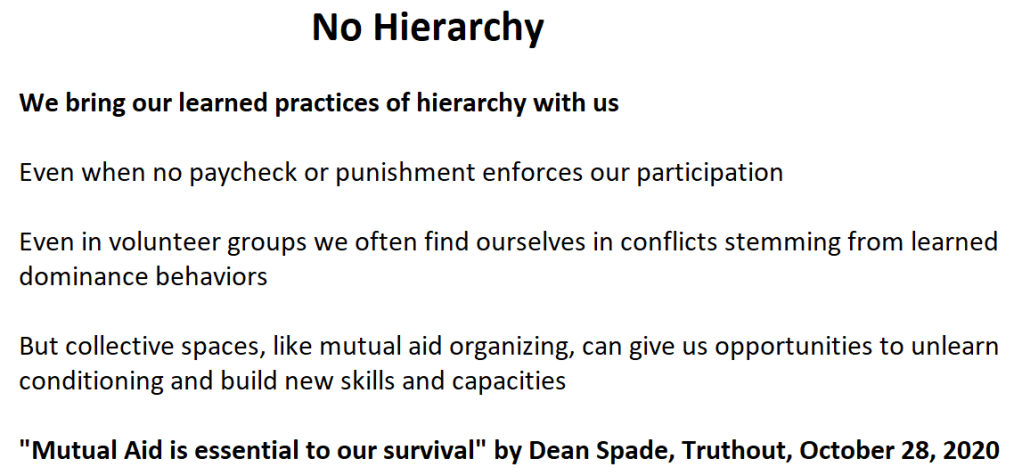
This is so because Mutual Aid is about a completely different way of thinking and being. The root of injustices in our society is the hierarchical structure of everything involved in our economic, political, and, usually, social structures. All hierarchies are power relationships and enforce a model of domination. The heart of Mutual Aid is a focus on preventing hierarchical structures. Mutual Aid is not just another approach to living and working in a community. It is about changing the very basis of how communities work.
These quotes are from “Mutual Aid Is Essential to Our Survival Regardless of Who Is in the White House. Mutual aid is inherently anti-authoritarian, demonstrating how we can organize human activity without coercion” by Dean Spade, truthout, Oct 27, 2020. Dean Spade is the author of the essential manual about mutual aid, “Mutual Aid. Building Solidarity During This Crisis (and the Next)“.
T-MAPs
Transformative Mutual Aid Practices (T-MAPs) are a set of tools that provide space for building a personal “map” of wellness strategies, resilience practices, unique stories, and community resources. Creating a T-MAP will inspire you to connect your struggle to collective struggles. When we make and share our T-MAPs with others they become potent tools for healing and liberation.
The acronym T-MAPs stands for Transformative Mutual Aid Practices
Transformation We understand that we’re always in a process of transformation and growth; we’re not just in a process of ‘recovery’ or going back to some state of health (that we may have never known). As our lives change, it’s helpful to leave tracks for ourselves about where we’ve been and where we want to be going. T-MAPs help facilitate this process.
Mutual Aid We also understand that just working on our own “self-care” isn’t enough; we also need mutu aid. Most simply, mutual aid is when people help each other. Historically, mutual aid has been a way that people have self-organized to create interdependent networks of support. People might help each other with things as basic as growing food and building barns or as abstract as education and mental health support.
Practice When we think about how personal and community change happens, it’s pretty clear to us that the only way to grow and evolve is to intentionally practice what we want to see happen in our lives. Practice might be as simple as not getting on our smart phone as soon as we wake up in the morning, or as intentional and deliberate as a daily sitting meditation practice. Practice that happens with groups of people has the potential to change the world.
The mental health of all members (of your group) should be supported in an ongoing way. Go around the circle so that comrades can indicate to the group if:
▪ they would like others to reach out to them for a period of time or in an ongoing way, and how ▪ they would be willing to reach out to others who ask for that support ▪ they are currently unable to provide support to others ▪ they would like people to hang out with when they are not feeling well ▪ they are available to hang out with others to decrease their isolation during difficult times ▪ etc
A taboo against a subject or activity is a social custom to avoid doing that activity or talking about that subject, because people find them embarrassing or offensive.
I got to the part where he began to explain why it is taboo to talk about our civilization’s meltdown.
You see, right now, at this juncture in human history, a New Set of Taboos have emerged. Taboos exist for a reason—to hide truths we’d rather not see the light of day, because they’re too uncomfortable, painful, shameful, difficult, or challenging. As we do that, social bonds rupture. And so taboos, while they hide Issues that We Have to Face, do so precisely because they keep our tribes and hierarchies intact. There’s a form of short-term stability in them, even if the price, over the long-term, is steep, as it has been for so many civilizations before us.
What are the New Taboos of the Age of Extinction? Well, we’re not supposed to discuss How Bad Things Really Are. In what way? In almost any way. Economically—how our economies are sputtering out. Hey, billionaires are getting richer! Whee! Socially—how predators of the human soul and body both are skyrocketing to power, from abusers of women, to Manfluencers leading young men to become…abusers. How our social contracts have been ripped apart by crackpots who think nobody should have anything. Biologically–how life on the planet is undergoing a literal mass extinction. And—hey, what exactly are we going to do about climate change, and do you think the summer a decade from now is going to…be…pretty…let alone…survivable…for many?
He goes on to describe in detail the taboos we are facing and their many profound, negative, consequences. But you get the idea as soon as it is put in the context of taboo.
Just in the last few months, high-temperature records have been broken multiple times, around the globe. Extreme drought has made it hopeless to even plant crops, which means famine will be increasing. Water supplies for cities and states are drying up. Out-of-control wildfires pollute the air for hundreds of miles. Prices of everything are skyrocketing at the same time many people are losing their jobs to automation and artificial intelligence.
To talk about police brutality. Prisons that function to remove Black men and women from society. Structural racism.
The party in control of the US Congress is nonfunctional. The President of the other party is war-mongering. The expansion of NATO increases the threat felt by Russia. We are pouring billions of dollars into Ukraine as a proxy for this country’s war machine. It is taboo to point out that a small fraction of the military budget could completely fund all social programs.
It is taboo to talk about the rapid rise of Authoritarianism.
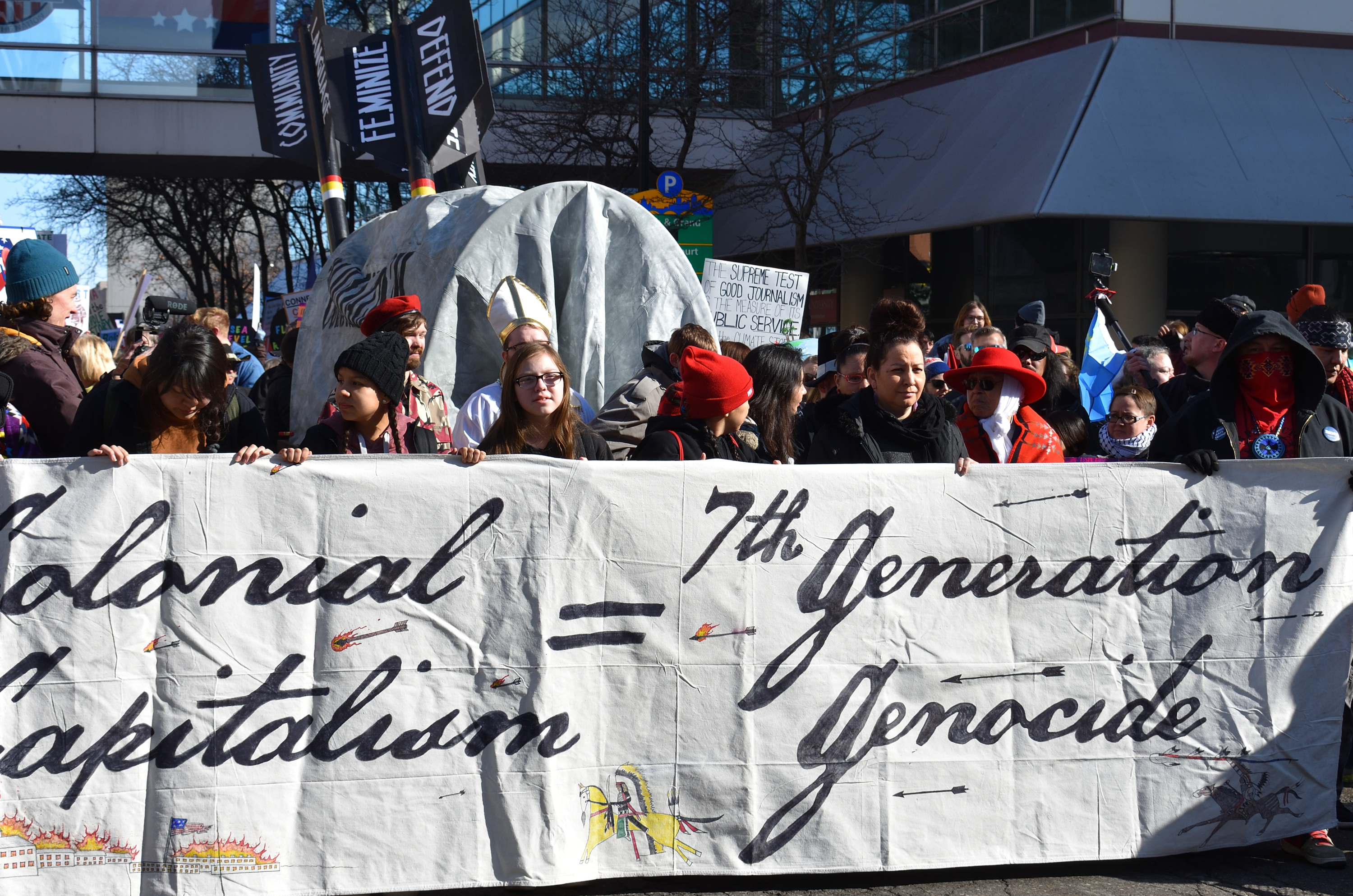
It is taboo to even talk about the theft of land from Indigenous peoples, the epidemic of Missing and Murdered Indigenous relatives, and the horrors of the institutions of forced assimilation of native children.
And just now the widening war in the Middle East. It is taboo to even suggest Israel’s policies of apartheid had anything to do with that.
In our Quaker communities, it is taboo to talk about continued racism, involvement with the Indian boarding schools, the abolition of police and prisons, or allowing conveniences to stop us from confronting our use of fossil fuels. To suggest there is anything wrong with capitalism and hierarchies of power.
The minute you even start talking about any of this stuff seriously? Repeatedly? Urgently? You’re met with the Greatest Wall in Human History. It’s not made of bricks or stone. But of something far stronger. Hegemony and ideology. Power. Conformity and social pressure
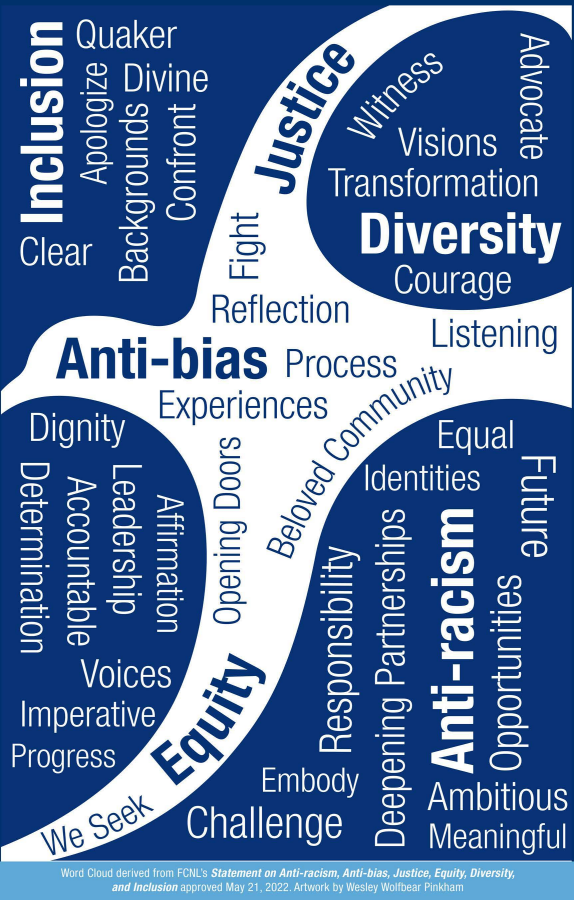
Diversity can refer to many things, such as race, ethnicity, gender, sexuality, class, age, ability, and faith background. Both the state of Iowa and our Quaker meetings in the Midwest have very little racial and other types of diversity. This does not reflect the diversity of the wider society nor the diversity in Quaker history and values.
Reasons why Friends need to confront their lack of diversity now
This is a topic that generates significant emotional reactions for numerous reasons. Perhaps one of the most basic is knowing we are not doing what our ancestors had done, what they would probably be doing if alive today.
If we are converging on history and practice, we are missing the point. If we are depending on institutions to create a new society or usher in the Kingdom, then we are deceived. These will not bring the radically egalitarian and Spirit-filled communities that God fostered among early Friends. These are forms, and Friends must follow the Spirit.
I’ve met others who need a Spirit-led Society. We share this vision, and we share the disappointment of being drowned out in meeting by classism, ageism, and racism. Some of us wonder if Quakerism isn’t all that different from the rest of liberal religion. From what we’ve seen, it isn’t apocalyptic. It isn’t radical. It doesn’t sound like Fox or look like Jesus. It works at incremental transformation while simultaneously shushing those who need the system overthrown.
Hye Sung Francis, Seeking a People
Many of our Quaker meetings are small and growing smaller.
A significant number of Friends are elderly
We are failing to attract new members
Members are leaving their (Quaker) meetings because
Their justice work is not understood or supported
They see the harm done to Black, Indigenous, and other people of color (BIPOC) in their meetings.
They are frustrated by the meeting’s lack of understanding and involvement around their privilege
And the lack of engagement and support for BIPOC communities.
Many meetings fail to engage with justice groups that are doing good work, such as Mutual Aid communities.
Friends need to engage with Indigenous peoples now
For truth and healing related to Friends’ involvement with the institutions of forced assimilation
Most White Friends fail to understand their privileges and the consequences.
There are a range of justice activities by (Quaker) meeting members. Much of that relates to Friends’ long history of opposing war and violence. But because of our lack of diversity, we fail to understand many other significant and often insidious forms of violence, such as sexual, emotional, psychological, spiritual, cultural, verbal, economic, symbolic, and gender-based violence.
Most male Friends are unaware of gender inequality and violence.
Much of what passes for justice work are committee meetings, political letter writing, and financial support of Quaker justice organizations such as the Friends Committee on National Legislation and the American Friends Service Committee. That is not enough.
Lack of connections with Indigenous peoples is a significant problem for Friends today.
Friends are unaware of their ancestors’ settler colonization, including the theft of native lands. Many Friends don’t believe the land they occupy today is stolen land.
Unaware of the ongoing crisis of Missing and Murdered Indigenous Relatives. And how this is tied to the construction of fossil fuel pipelines.
Just becoming aware of Friends’ involvement with the forced assimilation of native children. Of the many forms of abuse and deaths of thousands of children at those institutions.
Friends often don’t have the depth of spiritual awareness of all our relations that we can learn from Indigenous peoples.
Structural violence is embedded in the social and economic systems that produce and maintain inequalities and injustices. It is often invisible or rationalized by the dominant groups that benefit from it.
Symbolic violence is a form of power exerted through cultural and symbolic means rather than direct physical force. It reinforces social hierarchies and inequalities by imposing the norms and values of the dominant group on the subordinate group. It is often unconsciously accepted by both parties and can be expressed through various practices such as language, representation, body language, and self-presentation. The concept was developed by sociologist Pierre Bourdieu.
This is a significant reason why Friends need to support and create Mutual Aid communities which address these very injustices related to symbolic violence.
This makes me more aware that Mutual Aid is an expression of nonviolence.
MLK understood — or would have — that all the following things are forms of violence. People forced to “crowdfund” healthcare — to beg their neighbors for pennies for medicine. A workplace culture where being abused and berated by your boss is totally normal. Incomes not rising for half a century — while costs skyrocket to absurd levels. The average American dying in debt. Being forced to choose between healthcare and your life savings. Having to give up your home because you want to educate your kids.
All these things are forms of violence. Violence runs deep. It isn’t just mobs of fascists smearing feces on the walls — though it is also that. It’s what Americans do to one another as everyday interaction — and shrug off as normal. Mental, emotional, social, cultural violence makes up the very fabric of everyday American life. It’s the poisonous residue of slavery. And it’s profoundly traumatic. It has lacerated the American mind, and made violence a legitimate solution to every social problem. But these forms of all-pervasive violence are what a capitalist society is limited to, because everything is competition, rivalry, and ultimately, domination and subjugation.
Americans Don’t Understand What Violence Really Is by umair haque, Eudaimonia and Co, January 17, 2022
This lack of diversity has numerous consequences
Excluding or marginalizing people who do not fit the dominant norms or expectations of Quaker culture
Limiting the perspectives and experiences that inform Quaker discernment and action
Missing out on the richness and joy of learning from and celebrating differences
Failing to live up to the Quaker testimonies of equality, peace, and justice
For a long time, I had prayed that my Quaker community would engage with communities like my Mutual Aid community, thinking that would be mutually beneficial. But the clashes and the lack of lived experience with diverse communities of many White Friends have changed that. Now, I feel I need to protect my justice communities from the injuries they would experience from White Friends. It’s not that White Friends wouldn’t try to do what they thought would be helpful, but their lack of knowledge of oppression always results in harm.
For years, I’ve envisioned Quakers and oppressed people working together. But we (White Quakers) have to have enough experience in communities outside our meetinghouses to understand what is happening in these communities. To have a valid perspective. Until that happens, Friends will show they cannot be trusted, and we will be unable to cross the divide.
Over the years I’ve built this list of things I’ve learned from my experiences. I hope White Friends who haven’t yet had experiences outside their meetinghouse would keep these things in mind.
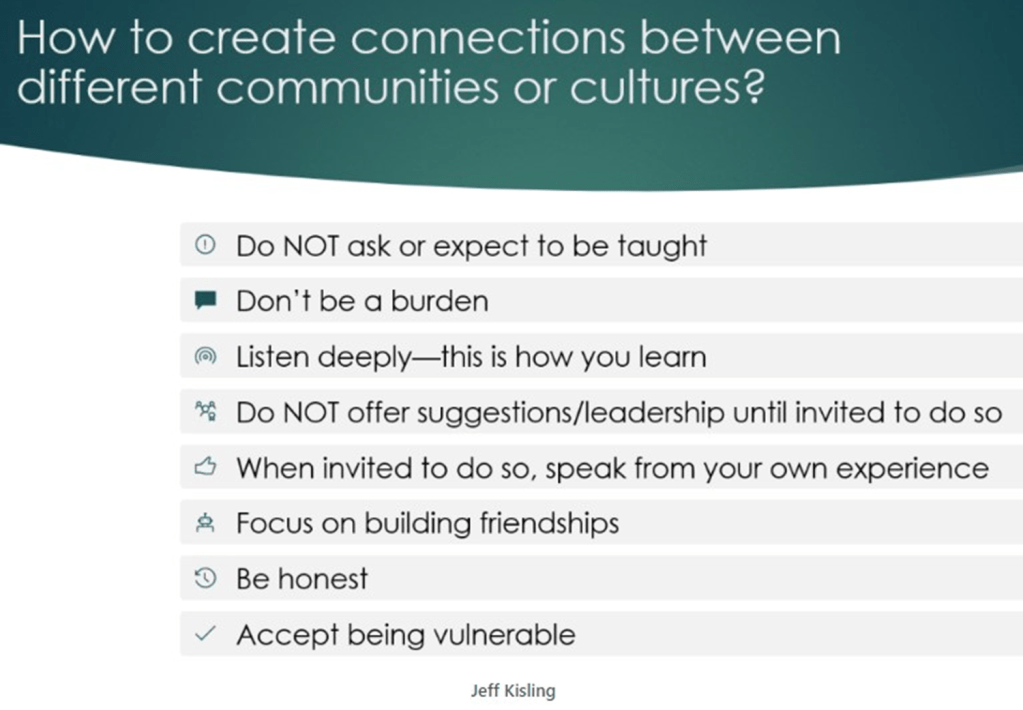
By far the most important is to not offer suggestions until the community trusts you enough to ask you for your input. When you are invited to do so, speak from your own experience. Do not talk about things in the abstract. It’s perfectly fine to say you don’t know the answer to a question. This honesty, this vulnerability is crucial. I like to keep in mind “we don’t know what it is that we don’t know.”
Time
It will take much longer than you expect to see this trust begin to develop. I’d been involved with the Kheprw Institute in Indianapolis for three years before I was asked to teach the kids there about photography.
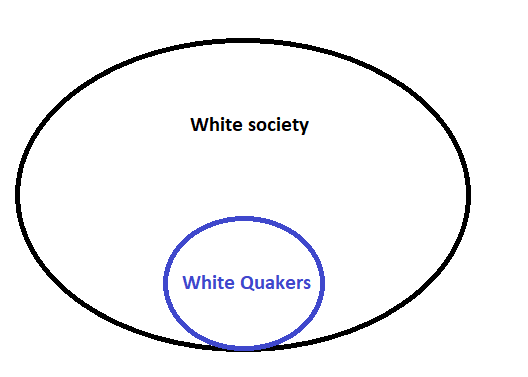
Quakers are pretty white, and that comes with quite a bit of power and privilege. A Quaker in Omaha, Nebraska is going to have probably more weight in what they say to a legislator than a Black Lives Matter activist in Brooklyn, New York. I think there’s a need for Quakers to step out of their meeting and away from a lot of these phenomenal institutions that they’ve created and speak to individuals in an interfaith setting (from Black churches or Black Lives Matter) and have a cross-cultural understanding of what that experience is like because you’ll find that it’s very different, and I think the more we can do of that the more effective we’ll be in addressing these problems. These exchanges and fusion coalitions are what I think it’s going to take, not only for Friends to be effective in dismantling these systems of racism, classism, and white supremacy in American society, but also for all of us to better address these problems in our country.
As I’ve been praying about why the Quaker meetings I’m familiar with are slowly dying from attrition and not attracting new attenders, I’m struggling to understand why this is happening. I feel a special urgency, wondering if my Quaker meeting can continue when we lose even one more member. Lose another elderly member, or one who turns away from Quakerism.
I was led to think about our Advices and Queries because they guide the spiritual discussions in our meetings. And they are one concrete thing we can point to for people interested in learning about Quakerism.
It surprised me to be led to the conclusion that our Queries seem rooted in maintaining the status quo of this country’s current economic and political systems. Systems of dominance, systemic racism, and White supremacy. And an implicit view of ‘us versus them.’ (See: Advices and Queries). Today, I hope to explain that more fully and offer suggestions for what we might do differently.
I’m focusing on the abolition of police and prisons, both because this is something I’ve been learning and writing about (https://quakersandreligioussocialism.com/abolition/) and because it is a deep concern of some activist Quakers I know and of my Mutual Aid community. One of my abolitionist Friends is leaving Quakers because of the lack of attention to this concern. This is an example of the attrition I’m concerned about.
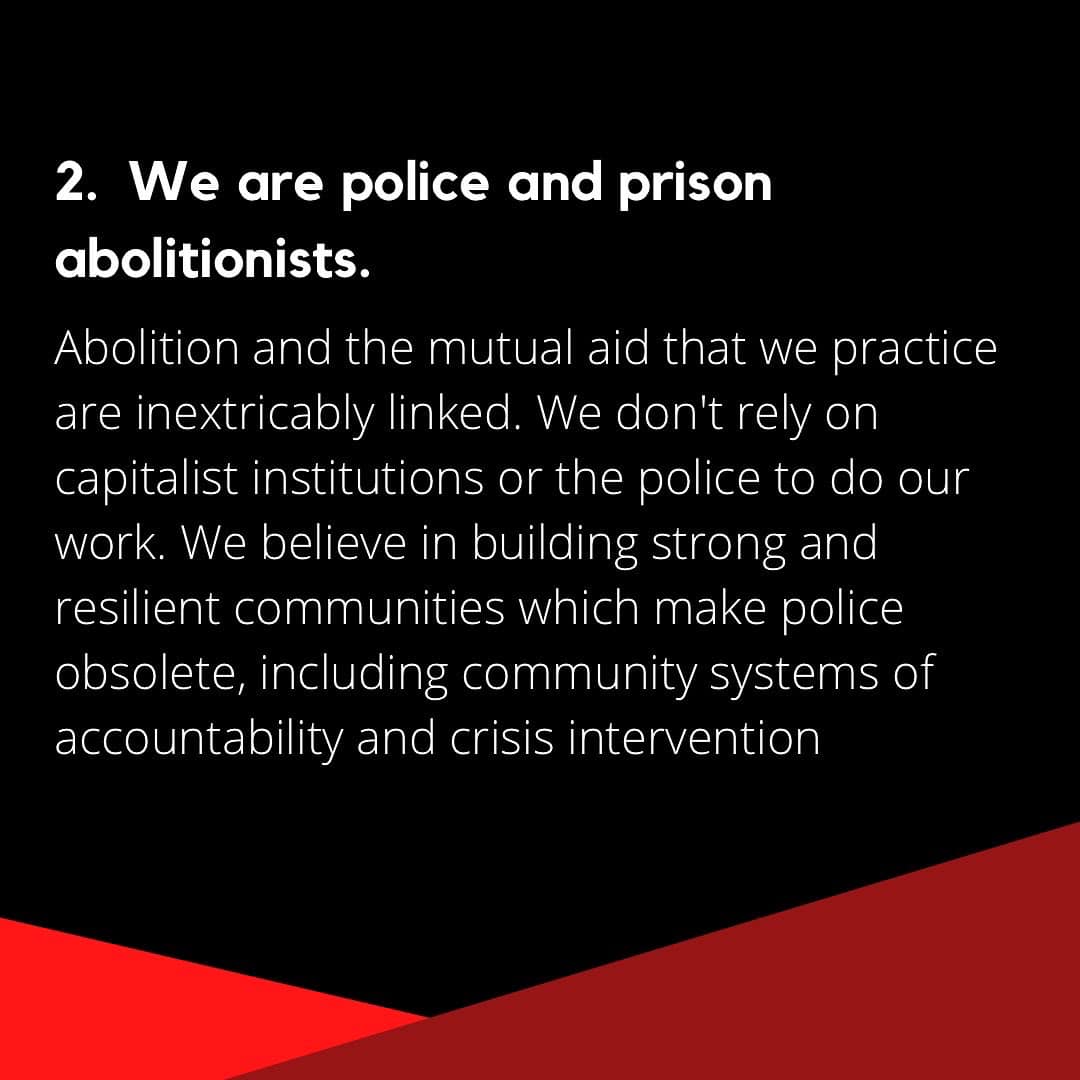
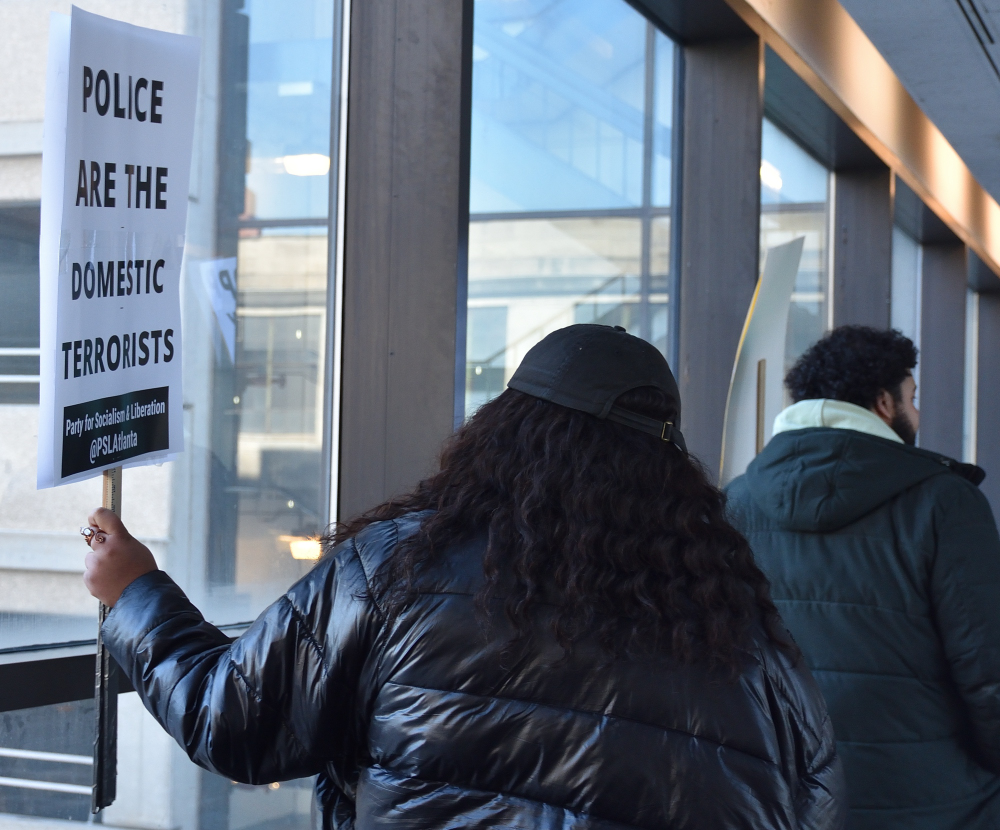
We are police and prison abolitionists. Abolition and the mutual aid that we practice are inextricably linked. We don’t rely on capitalist institutions or the police to do our work. We believe in building strong and resilient communities which make police obsolete, including community systems of accountability and crisis intervention.Des Moines Mutual Aid
What does it mean that abolition is not one of our Query topics?
Meeting for Worship
Outreach
Meeting for Business
Harmony within the Meeting
Mutual Care
Education
Home and Family
Personal Responsibility
Civic Responsibility
Environmental Responsibility
Social and Economic Justice
Peace and Nonviolence
I think that is because abolition touches several of these topics and illustrates why I think we need new queries.
Quakers are pretty white, and that comes with quite a bit of power and privilege. A Quaker in Omaha, Nebraska is going to have probably more weight in what they say to a legislator than a Black Lives Matter activist in Brooklyn, New York. I think there’s a need for Quakers to step out of their meeting and away from a lot of these phenomenal institutions that they’ve created and speak to individuals in an interfaith setting (from Black churches or Black Lives Matter) and have a cross-cultural understanding of what that experience is like because you’ll find that it’s very different, and I think the more we can do of that the more effective we’ll be in addressing these problems. These exchanges and fusion coalitions are what I think it’s going to take, not only for Friends to be effective in dismantling these systems of racism, classism, and white supremacy in American society, but also for all of us to better address these problems in our country.
Perhaps the revolutionary Quaker faith we imagine ourselves to inhabit has never really existed, and if we tell the whole truth and commit to the healing the truth-telling calls us to, perhaps together we can embody and create the prophetic religion we thirst for.
Abolitionist thinking is holistic—that ending the system of punishment and incarcerating control itself is necessary—and invites us to imagine a whole new way of not only dealing with harm but of how we think of ourselves in community. It provokes questions like, what does true justice look like? What does it mean to center healing and transforming relationships and create community safety from authentic accountability and relational reconnection? Abolition does not minimize the reality of harm or violence but rather invites us to consider a way of doing things that interrupts cycles of harm, violence, and trauma, and restores perpetrators and victims into community and their humanity.
We as White Quakers like to think of ourselves as ahead or better than dominant culture, but we have been complicit in a system and mindset that are ubiquitous. Claiming the full truth of our history and committing to repair the harms done are deeply spiritual acts of healing our own wounds of disconnection. I would argue it is the pathway upon which we can, perhaps for the first time, discover and invigorate our faith with its full promise.
Jed Walsh and Mackenzie Barton-Rowledge are close friends who do police and prison abolition work together. They sent Western Friend a conversation about what abolition means to them, and how it fits into their lives as Quakers.
The way I think about abolition is first, rejecting the idea that anyone belongs in prison and that police make us safe. The second, and larger, part of abolition is the process of figuring out how to build a society that doesn’t require police or prisons.
Abolish the Police by Mackenzie Barton-Rowledge and Jed Walsh, Western Friend, Nov 2020
Jeff Kisling: Mutual Aid and Abolition
I grew up in rural Iowa, where there was very little racial diversity and interactions with police and the court system were rare. About ten years ago, I was blessed to become involved with the Kheprw Institute, a Black youth mentoring and empowerment community. I’ll never forget how shocked I was when a Black mother broke down in tears, explaining how terrified she was every minute her children were away from home. It was obvious that every other person of color in the discussion knew exactly what she was saying.
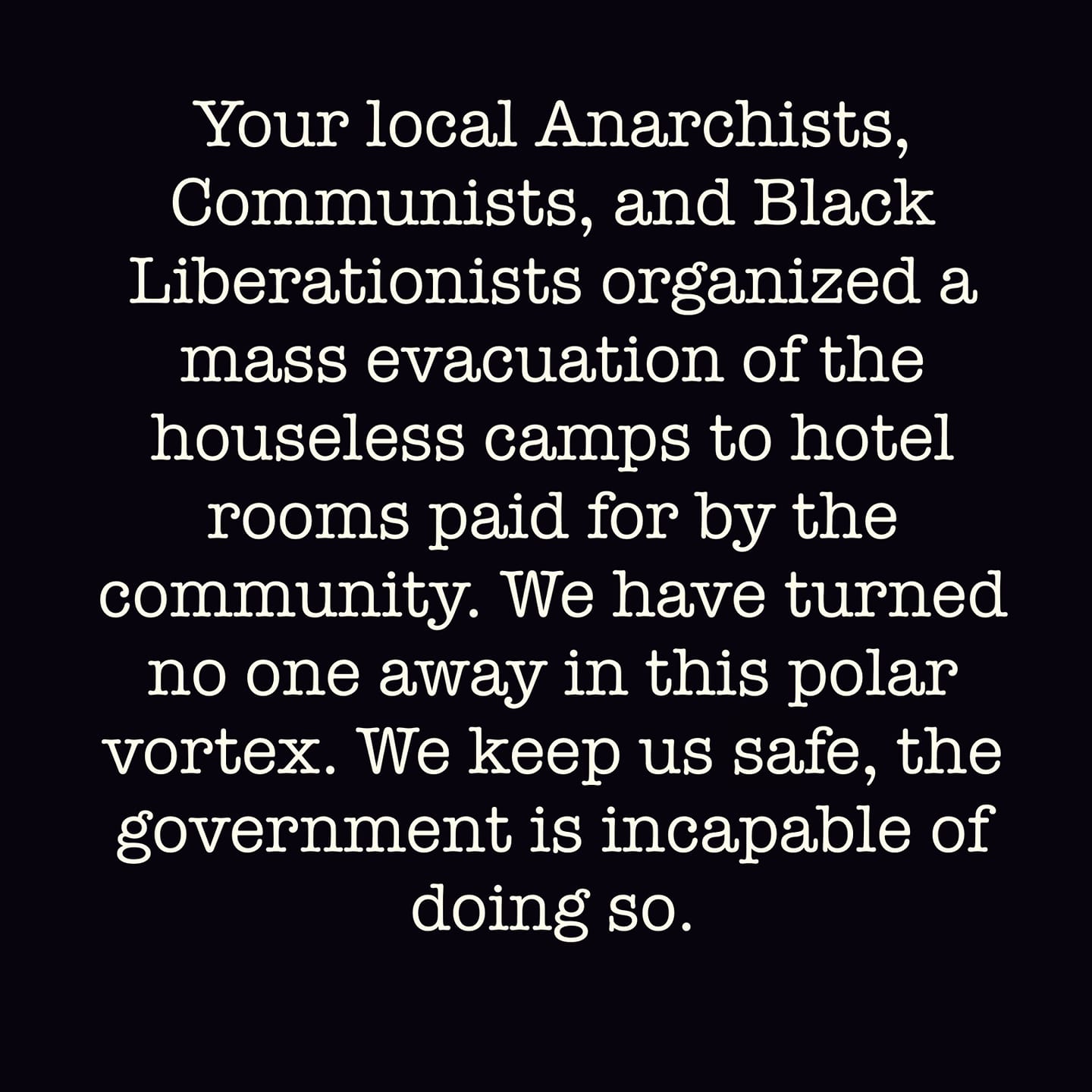
After retiring, I was led to connect with Des Moines Mutual Aid, a multiracial organization founded to support houseless people. For over a year, I’ve helped my friends fill and distribute boxes of donated food, while continuing to learn about the framework of mutual aid.
To me, mutual aid is about taking back control of our communities. Besides the food giveaway, we support houseless people and maintain a bail fund to support those arrested agitating for change. We also work for the abolition of police and prisons.
Mackenzie Barton-Rowledge and Jed Walsh: Introducing the Quakers for Abolition Network, Western Friend, Sept 2021
Some queries about police and prison abolition:
What is your understanding of the term “abolition” and what does it entail? How does it differ from the reform or improvement of the existing system?
What are some historical and contemporary examples of abolitionist movements and practices, such as the abolition of slavery, the anti-apartheid struggle, the prison strike movement, the mutual aid networks, and the community defense initiatives?
What are some of the root causes of violence, harm, and crime in our society, and how do they relate to the structures of white supremacy, capitalism, heteronormative patriarchy, and settler colonialism?
How do the police, courts, and prisons perpetuate and exacerbate violence, harm, and crime rather than prevent or reduce them? How do they disproportionately target and oppress Black, Indigenous, and people of color (BIPOC), poor people, LGBTQIA+ people, immigrants, and other marginalized groups?
What are some of the alternatives to policing and incarceration that can address the needs and rights of survivors, perpetrators, and communities more humanely and effectively? How can we build and support these alternatives in our own contexts and networks?
What are some of the challenges and barriers to achieving abolition, internally (such as fear, doubt, or attachment) and externally (such as resistance, backlash, or co-optation)? How can we overcome or transform them through education, organizing, and action?
Police and Prison Abolition 101: A Syllabus and FAQ 4, a resource by Autostraddle that provides a comprehensive list of readings, podcasts, videos, organizations, and actions related to abolition for different levels of engagement and interest.
Rethinking Incarceration 5, a video by Radcliffe Institute for Advanced Study that features a panel discussion with scholars, activists, artists, and formerly incarcerated people who share their perspectives on abolition and its implications for public safety and liberation.
In yesterday’s post, Queries about our future, I made the mistake of concluding by saying “We need to…” That defeats the purpose of queries, intended to help Quakers discern what they are led to do by listening to the Spirit. “We look for our own truths and the truths of our meeting when we discuss the advices and answer the queries.”
Faith and Practice
Becoming aware of how we discern Spirit is important to our worship. The Quaker faith is not written in the form of a creed, but is experienced in our lives as a vibrant, living truth. Advices and queries serve to engage our minds and hearts in a process which may provide openings to the leadings of the Spirit within us. These leadings may speak to our individual and corporate needs. The advices and queries reflect experiences from many lives as they contribute to the gathered wisdom of the group. They serve to guide us on our spiritual journeys by opening our hearts and minds to the possibility of new directions and insights.
Uses of Advices and Queries
We look for our own truths and the truths of our meeting when we discuss the advices and answer the queries.
We refer to our use of queries as Advice and Queries. The ADVICE provides an introduction or the context for considering the subject. There are twelve query topics.
Meeting for Worship
Outreach
Meeting for Business
Harmony within the Meeting
Mutual Care
Education
Home and Family
Personal Responsibility
Civic Responsibility
Environmental Responsibility
Social and Economic Justice
Peace and Nonviolence
Here is an example of an Advice and the Queries related to social and economic justice.
ADVICE
We are part of an economic system characterized by inequality and exploitation. Such a society is defended and perpetuated by entrenched power.
Friends can help relieve social and economic oppression and injustice by first seeking spiritual guidance in our own lives. We envision a system of social and economic justice that ensures the right of every individual to be loved and cared for; to receive a sound education; to find useful employment; to receive appropriate health care; to secure adequate housing; to obtain redress through the legal system; and to live and die in dignity. Friends maintain historic concern for the fair and humane treatment of persons in penal and mental institutions.
Wide disparities in economic and social conditions exist among groups in our society and among nations of the world. While most of us are able to be responsible for our own economic circumstances, we must not overlook the effects of unequal opportunities among people. Friends’ belief in the Divine within everyone leads us to support institutions which meet human needs and to seek to change institutions which fail to meet human needs. We strengthen community when we work with others to help promote justice for all.
QUERIES
How are we beneficiaries of inequity and exploitation? How are we victims of inequity and exploitation? In what ways can we address these problems? What can we do to improve the conditions in our correctional institutions and to address the mental and social problems of those confined there?
How can we improve our understanding of those who are driven to violence by subjection to racial, economic or political injustice?
In what ways do we oppose prejudice and injustice based on gender, sexual orientation, class, race, age, and physical, mental and emotional conditions?How would individuals benefit from a society that values everyone? How would society benefit?
I think my Quaker community is going to be upset by the following. But as I look at these Queries and Advices after years of working in diverse communities, they seem rooted in maintaining the status quo of this country’s current economic and political systems. Systems of dominance, systemic racism, and White supremacy. I see an implicit view of ‘us versus them.’
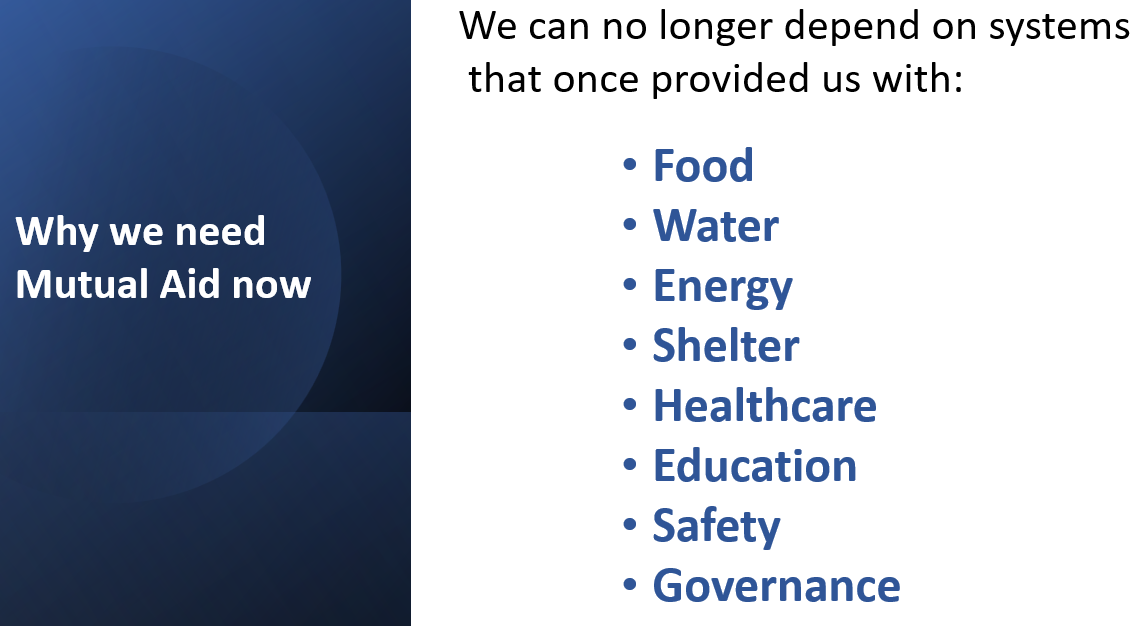
I became so invested in Mutual Aid because our work is about alternatives to those systems of injustice. Mutual Aid is faith in action. Mutual Aid is about meeting survival needs NOW.
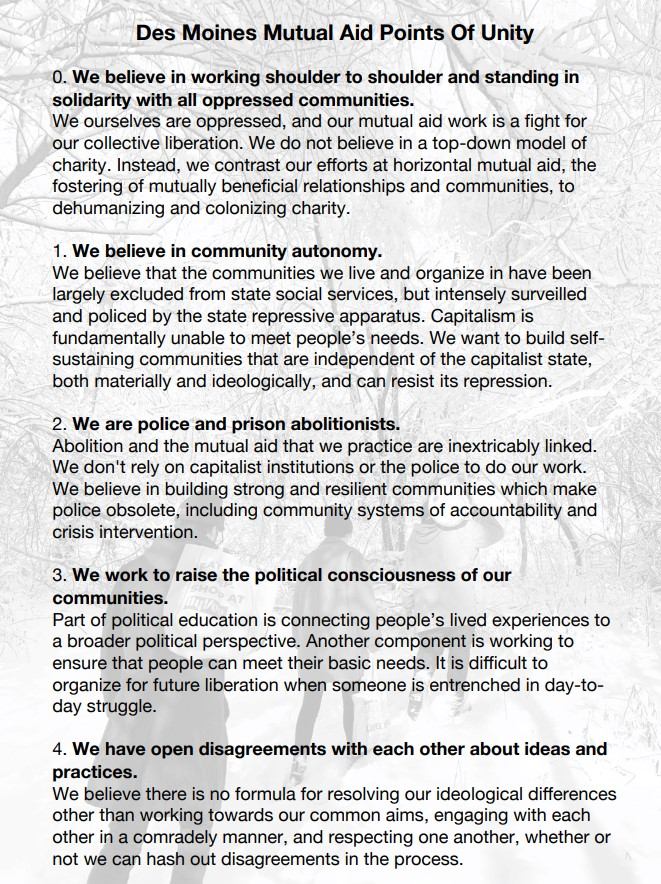
Our Advices and Queries are updated every so often. I’m led to believe now is the time to rewrite them. The Mutual Aid Points of Unity are a template for what our Advices might say. And then we can work on queries in the context of those new Advices.
Mutual Aid Points of Unity
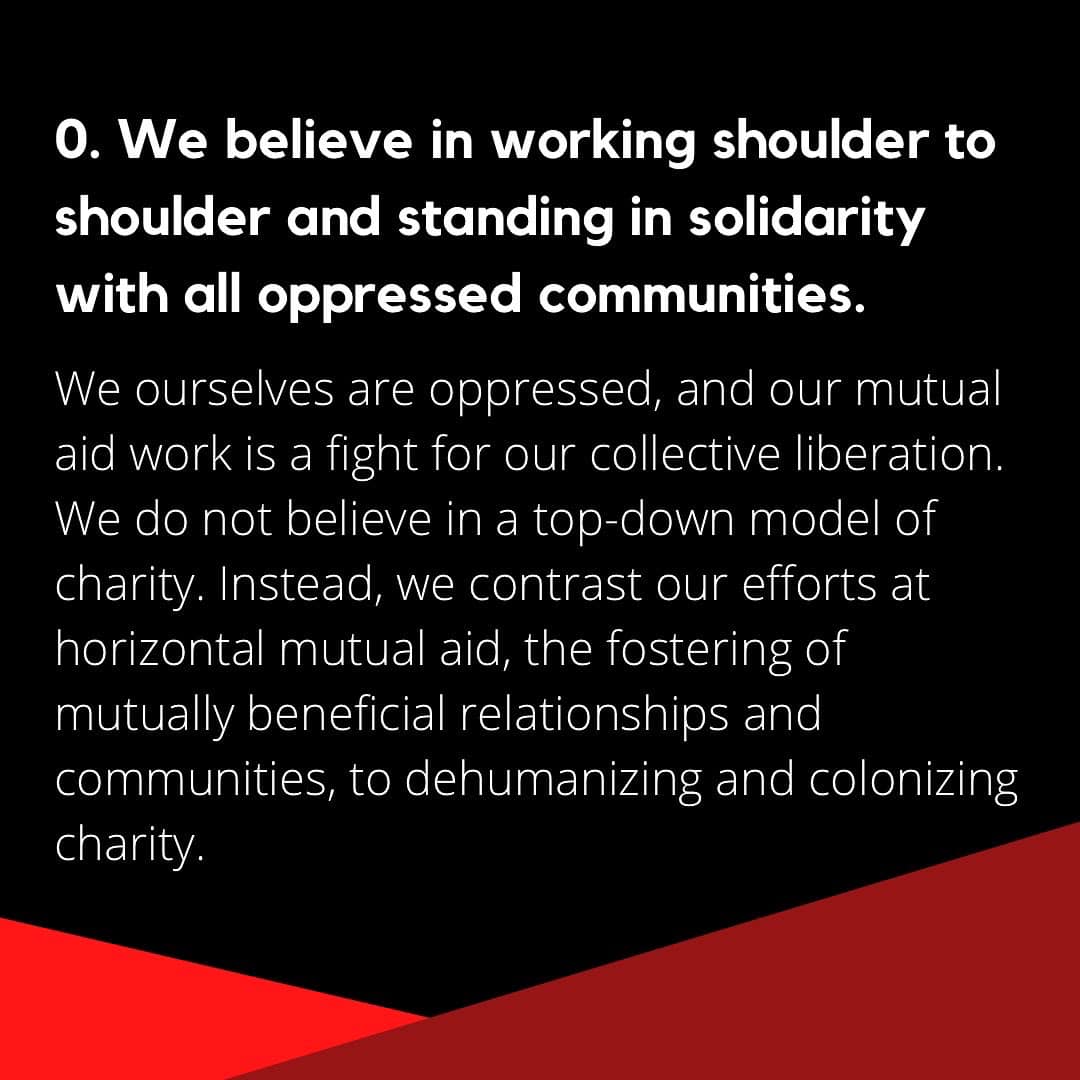
We believe in working shoulder to shoulder and standing in solidarity with all oppressed communities.
We ourselves are oppressed, and our mutual aid work is a fight for our collective liberation. We do not believe in a top-down model of charity. Instead, we contrast our efforts at horizontal mutual aid, the fostering of mutually beneficial relationships and communities, to dehumanizing and colonizing charity.
We believe in community autonomy.
We believe that the communities we live and organize in have been largely excluded from state social services, but intensely surveilled and policed by the state repressive apparatus. Capitalism is fundamentally unable to meet people’s needs. We want to build self-sustaining communities that are independent of the capitalist state, both materially and ideologically, and can resist its repression.
We are police and prison abolitionists.
Abolition and the mutual aid that we practice are inextricably linked. We don’t rely on capitalist institutions or the police to do our work. We believe in building strong and resilient communities which make police obsolete, including community systems of accountability and crisis intervention.
We work to raise the political consciousness of our communities.
Part of political education is connecting people’s lived experiences to a broader political perspective. Another component is working to ensure that people can meet their basic needs. It is difficult to organize for future liberation when someone is entrenched in day-to-day struggle.
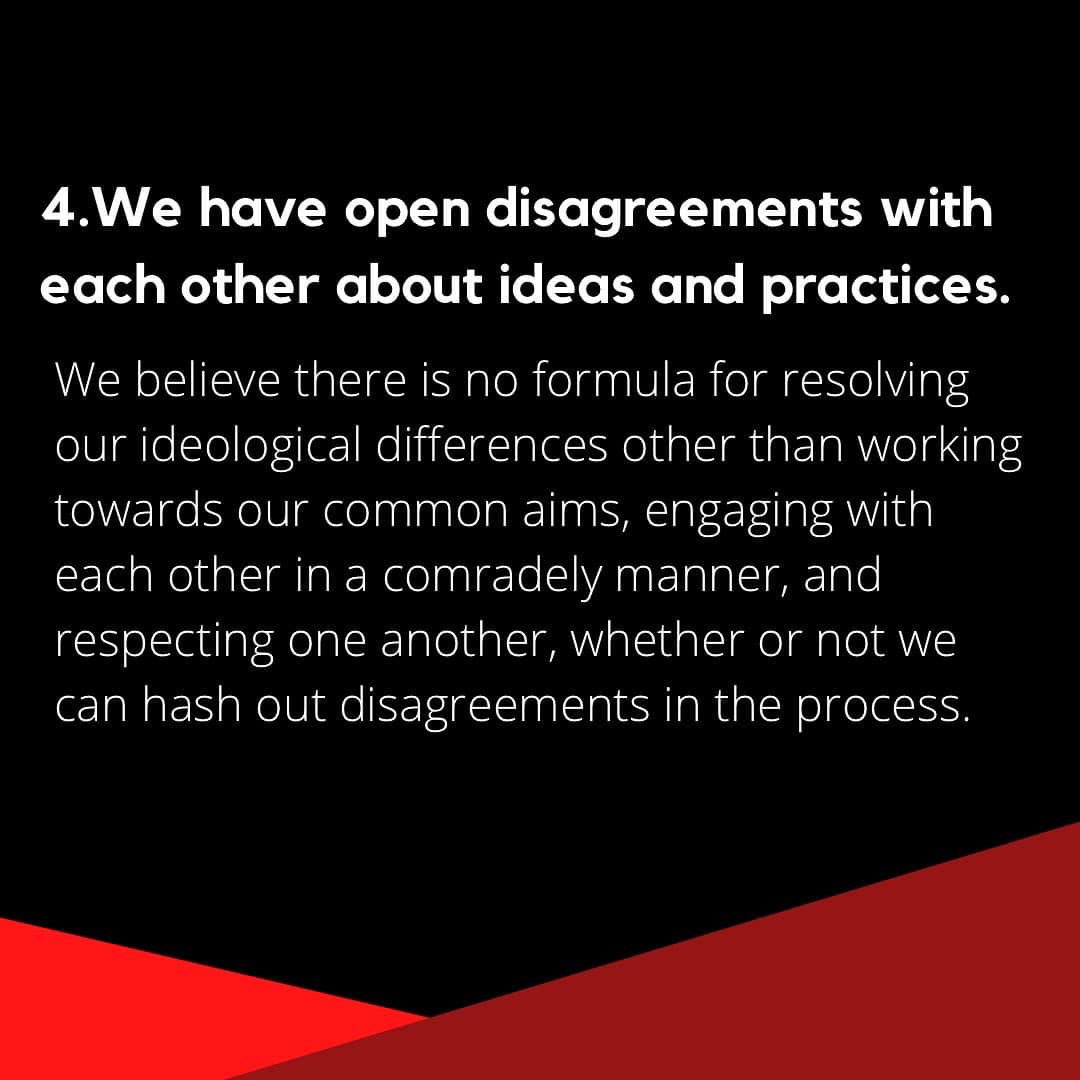
We have open disagreements with each other about ideas and practices.
We believe there is no formula for resolving our ideological differences other than working towards our common aims, engaging with each other in a comradely manner, and respecting one another whether or not we can hash out disagreements in the process.
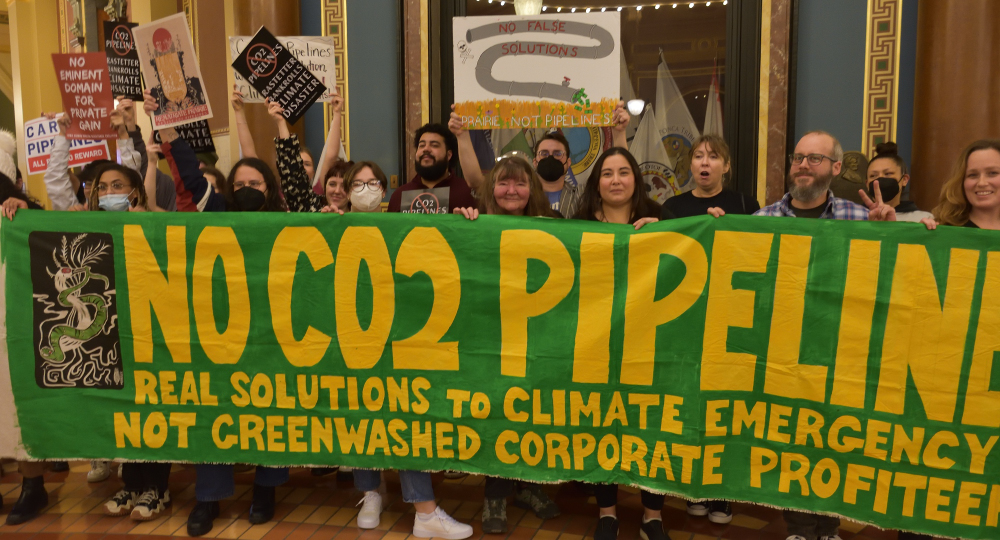
The approval for the construction of the Mountain Valley Pipeline (MVP) remained in the debt ceiling legislative just passed by the US Congress. This is an egregious act on many levels.
The Mountain Valley Pipeline (MVP) is a project proposed in 2014 that would transport fracked gas from West Virginia to southern Virginia through a 300-mile pipeline. The project has sparked widespread opposition for years from environmentalists, civil rights activists, and local residents who are concerned about its impacts on water quality, wildlife, climate change, and Indigenous and property rights.
The MVP was approved by Congress as part of the debt ceiling deal that was just passed. The deal included a provision that declared the MVP as “required in the national interest” and ordered the federal agencies to issue the necessary permits within 21 days and shield the project from legal challenges. The provision also weakened the National Environmental Policy Act (NEPA), a law that requires environmental reviews for major federal actions that affect the environment.
Many of us have criticized the deal that undermines:
the rule of law
public participation
Indigenous approval
and environmental justice
The MVP contradicts President Biden’s pledge to combat the climate crisis and transition to clean energy..
I recently wrote “What should be non-negotiable” to try to explain, yet again, why we can not allow continued construction of fossil fuel infrastructure, from pipelines to carbon capture to gas stations.
I know what it’s like to work year after year, fighting to protect Mother Earth from fossil fuels. I was going to say that for me this began in 2013 when I was trained as an Action Lead in the Keystone Pledge of Resistance. But it began much earlier when I was led to live without a car when I moved to Indianapolis in 1970. My love for nature actually began from growing up on farms and camping trips to national parks.
Of course, Indigenous peoples have worked to protect Mother Earth for centuries.
It’s not easy to maintain years-long resistance to a cause. That is one reason why approval of MVP is devastating. It is difficult to find people who are willing to work for justice causes. Difficult to organize and get people to commit to various actions. To get people to move outside their comfort zone. To face all kinds of opposition, time and time again. And all too often the cause is defeated. The pipelines and other infrastructure continue to be built. Mother Earth takes another hit.
Such is the case with the Mountain Valley Pipeline. Its approval hurts not only those who worked so hard against MVP, but everyone working on any environmental cause. It shows yet again the Federal administration and Congress do not understand the gravity of our evolving environmental devastation.
It also shows, again, that environmental solutions will not come from the dominant political culture in this country. Which is why I am so grateful to have been led to my Mutual Aid community. We work locally, within the community, to address basic needs. Instead of talking and having committee meetings, we come together to help our neighbors with food and shelter.
And we strive to advance Indigenous leadership. Indigenous ways can help clean our waters and move toward living sustainably. Help us heal our relationships with Mother Earth and all our relations.
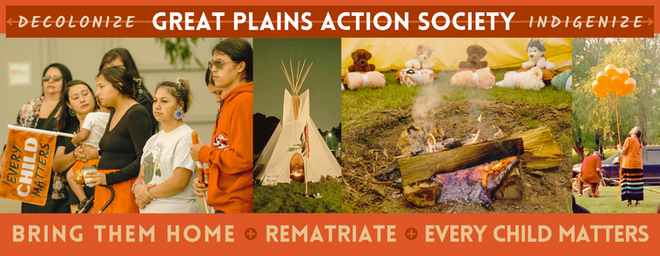
The circle is completed when Indigenous peoples support Mutual Aid, as Des Moines Mutual Aid is supported by the Great Plains Action Society (GPAS). Mutual Aid is one of the methods in the GPAS’s mechanism of engagement.
Take drastic environmental measures to reduce greenhouse gas emissions, or
Stay on the present course of continuing to view fossil fuels as resources for profit. To continue to make incremental changes that can never be enough.
This morning is particularly devastating for me because of the bartering for approval of the Mountain Valley Pipeline (MVP) in exchange for support of the legislation around the debt ceiling.
The Biden administration says MVP is an important part of U.S. energy security.
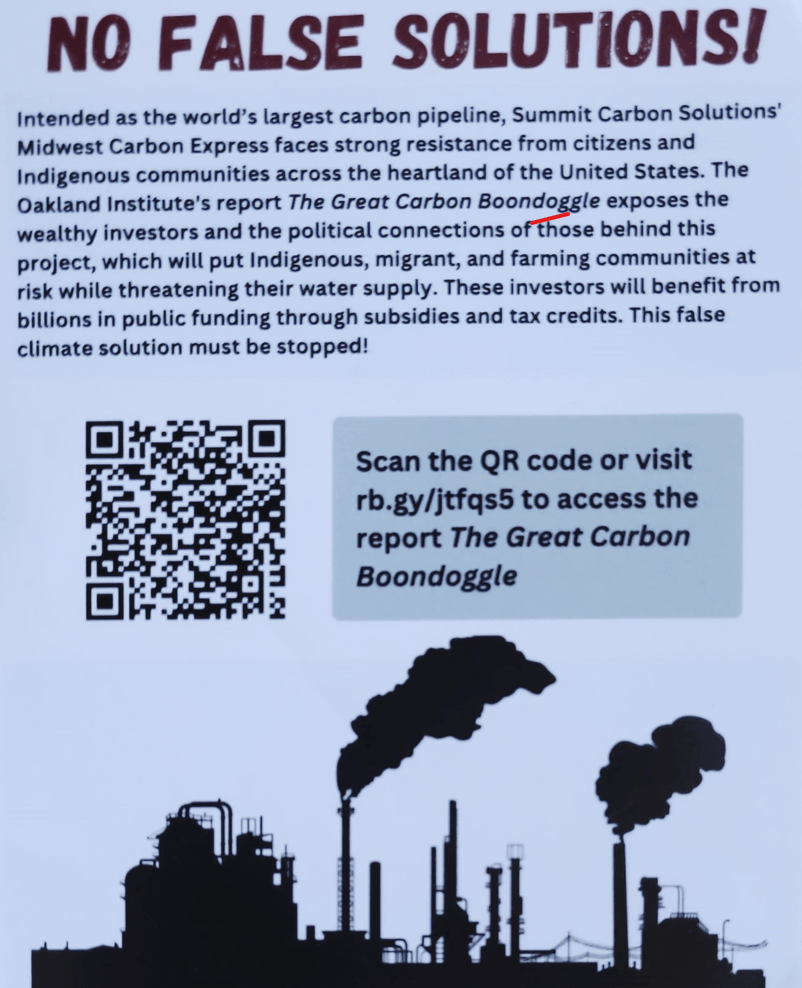
I know the pieces of the legislation that will be included in the final version are in flux. But whether approval of the MVP is part of that, the point is the continuing willingness of politicians and their backers to exploit any natural resources that will generate profits for them. The current administration was elected on promises to protect our environment. You can point out the rejection of the Keystone XL pipeline as an environmental win, one close to my heart. But oil leases in the Gulf, drilling in Alaska, and support of the carbon capture and storage boondoggle are just of few of the environmental harms the administration supports. (See: https://quakersandreligioussocialism.com/?s=boondoggle )
Also extremely troubling is the obliteration of oversight from Federal and State agencies, or the courts!
We can only hope and pray this particular language is not included in the final legislation. That seems highly unlikely because of the vote needed from Sen. Manchin to support the debt ceiling bill.
What should be non-negotiable are any infrastructure construction, plans, laws, or regulations that harm Mother Earth.
A friend recently put it this way: The capitalist system is incapable of addressing environmental devastation.
Another important reason to embrace mutual aid.
The legislation would direct key agencies to issue all necessary permits and mandate that “no court shall have jurisdiction to review any action taken” that grants an approval necessary for the construction and initial operation of the embattled pipeline.
Last month, Energy Secretary Jennifer Granholm signaled the Biden administration’s support for the pipeline when she wrote a letter to the Federal Energy Regulatory Commission, saying the “MVP project will enhance the Nation’s critical infrastructure for energy and national security.” The letter triggered backlash from some Democrats.
The debt ceiling legislation would direct key agencies to issue all necessary permits and mandate that “no court shall have jurisdiction to review any action taken” that grants an approval necessary for the construction and initial operation of the embattled pipeline. A federal water permit from the Army Corps of Engineers is still needed by the project, for example, and would need to be issued within 21 days after the bill’s enactment.
If the bill is signed into law, the pipeline would no longer need a new water certification from the West Virginia Department of Environmental Protection to complete its federal approvals and restart construction, according to a congressional aide familiar with the legislation. The 4th Circuit vacated that certification at the beginning of April, prompting opponents of the project to urge investors to walk away from the 42-inch diameter pipeline.
The debt ceiling bill text states that “Congress hereby finds and declares that the timely completion of construction and operation of the Mountain Valley Pipeline is required in the national interest.”
The text of the debt ceiling bill released on Sunday would approve all the remaining permits to complete the stalled Mountain Valley Pipeline, delivering a big win for West Virginia Sens. Joe Manchin and Shelley Moore Capito.
But the backing of the pipeline that would deliver gas from West Virginia into the Southeast is sure to set off bitter complaints from the environmental groups that have fought its construction for years and turned the project into a symbol of their struggle against fossil fuels.
The project has won support from the White House, which argues the controversial project is needed for U.S. energy security. Its approval comes after the approval of the Willow oil project in Alaska, which activists have said undercuts the Biden administration’s climate promises.
Debt ceiling deal includes surprise approval of natural gas pipeline championed by Manchin. The controversial natural gas project has been a priority for West Virginia, but its approval will bring new criticism for the Biden administration by Josh Siegel, Politico, May 28, 2023
‘Cowardice’ vs. ‘compromise’
While the section on Mountain Valley was welcomed by West Virginia Sens. Joe Manchin (D) and Shelley Moore Capito (R), it wasn’t acceptable to Sen. Tim Kaine (D-Va.).
Kaine is “extremely disappointed by the provision of the bill to greenlight the controversial Mountain Valley Pipeline in Virginia, bypassing the normal judicial and administrative review process every other energy project has to go through,” said Janine Kritschgau, a Kaine spokesperson, in an emailed statement Monday.
The senator plans to file an amendment to remove the provision related to Mountain Valley, the Kaine spokesperson added.
During his campaign, Biden promised he would be “banning new oil and gas permitting on public lands and waters,” NPR writes. However, this has not come to fruition during his presidency.
Despite the implications for climate change, the Gulf of Mexico auction was actually a stipulation of the 2022 Inflation Reduction Act (IRA) that arose as a compromise between Sen. Joe Manchin (D-W.Va.) and other Senate Democrats. The auction, called Lease Sale 259, was to be held “no later than March 30, 2023,” and put up for sale an Italy-sized area for the purpose of oil drilling. Manchin’s IRA requirements also called for the sale of land in the Cook Inlet of Alaska, according to CNN. That lease is likely to begin in September 2023.
Are you part of the mainstream, or on the margins?
Reference is often made to marginalized groups or peoples. My friend Jed Walsh recently wrote, “I’m tired of being in the margins of a Quakerism that’s clinging to the status quo, and hoping to find other places to practice faith and spirituality where I can feel more aligned with others.“
I hadn’t thought of myself in terms of being on the margins until I read that. Quakers are usually on the margins of society, almost by default. But Jed brought into focus that he and I are on the margins of Quakerism today.
The Mainstream and Margins exercise below might be helpful for those in the mainstream to learn about those of us on the margins and what our concerns are.
Thus mainstream/margin invites curiosity and flexibility, asking the question what is going on in this group now. Organizers then make thoughtful choices about when a mainstream needs assistance in recognizing and re-negotiating its relationship with one of its margins.
One of the great things about Mutual Aid is the intense focus on preventing hierarchies, with the intent to prevent anyone from being marginalized.
The following describes the Mainstream and Margins exercise.
The goals of the exercise are:
To assist participants to identify with both marginal and mainstream roles that they play in society.
To boost awareness of the oppressive characteristics of the mainstream role.
To gain hope through identifying how they can support social change while in a mainstream role.
To practice the skills of an ally.
Activist and nonviolence trainer Daniel Hunter has come up with a helpful exercise called Mainstream and Margins. This is great for activist groups because it doesn’t rely on jargon or overly complicated theories, so it can be used in groups with a diversity of viewpoints or education levels. It also overcomes the mistake of presenting relatively static identity characteristics like age, gender, or religion as though they automatically explain group dynamics. Note, though, that the exercise is challenging and so is best done with a skilled facilitator.
No matter how homogeneous a group or an organization believes itself to be, a careful look shows that some characteristics are marginalized. A group known for vigorous and noisy debates has some quiet members. An organization which believes itself to be bureaucratically efficient has a couple of members who would love to cut corners. A solemn and highly disciplined group includes a few who, out of sight, love to party. The mainstream of a group sets the tone, sets the communication style, and gets to have its own preferences accepted by the margins. Awareness of this dynamic creates choice points for organizers and facilitators who may or may not cooperate with the system. …
Rather than viewing oppression as static (i.e. this group is always oppressed), organizers and activists can be aware of the complexities of this unique group. E.g. while society oppresses women in the larger society, an activist group might have a mainstream of women who unintentionally marginalize non-women in the group. …
Thus mainstream/margin invites curiosity and flexibility, asking the question what is going on in this group now. Organizers then make thoughtful choices about when a mainstream needs assistance in recognizing and re-negotiating its relationship with one of its margins. The mainstream is not about numbers—but it is about who has their interest recognized. So, for example, even in a group where most of the group has chronic medical conditions, the norm might be: we don’t acknowledge our conditions. …
Instead of making value judgments about how oblivious the mainstream is, accept it as one accepts the law of gravity. Then go ahead and assist the margins to express themselves and assist the mainstream to hear them.
Instead of a checklist of diversity items to look for—e.g. race, class, gender, sexual orientation—you can look freshly at each group to see how is mainstream behavior playing out.
The exercise, then, is about what is normal and accepted within a group and what is marginalized. All groups will marginalize behaviours and ideas, and that can be beneficial (e.g. respect is mainstream, screaming at each other is marginalized) so long as it’s done with enough communication and space given to know what the margins are and to hear from them. For conversations about the mainstream and margins to go well, groups need to create conditions of enough safety and trust that people feel able and ready to speak up.
We invented this in response to trainers asking us: what do you do with a group that is genuinely clueless about its racism (sexism/homophobia/etc.)? We found it works with low-consciousness groups and has tremendous value for experienced activist groups, too.
Writing these blog posts can be difficult. It can be hard to discern what to write. To listen to the silence is a spiritual practice. And I most often write about spiritual matters, which are difficult to put into words.
Then publish what is written on the Internet for anyone in the world to read. That was intimidating at first. But after a while, you find you don’t usually get much response, positive or negative.
Perhaps the most difficult is writing things likely to upset or hurt people you care about. But I try to discern/speak/write the truth as I understand it to the best of my ability.
Religious and faith groups that have existed for a long time have often done things and/or held beliefs that resulted in injustice. For example, there is the doctrine of a “just war.” Of the Christian Crusades. Or the Doctrine of Discovery (1452) that specifically sanctioned and promoted the conquest, colonization, and exploitation of non-Christian territories and peoples.
These and many other injustices occurred because White Christians had significant political influence. And were involved in the theft of land from and subjugation of many Indigenous peoples. These injustices persist because White supremacy and oppression continue.
It is common to be most critical of those we look to be examples of our beliefs. I was raised in Quaker communities, where there is great emphasis on living our lives consistent with our beliefs. I’ve been led to see most White Quakers are failing to achieve that.
One way Quakers work for justice is to refuse to participate in organizations that are involved in unjust work. That sometimes involves boycotting products or services from such companies. Or refusing to invest in or work for such organizations.
It is much more difficult to divorce oneself from systems of injustice we live in. For example, it is difficult to live without a car in today’s sprawling cities and towns, or in rural areas. These assaults on Mother Earth are environmental injustice. I refused to have a car because of this. That began in 1970. Yet, in all the time since, I was unable to convince other Quakers to give up their cars. This was a source of ongoing tension with Quakers. It is haunting to know that if our society had embraced mass transit systems instead of the car culture, we would not be dealing with environmental devastation that will only worsen, probably to the point of extinction.
For over three years I’ve been part of a Mutual Aid community, where I’ve been learning more about these injustices, and an alternative to White supremacy and capitalism. I’ve been sharing what I’ve been learning with my Quaker communities, but similar to the car situation, I’m making little progress in convincing Quakers to embrace Mutual Aid. (See: Quakers and Mutual Aid)
Spending time in marginalized communities has given me different perspectives on White supremacy, colonialism, and capitalism. I am now struggling because these new perspectives convince me those systems of oppression must be abolished.
When working for change, the choices are:
Incremental changes to existing systems, or
Replacing unjust systems
Incremental changes to unjust systems perpetuate the injustices.
But replacing unjust systems takes time. The concept of Dual Power refers to transitioning from an unjust system to a just one. My Mutual Aid community is building just alternatives to capitalism.
I just wrote Social and Economic Justice which was critical of Quakers today. “The capitalist economic system only works if you have money. It’s so frustrating to me that I can’t make my White friends, Quaker friends see how incredibly unjust this is. They don’t see a problem with capitalism because they have a source of income.”
I call capitalism Economic Slavery.
As mentioned, Quakers have a practice of refusing to be associated with unjust organizations and systems. So what do I do when Quakers are part of the unjust systems of capitalism and White supremacy?
Spending time in marginalized communities shows me the depth of the consequences of White supremacy and capitalism. Seeing the families coming to our Mutual Aid food giveaway is heartbreaking. Making me viscerally aware of the failure of capitalism and the need for Mutual Aid.
My friend Jed Walsh recently shared this with me:
For me, there’s a lot of grief around thinking about moving away from Quakerism, as Quakers have really significantly shaped the person I try to be and the ways I want to be part of social movements. But my fear/pessimism right now has been telling me for some time that Quakers as a whole can’t let go of our collective attachments to white supremacy and capitalism. I’m tired of being in the margins of a Quakerism that’s clinging to the status quo, and hoping to find other places to practice faith and spirituality where I can feel more aligned with others.
Jed Walsh
I, too, am tired of being in the margins of a Quakerism that’s clinging to the status quo. I’m exhausted from fifty years of work against environmental devastation, which included Quakers and their cars.
From my years in oppressed communities, I understand how people in these communities view White people. I know they see no distinction between White Quakers and other White people. I feel the unspoken questions of my Mutual Aid friends. Wondering, now that I’ve seen the injustices of capitalism and White supremacy, am I going to do anything more than help give away food? Because Mutual Aid is about abolishing unjust systems and replacing them by building Beloved communities.
I have talked with some Mutual Aid friends about Quakers and spirituality. I plan to continue to look for opportunities to explore spirituality with them.
There is an urgency to make changes now because White supremacy and capitalism continue their oppression today.
I am in a spiritual dual power mode (defined above), remaining with Friends until I might be led to a different spiritual community. I hope, instead, Quakers might seek how we can replace systems of capitalism and White superiority.
I used to call myself a Quaker. I never joined a meeting, and honestly, I had suspicions from the beginning that it just wasn’t going to work. But I was desperate for people, and I really wanted the Quakerism I’d read about.
I couldn’t find it, though, and now I’m not sure it exists.
In the meantime, I’ve been talking, and writing, and a number of Friends say my critical observations about Quaker institutions and culture are illegitimate, either because of my lack of membership or because of my newness. I don’t have a right to point out classism and white supremacy, they say.
It’s been hard finding my place and voice in the Religious Society of Friends. And honestly, I’ve given up. I don’t see the point.
When I read what early Friends wrote, I’m drawn to their vision. Friends lived out of step with the world. Their yielding to Christ demanded deep listening, joy in suffering for the truth, abandonment to the movement of Love. They declared the end of days and rejected the idolatry of nationalism. They were living into a new Society of Friends.
George Fox wrote about the Kingdom of God breaking into this world – and it came from within – this was the gospel I knew, the gospel I needed. Quakers were holy fools, apocalyptic evangelists, soldiers of prophecy. They were about liberation and creating the age-to-come. That was the Spirit I knew. This was the church I longed for.
Then I found Quakers. They weren’t exactly what I’d read about, and it was kind of confusing. But I decided to stick around for a while. After all, maybe God could use existing Quaker institutions to renew the Society of Friends. I believed and hoped that some of these institutions might lead Friends of all branches into convergence, and then that the Spirit might dissolve our dependence on institutions. I thought that as we yielded to the Spirit, she would return us to that apostolic and anarchic ecclesiology of early Friends.
What I’ve found, instead, is that Friends have converged on a shared history and a handful of practices.
But if the Society of Friends is to ever again carry the anointing of early Quakers, if it is to ever embody the vision of Margaret Fell, going “hand in hand in the unity and fellowship of this eternal Spirit,” it must do more than embrace a convoluted historical connection and some shared practices.
If we are converging on history and practice, we are missing the point. If we are depending on institutions to create a new society or usher in the Kingdom, then we are deceived. These will not bring the radically egalitarian and Spirit-filled communities that God fostered among early Friends. These are forms, and Friends must follow the Spirit.
I’ve met others who need a Spirit-led Society. We share this vision, and we share the disappointment of being drowned out in meeting by classism, ageism, and racism. Some of us wonder if Quakerism isn’t all that different from the rest of liberal religion. From what we’ve seen, it isn’t apocalyptic. It isn’t radical. It doesn’t sound like Fox or look like Jesus. It works at incremental transformation while simultaneously shushing those who need the system overthrown.
I’ve moved on.
But even as I’ve stopped attending meeting – even as institutional Quakerism has, for the most part, become irrelevant to me – I cannot deny that I am a Friend. Quaker conceptions of Christ’s gospel have led me closer to Jesus and it’s integral to what I believe and how I live. At the end of the day, though, if tables aren’t being turned, if people aren’t being healed and set free, if the prophets aren’t marching naked, I’ll have to follow Jesus elsewhere.
I hear early Friend Sarah Blackborow’s words ringing in my heart: “Christ is trying to make a dwelling place within you but he is left rejected and homeless.”
Jesus is still seeking his people, people who see the Spirit of God in the suffering and offer refuge. I’m seeking those people, too.


























 Quakers and Mutual Aid