Mutual Aid and money

The role money plays in Mutual Aid is what I had the most questions about, and the question most often asked of me when I talk about Mutual Aid.

The Mutual Aid project I’m involved with is the free food distribution, which has been in place pretty much continuously since the Black Panthers in Des Moines organized the Free Breakfast for School Children program. It was when this program looked like it might have to close several years ago that Des Moines Mutual Aid to over the program.

The first Survival Program was the Free Breakfast for Children Program, which began in January 1969 at one small Catholic church in the Fillmore district of San Francisco, and spread to many cities in America where there were Party chapters. Thousands of poor and hungry children were fed free breakfasts every day by the Party under this program. The Program became so popular that by the end of the year, the original Black Panther Party set up kitchens in cities across the nation, feeding over 10,000 children every day before they went to school.

Bobby Seale
All Power To All The People!
http://bobbyseale.com/
#blackpantherparty#blackpanthers#bobbyseale#blackhistory


Food from local farms, and dated food from local grocery stores is the source of our food to distribute to the community.


What Is Mutual Aid?

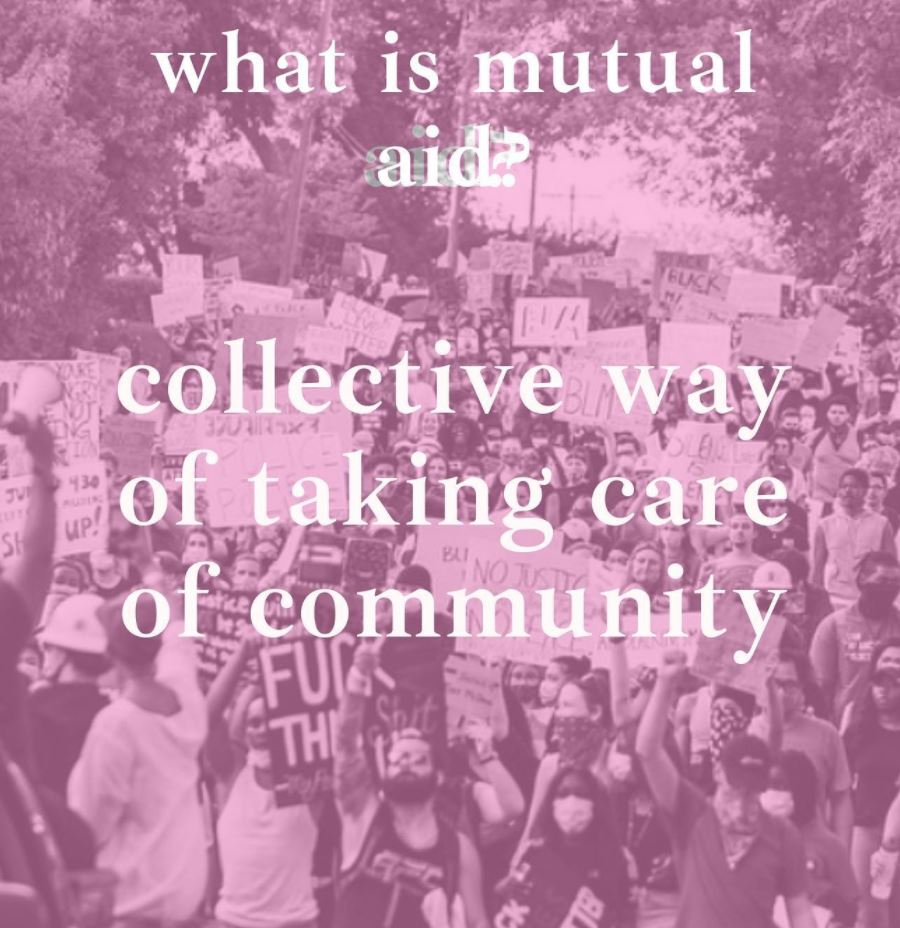
Mutual aid is collective coordination to meet each other’s needs, usually from an awareness that the systems we have in place are not going to meet them. Those systems, in fact, have often created the crisis, or are making things worse. We see examples of mutual aid in every single social movement, whether it’s people raising money for workers on strike, setting up a ride-sharing system during the Montgomery Bus Boycott, putting drinking water in the desert for migrants crossing the border, training each other in emergency medicine because ambulance response time in poor neighborhoods is too slow, raising money to pay for abortions for those who can’t afford them, or coordinating letter-writing to prisoners. These are mutual aid projects. They directly meet people’s survival needs, and are based on a shared understanding that the conditions in which we are made to live are unjust.

There is nothing new about mutual aid— people have worked together to survive for all of human history. But capitalism and colonialism created structures that have disrupted how people have historically connected with each other and shared everything they needed to survive. As people were forced into systems of wage labor and private property, and wealth became increasingly concentrated, our ways of caring for each other have become more and more tenuous.

In this context of social isolation and forced dependency on hostile systems, mutual aid— where we choose to help each other out, share things, and put time and resources into caring for the most vulnerable— is a radical act.

Dean Spade. Mutual Aid: Building Solidarity During This Crisis (and the Next) (Kindle Locations 104-120). Verso.


The key is when we think about money, we are thinking within the context of capitalism, which is the system we (Mutual Aid) are working to replace. Think how the communities of our grandparents depended so little on money. Where everyone knew everyone else. Where people just naturally helped when there was a need. Came together to harvest the crops, going from one farm to the next with the machines to do the harvesting.

Since then, increasingly, “people were forced into systems of wage labor and private property.”

The key is when we think about money, we are thinking within the context of capitalism, which is the system we (Mutual Aid) are working to replace

Handling Money

Handling money can be one of the most contentious issues for mutual aid groups. Because of this, it can be very useful for groups to consider whether this is something they want to do. Some groups can do their work without raising money at all. Some groups can do their work just raising money through grassroots fundraising in their communities, taking small donations from many people. That kind of fundraising can avoid the problem with grant-making foundations attaching strings to grant money and trying to control the direction of the work. Grassroots fundraising can help build a sense that the community controls the organizations rather than an elite funder and doing grassroots fundraising can be a way of spreading the ideas of the group and raising awareness about the problems the group works on. However, even if money is raised in this way, managing money still comes with pitfalls. Handling money brings logistical issues that can cause stress and take time, such as figuring out how to do it fairly and transparently and figuring out how to avoid a problem with the IRS or otherwise expose group members to legal problems. Because most people in our society have a tangled, painful relationship with money that includes feelings and behaviors of secrecy, shame, and desperation, a lot of otherwise awesome people will misbehave when money is around or get suspicious of others’ behavior.

Dean Spade. Mutual Aid: Building Solidarity During This Crisis (and the Next) (Kindle Locations 1199-1209). Verso.

Our Mutual Aid group appeals to the community for funds for a need in the moment.


Advocating for climate sanity

I recently discovered papers written by Zhiwa Woodbury, so I don’t yet know how much I will agree with him as I read more. But I agree with the following excerpt. This paragraph strikes a chord in me now, as I am trying to make sense of what is going on in the world today. I recently returned to the concept of sensemaking in Where are we now?

We have a stark choice between our own eventual extermination or a near term transformation. Such a transformation of human culture and the global economy will not come about without a simultaneous shift in collective consciousness. Trauma always raises questions of identity, whether considered at the scale of the individual, a culture, or now with the climate crisis, at the scale of an entire species. The choices we humans are making now – and will continue to make – in response to this spiritual emergency will determine whether we engender spiritual emergence, the messy rebirth of our species, or instead we repeat the kind of Great Dying that once wiped out 95% of all life on the planet, and took 10 million years for the biosphere to recover. My purpose in writing this book is to offer guidance and succor to all who those natural healers and existential professionals in the world, all those who hear the cries of the Earth, and all those advocating for climate sanity in every arena of life, so that we may attend Gaia’s bedside and serve as her spiritual midwives in planetary hospice. Whether Gaia is now dying, just ill, or about to give birth is largely dependent on how we, as a species, respond to her signals and attend to her needs

Climate Trauma, Reconciliation and Recovery by Zhiwa Woodbury

I do believe we are in a spiritual emergency and need a shift in collective consciousness. I often write about spiritual poverty. We spoke about this, too, last night during our weekly (Quaker) Spiritual Sharing Small Group.

We need to be advocating for climate sanity in every arena of life.

I always hesitate to bring this up, but I think we need to speak from our own experience. When I moved to Indianapolis in 1971, I was so horrified by the clouds of smog (before catalytic converters) I decided to live without a car. I know others have done so. But the point is, that was one way of advocating for climate sanity. It is heart wrenching to think of what a different world we would be living in today if fifty years ago we had decided to prioritize mass transit systems. And worked to build our cities and towns as walkable communities.

That was then. What do we do, advocate for, now? Our society clearly continues to refuse to think, let alone do anything about our deepening environmental catastrophe.

Rather than close coal burning plants, more are being built. Rather than stop further fossil fuel pipelines and other infrastructure, more is being built. Crazy schemes like carbon capture are being built. Some of what is captured is used to frack more oil from the ground.

Militaries are the worst polluters. The war in Ukraine and military operations globally need to be stopped immediately. The war in Ukraine is war against Mother Earth.

CLIMATEWIRE | Greenhouse gases trapped 49 percent more heat in 2021 than in 1990, as emissions continued to rise rapidly, according to NOAA.

“Our data show that global emissions continue to move in the wrong direction at a rapid pace,” said NOAA Administrator Rick Spinrad.

NOAA found that carbon dioxide, the most plentiful and long-lived gas, expanded at the most rapid rate over the last 10 years. But the most potent global warmer also broke records: methane increased more than it has since at least the early 1980s, when NOAA began its current measuring record. The methane emitted in 2021 was 15 percent greater than in the 1984-2006 period, and 162 percent greater than preindustrial levels, NOAA found.”

Record Methane Spike Boosts Heat Trapped by Greenhouse Gases. NOAA’s Annual Greenhouse Gas Index finds that greenhouse gases trapped nearly 50 percent more head last year than they did in 1990 by John Fialka, Scientific American, June 1, 2022

We have a stark choice between our own eventual extermination or a near term transformation. Such a transformation of human culture and the global economy will not come about without a simultaneous shift in collective consciousness.”

We are continuing to make this choice now and it’s for our eventual extermination.

What will it take to make the other choice, for a near term transformation? What would this shift in collective consciousness to transform human culture and the global economy be?

This shift in collective consciousness requires a response to our spiritual emergency. Returning to Indigenous ways, the idea of LANDBACK, would be part of a response. For Quakers, fortifying our Spiritual awareness, and acting on what that reveals, could be part of a response. The radical reimagining of our lives, our culture by the concepts of Mutual Aid could also be part of a response.

I was a little surprised when I wrote:

The reason I have been led to experiences with Native people and my Mutual Aid community is because the stories, the value structures I find there are closer to my values than those of White people in general in this country.

And most radical is to change, or return to how we look for and interpret our stories. To embrace spirituality in ourselves and our communities.

Although we rarely speak of it, our shared spirituality is what I have found to be the deepest connection with my Native American and Mutual Aid friends.

Where are we now?


Where are we now?

Sometimes when it seems the whole world is collapsing, I try to step back, hoping a wider perspective might help me understand. Unfortunately, doing so today just reinforces the global extent of chaos. I picture the world in flames.

I often return to reflecting on the term sensemaking as described by James Allen.

…there remains the most existential risk of them all: our diminishing capacity for collective sensemaking. Sensemaking is the ability to generate an understanding of world around us so that we may decide how to respond effectively to it. When this breaks down within the individual, it creates an ineffective human at best and a dangerous one at worst. At the collective level, a loss of sensemaking erodes shared cultural and value structures and renders us incapable of generating the collective wisdom necessary to solve complex societal problems like those described above. When that happens the centre cannot hold.

Pontoon Archipelago or: How I Learned to Stop Worrying and Love Collapse. By James Allen, originally published by Medium, June 18, 2019

I didn’t want to go over the list of disasters we are experiencing yet again. But a number of these are escalating. Recently India had experienced temperatures (124 degrees Fahrenheit) close to the point where humans simply cannot survive. We see the relentless march of severe weather across the land. Fierce wildfires. Water levels sinking below the point where water can be taken in at the Hoover Dam. Electricity cannot be produced, nor agricultural land irrigated.

A political party whose only goal is to gain power. An explosion of gun violence and mass shootings with no end in sight. A broken supply chain that can’t even supply baby formula.

Perhaps most concerning is the accelerating increase in gas prices.

As James Allen also writes in the article cited above, “the jumping-off point for this essay is a regrettable acceptance that a forthcoming energy descent combined with multiple ecological crises will force massive societal transformation this century. It’s hardly a leap to suggest that, with less abundant cheap energy and the collapse of the complex political and economic infrastructure that supports our present way of life, this transformation is likely to include the contraction and relocalisation of some (if not most) aspects our daily lives.”

“The contraction and relocalisation of some (if not most) aspects our daily lives” could be Mutual Aid.

I’ve met a great deal of resistance to the idea of replacing capitalism with Mutual Aid. When I asked a (Mutual Aid) friend why people had so much trouble recognizing the evils of capitalism, he said it was because they hadn’t experienced the failures of capitalism in their own lives, yet.

We are experiencing the failures of capitalism now.


The problems before us are emergent phenomena with a life of their own, and the causes requiring treatment are obscure. They are what systems scientists call wicked problems: problems that harbour so many complex non-linear interdependencies that they not only seem impossible to understand and solve, but tend to resist our attempts to do so. For such wicked problems, our conventional toolkits — advocacy, activism, conscientious consumerism, and ballot casting — are grossly inadequate and their primary utility may be the self-soothing effect it has on the well-meaning souls who use them.

If we are to find a new kind of good life amid the catastrophes these myths have spawned, then we need to radically rethink the stories we tell ourselves. We need to dig deep into old stories and reveal their wisdom, as well as lovingly nurture the emergence of new stories into being.

Pontoon Archipelago or: How I Learned to Stop Worrying and Love Collapse. By James Allen, originally published by Medium, June 18, 2019

What does it mean to radically rethink the stories we tell ourselves? This is influenced by who “we” are, what our culture is. But Allen writes of “shared cultural and value structures.”

The reason I have been led to experiences with Native people and my Mutual Aid community is because the stories, the value structures I find there are closer to my values than those of White people in general in this country.

What does it mean to radically rethink the stories we tell ourselves?

I believe that means to search beyond our comfort zone. To stop wasting time advocating for incremental changes in systems that are broken.

Radically rethinking involves searching for the truth of what happened in our history. The land theft, forced assimilation, and genocide of Native peoples. The many atrocities of the institution of slavery. White supremacy today.

And most radical is to change, or return to how we look for and interpret our stories. To embrace spirituality in ourselves and our communities.

Although we rarely speak of it, our shared spirituality is what I have found to be the deepest connection with my Native American and Mutual Aid friends.

This is where I am now.


Social and Economic Justice

One of the things that means the most to me as a Quaker is the practice of considering advices and queries. The queries are sets of questions meant to ask ourselves what we are doing in our own lives, and in the work of our Quaker meetings in the present moment.
This is an example of how Quaker faith is grounded in what is happening in our lives today. And our belief that God, or the Spirit, is present in every being today, human and nonhuman. Can guide us now. The practice in our meeting is for the advice and queries to be read aloud. Then we sit in silent reflection. When we feel we have been given a message to share, we speak.

This helps keep our faith active, rather than passive.

There are twelve sets of queries, each about some part of our lives. The usual practice is for Quaker meetings to reflect on one set, each month. Topics include education, environmental responsibility, outreach, peace and nonviolence. Today at my meeting we will be reflecting on social and economic justice.


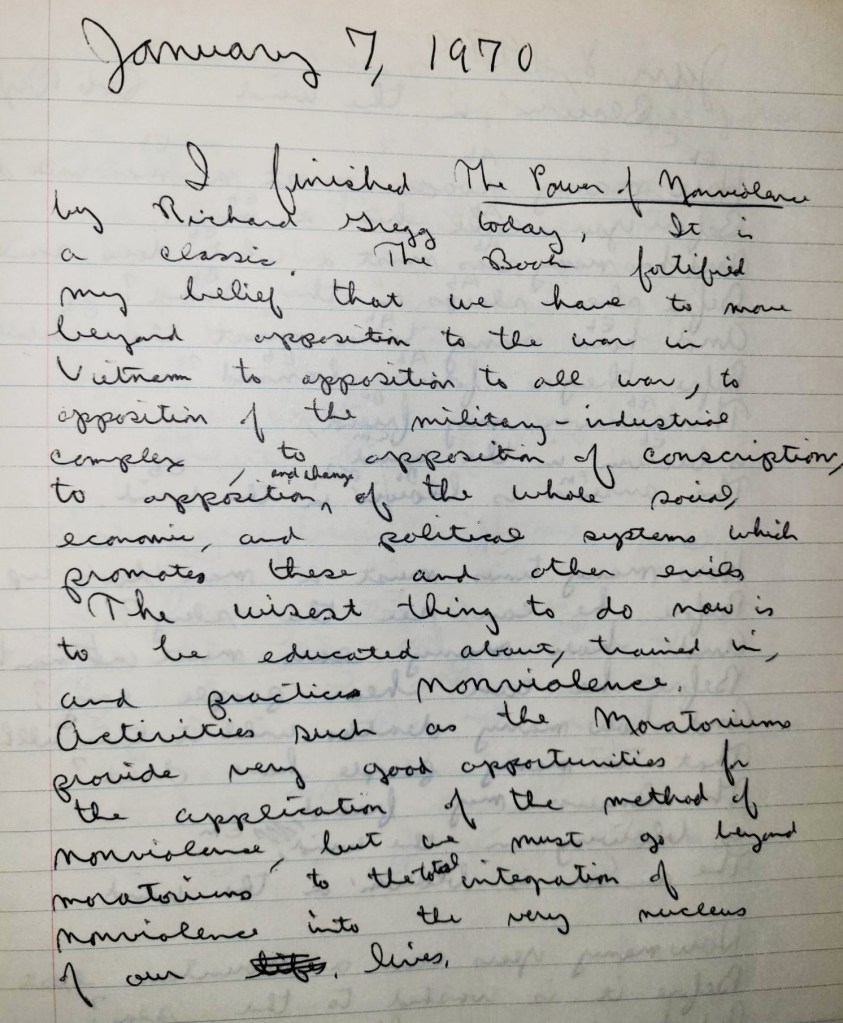
Often, I reflect on these queries outside the Quaker meeting gathering. That is why I write so much. Writing is a Spiritual exercise for me. Writing helps me listen for what the Spirit is saying. And helps me organize my thoughts. This is similar to keeping a journal as I did in the 1970’s. It looks like handwriting was a challenge.

Social and economic justice is something I’ve been thinking and praying about a lot lately. Over the past two years I’ve been deeply involved in Des Moines Mutual Aid. I mean Mutual Aid is something I’ve been studying and thinking a lot about outside the actual time spent at our weekly food giveaway.

A recent summary is this blog post, Mutual Aid is the Quaker way of being in the world.

As the advice says below, “we are part of an economic system characterized by inequality and exploitation. Such a society is defended and perpetuated by entrenched power.”

That is exactly what Mutual Aid is about. The capitalist economic system we are living in is designed to be unequal. Those who are skillful, or ruthless enough, accumulate wealth. Fundamentally, everything and everyone is seen as a resource that can be harnessed to create wealth. The result is millions of people trying to survive on subsistent wages. The result is the rape of the resources of Mother Earth. Which has put us on the road to extinction.

The capitalist economic system is enforced by political and criminal justice systems. Systems built on vertical hierarchies of power.

Mutual Aid is just the opposite. We work to maintain a flat or horizontal hierarchy, where everyone is equal.

One query for today is “how are we beneficiaries of inequity and exploitation? How are we victims of inequity and exploitation? In what ways can we address these problems?” I believe the answer involves building Mutual Aid communities.

I’ve met a great deal of resistance to the idea of replacing capitalism with Mutual Aid. When I asked a (Mutual Aid) friend why people had so much trouble recognizing the evils of capitalism, he said it was because they hadn’t experienced the failures of capitalism in their own lives, yet.


I wrote my own queries about Mutual Aid

Queries related to Mutual Aid
Do we recognize that vertical hierarchies are about power, supremacy and privilege? What are Quaker hierarchies?
Do we work to prevent vertical hierarchies in our peace and justice work?
What are we doing to meet the survival needs of our wider community?
How are we preparing for disaster relief, both for our community, and for the influx of climate refugees?
Are we examples of a Beloved community? How can we invite our friends and neighbors to join our community?

mutual aid is the new economy. mutual aid is community. it is making sure your elderly neighbor down the street has a ride to their doctor’s appointment. mutual aid is making sure the children in your neighborhood have dinner, or a warm coat for the upcoming winter. mutual aid is planting community gardens.
capitalism has violated the communities of marginalized folks. capitalism is about the value of people, property and the people who own property. those who have wealth and property control the decisions that are made. the government comes second to capitalism when it comes to power.

in the name of liberation, capitalism must be reversed and dismantled. meaning that capitalistic practices must be reprogrammed with mutual aid practices.

Des Moines Black Liberation

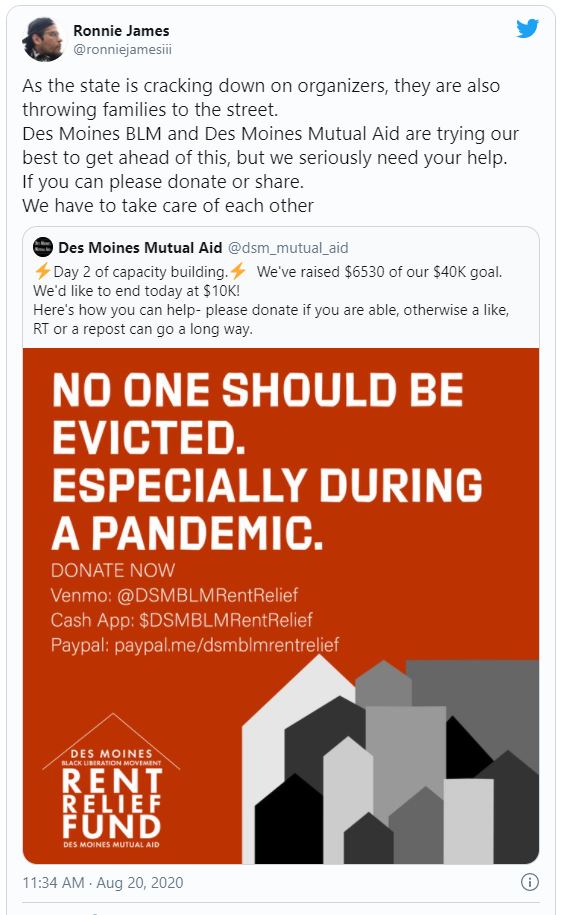
Des Moines Mutual Aid is a collective that does outreach for homeless folks in our community, houseless folks in our community. We also assist BLM with their rent relief fund, and most of the work we’ve done is running the bail fund for the protests over the summer. In the course of that work, we have witnessed firsthand the violence that is done upon people of color, Black people specifically, by the white supremacist forces of the state – in this state, in this city, in this county. There is absolutely a state of emergency for people of color and Black people in Iowa. The state of emergency has been a long time coming. We will support – DMMA will absolutely support any and all efforts of this community – BLM, and the people of color community more generally- to keep themselves safe. Power to the people.

Patrick Stahl, Des Moines Mutual Aid


SOCIAL AND ECONOMIC JUSTICE

Advice and Queries

“For when I was hungry you gave me food, when thirsty you gave me drink, when I was a stranger you took me into your home, when naked you clothed me, when in prison you visited me.”     Matthew 25:35‑36

ADVICE

We are part of an economic system characterized by inequality and exploitation. Such a society is defended and perpetuated by entrenched power.

Friends can help relieve social and economic oppression and injustice by first seeking spiritual guidance in our own lives. We envision a system of social and economic justice that ensures the right of every individual to be loved and cared for; to receive a sound education; to find useful employment; to receive appropriate health care; to secure adequate housing; to obtain redress through the legal system; and to live and die in dignity. Friends maintain historic concern for the fair and humane treatment of persons in penal and mental institutions.

Wide disparities in economic and social conditions exist among groups in our society and among nations of the world. While most of us are able to be responsible for our own economic circumstances, we must not overlook the effects of unequal opportunities among people. Friends’ belief in the Divine within everyone leads us to support institutions which meet human needs and to seek to change institutions which fail to meet human needs. We strengthen community when we work with others to help promote justice for all.

QUERY

  • How are we beneficiaries of inequity and exploitation? How are we victims of inequity and exploitation? In what ways can we address these problems?
  • What can we do to improve the conditions in our correctional institutions and to address the mental and social problems of those confined there?
  • How can we improve our understanding of those who are driven to violence by subjection to racial, economic, or political injustice? In what ways do we oppose prejudice and injustice based on gender, sexual orientation, class, race, age, and physical, mental, and emotional conditions? How would individuals benefit from a society that values everyone? How would society benefit?

Faith and Practice

Dearly Beloved Friends, these things we do not lay upon you as a rule or form to walk by, but that all, with the measure of light which is pure and holy, may be guided and so in the light walking and abiding, these may be fulfilled in the spirit, not the letter, for the letter killeth, but the spirit giveth life. Letter from the meeting of Elders at Balby, 1656

We are seekers but we are also the holders of a precious heritage of discoveries. We, like every generation, must find the Light and Life again for ourselves. Only what we have valued and truly made our own, not by assertion but by lives of faithful commitment, can we hand on to the future. Even then we must humbly acknowledge that our vision of truth will again and again be amended. Quaker Faith and Practice of Britain Yearly Meeting, 1994 page 17

Faith and Practice, The Book of Discipline of Iowa Yearly Meeting of Friends (Conservative) is a statement of principles and beliefs by which our society endeavors to learn and express lessons in Christian living. It provides guidance for the conduct of daily life and for carrying on the business of the meeting. Faith and Practice suggests rather than commands, and raises questions or queries rather than giving specific answers. It places upon the individual and corporate conscience, rather than upon external authority, the responsibility for the discipline of the Spirit.

Faith and Practice is based on an earlier document called the Discipline of Iowa Yearly Meeting (Conservative). It is intended as a handbook and guide for those of the Religious Society of Friends who belong to Iowa Yearly Meeting of Friends (Conservative), also known as Iowa Yearly Meeting (Conservative) or IYM(C). The first written disciplines among Friends appeared in Britain Yearly Meeting in manuscript form in 1718. At about the same period or a little later, in America, minutes of the yearly meetings were gathered in manuscript book form under captions alphabetically listed. The first printed Book of Discipline of Philadelphia Yearly Meeting appeared in 1797. The first Friends settling in Iowa lived under disciplines of Indiana Yearly Meeting and of Ohio Yearly Meeting.


ECONOMIC JUSTICE

May we look upon our treasures, the furniture of our houses, and our garments, and try whether the seeds of war have nourishment in these our possessions. John Woolman, A Word of Remembrance and Caution to the Rich published posthumously, 1793

I will never adjust myself to economic conditions that will take necessities from the many and give luxuries to the few. Martin Luther King, Jr., speaking in Cleveland Heights, Ohio, [St Paul’s Episcopal Church] 1963

Friends’ historical testimony has included the message that all people are equal, and deserve to share equally in the blessings of creation. The world is far from this ideal, and most in Iowa Yearly Meeting (Conservative) have benefited from global and local inequalities, however inadvertently. But we also suffer spiritually and otherwise because of the injustice in which we participate.

Friends believe that we should live in ways that do not “sow seeds of war.” Many are called to act in quiet or public ways to promote lifestyle choices, policies, laws, and treaties that will ensure the basic human rights of all people, including the rights to safe and healthy places to live and work. Historically, Friends have been able to help correct major injustices such as slavery, inhumane conditions for prisoners, and inequality in the treatment of women. The magnitude of current problems caused by economic injustice does not excuse Friends from the struggle against it, but makes obedience to God’s call all the more necessary.

Friends are reminded that there can be no peace without justice, and to live simply, so others may simply live. Many Friends find seeds of war and injustice in their lifestyles. Friends are challenged to participate constructively in the economy by supporting fair trade, choosing investments with attention to their social impact, and purchasing products produced under safe and healthy conditions. What each can do individually may not seem like much, but, guided by the Spirit and added to the efforts of others, it can make a difference.

The Book of Discipline of Iowa Yearly Meeting of Friends (Conservative)
Religious Society of Friends

No Way Out but War

I came of age during the Vietnam War years. Organized a draft conference, walked with the entire student body of Scattergood Friends School (all sixty of us) fourteen miles into Iowa City during the Moratorium to End the War in Vietnam, became a draft resister. The entire country was in an uproar. Young men and their families lived in fear of induction based on a lottery system. Over 58,000 Americans were killed.

A key component to the sustenance of the permanent war state was the creation of the All-Volunteer Force. Without conscripts, the burden of fighting wars falls to the poor, the working class, and military families. This All-Volunteer Force allows the children of the middle class, who led the Vietnam anti-war movement, to avoid service. It protects the military from internal revolts, carried out by troops during the Vietnam War, which jeopardized the cohesion of the armed forces.

NO WAY OUT BUT WAR By Chris Hedges, Scheer Post. May 23, 2022. Permanent War Has Cannibalized The Country. It Has Created A Social, Political, And Economic Morass.

I’ve often despaired at the absence of an antiwar movement since our plunge into a ‘war on terror’ that is an excuse to have military presence and conflict in any place politicians define a threat. To terrorize children by the sounds of drones circulating overhead. With untold civilian casualties from drone strikes. Death by remote control.

What should I have done? What should I be doing now?

Shortly after the Vietnam years, I moved to Indianapolis (1970). The filthy air, the clouds of smoke pouring out of every tailpipe, traumatized me. Especially as I imagined how the air in the beautiful National Parks I had visited might become polluted.

We went on vacation to California around this time. The first day in Los Angeles we could hardly breathe. We coughed and our eyes were irritated. We were told we would get used to it.

It was this war against Mother Earth I devoted my efforts to, including refusing to own a car, which I called a weapon of mass destruction. And against the wars of White supremacy on black, Indigenous, and other people of color (BIPOC).

But the armed wars of this country continued, expanded internationally. And turned inward, bringing the tactics, equipment, and attitudes of war to our cities.

The United States, as the near unanimous vote to provide nearly $40 billion in aid to Ukraine illustrates, is trapped in the death spiral of unchecked militarism. No high speed trains. No universal health care. No viable Covid relief program. No respite from 8.3 percent inflation. No infrastructure programs to repair decaying roads and bridges, which require $41.8 billion to fix the 43,586 structurally deficient bridges, on average 68 years old. No forgiveness of $1.7 trillion in student debt. No addressing income inequality. No program to feed the 17 million children who go to bed each night hungry. No rational gun control or curbing of the epidemic of nihilistic violence and mass shootings. No help for the 100,000 Americans who die each year of drug overdoses. No minimum wage of $15 an hour to counter 44 years of wage stagnation. No respite from gas prices that are projected to hit $6 a gallon.

The permanent war economy, implanted since the end of World War II, has destroyed the private economy, bankrupted the nation, and squandered trillions of dollars of taxpayer money. The monopolization of capital by the military has driven the US debt to $30 trillion, $ 6 trillion more than the US GDP of $ 24 trillion. Servicing this debt costs $300 billion a year. We spent more on the military, $ 813 billion for fiscal year 2023, than the next nine countries, including China and Russia, combined.

We are paying a heavy social, political, and economic cost for our militarism. Washington watches passively as the U.S. rots, morally, politically, economically, and physically, while China, Russia, Saudi Arabia, India, and other countries extract themselves from the tyranny of the U.S. dollar and the international Society for Worldwide Interbank Financial Telecommunication (SWIFT), a messaging network banks and other financial institutions use to send and receive information, such as money transfer instructions. Once the U.S. dollar is no longer the world’s reserve currency, once there is an alternative to SWIFT, it will precipitate an internal economic collapse. It will force the immediate contraction of the U.S. empire shuttering most of its nearly 800 overseas military installations. It will signal the death of Pax Americana.

NO WAY OUT BUT WAR By Chris Hedges, Scheer Post. May 23, 2022. Permanent War Has Cannibalized The Country. It Has Created A Social, Political, And Economic Morass.

Chris Hedges goes on to explain

There were three restraints to the avarice and bloodlust of the permanent war economy that no longer exist. The first was the old liberal wing of the Democratic Party, led by politicians such as Senator George McGovern, Senator Eugene McCarthy, and Senator J. William Fulbright, who wrote The Pentagon Propaganda Machine. The self-identified progressives, a pitiful minority, in Congress today, from Barbara Lee, who was the single vote in the House and the Senate opposing a broad, open-ended authorization allowing the president to wage war in Afghanistan or anywhere else, to Ilhan Omar now dutifully line up to fund the latest proxy war. The second restraint was an independent media and academia, including journalists such as I.F Stone and Neil Sheehan along with scholars such as Seymour Melman, author of The Permanent War Economy and Pentagon Capitalism: The Political Economy of War. Third, and perhaps most important, was an organized anti-war movement, led by religious leaders such as Dorothy Day, Martin Luther King Jr. and Phil and Dan Berrigan as well as groups such as Students for a Democratic Society (SDS). They understood that unchecked militarism was a fatal disease.

NO WAY OUT BUT WAR By Chris Hedges, Scheer Post. May 23, 2022. Permanent War Has Cannibalized The Country. It Has Created A Social, Political, And Economic Morass.

Where was the organized anti-war movement?

I wasn’t there. As I said, I was led to the ‘fight’ to protect Mother Earth, protect the water. The damage we’ve done to our environment has led to the collapse we are experiencing now. As I wrote just yesterday, collapse is already here. Significantly worsening environmental chaos is everywhere and will only worsen, rapidly.

What does this mean regarding militarization now? As Chris Hedges writes above, there is no political resistance to continued military spending, leaving little for domestic needs. “The permanent war economy, implanted since the end of World War II, has destroyed the private economy, bankrupted the nation, and squandered trillions of dollars of taxpayer money.”

The US military is the largest polluter in the world because of the combustion of fossil fuels by the machines of war and the energy needed by steel production.

Depletion of fossil fuel supplies will eventually render those machines useless. But they will be a priority for dwindling supplies. I guess time will tell how long armored tanks and planes will have fuel in the timeline for our collapsing society.

So many military installations are on ocean shores and will be flooded by rising waters.

As oil supplies are depleted, the US armed forces will continue to take over fossil fuel sources anywhere in the world.

At the time when it is absolutely essential to stop burning fossil fuels, the military will continue doing the opposite. Might this be the way we finally rise up against the tools of war?

As our economy continues to collapse, the armed forces and militarized police will increasingly be used to quash civil unrest.

I was led to the fight to protect Mother Earth, protect the water. Much as I wish I had been able to do more to stop militarization, I know I have tried to hear what the Spirit was leading me to do. And then do it.


Collapse is already here

This is a continuation of a recent post, the centre cannot hold, and discussion of the article Collapse Is Already Here — And It’s Spreading by umair haque. The reason I follow umair’s writings is because I agree with his analysis of where we are and learn more from him. In this article he talks about the collapse of the three systems we live in.

  • economic
  • social
  • political

Failing economies

Right now, a wave of mega-inflation is surging around the globe. It’s driven largely by climate change — and our nonexistent “response” to it. Harvests are failing, goods are getting harder and harder to distribute and ship, raw materials harder to source and attain. Inflation is going to keep rising — for the rest of our lives.

Shortages become the norm. You can see them beginning to happen in vivid, shocking detail now. Empty shelves are becoming the new normal. The age of abundance is over.

Our economies have failed. And they’re going to continue to fail.

Collapse Is Already Here — And It’s Spreading. I Don’t Know If You’ve Noticed — But Our Systems are Breaking Down by umair haque, Eudaimonia, May 19, 2022

Failing social systems

Think of how many generations our economies have failed at this point.

Boomers were the last ones to really live the dream — since then, our economies have been in decline, and that decline has accelerated rapidly. Gen X had it worse than Boomers, but not so bad as to cause total despair — enough to be comical. Millennials had it worse than Gen X — and they can’t afford to move out of their parents’ homes, or start families, so birth rates are declining. Zoomers have it far, far worse than Millennials — they’ll never be able to retire, they can’t get decent jobs, their lives are over before they began.

There’s a word to sum all that up — intergenerational inequality. What does intergenerational inequality do? It destroys the possibility of functioning social systems. Someone has to pay for them, after all — from retirement systems to post offices to hospitals and universities and so forth. Social systems must be funded from the public purse. But when people are struggling harder, generation after generation, getting poorer, there’s less left over to invest.

Collapse Is Already Here — And It’s Spreading. I Don’t Know If You’ve Noticed — But Our Systems are Breaking Down by umair haque, Eudaimonia, May 19, 2022

Failing political systems

This is the real reason why young people are apathetic about politics. They know they can’t change anything even if they try. They don’t have the money, so what’s the point? Sure, they can vote in politicians who want to build social systems — and sometimes they do, like AOC or who have you. But those politicians are left powerless in the end, because societies in which generation after generation is getting poorer cannot afford to be functioning societies at all.

Collapse Is Already Here — And It’s Spreading. I Don’t Know If You’ve Noticed — But Our Systems are Breaking Down by umair haque, Eudaimonia, May 19, 2022

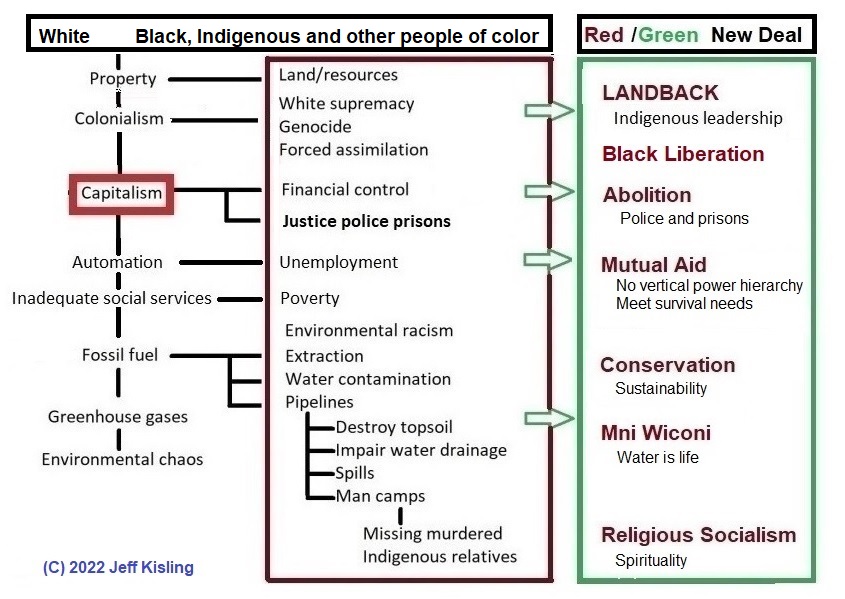
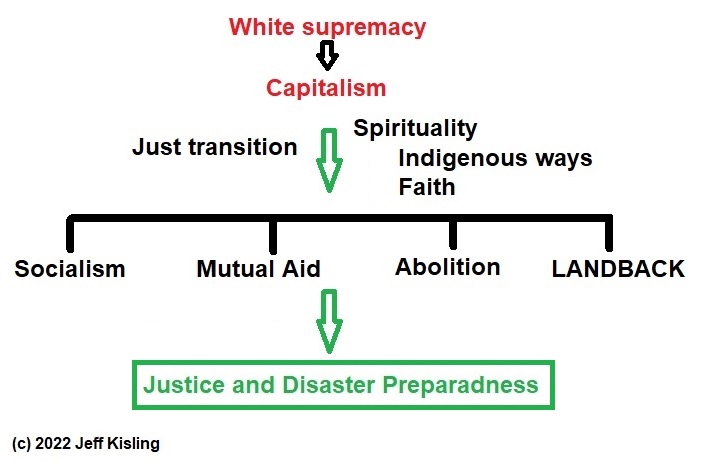
The collapse of the economic, social and political systems umair haque describes above are part of the diagram below I’ve been working on for several years.

The economic system is Capitalism (red box in diagram below). Capitalism exerts financial control, and uses criminal justice systems of police and prisons to enforce capitalist policies.

Capitalism once did some funding of social systems: Medicare, food stamps, unemployment insurance, etc.

But now, the collapse of capitalism is leading to increasingly inadequate social services, pushing more people into, or further into poverty.

The answer, it seems to many of us, is to replace the capitalist economic system. As my friend Ronnie James says:

I’m of the firm opinion that a system that was built by stolen bodies on stolen land for the benefit of a few is a system that is not repairable. It is operating as designed, and small changes (which are the result of huge efforts) to lessen the blow on those it was not designed for are merely half measures that can’t ever fully succeed.

So the question is now, where do we go from here? Do we continue to make incremental changes while the wealthy hoard more wealth and the climate crisis deepens, or do we do something drastic that has never been done before? Can we envision and create a world where a class war from above isn’t a reality anymore?”

Ronnie James, Des Moines Mutual Aid

How to replace capitalism and the systems that support it is indicated in the Red/Green New Deal box. Discussions of these things can be found on these blogs of mine and elsewhere.


Whiteness and Quakers

[References to Quakers here pertain to White Quakers. There is little diversity among Quakers in this country.]

There are several reasons I’m led to revisit this today.

  • Our Quaker meetings have dwindling numbers of attenders. Most of those remaining are elderly and white. Many meetings do not have new people joining.
  • I continue to hear stories from people of color, or those identifying as non-binary in gender or sexual orientation not being welcome in some Quaker meetings.
  • Those of us working outside our Quaker communities are often blessed to find beloved communities.
  • I wish others in our Quaker meetings would join these communities.
  • Despite the many wonderful aspects of these ‘external’ communities, I sometimes sense a lack of spiritual support for one another there.
  • There are many who don’t express their spirituality publicly, or in ways “organized” religions do.
  • Quaker presence will not be fully welcome in these communities until we come to terms with our own racism.

We know that those of us who are white must confront racism in ourselves and in the institutions we care about—our faith communities, our schools, our neighborhoods, our families, our Congress.

Racism and Whiteness, Diane Randall

People ask me if I believe in god… I tell them I pray to creator.
They tell me Jesus died for me… I tell them my ancestors did.
They say I will burn in hell for not following the Bible, but it has been used as weapon to colonize and murder my people…
for me it’s spirituality over religion. I don’t hate people for going to church, but I do hate what the churches have done to us…
before colonization we had our own ways and ceremonies, I choose the path of my ancestors.

Indigenous

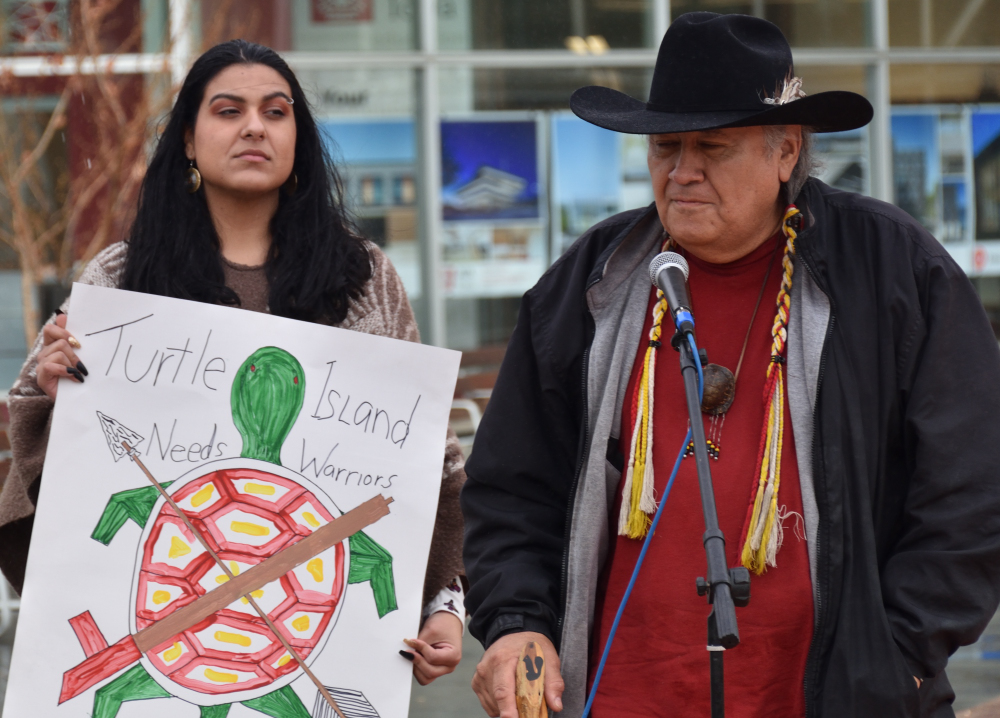
For a long time, I’ve been in significant spiritual distress. I’ve been learning a great deal from my Native friends and working in Mutual Aid communities. And they tell me the way white people can best support them is by embracing and teaching others about LANDBACK.

I caused conflicts in my Quaker meeting because I wanted them to join me in the work of Mutual Aid and LANDBACK. Despite my efforts to explain this, they haven’t had the experiences that would make them understand all of this, yet.

At the same time I felt I was letting my Native friends down, because I wasn’t making some of the changes I wanted to make in my life that could be an example of how white people can join the work with Mutual Aid and LANDBACK.

As environmental chaos deepens, with the resulting collapse of the colonial capitalist economic system and the political systems propping up white supremacy fail, we will have no choice but to find alternatives. Ideally those would be Mutual Aid and LANDBACK. This is a powerful incentive to embrace these concepts now.

Mutual Aid and LANDBACK

In the same way I can’t understand the involvement of many Quakers in the slave trade, and having enslaved people, I can’t understand Quaker’s involvement in forced assimilation of native children.

What does this mean for Quakers today? No matter what we say about justice for BIPOC (Black, Indigenous, and other people of color) folks, those words are empty as long as we continue to take advantage of colonial capitalism and white supremacy.

The news of 215 Kamloops Native children buried on the grounds of a residential school shocked non-native people, who did not know how many of these residential schools existed in the lands called the United States and Canada. Did not know tens of thousands of Native children were forcibly removed from their families and taken to these institutions where thousands were abused in many ways. Thousands killed or died. Though the stated reason for doing this was to assimilate Native children into white society for their benefit, the real intent was to quell Indigenous resistance to the theft of their land by white settler colonists.

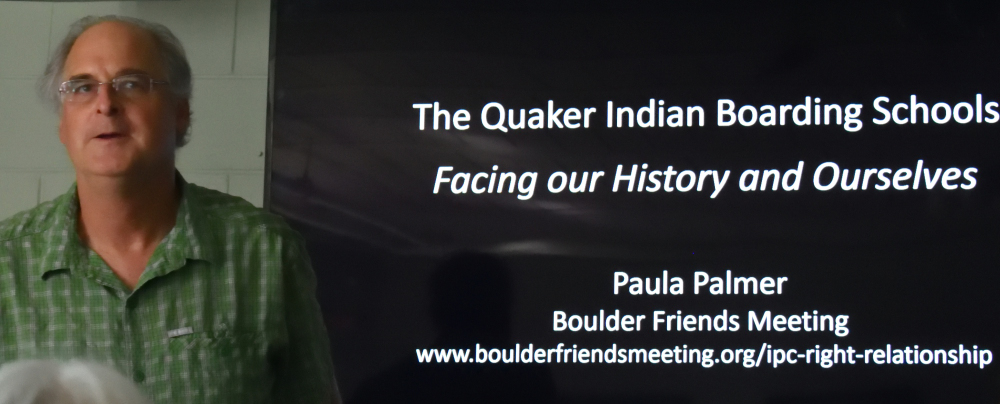
My friend Paula Palmer wrote an excellent article for Friends Journal, Oct 1, 2016. “Quaker Boarding Schools: Facing Our History and Ourselves”.

The growing numbers of remains found at other schools has re-opened deep wounds in Native communities. Many have been triggered by these atrocities. One of my Native friends wrote that she was NOT OK. Another told me, “I’m trying not to be enraged in my mourning.”

A Native friend also told me, “The church is the church’s past, which is its future. It continues to see my people as obstacles in its endless conquest. To be blunt, there is too much damage that the church profits from and needs to protect to have any future there.” Vigorous attempts are made to hide it, but history does not lie. He also told me, regarding what I had been telling him about my efforts with Quakers, “I wish you the best. I imagine it’s a hard struggle.”

I cannot face my BIPOC friends if I don’t continue to seek the Spirit, and act on the leadings I am given. Writing is one thing I am led to do.

“Don’t make orphans stand here covered in the blood of our parents and explain to you how this all came to be without doing something about it. “

The Tragedy of 215. Without truth, there can be no healing, by Sarah Rose Harper, Lakota People’s Law Project, 6/2/2021

I am so grateful to my BIPOC friends for teaching me that Mutual Aid and LANDBACK are alternatives to colonial capitalism and white superiority. LANDBACK is how to restore Native lands and leadership.

As environmental chaos deepens, with the resulting collapse of the colonial capitalist economic system and the political systems propping up white supremacy, we will have no choice but to find alternatives. Ideally those would be Mutual Aid and LANDBACK. This is a powerful incentive to embrace these concepts now.

I wrote the following epistle that is modeled from ‘An Epistle to Friends Concerning Military Conscription’

An Epistle to Friends Regarding Community, Mutual Aid and LANDBACK

Dear Friends,

The measure of a community is how the needs of its people are met. No one should go hungry, or without shelter or healthcare. Yet in this country known as the United States millions struggle to survive. The capitalist economic system creates hunger, houselessness, illness that is preventable and despair. A system that requires money for goods and services denies basic needs to anyone who does not have money. Black, Indigenous, and other people of color (BIPOC) are disproportionately affected. Systemic racism. The capitalist system that supports the white materialistic lifestyle is built on stolen land and genocide of Indigenous peoples, and the labor of those who were enslaved in the past or are forced to live on poverty wages today.

Capitalism is revealed as an unjust, untenable system, when there is plenty of food in the grocery stores, but men, women and children are going hungry, living on the streets outside. White supremacy violently enforces the will of wealthy white people on the rest of us.

It has become clear to some of us who are called Friends that the colonial capitalist economic system and white supremacy are contrary to the Spirit and we must find a better way. We conscientiously object to and resist capitalism and white supremacy.

capitalism has violated the communities of marginalized folks. capitalism is about the value of people, property and the people who own property. those who have wealth and property control the decisions that are made. the government comes second to capitalism when it comes to power.

in the name of liberation, capitalism must be reversed and dismantled. meaning that capitalistic practices must be reprogrammed with mutual aid practices. 
Des Moines Black Liberation Movement

Mutual Aid

How do we resist? We rebuild our communities in ways not based upon money. Such communities thrive all over the world. Indigenous peoples have always lived this way. White people once did so in this country. Mutual Aid is a framework that can help us do this today.

The concept of Mutual Aid is simple to explain but can result in transformative change. Mutual Aid involves everyone coming together to find a solution for problems we all face. This is a radical departure from “us” helping “them”. Instead, we all work together to find and implement solutions.  To work together means we must be physically present with each other. Mutual Aid cannot be done by committee or donations. We build Beloved communities as we get to know each other. Build solidarity. An important part of Mutual Aid is creating these networks of people who know and trust each other. When new challenges arise, these networks are in place, ready to meet them.

Another important part of Mutual Aid is the transformation of those involved. This means both those who are providing help, and those receiving it.

With Mutual Aid, people learn to live in a community where there is no vertical hierarchy. A community where everyone has a voice. A model that results in enthusiastic participation. A model that makes the vertical hierarchy required for white supremacy impossible.

Commonly there are several Mutual Aid projects in a community. The initial projects usually relate to survival needs. One might be a food giveaway. Another helping those who need shelter. Many Mutual Aid groups often have a bail fund, to support those arrested for agitating for change. And accompany those arrested when they go to court.

LANDBACK

The other component necessary to move away from colonial capitalism and white supremacy is LANDBACK.

But the idea of “landback” — returning land to the stewardship of Indigenous peoples — has existed in different forms since colonial governments seized it in the first place. “Any time an Indigenous person or nation has pushed back against the oppressive state, they are exercising some form of landback,” says Nickita Longman, a community organizer from George Gordon First Nation in Saskatchewan, Canada.

The movement goes beyond the transfer of deeds to include respecting Indigenous rights, preserving languages and traditions, and ensuring food sovereignty, housing, and clean air and water. Above all, it is a rallying cry for dismantling white supremacy and the harms of capitalism.

Returning the Land. Four Indigenous leaders share insights about the growing landback movement and what it means for the planet, by Claire Elise Thompson, Grist, February 25, 2020

What will Friends do?

It matters little what people say they believe when their actions are inconsistent with their words.  Thus, we Friends may say there should not be hunger and poverty, but as long as Friends continue to collaborate in a system that leaves many without basic necessities and violently enforces white supremacy, our example will fail to speak to mankind.

Let our lives speak for our convictions.  Let our lives show that we oppose the capitalist system and white supremacy, and the damages that result.  We can engage in efforts, such as Mutual Aid and LANDBACK, to build Beloved community. To reach out to our neighbors to join us.

We must begin by changing our own lives if we hope to make a real testimony for peace and justice.

We remain, in love of the Spirit, your Friends and sisters and brothers,

Note: Modeled from ‘An Epistle to Friends Concerning Military Conscription’


NATIONAL MOBILIZATION FOR REPRODUCTIVE JUSTICE

NOTE: The date has been changed for the Rally for Reproductive Justice I wrote about yesterday. That event will be this Friday, May 6, 6:45 – 8:30 PM Central. More information here: https://quakersandreligioussocialism.com/2022/05/04/reproductive-justice/


Rally for Repro Rights

Saturday 3 PM Central

Iowa State Capitol

Saturday, May 7, 2022
3:00 PM Central
Public · Anyone on or off Facebook
Come and gather with others in response to the leaked SCOTUS draft opinion on Roe v. Wade. Join us on the west side of the Capitol.

𝗪𝗲 𝗿𝗶𝘀𝗲 𝘁𝗼𝗴𝗲𝘁𝗵𝗲𝗿 𝘁𝗼 𝗱𝗲𝗳𝗲𝗻𝗱 𝗮𝗰𝗰𝗲𝘀𝘀 𝘁𝗼 𝗮𝗯𝗼𝗿𝘁𝗶𝗼𝗻 𝗳𝗼𝗿 𝗮𝗹𝗹.
𝗔𝗯𝗼𝗿𝘁𝗶𝗼𝗻 𝗶𝘀 𝗵𝗲𝗮𝗹𝘁𝗵 𝗰𝗮𝗿𝗲.
𝗥𝗲𝗽𝗿𝗼𝗱𝘂𝗰𝘁𝗶𝘃𝗲 𝗿𝗶𝗴𝗵𝘁𝘀 𝗮𝗿𝗲 𝗵𝘂𝗺𝗮𝗻 𝗿𝗶𝗴𝗵𝘁𝘀.

Sponsors of the event include:
Great Plains Action Society
Interfaith Alliance of Iowa
Iowa Abortion Access Fund
Iowa Coalition Against Domestic Violence
Iowa Coalition Against Sexual Assault
Iowa Coalition for Collective Change
League of Women Voters of Iowa
New Frontier
No Justice No Peace
One Iowa
Planned Parenthood Advocates of Iowa
Progress Iowa
The Urban Impact Show
Young Women’s Resource Center


NATIONAL MOBILIZATION FOR REPRODUCTIVE JUSTICE

The National Mobilization for Reproductive Justice was initiated by Radical Women last year. It has been organizing in several states and gearing up for “day of decision” demonstrations for when the Supreme Court ruling is released. We stand together around a strong set of demands that reflect the whole spectrum of reproductive justice, from ending forced sterilization and overturning the Hyde Amendment, to guaranteed affordable childcare and accurate sex education. Mobilization participants including feminists, unionists, people of color and LGBTQ+ activists.

National and local activities, the full set of demands and endorsers, and information about the National Mobilization for Reproductive Justice are posted at www.ReproJusticeNow.org.

What we call for:

  • Protect & expand Roe v. Wade; safe, legal abortion on demand without apology
  • Repeal the Hyde Amendment
  • Overturn state barriers to reproductive choices
  • Stop forced sterilization
  • No to caged kids, forced assimilation, & child welfare abuses
  • End medical & environmental racism; for universal healthcare
  • Defend queer & trans families
  • Guarantee medically sound sex education & affordable childcare
  • Sexual self-determination for people with disabilities
  • Uphold social progress with expanded voting rights & strong unions

Initiated by Radical Women


Radical Women

A trailblazing socialist feminist organization, Radical Women is the revolutionary wing of the women’s movement and a strong feminist voice within the Left. Immersed in the daily fight against racism, sexism, homophobia, anti-trans bigotry, and labor exploitation, Radical Women believes in multi-issue organizing around the needs of the most marginalized. We view the leadership of gender-oppressed people, especially those who are of color, as decisive to social change and we train women to take their place in the forefront of the struggle. Radical Women is an autonomous group of ciswomen, transwomen and non-binary people, united on the basis of shared socialist feminist ideals expressed in The Radical Women Manifesto.

Get involved if you want to change the world and collaborate with a dynamic bunch of feminist rebels of all colors, sexualities and ages. Everyone has something to learn, teach and contribute!

Buffalo Rebellion and Red/Green New Deal

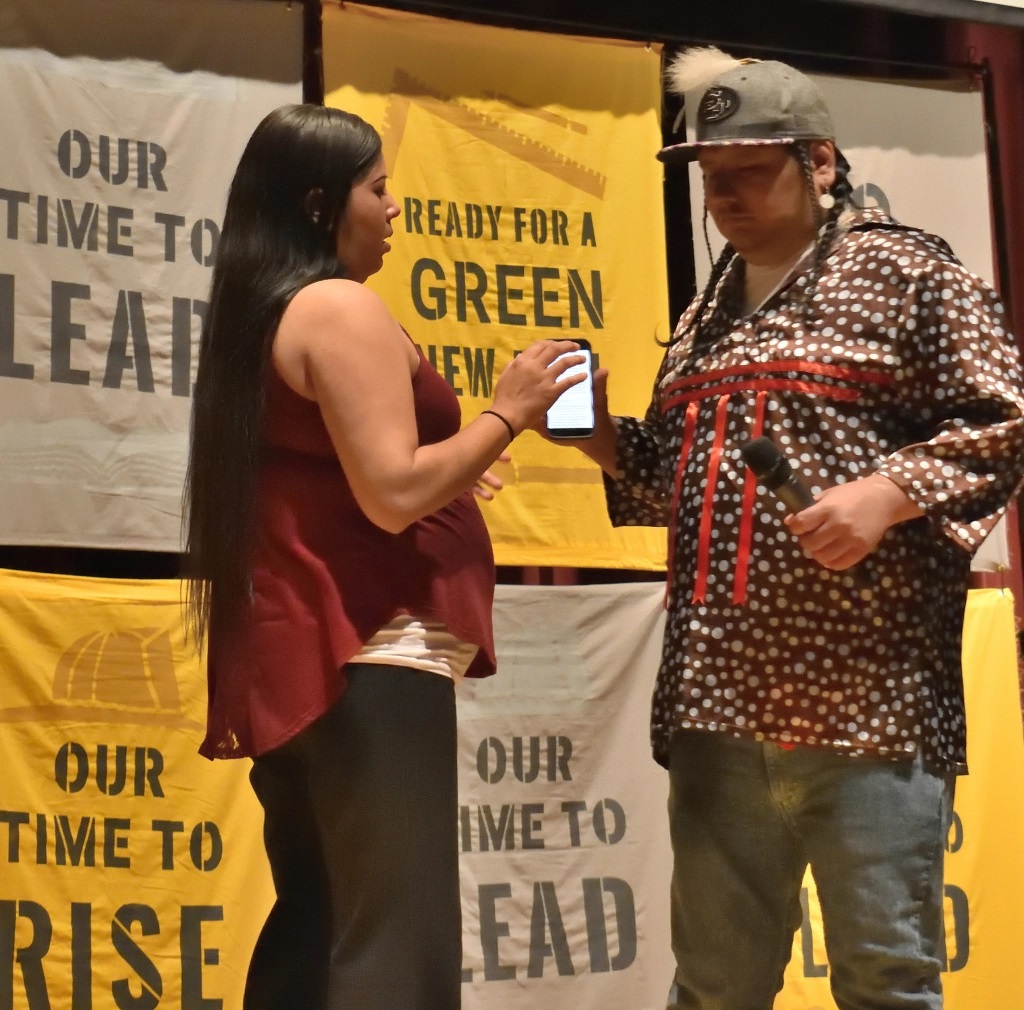
The Sunrise Movement was launched as a national campaign for a Green New Deal (GND) in 2017. From the beginning I heard my native friends talk about the importance of a GND to be Indigenous led. In 2019 Sunrise’s Green New Deal tour began with a stop in Des Moines. There my friends Trisha Cax-Sep-Gu-Wiga Etringer and Lakasha Yooxot Likipt spoke about Indigenous leadership as a requirement for a GND. https://landbackfriends.com/2021/09/01/indigenous-led-green-new-deal/


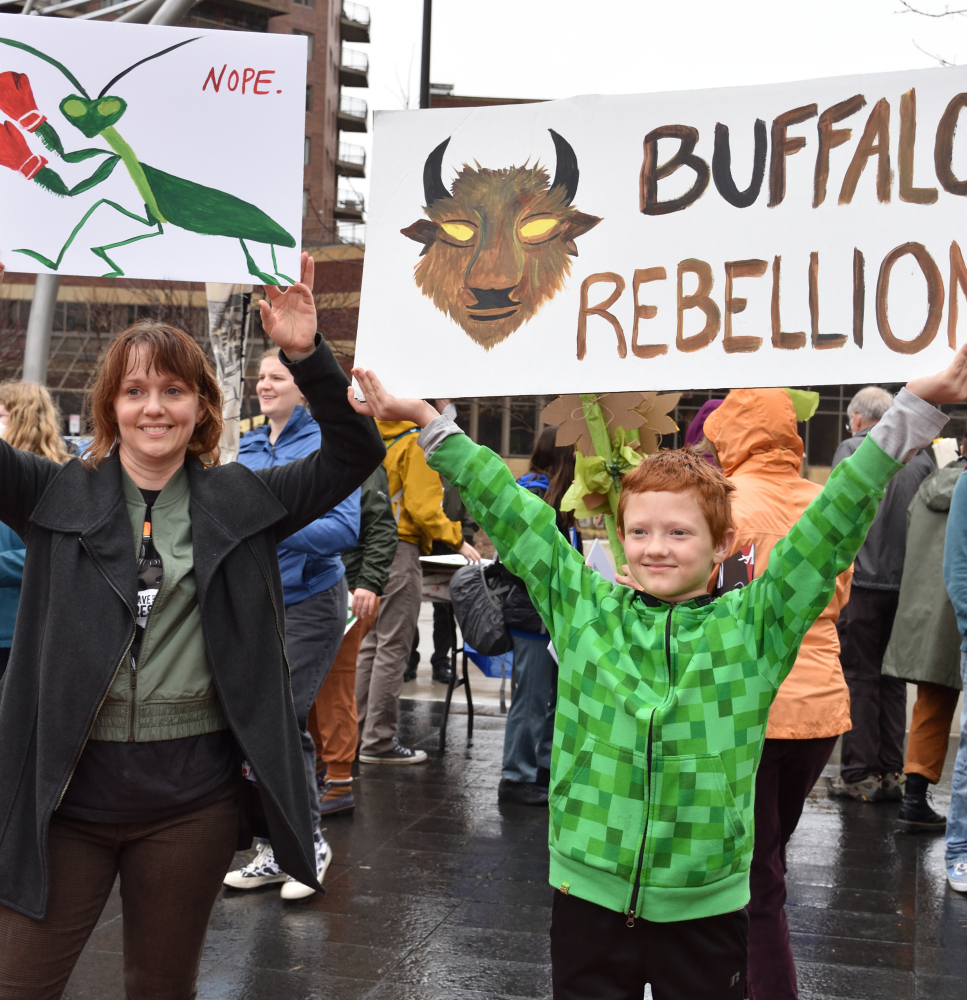
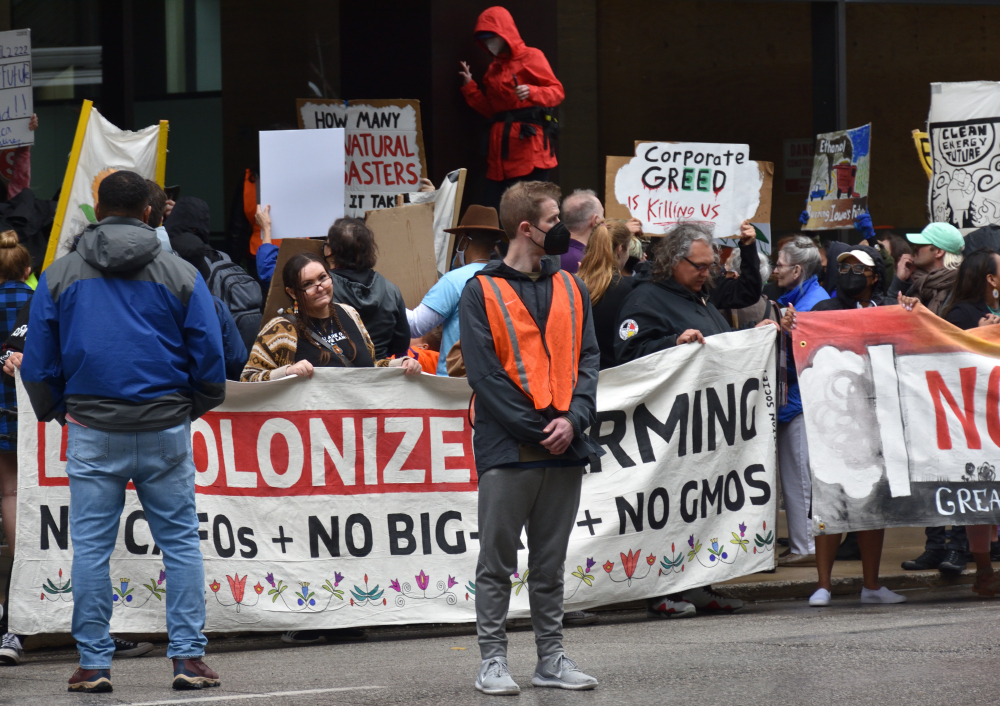
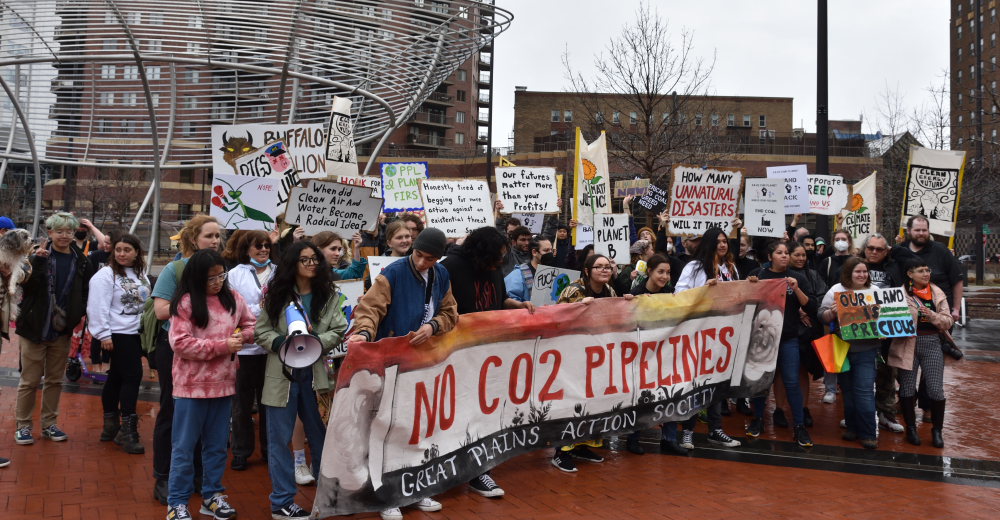
Last weekend’s Climate Summit of the newly formed Buffalo Rebellion provided an opportunity for organizations and people to come together to share what is being done to address the climate crisis. And lay the groundwork for working together, focusing on action related to the racial and economic consequences of environmental devastation. That requires taking on entrenched white supremacy, systemic racism and rapacious capitalism.

The Buffalo Rebellion is a coalition that includes Iowa Citizens for Community Improvement, Great Plains Action Society, Des Moines Black Liberation Movement, Iowa MMJ, SEIU Iowa, Sierra Club Iowa Beyond Coal, and Cedar Rapids Sunrise Movement.

We believe that we must address the root of climate change, insatiable corporate greed and white supremacy, to make change happen. This will require a multi-racial movement of working people struggling together to upend politics as usual.

Buffalo Rebellion

… what if the question all water protectors and land defenders asked was, why don’t we just overturn the system that makes development a threat in the first place? This system, again, is capitalism. Rather than taking an explicitly conservationist approach, the Red Deal instead proposes a comprehensive, full-scale assault on capitalism, using Indigenous knowledge and tried-and-true methods of mass mobilization as its ammunition. In this way, it addresses what are commonly thought of as single issues like the protection of sacred sites—which often manifest in specific uprisings or insurrections—as structural in nature, which therefore require a structural (i.e., non-reformist reform) response that has the abolition of capitalism via revolution as its central goal. We must be straightforward about what is necessary. If we want to survive, there are no incremental or “non-disruptive” ways to reduce emissions. Reconciliation with the ruling classes is out of the question. Market-based solutions must be abandoned. We have until 2050 to reach net-zero carbon emissions. That’s it. Thirty years. The struggle for a carbon-free future can either lead to revolutionary transformation or much worse than what Marx and Engels imagined in 1848, when they forewarned that “the common ruin of the contending classes” was a likely scenario if the capitalist class was not overthrown. The common ruin of entire peoples, species, landscapes, grasslands, waterways, oceans, and forests—which has been well underway for centuries—has intensified more in the last three decades than in all of human existence.
The Red Nation, The Red Deal (pp. 21-22). Common Notions. Kindle Edition.


My Mutual Aid community models many Green/Red New Deal concepts.

I’m of the firm opinion that a system that was built by stolen bodies on stolen land for the benefit of a few is a system that is not repairable. It is operating as designed, and small changes (which are the result of huge efforts) to lessen the blow on those it was not designed for are merely half measures that can’t ever fully succeed.

So the question is now, where do we go from here? Do we continue to make incremental changes while the wealthy hoard more wealth and the climate crisis deepens, or do we do something drastic that has never been done before? Can we envision and create a world where a class war from above isn’t a reality anymore?”

Ronnie James, Des Moines Mutual Aid, Great Plains Action Society

Dare we hope?

I was searching for a way to describe what WE experienced during OUR Buffalo Rebellion Climate Summit this weekend. A moment reminiscent of the times of the civil rights and anti-war movements which brought together thousands of people and created change. This weekend a coalition of people and organizations came together to rise to the challenges of rapidly evolving environmental devastation and collapse of the systems of capitalism and white supremacy.

As I wondered whether to write “what WE experienced” versus “what I experienced” I realized this was emblematic of what the Buffalo Rebellion is about. Dare WE hope? In its simplest expression, we need to change from “I” to “We” in all we do.

Those of us who have been working to protect Mother Earth are more aware than the general public of the breadth and depth of damage being done. More alarmed, more discouraged after years of work with little apparent progress.

The COVID pandemic made us more isolated and made it difficult to safely do our organizing work. Although our Des Moines Mutual Aid community never stopped distributing free food every week. We strictly enforced wearing masks and gloves and attempted to maintain social distancing by limiting the number of volunteers.

As an example of how long some of us have been working to protect our environment, fifty years ago I was led to refuse to own a car. I’m not aware of that changing other people’s lives.

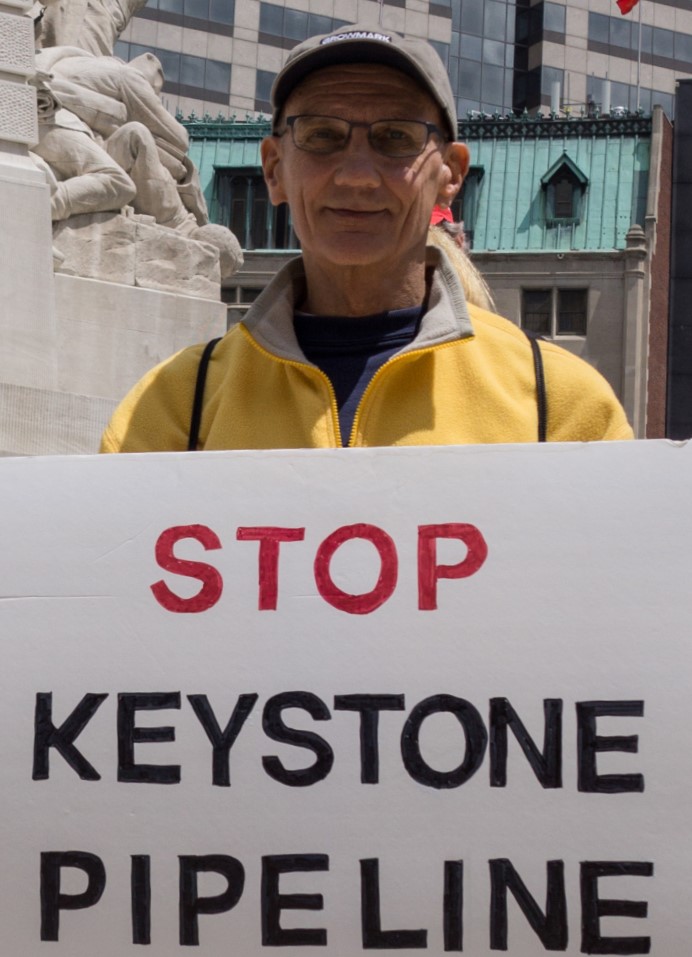
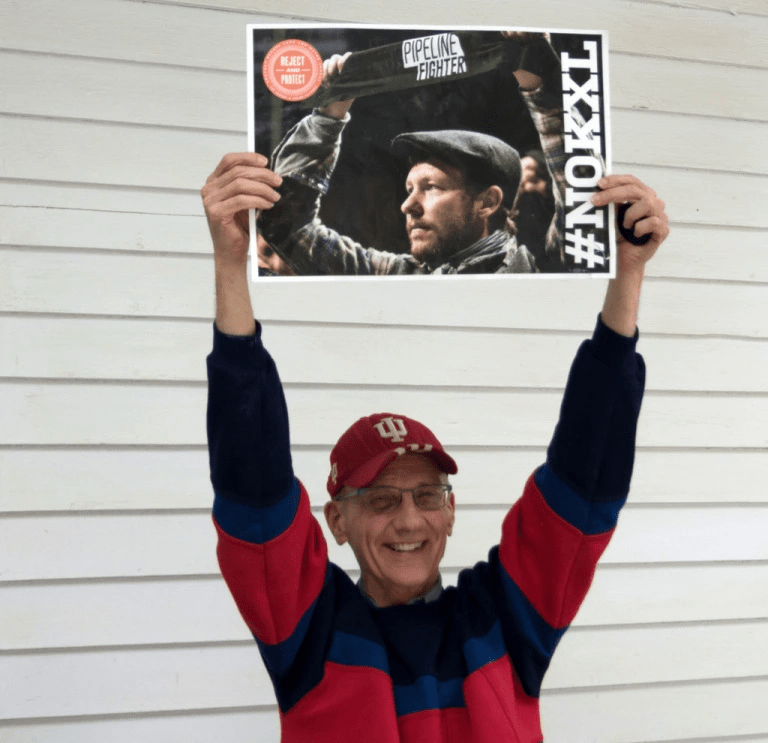
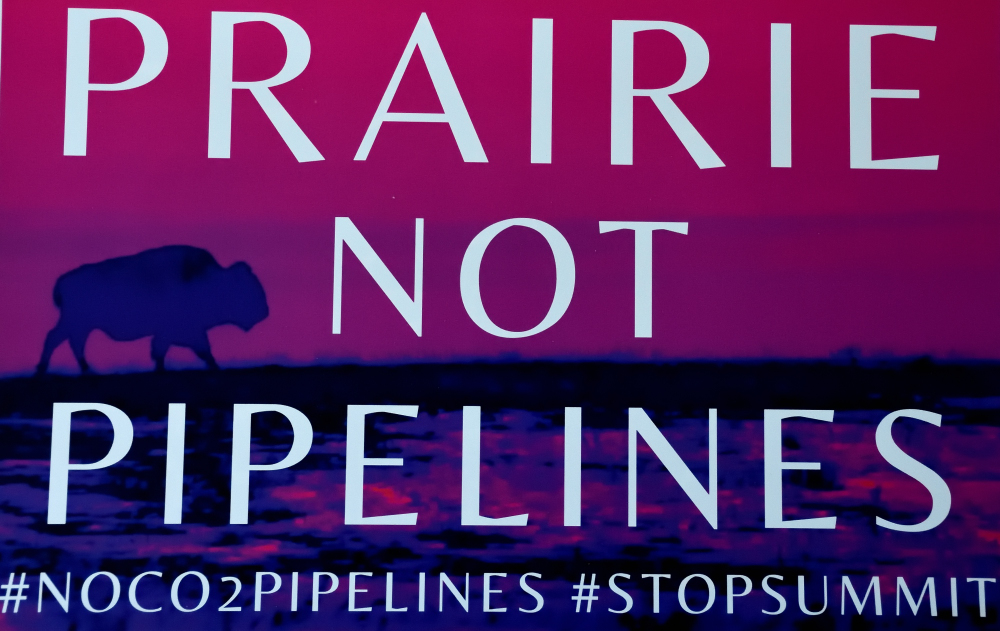
In 2013 the Keystone XL pipeline struggles began to bring some people and organizations together. One group was known as the Cowboy-Indian Alliance.

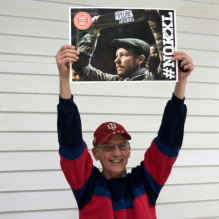
What little I learned about native cultures showed peoples who lived with far more integrity than I was able to. When I first became engaged with fossil fuel and pipeline resistance in 2013, I began to hear stories of Indigenous peoples working to protect the water. The Cowboy-Indian Alliance came together to oppose the Keystone XL pipeline. I was honored to be given this poster from the 2014 Harvest the Hope concert.
[See: The Cowboy and Indian Alliance.]

It was clear to me and others that nonnative folks needed not only to join with Indigenous peoples but be led by them. How to make that happen?

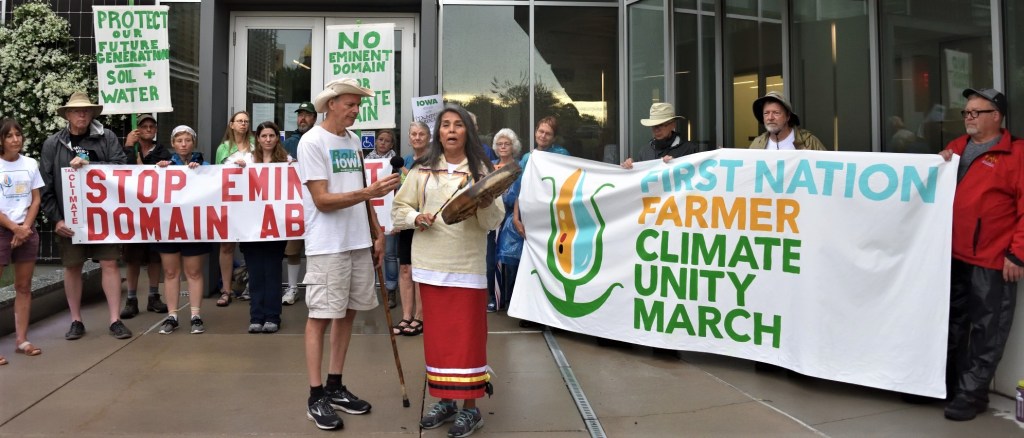
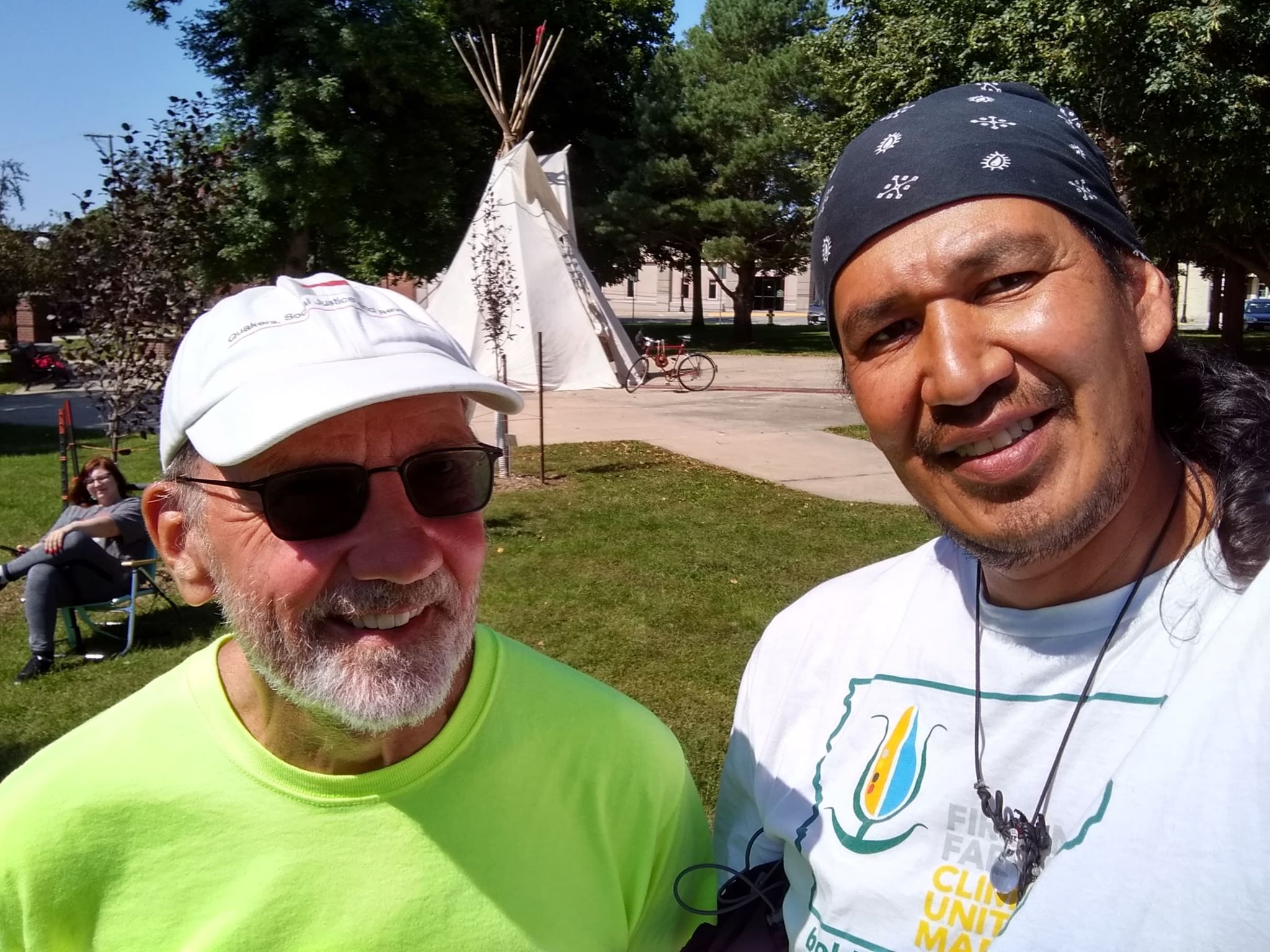
Indigenous Iowa and Bold Iowa organized the First Nation-Farmer Climate Unity March in 2018, with the intent of providing a small group of native and nonnative people the time to get to know each other, so we could begin to work on issues of common interest and concern. We walked and camped for eight days along the path of the Dakota Access pipeline from Des Moines to Fort Dodge, Iowa, ninety-four miles.
[see stories and photos from that sacred journey here: First Nation Famer Climate Unity March]

A number of us worked on various projects together since, strengthening our friendships. A number of those on that March are involved in the new coalition, the Buffalo Rebellion. That includes Sikowis Nobiss, Mahmud Fitil, Trisha Entringer, Donnielle Wanatee, Miriam Kashia, Peter Clay and me.

I plan to write a lot about the Buffalo Rebellion but wanted to begin with this introduction.

I believe the answer to the question posed by this post, Dare WE hope? is yes.

Buffalo Rebellion

#IAClimateJustice