We are facing unprecedented challenges. Meaning we need to find new paths.
What are we called to do?
Where do we look for help?
Ancestors
What things do we admire about our ancestors?
Are we living up to the lessons they provide?
What mistakes did they make that we can learn from?
Spirituality
How can we deepen faith?
What gets in the way of finding that spiritual guidance?
Do we have the courage to follow where our faith leads us?
How do we support each other to express that courage?
How do we facilitate and learn from the expression of spirituality in the wider community?
Comfortable
What are the dangers of being comfortable? I don’t believe we should be comfortable with so many things as they are now. Because so much is rooted in injustice.
Collapse
It is clear the world we grew up in is no longer. The environment is rapidly becoming increasingly chaotic. Economic and political systems are failing. Physical and social infrastructure is breaking down.
Centralized systems of government and the economy will collapse for lack of resources and the infrastructure to provide them.
Increasingly we will all be forced to reckon with disasters of all kinds. We will have no choice.
Migration
What needs to be done to prepare for climate migration.
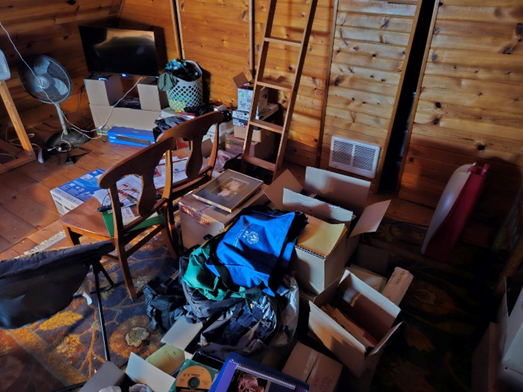
I have become a migrant myself. Having been living with my mom to care for her, I recently needed to find a new place to live when she died. The following photos show what my possessions have been reduced to. Almost all of those boxes contain books. The plastic bags contain my clothing.
This is helping me understand what will be happening to so many very shortly. What has happened to so many already. People won’t be able to move many possessions. Transportation will be limited, and we may not know where we will end up.
Today, October 18, 2023, the world seems to be falling into chaos on so many levels. Beyond the increasing threats of environmental devastation, there is the complete dysfunction of the US Congress. Economic stresses are increasing as prices for everything are skyrocketing. Wars in Ukraine and the Middle East threaten to draw more countries into their conflicts. And killing thousands of people, of children.
I usually write about those things. But now it’s overwhelming to even try to figure out which of these many threats and injustices to write about, let alone what to say about them.
As I often say, I try to discern what the Spirit is leading me to say. Recently, I’ve been led to revisit Transformative Mutual Aid Practices (T-MAPs). The subject is relevant to help us deal with all these stresses in our lives. And a framework to support each other.
[A note to people of faith. From what I’ve been learning about T-MAPs, I don’t think faith is talked about specifically. Rather, you can include that in the parts of T-MAPs related to what gives you support. I think T-MAPs can be helpful for faith groups, such as Quaker meetings, as a better way to do justice work and communal care.]
Mutual Aid
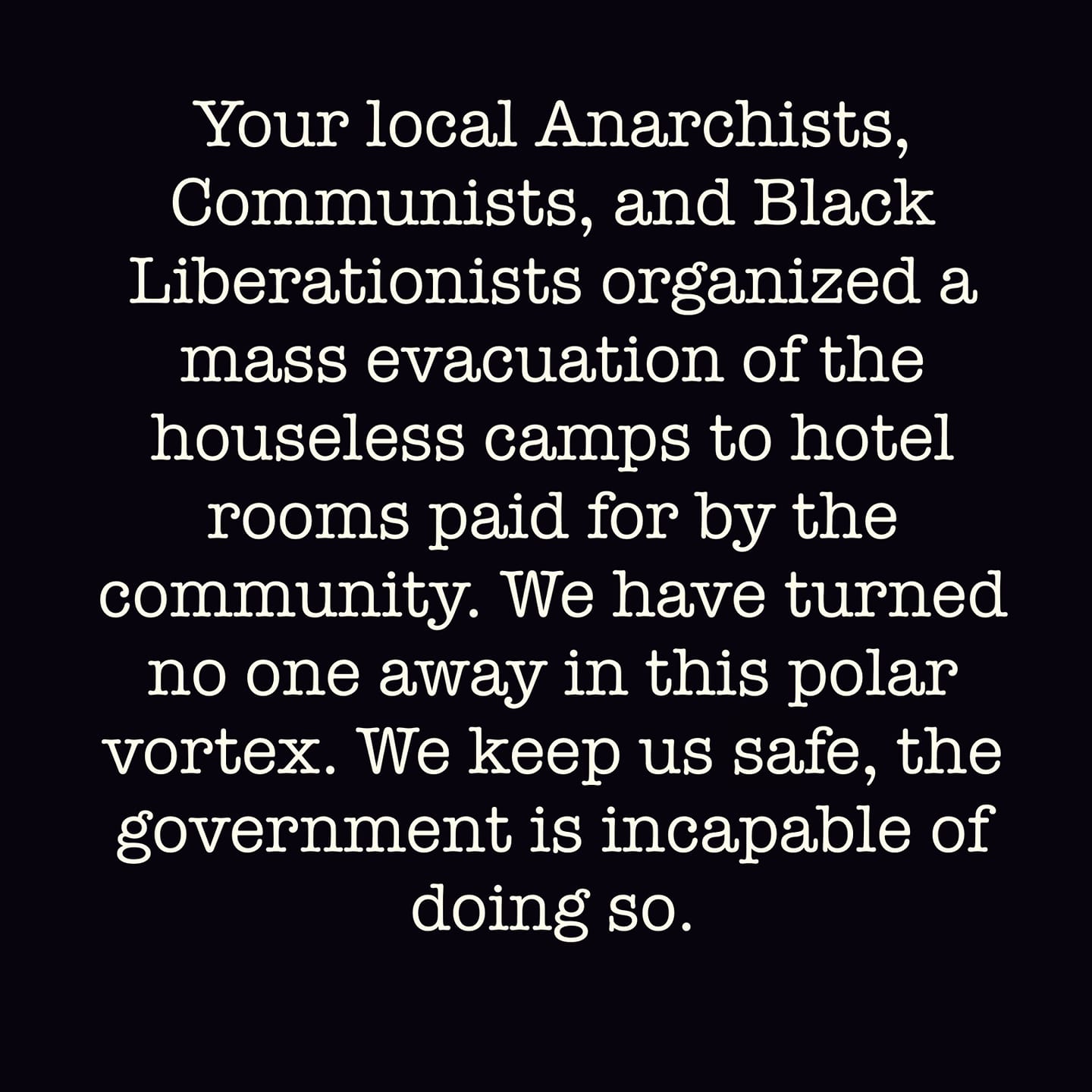
I’m not always successful in explaining why my focus for the past four years has been on Mutual Aid (and Transformative Mutual Aid Practices). One is my lived experiences working in my Mutual Aid community. Not only of the many ways this community serves the survival needs of our community (our neighbors and ourselves) but also how powerful this is in our own lives and care for each other.
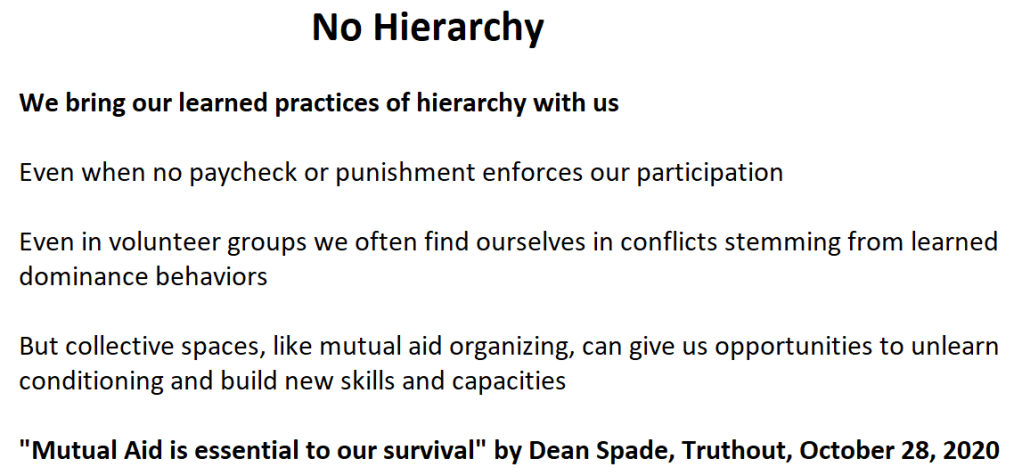
This is so because Mutual Aid is about a completely different way of thinking and being. The root of injustices in our society is the hierarchical structure of everything involved in our economic, political, and, usually, social structures. All hierarchies are power relationships and enforce a model of domination. The heart of Mutual Aid is a focus on preventing hierarchical structures. Mutual Aid is not just another approach to living and working in a community. It is about changing the very basis of how communities work.
These quotes are from “Mutual Aid Is Essential to Our Survival Regardless of Who Is in the White House. Mutual aid is inherently anti-authoritarian, demonstrating how we can organize human activity without coercion” by Dean Spade, truthout, Oct 27, 2020. Dean Spade is the author of the essential manual about mutual aid, “Mutual Aid. Building Solidarity During This Crisis (and the Next)“.
T-MAPs
Transformative Mutual Aid Practices (T-MAPs) are a set of tools that provide space for building a personal “map” of wellness strategies, resilience practices, unique stories, and community resources. Creating a T-MAP will inspire you to connect your struggle to collective struggles. When we make and share our T-MAPs with others they become potent tools for healing and liberation.
The acronym T-MAPs stands for Transformative Mutual Aid Practices
Transformation We understand that we’re always in a process of transformation and growth; we’re not just in a process of ‘recovery’ or going back to some state of health (that we may have never known). As our lives change, it’s helpful to leave tracks for ourselves about where we’ve been and where we want to be going. T-MAPs help facilitate this process.
Mutual Aid We also understand that just working on our own “self-care” isn’t enough; we also need mutu aid. Most simply, mutual aid is when people help each other. Historically, mutual aid has been a way that people have self-organized to create interdependent networks of support. People might help each other with things as basic as growing food and building barns or as abstract as education and mental health support.
Practice When we think about how personal and community change happens, it’s pretty clear to us that the only way to grow and evolve is to intentionally practice what we want to see happen in our lives. Practice might be as simple as not getting on our smart phone as soon as we wake up in the morning, or as intentional and deliberate as a daily sitting meditation practice. Practice that happens with groups of people has the potential to change the world.
The mental health of all members (of your group) should be supported in an ongoing way. Go around the circle so that comrades can indicate to the group if:
▪ they would like others to reach out to them for a period of time or in an ongoing way, and how ▪ they would be willing to reach out to others who ask for that support ▪ they are currently unable to provide support to others ▪ they would like people to hang out with when they are not feeling well ▪ they are available to hang out with others to decrease their isolation during difficult times ▪ etc
How do you see the future? Do you try to avoid thinking about it at all?
Yesterday, I wrote Rethinking the Hero’s Journey, based on the article, “White men’s roles in anti-racism work: Rethinking the Hero’s Journey,” on the Healing Minnesota Stories blog site. Because it resonated with what I’ve learned about working for peace and justice. Which is the need to find your own power, which is what gives you joy. That provides you with the positive attitude, fortitude, and the skill you can bring to the difficult work of fighting for justice.
This morning, I found the article Upskilling for an Uncertain Future that expands on those ideas. The subtitle is A middle-aged perspective on sparking joy in darkness.
The trifecta of depression, anxiety, and untethered rage are unbearable at times. Even with HRT, micro-dosing, meditation, sleeping pills, and a relatively healthy, active lifestyle, most days are permeated with a deep sense of dread, fear, rage, and sadness. On the plus side, the odd day when my old self surfaces for a day or two feels exquisite. I wanted to ask my doctor if there were any adjustments to my HRT that might improve my mood. Exasperated, she said: “Everyone is depressed. It’s not just you. It’s everywhere and everyone. It is the state of the world.” In other words, suck it up. Then the closer: “Do you need tranquilizers?”
Sparking joy in darkness
Tracy Collins
If I’m honest, there is a darker motivation…
Cooking in and of itself is proving to be a reprieve from my current, sad state of despair. But underneath the self-soothing, there is a deeper purpose.
I don’t talk about it much, but when I do, there are quiet nods of agreement. Friends share their darkest fears as well as their personal preparations for the unthinkable. With the chaos of the world, it is hard not to think about what might happen in the coming decade. The floods, water shortages, famine, and fires are already here.
…
The way I figure is that if I can master making delicious food, then I’ll be indispensable in the event of a collapse. No one will want to turf the lady who makes the best scones on the planet, the legendary stew, or life-altering casserole. They’ll keep me around so long as I keep everyone fed and happy.
For the sake of your own mental health and what you can offer to your community in the uncertain future, find your own power. Even better, put your life-long learning skills to work to learn additional skills and power.
A taboo against a subject or activity is a social custom to avoid doing that activity or talking about that subject, because people find them embarrassing or offensive.
I got to the part where he began to explain why it is taboo to talk about our civilization’s meltdown.
You see, right now, at this juncture in human history, a New Set of Taboos have emerged. Taboos exist for a reason—to hide truths we’d rather not see the light of day, because they’re too uncomfortable, painful, shameful, difficult, or challenging. As we do that, social bonds rupture. And so taboos, while they hide Issues that We Have to Face, do so precisely because they keep our tribes and hierarchies intact. There’s a form of short-term stability in them, even if the price, over the long-term, is steep, as it has been for so many civilizations before us.
What are the New Taboos of the Age of Extinction? Well, we’re not supposed to discuss How Bad Things Really Are. In what way? In almost any way. Economically—how our economies are sputtering out. Hey, billionaires are getting richer! Whee! Socially—how predators of the human soul and body both are skyrocketing to power, from abusers of women, to Manfluencers leading young men to become…abusers. How our social contracts have been ripped apart by crackpots who think nobody should have anything. Biologically–how life on the planet is undergoing a literal mass extinction. And—hey, what exactly are we going to do about climate change, and do you think the summer a decade from now is going to…be…pretty…let alone…survivable…for many?
He goes on to describe in detail the taboos we are facing and their many profound, negative, consequences. But you get the idea as soon as it is put in the context of taboo.
Just in the last few months, high-temperature records have been broken multiple times, around the globe. Extreme drought has made it hopeless to even plant crops, which means famine will be increasing. Water supplies for cities and states are drying up. Out-of-control wildfires pollute the air for hundreds of miles. Prices of everything are skyrocketing at the same time many people are losing their jobs to automation and artificial intelligence.
To talk about police brutality. Prisons that function to remove Black men and women from society. Structural racism.
The party in control of the US Congress is nonfunctional. The President of the other party is war-mongering. The expansion of NATO increases the threat felt by Russia. We are pouring billions of dollars into Ukraine as a proxy for this country’s war machine. It is taboo to point out that a small fraction of the military budget could completely fund all social programs.
It is taboo to talk about the rapid rise of Authoritarianism.
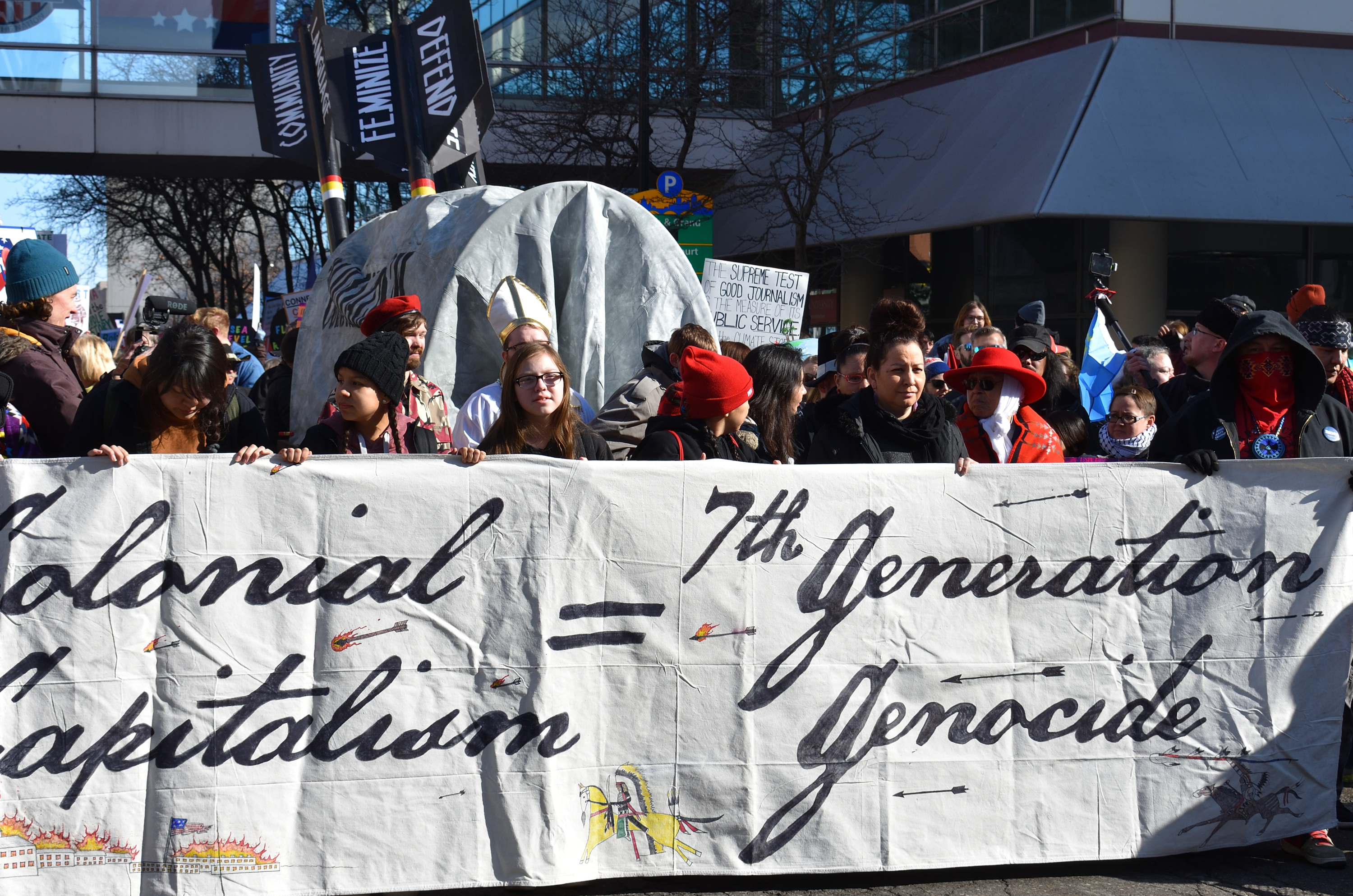
It is taboo to even talk about the theft of land from Indigenous peoples, the epidemic of Missing and Murdered Indigenous relatives, and the horrors of the institutions of forced assimilation of native children.
And just now the widening war in the Middle East. It is taboo to even suggest Israel’s policies of apartheid had anything to do with that.
In our Quaker communities, it is taboo to talk about continued racism, involvement with the Indian boarding schools, the abolition of police and prisons, or allowing conveniences to stop us from confronting our use of fossil fuels. To suggest there is anything wrong with capitalism and hierarchies of power.
The minute you even start talking about any of this stuff seriously? Repeatedly? Urgently? You’re met with the Greatest Wall in Human History. It’s not made of bricks or stone. But of something far stronger. Hegemony and ideology. Power. Conformity and social pressure
The recent passing of another of our elders brings new urgency to understanding why we are not attracting new attenders to our Quaker meetings and what to do about that.
“I’m so afraid of climate change. I just turned 17 not so long ago and I’m afraid I’ll never get to grow up because of the way our Earth is going.
“Most of my friends and family are apathetic, such as my parents who don’t like me talking about this stuff since they feel we can’t really change anything. My mom thinks it’s completely irreversible. I hate holding it all inside all the time. …
“I guess what I really wanna hear is it’s all gonna be ok even though it’s probably not the truth. I’m just scared. I’d appreciate any positive news or insight from those who feel the same way and how you manage it while doing everything you can. Thanks for reading.”
A pair of recent articles by Steve Genco is about what to say to a 17-year-old terrified about their future and poses some queries. These questions are relevant to the future of us all.
The article lists the following predictions we can rely on:
It’s going to get hotter
The weather is going to get more unpredictable and more extreme
Natural disasters are going to arrive at greater and greater frequency
Economic inequality (income and wealth) is going to get worse
We will continue depleting the natural world
The effects of climate change will be unevenly distributed around the planet
We will run out of oil and gas
What will give your life meaning?
Psychologists Edward Deci and Richard Ryan began developing what they called Self-Determination Theory (SDT) in the 1970s. SDT emerged out of Deci’s interest in intrinsic motivation.
Deci began searching for the underlying needs that intrinsically motivated behavior seemed to fulfill. He and Ryan discovered three motivators that appeared to represent basic or innate psychological needs
A need for autonomy: People need to feel self-directed and in control of our actions. We are more motivated to pursue activities we voluntarily and freely choose for ourselves, as opposed to activities we feel are imposed on us by other people or external circumstances.
A need for competence: People need to feel accomplished and capable. We are more motivated to pursue activities we feel competent to accomplish. We are also motivated to pursue activities that allow us to increase our competence through practice and repetition.
A need for belonging: People need to feel connected to others. We are more motivated to pursue activities that make us feel closer to others and that can be pursued in a supportive social context. This need is called relatedness by Deci and Ryan.
Throughout their research, Deci and Ryan studied how the goals people pursue on a daily basis and throughout their lives fulfill basic needs and contribute (or not) to personal wellbeing. In these studies, they found compelling evidence that: placing strong relative importance on intrinsic aspirations was positively associated with well-being indicators such as self-esteem, self-actualization, and the inverse of depression and anxiety, whereas placing strong relative importance on extrinsic aspirations was negatively related to these well-being indicators.
What skills and mental habits will you need?
So, how do you create a life of autonomy, competence, and belonging? You plan your life around goals and activities that make you more self-sufficient, knowledgeable, and socially connected.
In a world of cascading climate crises, shortages, and social and political unrest, people who can think for themselves, have useful practical skills, and are connected to a like-minded community, are going to have significant advantages over the cult followers, the totally-unprepared, and the socially isolated.
The needs for autonomy, competence, and belonging are exactly what Mutual Aid is about. These are the Points of Unity of my Des Moines Mutual Aid community.
Mutual Aid Points of Unity
We believe in working shoulder to shoulder and standing in solidarity with all oppressed communities.
We ourselves are oppressed, and our mutual aid work is a fight for our collective liberation. We do not believe in a top-down model of charity. Instead, we contrast our efforts at horizontal mutual aid, the fostering of mutually beneficial relationships and communities, to dehumanizing and colonizing charity.
We believe in community autonomy.
We believe that the communities we live and organize in have been largely excluded from state social services, but intensely surveilled and policed by the state repressive apparatus. Capitalism is fundamentally unable to meet people’s needs. We want to build self-sustaining communities that are independent of the capitalist state, both materially and ideologically, and can resist its repression.
We are police and prison abolitionists.
Abolition and the mutual aid that we practice are inextricably linked. We don’t rely on capitalist institutions or the police to do our work. We believe in building strong and resilient communities which make police obsolete, including community systems of accountability and crisis intervention.
We work to raise the political consciousness of our communities.
Part of political education is connecting people’s lived experiences to a broader political perspective. Another component is working to ensure that people can meet their basic needs. It is difficult to organize for future liberation when someone is entrenched in day-to-day struggle.
We have open disagreements with each other about ideas and practices.
We believe there is no formula for resolving our ideological differences other than working towards our common aims, engaging with each other in a comradely manner, and respecting one another whether or not we can hash out disagreements in the process.
Much of the above will be uncomfortable for many Friends because it involves rejecting the status quo. I contend that is why we are not attracting new attenders. If we don’t do so voluntarily these changes will be forced upon us as the status quo continues to collapse.
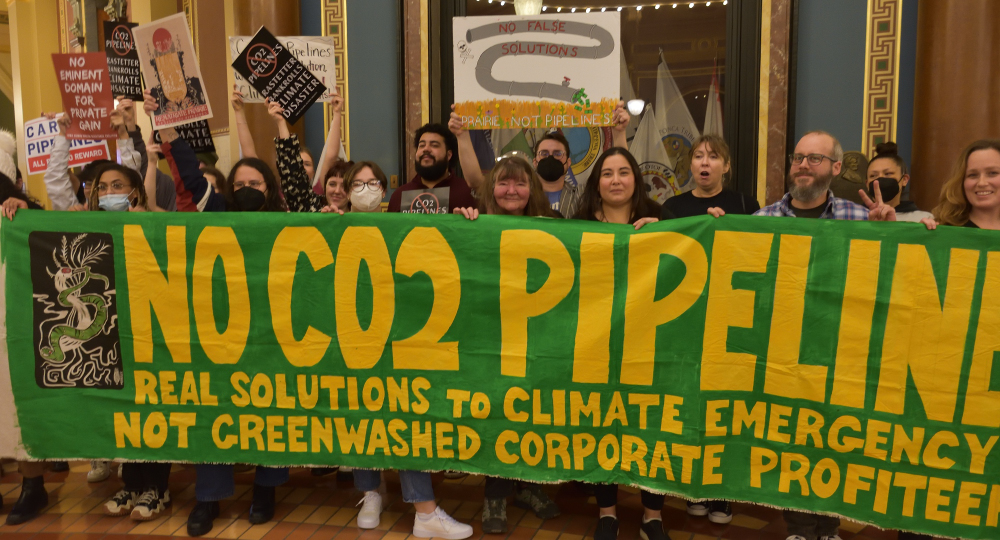
I believe we are in a time of great spiritual poverty. Friends have a precious gift to offer those needing a spiritual home. But the two will never be connected if Friends continue isolating themselves in their meetinghouses and cling to the status quo. We need to be police and prison abolitionists, find alternatives to capitalism, block the development of fossil fuel infrastructure, reject empire and militarism, and promote and follow the leadership of Indigenous peoples.
In Part 1, he discusses two questions youth should consider about this.
What predictions can you rely on?
What will give your life meaning?
The questions in Part 2 are:
What skills and mental habits will you need?
How will you live?
I’m just going to outline what Genko says in his article. You can find a fuller explanation of all of this there. I will then discuss my concepts of how to build communities for the (near) future we are facing.
What skills and mental habits will you need?
So how do you go about creating a life of autonomy, competence, and belonging? You plan your life around goals and activities that make you more self-sufficient, knowledgeable, and socially connected. In a world of cascading climate crises, shortages, and social and political unrest, people who can think for themselves, have useful practical skills, and are connected to a like-minded community, are going to have significant advantages over the cult followers, the totally-unprepared, and the socially isolated.
I have five suggestions for skills and mental habits worth acquiring as our fossil fuel-dependent civilization stumbles into the rest of this century.
The havoc from increasingly violent storms and development of large areas of drought will increasingly overwhelm our economic and political systems. Millions of people will no longer receive payments from employment or social safety systems. Financial institutions will fail. Military, public safety, and governance systems will break down. Municipal services such as water, power, transit, sewage and trash processing will fail. Food will no longer be available in grocery stores. We need to begin to prepare now. Not wait until the day water is no longer flowing from the faucet. Not wait until more of us are left without critical infrastructure. Not wait until millions are forced to flee coastal cities as the oceans flow into their streets, or flee wildfires, or areas with lethal heat, medical services including medications are no longer available. We’re already seeing the collapse of political and economic systems.
The Midwest
We are faced with two broad problems. How to adapt our own lives to deal with these changes, and what to do about the flood of people who will be migrating to the Midwest.
Since we will soon not be able to depend on municipal water and power, transport of food from distances, schools and hospitals, many will be forced to move to rural areas where they can live and grow their own food.
The Choice
It would seem we have two choices.
One is to narrowly focus on the best we can do to prepare ourselves and immediate community to adapt to the coming changes.
The other is to also work on ways we can help the many people who will be coming to where we live to learn, adapt and thrive as well as possible.
In the coming chaos we can help our own safety by welcoming climate refugees, instead of building walls against them.
Disaster Preparedness
This model is in part written from my Quaker viewpoint. As Friends, we will make the second choice, to care for those who will be displaced. This will be like disaster relief work, only on a scale never seen before.
We first need to learn how to adapt to this uncertain future ourselves. Part of that will be to network with others, both to learn from and to build a network to coordinate the response to the needs of the climate refugees.
Building Communities-My Vision
We need to build model sustainable communities. (See my posts: https://jeffkisling.com/?s=beloved+communities). I believe spirituality, whatever that might mean to you, will be an important factor in how we can adapt and live with each other during the collapse.
There have been numerous such experiments in intentional community. But this model must be created with the intention of being replicated many times over with minimal complexity, using locally available materials—a pre-fab community.
What can you tell youth about an increasingly dystopic future?
As we continue to spiral into environmental chaos and its consequences, what do we tell our children? Are we even talking about this with them? What do you say? Do they listen? Do you have any moral authority to speak from? To be clear, I speak from a life of refusing to own a car. And a life of resistance to fossil fuel pipelines and infrastructure.
Many people today seriously consider not having children.
The increasingly foul air in cities in the 1960s was a warning. And that should not have been ignored. Although introducing catalytic converters in the mid-1970s reduced the visible smog, they didn’t stop the fossil fuel emissions. But did make it easy to ignore the ever-increasing pollution.
Many people now blame the deep deceptions of the fossil fuel industry as an excuse for not having done anything about greenhouse gas emissions. When, in fact, they chose to do nothing that would interfere with the convenience of automobiles.
What cuts me deeply is knowing we absolutely would not be where we are now if we had invested in mass transit and built walkable communities instead of a car culture.
While many of my friends and I have worked hard on racism, war, poverty, and the forced assimilation of Native children, none of those compare to the travesty of what we have done to Mother Earth.
I recently came upon an interesting article by Steve Genco in response to this Reddit post.
I’m a teen and I’m really scared for my future
“I’m so afraid of climate change. I just turned 17 not so long ago and I’m afraid I’ll never get to grow up because of the way our Earth is going.
“Most of my friends and family are apathetic, such as my parents who don’t like me talking about this stuff since they feel we can’t really change anything. My mom thinks it’s completely irreversible. I hate holding it all inside all the time. …
“I guess what I really wanna hear is it’s all gonna be ok even though it’s probably not the truth. I’m just scared. I’d appreciate any positive news or insight from those who feel the same way and how you manage it while doing everything you can. Thanks for reading.”
I’ve been thinking quite a bit about what to say to a teenager like this young person to help them prepare for the dangerous world they are about to inherit. I concluded the best advice I could give would be to suggest some questions they need to consider. So here are four questions I believe any young person who wants to survive the 21st Century needs to ask and answer for themselves:
I like the idea of proposing questions for young people to ask themselves, to come to their own understanding, and to be invested in their answers. (Many Quaker meetings use questions, or queries, to guide spiritual discussions).
The article lists the following predictions we can rely on:
It’s going to get hotter
The weather is going to get more unpredictable and more extreme
Natural disasters are going to arrive at greater and greater frequency
Economic inequality (income and wealth) is going to get worse
We will continue depleting the natural world
The effects of climate change will be unevenly distributed around the planet
We will run out of oil and gas
What will give your life meaning?
This is such an important question. Throughout the coming horrific times, we must focus on what gives our lives meaning. This will allow us to be self-fulfilled no matter what is going on around us. Allows us to search through all the chaos for what gives our lives meaning and to not be led down false paths. We don’t have the time or capacity to do anything but that. No matter what happens, we can build on our own core values.
Fewer and fewer people are engaging with organized religions to find meaning in their lives. Organized religions have been involved in many atrocities.
Organized religion is usually not about spirituality. Spirituality in any of its many forms can give your life meaning. That has been and continues to be true for me as a Quaker. (I don’t think of Quakerism as organized religion). Quaker worship involves gathering together for about an hour each week in silence to seek guidance from what we call the Inner Light, the continued presence of the Spirit today and into the future. Whatever spiritual source you find, I believe that can be tremendously helpful to find a path through what is coming. I would go so far as to say essential.
Psychologists Edward Deci and Richard Ryan began developing what they called Self-Determination Theory (SDT) in the 1970s. SDT emerged out of Deci’s interest in intrinsic motivation.
Deci began searching for the underlying needs that intrinsically motivated behavior seemed to fulfill. He and Ryan discovered three motivators that appeared to represent basic or innate psychological needs.
A need for autonomy: People need to feel self-directed and in control of our actions. We are more motivated to pursue activities we voluntarily and freely choose for ourselves, as opposed to activities we feel are imposed on us by other people or external circumstances.
A need for competence: People need to feel accomplished and capable. We are more motivated to pursue activities we feel competent to accomplish. We are also motivated to pursue activities that allow us to increase our competence through practice and repetition.
A need for belonging: People need to feel connected to others. We are more motivated to pursue activities that make us feel closer to others and that can be pursued in a supportive social context. This need is called relatedness by Deci and Ryan.
Throughout their research, Deci and Ryan studied how the goals people pursue on a daily basis and throughout their lives fulfill basic needs and contribute (or not) to personal wellbeing. In these studies, they found compelling evidence that:
placing strong relative importance on intrinsic aspirations was positively associated with well-being indicators such as self-esteem, self-actualization, and the inverse of depression and anxiety, whereas placing strong relative importance on extrinsic aspirations was negatively related to these well-being indicators.
The needs for autonomy, competence, and belonging are exactly what Mutual Aid is about. These are the Points of Unity of my Des Moines Mutual Aid community.
Mutual Aid Points of Unity
We believe in working shoulder to shoulder and standing in solidarity with all oppressed communities We ourselves are oppressed, and our mutual aid work is a fight for our collective liberation. We do not believe in a top-down model of charity. Instead, we contrast our efforts at horizontal mutual aid, the fostering of mutually beneficial relationships and communities, to dehumanizing and colonizing charity.
We believe in community autonomy. We believe that the communities we live and organize in have been largely excluded from state social services, but intensely surveilled and policed by the state repressive apparatus. Capitalism is fundamentally unable to meet people’s needs. We want to build self-sustaining communities that are independent of the capitalist state, both materially and ideologically, and can resist its repression.
We are police and prison abolitionists. Abolition and the mutual aid that we practice are inextricably linked. We don’t rely on capitalist institutions or the police to do our work. We believe in building strong and resilient communities which make police obsolete, including community systems of accountability and crisis intervention.
We work to raise the political consciousness of our communities. Part of political education is connecting people’s lived experiences to a broader political perspective. Another component is working to ensure that people can meet their basic needs. It is difficult to organize for future liberation when someone is entrenched in day-to-day struggle.
We have open disagreements with each other about ideas and practices. We believe there is no formula for resolving our ideological differences other than working towards our common aims, engaging with each other in a comradely manner, and respecting one another whether or not we can hash out disagreements in the process.
As I research environmental and societal collapse, I have begun to see more references to polycrisis. The term defines itself as multiple crises.
As globalization created increasingly networked societies to facilitate the flow of information, capital, goods, services, and people, it led to the emergence of global systemic risks that could precipitate a catastrophic failure of the system. Systemic risks are “potential threats that endanger the functionality of systems of critical importance for society.” They are complex phenomena characterized by high uncertainty and ambiguity that express ripple effects impacting other systems. The global financial crisis of 2007-8 was a watershed moment for the field of systemic risks, leading to a growth of interest and scholarship.
When multiple systemic risks combine in a network it is called a risk nexus. The water-energy-food nexus and the energy-environment-growth nexus are particularly well-known and widely discussed. Risk nexuses that interact can produce interrelated and synchronized systemic crises, generating a multi-systemic crisis—called a polycrisis— with cascading effects to society. A growing number of people argue polycrisis is already here and has been developing for some time. Though there is need for further study, there already exists some literature that measures, tracks, and analyzes the interacting systemic risks implicated in a polycrisis, and in some cases, they provide theoretical or conceptual models for understanding the relationships between these risks (e.g. 1, 2, 3, 4, 5, 6). By reviewing the literature, one can identify global systemic risks that frequently reappear.
A polycrisis is a situation where multiple crises occur simultaneously or in a sequence, with the potential to exacerbate each other and create a complex, interconnected web of challenges. These crises can span various dimensions, such as economic, political, social, and environmental factors.
Although by no means exhaustive, the following list identifies risks that are commonly associated with polycrisis and gives a short description highlighting some effects and interactions:
Environmental Degradation diminishes the Earth’s carrying capacity, including the resources available for consumption, and causes premature deaths due to toxins and pollutants.
Climate Change is a threat multiplier. It significantly contributes to food and water crises, weather-related disasters, migration, and global insecurity.
Biodiversity Loss contributes to habitat and species loss, destroys vital ecosystem services required for subsistence, and reduces nature-based carbon sequestration, further exacerbating climate change.
Population Growth increases consumption of energy and resources, putting pressure on the environment.
Food, Water, and Energy Insecurity creates famine, premature death, and is a primary contributor of civil unrest, violence, war, terrorism, and migration.
Civil Unrest, War, and Terrorism leads to trauma, violence, death, environmental damage, waste, social instability and/or collapse.
Mass Migration leads to global insecurity, death, and contributes to the rise of racism, right wing populism, and authoritarianism.
Crisis of Democracy includes issues of corruption, political polarization, decreasing institutional legitimacy, and rising authoritarianism. Falling rates of democratic participation and the diminishing health of democracies exacerbate most other systemic risks, as misalignment between political elites and the public interest make progress on urgent issues less likely.
Decreasing Availability and Increasing Costs of Energy and Raw Materials reduces economic productivity and growth, increases the cost of living, and may eventually cause breakdown or collapse if inputs of energy and resources do not meet maintenance costs.
Economic Inequality drives negative social outcomes (e.g. physical and mental illness, high rates of incarceration, obesity, violence, substance-abuse, social isolation) and makes social unrest and revolution more likely.
Global Pandemics cause premature deaths, disrupt global supply chains, and lead to economic contractions, possibly leading to a recession or depression.
Debt bubbles lead to defaults, the loss of capital, and potentially financial crisis due to broader contagion effects.
Inflation debases the value of money, increases the cost of living, and may cause economic or financial crisis.
Declining Growth Rates contribute to structural (esp. financial) crises, given that capitalism depends on growth for its stability.
Interconnected risks pose the greatest threat of a polycrisis
The relationship between polycrisis and risk is complex and dynamic. Polycrisis refers to a situation where multiple global risks interact and amplify each other, creating a systemic crisis that exceeds the sum of its parts. Risk is the potential for negative consequences from uncertain events or conditions. Polycrisis increases the likelihood and severity of risks, as well as the uncertainty and complexity of managing them. Polycrisis also reduces the resilience and adaptability of societies, making them more vulnerable to shocks and disruptions. Therefore, polycrisis and risk have a mutually reinforcing effect, creating a vicious cycle that threatens global stability and well-being.
The intersection of current risks with emerging crises poses the greatest risk of a polycrisis. For example, the Global Risks Report 2023 draws a link between the cost-of-living crisis, the failure to mitigate the climate crisis, and the growing pressure on finite resources as a potential catalyst for such an event.
The 2023 edition of the Global Risks Report highlights the multiple areas where the world is at a critical inflection point. It is a call to action, to collectively prepare for the next crisis the world may face and, in doing so, shape a pathway to a more stable, resilient world.
The Global Risks Report 2023 18th Edition Insight Report, World Economic Forum
The global risks interconnection map above brought my attention to the concept of polycrisis. I have been working on the following diagram to show connections between justice-related ideas and systems for years.
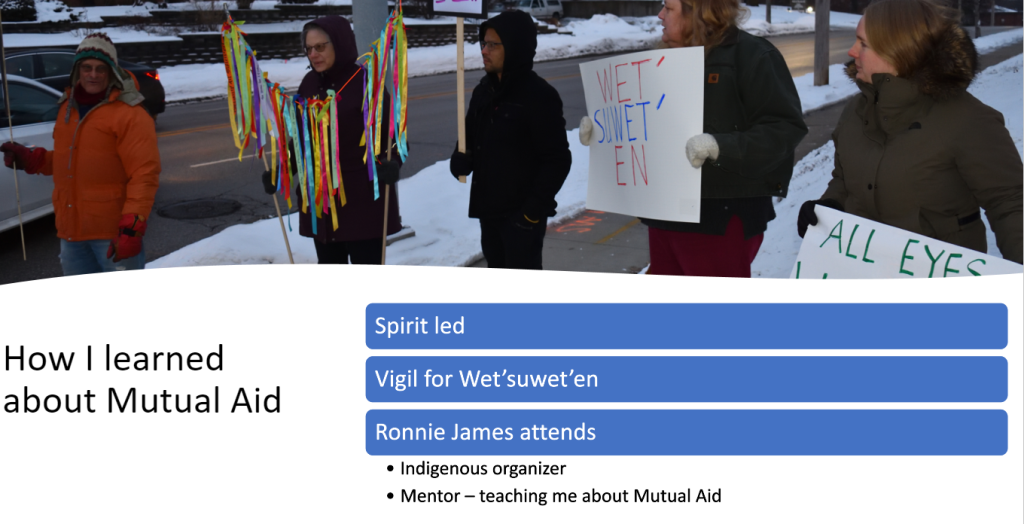
Recently, we discussed our peace and justice work at my Quaker meeting. I explained my vision of creating a Mutual Aid community to guide our justice work. And included examples of what the meeting is already doing that are Mutual Aid.
I felt we had a good discussion. I didn’t have answers to some of the questions raised. I believe those questions would be answered as we got experience with implementation. But the meeting is clearly not ready to begin working on Mutual Aid.
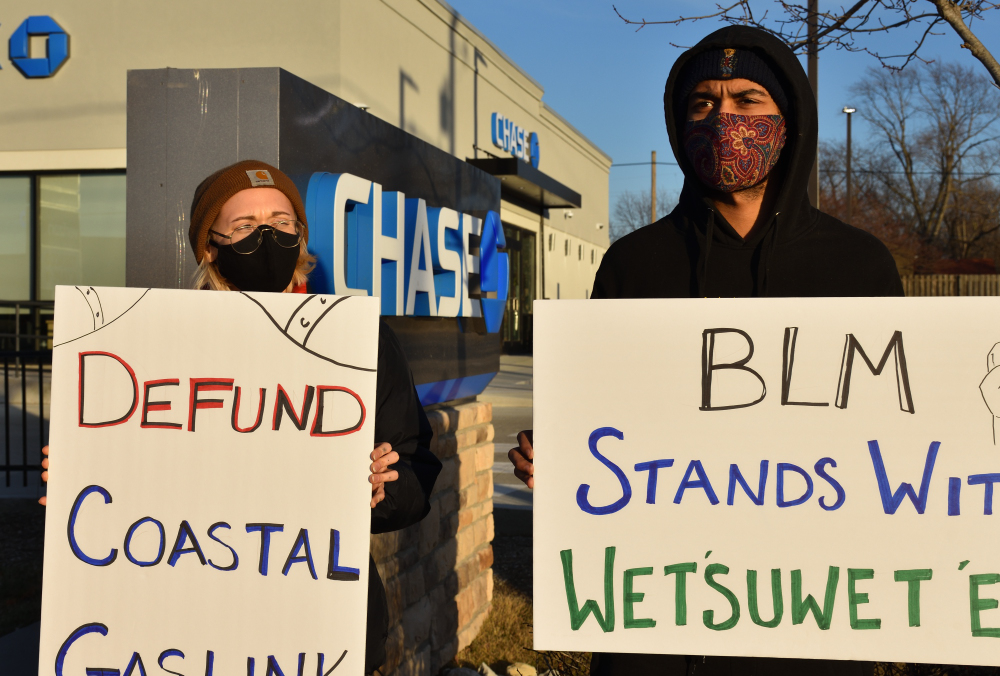
As I was preparing for this discussion, I knew it would be difficult to distill my more than three years of experience with Des Moines Mutual Aid (DMMA).
Paradigm shift: an important change that happens when the usual way of thinking about or doing something is replaced by a new and different way
Mutual Aid represents a paradigm shift in Quaker’s thinking about spirituality and justice work. How can I help people make this shift happen? What is the Spirit asking of us?
I have no doubt that the Spirit leads me to continue with my involvement with Des Moines Mutual Aid. My friends there know I hope to bring spirituality into the work of Mutual Aid, so I’ll give them an update on our meeting at Bear Creek.
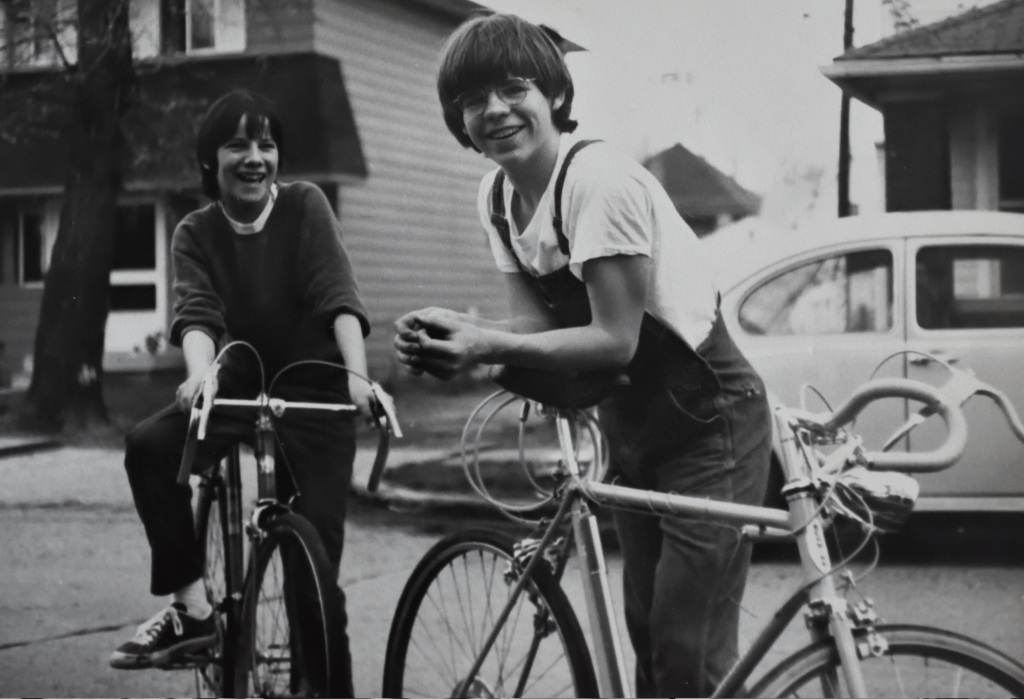
One paradigm shift from my past comes to mind. In the early 1970’s I moved to Indianapolis and was horrified by the foul air from auto exhaust. I was led to live without a car as a result. But I had no success in convincing anyone else to give up their car. So here we are now, facing ever increasing environmental chaos.
During the years’ long struggles with my meeting about cars, which was difficult since many meeting members lived in rural settings, one Friend asked if I had invited the meeting into my concerns about cars. And I realized I had not done so. When I did invite the meeting to join me in our common concerns about fossil fuels, one thing we developed was a concept we called Ethical Transportation (see below).
So, I applied that idea to invite the meeting into Mutual Aid work. I often share my experiences at Des Moines Mutual Aid with the meeting. Our discussion this past weekend is another step that will lead to Mutual Aid. As more communities and people are impacted by environmental and social chaos, we will naturally turn to the idea of Mutual Aid for disaster relief.
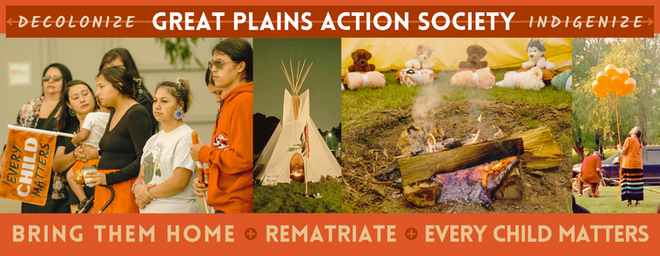
I am impressed with the Great Plains Action Society’s Mechanism of Engagement. Mutual Aid is one of the Methods in the model. I wonder what such a model would look like for Quakers. Maybe that is part of the way forward, for my Quaker meeting to become more oriented toward Mutual Aid.
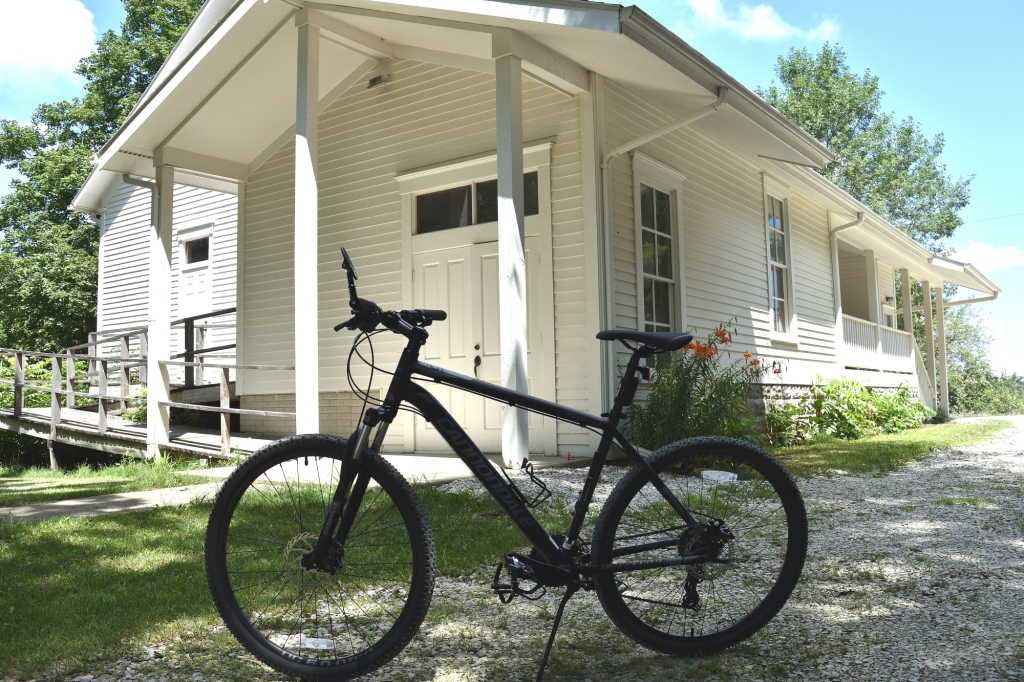
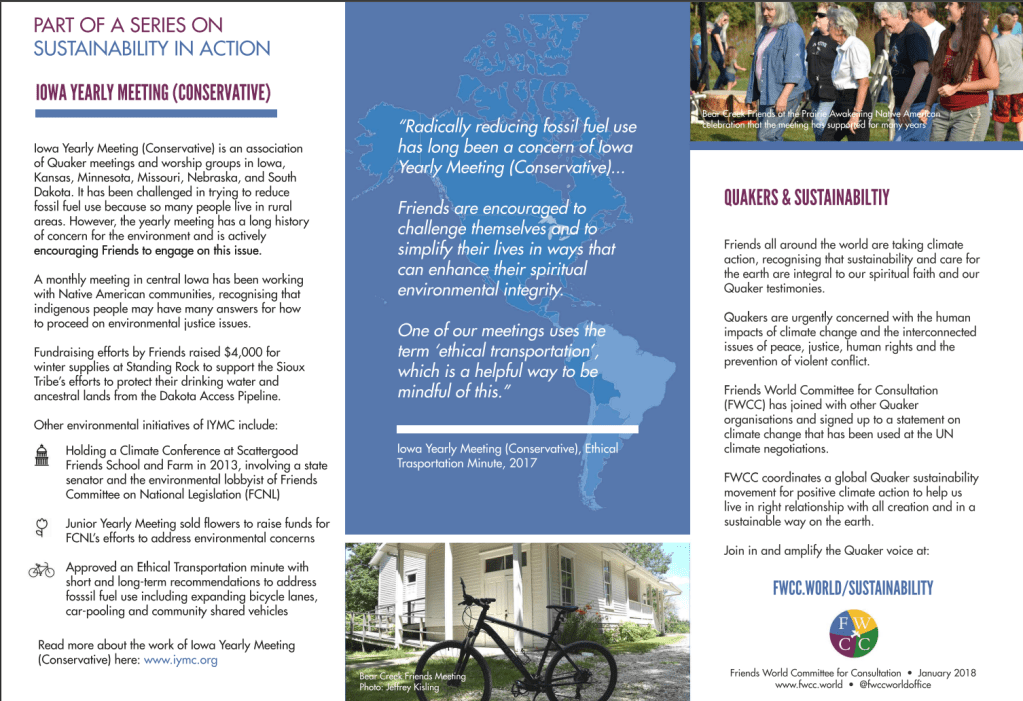
Radically reducing fossil fuel use has long been a concern of Iowa Yearly Meeting (Conservative). A previously approved Minute urged us to reduce our use of personal automobiles. We have continued to be challenged by the design of our communities that makes this difficult. This is even more challenging in rural areas. But our environmental crisis means we must find ways to address this issue quickly. Friends are encouraged to challenge themselves and to simplify their lives in ways that can enhance their spiritual environmental integrity. One of our meetings uses the term “ethical transportation,” which is a helpful way to be mindful of this. Long term, we need to encourage ways to make our communities “walkable”, and to expand public transportation systems. These will require major changes in infrastructure and urban planning. Carpooling and community shared vehicles would help. We can develop ways to coordinate neighbors needing to travel to shop for food, attend meetings, visit doctors, etc. We could explore using existing school buses or shared vehicles to provide intercity transportation. One immediately available step would be to promote the use of bicycles as a visible witness for non-fossil fuel transportation. Friends may forget how easy and fun it can be to travel miles on bicycles. Neighbors seeing families riding their bicycles to Quaker meetings would have an impact on community awareness. This is a way for our children to be involved in this shared witness. We should encourage the expansion of bicycle lanes and paths. We can repair and recycle unused bicycles and make them available to those who have the need.
I’ve had a lifelong struggle to call attention to this country’s flagrant disregard for the need to protect nonrenewable sources of energy and the mounting environmental devastation from our greenhouse gas emissions. Obviously, these are also global issues. We are depleting fossil fuel supplies of the entire world. And our gigantic fossil fuel emissions affect the world.
It is often pointed out that those nations with the lowest emission are most affected by the environmental damage done by “developed” countries.
I haven’t learned enough about these global impacts. This recent paper, Eight Contradictions in the Imperialist ‘Rules-Based Order’ that I’ve been writing about is helping with my education. (See: https://quakersandreligioussocialism.com/?s=imperialism )
Eight Contradictions in the Imperialist ‘Rules-Based Order’
The contradiction between moribund imperialism and an emerging successful socialism led by China.
The contradiction between the ruling classes of the narrow band of imperialist G7 countries and the political and economic elite of capitalist countries in the Global South.
The contradiction between the broad urban and rural working class and sections of the lower petty bourgeoisie (collectively known as the popular classes) of the Global South versus the US-led imperial power elite.
The contradiction between advanced rent-seeking finance capital versus the needs of the popular classes, and even some sections of capital in non-socialist countries, regarding the organisation of societies’ requirements for investment in industry, environmentally sustainable agriculture, employment, and development.
The contradiction between the popular classes of the Global South and their domestic political and economic power elites.
The contradiction between US-led imperialism versus nations strongly defending national sovereignty.
The contradiction between the millions of discarded working-class poor in the Global North versus the bourgeoisie who dominate these countries.
The contradiction between Western capitalism versus the planet and human life.
The eighth contradiction summarizes the fundamental contradiction, the contradiction between Western capitalism versus the planet and human life.
The inexorable path of this system is to destroy the planet and human life, threaten nuclear annihilation, and work against the needs of humanity to collectively reclaim the planet’s air, water, and land and stop the nuclear military madness of the United States. Capitalism rejects planning and peace. The Global South (including China) can help the world build and expand a ‘zone of peace’ and commit to living in harmony with nature.
With these changes in the political landscape, we are witnessing the rise of an informal front against the US-dominated imperialist system. This front is constituted by the convergence of:
Popular sentiment that this violent system is the main enemy of the people of the world.
Popular desires for a more just, peaceful, and egalitarian world.
The struggle of socialist or nationalist governments and political forces for their sovereignty.
The desires of other Global South countries to reduce their dependence on this system.
The main forces against the US-dominated imperialist system are the peoples of the world and the socialist and nationalist governments. However, there must be space provided for integrating governments that wish to reduce their dependency on the imperialist system.
The world currently stands at the beginning of a new era in which we will witness the end of the US global empire. The neoliberal system is deteriorating under the weight of numerous internal contradictions, historical injustices, and economic unviability. Without a better alternative, the world will descend into even greater chaos. Our movements have revived hope that something other than this social torment is possible.





















 Quakers and Mutual Aid