Now shall I walk, or should I ride?

My friends at the Great Plains Action Society (GPAS) have done a lot of work to call out the whitewashed history of Thanksgiving, one of many colonial mythologies about Indigenous Peoples and the founding of the US and Canada, which I wrote about yesterday.

But of course, there is nothing wrong with reflecting on what we are thankful for.

I am grateful for many things.

My first thought went to something I recently heard someone say. That he was a draft resister in the Vietnam War era, and that was the best thing he’d ever done. I was astonished to hear that fifty years later. I know what he was saying because I was a draft resister then, as well. As an 18-year-old, I knew this decision would set the course of my life. It would be easy to accept conscientious objector status and do two years of alternative service. Fortunately, though, I was aware of the stories of many Quaker men I knew who refused to participate in the war machine. Knowing they risked imprisonment and often were. But I saw how that choice defined the rest of their lives.

It was a clear choice that Robert Frost’s poem, The Road Not Taken, tells so eloquently.

At that same time, I found I had another decision to make. Moving to Indianapolis, I was horrified by the noxious clouds of smog pouring from every tailpipe; this was before catalytic converters covered up the damage being done to Mother Earth. I made another decision that was definitely a road less traveled (so to speak): to live without a car. That was another of the best decisions of my life, defining so much of what happened thereafter. Affecting every day of my life as I was able to witness the wonder of what I was walking through.

So the phrase ‘Now shall I walk, or shall I ride?’ in Metaphors of Movement caught my attention.

The Best Friend

Now shall I walk
Or shall I ride?
“Ride”, Pleasure said;
“Walk”, Joy replied.

William Henry Davies
1871 – 1940

In his 1914 poem The Best Friend, the Welsh poet and occasional vagabond W.H. Davies pondered a timeless question: “Now shall I walk, or should I ride?” This seemingly simple dilemma encapsulates the modern industrial choice between slow-paced ageless wandering on foot or embracing the thrill of motorized transport, along with the attendant speed and freedom it offers, which has become such an integral part of our contemporary lifestyle. It likewise speaks volumes about us and about the nature of the choices we make daily.

Gone perhaps are the days of poetic musings over the merits of walking versus riding. Yet one can’t help but wonder if we have lost something essential along the way—a connection with the world that only a leisurely walk can provide.

C.S. Lewis, while growing up in the outskirts of Belfast, Northern Ireland, counted it among his blessings that his father had no car, so the deadly power of rushing about wherever he pleased had not been given to him. He thus measured distance by the standard of a man walking on his two feet and not by the standard of the internal combustion engine, for it is here where both space and time is annihilated by the deflowering of distance. In return, he possessed “infinite riches” in comparison to what would have been to motorists a “little room.” Key to those riches was what he came to call, and experience throughout life as, “joy,” and walking became a portal through which he sought it. A participatory engagement with life and living which I contend is as vital to our survival as breathing itself. 

Metaphors of Movement by Keith Badger, Parabola, Nov 22, 2023


I hope that in this year to come, you make mistakes. Because if you are making mistakes, then you are making new things, trying new things, learning, living, pushing yourself, changing yourself, changing your world. You’re doing things you’ve never done before, and more importantly, you’re doing something.

Neil Gaiman

The Road Not Taken

Two roads diverged in a yellow wood,
And sorry I could not travel both
And be one traveler, long I stood
And looked down one as far as I could
To where it bent in the undergrowth;

Then took the other, as just as fair,
And having perhaps the better claim,
Because it was grassy and wanted wear;
Though as for that the passing there
Had worn them really about the same,

And both that morning equally lay
In leaves no step had trodden black.
Oh, I kept the first for another day!
Yet knowing how way leads on to way,
I doubted if I should ever come back.

I shall be telling this with a sigh
Somewhere ages and ages hence:
Two roads diverged in a wood, and I—
I took the one less traveled by,
And that has made all the difference.

Robert Frost

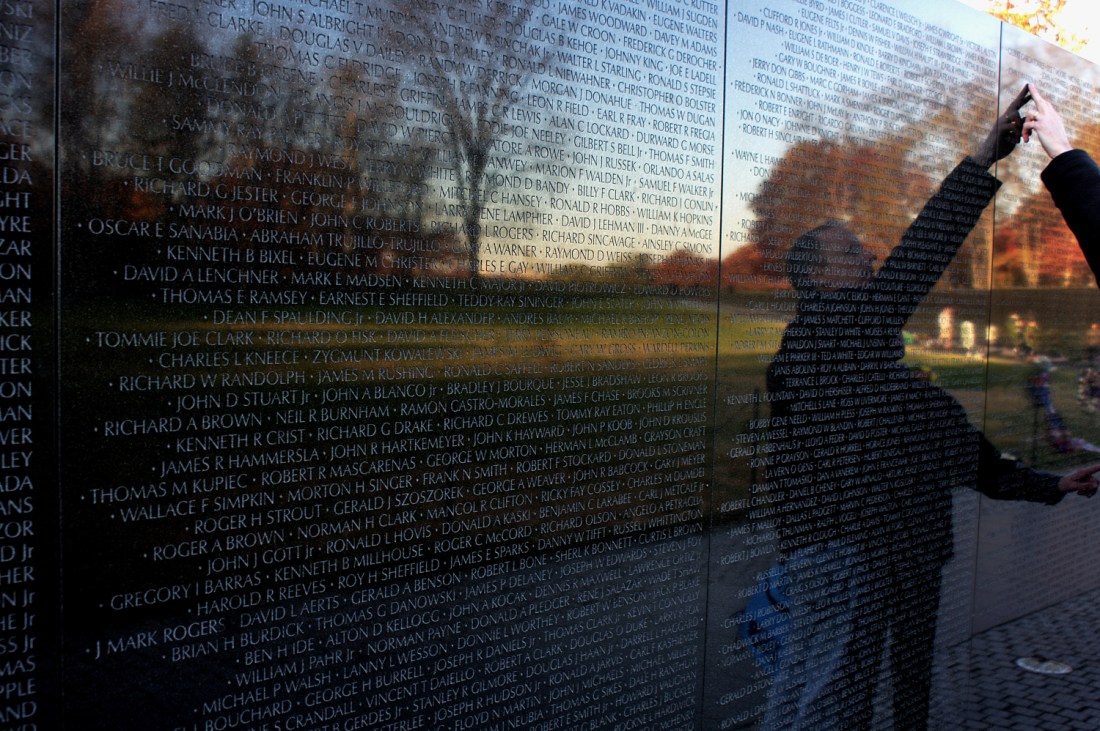
Vietnam War Memorial, Washington, DC (c) 2023 Jeff Kisling

This is a link to my photos of the Vietnam War Memorial. https://jeffkislingphotography.wpcomstaging.com/2023/11/17/washington-dc/nggallery/washington-dc/vietnam-war-memorial

Those that conspire to live the truth

whitewash: deliberately attempt to conceal unpleasant or incriminating facts about (someone or something):

Sadly, but importantly, white settler colonists such as me are learning a great deal about the genocide of native peoples, in large part facilitated by the institutions of forced assimilation. Sometimes referred to as Indian boarding or residential schools, though school is a misnomer, an example of whitewashing. The remains of thousands of native children are being located on the grounds of these institutions in this country and Canada.

My friends at the Great Plains Action Society provide the following messages and resources related to Truthsgiving. The pledge to reject colonial holidays that perpetuate dangerous stereotypes and whitewashed history is included below.

The following was written by my friend Ronnie James.

Doing Truth When The World Is Upside Down

To walk a path of Doing The Truth is a battle with a very young culture. Telling the truth is comparably easy, we have our oral histories, art and traditions created and carried on, histories printed by those that found a way to the presses. We can recount the stories and lessons that survived colonialism.

But to do the truth, to live a life that enforces what we once had, a life and culture that made a millennia of humanity possible to thrive, is to be at war with what has defined and destroyed this world for too long.

We, those that conspire to live the truth, have chosen to honor our histories of cooperation. We know, with all that we have, that a world of competition and conquest is the opposite of how we gained the knowledges that propelled our abilities to create the sciences and the art and architecture of beautiful societies that our ancestors built, and we draw our strength from that to continue, to create, a world our future generations can thrive in.

It has only been a very short time that the world has been this way, which is the proof that it doesn’t have to stay this way.

Doing Truth When The World Is Upside Down


Truthsgiving Webinar 2020

On November 26, Great Plains Action Society organized a webinar to educate folks about the mythology of Thanksgiving and celebrate the spirit of Truthsgivng by reporting on the many ways that one can resist colonial-capitalism and whitewashed history through the revolutionary act of mutual aid and truth-telling.


Take the Pledge


Truthsgiving, Day of Mourning, Anti-Thanksgiving Resources

“The following resources are available so that folks can learn more about Indigenous perspectives on Thanksgiving, the land they live on, how to be a good ally, and how they can decolonize their minds in order to abolish personal and institutionalized white supremacy.”
https://www.truthsgiving.org/resources


The second question

What questions do you ask these days? Ask yourself or others? Are you brave enough to ask anything at all? Such as what can we do about accelerating authoritarianism? Runaway global burning? Why is the US complicit in the Israeli carpet bombing of Gaza? These things can only happen if authority is not questioned. There is a palpable sense of fear for anyone to question empire today. People who question are beaten, jailed, killed.

Yesterday I wrote about asking the right questions. As a spiritual person, I have been, and believe I will continue to receive answers from the Spirit or Inner Light. I appreciate the spirituality of the following.

From my career in medical research, the first thing I learned was the most important thing is to ask the right questions.

So, during a recent discussion about Quakers and the Indian Boarding Schools, I recognized the significance of the question that was asked, “how can we decolonize ourselves?” Prior to that, we were lost as we tried to understand our ancestor’s involvement in those institutions. It seemed the subtext of the question is “is it even possible to decolonize ourselves?” Which I tried to answer yesterday.

That question immediately brought to mind something that I had heard the Indigenous spiritual leader, Arkan Lushwala, say.

The answer to “what can I do?”

“Everywhere people ask, “what can we do?”
The question, what can we do, is the second question.
The first question is “what can we be?”
Because what you can do is a consequence of who you are.
Once you know what you can be, you know what you can do.”

Arkan Lushwala

Speaking about what is happening on Earth right now,
many of the conditions of life that we used to take for granted,
now are really out of balance.
Hopefully we still have time to get back into balance
so life may continue.
I travel around the world and meet people and talk to people
from all different cultures.
And everywhere people ask, “what can we do?”
The question, what can we do, is the second question.
The first question is “what can we be?”
Because what you can do is a consequence of who you are.
Once you know what you can be, you know what you can do,
and we cannot afford wasting time;
we have little time.
We need to be precise now.
When someone sincerely asks, “what can I do?”
my humble answer,
the only answer that I find in my heart to be sincere is,
“First find out what you can be.”
Action is extremely necessary at this time.
This is not a time just to talk about it.
The most spiritual thing now is action.
To do something about what’s happening.
To go help where help is needed.
To stand up when we need to stand up,
and protect what is being damaged.
And still, this action needs to be born
from a place in ourselves that has real talent,
real intelligence, real power,
real connection to the heart of the Earth,
to universal wisdom,
so, our actions are not a waste of time.
So, our actions are precise,
our actions are in harmony with the movement,
the sacred movement,
of that force that wants to renew life here on Earth
and make it better for the following generations.

Arkan Lushwala


Arkan says we are facing life threatening situations related to environmental damage.  We are facing such severe challenges that we cannot solve them only by ourselves.

We must move beyond thinking and talking. Action now is essential.

Action is spiritual.

We need to practice trying to reach our sacred space. We need a higher universal intelligence to help solve these problems.

We must open a sacred space for prayer so we may be open to the warrior spirit.

The importance of prayer.

  • We pray as a form of connecting to other forms of communication
  • We need to be aware of what is happening in the moment, elevate ourselves, move closer to the sacred
  • I first have to reach deep into my own heart

You start praying while you are also listening. I become aware of, remembering, what I pray about at that moment. We need to rely on our own ancient indigenous memory. Stop being isolated. Fully become part of the earth and water and plants and air. This is an immense source of knowledge about these problems.

I am in front of the sacred fire of all who are listening. Let’s say that I am thinking now. I am remembering. The notion of intelligence and to understand refers to memory. Intelligence means learning, but also achieving that state in your mind when you are remembering. The air that we are breathing carries the memories of the ages, the movement of energy. Deepest intelligence in our culture is memory. There are always memories of the ages in all that surrounds us.

The state of being, the prayer, makes us open to receiving. If we are really open, and not blocking ourselves, and connected to what is around us, with our eyes, breath, sensations, and feeling that arrive in our heart, through our antenna, if we are open in this way while we are doing something, our action is being infused with guidance or instructions. There is something there that is watching what you are doing and helping guide you. Sometimes we need the help of the elders or others to understand these experiences.

We ask for help. When we put ourselves in that elevated space, that makes it much easier for us to receive help. Help is always there but we often miss the messages.

If I am open and receptive to other frequencies and the higher state of my being, I’ll have much more help in my work.

The correct way is not to take credit, but the joy is the moment itself, by feeling integrated to life while you are doing the action.

When we sit with others in a circle, when we all change the state of our being together, we move up to the sacred together. Working with others in community, much, much more can be accomplished.

If a person expresses an experience that is from a sacred space of high resonance, I am activated by that. It resonates in my own heart and mind and spirit, and it triggers my memory, too. by the presence of something sacred.

We sit in a circle and witness someone remembering. We receive the same spirit together. Our individual self and agenda slips away. Joining our hearts. Mother Earth is the One, all of us become the One together. A lot of wisdom comes south. We are all impressed by the presence of something sacred.


It is becoming clearer and clearer, with every passing day, that walking a prayerful, peaceful spiritual path is the only way forward to a just, sustainable, and harmonious world.”

Prophecies, Unprecedented Change and the Emergence of a New Global Civilization, 2017-2020, WALKING THE RED ROAD·TUESDAY, DECEMBER 20, 2016

Asking the right questions

Today there is a lot of attention on what were called the Indian Boarding Schools in the U.S. and Canada. This is in large part because of the uncovering of remains of children on the grounds of many of those institutions using ground-penetrating radar. These searches began in order to document the known history of native children dying or being killed at these schools. Thousands of remains have been found, and the searches continue.

Stories about this are beginning to be told in many mainstream news articles, films, and books.

The National Native American Boarding School Healing Coalition (NABS) is an excellent source of information.

The New York Times recently published this extensive multimedia story, ‘WAR AGAINST THE CHILDREN’. The Native American boarding school system — a decades-long effort to assimilate Indigenous people before they ever reached adulthood — robbed children of their culture, family bonds and sometimes their lives. By Zach Levitt, Yuliya Parshina-Kottas, Simon Romero and Tim Wallace, The New York Times, Aug. 30, 2023

The Department of the Interior is investigating under the leadership of Secretary Deb Haaland, an enrolled member of the Laguna Pueblo.

Quaker Indian Boarding Schools

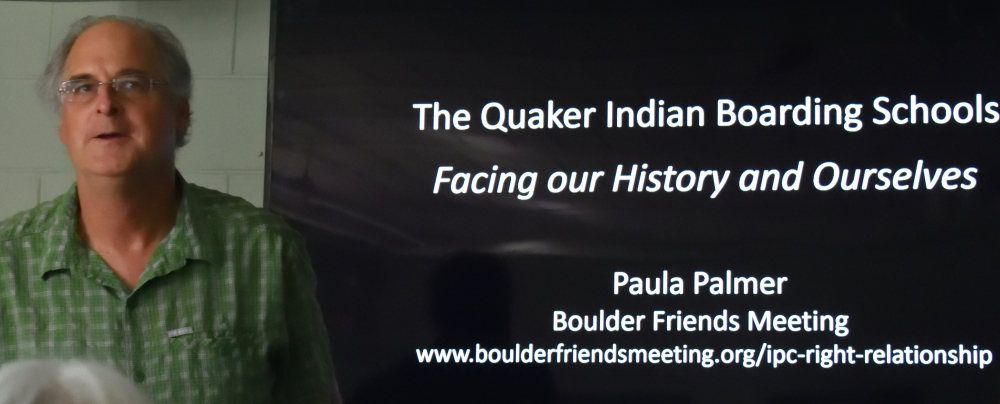
This is causing a lot of soul-searching in Quaker communities because some of those institutions were run by Quakers. My friend Paula Palmer published the article Quaker Indian Boarding Schools. Facing Our History and Ourselves, in Friends Journal, October 1, 2016

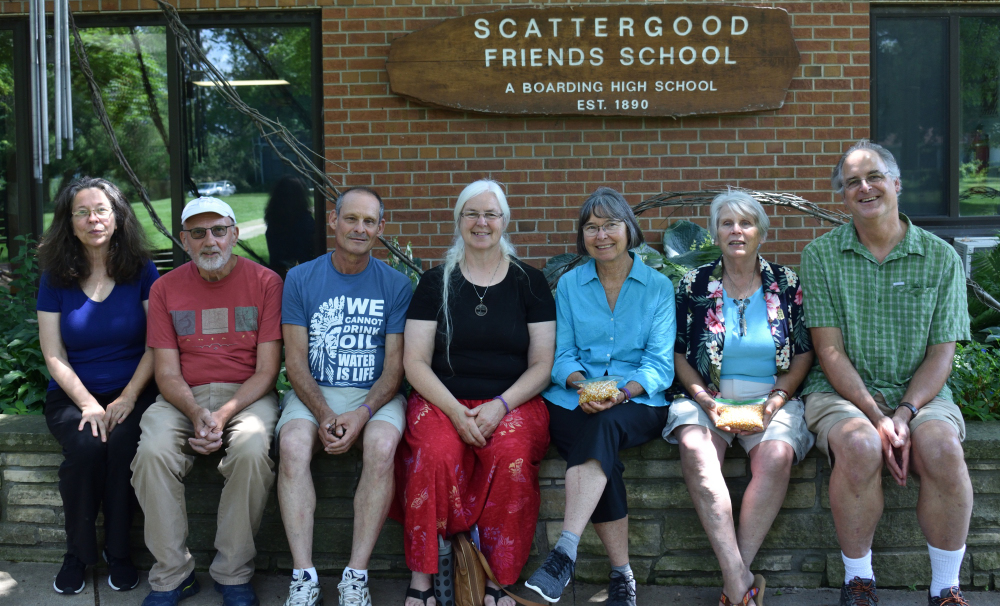
In this image at Scattergood Friends School are those of us who helped Paula Palmer (third from the right) give presentations and workshops related to her work, Toward Right Relationship with Native Peoples.

I was ignorant of this history until about a decade ago. But since then, this has become a focus of my prayers and work. I’ve written a lot about what I’ve been learning. https://quakersandreligioussocialism.com/forced-assimilation/.

I’ve sought opportunities to find ways to build relationships with Indigenous people because we cannot begin to heal until we all come together and begin to know one another. This is a list of what I have learned from spending time in Black, Indigenous, and other people of color (BIPOC) communities. Offered in the hope that many more people begin to make these connections.

This takes a real commitment to spend a lot of time in diverse communities. Until I recently moved from Iowa, I joyfully participated in our (Des Moines Mutual Aid) free food project every Saturday morning for over three years. Over that time I heard every one of my friends say these Saturday mornings were the highlight of their week. Every person became a close friend.

This takes a real commitment to keep showing up, even when we make mistakes, which I did, and you undoubtedly will. But showing our vulnerabilities is an important part of building trust. Showing we are willing to risk awkwardness.


How do we decolonize ourselves?

During a recent discussion, a Friend asked, how do we decolonize ourselves? I believe this is one of the right questions to ask. This changes the focus from what our ancestors might have done and directs it to “what we can do now?” The question correctly begins from the point that we are colonized.

Decolonizing Quakers

A group of North American Friends, Decolonizing Quakers explores these questions and offers resources for our education.

The Stories We Weren’t Told

Many Quakers have learned that our Quaker ancestors and predecessors had good relationships with the Indigenous peoples who were on this continent when Quakers arrived from England and other European lands. We have read about how William Penn was respectful of the Native people and offered to pay “rent” for the land occupied by the new settlement that became Philadelphia. We have heard about Quaker missionaries who went out to “help” Native children learn the ways of European Christians.

There are threads of truth in these stories and others that we tell ourselves, but those small threads are too weak to tie together a benign story. As we look with open eyes at the history that white, European, Christian settlers and Indigenous peoples walked through since the time of “first contact,” we can’t help but see a different picture. In truth, we must acknowledge that Quakers participated in — and sometimes led — attempts to force Indigenous people to assimilate into an inflexible mold that fit the vision that Quakers shared with other white, European, Christian settlers.

This website offers resources to help all of us set aside the myths that come between us — as settlers and Indigenous peoples –and to find joy in knowing all our relatives better and more honestly.

Decolonizing Quakers https://www.decolonizingquakers.org/

Mutual Aid is a way to decolonize ourselves

A fundamental part of the answer to how we can decolonize ourselves is to understand that colonization is a hierarchy of power. In the simplest terms, in our society, White supremacy. To decolonize ourselves, we must work to eliminate hierarchies and their resulting power structures.

It was a leading of the Spirit that connected me with Ronnie James, an Indigenous organizer who is part of the Great Plains Action Society (GPAS) nearly four years ago. His work on Mutual Aid is supported by GPAS. Mutual Aid is a key method of the Great Plains Action Society’s Mechanism of Engagement. (https://quakersandreligioussocialism.com/mutual-aid/)

There is often a tepid response when I talk about Mutual Aid. The key to understanding the radical nature of Mutual Aid is showing this is not just another social justice idea. Mutual Aid is a fundamentally different way to live and relate to each other. There are hierarchies in even the most progressive organizations. Which means they perpetuate dominance, which leads to oppression.

Mutual Aid is a total break from that. It is a revolutionary way to be.


In the Midwest you can find information on the Iowa Mutual Aid Network website: https://iowamutualaid.org/

Rethinking the Hero’s Journey

It’s difficult to not feel overwhelmed and deep despair. On top of everything else, it looks like a global civil war erupting between supporters of Israel and those of Palestine. I hope those reports are exaggerated. It’s hard to trust any type of media these days.

Although it might not seem much compared to living without food, water, shelter, power, and constant bombardment, awaiting a ground invasion, I’m deeply concerned about my friends and neighbors. For a long time, I’ve been aware of the impact of our own traumas. Isolation, increased rates of suicide, and giving up. There is a sense that things will only get worse on multiple fronts.

There are the usual calls to contact our Congresspeople, but they can’t even organize themselves, let alone listen to us.

I’ve been intrigued by this recent post, White men’s roles in anti-racism work: Rethinking the Hero’s Journey, Healing Minnesota Stories, Sept 25, 2023. The blog’s main author is Scott Russell, so I assume he wrote this.

He begins by saying “This essay is written for white men written by a white man. It’s a working draft. Comments welcome.” Keeping that in mind, I believe there are things he says that can be helpful to a broader audience, for those of us who struggle to find ways to work for justice. Who feel there isn’t anything we do that might make a difference.

The struggle to end racism and white supremacy is heroic work, but where do white men fit into the movement?

White men are at the top of the white supremacy hierarchy. It shouldn’t be surprising if some Black, Indigenous, and other people of color (BIPOC) don’t trust us.

Some might reasonably worry that asking white men to be heroes in this work would trigger ‘White Savior’ behavior, where a white man acts from a presumed position of superiority to “rescue” BIPOC.

That would be a big step in the wrong direction.

More white men are needed in the struggle against racism. I believe we can be anti-racism heroes, but it means undoing old programming and rethinking what it means to be a hero.

White men’s roles in anti-racism work: Rethinking the Hero’s Journey, Healing Minnesota Stories, Sept 25, 2023

The Hero’s Journey

I am trying to wake up to ways that my culture – including white supremacy and patriarchy – has shaped me, a white man born in the late 1950s. Growing up, I read comic books – Batman, Superman, Spiderman, Flash, the Green Lantern and more. I watched Gunsmoke on TV, in which Marshall Matt Dillon single-handedly dealt with the violence of the Old West.

They informed my understanding of a hero as a lone actor who rarely if ever asked for help.

These stories have a hallmark of white supremacy: Individualism.

In the end, it’s about one lone white guy (or white Hobbit) accomplishing a seemingly impossible task. In the three stories above, they save humanity.

Those stories have the hallmark of white supremacy: Individualism.


Rethinking the Hero’s Journey

The hero often doesn’t realize they need a challenge. Thus, they don’t know they must search for their own challenge. They need to be aware of friends and mentors who can shed some light and point them on a new path. This path has different challenges: more self awareness, self control, and compassion.

Who is a hero in this context? Someone who faces the truth, stays grounded, and doesn’t let himself get lost in either self criticism or defensiveness.

A hero takes risks, and has the integrity to admit mistakes.

I aspire to talk less and listen more.

A hero is humble.

Finding your power

The message of that blog post, the message I want to share with you, is we need to find where our particular talents connect with the justice work. This work is difficult enough to do without forcing yourself to do things you think you should do, but don’t excite you.

I was blessed to discover this early in my justice work, though it took some time to realize it. In my case, my passion is photography. In the PDF file below I go into this in great detail. But to summarize:

  • I learned how to work in a photographic darkroom while in high school, Scattergood Friends School
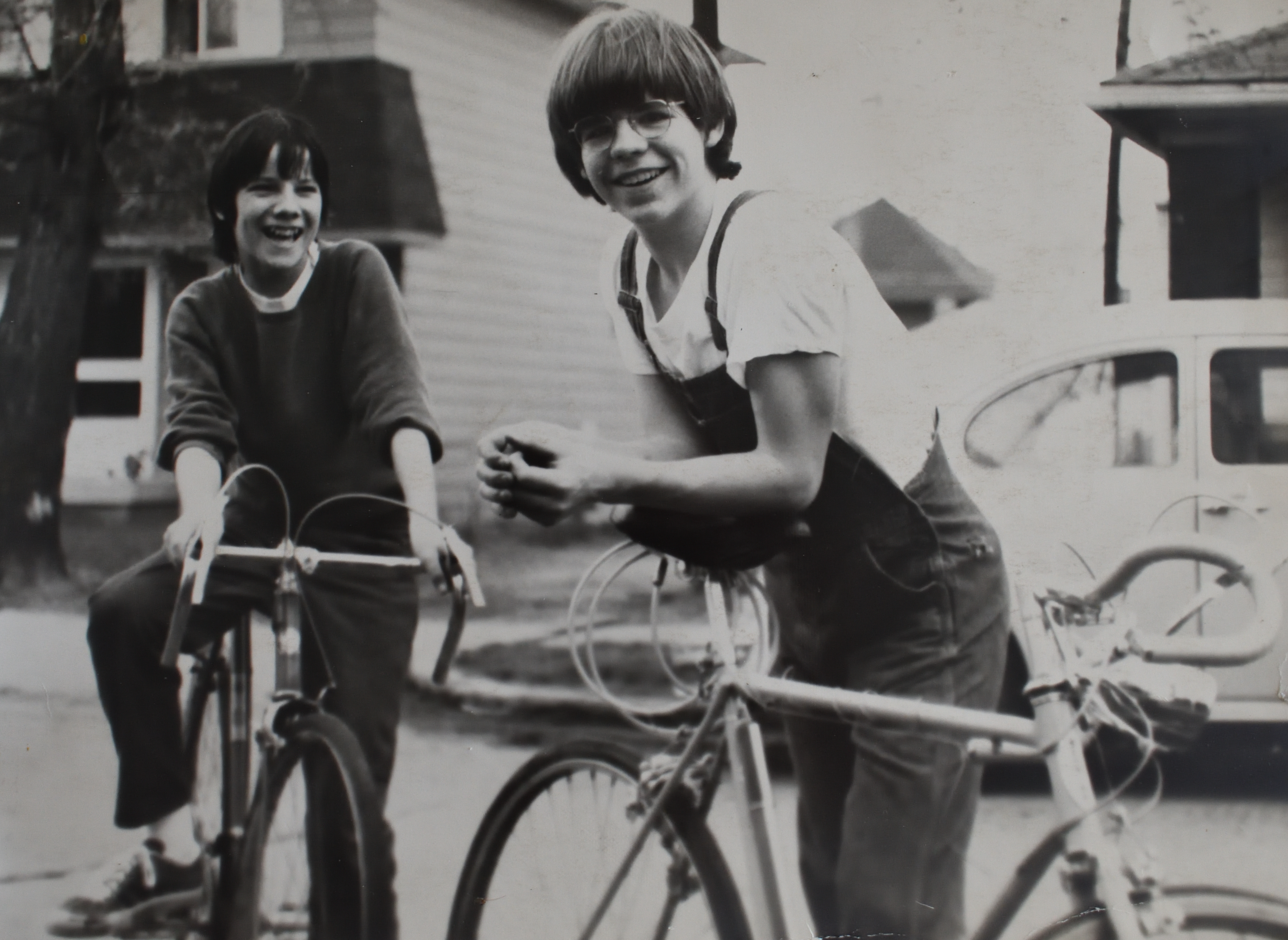
  • At twenty years of age, I joined the Friends Volunteer Service Mission in inner-city Indianapolis, where I was led to work with kids. One of the things we did was ride our bicycles around the city, taking photos (35 mm film). Then we developed the negatives and printed the images in a bathroom darkroom
  • My photos were published in a book about the new addition to the Indianapolis Central Library.
  • Other photos were published on an Indiana state government website to attract filmmakers to the city.
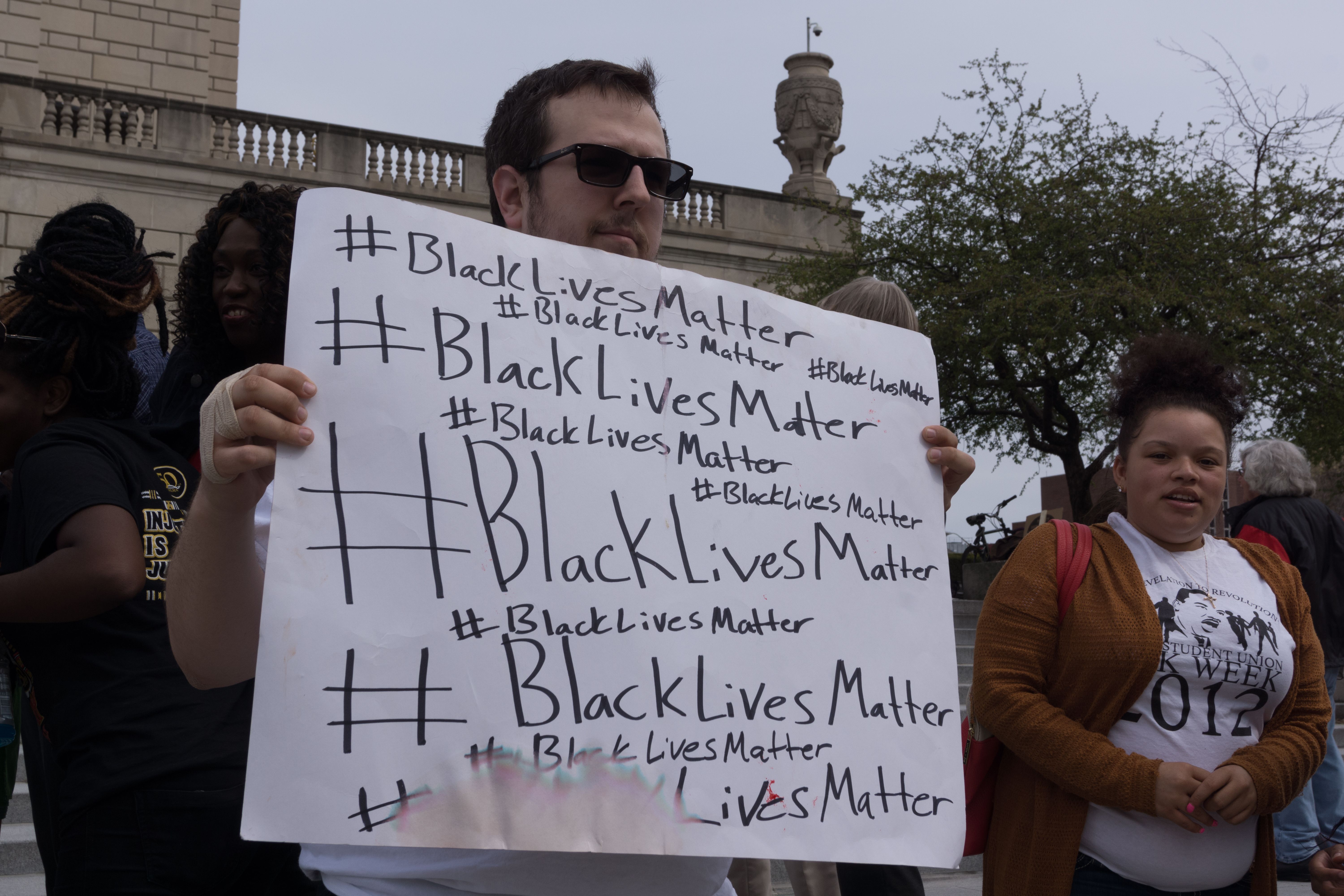
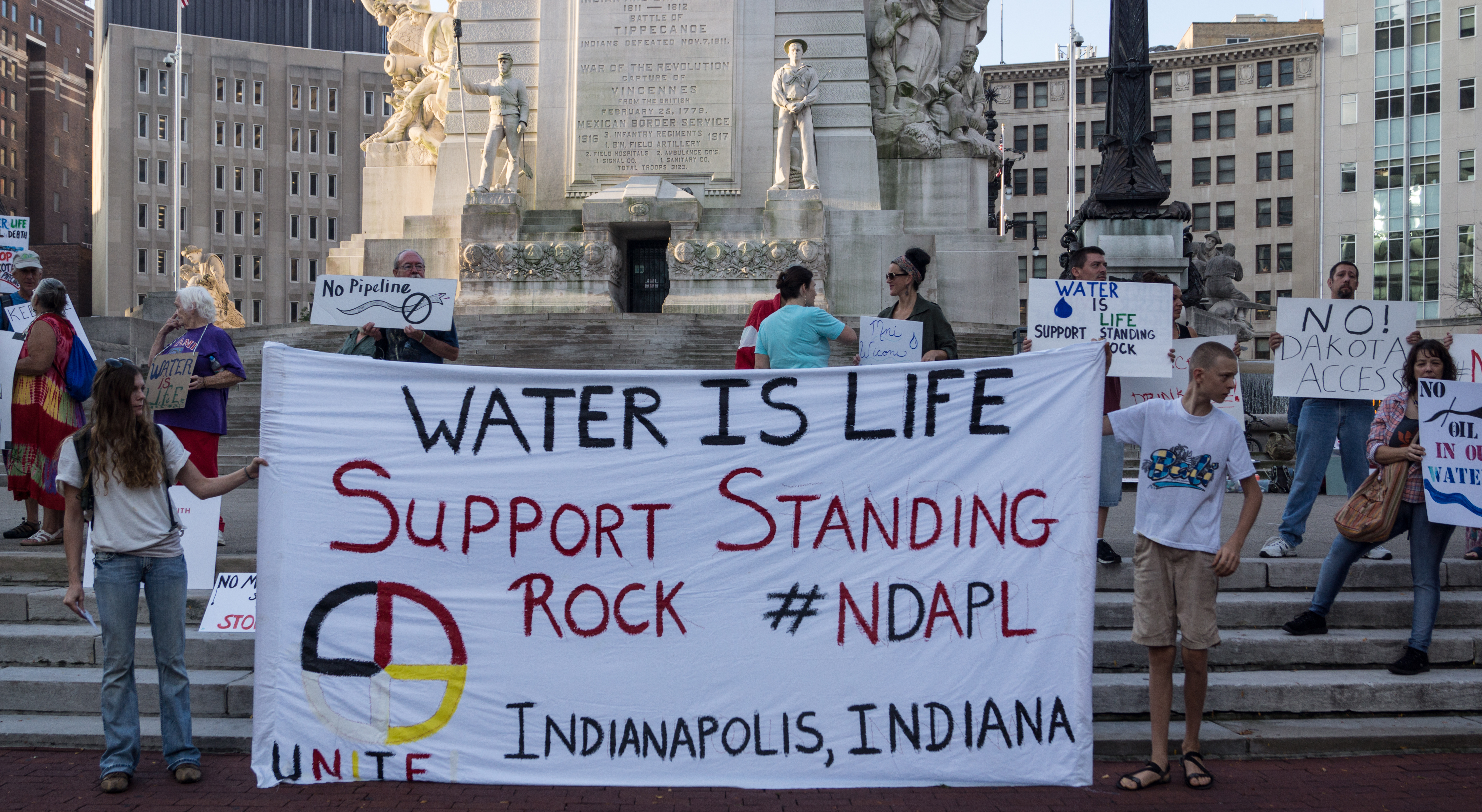
  • I took and shared a lot of photos of public demonstrations related to the Keystone XL and Dakota Access pipelines in Indianapolis
  • Working with the Kheprw Institute, a black youth mentoring community, I was asked to give photography classes.
  • I continued to take photos of similar events when I moved to Iowa. I was honored when my justice advocate friends began to ask me to come to their/our events in order to document them.

I found my power in photography. I urge you to focus on what your power is. You already have your power, but you might not be seeing it in this context. If you don’t love what you are doing, you should make a change.


This is the story, not yet complete, of my journey related to justice and photography.


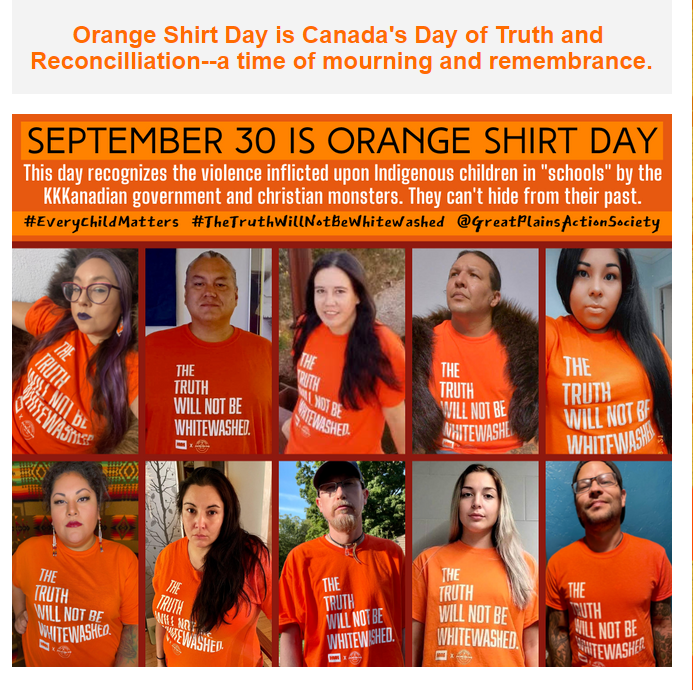
Orange Shirt Day

September 30 is Orange Shirt Day in Canada.

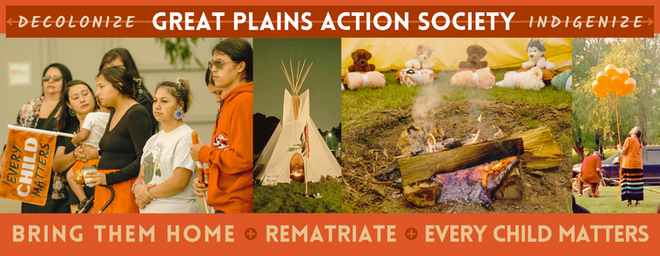
In the story below, the Great Plains Action Society (GPAS) tells what Orange Shirt Day is about. Many of my friends are in this photo. I’m wearing an orange shirt today.

Tansi Friends, 

Today is September 30 – “National Day for Truth and Reconciliation,” a statutory Canadian holiday, better known as “Orange Shirt Day.” This holiday was intended to educate people and promote awareness in Canada about the Indian residential school system and the impact it has had on Indigenous communities for over a century. The use of the orange shirt is attributed to Phyllis Jack Webstad. She was sentenced to St. Joseph Mission Residential School when she was six years old. On her first day there her clothes were taken from her, including a new orange shirt given to her by her grandmother. She never saw that shirt again. The story resonated with thousands and became a symbol of the violence that Indigenous children faced in these internment camps called schools. 

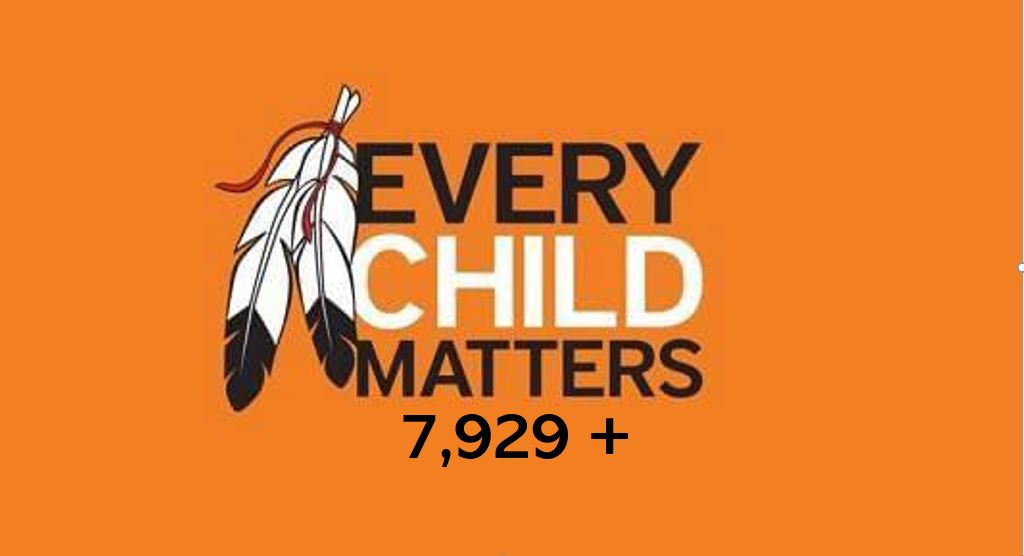
Recently, thousands of unmarked graves have been uncovered on the grounds of around 10 residential schools in Canada. There were over 490 residential schools (boarding schools in the U.S.) between the United States and Canada. The New York Times reported on this last summer, and while we are thankful for the coverage, it doesn’t nearly represent the pain and suffering this is causing in our community. Also, trying to quantify the number of graves that have been found is not ever going to tell the truth. The truth is that many children’s bodies will never be found as they were hidden or cremated. There were also many children that tried to run home but died of starvation or exposure. And then there are those that died from suicide and addiction because of the pain they could not overcome. 

Great Plains Action Society has felt this pain firsthand, as many of our close family members attended these schools, and we are rising to meet the needs of our communities. Last year, in Sioux City, we hosted a large community feast and ceremony to honor nine children whose bodies were reMatriated back to Sicangu Oyate lands from the grounds of the Carlisle Boarding School. We have also raised funds to help one of our relatives, Curt Young, show his film, They Found Us, about the search for children’s bodies at the George Gordon First Nation. If we can raise enough funding, we would like to get his film shown throughout Iowa and the Midwest.

The Missing and Murdered Indigenous Relatives crisis largely exists because of the reprercussions of boarding schools. We have been working to support families directly impacted by colonial violence (like what was experienced in these schools) with financial support to travel to court, child care, community gatherings, and covering ceremonial/memorial expenses while continuing all of our other work, including mutual aid, political engagement action, and fighting for our earth. We are dedicated to providing whatever our community needs to grow, survive, and thrive. 
 
Please support our work to end the MMIR crisis and help heal those affected by boarding schools (aka, internment camps for children)

Ay hai kitatamihin,
 
Sikowis (Fierce), aka, Christine Nobiss, she/her
Plains Cree/Saulteaux, George Gordon First Nation
Executive Director, Great Plains Action Society
sikowis@greatplainsaction.org
 
Web – greatplainsaction.org
FB – @GreatPlainsActionSociety
IG – @greatplainsactionsociety
Tw – @PlainsAction


In the story above, my friend Sikowis Nobiss tells about a relative, Curt Young, and his film “They Found Us.” This link is to a blog post about Iowa Yearly Meeting (Conservative)’s donation to help support the showing of this film. https://quakersandreligioussocialism.com/2023/01/29/they-found-us-2/

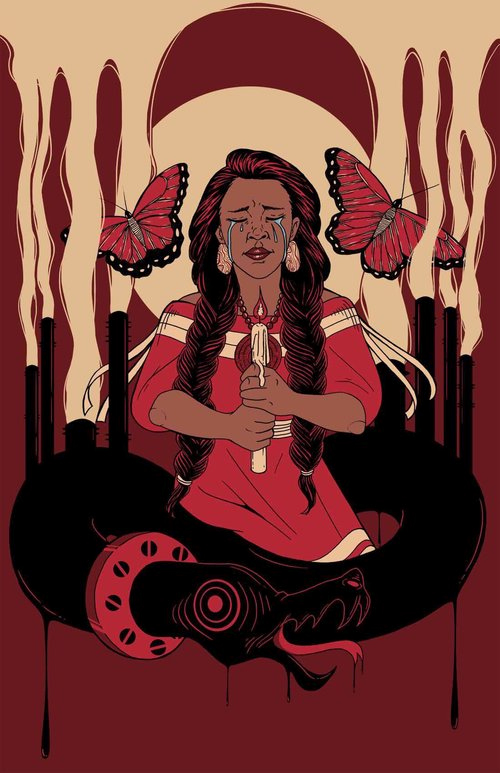
This is a very disturbing 3D graphic related to “They Found Us.” Moving the mouse around the image changes the perspective.

My relative, Curt Sipihko Paskwawimostos, created “They Found Us”. It’s a documentary about the search for unmarked graves at our rez, George Gordon First Nation. I hope we can bring it here to Iowa in the near future. My cousin Janna Pratt is featured in the film.

“I thought it would be important to document these searches and capture some of the stories told by members that were forced to go to these institutions. It’s a first hand look into some of the experiences survived in residential school.”
The film delves into members’ recollections along with the process towards the first ground search of Gordon Residential School before Ground Penetration Radar (GPR) in 2021. This is only the beginning…
I want to say thank you to Jeff Kisling and the Iowa Quaker community for the donation that will help get the film seen. If others would like to help support this work, hit me up.

Sikowis (Christine) Nobiss


Paula Palmer wrote an article in Friends Journal that extensively discusses her ministry related to what are called Indian Boarding Schools.

Quaker Indian Boarding School. Facing Our History and Ourselves by Paula Palmer, Friends Journal, October 1, 2016

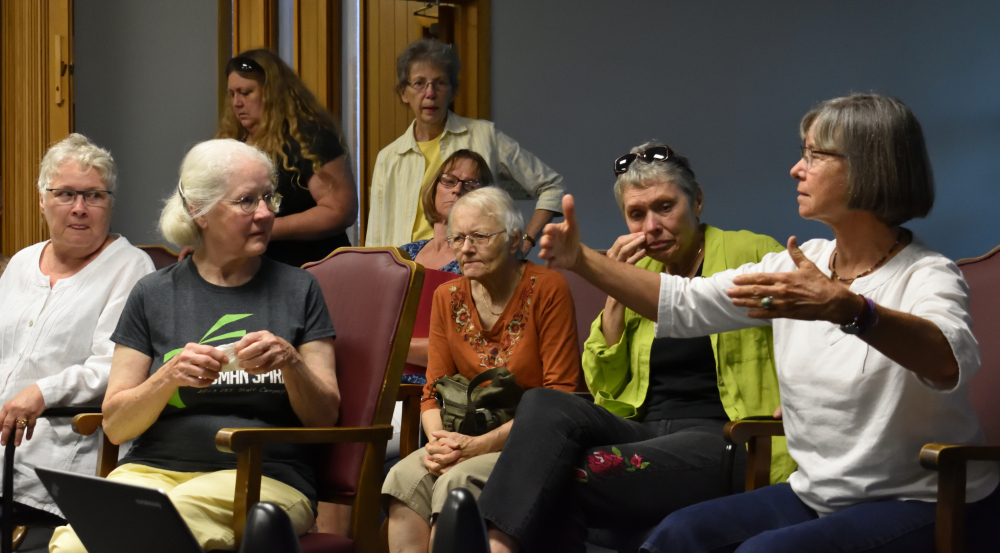
These photos are from Paula’s visit to Iowa Yearly Meeting (Conservative)


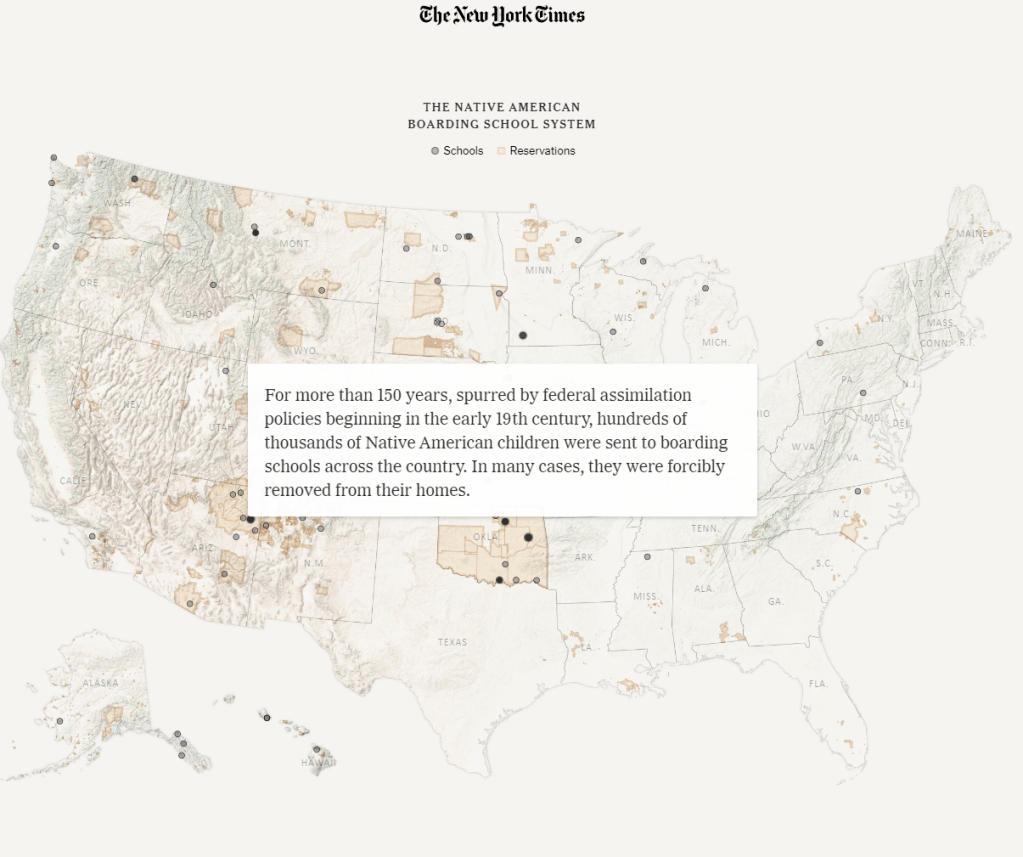
The New York Times recently published an extensive article about the Native American Boarding School System, War Against the Children.

WAR AGAINST THE CHILDREN

The Native American boarding school system — a decades-long effort to assimilate Indigenous people before they ever reached adulthood — robbed children of their culture, family bonds and sometimes their lives.

By Zach LevittYuliya Parshina-KottasSimon Romero and Tim Wallace Aug. 30, 2023

Beyond the vast federal system, this new list also sheds light on boarding schools that operated without federal support. Religious organizations ran at least 105 schools; many were Catholic, Presbyterian or Episcopalian, but smaller congregations such as the Quakers ran schools of their own.


Another excellent resource about these institutions of forced assimilation is the National Native American Boarding School Healing Coalition.

Racism on Parade in Muscatine, Iowa

I woke up this morning at 4 am, unable to go back to sleep because of the awful image of a woman in a Native American costume being pulled by a rope behind a horse during the 4th of July parade in Muscatine, Iowa.

I learned of this yesterday from a blog post written by my friend Jessica Engelking, Representation Director at the Great Plains Action Society (GPAS), Racism on Parade in Muscatine, Iowa. Part of Jessica’s blog post follows.

There is also the issue of this act mocking the Missing and Murdered Indigenous Women crisis. Muscatine hosted a parade that featured a bound white woman pretending to be a Native woman in a cheap, sexually provocative Halloween costume being led beside a horse ridden by a white woman

Again, as the Representation Director of GPAS,it is my job to clearly state that great harm that was perpetuated by your parade. This wildly distasteful act that you allowed in your parade was dehumanizing and dangerous for Indigenous Peoples. Your parade represented Native women as 1) sexual and 2) powerless. A Native woman was displayed as a captive servant—a desirable candidate for possession for rape and violence. This was made even more evident by the “sexy” Halloween costume she was wearing, which mocks our traditional regalia and sexualizes us.

Regardless of whether this aspect of the parade was your intent, you allowed it to carry out. It should have been shut down immediately. We live in a world where real women, our not-so-distant ancestors, were bound and pulled beside horses like that. And they were raped and murdered. They watched their babies’ skulls be smashed. They witnessed and experienced unspeakable horrors. And, you allowed a part of that real history to be recreated for entertainment value. Shame on you. We expect an admission of accountability, an apology, and a forever ban for the racist organization who did this.

Miigwech,
Jessica Engelking
Anishinaabe
Representation Director
Great Plains Action Society

To Take Action Please call or email the City of Muscatine and the Greater Muscatine Chamber of Commerce & Industry to register a complaint about what they allowed to happen in their parade. It is important to note that Brad Bark is both the Mayor of Muscatine and the President and CEO of the Chamber of Commerce–so let’s contact him!

Contact Brad Bark though the City at: (563) 506-3161
bbark@muscatineiowa.gov
Contact Brad Bark through the Chamber of Commerce at:
(563) 263-8895
muscatine.com/contact

https://www.greatplainsaction.org/single-post/racism-on-parade-in-muscatine-iowa


Groups and individuals are responding to the display and costume as both shocking and sickening to Indigenous Iowans. A woman is seen dressed in a Native American costume, with her hands bound by a rope, being pulled by a woman on a horse.

Sikowis Nobiss, Executive Director at the Great Plains Action Society, says there’s no excuse for playing what she calls “Pretendian”.

“So, this is absolutely an act of racism. I don’t know how anybody could see it any way else. Excuses don’t change what happened and what everybody saw,” Nobiss said.

Nobiss says the costume was not just offensive because of deep wounds caused by colonization, but modern-day problems that still affect Native Americans.

“We also have a very high rate of being sold and taken into the sex trafficking industry. And so this really reminded me of like how, you know, settlers view us still. Like less than human.”

Nobiss says if you want to celebrate Indigenous heritage, costumes are off the table, but there are still ways to celebrate.

“Go to a powwow, buy from our indigenous-owned stores, support these indigenous-owned businesses. Find your local tribe or organization and ask them if there are ways you can volunteer or help out with any issues or causes they’re working on, Nobiss said

‘An egregious act of racism’ Muscatine Independence Day costume offends Indigenous Iowans By Conner Hendricks, KCRG.com, July 5, 2023

Find your local tribe or organization and ask them if there are ways you can volunteer or help out with any issues or causes they’re working on.

Sikowis Nobiss

In a statement, the Greater Muscatine Chamber of Commerce said:

“It was brought to the attention of the Greater Muscatine Chamber of Commerce and Industry (GMCCI), that there was a parade entry consisting of a woman dressed in Native American attire with a rope around her hands walking alongside a horseback rider holding the rope.

GMCCI does not condone this behavior and this entry does not represent our community.


When Protest is a Crime

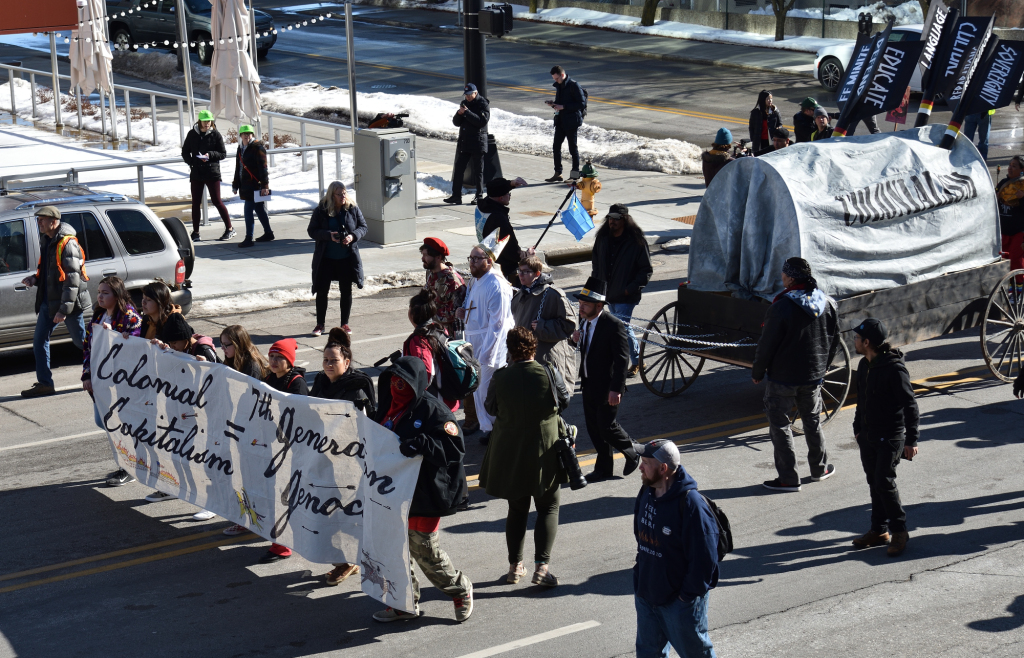
As our politics are making a hard turn to the right, as the US Congress, the US Supreme Court, and multiple states pass legislation based upon White supremacy and authoritarianism, protest is how we who disagree with these trends were once able to try to make our voices heard. But authoritarianism cannot allow questioning its authority and violently suppresses protest and other civil liberties. Tensions will only increase if authoritarianism deepens. Will only increase because of the accelerating urgency to respond to increasing environmental devastation and chaos.

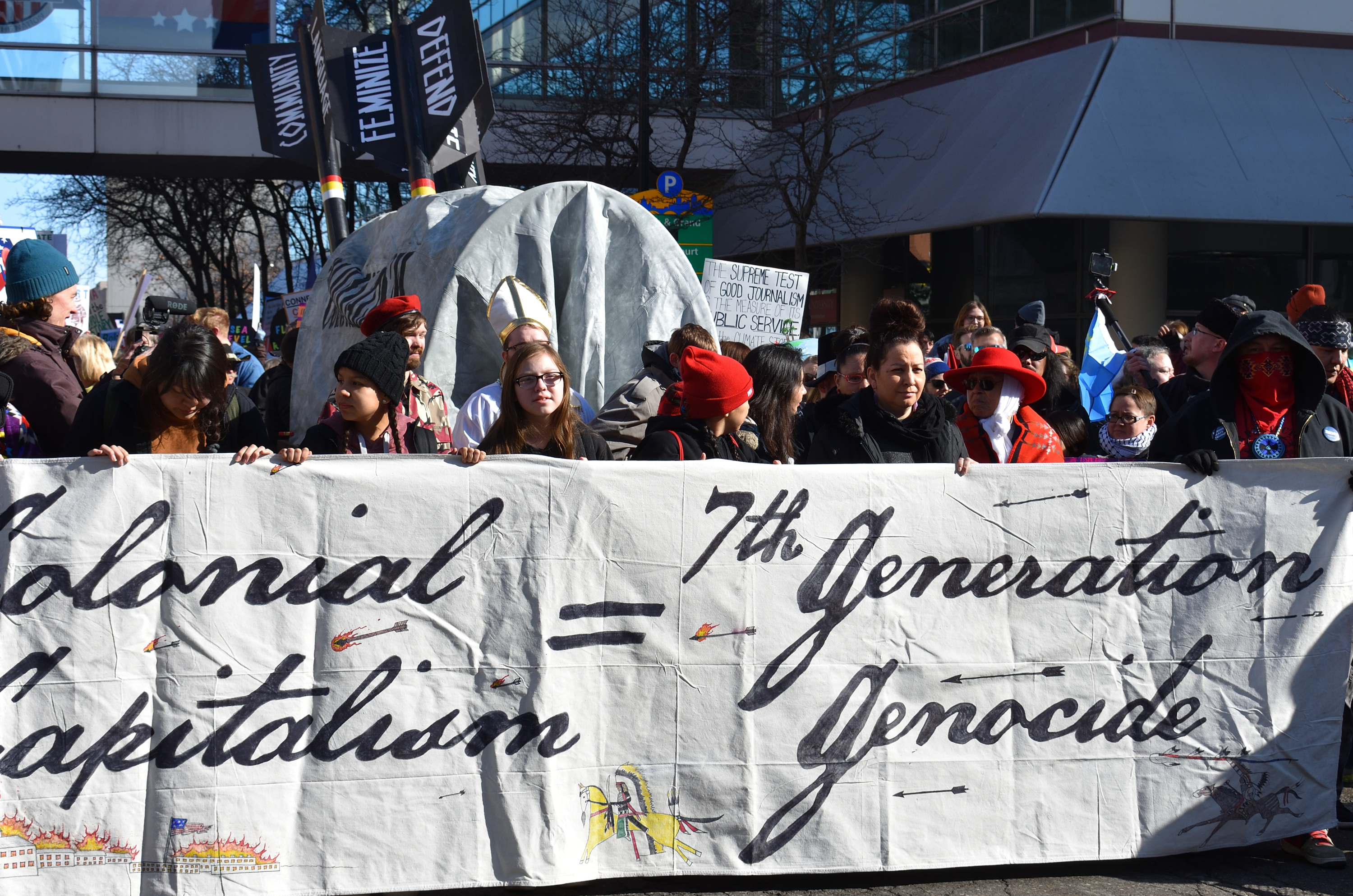
A pair of articles have just been published about Indigenous views of “when protest is a crime”. Part 1 is the Standing Rock effect, and part 2 is about the efforts to Stop Cop City from being constructed in Atlanta.

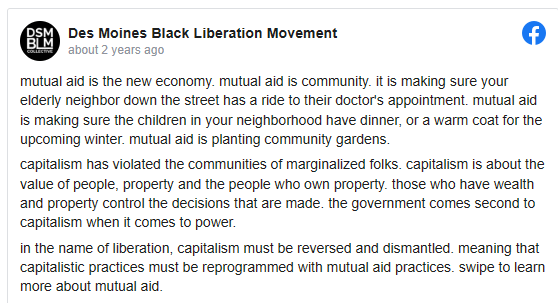
I’ve been learning about Indigenous views from my friends at the Great Plains Action Society (GPAS) and Des Moines Mutual Aid (DMMA). On GPAS’s Mechanism of Engagement graphic are direct action (protest) and mutual aid. The articles below are about direct action. I’ve been learning mutual aid is a way for a community to care for each other, especially when the government does not.

The audio episodes and transcripts below are available on OUTSIDE/IN. A SHOW ABOUT THE NATURAL WORLD AND HOW WE USE IT. The host is Nate Hegyi.


When protest is a crime, part 1: the Standing Rock effect

When members of the Oceti Sakowin gathered near the Standing Rock Reservation to protest the Dakota Access Pipeline, they decided on a strategy of nonviolent direct action. No violence… against people.

But sabotage of property – well, that’s another question entirely.

Since the gathering at Standing Rock, anti-protest legislation backed by the fossil fuel industry has swept across the country.

What happened? When is environmental protest considered acceptable… and when is it seen as a threat?

This is the first of two episodes exploring the changing landscape of environmental protest in the United States, from Standing Rock to Cop City and beyond.

http://outsideinradio.org/shows/when-protest-is-a-crime-part-1


Nate Hegyi: There are certain moments that become part of our collective story. Flash points. When our past and our future feel like they’re talking to each other. Standing Rock was a moment like that.

Chase Iron Eyes: The smell of fire, of campfire, permeated the entire Oceti Sakowin camp.

Nate Hegyi: That’s Chase Iron Eyes. He’s an attorney, and a member of the Oglala Sioux and Standing Rock Nations, though he says these are colonial names.

Chase Iron Eyes: Yeah, I would say Oceti Sakowin or Sioux Nation.

Nate Hegyi: The protesters, including Chase, first gathered in 2016. They were there to stop DAPL, the Dakota Access Pipeline. Because pipelines spill. Because millions of people depend on the integrity of the Missouri River. Because even when a pipeline works as intended, the result… is more greenhouse gas emissions. But the main reason why Chase and members of the Sioux Nation were camping at Standing Rock was: they were defending their sovereignty.

Chase Iron Eyes: We had been disallowed from expressing our sovereign identity in that territory since 1889. That’s when the state of North Dakota and South Dakota were admitted to statehood.

Nate Hegyi: It was the largest gathering of Indigenous people in recent history. People came from all over.

Chase Iron Eyes: Tens of thousands of people cycled through that camp. This is why one elder called it an ongoing international spiritual monument.


Producer Justine Paradis takes it from here.

Lesley Wood: Most protests are extremely straightforward, and sometimes even boring.

Justine Paradis: This is Lesley Wood. She researches the dynamics between policing and social movements.

Lesley Wood: Um. But some protests are not.

The activists at Standing Rock described the protest as a nonviolent, direct action.

And, historically, “direct action” can mean a lot of things.

Lesley Wood: it can be something like if we want better health care, we have to set up clinics…

It’s saying we’re not going to ask for the government to solve the problems… We’re going to do it ourselves.

Justine Paradis: Direct action as a strategy often comes after trying to participate in the democratic process – and finding it unresponsive. And it might involve acts of civil disobedience: deliberately breaking a law, like stopping traffic, or maybe because the law itself is unjust, like sitting at a segregated lunch counter. Speaking generally, that’s very different from a permitted, police-protected protest, the kind Lesley calls “marching in a circle.”

Lesley Wood: There’s no political threat posed by them… the idea that you have a right to protest, but only in certain ways and in certain places doesn’t really understand what protest is trying to do, which is on the fundamental say the system isn’t working. And to show that it’s not working. To impose some sort of potential cost to the system.

http://outsideinradio.org/shows/when-protest-is-a-crime-part-1


When protest is a crime, part 2: city in a forest

After the gathering at Standing Rock, legislators across the United States passed laws in the name of “protecting critical infrastructure,” especially pipelines. 

At the same time, attacks on the electrical grid have increased almost 300%. But that threat isn’t coming from environmental activists. 

It’s coming from neo-Nazis. 

This is the second episode in our series examining the landscape of environmental protest in the United States, from Standing Rock to Cop City and beyond. Listen to the first episode here.

As the space for protest in the United States shrinks, this year marked a major escalation: the first police killing of an environmental protestor in the United States, plus the arrests of dozens of people at protests under the charge of domestic terrorism.

https://outsideinradio.org/shows/when-protest-is-a-crime-part-2


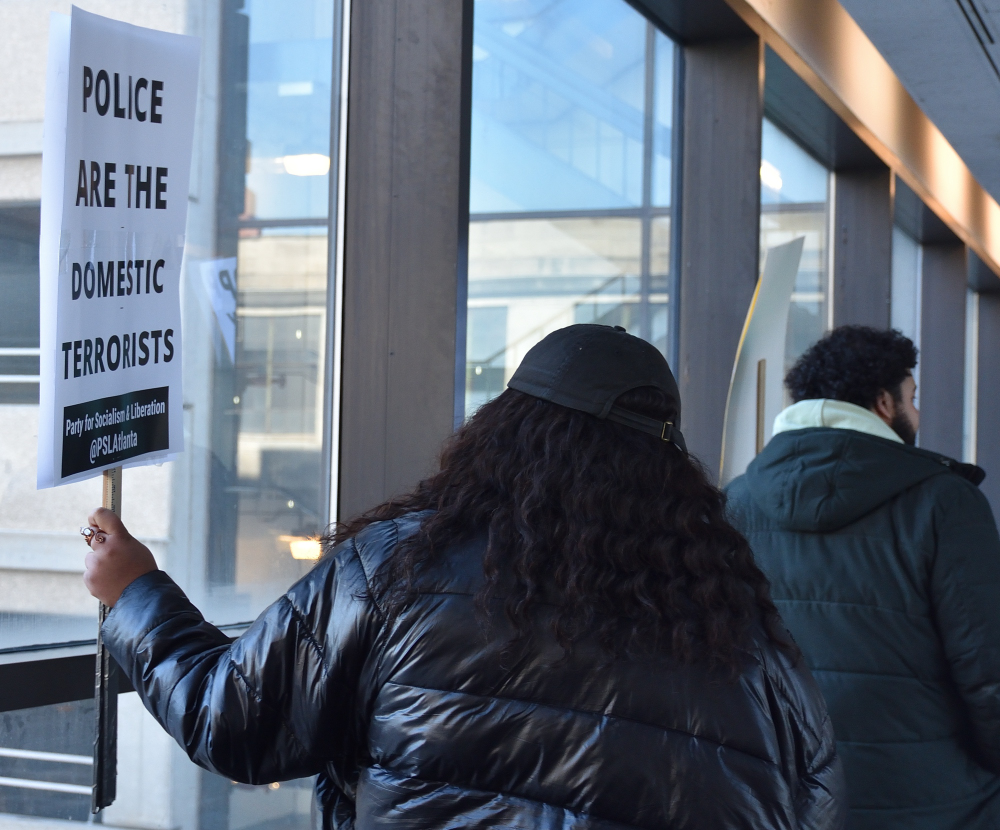
The Atlanta Police Foundation is planning a “public safety training facility” on at least 85 acres of this forest in southeast Atlanta. Their plan includes a mock city for training police in, essentially, urban warfare – complete with a mock convenience store, nightclub, a motel/apartment building, a gas station.

Activists call it Cop City.

Justine Paradis: There are a lot of reasons people are opposed to Cop City.

Because of the environment, for one: trees are good for air and water, and cooling things down, which is especially important in a hotter climate.

And then there’s the fact that this project would be an expansion and investment in the police.

The Weelaunee Forest is in a majority Black neighborhood. And this is only about a year after people were marching in the streets calling for a defunding of the police.

Reverend Keyanna Jones at Atlanta City Council on March 6, 2023: …we don’t want Cop City. I live in East Atlanta. I don’t want Cop City. I got five black children. I don’t want Cop City. I like breathing clean air. I don’t want Cop City… I don’t want black Black Hawk helicopters landing around the corner from my house. I don’t want Cop City.

Justine Paradis: In the decisive meeting to approve the project, 70% of comments were opposed – but the Atlanta City Council approved it anyway.

That was in September 2021.

After that, a group of activists moved into the forest to try to prevent this project from happening. They called themselves “forest defenders.”

They’d been living there for over a year – in tents and tree platforms – when police raided the camp. During one of those raids, law enforcement killed a forest defender, a Venezuelan Indigenous person who went by the name Tortuguita. They shot them at least 57 times. This was the first police killing of an environmental protestor in the United States.

https://outsideinradio.org/shows/when-protest-is-a-crime-part-2


Mother Earth Takes Another Hit

The approval for the construction of the Mountain Valley Pipeline (MVP) remained in the debt ceiling legislative just passed by the US Congress. This is an egregious act on many levels.

The Mountain Valley Pipeline (MVP) is a project proposed in 2014 that would transport fracked gas from West Virginia to southern Virginia through a 300-mile pipeline. The project has sparked widespread opposition for years from environmentalists, civil rights activists, and local residents who are concerned about its impacts on water quality, wildlife, climate change, and Indigenous and property rights.

The MVP was approved by Congress as part of the debt ceiling deal that was just passed. The deal included a provision that declared the MVP as “required in the national interest” and ordered the federal agencies to issue the necessary permits within 21 days and shield the project from legal challenges. The provision also weakened the National Environmental Policy Act (NEPA), a law that requires environmental reviews for major federal actions that affect the environment.

Many of us have criticized the deal that undermines:

  • the rule of law
  • public participation
  • Indigenous approval
  • and environmental justice

The MVP contradicts President Biden’s pledge to combat the climate crisis and transition to clean energy..

I recently wrote “What should be non-negotiable” to try to explain, yet again, why we can not allow continued construction of fossil fuel infrastructure, from pipelines to carbon capture to gas stations.

I know what it’s like to work year after year, fighting to protect Mother Earth from fossil fuels. I was going to say that for me this began in 2013 when I was trained as an Action Lead in the Keystone Pledge of Resistance. But it began much earlier when I was led to live without a car when I moved to Indianapolis in 1970. My love for nature actually began from growing up on farms and camping trips to national parks.

Of course, Indigenous peoples have worked to protect Mother Earth for centuries.

It’s not easy to maintain years-long resistance to a cause. That is one reason why approval of MVP is devastating. It is difficult to find people who are willing to work for justice causes. Difficult to organize and get people to commit to various actions. To get people to move outside their comfort zone. To face all kinds of opposition, time and time again. And all too often the cause is defeated. The pipelines and other infrastructure continue to be built. Mother Earth takes another hit.

Such is the case with the Mountain Valley Pipeline. Its approval hurts not only those who worked so hard against MVP, but everyone working on any environmental cause. It shows yet again the Federal administration and Congress do not understand the gravity of our evolving environmental devastation.

It also shows, again, that environmental solutions will not come from the dominant political culture in this country. Which is why I am so grateful to have been led to my Mutual Aid community. We work locally, within the community, to address basic needs. Instead of talking and having committee meetings, we come together to help our neighbors with food and shelter.

And we strive to advance Indigenous leadership. Indigenous ways can help clean our waters and move toward living sustainably. Help us heal our relationships with Mother Earth and all our relations.

The circle is completed when Indigenous peoples support Mutual Aid, as Des Moines Mutual Aid is supported by the Great Plains Action Society (GPAS). Mutual Aid is one of the methods in the GPAS’s mechanism of engagement.


Multiple Strategies

Yesterday was another episode in the saga of not only carbon pipelines but Indigenous rights more broadly.

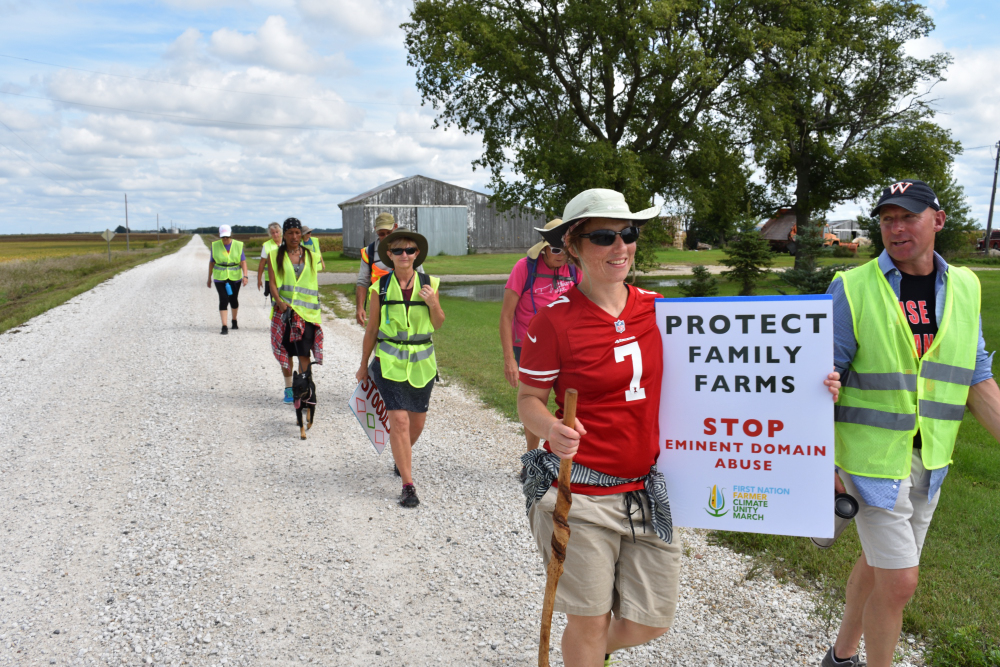
There is increasing pressure from many places to use the idea of carbon capture and storage to meet the goals of reducing greenhouse gas emissions. The Biden administration is supporting this unproven technology, which even if it worked would not impact global greenhouse gas concentrations. This is something I’ve written about extensively.
(See: https://quakersandreligioussocialism.com/?s=carbon+pipeline )

PHMSA

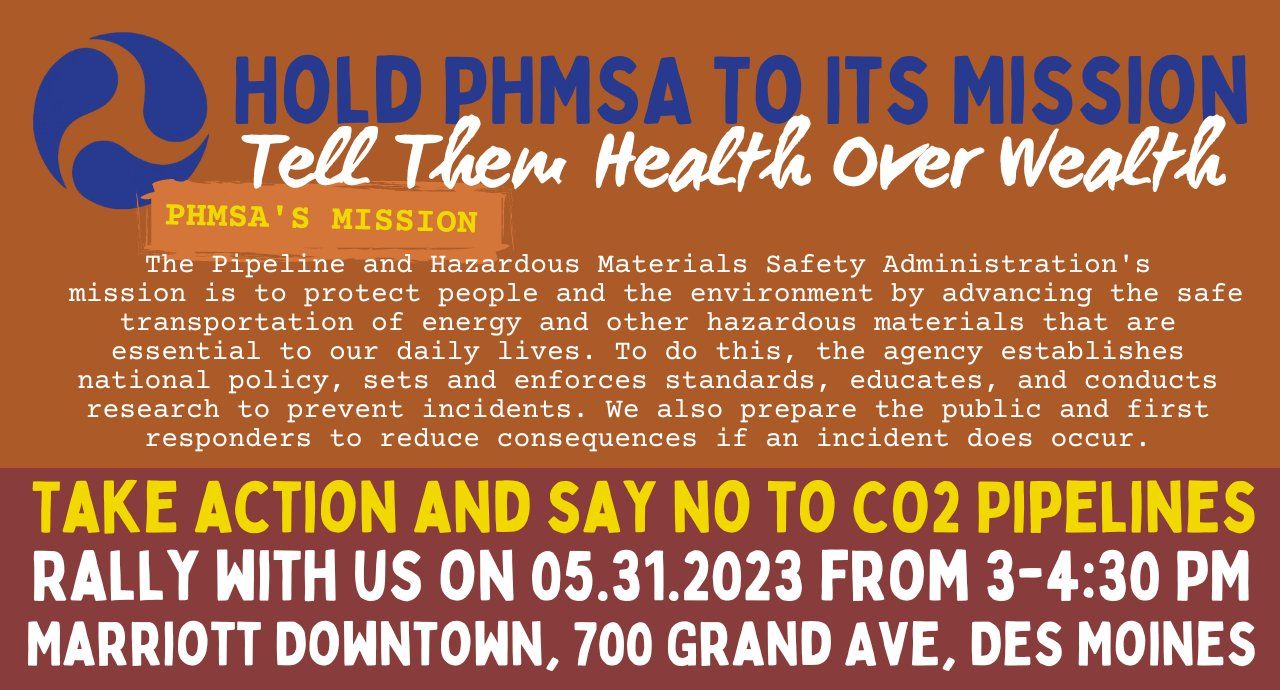
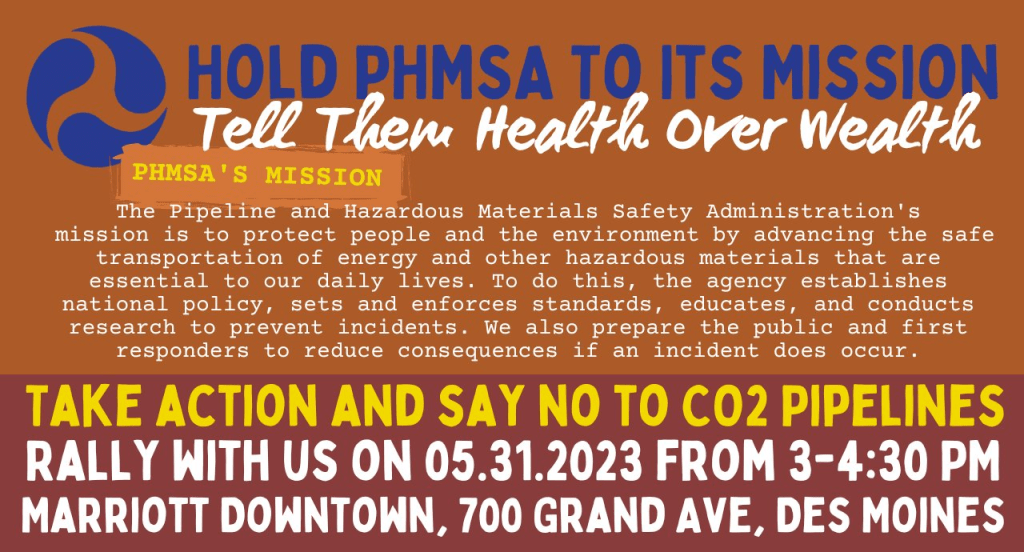
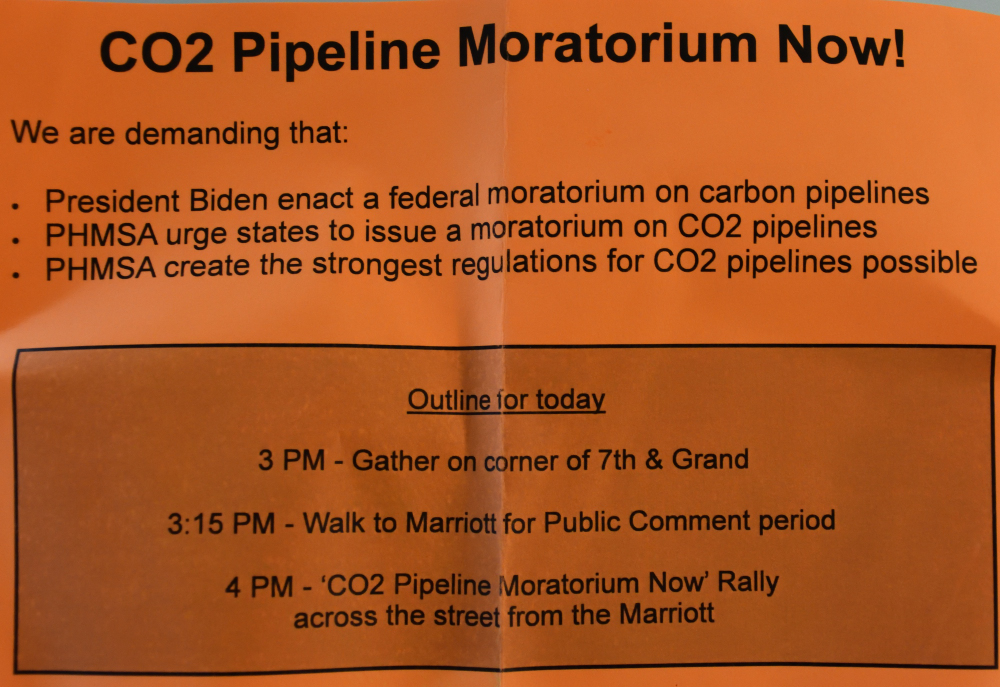
Yesterday and today public meetings are being held in Des Moines by the Pipeline and Hazardous Materials Safety Administration’s (PHMSA) Technical Safety Panel (See: https://quakersandreligioussocialism.com/2023/05/31/carbon-pipeline-safety-meeting/ )

Carbon dioxide (CO2) pipelines are classified as carrying hazardous materials because they pose significant safety risks in case of a rupture. CO2 is a colorless, odorless gas that can displace oxygen and cause asphyxiation at high concentrations. It can also travel long distances from the pipeline after a leak, creating a large danger zone for people and animals. According to the U.S. Department of Transportation’s Pipeline and Hazardous Materials Safety Administration (PHMSA), CO2 pipelines require special safety measures such as corrosion control, leak detection, emergency response plans, and public awareness programs.

There is environmental racism in building pipelines and storage facilities near Indigenous lands. This occurred when the route of the Dakota Access Pipeline was moved away from Bismark, to Standing Rock, when Bismark residents feared contamination of their water.

This environmental racism also facilitates the epidemic of Missing and Murdered Indigenous Relatives because of the “man camps” of pipeline/storage construction workers.

Now there is a similar situation, where landowners, developers, and politicians in Bismark are opposing a proposed carbon dioxide storage project near them.

Not in my backyard

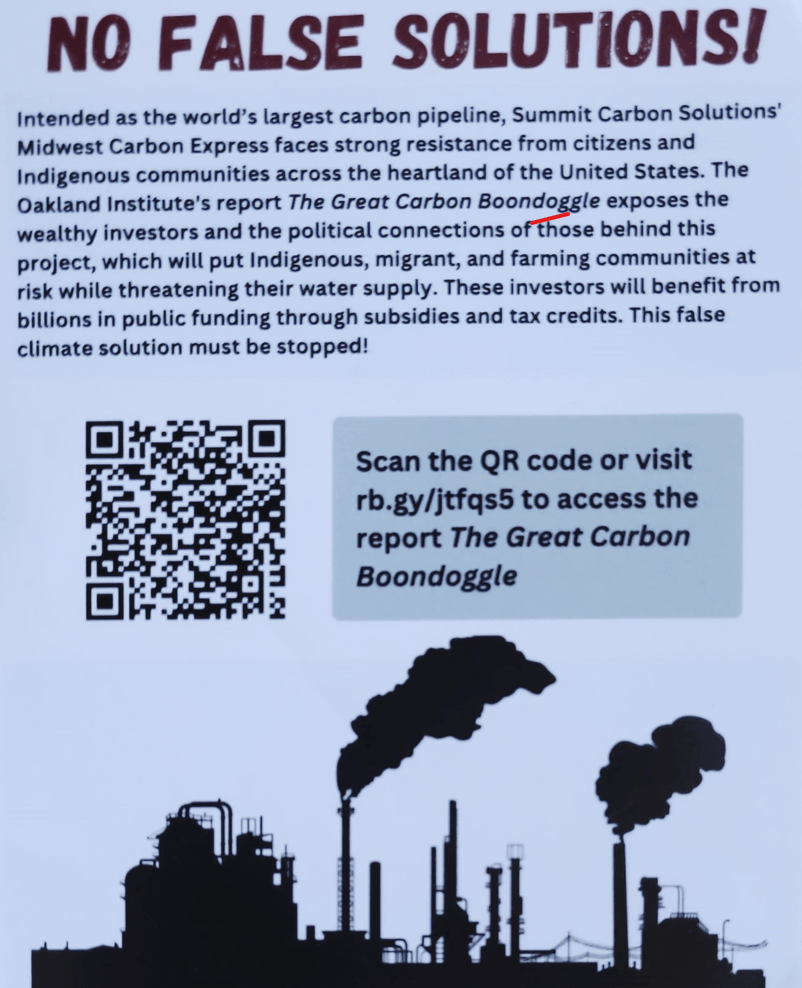
They are showing up in earnest in opposition to the Midwest Carbon Express pipeline, a plan of Summit Carbon Solutions to gather up 12 million tons of CO2 from 31 ethanol plants in five states and send it through pipelines to be sequestered at an underground storage facility in western North Dakota.

The project is well underway, but an apparently well-funded and vocal group of folks, many of them who no doubt appreciate the jobs and tax revenues provided by fossil fuels, are fighting the proposed pipeline tooth and nail.

To be fair, these developers, home builders, politicians and homeowners don’t seem to oppose the pipeline in general, they just don’t want it to be close to places where they live or where they might enrich their businesses with new housing development and construction.

In other words, they don’t mind if the pipeline impacts someone else, they just don’t want it to impact them.

Speaking out: Liking the upside means accepting the downside by Steve Andrist, The Bismark Tribune, 5/31/2023

Great Plains Action Society

My friends at the Great Plains Action Society continue to teach us about Indigenous views and rights. My friend Sikowis Nobiss worked to have a panel discussion related to Indigenous peoples as part of this PHMSA gathering. You can hear her, and others’ remarks here: https://fb.watch/kUlb4S3XCb

Sikowis spoke about most tribal nations not being consulted about these pipelines.

And spoke about the safety equipment that is required for first responders wherever the pipeline is built. Such as oxygen supplies and electric vehicles. Leaked carbon dioxide can spread quickly and stays near the ground, potentially causing asphyxia. Sikowis asks, where is the money going to come from for tribal nations to purchase such safety equipment?

She also spoke about the biome below ground and how we don’t know how pipelines and carbon storage affect that.

Sikowis concluded by pointing out how these are unproven technologies. And asks for a moratorium on these projects until more research is done.

Our Executive Director, Sikowis Nobiss, is speaking today on the Pipeline and Hazardous Materials Safety Administration’s (PHMSA) Technical Safety Panel regarding safety concerns in light of several proposed projects slated for Iowa and the Great Plains region after a recent incident in 2021 at Satartia, Mississippi. Earlier this year PHMSA has stated updated safety regulations tailored specifically for carbon dioxide pipelines are needed and will take 1-3 years to establish—the same timeframe these proposed projects aim for completion.

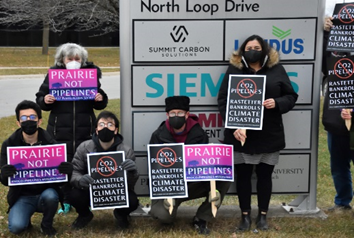
As such, we call for a federal moratorium until regulations are complete and moreover don’t believe they should be actualized at all! Rather, re-Matriation of Prairie can safely, effectively and efficiently sequester carbon dioxide just as good or better than any of these techno-solutions.

(See video here: https://fb.watch/kUlb4S3XCb/)

#PrairieNotPipelines
#NoCO2Pipelines
#ReMatriate
#NoCCS


Multiple Strategies

It was very important that Sikowis was able to speak during the PHMSA meeting.

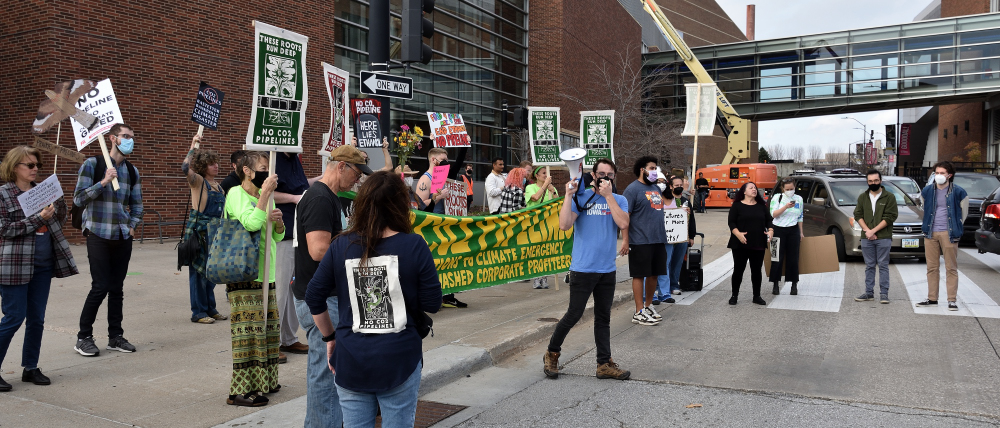
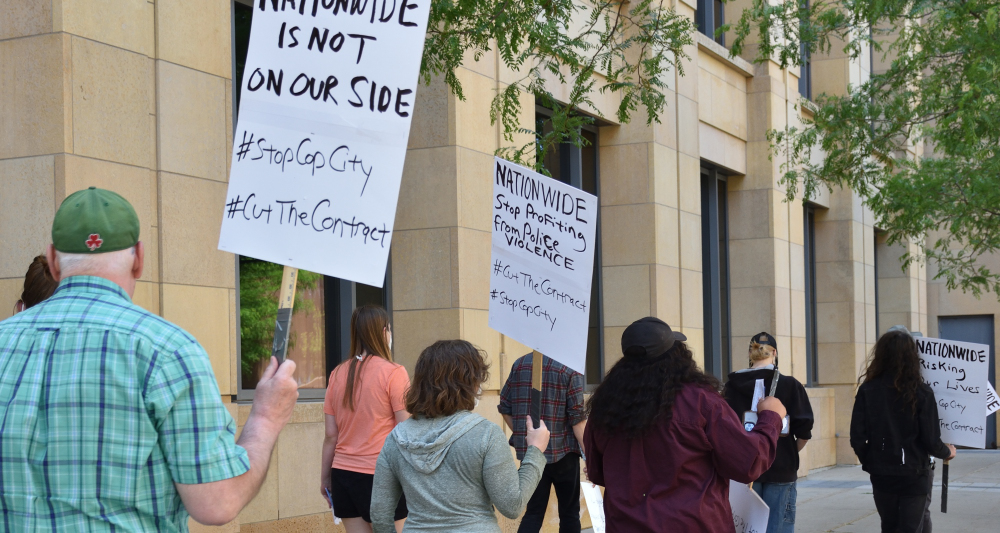
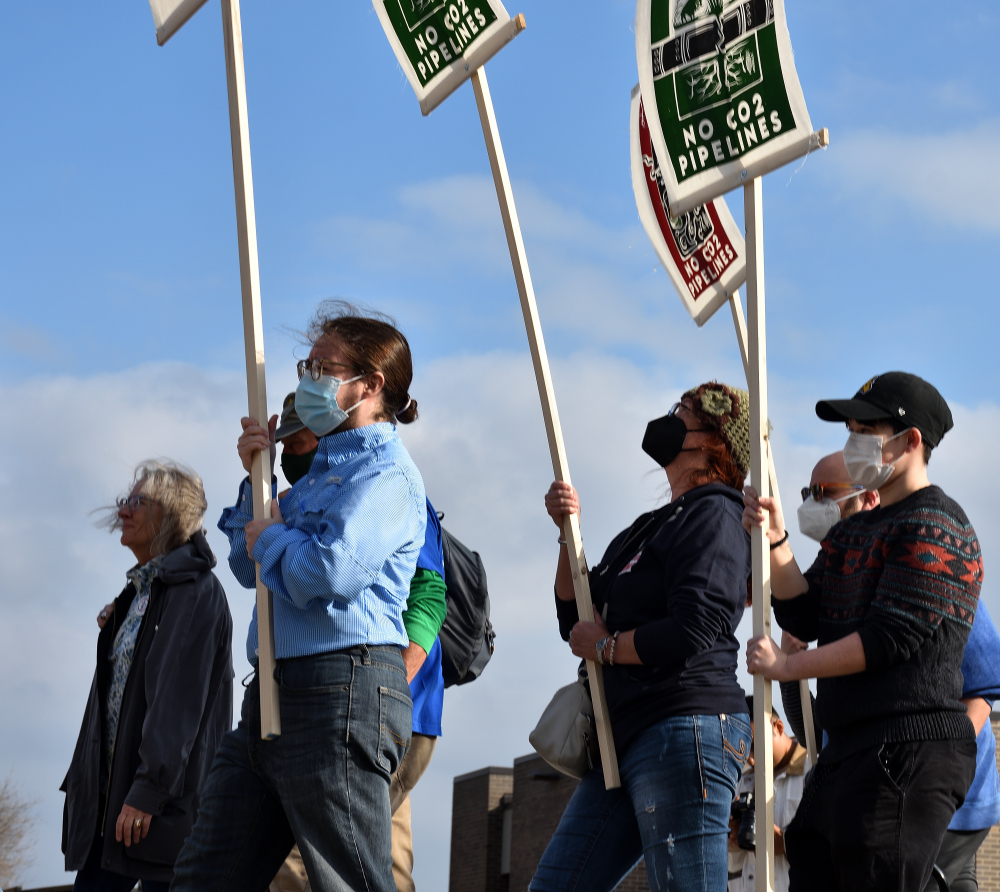
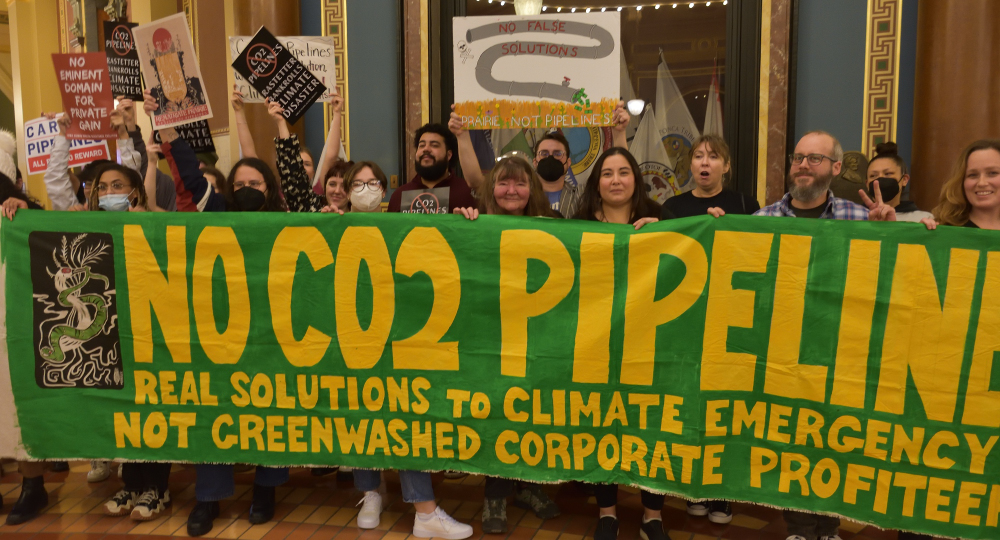
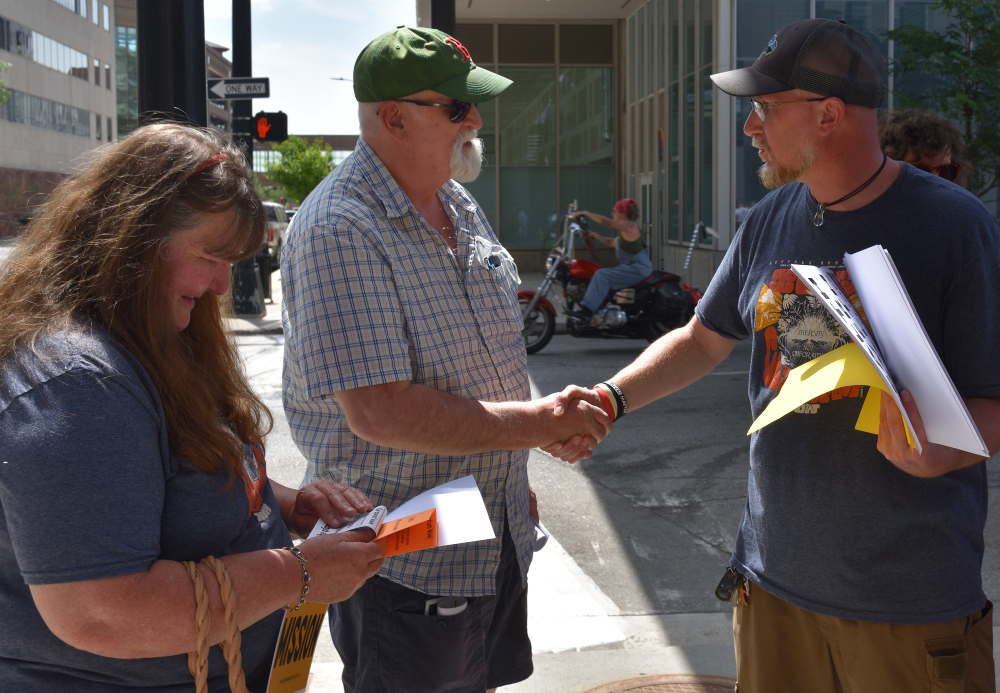
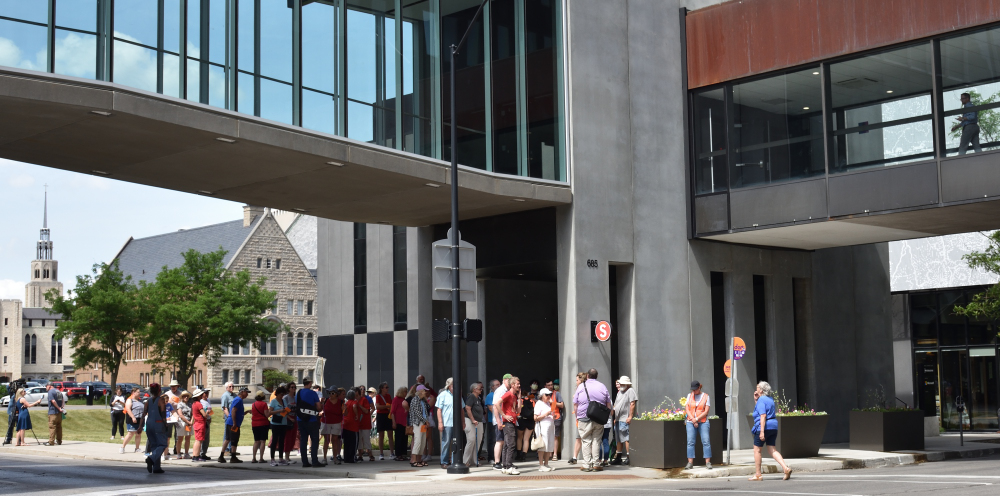
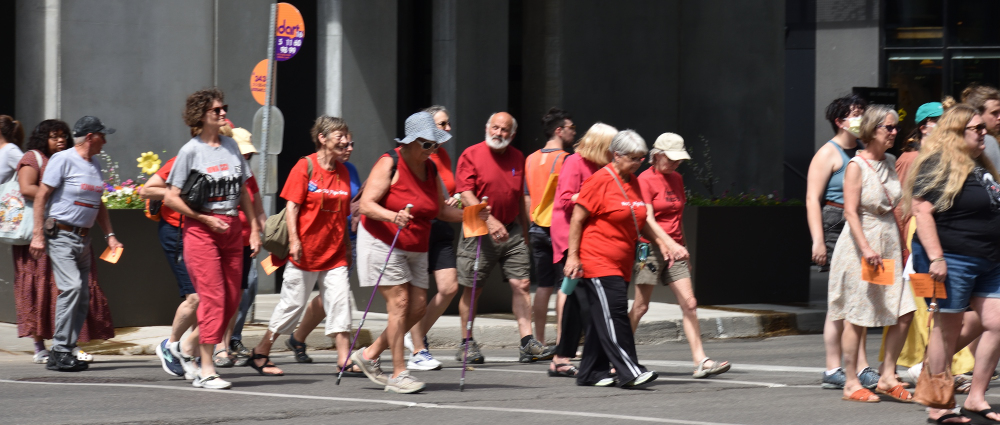
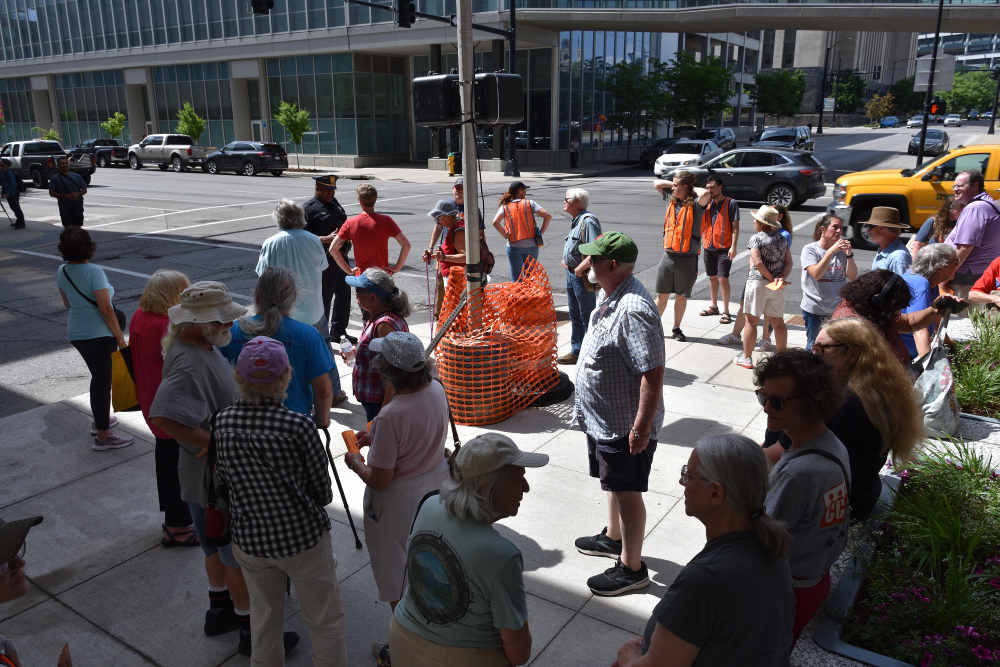
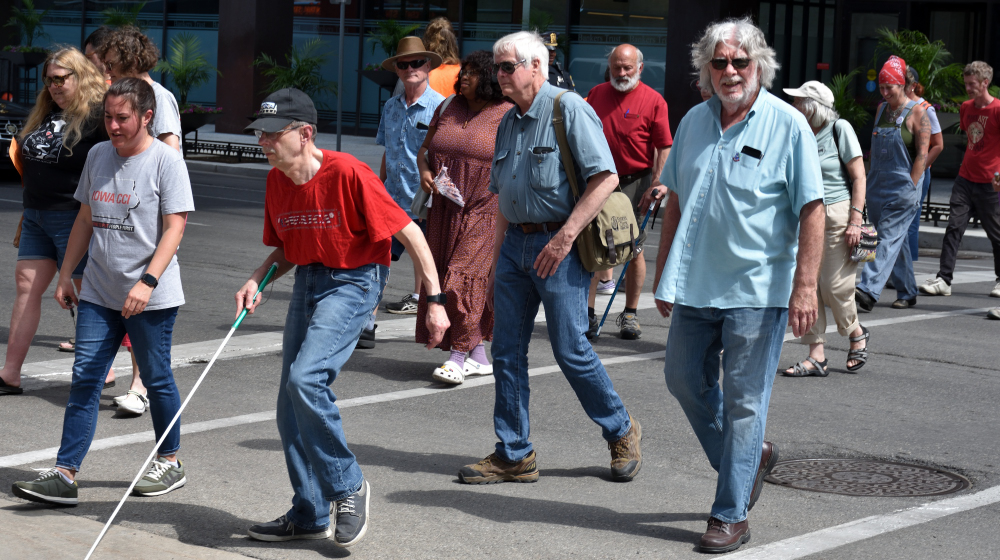
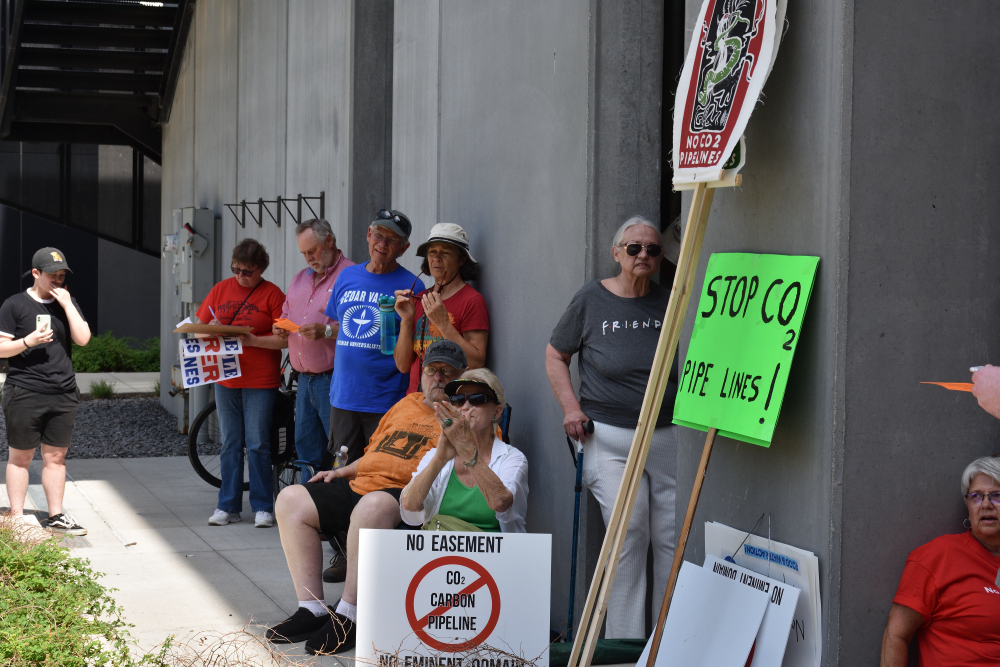
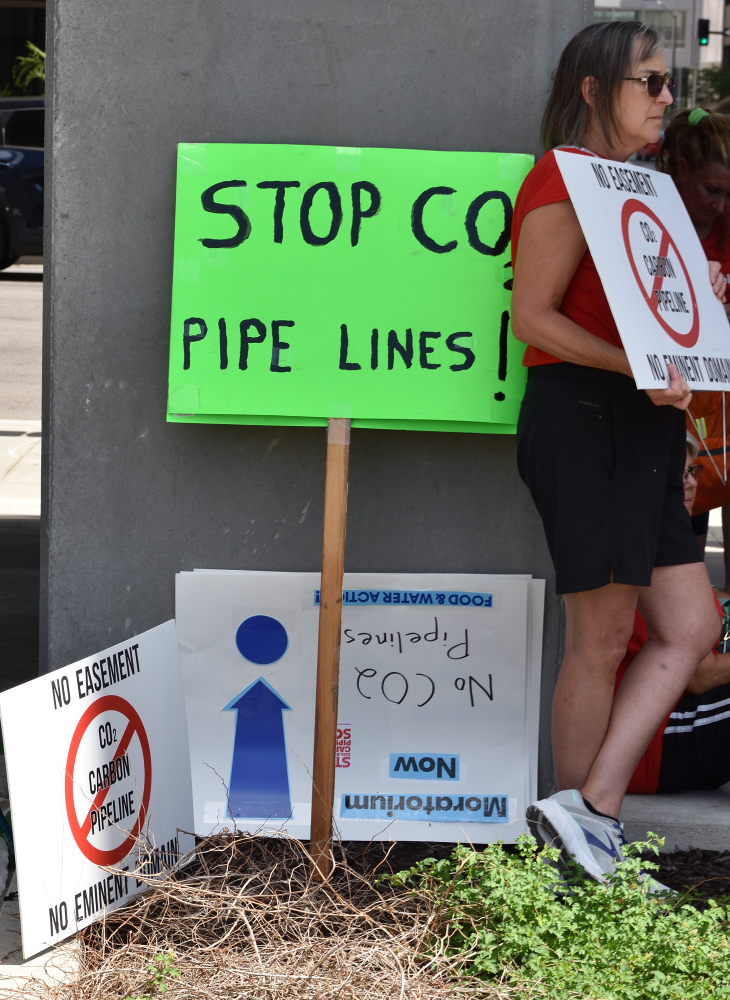
We had also planned to hold a rally outside the Marriott Hotel the meetings were held at. Unfortunately our efforts were thwarted by police who were working for the hotel. So we gathered across the street with our signs, and people spoke about these issues.