Orange Shirt Day

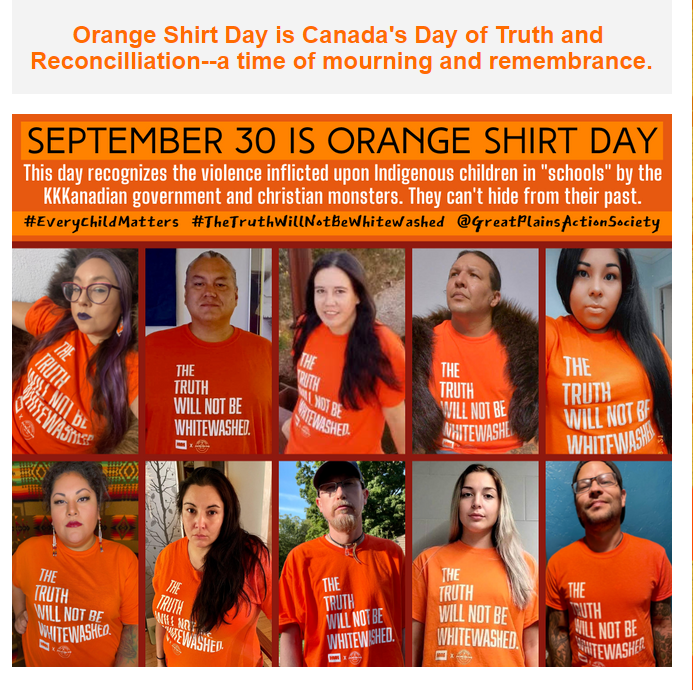
September 30 is Orange Shirt Day in Canada.

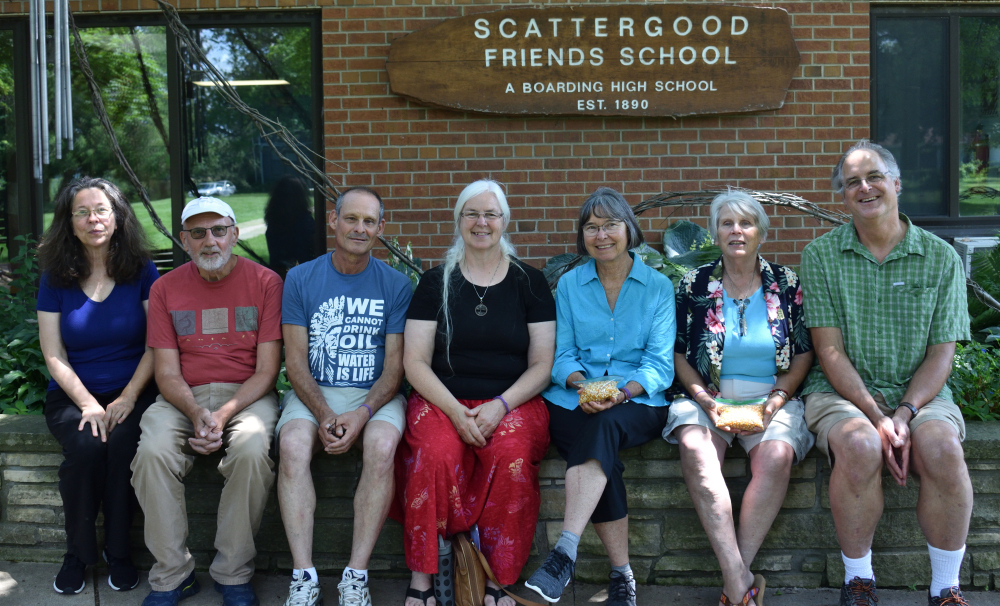
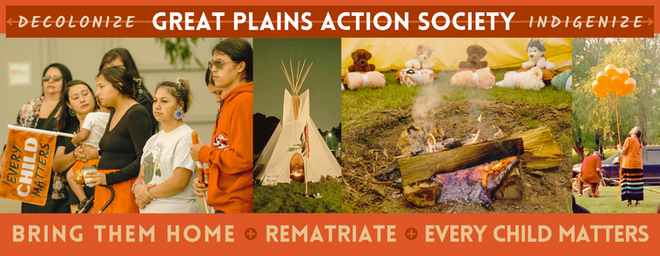
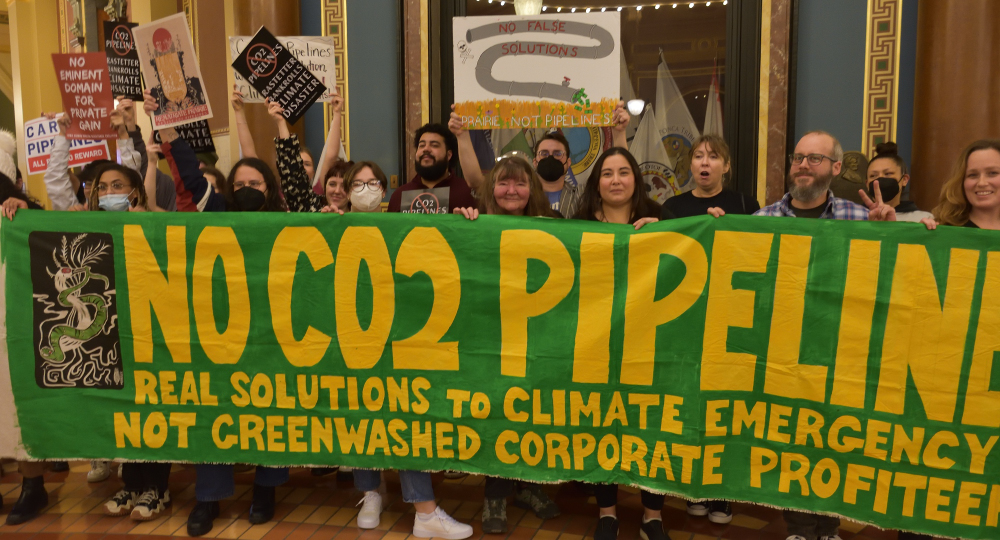
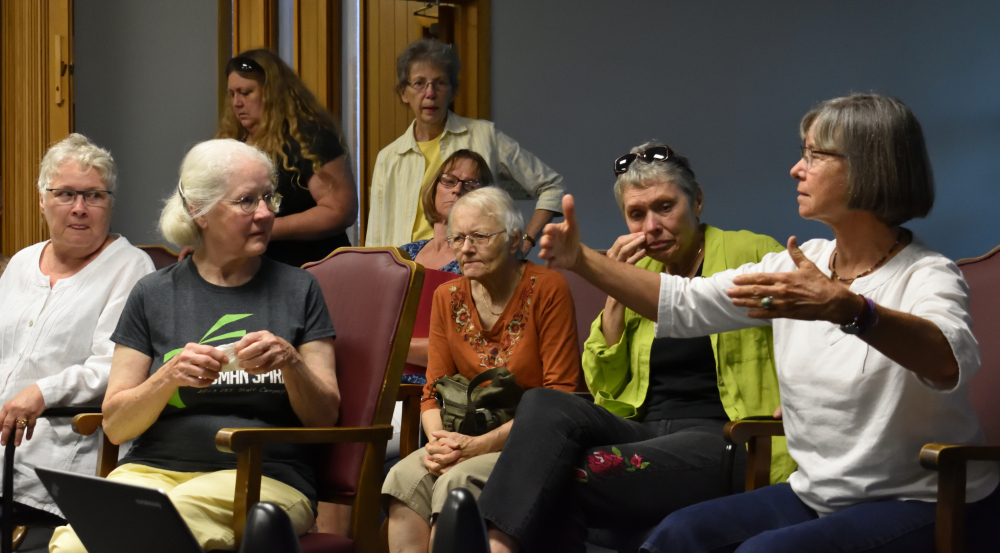
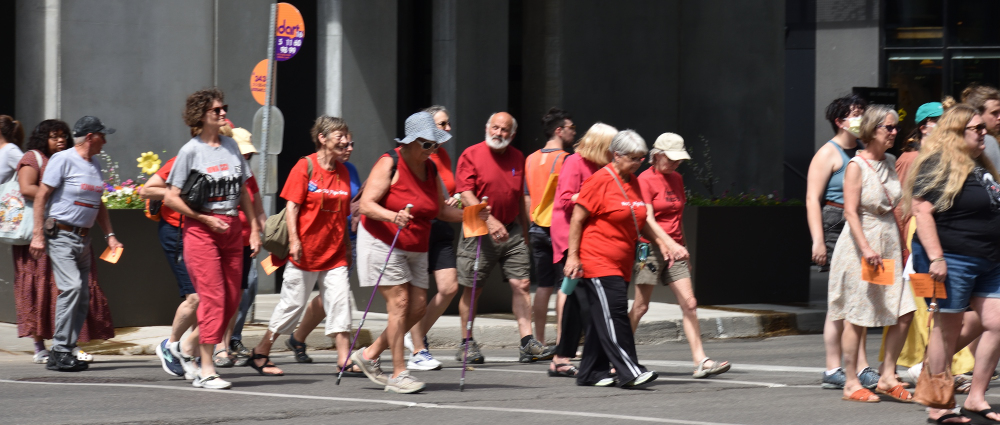
In the story below, the Great Plains Action Society (GPAS) tells what Orange Shirt Day is about. Many of my friends are in this photo. I’m wearing an orange shirt today.
Tansi Friends, 

Today is September 30 – “National Day for Truth and Reconciliation,” a statutory Canadian holiday, better known as “Orange Shirt Day.” This holiday was intended to educate people and promote awareness in Canada about the Indian residential school system and the impact it has had on Indigenous communities for over a century. The use of the orange shirt is attributed to Phyllis Jack Webstad. She was sentenced to St. Joseph Mission Residential School when she was six years old. On her first day there her clothes were taken from her, including a new orange shirt given to her by her grandmother. She never saw that shirt again. The story resonated with thousands and became a symbol of the violence that Indigenous children faced in these internment camps called schools. 

Recently, thousands of unmarked graves have been uncovered on the grounds of around 10 residential schools in Canada. There were over 490 residential schools (boarding schools in the U.S.) between the United States and Canada. The New York Times reported on this last summer, and while we are thankful for the coverage, it doesn’t nearly represent the pain and suffering this is causing in our community. Also, trying to quantify the number of graves that have been found is not ever going to tell the truth. The truth is that many children’s bodies will never be found as they were hidden or cremated. There were also many children that tried to run home but died of starvation or exposure. And then there are those that died from suicide and addiction because of the pain they could not overcome. 

Great Plains Action Society has felt this pain firsthand, as many of our close family members attended these schools, and we are rising to meet the needs of our communities. Last year, in Sioux City, we hosted a large community feast and ceremony to honor nine children whose bodies were reMatriated back to Sicangu Oyate lands from the grounds of the Carlisle Boarding School. We have also raised funds to help one of our relatives, Curt Young, show his film, They Found Us, about the search for children’s bodies at the George Gordon First Nation. If we can raise enough funding, we would like to get his film shown throughout Iowa and the Midwest.

The Missing and Murdered Indigenous Relatives crisis largely exists because of the reprercussions of boarding schools. We have been working to support families directly impacted by colonial violence (like what was experienced in these schools) with financial support to travel to court, child care, community gatherings, and covering ceremonial/memorial expenses while continuing all of our other work, including mutual aid, political engagement action, and fighting for our earth. We are dedicated to providing whatever our community needs to grow, survive, and thrive. 
 
Please support our work to end the MMIR crisis and help heal those affected by boarding schools (aka, internment camps for children)

Ay hai kitatamihin,
 
Sikowis (Fierce), aka, Christine Nobiss, she/her
Plains Cree/Saulteaux, George Gordon First Nation
Executive Director, Great Plains Action Society
sikowis@greatplainsaction.org
 
Web – greatplainsaction.org
FB – @GreatPlainsActionSociety
IG – @greatplainsactionsociety
Tw – @PlainsAction


In the story above, my friend Sikowis Nobiss tells about a relative, Curt Young, and his film “They Found Us.” This link is to a blog post about Iowa Yearly Meeting (Conservative)’s donation to help support the showing of this film. https://quakersandreligioussocialism.com/2023/01/29/they-found-us-2/

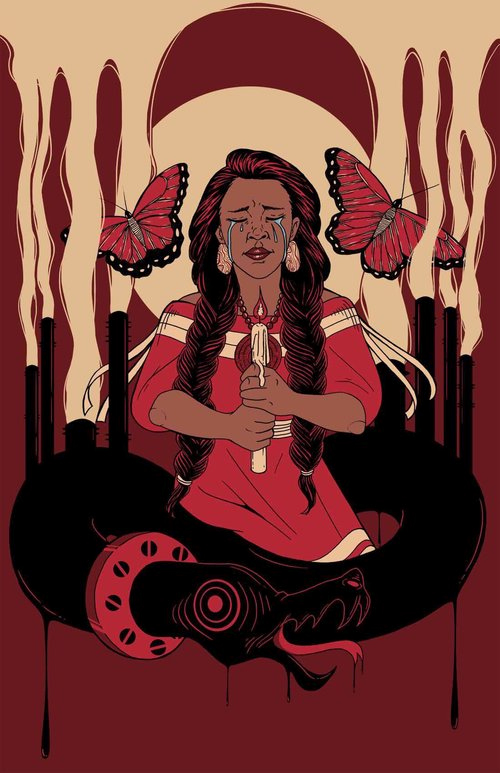
This is a very disturbing 3D graphic related to “They Found Us.” Moving the mouse around the image changes the perspective.

My relative, Curt Sipihko Paskwawimostos, created “They Found Us”. It’s a documentary about the search for unmarked graves at our rez, George Gordon First Nation. I hope we can bring it here to Iowa in the near future. My cousin Janna Pratt is featured in the film.

“I thought it would be important to document these searches and capture some of the stories told by members that were forced to go to these institutions. It’s a first hand look into some of the experiences survived in residential school.”

The film delves into members’ recollections along with the process towards the first ground search of Gordon Residential School before Ground Penetration Radar (GPR) in 2021. This is only the beginning…

I want to say thank you to Jeff Kisling and the Iowa Quaker community for the donation that will help get the film seen. If others would like to help support this work, hit me up.

Sikowis (Christine) Nobiss


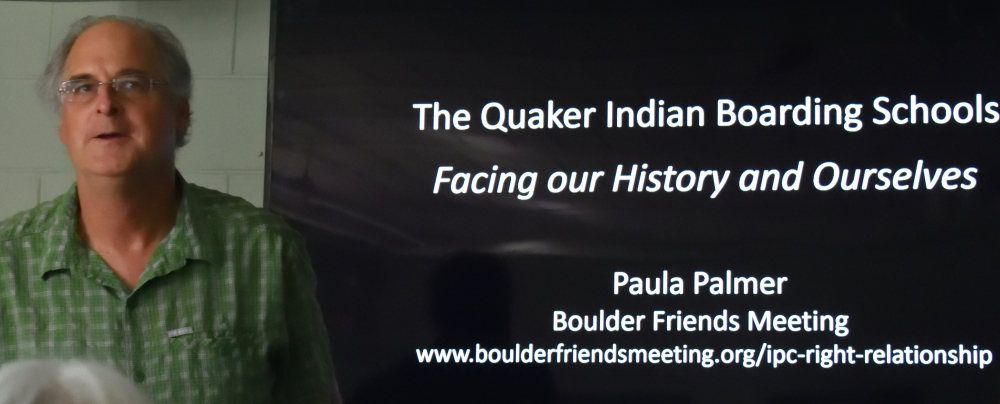
Paula Palmer wrote an article in Friends Journal that extensively discusses her ministry related to what are called Indian Boarding Schools.

Quaker Indian Boarding School. Facing Our History and Ourselves by Paula Palmer, Friends Journal, October 1, 2016

These photos are from Paula’s visit to Iowa Yearly Meeting (Conservative)

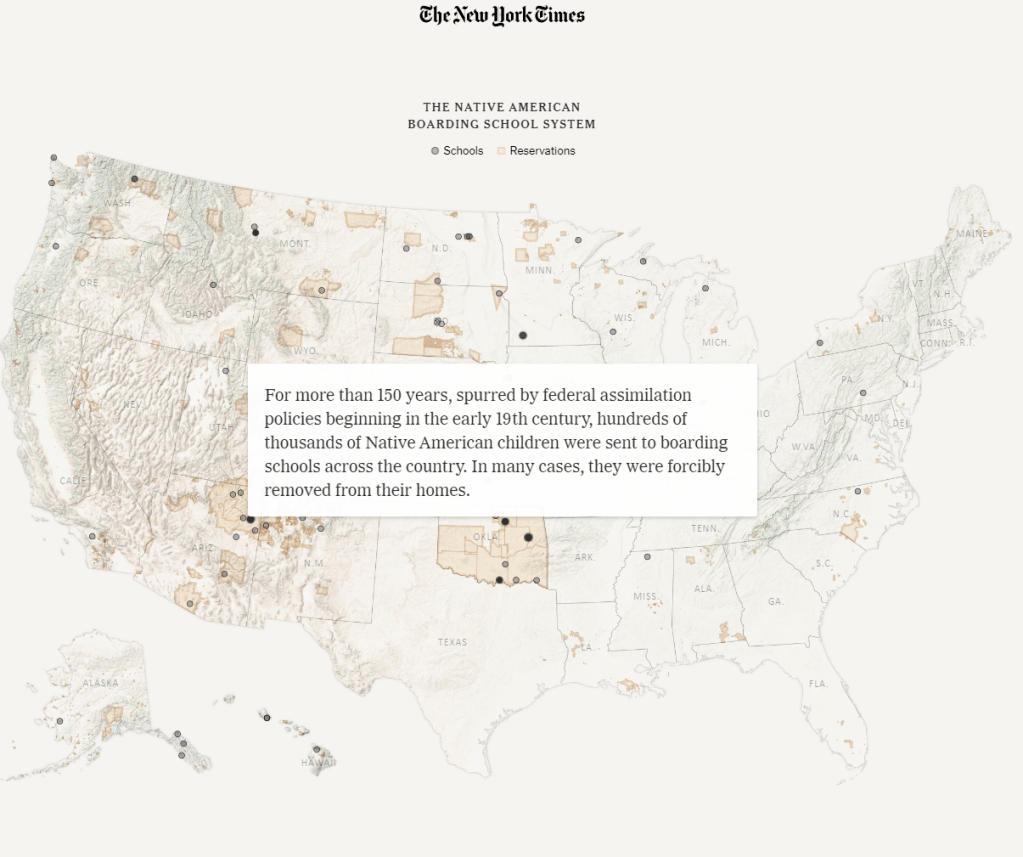
The New York Times recently published an extensive article about the Native American Boarding School System, War Against the Children.

WAR AGAINST THE CHILDREN

The Native American boarding school system — a decades-long effort to assimilate Indigenous people before they ever reached adulthood — robbed children of their culture, family bonds and sometimes their lives.

By Zach LevittYuliya Parshina-KottasSimon Romero and Tim Wallace Aug. 30, 2023

Beyond the vast federal system, this new list also sheds light on boarding schools that operated without federal support. Religious organizations ran at least 105 schools; many were Catholic, Presbyterian or Episcopalian, but smaller congregations such as the Quakers ran schools of their own.

Another excellent resource about these institutions of forced assimilation is the National Native American Boarding School Healing Coalition.

Racism on Parade in Muscatine, Iowa

I woke up this morning at 4 am, unable to go back to sleep because of the awful image of a woman in a Native American costume being pulled by a rope behind a horse during the 4th of July parade in Muscatine, Iowa.

I learned of this yesterday from a blog post written by my friend Jessica Engelking, Representation Director at the Great Plains Action Society (GPAS), Racism on Parade in Muscatine, Iowa. Part of Jessica’s blog post follows.

There is also the issue of this act mocking the Missing and Murdered Indigenous Women crisis. Muscatine hosted a parade that featured a bound white woman pretending to be a Native woman in a cheap, sexually provocative Halloween costume being led beside a horse ridden by a white woman

Again, as the Representation Director of GPAS,it is my job to clearly state that great harm that was perpetuated by your parade. This wildly distasteful act that you allowed in your parade was dehumanizing and dangerous for Indigenous Peoples. Your parade represented Native women as 1) sexual and 2) powerless. A Native woman was displayed as a captive servant—a desirable candidate for possession for rape and violence. This was made even more evident by the “sexy” Halloween costume she was wearing, which mocks our traditional regalia and sexualizes us.

Regardless of whether this aspect of the parade was your intent, you allowed it to carry out. It should have been shut down immediately. We live in a world where real women, our not-so-distant ancestors, were bound and pulled beside horses like that. And they were raped and murdered. They watched their babies’ skulls be smashed. They witnessed and experienced unspeakable horrors. And, you allowed a part of that real history to be recreated for entertainment value. Shame on you. We expect an admission of accountability, an apology, and a forever ban for the racist organization who did this.

Miigwech,
Jessica Engelking
Anishinaabe
Representation Director
Great Plains Action Society

To Take Action Please call or email the City of Muscatine and the Greater Muscatine Chamber of Commerce & Industry to register a complaint about what they allowed to happen in their parade. It is important to note that Brad Bark is both the Mayor of Muscatine and the President and CEO of the Chamber of Commerce–so let’s contact him!

Contact Brad Bark though the City at: (563) 506-3161
bbark@muscatineiowa.gov
Contact Brad Bark through the Chamber of Commerce at:
(563) 263-8895
muscatine.com/contact

https://www.greatplainsaction.org/single-post/racism-on-parade-in-muscatine-iowa


Groups and individuals are responding to the display and costume as both shocking and sickening to Indigenous Iowans. A woman is seen dressed in a Native American costume, with her hands bound by a rope, being pulled by a woman on a horse.

Sikowis Nobiss, Executive Director at the Great Plains Action Society, says there’s no excuse for playing what she calls “Pretendian”.

“So, this is absolutely an act of racism. I don’t know how anybody could see it any way else. Excuses don’t change what happened and what everybody saw,” Nobiss said.

Nobiss says the costume was not just offensive because of deep wounds caused by colonization, but modern-day problems that still affect Native Americans.

“We also have a very high rate of being sold and taken into the sex trafficking industry. And so this really reminded me of like how, you know, settlers view us still. Like less than human.”

Nobiss says if you want to celebrate Indigenous heritage, costumes are off the table, but there are still ways to celebrate.

“Go to a powwow, buy from our indigenous-owned stores, support these indigenous-owned businesses. Find your local tribe or organization and ask them if there are ways you can volunteer or help out with any issues or causes they’re working on, Nobiss said

‘An egregious act of racism’ Muscatine Independence Day costume offends Indigenous Iowans By Conner Hendricks, KCRG.com, July 5, 2023

Find your local tribe or organization and ask them if there are ways you can volunteer or help out with any issues or causes they’re working on.

Sikowis Nobiss

In a statement, the Greater Muscatine Chamber of Commerce said:

“It was brought to the attention of the Greater Muscatine Chamber of Commerce and Industry (GMCCI), that there was a parade entry consisting of a woman dressed in Native American attire with a rope around her hands walking alongside a horseback rider holding the rope.

GMCCI does not condone this behavior and this entry does not represent our community.


When Protest is a Crime

As our politics are making a hard turn to the right, as the US Congress, the US Supreme Court, and multiple states pass legislation based upon White supremacy and authoritarianism, protest is how we who disagree with these trends were once able to try to make our voices heard. But authoritarianism cannot allow questioning its authority and violently suppresses protest and other civil liberties. Tensions will only increase if authoritarianism deepens. Will only increase because of the accelerating urgency to respond to increasing environmental devastation and chaos.

A pair of articles have just been published about Indigenous views of “when protest is a crime”. Part 1 is the Standing Rock effect, and part 2 is about the efforts to Stop Cop City from being constructed in Atlanta.

I’ve been learning about Indigenous views from my friends at the Great Plains Action Society (GPAS) and Des Moines Mutual Aid (DMMA). On GPAS’s Mechanism of Engagement graphic are direct action (protest) and mutual aid. The articles below are about direct action. I’ve been learning mutual aid is a way for a community to care for each other, especially when the government does not.

The audio episodes and transcripts below are available on OUTSIDE/IN. A SHOW ABOUT THE NATURAL WORLD AND HOW WE USE IT. The host is Nate Hegyi.


When protest is a crime, part 1: the Standing Rock effect

When members of the Oceti Sakowin gathered near the Standing Rock Reservation to protest the Dakota Access Pipeline, they decided on a strategy of nonviolent direct action. No violence… against people.

But sabotage of property – well, that’s another question entirely.

Since the gathering at Standing Rock, anti-protest legislation backed by the fossil fuel industry has swept across the country.

What happened? When is environmental protest considered acceptable… and when is it seen as a threat?

This is the first of two episodes exploring the changing landscape of environmental protest in the United States, from Standing Rock to Cop City and beyond.

http://outsideinradio.org/shows/when-protest-is-a-crime-part-1


Nate Hegyi: There are certain moments that become part of our collective story. Flash points. When our past and our future feel like they’re talking to each other. Standing Rock was a moment like that.

Chase Iron Eyes: The smell of fire, of campfire, permeated the entire Oceti Sakowin camp.

Nate Hegyi: That’s Chase Iron Eyes. He’s an attorney, and a member of the Oglala Sioux and Standing Rock Nations, though he says these are colonial names.

Chase Iron Eyes: Yeah, I would say Oceti Sakowin or Sioux Nation.

Nate Hegyi: The protesters, including Chase, first gathered in 2016. They were there to stop DAPL, the Dakota Access Pipeline. Because pipelines spill. Because millions of people depend on the integrity of the Missouri River. Because even when a pipeline works as intended, the result… is more greenhouse gas emissions. But the main reason why Chase and members of the Sioux Nation were camping at Standing Rock was: they were defending their sovereignty.

Chase Iron Eyes: We had been disallowed from expressing our sovereign identity in that territory since 1889. That’s when the state of North Dakota and South Dakota were admitted to statehood.

Nate Hegyi: It was the largest gathering of Indigenous people in recent history. People came from all over.

Chase Iron Eyes: Tens of thousands of people cycled through that camp. This is why one elder called it an ongoing international spiritual monument.


Producer Justine Paradis takes it from here.

Lesley Wood: Most protests are extremely straightforward, and sometimes even boring.

Justine Paradis: This is Lesley Wood. She researches the dynamics between policing and social movements.

Lesley Wood: Um. But some protests are not.

The activists at Standing Rock described the protest as a nonviolent, direct action.

And, historically, “direct action” can mean a lot of things.

Lesley Wood: it can be something like if we want better health care, we have to set up clinics…

It’s saying we’re not going to ask for the government to solve the problems… We’re going to do it ourselves.

Justine Paradis: Direct action as a strategy often comes after trying to participate in the democratic process – and finding it unresponsive. And it might involve acts of civil disobedience: deliberately breaking a law, like stopping traffic, or maybe because the law itself is unjust, like sitting at a segregated lunch counter. Speaking generally, that’s very different from a permitted, police-protected protest, the kind Lesley calls “marching in a circle.”

Lesley Wood: There’s no political threat posed by them… the idea that you have a right to protest, but only in certain ways and in certain places doesn’t really understand what protest is trying to do, which is on the fundamental say the system isn’t working. And to show that it’s not working. To impose some sort of potential cost to the system.

http://outsideinradio.org/shows/when-protest-is-a-crime-part-1


When protest is a crime, part 2: city in a forest

After the gathering at Standing Rock, legislators across the United States passed laws in the name of “protecting critical infrastructure,” especially pipelines. 

At the same time, attacks on the electrical grid have increased almost 300%. But that threat isn’t coming from environmental activists. 

It’s coming from neo-Nazis. 

This is the second episode in our series examining the landscape of environmental protest in the United States, from Standing Rock to Cop City and beyond. Listen to the first episode here.

As the space for protest in the United States shrinks, this year marked a major escalation: the first police killing of an environmental protestor in the United States, plus the arrests of dozens of people at protests under the charge of domestic terrorism.

https://outsideinradio.org/shows/when-protest-is-a-crime-part-2


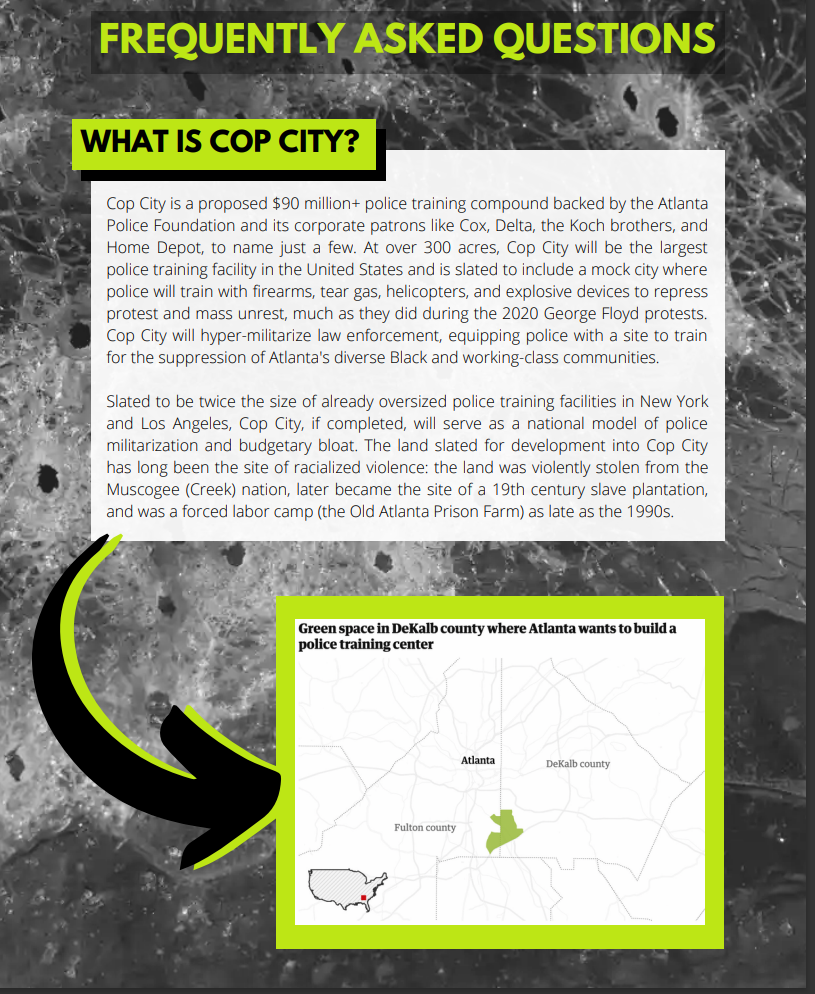
The Atlanta Police Foundation is planning a “public safety training facility” on at least 85 acres of this forest in southeast Atlanta. Their plan includes a mock city for training police in, essentially, urban warfare – complete with a mock convenience store, nightclub, a motel/apartment building, a gas station.

Activists call it Cop City.

Justine Paradis: There are a lot of reasons people are opposed to Cop City.

Because of the environment, for one: trees are good for air and water, and cooling things down, which is especially important in a hotter climate.

And then there’s the fact that this project would be an expansion and investment in the police.

The Weelaunee Forest is in a majority Black neighborhood. And this is only about a year after people were marching in the streets calling for a defunding of the police.

Reverend Keyanna Jones at Atlanta City Council on March 6, 2023: …we don’t want Cop City. I live in East Atlanta. I don’t want Cop City. I got five black children. I don’t want Cop City. I like breathing clean air. I don’t want Cop City… I don’t want black Black Hawk helicopters landing around the corner from my house. I don’t want Cop City.

Justine Paradis: In the decisive meeting to approve the project, 70% of comments were opposed – but the Atlanta City Council approved it anyway.

That was in September 2021.

After that, a group of activists moved into the forest to try to prevent this project from happening. They called themselves “forest defenders.”

They’d been living there for over a year – in tents and tree platforms – when police raided the camp. During one of those raids, law enforcement killed a forest defender, a Venezuelan Indigenous person who went by the name Tortuguita. They shot them at least 57 times. This was the first police killing of an environmental protestor in the United States.

https://outsideinradio.org/shows/when-protest-is-a-crime-part-2


Risks of Environmental Activism

As a follow-up to yesterday’s post about bail funds, a fellow Quaker abolitionist told me about the Atlanta Solidarity Fund.

Support the Atlanta Solidarity Fund as its organizers face targeted political repression.
The National Bail Fund Network is collecting donations for the Atlanta Solidarity Fund on a temporary basis as of May 31, 2023.
All funds raised here will be used to support bail and legal defense funds of those being arrested and prosecuted in Atlanta.
The National Bail Fund Network is made up of over 90 local community-based bail and bond funds that free people from local jails and immigration detention centers. More information at bit.ly/localbailfunds

Atlanta Solidarity Fund


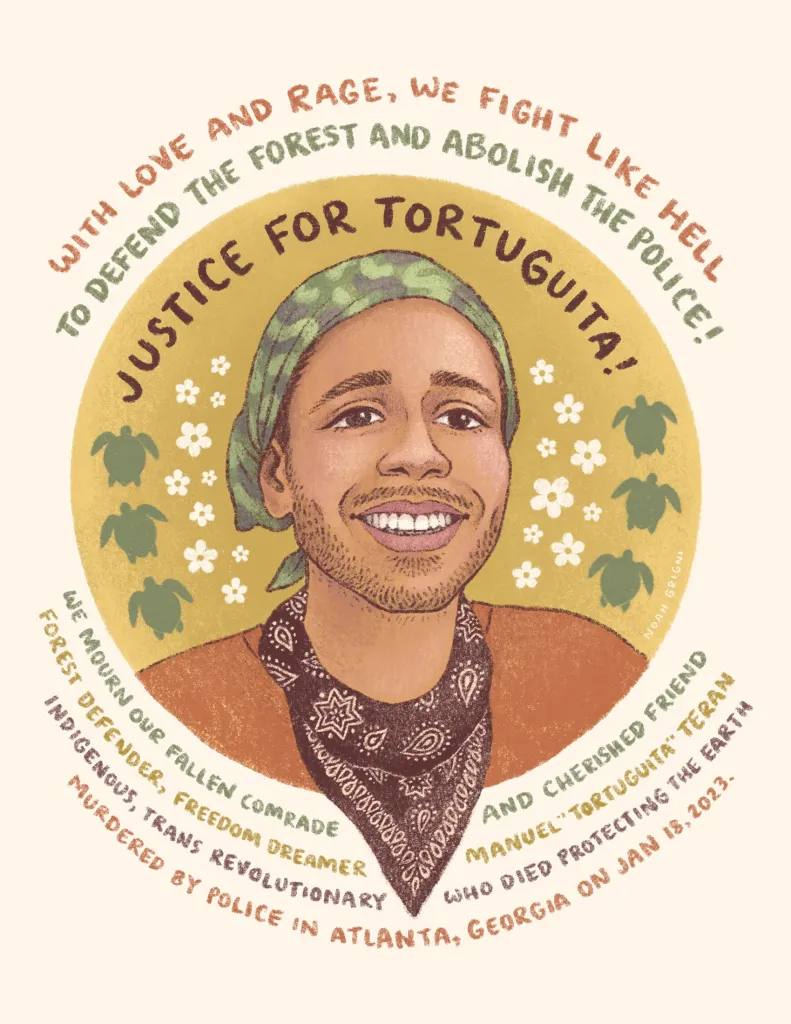
There are, of course, risks to being involved in activism. Manuel Esteban Paez Terán also known as Tort or Tortuguita (Little Turtle), was a tree-sitter in the Atlanta forest and was killed by police on January 18, 2023. You can read the moving tributes to Tort here: Memories of Tort.

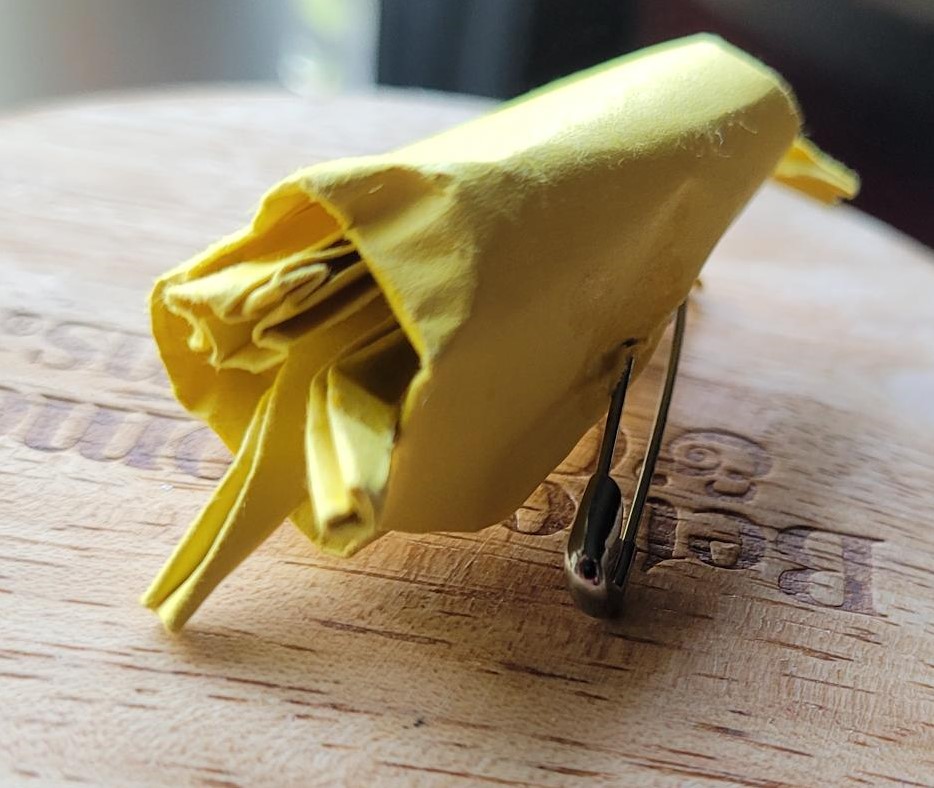
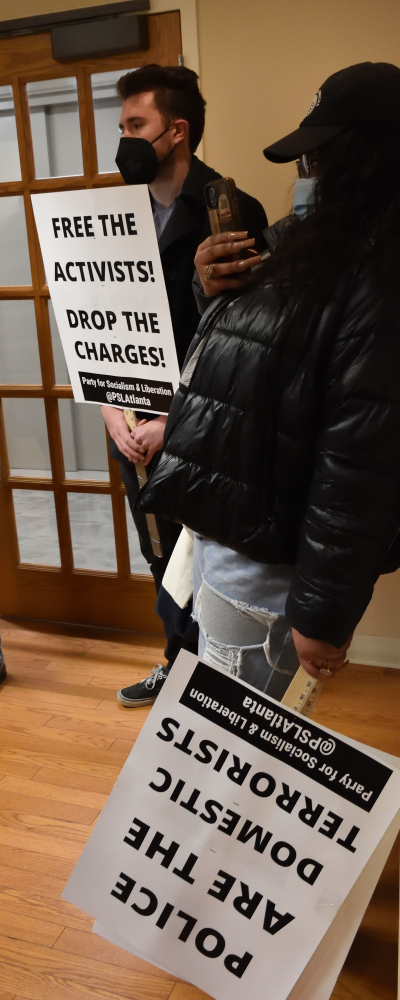
During our latest demonstration related to Stop Cop City, someone made turtles for us to pin on our shirts in remembrance of Tortuguita.

The issue of environmental activism is becoming increasingly urgent and dangerous in the face of the climate crisis. According to a report by Global Witness, more than 1,700 environmental activists have been killed “trying to protect their land and resources” over the past decade. In 2020 alone, a record number of 227 people were murdered around the world for defending their environment and land rights. (see: https://en.wikipedia.org/wiki/List_of_environmental_killings)


Indigenous resistance

It’s important that enterprising reporters cover Native issues in the right way. Today, I’m happy to highlight a solid example of such reporting. When protest is a crime, part one: the Standing Rock effect is the first of a multi-part podcast from the talented team at Outside/In, a division of New Hampshire Public Radio. It examines the criminalization of protest in America through the lens of Indigenous resistance. Both my father, Lakota Law co-director Chase Iron Eyes, and I sat down with reporter and producer Justine Paradis to lend our perspectives. I encourage you to listen to what we had to say.

Wopila tanka — thank you for being a part of our resistance.
Tokata Iron Eyes, Organizer
The Lakota People’s Law Project

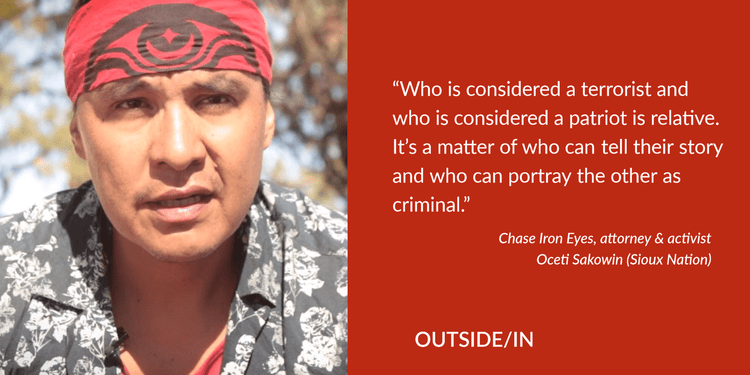
“Who is considered a terrorist and who is considered a patriot is relative. It’s a matter of who can tell their story and who can portray the other as criminal,” said Chase Iron Eyes, an attorney and activist and member of the Oceti Sakowin (Sioux Nation). Photo by Treetops Productions on Wikimedia Commons (CC BY 3.0).


Not the first time the people were betrayed

Weelaunee Forest was the historic home of Muscogee Creek peoples for untold generations. In the 1830s they were forcibly removed by the U.S. military on the Trail of Tears; and the land, some 3,500 acres, was transferred to the hands of enslaving plantation elites. Enslaved Africans toiled their lives away and were undoubtedly buried there.

Then in 1918, during the Jim Crow era, the Bureau of Prisons and the nearby Atlanta federal penitentiary bought over 1,000 acres for a prison farm to grow crops to feed inmates. Mainly Black prisoners, convicted of low-level “crimes” like vagrancy, loitering and public drunkenness, labored for free in horrible living conditions and were subjected to brutal treatment. It is believed their unmarked graves lie among the trees that cover the Atlanta Prison Farm’s acres.

In 1965 the city of Atlanta appears to have acquired the property, which is the largest existing expanse of green space in the area. The Atlanta Prison Farm was finally closed in 1995.

The killing of Forest Defender Tortuguita in Atlanta by Dianne Mathiowetz, Workers World, January 24, 2023


#StopCopCity

Mother Earth Takes Another Hit

The approval for the construction of the Mountain Valley Pipeline (MVP) remained in the debt ceiling legislative just passed by the US Congress. This is an egregious act on many levels.

The Mountain Valley Pipeline (MVP) is a project proposed in 2014 that would transport fracked gas from West Virginia to southern Virginia through a 300-mile pipeline. The project has sparked widespread opposition for years from environmentalists, civil rights activists, and local residents who are concerned about its impacts on water quality, wildlife, climate change, and Indigenous and property rights.

The MVP was approved by Congress as part of the debt ceiling deal that was just passed. The deal included a provision that declared the MVP as “required in the national interest” and ordered the federal agencies to issue the necessary permits within 21 days and shield the project from legal challenges. The provision also weakened the National Environmental Policy Act (NEPA), a law that requires environmental reviews for major federal actions that affect the environment.

Many of us have criticized the deal that undermines:

  • the rule of law
  • public participation
  • Indigenous approval
  • and environmental justice

The MVP contradicts President Biden’s pledge to combat the climate crisis and transition to clean energy..

I recently wrote “What should be non-negotiable” to try to explain, yet again, why we can not allow continued construction of fossil fuel infrastructure, from pipelines to carbon capture to gas stations.

I know what it’s like to work year after year, fighting to protect Mother Earth from fossil fuels. I was going to say that for me this began in 2013 when I was trained as an Action Lead in the Keystone Pledge of Resistance. But it began much earlier when I was led to live without a car when I moved to Indianapolis in 1970. My love for nature actually began from growing up on farms and camping trips to national parks.

Of course, Indigenous peoples have worked to protect Mother Earth for centuries.

It’s not easy to maintain years-long resistance to a cause. That is one reason why approval of MVP is devastating. It is difficult to find people who are willing to work for justice causes. Difficult to organize and get people to commit to various actions. To get people to move outside their comfort zone. To face all kinds of opposition, time and time again. And all too often the cause is defeated. The pipelines and other infrastructure continue to be built. Mother Earth takes another hit.

Such is the case with the Mountain Valley Pipeline. Its approval hurts not only those who worked so hard against MVP, but everyone working on any environmental cause. It shows yet again the Federal administration and Congress do not understand the gravity of our evolving environmental devastation.

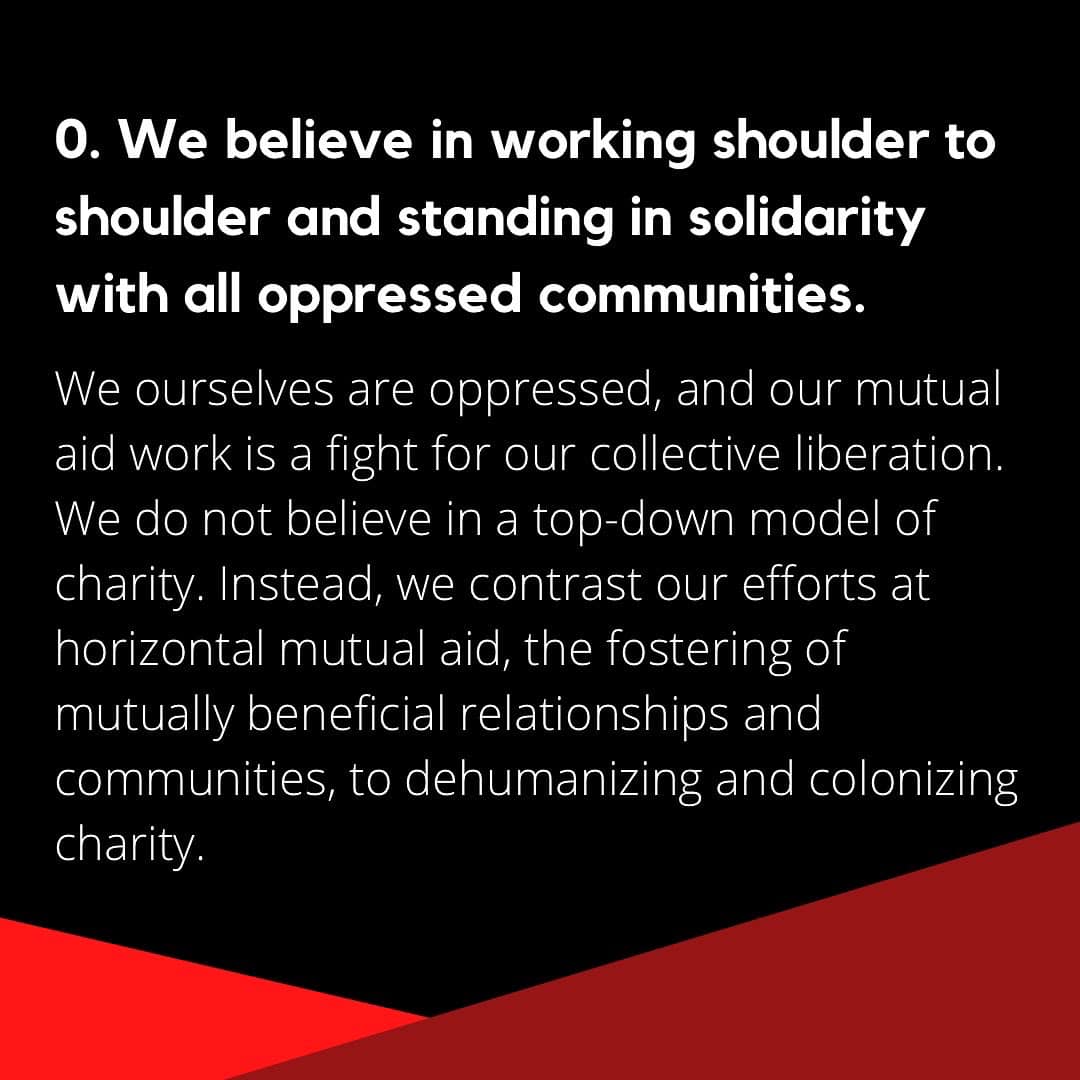
It also shows, again, that environmental solutions will not come from the dominant political culture in this country. Which is why I am so grateful to have been led to my Mutual Aid community. We work locally, within the community, to address basic needs. Instead of talking and having committee meetings, we come together to help our neighbors with food and shelter.

And we strive to advance Indigenous leadership. Indigenous ways can help clean our waters and move toward living sustainably. Help us heal our relationships with Mother Earth and all our relations.

The circle is completed when Indigenous peoples support Mutual Aid, as Des Moines Mutual Aid is supported by the Great Plains Action Society (GPAS). Mutual Aid is one of the methods in the GPAS’s mechanism of engagement.


Multiple Strategies

Yesterday was another episode in the saga of not only carbon pipelines but Indigenous rights more broadly.

There is increasing pressure from many places to use the idea of carbon capture and storage to meet the goals of reducing greenhouse gas emissions. The Biden administration is supporting this unproven technology, which even if it worked would not impact global greenhouse gas concentrations. This is something I’ve written about extensively.
(See: https://quakersandreligioussocialism.com/?s=carbon+pipeline )

PHMSA

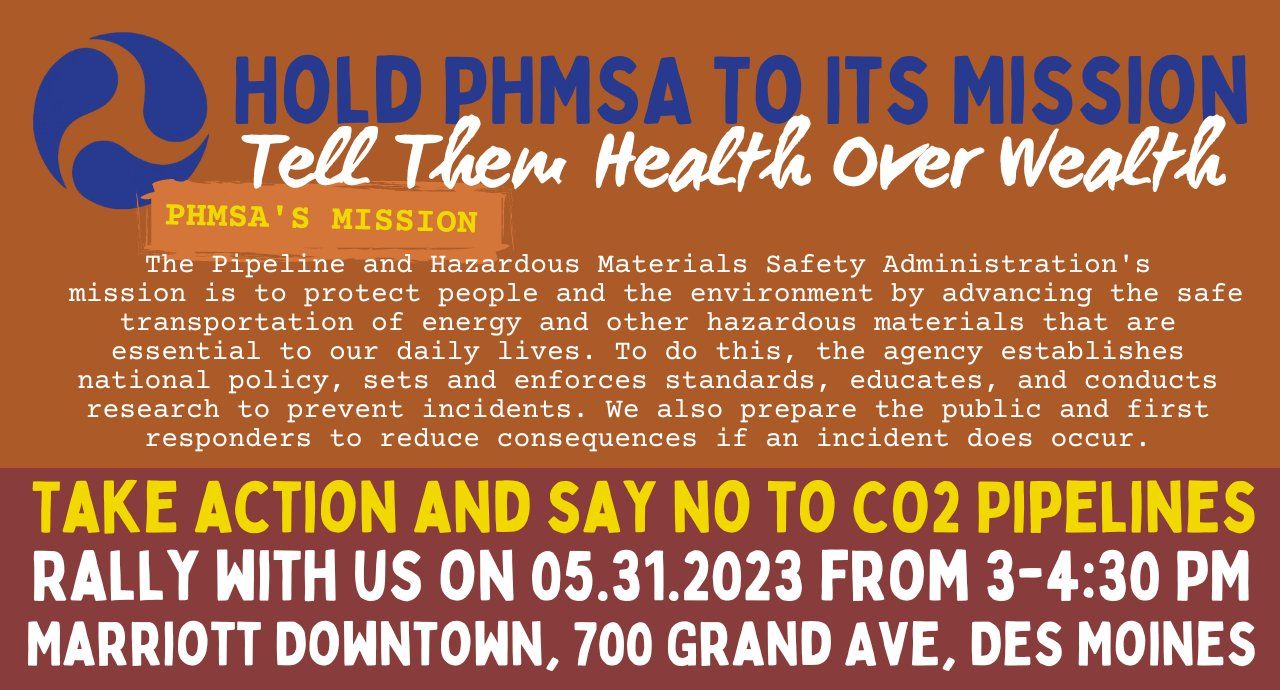
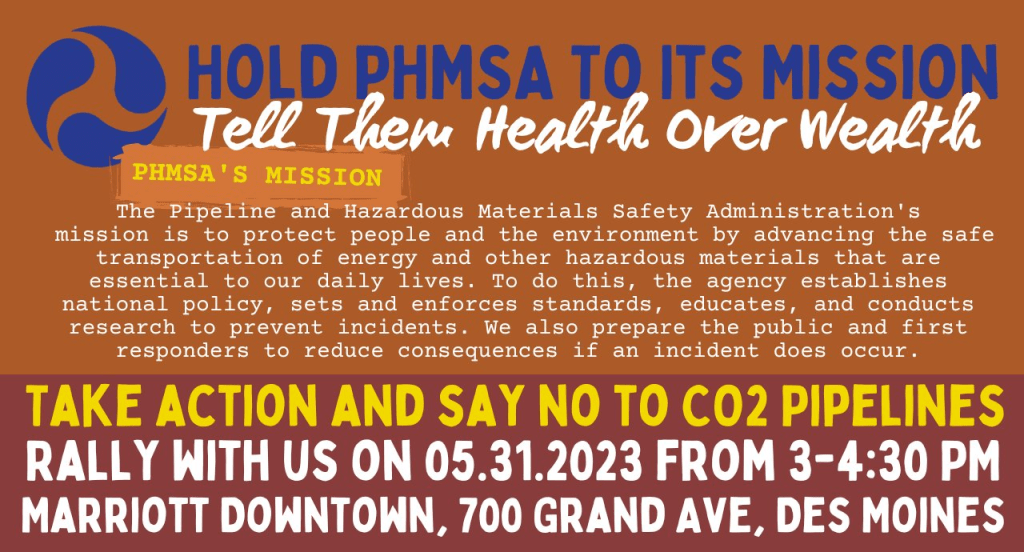
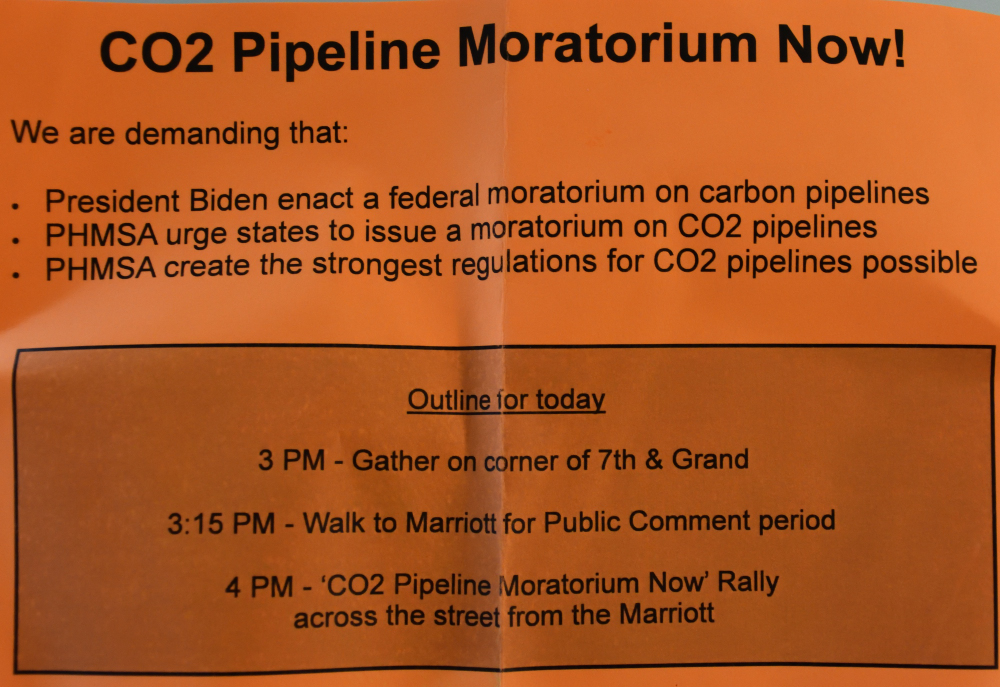
Yesterday and today public meetings are being held in Des Moines by the Pipeline and Hazardous Materials Safety Administration’s (PHMSA) Technical Safety Panel (See: https://quakersandreligioussocialism.com/2023/05/31/carbon-pipeline-safety-meeting/ )

Carbon dioxide (CO2) pipelines are classified as carrying hazardous materials because they pose significant safety risks in case of a rupture. CO2 is a colorless, odorless gas that can displace oxygen and cause asphyxiation at high concentrations. It can also travel long distances from the pipeline after a leak, creating a large danger zone for people and animals. According to the U.S. Department of Transportation’s Pipeline and Hazardous Materials Safety Administration (PHMSA), CO2 pipelines require special safety measures such as corrosion control, leak detection, emergency response plans, and public awareness programs.

There is environmental racism in building pipelines and storage facilities near Indigenous lands. This occurred when the route of the Dakota Access Pipeline was moved away from Bismark, to Standing Rock, when Bismark residents feared contamination of their water.

This environmental racism also facilitates the epidemic of Missing and Murdered Indigenous Relatives because of the “man camps” of pipeline/storage construction workers.

Now there is a similar situation, where landowners, developers, and politicians in Bismark are opposing a proposed carbon dioxide storage project near them.

Not in my backyard

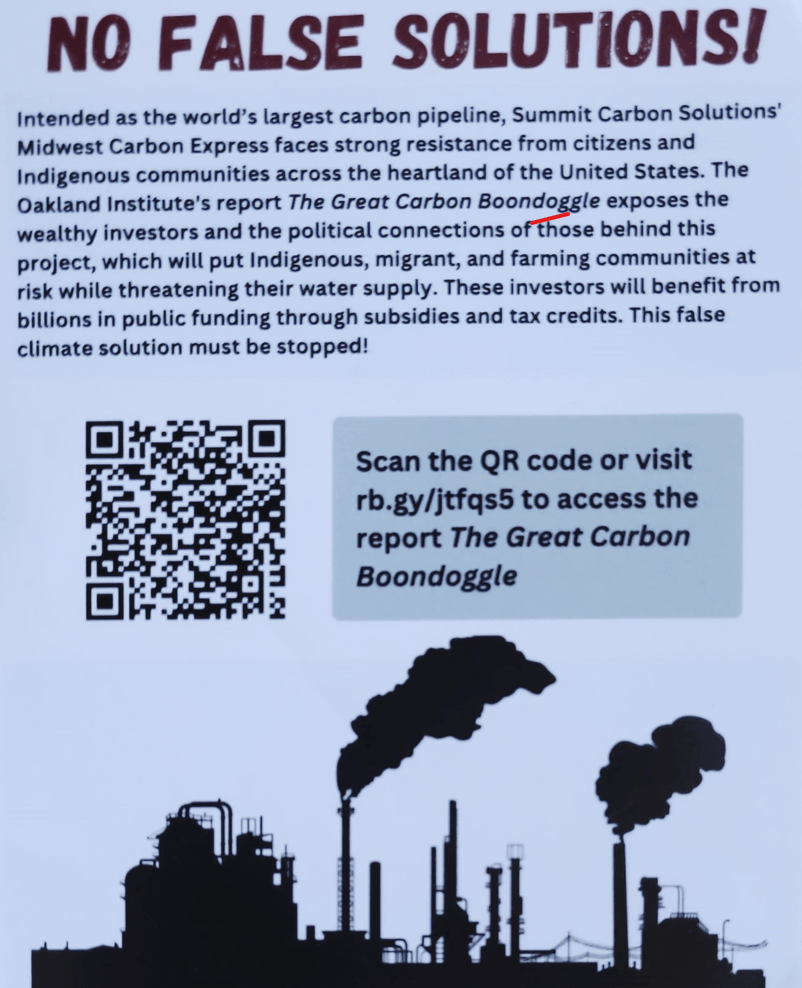
They are showing up in earnest in opposition to the Midwest Carbon Express pipeline, a plan of Summit Carbon Solutions to gather up 12 million tons of CO2 from 31 ethanol plants in five states and send it through pipelines to be sequestered at an underground storage facility in western North Dakota.

The project is well underway, but an apparently well-funded and vocal group of folks, many of them who no doubt appreciate the jobs and tax revenues provided by fossil fuels, are fighting the proposed pipeline tooth and nail.

To be fair, these developers, home builders, politicians and homeowners don’t seem to oppose the pipeline in general, they just don’t want it to be close to places where they live or where they might enrich their businesses with new housing development and construction.

In other words, they don’t mind if the pipeline impacts someone else, they just don’t want it to impact them.

Speaking out: Liking the upside means accepting the downside by Steve Andrist, The Bismark Tribune, 5/31/2023

Great Plains Action Society

My friends at the Great Plains Action Society continue to teach us about Indigenous views and rights. My friend Sikowis Nobiss worked to have a panel discussion related to Indigenous peoples as part of this PHMSA gathering. You can hear her, and others’ remarks here: https://fb.watch/kUlb4S3XCb

Sikowis spoke about most tribal nations not being consulted about these pipelines.

And spoke about the safety equipment that is required for first responders wherever the pipeline is built. Such as oxygen supplies and electric vehicles. Leaked carbon dioxide can spread quickly and stays near the ground, potentially causing asphyxia. Sikowis asks, where is the money going to come from for tribal nations to purchase such safety equipment?

She also spoke about the biome below ground and how we don’t know how pipelines and carbon storage affect that.

Sikowis concluded by pointing out how these are unproven technologies. And asks for a moratorium on these projects until more research is done.

Our Executive Director, Sikowis Nobiss, is speaking today on the Pipeline and Hazardous Materials Safety Administration’s (PHMSA) Technical Safety Panel regarding safety concerns in light of several proposed projects slated for Iowa and the Great Plains region after a recent incident in 2021 at Satartia, Mississippi. Earlier this year PHMSA has stated updated safety regulations tailored specifically for carbon dioxide pipelines are needed and will take 1-3 years to establish—the same timeframe these proposed projects aim for completion.

As such, we call for a federal moratorium until regulations are complete and moreover don’t believe they should be actualized at all! Rather, re-Matriation of Prairie can safely, effectively and efficiently sequester carbon dioxide just as good or better than any of these techno-solutions.

(See video here: https://fb.watch/kUlb4S3XCb/)

#PrairieNotPipelines
#NoCO2Pipelines
#ReMatriate
#NoCCS


Multiple Strategies

It was very important that Sikowis was able to speak during the PHMSA meeting.

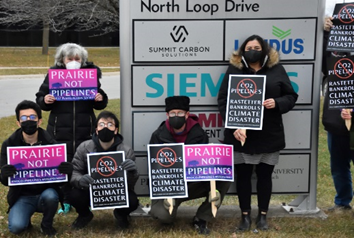
We had also planned to hold a rally outside the Marriott Hotel the meetings were held at. Unfortunately our efforts were thwarted by police who were working for the hotel. So we gathered across the street with our signs, and people spoke about these issues.


Spiritual Transition

Writing these blog posts can be difficult. It can be hard to discern what to write. To listen to the silence is a spiritual practice. And I most often write about spiritual matters, which are difficult to put into words.

Then publish what is written on the Internet for anyone in the world to read. That was intimidating at first. But after a while, you find you don’t usually get much response, positive or negative.

Perhaps the most difficult is writing things likely to upset or hurt people you care about. But I try to discern/speak/write the truth as I understand it to the best of my ability.

Religious and faith groups that have existed for a long time have often done things and/or held beliefs that resulted in injustice. For example, there is the doctrine of a “just war.” Of the Christian Crusades. Or the Doctrine of Discovery (1452) that specifically sanctioned and promoted the conquest, colonization, and exploitation of non-Christian territories and peoples.

These and many other injustices occurred because White Christians had significant political influence. And were involved in the theft of land from and subjugation of many Indigenous peoples. These injustices persist because White supremacy and oppression continue.

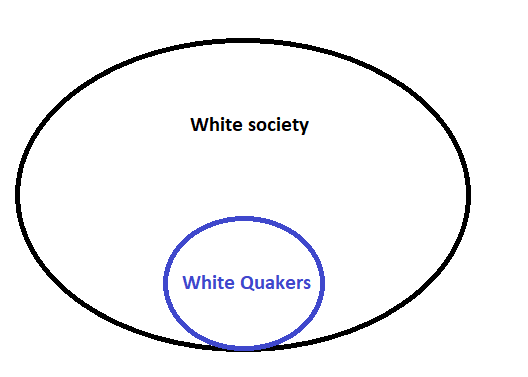
It is common to be most critical of those we look to be examples of our beliefs. I was raised in Quaker communities, where there is great emphasis on living our lives consistent with our beliefs. I’ve been led to see most White Quakers are failing to achieve that.

One way Quakers work for justice is to refuse to participate in organizations that are involved in unjust work. That sometimes involves boycotting products or services from such companies. Or refusing to invest in or work for such organizations.

It is much more difficult to divorce oneself from systems of injustice we live in. For example, it is difficult to live without a car in today’s sprawling cities and towns, or in rural areas. These assaults on Mother Earth are environmental injustice. I refused to have a car because of this. That began in 1970. Yet, in all the time since, I was unable to convince other Quakers to give up their cars. This was a source of ongoing tension with Quakers. It is haunting to know that if our society had embraced mass transit systems instead of the car culture, we would not be dealing with environmental devastation that will only worsen, probably to the point of extinction.

For over three years I’ve been part of a Mutual Aid community, where I’ve been learning more about these injustices, and an alternative to White supremacy and capitalism. I’ve been sharing what I’ve been learning with my Quaker communities, but similar to the car situation, I’m making little progress in convincing Quakers to embrace Mutual Aid. (See: Quakers and Mutual Aid)

Spending time in marginalized communities has given me different perspectives on White supremacy, colonialism, and capitalism. I am now struggling because these new perspectives convince me those systems of oppression must be abolished.

When working for change, the choices are:

  • Incremental changes to existing systems, or
  • Replacing unjust systems

Incremental changes to unjust systems perpetuate the injustices.

But replacing unjust systems takes time. The concept of Dual Power refers to transitioning from an unjust system to a just one. My Mutual Aid community is building just alternatives to capitalism.


I just wrote Social and Economic Justice which was critical of Quakers today. “The capitalist economic system only works if you have money. It’s so frustrating to me that I can’t make my White friends, Quaker friends see how incredibly unjust this is. They don’t see a problem with capitalism because they have a source of income.”

I call capitalism Economic Slavery.

As mentioned, Quakers have a practice of refusing to be associated with unjust organizations and systems. So what do I do when Quakers are part of the unjust systems of capitalism and White supremacy?

Spending time in marginalized communities shows me the depth of the consequences of White supremacy and capitalism. Seeing the families coming to our Mutual Aid food giveaway is heartbreaking. Making me viscerally aware of the failure of capitalism and the need for Mutual Aid.

My friend Jed Walsh recently shared this with me:

For me, there’s a lot of grief around thinking about moving away from Quakerism, as Quakers have really significantly shaped the person I try to be and the ways I want to be part of social movements. But my fear/pessimism right now has been telling me for some time that Quakers as a whole can’t let go of our collective attachments to white supremacy and capitalism. I’m tired of being in the margins of a Quakerism that’s clinging to the status quo, and hoping to find other places to practice faith and spirituality where I can feel more aligned with others.

Jed Walsh

I, too, am tired of being in the margins of a Quakerism that’s clinging to the status quo. I’m exhausted from fifty years of work against environmental devastation, which included Quakers and their cars.

From my years in oppressed communities, I understand how people in these communities view White people. I know they see no distinction between White Quakers and other White people. I feel the unspoken questions of my Mutual Aid friends. Wondering, now that I’ve seen the injustices of capitalism and White supremacy, am I going to do anything more than help give away food? Because Mutual Aid is about abolishing unjust systems and replacing them by building Beloved communities.

I have talked with some Mutual Aid friends about Quakers and spirituality. I plan to continue to look for opportunities to explore spirituality with them.

There is an urgency to make changes now because White supremacy and capitalism continue their oppression today.

I am in a spiritual dual power mode (defined above), remaining with Friends until I might be led to a different spiritual community. I hope, instead, Quakers might seek how we can replace systems of capitalism and White superiority.

And I’ve been exploring what Spiritual Mutual Aid might look like. https://quakersandreligioussocialism.com/mutual-aid/


Seeking a People

I used to call myself a Quaker. I never joined a meeting, and honestly, I had suspicions from the beginning that it just wasn’t going to work. But I was desperate for people, and I really wanted the Quakerism I’d read about.

I couldn’t find it, though, and now I’m not sure it exists.

In the meantime, I’ve been talking, and writing, and a number of Friends say my critical observations about Quaker institutions and culture are illegitimate, either because of my lack of membership or because of my newness. I don’t have a right to point out classism and white supremacy, they say.

It’s been hard finding my place and voice in the Religious Society of Friends. And honestly, I’ve given up. I don’t see the point.

When I read what early Friends wrote, I’m drawn to their vision. Friends lived out of step with the world. Their yielding to Christ demanded deep listening, joy in suffering for the truth, abandonment to the movement of Love. They declared the end of days and rejected the idolatry of nationalism. They were living into a new Society of Friends.

George Fox wrote about the Kingdom of God breaking into this world – and it came from within – this was the gospel I knew, the gospel I needed. Quakers were holy fools, apocalyptic evangelists, soldiers of prophecy. They were about liberation and creating the age-to-come. That was the Spirit I knew. This was the church I longed for.

Then I found Quakers. They weren’t exactly what I’d read about, and it was kind of confusing. But I decided to stick around for a while. After all, maybe God could use existing Quaker institutions to renew the Society of Friends. I believed and hoped that some of these institutions might lead Friends of all branches into convergence, and then that the Spirit might dissolve our dependence on institutions. I thought that as we yielded to the Spirit, she would return us to that apostolic and anarchic ecclesiology of early Friends.

What I’ve found, instead, is that Friends have converged on a shared history and a handful of practices.

But if the Society of Friends is to ever again carry the anointing of early Quakers, if it is to ever embody the vision of Margaret Fell, going “hand in hand in the unity and fellowship of this eternal Spirit,” it must do more than embrace a convoluted historical connection and some shared practices.

If we are converging on history and practice, we are missing the point. If we are depending on institutions to create a new society or usher in the Kingdom, then we are deceived. These will not bring the radically egalitarian and Spirit-filled communities that God fostered among early Friends. These are forms, and Friends must follow the Spirit.

I’ve met others who need a Spirit-led Society. We share this vision, and we share the disappointment of being drowned out in meeting by classism, ageism, and racism. Some of us wonder if Quakerism isn’t all that different from the rest of liberal religion. From what we’ve seen, it isn’t apocalyptic. It isn’t radical. It doesn’t sound like Fox or look like Jesus. It works at incremental transformation while simultaneously shushing those who need the system overthrown.

I’ve moved on.

But even as I’ve stopped attending meeting – even as institutional Quakerism has, for the most part, become irrelevant to me – I cannot deny that I am a Friend. Quaker conceptions of Christ’s gospel have led me closer to Jesus and it’s integral to what I believe and how I live. At the end of the day, though, if tables aren’t being turned, if people aren’t being healed and set free, if the prophets aren’t marching naked, I’ll have to follow Jesus elsewhere.

I hear early Friend Sarah Blackborow’s words ringing in my heart: “Christ is trying to make a dwelling place within you but he is left rejected and homeless.”

Jesus is still seeking his people, people who see the Spirit of God in the suffering and offer refuge. I’m seeking those people, too.

https://friendlyfirecollective.wordpress.com/2018/08/02/seeking-a-people/


This River has Rights

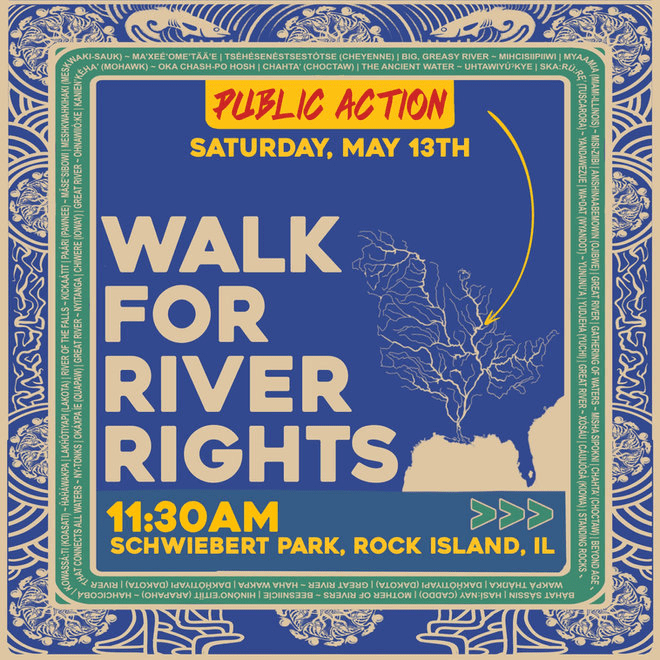
Walk for River Rights

Event by Native American Coalition of the Quad CitiesRiver Action Quad Cities and 8 others

May 13, 2023 AT 11:30 AM – 12:30 PM

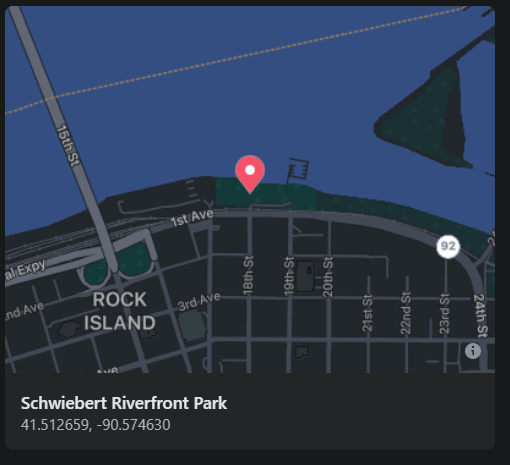
Schwiebert Riverfront Park

On Saturday, May 13th, the Walk for River Rights begins at Schwiebert Park (101 17th St, Rock Island, IL 61201) at 11:30AM and closes at 12:30PM at the Figge Entrance Plaza (225 W 2nd St, Davenport, IA 52801). There is a map of the walk on the discussion page.

***There will be a bus that can drive folks back to their cars after we are done the walk.***

Join leading BIPOC organizers who have converged in the Quad Cities to begin working towards reclaiming Rights of Nature for the Mississippi River. We will walk across the Centennial Bridge in solidarity as one River community advocating for the Rights of the Mississippi River, from the headwaters to the Gulf, and for the rights of all communities whose lives are supported by the waters. All are welcomed and encouraged to attend! A brief introduction and explanation of our convergence will begin at 11:30AM at Schwiebert Park.

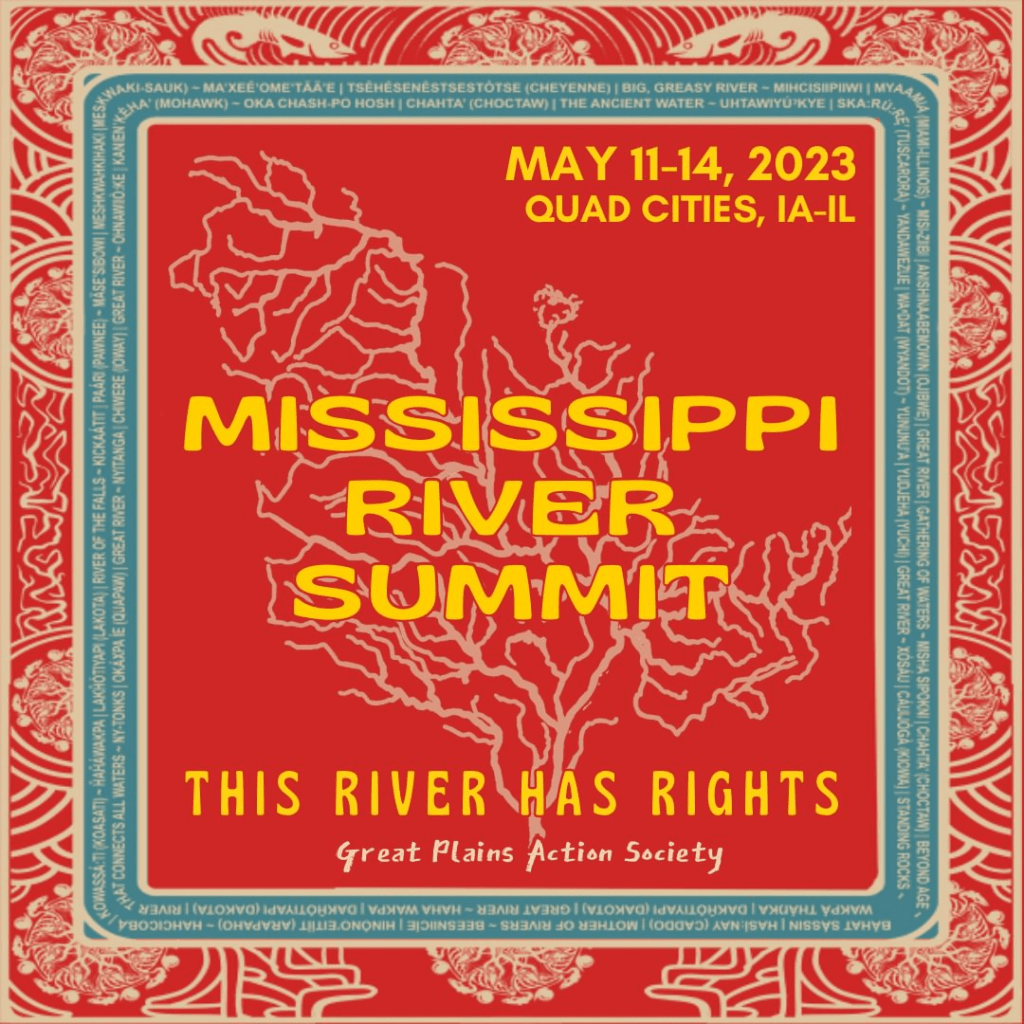
The Walk for River Rights is part of The Mississippi River Summit (May 11th-14th, 2023, Quad Cities, IA-IL), a summit centering and advancing the leadership of 40 organizers of historically racially marginalized communities working to protect water, natural places, and sacred spaces. The goal is to build a BIPOC-led coalition from the Mississippi Headwaters to the Gulf of Mexico, and eventually claim the rights of nature for the entire river system and develop an organized frontline group working to protect the Mississippi watershed and all living beings that rely on it as their home.

Organized by Great Plains Action Society. For questions contact@greatplainsaction.org

*We have modified the route to accommodate for the effects of flooding on downtown Davenport and will now end at the Figge plaza 


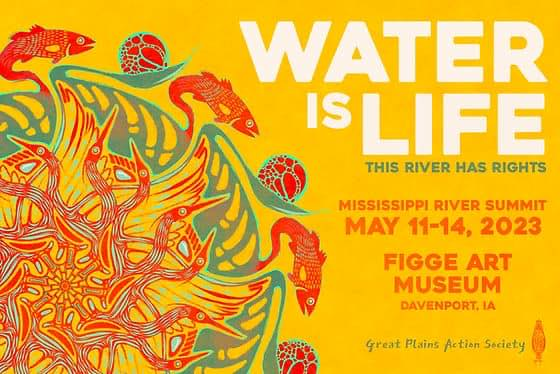
May 11-14, 2023 (Davenport, IA) The Mississippi River Summit is a BIPOC led event where folks from the headwaters to the Gulf of Mexico are converging to talk about the health of the river basin and all that rely on it and to work towards rights of nature for our river relative.

Why are we meeting in Iowa? The state of Iowa has the unique designation of being bordered by the Nation’s two largest rivers, the Mississippi and Missouri. However, water does not adhere to colonial borders and unfortunately, Iowa is the number one contributor to the ‘Dead Zone’ in the Gulf of Mexico. Iowa is also the most biologically colonized state in the country because of Big-Ag, CAFOs (concentrated animal feed operations), meatpacking plants, ethanol production, etc.

#RightsofNature
#ThisRiverHasRights
#Mississippi


This beautiful art was made by Moselle Singh. Learn more about our Mississippi River Summit at https://www.greatplainsaction.org/mississippi-river-summit

Indigenous leadership

My friends at the Great Plains Action Society (GPAS) continue their years of work providing Indigenous leadership on a number of fronts.

Missing and Murdered Indigenous Women and Girls

First, we want to recognize that today (5/5/2023) is National Day of Awareness for Missing and Murdered Indigenous Women and Girls. On May 2, the City of Iowa City declared its first Day of Awareness for Missing and Murdered Indigenous Women. The proclamation was accepted by Sikowis Nobiss, our Executive Director. It was through her work on the Iowa City Truth and Reconciliation Commission that she was empowered to advocate for this proclamation. It was inspired by the first MMIW proclamation in Iowa made last year by the City of Sioux City, which was influenced by the work of Trisha Etringer, our Siouxland Project Director. This year, Trisha accepted the second proclamation made by the City of Sioux City on May 1 and is currently working towards a state wide proclamation for 2024.

Great Plains Action Society


Berkshire Hathaway/MidAmerican coal power plants

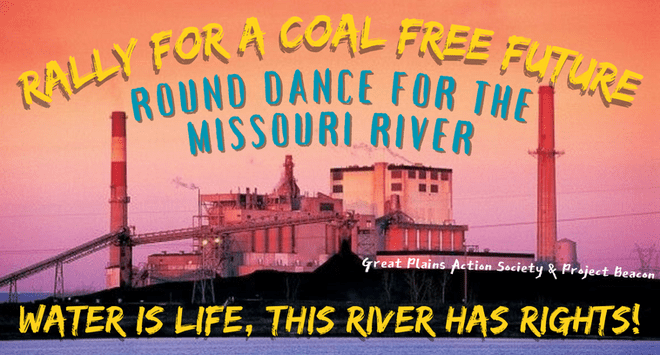
Several environmental organizations have been working to get MidAmerican to shut down their coal burning power plants in Iowa. Today there will be a protest and round dance during the Berkshire Hathaway shareholder meeting today. MidAmerican is a subsidiary of Berkshire Hathaway.

See other actions against MidAmerican energy’s coal power plants here: https://quakersandreligioussocialism.com/?s=midamerican

Next, we want all our friends and relatives to know that we are fighting for the health and well-being of the nation’s two mightiest rivers–the Missouri and the Mississippi. Iowa is the only state bordered completely on the East and West borders by these rivers, making it a special place and one that needs to be protected. Over the next week, we will be on both banks carrying out important events to fight for what is right. 

Two of the nation’s oldest and dirtiest coal plants, owned by the subsidiary of Berkshire Hathaway–MidAmerican, sit on the Missouri River and are situated in the largely Indigenous corridor between Sioux City, Winnebago, and Omaha reservations. They have already been polluting our air, water, and soil and now one of the plants is lobbying to release their toxic coal ash into the Missouri, which is directly north of the Winnebago and Omaha reservations. So we have partnered with Project Beacon and the Clean Up MidAm Coalition for a protest and round dance during the Berkshire Hathaway shareholder meeting in Omaha to demand that they shut down these coal plants! Please join us tomorrow, May 6th at 11:45am, on the Corner of Cass Street and 10th Street. Great Plains Action Society

You can find out more about this event here.


Round Dance for the Missouri River

Relatives in Omaha, Lincoln, Sioux City, Omaha Nation, and Winnebago Nation–Join Great Plains Action Society and Project Beacon for a Round Dance in Omaha during the Berkshire Hathaway shareholder meeting to demand that they shut down their MidAmerican coal plants! We will be joined by Douglas Esau, who will bring his hand drum. The larger rally is being organized by the Clean Up MidAm Coalition.
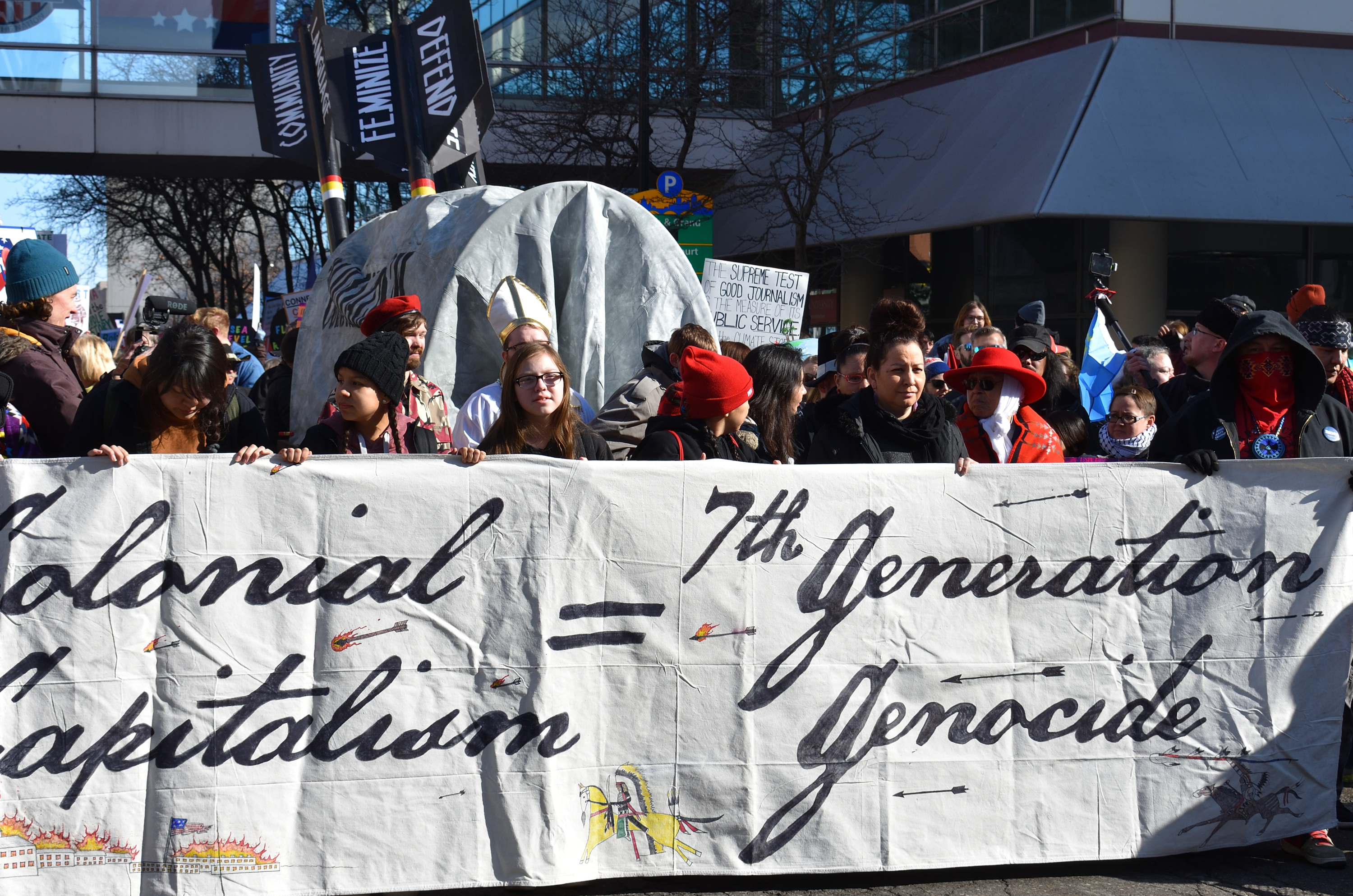
The event is taking place on the SE corner of the Big Lot Parking B of the CHI Health Care Event center. On the Corner of Cass Street and 10th Street. There is a map in the discussion of this event page.

PARKING WILL NOT BE EASY AS THERE WILL BE A LOT OF FOLKS IN THE AREA THAT DAY! You will need to find parking in lots or ramps in the downtown area OR if you feel like taking a scenic walk you can park on the Council Bluffs side of the river at Tom Hanafan River’s Edge Park and and walk across the Bob Kerrey Pedestrian Bridge to the event site–it’s about a 20 minute walk.

Two of the nation’s oldest and dirtiest coal plants are situated in the corridor between Sioux City, Winnebago, and Omaha reservations, polluting our air, water, and soil. Now, they want to start releasing their toxic coal ash directly into the sacred waters of the Missouri River and we are here to say NO!

We are offering $50 gas cards to the first 25 Indigenous folks driving from over an hour away–such as Lincoln, Sioux City, and the reservations. We encourage carpooling! Sign up here for a gas card; https://docs.google.com/…/1FAIpQLSdCje8fXwYHgl…/viewform

There will also be lunch available for everyone! Email Sikowis@greatplainsaction.org for questions. 

Round Dance for the Missouri River


Walk for River Rights

Next week, May 11-14, in the Quad Cities of IA and IL, we are hosting the first Mississippi River Summit with 40 BIPOC leaders and specialists joining us to talk about their respective fights to keep the water safe and healthy and to work towards Rights of Nature.Great Plains Action Society has ties to BIPOC folks at the headwaters all the way to the Gulf of Mexico and we have invited them to Iowa for an important reason! Iowa is the number one contributor to the ‘Dead Zone’ in the Gulf of Mexico and the most biologically colonized state in the country because of Big-Ag, CAFOs (concentrated animal feed operations), meatpacking plants, ethanol production, and general disregard for the land. The time will be utilized for grassroots assessments, specialist lectures, a tour of the Mississippi, and community-building exercises. On May 13th, at 11:30 AM at the Schwiebert Riverfront Park, Summit attendees will join the Quad Cities community for a  Walk for River Rights in solidarity as One River community advocating for Rights of Nature for the Mississippi River and for the rights of all communities whose lives are supported by the waters.
If you’d like to learn more, visit our event page linked here.


We truly appreciate your participation in our advocacy and frontline efforts and need your support to continue. Please consider making a donation to help support Great Plains Action Society and allow us to continue organizing for the health and safety of Indigenous communities and our lands.

Support Our Work

Ay Hai Kitatamihin,

Sikowis Nobiss, She/Her
Nêhiyaw/Saulteaux, George Gordon First Nation
Executive Director, Great Plains Action Society

End Police Violence

Art by Moselle Singh, Drawn From Water

Although the daily news is flooded with stories of police violence toward Black people, the incidence of police violence against Indigenous peoples is higher.

When I began to spend time with Indigenous people, I was surprised to find out about the epidemic of missing and murdered Indigenous relatives (MMIR). And how that is related to oil pipelines and capitalism. That became easy to understand as I learned about the environmental racism of building pipelines near Indigenous reservations. The man camps, construction worker camps, were thus near Indigenous communities.

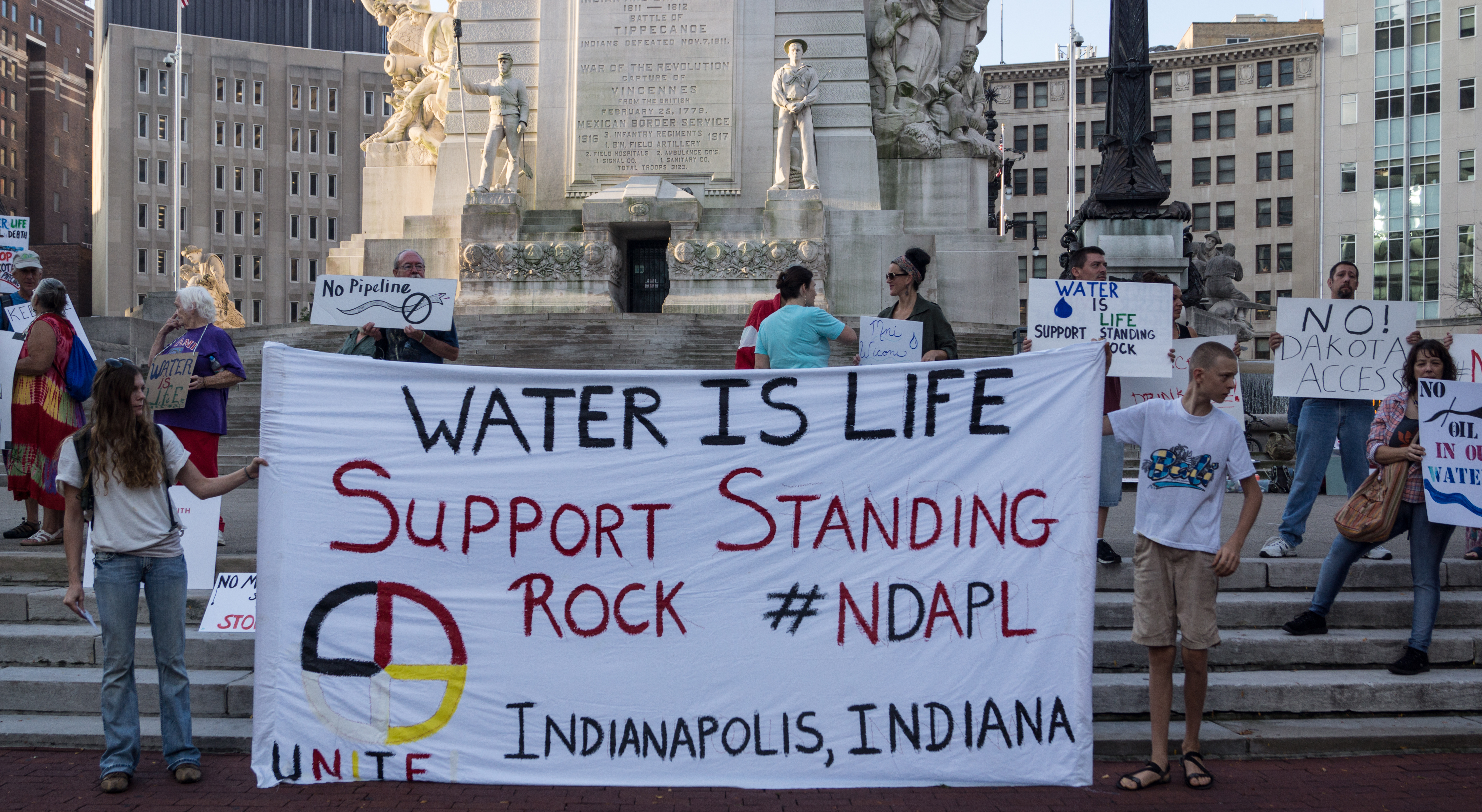
One of the first actions I was involved with after retiring to Iowa was to rally against USBank’s funding of fossil fuel projects. But besides demonstrating against the Dakota Access Pipeline, a number of people held signs, and spoke about MMIR.


Our heart goes out to Bemi (Shyla Wolf) – Meskwaki – who was assaulted on March 30, 2023 by Officer Kyle Howe while three of her young children watched from the car and screamed in fear. She ended up with contusions on her lip, neck, arms, and full body soreness. Officer Howe is known for targeting Meskwaki folks in Tama and represents the continuation of a long history of police violence and injustice perpetrated on Indigenous Peoples across Turtle Island. Though Indigenous Peoples are targeted at alarming rates by cops, these disturbing statistics are not being heard by the rest of society due to the intense efforts to erase us and our place in the US.

Maggie Koerth from FiveThirtyEight, reports that “depending on the year, either Native Americans or African-Americans have the highest rate of deaths by law enforcement. The fact that Indigenous Peoples have such high police murder rates is not a well-known statistic because the population is smaller and because violence to Indigenous folx is not of particular interest to mainstream media. According to a CNN review of the Center for Diseases Control, “for every 1 million Native Americans, an average of 2.9 of them died annually from 1999 to 2015 as a result of a legal intervention”. For the Black population the number is 2.6, for Latinx it is 1.7, for Whites it is 0.9 and for Asians it is 0.6.”

This is a startling statistic because Native Americans only make up 0.9% (2.9 million people) of the population. Furthermore, these deaths are most likely under-reported just like the other epidemics that Native Americans face, such as missing and murdered women, abuse, rape, stalking, runaway children and violence committed by non-tribal members. In fact, the deadliest mass shooting in US history, known as the Wounded Knee Massacre, occurred in 1890 when United States Army troops murdered up to 300 Lakota, including women and children. According to Matthew Fletcher, director of the Indigenous Law and Policy Center, “The data available likely does not capture all Native American deaths in police encounters due to people of mixed race and a relatively large homeless population that is not on the grid.” (CNN) In a paper written by B Perry in 2006 titled, “Nobody trusts them! Under- and over-policing Native American communities”, they presented evidence from 278 individual interviews with eight separate Native Nations that police action toward Native people ranged from ignoring victims to outright brutality against suspects. (Fatal Encounters Between Native Americans and the Police)

Collective Action Will End Police Violence to Indigenous Peoples by Sikowis Nobiss, Great Plains Action Society


Policing in this country began in the 1700’s with “slave patrols” to capture and return those fleeing their enslavement or planning uprisings. Policing has always been about protecting capitalists and their property.

The only way to end police violence and abolish this inherently white supremacist institution built on colonization and the greed of capitalism is for communities to take collective action. Centering mutual aid and radical healing in our communities will take back power and end erasure of us, our history and our culture. Taking back power builds strength and increases resources, which we need to oust violent cops and create our own culturally appropriate systems of accountability and wellness programs. Great Plains Action Society remains committed to this goal and will continue to work diligently towards abolition of systems set up to eradicate us.

Collective Action Will End Police Violence to Indigenous Peoples by Sikowis Nobiss, Great Plains Action Society

Mutual Aid

It is by building mutual aid communities that we take back our power from “inherently white supremacist institution built on colonization and the greed of capitalism”.

I’m of the firm opinion that a system that was built by stolen bodies on stolen land for the benefit of a few is a system that is not repairable. It is operating as designed, and small changes (which are the result of huge efforts) to lessen the blow on those it was not designed for are merely half measures that can’t ever fully succeed.

So, the question is now, where do we go from here? Do we continue to make incremental changes while the wealthy hoard more wealth and the climate crisis deepens, or do we do something drastic that has never been done before? Can we envision and create a world where a class war from above isn’t a reality anymore?”

Ronnie James, Des Moines Mutual Aid

mutual aid is the new economy. mutual aid is community. it is making sure your elderly neighbor down the street has a ride to their doctor’s appointment. mutual aid is making sure the children in your neighborhood have dinner, or a warm coat for the upcoming winter. mutual aid is planting community gardens.

capitalism has violated the communities of marginalized folks. capitalism is about the value of people, property and the people who own property. those who have wealth and property control the decisions that are made. the government comes second to capitalism when it comes to power.

in the name of liberation, capitalism must be reversed and dismantled. meaning that capitalistic practices must be reprogrammed with mutual aid practices.

Des Moines Black Liberation


I belong to the Quakers for Abolition Network, described in this excerpt from Western Friend.

Mackenzie: Let’s start with: What does being a police and prison abolitionist mean to you?

Jed: The way I think about abolition is first, rejecting the idea that anyone belongs in prison and that police make us safe. The second, and larger, part of abolition is the process of figuring out how to build a society that doesn’t require police or prisons.

M: Yes! The next layer of complexity, in my opinion, is looking at systems of control and oppression. Who ends up in jail and prison? Under what circumstances do the police use violence?
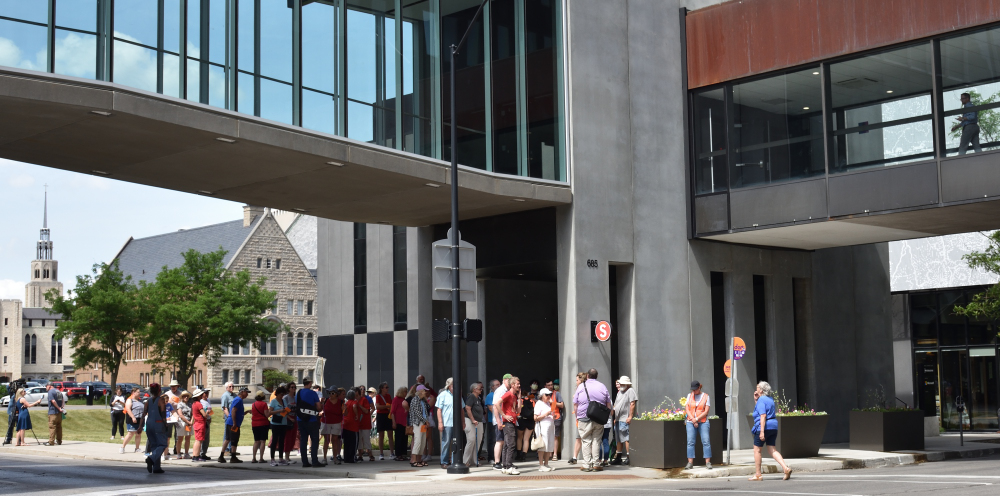
As you start exploring these questions, it becomes painfully clear that police and prisons exist to maintain the white supremacist, heteronormative, capitalist status quo. The racial dynamics of police violence are being highlighted by the recent uprisings and the Black Lives Matter movement.

We are in the same place, with a call to imagine a culture radically different than the one in which we live. Abolishing police and prisons, like abolishing slavery, would change the structure of our society: dramatically decreasing violence and undoing one set of power relationships that create domination and marginalization. And in place of this violence, we could, instead, have care.
Abolish the Police by Mackenzie Barton-Rowledge and Jed Walsh, Western Friend, Nov 2020

Des Moines Mutual Aid

Des Moines Mutual Aid

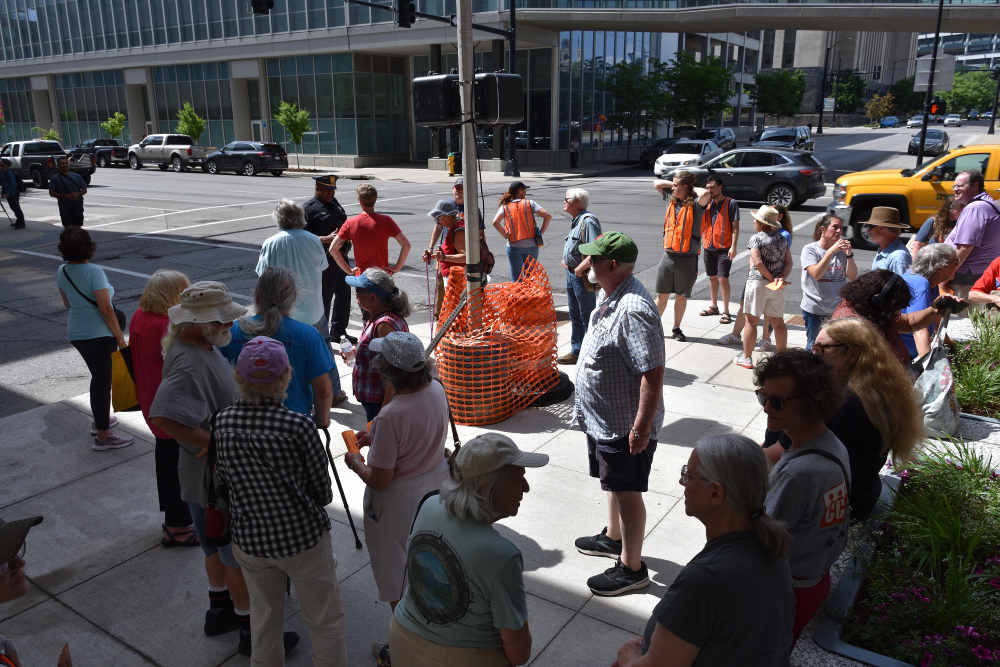
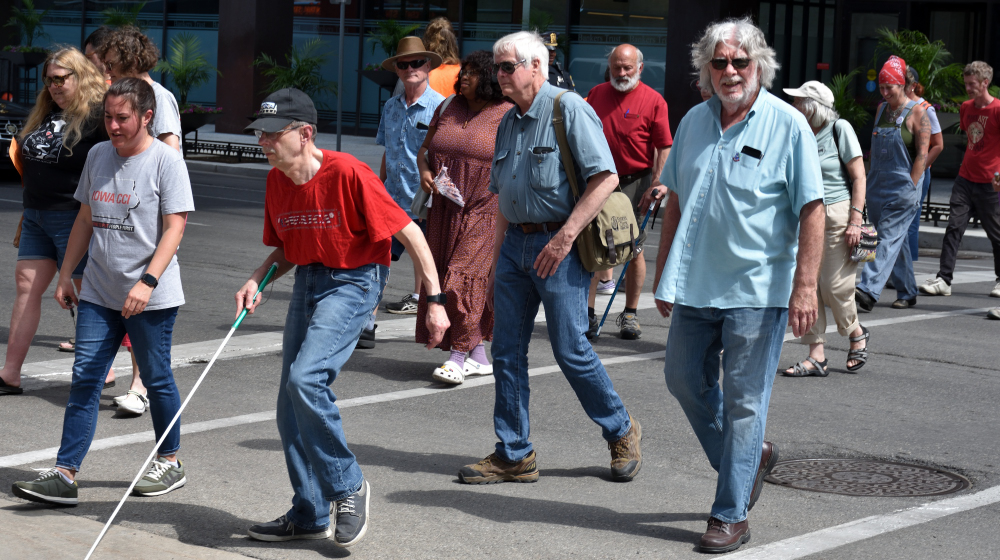
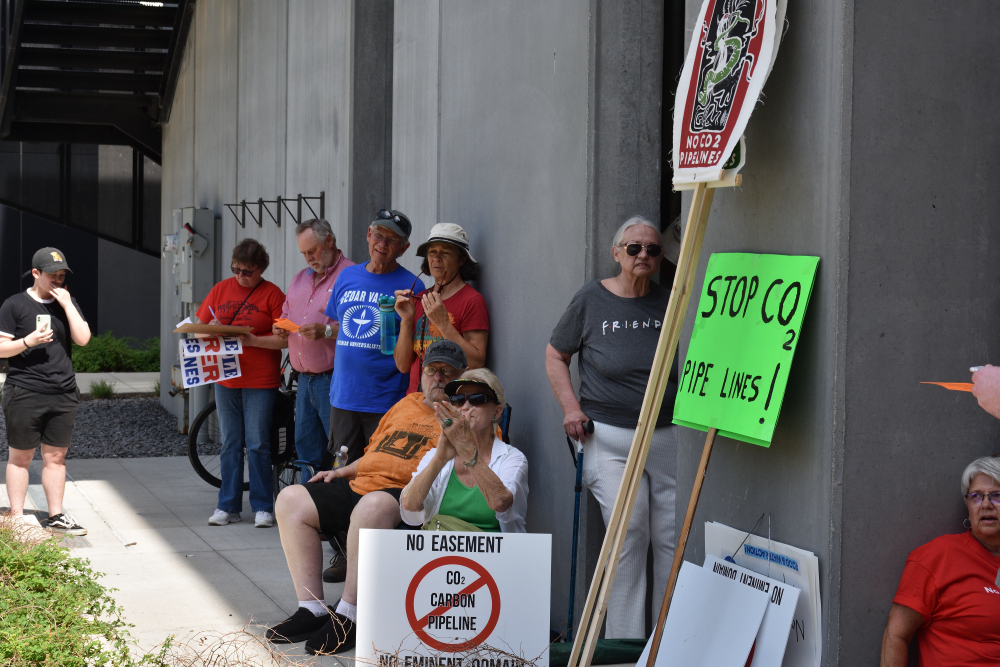
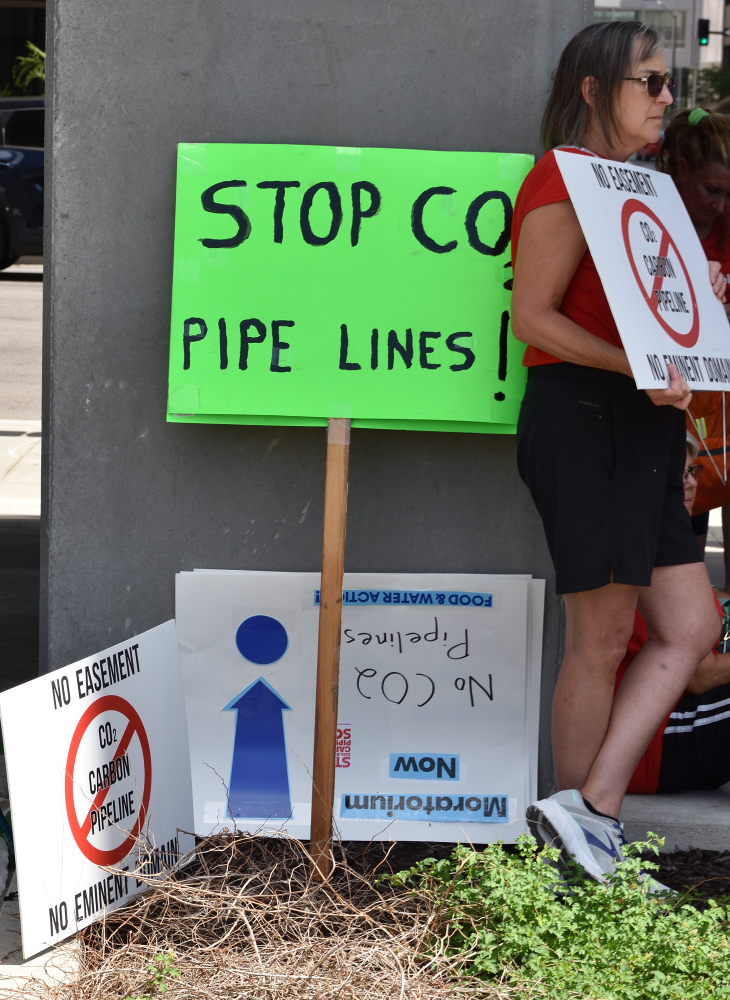
Support for Atlanta Forest Defenders, Des Moines, Iowa, 2023