Your invitation to be an ally

I’ve been blessed to have had many opportunities to become friends with a number of native people, including those from the Great Plains Action Society (GPAS). I’ve been involved in Des Moines Mutual Aid for the past two years. My friend Ronnie James has been mentoring me about Mutual Aid and is a member of GPAS.

The following are ways you can join in this work. New Year/New Iowa is explained below.

We have always appreciated when allies and accomplices approach us to ask how they can be of help. Things can be complicated, and it is considerate to be mindful of how one engages. This is absolutely a situation that we request your help with. We need your voices to make something happen.

Great Plains Action Society
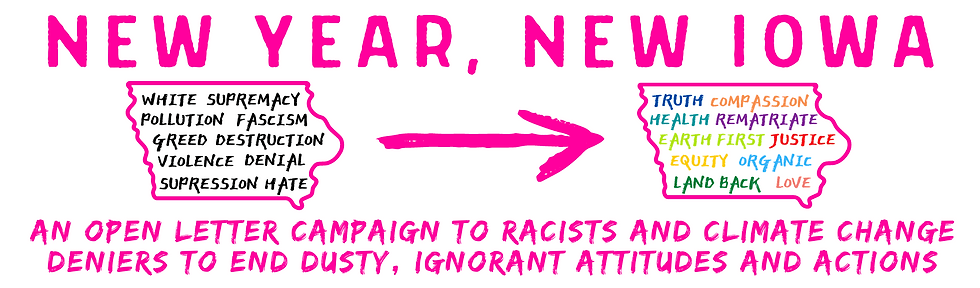
Copy of New Year, New Iowa (2).png

Resolutions are not just for January! As we are gathering momentum for the daunting work 2022 has in store for us, we would like to invite you to join us in ushering in a New Year/New Iowa. Things need to change. The harm we are doing to the environment is devastating. The attack on truth in public education is a contributing factor to our attempted erasure. The ongoing use of racist mascots harms children, and perpetuates dehumanization. Iowa has a lot of issues. The work we need to do to make Iowa better is not going to be easy. But it can be done, and the best chance we have is working together. And that is why we are coming to you with our Open Letter Campaign.​

Over the course of 2022, we will be sharing with you Open Letters we’re addressing to those who are in positions of power. We’re doing this in the format of an Open Letter for a few reasons. First, these issues are important, and this is an opportunity to explain the issues to a broader audience. The more people who understand what is going on, the better. Second, we need numbers. We are mighty, but we are few. The more people we have putting pressure on those with power, the more likely we are to see results. And finally, it’s something that you can do that doesn’t require much of you. Although it’s only February, 2022 can already feel exhausting. The thought of having to leave home to do things can be overwhelming, even frightening as COVID is still a very real threat. But this is something you can do from home, without investing energy you are probably running low on. Working with us can be as simple as tweeting out a hashtag. But it can be more too, if you’d like. It’s an opportunity to write the words that express your frustration and join them in an agitated choir. This is a chance to remind yourself that you deserve to be heard and that you are capable of taking action that affects change.​

We have always appreciated when allies and accomplices approach us to ask how they can be of help. Things can be complicated, and it is considerate to be mindful of how one engages. This is absolutely a situation that we request your help with. We need your voices to make something happen. Our land, our water, our children are under attack. The truth is under attack. We need to stand strong together to create the change that so desperately needs to happen. This Open Letter Campaign is a means for us to unite our voices to call for change. You are welcome to use the words we share, or to express your own. If all you have it in you to do is share an article or use a hashtag, every little bit helps. If you have letters of your own you’d wish to share with us, we’d love to hear from you! Again, we look forward to putting our voices together with you, to call for the New Year/New Iowa we so desperately need. Thank you.

Contact

The New year, New Iowa Open Letter Campaign is led by Jessica Engelking. If you have ideas or thoughts to share, please contact her at jengelking@greatplainsaction.org 

We look forward to putting our voices together with you, to call for the New Year/New Iowa we so desperately need. Thank you.

Great Plains Action Society

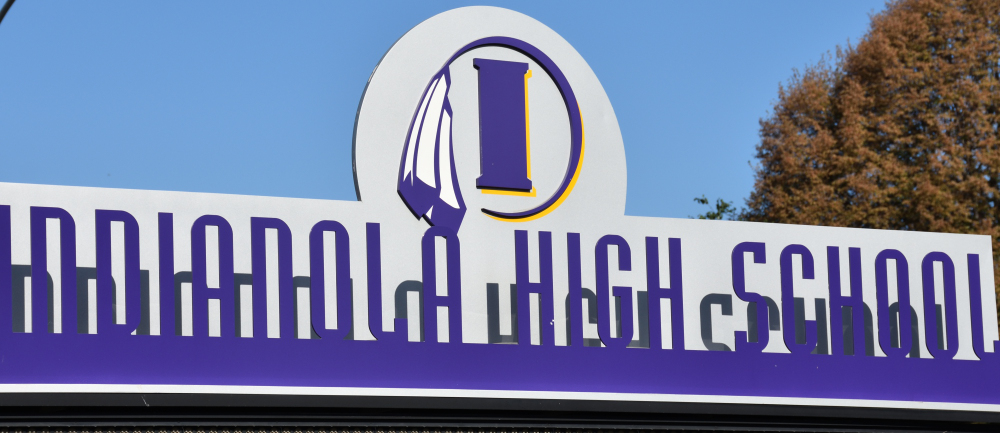
I live in Indianola, where the Sports Page restaurant is located. Imagery at the Sports Page is the subject of the Open Letter that I’ll be writing about soon.

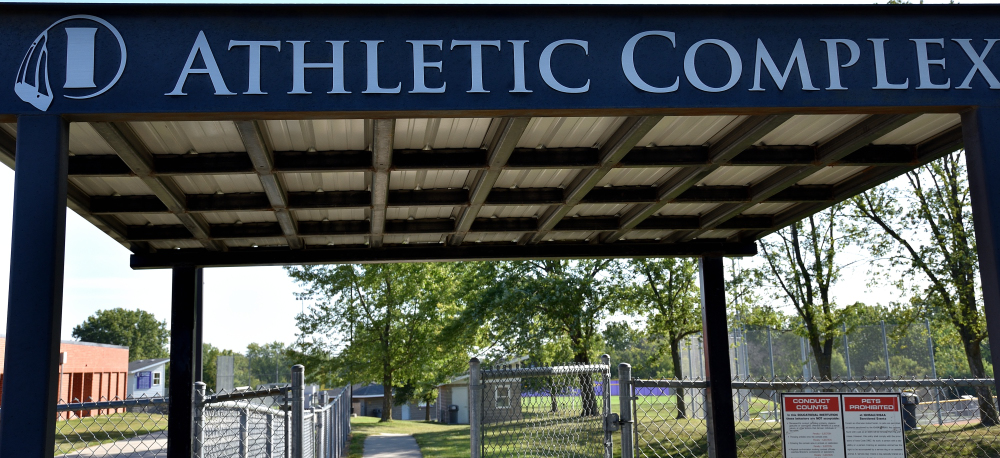
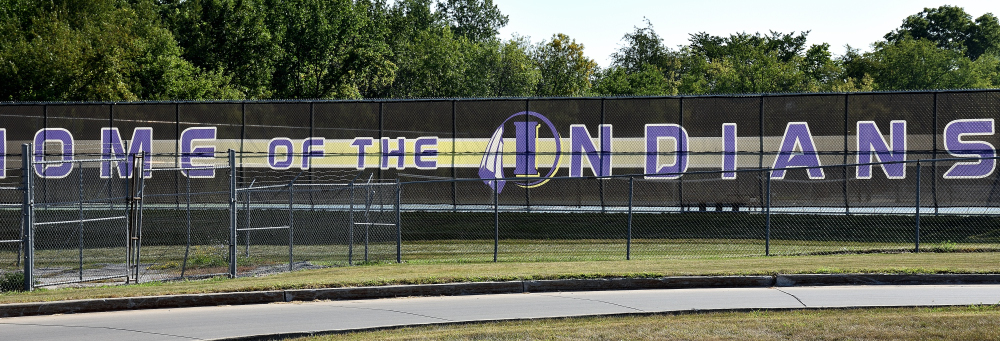
Ronnie James (mentioned above) also once lived in Indianola. He wrote about his experiences with the Indianola School board when he asked them to stop using native imagery for their sports teams. Knowing I am a photographer and live in Indianola, he asked me to take some photos of that imagery, which I was glad to do.

See: Battle of the Indianola “Indians”


#greatplainsactionsociety #NotYourMascot #NewYearNewIowa

The future we want

I’ve been trying to integrate all that I’ve been learning about Mutual Aid, #LANDBACK, Abolition, Religious Socialism, Ecosocialism, photography, forced assimilation and Indigenous worldview. There are many intersections among these. This is stimulated in part as I reflect on yesterday. It was a spiritual time when I stopped at Easter Lake to take photos there, despite, or because of the bitter cold. Then continuing to be with my Mutual Aid friends as we filled boxes of food to distribute in the neighborhood. To witness people coming together to share stories. Each moving from one friend to another. This is part of the future we (I) want that exists now. That is the wonderful thing about Mutual Aid, as the focus is on addressing survival needs in the present. As my friend Ronnie says, you work intensely for an hour and a half, and when you’re done you feel sweaty, tired and good.

As I hear so many friends expressing feelings of hopelessness and despair, I feel fortunate to be involved in a community that gives us a sense of doing something good together. Which is one reason I’m trying to get more people involved in Mutual Aid.

I heard some of this discouragement when those in the Quakers for Abolition Network met via ZOOM yesterday.

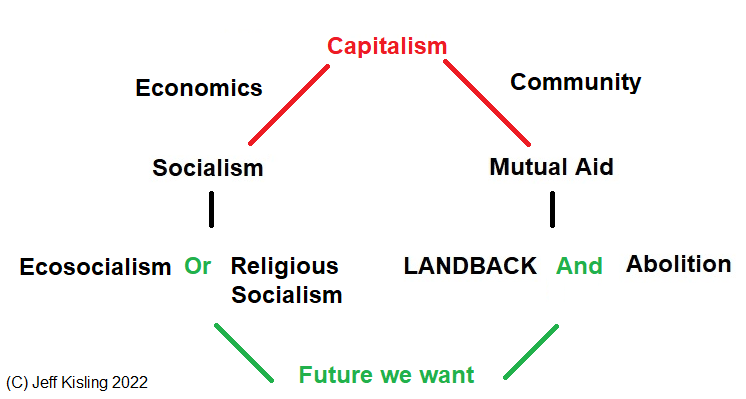
I’ve been working on a new diagram to help me visualize the relationships between the concepts mentioned at the beginning. The root cause of so much suffering is the capitalist economic system. Socialism is an alternative to capitalism. Ecosocialism is about how environmental devastation will be the end of capitalism. Or faith communities can help bring about socialism as an alternative to capitalism from a moral lens. Or both.

Mutual Aid is a framework to replace vertical hierarchies and the unjust power structures they enforce. LANDBACK, returning to Indigenous relationships with the land, and abolition of police and prisons are part of building communities that represent the future we want.

EPSON MFP image

Des Moines Mutual Aid Networking

Yesterday I wrote about the Quakers for Abolition Network I am a member of. We will be meeting this afternoon, so I’m thinking of what I hope our network might do. There is so much that needs to be done.

My friend Jake Grobe, from Iowa Citizens for Community Improvement (ICCI) was at our Des Moines Mutual Aid food distribution this morning. He doesn’t get to attend too often because of his organizing work. He told me about an upcoming action at MidAmerican Energy to demand that they shut down all their coal plants. Here is the story about a previous action.

Protesters gathered outside the MidAmerican Energy headquarters in downtown Des Moines today to demand Iowa’s largest energy company retire all of its coal plants in nine years. They were part of two groups: Iowa Citizens for Community Improvement (Iowa CCI) and the Iowa Sierra Club’s Beyond Coal campaign.

They also want MidAmerican to invest in retrofitting homes for energy efficiency with a focus on families of color and low-income individuals.

Jake Grobe stood on a ledge wearing a bucket hat and a blue T-shirt with “REVOLUTION NOW” printed in all capital letters. He held a megaphone to his mouth, which was covered by a black and white bandana. (All the protesters wore masks.) Grobe asked the crowd who is most hurt by the effects of climate change.

“It’s Black, Indigenous, it’s poor working families that are unable to recover from flash floods, from droughts from wildfires. Climate crisis increases all inequalities,” he answered himself.

Environmental Activists Urge Iowa Energy Company To Retire Coal Energy By Kassidy Arena, Iowa Public Radio, August 18, 2021

One of the things I love about Mutual Aid is how we network about each other’s work. I hadn’t known about the MidAmerican actions, but now I hope to attend the next one. He said it would be good if I could take photos there. This networking lets us know who has skills, like photography, which can help each other’s work.

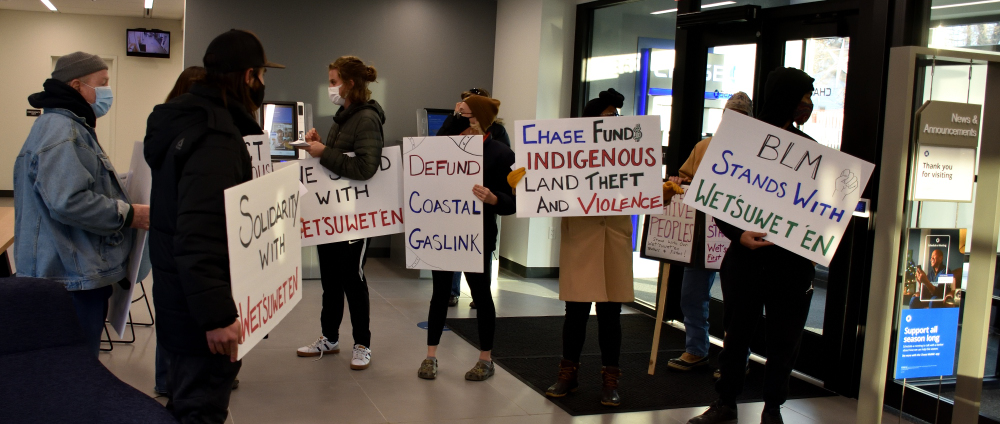
Speaking of photos prompted me to share about a recent action at Chase Bank in support of the Wet’suwet’en peoples fighting against the Coastal GasLink pipeline. He hadn’t been aware of that.

Support for Wet’suwet’en at Chase bank

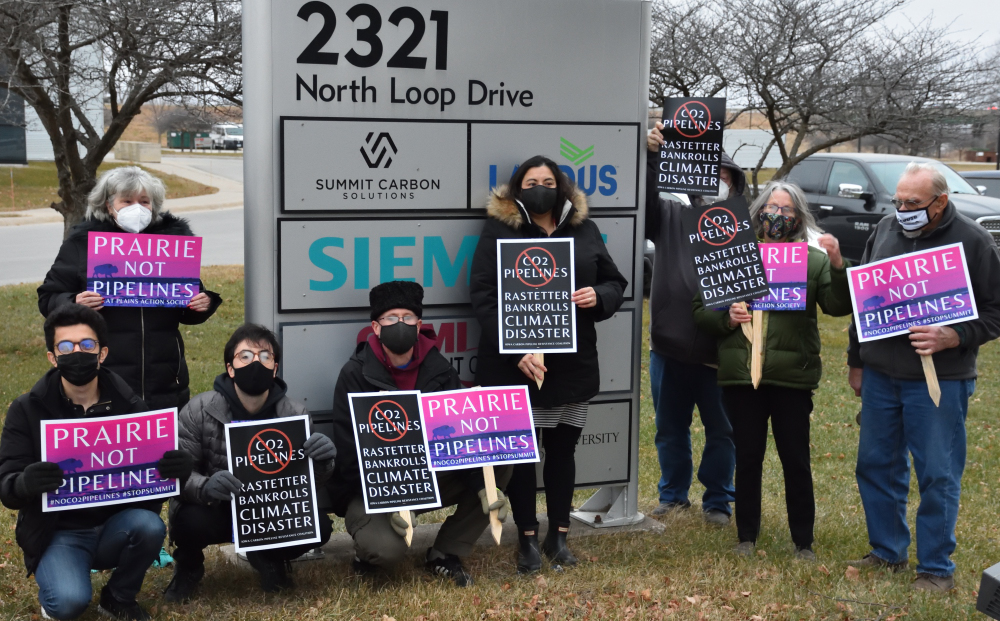
That also reminded me of going to SUMMIT headquarters in Ames, Iowa, recently. SUMMIT is one of the companies proposing to build carbon pipelines in the Midwest. My friends Sikowis Nobiss and Mahmud Fitil know of my photography and asked me to attend the gathering there.

Jake and ICCI are also working to stop CO2 pipelines.

We talked about how bad the Iowa legislature is. He said we need our own socialist party. I told him about the Central Iowa Democratic Socialists of America’s prison letter writing project.

He asked what I had been doing. I described the Quakers for Abolition Network, which interested him. He had been arrested three times last year at direct actions and said you don’t really know how bad prison is until you experience it yourself.

our response and an invitation that we allow the Spirit to awaken our imagination to build a world where we can all be safe(r) and flourish without threats of violence.  

The call for the abolishment of police, policing and the police state is not a new call. For centuries, Black and Indigenous people have called for the end of violence enacted on their bodies and communities by police. They have been calling for other possibilities that move us from the appearance of safety to truly safe and whole communities. In the wake of continued high profile police shootings across the United States, many people in the church pushed for an Anabaptist-oriented response and resources that helped us to move as a church into solidarity with the pain and brutality being felt and witnessed on Black, brown and Indigenous people. This curriculum is our response and invitation that we allow the Spirit to awaken our imagination to build a world where we can all be safe(r) and flourish without threats of violence.  

Defund the Police? An Abolition Curriculum
EPSON MFP image

Indigenous Worldview

I’ve begun the course Indigenous Canada offered by University of Alberta. This is a Massive Open Online Course (MOOC) from the Faculty of Native Studies that explores Indigenous histories and contemporary issues in Canada. I’ve already learned a great deal and recommend it. This is a free course described at the end of this post. https://www.coursera.org/learn/indigenous-canada

For years I’ve been praying for ways to bring about Beloved community. I’ve gone through many iterations of this diagram to help me visualize our current circumstances and what might be done to move toward such a community.

I’ve been blessed to become friends with and learn from Indigenous people. A common thread throughout my life has been to protect Mother Earth. For a long time, I looked for opportunities to make such connections because it was obvious that native peoples had always lived and continued to live in ways that protect Mother Earth.

The physical infrastructure of Beloved community was easy to see, but what I had trouble with was spirituality and governance, which are tightly bound together. I could see that Beloved community would not work with the mindset of capitalism and dominance. White people would have to learn to abandon those systems.

Two years ago I was blessed to become involved in a local Mutual Aid group which has been transformative. This is a model that teaches how to reject capitalism and dominance. A key is to leave the vertical hierarchies of power and decision making and instead use a flat or horizontal structure that gives everyone a voice. And encourages critical thinking and self-motivation. https://landbackfriends.com/mutual-aid/

I was fascinated to see this discussed in the Indigenous Worldviews course. “The hierarchical structure of western world views that places humans on top of the pyramid, does not exist. The interdependency with all things, promotes a sense of responsibility and accountability.”

Indigenous ways of knowing are based on the idea that individuals are trained to understand their environment, according to teachings found in stories.

These teachings are developed specifically to describe the collective lived experiences and date back thousands of years.

The collective experience is made up of thousands of individual experiences, and these experiences come directly from the land and help shape the codes of conduct for Indigenous societies.

A key principle is to live in balance and maintain peaceful internal and external relations.

This is linked to the understanding that we are all connected to each other.

The hierarchical structure of western world views that places humans on top of the pyramid, does not exist. The interdependency with all things, promotes a sense of responsibility and accountability.

Thriving in the harsh Arctic climate, Inuit people relied heavily upon each other for survival.

Each person had value and contributed to the community.

This reliance established codes of ethics and behaviors, or Maligait. Maligait has many meanings and translations, but to Inuit people it means, things that had to be done, and includes four main principles:

  • work for the common good
  • respect all living things
  • preserve harmony and balance
  • plan and prepare for the future

The hierarchical structure of western world views that places humans on top of the pyramid, does not exist.

Indigenous Canada is a 12-lesson Massive Open Online Course (MOOC) from the Faculty of Native Studies that explores Indigenous histories and contemporary issues in Canada. From an Indigenous perspective, this course explores key issues facing Indigenous peoples today from a historical and critical perspective highlighting national and local Indigenous-settler relations. Topics for the 12 lessons include the fur trade and other exchange relationships, land claims and environmental impacts, legal systems and rights, political conflicts and alliances, Indigenous political activism, and contemporary Indigenous life, art and its expressions.

Thank you for signing up for Indigenous Canada. This course examines the historical and contemporary lives, identities, cultural expressions, rights, and goals of Indigenous peoples in Canada. In this course, we have worked to bring Indigenous voices and perspectives to inform your learning experience.

The course material will be covered in twelve modules. Each module offers a series of videos communicating Indigenous experiences of history and current events. Topics covered include: the fur trade and exchange relationships, land claims and environmental impacts, legal systems and rights, Indigenous political activism, and contemporary Indigenous life, art, and its expressions. Together, these modules provide a basic familiarity with Indigenous perspectives as well as Indigenous/non-Indigenous relations.

We are excited to have you with us and be a participant in these learnings. Spread the word of this unique education experience by telling a family member, a friend, or a colleague. We hope that Indigenous Canada will serve you well and offer new insights.
Thank you and take care,
Dr. Paul Gareau

https://www.coursera.org/learn/indigenous-canada

An Epistle to Friends Regarding Religious Socialism

Religious Socialism is fundamentally about the many injustices that are consequences of the capitalist economic system. It is difficult to come to terms with the evils of this system we dwell in. But we must have the moral courage to reject capitalism.

But our moral lag must be redeemed; when scientific power outruns moral power, we end up with guided missiles and misguided men. When we foolishly maximize the minimum and minimize the maximum we sign the warrant for our own day of doom. It is this moral lag in our thing-oriented society that blinds us to the human reality around us and encourages us in the greed and exploitation which creates the sector of poverty in the midst of wealth. Again, we have diluted ourselves into believing the myth that Capitalism grew and prospered out of the protestant ethic of hard work and sacrifice, the fact is that Capitalism was built on the exploitation and suffering of black slaves and continues to thrive on the exploitation of the poor – both black and white, both here and abroad. If Negroes and poor whites do not participate in the free flow of wealth within our economy, they will forever be poor, giving their energies, their talents and their limited funds to the consumer market but reaping few benefits and services in return. The way to end poverty is to end the exploitation of the poor, ensure them a fair share of the government services and the nation’s resources. I proposed recently that a national agency be established to provide employment for everyone needing it. Nothing is more socially inexcusable than unemployment in this age. In the 30s when the nation was bankrupt it instituted such an agency, the WPA, in the present conditions of a nation glutted with resources, it is barbarous to condemn people desiring work to soul sapping inactivity and poverty. I am convinced that even this one, massive act of concern will do more than all the state police and armies of the nation to quell riots and still hatreds. The tragedy is our materialistic culture does not possess the statesmanship necessary to do it.

Martin Luther King, Jr. The Three Evils of Society, August 31, 1967, National Conference on New Politics, Chicago

Capitalism was built on the exploitation and suffering of black slaves and continues to thrive on the exploitation of the poor

Martin Luther King, Jr

Following is An Epistle to Friends Regarding Religious Socialism I wrote based upon An Epistle to Friends Concerning Military Conscription’

An Epistle to Friends Regarding Religious Socialism

Dear Friends,

The measure of a community is how the needs of its people are met. No one should go hungry, or without shelter or healthcare. Yet in this country known as the United States millions struggle to survive. The capitalist economic system creates hunger, houselessness, illness that is preventable and despair. A system that requires money for goods and services denies basic needs to anyone who does not have money. Black, Indigenous, and other people of color (BIPOC) are disproportionately affected. Systemic racism. The capitalist system that supports the white materialistic lifestyle is built on stolen land and genocide of Indigenous peoples, and the labor of those who were enslaved in the past or are forced to live on poverty wages today.

Capitalism is revealed as an unjust, untenable system, when there is plenty of food in the grocery stores, but men, women and children are going hungry, living on the streets outside. White supremacy violently enforces the will of wealthy white people on the rest of us.

It has become clear to some of us who are called Friends that the colonial capitalist economic system and white supremacy are contrary to the Spirit and we must find a better way. We conscientiously object to and resist capitalism and white supremacy.

capitalism has violated the communities of marginalized folks. capitalism is about the value of people, property and the people who own property. those who have wealth and property control the decisions that are made. the government comes second to capitalism when it comes to power.

in the name of liberation, capitalism must be reversed and dismantled. meaning that capitalistic practices must be reprogrammed with mutual aid practices. 

Des Moines Black Liberation Movement

Mutual Aid

How do we resist? We rebuild our communities in ways not based upon money. Such communities thrive all over the world. Indigenous peoples have always lived this way. Generations of white people once did so in this country. Mutual Aid is a framework that can help us do this today.

The concept of Mutual Aid is simple to explain but can result in transformative change. Mutual Aid involves everyone coming together to find a solution for problems we all face. This is a radical departure from “us” helping “them”. Instead, we all work together to find and implement solutions.  To work together means we must be physically present with each other. Mutual Aid cannot be done by a committee or donations. We build Beloved communities as we get to know each other. Build solidarity. An important part of Mutual Aid is creating these networks of people who know and trust each other. When new challenges arise, these networks are in place, ready to meet them.

Another important part of Mutual Aid is the transformation of those involved. This means both those who are providing help, and those receiving it.

With Mutual Aid, people learn to live in a community where there is no vertical hierarchy. A community where everyone has a voice. A model that results in enthusiastic participation. A model that makes the vertical hierarchy required for white supremacy impossible.

Commonly there are several Mutual Aid projects in a community. The initial projects usually relate to survival needs. One might be a food giveaway. Another helping those who need shelter. Many Mutual Aid groups often have a bail fund, to support those arrested for agitating for change. And accompany those arrested when they go to court.

LANDBACK

The other component necessary to move away from colonial capitalism and white supremacy is LANDBACK.

But the idea of “landback” — returning land to the stewardship of Indigenous peoples — has existed in different forms since colonial governments seized it in the first place. “Any time an Indigenous person or nation has pushed back against the oppressive state, they are exercising some form of landback,” says Nickita Longman, a community organizer from George Gordon First Nation in Saskatchewan, Canada.

The movement goes beyond the transfer of deeds to include respecting Indigenous rights, preserving languages and traditions, and ensuring food sovereignty, housing, and clean air and water. Above all, it is a rallying cry for dismantling white supremacy and the harms of capitalism.

Returning the Land. Four Indigenous leaders share insights about the growing landback movement and what it means for the planet, by Claire Elise Thompson, Grist, February 25, 2020

What will Friends do?

It matters little what people say they believe when their actions are inconsistent with their words.  Thus, we Friends may say there should not be hunger and poverty, but as long as Friends continue to collaborate in a system that leaves many without basic necessities and violently enforces white supremacy, our example will fail to speak to mankind.

Let our lives speak for our convictions.  Let our lives show that we oppose the capitalist system and white supremacy, and the damages that result.  We can engage in efforts, such as Religious Socialism, Mutual Aid and LANDBACK, to build Beloved community. To reach out to our neighbors to join us.

We must begin by changing our own lives if we hope to make a real testimony for peace and justice.

We remain, in love of the Spirit, your Friends and sisters and brothers,