Yesterday I was moved by the stories of survivors of the Indian Boarding Schools. The stories were shared by the National Native American Boarding School Healing Coalition (NABS) during a two hour Zoom online seminar titled Seven Weeks of Action for Seven Generations, Week One! The purpose is to support the passage of the Truth and Healing Commission on Indian Boarding School Policies in the United States Act (S. 2907/H.R. 5444)
I really related to the story told by Ku Stevens.
Kutoven “Ku” Stevens and his family organized a 50-mile run honoring the survivors and victims of the Stewart Indian School in Carson City over the weekend. He recently spoke to KUNR’s Gustavo Sagrero about the ultramarathon at his family’s home on the Yerington Paiute Reservation.
I’m able to represent my people, and one of the best ways I know how, which is through running. So to be able to combine two things that I’m very passionate about, which is running and activism for my people, I’m able to really make a difference and an impact in a way that I could see, in a way that other people can understand, and in a way that I feel like is reaching a lot of people’s hearts, which is ultimately what the goal is.
You were almost like … you were sent there to die.
Ku Stevens
Sagrero: The trauma of Indian boarding schools is just starting to get the national attention it deserves. What do you wish people understood more about this history?
Stevens: You were almost like … you were sent there to die. You know, the Native American in you was supposed to be killed or yourself; if you couldn’t conform to modern society, then you would die. These schools were built with graveyards in mind. They were built with the thought of having a cemetery on campus because they knew that kids would die. That’s not a school; that’s like a camp.
Sagrero: When you say camp, what do you mean?
Stevens: Like Nazi Germany, man. The roads and the building blocks that it took to make America what it is today are filled with the blood and bones of my people. And people need to understand that.
I relate to this story for several reasons. I, too, have always been a runner. I was on the track team in Junior High School, with one school record (OK, it was for the 440 yd relay). And at the Quaker boarding high school I attended, Scattergood Friends School, a few of us ran instead of playing soccer. We ran a path of gravel roads for five miles. I apologize for the description of Scattergood as a boarding school. Much different from the Indian boarding schools.
The reason running was activism for me is because that was one of my main modes of transportation, because I refused to own a car for environmental and spiritual reasons.
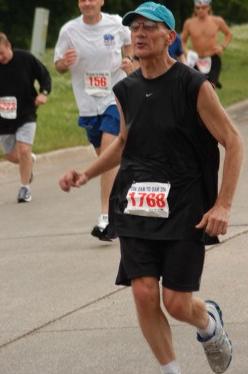
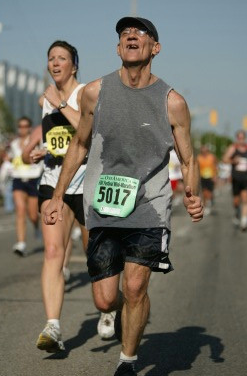
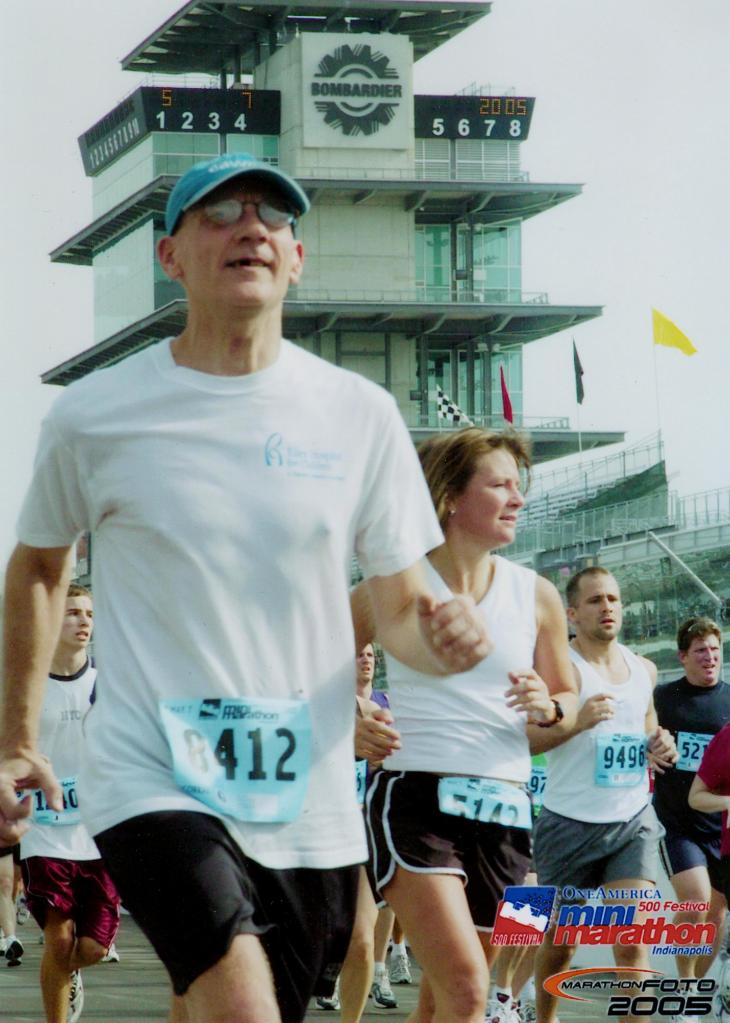
Most of these photos were taken during the Indianapolis 500 Mini Marathon. Mini means half-marathon, which is 13.1 miles. Which didn’t seem very “mini” to me. The Mini was part of the festivities each May related to the running of the Indianapolis 500 (auto) race. I ran the race every year for twenty-three years. I realize the irony of running being related to race cars.
Created with Nokia Smart CamRunning shoes hitting leg
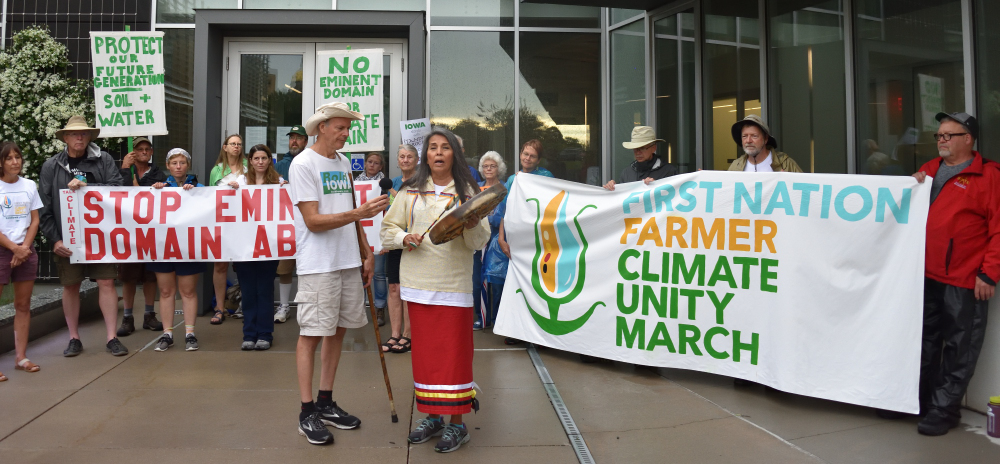
The First Nation-Farmer Climate Unity March involved a group of about thirty native and non-native people walking, eating, and camping together for 8 days. We walked ninety-four miles from Des Moines to Fort Dodge Iowa, along the route of the Dakota Access Pipeline during the first week of September 2018.
It was a bit amazing when I read the following as I’m reflecting on my experiences and friendships from the March.
Roughly a year later, in 2019, as part of my work at the Dechinta Centre for Research and Learning in Denendeh, I helped organize a solidarity gathering that took place in March, in the territory of the Yellowknives Dene First Nation (YKDFN). Our idea was simple—to invite a small group of Black, Brown and Indigenous activists, thinkers, writers, and organizers to spend time with us, in the spring, on an island in what the Yellowknives Dene known as Tindeè, or “big lake.” Together we fished nets under the ice, travelled by snowmobile and sleigh across the frozen lake, shared moose ribs cooked over the fire, stories from YKDFN Elders, our own ideas, and time with each other.
We wanted to invest in our relationship with each other and our affinities, outside of the institution, the internet, and crises, because we believed that the land would pull out a different set of conversations and gift us with a different way of relating. We wanted to sit together on the land, immersed in a Dene world, engage in a practice of Dene hospitality to see if we related to each other in a different way. This is exactly what happened. The land nurtured a set of conversations and way of relating to each other outside of the institution and its formations.
Maynard, Robyn; Simpson, Leanne Betasamosake. Rehearsals for Living (Abolitionist Papers) (p. 35). Haymarket Books. Kindle Edition.
In many ways the March was transformative for me. I wrote a long blog post of reflections on the March in early 2020. See: Reflections on the March.
The world, and I, have changed a lot in just the two years since those reflections were written. These two images represent the time span between the March and work we are doing today.
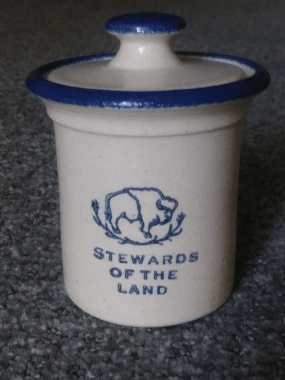
Gift from Bear Creek Quaker and potter Russ Leckband after the March 2018Buffalo Rebellion 2022Then and now
The first time I attended Quaker meeting after the March (2018), Russ Leckband gave me this piece of pottery, which was still warm from the kiln. The graphic on the right is about the Buffalo Rebellion, a climate justice summit, that I attended earlier this year. (See: https://quakersandreligioussocialism.com/?s=Buffalo+rebellion )
I suppose this blog post is more reflections on the prior reflections. (As a photographer, I envision what that might look like)
Indy Art Jeff Kisling
Changes since the March in 2018
Environmental devastation and chaos are occurring much more rapidly than expected. In some ways not anticipated. The havoc from increasingly ferocious and frequent wildfires, violent storms, floods, and development of large areas of drought are overwhelming our social, economic, and political systems. Continued wars ruin or prevent the transport of vast quantities of agricultural products.
So many of the systems we used to depend on, we no longer can. Municipal services such as water, power, sewage, and trash processing will fail, are failing. Food will no longer be available in grocery stores. Medical services will collapse. What will happen to those in prisons and long-term care facilities? Financial failures will wreck the economy and end social safety nets.
There are other compelling reasons to design and build new communities. Our economic system has not adapted to the loss of jobs overseas and to automation. There are simply not enough jobs for millions of people, and many of those who do have work are paid at poverty levels. Forced to depend upon increasingly diminishing social safety nets.
The judicial and law enforcement systems work with extreme bias against people of color. What will the response of militarized police, armed forces, armed militias be as social unrest escalates?
How do we respond? Some lessons learned from and since the March.
It is one thing to talk about change, but it is becoming increasingly difficult to avoid the reality of the changes described above. So, this is not an intellectual exercise.
Almost none of the White people I know, or have observed, are thinking of the radical changes necessary to deal with this evolving chaos. They are trapped in these failing systems and ways of being. Even those who recognize the many injustices of those systems.
For many reasons I believe our responses will be a return toward Indigenous ways and the sustainable ways of our ancestors.
White settler colonists must learn the true history, which was not taught to us. We can’t begin repair if we don’t know the underlying sources of injustice. We must stop treating the symptoms and instead focus on the causes, the underlying disease.
I FEEL THAT I NEED TO go backward in order to go forward. If we are going to find a way to make livable lives in these times, it is necessary to move beyond “human-related activities”: the climate crisis is tethered to its origins in slavery and colonialism, genocide and capitalism.
Maynard, Robyn; Simpson, Leanne Betasamosake. Rehearsals for Living (Abolitionist Papers) (p. 25). Haymarket Books. Kindle Edition.
I’ve been learning about the #LANDBACK movement, but I hadn’t consciously made the connection to the land we walked and slept upon during the March. We were deeply affected when we crossed the pipeline. And were aware of how different it was to spend hours outside and away from the busy-ness of technology. Many more hours than usual for many of us. And yet time had that elastic property that made hours seem like minutes and vice versa as we traveled through space together. Hearing stories of the past that can help us face the future.
Most of my White friends are horrified as they are learning more about the atrocities committed at the Indian boarding schools. Can hardly believe thousands of children died there. But they are being forced to as the remains of the children are being located.
White people cannot process these things and begin healing as long as they remain in the their White spaces and thinking. And deny any responsibility for what was done in the past.
My hope and prayer is a mass movement of us build Mutual Aid networks.
As William Shakespeare wrote, “what’s past is prolog”. Native children are still being taken from their families in the guise of child welfare. Native children are still forcefully assimilated when they are forced to read the White settler colonist view of history.
My involvement in Mutual Aid for the past two years has resulted in significant changes in my life. Changes that can be done now and help us move into the future. Another quote from the book Rehearsals for Living eloquently describes Mutual Aid.
My hope and prayer is a mass movement of us build Mutual Aid networks.
You and your relations, my friend, are (still) busy building a different world at the end of this one. This is something I’ve emphasized over and over again in my own work. I cherish the belief and practice that it is never enough to just critique the system and name our oppression. We also have to create the alternative, on the ground and in real time. In part, for me, because Nishnaabeg ethics and theory demand no less. In part because in Nishnaabeg thinking, knowledge is mobilized, generated, and shared by collectively doing. It’s more than that, though. There is an aspect of self-determination and ethical engagement in organizing to meet our peoples’ material needs. There is a collective emotional lift in doing something worthwhile for our peoples’ benefit, however short-lived that benefit might be. These spaces become intergenerational, diverse places of Indigenous joy, care and conversation, and these conversations can be affirming, naming, critiquing, as well as rejecting and pushing back against the current systems of oppression. This for me seems like the practice of movement-building that our respective radical practices have been engaged with for centuries.
Maynard, Robyn; Simpson, Leanne Betasamosake. Rehearsals for Living (Abolitionist Papers) (p. 39). Haymarket Books. Kindle Edition.
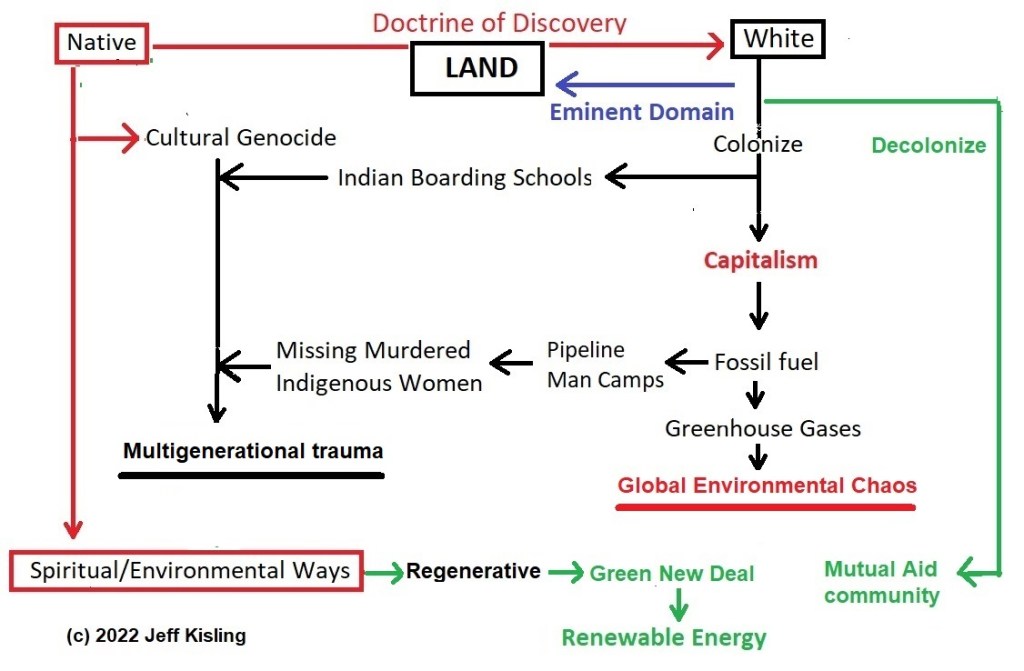
Following is the latest version of a diagram I’ve been working on to visualize some of what I’ve expressed above.
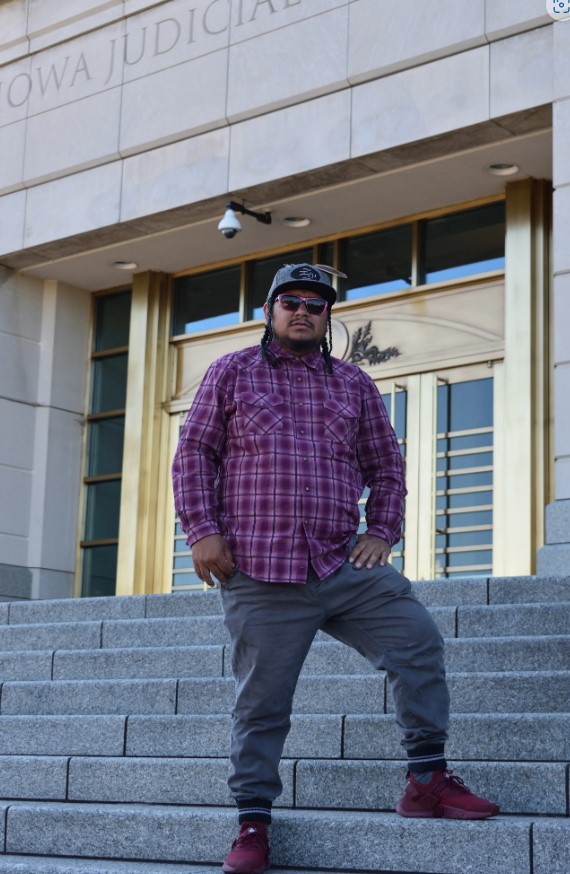
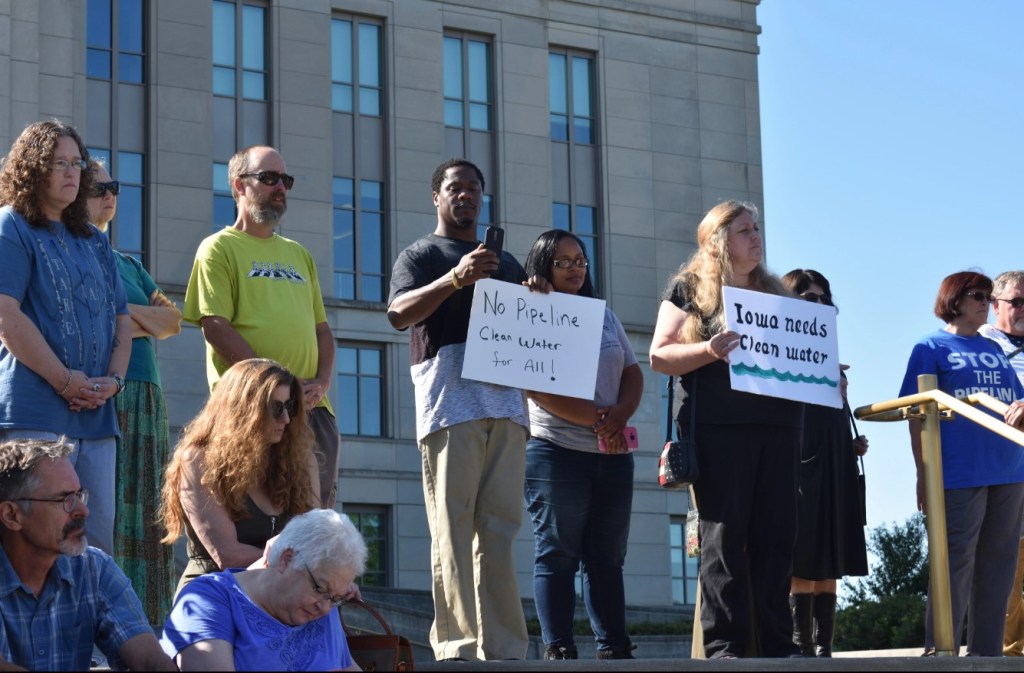
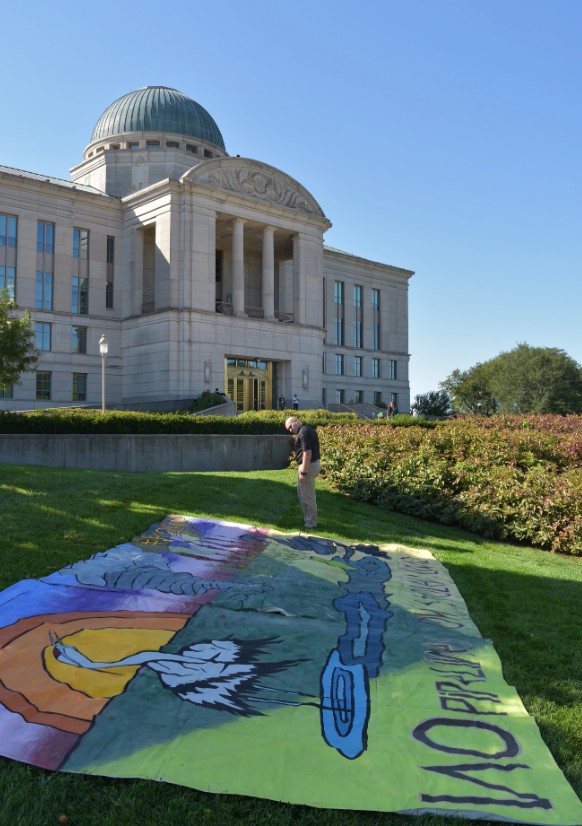
September 12, 2018 was the day Iowa landowners and the Sierra Club’s oral arguments in the case against the Iowa Public Utilities Board (IUB) were heard before the Iowa Supreme Court. The landowners and Sierra Club contend that the Public Utilities Board improperly allowed Energy Transfer Partners to use eminent domain to force Iowa landowners to let the Dakota Access Pipeline be constructed on their land.
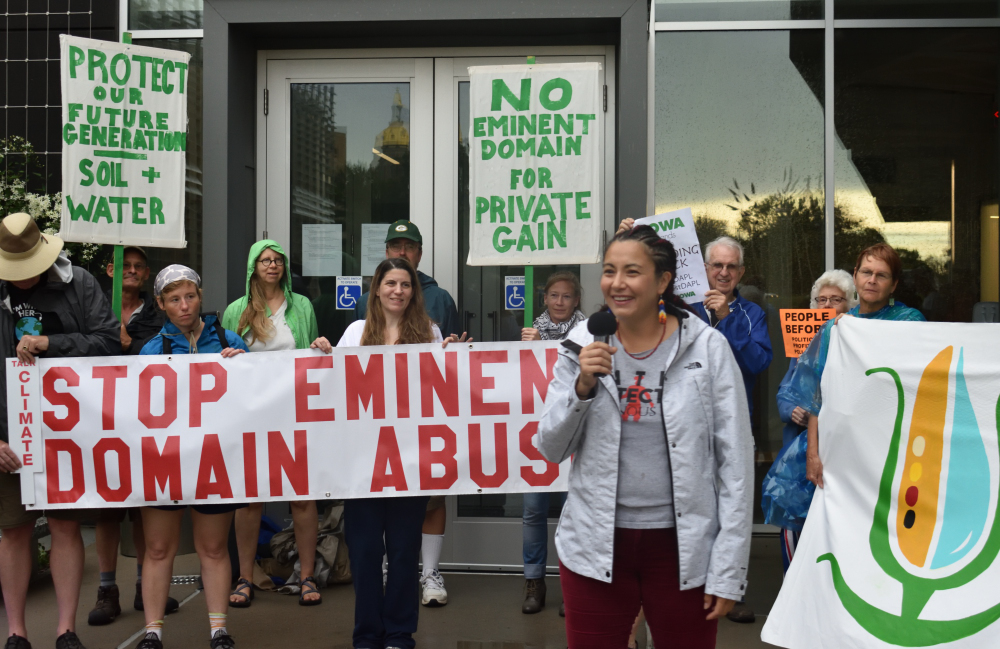
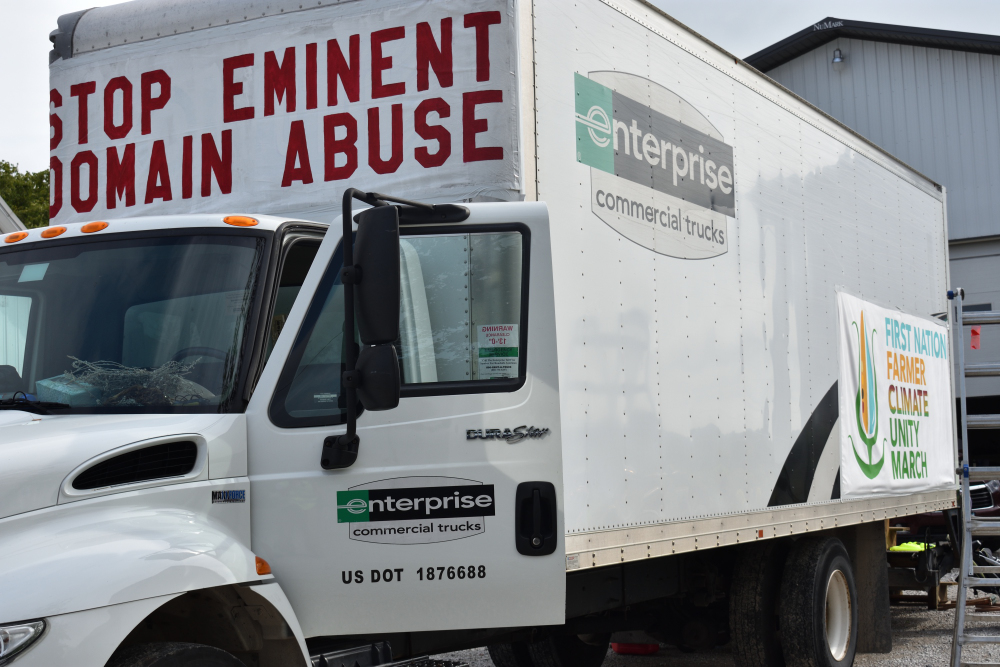
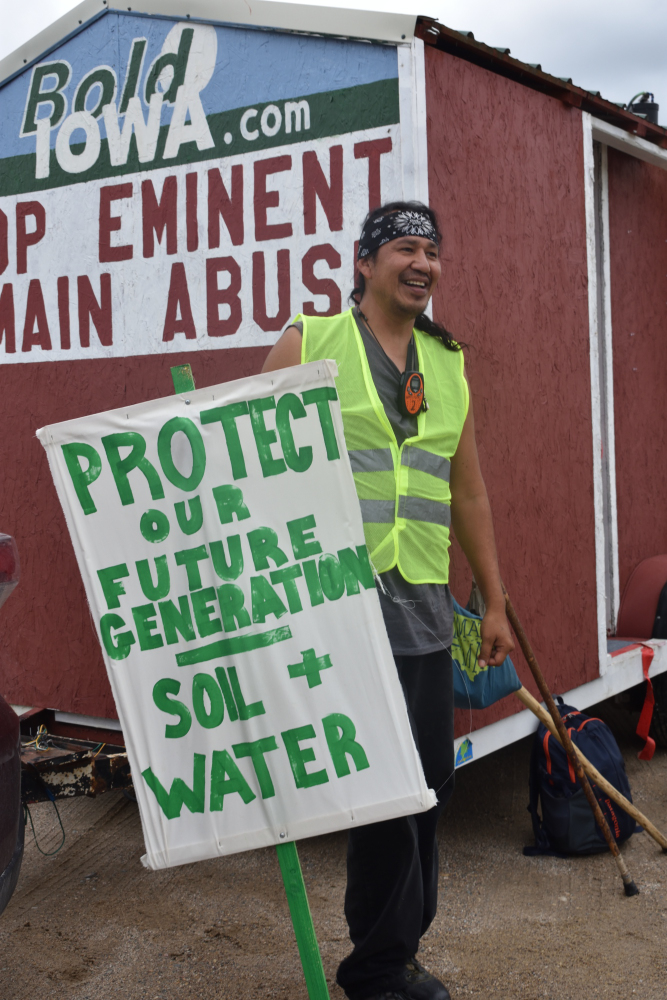
One of the main objectives of the First Nation-Farmer Climate Unity March was to call attention to this court case. We had a large banner saying Stop Eminent Domain Abuse with us on the March. A similar sign was painted on our portable rest room/shower.
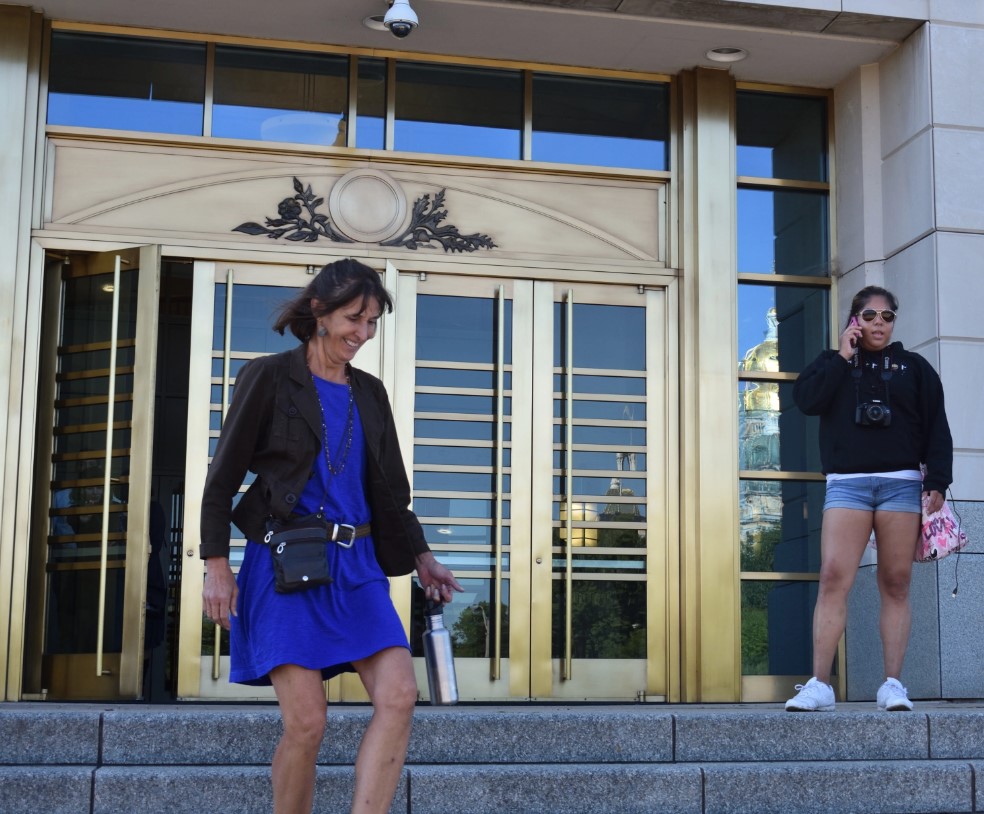
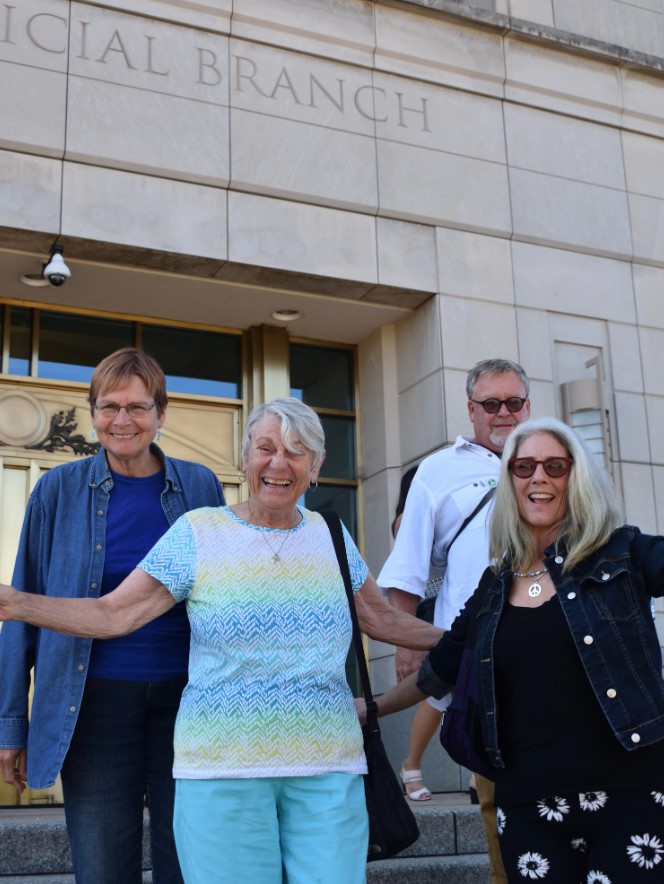
I didn’t enter the Court that day because I had my camera with me, and photos weren’t allowed inside. As my friends left the Court, they told me the justices seemed pretty well informed about the issues. The Court’s decision may not come for weeks or months. It is unclear what will happen if the Court decides for the landowners.
The other primary purpose of the March was to build a community of activists who began to know each other so we could work together. This court date was the first opportunity for that to happen, and I was very glad to see quite a few of my fellow Marchers at the Court this morning.
The decision several months later was against the landowners and for the pipeline.
Back at the Iowa Utilities Board
We’re back at the Iowa Utilities Board (IUB) these days, this time to object to proposed carbon pipelines.
In a decisive victory for Native American rights, a federal judge just ordered an energy company to completely remove a natural gas pipeline.
Seventeen years after the expiration of an easement, a federal judge has ordered an energy company to completely remove its pipeline from the properties of 38 Native American landowners — none of whom have been compensated for the company’s use of their land since the year 2000.
Now, the pipeline company will have just six months to dismantle and completely remove the structure.
“Having carefully reviewed the parties’ submissions, and in light of the facts and circumstances in this case,” Judge Vicki Miles-LaGrange wrote in the 10-page decision for the U.S. District Court for the Western District of Oklahoma, “the court finds that a permanent injunction should be entered in this case. Specifically, it is plaintiffs’ interests in the exclusive possession of their land which has been invaded by the presence of the pipeline and defendants’ continued use of the pipeline.
I’m having trouble finding much more information beyond this article saying the US 10th Circuit Court of Appeals stayed the permanent injunction of the case cited above.
While Enable Midstream Partners LP recently lost a U.S. 10th Circuit Court of Appeals ruling regarding its pipeline operation near Anadarko, the company will not be forced to rip up 1,300 feet of the pipeline.
It came out of the Tenth Circuit court this week in a case involving a group of tribal landowners who filed suit a few years ago and accused the company of trespassing.
The Tenth Circuit ruling this week stayed a permanent injunction handed down earlier by Oklahoma City U.S. District Judge Vicki Miles-LaGrange in which the company had been ordered to remove the pipeline by May 5.
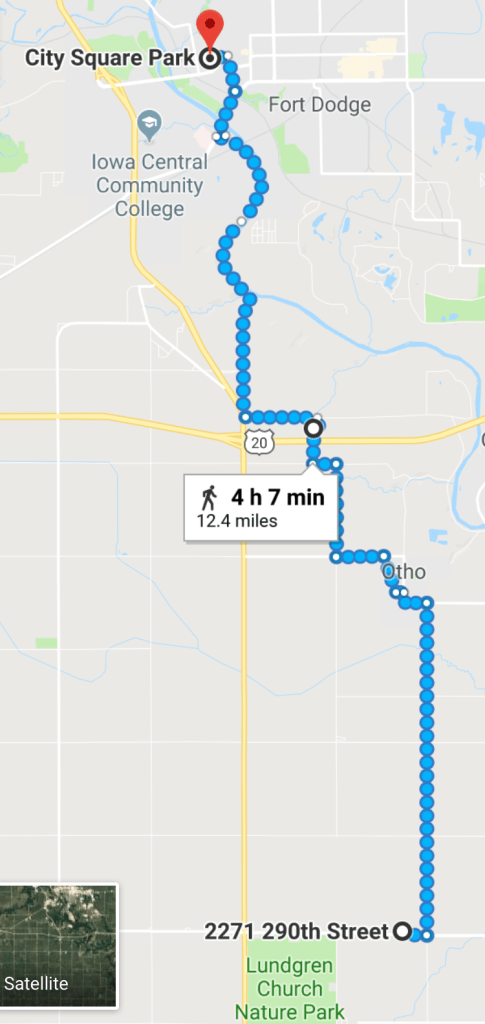
Eighth and final day. September 8, 2018. Walk 12.4 miles from Otho to the end of the march at Fort Dodge, Iowa.
It was cold when we awoke this morning at 6:00 a.m. and broke camp in the dark. I didn’t want to get out of the sleeping bag. But this was the big day, one we were both looking forward to, and not. Fortunately, hot coffee was ready. Last night we talked about the need to get going early, because people would be expecting us to arrive in Fort Dodge by 1:30 pm. Many of us were skeptical that we could leave early enough to walk the 12.4 miles to get there in time, but we managed to do so.
One way this will be an interesting day for me is because my camera battery finally died. I thought it would last and hadn’t brought my battery charger. So, the photos of this final day of the march were taken with my cell phone camera.
Before we started walking, we had a nice ceremony where we gave the money we had collected to Alton and Foxy as a gift for their upcoming wedding. Fintan decorated the envelope.
Alton and Foxy didn’t know about the money we collected for their upcoming wedding
Many times I heard people talking about how sad they will be when the March is finished. Many friendships had been made, as you can see from all the smiles in the photos.
Among my many new friends were Matt and Alton, so I was glad to have the selfie Alton took of us, and the photo Miriam took of Matt and I. Matt and I talked much of this final day of the March. Since the end of the March we have chatted via Messenger. I’m glad we’re keeping in touch. He is editing more of the video he took during the March and I look forward to seeing them.
Alton and IMatt and I
We had a police escort through downtown Fort Dodge. At the City Square Park the tipi had been set up.
Foxy and Donnielle
Arriving at park in Fort Dodge
I was amazed by the huge mural that hung on the side of the gear truck. Several people had been working on this all during the week.
Sikowis (Christine) Nobiss
Donnielle EWanatee
Drummers played and sang the “Mni Wiconi Song.” According to The Messenger newspaper, the English translation of the lyrics is:
“Grandmother earth gives life The water is sacred The water that gives life is sacred DAPL is very bad The Nation needs to take heart and be brave.”
The Messenger published a nice summary of the March and celebration, with photos, including one of my bandaged foot and shoes. “Many steps. One journey”, September 10, 2018.
The band Brutal Republic performed. All of their equipment was being powered by the solar system that had accompanied us all week. My brother Randy, who was there to give me a ride home, thought they sounded really good and would have like to stay for a while. But I was way too tired to enjoy it.
During the week we came to understand how much work was involved in planning and guiding this March, and are very grateful. So many people contributed in so many ways.
I hope we can be together again soon. As our environmental chaos gets worse, I think a combination of the knowledge and wisdom of Indigenous people and progressive farmers, thinkers and activists will be crucial.
Two-eyed seeing “recognizes the benefits of seeing from one eye with the strengths of Indigenous ways of knowing, from the other eye the strengths of the Western ways of knowing, and using both of these eyes together to create new forms of understanding and insight.”
Elder Albert Marshall (Mi’kmaq, Eskasoni First Nation) from Urban Tribes, edited by Lisa Charleyboy and Mary Beth Leatherdale
Day 7, September 7, 2018. 11.7 miles from Dayton to Otho, Iowa.
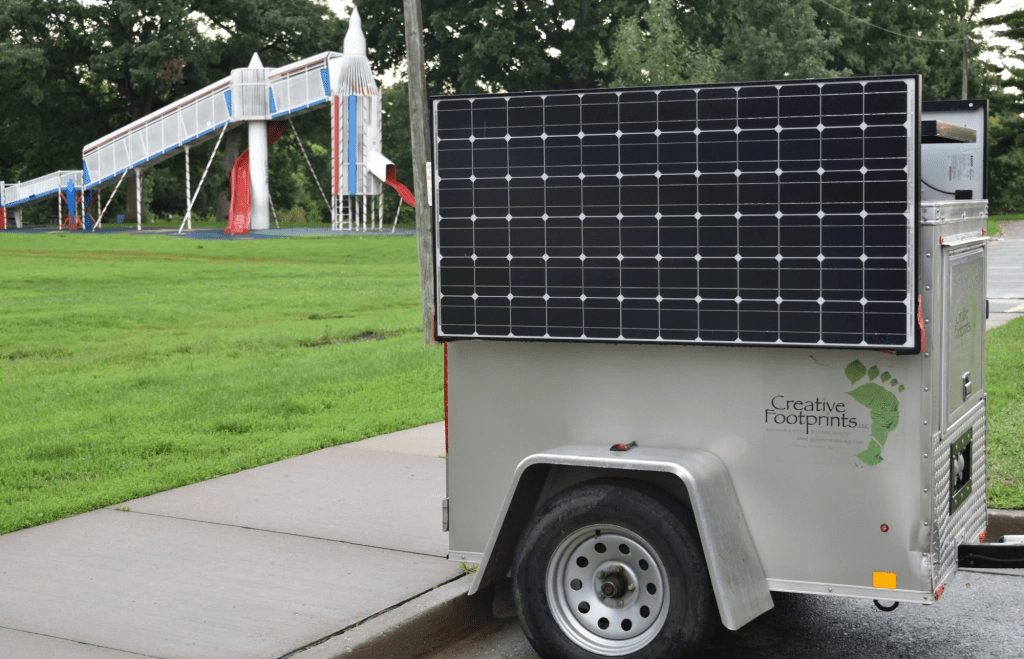
Yesterday evening the solar panel unit was set up because there wasn’t any electricity available in the park. The power strip was full of cell phone power connections. It was nice to see solar power in action. Electricity that didn’t come from fossil fuel.
Solar panels
It was cool when we broke camp, but a pretty pleasant day to march, with the sun coming out soon after we started. Since much of the route today wasn’t on busy roads, we were able to walk side by side and share more stories.
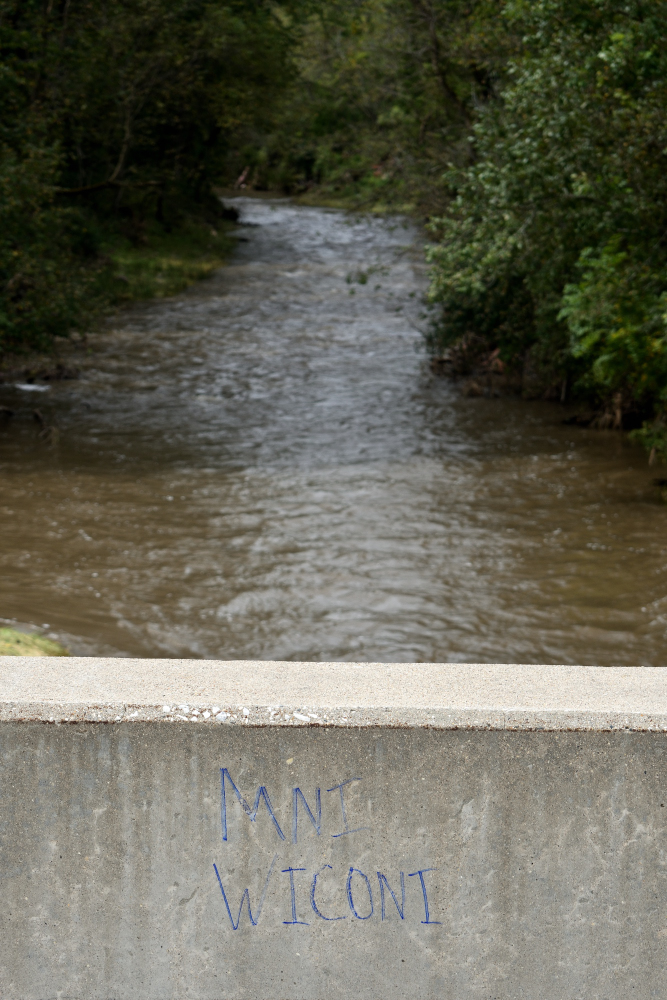
I don’t know if someone just made the name up, but this very steep hill was called ‘suicide hill’. At the bottom was a creek. On the wall of the bridge someone had previously written ‘Mni Wiconi”, Water Is Life.
Also near that creek, Manape showed us wild grapes growing alongside the road, and the fragrance of them when they were crushed.
The last part of the day’s walk was past a field of wind turbines. I didn’t notice sound coming from them as we walked past, but that night as we were sitting around the bonfire there was a noticeable “whoosh” sound. We camped near the turbines.
After dinner it was dark. We sat around a bonfire. Trisha Etringer led a very interesting discussion about decolonization.
Then Manape spoke about sovereignty, and especially sovereignty of yourself. And how he came to the conclusion that he should give up both his United States citizenship and tribal membership to achieve his own sovereignty.
I think we were all feeling sad that this sacred journey would be coming to an end at Ford Dodge tomorrow. I heard numerous comments about that. I was certainly feeling that way.
I am very happy that my friends of the Great Plains Action Society (GPAS) are asking their supporters to use the Friends Committee on National Legislation’s (FCNL) letter writing tool to send letters to support the Truth and Healing Commission on Indian Boarding School Policies in the United States Act (S. 2907/H.R. 5444) to their congressional representatives.
Open Letter Campaign: Truth and Healing with Friends
Support the Establishment of a Truth and Healing Commission on Indian Boarding Schools: Friends Committee on National Legislation (FCNL)
As children are returning to school, we are reminded that school has not always been a safe place for Native children. For many years, Native children were taken from their homes and placed in government and religious run institutions with the aim of stripping away their Native language, culture, and identity. We are only now beginning the painful process of bringing home the children left in unmarked graves at the boarding schools they were sent to (U.S. report identifies burial sites linked to boarding schools for Native Americans). We are still working on healing the damage of boarding school and intergenerational trauma (American Indian Boarding Schools Haunt Many : NPR). Healing from the damage caused by the boarding school system will require effort by not just those harmed, but the institutions that did the harming. There is great work being done by our comrades at the Friends Committee On National Legislation (Native Americans | Friends Committee On National Legislation). For this edition of our Open Letter Campaign, we are directing you to a letter from our friends at FCNL to help you in urging your representatives to support the Truth and Healing Commission on Indian Boarding School Policies in the United States Act (S. 2907/H.R. 5444).
The following is courtesy our much appreciated Quaker friends (esp Jeff!):
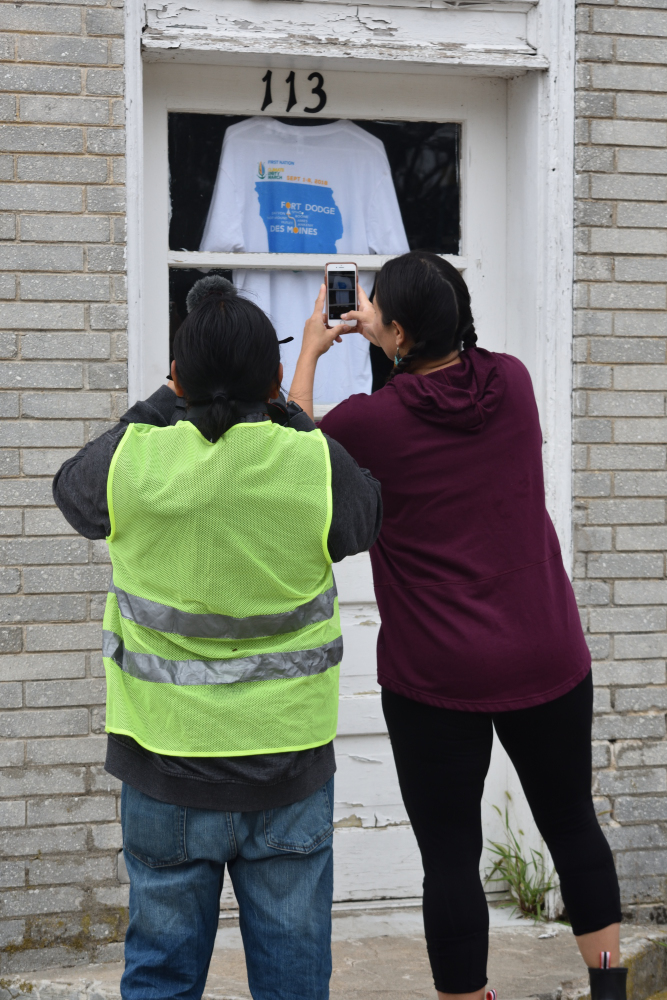
Day 6 of the First Nation-Farmer Climate Unity March began with another awesome breakfast by Lyssa Wade. As we were waiting to start walking we saw one of the March tee-shirts hanging in the window across the street.
Matthew Lone Bear and Sikowis see the March tee shirt
I was again reminded of my reliance on cell phone and Internet access when I couldn’t check the weather, news or email that morning. I hoped my family wasn’t worried that I hadn’t been able to connect with them while we were in Pilot Mound.
Rather than getting more difficult with each passing day, it is getting easier to cover the miles (fortunately!), even now that I’m walking on a blistered foot and my backup shoes.
This was another day of sharing stories and getting to know each other better. I’ll let the photos tell today’s story.
After setting up my tent once we arrived at Oak Park in Dayton, I spent most of the rest of the day at the public golf course’s country club, which was adjacent to the park. I had two days of photos and writing to catch up on. Unfortunately I missed the evening presentation.
The folks at the country club were very nice, allowing us to sit in the club where there was internet service available (which didn’t extend as far as the campground). They also invited those who wanted to use their showers.
Did it come overnight or did it come on slow? It’s out of our hands and it’s out of control I don’t think that this Is the world we used to know
Alan Walker & Winona Oak
Environmental catastrophe is upon us
In years past, those of us who came to believe we could never reduce greenhouse emissions and began to talk about adaptation to evolving hostile conditions were stigmatized as alarmists. And while I wrote about this daily and organized and participated in numerous environmental campaigns and events, I rarely wrote how terrible the dangers were and would become. People quickly grew tired of hearing about these things.
Now I regret that. Fifty years ago, if those of us who advocated living without cars had convinced a critical mass to join us, we would not be in the situation we are now.
I’ve begun reading the new book, “Hothouse Earth” by Bill McGuire, He writes, “there is now no chance of dodging a grim future of perilous, all-pervasive, climate breakdown.” I agree.
The crucial point, he (Bill McGuire) argues, is that there is now no chance of us avoiding a perilous, all-pervasive climate breakdown. We have passed the point of no return and can expect a future in which lethal heatwaves and temperatures in excess of 50C (120F) are common in the tropics; where summers at temperate latitudes will invariably be baking hot, and where our oceans are destined to become warm and acidic. “A child born in 2020 will face a far more hostile world that its grandparents did,” McGuire insists.
In this respect, the volcanologist, who was also a member of the UK government’s Natural Hazard Working Group, takes an extreme position. Most other climate experts still maintain we have time left, although not very much, to bring about meaningful reductions in greenhouse gas emissions. A rapid drive to net zero and the halting of global warming is still within our grasp, they say.
Such claims are dismissed by McGuire. “I know a lot of people working in climate science who say one thing in public but a very different thing in private. In confidence, they are all much more scared about the future we face, but they won’t admit that in public. I call this climate appeasement and I believe it only makes things worse. The world needs to know how bad things are going to get before we can hope to start to tackle the crisis.”
There is now no chance of dodging a grim future of perilous, all-pervasive, climate breakdown.
Bill McGuire, Hothouse Earth
This book takes as its starting premise, then, the notion that, practically, there is now no chance of dodging a grim future of perilous, all-pervasive, climate breakdown. It is no longer a matter of what we can do to avoid it, but of what we should expect in the decades to come, how we can adapt to a hothouse world with more extreme weather and what we can do to stop a bleak situation deteriorating even further.
I ought to make clear here that the terms ‘hothouse Earth’ or ‘greenhouse Earth’ are used formally, in a definitive sense, to describe the state of our planet in the geological past when global temperatures have been so high that the poles have been ice-free. A hothouse state, however, is not required for hothouse conditions, which are already becoming far more commonplace, and fast becoming the trademark of our broken climate. What I mean by hothouse Earth, then, is not an ice-free planet, but a world in which lethal heatwaves and temperatures in excess of 50°C (122°F) in the tropics are nothing to write home about; a world where winters at temperate latitudes have dwindled to almost nothing and baking summers are the norm; a world where the oceans have heated beyond the point of no return and the mercury climbing to 30°C+ (86°F+) within the Arctic Circle is no big deal.
The climate catastrophe was born not from “mankind” but from the slave plantation, the settler town, the prison, the reservation. It is unsurprising, then, that the solutions being forwarded by those in power are more of the same— the border wall, the immigration detention centre, the refugee camp, the open-pit mine. For us to live in anything that I hope we can one day call freedom, it is necessary to put a swift end to the death-drive-disguised-as-worldview—the murderous episteme that is being imposed on us by the master/settler/CEO.
Maynard, Robyn; Simpson, Leanne Betasamosake. Rehearsals for Living (Abolitionist Papers) (p. 29). Haymarket Books. Kindle Edition.
This is the fourth anniversary of the First Nation-Farmer Climate Unity March that occurred September 1-8, 2018.
One of the main goals of the March was to create a community of native and nonnative people who began to get to know and trust each other. I’m in the process of writing about the many things that happened as a result of this March. That is taking a while since so much has happened. While I continue that, I thought I’d review some of what happened during the March.
[Note: This is a continuation of a series of posts about the evolution of my foundational stories, which are related to the intersection between my Quaker faith, protecting Mother Earth, and photography. As is often the case, it is taking me much longer than expected to tell my foundational stories (See: https://quakersandreligioussocialism.com/?s=foundational). Dramatic changes in the world have me re-evaluating how I see my Quaker faith, love of Mother Earth, and photography now. And seeking the way forward.]
There are many branches of these stories. Thus far the focus has primarily been on being a water protector, protecting Mother Earth, although my Quaker faith and photography are also parts of almost every story.
Having spent my adult life in Indianapolis, I returned to Iowa when I retired at the end of June, 2017.
But before I begin the Iowa stories, there are a couple more from Indianapolis.
I mentioned the Kheprw Institute (KI), a Black youth mentoring community I was involved with, in an earlier story about the Keystone Pledge of Resistance. KI played a huge role in my education about faith, social, racial, and environmental justice. I plan to share those stories later.
KI allowed us Keystone Action Leads to speak at a public meeting about the Keystone Resistance. Each of us spoke about why we were willing to risk arrest to stop the pipeline. We hadn’t really spoken about this before, and I was moved by what my friends said. I could tell the audience was as well.
Kheprw Institute, Indianapolis
Additionally, Ra Wyse, associated with KI, interviewed Aghilah Nadaraj (KI) and I about the Dakota Access pipeline. Following is the audio from that interview with a slideshow of photos I had taken.
Dakota Access Pipeline
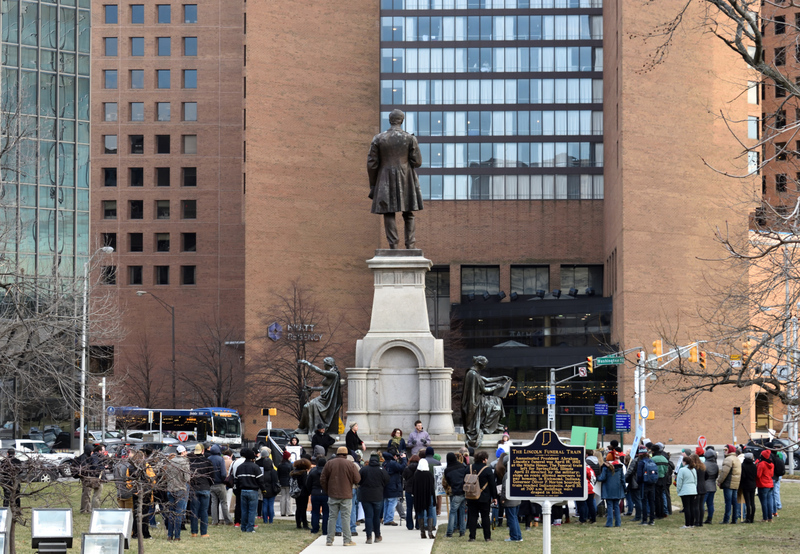
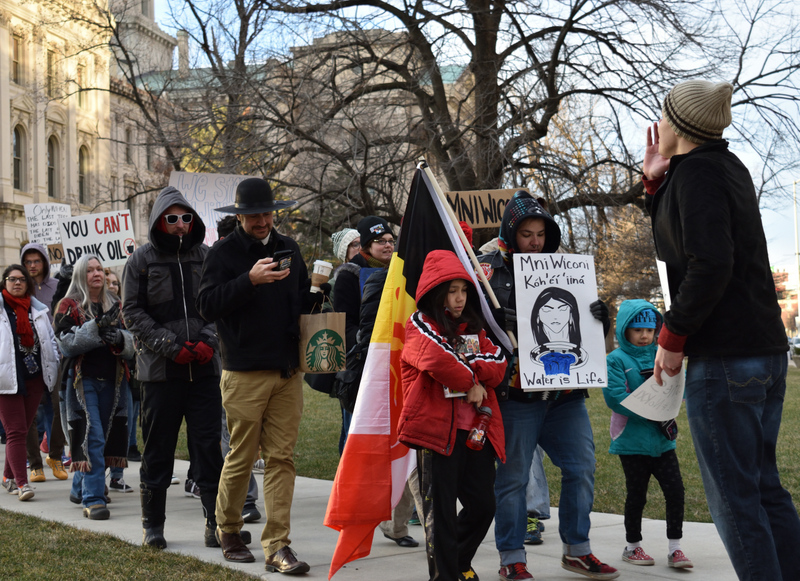
Coming full circle in a way, the video below is of me talking about the Keystone Pledge of Resistance at a Dakota Access Pipeline gathering at the Indiana State Capitol in 2017. That was a moving ceremony for those of us who had been working on the Dakota Access pipeline together.


























 Quakers and Mutual Aid