Yesterday a dear friend had just found out that my mom had died, and said she was sending prayers. I sincerely thanked her.
This morning I woke up at 5 am and noticed there was a lot of moonlight. It was so bright, I thought I’d try to capture it with my camera, with little success. But I couldn’t go back to sleep, and I kept looking at the light. I remember another early morning when I was led to walk to Picnic Point for photos and was blessed with a spectacular sunrise. You can see those photos on my photography website: https://jeffkislingphotography.wpcomstaging.com/2023/11/15/picnic-point-madison-wisconsin/
On that same site, there are several other albums of photos from Picnic Point. Some are in the rain, fog, or snow. I long ago learned some of my best photos were taken in such challenging conditions. There’s something about the difficulty or sacrifice that makes for extraordinary images.
So I was eager to leave at 5 am in 28-degree temperatures, hoping I would find difficult conditions again. Of course, it was completely dark, and I had no idea if there would be clouds obscuring the sunrise.
I was blessed to witness another extraordinary dawn. Those photos will also appear in the photo album link above when I finish editing all 155 of them.
I’m convinced my friend’s prayers led to the early light which awakened me and led me out into the dawn. Because prayers are not a static thing. They can lead us to act, and lead us into amazing journeys. I am thankful for the prayers.
Glory to God in the highest, and on earth peace, good will toward men.
Luke 2:14
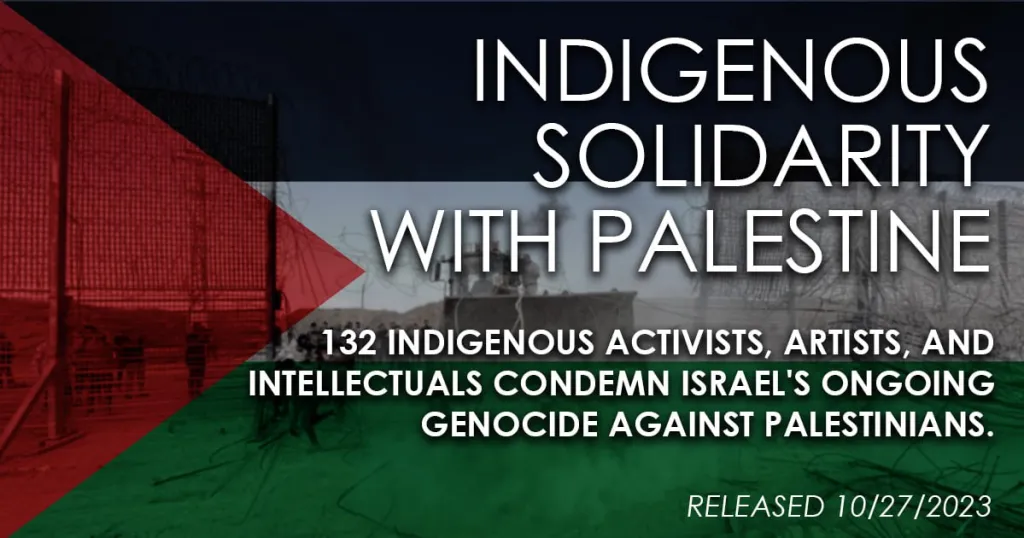
I am deeply distressed by the dichotomy between ‘peace on earth, good will toward men’ and the blatant opposition to that by the forces of global dominance. I cannot fathom the massacre in Gaza and the silence of the people in this country. The overwhelming majority of people in other countries are not silent.
This has been the pattern that began when the Europeans landed. The enslavement of those brought here from Africa continues with economic injustice and mass incarceration. White settler colonialism continues as Indigenous lands remain occupied today.
The rapid rise of authoritarianism is the next stage of dominance over us all.
The silence is astounding.
That silence is ruthlessly enforced, not only against opposition to war but also for the rape of Mother Earth. Or for a reckoning about past injustices such as the Indian schools of forced assimilation or structural racism.
I told my Quaker meeting I have this sense of being threatened by simply writing about these things. Which is proof that authoritarianism is working. Quelling dissent. I wonder if I might be imprisoned one day.
All we are saying is give peace a chance.
John Lennon
The message of Christmas has traditionally involved prayers for goodwill toward all and “peace on Earth,” but through their opposition to ceasefire in Gaza, most Western Christians are affirming the opposite values: that violence, weapons and destruction are the only response to real and perceived enemies.
The U.S. Christian Palestinian communities that I am a part of are truly puzzled at the behavior of the many Western Christians who seem to see no dissonance between the message of love and peace that is at the heart of our shared religion, and their backing for Israeli’s military assault against Palestinian civilians, which has killed more than 20,000 people in Gaza alone within the last three months.
Anytime an attack occurs, or lives are lost, we are called to choose between two worldviews in our response. One worldview holds that violence, bombings and brutal force is the only method available and should be pursued relentlessly until the enemy is vanquished, regardless of the cost in lives and destruction for civilians on both sides.
But an alternative worldview insists on the way of peace, reconciliation, justice and tolerance.
United States diplomats once again held up a vote on a watered-down United Nations Security Council resolution on Wednesday aimed at bringing more aid and relief to civilians in the besieged Gaza Strip as reports of starvation, mass killings, and other war crimes allegedly committed by the Israeli military continue to pile up.
Despite massive international support for a ceasefire at the UN, on December 8, the U.S. blocked a previous attempt by the Security Council to leverage international law and secure a humanitarian ceasefire so more aid can enter Gaza.
I recently attended the Zoom meeting hosted by the Pachamama Alliance, Insights for Earth Activists, with Arkan Lushwala. That video recording can be found below.
Arkan Lushwala is a Peruvian ceremonial leader and author who focuses on teaching others practices that can restore balance to the planet. He was adopted by a Lakota elder named Basil Brave Heart and carries spiritual traditions from the Andes and the Amazon. He has written three books: The Time of the Black Jaguar, Deer and Thunder, and The Spirit of the Glacier Speaks. You can read the Epilogue of The Spirit of the Glacier Speaks here.
I value what Arkan says because of the way he expresses his spirituality. I find it similar to how I try to express my own.
He speaks of ancestral wisdom having more to offer than technology, that technology cannot illuminate nor improve what lives inside people. I am blessed to have wisdom from my Quaker ancestors.
Introduction
While singing to the spirits of the mountains and preparing sacred offerings to feed our Mother Earth, I am seeing the paths that the Universe has opened for us lately—paths of spiritual and human development that we are going to need to walk in order to continue living. In the midst of so many disasters affecting humanity, I have seen something beautiful that I can no longer hide. Even more, I feel a longing to give birth to something new. And as mothers know well, this can only be done with full conviction, like a whale that crosses an ocean. Among my convictions, one comes from my relationship with the ancestral world I grew up surrounded by, having been born in the Andes. I am convinced that anything new, to have real power, needs an ancestral root.
When seeking new and better solutions for the great social problems and natural catastrophes of the present moment, I believe that ancestral wisdom has more to offer than technological advances. Because technology does not have the ability to illuminate nor improve what lives inside people—the true source of the problems that are harming the world. Social injustice, the destruction of nature, excessive wealth, and extreme poverty come as a result of excessive human ambition. Such greed will not disappear with new technologies. We need greed to stop being fashionable, to cease being the marker of human progress. Only with wisdom will it be possible to resolve the problems of our time, with sensible cultural proposals that can help us aspire to reach happiness in another way. Therefore, I have no doubt that the ancestral wisdom of our Andean-Amazonian communities has much to contribute to the development of a new world culture.
Lushwala, Arkan. The Spirit of the Glacier Speaks: Ancestral Teachings of the Andean World for the Time of Natural Disorder (pp. 7-8). Disruption Books. Kindle Edition.
Arkan writes about the early European settlers being only interested in gold and being afraid of the Indigenous sacred world.
Just as they (Europeans) lost interest in being healed by our food, they could no longer see our hearts. Their eyes sought only gold, and they could not see us. They saw our sacred world from afar and, afraid of it, did not come closer. Their lack of experience in the art of entering into good relationships did not allow them to love us. Their only experience was with fighting, and they waged a terrible war in order to legalize the theft of our lands through their triumph. And despite the fact that they made our lands their own, they were never able to know their true treasures. Given that those who cannot be satisfied also don’t know how to stop, they didn’t consider taking the time to get to know the deepest secrets and the real treasures of the place they had come to. They continued on their way, looking for something new to appropriate. If they had simply let themselves sit down for a moment amid the pastures of these lands, they might have felt something in their hearts, and they might have become enamored of the beautiful people here who were one with the land. But they were too busy and could not take notice of what lay right in front of them. And so they lost the chance of encountering our mother, the mother we all have in common, the one they had forgotten—our Mother Earth.
Lushwala, Arkan. The Spirit of the Glacier Speaks: Ancestral Teachings of the Andean World for the Time of Natural Disorder (pp. 8-9). Disruption Books. Kindle Edition.
The most spiritual thing now is action. This action needs to be born from a place in ourselves.
Arkan Lushwala
One day a brother from another country who was becoming a good friend came to see me. He was very affected by these same questions, tired of feeling himself separated from the beauty of the world. He had a great spiritual hunger and was searching for something different. I remember him asking me, “What can we do to change, those of us who have lost the memory of the original design for good living?” And aware that I didn’t have an answer for such a big question, I managed to not go to my head and look for one. I just responded spontaneously, “My brother, stop dedicating yourselves with so much enthusiasm to digging the holes you are going to fall into. Stop for a moment, brother, stop so much doing. Look, brother, let’s share some food, and let’s taste the earth.” I passed him some Kuka leaves and said to him: “Hallpaykusunchis wayq’echay” (Let us be the land—with tender affection—for our benefit, my little brother). And after a long silence, I smiled and said to him, “Saksachikuy wawq’ey,” which means “Make yourself satiated with tender affection for your benefit, my brother.
Arkan Lushwala, The Spirit of the Glacier Speaks
aware that I didn’t have an answer for such a big question, I managed to not go to my head and look for one
Arkan Lushwala
What can I do?
Speaking about what is happening on Earth right now, many of the conditions of life that we used to take for granted, now are really out of balance. Hopefully we still have time to get back into balance so life may continue. I travel around the world and meet people and talk to people from all different cultures. And everywhere people ask, “what can we do?” The question, what can we do, is the second question. The first question is “what can we be?” Because what you can do is a consequence of who you are. Once you know what you can be, you know what you can do, and we cannot afford wasting time; we have little time. We need to be precise now. When someone sincerely asks, “what can I do?” my humble answer, the only answer that I find in my heart to be sincere is, “First find out what you can be.” Action is extremely necessary at this time. This is not a time just to talk about it. The most spiritual thing now is action. To do something about what’s happening. To go help where help is needed. To stand up when we need to stand up, and protect what is being damaged. And still, this action needs to be born from a place in ourselves that has real talent, real intelligence, real power, real connection to the heart of the Earth, to universal wisdom, so our actions are not a waste of time. So our actions are precise, our actions are in harmony with the movement, the sacred movement, of that force that wants to renew life here on Earth and make it better for the following generations
The most spiritual thing now is action. This action needs to be born from a place in ourselves.
Arkan Lushwala
Arkan talks about caring for our “sacred pot,” which made me want to visualize what that might look like. I’ve been learning to use a graphics tool, Microsoft Designer, to share about spirituality since words are usually inadequate.
My friends at the Great Plains Action Society (GPAS) have done a lot of work to call out the whitewashed history of Thanksgiving, one of many colonial mythologies about Indigenous Peoples and the founding of the US and Canada, which I wrote about yesterday.
But of course, there is nothing wrong with reflecting on what we are thankful for.
I am grateful for many things.
My first thought went to something I recently heard someone say. That he was a draft resister in the Vietnam War era, and that was the best thing he’d ever done. I was astonished to hear that fifty years later. I know what he was saying because I was a draft resister then, as well. As an 18-year-old, I knew this decision would set the course of my life. It would be easy to accept conscientious objector status and do two years of alternative service. Fortunately, though, I was aware of the stories of many Quaker men I knew who refused to participate in the war machine. Knowing they risked imprisonment and often were. But I saw how that choice defined the rest of their lives.
It was a clear choice that Robert Frost’s poem, The Road Not Taken, tells so eloquently.
At that same time, I found I had another decision to make. Moving to Indianapolis, I was horrified by the noxious clouds of smog pouring from every tailpipe; this was before catalytic converters covered up the damage being done to Mother Earth. I made another decision that was definitely a road less traveled (so to speak): to live without a car. That was another of the best decisions of my life, defining so much of what happened thereafter. Affecting every day of my life as I was able to witness the wonder of what I was walking through.
So the phrase ‘Now shall I walk, or shall I ride?’ in Metaphors of Movement caught my attention.
The Best Friend
Now shall I walk Or shall I ride? “Ride”, Pleasure said; “Walk”, Joy replied.
William Henry Davies 1871 – 1940
In his 1914 poemThe Best Friend, the Welsh poet and occasional vagabond W.H. Davies pondered a timeless question: “Now shall I walk, or should I ride?” This seemingly simple dilemma encapsulates the modern industrial choice between slow-paced ageless wandering on foot or embracing the thrill of motorized transport, along with the attendant speed and freedom it offers, which has become such an integral part of our contemporary lifestyle. It likewise speaks volumes about us and about the nature of the choices we make daily.
Gone perhaps are the days of poetic musings over the merits of walking versus riding. Yet one can’t help but wonder if we have lost something essential along the way—a connection with the world that only a leisurely walk can provide.
C.S. Lewis, while growing up in the outskirts of Belfast, Northern Ireland, counted it among his blessings that his father had no car, so the deadly power of rushing about wherever he pleased had not been given to him. He thus measured distance by the standard of a man walking on his two feet and not by the standard of the internal combustion engine, for it is here where both space and time is annihilated by the deflowering of distance. In return, he possessed “infinite riches” in comparison to what would have been to motorists a “little room.” Key to those riches was what he came to call, and experience throughout life as, “joy,” and walking became a portal through which he sought it. A participatory engagement with life and living which I contend is as vital to our survival as breathing itself.
“I hope that in this year to come, you make mistakes. Because if you are making mistakes, then you are making new things, trying new things, learning, living, pushing yourself, changing yourself, changing your world. You’re doing things you’ve never done before, and more importantly, you’re doing something.”
Neil Gaiman
The Road Not Taken
Two roads diverged in a yellow wood, And sorry I could not travel both And be one traveler, long I stood And looked down one as far as I could To where it bent in the undergrowth;
Then took the other, as just as fair, And having perhaps the better claim, Because it was grassy and wanted wear; Though as for that the passing there Had worn them really about the same,
And both that morning equally lay In leaves no step had trodden black. Oh, I kept the first for another day! Yet knowing how way leads on to way, I doubted if I should ever come back.
I shall be telling this with a sigh Somewhere ages and ages hence: Two roads diverged in a wood, and I— I took the one less traveled by, And that has made all the difference.
What questions do you ask these days? Ask yourself or others? Are you brave enough to ask anything at all? Such as what can we do about accelerating authoritarianism? Runaway global burning? Why is the US complicit in the Israeli carpet bombing of Gaza? These things can only happen if authority is not questioned. There is a palpable sense of fear for anyone to question empire today. People who question are beaten, jailed, killed.
Yesterday I wrote about asking the right questions. As a spiritual person, I have been, and believe I will continue to receive answers from the Spirit or Inner Light. I appreciate the spirituality of the following.
From my career in medical research, the first thing I learned was the most important thing is to ask the right questions.
So, during a recent discussion about Quakers and the Indian Boarding Schools, I recognized the significance of the question that was asked, “how can we decolonize ourselves?” Prior to that, we were lost as we tried to understand our ancestor’s involvement in those institutions. It seemed the subtext of the question is “is it even possible to decolonize ourselves?” Which I tried to answer yesterday.
That question immediately brought to mind something that I had heard the Indigenous spiritual leader, Arkan Lushwala, say.
The answer to “what can I do?”
“Everywhere people ask, “what can we do?” The question, what can we do, is the second question. The first question is “what can we be?” Because what you can do is a consequence of who you are. Once you know what you can be, you know what you can do.”
Arkan Lushwala
Speaking about what is happening on Earth right now, many of the conditions of life that we used to take for granted, now are really out of balance. Hopefully we still have time to get back into balance so life may continue. I travel around the world and meet people and talk to people from all different cultures. And everywhere people ask, “what can we do?” The question, what can we do, is the second question. The first question is “what can we be?” Because what you can do is a consequence of who you are. Once you know what you can be, you know what you can do, and we cannot afford wasting time; we have little time. We need to be precise now. When someone sincerely asks, “what can I do?” my humble answer, the only answer that I find in my heart to be sincere is, “First find out what you can be.” Action is extremely necessary at this time. This is not a time just to talk about it. The most spiritual thing now is action. To do something about what’s happening. To go help where help is needed. To stand up when we need to stand up, and protect what is being damaged. And still, this action needs to be born from a place in ourselves that has real talent, real intelligence, real power, real connection to the heart of the Earth, to universal wisdom, so, our actions are not a waste of time. So, our actions are precise, our actions are in harmony with the movement, the sacred movement, of that force that wants to renew life here on Earth and make it better for the following generations.
Arkan Lushwala
Arkan says we are facing life threatening situations related to environmental damage. We are facing such severe challenges that we cannot solve them only by ourselves.
We must move beyond thinking and talking. Action now is essential.
Action is spiritual.
We need to practice trying to reach our sacred space. We need a higher universal intelligence to help solve these problems.
We must open a sacred space for prayer so we may be open to the warrior spirit.
The importance of prayer.
We pray as a form of connecting to other forms of communication
We need to be aware of what is happening in the moment, elevate ourselves, move closer to the sacred
I first have to reach deep into my own heart
You start praying while you are also listening. I become aware of, remembering, what I pray about at that moment. We need to rely on our own ancient indigenous memory. Stop being isolated. Fully become part of the earth and water and plants and air. This is an immense source of knowledge about these problems.
I am in front of the sacred fire of all who are listening. Let’s say that I am thinking now. I am remembering. The notion of intelligence and to understand refers to memory. Intelligence means learning, but also achieving that state in your mind when you are remembering. The air that we are breathing carries the memories of the ages, the movement of energy. Deepest intelligence in our culture is memory. There are always memories of the ages in all that surrounds us.
The state of being, the prayer, makes us open to receiving. If we are really open, and not blocking ourselves, and connected to what is around us, with our eyes, breath, sensations, and feeling that arrive in our heart, through our antenna, if we are open in this way while we are doing something, our action is being infused with guidance or instructions. There is something there that is watching what you are doing and helping guide you. Sometimes we need the help of the elders or others to understand these experiences.
We ask for help. When we put ourselves in that elevated space, that makes it much easier for us to receive help. Help is always there but we often miss the messages.
If I am open and receptive to other frequencies and the higher state of my being, I’ll have much more help in my work.
The correct way is not to take credit, but the joy is the moment itself, by feeling integrated to life while you are doing the action.
When we sit with others in a circle, when we all change the state of our being together, we move up to the sacred together. Working with others in community, much, much more can be accomplished.
If a person expresses an experience that is from a sacred space of high resonance, I am activated by that. It resonates in my own heart and mind and spirit, and it triggers my memory, too. by the presence of something sacred.
We sit in a circle and witness someone remembering. We receive the same spirit together. Our individual self and agenda slips away. Joining our hearts. Mother Earth is the One, all of us become the One together. A lot of wisdom comes south. We are all impressed by the presence of something sacred.
It is becoming clearer and clearer, with every passing day, that walking a prayerful, peaceful spiritual path is the only way forward to a just, sustainable, and harmonious world.”
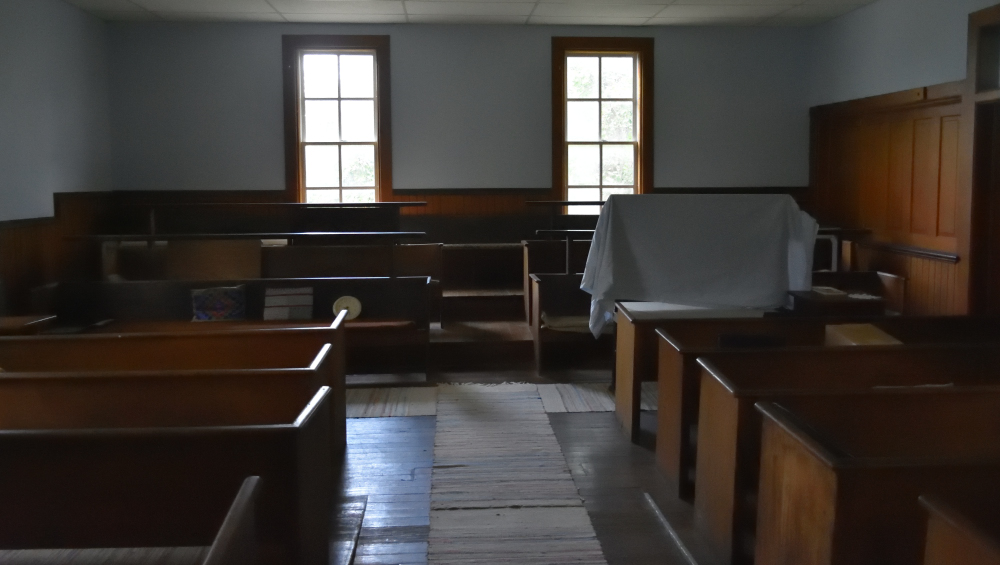
Diversity can refer to many things, such as race, ethnicity, gender, sexuality, class, age, ability, and faith background. Both the state of Iowa and our Quaker meetings in the Midwest have very little racial and other types of diversity. This does not reflect the diversity of the wider society nor the diversity in Quaker history and values.
Reasons why Friends need to confront their lack of diversity now
This is a topic that generates significant emotional reactions for numerous reasons. Perhaps one of the most basic is knowing we are not doing what our ancestors had done, what they would probably be doing if alive today.
If we are converging on history and practice, we are missing the point. If we are depending on institutions to create a new society or usher in the Kingdom, then we are deceived. These will not bring the radically egalitarian and Spirit-filled communities that God fostered among early Friends. These are forms, and Friends must follow the Spirit.
I’ve met others who need a Spirit-led Society. We share this vision, and we share the disappointment of being drowned out in meeting by classism, ageism, and racism. Some of us wonder if Quakerism isn’t all that different from the rest of liberal religion. From what we’ve seen, it isn’t apocalyptic. It isn’t radical. It doesn’t sound like Fox or look like Jesus. It works at incremental transformation while simultaneously shushing those who need the system overthrown.
Hye Sung Francis, Seeking a People
Many of our Quaker meetings are small and growing smaller.
A significant number of Friends are elderly
We are failing to attract new members
Members are leaving their (Quaker) meetings because
Their justice work is not understood or supported
They see the harm done to Black, Indigenous, and other people of color (BIPOC) in their meetings.
They are frustrated by the meeting’s lack of understanding and involvement around their privilege
And the lack of engagement and support for BIPOC communities.
Many meetings fail to engage with justice groups that are doing good work, such as Mutual Aid communities.
Friends need to engage with Indigenous peoples now
For truth and healing related to Friends’ involvement with the institutions of forced assimilation
Most White Friends fail to understand their privileges and the consequences.
There are a range of justice activities by (Quaker) meeting members. Much of that relates to Friends’ long history of opposing war and violence. But because of our lack of diversity, we fail to understand many other significant and often insidious forms of violence, such as sexual, emotional, psychological, spiritual, cultural, verbal, economic, symbolic, and gender-based violence.
Most male Friends are unaware of gender inequality and violence.
Much of what passes for justice work are committee meetings, political letter writing, and financial support of Quaker justice organizations such as the Friends Committee on National Legislation and the American Friends Service Committee. That is not enough.
Lack of connections with Indigenous peoples is a significant problem for Friends today.
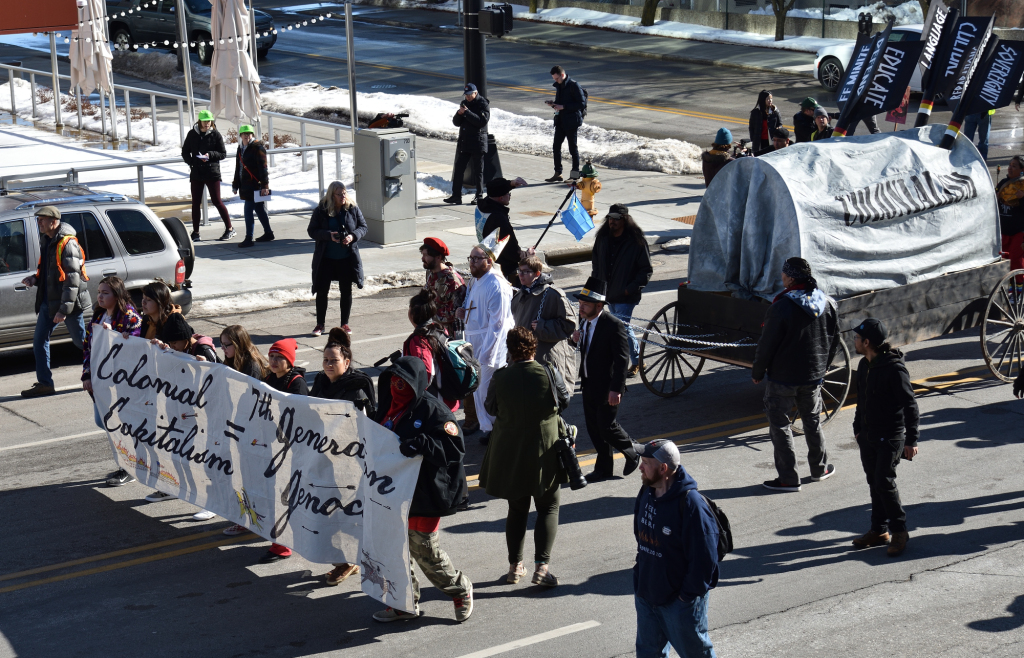
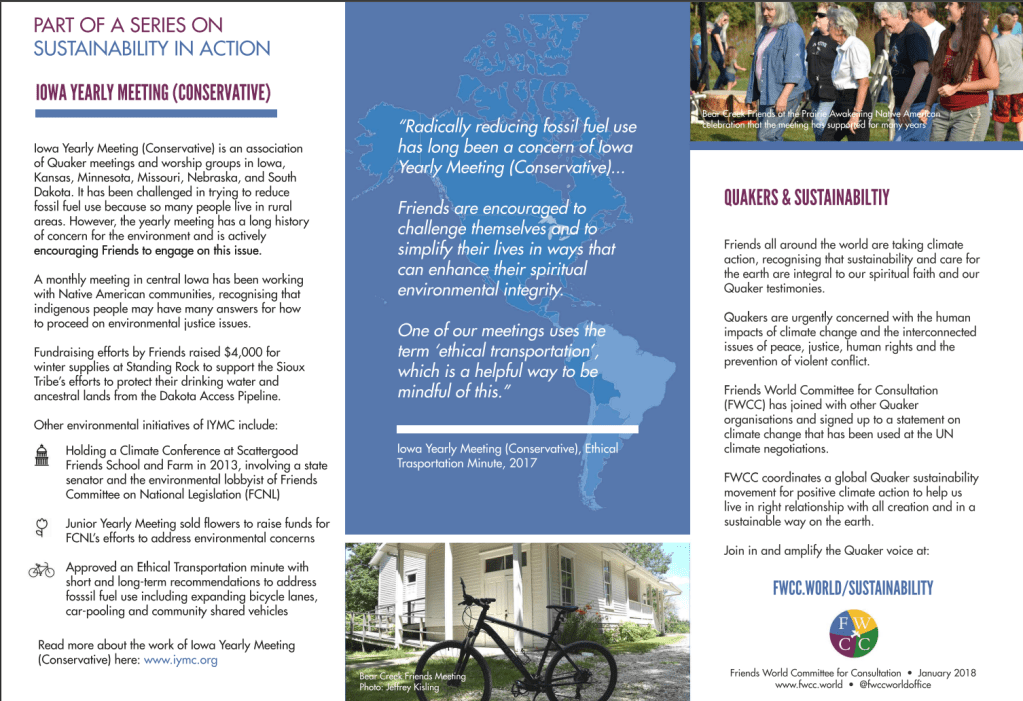
Friends are unaware of their ancestors’ settler colonization, including the theft of native lands. Many Friends don’t believe the land they occupy today is stolen land.
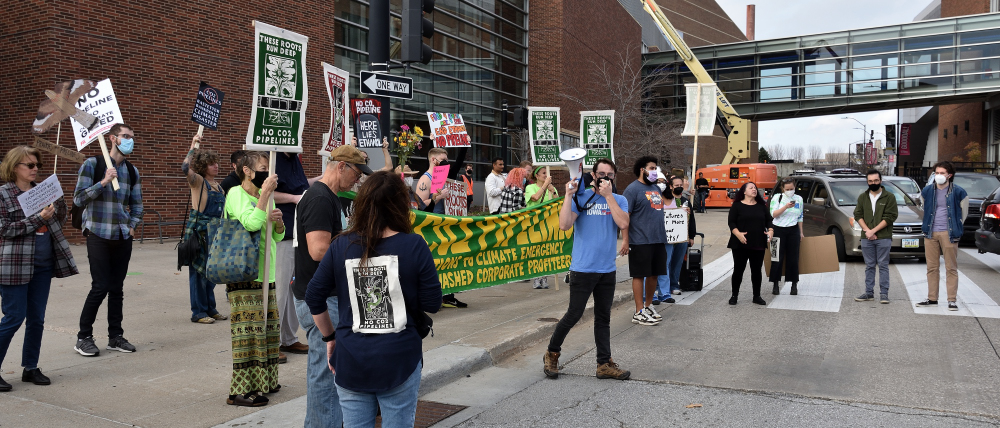
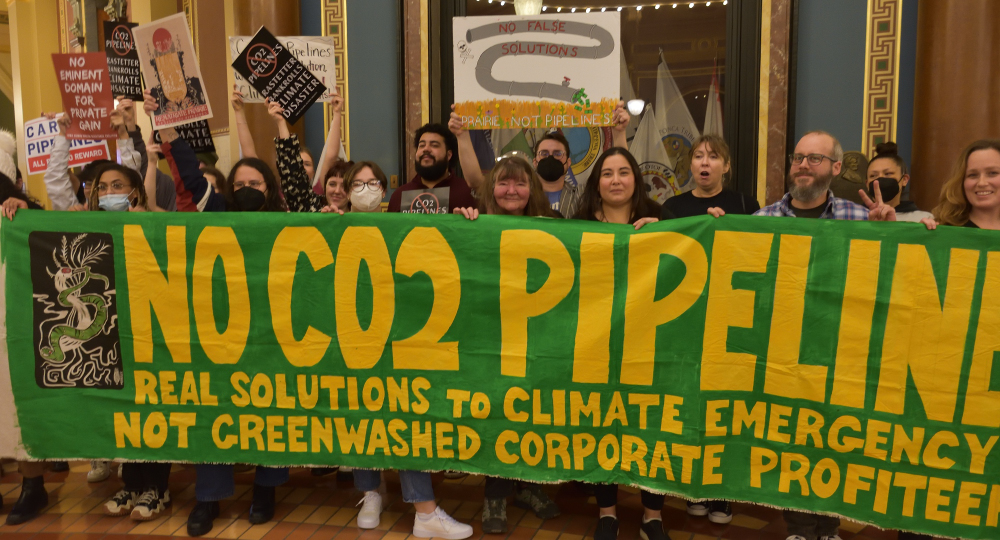
Unaware of the ongoing crisis of Missing and Murdered Indigenous Relatives. And how this is tied to the construction of fossil fuel pipelines.
Just becoming aware of Friends’ involvement with the forced assimilation of native children. Of the many forms of abuse and deaths of thousands of children at those institutions.
Friends often don’t have the depth of spiritual awareness of all our relations that we can learn from Indigenous peoples.
Structural violence is embedded in the social and economic systems that produce and maintain inequalities and injustices. It is often invisible or rationalized by the dominant groups that benefit from it.
Symbolic violence is a form of power exerted through cultural and symbolic means rather than direct physical force. It reinforces social hierarchies and inequalities by imposing the norms and values of the dominant group on the subordinate group. It is often unconsciously accepted by both parties and can be expressed through various practices such as language, representation, body language, and self-presentation. The concept was developed by sociologist Pierre Bourdieu.
This is a significant reason why Friends need to support and create Mutual Aid communities which address these very injustices related to symbolic violence.
This makes me more aware that Mutual Aid is an expression of nonviolence.
MLK understood — or would have — that all the following things are forms of violence. People forced to “crowdfund” healthcare — to beg their neighbors for pennies for medicine. A workplace culture where being abused and berated by your boss is totally normal. Incomes not rising for half a century — while costs skyrocket to absurd levels. The average American dying in debt. Being forced to choose between healthcare and your life savings. Having to give up your home because you want to educate your kids.
All these things are forms of violence. Violence runs deep. It isn’t just mobs of fascists smearing feces on the walls — though it is also that. It’s what Americans do to one another as everyday interaction — and shrug off as normal. Mental, emotional, social, cultural violence makes up the very fabric of everyday American life. It’s the poisonous residue of slavery. And it’s profoundly traumatic. It has lacerated the American mind, and made violence a legitimate solution to every social problem. But these forms of all-pervasive violence are what a capitalist society is limited to, because everything is competition, rivalry, and ultimately, domination and subjugation.
Americans Don’t Understand What Violence Really Is by umair haque, Eudaimonia and Co, January 17, 2022
This lack of diversity has numerous consequences
Excluding or marginalizing people who do not fit the dominant norms or expectations of Quaker culture
Limiting the perspectives and experiences that inform Quaker discernment and action
Missing out on the richness and joy of learning from and celebrating differences
Failing to live up to the Quaker testimonies of equality, peace, and justice
For a long time, I had prayed that my Quaker community would engage with communities like my Mutual Aid community, thinking that would be mutually beneficial. But the clashes and the lack of lived experience with diverse communities of many White Friends have changed that. Now, I feel I need to protect my justice communities from the injuries they would experience from White Friends. It’s not that White Friends wouldn’t try to do what they thought would be helpful, but their lack of knowledge of oppression always results in harm.
For years, I’ve envisioned Quakers and oppressed people working together. But we (White Quakers) have to have enough experience in communities outside our meetinghouses to understand what is happening in these communities. To have a valid perspective. Until that happens, Friends will show they cannot be trusted, and we will be unable to cross the divide.
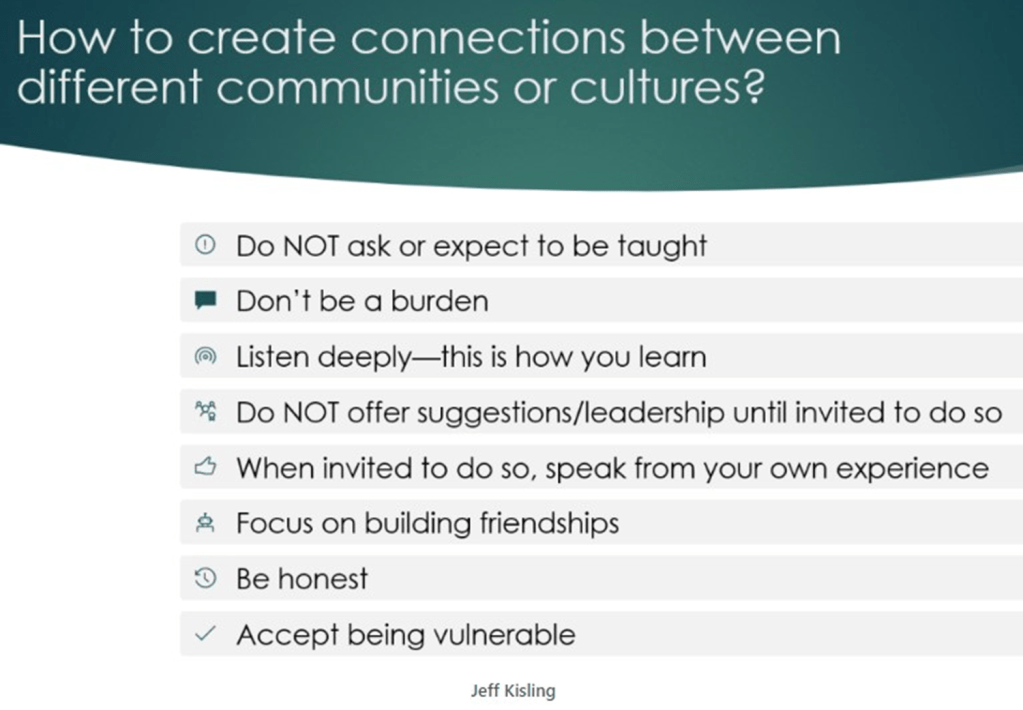
Over the years I’ve built this list of things I’ve learned from my experiences. I hope White Friends who haven’t yet had experiences outside their meetinghouse would keep these things in mind.
By far the most important is to not offer suggestions until the community trusts you enough to ask you for your input. When you are invited to do so, speak from your own experience. Do not talk about things in the abstract. It’s perfectly fine to say you don’t know the answer to a question. This honesty, this vulnerability is crucial. I like to keep in mind “we don’t know what it is that we don’t know.”
Time
It will take much longer than you expect to see this trust begin to develop. I’d been involved with the Kheprw Institute in Indianapolis for three years before I was asked to teach the kids there about photography.
Quakers are pretty white, and that comes with quite a bit of power and privilege. A Quaker in Omaha, Nebraska is going to have probably more weight in what they say to a legislator than a Black Lives Matter activist in Brooklyn, New York. I think there’s a need for Quakers to step out of their meeting and away from a lot of these phenomenal institutions that they’ve created and speak to individuals in an interfaith setting (from Black churches or Black Lives Matter) and have a cross-cultural understanding of what that experience is like because you’ll find that it’s very different, and I think the more we can do of that the more effective we’ll be in addressing these problems. These exchanges and fusion coalitions are what I think it’s going to take, not only for Friends to be effective in dismantling these systems of racism, classism, and white supremacy in American society, but also for all of us to better address these problems in our country.
The recent passing of another of our elders brings new urgency to understanding why we are not attracting new attenders to our Quaker meetings and what to do about that.
“I’m so afraid of climate change. I just turned 17 not so long ago and I’m afraid I’ll never get to grow up because of the way our Earth is going.
“Most of my friends and family are apathetic, such as my parents who don’t like me talking about this stuff since they feel we can’t really change anything. My mom thinks it’s completely irreversible. I hate holding it all inside all the time. …
“I guess what I really wanna hear is it’s all gonna be ok even though it’s probably not the truth. I’m just scared. I’d appreciate any positive news or insight from those who feel the same way and how you manage it while doing everything you can. Thanks for reading.”
A pair of recent articles by Steve Genco is about what to say to a 17-year-old terrified about their future and poses some queries. These questions are relevant to the future of us all.
The article lists the following predictions we can rely on:
It’s going to get hotter
The weather is going to get more unpredictable and more extreme
Natural disasters are going to arrive at greater and greater frequency
Economic inequality (income and wealth) is going to get worse
We will continue depleting the natural world
The effects of climate change will be unevenly distributed around the planet
We will run out of oil and gas
What will give your life meaning?
Psychologists Edward Deci and Richard Ryan began developing what they called Self-Determination Theory (SDT) in the 1970s. SDT emerged out of Deci’s interest in intrinsic motivation.
Deci began searching for the underlying needs that intrinsically motivated behavior seemed to fulfill. He and Ryan discovered three motivators that appeared to represent basic or innate psychological needs
A need for autonomy: People need to feel self-directed and in control of our actions. We are more motivated to pursue activities we voluntarily and freely choose for ourselves, as opposed to activities we feel are imposed on us by other people or external circumstances.
A need for competence: People need to feel accomplished and capable. We are more motivated to pursue activities we feel competent to accomplish. We are also motivated to pursue activities that allow us to increase our competence through practice and repetition.
A need for belonging: People need to feel connected to others. We are more motivated to pursue activities that make us feel closer to others and that can be pursued in a supportive social context. This need is called relatedness by Deci and Ryan.
Throughout their research, Deci and Ryan studied how the goals people pursue on a daily basis and throughout their lives fulfill basic needs and contribute (or not) to personal wellbeing. In these studies, they found compelling evidence that: placing strong relative importance on intrinsic aspirations was positively associated with well-being indicators such as self-esteem, self-actualization, and the inverse of depression and anxiety, whereas placing strong relative importance on extrinsic aspirations was negatively related to these well-being indicators.
What skills and mental habits will you need?
So, how do you create a life of autonomy, competence, and belonging? You plan your life around goals and activities that make you more self-sufficient, knowledgeable, and socially connected.
In a world of cascading climate crises, shortages, and social and political unrest, people who can think for themselves, have useful practical skills, and are connected to a like-minded community, are going to have significant advantages over the cult followers, the totally-unprepared, and the socially isolated.
The needs for autonomy, competence, and belonging are exactly what Mutual Aid is about. These are the Points of Unity of my Des Moines Mutual Aid community.
Mutual Aid Points of Unity
We believe in working shoulder to shoulder and standing in solidarity with all oppressed communities.
We ourselves are oppressed, and our mutual aid work is a fight for our collective liberation. We do not believe in a top-down model of charity. Instead, we contrast our efforts at horizontal mutual aid, the fostering of mutually beneficial relationships and communities, to dehumanizing and colonizing charity.
We believe in community autonomy.
We believe that the communities we live and organize in have been largely excluded from state social services, but intensely surveilled and policed by the state repressive apparatus. Capitalism is fundamentally unable to meet people’s needs. We want to build self-sustaining communities that are independent of the capitalist state, both materially and ideologically, and can resist its repression.
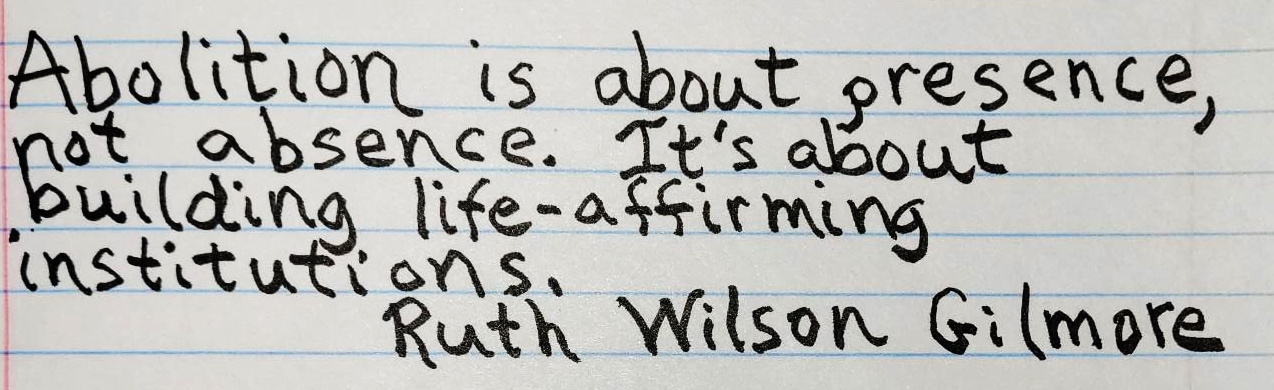
We are police and prison abolitionists.
Abolition and the mutual aid that we practice are inextricably linked. We don’t rely on capitalist institutions or the police to do our work. We believe in building strong and resilient communities which make police obsolete, including community systems of accountability and crisis intervention.
We work to raise the political consciousness of our communities.
Part of political education is connecting people’s lived experiences to a broader political perspective. Another component is working to ensure that people can meet their basic needs. It is difficult to organize for future liberation when someone is entrenched in day-to-day struggle.
We have open disagreements with each other about ideas and practices.
We believe there is no formula for resolving our ideological differences other than working towards our common aims, engaging with each other in a comradely manner, and respecting one another whether or not we can hash out disagreements in the process.
Much of the above will be uncomfortable for many Friends because it involves rejecting the status quo. I contend that is why we are not attracting new attenders. If we don’t do so voluntarily these changes will be forced upon us as the status quo continues to collapse.
I believe we are in a time of great spiritual poverty. Friends have a precious gift to offer those needing a spiritual home. But the two will never be connected if Friends continue isolating themselves in their meetinghouses and cling to the status quo. We need to be police and prison abolitionists, find alternatives to capitalism, block the development of fossil fuel infrastructure, reject empire and militarism, and promote and follow the leadership of Indigenous peoples.
In Part 1, he discusses two questions youth should consider about this.
What predictions can you rely on?
What will give your life meaning?
The questions in Part 2 are:
What skills and mental habits will you need?
How will you live?
I’m just going to outline what Genko says in his article. You can find a fuller explanation of all of this there. I will then discuss my concepts of how to build communities for the (near) future we are facing.
What skills and mental habits will you need?
So how do you go about creating a life of autonomy, competence, and belonging? You plan your life around goals and activities that make you more self-sufficient, knowledgeable, and socially connected. In a world of cascading climate crises, shortages, and social and political unrest, people who can think for themselves, have useful practical skills, and are connected to a like-minded community, are going to have significant advantages over the cult followers, the totally-unprepared, and the socially isolated.
I have five suggestions for skills and mental habits worth acquiring as our fossil fuel-dependent civilization stumbles into the rest of this century.
The havoc from increasingly violent storms and development of large areas of drought will increasingly overwhelm our economic and political systems. Millions of people will no longer receive payments from employment or social safety systems. Financial institutions will fail. Military, public safety, and governance systems will break down. Municipal services such as water, power, transit, sewage and trash processing will fail. Food will no longer be available in grocery stores. We need to begin to prepare now. Not wait until the day water is no longer flowing from the faucet. Not wait until more of us are left without critical infrastructure. Not wait until millions are forced to flee coastal cities as the oceans flow into their streets, or flee wildfires, or areas with lethal heat, medical services including medications are no longer available. We’re already seeing the collapse of political and economic systems.
The Midwest
We are faced with two broad problems. How to adapt our own lives to deal with these changes, and what to do about the flood of people who will be migrating to the Midwest.
Since we will soon not be able to depend on municipal water and power, transport of food from distances, schools and hospitals, many will be forced to move to rural areas where they can live and grow their own food.
The Choice
It would seem we have two choices.
One is to narrowly focus on the best we can do to prepare ourselves and immediate community to adapt to the coming changes.
The other is to also work on ways we can help the many people who will be coming to where we live to learn, adapt and thrive as well as possible.
In the coming chaos we can help our own safety by welcoming climate refugees, instead of building walls against them.
Disaster Preparedness
This model is in part written from my Quaker viewpoint. As Friends, we will make the second choice, to care for those who will be displaced. This will be like disaster relief work, only on a scale never seen before.
We first need to learn how to adapt to this uncertain future ourselves. Part of that will be to network with others, both to learn from and to build a network to coordinate the response to the needs of the climate refugees.
Building Communities-My Vision
We need to build model sustainable communities. (See my posts: https://jeffkisling.com/?s=beloved+communities). I believe spirituality, whatever that might mean to you, will be an important factor in how we can adapt and live with each other during the collapse.
There have been numerous such experiments in intentional community. But this model must be created with the intention of being replicated many times over with minimal complexity, using locally available materials—a pre-fab community.
What can you tell youth about an increasingly dystopic future?
As we continue to spiral into environmental chaos and its consequences, what do we tell our children? Are we even talking about this with them? What do you say? Do they listen? Do you have any moral authority to speak from? To be clear, I speak from a life of refusing to own a car. And a life of resistance to fossil fuel pipelines and infrastructure.
Many people today seriously consider not having children.
The increasingly foul air in cities in the 1960s was a warning. And that should not have been ignored. Although introducing catalytic converters in the mid-1970s reduced the visible smog, they didn’t stop the fossil fuel emissions. But did make it easy to ignore the ever-increasing pollution.
Many people now blame the deep deceptions of the fossil fuel industry as an excuse for not having done anything about greenhouse gas emissions. When, in fact, they chose to do nothing that would interfere with the convenience of automobiles.
What cuts me deeply is knowing we absolutely would not be where we are now if we had invested in mass transit and built walkable communities instead of a car culture.
While many of my friends and I have worked hard on racism, war, poverty, and the forced assimilation of Native children, none of those compare to the travesty of what we have done to Mother Earth.
I recently came upon an interesting article by Steve Genco in response to this Reddit post.
I’m a teen and I’m really scared for my future
“I’m so afraid of climate change. I just turned 17 not so long ago and I’m afraid I’ll never get to grow up because of the way our Earth is going.
“Most of my friends and family are apathetic, such as my parents who don’t like me talking about this stuff since they feel we can’t really change anything. My mom thinks it’s completely irreversible. I hate holding it all inside all the time. …
“I guess what I really wanna hear is it’s all gonna be ok even though it’s probably not the truth. I’m just scared. I’d appreciate any positive news or insight from those who feel the same way and how you manage it while doing everything you can. Thanks for reading.”
I’ve been thinking quite a bit about what to say to a teenager like this young person to help them prepare for the dangerous world they are about to inherit. I concluded the best advice I could give would be to suggest some questions they need to consider. So here are four questions I believe any young person who wants to survive the 21st Century needs to ask and answer for themselves:
I like the idea of proposing questions for young people to ask themselves, to come to their own understanding, and to be invested in their answers. (Many Quaker meetings use questions, or queries, to guide spiritual discussions).
The article lists the following predictions we can rely on:
It’s going to get hotter
The weather is going to get more unpredictable and more extreme
Natural disasters are going to arrive at greater and greater frequency
Economic inequality (income and wealth) is going to get worse
We will continue depleting the natural world
The effects of climate change will be unevenly distributed around the planet
We will run out of oil and gas
What will give your life meaning?
This is such an important question. Throughout the coming horrific times, we must focus on what gives our lives meaning. This will allow us to be self-fulfilled no matter what is going on around us. Allows us to search through all the chaos for what gives our lives meaning and to not be led down false paths. We don’t have the time or capacity to do anything but that. No matter what happens, we can build on our own core values.
Fewer and fewer people are engaging with organized religions to find meaning in their lives. Organized religions have been involved in many atrocities.
Organized religion is usually not about spirituality. Spirituality in any of its many forms can give your life meaning. That has been and continues to be true for me as a Quaker. (I don’t think of Quakerism as organized religion). Quaker worship involves gathering together for about an hour each week in silence to seek guidance from what we call the Inner Light, the continued presence of the Spirit today and into the future. Whatever spiritual source you find, I believe that can be tremendously helpful to find a path through what is coming. I would go so far as to say essential.
Psychologists Edward Deci and Richard Ryan began developing what they called Self-Determination Theory (SDT) in the 1970s. SDT emerged out of Deci’s interest in intrinsic motivation.
Deci began searching for the underlying needs that intrinsically motivated behavior seemed to fulfill. He and Ryan discovered three motivators that appeared to represent basic or innate psychological needs.
A need for autonomy: People need to feel self-directed and in control of our actions. We are more motivated to pursue activities we voluntarily and freely choose for ourselves, as opposed to activities we feel are imposed on us by other people or external circumstances.
A need for competence: People need to feel accomplished and capable. We are more motivated to pursue activities we feel competent to accomplish. We are also motivated to pursue activities that allow us to increase our competence through practice and repetition.
A need for belonging: People need to feel connected to others. We are more motivated to pursue activities that make us feel closer to others and that can be pursued in a supportive social context. This need is called relatedness by Deci and Ryan.
Throughout their research, Deci and Ryan studied how the goals people pursue on a daily basis and throughout their lives fulfill basic needs and contribute (or not) to personal wellbeing. In these studies, they found compelling evidence that:
placing strong relative importance on intrinsic aspirations was positively associated with well-being indicators such as self-esteem, self-actualization, and the inverse of depression and anxiety, whereas placing strong relative importance on extrinsic aspirations was negatively related to these well-being indicators.
The needs for autonomy, competence, and belonging are exactly what Mutual Aid is about. These are the Points of Unity of my Des Moines Mutual Aid community.
Mutual Aid Points of Unity
We believe in working shoulder to shoulder and standing in solidarity with all oppressed communities We ourselves are oppressed, and our mutual aid work is a fight for our collective liberation. We do not believe in a top-down model of charity. Instead, we contrast our efforts at horizontal mutual aid, the fostering of mutually beneficial relationships and communities, to dehumanizing and colonizing charity.
We believe in community autonomy. We believe that the communities we live and organize in have been largely excluded from state social services, but intensely surveilled and policed by the state repressive apparatus. Capitalism is fundamentally unable to meet people’s needs. We want to build self-sustaining communities that are independent of the capitalist state, both materially and ideologically, and can resist its repression.
We are police and prison abolitionists. Abolition and the mutual aid that we practice are inextricably linked. We don’t rely on capitalist institutions or the police to do our work. We believe in building strong and resilient communities which make police obsolete, including community systems of accountability and crisis intervention.
We work to raise the political consciousness of our communities. Part of political education is connecting people’s lived experiences to a broader political perspective. Another component is working to ensure that people can meet their basic needs. It is difficult to organize for future liberation when someone is entrenched in day-to-day struggle.
We have open disagreements with each other about ideas and practices. We believe there is no formula for resolving our ideological differences other than working towards our common aims, engaging with each other in a comradely manner, and respecting one another whether or not we can hash out disagreements in the process.
The approval for the construction of the Mountain Valley Pipeline (MVP) remained in the debt ceiling legislative just passed by the US Congress. This is an egregious act on many levels.
The Mountain Valley Pipeline (MVP) is a project proposed in 2014 that would transport fracked gas from West Virginia to southern Virginia through a 300-mile pipeline. The project has sparked widespread opposition for years from environmentalists, civil rights activists, and local residents who are concerned about its impacts on water quality, wildlife, climate change, and Indigenous and property rights.
The MVP was approved by Congress as part of the debt ceiling deal that was just passed. The deal included a provision that declared the MVP as “required in the national interest” and ordered the federal agencies to issue the necessary permits within 21 days and shield the project from legal challenges. The provision also weakened the National Environmental Policy Act (NEPA), a law that requires environmental reviews for major federal actions that affect the environment.
Many of us have criticized the deal that undermines:
the rule of law
public participation
Indigenous approval
and environmental justice
The MVP contradicts President Biden’s pledge to combat the climate crisis and transition to clean energy..
I recently wrote “What should be non-negotiable” to try to explain, yet again, why we can not allow continued construction of fossil fuel infrastructure, from pipelines to carbon capture to gas stations.
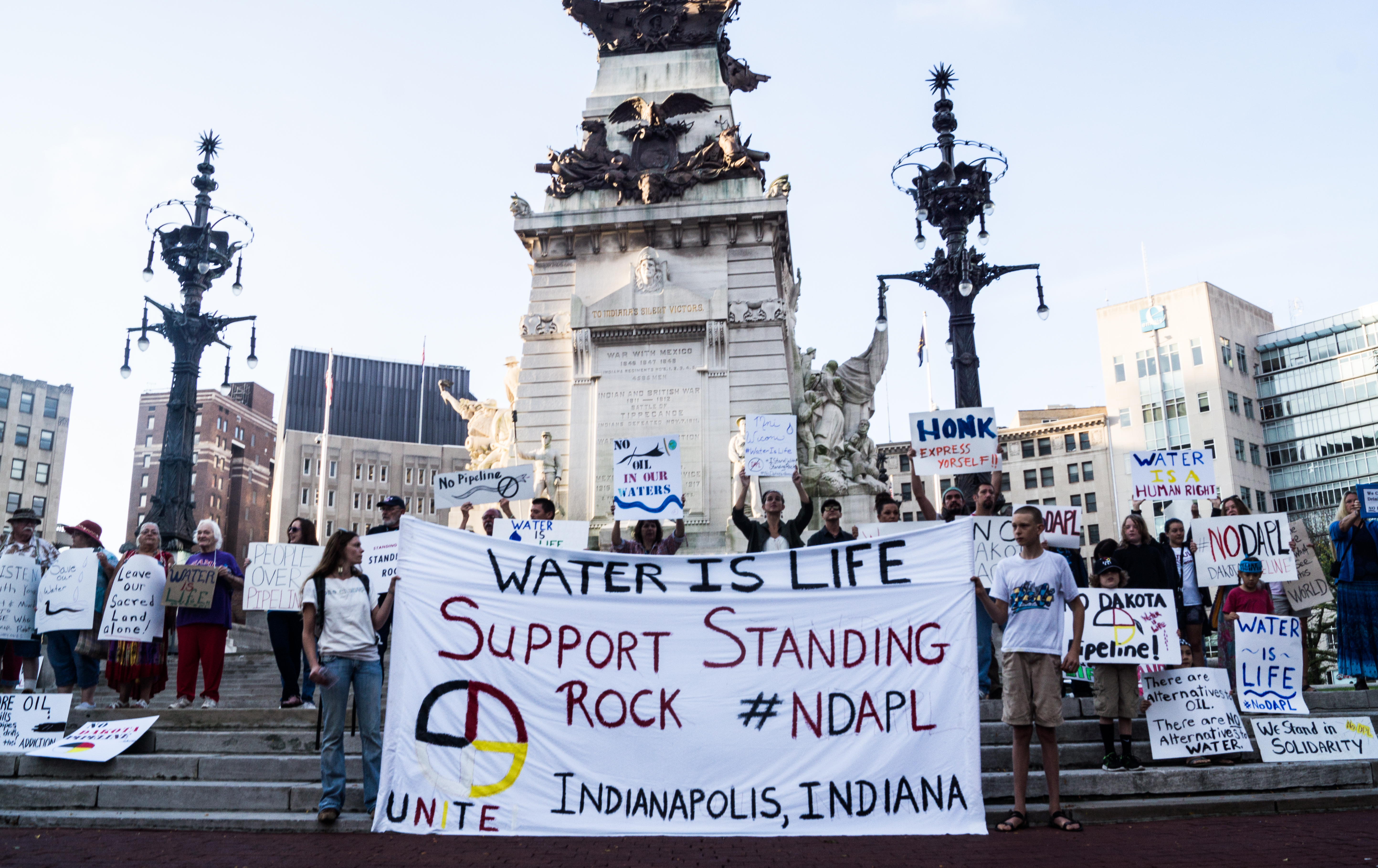
I know what it’s like to work year after year, fighting to protect Mother Earth from fossil fuels. I was going to say that for me this began in 2013 when I was trained as an Action Lead in the Keystone Pledge of Resistance. But it began much earlier when I was led to live without a car when I moved to Indianapolis in 1970. My love for nature actually began from growing up on farms and camping trips to national parks.
Of course, Indigenous peoples have worked to protect Mother Earth for centuries.
It’s not easy to maintain years-long resistance to a cause. That is one reason why approval of MVP is devastating. It is difficult to find people who are willing to work for justice causes. Difficult to organize and get people to commit to various actions. To get people to move outside their comfort zone. To face all kinds of opposition, time and time again. And all too often the cause is defeated. The pipelines and other infrastructure continue to be built. Mother Earth takes another hit.
Such is the case with the Mountain Valley Pipeline. Its approval hurts not only those who worked so hard against MVP, but everyone working on any environmental cause. It shows yet again the Federal administration and Congress do not understand the gravity of our evolving environmental devastation.
It also shows, again, that environmental solutions will not come from the dominant political culture in this country. Which is why I am so grateful to have been led to my Mutual Aid community. We work locally, within the community, to address basic needs. Instead of talking and having committee meetings, we come together to help our neighbors with food and shelter.
And we strive to advance Indigenous leadership. Indigenous ways can help clean our waters and move toward living sustainably. Help us heal our relationships with Mother Earth and all our relations.
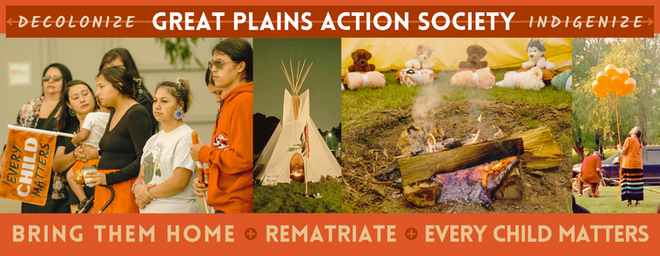
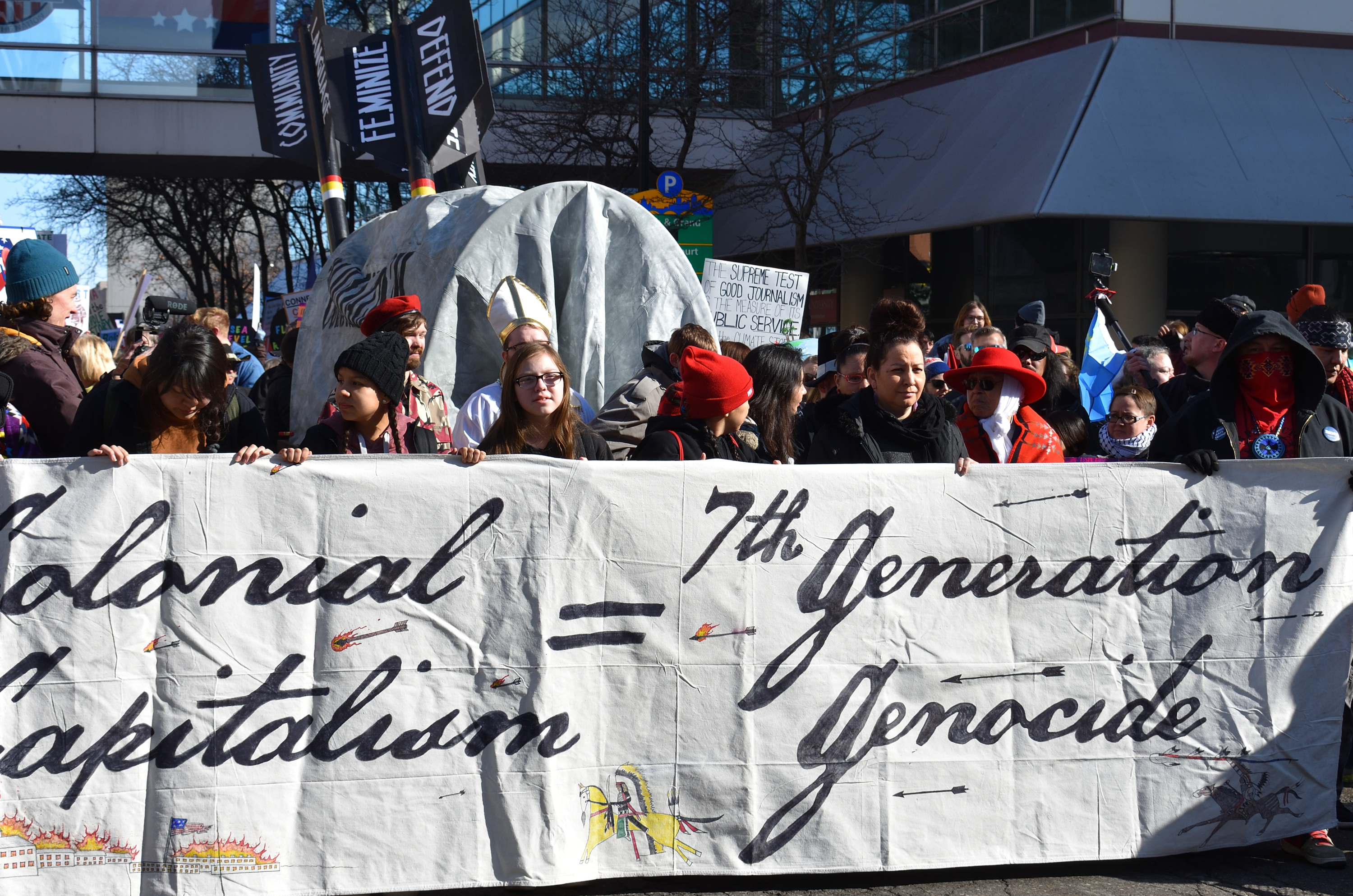
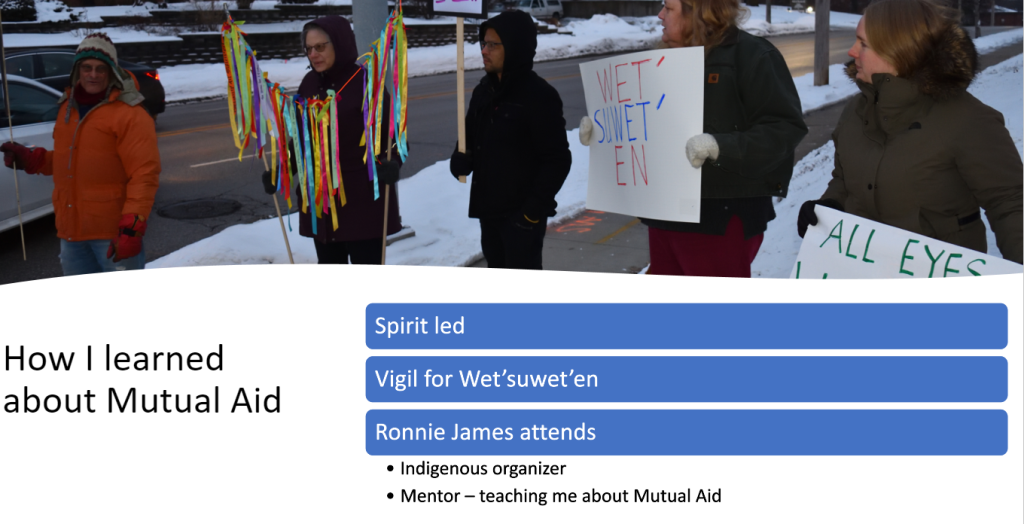
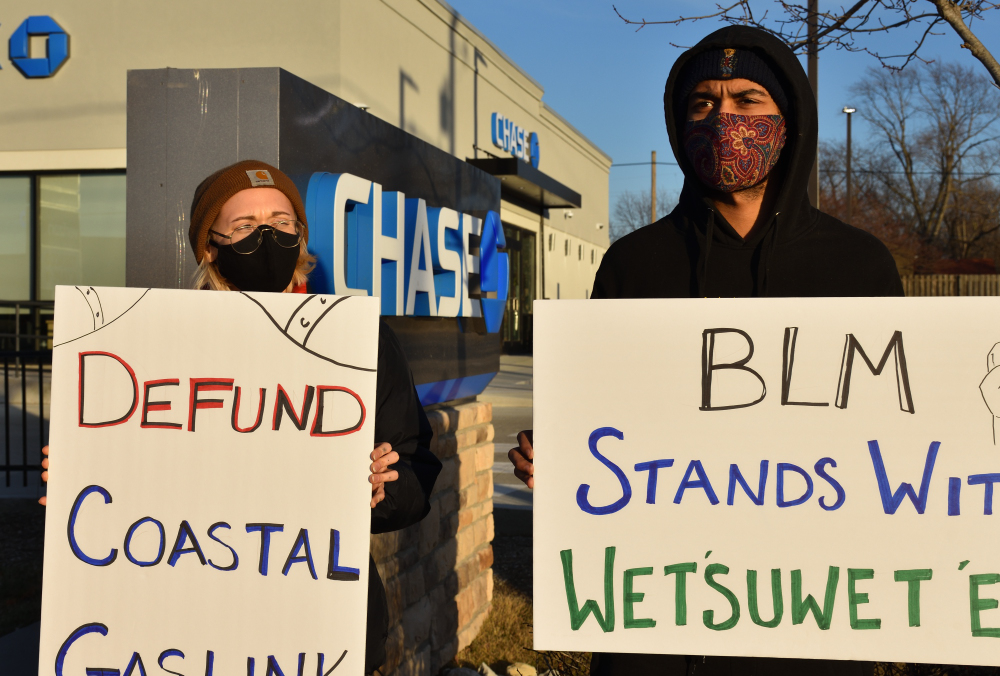
The circle is completed when Indigenous peoples support Mutual Aid, as Des Moines Mutual Aid is supported by the Great Plains Action Society (GPAS). Mutual Aid is one of the methods in the GPAS’s mechanism of engagement.
























 Quakers and Mutual Aid