Mutual Aid and money

The role money plays in Mutual Aid is what I had the most questions about, and the question most often asked of me when I talk about Mutual Aid.

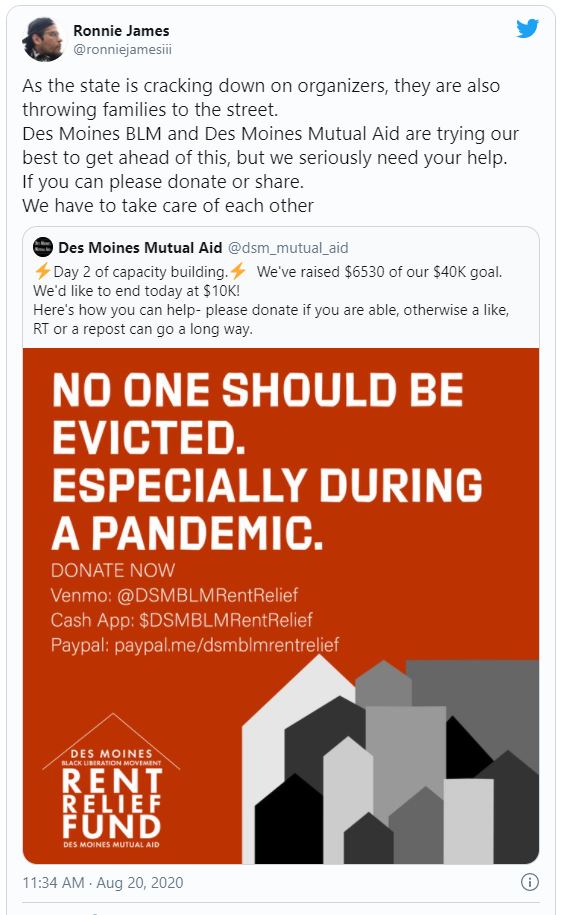
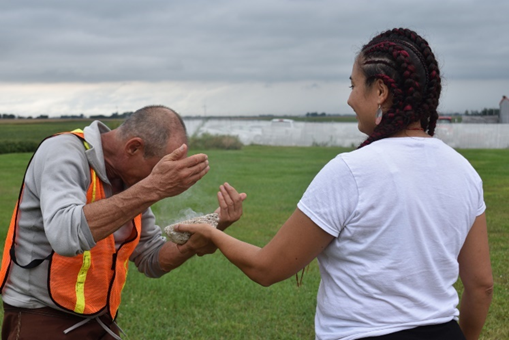
The Mutual Aid project I’m involved with is the free food distribution, which has been in place pretty much continuously since the Black Panthers in Des Moines organized the Free Breakfast for School Children program. It was when this program looked like it might have to close several years ago that Des Moines Mutual Aid to over the program.

The first Survival Program was the Free Breakfast for Children Program, which began in January 1969 at one small Catholic church in the Fillmore district of San Francisco, and spread to many cities in America where there were Party chapters. Thousands of poor and hungry children were fed free breakfasts every day by the Party under this program. The Program became so popular that by the end of the year, the original Black Panther Party set up kitchens in cities across the nation, feeding over 10,000 children every day before they went to school.

Bobby Seale
All Power To All The People!
http://bobbyseale.com/
#blackpantherparty#blackpanthers#bobbyseale#blackhistory


Food from local farms, and dated food from local grocery stores is the source of our food to distribute to the community.


What Is Mutual Aid?

Mutual aid is collective coordination to meet each other’s needs, usually from an awareness that the systems we have in place are not going to meet them. Those systems, in fact, have often created the crisis, or are making things worse. We see examples of mutual aid in every single social movement, whether it’s people raising money for workers on strike, setting up a ride-sharing system during the Montgomery Bus Boycott, putting drinking water in the desert for migrants crossing the border, training each other in emergency medicine because ambulance response time in poor neighborhoods is too slow, raising money to pay for abortions for those who can’t afford them, or coordinating letter-writing to prisoners. These are mutual aid projects. They directly meet people’s survival needs, and are based on a shared understanding that the conditions in which we are made to live are unjust.

There is nothing new about mutual aid— people have worked together to survive for all of human history. But capitalism and colonialism created structures that have disrupted how people have historically connected with each other and shared everything they needed to survive. As people were forced into systems of wage labor and private property, and wealth became increasingly concentrated, our ways of caring for each other have become more and more tenuous.

In this context of social isolation and forced dependency on hostile systems, mutual aid— where we choose to help each other out, share things, and put time and resources into caring for the most vulnerable— is a radical act.

Dean Spade. Mutual Aid: Building Solidarity During This Crisis (and the Next) (Kindle Locations 104-120). Verso.


The key is when we think about money, we are thinking within the context of capitalism, which is the system we (Mutual Aid) are working to replace. Think how the communities of our grandparents depended so little on money. Where everyone knew everyone else. Where people just naturally helped when there was a need. Came together to harvest the crops, going from one farm to the next with the machines to do the harvesting.

Since then, increasingly, “people were forced into systems of wage labor and private property.”

The key is when we think about money, we are thinking within the context of capitalism, which is the system we (Mutual Aid) are working to replace

Handling Money

Handling money can be one of the most contentious issues for mutual aid groups. Because of this, it can be very useful for groups to consider whether this is something they want to do. Some groups can do their work without raising money at all. Some groups can do their work just raising money through grassroots fundraising in their communities, taking small donations from many people. That kind of fundraising can avoid the problem with grant-making foundations attaching strings to grant money and trying to control the direction of the work. Grassroots fundraising can help build a sense that the community controls the organizations rather than an elite funder and doing grassroots fundraising can be a way of spreading the ideas of the group and raising awareness about the problems the group works on. However, even if money is raised in this way, managing money still comes with pitfalls. Handling money brings logistical issues that can cause stress and take time, such as figuring out how to do it fairly and transparently and figuring out how to avoid a problem with the IRS or otherwise expose group members to legal problems. Because most people in our society have a tangled, painful relationship with money that includes feelings and behaviors of secrecy, shame, and desperation, a lot of otherwise awesome people will misbehave when money is around or get suspicious of others’ behavior.

Dean Spade. Mutual Aid: Building Solidarity During This Crisis (and the Next) (Kindle Locations 1199-1209). Verso.

Our Mutual Aid group appeals to the community for funds for a need in the moment.


Native Americans, Quakers and Mutual Aid

The Department of the Interior has released the first volume of the Federal Indian Boarding School Initiative Report. Interior Secretary Deb Haaland first announced the creation of the Initiative last June, with a primary goal of investigating the loss of human life and the lasting consequences of these schools.

This report, and ongoing news of locating the remains of Native children on the grounds of numerous Indian residential schools has brought attention to Quakers’ role in these institutions in North America.

There are calls for Friends to respond in many ways. To educate ourselves about this history. To seek ways for healing and reparations. To research and publish our own meeting’s history.

But I’m concerned that Friends will follow a common pattern of only working within their meetings. When this is a time we need to reach out to Native peoples.

And I am concerned that many Quakers are not aware of attitudes we could be bringing to this work. In the same the way so many white Quakers have trouble understanding white supremacy and privilege related to racial justice, many are also unaware of how deeply we are immersed in this colonized society. Colonization and white supremacy are the foundation of forced assimilation of native children. And the ideas behind the land theft and genocide of native peoples.

We need to decolonize ourselves. If not, we risk doing more harm than good.

My spiritual vision is of Quakers building personal relationships with native peoples when we are invited to do so. I have been blessed to experience this for the past couple of years while working with my local Mutual Aid community. This diverse community includes a number of native people. It was a Spirit led opportunity that connected me with an Indigenous organizer who is involved in Mutual Aid. We got to know each other over several months of email exchanges (this during the COVID crisis). When I thought we knew each other well enough, I asked if it would be appropriate for me to join this Mutual Aid work, and he said yes. But it wasn’t until I’d been involved for several months that he said, “welcome to the community”. Although I had invited myself to join this work, I wasn’t really part of the community until that moment.

I was blessed to find this community was not only another way to build friendships with native people, but also taught me what a Mutual Aid community is. Based on these experiences, I believe Mutual Aid is a model for how Friends can be involved in work outside the meetinghouse. Mutual Aid is a way we can decolonize ourselves.

What I think is needed in this moment is to show up at events and causes being led by Indigenous peoples near us

Mutual Aid is all about replacing vertical hierarchies with a flat, or horizontal hierarchy. This removes the power structures among members of the community and nearly eliminates friction, in my experience.

An essential part of the truth and healing process should be doing this work together as a Mutual Aid community, with its emphasis on inclusivity and rejecting dominant relationships. It is important that attitudes and practices of superiority not be brought to the work of healing from policies that are based on dominance and colonization.

“We sought to show the power our communities possess when we come together unified under the belief and knowledge that what we do today is both work to heal past generations and lift the spirits of our future generations.”

Matt Remle on the efforts to pass the Indigenous Peoples’ Day resolution

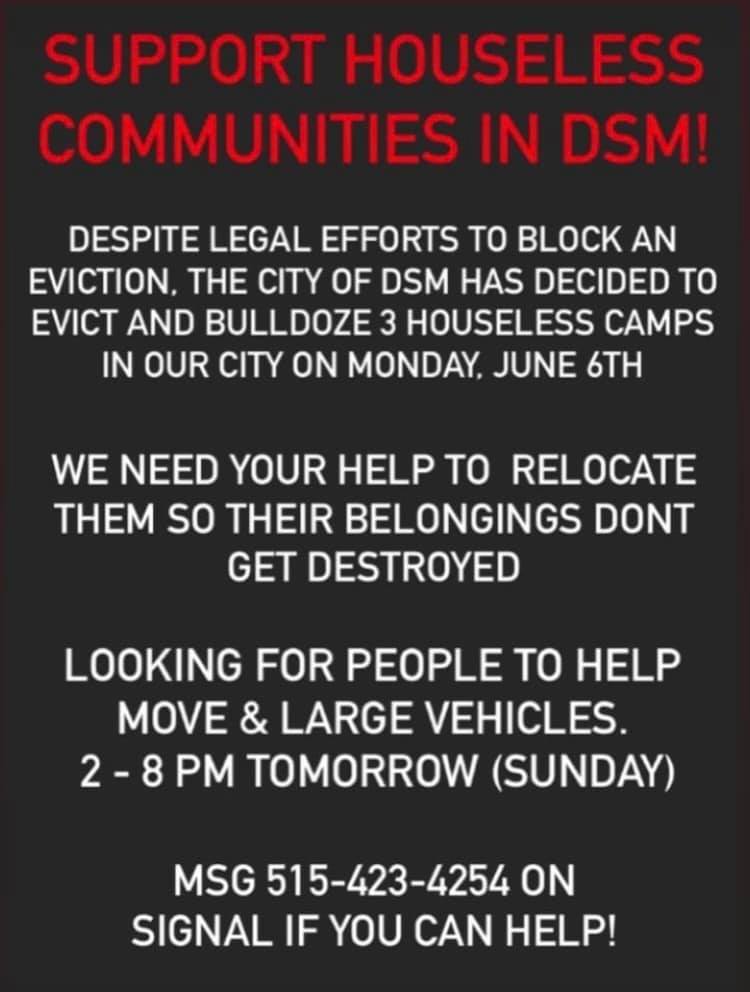
Mutual Aid focuses on meeting community needs now, in the moment. The food project I’m involved with distributes food to those in need every week. Those working with the houseless camps take food and propane tanks there. It is the experience of meeting needs in the present that brings us joy and attracts new members. That also affects our interactions with those who come for the food. We realize it is the failure of capitalism that leaves them hungry. We all know we ourselves might need such help in the future.

There are many suggestions of things Quakers might do related to the Indian Boarding Schools.

What I think is needed in this moment is to show up at events and causes being led by Indigenous peoples near us. Most Quaker meetings and many individuals have such relationships to build upon.

It would be good to have a place to share such information. The following are a few examples that I’m aware of:

There are two general guidelines for interacting with communities.

  1. Don’t expect oppressed peoples to educate you. We shouldn’t add to their burden. I kept this in mind when I was getting to know the native person who was teaching me about Mutual Aid. But he encouraged me to learn from him. He was training me.
  2. The idea behind the two row wampum is two groups, such as Native people and white people, agree to travel together but separately. Neither interfering in the affairs of the other.

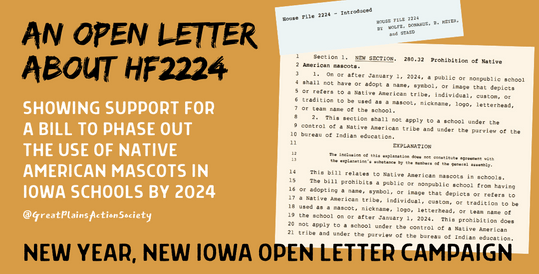
One interesting campaign of the Great Plains Action Society that specifically asks for our support is open letters. These letters express Indigenous people’s views on various topics and are meant to help supporters contact people who have the power to make decisions related to the topic. For example:

Recently, four Iowa Democrats have introduced a bill to phase out the use of Native American mascots in Iowa schools by 2024. Great Plains Action Society’s Director of Operations, Trisha Etringer, was quoted in an article in which she expressed her support for this proposed legislation, which reflects our organization as a whole. This letter is to celebrate this step in the right direction, and to provide more information about the issue at hand. With this Open Letter Campaign, we will be calling upon you to join us in communicating to the people in power that we need to be working toward a New Iowa. Unfortunately, that will often mean calling people out for failing to act, or for acting in harmful ways. Fortunately, in this case, it means asking you to send your support and encouragement to those that are fighting the difficult battles on behalf of our children.

https://www.greatplainsaction.org/single-post/open-letter-regarding-hf2224

There are many things Quakers should be doing in our own meetings related to the Indian Boarding Schools. But I think it is most important to support things native people are asking of us now.


Advocating for climate sanity

I recently discovered papers written by Zhiwa Woodbury, so I don’t yet know how much I will agree with him as I read more. But I agree with the following excerpt. This paragraph strikes a chord in me now, as I am trying to make sense of what is going on in the world today. I recently returned to the concept of sensemaking in Where are we now?

We have a stark choice between our own eventual extermination or a near term transformation. Such a transformation of human culture and the global economy will not come about without a simultaneous shift in collective consciousness. Trauma always raises questions of identity, whether considered at the scale of the individual, a culture, or now with the climate crisis, at the scale of an entire species. The choices we humans are making now – and will continue to make – in response to this spiritual emergency will determine whether we engender spiritual emergence, the messy rebirth of our species, or instead we repeat the kind of Great Dying that once wiped out 95% of all life on the planet, and took 10 million years for the biosphere to recover. My purpose in writing this book is to offer guidance and succor to all who those natural healers and existential professionals in the world, all those who hear the cries of the Earth, and all those advocating for climate sanity in every arena of life, so that we may attend Gaia’s bedside and serve as her spiritual midwives in planetary hospice. Whether Gaia is now dying, just ill, or about to give birth is largely dependent on how we, as a species, respond to her signals and attend to her needs

Climate Trauma, Reconciliation and Recovery by Zhiwa Woodbury

I do believe we are in a spiritual emergency and need a shift in collective consciousness. I often write about spiritual poverty. We spoke about this, too, last night during our weekly (Quaker) Spiritual Sharing Small Group.

We need to be advocating for climate sanity in every arena of life.

I always hesitate to bring this up, but I think we need to speak from our own experience. When I moved to Indianapolis in 1971, I was so horrified by the clouds of smog (before catalytic converters) I decided to live without a car. I know others have done so. But the point is, that was one way of advocating for climate sanity. It is heart wrenching to think of what a different world we would be living in today if fifty years ago we had decided to prioritize mass transit systems. And worked to build our cities and towns as walkable communities.

That was then. What do we do, advocate for, now? Our society clearly continues to refuse to think, let alone do anything about our deepening environmental catastrophe.

Rather than close coal burning plants, more are being built. Rather than stop further fossil fuel pipelines and other infrastructure, more is being built. Crazy schemes like carbon capture are being built. Some of what is captured is used to frack more oil from the ground.

Militaries are the worst polluters. The war in Ukraine and military operations globally need to be stopped immediately. The war in Ukraine is war against Mother Earth.

CLIMATEWIRE | Greenhouse gases trapped 49 percent more heat in 2021 than in 1990, as emissions continued to rise rapidly, according to NOAA.

“Our data show that global emissions continue to move in the wrong direction at a rapid pace,” said NOAA Administrator Rick Spinrad.

NOAA found that carbon dioxide, the most plentiful and long-lived gas, expanded at the most rapid rate over the last 10 years. But the most potent global warmer also broke records: methane increased more than it has since at least the early 1980s, when NOAA began its current measuring record. The methane emitted in 2021 was 15 percent greater than in the 1984-2006 period, and 162 percent greater than preindustrial levels, NOAA found.”

Record Methane Spike Boosts Heat Trapped by Greenhouse Gases. NOAA’s Annual Greenhouse Gas Index finds that greenhouse gases trapped nearly 50 percent more head last year than they did in 1990 by John Fialka, Scientific American, June 1, 2022

We have a stark choice between our own eventual extermination or a near term transformation. Such a transformation of human culture and the global economy will not come about without a simultaneous shift in collective consciousness.”

We are continuing to make this choice now and it’s for our eventual extermination.

What will it take to make the other choice, for a near term transformation? What would this shift in collective consciousness to transform human culture and the global economy be?

This shift in collective consciousness requires a response to our spiritual emergency. Returning to Indigenous ways, the idea of LANDBACK, would be part of a response. For Quakers, fortifying our Spiritual awareness, and acting on what that reveals, could be part of a response. The radical reimagining of our lives, our culture by the concepts of Mutual Aid could also be part of a response.

I was a little surprised when I wrote:

The reason I have been led to experiences with Native people and my Mutual Aid community is because the stories, the value structures I find there are closer to my values than those of White people in general in this country.

And most radical is to change, or return to how we look for and interpret our stories. To embrace spirituality in ourselves and our communities.

Although we rarely speak of it, our shared spirituality is what I have found to be the deepest connection with my Native American and Mutual Aid friends.

Where are we now?


Where are we now?

Sometimes when it seems the whole world is collapsing, I try to step back, hoping a wider perspective might help me understand. Unfortunately, doing so today just reinforces the global extent of chaos. I picture the world in flames.

I often return to reflecting on the term sensemaking as described by James Allen.

…there remains the most existential risk of them all: our diminishing capacity for collective sensemaking. Sensemaking is the ability to generate an understanding of world around us so that we may decide how to respond effectively to it. When this breaks down within the individual, it creates an ineffective human at best and a dangerous one at worst. At the collective level, a loss of sensemaking erodes shared cultural and value structures and renders us incapable of generating the collective wisdom necessary to solve complex societal problems like those described above. When that happens the centre cannot hold.

Pontoon Archipelago or: How I Learned to Stop Worrying and Love Collapse. By James Allen, originally published by Medium, June 18, 2019

I didn’t want to go over the list of disasters we are experiencing yet again. But a number of these are escalating. Recently India had experienced temperatures (124 degrees Fahrenheit) close to the point where humans simply cannot survive. We see the relentless march of severe weather across the land. Fierce wildfires. Water levels sinking below the point where water can be taken in at the Hoover Dam. Electricity cannot be produced, nor agricultural land irrigated.

A political party whose only goal is to gain power. An explosion of gun violence and mass shootings with no end in sight. A broken supply chain that can’t even supply baby formula.

Perhaps most concerning is the accelerating increase in gas prices.

As James Allen also writes in the article cited above, “the jumping-off point for this essay is a regrettable acceptance that a forthcoming energy descent combined with multiple ecological crises will force massive societal transformation this century. It’s hardly a leap to suggest that, with less abundant cheap energy and the collapse of the complex political and economic infrastructure that supports our present way of life, this transformation is likely to include the contraction and relocalisation of some (if not most) aspects our daily lives.”

“The contraction and relocalisation of some (if not most) aspects our daily lives” could be Mutual Aid.

I’ve met a great deal of resistance to the idea of replacing capitalism with Mutual Aid. When I asked a (Mutual Aid) friend why people had so much trouble recognizing the evils of capitalism, he said it was because they hadn’t experienced the failures of capitalism in their own lives, yet.

We are experiencing the failures of capitalism now.


The problems before us are emergent phenomena with a life of their own, and the causes requiring treatment are obscure. They are what systems scientists call wicked problems: problems that harbour so many complex non-linear interdependencies that they not only seem impossible to understand and solve, but tend to resist our attempts to do so. For such wicked problems, our conventional toolkits — advocacy, activism, conscientious consumerism, and ballot casting — are grossly inadequate and their primary utility may be the self-soothing effect it has on the well-meaning souls who use them.

If we are to find a new kind of good life amid the catastrophes these myths have spawned, then we need to radically rethink the stories we tell ourselves. We need to dig deep into old stories and reveal their wisdom, as well as lovingly nurture the emergence of new stories into being.

Pontoon Archipelago or: How I Learned to Stop Worrying and Love Collapse. By James Allen, originally published by Medium, June 18, 2019

What does it mean to radically rethink the stories we tell ourselves? This is influenced by who “we” are, what our culture is. But Allen writes of “shared cultural and value structures.”

The reason I have been led to experiences with Native people and my Mutual Aid community is because the stories, the value structures I find there are closer to my values than those of White people in general in this country.

What does it mean to radically rethink the stories we tell ourselves?

I believe that means to search beyond our comfort zone. To stop wasting time advocating for incremental changes in systems that are broken.

Radically rethinking involves searching for the truth of what happened in our history. The land theft, forced assimilation, and genocide of Native peoples. The many atrocities of the institution of slavery. White supremacy today.

And most radical is to change, or return to how we look for and interpret our stories. To embrace spirituality in ourselves and our communities.

Although we rarely speak of it, our shared spirituality is what I have found to be the deepest connection with my Native American and Mutual Aid friends.

This is where I am now.


Social and Economic Justice

One of the things that means the most to me as a Quaker is the practice of considering advices and queries. The queries are sets of questions meant to ask ourselves what we are doing in our own lives, and in the work of our Quaker meetings in the present moment.

This is an example of how Quaker faith is grounded in what is happening in our lives today. And our belief that God, or the Spirit, is present in every being today, human and nonhuman. Can guide us now. The practice in our meeting is for the advice and queries to be read aloud. Then we sit in silent reflection. When we feel we have been given a message to share, we speak.

This helps keep our faith active, rather than passive.

There are twelve sets of queries, each about some part of our lives. The usual practice is for Quaker meetings to reflect on one set, each month. Topics include education, environmental responsibility, outreach, peace and nonviolence. Today at my meeting we will be reflecting on social and economic justice.


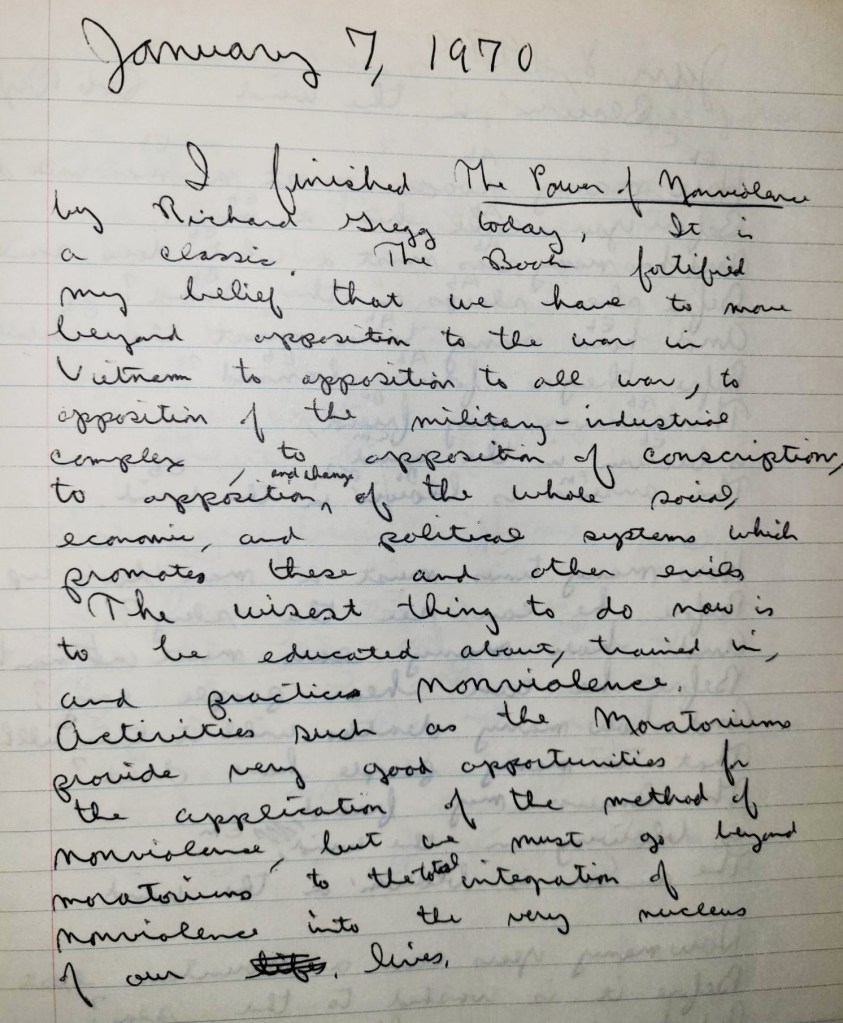
Often, I reflect on these queries outside the Quaker meeting gathering. That is why I write so much. Writing is a Spiritual exercise for me. Writing helps me listen for what the Spirit is saying. And helps me organize my thoughts. This is similar to keeping a journal as I did in the 1970’s. It looks like handwriting was a challenge.

Social and economic justice is something I’ve been thinking and praying about a lot lately. Over the past two years I’ve been deeply involved in Des Moines Mutual Aid. I mean Mutual Aid is something I’ve been studying and thinking a lot about outside the actual time spent at our weekly food giveaway.

A recent summary is this blog post, Mutual Aid is the Quaker way of being in the world.

As the advice says below, “we are part of an economic system characterized by inequality and exploitation. Such a society is defended and perpetuated by entrenched power.”

That is exactly what Mutual Aid is about. The capitalist economic system we are living in is designed to be unequal. Those who are skillful, or ruthless enough, accumulate wealth. Fundamentally, everything and everyone is seen as a resource that can be harnessed to create wealth. The result is millions of people trying to survive on subsistent wages. The result is the rape of the resources of Mother Earth. Which has put us on the road to extinction.

The capitalist economic system is enforced by political and criminal justice systems. Systems built on vertical hierarchies of power.

Mutual Aid is just the opposite. We work to maintain a flat or horizontal hierarchy, where everyone is equal.

One query for today is “how are we beneficiaries of inequity and exploitation? How are we victims of inequity and exploitation? In what ways can we address these problems?” I believe the answer involves building Mutual Aid communities.

I’ve met a great deal of resistance to the idea of replacing capitalism with Mutual Aid. When I asked a (Mutual Aid) friend why people had so much trouble recognizing the evils of capitalism, he said it was because they hadn’t experienced the failures of capitalism in their own lives, yet.


I wrote my own queries about Mutual Aid

Queries related to Mutual Aid
Do we recognize that vertical hierarchies are about power, supremacy and privilege? What are Quaker hierarchies?
Do we work to prevent vertical hierarchies in our peace and justice work?
What are we doing to meet the survival needs of our wider community?
How are we preparing for disaster relief, both for our community, and for the influx of climate refugees?
Are we examples of a Beloved community? How can we invite our friends and neighbors to join our community?

mutual aid is the new economy. mutual aid is community. it is making sure your elderly neighbor down the street has a ride to their doctor’s appointment. mutual aid is making sure the children in your neighborhood have dinner, or a warm coat for the upcoming winter. mutual aid is planting community gardens.

capitalism has violated the communities of marginalized folks. capitalism is about the value of people, property and the people who own property. those who have wealth and property control the decisions that are made. the government comes second to capitalism when it comes to power.

in the name of liberation, capitalism must be reversed and dismantled. meaning that capitalistic practices must be reprogrammed with mutual aid practices.

Des Moines Black Liberation

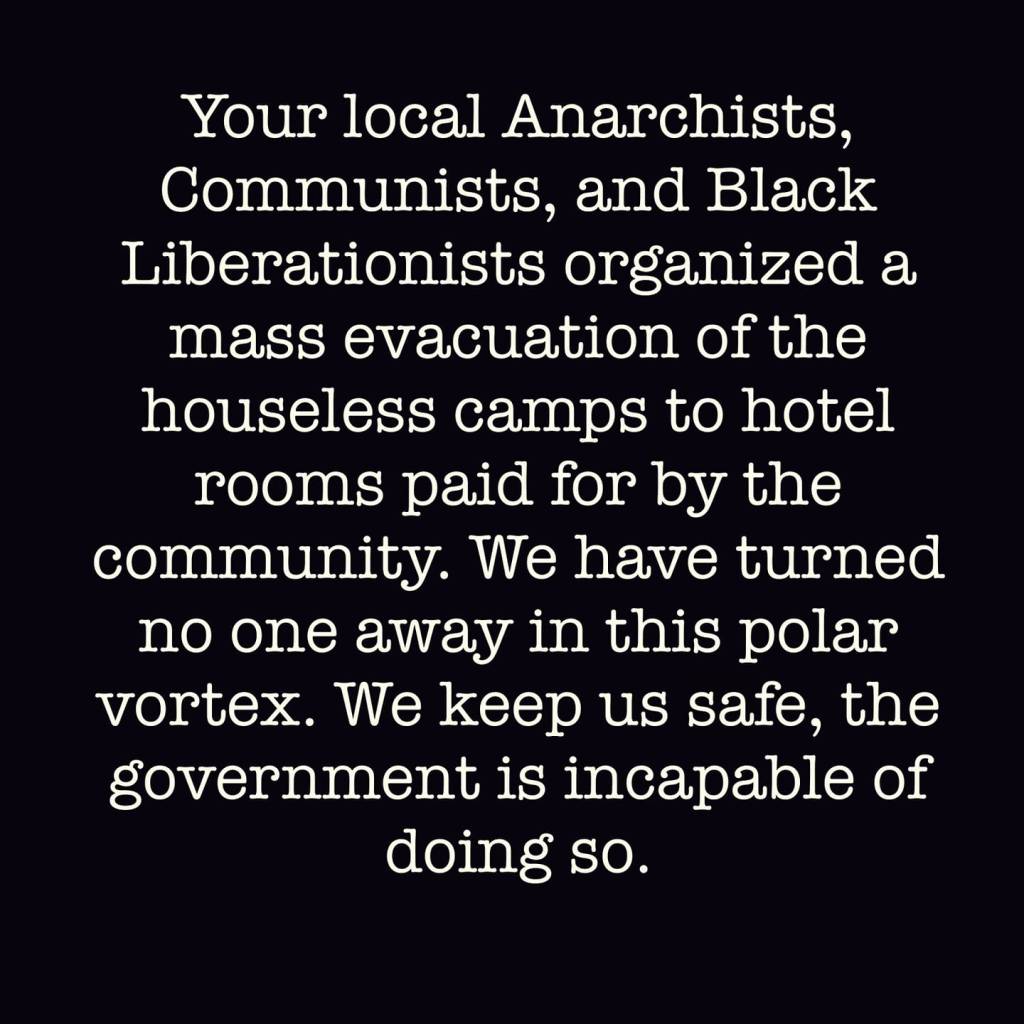
Des Moines Mutual Aid is a collective that does outreach for homeless folks in our community, houseless folks in our community. We also assist BLM with their rent relief fund, and most of the work we’ve done is running the bail fund for the protests over the summer. In the course of that work, we have witnessed firsthand the violence that is done upon people of color, Black people specifically, by the white supremacist forces of the state – in this state, in this city, in this county. There is absolutely a state of emergency for people of color and Black people in Iowa. The state of emergency has been a long time coming. We will support – DMMA will absolutely support any and all efforts of this community – BLM, and the people of color community more generally- to keep themselves safe. Power to the people.

Patrick Stahl, Des Moines Mutual Aid


SOCIAL AND ECONOMIC JUSTICE

Advice and Queries

“For when I was hungry you gave me food, when thirsty you gave me drink, when I was a stranger you took me into your home, when naked you clothed me, when in prison you visited me.”     Matthew 25:35‑36

ADVICE

We are part of an economic system characterized by inequality and exploitation. Such a society is defended and perpetuated by entrenched power.

Friends can help relieve social and economic oppression and injustice by first seeking spiritual guidance in our own lives. We envision a system of social and economic justice that ensures the right of every individual to be loved and cared for; to receive a sound education; to find useful employment; to receive appropriate health care; to secure adequate housing; to obtain redress through the legal system; and to live and die in dignity. Friends maintain historic concern for the fair and humane treatment of persons in penal and mental institutions.

Wide disparities in economic and social conditions exist among groups in our society and among nations of the world. While most of us are able to be responsible for our own economic circumstances, we must not overlook the effects of unequal opportunities among people. Friends’ belief in the Divine within everyone leads us to support institutions which meet human needs and to seek to change institutions which fail to meet human needs. We strengthen community when we work with others to help promote justice for all.

QUERY

  • How are we beneficiaries of inequity and exploitation? How are we victims of inequity and exploitation? In what ways can we address these problems?
  • What can we do to improve the conditions in our correctional institutions and to address the mental and social problems of those confined there?
  • How can we improve our understanding of those who are driven to violence by subjection to racial, economic, or political injustice? In what ways do we oppose prejudice and injustice based on gender, sexual orientation, class, race, age, and physical, mental, and emotional conditions? How would individuals benefit from a society that values everyone? How would society benefit?

Faith and Practice

Dearly Beloved Friends, these things we do not lay upon you as a rule or form to walk by, but that all, with the measure of light which is pure and holy, may be guided and so in the light walking and abiding, these may be fulfilled in the spirit, not the letter, for the letter killeth, but the spirit giveth life. Letter from the meeting of Elders at Balby, 1656

We are seekers but we are also the holders of a precious heritage of discoveries. We, like every generation, must find the Light and Life again for ourselves. Only what we have valued and truly made our own, not by assertion but by lives of faithful commitment, can we hand on to the future. Even then we must humbly acknowledge that our vision of truth will again and again be amended. Quaker Faith and Practice of Britain Yearly Meeting, 1994 page 17

Faith and Practice, The Book of Discipline of Iowa Yearly Meeting of Friends (Conservative) is a statement of principles and beliefs by which our society endeavors to learn and express lessons in Christian living. It provides guidance for the conduct of daily life and for carrying on the business of the meeting. Faith and Practice suggests rather than commands, and raises questions or queries rather than giving specific answers. It places upon the individual and corporate conscience, rather than upon external authority, the responsibility for the discipline of the Spirit.

Faith and Practice is based on an earlier document called the Discipline of Iowa Yearly Meeting (Conservative). It is intended as a handbook and guide for those of the Religious Society of Friends who belong to Iowa Yearly Meeting of Friends (Conservative), also known as Iowa Yearly Meeting (Conservative) or IYM(C). The first written disciplines among Friends appeared in Britain Yearly Meeting in manuscript form in 1718. At about the same period or a little later, in America, minutes of the yearly meetings were gathered in manuscript book form under captions alphabetically listed. The first printed Book of Discipline of Philadelphia Yearly Meeting appeared in 1797. The first Friends settling in Iowa lived under disciplines of Indiana Yearly Meeting and of Ohio Yearly Meeting.


ECONOMIC JUSTICE

May we look upon our treasures, the furniture of our houses, and our garments, and try whether the seeds of war have nourishment in these our possessions. John Woolman, A Word of Remembrance and Caution to the Rich published posthumously, 1793

I will never adjust myself to economic conditions that will take necessities from the many and give luxuries to the few. Martin Luther King, Jr., speaking in Cleveland Heights, Ohio, [St Paul’s Episcopal Church] 1963

Friends’ historical testimony has included the message that all people are equal, and deserve to share equally in the blessings of creation. The world is far from this ideal, and most in Iowa Yearly Meeting (Conservative) have benefited from global and local inequalities, however inadvertently. But we also suffer spiritually and otherwise because of the injustice in which we participate.

Friends believe that we should live in ways that do not “sow seeds of war.” Many are called to act in quiet or public ways to promote lifestyle choices, policies, laws, and treaties that will ensure the basic human rights of all people, including the rights to safe and healthy places to live and work. Historically, Friends have been able to help correct major injustices such as slavery, inhumane conditions for prisoners, and inequality in the treatment of women. The magnitude of current problems caused by economic injustice does not excuse Friends from the struggle against it, but makes obedience to God’s call all the more necessary.

Friends are reminded that there can be no peace without justice, and to live simply, so others may simply live. Many Friends find seeds of war and injustice in their lifestyles. Friends are challenged to participate constructively in the economy by supporting fair trade, choosing investments with attention to their social impact, and purchasing products produced under safe and healthy conditions. What each can do individually may not seem like much, but, guided by the Spirit and added to the efforts of others, it can make a difference.

The Book of Discipline of Iowa Yearly Meeting of Friends (Conservative)
Religious Society of Friends

Collapse is already here

This is a continuation of a recent post, the centre cannot hold, and discussion of the article Collapse Is Already Here — And It’s Spreading by umair haque. The reason I follow umair’s writings is because I agree with his analysis of where we are and learn more from him. In this article he talks about the collapse of the three systems we live in.

  • economic
  • social
  • political

Failing economies

Right now, a wave of mega-inflation is surging around the globe. It’s driven largely by climate change — and our nonexistent “response” to it. Harvests are failing, goods are getting harder and harder to distribute and ship, raw materials harder to source and attain. Inflation is going to keep rising — for the rest of our lives.

Shortages become the norm. You can see them beginning to happen in vivid, shocking detail now. Empty shelves are becoming the new normal. The age of abundance is over.

Our economies have failed. And they’re going to continue to fail.

Collapse Is Already Here — And It’s Spreading. I Don’t Know If You’ve Noticed — But Our Systems are Breaking Down by umair haque, Eudaimonia, May 19, 2022

Failing social systems

Think of how many generations our economies have failed at this point.

Boomers were the last ones to really live the dream — since then, our economies have been in decline, and that decline has accelerated rapidly. Gen X had it worse than Boomers, but not so bad as to cause total despair — enough to be comical. Millennials had it worse than Gen X — and they can’t afford to move out of their parents’ homes, or start families, so birth rates are declining. Zoomers have it far, far worse than Millennials — they’ll never be able to retire, they can’t get decent jobs, their lives are over before they began.

There’s a word to sum all that up — intergenerational inequality. What does intergenerational inequality do? It destroys the possibility of functioning social systems. Someone has to pay for them, after all — from retirement systems to post offices to hospitals and universities and so forth. Social systems must be funded from the public purse. But when people are struggling harder, generation after generation, getting poorer, there’s less left over to invest.

Collapse Is Already Here — And It’s Spreading. I Don’t Know If You’ve Noticed — But Our Systems are Breaking Down by umair haque, Eudaimonia, May 19, 2022

Failing political systems

This is the real reason why young people are apathetic about politics. They know they can’t change anything even if they try. They don’t have the money, so what’s the point? Sure, they can vote in politicians who want to build social systems — and sometimes they do, like AOC or who have you. But those politicians are left powerless in the end, because societies in which generation after generation is getting poorer cannot afford to be functioning societies at all.

Collapse Is Already Here — And It’s Spreading. I Don’t Know If You’ve Noticed — But Our Systems are Breaking Down by umair haque, Eudaimonia, May 19, 2022

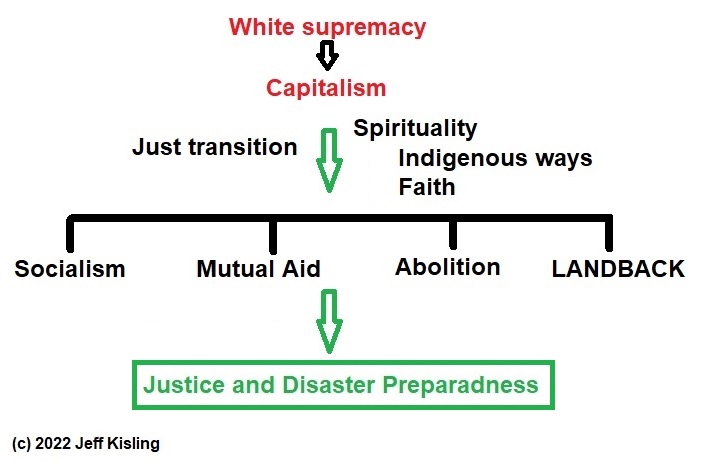
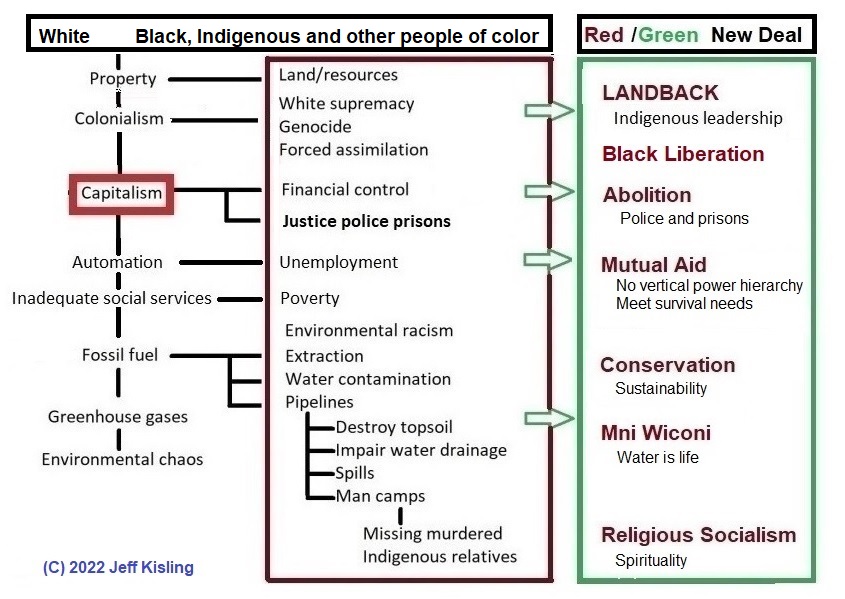
The collapse of the economic, social and political systems umair haque describes above are part of the diagram below I’ve been working on for several years.

The economic system is Capitalism (red box in diagram below). Capitalism exerts financial control, and uses criminal justice systems of police and prisons to enforce capitalist policies.

Capitalism once did some funding of social systems: Medicare, food stamps, unemployment insurance, etc.

But now, the collapse of capitalism is leading to increasingly inadequate social services, pushing more people into, or further into poverty.

The answer, it seems to many of us, is to replace the capitalist economic system. As my friend Ronnie James says:

I’m of the firm opinion that a system that was built by stolen bodies on stolen land for the benefit of a few is a system that is not repairable. It is operating as designed, and small changes (which are the result of huge efforts) to lessen the blow on those it was not designed for are merely half measures that can’t ever fully succeed.

So the question is now, where do we go from here? Do we continue to make incremental changes while the wealthy hoard more wealth and the climate crisis deepens, or do we do something drastic that has never been done before? Can we envision and create a world where a class war from above isn’t a reality anymore?”

Ronnie James, Des Moines Mutual Aid

How to replace capitalism and the systems that support it is indicated in the Red/Green New Deal box. Discussions of these things can be found on these blogs of mine and elsewhere.


the centre cannot hold

It is increasingly clear we can never return to life as we knew it several decades ago. It is difficult to know where we will go, where we can go from here. Difficult to make sense of what is happening.

After I had written this, I received the latest article from a thinker I follow, umair haque.

When I look at the world today, I see something chilling. Collapse is already here — and it’s spreading. And next to it is the curious juxtaposition of pretending that life will go on “normally.” I’ve warned for some time now that we’re entering an age of collapse, where our great systems will fail — and if you look around now, you can see it beginning to happen.

We’re going to talk about this in three forms — political, economic, and social systems — and on two levels, national and global systems. What’s alarming — oh no, am I an alarmist? — is that now our systems are visibly beginning to fail, and fail incredibly swiftly, in all of those ways.

Collapse Is Already Here — And It’s Spreading. I Don’t Know If You’ve Noticed — But Our Systems are Breaking Down by umair haque, Eudaimonia, May 19, 2022


sensemaking–the action or process of making sense of or giving meaning to something, especially new developments and experiences.

…there remains the most existential risk of them all: our diminishing capacity for collective sensemaking. Sensemaking is the ability to generate an understanding of world around us so that we may decide how to respond effectively to it. When this breaks down within the individual, it creates an ineffective human at best and a dangerous one at worst.

Threats to sensemaking are manifold. Among the most readily observable sources are the excesses of identity politics, the rapid polarisation of the long-running culture war, the steep and widespread decline in trust in mainstream media and other public institutions, and the rise of mass disinformation technologies, e.g. fake news working in tandem with social media algorithms designed to hijack our limbic systems and erode our cognitive capacities. If these things can confound and divide us both within and between cultures, then we have little hope of generating the coherent dialogue, let alone the collective resolve, that is required to overcome the formidable global-scale problems converging before us.

At the collective level, a loss of sensemaking erodes shared cultural and value structures and renders us incapable of generating the collective wisdom necessary to solve complex societal problems like those described above. When that happens, the centre cannot hold.

Pontoon Archipelago or: How I Learned to Stop Worrying and Love Collapse. By James Allen, originally published by Medium, June 18, 2019

It seems we’ve reached the point where the centre cannot hold, is not holding.

  • Our government systems are being hijacked by those intent on dismantling democracy. And they are succeeding. We have lost our voice in governance.
  • Complex global supply systems and the economies dependent on them are breaking down.
  • Environmental chaos is rapidly escalating.
  • There is increasing denial of facts and science.
  • There is widespread spiritual poverty.
  • Almost everyone is paralyzed by the onslaught of these crises.

I pray and try to make sense of where we are now and how to get where we want to be. Where do we want to be?

The answer has always been, and will always be, we want to be members of a community, communities. So much of what is wrong today is rooted in the many things that isolate us from being in community.

Recognizing the decline of our communities is not much of an insight, but we sometimes lose sight of the broader picture when confronted by one crisis after another, or multiple crises simultaneously.

My questions these days are which communities are important to me, and what is the health of them now? As James Allen wrote above, “a loss of sensemaking erodes shared cultural and value structures and renders us incapable of generating the collective wisdom necessary to solve complex societal problems”.

This is why I’m so invested in my Mutual Aid community. And am trying to find ways to bring more people into mutual aid communities.
https://quakersandreligioussocialism.com/mutual-aid/

Something important happens when we gather in pursuit of a common goal. First we form rituals that help us relate to and negotiate each other, everything from a civic tradition that allows anyone with a voice to be respectfully heard, to sharing food and music in the local town hall every Friday night, to a labour system that fairly distributes the burden of work. Then, those rituals that stand the test of time become embedded in daily life. The ritual activities themselves and the good they produce help a community identity take root. As identity strengthens, so too does our sense of connectedness — our sense of affection, responsibility and obligation — to one another. When this happens, we then share a greater capacity for coherence and cooperation. And where we share greater capacity for coherence and cooperation there is also greater resilience: the ability to mobilise skills and resources to support the emergence of collective intelligence in response to crisis, enable rapid adaptation and ensure the continuity of the most important functions and structures of the community. This coherent togetherness and the collective intelligence that emerges out of it is the source of human strength and ingenuity. Within it lies our ability to transition from one evolutionary niche to another, even against the odds.

Pontoon Archipelago or: How I Learned to Stop Worrying and Love Collapse. By James Allen, originally published by Medium, June 18, 2019

The other community important to me is my faith community. I’ll wait for another time to talk about that.


Let this darkness be a bell tower

Quiet friend who has come so far,
feel how your breathing makes more space around you.
Let this darkness be a bell tower
and you the bell. As you ring,
what batters you becomes your strength.
Move back and forth into the change.
What is it like, such intensity of pain?
If the drink is bitter, turn yourself to wine.
In this uncontainable night,
be the mystery at the crossroads of your senses,
the meaning discovered there.
And if the world has ceased to hear you,
say to the silent earth: I flow.
To the rushing water, speak: I am.

Sonnets to Orpheus II, 29. By Rainer Maria Rilke


What would it mean to reckon with our past complicity with harm?

As the world falls apart, I wonder where faith communities are? Where are White Christians, White Quakers?

As my friend Lucy Duncan writes, “we as White Quakers like to think of ourselves as ahead or better than dominant culture, but we have been complicit in a system and mindset that are ubiquitous.”

Recognizing the White dominant culture is fundamental for White people to understand. How we learn what we must change. White people must first change ourselves before we will be accepted in communities suffering injustice.

As Lucy writes below, “What would it mean to reckon with our past complicity with harm?” Lucy speaks about slavery and racism.

I tell the stories of early White Quaker relationships to slavery because slavery was never really abolished. If we can reckon with the full truth of our connection to slavery and its afterlives, perhaps we can begin the healing necessary to fulfill the promise of the Religious Society of Friends of Truth. 

We as White Quakers like to think of ourselves as ahead or better than dominant culture, but we have been complicit in a system and mindset that are ubiquitous. Claiming the full truth of our history and committing to repair the harms done are deeply spiritual acts of healing our own wounds of disconnection. I would argue it is the pathway upon which we can, perhaps for the first time, discover and invigorate our faith with its full promise.

What would it mean for us to take seriously and collectively as a Religious Society a call to finish the work of abolition, hand in hand and side by side with those affected  and their loved ones? What would it mean for us to stand fully with the calls to abolish the police and fully fund community needs instead? What would it mean to reckon with our past complicity with harm and fully dedicate ourselves to the creation of a liberating Quaker faith that commits to build the revolutionary and healing faith we long to see come to fruition? What would it look like to finally and fully abolish slavery?

A Quaker Call to Abolition and Creation by Lucy Duncan, Friends Journal, April 1, 2021

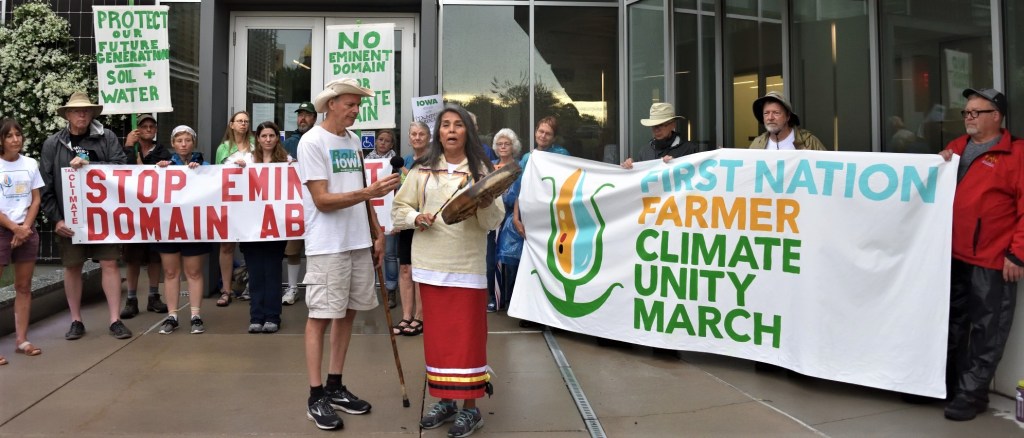
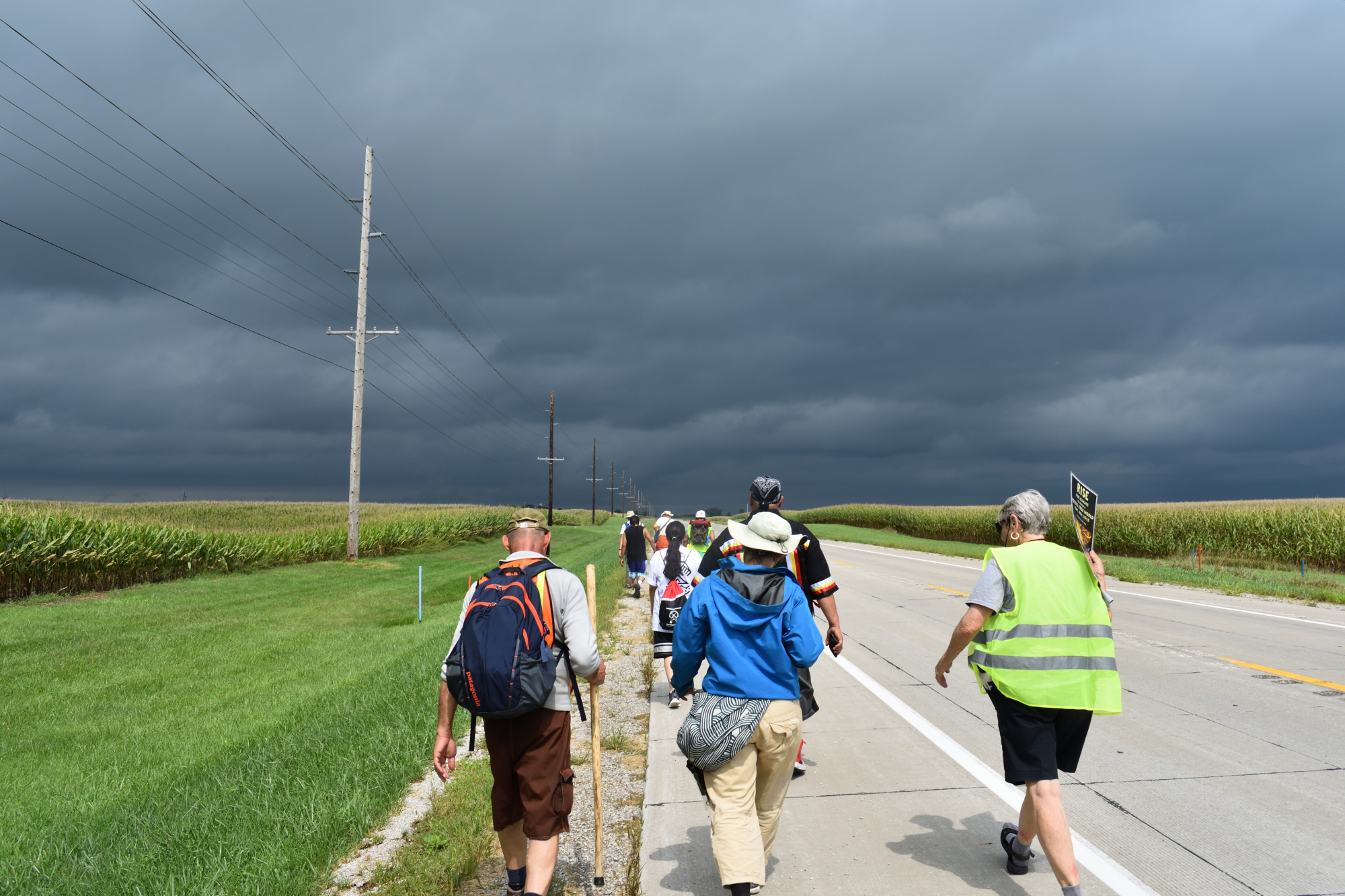
I ask these same questions regarding our past and present complicity with harms to Indigenous peoples. I speak from my own experiences with Indigenous friends. (One place I share some of these experiences are at the website I created about the First Nation-Farmer Climate Unity March https://firstnationfarmer.com/ )

Two interrelated developments are finally bringing attention to Indigenous peoples, forced assimilation, and those who ran those residential schools.

  • One is the search and finding of the remains of Indigenous children on the grounds of Indian Boarding Schools in Canada and the US.
  • The second is the release of the Federal Indian Boarding School Initiative Investigative Report about what happened in those schools

What would it mean to reckon with our past complicity with harm to Indigenous peoples?

White people need to imagine what it would take to dismantle the White dominant culture. We cannot begin to reckon with our complicity in harm until we have the humility and prayers to recognize the history of those harms, and how we continue to do harm now. We cannot make authentic connections with Black, Indigenous, and other people of color (BIPOC) until we unlearn our attitudes and actions of dominance.

How do we do that? We look for any kind of vertical hierarchy, and reject it. Vertical hierarchies are how dominance is enforced. Are the structures used throughout our society and government.
We should instead act in ways of horizontal, or no hierarchy. Dismantling vertical hierarchies is the path to reducing or eliminating dominance.

Eliminating vertical hierarchies is the core concept of Mutual Aid. My participation in a Mutual Aid community these past two years has been a real education. A deeply spiritual experience. Mutual Aid is how I’ve been learning to reject vertical hierarchies. Some of my experiences with Mutual Aid can be found here: https://quakersandreligioussocialism.com/mutual-aid/

Recognizing White dominant culture makes it possible for us to look at the past and recognize our complicity with what happened then. And helps us envision how to stop the ongoing harms of White dominance now.

By asking the question where are faith communities (above) I’m implying where should faith communities be? I believe white faith communities should be working on their structures, actions, and attitudes of dominance. Learning about and embracing Mutual Aid is a way to do that.


Queries related to Mutual Aid
Do we recognize that vertical hierarchies are about power, supremacy and privilege? What are Quaker hierarchies?
Do we work to prevent vertical hierarchies in our peace and justice work?
What are we doing to meet the survival needs of our wider community?
How are we preparing for disaster relief, both for our community, and for the influx of climate refugees?
Are we examples of a Beloved community? How can we invite our friends and neighbors to join our community?

A Hierarchy Resister

I’ve been working on this diagram to show the structures of injustice, and concepts to address them. This is a work in progress. Relevant to today’s discussion is White supremacy and the way forward via Mutual Aid.


Building the Future We Want

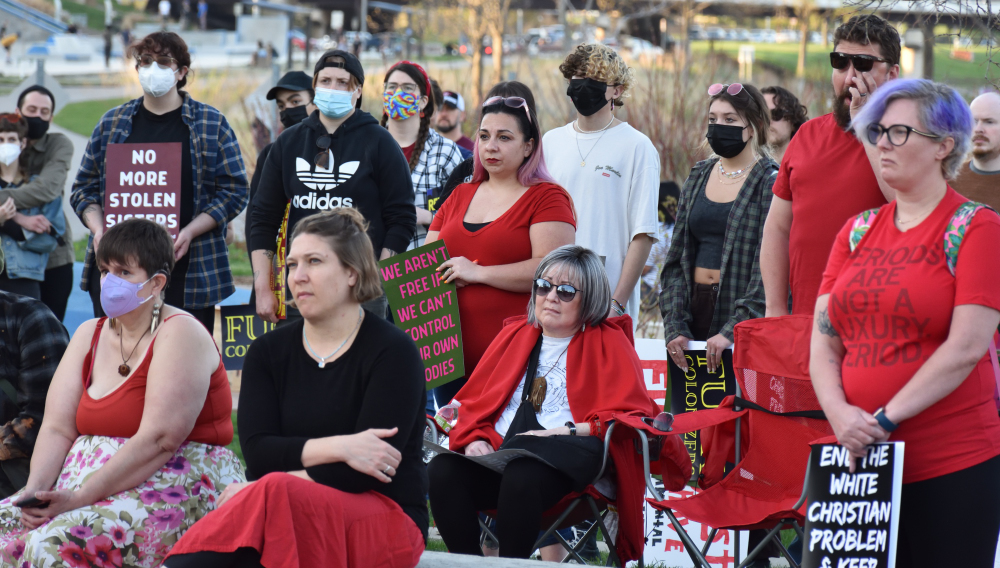
I wrote about the Rally for Reproductive Justice at the Iowa Women of Achievement bridge in downtown Des Moines last Friday. The event was a case study of how I hope and pray we find our way toward the goal of Beloved community. This is urgent now as the systems we have depended on continue to collapse around us.

White Christian problem

I’m always uncomfortable talking about myself but being asked to take photos at this event represents one principle of how we can work together. White males represent/perpetuate the systems of dominance that we must get rid of. Being a white male, I work to avoid those attributes in what I do.

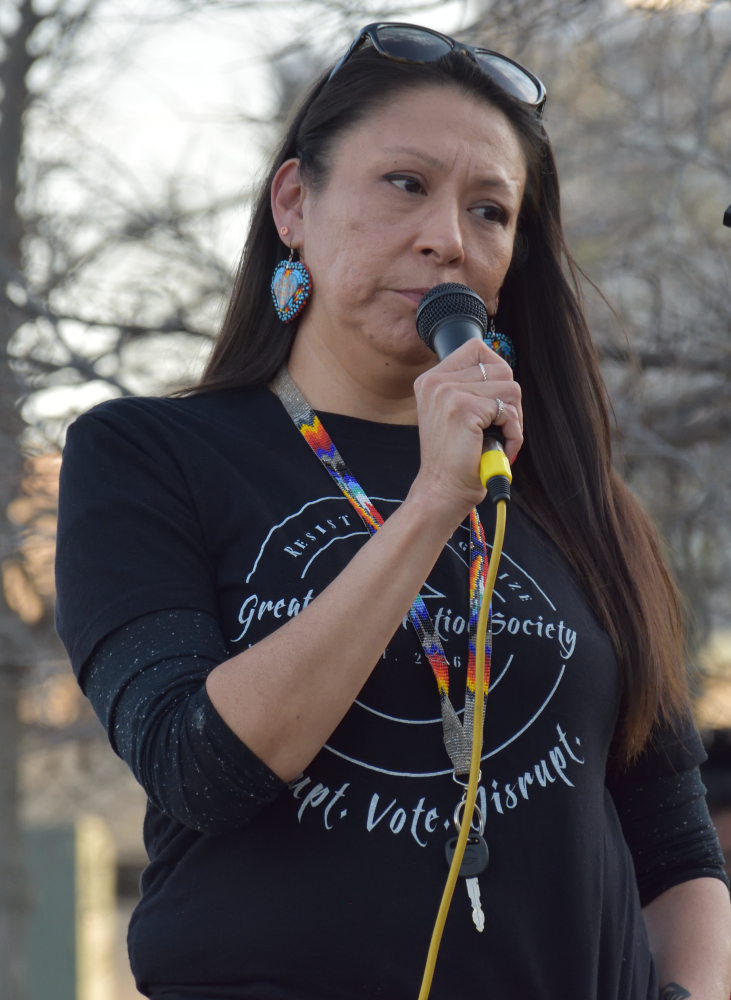
White people need to wait to be invited into this work. So, I was honored that one of my friends, Sikowis Nobiss, of the Great Plains Action Society asked me to take photos at the rally. It takes a long time for this trust to develop. I’ve been working with the Great Plains Action Society for five years.

Sikowis Nobiss

There were several signs at the gathering like the one below that say “end the white Christian problem and keep abortions legal”. White supremacy is at the root of systems of dominance and oppression. White Christians should work to liberate themselves from their systems of dominance and oppression. In the process, helping liberate those oppressed by those systems.


I’m going to try to explain how the principles of the Red/Green New Deal in the diagram above were represented at the Reproductive Justice event. The Green New Deal (GND) represents the idea of modeling bold initiatives to address environmental disaster on the New Deal of the 1930’s.
LANDBACK

The Red New Deal stands for Indigenous led Green New Deal. This is represented in the diagram above as LANDBACK.

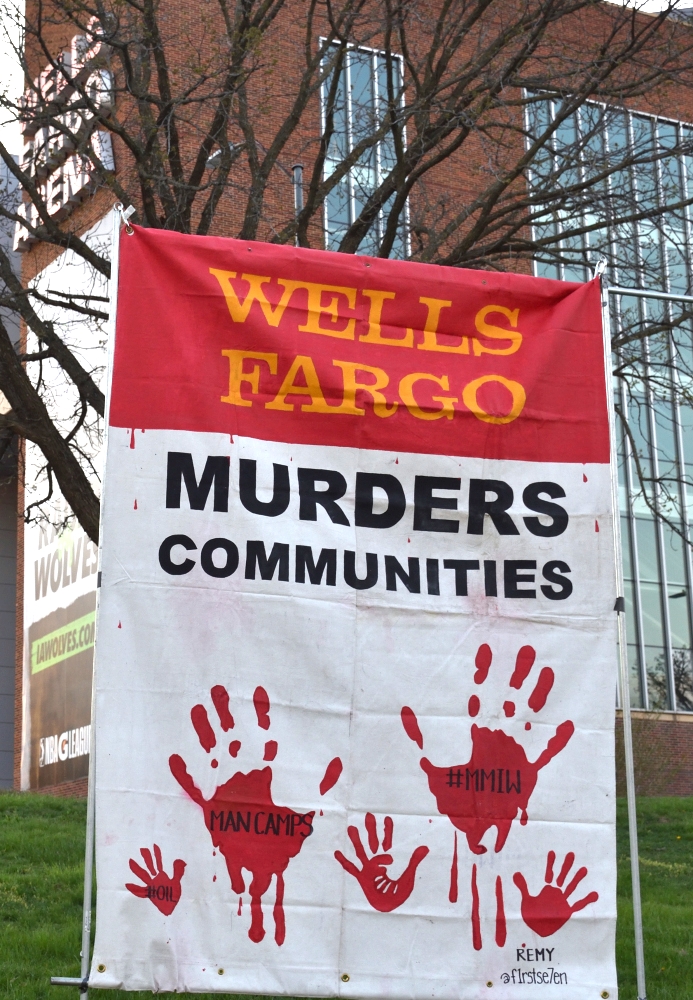
The Reproductive Justice rally was supported by the many justice organizations in Iowa listed in this graphic. My friend Sikowis Nobiss of the Great Plains Action Society was one of the main organizers (and who asked me to take photos). Other Indigenous friends included Mahmud Fitil who took video via a drone, Donnielle Wanatee, who gave prayers, and Ronnie James of Des Moines Mutual Aid who setup the Wells Fargo Kills Communities banner. Our gathering was just across the street from the Wells Fargo Arena.

NOTE: I have another blog which is about LANDBACK titled LANDBACK Friends.

It is the reclamation of everything stolen from the original Peoples.

  • Land
  • Language
  • Ceremony
  • Medicines
  • Kinship

It is a relationship with Mother Earth that is symbiotic and just, where we have reclaimed stewardship. 
It is bringing our People with us as we move towards liberation and embodied sovereignty through an organizing, political and narrative framework. 
It is a catalyst for current generation organizers and centers the voices of those who represent our future. 
It is recognizing that our struggle is interconnected with the struggles of all oppressed Peoples.
It is a future where Black reparations and Indigenous LANDBACK co-exist. Where BIPOC collective liberation is at the core. 
It is acknowledging that only when Mother Earth is well, can we, her children, be well. 
It is our belonging to the land – because – we are the land. 
We are LANDBACK!

LANDBACK Manifesto


Black Liberation

BIPOC stands for Black, Indigenous, and other people of color. White supremacy is the attempt of White people to dominate those who are not white, i.e. BIOPC people. Much of what I’ve been writing about regarding Indigenous peoples applies to black and other people of color. The obvious differences relate to the history of enslavement and continued injustices related to skin color.

From the LANDBACK Manifesto (above): “It is a future where Black reparations and Indigenous LANDBACK co-exist. Where BIPOC collective liberation is at the core.” This is represented by Black Liberation in the diagram above.

One of the main organizations involved in the Rally for Reproductive Justice was Des Moines Black Liberation. The concept of black liberation represents moving beyond the concept of Black Lives Matter.


Abolition

Today abolition commonly refers to abolition of police and prisons. The public lynching of so many unarmed Black and other people of color appear relentlessly because of news and bystander videos. There are incredible inequities of prison populations and long sentences of BIPOC people compared to white people. Prisons are abused to keep BIPOC people off the streets.

There are numerous examples of the success of dispatching mental health personnel instead of police where appropriate.

Mutual Aid

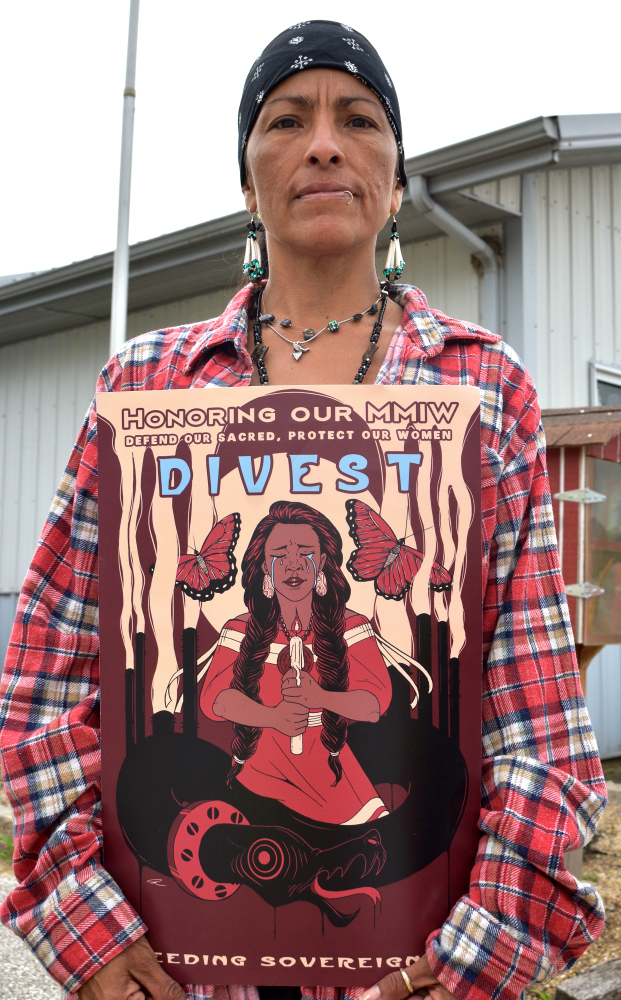
Mutual Aid has been my focus for justice work for the past several years. While Des Moines Mutual Aid is not listed in the organizations supporting the Rally for Reproductive Justice, several of us were at the Rally. One thing they did while I was taking photos was set up this banner calling attention to missing and murdered Indigenous relatives (MMIR).

The Rally for Reproductive Justice was in solidarity with the annual day of awareness about MMIR that is observed at this time. The Wells Fargo banner calls attention to the bank’s financing fossil fuel projects. Pipelines are often intentionally built near native communities. Violence against native peoples occurs from the men in the camps at the construction sites. The Wells Fargo Arena is just across the street from where the rally was held.

The color red is associated with MMIR. Many in the crowd at the rally wore red, and the Women of Achievement bridge was lit in red for the same reason.

Bridge lit in red in support of missing and murdered Indigenous relatives

As shown in the graphic above, Mutual Aid is about getting rid of vertical hierarchies, which is fundamental for building Beloved communities. There won’t be power structures of superiority, dominance, and oppression if we commit to the framework of Mutual Aid.

Conservation

For healing for Mother Earth to occur, it is essential to dramatically reduce extraction and consumption of resources. We must act in a manner that will be best for the next seven generations.

Spirituality (Religious socialism)

My friend Donnielle Wanatee offered prayers during the Rally.

Donnielle Wanatee

That briefly covers what is included in the graphic above (Red/Green New Deal).


I wanted to mention there were people at the rally to sign for those with hearing impairments.

One of the other organizations supporting the Rally was Iowa CCI (Citizens for Community Improvement) that I’ve just begun to become involved with. One of my friends is Jake Grobe, who is the Climate Justice Organizer for Iowa CCI. Jake and I often see each other at the Des Moines Mutual Aid food giveaway each Saturday morning.

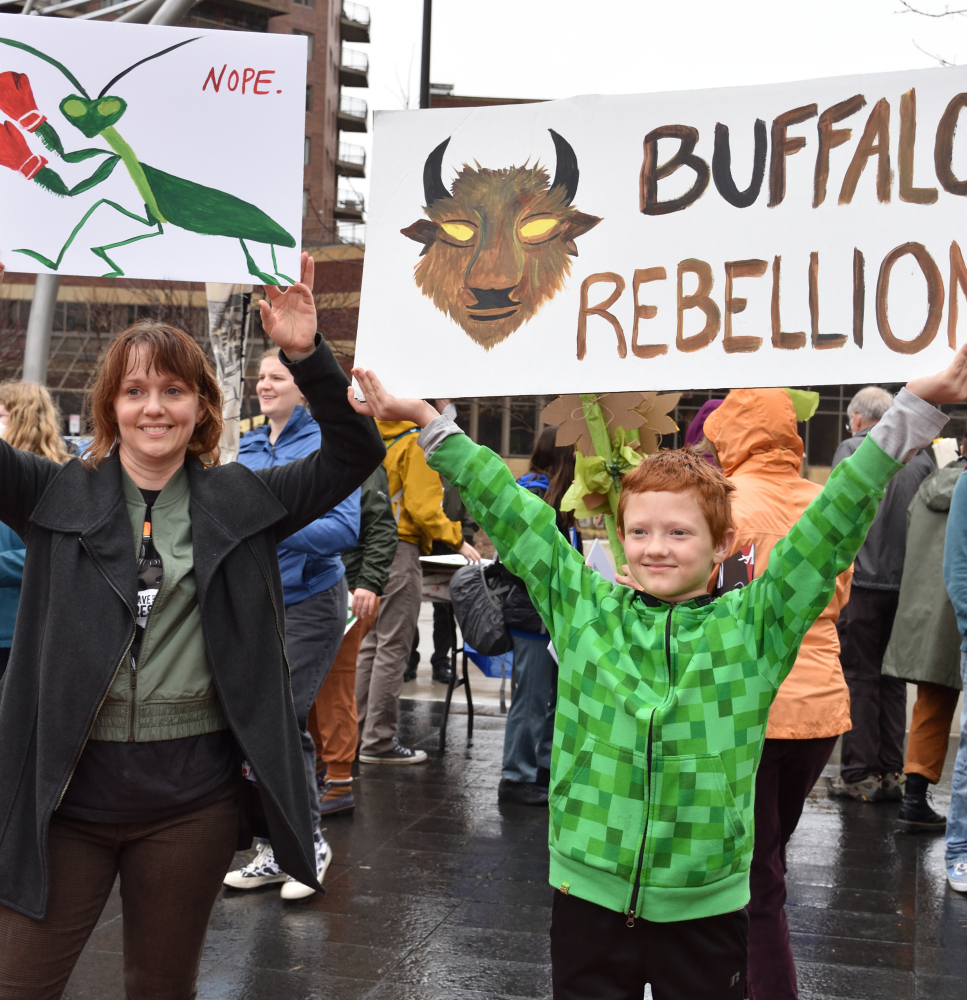
Jake and Sikowis are two of the people who did a great deal of work creating a new coalition, the Buffalo Rebellion. This coalition will do much to help us build the future we want. The Buffalo Rebellion recently held an intense Climate Summit that I was blessed to attend, to build a network of climate and justice advocates.

Sikowis Nobiss and Jake Grobe

As my Mutual Aid friends and I left the Rally we said, “I’ll see you in the morning” where we’ll be at our food giveaway.

Whiteness and Quakers

[References to Quakers here pertain to White Quakers. There is little diversity among Quakers in this country.]

There are several reasons I’m led to revisit this today.

  • Our Quaker meetings have dwindling numbers of attenders. Most of those remaining are elderly and white. Many meetings do not have new people joining.
  • I continue to hear stories from people of color, or those identifying as non-binary in gender or sexual orientation not being welcome in some Quaker meetings.
  • Those of us working outside our Quaker communities are often blessed to find beloved communities.
  • I wish others in our Quaker meetings would join these communities.
  • Despite the many wonderful aspects of these ‘external’ communities, I sometimes sense a lack of spiritual support for one another there.
  • There are many who don’t express their spirituality publicly, or in ways “organized” religions do.
  • Quaker presence will not be fully welcome in these communities until we come to terms with our own racism.

We know that those of us who are white must confront racism in ourselves and in the institutions we care about—our faith communities, our schools, our neighborhoods, our families, our Congress.

Racism and Whiteness, Diane Randall

People ask me if I believe in god… I tell them I pray to creator.
They tell me Jesus died for me… I tell them my ancestors did.
They say I will burn in hell for not following the Bible, but it has been used as weapon to colonize and murder my people…
for me it’s spirituality over religion. I don’t hate people for going to church, but I do hate what the churches have done to us…
before colonization we had our own ways and ceremonies, I choose the path of my ancestors.

Indigenous

For a long time, I’ve been in significant spiritual distress. I’ve been learning a great deal from my Native friends and working in Mutual Aid communities. And they tell me the way white people can best support them is by embracing and teaching others about LANDBACK.

I caused conflicts in my Quaker meeting because I wanted them to join me in the work of Mutual Aid and LANDBACK. Despite my efforts to explain this, they haven’t had the experiences that would make them understand all of this, yet.

At the same time I felt I was letting my Native friends down, because I wasn’t making some of the changes I wanted to make in my life that could be an example of how white people can join the work with Mutual Aid and LANDBACK.

As environmental chaos deepens, with the resulting collapse of the colonial capitalist economic system and the political systems propping up white supremacy fail, we will have no choice but to find alternatives. Ideally those would be Mutual Aid and LANDBACK. This is a powerful incentive to embrace these concepts now.

Mutual Aid and LANDBACK

In the same way I can’t understand the involvement of many Quakers in the slave trade, and having enslaved people, I can’t understand Quaker’s involvement in forced assimilation of native children.

What does this mean for Quakers today? No matter what we say about justice for BIPOC (Black, Indigenous, and other people of color) folks, those words are empty as long as we continue to take advantage of colonial capitalism and white supremacy.

The news of 215 Kamloops Native children buried on the grounds of a residential school shocked non-native people, who did not know how many of these residential schools existed in the lands called the United States and Canada. Did not know tens of thousands of Native children were forcibly removed from their families and taken to these institutions where thousands were abused in many ways. Thousands killed or died. Though the stated reason for doing this was to assimilate Native children into white society for their benefit, the real intent was to quell Indigenous resistance to the theft of their land by white settler colonists.

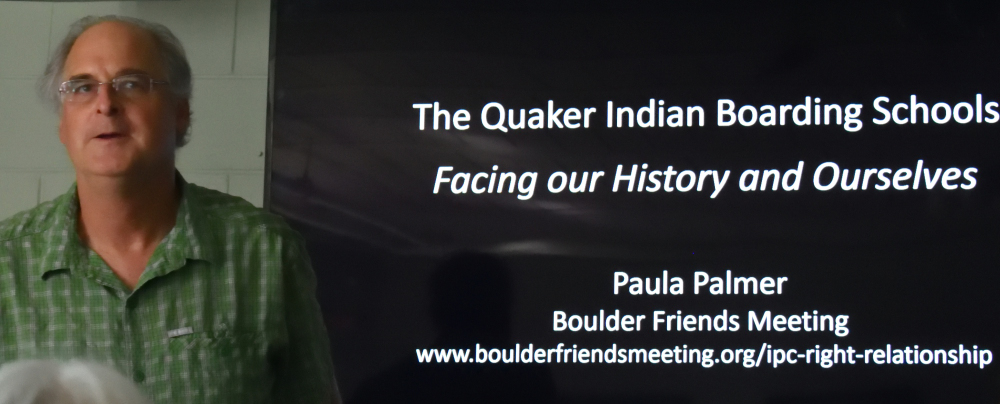
My friend Paula Palmer wrote an excellent article for Friends Journal, Oct 1, 2016. “Quaker Boarding Schools: Facing Our History and Ourselves”.

The growing numbers of remains found at other schools has re-opened deep wounds in Native communities. Many have been triggered by these atrocities. One of my Native friends wrote that she was NOT OK. Another told me, “I’m trying not to be enraged in my mourning.”

A Native friend also told me, “The church is the church’s past, which is its future. It continues to see my people as obstacles in its endless conquest. To be blunt, there is too much damage that the church profits from and needs to protect to have any future there.” Vigorous attempts are made to hide it, but history does not lie. He also told me, regarding what I had been telling him about my efforts with Quakers, “I wish you the best. I imagine it’s a hard struggle.”

I cannot face my BIPOC friends if I don’t continue to seek the Spirit, and act on the leadings I am given. Writing is one thing I am led to do.

“Don’t make orphans stand here covered in the blood of our parents and explain to you how this all came to be without doing something about it. “

The Tragedy of 215. Without truth, there can be no healing, by Sarah Rose Harper, Lakota People’s Law Project, 6/2/2021

I am so grateful to my BIPOC friends for teaching me that Mutual Aid and LANDBACK are alternatives to colonial capitalism and white superiority. LANDBACK is how to restore Native lands and leadership.

As environmental chaos deepens, with the resulting collapse of the colonial capitalist economic system and the political systems propping up white supremacy, we will have no choice but to find alternatives. Ideally those would be Mutual Aid and LANDBACK. This is a powerful incentive to embrace these concepts now.

I wrote the following epistle that is modeled from ‘An Epistle to Friends Concerning Military Conscription’

An Epistle to Friends Regarding Community, Mutual Aid and LANDBACK

Dear Friends,

The measure of a community is how the needs of its people are met. No one should go hungry, or without shelter or healthcare. Yet in this country known as the United States millions struggle to survive. The capitalist economic system creates hunger, houselessness, illness that is preventable and despair. A system that requires money for goods and services denies basic needs to anyone who does not have money. Black, Indigenous, and other people of color (BIPOC) are disproportionately affected. Systemic racism. The capitalist system that supports the white materialistic lifestyle is built on stolen land and genocide of Indigenous peoples, and the labor of those who were enslaved in the past or are forced to live on poverty wages today.

Capitalism is revealed as an unjust, untenable system, when there is plenty of food in the grocery stores, but men, women and children are going hungry, living on the streets outside. White supremacy violently enforces the will of wealthy white people on the rest of us.

It has become clear to some of us who are called Friends that the colonial capitalist economic system and white supremacy are contrary to the Spirit and we must find a better way. We conscientiously object to and resist capitalism and white supremacy.

capitalism has violated the communities of marginalized folks. capitalism is about the value of people, property and the people who own property. those who have wealth and property control the decisions that are made. the government comes second to capitalism when it comes to power.

in the name of liberation, capitalism must be reversed and dismantled. meaning that capitalistic practices must be reprogrammed with mutual aid practices. 
Des Moines Black Liberation Movement

Mutual Aid

How do we resist? We rebuild our communities in ways not based upon money. Such communities thrive all over the world. Indigenous peoples have always lived this way. White people once did so in this country. Mutual Aid is a framework that can help us do this today.

The concept of Mutual Aid is simple to explain but can result in transformative change. Mutual Aid involves everyone coming together to find a solution for problems we all face. This is a radical departure from “us” helping “them”. Instead, we all work together to find and implement solutions.  To work together means we must be physically present with each other. Mutual Aid cannot be done by committee or donations. We build Beloved communities as we get to know each other. Build solidarity. An important part of Mutual Aid is creating these networks of people who know and trust each other. When new challenges arise, these networks are in place, ready to meet them.

Another important part of Mutual Aid is the transformation of those involved. This means both those who are providing help, and those receiving it.

With Mutual Aid, people learn to live in a community where there is no vertical hierarchy. A community where everyone has a voice. A model that results in enthusiastic participation. A model that makes the vertical hierarchy required for white supremacy impossible.

Commonly there are several Mutual Aid projects in a community. The initial projects usually relate to survival needs. One might be a food giveaway. Another helping those who need shelter. Many Mutual Aid groups often have a bail fund, to support those arrested for agitating for change. And accompany those arrested when they go to court.

LANDBACK

The other component necessary to move away from colonial capitalism and white supremacy is LANDBACK.

But the idea of “landback” — returning land to the stewardship of Indigenous peoples — has existed in different forms since colonial governments seized it in the first place. “Any time an Indigenous person or nation has pushed back against the oppressive state, they are exercising some form of landback,” says Nickita Longman, a community organizer from George Gordon First Nation in Saskatchewan, Canada.

The movement goes beyond the transfer of deeds to include respecting Indigenous rights, preserving languages and traditions, and ensuring food sovereignty, housing, and clean air and water. Above all, it is a rallying cry for dismantling white supremacy and the harms of capitalism.

Returning the Land. Four Indigenous leaders share insights about the growing landback movement and what it means for the planet, by Claire Elise Thompson, Grist, February 25, 2020

What will Friends do?

It matters little what people say they believe when their actions are inconsistent with their words.  Thus, we Friends may say there should not be hunger and poverty, but as long as Friends continue to collaborate in a system that leaves many without basic necessities and violently enforces white supremacy, our example will fail to speak to mankind.

Let our lives speak for our convictions.  Let our lives show that we oppose the capitalist system and white supremacy, and the damages that result.  We can engage in efforts, such as Mutual Aid and LANDBACK, to build Beloved community. To reach out to our neighbors to join us.

We must begin by changing our own lives if we hope to make a real testimony for peace and justice.

We remain, in love of the Spirit, your Friends and sisters and brothers,

Note: Modeled from ‘An Epistle to Friends Concerning Military Conscription’