Reproductive Justice

NOTE: Date changed to Friday, May 6

The recently unveiled draft of a Supreme Court decision to end Roe and Casey has sparked vigorous national conversations and actions related to reproductive justice.

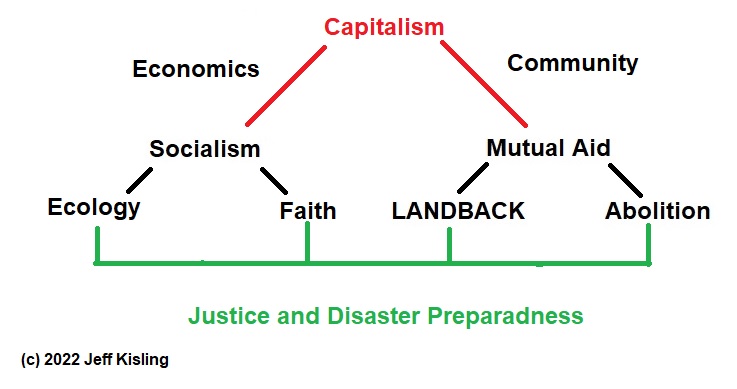
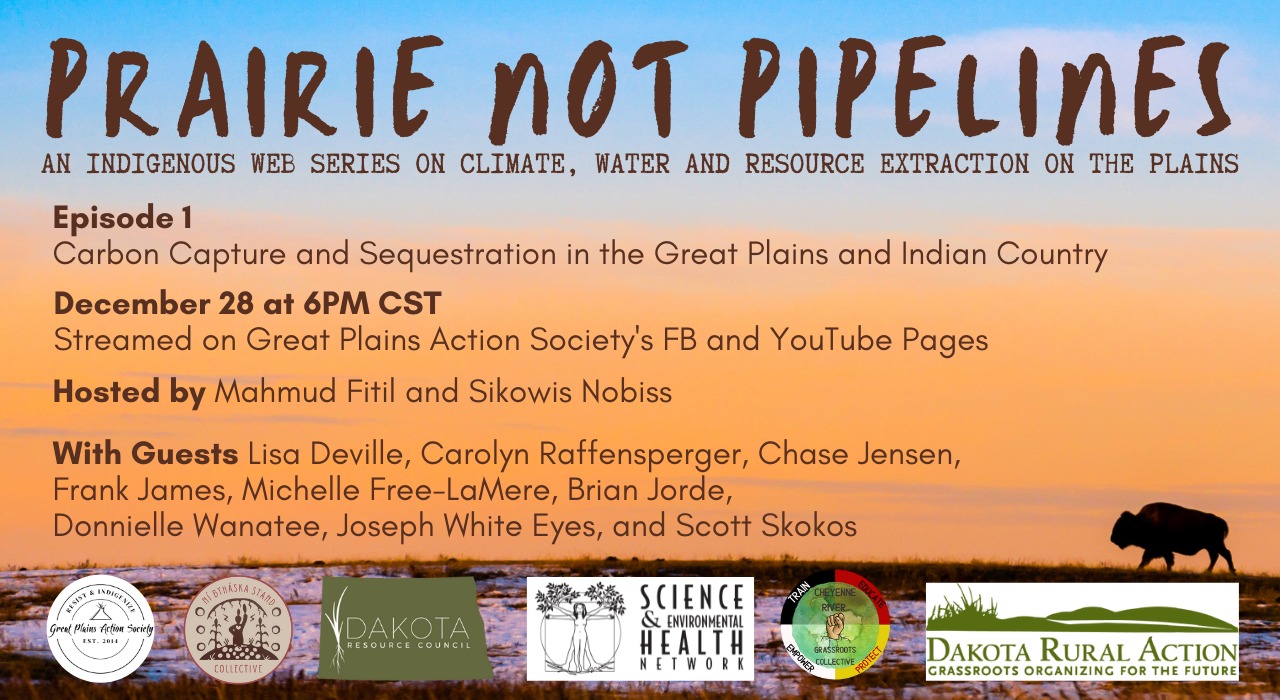
My thoughts went to White supremacy and colonization because of my past few years of learning from my Indigenous and Mutual Aid friends.

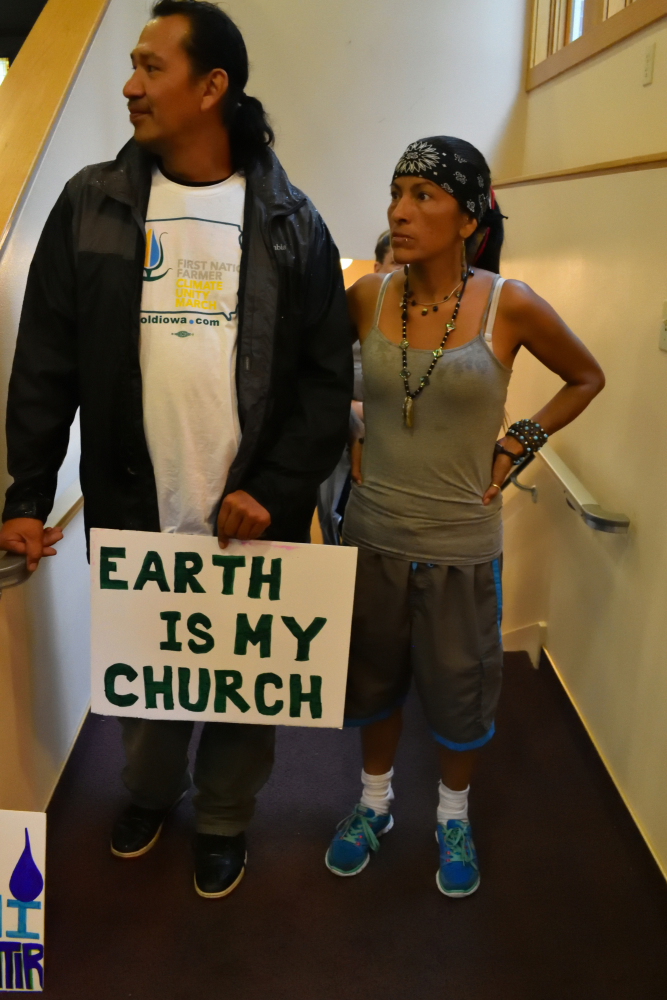
“We must abolish white supremacist and christian institutions that perpetuate colonial harm to oppress those that don’t fall into their manifest destiny paradigm.”

This comes just before the National Day of Awareness for Missing and Murdered Indigenous Relatives, May 6.

Event by Great Plains Action SocietyDes Moines Black Liberation Movement and 2 others

700 Robert D Ray Dr, Des Moines, IA 50316, United States
May 6, 2022
6:45 – 8:30 pm
Public  · Anyone on or off Facebook

Wear red and join us on the east side of the Women of Achievement Bridge (which will be lit red for MMIR day) in the Muto Recreation Area in Des Moines to demand reproductive justice!

The draft to end Roe and Casey was leaked just two days before the National Day of Awareness for Missing and Murdered Relatives (aka, Missing and Murdered Women and Girls). We are honoring this day by uplifting radical solidarity within all communities affected by colonial violence when body sovereignty is stolen from us.

Join our coalition of organizations and grassroots activists for a rally to demand abortion access, which plays a huge role in ending the MMIR crisis. Lack of access increases violence and health disparities in BIPOC, Disabled, LGBTQIA+, and Two-Sprit communities. Learn more from speakers and crowd testimony on how this affects these communities and take action on a wider scope than just abortion. We must abolish white supremacist and christian institutions that perpetuate colonial harm to oppress those that don’t fall into their manifest destiny paradigm.

Thank you to the Iowa Coalition Against Domestic Violence for lighting the bridge and amphitheater red on May 5th in honor of MMIR Day of Awareness! The bridge will also be lit red on May 6th for our event!

ASL provided.
LiveStreamed to this page.

This event was organized by:
– Iowa Coalition for Collective Change
– Great Plains Action Society
– The Disability Caucus of the Iowa Democratic Party
– Iowa CCI
– Des Moines BLM
– Sierra Club Beyond Coal
– Deaf Dome
– The Progressive Caucus of the Iowa Democratic Party
– Iowa Abortion Access Fund
– One Iowa

The leaked draft Supreme Court opinion written by Justice Samuel A. Alito Jr. posits not only the total evisceration of constitutional protection for abortion but of an entire line of substantive due-process cases. Alito’s draft includes a disclaimer that “nothing in this opinion should be understood to cast doubt on precedents that do not concern abortion,” but in ridiculing “appeals to a broader right to autonomy,” he implicitly casts doubt on precedent prohibiting prosecution of gay sexual relations and of same-sex marriage.

The Supreme Court’s religion-driven mission sets off a firestorm by Jennifer Rubin, The Washington Post, 5/3/2022

Over the past 50 years, Americans (and for that matter, citizens of other Western democracies) have become accustomed to a legal system that draws a line between permissible and impermissible government actions. We have become accustomed to a culture in which we are entitled to a degree of personal autonomy, to control of the most meaningful, personal aspects of our own lives. In the U.S., polling repeatedly shows that large majorities believe that a woman should be able to control her own body and make her own reproductive decisions, that people of the same sex or different races should have the right to marry, that decisions to use or forgo contraception is none of government’s business.

A minority of paternalistic religious critics have worked  tirelessly to turn back the clock– to return to a time when these decisions were made by the White Christian Males in charge, those Rubin properly characterized as a “fading racial, religious and political minority.” Alito’s draft represents a massive victory for that minority. If it is seen accurately for what it promises–a steady stream of decisions depriving citizens of hard-won rights to live their “intimate” lives as they see fit– I believe furious Americans will launch a civil revolution of massive proportions.

About That Civil War.. by Sheila Kennedy, Sheila Kennedy blog, 5/4/2022

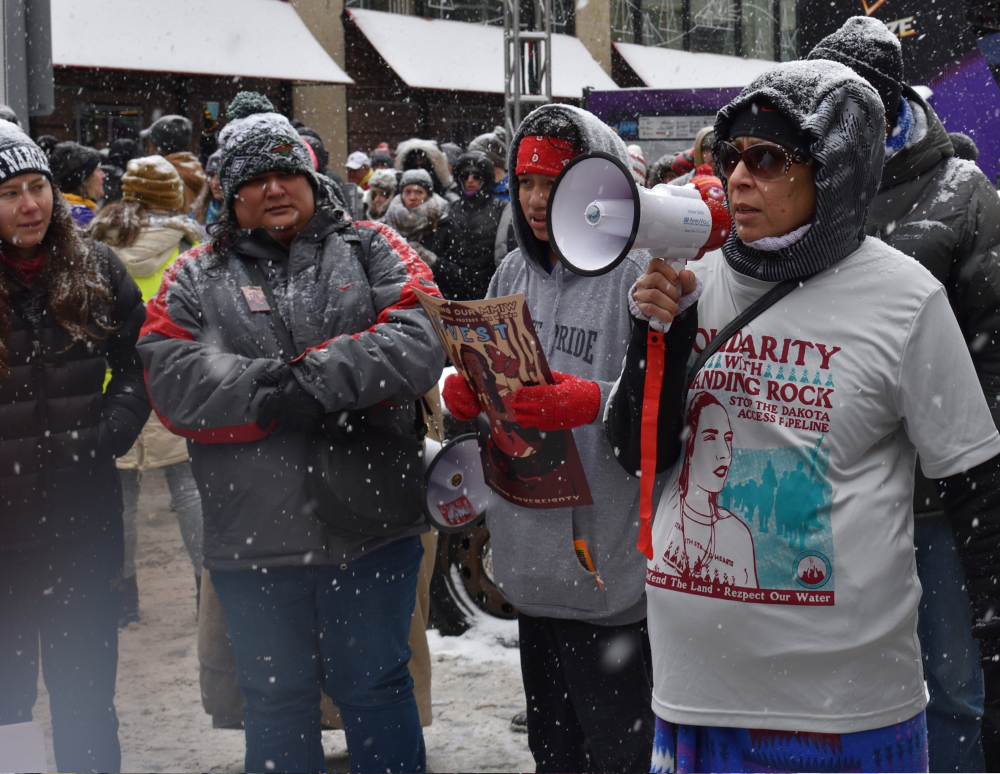
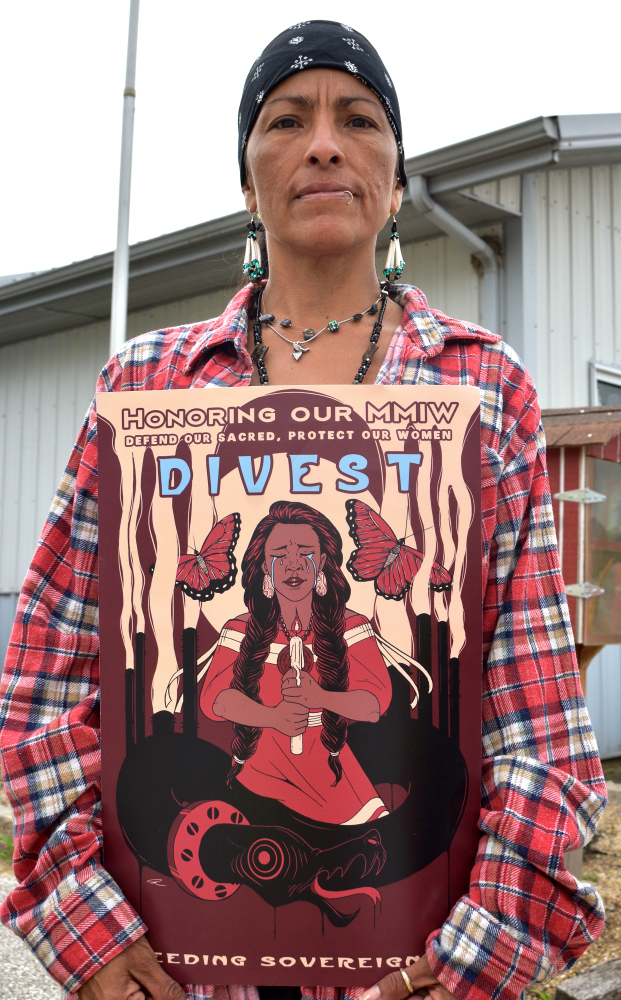
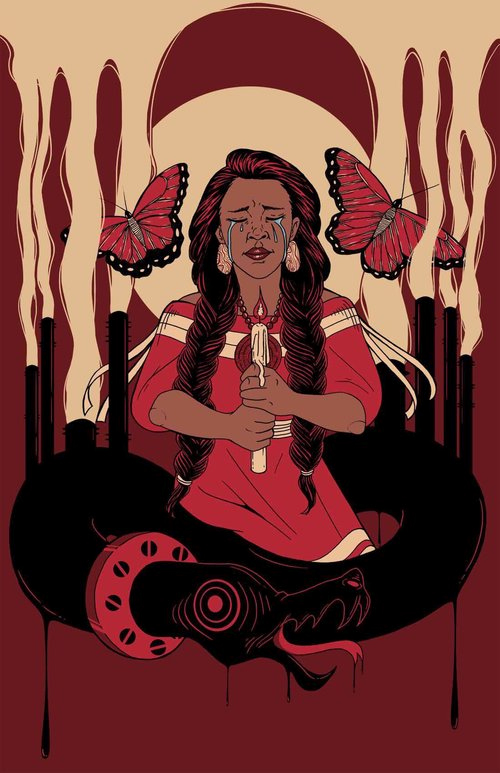
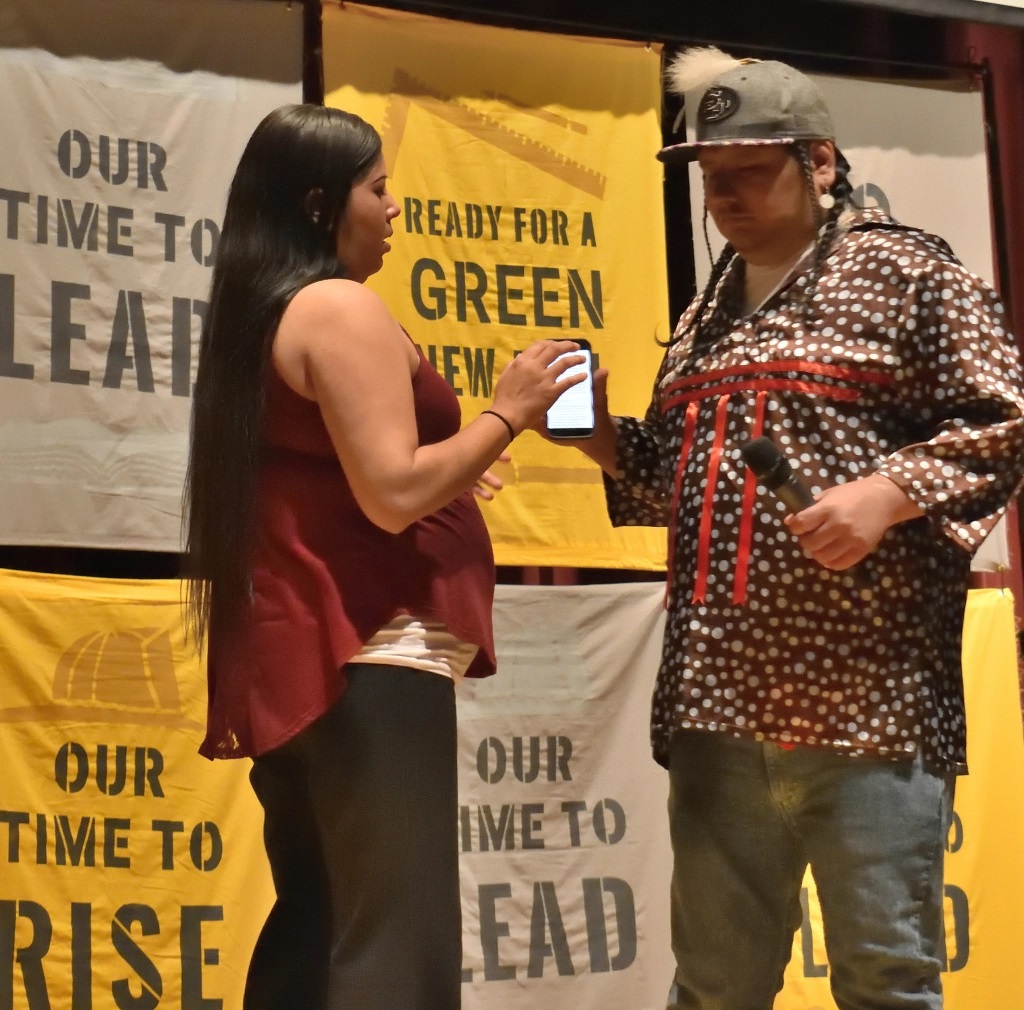
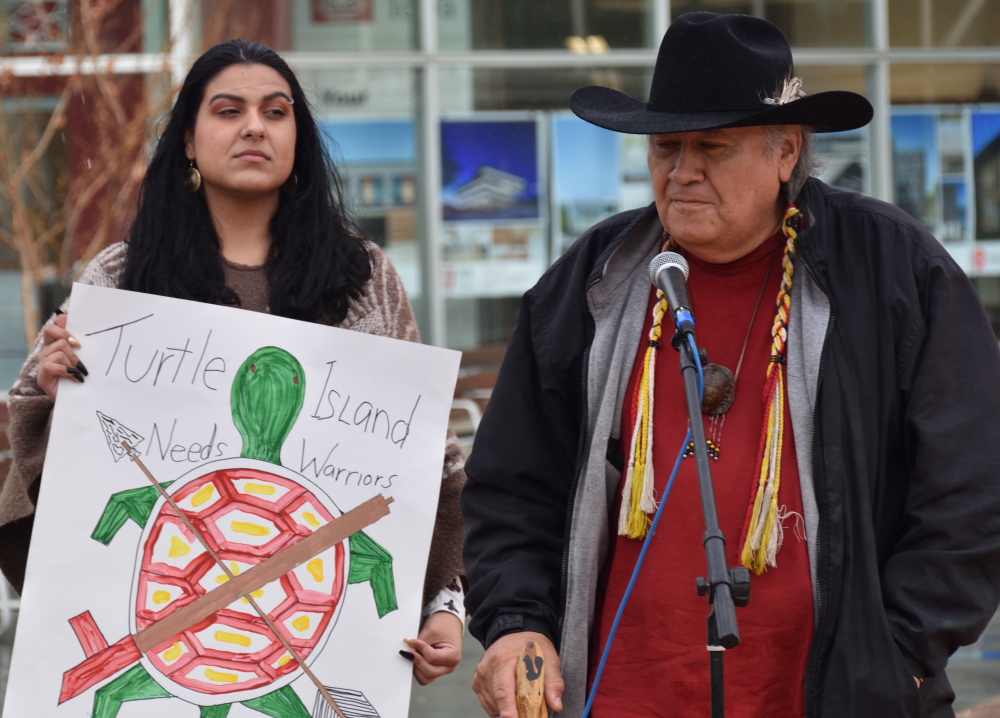
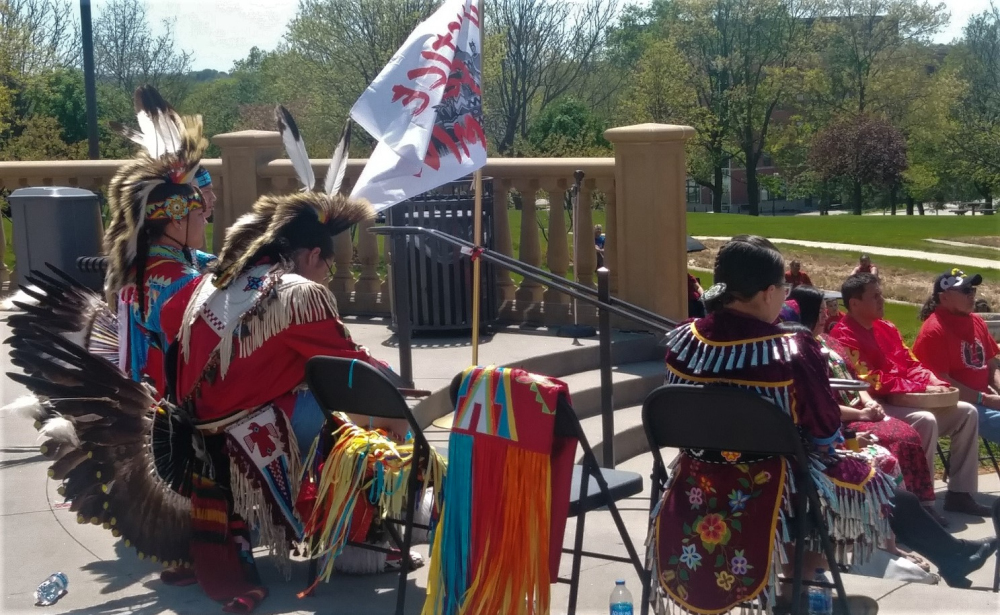
These are photos from previous observations related to awareness about missing and murdered Indigenous relatives.

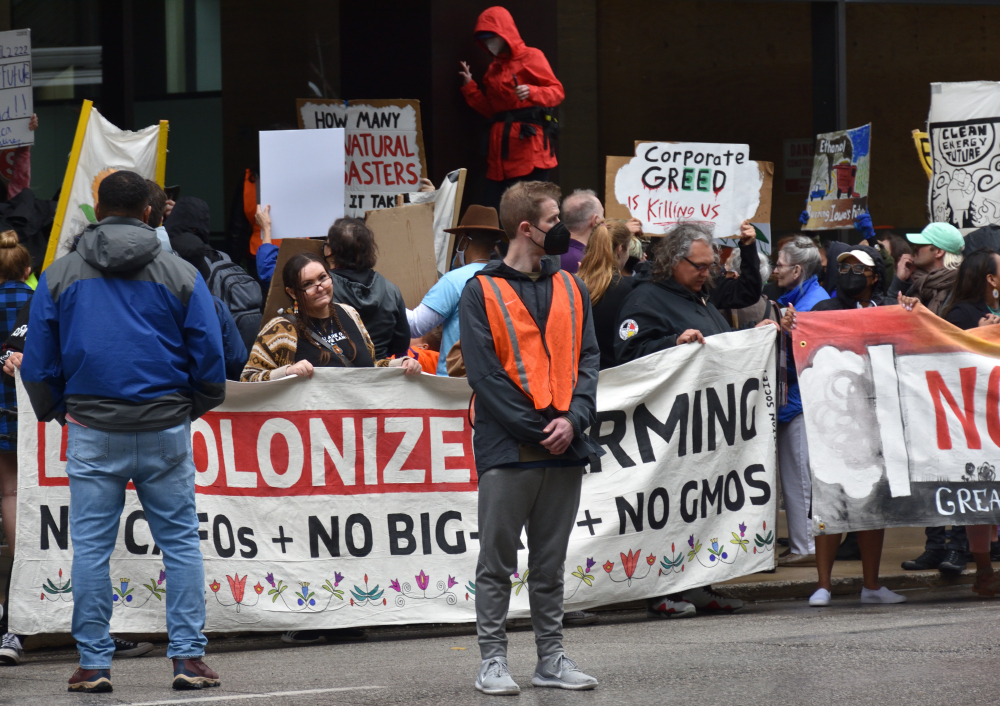
Buffalo Rebellion and Red/Green New Deal

The Sunrise Movement was launched as a national campaign for a Green New Deal (GND) in 2017. From the beginning I heard my native friends talk about the importance of a GND to be Indigenous led. In 2019 Sunrise’s Green New Deal tour began with a stop in Des Moines. There my friends Trisha Cax-Sep-Gu-Wiga Etringer and Lakasha Yooxot Likipt spoke about Indigenous leadership as a requirement for a GND. https://landbackfriends.com/2021/09/01/indigenous-led-green-new-deal/


Last weekend’s Climate Summit of the newly formed Buffalo Rebellion provided an opportunity for organizations and people to come together to share what is being done to address the climate crisis. And lay the groundwork for working together, focusing on action related to the racial and economic consequences of environmental devastation. That requires taking on entrenched white supremacy, systemic racism and rapacious capitalism.

The Buffalo Rebellion is a coalition that includes Iowa Citizens for Community Improvement, Great Plains Action Society, Des Moines Black Liberation Movement, Iowa MMJ, SEIU Iowa, Sierra Club Iowa Beyond Coal, and Cedar Rapids Sunrise Movement.

We believe that we must address the root of climate change, insatiable corporate greed and white supremacy, to make change happen. This will require a multi-racial movement of working people struggling together to upend politics as usual.

Buffalo Rebellion

… what if the question all water protectors and land defenders asked was, why don’t we just overturn the system that makes development a threat in the first place? This system, again, is capitalism. Rather than taking an explicitly conservationist approach, the Red Deal instead proposes a comprehensive, full-scale assault on capitalism, using Indigenous knowledge and tried-and-true methods of mass mobilization as its ammunition. In this way, it addresses what are commonly thought of as single issues like the protection of sacred sites—which often manifest in specific uprisings or insurrections—as structural in nature, which therefore require a structural (i.e., non-reformist reform) response that has the abolition of capitalism via revolution as its central goal. We must be straightforward about what is necessary. If we want to survive, there are no incremental or “non-disruptive” ways to reduce emissions. Reconciliation with the ruling classes is out of the question. Market-based solutions must be abandoned. We have until 2050 to reach net-zero carbon emissions. That’s it. Thirty years. The struggle for a carbon-free future can either lead to revolutionary transformation or much worse than what Marx and Engels imagined in 1848, when they forewarned that “the common ruin of the contending classes” was a likely scenario if the capitalist class was not overthrown. The common ruin of entire peoples, species, landscapes, grasslands, waterways, oceans, and forests—which has been well underway for centuries—has intensified more in the last three decades than in all of human existence.

The Red Nation, The Red Deal (pp. 21-22). Common Notions. Kindle Edition.


My Mutual Aid community models many Green/Red New Deal concepts.

I’m of the firm opinion that a system that was built by stolen bodies on stolen land for the benefit of a few is a system that is not repairable. It is operating as designed, and small changes (which are the result of huge efforts) to lessen the blow on those it was not designed for are merely half measures that can’t ever fully succeed.

So the question is now, where do we go from here? Do we continue to make incremental changes while the wealthy hoard more wealth and the climate crisis deepens, or do we do something drastic that has never been done before? Can we envision and create a world where a class war from above isn’t a reality anymore?”

Ronnie James, Des Moines Mutual Aid, Great Plains Action Society

Grateful and humbled

I am grateful for many things this morning. For the waters falling from the sky. For my Mutual Aid friends who demonstrate what a Beloved community is. For the Buffalo Rebellion, growing a movement for climate action that centers racial and economic justice. Thankful for my Quaker communities. I give thanks to the Spirit.

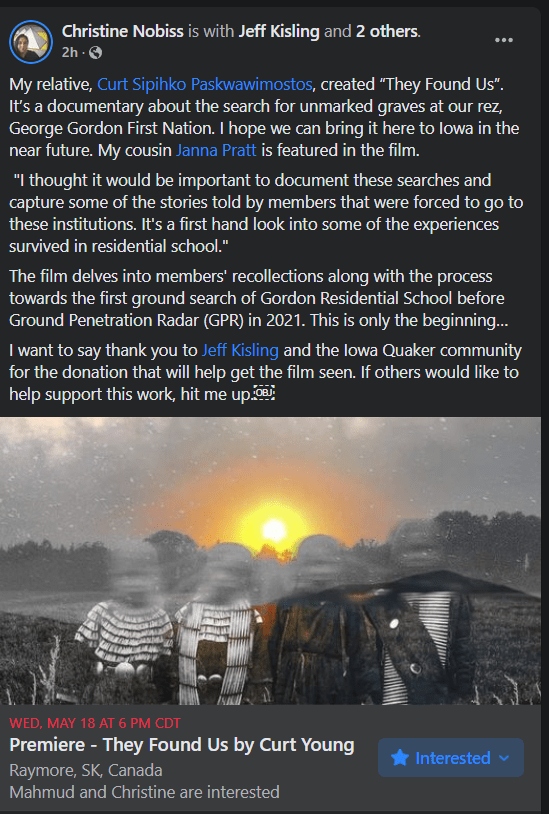
I am grateful for my Indigenous friends. Humbled by the grace they have shown me and other white people as we seek ways to heal from the horrendous history of white supremacy and forced assimilation, abuse, and death of thousands of Native children. As we search for ways to deal with the present, ongoing injustices. The intergenerational trauma. Ripping open deep wounds as the remains of children are located. As the title of this new documentary says, “They Found Us”.

Growing up I heard references to Quakers who worked in the residential schools. I was told they were helping the Native children adjust to living in white society. I didn’t have the awareness to question why that was not a good thing.

I’ve had a life-long concern about environmental devastation. I grew up on farms. When I moved to Indianapolis in 1970, I was horrified by the dense, noxious fumes from every tailpipe, making it difficult to even see. This was before catalytic converters hid the damage being done. I was led to refuse to own a car.

It was obvious Indigenous peoples lived in sustainable ways.

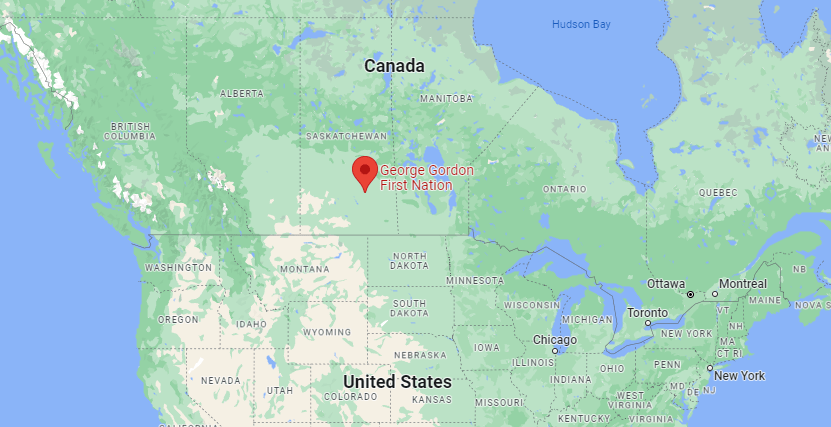
To pull this all together, here is the link to a recent blog post, Midwest Quakers and Native Peoples, which describes how I was blessed to become friends with Indigenous folks in the Midwest and the history of some of the work we’ve done together. It also talks about the Indian Residential Schools and includes a letter from Curt Young, member of George Gordon First Nation, describing the documentary he created, “They Found Us”. Sikowis is also a member of George Gordan First Nation.


“I thought it would be important to document these searches and capture some of the stories told by members that were forced to go to these institutions. It’s a first hand look into some of the experiences survived in residential school.”

Curt Sipihko Paskwawimostos, creator of “They Found Us”.

Sikowis (Christine) Nobiss is one of my close Indigenous friends. We’ve discussed the residential schools, briefly, a few times. I was glad she felt she could ask me if Quakers would help pay for expenses to travel with the film for viewing in a number of communities. She later told me it was difficult for her to ask for funds.

I am clerk of the Peace and Social Concerns Committee of Iowa Yearly Meeting (Conservative). Our committee has a budget of $1,100 to support justice work. In the past we sent $50 or $100 to a number of such organizations. Someone suggested instead sending a larger amount for one or two projects. We decided to do that but didn’t have a project in mind when we were meeting last summer.

I believed the Spirit would show us the way. The request for “They Found Us” seemed to be what we were waiting for. Our committee met to discuss and unanimously approve this. I’m grateful and humbled for that, as well.

Additional funds would be helpful. Please contact me if you are interested. jakislin@outlook.com

Building a coalition

I’m reflecting and praying about what happened this past weekend during the Climate Summit of the newly formed Buffalo Rebellion, a new coalition of Iowa organizations that are growing a movement for climate action that centers racial and economic justice.

Buffalo Rebellion is a new coalition of Iowa organizations that are growing a movement for climate action that centers racial and economic justice. The Earth Day Rally will be an afternoon of honoring Mother Earth through sharing stories and visions for climate justice and taking action together for a world that puts people and the planet before profits for a few.

Following the Earth Day Rally, Buffalo Rebellion will be holding two days of immersive training to develop 100 grassroots leaders who will build local teams to take on climate justice issues in their community and come together to create a thriving state-wide movement.

Formed in 2021, Buffalo Rebellion is comprised of seven Iowa organizations: Great Plains Action Society, DSM Black Liberation Movement, Iowa Migrant Movement for Justice, Sierra Club Beyond Coal, Cedar Rapids Sunrise Movement, SEIU Local 199, and Iowa CCI.

Buffalo Rebellion


Extremely thankful for this community we built this weekend. Looking forward to fighting for the future alongside all of you.
Thank you to the organizers, and big love to the participants.
Keep an eye out for Buffalo Rebellions next move.

Photo by @karl.ajconrad
@iowacci@iowammj@desmoinesblm@greatplainsactionsociety@sunrisemvmtcr
#climatecrisis#climatejustice#landback#racialjustice
Buffalo Rebellion 4/24/2022


How do you build a coalition? You bring together organizations and people who have demonstrated they are effective at building community and organizing for change. And who are aligned in their purpose.

My experience is there are a small number of people and organizations who shoulder justice work in a city or geographical area. Which means they are acquainted with each other. A given individual often belongs to multiple organizations.

But these groups often don’t work together. Building a coalition is how to remedy that. The organizations listed above are growing a movement for climate action that centers racial and economic justice. That is our common purpose. Rapidly evolving environmental chaos is an existential threat that requires radical action now.

Centering on racial and economic justice is crucial for many reasons. Blatant environmental racism is seen over and over again by the location of hazardous infrastructure in Black, Indigenous and other people of color (BIPOC) communities. Conversely, solar panels are not often seen there.

There are many aspects of economic injustice as well. Those economically disadvantaged also tend to live in areas of environmental hazards. And supply the labor for jobs such as coal, oil, and tar sands mining, while white capitalists receive (steal) the profits.

Building a coalition requires us to know and trust each other. And to learn about each other’s work. Tools that we can bring to our organizations. Or know who has expertise we can turn to for help.

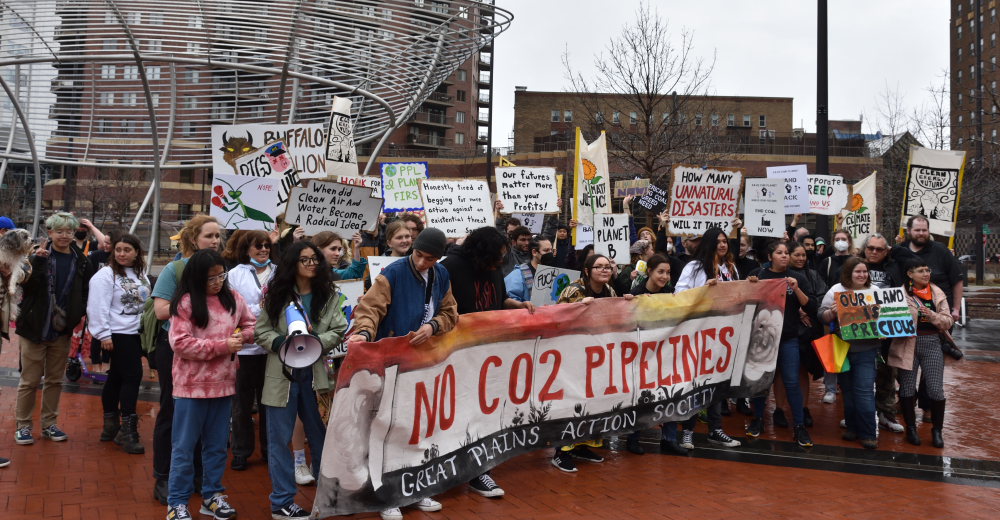
This past weekend of Buffalo Rebellion meetings and action went a long way in beginning to accomplish these goals. It was important to have the action of marching to the offices of MidAmerican Energy. Demonstrating how direct actions work.

The many excellent presentations shared the tools and knowledge of experts in our coalition. The following table of presentations gives an idea of what was done.

Community Building & StorytellingCedar Rapids Sunrise
End-Stage Iowa, Indigenous Land Stewardship & the Green
(Red) New Deal
Great Plains Action Society (GPAS), Iowa Citizens Community Improvement (ICCI)
NoDAPL Reunion Panel
Fundamentals of Organizing (Starting an Issue Based Campaign
and Fundraising 101)
DSM Black Liberation, ICCI, Sierra Club Beyond Coal
Police, Prison, & Military Abolition for Climate JusticeDSM Black Liberation Movement
Lobbying: Get Your Local Green New Deal Passed into LawCedar Rapids Sunrise
Migration in Iowa and Big-AgIowa Migrant Movement for Justice
Art and ActivismSay Poetry, DSM Black Liberation Movement
Frontline Tactical Methods to Protect the Land: From Direct Actions and Resistance Camps
Landscapes: The Kinship of Climate, Wildness, and Community
Mutual Aid: Bail Funds, Court Solidarity, and Incarceration Support in Resistance MovementsGPAS, DSM Mutual Aid
Linking the Origins of Iowa’s Contemporary Environmental Problems to the Extractive Nature of White Settlement
Ending White Supremacy in Climate OrganizingCPAS, DSM Black Liberation Movement, Sierra Club Beyond Coal
Launching the Movement: Strategic Applications of Drones for Grassroots ActionsGPAS
Building Power with Public NarrativeCedar Rapids Sunrise, ICCI, DSM People’s Town Hall
Damn Lies and C02 pipelinesScience and Environmental Health Network
Deep Canvassing ICCI, DSM People’s Town Hall
Urban Farming and Community FridgesSweet Tooth Farms
Bird-Dogging 101Cedar Rapids Sunrise, ICCI, DSM Black Liberation Movement
Youth Caucus ReportSeventh Generation Youth Climate Caucus

You can see the videos of most of these presentations on the Buffalo Rebellion Facebook page.

For example, this is the presentation by my friend Ronnie James of Des Moines Mutual Aid and Great Plains Action Society.

Mutual Aid: Bail Funds, Court Solidarity, and Incarceration Support in Resistance Movements

– Ronnie James, DSM Mutual Aid & Great Plains Action Society

An introduction to the how and why of supporting frontliners that suffer arrest during Movement activities. Instruction will cover the reason for, creation of, and implementation of a Bail Fund. We will also touch on the main phases of the arrest and court process: Arrest, Pre-Trial, Trial, Post-Trial, Sentencing, and Incarceration, and some of the avenues of support the defendant will require during these phases. We will discuss the role of the Defense Committee, and how they compare and contrast with the Legal Defense Team. Finally, there will be a brief summary of how this works in Des Moines, Iowa in the present moment.

Click here to see video.


The goal of this weekend of immersive training was to develop grassroots leaders who will build local teams to take on climate justice issues in their community and come together to create a thriving state-wide movement. I think that was accomplished.


#IAClimateJustice #ClimateJustice @NoCCSIowa

@iowacci @iowammj @desmoinesblm @greatplainsactionsociety @sunrisemvmtcr
#climatecrisis #climatejustice #landback #racialjustice

Dare we hope?

I was searching for a way to describe what WE experienced during OUR Buffalo Rebellion Climate Summit this weekend. A moment reminiscent of the times of the civil rights and anti-war movements which brought together thousands of people and created change. This weekend a coalition of people and organizations came together to rise to the challenges of rapidly evolving environmental devastation and collapse of the systems of capitalism and white supremacy.

As I wondered whether to write “what WE experienced” versus “what I experienced” I realized this was emblematic of what the Buffalo Rebellion is about. Dare WE hope? In its simplest expression, we need to change from “I” to “We” in all we do.

Those of us who have been working to protect Mother Earth are more aware than the general public of the breadth and depth of damage being done. More alarmed, more discouraged after years of work with little apparent progress.

The COVID pandemic made us more isolated and made it difficult to safely do our organizing work. Although our Des Moines Mutual Aid community never stopped distributing free food every week. We strictly enforced wearing masks and gloves and attempted to maintain social distancing by limiting the number of volunteers.

As an example of how long some of us have been working to protect our environment, fifty years ago I was led to refuse to own a car. I’m not aware of that changing other people’s lives.
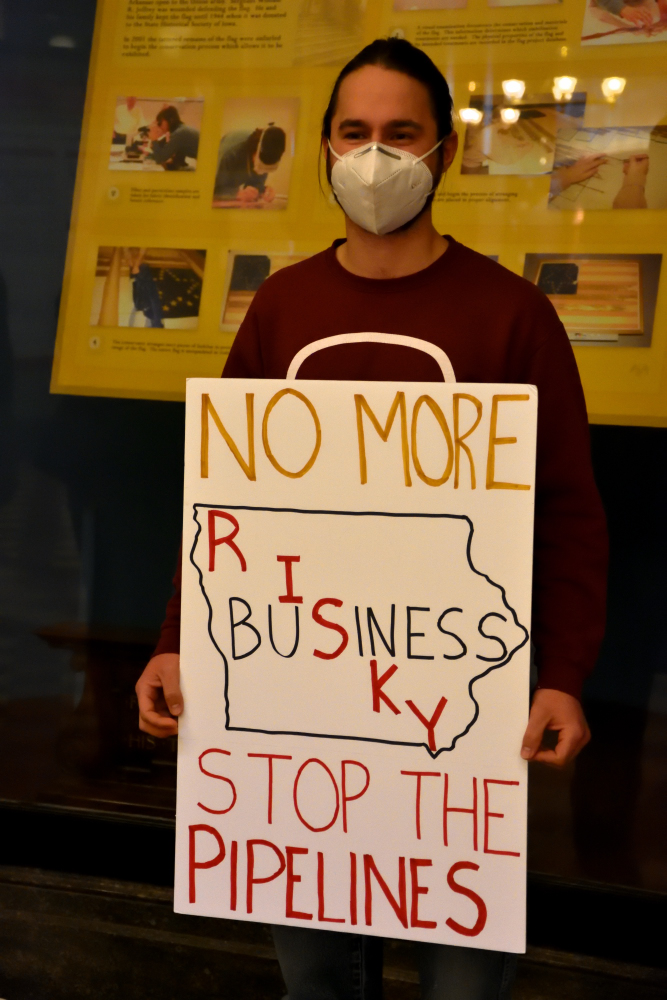
In 2013 the Keystone XL pipeline struggles began to bring some people and organizations together. One group was known as the Cowboy-Indian Alliance.

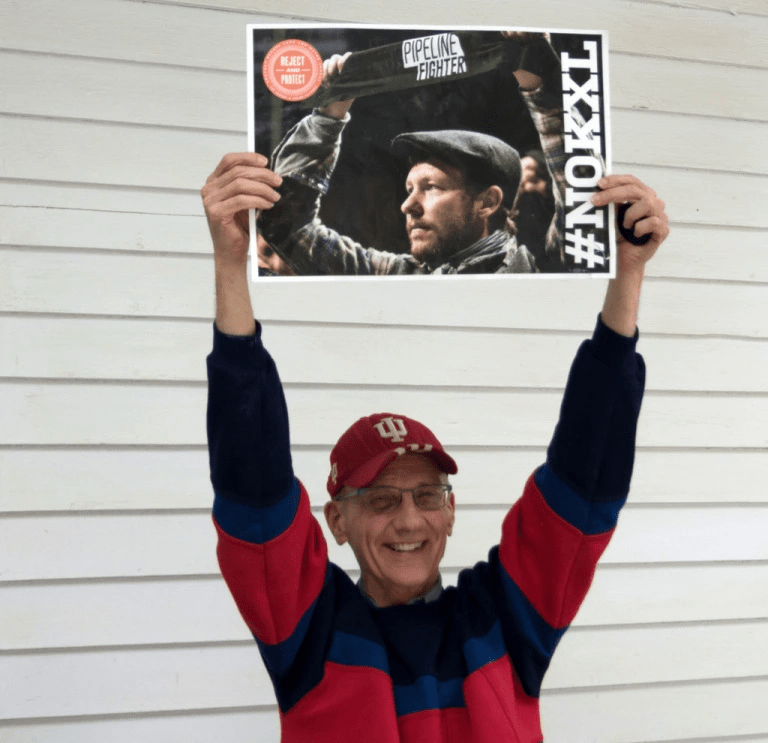
What little I learned about native cultures showed peoples who lived with far more integrity than I was able to. When I first became engaged with fossil fuel and pipeline resistance in 2013, I began to hear stories of Indigenous peoples working to protect the water. The Cowboy-Indian Alliance came together to oppose the Keystone XL pipeline. I was honored to be given this poster from the 2014 Harvest the Hope concert.
[See: The Cowboy and Indian Alliance.]

It was clear to me and others that nonnative folks needed not only to join with Indigenous peoples but be led by them. How to make that happen?

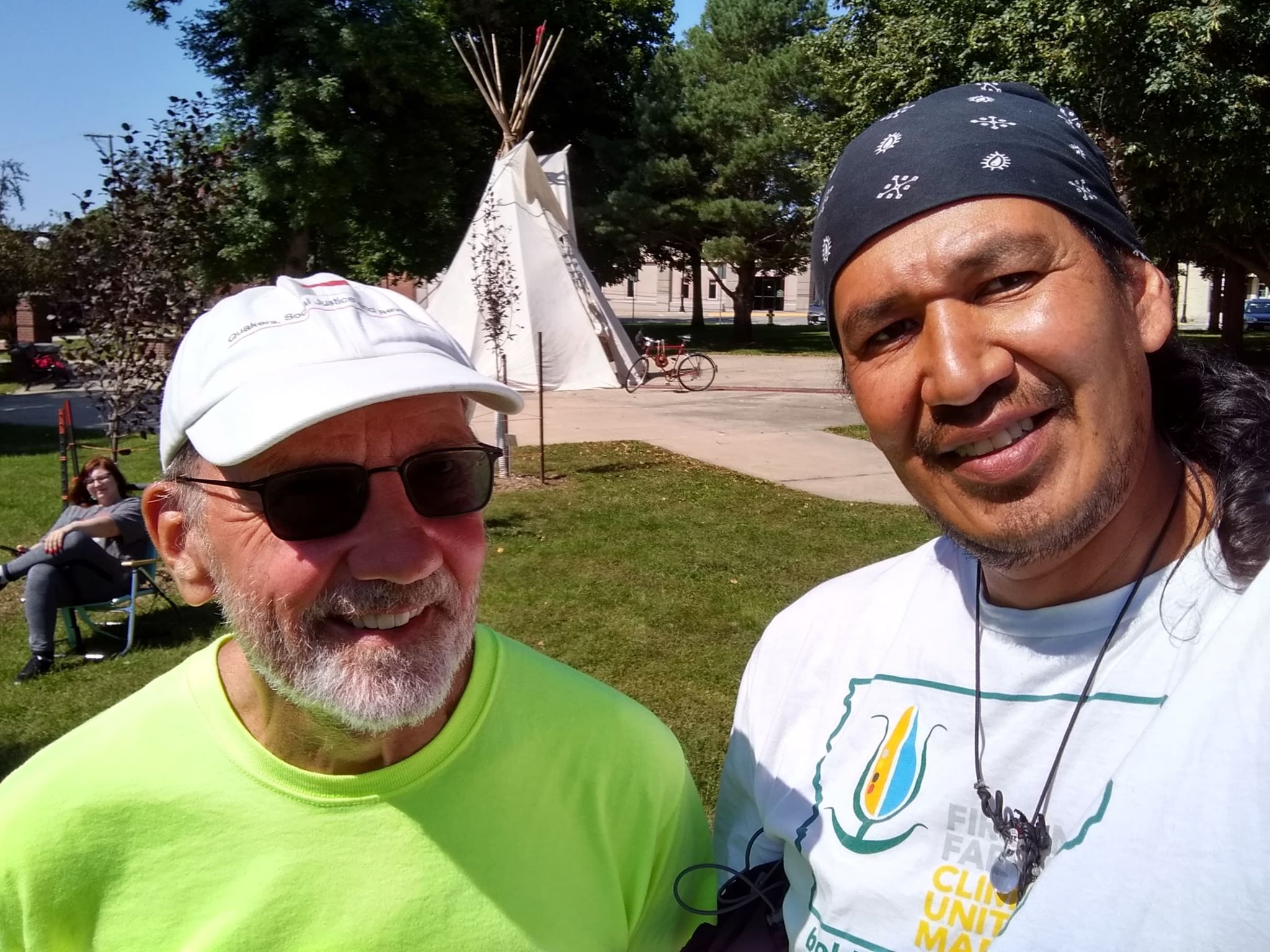
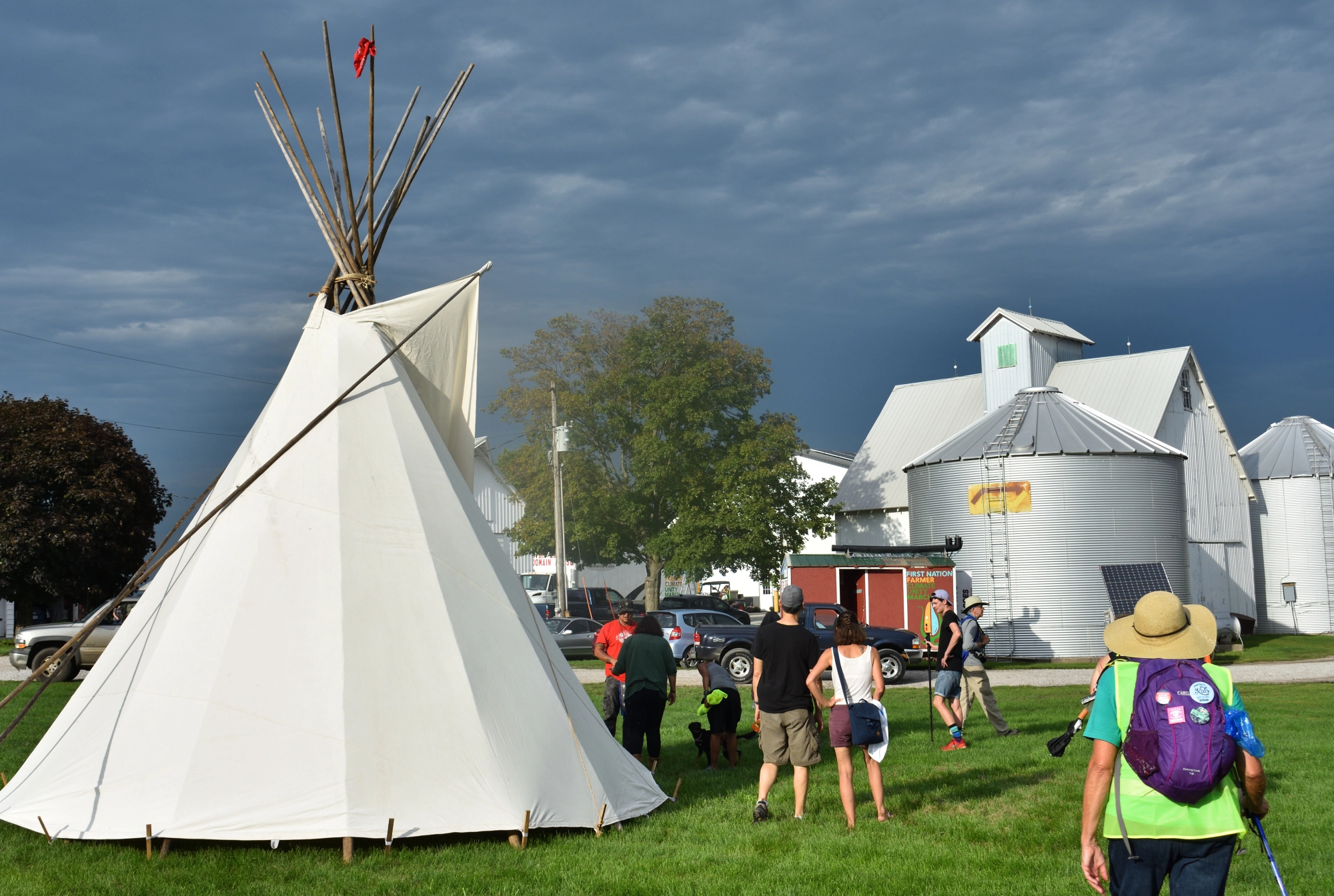
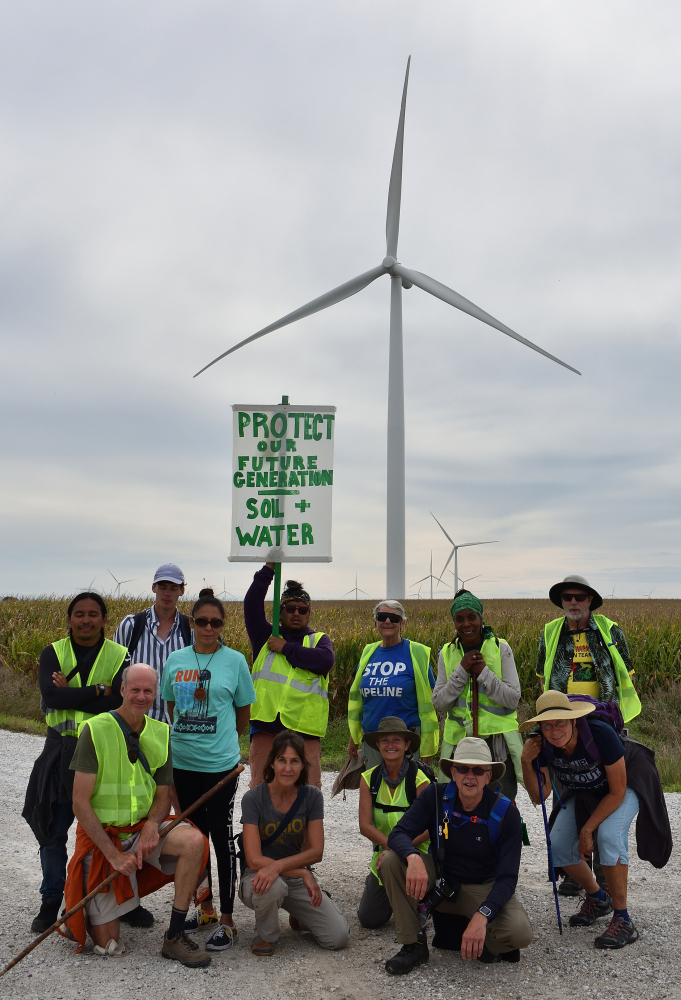
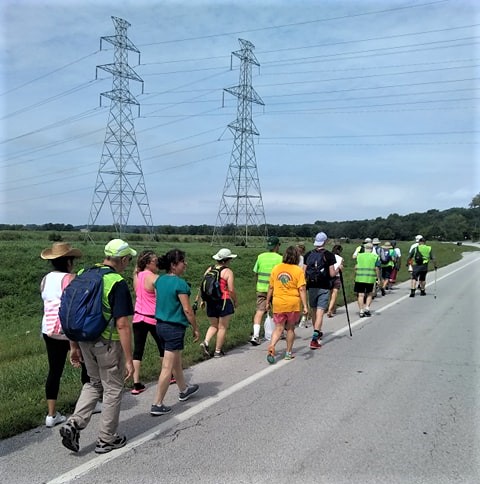
Indigenous Iowa and Bold Iowa organized the First Nation-Farmer Climate Unity March in 2018, with the intent of providing a small group of native and nonnative people the time to get to know each other, so we could begin to work on issues of common interest and concern. We walked and camped for eight days along the path of the Dakota Access pipeline from Des Moines to Fort Dodge, Iowa, ninety-four miles.
[see stories and photos from that sacred journey here: First Nation Famer Climate Unity March]

A number of us worked on various projects together since, strengthening our friendships. A number of those on that March are involved in the new coalition, the Buffalo Rebellion. That includes Sikowis Nobiss, Mahmud Fitil, Trisha Entringer, Donnielle Wanatee, Miriam Kashia, Peter Clay and me.

I plan to write a lot about the Buffalo Rebellion but wanted to begin with this introduction.

I believe the answer to the question posed by this post, Dare WE hope? is yes.

Buffalo Rebellion

#IAClimateJustice

The Duty to Resist

“The Duty to Resist” is an article in a recent edition of Friends Journal, The Duty to Resist by Carlos Figueroa, Friends Journal, April 1, 2022

I had forgotten Bayard Rustin had been incarcerated for draft resistance. He joins the list of those who have written about their prison experiences such as Henry David Thoreau and Martin Luther King, Jr.

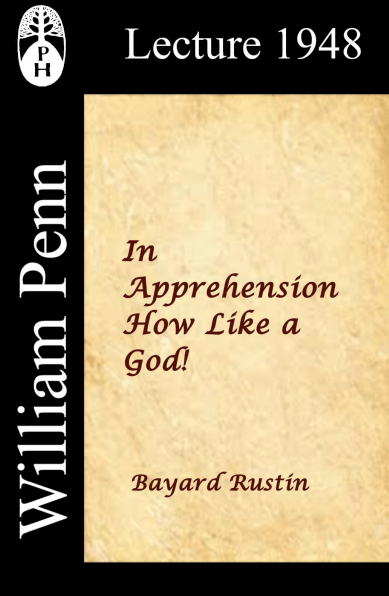
In March 1948, Bayard T. Rustin, in his capacity as secretary of FOR’s Racial-Industrial Department, was honored with the opportunity to deliver the William Penn Lecture as part of the Young Friends Movement of Philadelphia Yearly Meeting. Since its inception in 1916, the William Penn Lecture had been given by several Quaker luminaries. The lecture, titled “In Apprehension How Like a God” (drawing on Shakespeare’s Hamlet), touched on many Quaker values but, more importantly, the moral and pragmatic lessons Rustin had learned while incarcerated for two years in Kentucky and Pennsylvania federal prisons for refusing induction into the military. 

In his lecture, Rustin reminded Friends of the need to uphold their moral responsibility with integrity as individuals and within the broader community whenever witnessing and confronting domestic or global social injustices. Rustin implored Friends toward consistency and truthfulness in the face of violence, war, and oppression.

The Duty to Resist by Carlos Figueroa, Friends Journal, April 1, 2022

In the magazine, Ithaca College’s Carlos Figueroa looks back at an important talk Bayard Rustin gave to the young Friends association in Philadelphia in 1948. It was a pivotal moment in a life that contained so many: Rustin had spent the early 1940s organizing with the Fellowship of Reconciliation and was recently released from a prison term for violating the Selective Service Act. This was his opportunity to lay out a pacifist politics for the Cold War era:

Rustin explicitly sought to persuade others into considering civil disobedience as a social democratic strategy for pursuing structural and policy change. Rustin advocated for a humanitarian, communal, and moralistic approach to change, thus disregarding an individual’s political affiliation, geographic location, or government system.

Bayard Rustin in Friends Journal, A Blog from Martin Kelley, April 7, 2022


Rustin explicitly sought to persuade others into considering civil disobedience as a social democratic strategy for pursuing structural and policy change.


From the introduction of the QuakerSpeak video below: As a gay African-American, civil rights activist Bayard Rustin faced discrimination his entire life—sometimes, Walter Naegle reminds us, among his fellow Friends. Walter, Rustin’s partner and companion in his final decades, discusses his vital contributions to Quaker testimony of peace, integrity and equality.

“Bayard believed in the oneness of the human family, in the brotherhood and sisterhood of all people,” Walter says. “He believed in the power of nonviolence which comes out of that belief in the oneness of all people.… He saw everybody as equal in the eyes of the divine.”


“I put my life on pause, rewound, now I’m pressing play. The come up, grinding until the sun up, knowing it could all be gone if one person puts their guns up. A black Quaker no savior, I’m on my Bayard Rustin to convince all the skeptics and get people to just trust em.”

Sterling Duns

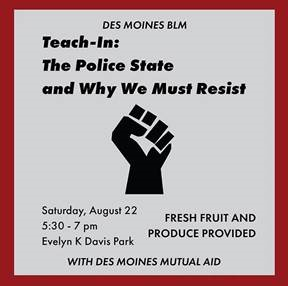
I’m reminded of a teach-in by my friend Ronnie James, The Police State and Why We Must Resist. “As bleak as this is, there is a significant amount of resistance and hope to turn the tide we currently suffer under.”


I’ve been working on this post for days, which is unusual. Not quite sure how these seemingly disparate parts fit together. In part because there will increasingly be direct actions related to environmental devastation. I’ll be attending a Climate Summit this weekend, which will include training for and participation in direct action.


#IAClimateJustice #Climatejustice #Climateaction

Wicked problems and sensemaking

I have so many questions.

  • How can the government do everything it can to increase oil production and exports, when our extinction is assured if greenhouse gas emissions are not radically decreased immediately?
  • How could the atrocities and utter destruction have happened? In Ukraine, Syria, Afghanistan, Iraq, United States?
  • Wouldn’t nonviolent responses against the invasion of Ukraine have been better, even if that meant Russian occupation for a time?
  • How can sanctions be a good thing when they result in the impoverishment of millions of people?
  • Why is it possible for everyone to buy and carry a gun?
  • Why do culture wars prevent teachers from teaching?
  • How did we allow healthcare workers to be overwhelmed by COVID cases?
  • How is it possible for so many prescription drugs to be too expensive?
  • Why have we allowed the militarization of police?
  • Why do millions of men, women and children live in poverty? So many without shelter? So many hungry?
  • Racism?
  • How can the military budget greatly exceed all other government programs combined?
  • How can the government control women’s choices? So many choices of all of us?

These questions stem from the difficulty of making sense of what’s going on today. Which reminds me of the concepts of wicked problems and sensemaking that James Allen writes about. I try to refrain from using so many quotes, but the entire article is well worth reading.

One thing he writes about makes more sense to me now from my experiences with Mutual Aid. What he writes here is a good description of Mutual Aid.

Something important happens when we gather in pursuit of a common goal. First we form rituals that help us relate to and negotiate each other, everything from a civic tradition that allows anyone with a voice to be respectfully heard, to sharing food and music in the local town hall every Friday night, to a labour system that fairly distributes the burden of work. Then, those rituals that stand the test of time become embedded in daily life. The ritual activities themselves and the good they produce help a community identity take root. As identity strengthens, so too does our sense of connectedness — our sense of affection, responsibility and obligation — to one another. When this happens, we then share a greater capacity for coherence and cooperation. And where we share greater capacity for coherence and cooperation there is also greater resilience: the ability to mobilise skills and resources to support the emergence of collective intelligence in response to crisis, enable rapid adaptation and ensure the continuity of the most important functions and structures of the community. This coherent togetherness and the collective intelligence that emerges out of it is the source of human strength and ingenuity. Within it lies our ability to transition from one evolutionary niche to another, even against the odds.

Pontoon Archipelago or: How I Learned to Stop Worrying and Love Collapse. By James Allen, originally published by Medium, June 18, 2019

…there remains the most existential risk of them all: our diminishing capacity for collective sensemaking. Sensemaking is the ability to generate an understanding of world around us so that we may decide how to respond effectively to it. When this breaks down within the individual, it creates an ineffective human at best and a dangerous one at worst. At the collective level, a loss of sensemaking erodes shared cultural and value structures and renders us incapable of generating the collective wisdom necessary to solve complex societal problems like those described above. When that happens the centre cannot hold.

The jumping-off point for this essay is a regrettable acceptance that a forthcoming energy descent combined with multiple ecological crises will force massive societal transformation this century. It’s hardly a leap to suggest that, with less abundant cheap energy and the collapse of the complex political and economic infrastructure that supports our present way of life, this transformation is likely to include the contraction and relocalisation of some (if not most) aspects our daily lives.

The problems before us are emergent phenomena with a life of their own, and the causes requiring treatment are obscure. They are what systems scientists call wicked problems: problems that harbour so many complex non-linear interdependencies that they not only seem impossible to understand and solve, but tend to resist our attempts to do so. For such wicked problems, our conventional toolkits — advocacy, activism, conscientious consumerism, and ballot casting — are grossly inadequate and their primary utility may be the self-soothing effect it has on the well-meaning souls who use them.

If we are to find a new kind of good life amid the catastrophes these myths have spawned, then we need to radically rethink the stories we tell ourselves. We need to dig deep into old stories and reveal their wisdom, as well as lovingly nurture the emergence of new stories into being.

Pontoon Archipelago or: How I Learned to Stop Worrying and Love Collapse. By James Allen, originally published by Medium, June 18, 2019

Martin Luther King Jr was a radical

“Hero” isn’t a word I hear much these days, but Martin Luther King, Jr, is one to me. Other heroes are the men and their families who also resisted cooperation with the systems of war. That includes a number of those in my Quaker community. And includes Muhammad Ali. People whose lives reflected their faith and beliefs. Because even as a child it was clear so many people did not do so. This was and continues to be spiritually traumatic.
In this brief celebratory moment of King’s life and death we should be highly suspicious of those who sing his praises yet refuse to pay the cost of embodying King’s strong indictment of the US empire, capitalism and racism in their own lives.

Martin Luther King Jr was a radical. We must not sterilize his legacy.  Cornel West

Martin Luther King’s beliefs and actions related to racism are well known.

He was late to publicly come out against the Vietnam War and was harshly criticized by most in his own community for doing so. The argument was that would weaken his work against racism. But he could clearly see the ties between racism, capitalism, and militarism.

A historic speech delivered by Martin Luther King Jr. is remembered even 55 years later as one of the most courageous speeches ever made. This speech stated those truths which no other leading political leader or even leading activist was willing to state in such a clear and sharp way.  The reference here is of course to the speech delivered by Dr. King at Manhattan’s Riverside Church on April 4 1967—a speech remembered also as the ‘Beyond Vietnam: A Time to Break Silence’ speech.

The great importance of this speech is due to several factors. Firstly, he drew a very clear linkage between why a civil rights activist like him has to be a peace activist at the same time. He stated very clearly that the high hopes he had from the poverty program started getting shattered from the time of increased spending on Vietnam war. So he realized that in order to really help the poor it is important also to prevent wars and to have peace. Secondly, he expressed deep regret that it is mainly the children of the poor (black as well as white young men from poor households) who were being sent to fight a very unjust and oppressive war, while they should have been contributing to reducing distress of their own settlements. Thirdly, he exposed the great injustices and bitter realities about US military intervention with such clarity and conviction that it was bound to have a strong nationwide and in fact worldwide impact.

April 4 – Remembering Martin Luther King on his Death Anniversary by Bharat Dogra, Counter Currents, April 4,2022


The major threat of Martin Luther King Jr to us is a spiritual and moral one.
Martin Luther King Jr turned away from popularity in his quest for spiritual and moral greatness – a greatness measured by what he was willing to give up and sacrifice due to his deep love of everyday people, especially vulnerable and precious black people.

If King were alive today, his words and witness against drone strikes, invasions, occupations, police murders, caste in Asia, Roma oppression in Europe, as well as capitalist wealth inequality and poverty, would threaten most of those who now sing his praises.
Today, 50 years later the US imperial meltdown deepens. And King’s radical legacy remains primarily among the awakening youth and militant citizens who choose to be extremists of love, justice, courage and freedom, even if our chances to win are that of a snowball in hell! This kind of unstoppable King-like extremism is a threat to every status quo!

Martin Luther King Jr was a radical. We must not sterilize his legacy.  Cornel West

New heroes for me are the young people I’ve been blessed to work with and learn from, particularly in Mutual Aid communities. Working against “capitalist wealth inequality and poverty.”

King’s radical legacy remains primarily among the awakening youth and militant citizens who choose to be extremists of love, justice, courage and freedom.”


FCNL Witness Wednesday silent reflection

I’m inviting you to join the Friends Committee on National Legislation’s Witness Wednesday Silent Reflection April 6, 2022, from 4:15-5:00pm Central on Zoom.  

I will be sharing a story about our Mutual Aid work for reflection. You can read some of my more recent writings about Mutual Aid here: https://quakersandreligioussocialism.com/mutual-aid/


This is the Zoom link for Witness Wednesday Silent Reflection:  fcnl.org/ww-stream  


What to expect at Silent Reflection

The space is open for conversation and fellowship beginning at 4 p.m. Central Time.
At 4:15 p.m. CT, a designated convener will gather the group. Often the convener will share a quote or question to help the group focus.
The group will settle into silence. Anyone is welcome to share a message or reflection. We ask that you leave space between messages and only share once.
A few minutes before 5:00 p.m. CT, the convener will close the gathering and invite participants to introduce themselves and share closing thoughts.

To join, visit fcnl.org/ww-stream or register here to receive the information to join by phone.
You shouldn’t need this, but just in case:

  • Meeting ID: 854 485 249
  • Passcode: SR2021

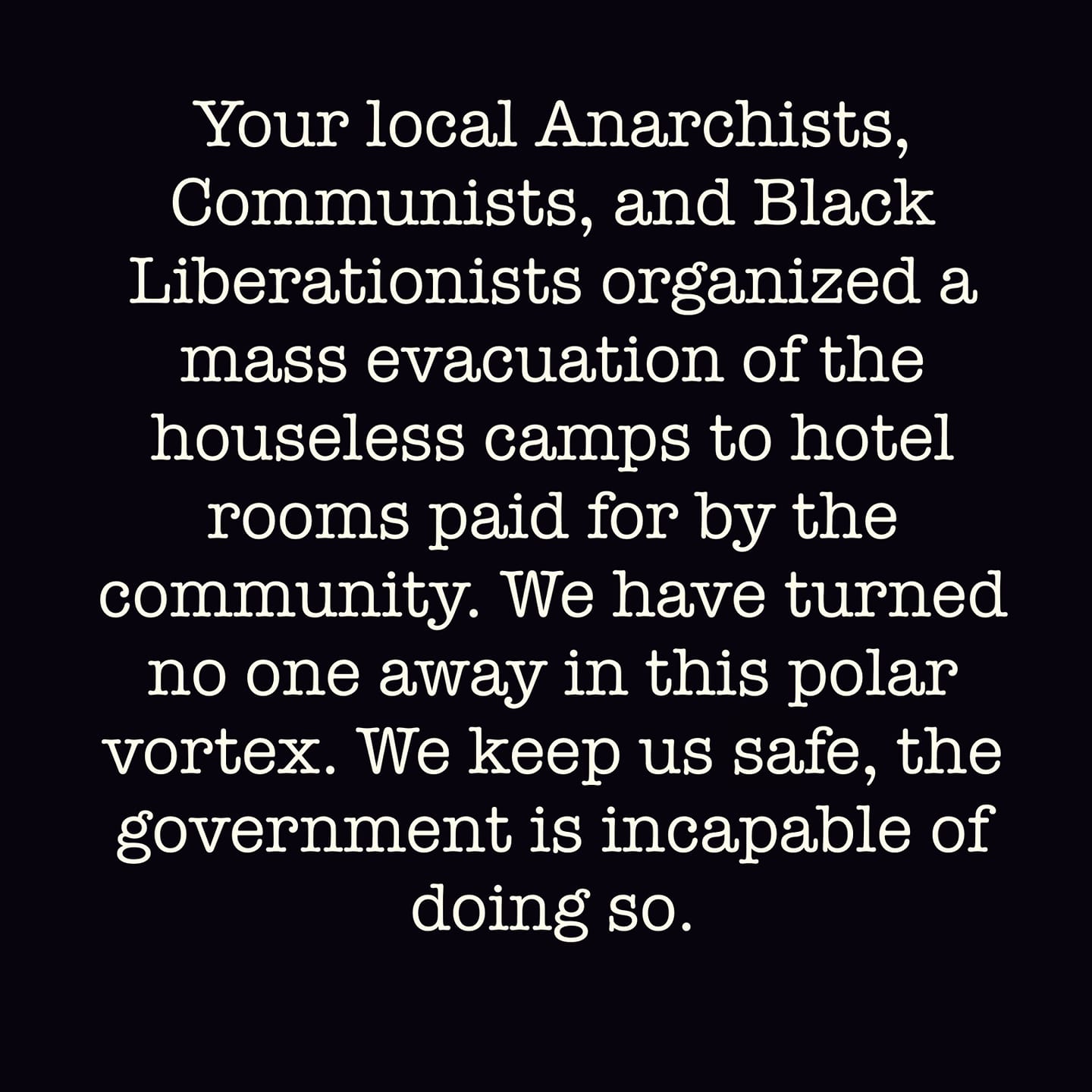
This Wednesday, April 6, I will be sharing this story from my good friend Ronnie James. Ronnie is an Indigenous organizer with twenty years of experience. I’ve been blessed to be involved in the Des Moines Mutual Aid food giveaway program he talks about in this story. Other Mutual Aid projects include court solidarity and bail fund, and food and propane support for houseless communities in Des Moines.


So I work with a dope crew called Des Moines Mutual Aid, and on Saturday mornings we do a food giveaway program that was started by the Panthers as their free breakfast program and has carried on to this day. Anyways, brag, brag, blah, blah.

So I get to work and I need to call my boss. He remembers and asks about the food giveaway which is cool and I tell him blah blah it went really well. And then he’s like, “hey, if no one tells you, I’m very proud of what you do for the community” and I’m like “hold on hold on. Just realize that everything I do is to further the replacing of the state and destroying western civilization and any remnants of it for future generations.” He says “I know and love that. Carry on.”

–Ronnie James

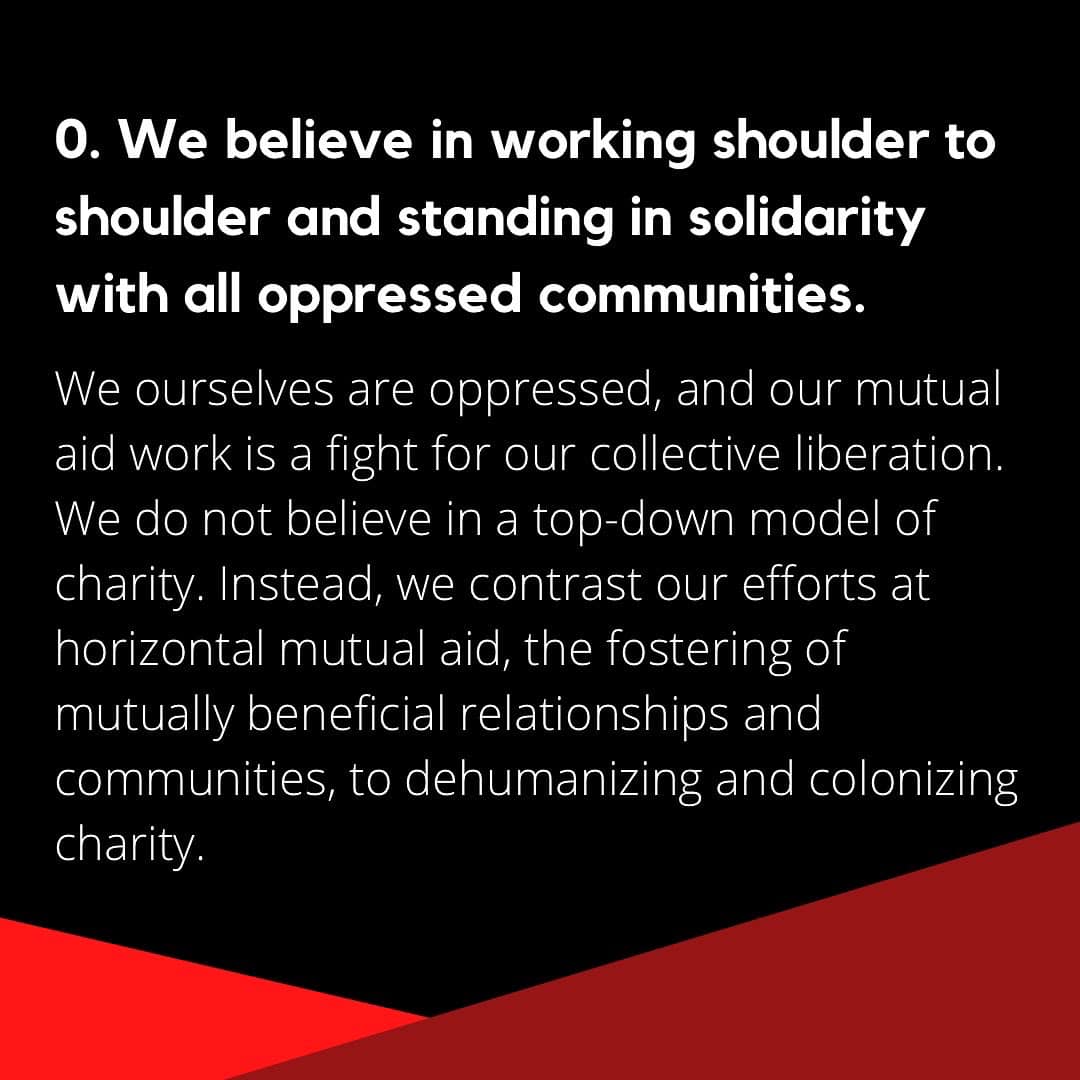
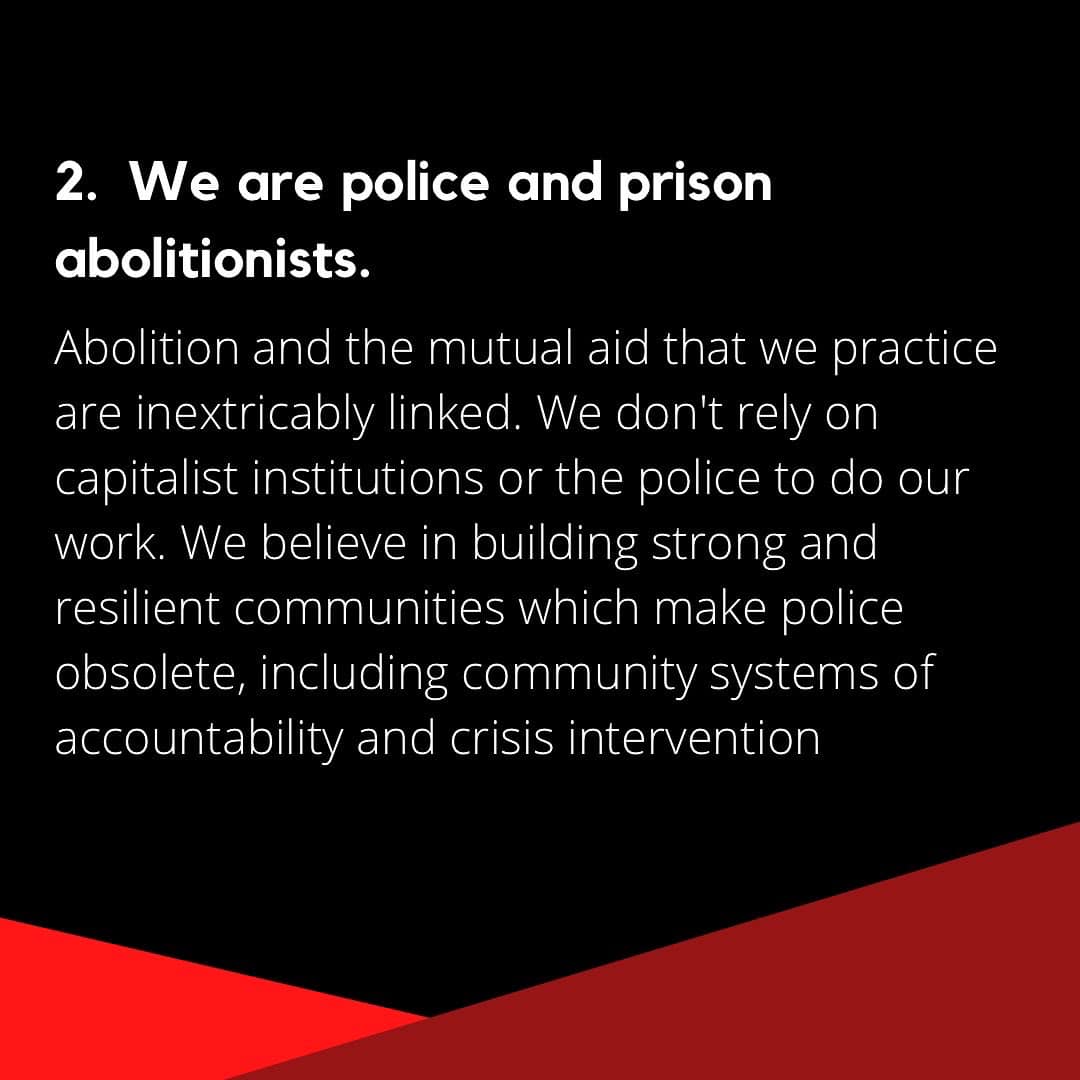
A fundamental part of Mutual Aid is the entire community is involved. We avoid “us” versus “them”. This leaflet is included in the boxes of food we distribute. I know of people who once came for food who are now helping with the distribution of the food.


This photo is from the recent Des Moines Mutual Aid zine that contains excellent articles. DOWNLOAD HERE


Mutually exclusive

Greenhouse gas emissions are the primary cause of increasing environmental catastrophe, most recently evidenced by days of multiple tornados and severe thunderstorms.

This is an existential crisis. Dramatically reducing greenhouse gas emissions, radically reducing burning fossil fuels is the only way to start to mitigate the environmental chaos

Instead, the Biden administration is bringing more oil into the market.

  • releasing a record-shattering 180 million barrels of oil from the Strategic Petroleum Reserve, and
  • proposing fines on companies that aren’t producing oil on lands they are leasing for that purpose.

Reducing fossil fuel emissions or increasing oil production are mutually exclusive.

Capitalist economic systems are driven by profits regardless of the consequences. Even though the consequences will continue to be rapidly evolving environmental chaos. What choice do you think your children and their children want us to make?

The consequences of increasing gasoline prices need to be dealt with. But there are alternatives to bringing more oil to markets. Greenhouse gas emissions decreased as many worked from home because of the pandemic. Free public transportation would help although capacity would need to be increased significantly, rapidly.

Alternatives to capitalist economic systems need to be developed. Such as Mutual Aid communities.

Even though oil prices have nearly doubled since the end of 2019, US production is down about 10% over that period.

“This is a bridge towards greater supply coming on the market from the United States and elsewhere,” a senior administration official told reporters during a conference call Thursday.

To encourage US oil companies to ramp up production, the White House said Biden is calling on Congress to make companies pay fees on wells from their leases that they haven’t used in years and on acres of public lands that they are hoarding without producing.

Companies “will have to choose” whether to start producing or pay a fee for each idled well and unused acre, the White House said.

What Biden’s shock-and-awe campaign means for high gas prices. Analysis by Matt Egan, CNN, March 31, 2022