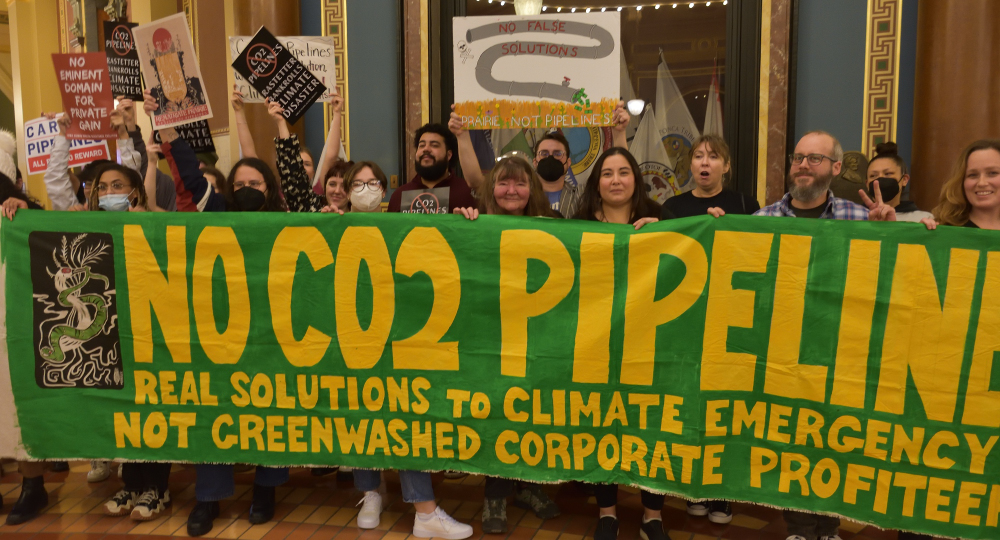
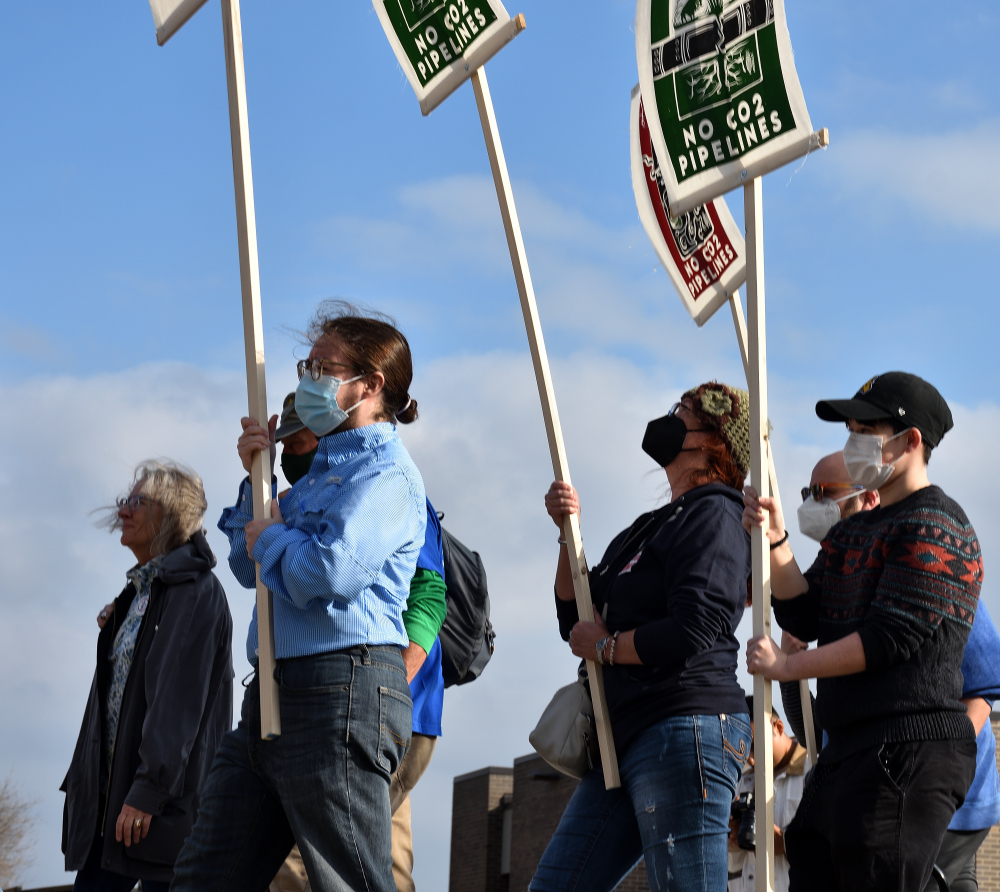
The approval for the construction of the Mountain Valley Pipeline (MVP) remained in the debt ceiling legislative just passed by the US Congress. This is an egregious act on many levels.
The Mountain Valley Pipeline (MVP) is a project proposed in 2014 that would transport fracked gas from West Virginia to southern Virginia through a 300-mile pipeline. The project has sparked widespread opposition for years from environmentalists, civil rights activists, and local residents who are concerned about its impacts on water quality, wildlife, climate change, and Indigenous and property rights.
The MVP was approved by Congress as part of the debt ceiling deal that was just passed. The deal included a provision that declared the MVP as “required in the national interest” and ordered the federal agencies to issue the necessary permits within 21 days and shield the project from legal challenges. The provision also weakened the National Environmental Policy Act (NEPA), a law that requires environmental reviews for major federal actions that affect the environment.
Many of us have criticized the deal that undermines:
the rule of law
public participation
Indigenous approval
and environmental justice
The MVP contradicts President Biden’s pledge to combat the climate crisis and transition to clean energy..
I recently wrote “What should be non-negotiable” to try to explain, yet again, why we can not allow continued construction of fossil fuel infrastructure, from pipelines to carbon capture to gas stations.
I know what it’s like to work year after year, fighting to protect Mother Earth from fossil fuels. I was going to say that for me this began in 2013 when I was trained as an Action Lead in the Keystone Pledge of Resistance. But it began much earlier when I was led to live without a car when I moved to Indianapolis in 1970. My love for nature actually began from growing up on farms and camping trips to national parks.
Of course, Indigenous peoples have worked to protect Mother Earth for centuries.
It’s not easy to maintain years-long resistance to a cause. That is one reason why approval of MVP is devastating. It is difficult to find people who are willing to work for justice causes. Difficult to organize and get people to commit to various actions. To get people to move outside their comfort zone. To face all kinds of opposition, time and time again. And all too often the cause is defeated. The pipelines and other infrastructure continue to be built. Mother Earth takes another hit.
Such is the case with the Mountain Valley Pipeline. Its approval hurts not only those who worked so hard against MVP, but everyone working on any environmental cause. It shows yet again the Federal administration and Congress do not understand the gravity of our evolving environmental devastation.
It also shows, again, that environmental solutions will not come from the dominant political culture in this country. Which is why I am so grateful to have been led to my Mutual Aid community. We work locally, within the community, to address basic needs. Instead of talking and having committee meetings, we come together to help our neighbors with food and shelter.
And we strive to advance Indigenous leadership. Indigenous ways can help clean our waters and move toward living sustainably. Help us heal our relationships with Mother Earth and all our relations.
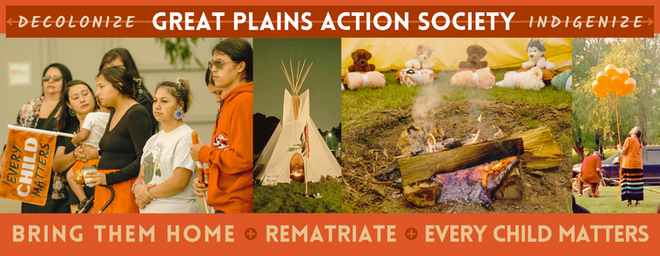
The circle is completed when Indigenous peoples support Mutual Aid, as Des Moines Mutual Aid is supported by the Great Plains Action Society (GPAS). Mutual Aid is one of the methods in the GPAS’s mechanism of engagement.
Recently, separately, the NAACP and Equality Florida (the state’s largest LGBTQ civil rights group) issued travel advisories in Florida. These advisories highlight the consequences of Florida’s relentless far-right political agenda and passage of legislation to implement its extreme policies.
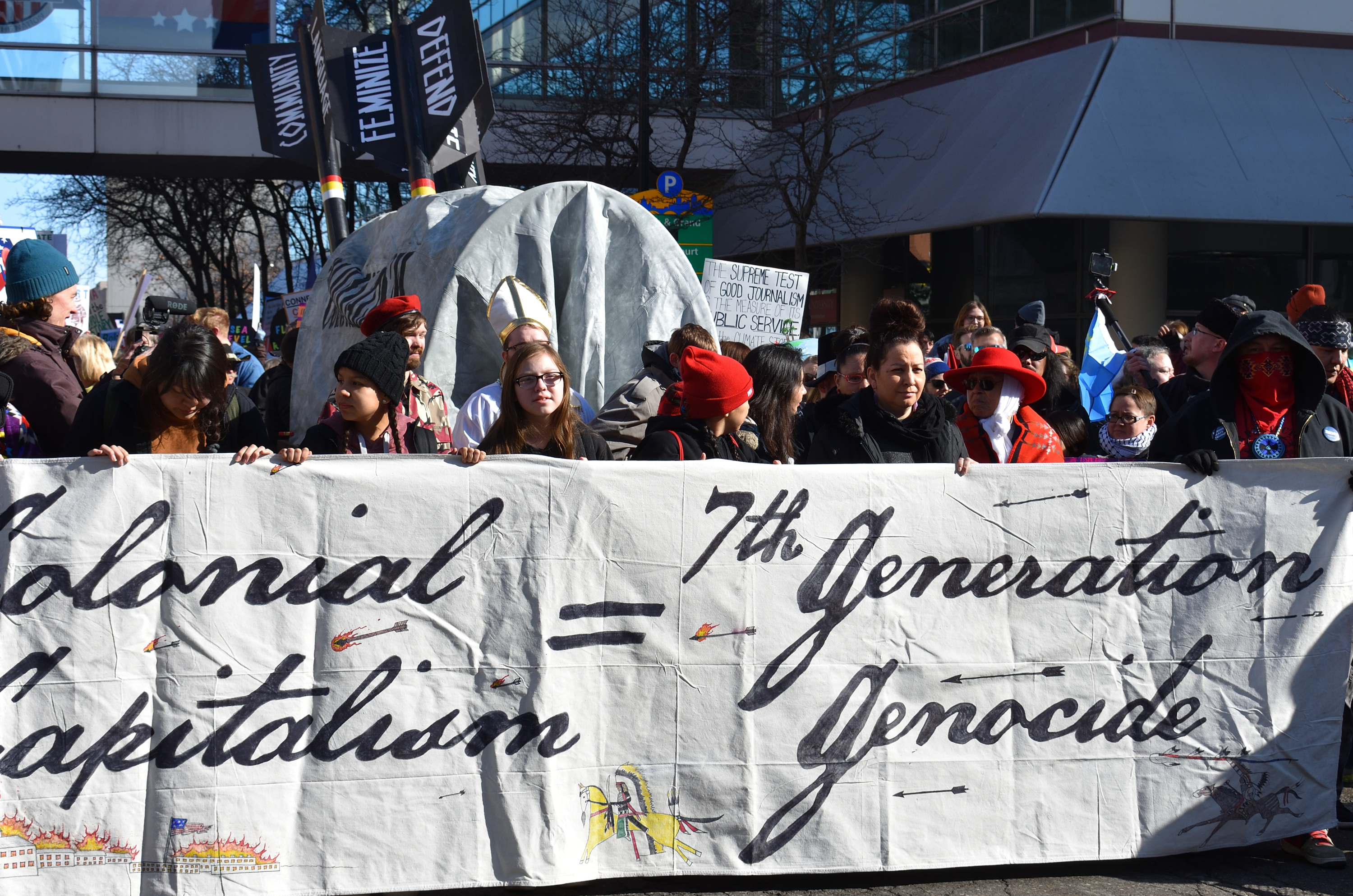
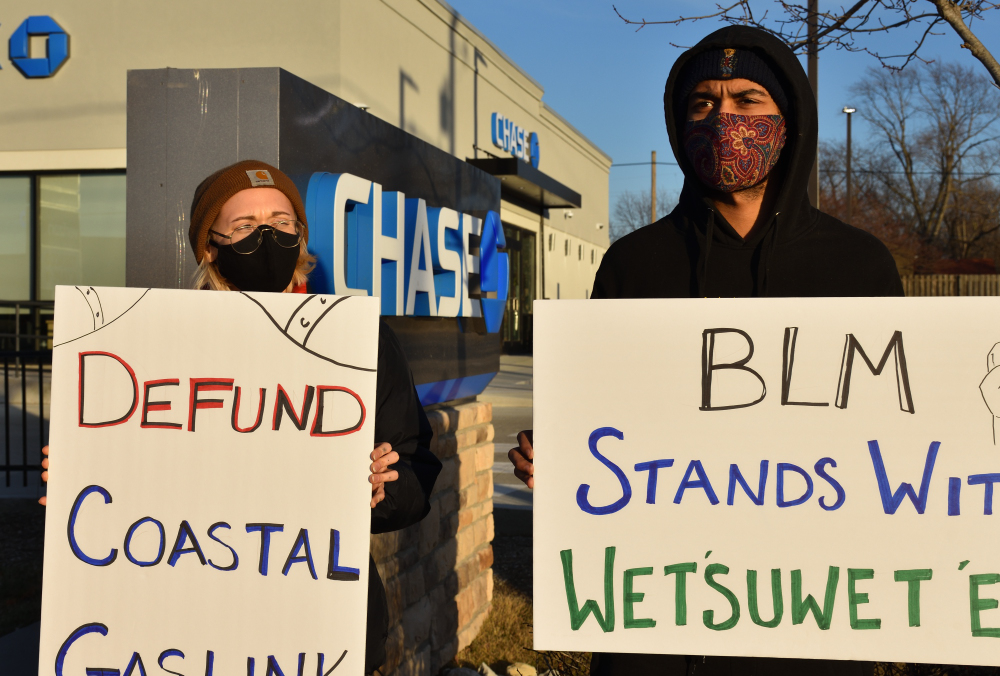
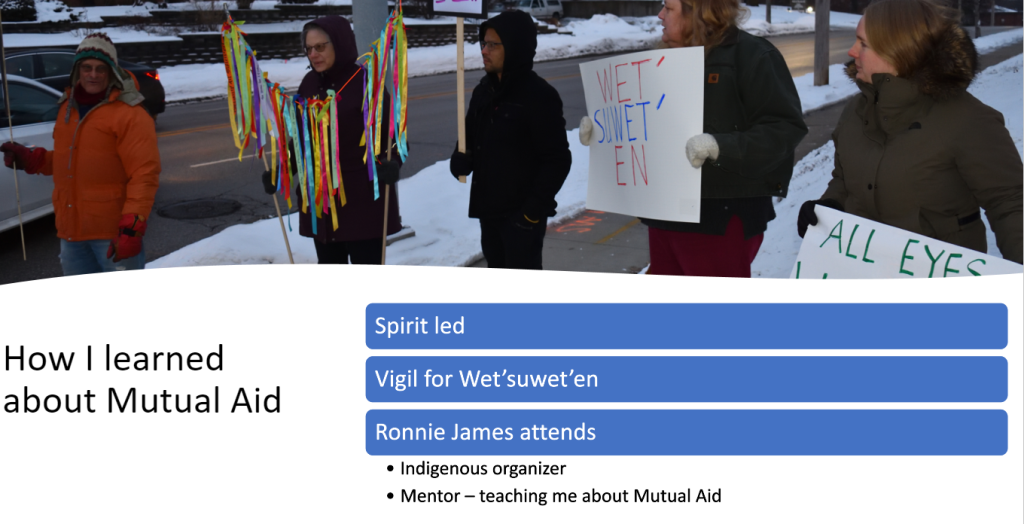
At the end of this is a description of Des Moines Black Liberation’s declaration of #BlackEmergencyIA in October 2020. Des Moines Mutual Aid has always supported Des Moines Black Liberation. Also, in one of the photos below you can see how Des Moines Black Liberation (BLM) supports the Wet’suwet’en peoples’ struggles against the Coastal GasLink pipeline in Canada, showing how justice groups support each other.
The #BlackEmergencyIA declaration was reissued at the time of President Biden’s inauguration in light of the January 6th attack (2021) on the U.S. Capitol.
WASHINGTON – Today, the NAACP Board of Directors issued a formal travel advisory for the state of Florida. The travel advisory comes in direct response to Governor Ron DeSantis’ aggressive attempts to erase Black history and to restrict diversity, equity, and inclusion programs in Florida schools.
The formal travel notice states, “Florida is openly hostile toward African Americans, people of color and LGBTQ+ individuals. Before traveling to Florida, please understand that the state of Florida devalues and marginalizes the contributions of, and the challenges faced by African Americans and other communities of color.”
“Let me be clear – failing to teach an accurate representation of the horrors and inequalities that Black Americans have faced and continue to face is a disservice to students and a dereliction of duty to all,” said NAACP President & CEO Derrick Johnson. “Under the leadership of Governor Desantis, the state of Florida has become hostile to Black Americans and in direct conflict with the democratic ideals that our union was founded upon. He should know that democracy will prevail because its defenders are prepared to stand up and fight. We’re not backing down, and we encourage our allies to join us in the battle for the soul of our nation.”
The travel advisory was initially proposed to the Board of Directors by NAACP’s Florida State Conference. NAACP’s collective consideration of this advisory is a result from unrelenting attacks on fundamental freedoms from the Governor and his legislative body.
“Once again, hate-inspired state leaders have chosen to put politics over people. Governor Ron DeSantis and the state of Florida have engaged in a blatant war against principles of diversity and inclusion and rejected our shared identities to appeal to a dangerous, extremist minority,” said Chair of the NAACP Board of Directors, Leon Russell. “We will not not allow our rights and history to be held hostage for political grandstanding. The NAACP proudly fights against the malicious attacks in Florida, against Black Americans. I encourage my fellow Floridians to join in this fight to protect ourselves and our democracy.”
Following Gov. DeSantis’ so-called leadership in driving the state to reject students’ access to AP African American studies course in March, the NAACP distributed 10,000 books to 25 predominantly Black communities across the state in collaboration with the American Federation of Teachers’s Reading Opens the World program. The majority of the books donated were titles banned under the state’s increasingly restrictive laws. The NAACP continues to encourage local branches and youth councils to start community libraries to ensure access to representative literature.
The NAACP encourages Florida residents to join this effort to defeat the regressive policies of this Governor and this state legislature. Interested residents and supporters can visit www.naacp.org for additional information and updates.
The advisory cited specific Florida policies including SB 266 and HB 7.
SB 266, signed into law just last week, effectively prohibits higher education institutions from spending state funds on diversity, equity, and inclusion (DEI) initiatives. In the words of Governor DeSantis, this law will help “treat people as individuals” by banning programs that “[stand] for discrimination, exclusion, and indoctrination.” This bill builds on SB 7044, which required periodic reviews of tenured faculty members and mandated professors to post their textbook lists online 45 days before their first classes.
In March, college students in Florida organized numerous walkouts in protest of HB 999, a similar proposal being worked on in the state’s House of Representatives.
HB 7, also known as the Stop Wrongs Against Our Kids and Employees Act (“Stop W.O.K.E. Act”), was enacted in 2022. It attempted to ban “woke indoctrination” by limiting the teaching of Critical Race Theory at public universities and restricting diversity training among employers. A federal court blocked parts of HB 7 after finding them unconstitutional.
Florida’s largest LGBTQ rights group travel advisory 4/11/2023
Florida’s largest LGBTQ civil rights group has issued a travel advisory for the state.
Equality Florida says the advisory, issued Wednesday, was prompted by “the passage of laws that are hostile to the LGBTQ community, restrict access to reproductive health care, repeal gun safety laws, foment racial prejudice and attack public education by banning books and censoring curriculum.”
…
Florida has recently adopted a slate of hateful laws, and is fast-tracking additional measures that directly target the rights of LGBTQ+ individuals and basic freedoms broadly. Already, those policies have led Florida parents to consider relocating, prospective students to cross Florida colleges and universities off their lists, events and conferences to cancel future gatherings, and the United States military to offer redeployment for service members whose families are now unsafe in the state. These laws and policies are detailed below.
The Equality Florida travel advisory describes the following concerns:
Assaults on Medical Freedom
Assaults on Academic Freedom
Censorship and Erasure of the LGBTQ Community
Assaults on Arts, Entertainment, and Sports Participation
Assaults on Business
Efforts to Foment Racial Prejudice
Repealing of Gun Safety Laws
Attacks on Immigrant Communities
Des Moines Black Liberation State of Emergency
This reminds me of the declaration of #BlackEmergencyIA in October 2020. Des Moines Mutual Aid has always supported Des Moines Black Liberation. In the video, you can see my Des Moines Mutual Aid comrade, Patrick Stahl, describing that support.
Patrick: Hi, I’m Patrick Stahl with Des Moines Mutual Aid.
Des Moines Mutual Aid is a collective that does outreach for homeless folks in our community, houseless folks in our community. We also assist BLM with their rent relief fund, and most of the work we’ve done is running the bail fund for the protests over the summer. In the course of that work, we have witnessed firsthand the violence that is done upon people of color, Black people specifically, by the white supremacist forces of the state – in this state, in this city, in this county. There is absolutely a state of emergency for people of color and Black people in Iowa. The state of emergency has been a long time coming. We will support – DMMA will absolutely support any and all efforts of this community – BLM, and the people of color community more generally- to keep themselves safe. Power to the people.
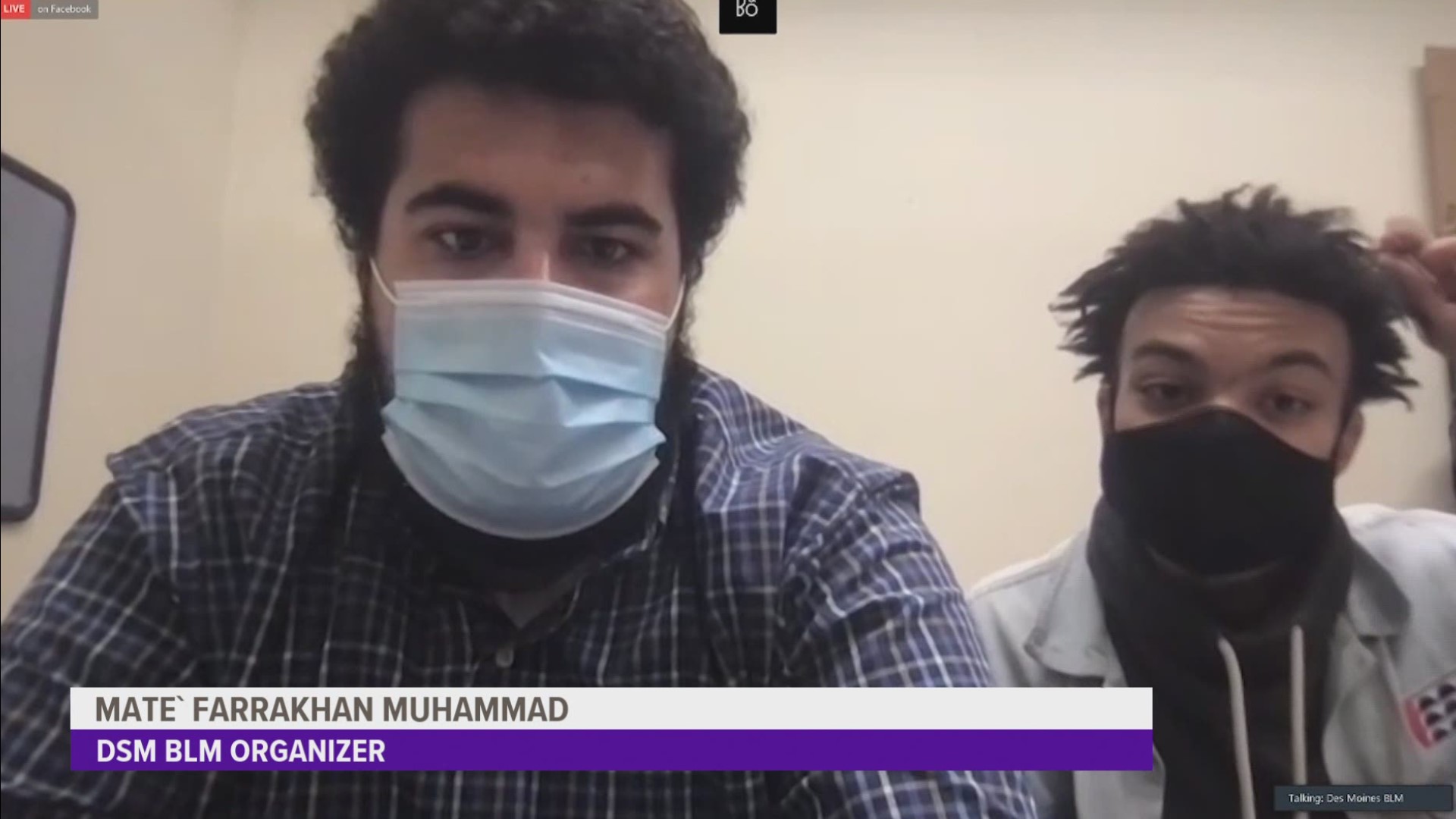
Des Moines BLM reissues travel advisory ahead of inauguration
The #BlackEmergencyIA advisory is set to go into effect Saturday ahead of the President-elect Joe Biden’s inauguration Jan. 20 in Washington.
ICCC and DSM BLM organizers held a press conference Thursday to go over more details.
“So last Wednesday, January 6, we all saw as white supremacists attacked the US Capitol,” said Jaylen Cavil, chair of DSM BLM’s advocacy department. “For many, we heard that this was a surprise, but for us at the Des Moines Black Liberation Movement, this was business as usual.”
“Here we are again and I’m tired of doing these press conferences, but unfortunately they are a necessity,” ICCC Executive Director Luana Nelson-Brown said. “The violence that we’ve seen over the past few months continues to escalate.”
Nelson-Brown said the first travel advisory happened in September.
“As many are aware, authorities and other outlets are putting out warnings saying that in all 50 [states] and this nation’s capital there will be white supremacist violence that is being planned in the coming week surrounded around the inauguration of Joe Biden,” Cavil said.
That is why DSM BLM is reissuing the advisory.
Basic measures include:
Do not travel alone or at night if at all possible
If you must, then make sure to inform someone of where you are going and when you plan to return
The publication of MUTUAL AID MONTHLY relates to one of our Points of Unity, political consciousness.
We work to raise the political consciousness of our communities. Part of political education is connecting people’s lived experiences to a broader political perspective. Another component is working to ensure that people can meet their basic needs. It is difficult to organize for future liberation when someone is entrenched in day-to-day struggle.from Points of Unity, Des Moines Mutual Aid
Political ignorance is one of the main reasons this country is falling into chaos and authoritarianism. People would be less susceptible to falling for cults of personality and understand the threats to freedom posed by culture wars if they had a better education, including critical thinking skills. You might think of sharing MUTUAL AID MONTHLY with others in furtherance of their/your political consciousness. As a resource to stimulate discussions.
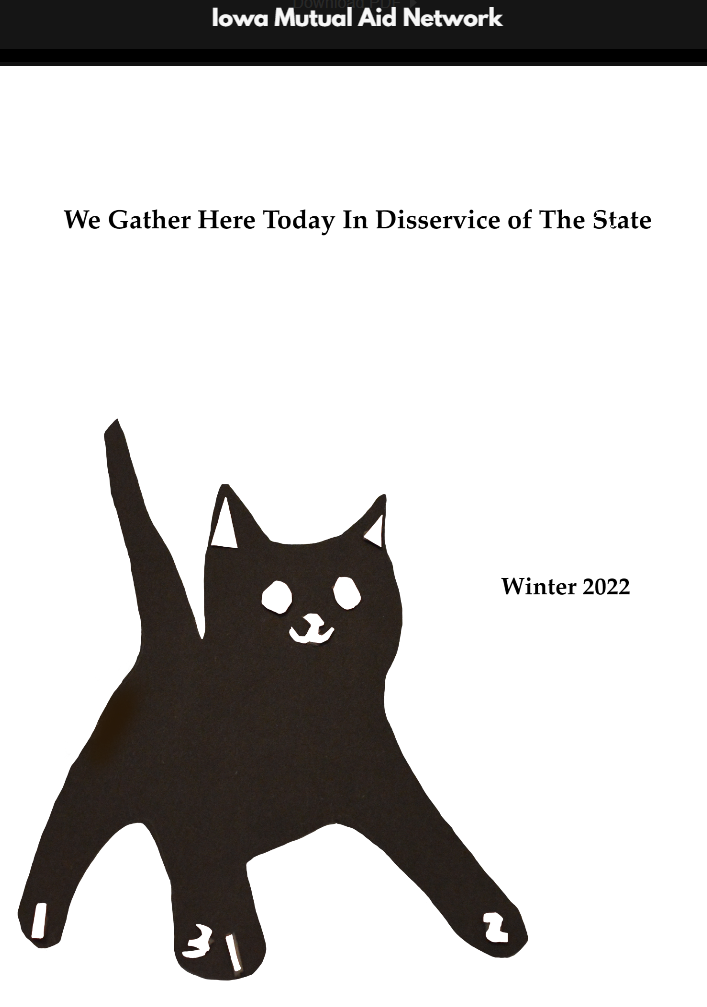
Yesterday at our Des Moines Mutual Aid food giveaway, I received a copy of this month’s edition of the Des Moines Mutual Aid Monthly, the third edition available. Below are the three editions that have been published thus far.
Are you part of the mainstream, or on the margins?
Reference is often made to marginalized groups or peoples. My friend Jed Walsh recently wrote, “I’m tired of being in the margins of a Quakerism that’s clinging to the status quo, and hoping to find other places to practice faith and spirituality where I can feel more aligned with others.“
I hadn’t thought of myself in terms of being on the margins until I read that. Quakers are usually on the margins of society, almost by default. But Jed brought into focus that he and I are on the margins of Quakerism today.
The Mainstream and Margins exercise below might be helpful for those in the mainstream to learn about those of us on the margins and what our concerns are.
Thus mainstream/margin invites curiosity and flexibility, asking the question what is going on in this group now. Organizers then make thoughtful choices about when a mainstream needs assistance in recognizing and re-negotiating its relationship with one of its margins.
One of the great things about Mutual Aid is the intense focus on preventing hierarchies, with the intent to prevent anyone from being marginalized.
The following describes the Mainstream and Margins exercise.
The goals of the exercise are:
To assist participants to identify with both marginal and mainstream roles that they play in society.
To boost awareness of the oppressive characteristics of the mainstream role.
To gain hope through identifying how they can support social change while in a mainstream role.
To practice the skills of an ally.
Activist and nonviolence trainer Daniel Hunter has come up with a helpful exercise called Mainstream and Margins. This is great for activist groups because it doesn’t rely on jargon or overly complicated theories, so it can be used in groups with a diversity of viewpoints or education levels. It also overcomes the mistake of presenting relatively static identity characteristics like age, gender, or religion as though they automatically explain group dynamics. Note, though, that the exercise is challenging and so is best done with a skilled facilitator.
No matter how homogeneous a group or an organization believes itself to be, a careful look shows that some characteristics are marginalized. A group known for vigorous and noisy debates has some quiet members. An organization which believes itself to be bureaucratically efficient has a couple of members who would love to cut corners. A solemn and highly disciplined group includes a few who, out of sight, love to party. The mainstream of a group sets the tone, sets the communication style, and gets to have its own preferences accepted by the margins. Awareness of this dynamic creates choice points for organizers and facilitators who may or may not cooperate with the system. …
Rather than viewing oppression as static (i.e. this group is always oppressed), organizers and activists can be aware of the complexities of this unique group. E.g. while society oppresses women in the larger society, an activist group might have a mainstream of women who unintentionally marginalize non-women in the group. …
Thus mainstream/margin invites curiosity and flexibility, asking the question what is going on in this group now. Organizers then make thoughtful choices about when a mainstream needs assistance in recognizing and re-negotiating its relationship with one of its margins. The mainstream is not about numbers—but it is about who has their interest recognized. So, for example, even in a group where most of the group has chronic medical conditions, the norm might be: we don’t acknowledge our conditions. …
Instead of making value judgments about how oblivious the mainstream is, accept it as one accepts the law of gravity. Then go ahead and assist the margins to express themselves and assist the mainstream to hear them.
Instead of a checklist of diversity items to look for—e.g. race, class, gender, sexual orientation—you can look freshly at each group to see how is mainstream behavior playing out.
The exercise, then, is about what is normal and accepted within a group and what is marginalized. All groups will marginalize behaviours and ideas, and that can be beneficial (e.g. respect is mainstream, screaming at each other is marginalized) so long as it’s done with enough communication and space given to know what the margins are and to hear from them. For conversations about the mainstream and margins to go well, groups need to create conditions of enough safety and trust that people feel able and ready to speak up.
We invented this in response to trainers asking us: what do you do with a group that is genuinely clueless about its racism (sexism/homophobia/etc.)? We found it works with low-consciousness groups and has tremendous value for experienced activist groups, too.
Writing these blog posts can be difficult. It can be hard to discern what to write. To listen to the silence is a spiritual practice. And I most often write about spiritual matters, which are difficult to put into words.
Then publish what is written on the Internet for anyone in the world to read. That was intimidating at first. But after a while, you find you don’t usually get much response, positive or negative.
Perhaps the most difficult is writing things likely to upset or hurt people you care about. But I try to discern/speak/write the truth as I understand it to the best of my ability.
Religious and faith groups that have existed for a long time have often done things and/or held beliefs that resulted in injustice. For example, there is the doctrine of a “just war.” Of the Christian Crusades. Or the Doctrine of Discovery (1452) that specifically sanctioned and promoted the conquest, colonization, and exploitation of non-Christian territories and peoples.
These and many other injustices occurred because White Christians had significant political influence. And were involved in the theft of land from and subjugation of many Indigenous peoples. These injustices persist because White supremacy and oppression continue.
It is common to be most critical of those we look to be examples of our beliefs. I was raised in Quaker communities, where there is great emphasis on living our lives consistent with our beliefs. I’ve been led to see most White Quakers are failing to achieve that.
One way Quakers work for justice is to refuse to participate in organizations that are involved in unjust work. That sometimes involves boycotting products or services from such companies. Or refusing to invest in or work for such organizations.
It is much more difficult to divorce oneself from systems of injustice we live in. For example, it is difficult to live without a car in today’s sprawling cities and towns, or in rural areas. These assaults on Mother Earth are environmental injustice. I refused to have a car because of this. That began in 1970. Yet, in all the time since, I was unable to convince other Quakers to give up their cars. This was a source of ongoing tension with Quakers. It is haunting to know that if our society had embraced mass transit systems instead of the car culture, we would not be dealing with environmental devastation that will only worsen, probably to the point of extinction.
For over three years I’ve been part of a Mutual Aid community, where I’ve been learning more about these injustices, and an alternative to White supremacy and capitalism. I’ve been sharing what I’ve been learning with my Quaker communities, but similar to the car situation, I’m making little progress in convincing Quakers to embrace Mutual Aid. (See: Quakers and Mutual Aid)
Spending time in marginalized communities has given me different perspectives on White supremacy, colonialism, and capitalism. I am now struggling because these new perspectives convince me those systems of oppression must be abolished.
When working for change, the choices are:
Incremental changes to existing systems, or
Replacing unjust systems
Incremental changes to unjust systems perpetuate the injustices.
But replacing unjust systems takes time. The concept of Dual Power refers to transitioning from an unjust system to a just one. My Mutual Aid community is building just alternatives to capitalism.
I just wrote Social and Economic Justice which was critical of Quakers today. “The capitalist economic system only works if you have money. It’s so frustrating to me that I can’t make my White friends, Quaker friends see how incredibly unjust this is. They don’t see a problem with capitalism because they have a source of income.”
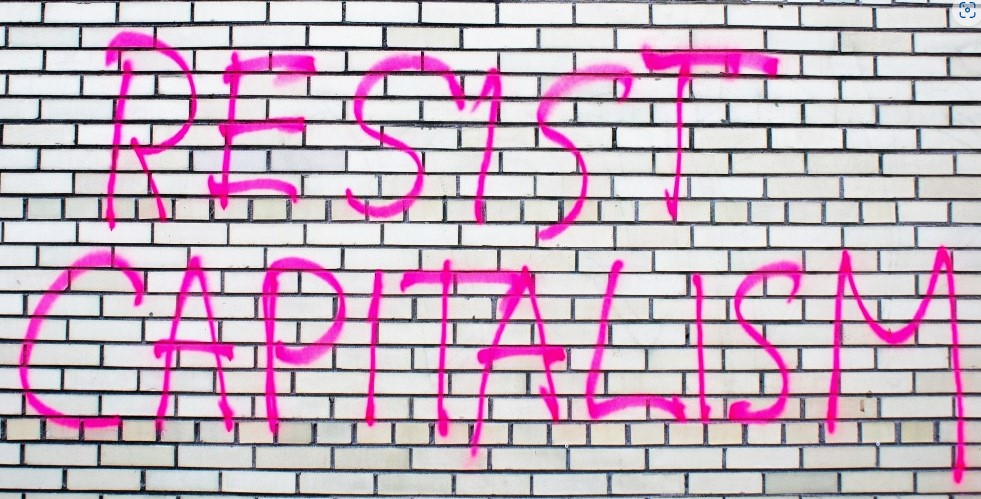
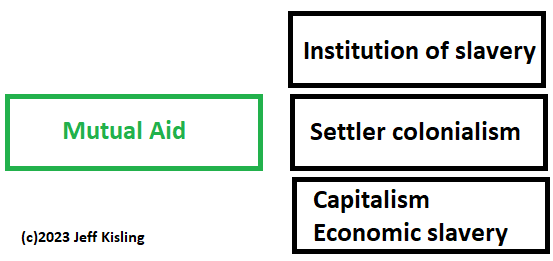
I call capitalism Economic Slavery.
As mentioned, Quakers have a practice of refusing to be associated with unjust organizations and systems. So what do I do when Quakers are part of the unjust systems of capitalism and White supremacy?
Spending time in marginalized communities shows me the depth of the consequences of White supremacy and capitalism. Seeing the families coming to our Mutual Aid food giveaway is heartbreaking. Making me viscerally aware of the failure of capitalism and the need for Mutual Aid.
My friend Jed Walsh recently shared this with me:
For me, there’s a lot of grief around thinking about moving away from Quakerism, as Quakers have really significantly shaped the person I try to be and the ways I want to be part of social movements. But my fear/pessimism right now has been telling me for some time that Quakers as a whole can’t let go of our collective attachments to white supremacy and capitalism. I’m tired of being in the margins of a Quakerism that’s clinging to the status quo, and hoping to find other places to practice faith and spirituality where I can feel more aligned with others.
Jed Walsh
I, too, am tired of being in the margins of a Quakerism that’s clinging to the status quo. I’m exhausted from fifty years of work against environmental devastation, which included Quakers and their cars.
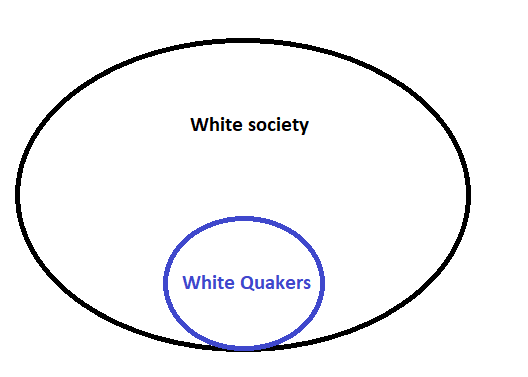
From my years in oppressed communities, I understand how people in these communities view White people. I know they see no distinction between White Quakers and other White people. I feel the unspoken questions of my Mutual Aid friends. Wondering, now that I’ve seen the injustices of capitalism and White supremacy, am I going to do anything more than help give away food? Because Mutual Aid is about abolishing unjust systems and replacing them by building Beloved communities.
I have talked with some Mutual Aid friends about Quakers and spirituality. I plan to continue to look for opportunities to explore spirituality with them.
There is an urgency to make changes now because White supremacy and capitalism continue their oppression today.
I am in a spiritual dual power mode (defined above), remaining with Friends until I might be led to a different spiritual community. I hope, instead, Quakers might seek how we can replace systems of capitalism and White superiority.
I used to call myself a Quaker. I never joined a meeting, and honestly, I had suspicions from the beginning that it just wasn’t going to work. But I was desperate for people, and I really wanted the Quakerism I’d read about.
I couldn’t find it, though, and now I’m not sure it exists.
In the meantime, I’ve been talking, and writing, and a number of Friends say my critical observations about Quaker institutions and culture are illegitimate, either because of my lack of membership or because of my newness. I don’t have a right to point out classism and white supremacy, they say.
It’s been hard finding my place and voice in the Religious Society of Friends. And honestly, I’ve given up. I don’t see the point.
When I read what early Friends wrote, I’m drawn to their vision. Friends lived out of step with the world. Their yielding to Christ demanded deep listening, joy in suffering for the truth, abandonment to the movement of Love. They declared the end of days and rejected the idolatry of nationalism. They were living into a new Society of Friends.
George Fox wrote about the Kingdom of God breaking into this world – and it came from within – this was the gospel I knew, the gospel I needed. Quakers were holy fools, apocalyptic evangelists, soldiers of prophecy. They were about liberation and creating the age-to-come. That was the Spirit I knew. This was the church I longed for.
Then I found Quakers. They weren’t exactly what I’d read about, and it was kind of confusing. But I decided to stick around for a while. After all, maybe God could use existing Quaker institutions to renew the Society of Friends. I believed and hoped that some of these institutions might lead Friends of all branches into convergence, and then that the Spirit might dissolve our dependence on institutions. I thought that as we yielded to the Spirit, she would return us to that apostolic and anarchic ecclesiology of early Friends.
What I’ve found, instead, is that Friends have converged on a shared history and a handful of practices.
But if the Society of Friends is to ever again carry the anointing of early Quakers, if it is to ever embody the vision of Margaret Fell, going “hand in hand in the unity and fellowship of this eternal Spirit,” it must do more than embrace a convoluted historical connection and some shared practices.
If we are converging on history and practice, we are missing the point. If we are depending on institutions to create a new society or usher in the Kingdom, then we are deceived. These will not bring the radically egalitarian and Spirit-filled communities that God fostered among early Friends. These are forms, and Friends must follow the Spirit.
I’ve met others who need a Spirit-led Society. We share this vision, and we share the disappointment of being drowned out in meeting by classism, ageism, and racism. Some of us wonder if Quakerism isn’t all that different from the rest of liberal religion. From what we’ve seen, it isn’t apocalyptic. It isn’t radical. It doesn’t sound like Fox or look like Jesus. It works at incremental transformation while simultaneously shushing those who need the system overthrown.
I’ve moved on.
But even as I’ve stopped attending meeting – even as institutional Quakerism has, for the most part, become irrelevant to me – I cannot deny that I am a Friend. Quaker conceptions of Christ’s gospel have led me closer to Jesus and it’s integral to what I believe and how I live. At the end of the day, though, if tables aren’t being turned, if people aren’t being healed and set free, if the prophets aren’t marching naked, I’ll have to follow Jesus elsewhere.
I hear early Friend Sarah Blackborow’s words ringing in my heart: “Christ is trying to make a dwelling place within you but he is left rejected and homeless.”
Jesus is still seeking his people, people who see the Spirit of God in the suffering and offer refuge. I’m seeking those people, too.
Previously, in Spiritual Activism, I referred to an article from the Pachamama Alliance, part one of a three-part series, Spirit in Action. Following is a continuation of what Pat McCabe said during Part 1.
Pat talks about learning how to let go of what is thought of as “rational” and “logical”. It used to irritate me when people would suggest that scientists (like me) have trouble believing in spirituality, implying since things of the Spirit could not be proven by the scientific method, we might not believe in the Spirit. I have heard medical colleagues say the (scientific) complexities we work so hard to understand convince them there must be a higher power.
But as she says, “Spirit rationale is different from academic rationale.”
The Challenge of Embracing Spiritual Wisdom
Pat (McCabe) made it clear that listening to and being guided by spirit is challenging work that takes practice.
As Pat pointed out, spirit rationale is different from academic rationale, which is why it can be so difficult to know how to listen to spirit. She went on to describe her own personal journey of learning how to let go of what is typically thought of as “rational” and “logical,” and instead embrace the wisdom of spirit. She acknowledged that she didn’t learn to do so of her own accord. Rather, Pat learned how to do this through what she calls “forced surrender” during a time when she was experiencing loss in her life. Despite the difficulties she was experiencing, Pat continued to engage in ceremony, through which she was able to learn how to be in a state of receptivity and trust spirit to guide her.
the consciousness that is the root cause of injustice for the planet is the same consciousness that is the root cause of injustice for people. And this consciousness is connected to the ways in which humanity has claimed supremacy over the planet and all life while placing everything—including each other—in a hierarchy
Reverend Deborah Johnson
Part two of the Spirit in Action series is a conversation with Reverend Deborah Johnson. I really appreciate her description of the root cause of injustice for the planet being the same consciousness that is the root of injustice for people. And that root cause is hierarchy, which comes from the concept of supremacy.
This is why I’m so invested in Mutual Aid because it is about having no hierarchy. Which avoids many of the problems that occur in groups organized with hierarchies. Problems related to power relationships and authority.
How Relationships Are at the Center of Spirit and Justice
Rev. D (Reverend Deborah Johnson) began the conversation by reframing Pachamama Alliance’s 3-part mission around environmental sustainability, spiritual fulfillment, and social justice.
She reflected on how people often relate to the three parts of the mission as three “pillars,” but this actually reinforces a sense of separation between sustainability, spirit, and justice. As Rev. D put it, “pillars” by definition are separate and do not intersect. But she sees sustainability, spirit, and justice as innately interdependent, inseparable parts that can’t exist outside of their connection to the whole.
Rev. D went on to explain how the consciousness that is the root cause of injustice for the planet is the same consciousness that is the root cause of injustice for people. And this consciousness is connected to the ways in which humanity has claimed supremacy over the planet and all life while placing everything—including each other—in a hierarchy.
Rev. D made it clear that relationships are at the center of spirit and at the center of justice, and that injustice for the planet and social injustice are the result of “poor relationships” rooted in these constructs of supremacy and hierarchy.
Rev. D then discusses why many people do not have spiritual fulfillment today.
She explained how many people relate to spiritual fulfillment as a “byproduct” that comes as a result of achieving justice and environmental sustainability. But, Rev. D is encouraging everyone to think the inverse, that starting with spiritual fulfillment is what leads to justice for people and for the environment.
She went on to explain why many people today feel a lack of spiritual fulfillment. As Rev. D put it, people see widespread environmental degradation and social injustice, and wonder how they could have “any kind of spiritual fulfillment in a world like this.” She described this experience as people making their connection to spirit conditioned upon “what humanity is doing in its amnesia, in its lack of recognition of relationship.”
Rev. D warned that obtaining spiritual fulfillment won’t be possible if it’s dependent on human behavior in this way. Instead, Rev. D asserted that starting with spiritual fulfillment and the belief in the inherent interconnectedness of all life—and putting that into action—is the pathway to achieving justice for people and the planet.
Wednesday’s recording of Resilience and Possibility is ready for you to review or share. It is the third–and final–in a series around spirit in action. Our discussion touched on the relationship between inner peace and activism, and how spiritual practice increases our capacity to bring clarity and love to our activism as we push back against injustice.
We used a recording of Rev. angel Kyodo Williams as inspiration to delve deeper into how we can use spirit to further our commitment to bring forth more justice and sustainability into the world. Enjoy!
I grew up in Quaker communities, which defined my justice work for much of my life.
Then a decade ago, I was led to work in communities outside Quaker meetings.
(NOTE: “To be led” is a way of expressing Spiritual leadings).
These experiences have taught me quite different approaches to justice work.
These new perspectives also show me many of us Quakers, particularly White Quakers, need to change how we think about and do justice work.
Spirituality and social justice are often viewed as separate entities, but they can be deeply intertwined. Spirituality refers to a person’s relationship with the divine or higher power, while social justice is concerned with ensuring that all individuals have equal access to basic human rights and opportunities. Individuals tend to fall along the spectrum between emphasis on spirituality versus emphasis on social justice. There are some who do not believe they need to engage in social justice work.
Spiritual activism is a practice that brings together the otherworldly and inward-focused work of spirituality and the outwardly focused work of activism (which focuses on the conditions of the material or physical world). It is most often described as being separate from organized religion or dogma, but rather as activism that is generally egalitarian, particularly in service for people who are oppressed or marginalized, as well as for the Earth and all living things1.
Some of these blog posts take days to write. Sometimes when things feel unfinished, a missing piece will appear. From the Spirit, or something someone else wrote or did. I came across the following this morning.
On October 5, Diné Ceremonial Leader Woman Stands Shining (Pat McCabe) joined the global Pachamama Alliance community for a conversation on spirit in action. Pat McCabe is a mother, activist, writer, artist, international speaker, ceremonial leader, voice for global peace and healing, and long-time advisor to Pachamama Alliance.
During the call, Pat offered many insights around what it means to take action while being guided by spirit, drawing from both her Diné background and the Lakota spiritual tradition. She shared key learnings from her own personal journey around this inquiry, while illuminating important nuances around the concepts of agency and intellect.
The Importance of Surrendering to Spirit
As Pat was reflecting on how to take action while being guided by spirit, she explained that the first step is to surrender to the unknown.
What Pat meant by this was to let go of the need to know everything and the need to have the answer—or even the idea that one can know everything. She explained that when one is at the limits of what one knows, that’s when spirit reaches into the mind and body to present something new.
One of the ways this is experienced in some of the spiritual communities Pat is a part of is through fasting. During these fasts, participants must go 4 days without food or water as they engage in ceremony.* Pat described how it doesn’t feel humanly possible to complete this fast, unless one embraces the unknown and the possibility of failure. This is what allows one to keep going even if the way forward is unclear. And as Pat put it, it is at this point that spirit comes to meet you and carry you the rest of the way.
What these ceremonies have taught Pat is to surrender her will to spirit so that the door to mystery opens, and a different kind of logic and perspective reveals itself.
*Pachamama Alliance is not promoting fasting or other similar activities, especially without the guidance of experts. Please consider consulting with your physician or other medical professionals if activities like this are of interest to you.
it is at this point that spirit comes to meet you and carry you the rest of the way.
One example of my spiritual activism was when I became involved in the Kheprw Institute, a Black youth mentoring community in Indianapolis. That coincided with becoming involved with the Quaker Social Change Ministry (QSCM) model for justice work.
Quaker Social Change Ministry (QSCM)
At that time, I learned about a new American Friends Service Committee (AFSC) program. My friend Lucy Duncan oversaw the program. The Quaker meeting I was attending in Indianapolis, North Meadow Circle of Friends, participated.
Training such as this can be an important part of learning to work for justice. As another example, in 2013, I was trained as an Action Lead in the Keystone Pledge of Resistance, which was about teaching local people how to participate in civil disobedience. Experienced activists from the Rainforest Action Network (RAN) traveled to twenty-five cities, providing a weekend of training in each city.
Working in diverse communities has given me new perspectives about Quakers and justice work and has led to questions.
What role does spirituality play for people and groups not involved in organized religion?
How are Quakers involved in justice work today?
How are justice concerns identified?
What are the primary justice concerns of Quakers, individually and of Quaker meetings?
Are Quaker meetings doing justice work as a meeting?
How do Friends work to address those justice concerns?
What are the different ways to work for justice?
How do Quakers balance spiritual life and doing justice work?
How do we support each other, and the meeting’s justice work?
How do we hold each other accountable?
How do Quaker individuals and meetings deal with historic injustices Quakers were involved in?
How do Quakers engage with those who have been subjected to historic injustices Quakers were part of?
How do we identify and work to heal from trauma?
Quakers
I grew up in the Bear Creek Quaker community near Earlham, Iowa. Raised on farms, we then began to move often as Dad moved through the Farm Bureau/Farm Service system. Most of these places didn’t have Quaker meetings. I attended Scattergood Friends (boarding) high school and then Earlham College, a Quaker college.
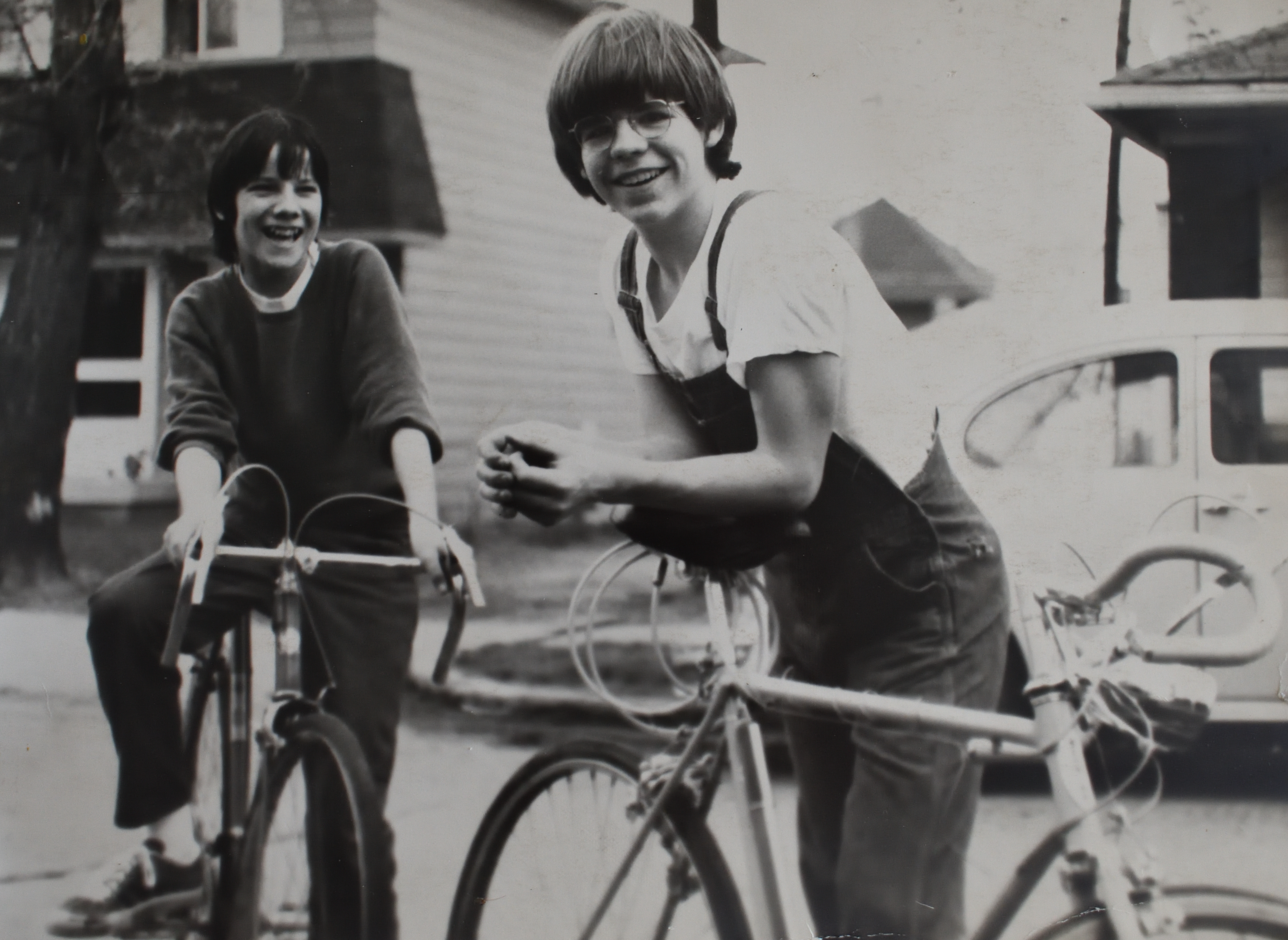
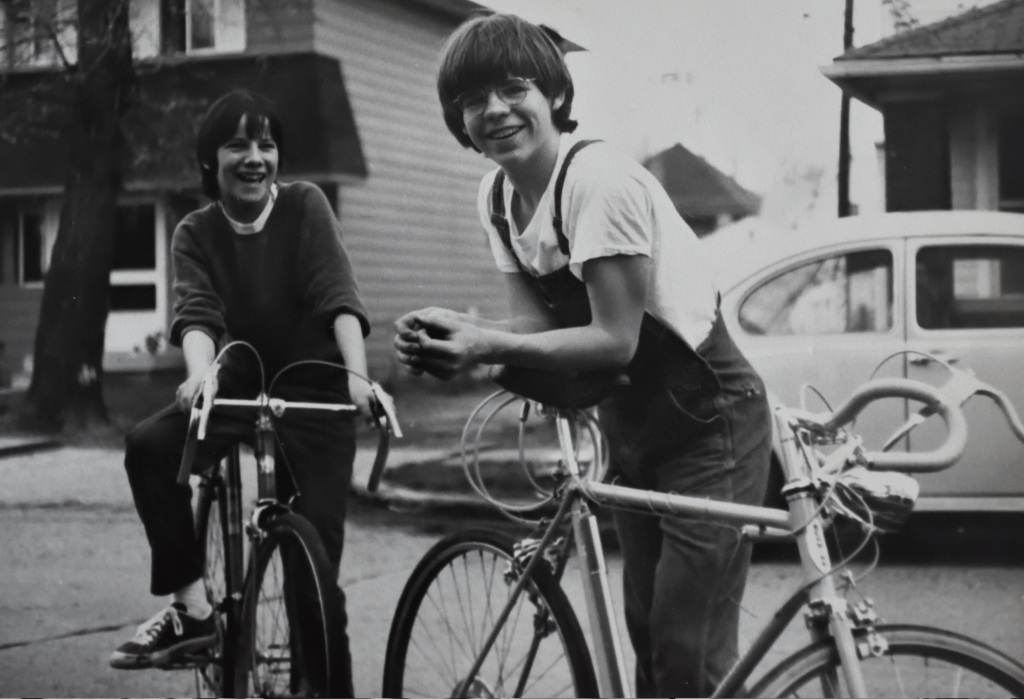
After one year at Earlham, I moved to Indianapolis to join the Friends Volunteer Service Mission (VSM). This was in the early 1970’s, at the time of the Vietnam War. VSM was a project to provide meaningful work for young men doing alternative service for the Selective Service System. Although being a draft resister meant I refused to do alternative service “officially”, as far as the Selective Service System was concerned, I was led to join VSM to learn about doing justice work in communities. VSM had a model of doing one year of work in a job that would qualify as alternative service, saving enough money to support yourself to work in the community for the second year. Living in the community, I had time to see what community needs I might work on during that second year. During the first year I received on-the-job training at Methodist Hospital as a respiratory therapy technician. I spent my time outside my work in the hospital with kids in the neighborhood. There were no youth programs in that part of inner-city Indianapolis. I spent my second year continuing to work with the kids. Playing sports, taking bicycle trips, teaching how to work in a photo darkroom, etc.
So, at an early age (20), I began to learn about community organizing and spirit-led justice work. I was led to this work while praying and working to discern how I would respond to the requirement to register for the Selective Service System and whether to accept doing alternative service. These are related to the broader issues of peace and living in a violent and militaristic country. Learning what the Quaker way would be for me.
Although I returned to Iowa after completing the two years at VSM, I missed the kids so much that I returned to Indianapolis. I continued to do things with youth as I did at VSM while I continued my education. I enjoyed working as a respiratory therapy technician during my first year at VSM. When I returned to Indianapolis, I found a job at the Indiana University Medical Center as a respiratory therapy technician. I obtained a degree in Respiratory Care from Indiana University and became a Registered Respiratory Therapist (RRT).
So, this leading to join VSM led to my career path in medicine, and my path of justice work.
Community building
I have been blessed to be led to new communities of people over the past decade or so. These experiences taught me more about justice work. And have taught me some different answers to questions such as these:
Who is the community?
How to identify what issues to work on?
How to address the issue(s)?
How to measure progress?
Accountability?
How to heal?
In the community
The following are some of the communities I have been/am now involved with.
The youth mentoring community, the Kheprw Institute, in Indianapolis.
The environmental/pipeline resistance communities in Indianapolis and Iowa.
Being trained as an Action Lead in the Keystone Pledge of Resistance in 2013, I received invaluable training in activism. That was also my first experience in being part of an Internet community, learning ways to support each other remotely. This included monthly phone calls with everyone involved.
In 2016 there was national/international support of those at Standing Rock opposing the Dakota Access pipeline.
Locally, in Indianapolis, we were able to use our training and experience from the Keystone Pledge of Resistance to organize and train people to oppose the DAPL.
This included my first experiences of being with Indigenous peoples at public rallies.
In 2017 I retired and returned to Iowa and began to look for environmental activists to work with here. The Internet was helpful in finding groups and events. I had heard of Ed Fallon’s work related to climate justice. We communicated via email, then in February 2017, I met Ed when he organized a group of us to go to Minneapolis the weekend the Super Bowl was played there, to hold a rally at the US Bank headquarters, because of their support of DAPL.
Sept 1-8, 2018, I participated in the First Nation-Farmer Climate Unity March organized by Bold Iowa (Ed Fallon and others) and Indigenous Iowa (Sikowis Nobiss and others). A group of about thirty native and nonnative people walked and camped along the path of the Dakota Access pipeline, from Des Moines to Fort Dodge). https://firstnationfarmer.com/
The intention of the First Nation-Farmer march was to create the time and space for us to get to know each other, to begin to develop some trust so we could work together. That worked exceedingly well, and various combinations of us have done many things since.
Last year the Buffalo Rebellion was formed as a coalition of many of the climate/social justice groups and people in the Midwest.
For the past three years most of my justice work has been with Des Moines Mutual Aid, where I’ve made a number of close friends.
Choosing the work
There are so many injustices, so many people suffering. How do you decide what to do?
As a spiritual person, as a Quaker, seeking spiritual guidance is fundamental to discerning what I am led to do. One reason I’m writing this post is that I’ve been wondering what role spirituality plays in the lives of many of my friends who are deeply involved in justice work. One’s spirituality can be expressed by one’s work in the world, and these friends work tirelessly for justice. But I don’t know what they think or believe regarding spirituality.
One important aspect of Mutual Aid is that most Mutual Aid communities focus on providing for people’s basic necessities, such as food and shelter. For example, my Mutual Aid community provides free food every week for those who come to us. Others in my Mutual Aid community care for houseless people in Des Moines. The gratification of helping those in need helps attract others to participate.
There are many historical examples of tragedies that occurred when well-intentioned people attempted to provide help to those in need. Unfortunately, too often, support came/comes from dominant groups who view solutions as controlling those deemed to need help. Another way of assimilating other peoples into their own (dominant) worldview. I use assimilate intentionally because one example is of white settler-colonists forcibly removing Indigenous children from their families and taking them to residential schools to learn how to live in white society. These schools were awful institutions where abuse and deaths of children occurred. And the trauma to their families and communities is still passed from generation to generation.
I’ve been exploring how Artificial Intelligence can help as a research assistant. Following is the response when I asked for a table summarizing the advantages and disadvantages of spirit-led social justice work. But I must say I am very concerned about the impact AI is having and will have in replacing human jobs.
Recently, we discussed our peace and justice work at my Quaker meeting. I explained my vision of creating a Mutual Aid community to guide our justice work. And included examples of what the meeting is already doing that are Mutual Aid.
I felt we had a good discussion. I didn’t have answers to some of the questions raised. I believe those questions would be answered as we got experience with implementation. But the meeting is clearly not ready to begin working on Mutual Aid.
As I was preparing for this discussion, I knew it would be difficult to distill my more than three years of experience with Des Moines Mutual Aid (DMMA).
Paradigm shift: an important change that happens when the usual way of thinking about or doing something is replaced by a new and different way
Mutual Aid represents a paradigm shift in Quaker’s thinking about spirituality and justice work. How can I help people make this shift happen? What is the Spirit asking of us?
I have no doubt that the Spirit leads me to continue with my involvement with Des Moines Mutual Aid. My friends there know I hope to bring spirituality into the work of Mutual Aid, so I’ll give them an update on our meeting at Bear Creek.
One paradigm shift from my past comes to mind. In the early 1970’s I moved to Indianapolis and was horrified by the foul air from auto exhaust. I was led to live without a car as a result. But I had no success in convincing anyone else to give up their car. So here we are now, facing ever increasing environmental chaos.
During the years’ long struggles with my meeting about cars, which was difficult since many meeting members lived in rural settings, one Friend asked if I had invited the meeting into my concerns about cars. And I realized I had not done so. When I did invite the meeting to join me in our common concerns about fossil fuels, one thing we developed was a concept we called Ethical Transportation (see below).
So, I applied that idea to invite the meeting into Mutual Aid work. I often share my experiences at Des Moines Mutual Aid with the meeting. Our discussion this past weekend is another step that will lead to Mutual Aid. As more communities and people are impacted by environmental and social chaos, we will naturally turn to the idea of Mutual Aid for disaster relief.
I am impressed with the Great Plains Action Society’s Mechanism of Engagement. Mutual Aid is one of the Methods in the model. I wonder what such a model would look like for Quakers. Maybe that is part of the way forward, for my Quaker meeting to become more oriented toward Mutual Aid.
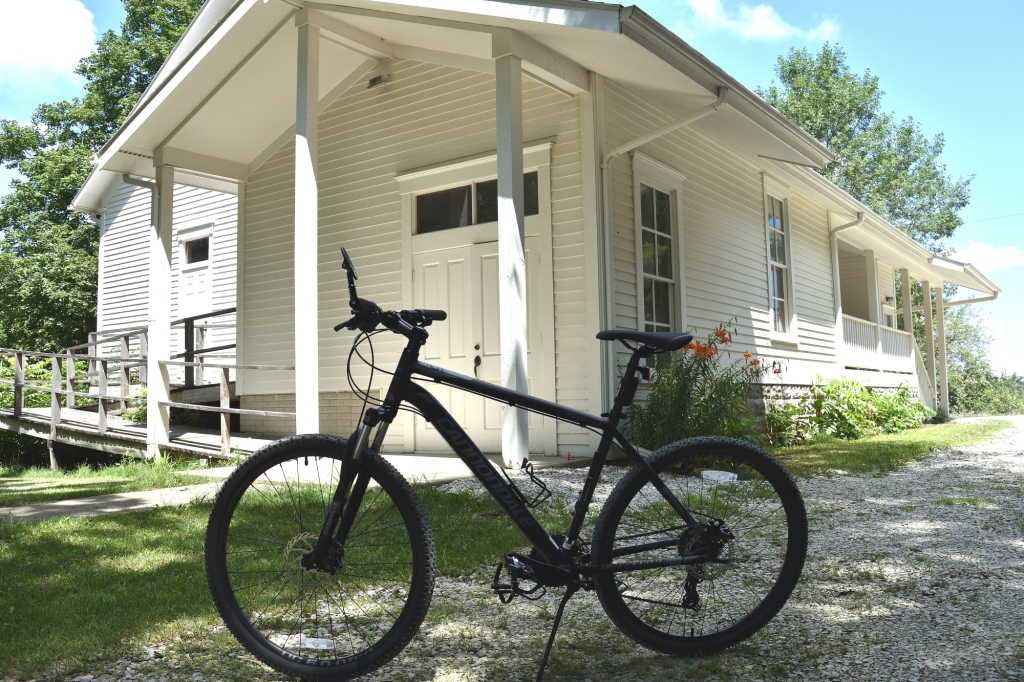
Radically reducing fossil fuel use has long been a concern of Iowa Yearly Meeting (Conservative). A previously approved Minute urged us to reduce our use of personal automobiles. We have continued to be challenged by the design of our communities that makes this difficult. This is even more challenging in rural areas. But our environmental crisis means we must find ways to address this issue quickly. Friends are encouraged to challenge themselves and to simplify their lives in ways that can enhance their spiritual environmental integrity. One of our meetings uses the term “ethical transportation,” which is a helpful way to be mindful of this. Long term, we need to encourage ways to make our communities “walkable”, and to expand public transportation systems. These will require major changes in infrastructure and urban planning. Carpooling and community shared vehicles would help. We can develop ways to coordinate neighbors needing to travel to shop for food, attend meetings, visit doctors, etc. We could explore using existing school buses or shared vehicles to provide intercity transportation. One immediately available step would be to promote the use of bicycles as a visible witness for non-fossil fuel transportation. Friends may forget how easy and fun it can be to travel miles on bicycles. Neighbors seeing families riding their bicycles to Quaker meetings would have an impact on community awareness. This is a way for our children to be involved in this shared witness. We should encourage the expansion of bicycle lanes and paths. We can repair and recycle unused bicycles and make them available to those who have the need.
Is working for justice important to you? Are you satisfied with your justice work?
Working for justice has been a lifelong focus of mine. Being a Quaker, I have many examples of how people and organizations have worked for justice. But, no, I am not satisfied with my justice work. I don’t believe we can be as long as there is injustice.
Over the past decade, I have connected with many great activists and organizations. In addition, I’ve been fortunate to have received several types of training for community organizing.
Much of what I’ve learned relates to working with different communities and cultures, which I summarize here:
Significant changes are occurring that add impetus to re-evaluating how we (Quakers) do justice work.
Accelerating environmental chaos is increasingly disrupting communities and lives
There is rising resistance to political systems based upon White superiority and evolving authoritarianism
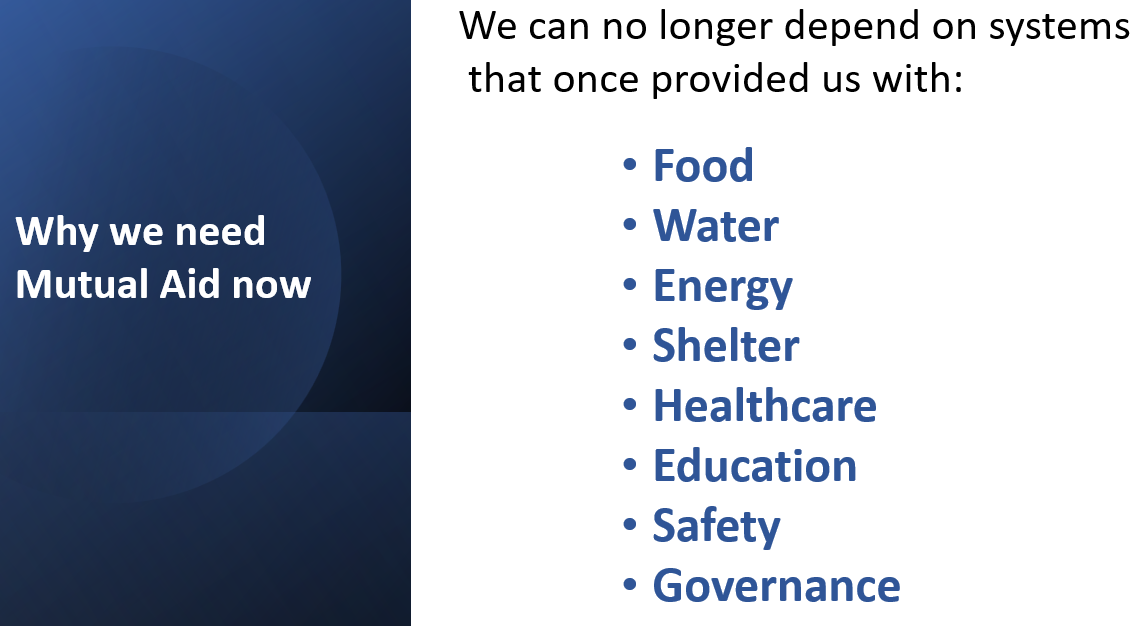
Economic, food, transportation, energy, education, political, and healthcare systems are failing
Indigenous peoples are reclaiming their leadership and ways of protecting and healing Mother Earth
Change is hard
I plan to discuss these things this weekend with my Quaker meeting (Bear Creek Friends). I’ll share my recent experiences with Mutual Aid, Indigenous friends, and the Buffalo Rebellion. Change is hard, and this might involve some challenging discussions. And may involve changes in how we do justice work together.
Mutual Aid
First, there are many ways my Quaker meeting is already working regarding the concepts of mutual aid. Such as connections in the nearby town of Earlham, working to deliver meals, staffing the museum, and the Sunshine sewing circle. Years of work supporting the annual Prairie Awakening/Prairie Awoke ceremony. And connections with the nearby Grade A Gardens.
I believe Friends can add to the spirituality of Mutual Aid.
We must replace the current structure of using committees to do justice work. Because Mutual Aid is fundamentally about not having hierarchies.
What would a Quaker Mutual Aid community look like?
Spirituality?
Who would be involved?
When and how would the community meet or communicate?
How would decisions be made?
How do we center the voices of the oppressed? Of Indigenous peoples?
How would we interact with Quaker organizations?
How would we physically build community structures?
Options
I will continue my involvement with Des Moines Mutual Aid. And would continue to share what I’m learning with my Quaker meeting
Bear Creek could decide to replace the Peace and Social Concerns committee with a Mutual Aid community, OR
Bear Creek could continue its Peace and Social Concerns Committee structure and create a Mutual Aid community for justice work.
Implementation
Creating a Mutual Aid community at Bear Creek would require:
Ways for community members to communicate in real time
Des Moines Mutual Aid uses the Signal app, an encrypted real-time messaging system
Permission for Bear Creek Mutual Aid to make decisions in real time
As the graphic below shows, Mutual Aid is one of the methods the Great Plains Action Society (GPAS) uses as an engagement mechanism.
GPAS supports Des Moines Mutual Aid (DMMA) by funding the work of Ronnie James. Ronnie has been my Mutual Aid mentor.
GPAS is part of the Buffalo Rebellion, a coalition of environmental justice organizations in Iowa. Continued connections with GPAS and the Buffalo Rebellion are how to center the voices of Indigenous and other oppressed peoples.
The Buffalo Rebellion is a coalition consisting of
Des Moines Black Liberation
Great Plain Action Society
Iowa Citizens for Community Improvement
Iowa Migrant Movement for Justice
Sierra Club Beyond Coal
Service Employees International Union (SEIU) Local 199, and
Cedar Rapids Sunrise Movement
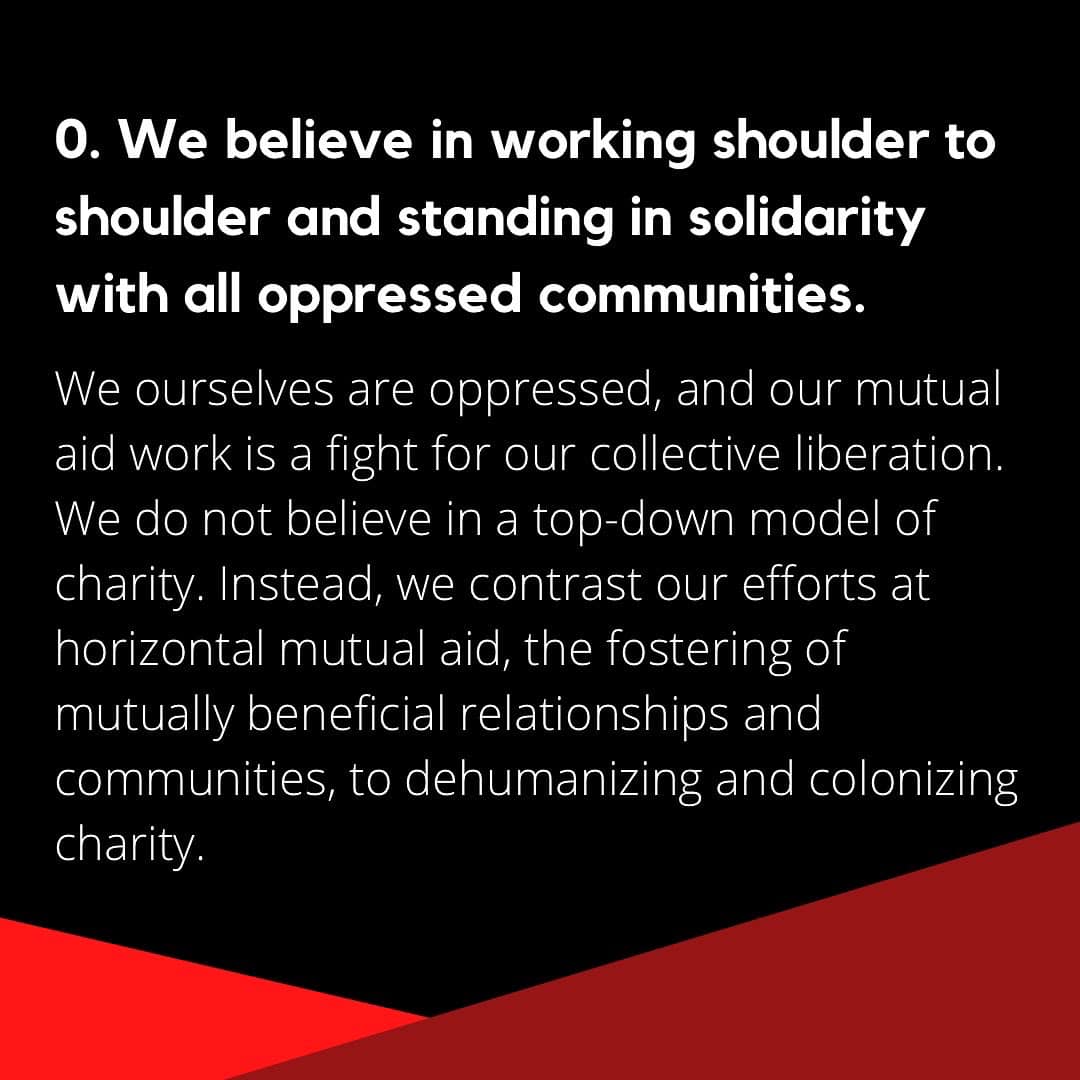
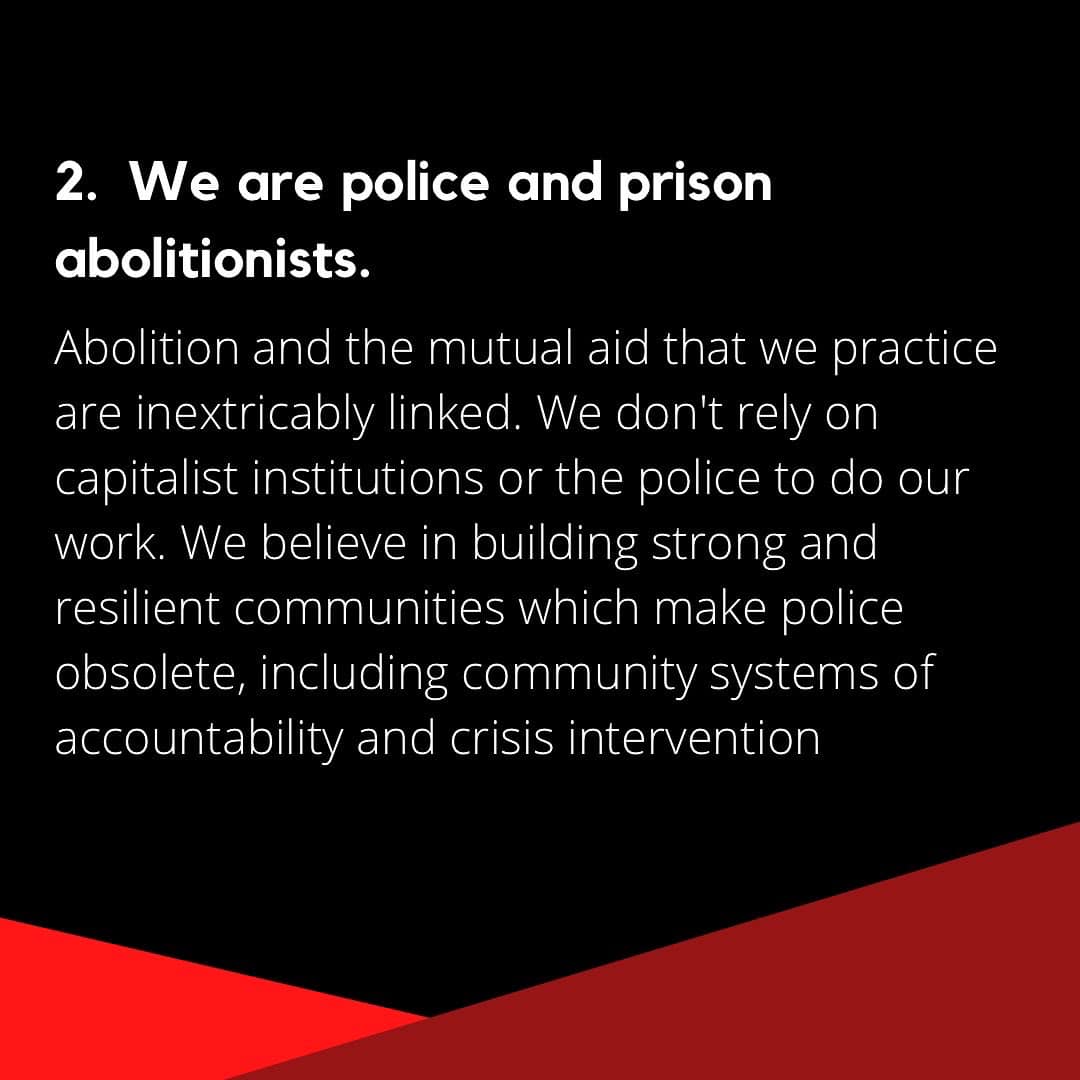
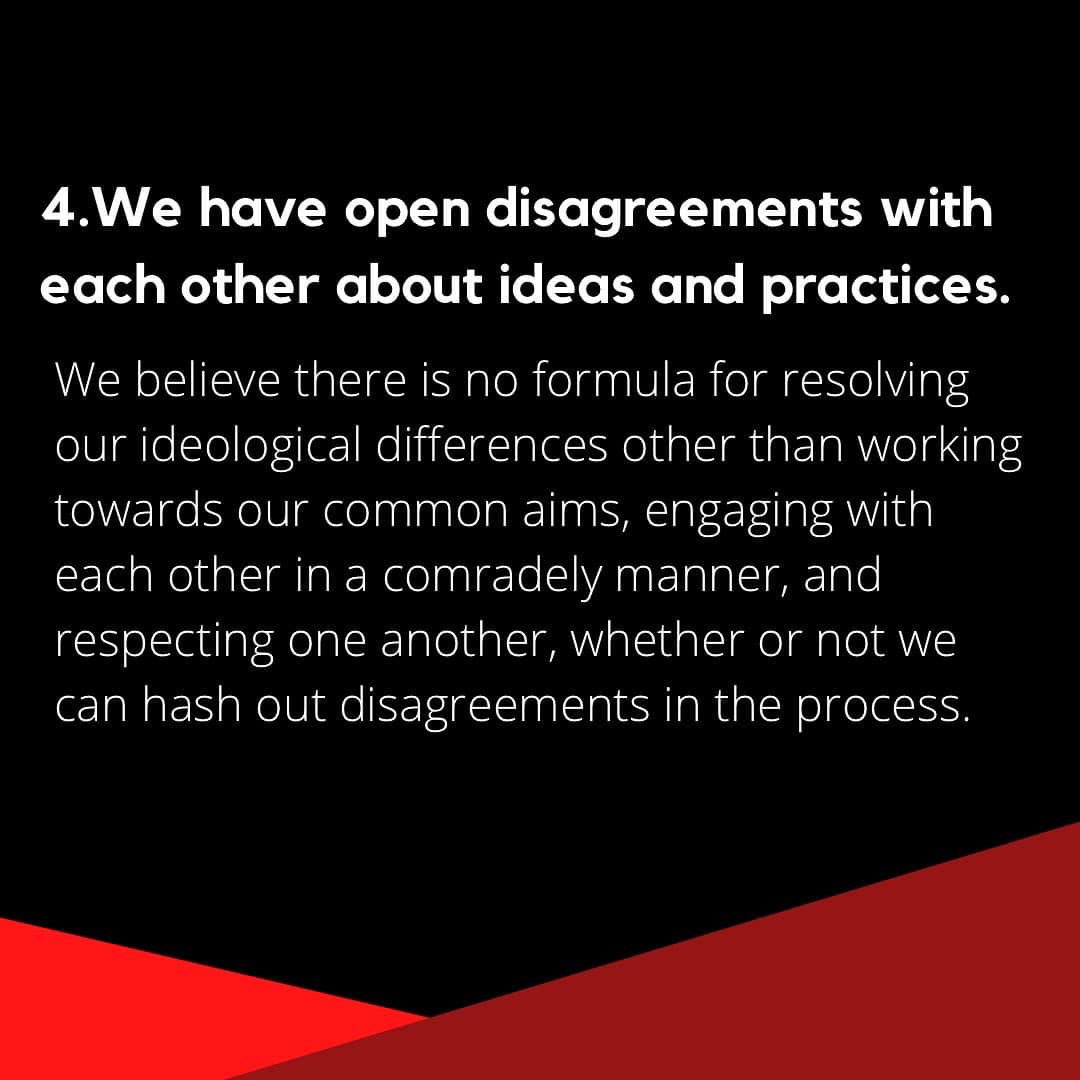
Also below are the Des Moines Points of Unity, which explain what DMMA is about.
Finally, other justice organizations are re-evaluating their strategies. The Climate Mobilization Network describes why they decided to pause and transform their strategy. Mutual Aid is a focus of their new strategy. I’ve been in touch with Climate Mobilization Network about working with them.
Des Moines Mutual Aid
Des Moines Mutual Aid
Why We Decide to Pause and Transform our Strategy
Congressional failure to take meaningful action on climate
The slow pace of local climate programs where policy change is severely limited by what’s considered politically possible
Rising inequality amid continued neoliberalism
Escalating climate disasters that are hitting global and US-based frontline communities the hardest and will continue accelerating rapidly!
And widespread cultural and generational concern about climate change has not yet been tapped into effectively by a mass movement.
This collective visioning, movement incubation and learning gathering will equip you with space for reflection, new ideas, inspiration, and next steps to participate in this new campaign.
Together we will build relationships and explore:
How survival and mutual aid programs can grow the movement
New, creative approaches to taking action against fossil fuels
Ways to integrate healing into our work
And how to create space for reflection, intentionality and strategic clarity
I spend so much time praying and writing about Mutual Aid because I believe Mutual Aid is the correct path for our peace and justice work. And because I get to spend time with my Des Moines Mutual Aid friends every week, where we catch up with each other and our work while we fill boxes of donated food to distribute.
Mutual Aid is the framework that models the Beloved communities we strive to create. And gets to the roots of injustice.
Those living in capitalist societies usually need some education to understand why Mutual Aid should be the framework for our justice work. Simply put, capitalism is a system that enforces injustice and oppression. It does this by violently enforcing strict hierarchies.
The greatest resistance I’ve found to embracing mutual aid is the difficulty people have in seeing the injustices of capitalism. So, I distilled this in the following diagram.
My experiences with mutual aid include:
My introduction to Mutual Aid was a Spiritual leading.
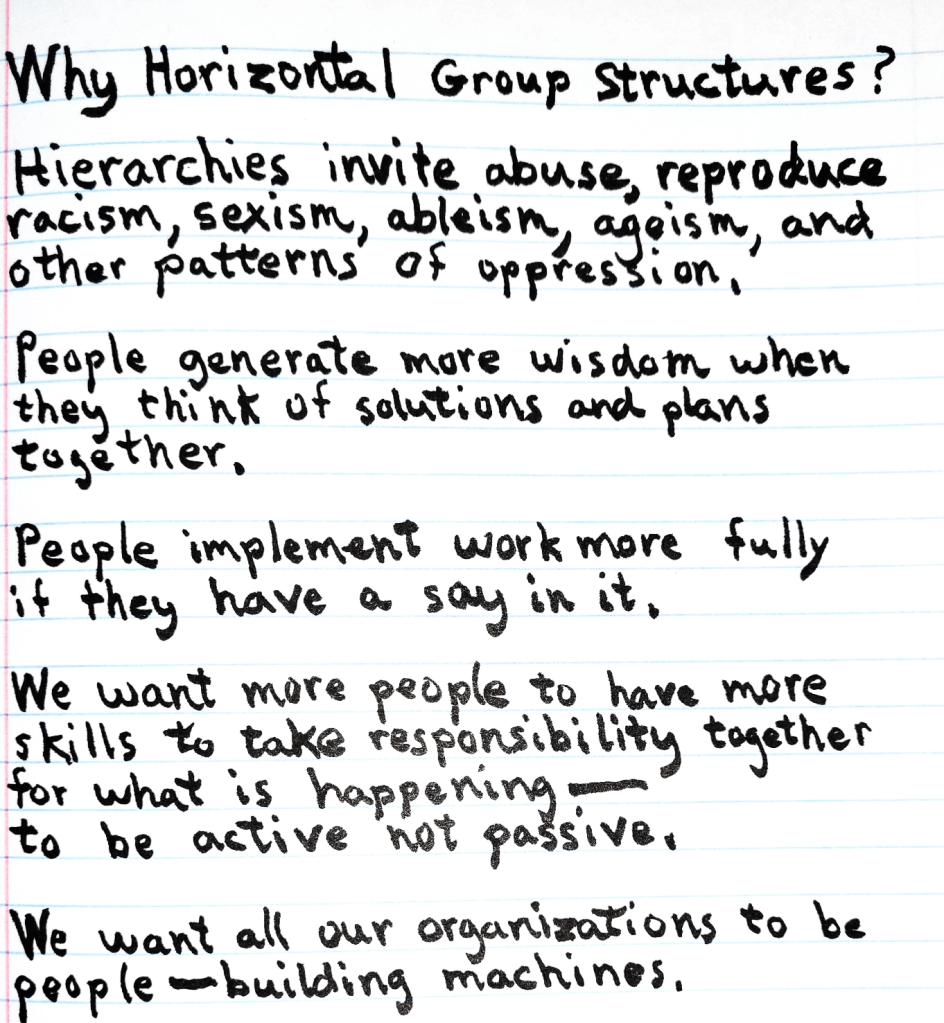
Maintaining a flat or horizontal hierarchy is what makes Mutual Aid work.
MUTUAL is the key.
Removing artificial hierarchies eliminates grouping people by race, class, gender, education, etc.
Mutual Aid resists authoritarianism and colonization.
There cannot be white supremacy, for example, if there is no hierarchy.
Mutual Aid is NOT charity.
A fundamental principle of justice work is to follow the lead of the oppressed community. In Central Iowa, a coalition named the Buffalo Rebellion is providing such leadership. The Buffalo Rebellion is a coalition consisting of
Des Moines Black Liberation
Great Plain Action Society
Iowa Citizens for Community Improvement
Iowa Migrant Movement for Justice
Sierra Club Beyond Coal
Service Employees International Union (SEIU) Local 199, and
Our Quaker Queries recognize the injustices of our capitalist economic system.
‘We are part of an economic system characterized by inequality and exploitation. Such a society is defended and perpetuated by entrenched power. “
The advice also says “we envision a system of social and economic justice that ensures the right of every individual to be loved and cared for…”
Faith and Practice, Iowa Yearly Meeting (Conservative)
Queries related to Mutual Aid
Do we recognize that hierarchies are about power, supremacy and privilege? What are Quaker hierarchies?
Do we work to prevent hierarchies in our peace and justice work?
What are we doing to meet the survival needs of our wider community?
How are we preparing for disaster relief, both for our community, and for the influx of climate refugees?
Are we examples of a Beloved community? How can we invite our friends and neighbors to join our community?
Des Moines Mutual Aid
Mutual aid is essential to building social movements. People often come to social movement groups because they need something: eviction defense, childcare, social connection, health care, or help in a fight with the government about something like welfare benefits, disability services, immigration status, or custody of their children. Being able to get help in a crisis is often a condition for being politically active, because it’s very difficult to organize when you are also struggling to survive. Getting support through a mutual aid project that has a political analysis of the conditions that produced your crisis also helps to break stigma, shame, and isolation. Under capitalism, social problems resulting from exploitation and the maldistribution of resources are understood as individual moral failings, not systemic problems. Getting support at a place that sees the systems, not the people suffering in them, as the problem can help people move from shame to anger and defiance. Mutual aid exposes the failures of the current system and shows an alternative. This work is based in a belief that those on the front lines of a crisis have the best wisdom to solve the problems, and that collective action is the way forward.
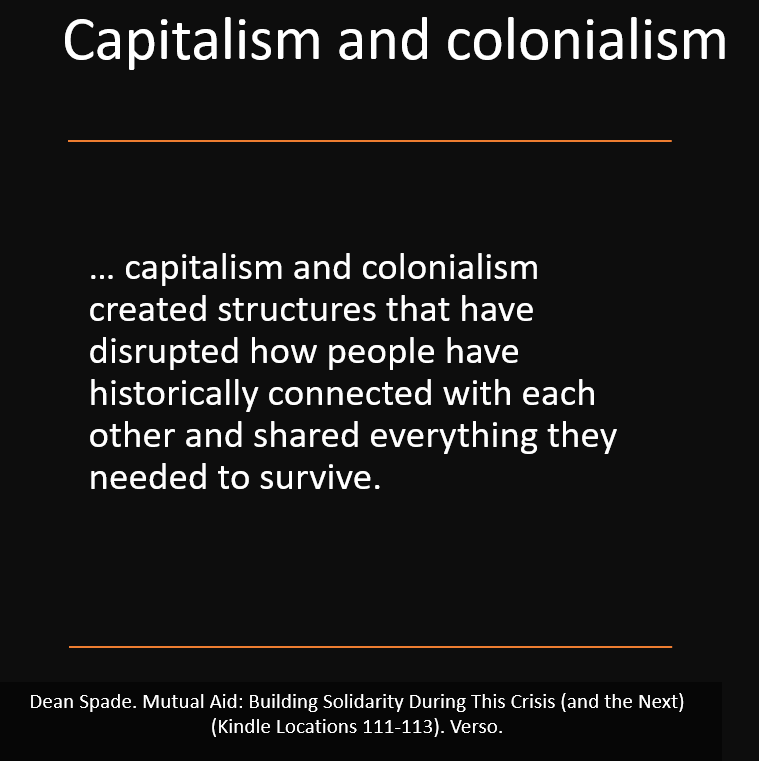
Dean Spade. Mutual Aid: Building Solidarity During This Crisis (and the Next) (Kindle Locations 163-171). Verso.
Today, around the world, people resort to alternative forms of autonomous organization to give their existence a meaning again, to reflect human creativity’s desire to express itself as freedom. These collectives, communes, cooperatives and grassroots movements can be characterized as people’s self-defense mechanisms against the encroachment of capitalism, patriarchy and the nation-state.
mutual aid is the new economy. mutual aid is community. it is making sure your elderly neighbor down the street has a ride to their doctor’s appointment. mutual aid is making sure the children in your neighborhood have dinner, or a warm coat for the upcoming winter. mutual aid is planting community gardens.
capitalism has violated the communities of marginalized folks. capitalism is about the value of people, property and the people who own property. those who have wealth and property control the decisions that are made. the government comes second to capitalism when it comes to power.
in the name of liberation, capitalism must be reversed and dismantled. meaning that capitalistic practices must be reprogrammed with mutual aid practices.
Des Moines Black Liberation
I’m of the firm opinion that a system that was built by stolen bodies on stolen land for the benefit of a few is a system that is not repairable. It is operating as designed, and small changes (which are the result of huge efforts) to lessen the blow on those it was not designed for are merely half measures that can’t ever fully succeed.
So, the question is now, where do we go from here? Do we continue to make incremental changes while the wealthy hoard more wealth and the climate crisis deepens, or do we do something drastic that has never been done before? Can we envision and create a world where a class war from above isn’t a reality anymore?”

































 Quakers and Mutual Aid