Why we need different queries

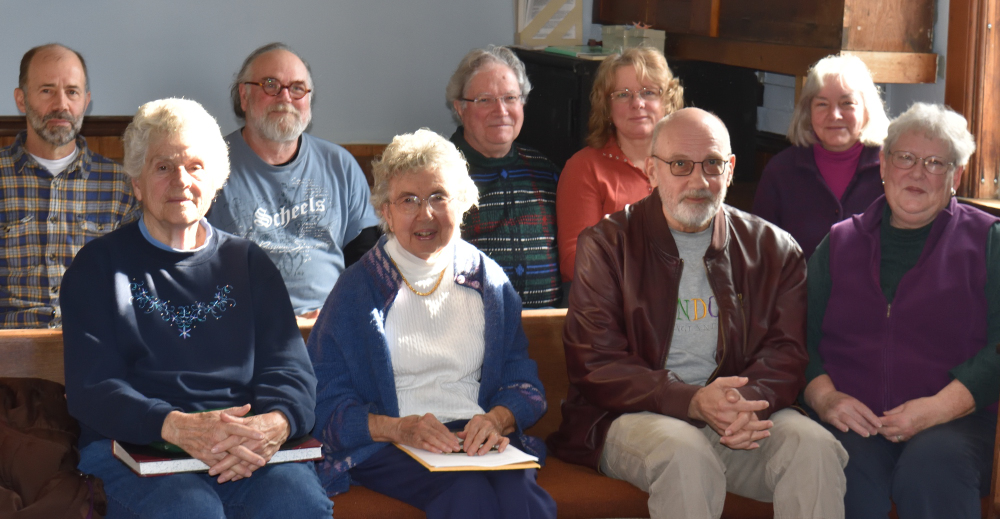
As I’ve been praying about why the Quaker meetings I’m familiar with are slowly dying from attrition and not attracting new attenders, I’m struggling to understand why this is happening. I feel a special urgency, wondering if my Quaker meeting can continue when we lose even one more member. Lose another elderly member, or one who turns away from Quakerism.

I was led to think about our Advices and Queries because they guide the spiritual discussions in our meetings. And they are one concrete thing we can point to for people interested in learning about Quakerism.

It surprised me to be led to the conclusion that our Queries seem rooted in maintaining the status quo of this country’s current economic and political systems. Systems of dominance, systemic racism, and White supremacy. And an implicit view of ‘us versus them.’ (See: Advices and Queries). Today, I hope to explain that more fully and offer suggestions for what we might do differently.

I’m focusing on the abolition of police and prisons, both because this is something I’ve been learning and writing about (https://quakersandreligioussocialism.com/abolition/) and because it is a deep concern of some activist Quakers I know and of my Mutual Aid community. One of my abolitionist Friends is leaving Quakers because of the lack of attention to this concern. This is an example of the attrition I’m concerned about.

We are police and prison abolitionists. Abolition and the mutual aid that we practice are inextricably linked. We don’t rely on capitalist institutions or the police to do our work. We believe in building strong and resilient communities which make police obsolete, including community systems of accountability and crisis intervention. Des Moines Mutual Aid

What does it mean that abolition is not one of our Query topics?

  • Meeting for Worship
  • Outreach
  • Meeting for Business
  • Harmony within the Meeting
  • Mutual Care
  • Education
  • Home and Family
  • Personal Responsibility
  • Civic Responsibility
  • Environmental Responsibility
  • Social and Economic Justice
  • Peace and Nonviolence

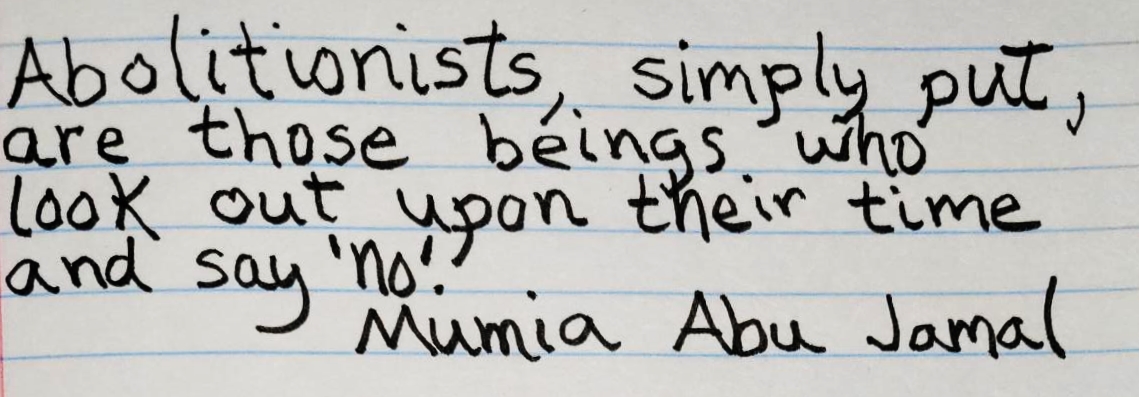
I think that is because abolition touches several of these topics and illustrates why I think we need new queries.


Quakers are pretty white, and that comes with quite a bit of power and privilege. A Quaker in Omaha, Nebraska is going to have probably more weight in what they say to a legislator than a Black Lives Matter activist in Brooklyn, New York. I think there’s a need for Quakers to step out of their meeting and away from a lot of these phenomenal institutions that they’ve created and speak to individuals in an interfaith setting (from Black churches or Black Lives Matter) and have a cross-cultural understanding of what that experience is like because you’ll find that it’s very different, and I think the more we can do of that the more effective we’ll be in addressing these problems. These exchanges and fusion coalitions are what I think it’s going to take, not only for Friends to be effective in dismantling these systems of racism, classism, and white supremacy in American society, but also for all of us to better address these problems in our country.

José Santos Woss (FCNL), Quaker Faith and Justice Reform, QuakerSpeak video

Perhaps the revolutionary Quaker faith we imagine ourselves to inhabit has never really existed, and if we tell the whole truth and commit to the healing the truth-telling calls us to, perhaps together we can embody and create the prophetic religion we thirst for.

Abolitionist thinking is holistic—that ending the system of punishment and incarcerating control itself is necessary—and invites us to imagine a whole new way of not only dealing with harm but of how we think of ourselves in community. It provokes questions like, what does true justice look like? What does it mean to center healing and transforming relationships and create community safety from authentic accountability and relational reconnection? Abolition does not minimize the reality of harm or violence but rather invites us to consider a way of doing things that interrupts cycles of harm, violence, and trauma, and restores perpetrators and victims into community and their humanity.

We as White Quakers like to think of ourselves as ahead or better than dominant culture, but we have been complicit in a system and mindset that are ubiquitous. Claiming the full truth of our history and committing to repair the harms done are deeply spiritual acts of healing our own wounds of disconnection. I would argue it is the pathway upon which we can, perhaps for the first time, discover and invigorate our faith with its full promise.

A Quaker Call to Abolition and Creation by Lucy Duncan, Friends Journal, April 1, 2021

Jed Walsh and Mackenzie Barton-Rowledge are close friends who do police and prison abolition work together. They sent Western Friend a conversation about what abolition means to them, and how it fits into their lives as Quakers.

The way I think about abolition is first, rejecting the idea that anyone belongs in prison and that police make us safe. The second, and larger, part of abolition is the process of figuring out how to build a society that doesn’t require police or prisons.

Abolish the Police by Mackenzie Barton-Rowledge and Jed Walsh, Western Friend, Nov 2020

Jeff Kisling: Mutual Aid and Abolition

I grew up in rural Iowa, where there was very little racial diversity and interactions with police and the court system were rare. About ten years ago, I was blessed to become involved with the Kheprw Institute, a Black youth mentoring and empowerment community. I’ll never forget how shocked I was when a Black mother broke down in tears, explaining how terrified she was every minute her children were away from home. It was obvious that every other person of color in the discussion knew exactly what she was saying.

After retiring, I was led to connect with Des Moines Mutual Aid, a multiracial organization founded to support houseless people. For over a year, I’ve helped my friends fill and distribute boxes of donated food, while continuing to learn about the framework of mutual aid.

To me, mutual aid is about taking back control of our communities. Besides the food giveaway, we support houseless people and maintain a bail fund to support those arrested agitating for change. We also work for the abolition of police and prisons.

Mackenzie Barton-Rowledge and Jed Walsh: Introducing the Quakers for Abolition Network, Western Friend, Sept 2021

Some queries about police and prison abolition:

  • What is your understanding of the term “abolition” and what does it entail? How does it differ from the reform or improvement of the existing system?
  • What are some historical and contemporary examples of abolitionist movements and practices, such as the abolition of slavery, the anti-apartheid struggle, the prison strike movement, the mutual aid networks, and the community defense initiatives?
  • What are some of the root causes of violence, harm, and crime in our society, and how do they relate to the structures of white supremacy, capitalism, heteronormative patriarchy, and settler colonialism?
  • How do the police, courts, and prisons perpetuate and exacerbate violence, harm, and crime rather than prevent or reduce them? How do they disproportionately target and oppress Black, Indigenous, and people of color (BIPOC), poor people, LGBTQIA+ people, immigrants, and other marginalized groups?
  • What are some of the alternatives to policing and incarceration that can address the needs and rights of survivors, perpetrators, and communities more humanely and effectively? How can we build and support these alternatives in our own contexts and networks?
  • What are some of the challenges and barriers to achieving abolition, internally (such as fear, doubt, or attachment) and externally (such as resistance, backlash, or co-optation)? How can we overcome or transform them through education, organizing, and action?

Sources:

Learn more:

1. https://www.newyorker.com/news/our-columnists/the-emerging-movement-for-police-and-prison-abolition
2. https://www.peoplesworld.org/article/prison-and-police-abolition-re-imagining-public-safety-and-liberation/
3. https://www.peoplesworld.org/article/on-becoming-police-and-prison-abolitionists-but-what-about-the-murderers/
4. https://www.autostraddle.com/police-and-prison-abolition-101-a-syllabus-and-faq/
5. https://www.radcliffe.harvard.edu/news-and-ideas/rethinking-incarceration

Queries about our future

The recent passing of another of our elders brings new urgency to understanding why we are not attracting new attenders to our Quaker meetings and what to do about that.

“I’m so afraid of climate change. I just turned 17 not so long ago and I’m afraid I’ll never get to grow up because of the way our Earth is going.

“Most of my friends and family are apathetic, such as my parents who don’t like me talking about this stuff since they feel we can’t really change anything. My mom thinks it’s completely irreversible. I hate holding it all inside all the time. …

“I guess what I really wanna hear is it’s all gonna be ok even though it’s probably not the truth. I’m just scared. I’d appreciate any positive news or insight from those who feel the same way and how you manage it while doing everything you can. Thanks for reading.”

I’m a teen and I’m really scared for my future

A pair of recent articles by Steve Genco is about what to say to a 17-year-old terrified about their future and poses some queries. These questions are relevant to the future of us all.

  • What predictions can you rely on?
  • What will give your life meaning?
  • What skills and mental habits will you need?
  • How will you live?

What Can You Tell a 17 Year Old Who’s Afraid of Dying from Climate Change? Part 1 by Steve Genco, Aug 29, 2023, Medium

The article lists the following predictions we can rely on:

  • It’s going to get hotter
  • The weather is going to get more unpredictable and more extreme
  • Natural disasters are going to arrive at greater and greater frequency
  • Economic inequality (income and wealth) is going to get worse
  • We will continue depleting the natural world
  • The effects of climate change will be unevenly distributed around the planet
  • We will run out of oil and gas

What will give your life meaning?

Psychologists Edward Deci and Richard Ryan began developing what they called Self-Determination Theory (SDT) in the 1970s. SDT emerged out of Deci’s interest in intrinsic motivation

Deci began searching for the underlying needs that intrinsically motivated behavior seemed to fulfill. He and Ryan discovered three motivators that appeared to represent basic or innate psychological needs

  • A need for autonomy: People need to feel self-directed and in control of our actions. We are more motivated to pursue activities we voluntarily and freely choose for ourselves, as opposed to activities we feel are imposed on us by other people or external circumstances.
  • A need for competence: People need to feel accomplished and capable. We are more motivated to pursue activities we feel competent to accomplish. We are also motivated to pursue activities that allow us to increase our competence through practice and repetition.
  • A need for belonging: People need to feel connected to others. We are more motivated to pursue activities that make us feel closer to others and that can be pursued in a supportive social context. This need is called relatedness by Deci and Ryan.

Throughout their research, Deci and Ryan studied how the goals people pursue on a daily basis and throughout their lives fulfill basic needs and contribute (or not) to personal wellbeing. In these studies, they found compelling evidence that:
placing strong relative importance on intrinsic aspirations was positively associated with well-being indicators such as self-esteem, self-actualization, and the inverse of depression and anxiety, whereas placing strong relative importance on extrinsic aspirations was negatively related to these well-being indicators.

What skills and mental habits will you need?

So, how do you create a life of autonomy, competence, and belonging? You plan your life around goals and activities that make you more self-sufficient, knowledgeable, and socially connected.

In a world of cascading climate crises, shortages, and social and political unrest, people who can think for themselves, have useful practical skills, and are connected to a like-minded community, are going to have significant advantages over the cult followers, the totally-unprepared, and the socially isolated.

What Can You Tell a 17 Year Old Who’s Afraid of Dying from Climate Change? Part 2 by Steve Genco, Aug 29, 2023, Medium

How will you live?

  • Think global, act local
  • Stay mobile
  • Embrace simplicity
  • Learn how to repair/reuse/recycle
  • Don’t tie your happiness to material accumulation

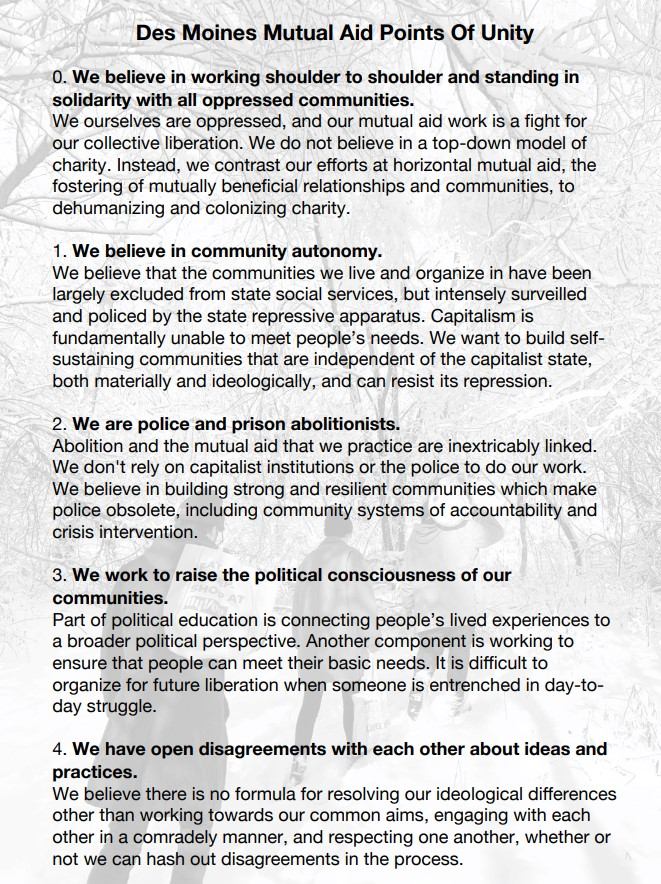
The needs for autonomy, competence, and belonging are exactly what Mutual Aid is about. These are the Points of Unity of my Des Moines Mutual Aid community.

Mutual Aid Points of Unity

We believe in working shoulder to shoulder and standing in solidarity with all oppressed communities.

We ourselves are oppressed, and our mutual aid work is a fight for our collective liberation. We do not believe in a top-down model of charity. Instead, we contrast our efforts at horizontal mutual aid, the fostering of mutually beneficial relationships and communities, to dehumanizing and colonizing charity.

We believe in community autonomy.

We believe that the communities we live and organize in have been largely excluded from state social services, but intensely surveilled and policed by the state repressive apparatus. Capitalism is fundamentally unable to meet people’s needs. We want to build self-sustaining communities that are independent of the capitalist state, both materially and ideologically, and can resist its repression.

We are police and prison abolitionists.

Abolition and the mutual aid that we practice are inextricably linked. We don’t rely on capitalist institutions or the police to do our work. We believe in building strong and resilient communities which make police obsolete, including community systems of accountability and crisis intervention.

We work to raise the political consciousness of our communities.

Part of political education is connecting people’s lived experiences to a broader political perspective. Another component is working to ensure that people can meet their basic needs. It is difficult to organize for future liberation when someone is entrenched in day-to-day struggle.

We have open disagreements with each other about ideas and practices.

We believe there is no formula for resolving our ideological differences other than working towards our common aims, engaging with each other in a comradely manner, and respecting one another whether or not we can hash out disagreements in the process.


Much of the above will be uncomfortable for many Friends because it involves rejecting the status quo. I contend that is why we are not attracting new attenders. If we don’t do so voluntarily these changes will be forced upon us as the status quo continues to collapse.

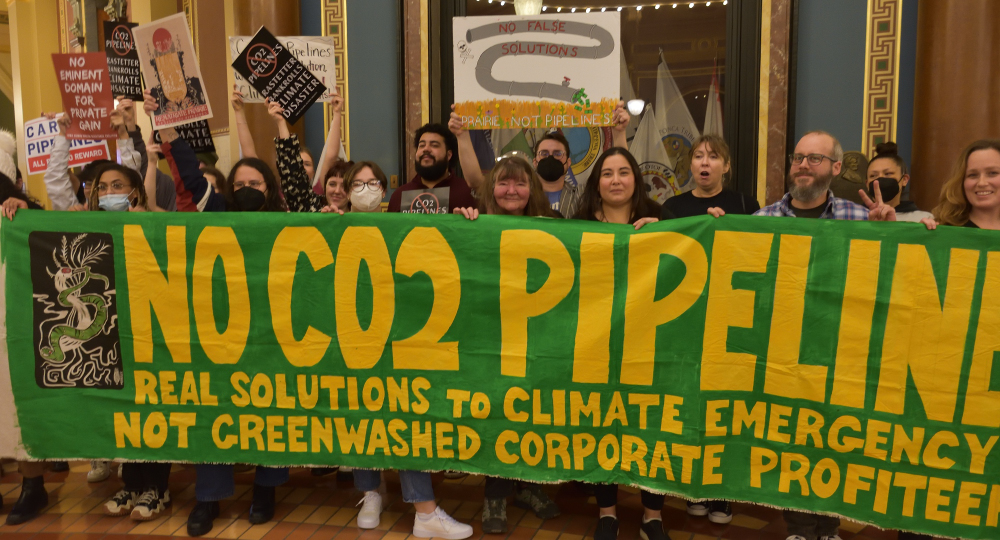
I believe we are in a time of great spiritual poverty. Friends have a precious gift to offer those needing a spiritual home. But the two will never be connected if Friends continue isolating themselves in their meetinghouses and cling to the status quo. We need to be police and prison abolitionists, find alternatives to capitalism, block the development of fossil fuel infrastructure, reject empire and militarism, and promote and follow the leadership of Indigenous peoples.


International Day of Peace

September 21 is the International Day of Peace.

Each year the International Day of Peace (IDP) is observed around the world on 21 September. The UN General Assembly has declared this as a day devoted to strengthening the ideals of peace, through observing 24 hours of non-violence and cease-fire. Never has our world needed peace more.

This year’s theme is Actions for Peace: Our Ambition for the #GlobalGoals. It is a call to action that recognizes our individual and collective responsibility to foster peace. Fostering peace contributes to the realization of the Sustainable Development Goals (SDGs) and achieving the Sustainable Development Goals will create a culture of peace for all.

2023 Theme Actions for peace: Our ambition for the #GlobalGoals


For some time the Spirit has been calling my attention to peace in many different ways.

  • I was led to take the photo below of the peace symbol on a coffee mug
  • I’ve been concerned but not surprised to learn of the heavy military recruitment of teens in public schools today
  • That made me turn my attention to conscientious objection. I discovered my Quaker meeting, Bear Creek Friends, had done significant work on conscientious objector counseling years ago. I had not known about that because I was living in Indianapolis at that time
  • I’m thinking of the stories my late friend, Iowa Quaker Don Laughlin collected, Young Quaker Men Facing War and Conscription. Some of the topics in that document include:
    • Richmond Anti-Draft Declaration of 1948 Advices on Conscription and War
    • 1968 Richmond Declaration on the Draft and Conscription that I was involved in writing
    • Don Laughlin and Roy Knight were among those who wrote and signed An Epistle to Friends Concerning Military Conscription
    • My story about my struggles to become a draft resister
    • My Scattergood School classmate’s story of his imprisonment for draft resistance: The Barrett Family’s Peace Testimony by Daniel Barrett
    • The Moral Integrity of Muhammid Ali
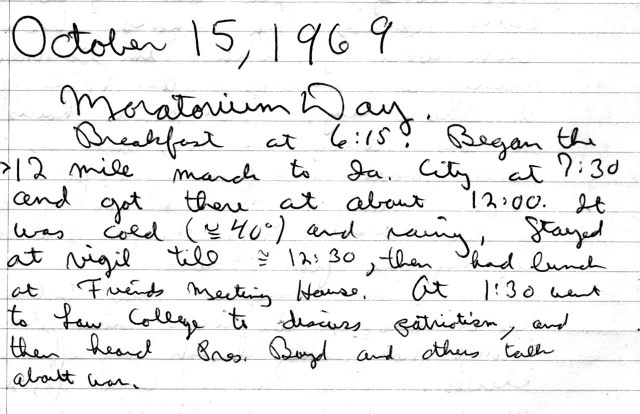
  • I remember the day of the National Moratorium to End the War in Vietnam, October 15, 1969, when the entire student body of Scattergood Friends School had a peace march from the school to the University of Iowa (about twelve miles) to participate in actions there
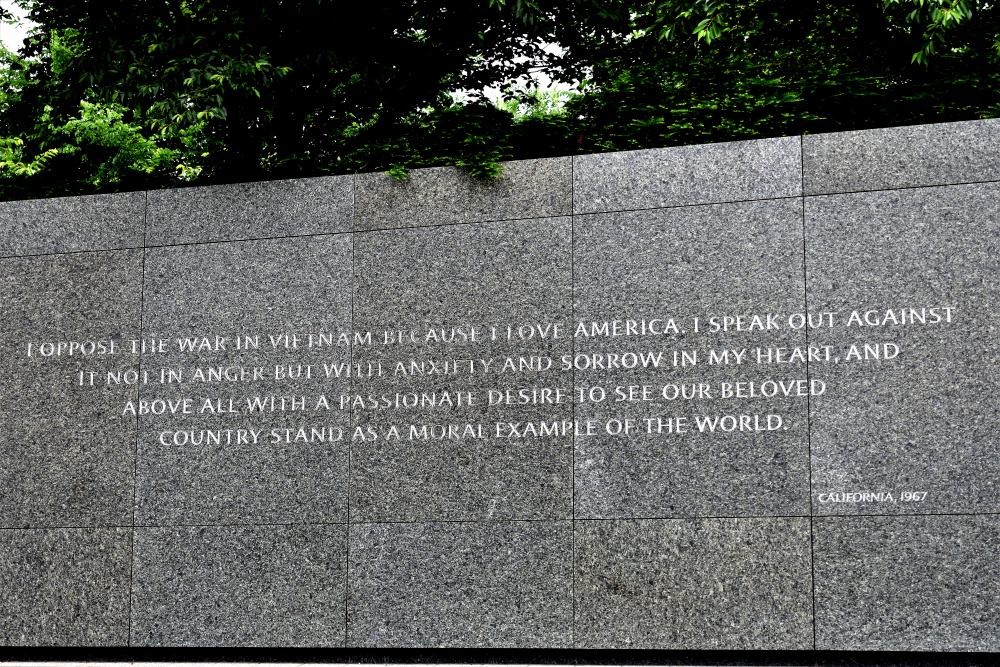
  • I’m reminded of Martin Luther King’s brave stance against the Vietnam War despite objections from his community
  • I was led to read the wonderful book Don’t Think Twice by Alison Lohans, which is a novel about the peace activities of a family set in the time of the Vietnam War. Alison and I have exchanged messages about this.
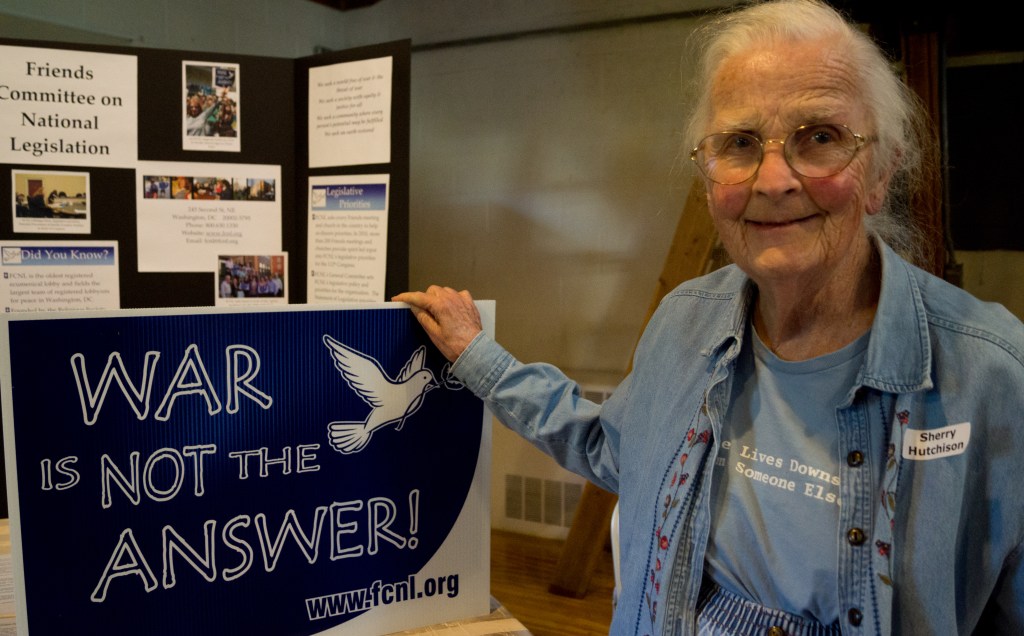
  • Yesterday, during our weekly Friends Committee on National Legislation (FCNL) Witness Wednesday Silent Reflection we considered the following prompt and query.
  • During my three years of experience with Des Moines Mutual Aid, I’ve become MUCH more aware of the internal war of the state against us.

FCNL’s Witness Wednesday Silent Reflection 9/20/2023

Prompt

“If, however, the peace testimony is the outward evidence of God’s work among us, then committing to it will lead us into prayerful sacrifice and radical solidarity with victims of violence. The cause of peace will encourage us to take unpopular stands for unpopular causes, because our faith is in a God who does not allow us to use violence even for a noble cause. We will be led to share our faithfulness to the Lamb and His war in a spirit of love and humility, inviting others into a new way of living.”

–Adria Gulizia, “Do Friends Still Need the Peace Testimony?” (Aug. 2022)

Query: How do you live a commitment to peace? How do you invite others into a new way of living?


I don’t know why I was prompted to take this photo of a coffee cup yesterday

An Epistle to Friends Concerning Military Conscription

Dear Friends,

It has long been clear to most of us who are called Friends that war is contrary to the spirit of Christ and that we cannot participate in it.  The refusal to participate in war begins with a refusal to bear arms.  Some Friends choose to serve as noncombatants within the military.  For most of us, however, refusal to participate in war also involves refusal to be part of the military itself, as an institution set up to wage war.  Many, therefore, become conscientious objectors doing alternative service as civilians, or are deferred as students and workers in essential occupations.

Those of us who are joining in this epistle believe that cooperating with the draft, even as a recognized conscientious objector, makes one part of the power which forces our brothers into the military and into war.  If we Friends believe that we are special beings and alone deserve to be exempted from war, we find that doing civilian service with conscription or keeping deferments as we pursue our professional careers are acceptable courses of action.   But if we Friends really believe that war is wrong, that no man should become the executioner or victim of his brothers, then we will find it impossible to collaborate with the Selective Service System.  We will risk being put in prison before we help turn men into murderers.

It matters little what men say they believe when their actions are inconsistent with their words.  Thus we Friends may say that all war is wrong, but as long as Friends continue to collaborate in a system that forces men into war, our Peace Testimony will fail to speak to mankind.

Let our lives speak for our convictions.  Let our lives show that we oppose not only our own participation in war, but any man’s participation in it.  We can stop seeking deferments and exemptions, we can stop filling out Selective Service forms, we can refuse to obey induction and civilian work orders.  We can refuse to register, or send back draft cards if we’ve already registered.

In our early history we Friends were known for our courage in living according to our convictions.  At times during the 1600’s thousands of Quakers were in jails for refusing to pay any special respect to those in power, for worshiping in their own way, and for following the leadings of conscience.  But we Friends need not fear we are alone today in our refusal to support mass murder.  Up to three thousand Americans severed their relations with the draft at nation-wide draft card turn-ins during 1967 and 1968.  There may still be other mass returns of cards, and we can always set our own dates.

We may not be able to change our government’s terrifying policy in Vietnam.  But we can try to change our own lives.  We must be ready to accept the sacrifices involved if we hope to make a real testimony for Peace.  We must make Pacifism a way of life in a violent world.

We remain, in love of the Spirit, your Friends and brothers,

Don Laughlin Roy Knight Jeremy Mott Ross Flanagan Richard Boardman James Brostol George LakeyStephen Tatum Herbert Nichols Christopher Hodgkin Jay Harker Bob Eaton Bill Medlin Alan & Peter Blood

We organized a draft conference at Scattergood Friends School in 1969


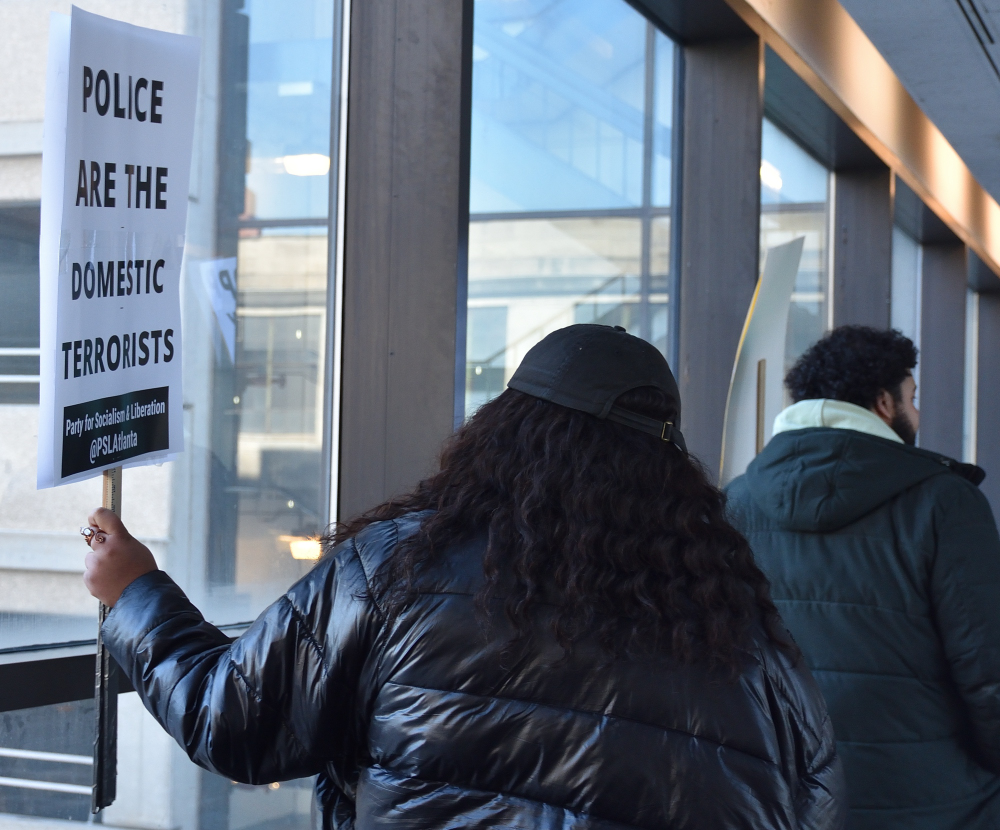
Police vs Atlanta and the rest of us

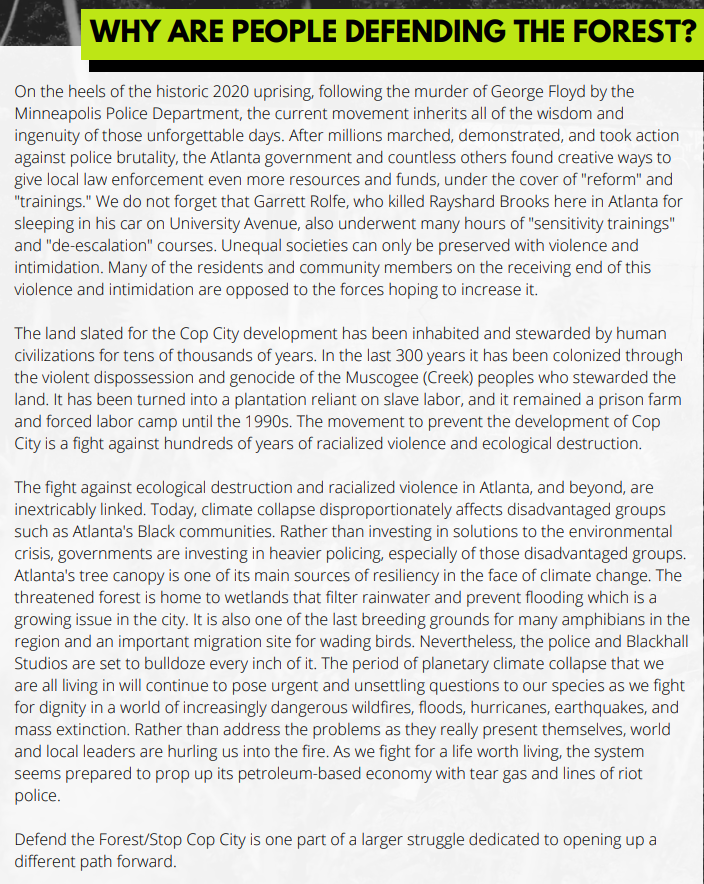
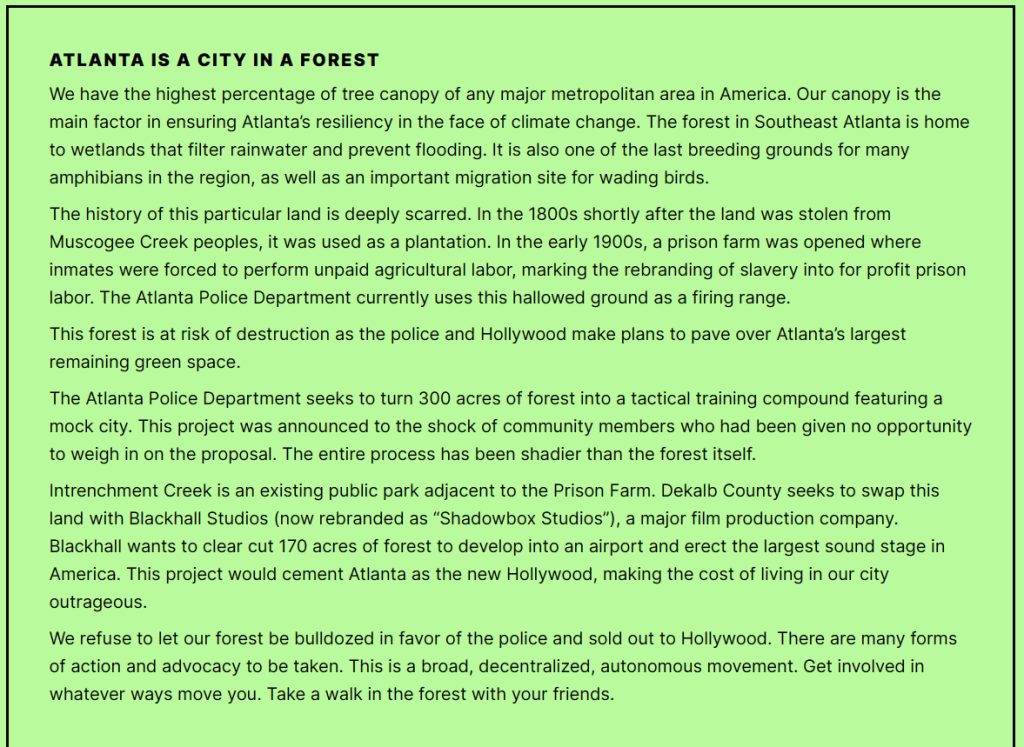
The proposed construction of “Cop City”, an 85-acre, $90 million dollar project to build a police training facility in the South River Forest in Atlanta, is a prime example of so many injustices.

  • Land theft from the Muskogee people
  • Forced displacement of the Muskogee, the “Trail of Tears”
  • Enslavement of people of color
  • Once a prison with a history of abuse
  • Environmental injustice
  • Attempted corruption of city council members
  • Killing Manuel Teran (Tortuguita)
  • Charges of terrorism against people protesting the training center, and the death of Tortuguita

And these concerns are not limited to Atlanta, or Georgia. The plan is to train police there from all over the country.


FULTON COUNTY, Ga. — Groups who oppose the construction of Atlanta’s future public safety training facility are asking the courts to block construction at the site until the appeal against its land disturbance permit is sorted out. 

In Monday’s complaint, individuals said that despite an appeal against its permit, the Atlanta Police Foundation — who is the main funder of the project — is still clearing land at the planned site of the future training facility. The site has been the epicenter of a more than yearlong protest movement that refers to the area as “Cop City.”

Those who oppose the facility said the appeal should mean that the foundation must stop all construction or clearing of the site until the zoning board reaches a decision — but the foundation has continued business as usual.

Complaint filed to stop construction at Atlanta Public Safety Training Center amid permit appeal, Documents allege crews are still working on the land when they shouldn’t be by Gabrielle Nunex, 11Alive News, Feb 15, 2023


This video from Al Jazeera explains the many problems related to the proposed “Cop City” project in Atlanta.

From the transcript:

I’m not sure they’re trying to force us out of the community and just take over the whole Community overall but that’s what it looked like. The path we headed down to Atlanta’s proposal to construct the police facility here speaks to the land’s painful history.

The site was a prison farm until 1995. Prisoners there were subjected to harsh punishments and slave conditions including poor sanitation nutrition and overcrowding. Some critics say claims of unmarked graves have not yet been properly investigated.

Before that the land is thought to have been a plantation that enslaved at least 19 people. It was originally stolen from the Muskogee who lived there until the U.S government forcefully displaced them to Oklahoma. Today both activists and tribal members have reclaimed the indigenous name as Weelaunee People’s Park. Local Advocates have long called for the area to be preserved as a historical site. They just can’t wait, they cannot wait, they just want to go in and bulldoze everything and then write the history the way they want. They haven’t even done proper you know, ecological surveys yet. But Cop City isn’t the only facility that the residents have opposed. Around the forest is a Hollywood studio, sanitation Center, juvenile prison and asphalt and trucking factories, and KIRO landfill. Nobody wants to address the environmental Injustice of this. Those issues have never been vetted. The facilities have severely polluted Muscogee Creek which flows downstream to the South River.


History of the Land

Until the 1830s, the Weelaunee Forest — now called the South River Forest, located southeast of Atlanta — was occupied by the Muscogee people. The Muscogee were known as the first tribe to become “civilized” through George Washington’s civilization plan, a six-step plan to disrupt Native culture, occupy native land, and teach Indigenous people how to live like white settlers. 

The Muscogee were forcefully removed from the forest in the 1830s through the “Trail of Tears,” a decades-long movement to forcibly remove Indigenous people from their homelands, resulting in thousands of deaths. Following their removal, the land was purchased by plantation owner Lochlin Johnson. During the Civil War, it was the site of the Battle of Atlanta.

In 1918, 1,250 acres of the forest were bought by the Bureau of Prisons and United States Federal Penitentiary in Atlanta for $160,000. Until the early 1990s, the land was used as a prison farm.

Atlanta Is Starting Construction of ‘Cop City.’ Here’s What You Need to Know. We take a deep dive on the history of the land, the environmental and political implications, and the growing movement against the facility by Adam Mahoney, Madeline Thigpen, and Adam Mahoney, Capital B News, Feb 9, 2023


This is a link to posts I’ve written about “Cop City”. https://quakersandreligioussocialism.com/?s=%22cop+city%22


On January 31st, we had a solidarity action in Des Moines related to “Cop City” and the killing of Tortuguita. We visited the local office of Cushman and Wakefield. They are a global corporation and John O’Neill is the President of U.S. Multifamily Capital Markets of the global firm. We asked the president at the local office to contact him to cut ties with the Atlanta Police Foundation. He confirmed that he did, for what it’s worth.

Following are some of the photos I took at our action that morning.


Do you trust the police?

There continue to be conflicting versions about the first killing of an environmental activist in this country, Manuel Teran “Tortuguita”. I am also an environmental activist.

So many times, the initial versions of police killings from the police have proven to be false. In this case the police say Tortuguita fired at them. Do you trust the police version? There is supposed to be body cam video, but that hasn’t been released. We are waiting for more details, but the truth may never be known

I know people have different ideas and/or experiences related to policing in this country. My attitude has changed dramatically over the past decade because of being involved in Black, Indigenous, and other people of color’s communities.


We as White Quakers like to think of ourselves as ahead or better than dominant culture, but we have been complicit in a system and mindset that are ubiquitous. Claiming the full truth of our history and committing to repair the harms done are deeply spiritual acts of healing our own wounds of disconnection. I would argue it is the pathway upon which we can, perhaps for the first time, discover and invigorate our faith with its full promise.

What would it mean for us to take seriously and collectively as a Religious Society a call to finish the work of abolition, hand in hand and side by side with those affected and their loved ones? What would it mean for us to stand fully with the calls to abolish the police and fully fund community needs instead? What would it mean to reckon with our past complicity with harm and fully dedicate ourselves to the creation of a liberating Quaker faith that commits to build the revolutionary and healing faith we long to see come to fruition? What would it look like to finally and fully abolish slavery?

A Quaker Call to Abolition and Creation by Lucy Duncan, Friends Journal, April 1, 2021

Lucy’s article includes this correction, that so many White people do unintentionally:
Correction: The author and FJ editors realize that an earlier version of this article inadvertently erased BIPOC (Black, Indigenous and people of color) Quakers in describing Quakers as though we were/are all White. Certainly there have been Black Friends and Friends of Color in our body from our earliest history. We apologize for this error. This online article has been updated accordingly. We have also clarified the relationship of George Fox with Margaret and Thomas Rous.


I have learned much more about community safety from my experiences with my Mutual Aid community. Mutual Aid is about rejecting hierarchies. Policing is about enforcing, often violently, hierarchies, systems of dominance.

I would like to see more people join our efforts to abolish police and prisons.


I’ve been participating in the Quaker for Abolition Network, initiated by Mackenzie Barton-Rowledge and Jed Walsh. The following is from an article they wrote for Western Friend.

Mackenzie: Let’s start with: What does being a police and prison abolitionist mean to you?
Jed: The way I think about abolition is first, rejecting the idea that anyone belongs in prison and that police make us safe. The second, and larger, part of abolition is the process of figuring out how to build a society that doesn’t require police or prisons.
Mackenzie: Yes! The next layer of complexity, in my opinion, is looking at systems of control and oppression. Who ends up in jail and prison? Under what circumstances do the police use violence?
As you start exploring these questions, it becomes painfully clear that police and prisons exist to maintain the white supremacist, heteronormative, capitalist status quo.

Abolish the Police by Mackenzie Barton-Rowledge and Jed Walsh, Western Friend, November December 2020

I contributed to another article in Western Friend.

In late 2020, the two of us wrote an article for this magazine, called “Abolish the Police.” Through writing the piece, we realized we wanted to convene a larger space where Friends with an interest in police and prison abolition could have conversations with one another. Quaker abolitionists today face major pushback from our Meetings; we hoped that drawing Friends together would support and strengthen our work.
In this context, the Quakers for Abolition Network is being born. We are a collection of Friends from at least five Yearly Meetings; we range in age from high school to our 80s; we are disproportionately queer and trans. While AFSC and FCNL staff are participating, this is a grassroots project without any formal connections to existing organizations. We are in the process of defining our mission statement, structure, and our methods for addressing white supremacy when it shows up in our work, while building relationships with each other as we go. Below, four Friends write about their approaches to abolition, their lessons, and their visions for where Quakers might be headed.

Jeff Kisling: Mutual Aid and Abolition
I grew up in rural Iowa, where there was very little racial diversity and interactions with police and the court system were rare. About ten years ago, I was blessed to become involved with the Kheprw Institute, a Black youth mentoring and empowerment community. I’ll never forget how shocked I was when a Black mother broke down in tears, explaining how terrified she was every minute her children were away from home. It was obvious that every other person of color in the discussion knew exactly what she was saying.
After retiring, I was led to connect with Des Moines Mutual Aid, a multiracial organization founded to support houseless people. For over a year, I’ve helped my friends fill and distribute boxes of donated food, while continuing to learn about the framework of mutual aid.
To me, mutual aid is about taking back control of our communities. Besides the food giveaway, we support houseless people and maintain a bail fund to support those arrested agitating for change. We also work for the abolition of police and prisons.

Mackenzie Barton-Rowledge and Jed Walsh: Introducing the Quakers for Abolition Network, Western Friend, Sept 2021


Points of Unity. Des Moines Mutual Aid

  • We believe in working shoulder to shoulder and standing in solidarity with all oppressed communities
    We ourselves are oppressed, and our mutual aid work is a fight for our collective liberation. We do not believe in a top-down model of charity. Instead, we contrast our efforts at horizontal mutual aid, the fostering of mutually beneficial relationships and communities, to dehumanizing and colonizing charity.
  • We believe in community autonomy.
    We believe that the communities we live and organize in have been largely excluded from state social services, but intensely surveilled and policed by the state repressive apparatus. Capitalism is fundamentally unable to meet people’s needs. We want to build self-sustaining communities that are independent of the capitalist state, both materially and ideologically, and can resist its repression.
  • We are police and prison abolitionists.
    Abolition and the mutual aid that we practice are inextricably linked. We don’t rely on capitalist institutions or the police to do our work. We believe in building strong and resilient communities which make police obsolete, including community systems of accountability and crisis intervention.
  • We work to raise the political consciousness of our communities.
    Part of political education is connecting people’s lived experiences to a broader political perspective. Another component is working to ensure that people can meet their basic needs. It is difficult to organize for future liberation when someone is entrenched in day-to-day struggle.
  • We have open disagreements with each other about ideas and practices.
    We believe there is no formula for resolving our ideological differences other than working towards our common aims, engaging each other in a comradely manner, and respecting one another, whether or not we can hash out disagreements in the process.

In Solidarity with Atlanta’s Forest Defenders

I’ve heard of tree sitting as a form of civil disobedience/protest for many years and admire those who do that. The Atlanta Defend the Forest movement of this story is also directly related to abolition and defunding the police. The Atlanta Police Foundation wants to destroy the forest in order to construct a national police training facility.

This article is a moving remembrance to the police killing of Tortuguita.

Little Turtles’s War. The shooting death of a protestor at the hands of police feels like both an inevitable outcome of this long battle over Atlanta’s South River Forest and a completely preventable tragedy by David Peisner, The Bitter Southerner, January 20, 2023
https://bittersoutherner.com/feature/2023/little-turtles-war-cop-city-atlanta


“We call on all people of good conscience to stand in solidarity with the movement to stop Cop City and defend the Weelaunee Forest in Atlanta.”

Defend the Altanta Forest

DEFEND THE ATLANTA FOREST
an autonomous movement for the future of South Atlanta

https://defendtheatlantaforest.org/


Rising Tide Statement on Tortuguita’s Murder: In Solidarity with Atlanta’s Forest Defenders

JANUARY 21, 2023ANNOUNCEMENTSFEATURED NEWSFRONTRT NEWSWIRERT PRESS RELEASES

Rising Tide North America statement on the murder of Tortuguita by the police in Atlanta, Georgia:

“The news has spread around the country and around the world. On the morning of January 18, police began an attack on the Weelaunee Forest in south Atlanta. In this assault, they shot and killed Cami Teran, known by friends in the movement to defend the forest as Tortuguita.

Tortuguita, remembered by many as “fierce and loving,” was a Black and Indigenous anarchist. Their life was spent seeking a world without prisons and without police where people could care for each other and be in relationship with the natural world. This moving rememberance shares just a small part of their spirit and their story.

The Atlanta Police Foundation wants to clear hundreds of acres of forest to build a massive training facility that would include a mock city and be a site for police forces from across the country to come train in urban warfare.  Tortuguita was part of the movement to protect the Atlanta forest and stop this project.  The movement is centered in Atlanta and includes community groups, forest defenders, lawyers, activists fighting gentrification, racism, and police brutality, and neighbors of the forest. But the movement is not only in Atlanta. Everywhere that police oppress indigenous people to protect pipelines, everywhere that forests are cleared, everywhere that profit and control are valued more than life, this movement resonates. The struggle in Atlanta is all of our struggle.

You can learn more about this movement and how communities in Atlanta and around the country are responding in recent reports from Democracy Now and Rolling Stone. Police would like to blame their brutality on Tortuguita and their fellow forest defenders. There must be an independent investigation of Tortuguita’s murder.

Our hearts are filled with love, sorrow, and rage in solidarity with all those grieving their death.

If you are moved to gather or act in Tortuguita’s memory, vigils are planned in many towns and cities through the weekend. If there is nothing planned near you, organize something with your friends and invite your communities. Support the people arrested in the raid. The outpouring of love and solidarity feeds those grieving and gathering in Atlanta as they care for each other in coming days and weeks.

Here are some other ways to support the movement from the statement in Solidarity with the movement to stop Cop City & defend the Weelaunee Forest, endorsed by RTNA:

  • Donate to the Atlanta Solidarity Fund to support legal costs for arrested protestors and ongoing legal action.
  • Call on investors in the project to divest from Cop City (list of APF investors). Call on builders of the project to drop their construction contracts.
  • Organize political solidarity bail funds, forest defense funds, and forest defense committees where you live.
  • Organize or participate in local solidarity actions.
  • Endorse and circulate this statement of solidarity.”

https://risingtidenorthamerica.org/2023/01/in-solidarity-with-atlantas-forest-defenders-rising-tide-statement-on-tortuguitas-murder/


On January 18, in the course of their latest militarized raid on the forest, police in Atlanta shot and killed a person. This is only the most recent of a series of violent police retaliations against the movement. The official narrative is that Cop City is necessary to make Atlanta “safe,” but this brutal killing reveals what they mean when they use that word.

Forests are the lungs of planet Earth. The destruction of forests affects all of us. So do the gentrification and police violence that the bulldozing of Weelaunee Forest would facilitate. What is happening in Atlanta is not a local issue.

Politicians who support Cop City have attempted to discredit forest defenders as “outside agitators.” This smear has a disgraceful history in the South, where authorities have used it against abolitionists, labor organizers, and the Civil Rights Movement, among others. The goal of those who spread this narrative is to discourage solidarity and isolate communities from each other while offering a pretext to bring in state and federal forces, who are the actual “outside agitators.” The consequence of that strategy is on full display in the tragedy of January 18.

Replacing a forest with a police training center will only create a more violently policed society, in which taxpayer resources enrich police and weapons companies rather than addressing social needs. Mass incarceration and police militarization have failed to bring down crime or improve conditions for poor and working-class communities.
In Atlanta and across the US, investment in police budgets comes at the expense of access to food, education, childcare, and healthcare, of affordable and stable housing, of parks and public spaces, of transit and the free movement of people, of economic stability for the many. Concentrating resources in the hands of police serves to defend the extreme accumulation of wealth and power by corporations and the very rich.

What do cops do with their increased budgets and their carte blanche from politicians? They kill people, every single day. They incarcerate and traumatize schoolchildren, parents, loved ones who are simply struggling to survive. We must not settle for a society organized recklessly upon the values of violence, racism, greed, and careless indifference to life.

The struggle that is playing out in Atlanta is a contest for the future. As the catastrophic effects of climate change hammer our communities with hurricanes, heat waves, and forest fires, the stakes of this contest are clearer than ever. It will determine whether those who come after us inherit an inhabitable Earth or a police state nightmare. It is up to us to create a peaceful society that does not treat human life as expendable.

The forest defenders are trying to create a better world for all of us. We owe it to the people of Atlanta and to future generations everywhere to support them.

Here are some ways to support the defense of the forest in Atlanta:

  • Donate to the Atlanta Solidarity Fund to support legal costs for arrested protestors and ongoing legal action.
  • Call on investors in the project to divest from Cop City (list of APF investors). Call on builders of the project to drop their construction contracts.
  • Organize political solidarity bail funds, forest defense funds, and forest defense committees where you live.
  • Participate in or organize local solidarity actions.
  • Endorse and circulate this statement of solidarity. Email defendweelaunee@riseup.net.

https://defendtheatlantaforest.org/solidarity/


Societies that function without policing, prisons, and property

Rather than dwelling on all the current and oncoming catastrophes, we can recognize the crossroads we are at, and choose to live in a better way.

We only have a finite amount of energy personally and must use it wisely. I’m led to believe we should stop wasting energy trying to make incremental changes in existing systems of oppression. And instead turn our attention and energy to building more just alternatives. Living out our spiritual guidance.

I’m of the firm opinion that a system that was built by stolen bodies on stolen land for the benefit of a few is a system that is not repairable. It is operating as designed, and small changes (which are the result of huge efforts) to lessen the blow on those it was not designed for are merely half measures that can’t ever fully succeed.

So, the question is now, where do we go from here? Do we continue to make incremental changes while the wealthy hoard more wealth and the climate crisis deepens, or do we do something drastic that has never been done before? Can we envision and create a world where a class war from above isn’t a reality anymore?”

Ronnie James, Des Moines Mutual Aid

As Grace Lee Boggs writes below, “it is about acknowledging that we Americans have enjoyed middle-class comforts at the expense of other peoples all over the world.” We, especially White Quakers, can end our complicity in the systems of oppression, colonialism, and White supremacy.

I’ve been blessed to be part of several communities building such alternatives. These include the Kheprw Institute, Des Moines Mutual Aid, and the Buffalo Rebellion.

These experiences have helped me understand something black, Indigenous, and other people of color (BIPOC) have always known. That the systems of racial capitalism and white supremacy have never worked for anyone who is not a wealthy white male.

Robyn Maynard and Leanne Betasamosake Simpson have succinctly captured what needs to happen in their book Rehearsals for Living (Abolitionist Papers).

In my mind, Indigenous nations, Indigenous homespaces, Indigenous homelessness must be engaged in a radical and complete overturning of the nation-state’s political formations and a refusal of racial capitalism. My vision to create Nishnaabeg futures and presences must structurally refuse and reject the structures, processes and practices that end Indigenous life, Black life and result in environmental desecration. This requires societies that function without policing, prisons, and property.

Nishnaabeg formations of nationhood mean a radical overturning of the current conditions and configurations within which we live—an absolute refusal of capitalism.

Maynard, Robyn; Simpson, Leanne Betasamosake. Rehearsals for Living (Abolitionist Papers) (p. 125). Haymarket Books. Kindle Edition.

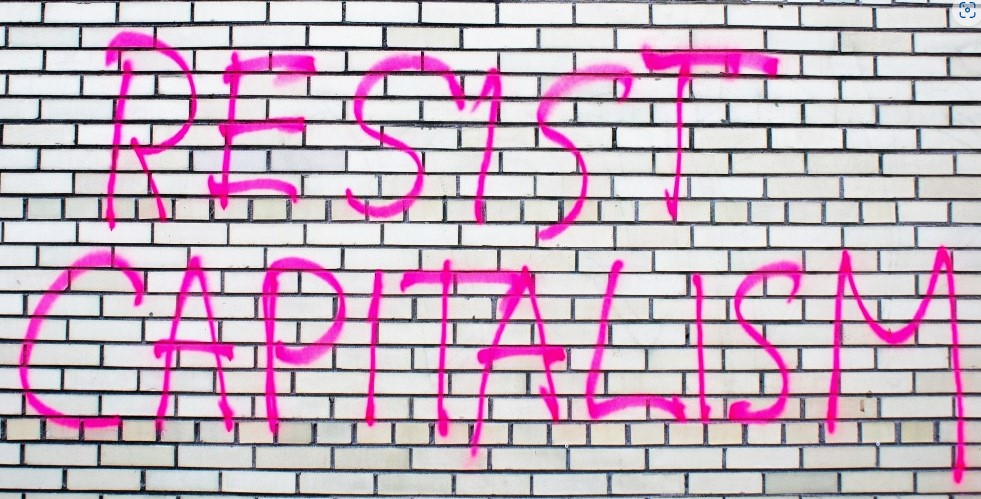
What we need now are societies that function without policing, prisons, and property. That is how we build alternatives to what is collapsing. Owning land, property is not an Indigenous concept. The commons are meant for community use.

  • Property is the basis for accumulation of wealth.
  • Policing is how this concept of property is protected.
  • Prison is how those who threaten property and landowners are removed from society.

Des Moines Mutual Aid


The next American Revolution, at this stage in our history, is not principally about jobs or health insurance or making it possible for more people to realize the American Dream of upward mobility. It is about acknowledging that we Americans have enjoyed middle-class comforts at the expense of other peoples all over the world. It is about living the kind of lives that will not only slow down global warming but also end the galloping inequality both inside this country and between the Global North and the Global South. It is about creating a new American Dream whose goal is a higher Humanity instead of the higher standard of living dependent on Empire. It is about practicing a new, more active, global, and participatory concept of citizenship. It is about becoming the change we wish to see in the world.

The courage, commitment, and strategies required for this kind of revolution are very different from those required to storm the Winter Palace or the White House. Instead of viewing the U.S. people as masses to be mobilized in increasingly aggressive struggles for higher wages, better jobs, or guaranteed health care, we must have the courage to challenge ourselves to engage in activities that build a new and better world by improving the physical, psychological, political, and spiritual health of ourselves, our families, our communities, our cities, our world, and our planet.

Grace Lee Bogg. The Next American Revolution

How can Friends achieve the 2022 theme of World Quaker Day, “Becoming the Quakers the World Needs,” while functioning in a blatantly and politically corrupt, racialized world? In engagement with this exciting theme, offered by the Friends World Committee for Consultation (FWCC), the Black Quaker Project would like to remind Friends of the tools at our disposal to challenge those aspects of society which we wish to change and to see changed. Our fractured societies are further divided by enormous gaps of inequality in almost every imaginable category—psychological, social, political, cultural, economic. How might we, as Quakers, achieve justice, equity, and peace under these circumstances? 

The Black Quaker Project

In late 2020, the two of us wrote an article for this magazine, called “Abolish the Police.” Through writing the piece, we realized we wanted to convene a larger space where Friends with an interest in police and prison abolition could have conversations with one another. Quaker abolitionists today face major pushback from our Meetings; we hoped that drawing Friends together would support and strengthen our work.

In this context, the Quakers for Abolition Network is being born. We are a collection of Friends from at least five Yearly Meetings; we range in age from high school to our 80s; we are disproportionately queer and trans. While AFSC and FCNL staff are participating, this is a grassroots project without any formal connections to existing organizations. We are in the process of defining our mission statement, structure, and our methods for addressing white supremacy when it shows up in our work, while building relationships with each other as we go. Below, four Friends write about their approaches to abolition, their lessons, and their visions for where Quakers might be headed.

Jeff Kisling: Mutual Aid and Abolition

I grew up in rural Iowa, where there was very little racial diversity and interactions with police and the court system were rare. About ten years ago, I was blessed to become involved with the Kheprw Institute, a Black youth mentoring and empowerment community. I’ll never forget how shocked I was when a Black mother broke down in tears, explaining how terrified she was every minute her children were away from home. It was obvious that every other person of color in the discussion knew exactly what she was saying.

After retiring, I was led to connect with Des Moines Mutual Aid, a multiracial organization founded to support houseless people. For over a year, I’ve helped my friends fill and distribute boxes of donated food, while continuing to learn about the framework of mutual aid.

To me, mutual aid is about taking back control of our communities. Besides the food giveaway, we support houseless people and maintain a bail fund to support those arrested agitating for change. We also work for the abolition of police and prisons.

Mackenzie Barton-Rowledge and Jed Walsh: Introducing the Quakers for Abolition Network, Western Friend, Sept 2021


Des Moines Mutual Aid

Des Moines Mutual Aid

Foundational Stories: Quaker Faith

Recently a Quaker friend challenged us to consider what our foundational stories are, how they began, how they changed over time, and what they are now. I’ve been writing about my foundational stories, which are related to the intersections between my Quaker faith, protecting Mother Earth, and photography.

This challenge comes at a time when I’m considering changes in those three things. Thus far my blog posts have been about how these stories began and have evolved.

I’m at the point of considering what those stories are now. A couple of days ago I wrote about the current state of how I care for Mother Earth.

Now I’ll try to express the current state of my Quaker faith, which will be the most difficult of the three parts of my foundational stories to write.

Part of what I was taught is we should not call attention to ourselves. But I have been led, as part of my faith, to share stories about my experiences and faith. The way we live our lives is how we express our faith. We share our faith by telling stories about these faith-based actions. The main reason photography is such a large part of my foundational stories is because photos can be a way to share my spiritual experiences.

I often think about what Noah Baker Merrill, a Quaker, wrote about this.

“We need to be careful when we talk about humility. The kind of humility this work brings isn’t the kind that would have us reject or repress our gifts. This kind of false humility leads us to oppress each other in the name of preventing pridefulness. This happens far too often.”

Noah Baker Merrill, “Prophets, Midwives, and Thieves: Reclaiming the Ministry of the Whole.”

Or as my friend Ronnie James, another storyteller says, “anyways, brag, brag, blah, blah”.


Religious faith is a matter of beliefs and, sometimes, spiritual experiences. I’ve heard not everyone has had, or at least not recognized, spiritual experience(s). I find it very interesting that those Friends (Quakers) who have said they had spiritual experience(s), have all said something like “and that’s all I’ll say about that”. That’s understandable because we don’t have the language to express this. Which makes it difficult to write about faith. Also, there is something about protecting something that is so intimate and profound in our lives.

My first spiritual experience was when I was about ten years old during meeting for worship at the Bear Creek meetinghouse. “And that’s all I’ll say about that”. Except to say I had no doubt about the presence of the Spirit in the world from that day on. I know I am blessed to have had that, and subsequent spiritual experiences.

Another Friend said his first spiritual experience came when he was about that age. This makes me realize we should pay attention to what young people experience. I love the native concept of children as sacred beings.

The concrete expression of our faith is seen in our actions in this world. This might mean we are led to act in ways contrary to the laws or conventions of the society we live in. Which is often not easy to do. Peer pressure can be a powerful force. There might be significant monetary costs and/or legal penalties. Quakers were once (still?) known as “peculiar people”. When there are conflicts between our spiritual beliefs and the laws of the government, people of faith try to obey the creator. Unfortunately, many times it is apparent that people who identify themselves as religious do not act according to the beliefs they profess. This lack of spiritual integrity results in many people rejecting organized religion.


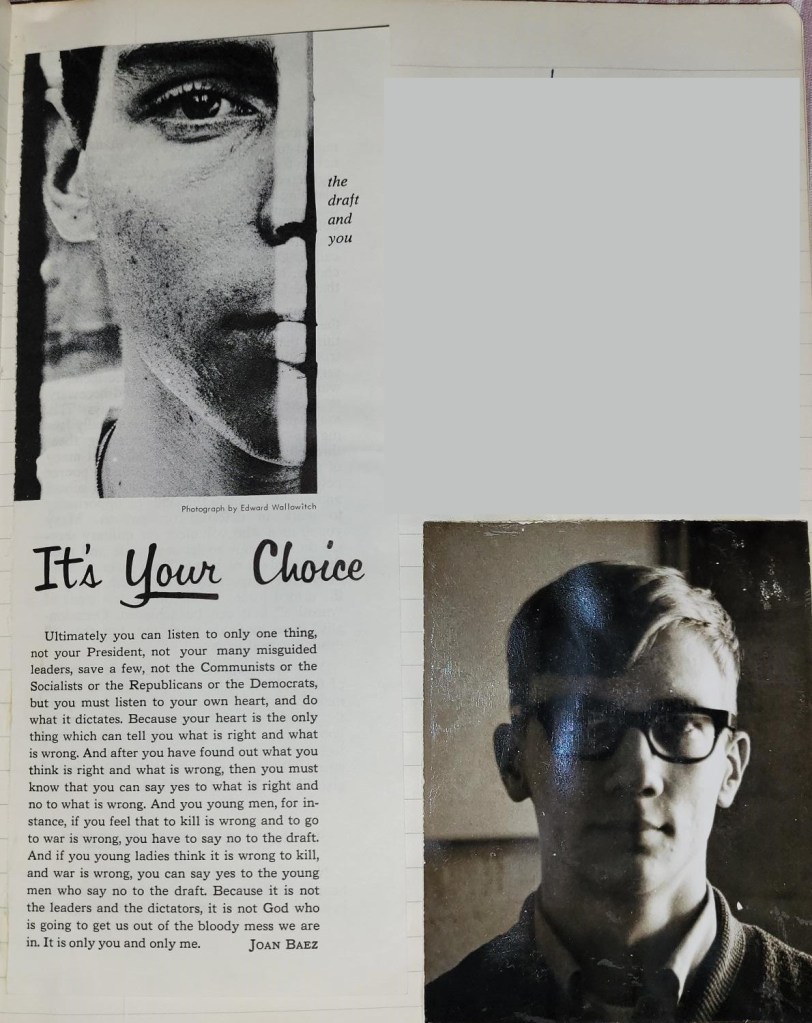
The first time I was confronted with a situation where my beliefs were contrary to the laws of the land related to registration for the Selective Service System. I attended Scattergood Friends School, a Quaker boarding high school, during the time of the Vietnam War (1960’s). A military draft was being used to conscript young men into the armed forces. Quakers do not believe in war nor in participating in the military. Those with religious objections to serving in the military could apply for Conscientious Objector (CO) status, which if granted, would allow them to do two years of alternative service, such as working in a hospital instead of military service.


My Quaker friend and mentor, Don Laughlin, collected these stories of Quakers who opposed war and conscription.


I turned eighteen years of age while a Senior at Scattergood (1969). Young men were required to register for the Selective Service System at that age. The choices were either to do so, or apply for Conscientious Objector status, or do neither and face imprisonment.

I really struggled with whether I should accept alternative service, or not cooperate with the Selective Service System. I studied and prayed a great deal. I was convinced that alternative service was going along with the system. The question was whether to take the safer path of conscientious objection, or risk prison by resisting the draft.

I recognized this decision would set the course for the rest of my life. Which is why this is part of my foundational stories. If I compromised about this, I would likely do so in similar circumstances for the rest of my life. I would always be aware that I had not acted according to my beliefs.

The following Epistle, and the examples of the men who refused to cooperate with the military, many of whom did serve time in prison, showed me there were those who acted according to their beliefs despite the consequences.

The following is an excerpt from a statement by a group of Quaker young men at that time, including Iowa Yearly Meeting (Conservative) Quakers Don Laughlin and Roy Knight.

Those of us who are joining in this epistle believe that cooperating with the draft, even as a recognized conscientious objector, makes one part of the power which forces our brothers into the military and into war.  If we Friends believe that we are special beings and alone deserve to be exempted from war, we find that doing civilian service with conscription or keeping deferments as we pursue our professional careers are acceptable courses of action.   But if we Friends really believe that war is wrong, that no man should become the executioner or victim of his brothers, then we will find it impossible to collaborate with the Selective Service System.  We will risk being put in prison before we help turn men into murderers.

It matters little what men say they believe when their actions are inconsistent with their words. Thus we Friends may say that all war is wrong, but as long as Friends continue to collaborate in a system that forces men into war, our Peace Testimony will fail to speak to mankind.

Let our lives speak for our convictions. Let our lives show that we oppose not only our own participation in war, but any man’s participation in it.
In our early history we Friends were known for our courage in living according to our convictions. At times during the 1600’s thousands of Quakers were in jails for refusing to pay any special respect to those in power, for worshiping in their own way, and for following the leadings of conscience.

We may not be able to change our government’s terrifying policy in Vietnam.  But we can try to change our own lives.  We must be ready to accept the sacrifices involved if we hope to make a real testimony for Peace.  We must make Pacifism a way of life in a violent world.

We remain, in love of the Spirit, your Friends and brothers,

An Epistle to Friends Concerning Military Conscription

This story would not be complete without including another important part of this decision, which was the tensions with my parents. They were against the war but wanted me to accept Conscientious Objector status. They were very upset when I said I couldn’t do that. I understood they didn’t want me to face prison and life as a felon, but they didn’t understand why I knew I must resist. I felt betrayed by their lack of support. Looking back from this time, it is easier to accept what they were doing out of love.

I mailed the following to the draft board today (2/6/1972), along with my registration certificate and classification (1-0) card: 

2/6/1972 

Dear members and clerk of the draft board:    

I have received an order to report for civilian work February 1, 1972. 

I want to thank you for your concerned questions at my personal appearance, when we were considering my position as a conscientious objector.  I have appreciated Mrs. Landon’s kindness and consideration, even when I returned my draft cards.  Thank you for giving me more time to consider this decision.  I hadn’t realized what a powerful affect that action would have on some people.  The extra time gave them, and me, a chance to come to grips with the decision and its consequences.  However, my beliefs have remained basically the same and the time has come to act accordingly.    

I am sure none of us really want war.  Many are convinced that was is a ‘necessary evil’—the only way to achieve peace.  I think I can understand that, and I do respect those who sincerely believe it—their sacrifice has been very great.    

But I do not believe war is the way to peace.  True peace is a personal, internal, spiritual matter.  When we come to know and love ourselves and our God, then and only then do we have peace.  From this point, peace and love will flow from us and should engulf those we live and work with.  This is the only way to find and promote peace. 

In this matter, war has no place.    

The enclosed attempts to illustrate my beliefs in relation to the Selective Service System.  I hope this will help you to understand why I feel I cannot cooperate with the Selective Service System.  I want it to be clearly understood that I am not doing alternative service.  It is not my choice.  There is nothing else I can do. 

Love, 
Jeff Kisling 


Letter to my draft board 

I write concerning my relationship with the Selective Service System.  There are many alternatives.  In fact, someone once said the only alternative not open to a young man facing the draft is that of being left alone.  I explored several of these.  I applied for and was granted conscientious objector status (1-0).  Then I had a student deferment, which made me very uneasy.  I am now doing work which should qualify as alternative service, but for reasons I will attempt to explain herein, I find this alternative to be unacceptable. 

I find it difficult to understand why one young man must explain his decision to do civilian work for a non-profit organization while another need make no explanation, indeed is encouraged to fight and perhaps kill other human beings.  But it is one’s duty to explain one’s actions in order that others might understand, and perhaps follow.  Noncooperation is less understood than conscientious objection, so I feel all the more compelled to try to present an explanation.  I must try to explain, to spare my family the burden of doing so, for they neither clearly understand nor agree with my decision.  (Note:  they fully supported alternative service, but didn’t want to see me imprisoned). 

This decision grew out of my experience as a member of the Society of Friends.  Meetings of the Society of Friends can be a source of strength and guidance as one begins and continues to search for meaning in life.  Quakers have always believed that there is that of God in every man, that each of us has the ability to communicate with that of God in us, and the responsibility to respond to that of God in everyone.  It is evident that Jesus had communion with God—evident in the actions of his life and in his teachings—culminating in “not as I will, but as thou wilt.”  This is the essence of Jesus’ teaching—that God’s will can be discerned and should be obeyed even at the cost of doubt and persecution.  Quakers readily accept Jesus as an exceptional person and try to live up to the principles he gave us to live by.  But we are even more concerned that we obey that Inner Light to which He was so sensitive, so we and have personal contact with and guidance from God.  Thus, Quakers try to minimize distractions from “this (secular) world” in order to discern the will of God in their hearts and His presence in their midst.  They gather together in a simple room and settle down together, searching in silence—each contributing to the spirit of the meeting as a whole.  There are times when a member feels he has been ‘moved by the spirit’ to share with the group, in which case the meeting considers the message in further silence. 

There is a spirit which comes from the silence which gives direction to life.  The spirit is often difficult to discern because of our ties to ‘this world.’  We are afraid or too proud to give up our desire to ‘reason through’ decisions.  Thus we develop a system of beliefs and guidelines composed of traditional beliefs, our own reasoning, and as much guidance from the Inner Light as we are willing to seek and accept.  Thus our decisions, being not entirely grounded upon our faith, may not always be ‘right’.  But we can do no more, nor should we do less, than follow our conscience as occasions arise—always seeking to become more attuned to the spirit.    

Adolescence is that period when one begins to seriously consider ‘who he is’ and his purpose in the world.  It is a time when one has so many question and so few answers.  The extent to which a young person searches for, and finds answers to these questions is dependent upon guidance given by parents, peers, school and church; the degree to which this guidance corresponds to his own experience and needs; and his own self-discipline and desire to continue the search.  Too often the leadership and resources are not available; he is ‘turned off’ by inconsistencies or shallowness or insincerity on the part of those he looks to for guidance and example; or materialistic demands distract from the search. 

The draft requires fundamental moral decisions at this time in life.  This may not be bad in itself, but tremendous pressure is brought to bear to influence the decision—tradition, parental and peer pressure, the law, etc.  The Selective Service System tries to attract men to the armed forces by relying on these pressures and by not making alternatives widely known.  The pressures in this case are for action which is contrary to the experience and desires of most young men—frustrating, anguishing when one is searching for truth, honesty and integrity.  This type of experience stifles personal growth and leads to the loss of a spirit of idealism and faith in the goodness of men.  Can there be a graver crime than that of destroying the spirit and dreams of the young?  Only that of destroying life itself, and the Selective Service System is directly implicated in both.    

Most of us agree that conscription and war are unjust-evil.  The question is, how do we deal with evil?  ‘Resist not evil’—a phrase widely known but little understood and less obeyed.  ‘Do not set yourself against one who wrongs you’ (NEB) is a better way to put it, I think.  In setting ourselves against those who harm us, we look, to some extent, for some way to hurt, or at least hinder them.  We look for the worst in others and play upon their weaknesses rather than looking for the best and trying to fortify it.  Out task is to overcome evil by doing good.    

The time we spend ‘resisting evil’ could be better spent in trying to find out where we can do better ourselves.  You do not change others by opposing them—rather, by respecting and trying to understand and learn from them, you can both benefit and move nearer the truth.  A life of example—showing the possibilities and fruits of a life lived in love and concern for others, is the only way to overcome evil. 

I do not want my example to be alliance with evil.  Thus, I cannot serve with the Selective Service System.  However, I will not set myself against it.  I will break my ties with Selective Service, and concentrate on the difficult task of working for peace in whatever way I can.    

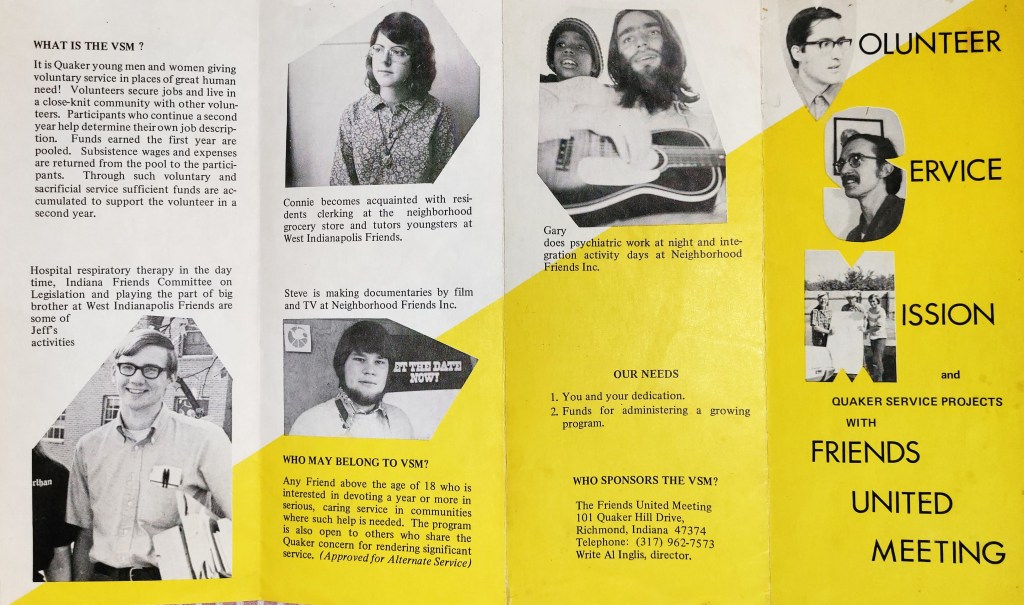
The conclusion to my draft story is that I was drafted at a time when men were not being drafted for the armed forces. A Supreme Court case declared this to be illegal, so my order to report for civilian service was invalidated and I wasn’t prosecuted.  I did finish my two years with Friends Volunteer Service Mission in Indianapolis. 


Letters to and from Bear Creek Monthly Meeting 

Homer Moffitt, Clerk 
Bear Creek Monthly Meeting 

Dear Friends, 

I am thankful for your kind letters and encouragement concerning my work in Indianapolis.  I am learning much about love, and as I respond to the love of others, and they to mine, we are all amazed at how it grows. 

I am enclosing a statement I have written concerning conscription, and my decision not to cooperate with the Selective Service System any more.  I sent a copy of that statement, along with my draft cards, to my draft board. 

Again, I tried very hard to follow the leading of the inner light.  If I alone were making the decision, this would probably not be my choice.  Thomas a’ Beckett, torn between his obligations to the Church and those to the State, was searching for guidance.  When he realized all the forces that influence him—selfish desires for power and personal gain, fear of punishment or displeasing people, etc., he said. “I am loathsome.”  But then he heard what he believed to be the voice of God saying, “Nevertheless, I love.” 

I, too, feel shamed when I realize the factors that often influence my decisions and actions.  On this matter, I have tried very hard to be sensitive to the will of God, and hope to do so in the times to come.  Still somewhat uncertain that my choice is right, I am comforted in knowing that He still loves. 

Love, 
Jeff Kisling 

In reply: 

Dear Jeff, 

We have found your statement explaining your relationship to the Selective Service System very moving.  Several of us are aware that your decision on this has been a difficult and lonely one.  We want to assure you of our love and support as you meet the events which result from your courageous stand. 

On behalf of the Peace Committee of Bear Creek Monthly Meeting 


We Don’t Leave Our Fighters Behind

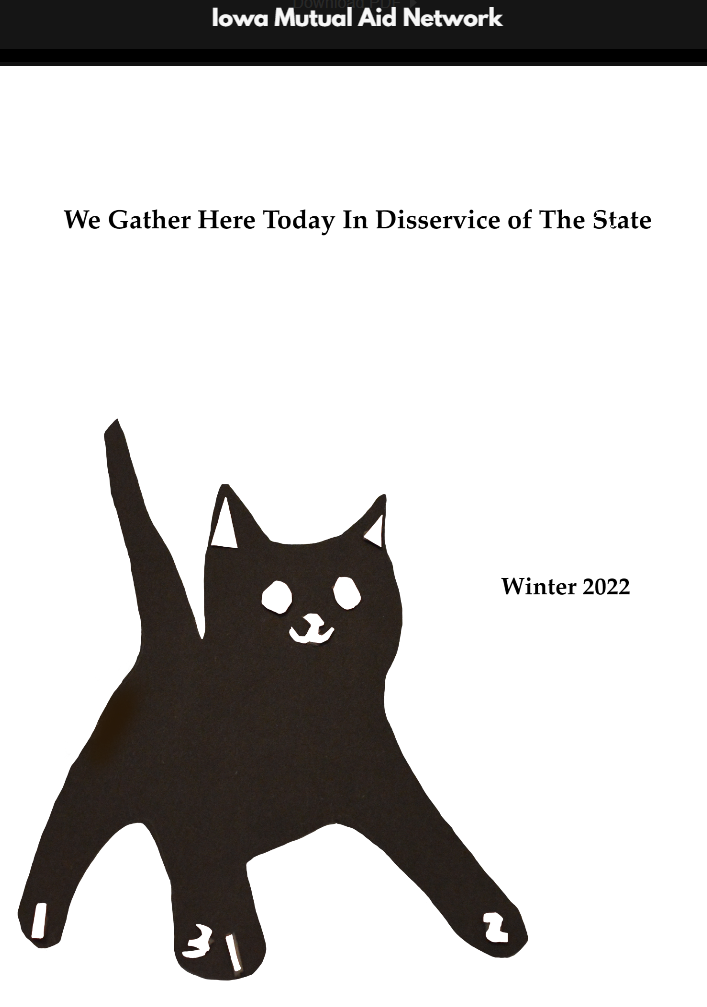
Another article in the recent zine, We Gather Here Today in Disservice of the State, from Des Moines Mutual Aid (DMMA) is “Court Solidarity: How and Why, or We Don’t Leave Our Fighters Behind.”

Des Moines Mutual Aid is an Abolitionist Mutual Aid Collective made up of varying radical and revolutionary tendencies in what is currently known as central Iowa.

Even though I’ve been engaged with DMMA for two years, I continue to learn of the many things our collective does. My experience is with the food giveaway project, and I know about the work to help the houseless. I also know about the bail fund. But not the full extent of Court Solidarity.

Des Moines Mutual Aid is the best community organizing group that I know of. Besides putting together and distributing the boxes of food on Saturday mornings, I look forward to hearing what my friends have been up to. And look for ways I can help. By offering to take photos at events, for example.

The Why

The injustices we face are commonly perpetrated and enforced by the state. Which means our demands for justice often require agitation against the state. The state criminalizes the exercise of civil liberties with laws that are themselves often unconstitutional. But this is how the state attempts to quell resistance, by arresting and incarcerating us.

The basic reasoning of why this tactic [court solidarity] has developed is that the state uses isolation as a tool for intimidation and compliance. The state relies on you feeling powerless once they have you in their grips… When we know our communities have our back, we are less likely to be coerced into decisions detrimental to ourselves and our communities and more willing to fight back.

May capitalism’s armed militias never capture you. If they do, may your people have your back like you had theirs.

A Brief History of Des Moines Mutual Aid Court Solidarity

When the uprising after the police murder of George Floyd began, Des Moines Mutual Aid understood we needed to organize a bail fund to keep our fighters out of jail and get them back to the streets. This was also during the beginning of the Covid-19 pandemic and jails are an extremely dangerous hotspot for virus transmission.
As expected, the state responded viciously to the protests and began making mass arrests. We put a call out to the community and they responded rapidly with donations. We set up a hotline that is monitored 24/7 to alert us to arrests and typically have bonds posted within hours. We managed to bail out every protester in Des Moines since the Summer of 2020 and continue to do so at the time of this writing at the beginning of 2022.

This reminds me of my training for community organizing as part of the Keystone Pledge of Resistance in 2013. Everyone participating was told to write the phone number to our bail support team on their skin.

But the court solidarity of DMMA goes far beyond that.

After bail was paid and the person was leaving jail, they were interviewed to see if they had any immediate needs and to obtain their contact information so the court solidarity team could monitor court filings and work on finding pro bono lawyers and mental health professionals as needed.

As the street protests cooled down and the trials began, we put out a call to build a Court Solidarity crew. We used information from the defendants and public court records to keep up to date on court scheduling and made sure we showed up to court dates. This also served as a movement building tactic. Many different orgs are represented on these days and we use this time to eat together, organize further, and strategize about upcoming cases

Arrest

Once arrested there are two things that need to be done right away.

  • Assess the immediate needs of the person arrested, and of those who depend on them.
    • “Needs such as injuries, time-dependent medications, pets, children, dependent adults, immigration status, etc.”
  • Determine their bail and get it paid quickly
    • “The longer someone is in the hands of the state the possibility of something very bad happening increases.”

Pre-trial

Once the ransom is paid, or the defendant is denied bail and must wait in a cage for trial, the next step is to find legal representation.

This is also the time to organize defense committees for the defendant or a group of defendants, with their consent. The defense committee’s roles include raising funds for legal costs and dependent care as well as popular support, as deemed appropriate. They often work hand in hand with the lawyers to make sure neither is creating roadblocks for the defendant’s goals. The defense committees should have one or more individuals that keep track of the defendant’s mental health and arrange for therapy or other means of relief.
All of these processes are traumatic to the defendant.

Remember that many protest arrests are of people knowingly risking their freedom to further ours.

Trial

Once the trial starts, fill those seats! There are few feelings of isolation like sitting in a courtroom inside a building completely filled with people that have your worst interests in mind, many of them armed. When you have a few dozen people sitting with you it can give the little extra courage needed to complete this on your terms. There is evidence to suggest that court support and character letters, which we will come back to, have a positive effect for the defendant during sentencing.
If the defendant is feeling it, have the whole crew eat together during lunch breaks, and rest somewhere together while waiting on the jury to return its verdict. This can have the effect of keeping the defendant’s morale up, as well as that of the defense committees, many of whom may be defendants themselves. The stress of state repression during times of increased resistance can, and all too frequently has, fractured relationships and solidarity.
These are important moments to nurture those relationships and maintain the strength we built together in the street

Post-trial

In the case of a guilty verdict or acceptance of a plea, continued support is needed. Character reference letters can be sent to the court prior to sentencing. And funds need to be raised. crowdfunding is commonly used.

In the worst case scenario money will be needed for commissary.

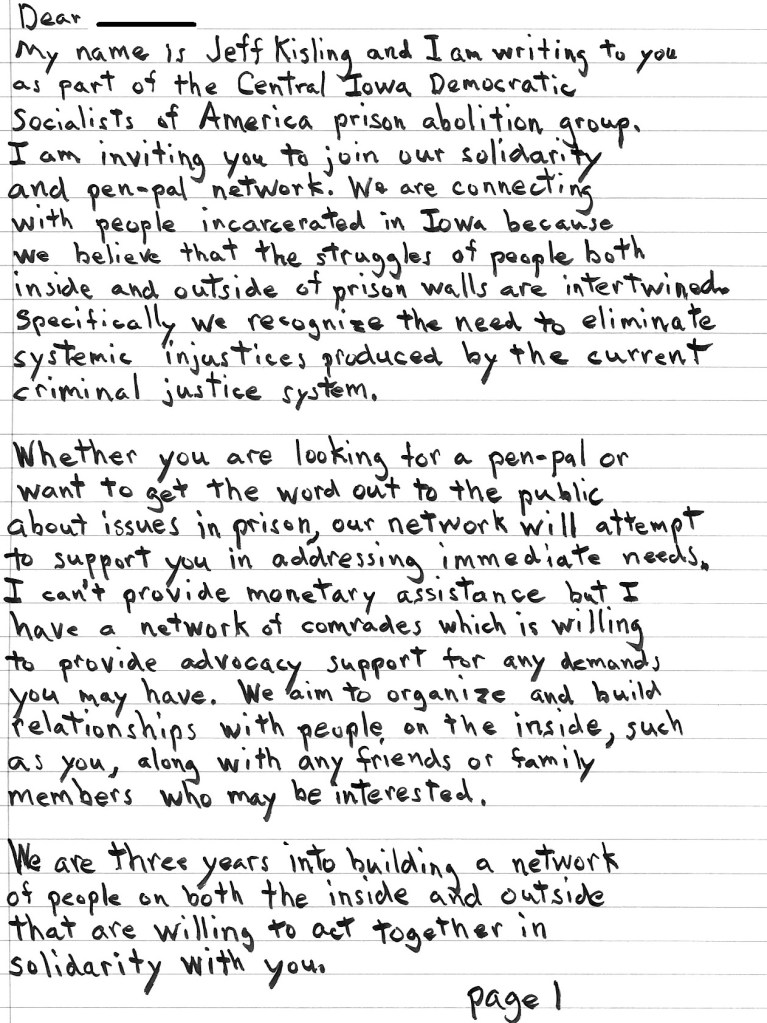
Letter writing can be very helpful, not only to those who are incarcerated, but as a way those outside the prison walls to learn of conditions in prisons. And organize ways to address conditions. I’ve written about the prison letter writing group I’ve been involved with. That is organized by one of my Mutual Aid friends as part of the work of Central Iowa Democratic Socialists of America.

Transgress the Prison Walls

This is a very broad overview of Court Solidarity. Many of the important details will differ based on the laws of your state. Looking up state code and talking to lawyers, law students, or paralegals will help you get a handle on that.
Our next installment will cover prison escapes, how to live underground, and states that refuse u.s. extradition.

If you have any questions, feel free to contact us at desmoinesmutualaid@protonmail.com.

Transgress the Prison Walls

I just sat down after taking two letters to prison pen-pals to the mailbox and saw the article Abolitionist Efforts to Trangress the Prison Walls by Jaden Janak, Hood Communist, March 10, 2022. I don’t like to include too many quotes in my writing, but this article touches on many things I’ve been learning, much which is about Mutual Aid.

Through a close reading of Black Communist trans prisoner Alyssa V. Hope’s legal efforts and writings, this article unearths how a pen-pal relationship transformed into a comprehensive abolitionist community. This case study provides an example of how abolitionists are grappling with the need to support the material needs of marginalized communities while still building otherwise possible worlds separate from a failing welfare state. Mutual aid projects, like the one formed by Hope’s supporters, showcase that otherwise possible worlds are not only possible, but they are being created right now before us.

Abolitionist Efforts to Trangress the Prison Walls by Jaden Janak, Hood Communist, March 10, 2022

… it was not always this way, which proves it does not have to stay this way. 

What we have is each other. We can and need to take care of each other. We may have limited power on the political stage, a stage they built, but we have the power of numbers.

Those numbers represent unlimited amounts of talents and skills each community can utilize to replace the systems that fail us.  The recent past shows us that mutual aid is not only a tool of survival, but also a tool of revolution. The more we take care of each other, the less they can fracture a community with their ways of war

Ronnie James, The Police State and Why We Must Resist

The focus of the Transgress the Prison Walls article is on the writings of political prisoners, but much applies to prison pen-pal relationships with anyone who is incarcerated. I’ve become involved in the prison letter writing project of the Central Iowa Democratic Socialists of America. Not surprisingly, I found several of my Des Moines Mutual Aid friends are also involved.

I wrote the following based upon a sample letter.

As abolitionist organiser and theorist Mariame Kaba writes, “The work of abolition insists that we foreground the people who are behind the walls… That we transform the relationships we have with each other so that we can really create new forms of safety and justice in our communities.” (Duda/Kaba 2017) This solidarity takes many forms such as written correspondence via pen-pal pro-grams

Abolitionist Efforts to Trangress the Prison Walls by Jaden Janak, Hood Communist, March 10, 2022

More than a one-way exchange of sympathy, abolitionist solidarity operationalises mutual aid as a foundational modality for community building. Abolitionist mutual aid recognises the necessity of meeting immediate communal needs while also addressing deeper causes of violence: mechanisms of control, management, and punishment that structure everyday life (Spade 2020, 9). Historically, mutual aid communities have taken many forms including the 1969 Free Breakfast programs of the Black Panther Party in the United States and the maroon communities formed by free and escaped en-slaved people (Nelson 2011). In the 1950s and 1960s, health providers routinely refused Black patients and relegated Black people to sub-standard facilities (ibid., 24). To protest this treatment and provide for their community, the Black Panther Party of Oakland and other chapters around the nation and world opened People’s Free Medical Clinics that provided quality medical services free of charge to Black community members (ibid., 79). Mutual aid work, like that of the Black Panther Party, is not top-down charity. Rather, mutual aid projects “are an integrated part of our lives… and [they] cultivate a shared analysis of the root causes of the problem.” (Spade 2020, 28f.) Even as the welfare state continues to crumble, communities work together to meet each other’s needs while creating new relations of accountability and care in the state’s absence.
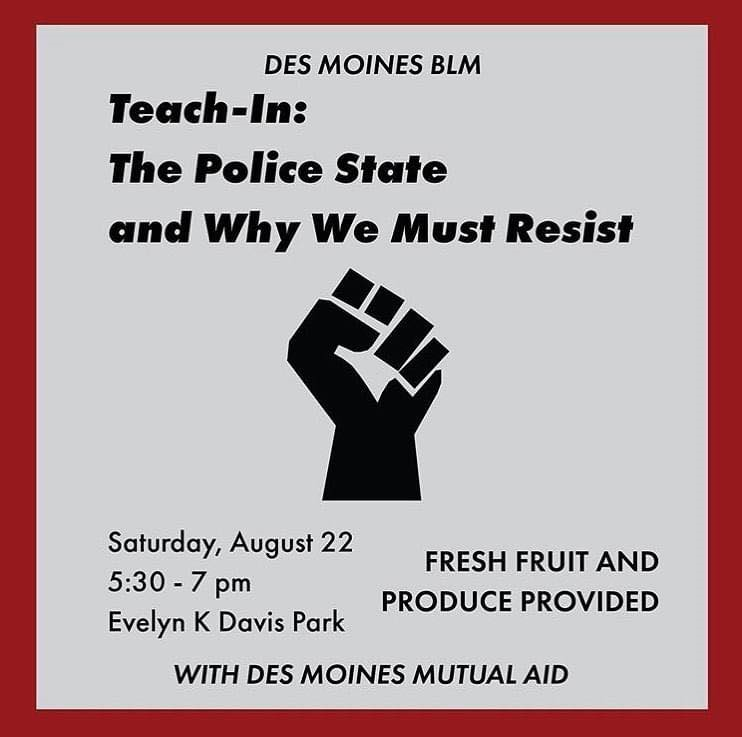
Abolitionist Efforts to Trangress the Prison Walls by Jaden Janak, Hood Communist, March 10, 2022
So, I work with a dope crew called Des Moines Mutual Aid, and on Saturday mornings we do a food giveaway program that was started by the Panthers as their free breakfast program and has carried on to this day. Anyways, brag, brag, blah, blah.

So, I get to work and I need to call my boss, who is also a very good old friend, because there is network issues. He remembers and asks about the food giveaway which is cool and I tell him blah blah it went really well. And then he’s like, “hey, if no one tells you, I’m very proud of what you do for the community” and I’m like “hold on hold on. Just realize that everything I do is to further the replacing of the state and destroying western civilization and any remnants of it for future generations.” He says “I know and love that. Carry on.”

Ronnie James, Des Moines Mutual Aid