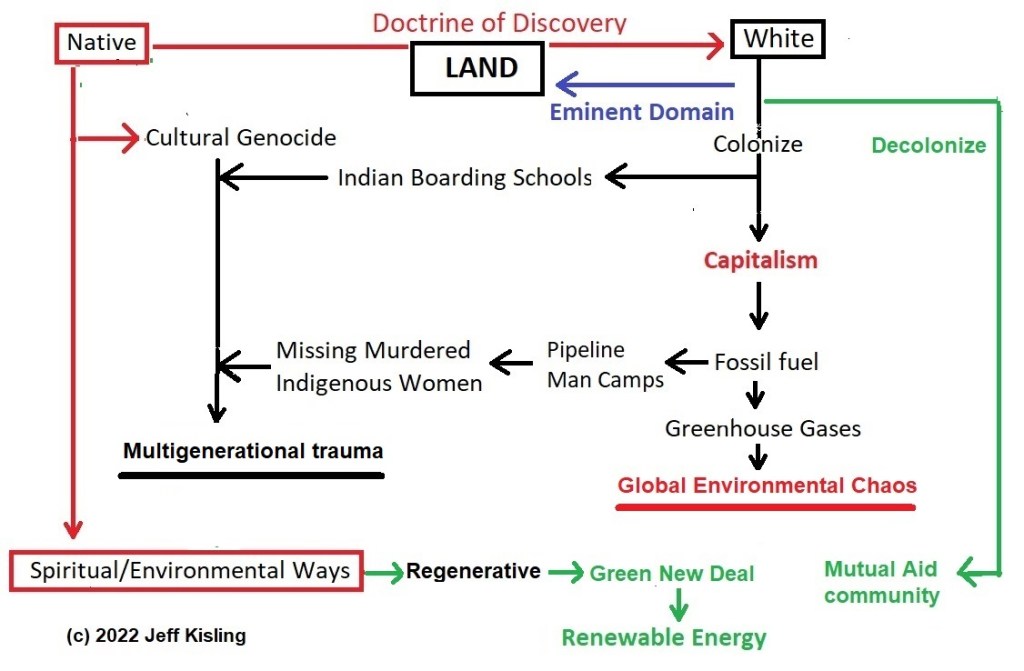
Societies that function without policing, prisons, and property

Rather than dwelling on all the current and oncoming catastrophes, we can recognize the crossroads we are at, and choose to live in a better way.

We only have a finite amount of energy personally and must use it wisely. I’m led to believe we should stop wasting energy trying to make incremental changes in existing systems of oppression. And instead turn our attention and energy to building more just alternatives. Living out our spiritual guidance.

I’m of the firm opinion that a system that was built by stolen bodies on stolen land for the benefit of a few is a system that is not repairable. It is operating as designed, and small changes (which are the result of huge efforts) to lessen the blow on those it was not designed for are merely half measures that can’t ever fully succeed.

So, the question is now, where do we go from here? Do we continue to make incremental changes while the wealthy hoard more wealth and the climate crisis deepens, or do we do something drastic that has never been done before? Can we envision and create a world where a class war from above isn’t a reality anymore?”

Ronnie James, Des Moines Mutual Aid

As Grace Lee Boggs writes below, “it is about acknowledging that we Americans have enjoyed middle-class comforts at the expense of other peoples all over the world.” We, especially White Quakers, can end our complicity in the systems of oppression, colonialism, and White supremacy.

I’ve been blessed to be part of several communities building such alternatives. These include the Kheprw Institute, Des Moines Mutual Aid, and the Buffalo Rebellion.

These experiences have helped me understand something black, Indigenous, and other people of color (BIPOC) have always known. That the systems of racial capitalism and white supremacy have never worked for anyone who is not a wealthy white male.

Robyn Maynard and Leanne Betasamosake Simpson have succinctly captured what needs to happen in their book Rehearsals for Living (Abolitionist Papers).

In my mind, Indigenous nations, Indigenous homespaces, Indigenous homelessness must be engaged in a radical and complete overturning of the nation-state’s political formations and a refusal of racial capitalism. My vision to create Nishnaabeg futures and presences must structurally refuse and reject the structures, processes and practices that end Indigenous life, Black life and result in environmental desecration. This requires societies that function without policing, prisons, and property.

Nishnaabeg formations of nationhood mean a radical overturning of the current conditions and configurations within which we live—an absolute refusal of capitalism.

Maynard, Robyn; Simpson, Leanne Betasamosake. Rehearsals for Living (Abolitionist Papers) (p. 125). Haymarket Books. Kindle Edition.

What we need now are societies that function without policing, prisons, and property. That is how we build alternatives to what is collapsing. Owning land, property is not an Indigenous concept. The commons are meant for community use.

  • Property is the basis for accumulation of wealth.
  • Policing is how this concept of property is protected.
  • Prison is how those who threaten property and landowners are removed from society.

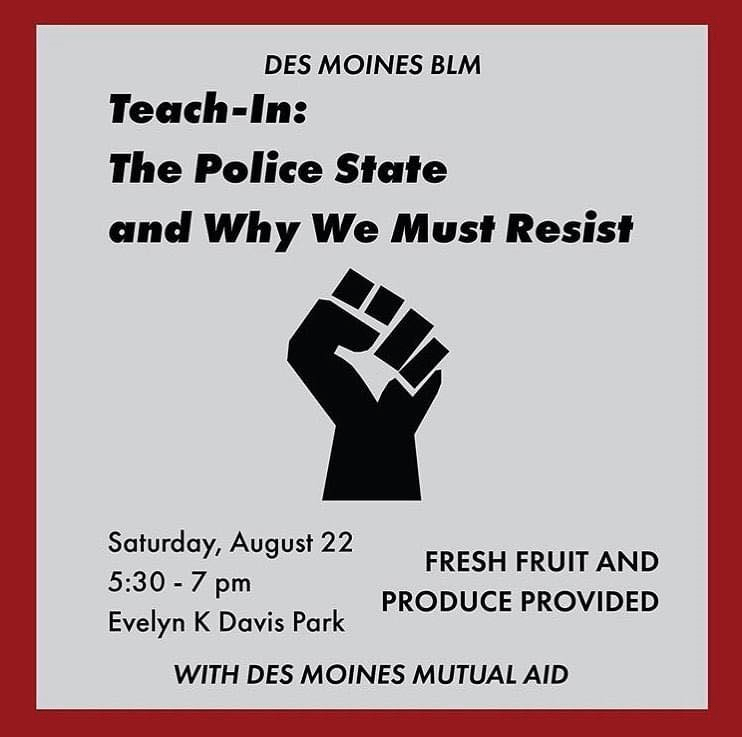
Des Moines Mutual Aid


The next American Revolution, at this stage in our history, is not principally about jobs or health insurance or making it possible for more people to realize the American Dream of upward mobility. It is about acknowledging that we Americans have enjoyed middle-class comforts at the expense of other peoples all over the world. It is about living the kind of lives that will not only slow down global warming but also end the galloping inequality both inside this country and between the Global North and the Global South. It is about creating a new American Dream whose goal is a higher Humanity instead of the higher standard of living dependent on Empire. It is about practicing a new, more active, global, and participatory concept of citizenship. It is about becoming the change we wish to see in the world.

The courage, commitment, and strategies required for this kind of revolution are very different from those required to storm the Winter Palace or the White House. Instead of viewing the U.S. people as masses to be mobilized in increasingly aggressive struggles for higher wages, better jobs, or guaranteed health care, we must have the courage to challenge ourselves to engage in activities that build a new and better world by improving the physical, psychological, political, and spiritual health of ourselves, our families, our communities, our cities, our world, and our planet.

Grace Lee Bogg. The Next American Revolution

How can Friends achieve the 2022 theme of World Quaker Day, “Becoming the Quakers the World Needs,” while functioning in a blatantly and politically corrupt, racialized world? In engagement with this exciting theme, offered by the Friends World Committee for Consultation (FWCC), the Black Quaker Project would like to remind Friends of the tools at our disposal to challenge those aspects of society which we wish to change and to see changed. Our fractured societies are further divided by enormous gaps of inequality in almost every imaginable category—psychological, social, political, cultural, economic. How might we, as Quakers, achieve justice, equity, and peace under these circumstances? 

The Black Quaker Project

In late 2020, the two of us wrote an article for this magazine, called “Abolish the Police.” Through writing the piece, we realized we wanted to convene a larger space where Friends with an interest in police and prison abolition could have conversations with one another. Quaker abolitionists today face major pushback from our Meetings; we hoped that drawing Friends together would support and strengthen our work.

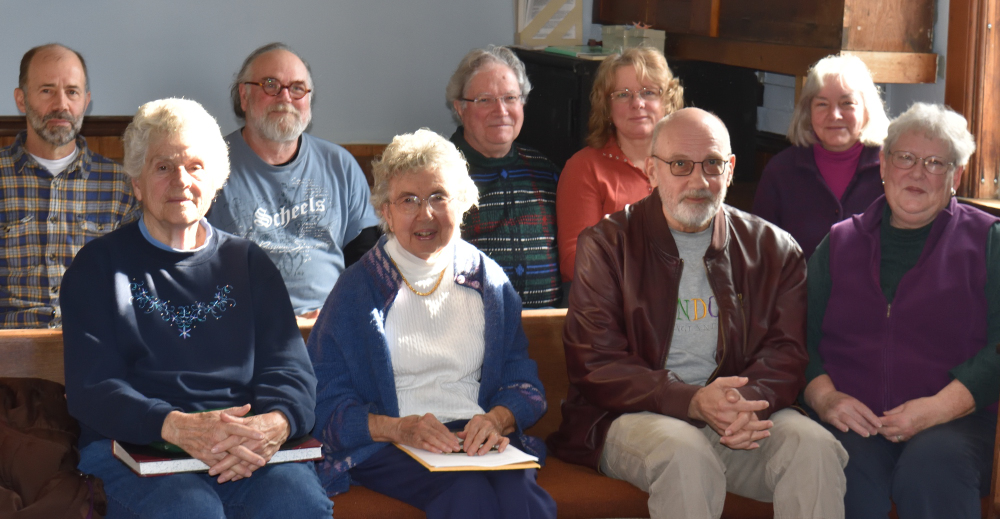
In this context, the Quakers for Abolition Network is being born. We are a collection of Friends from at least five Yearly Meetings; we range in age from high school to our 80s; we are disproportionately queer and trans. While AFSC and FCNL staff are participating, this is a grassroots project without any formal connections to existing organizations. We are in the process of defining our mission statement, structure, and our methods for addressing white supremacy when it shows up in our work, while building relationships with each other as we go. Below, four Friends write about their approaches to abolition, their lessons, and their visions for where Quakers might be headed.

Jeff Kisling: Mutual Aid and Abolition

I grew up in rural Iowa, where there was very little racial diversity and interactions with police and the court system were rare. About ten years ago, I was blessed to become involved with the Kheprw Institute, a Black youth mentoring and empowerment community. I’ll never forget how shocked I was when a Black mother broke down in tears, explaining how terrified she was every minute her children were away from home. It was obvious that every other person of color in the discussion knew exactly what she was saying.

After retiring, I was led to connect with Des Moines Mutual Aid, a multiracial organization founded to support houseless people. For over a year, I’ve helped my friends fill and distribute boxes of donated food, while continuing to learn about the framework of mutual aid.

To me, mutual aid is about taking back control of our communities. Besides the food giveaway, we support houseless people and maintain a bail fund to support those arrested agitating for change. We also work for the abolition of police and prisons.

Mackenzie Barton-Rowledge and Jed Walsh: Introducing the Quakers for Abolition Network, Western Friend, Sept 2021


Des Moines Mutual Aid

Des Moines Mutual Aid

Conflict with my Quaker meeting

Recently when I wrote about life without a car, I said being led to live without a car and struggling to convince others to not use fossil fuels were the most important spirit-led actions of my life. This is a continuation of the discussion of life without a car.

My grandmother, Lorene Standing, said the will of God is often revealed in a series of steps. Which was the case related to my spiritual leadings to reduce greenhouse gas emissions. Earlier I wrote about the beginnings of my spiritual guidance regarding our environment. But there were many times as life went on when I relied on that and further guidance. The series of steps along the way.

But there were also times when I somehow got off the right path of this journey. I made a lot of mistakes related to this over the years. Among other things, this created a great deal of tension with my Quaker meeting.

It wasn’t that members of the meeting weren’t concerned about Mother Earth. They were concerned and did many things to reduce their carbon footprint and pollution.

But I believed transportation was the single greatest contributor to greenhouse gas emissions that we had personal control over. It was a matter of scale. Emissions from even the minimal use of cars dwarfed the total emissions saved by all other efforts, such as turning off lights, reducing the use of heating and air conditioning, etc., combined. It was disconcerting to see Friends and others using air travel. The skies were full of planes.

There was also collateral damage related to fossil fuel transportation. Urban sprawl was premised on the use of cars for all transportation, including to work, school, grocery, church, healthcare, sports, and entertainment. That would not have occurred, at least to the extent is has, if we had focused on mass transit instead of personal automobiles.

Our communities would not have been fractured as they were when people drove to the suburbs and stayed in their homes when they got there. Not knowing their neighbors, not having a sense of community. Investing in armed police and prisons for a false sense of security. Spending incomprehensible amounts of money for a false sense of national security. And the greater horror of squandering the lives of soldiers on both sides of conflicts. So many civilian casualties. Crushing our souls.

Most importantly, we would not be facing the existential environmental crisis we are in now.

And the U.S. armed forces are the single greatest source of pollution.

Most importantly, we would not be facing the existential environmental crisis we are in now. With the strong storms, flooding, savage wildfires, heat and drought. Leading to mass migration, famine and deaths.

The root of the tensions with my Quaker communities was that many members lived in rural areas, small towns, or cities with no public transportation.

Indianapolis had a public bus system that wasn’t highly rated. The bus routes didn’t cover large areas of the city, didn’t operate during the night, and often not on weekends. They were often not on time.

So it is a paradox that I rarely used Indianapolis’s public transportation system, in part for the reasons mentioned above while being a strong advocate for mass transit. But these problems all need to addressed. Perhaps the most important thing we can do for Mother Earth is create good public transit systems. And stop military operations.

To live without a car, I had to carefully plan where I lived. There needed to be a grocery store and laundry within walking distance. And be within walking distance of the hospital I worked at.

I had to carefully choose the food I bought, limited to the weight and bulk I could walk with. That meant things like rice and not boxes of prepared foods. Another advantage was that also meant I had little trash.

I won’t deny it was often difficult to not have a car. Walking in inclement weather was a challenge. Sometimes I would just be tired. When I did use the bus system, the buses were often not on time. These were times when I would ask for some spiritual support. Some of the small steps my grandmother spoke of. Sometimes I’d receive that support, other times not.

There are many ways not having a car was a blessing. As I walked to and from work, I began to notice flowers and views. The more closely I paid attention, the more detail I saw. I began to carry my camera with me. It soon got to the point that I had to leave a little extra early for work, to account for the time taking the photos.

And there were many times I would run to the places I was going to. Besides my nearly daily runs for pleasure and fitness.

Rural transportation and fossil fuel usage

What did I think people in rural areas could do? The easiest would be to plan trips so multiple things could be accomplished on each. Friends were doing this. Friends could also coordinate trips with each other.

Rural towns could create inter-city transportation using school buses or electric vehicles.

People could install renewable energy systems. Perhaps community renewable systems. Including the meetinghouse.

Use electric powered vehicles or perhaps a return to animals to move things around the farm, pull plows in the fields.

These conversations went on for all of my adult life.

Invite the meeting into my concern

Finally, a f/Friend asked me if I had invited the meeting into my concern. And I realized I had not. We had fallen into a pattern of my expressions of concern, and often irritation actually. The physical separation didn’t help. I lived in Indianapolis my whole adult life.

With this change in perspective, and spiritual guidance as we considered this together, worshipped together, we came up with a statement (minute) we referred to as “ethical transportation”. We asked the yearly meeting (Iowa Yearly Meeting Conservative) to consider the minute, which was approved by the Yearly Meeting (below).

Junior Yearly Meeting, Iowa Yearly Meeting (Conservative)

Our Yearly Meeting has approved other minutes related to our environment. In 2015 we approved this minute.

Minute

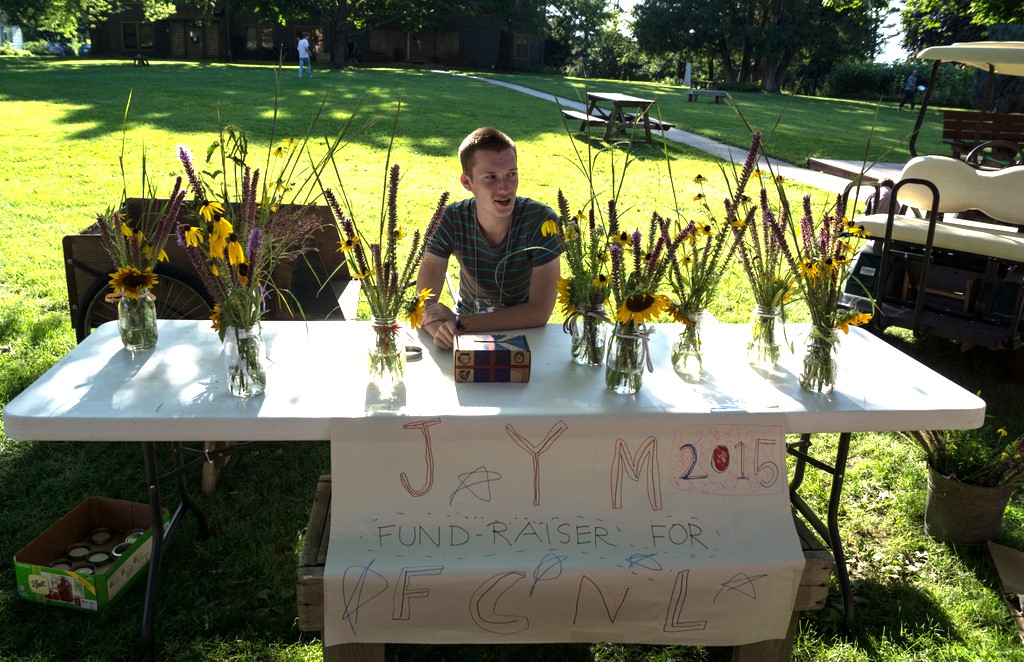
We are deeply moved and appreciate the contribution of Junior Yearly Meeting to our ongoing concern regarding changes in our environment.  Their project to raise funds for FCNL’s efforts to address environmental concerns by selling flowers was both spiritually and artistically beautiful.

Junior Yearly Meeting sells flowers from the Scattergood prairie to raise money to support FCNL’s work related to our environment

And this was included in the approved Peace and Social Concerns Committee report.

We are exploring concerns of our younger Friends.  Junior Yearly meeting at this Yearly Meeting are concerned about greenhouse gas emissions and rebuilding infrastructure in countries ravaged by war.


Queries

It would have been good if we had reached the point of inviting the meeting into my environmental concerns much sooner than we did. We have a practice that might have helped, which is consideration of queries (questions) related to various parts of our Quaker community lives. There are twelve sets of queries, so commonly each meeting considers one set of queries each month.

4.  HARMONY WITHIN THE MEETING

“This is my commandment: Love one another as I have loved you.”   John 15:1

ADVICE

It is sometimes difficult to remember that love is a gift of the Divine Spirit and not simply a human emotion. As imperfect human beings, it is not always possible for us to feel loving toward one another, but by opening ourselves to the Light Within, we can receive and give love beyond our human abilities.

Relationships among meeting members take time to evolve. Sometimes misunderstandings develop. When differences arise, they should not be ignored for the sake of superficial unity. We believe disagreements which might divide or disrupt a meeting can be resolved through human effort and divine grace, and may result in a stronger and more creative meeting. True harmony depends upon each persons deep respect of and faithful attention to the Divine Spirit within us all. We endeavor to practice humility, attempting to understand positions of others and being aware of the possibility that we may be mistaken.

It is the responsibility of the Ministry and Oversight Committee to be sensitive to needs which may arise. Others in the meeting may be equally concerned, and because of greater understanding in certain cases, be able to give counsel. In reconciliation of differences, a position not previously considered may prove mutually beneficial. At times it may be necessary to confront individuals whose behavior is disruptive. A clearness committee or professional help may be suggested in some situations. We must always remember the power of holding one another in the Light, and the healing that comes from forgiving ourselves as well as others.

QUERY

  • What can we do to deepen our relationships with one another? How does gender affect the way we relate to each other?
  • How does our meeting balance the needs for honesty and kindness? What topics do we avoid for the sake of “unity”?
  • When in conflict with others, do we cultivate a forgiving spirit? Do we look to that of God in ourselves and seek to address that of God in those with whom we disagree?

Ethical Transportation

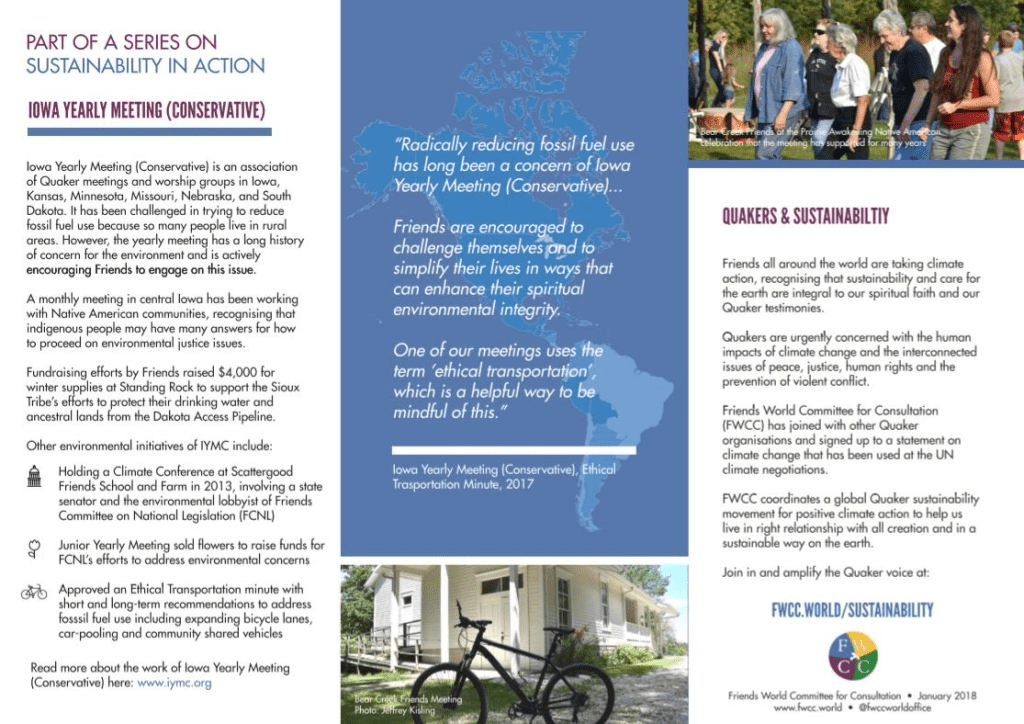
 Radically reducing fossil fuel use has long been a concern of Iowa Yearly Meeting (Conservative).  A previously approved Minute urged us to reduce our use of personal automobiles.  We have continued to be challenged by the design of our communities that makes this difficult.  This is even more challenging in rural areas.  But our environmental crisis means we must find ways to address this issue quickly.
 
 Friends are encouraged to challenge themselves and to simplify their lives in ways that can enhance their spiritual environmental integrity. One of our meetings uses the term “ethical transportation,” which is a helpful way to be mindful of this.
 
 Long term, we need to encourage ways to make our communities “walkable”, and to expand public transportation systems.  These will require major changes in infrastructure and urban planning.
 
 Carpooling and community shared vehicles would help.  We can develop ways to coordinate neighbors needing to travel to shop for food, attend meetings, visit doctors, etc.  We could explore using existing school buses or shared vehicles to provide intercity transportation.  
 
 One immediately available step would be to promote the use of bicycles as a visible witness for non-fossil fuel transportation.  Friends may forget how easy and fun it can be to travel miles on bicycles.  Neighbors seeing families riding their bicycles to Quaker meetings would have an impact on community awareness.  This is a way for our children to be involved in this shared witness.  We should encourage the expansion of bicycle lanes and paths.  We can repair and recycle unused bicycles, and make them available to those who have the need.

Minute approved by Iowa Yearly Meeting (Conservative) 2017


1 . SET CONFLICT RESOLUTION GROUND RULES:

  • Recognize whose lands these are on which we stand.
  • Ask the deer, turtle, and the crane.
  • Make sure the spirits of these lands are respected and treated with goodwill.
  • The land is a being who remembers everything.
  • You will have to answer to your children, and their children, and theirs—
  • The red shimmer of remembering will compel you up the night to walk the perimeter of truth for understanding.
  • As I brushed my hair over the hotel sink to get ready I heard:
  • By listening we will understand who we are in this holy realm of words.
  • Do not parade, pleased with yourself.
  • You must speak in the language of justice.
Harjo, Joy. Conflict Resolution for Holy Beings: Poems. W. W. Norton & Company. Kindle Edition.

Life without a car

Aside from the spiritual leadings that guided me to my career, being led to live without a car and struggling to convince others to not use fossil fuels were the most important spirit-led actions of my life. This also created a great deal of tension with my Quaker meeting. I made a lot of mistakes related to this over the years. When I say “I made mistakes” that’s a clue that I didn’t always hear, or follow what the Spirit was guiding me to do.

Growing up on farms, I had the connections to the land and creatures and the cycles of the seasons common to farmers. Scattergood Friends School is on a farm, the name changed to Scattergood Friends School and Farm since I attended. Working on the farm was an important part of our education. Over the years this has expanded significantly. In the Sophomore year we raised pigs as part of our biology class.

Being led to live without a car was at the intersection of my foundational stories, my Quaker faith, protecting Mother Earth, and photography.


I am very grateful my parents chose to take us on camping trips across the United States for our summer family vacations, specifically selecting National Parks to camp in.  Actually camping in the Parks was key to the whole experience.  Our first camper was a King camper, which was an aluminum trailer with a canvas covered framework that unfolded to form the top half when we stopped at the campsite.  Being in the woods, hearing the sounds of the wind and wildlife and the glacier streams rush over the boulders, feeling the cold at night, and smelling the pine trees made the experience so much better than traveling into the park during the day and returning to a motel at night.

Hiking through the meadows and forests and upon mountainsides with countless, stunning vistas, were life changing experiences for me.  I was overwhelmed by the intense beauty.  Rocky Mountain National Park was our favorite, and we returned there time and again as we were growing up. We quickly found that not many people traveled too far from the parking areas, and with even a short hike we were practically alone in the woods.  Hikes of just a mile or two brought us to lakes, canyons, waterfalls, cliffs, meadows, snowfields, boulder fields, and rock walls to climb. Places we were able to appreciate alone.

Quaker worship was a natural extension of the quiet of the mountains.

I hadn’t reflected much on why we sought opportunities to be by ourselves in the mountains. It just seemed a much better experience that way. Now I think it was related to feeling closer to God when we were deep in the quiet of the forests. Having grown up in Quaker communities, I was used to worshiping in silence, as we do so we can hear the whisper of the Spirit. Being enveloped in the silence of the mountains was a natural extension of Quaker worship. Or rather, Quaker worship was a natural extension of the quiet of the mountains. Quiet rather than silence.

This was also a reciprocal relationship. I was always challenged to find ways to share my spiritual experiences with others. These experiences are ineffable, that is they can’t be adequately expressed with words. But art can often better express spirituality. So I hoped some of my photographs might show glimpses of the Spirit.

The writer’s lonely, harrowing struggle to give shape to his or her elusive vision of the world—to complete a book, to discover among the fragments of a thought or a dream the precise image needed to breathe life into a poem—is a familiar chapter in the annals of pain and grief.

How can we save the wilderness? I was a mountain climber whose affection for the high peaks had evolved gradually into political commitment to the cause of preservation. I was, too, a fledgling writer searching for direction. I knew the importance of craft, experience, doggedness, and the other familiar requisites for literary success, but I lacked vision—an understanding of my relationship to the world.

How could we convince lawmakers to pass laws to protect wilderness? (Barry) Lopez argued that wilderness activists will never achieve the success they seek until they can go before a panel of legislators and testify that a certain river or butterfly or mountain or tree must be saved, not because of its economic importance, not because it has recreational or historical or scientific value, but because it is so beautiful.

I left the room a changed person, one who suddenly knew exactly what he wanted to do and how to do it. I had known that love is a powerful weapon, but until that moment I had not understood how to use it. What I learned on that long-ago evening, and what I have counted on ever since, is that to save a wilderness, or to be a writer or a cab driver or a homemaker—to live one’s life—one must reach deep into one’s heart and find what is there, then speak it plainly and without shame.

Reid, Robert Leonard. Because It Is So Beautiful: Unraveling the Mystique of the American West . Counterpoint. Kindle Edition

One reason I began to write was to explore why I took a given photograph.  I hadn’t appreciated this until I was repeatedly told the same thing, which is that a photograph can help the viewer see the subject in a way they hadn’t before.  So as I prepare to shoot a picture, I think about what I am trying to show with it, how to compose it, and set the exposure and focus in such a way as to create the photograph as closely to the image I am envisioning, as possible. 

Note that I said “envision”. I don’t take photos to be as realistic as possible, which would be like make a Xerox copy of a scene.

My hope is that some of my photographs might help others to see and understand the subject as I understand it, and may see/understand it differently than before viewing the photo.

One of the many things I’m learning from Indigenous ways is the Spirit is in all things, including animals, plants, water, sky and mountains. I felt this deeply when I was in the forests and mountains. I’ve heard others express this in various ways as feeling closer to God, and that was how I felt.

This spiritual connection I developed with the mountains, lakes and forests had profound consequences in my life.

When I moved to Indianapolis in 1971, the city was enveloped in smog. This was before catalytic converters, which began to appear in 1975. When I saw the polluted air, I had a profound spiritual vision of the Rocky Mountains being hidden by clouds of smog. The possibility that I would no longer be able to see the mountains shook me to my core.

Long’s Peak from Moraine Park, Rocky Mountain National Park, Colorado

I was thinking specifically about the photo above, and how terrible it would be to no longer be able to see Long’s Peak. Although I now have many photos of the same view, I was thinking of this black an white photo specifically when I had that vision even though the quality isn’t near what I get now with a digital camera. I developed the film and the print of this in a darkroom. This is the image connected to my vision.

From that moment on I saw cars as evil because of the damage they were doing. I decided I could not be part of that, and have lived without a car since then. I began my lifelong study of environmental science and work to try to bring awareness about the catastrophic damage being done to Mother Earth. Although I give thanks that catalytic converters took care of the visible smog, I knew of the continued damage and consequences of the tons of carbon dioxide and other gases coming from the exhaust of ever increasing numbers of cars.

I saw automobiles as the ‘seeds of war’.  Many wars are literally fought over fossil fuel supplies. But these seeds of war are found in the way we live our lives.

“I told [the Commonwealth Commissioners] I lived in the virtue of that life and power that took away the occasion of all wars… I told them I was come into the covenant of peace which was before wars and strife were.” 

George Fox

“Oh! that we who declare against wars, and acknowledge our trust to be in God only, may walk in the light, and therein examine our foundation and motives in holding great estates! May we look upon our treasures, and the furniture of our houses, and the garments in which we array ourselves, and try whether the seeds of war have nourishment in these our possessions, or not. Holding treasures in the self-pleasing spirit is a strong plant, the fruit whereof ripens fast.” 

John Woolman

It was camping in the national parks, and spiritual connections to the lakes, forests, wildlife, sky and mountains, that made me become a lifelong environmental activist. And photography was how I tried to express that for myself, and others. I knew environmental damage from burning fossil fuels would damage the mountains, forests and rivers, so I tried to preserve those scenes with photographs. Significant damage will happen with higher air temperatures, forest fires, infestation with migrating insects, torrential downpours, and drought.

It is sad to think such photographs might be historic records of the way things used to be, and no longer are. This is actually one of the reasons I am led to write my foundational stories, wondering if I shouldn’t do more to use photography to try to create change.

Recently at the annual meeting of Iowa Yearly Meeting (Conservative) I was grateful to be asked to show my photographs during one of the evening programs. The program was titled “Finding Truth and Beauty.” For about an hour the meetinghouse full Quakers watched the slideshow of photos in silence. Then, as the slideshow continued, Friends (Quakers) were invited to share their thoughts, which many did. I was grateful for this experience of sharing photos that had a spiritual significance for me, with my Quaker community in the context of silent worship.


My story of Cars as weapons of mass destruction was included in this book by my friends at Sustainable Indiana.
https://jeffkisling.com/2015/09/13/cars-as-weapons-of-mass-destruction/

Foundational Stories: Acts of Faith Part 1

Recently a Quaker friend challenged us to consider what our foundational stories are, how they began, how they changed over time, and what they are now. I’ve been writing a series of blog posts about my foundational stories, which are related to the intersections between my Quaker faith, protecting Mother Earth, and photography.

Earlier I wrote Foundational Stories: Quaker Faith. I said we express our faith by telling stories about our faith-based decisions and actions.  To continue telling my foundational stories related to faith, I’m led to share some of my Spirit-led stories.

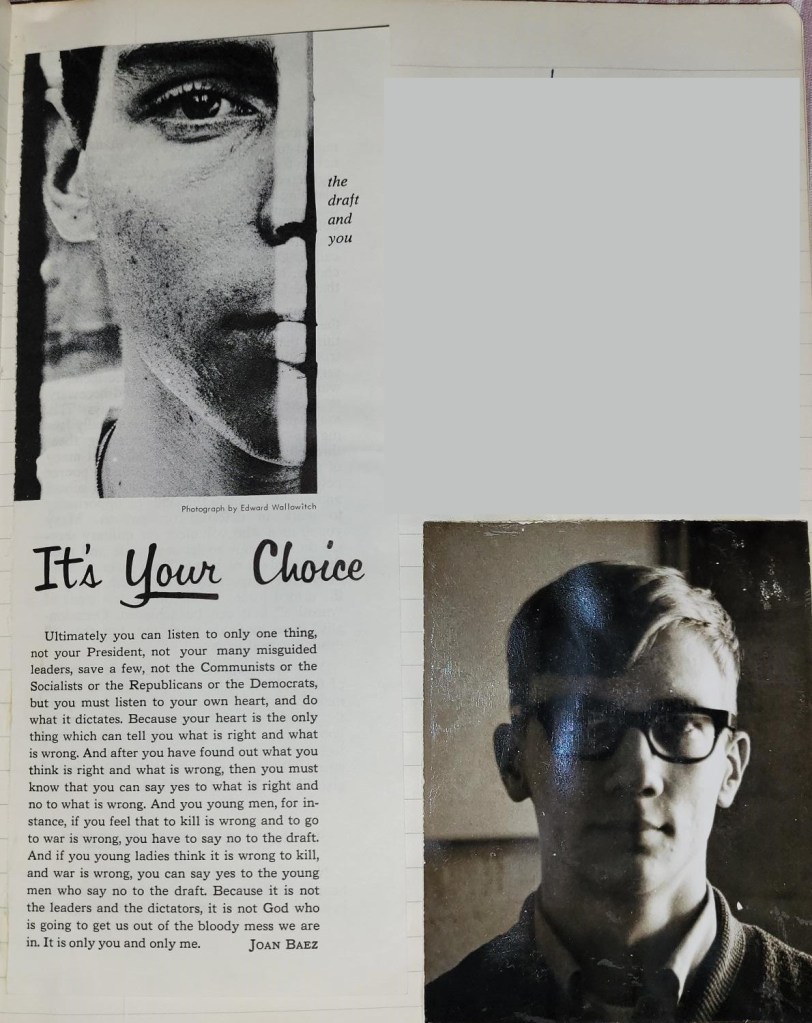
In the last post I wrote about my first spiritual challenge-how I came to be a draft resister at the time of the Vietnam War. I have become aware that many people today have almost no real conception of war, unless someone they love is in the armed forces. Something that happened fifty years ago is relegated to the history books.

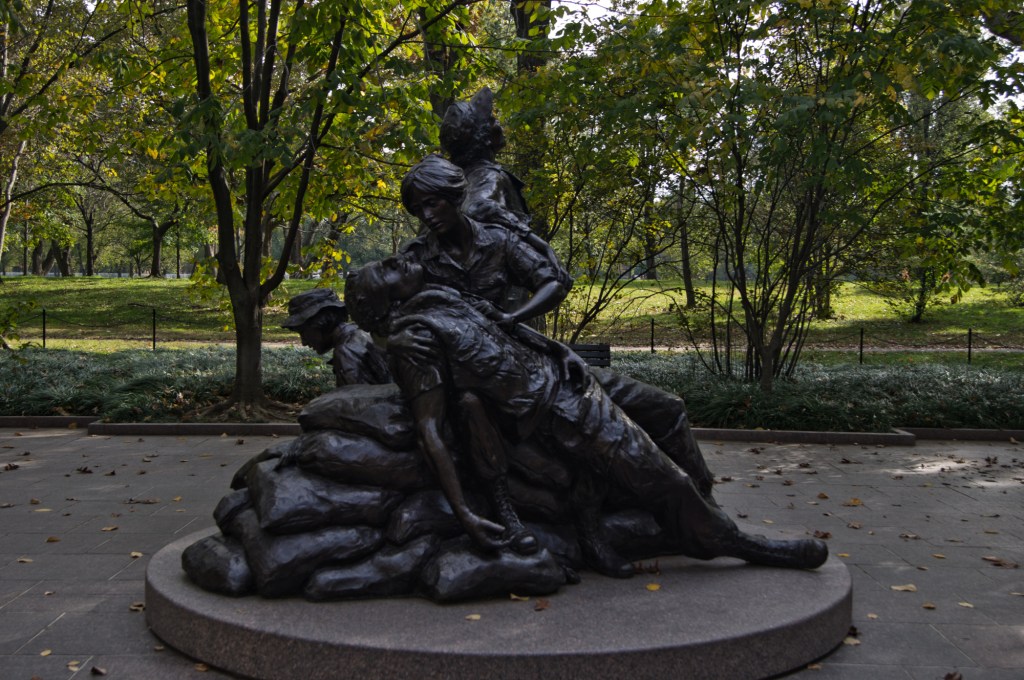
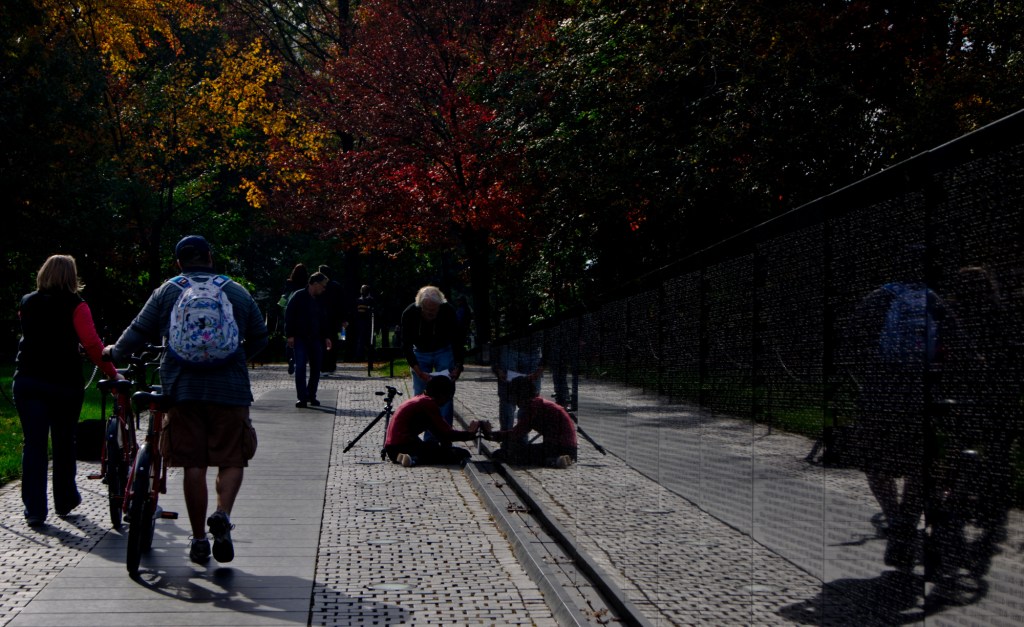
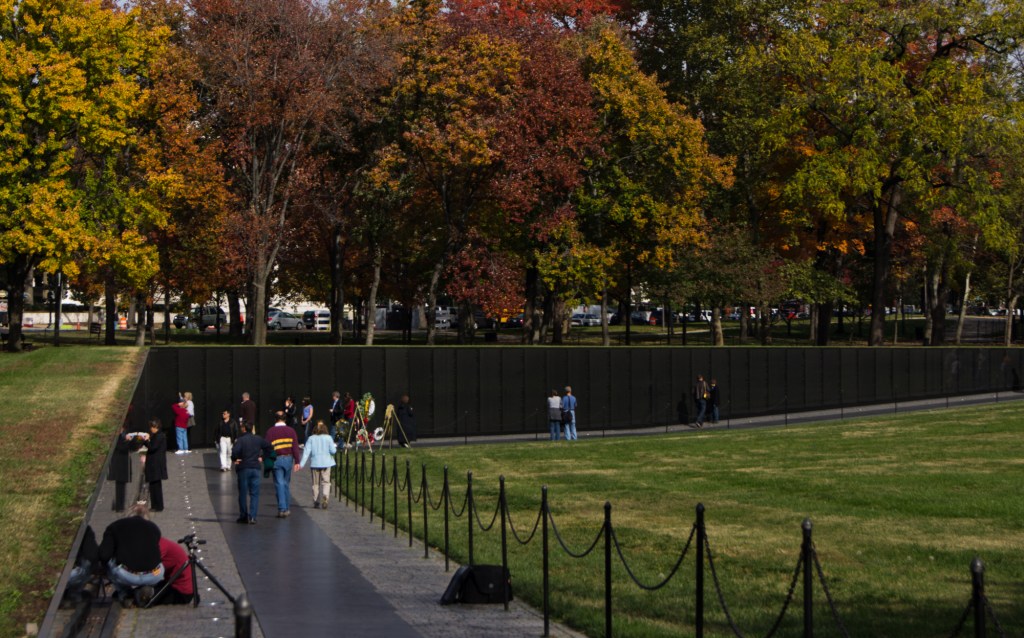
Photography is one of the three pieces of my foundational stories. I’ve taken the photos I share in my blog posts, including these from the Vietnam War Memorial in Washington, DC.

I have so many photos from Washington, DC, because of my years on the Friends Committee on National Legislation’s General Committee, which held annual meetings every November. Agreeing to be on the General Committee was another spirit-led decision. I was concerned about agreeing to do that because of the travel involved. I refused to have a car for environmental reasons (also spirit-led). So I took 22 hour train trips from Indianapolis to Washington for those meetings. Again I had many rich experiences and got to know Friends from all over the country. Today I attend the weekly Zoom worship sharing meeting, FCNL’s Witness Wednesday Silent Reflection. Your are welcome to join every Wednesday at 4:15 Central times.  fcnl.org/ww-stream

In the previous post about Quaker Faith I wrote about my struggles at that time that led me to be a draft resister. That was such a huge issue that there were many stories within the stories about the war.

Vietnam War

Yesterday I wrote in detail about some of my experiences related to the war in Vietnam. I was a student at Scattergood Friends School and really struggled with my leading to resist the draft.

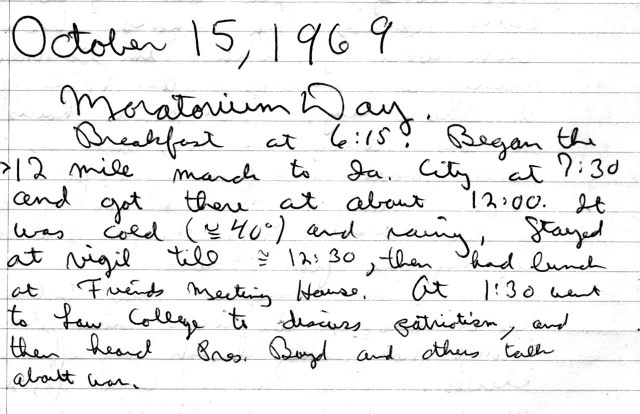
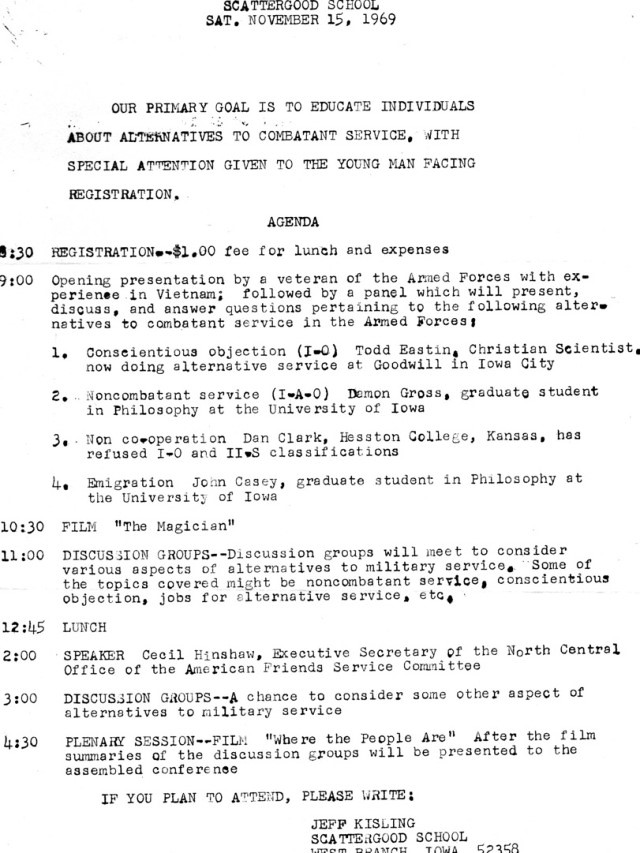
My first experience in organizing occurred at this time, when I helped organize a draft conference at Scattergood. This was held on one of the national days of the Moratorium to End the War in Vietnam.

During another of the National Moratorium days to end the war in Vietnam in 1969, Bob Berquist, our Scattergood government teacher, suggested we go to the nearby town of West Branch and talk with people there about the war. (Scattergood is located on a farm.) He drove three of us into town, stopped at a random house, and stayed in the car while we went up to the door. I still remember how scared I was. But it was a real education to find how unpopular the war was at every house we visited. People seemed to appreciate the chance to share their feelings. Although I was very uncomfortable with the idea, because of my strong spiritual feelings against war, I felt I should do this. And as with every other time I followed those leadings, I benefited in many ways. They were/are always growing experiences.

Earlham College

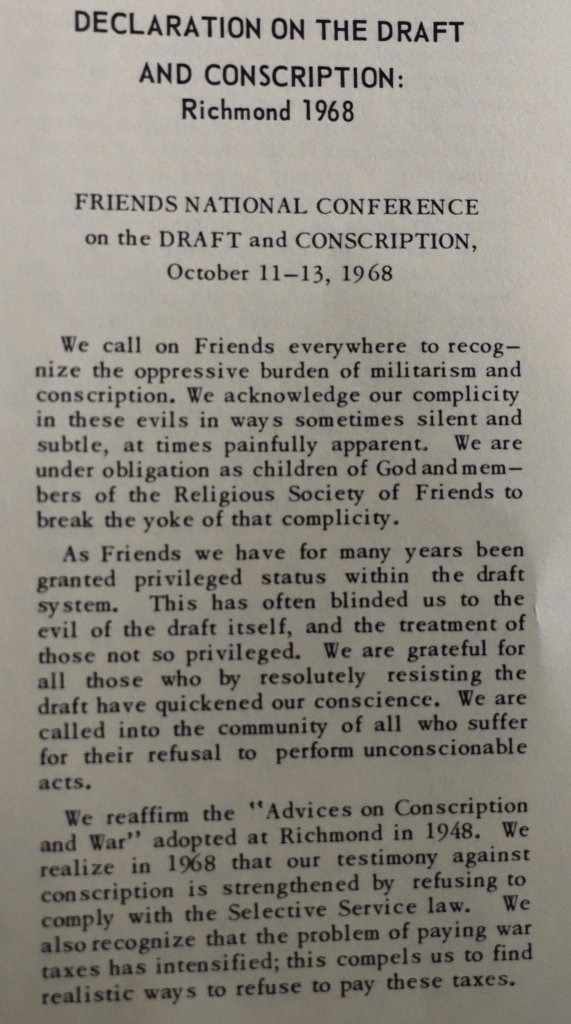
After Scattergood I attended Earlham College, a Quaker school in Richmond, Indiana. I had gone to the college in 1968, while a student at Scattergood, for a conference of Quakers from across the nation who gathered to write what became the Declaration on the Draft and Conscription: Richmond 1968.


There was a small group of Quaker students, Young Friends, which were an important part of my spiritual life at Earlham. Although I left Earlham after one year, I returned at the time I was preparing to turn in my draft cards. We held the meeting for worship described here.

4:00 pm. Went to Meeting for worship. Jan Cole, Al Ingles, Dav Nagle, Marggie Schutz, Margaret and Lewis Taylor, Becky Gibson, Jim Bay, Ruby, and several others attended.

Al had read my letter to the draft board and my statement on the draft earlier, and asked if I would let him read it during Meeting. I told him that would be alright, so he did.

Al spoke of support and the future and how God spoke through me. I would hope that would be true but felt unworthy.

Margaret Taylor spoke of Iowa Friends who had always spoken against war and done what they felt right. She spoke of her support for me.

Becky Gibson spoke, very movingly, about finding who you are, and how important it is to do what is right.

Then Dav spoke, also very movingly. He is certainly an able minister—one of the people I love and respect very much. He seems always to be close to the center. He said severing ties with Selective Service is a major decision—but ALL decisions are major when they deal with principle and the Spirit. All, each of our decisions must be integral. “Severing ties with Selective Service is not an isolated act in this life of Jeff’s.”

After a good while I felt moved to speak. When confronted with a decision, we are told to do God‘s will. But God’s will is so difficult to discern among many influences—people, law, self (selfishness and pride). Realizing this, Thomas A’ Beckett said, “I am loathsome.” This was how I felt at times. But after he said that, he heard what he believed to be the voice of God saying “Nevertheless, I love.

Journal 1/30/1972


I felt very uncomfortable having a student deferment from the draft. And as can be seen from this letter to my parents, I continued to work through what I was going to do about the war.

You want me to be practical; not so idealistic. But what you might see as idealistic, I see not only as practical, but necessary in order to be true to my code of life. And if you forsake your principles and all that you believe in, what do you have left?

The most difficult part of this decision has been that I would hurt you. But how far should a man go trying to protect those that he loves, at the same time denying the principles that give his life meaning?

Letter to my parents from Earlham College

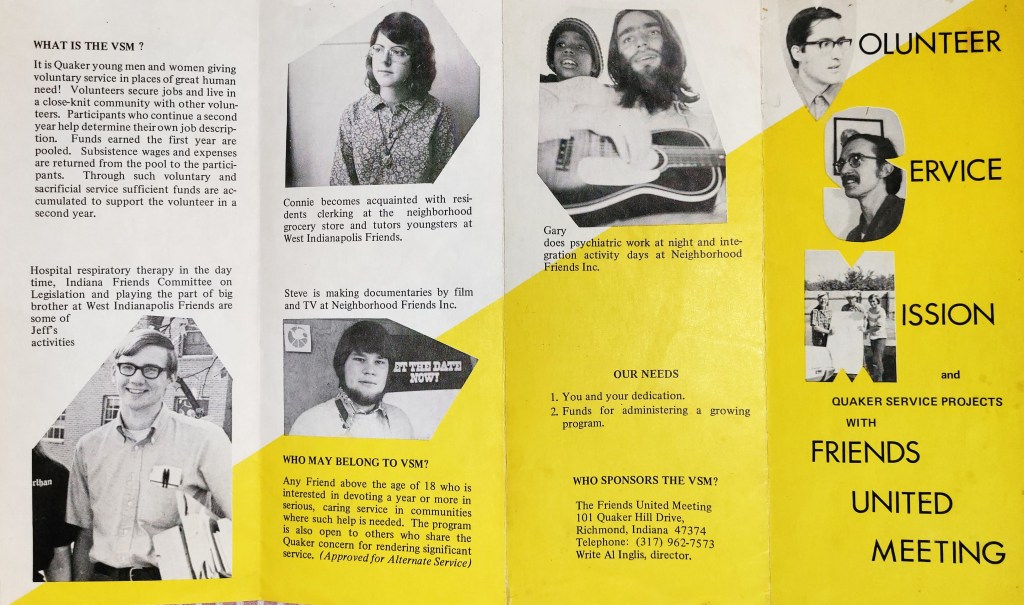
I previous wrote about the Friends Volunteer Service Mission (VSM) that was related to my Vietnam War decisions and actions. One of the significant consequences of my participation in VSM were the friendships I made with the kids in the neighborhood as I described in that post about VSM.

As I found over and over again as I worked in various community organizing situations, the most important thing is to build friendships. When I was about to leave VSM in Indianapolis and return to Iowa, the neighborhood kids made a meal of spaghetti, baked a chocolate cake, and gave me a record album of Jim Croce they knew I liked.

In Iowa I took classes at the community college, including photography (one area of my foundational stories), But I missed the kids in Indianapolis so much that I decided to return there. The family of several of those kids invited me to live with them while I looked for a job and a place to live. There wasn’t a significant difference in our ages, although at that age a difference of a year or two seemed big. I was about 21 and they were around 14 years old.

When I was first in Indianapolis, I received on-the-job training as a respiratory therapy technician. On my return to Indianapolis I got a job in the respiratory therapy department of Indiana University Medical Center.

At the Medical Center I worked with women on the labor and delivery ward. I was at times present for the miracle of birth.

Many of the women referred to the Medical Center had high risk pregnancies. Respiratory therapists from Riley Hospital for Children, which was part of the Medical Center, would come to help stabilize infants who had various conditions that needed to be taken to the Neonatal Intensive Care Unit at Riley.

It was definitely spirit-led that when I saw the skills those respiratory therapists had, I wanted to be trained to do that. I was able to transfer to the respiratory therapy department at the Childrens Hospital. After an introduction to respiratory care for general pediatric patients I was eventually trained to work in the Neonatal Intensive Care Unit (NICU). At one time I was the respiratory therapy supervisor for the NICU.

Permission was obtained to publish this photo, which was part of an article in the Indiana Business Journal

I hadn’t decided what I would study at college. The Medical Center had a degree program for Respiratory Therapy. Much as I loved my work, I hadn’t thought of applying to the Respiratory Therapy program. For one thing there were usually about two hundred applicants for each class of fifteen.

But on the day the applicants were being interviewed, the Clinical Instructor of the program came and pulled me off my patient assignments and took me to be interviewed. He was familiar with my work and wanted me to be in the class. I was selected to enter the program. These spirit-led steps resulted in me getting a degree in Respiratory Therapy and this became my career for my entire working life.

This is enough for today. I can tell it is going to take several more blog posts to tell more of my faith-based stories.


Post Script: I feel blessed to have been led to keep a Journal for a few years. I began that during the time I was struggling with the draft decision. This is a link to some of those Journal entries:

https://jeffkisling.com/?s=%22scattergood+journal%22

Foundational Stories: Quaker Faith

Recently a Quaker friend challenged us to consider what our foundational stories are, how they began, how they changed over time, and what they are now. I’ve been writing about my foundational stories, which are related to the intersections between my Quaker faith, protecting Mother Earth, and photography.

This challenge comes at a time when I’m considering changes in those three things. Thus far my blog posts have been about how these stories began and have evolved.

I’m at the point of considering what those stories are now. A couple of days ago I wrote about the current state of how I care for Mother Earth.

Now I’ll try to express the current state of my Quaker faith, which will be the most difficult of the three parts of my foundational stories to write.

Part of what I was taught is we should not call attention to ourselves. But I have been led, as part of my faith, to share stories about my experiences and faith. The way we live our lives is how we express our faith. We share our faith by telling stories about these faith-based actions. The main reason photography is such a large part of my foundational stories is because photos can be a way to share my spiritual experiences.

I often think about what Noah Baker Merrill, a Quaker, wrote about this.

“We need to be careful when we talk about humility. The kind of humility this work brings isn’t the kind that would have us reject or repress our gifts. This kind of false humility leads us to oppress each other in the name of preventing pridefulness. This happens far too often.”

Noah Baker Merrill, “Prophets, Midwives, and Thieves: Reclaiming the Ministry of the Whole.”

Or as my friend Ronnie James, another storyteller says, “anyways, brag, brag, blah, blah”.


Religious faith is a matter of beliefs and, sometimes, spiritual experiences. I’ve heard not everyone has had, or at least not recognized, spiritual experience(s). I find it very interesting that those Friends (Quakers) who have said they had spiritual experience(s), have all said something like “and that’s all I’ll say about that”. That’s understandable because we don’t have the language to express this. Which makes it difficult to write about faith. Also, there is something about protecting something that is so intimate and profound in our lives.

My first spiritual experience was when I was about ten years old during meeting for worship at the Bear Creek meetinghouse. “And that’s all I’ll say about that”. Except to say I had no doubt about the presence of the Spirit in the world from that day on. I know I am blessed to have had that, and subsequent spiritual experiences.

Another Friend said his first spiritual experience came when he was about that age. This makes me realize we should pay attention to what young people experience. I love the native concept of children as sacred beings.

The concrete expression of our faith is seen in our actions in this world. This might mean we are led to act in ways contrary to the laws or conventions of the society we live in. Which is often not easy to do. Peer pressure can be a powerful force. There might be significant monetary costs and/or legal penalties. Quakers were once (still?) known as “peculiar people”. When there are conflicts between our spiritual beliefs and the laws of the government, people of faith try to obey the creator. Unfortunately, many times it is apparent that people who identify themselves as religious do not act according to the beliefs they profess. This lack of spiritual integrity results in many people rejecting organized religion.


The first time I was confronted with a situation where my beliefs were contrary to the laws of the land related to registration for the Selective Service System. I attended Scattergood Friends School, a Quaker boarding high school, during the time of the Vietnam War (1960’s). A military draft was being used to conscript young men into the armed forces. Quakers do not believe in war nor in participating in the military. Those with religious objections to serving in the military could apply for Conscientious Objector (CO) status, which if granted, would allow them to do two years of alternative service, such as working in a hospital instead of military service.


My Quaker friend and mentor, Don Laughlin, collected these stories of Quakers who opposed war and conscription.


I turned eighteen years of age while a Senior at Scattergood (1969). Young men were required to register for the Selective Service System at that age. The choices were either to do so, or apply for Conscientious Objector status, or do neither and face imprisonment.

I really struggled with whether I should accept alternative service, or not cooperate with the Selective Service System. I studied and prayed a great deal. I was convinced that alternative service was going along with the system. The question was whether to take the safer path of conscientious objection, or risk prison by resisting the draft.

I recognized this decision would set the course for the rest of my life. Which is why this is part of my foundational stories. If I compromised about this, I would likely do so in similar circumstances for the rest of my life. I would always be aware that I had not acted according to my beliefs.

The following Epistle, and the examples of the men who refused to cooperate with the military, many of whom did serve time in prison, showed me there were those who acted according to their beliefs despite the consequences.

The following is an excerpt from a statement by a group of Quaker young men at that time, including Iowa Yearly Meeting (Conservative) Quakers Don Laughlin and Roy Knight.

Those of us who are joining in this epistle believe that cooperating with the draft, even as a recognized conscientious objector, makes one part of the power which forces our brothers into the military and into war.  If we Friends believe that we are special beings and alone deserve to be exempted from war, we find that doing civilian service with conscription or keeping deferments as we pursue our professional careers are acceptable courses of action.   But if we Friends really believe that war is wrong, that no man should become the executioner or victim of his brothers, then we will find it impossible to collaborate with the Selective Service System.  We will risk being put in prison before we help turn men into murderers.

It matters little what men say they believe when their actions are inconsistent with their words. Thus we Friends may say that all war is wrong, but as long as Friends continue to collaborate in a system that forces men into war, our Peace Testimony will fail to speak to mankind.

Let our lives speak for our convictions. Let our lives show that we oppose not only our own participation in war, but any man’s participation in it.
In our early history we Friends were known for our courage in living according to our convictions. At times during the 1600’s thousands of Quakers were in jails for refusing to pay any special respect to those in power, for worshiping in their own way, and for following the leadings of conscience.

We may not be able to change our government’s terrifying policy in Vietnam.  But we can try to change our own lives.  We must be ready to accept the sacrifices involved if we hope to make a real testimony for Peace.  We must make Pacifism a way of life in a violent world.

We remain, in love of the Spirit, your Friends and brothers,

An Epistle to Friends Concerning Military Conscription

This story would not be complete without including another important part of this decision, which was the tensions with my parents. They were against the war but wanted me to accept Conscientious Objector status. They were very upset when I said I couldn’t do that. I understood they didn’t want me to face prison and life as a felon, but they didn’t understand why I knew I must resist. I felt betrayed by their lack of support. Looking back from this time, it is easier to accept what they were doing out of love.

I mailed the following to the draft board today (2/6/1972), along with my registration certificate and classification (1-0) card: 

2/6/1972 

Dear members and clerk of the draft board:    

I have received an order to report for civilian work February 1, 1972. 

I want to thank you for your concerned questions at my personal appearance, when we were considering my position as a conscientious objector.  I have appreciated Mrs. Landon’s kindness and consideration, even when I returned my draft cards.  Thank you for giving me more time to consider this decision.  I hadn’t realized what a powerful affect that action would have on some people.  The extra time gave them, and me, a chance to come to grips with the decision and its consequences.  However, my beliefs have remained basically the same and the time has come to act accordingly.    

I am sure none of us really want war.  Many are convinced that was is a ‘necessary evil’—the only way to achieve peace.  I think I can understand that, and I do respect those who sincerely believe it—their sacrifice has been very great.    

But I do not believe war is the way to peace.  True peace is a personal, internal, spiritual matter.  When we come to know and love ourselves and our God, then and only then do we have peace.  From this point, peace and love will flow from us and should engulf those we live and work with.  This is the only way to find and promote peace. 

In this matter, war has no place.    

The enclosed attempts to illustrate my beliefs in relation to the Selective Service System.  I hope this will help you to understand why I feel I cannot cooperate with the Selective Service System.  I want it to be clearly understood that I am not doing alternative service.  It is not my choice.  There is nothing else I can do. 

Love, 
Jeff Kisling 


Letter to my draft board 

I write concerning my relationship with the Selective Service System.  There are many alternatives.  In fact, someone once said the only alternative not open to a young man facing the draft is that of being left alone.  I explored several of these.  I applied for and was granted conscientious objector status (1-0).  Then I had a student deferment, which made me very uneasy.  I am now doing work which should qualify as alternative service, but for reasons I will attempt to explain herein, I find this alternative to be unacceptable. 

I find it difficult to understand why one young man must explain his decision to do civilian work for a non-profit organization while another need make no explanation, indeed is encouraged to fight and perhaps kill other human beings.  But it is one’s duty to explain one’s actions in order that others might understand, and perhaps follow.  Noncooperation is less understood than conscientious objection, so I feel all the more compelled to try to present an explanation.  I must try to explain, to spare my family the burden of doing so, for they neither clearly understand nor agree with my decision.  (Note:  they fully supported alternative service, but didn’t want to see me imprisoned). 

This decision grew out of my experience as a member of the Society of Friends.  Meetings of the Society of Friends can be a source of strength and guidance as one begins and continues to search for meaning in life.  Quakers have always believed that there is that of God in every man, that each of us has the ability to communicate with that of God in us, and the responsibility to respond to that of God in everyone.  It is evident that Jesus had communion with God—evident in the actions of his life and in his teachings—culminating in “not as I will, but as thou wilt.”  This is the essence of Jesus’ teaching—that God’s will can be discerned and should be obeyed even at the cost of doubt and persecution.  Quakers readily accept Jesus as an exceptional person and try to live up to the principles he gave us to live by.  But we are even more concerned that we obey that Inner Light to which He was so sensitive, so we and have personal contact with and guidance from God.  Thus, Quakers try to minimize distractions from “this (secular) world” in order to discern the will of God in their hearts and His presence in their midst.  They gather together in a simple room and settle down together, searching in silence—each contributing to the spirit of the meeting as a whole.  There are times when a member feels he has been ‘moved by the spirit’ to share with the group, in which case the meeting considers the message in further silence. 

There is a spirit which comes from the silence which gives direction to life.  The spirit is often difficult to discern because of our ties to ‘this world.’  We are afraid or too proud to give up our desire to ‘reason through’ decisions.  Thus we develop a system of beliefs and guidelines composed of traditional beliefs, our own reasoning, and as much guidance from the Inner Light as we are willing to seek and accept.  Thus our decisions, being not entirely grounded upon our faith, may not always be ‘right’.  But we can do no more, nor should we do less, than follow our conscience as occasions arise—always seeking to become more attuned to the spirit.    

Adolescence is that period when one begins to seriously consider ‘who he is’ and his purpose in the world.  It is a time when one has so many question and so few answers.  The extent to which a young person searches for, and finds answers to these questions is dependent upon guidance given by parents, peers, school and church; the degree to which this guidance corresponds to his own experience and needs; and his own self-discipline and desire to continue the search.  Too often the leadership and resources are not available; he is ‘turned off’ by inconsistencies or shallowness or insincerity on the part of those he looks to for guidance and example; or materialistic demands distract from the search. 

The draft requires fundamental moral decisions at this time in life.  This may not be bad in itself, but tremendous pressure is brought to bear to influence the decision—tradition, parental and peer pressure, the law, etc.  The Selective Service System tries to attract men to the armed forces by relying on these pressures and by not making alternatives widely known.  The pressures in this case are for action which is contrary to the experience and desires of most young men—frustrating, anguishing when one is searching for truth, honesty and integrity.  This type of experience stifles personal growth and leads to the loss of a spirit of idealism and faith in the goodness of men.  Can there be a graver crime than that of destroying the spirit and dreams of the young?  Only that of destroying life itself, and the Selective Service System is directly implicated in both.    

Most of us agree that conscription and war are unjust-evil.  The question is, how do we deal with evil?  ‘Resist not evil’—a phrase widely known but little understood and less obeyed.  ‘Do not set yourself against one who wrongs you’ (NEB) is a better way to put it, I think.  In setting ourselves against those who harm us, we look, to some extent, for some way to hurt, or at least hinder them.  We look for the worst in others and play upon their weaknesses rather than looking for the best and trying to fortify it.  Out task is to overcome evil by doing good.    

The time we spend ‘resisting evil’ could be better spent in trying to find out where we can do better ourselves.  You do not change others by opposing them—rather, by respecting and trying to understand and learn from them, you can both benefit and move nearer the truth.  A life of example—showing the possibilities and fruits of a life lived in love and concern for others, is the only way to overcome evil. 

I do not want my example to be alliance with evil.  Thus, I cannot serve with the Selective Service System.  However, I will not set myself against it.  I will break my ties with Selective Service, and concentrate on the difficult task of working for peace in whatever way I can.    

The conclusion to my draft story is that I was drafted at a time when men were not being drafted for the armed forces. A Supreme Court case declared this to be illegal, so my order to report for civilian service was invalidated and I wasn’t prosecuted.  I did finish my two years with Friends Volunteer Service Mission in Indianapolis. 


Letters to and from Bear Creek Monthly Meeting 

Homer Moffitt, Clerk 
Bear Creek Monthly Meeting 

Dear Friends, 

I am thankful for your kind letters and encouragement concerning my work in Indianapolis.  I am learning much about love, and as I respond to the love of others, and they to mine, we are all amazed at how it grows. 

I am enclosing a statement I have written concerning conscription, and my decision not to cooperate with the Selective Service System any more.  I sent a copy of that statement, along with my draft cards, to my draft board. 

Again, I tried very hard to follow the leading of the inner light.  If I alone were making the decision, this would probably not be my choice.  Thomas a’ Beckett, torn between his obligations to the Church and those to the State, was searching for guidance.  When he realized all the forces that influence him—selfish desires for power and personal gain, fear of punishment or displeasing people, etc., he said. “I am loathsome.”  But then he heard what he believed to be the voice of God saying, “Nevertheless, I love.” 

I, too, feel shamed when I realize the factors that often influence my decisions and actions.  On this matter, I have tried very hard to be sensitive to the will of God, and hope to do so in the times to come.  Still somewhat uncertain that my choice is right, I am comforted in knowing that He still loves. 

Love, 
Jeff Kisling 

In reply: 

Dear Jeff, 

We have found your statement explaining your relationship to the Selective Service System very moving.  Several of us are aware that your decision on this has been a difficult and lonely one.  We want to assure you of our love and support as you meet the events which result from your courageous stand. 

On behalf of the Peace Committee of Bear Creek Monthly Meeting 


Friends Volunteer Service Mission

As I continue to write about my foundational stories, I was reminded of this document that describes the two years I spent in Indianapolis in the early 1970’s at the Friends Volunteer Service Mission.

“Alternative Service During the Vietnam War’ may be confusing to those who know I was a draft resister. At the time I joined the Indianapolis VSM Unit, I was struggling to discern whether I could accept doing alternative service. Joining VSM was a backup plan if I decided to do that

In the end I was led to turn in my draft cards, to resist the draft. And expected to be arrested as a result. But I was finding VSM so rewarding, I remained there for the two-year period.

During this time, the US Supreme Court case of another draft resister affected my situation, so I was not arrested.

Re-reading this fifty years later, the style and thinking seem a bit awkward, but I guess that is part of the story, as well.


Becoming the Quakers the World Needs

October 2, 2022, is World Quaker Day. The theme this year is Becoming the Quakers the World Needs. Becoming” implies we are not, presently, the Quakers the World Needs, which I agree with. Quakers are too comfortable living in a capitalist system that is inherently unjust. A system whose goal is the accumulation of wealth no matter how unethical the means are to acquire it. A system that commodifies all resources, even those that should be part of the commons. A system not intended to care for those without wealth.

How can Friends achieve the 2022 theme of World Quaker Day, “Becoming the Quakers the World Needs,” while functioning in a blatantly and politically corrupt, racialized world? In engagement with this exciting theme, offered by the Friends World Committee for Consultation (FWCC), the Black Quaker Project would like to remind Friends of the tools at our disposal to challenge those aspects of society which we wish to change and to see changed. Our fractured societies are further divided by enormous gaps of inequality in almost every imaginable category—psychological, social, political, cultural, economic. How might we, as Quakers, achieve justice, equity, and peace under these circumstances? 

Black Quaker Project

“Quakers will only be truly prophetic when they risk a great deal of their accumulated privilege and access to wealth. Prophets cannot have a stake in maintaining the status quo. Any attempt to change a system while benefiting and protecting the benefits received from the system reinforces the system. Quakers as much as anyone not only refuse to reject their white privilege, they fail to reject the benefits they receive from institutionalized racism, trying to make an unjust economy and institutionalized racism and patriarch more fair and equitable in its ability to exploit. One can not simultaneously attack racist and patriarchal institutions and benefit from them at the same time without becoming more reliant upon the benefits and further entrenching the system. Liberalism at its laziest.”      Scott Miller


How can we escape the capitalist society we live in? We build communities that care for one another. Sometimes called beloved communities. An example is Mutual Aid. I’ve been involved in Des Moines Mutual Aid for two years and have written extensively about my experiences. https://quakersandreligioussocialism.com/mutual-aid/

Capitalism is so repugnant that we use other terms to refer to ourselves and the work we do, such are anarchists, communists, Black Liberationists, or accomplices.

Des Moines Mutual Aid
Randomly passing an accomplice on the street and throwing up a fist at each other as we go our separate ways to destroy all that is rotten in this world will never fail to give me extra energy and a single tear of gratitude for what this city is creating.

member of Des Moines Mutual Aid
mutual aid is the new economy. mutual aid is community. it is making sure your elderly neighbor down the street has a ride to their doctor’s appointment. mutual aid is making sure the children in your neighborhood have dinner, or a warm coat for the upcoming winter. mutual aid is planting community gardens.

capitalism has violated the communities of marginalized folks. capitalism is about the value of people, property and the people who own property. those who have wealth and property control the decisions that are made. the government comes second to capitalism when it comes to power.

in the name of liberation, capitalism must be reversed and dismantled. meaning that capitalistic practices must be reprogrammed with mutual aid practices.

Des Moines Black Liberation

World Quaker Day, SUNDAY, 2 OCTOBER 2022 
“Becoming the Quakers the World Needs:”
Taking Action Now for Retrospective Justice.


Dear Friends and friends of Friends,

         How can Friends achieve the 2022 theme of World Quaker Day, “Becoming the Quakers the World Needs,” while functioning in a blatantly and politically corrupt, racialized world? In engagement with this exciting theme, offered by the Friends World Committee for Consultation (FWCC), the Black Quaker Project would like to remind Friends of the tools at our disposal to challenge those aspects of society which we wish to change and to see changed. Our fractured societies are further divided by enormous gaps of inequality in almost every imaginable category—psychological, social, political, cultural, economic. How might we, as Quakers, achieve justice, equity, and peace under these circumstances? 

         Our ministry has long advocated that retrospective justice is the key to bringing peace and equality to the world and to dismantling White Supremacy. As a reminder, retrospective justice is “an attempt to administer justice years after the commission of a severe injustice or series of injustices against persons, communities, or racial and ethnic groups.” Our definition draws upon the 2006 Brown University report, Slavery and Justice, which notes the following three steps as necessary to implement retrospective justice: (1) acknowledge an offense formally and publicly; (2) commit to truth-telling and ensure the facts are uncovered, discussed, and shared; and (3) make amends in the present to give substance to expressions of regret. While the all-too visible injustices of direct violence may command our attention, they are only symptoms of the structural violence deeply rooted in our societies. British Peace Studies founder, Friend Adam Curle, defines structural violence as “the political and economic inequalities which are built into the social structure.”  This violence can be economic, political, cultural, religious, or environmental–classifications outlined in Occupied With Nonviolence: A Palestinian Woman Speaks (2008) by Palestinian Friend Jean Zaru and expanded upon to include educational and health structural violence in our Pendle Hill pamphlet, Race, Systemic Violence, and Retrospective Justice: An African American Quaker Scholar-Activist Challenges Conventional Narratives (2020).  It is these various types of STRUCTURAL violence that we must keep in mind when implementing retrospective justice, not only direct violence. As we reminded readers in our 2008 Beacon Hill Friends pamphlet, Facing Unbearable Truths: “[Violence] must be treated at its roots if we are to abolish it. Just as a doctor must treat the root causes of an illness, not merely the symptoms, so must we act similarly as social, progressive, analytical activists. We must be “anti-violent,” not merely “non-violent.” 

         In recent years, we have seen notable truth-telling initiatives which our ministry recognizes as actions of retrospective justice. A few notable examples include: the groundbreaking New York Times publication and institutionalization of The 1619 Project; the National Museum of African American History and Culture in Washington, DC; the International Slavery Museum in Liverpool, UK; the Apartheid Museum in Johannesburg, South Africa; and the United Nations establishment of an International Day of Remembrance for Victims of Slavery and the Transatlantic Slave Trade, itself a prelude to the UN Decade for People of African Descent (2015-2024). What do we–Quakers and friends of Quakers–have to offer in these needed efforts of Retrospective Justice?  To answer this query, our ministry offers three responses:

Reason #1: Justice
         Drawing again on the words of Friend Adam Curle, we agree that justice has a dual meaning: “one, spiritual—righteousness, the observance of the divine law; the other temporal—fairness, righteous dealing. … [Our] vision of justice is the result of seeking to live [in alignment with] non-violence, compassion, redemption, and love.”  For too long this crucial Quaker testimony has been neglected in favor of acronyms such as “SPICES,” which mislead about the essence of Quakerism and fail to include justice. Can we have peace without justice? Can we have equality without justice? Our ministry challenges Friends to return the justice testimony not only to the front-burner but to front-and-center within the Religious Society of Friends by engaging in this important work of Retrospective Justice.

Reason #2: Truth
         Like justice, truth and integrity are at the root of Quakerism, so much so that early Quakers called themselves the Friends of Truth, a name to keep in mind as we reckon with our own history of past misdeeds. Our ministry encourages Friends to collectively shoulder the responsibility of telling the truth, in all its complexity, including the reality that Quakers, despite our well-known anti-slavery activities, were participants, profiteers, and supporters of the slave trade. A truth Harold D. Weaver has called on the Religious Society of Friends to acknowledge in the past, most recently, in his January 2021 Friends Journal article, “A Proposed Plan for Retrospective Justice.” Friends need to confront and atone for the 400-year legacy of oppression, economic exploitation, and human degradation that affects people of African descent worldwide, such as Jim Crow, colonialism, and apartheid. Perhaps we will never know to what extent current Friends–individuals, Meetings, and organizations– have profited from the inheritance of significant sums of money for the past exploitation of people of African descent worldwide. However, Friends can still work to correct misinformation and disinformation so that we may understand the roots of the issues we seek to resolve. Quakers in some monthly, quarterly, and yearly meetings seem to be grappling with this process.

Reason #3: Reputation, Influence, and Expectations 
         Since the publication of Uncle Tom’s Cabin in 1852, Quakers have had a reputation as being among history’s foremost abolitionists. While we question whether Friends fully deserve this reputation, it is one that has endured. Across history, and around the world, Quakers have been involved in movements of peace and justice. Friends organized relief efforts for the starving masses of the Irish potato famine, cared for the sick and injured as World War I ravaged Europe, and aided interned Japanese Americans during World-War II. Celebrated Quaker human rights activist, writer, and social critic Bayard Rustin emerged as a leading figure in the Civil Rights Movement which Quakers widely participated in (Rustin is just one of the trailblazing African American Quakers we document in Black Fire: African American Quakers on Spirituality and Human Rights). Friends would also make their presence known during South Africa’s struggle against apartheid, peace efforts throughout the “Troubles’’ era of Northern Ireland, and beyond. 

         In 1947, the Friends Service Council in the UK and the American Friends Service Committee were jointly awarded the Nobel Peace prize ON BEHALF OF ALL QUAKERS for post World-War-II peace, reconstruction, and recovery efforts. While some people might forget that Quakers even exist today, many remember our historical image as leaders in truth, peace, justice, abolition, and equity. It is this reputation that we are expected to maintain and which our ministry recommends we live up to.          As the population of Quakers decreases in the Global North, the future of the Religious Society of Friends will be greatly defined by Friends of Color across Asia, South America, and, most prominently, Africa, which, as of 2017, is home to over 180,000 Friends. As we become further unmoored from our Eurocentric roots, the growing majority of Friends in the Global South are vulnerable to the very worst effects of systemic racism and structural violence. We hope Friends participate in plans of Retrospective Justice, “Becoming the Quaker’s The World Needs,” by taking action now.

         What additional reasons might there be for Quakers to be actively involved in USA and worldwide Retrospective Justice efforts?  Please write to us at theblackquakerpoject@gmail.com with your suggestions.

Note: The above narrative is adapted from Dr. Harold D. Weaver’s 21 September 2022 presentation to the Joseph Rowntree Charitable Trust Interim Working Group at Friends  House, London, UK. We appreciate the invitation of collaboration from Friend Nozizwe Madlala-Routledge, the new, dynamic Director of the Quaker United Nations Office-Geneva.

Foundational Stories 9/28/2022

This summer I began writing about my foundational stories. This was in response to a Quaker friend urging us to think back on the beginnings of our stories. Then about how our stories evolved, and what they look like now. That led me to write many stories about this evolution.
[See: https://quakersandreligioussocialism.com/?s=foundational ]

I’ve been looking forward to describing the current state of my foundational story. The article below about Cai Quirk is remarkably similar to parts of my story now.

My foundational story is related to the intersections between my Quaker faith, protecting Mother Earth, and photography. This combination has remained a powerful, yet evolving, influence throughout my life. My faith led me to try to share my spiritual experiences and show my love for the beauty of Mother Earth through photography. These three things came into play in many ways throughout my life.

I continue to rely on my Quaker faith to guide these decisions. Sometimes the guidance is clear. Other times either I’m not discerning what the Spirit is telling me, or there isn’t anything new to hear. It’s all too easy to stay on a path we are comfortable with, to the extent we might not hear, or might ignore leadings that say we need to change direction, to do something we are uncomfortable with. One thing I was blessed to realize early in my life was the times I took risks resulted in significant growth. Which led me to search for ways to take risks.

The reason I invested in the idea of the evolution of my foundational stories is because I’m feeling I might need to change how I think about and put into practice faith, protecting Mother Earth, and photography. I don’t have a way to know how many people read my blog posts but have a better indication of how people see my photography. My impression is that more people see my photographs. I’m sensing I should “focus” more on photography to express my spirituality and encourage more people to work to protect Mother Earth. Although the main reason I write so much is to try to organize and clarify what I discern about my spiritual life, and what that means, how to put these leadings into practice, how to practice hope.

People often mistake hope for a feeling, but it’s not. It’s a mental discipline, an attentional practice that you can learn. Like any such discipline, it’s work that takes time, which you fail at, succeed, improve, fail at again, and build over years inside yourself.

Hope isn’t just looking at the positive things in this world, or expecting the best. That’s a fragile kind of cheerfulness, something that breaks under the weight of a normal human life. To practice hope is to face hard truths, harder truths than you can face without the practice of hope. You can’t navigate dark places without a light, and hope is that light for humanity’s dark places. Hope lets you study environmental destruction, war, genocide, exploitative relations between peoples. It lets you look into the darkest parts of human history, and even the callous entropy of a universe hell bent on heat death no matter what we do. When you are disciplined in hope, you can face these things because you have learned to put them in context, you have learned to swallow joy and grief together, and wait for peace.

IT IS BITTER TEA THAT INVOLVES YOU SO: A SERMON ON HOPE by Quinn Norton, April 30, 2018

I recently found the article “Cai Quirk Invites Friends to Expand Our Faith” by Emma Hulbert, FCNL, July 12, 2022. Cai Quirk speaks about faith, risks, and art.

“One of the pieces of Quaker witness I have been carrying in the world for many years now is around gender diversity and using art and storytelling as a way to explore that. This is some of the ministry that I carry.”

Cai Quirk 

Cai Quirk (they/them or ey/em pronouns) shared this reflection with FCNL staff in a late-June Zoom lunch, along with the ways Spirit has been leading them to explore gender, faith, and nature through art.

Cai is a life-long Quaker. After years of spiritual deepening through writing poetry and creating self-portraits, Cai will soon release their first book. “Transcendence: Queer Restoryation” includes words and images that offer an expansive understanding of faith.

In speaking to FCNL staff, Cai showed many of their self-portraits, focusing especially on those exploring gender in the natural world. “I was finding new ways to create new stories that are empowering,” they told us. “Through these self-portraits, I found how far I can go in following Spirit. A lot of these photos were very freeing and empowering and have given me more connection to Spirit.” Cai explained that nature itself holds some inherent queerness; “Even when society tries to erase queer stories, they are still there in the landscape.”

Growing up Quaker, Cai learned the history of the social disruption inherent in Quaker faith. Yet today, Cai has noticed that only certain kinds of social disruption and ministry are accepted within some circles of Friends. “My art is an invitation to see how Spirit invites us all in different ways,” they said. While not all Quaker communities can feel welcome to those who rock the boat, social disruption and rage can be sacred as well. Changemaking occurs in many ways for many different people, and Cai is working to create more spaces where this kind of expansion and ministry are accepted, where more people can exist as their true selves.

“If I change myself to match society’s conventions, then I am not being authentic, I am not being faithful to Spirit,” Cai told us. Can we as the Religious Society of Friends expand our ideas of faith and community to invite everyone in? What would it take to seek and live into that welcoming Quakerism moving forward?

“Cai Quirk Invites Friends to Expand Our Faith” by Emma Hulbert, FCNL, July 12, 2022

Minute
There is that of God in every being. We support those of all gender identities and sexual orientation. And respect and will endeavor to use the pronouns each person identifies themselves by.

Approved by Iowa Yearly Meeting (Conservative) 2022

Reflections on Reflections

The First Nation-Farmer Climate Unity March involved a group of about thirty native and non-native people walking, eating, and camping together for 8 days. We walked ninety-four miles from Des Moines to Fort Dodge Iowa, along the route of the Dakota Access Pipeline during the first week of September 2018.

It was a bit amazing when I read the following as I’m reflecting on my experiences and friendships from the March.

Roughly a year later, in 2019, as part of my work at the Dechinta Centre for Research and Learning in Denendeh, I helped organize a solidarity gathering that took place in March, in the territory of the Yellowknives Dene First Nation (YKDFN). Our idea was simple—to invite a small group of Black, Brown and Indigenous activists, thinkers, writers, and organizers to spend time with us, in the spring, on an island in what the Yellowknives Dene known as Tindeè, or “big lake.” Together we fished nets under the ice, travelled by snowmobile and sleigh across the frozen lake, shared moose ribs cooked over the fire, stories from YKDFN Elders, our own ideas, and time with each other.

We wanted to invest in our relationship with each other and our affinities, outside of the institution, the internet, and crises, because we believed that the land would pull out a different set of conversations and gift us with a different way of relating. We wanted to sit together on the land, immersed in a Dene world, engage in a practice of Dene hospitality to see if we related to each other in a different way. This is exactly what happened. The land nurtured a set of conversations and way of relating to each other outside of the institution and its formations.

Maynard, Robyn; Simpson, Leanne Betasamosake. Rehearsals for Living (Abolitionist Papers) (p. 35). Haymarket Books. Kindle Edition.

In many ways the March was transformative for me. I wrote a long blog post of reflections on the March in early 2020. See: Reflections on the March.

The world, and I, have changed a lot in just the two years since those reflections were written. These two images represent the time span between the March and work we are doing today.


The first time I attended Quaker meeting after the March (2018), Russ Leckband gave me this piece of pottery, which was still warm from the kiln. The graphic on the right is about the Buffalo Rebellion, a climate justice summit, that I attended earlier this year.
(See: https://quakersandreligioussocialism.com/?s=Buffalo+rebellion )

I suppose this blog post is more reflections on the prior reflections.
(As a photographer, I envision what that might look like)

Indy Art Jeff Kisling

Changes since the March in 2018

Environmental devastation and chaos are occurring much more rapidly than expected. In some ways not anticipated. The havoc from increasingly ferocious and frequent wildfires, violent storms, floods, and development of large areas of drought are overwhelming our social, economic, and political systems. Continued wars ruin or prevent the transport of vast quantities of agricultural products.

So many of the systems we used to depend on, we no longer can. Municipal services such as water, power, sewage, and trash processing will fail, are failing.  Food will no longer be available in grocery stores. Medical services will collapse. What will happen to those in prisons and long-term care facilities? Financial failures will wreck the economy and end social safety nets.

There are other compelling reasons to design and build new communities. Our economic system has not adapted to the loss of jobs overseas and to automation. There are simply not enough jobs for millions of people, and many of those who do have work are paid at poverty levels. Forced to depend upon increasingly diminishing social safety nets.

The judicial and law enforcement systems work with extreme bias against people of color. What will the response of militarized police, armed forces, armed militias be as social unrest escalates?


How do we respond? Some lessons learned from and since the March.

It is one thing to talk about change, but it is becoming increasingly difficult to avoid the reality of the changes described above. So, this is not an intellectual exercise.

Almost none of the White people I know, or have observed, are thinking of the radical changes necessary to deal with this evolving chaos. They are trapped in these failing systems and ways of being. Even those who recognize the many injustices of those systems.

For many reasons I believe our responses will be a return toward Indigenous ways and the sustainable ways of our ancestors.

White settler colonists must learn the true history, which was not taught to us. We can’t begin repair if we don’t know the underlying sources of injustice. We must stop treating the symptoms and instead focus on the causes, the underlying disease.

I FEEL THAT I NEED TO go backward in order to go forward. If we are going to find a way to make livable lives in these times, it is necessary to move beyond “human-related activities”: the climate crisis is tethered to its origins in slavery and colonialism, genocide and capitalism.

Maynard, Robyn; Simpson, Leanne Betasamosake. Rehearsals for Living (Abolitionist Papers) (p. 25). Haymarket Books. Kindle Edition.

I’ve been learning about the #LANDBACK movement, but I hadn’t consciously made the connection to the land we walked and slept upon during the March. We were deeply affected when we crossed the pipeline. And were aware of how different it was to spend hours outside and away from the busy-ness of technology. Many more hours than usual for many of us. And yet time had that elastic property that made hours seem like minutes and vice versa as we traveled through space together. Hearing stories of the past that can help us face the future.

Most of my White friends are horrified as they are learning more about the atrocities committed at the Indian boarding schools. Can hardly believe thousands of children died there. But they are being forced to as the remains of the children are being located.

White people cannot process these things and begin healing as long as they remain in the their White spaces and thinking. And deny any responsibility for what was done in the past.

My hope and prayer is a mass movement of us build Mutual Aid networks.

As William Shakespeare wrote, “what’s past is prolog”. Native children are still being taken from their families in the guise of child welfare. Native children are still forcefully assimilated when they are forced to read the White settler colonist view of history.

My involvement in Mutual Aid for the past two years has resulted in significant changes in my life. Changes that can be done now and help us move into the future. Another quote from the book Rehearsals for Living eloquently describes Mutual Aid.

My hope and prayer is a mass movement of us build Mutual Aid networks.

You and your relations, my friend, are (still) busy building a different world at the end of this one. This is something I’ve emphasized over and over again in my own work. I cherish the belief and practice that it is never enough to just critique the system and name our oppression. We also have to create the alternative, on the ground and in real time. In part, for me, because Nishnaabeg ethics and theory demand no less. In part because in Nishnaabeg thinking, knowledge is mobilized, generated, and shared by collectively doing. It’s more than that, though. There is an aspect of self-determination and ethical engagement in organizing to meet our peoples’ material needs. There is a collective emotional lift in doing something worthwhile for our peoples’ benefit, however short-lived that benefit might be. These spaces become intergenerational, diverse places of Indigenous joy, care and conversation, and these conversations can be affirming, naming, critiquing, as well as rejecting and pushing back against the current systems of oppression. This for me seems like the practice of movement-building that our respective radical practices have been engaged with for centuries.

Maynard, Robyn; Simpson, Leanne Betasamosake. Rehearsals for Living (Abolitionist Papers) (p. 39). Haymarket Books. Kindle Edition.

Following is the latest version of a diagram I’ve been working on to visualize some of what I’ve expressed above.

Open Letter Campaign: Truth and Healing with Friends

I am very happy that my friends of the Great Plains Action Society (GPAS) are asking their supporters to use the Friends Committee on National Legislation’s (FCNL) letter writing tool to send letters to support the Truth and Healing Commission on Indian Boarding School Policies in the United States Act (S. 2907/H.R. 5444) to their congressional representatives.


Open Letter Campaign: Truth and Healing with Friends

Support the Establishment of a Truth and Healing Commission on Indian Boarding Schools: Friends Committee on National Legislation (FCNL)

As children are returning to school, we are reminded that school has not always been a safe place for Native children. For many years, Native children were taken from their homes and placed in government and religious run institutions with the aim of stripping away their Native language, culture, and identity. We are only now beginning the painful process of bringing home the children left in unmarked graves at the boarding schools they were sent to (U.S. report identifies burial sites linked to boarding schools for Native Americans). We are still working on healing the damage of boarding school and intergenerational trauma (American Indian Boarding Schools Haunt Many : NPR). Healing from the damage caused by the boarding school system will require effort by not just those harmed, but the institutions that did the harming. There is great work being done by our comrades at the Friends Committee On National Legislation (Native Americans | Friends Committee On National Legislation). For this edition of our Open Letter Campaign, we are directing you to a letter from our friends at FCNL to help you in urging your representatives to support the Truth and Healing Commission on Indian Boarding School Policies in the United States Act (S. 2907/H.R. 5444).

The following is courtesy our much appreciated Quaker friends (esp Jeff!):