Dangers of lack of diversity in Quaker meetings today

Diversity can refer to many things, such as race, ethnicity, gender, sexuality, class, age, ability, and faith background. Both the state of Iowa and our Quaker meetings in the Midwest have very little racial and other types of diversity. This does not reflect the diversity of the wider society nor the diversity in Quaker history and values.

Reasons why Friends need to confront their lack of diversity now

This is a topic that generates significant emotional reactions for numerous reasons. Perhaps one of the most basic is knowing we are not doing what our ancestors had done, what they would probably be doing if alive today.

If we are converging on history and practice, we are missing the point. If we are depending on institutions to create a new society or usher in the Kingdom, then we are deceived. These will not bring the radically egalitarian and Spirit-filled communities that God fostered among early Friends. These are forms, and Friends must follow the Spirit.

I’ve met others who need a Spirit-led Society. We share this vision, and we share the disappointment of being drowned out in meeting by classism, ageism, and racism. Some of us wonder if Quakerism isn’t all that different from the rest of liberal religion. From what we’ve seen, it isn’t apocalyptic. It isn’t radical. It doesn’t sound like Fox or look like Jesus. It works at incremental transformation while simultaneously shushing those who need the system overthrown.

Hye Sung Francis, Seeking a People

  • Many of our Quaker meetings are small and growing smaller.
    • A significant number of Friends are elderly
    • We are failing to attract new members
    • Members are leaving their (Quaker) meetings because
      • Their justice work is not understood or supported
      • They see the harm done to Black, Indigenous, and other people of color (BIPOC) in their meetings.
      • They are frustrated by the meeting’s lack of understanding and involvement around their privilege
      • And the lack of engagement and support for BIPOC communities.
  • Many meetings fail to engage with justice groups that are doing good work, such as Mutual Aid communities.
  • Friends need to engage with Indigenous peoples now

Most White Friends fail to understand their privileges and the consequences.

  • There are a range of justice activities by (Quaker) meeting members. Much of that relates to Friends’ long history of opposing war and violence. But because of our lack of diversity, we fail to understand many other significant and often insidious forms of violence, such as sexual, emotional, psychological, spiritual, cultural, verbal, economic, symbolic, and gender-based violence.
  • Most male Friends are unaware of gender inequality and violence.
  • Much of what passes for justice work are committee meetings, political letter writing, and financial support of Quaker justice organizations such as the Friends Committee on National Legislation and the American Friends Service Committee. That is not enough.
  • Lack of connections with Indigenous peoples is a significant problem for Friends today.
    • Friends are unaware of their ancestors’ settler colonization, including the theft of native lands. Many Friends don’t believe the land they occupy today is stolen land.
    • Unaware of the ongoing crisis of Missing and Murdered Indigenous Relatives. And how this is tied to the construction of fossil fuel pipelines.
    • Just becoming aware of Friends’ involvement with the forced assimilation of native children. Of the many forms of abuse and deaths of thousands of children at those institutions.
    • Friends often don’t have the depth of spiritual awareness of all our relations that we can learn from Indigenous peoples.
  • Structural violence is embedded in the social and economic systems that produce and maintain inequalities and injustices. It is often invisible or rationalized by the dominant groups that benefit from it.
  • Symbolic violence is a form of power exerted through cultural and symbolic means rather than direct physical force. It reinforces social hierarchies and inequalities by imposing the norms and values of the dominant group on the subordinate group. It is often unconsciously accepted by both parties and can be expressed through various practices such as language, representation, body language, and self-presentation. The concept was developed by sociologist Pierre Bourdieu.
    • This is a significant reason why Friends need to support and create Mutual Aid communities which address these very injustices related to symbolic violence.
    • This makes me more aware that Mutual Aid is an expression of nonviolence.


MLK understood — or would have — that all the following things are forms of violence. People forced to “crowdfund” healthcare — to beg their neighbors for pennies for medicine. A workplace culture where being abused and berated by your boss is totally normal. Incomes not rising for half a century — while costs skyrocket to absurd levels. The average American dying in debt. Being forced to choose between healthcare and your life savings. Having to give up your home because you want to educate your kids.

All these things are forms of violence. Violence runs deep. It isn’t just mobs of fascists smearing feces on the walls — though it is also that. It’s what Americans do to one another as everyday interaction — and shrug off as normal. Mental, emotional, social, cultural violence makes up the very fabric of everyday American life. It’s the poisonous residue of slavery. And it’s profoundly traumatic. It has lacerated the American mind, and made violence a legitimate solution to every social problem. But these forms of all-pervasive violence are what a capitalist society is limited to, because everything is competition, rivalry, and ultimately, domination and subjugation.

Americans Don’t Understand What Violence Really Is by umair haque, Eudaimonia and Co, January 17, 2022

This lack of diversity has numerous consequences

  • Excluding or marginalizing people who do not fit the dominant norms or expectations of Quaker culture
  • Limiting the perspectives and experiences that inform Quaker discernment and action
  • Missing out on the richness and joy of learning from and celebrating differences
  • Failing to live up to the Quaker testimonies of equality, peace, and justice

For a long time, I had prayed that my Quaker community would engage with communities like my Mutual Aid community, thinking that would be mutually beneficial. But the clashes and the lack of lived experience with diverse communities of many White Friends have changed that. Now, I feel I need to protect my justice communities from the injuries they would experience from White Friends. It’s not that White Friends wouldn’t try to do what they thought would be helpful, but their lack of knowledge of oppression always results in harm.

For years, I’ve envisioned Quakers and oppressed people working together. But we (White Quakers) have to have enough experience in communities outside our meetinghouses to understand what is happening in these communities. To have a valid perspective. Until that happens, Friends will show they cannot be trusted, and we will be unable to cross the divide.

Over the years I’ve built this list of things I’ve learned from my experiences. I hope White Friends who haven’t yet had experiences outside their meetinghouse would keep these things in mind.
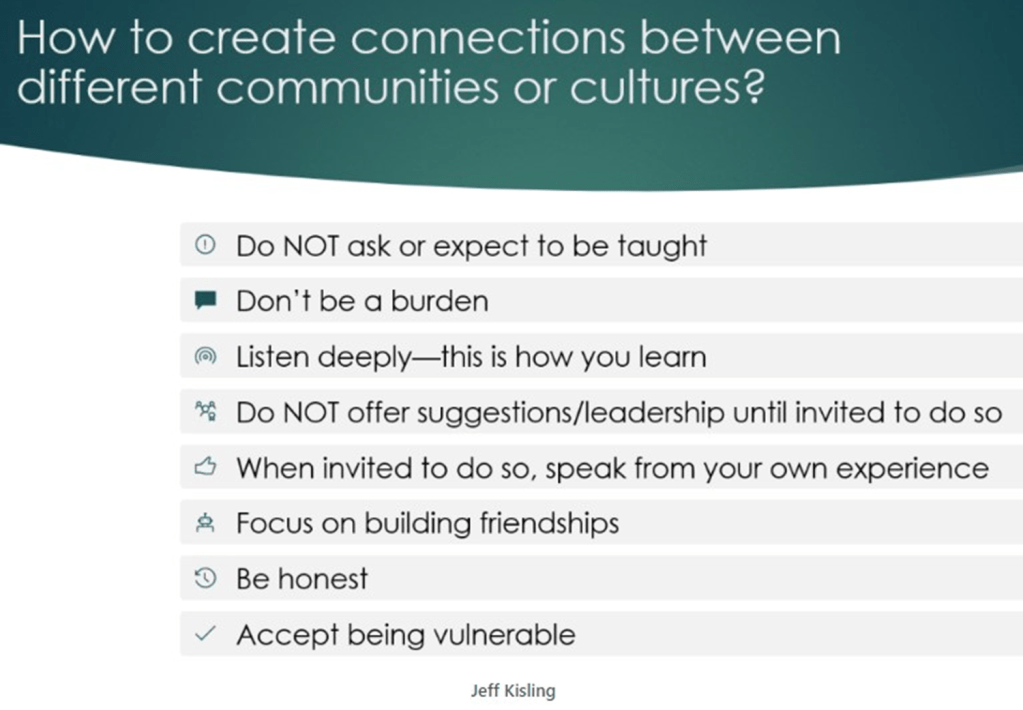
By far the most important is to not offer suggestions until the community trusts you enough to ask you for your input. When you are invited to do so, speak from your own experience. Do not talk about things in the abstract. It’s perfectly fine to say you don’t know the answer to a question. This honesty, this vulnerability is crucial. I like to keep in mind “we don’t know what it is that we don’t know.”

Time

It will take much longer than you expect to see this trust begin to develop. I’d been involved with the Kheprw Institute in Indianapolis for three years before I was asked to teach the kids there about photography.


Quakers are pretty white, and that comes with quite a bit of power and privilege. A Quaker in Omaha, Nebraska is going to have probably more weight in what they say to a legislator than a Black Lives Matter activist in Brooklyn, New York. I think there’s a need for Quakers to step out of their meeting and away from a lot of these phenomenal institutions that they’ve created and speak to individuals in an interfaith setting (from Black churches or Black Lives Matter) and have a cross-cultural understanding of what that experience is like because you’ll find that it’s very different, and I think the more we can do of that the more effective we’ll be in addressing these problems. These exchanges and fusion coalitions are what I think it’s going to take, not only for Friends to be effective in dismantling these systems of racism, classism, and white supremacy in American society, but also for all of us to better address these problems in our country.

José Santos Woss (FCNL), Quaker Faith and Justice Reform, QuakerSpeak video

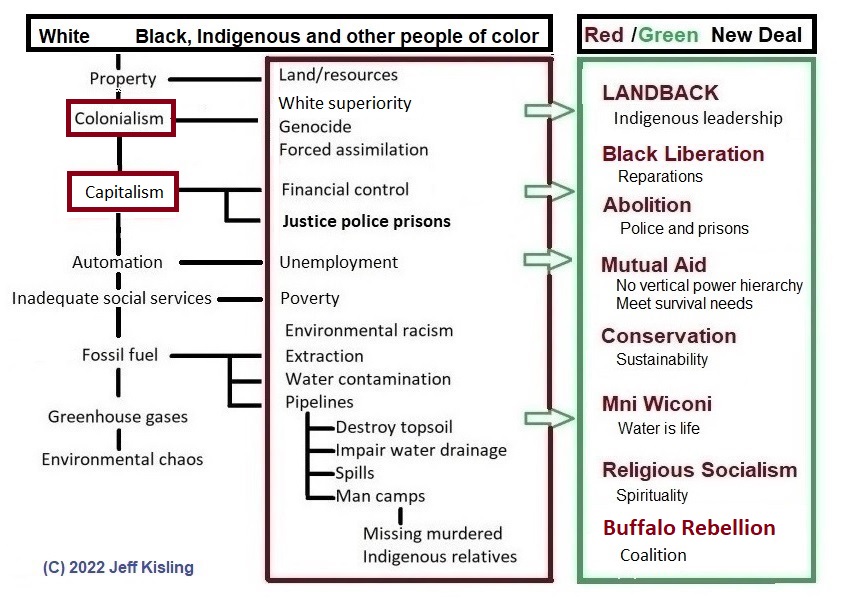
This is another graphic I’ve been working on for years to put things in context.

Why we need different queries

As I’ve been praying about why the Quaker meetings I’m familiar with are slowly dying from attrition and not attracting new attenders, I’m struggling to understand why this is happening. I feel a special urgency, wondering if my Quaker meeting can continue when we lose even one more member. Lose another elderly member, or one who turns away from Quakerism.

I was led to think about our Advices and Queries because they guide the spiritual discussions in our meetings. And they are one concrete thing we can point to for people interested in learning about Quakerism.

It surprised me to be led to the conclusion that our Queries seem rooted in maintaining the status quo of this country’s current economic and political systems. Systems of dominance, systemic racism, and White supremacy. And an implicit view of ‘us versus them.’ (See: Advices and Queries). Today, I hope to explain that more fully and offer suggestions for what we might do differently.

I’m focusing on the abolition of police and prisons, both because this is something I’ve been learning and writing about (https://quakersandreligioussocialism.com/abolition/) and because it is a deep concern of some activist Quakers I know and of my Mutual Aid community. One of my abolitionist Friends is leaving Quakers because of the lack of attention to this concern. This is an example of the attrition I’m concerned about.

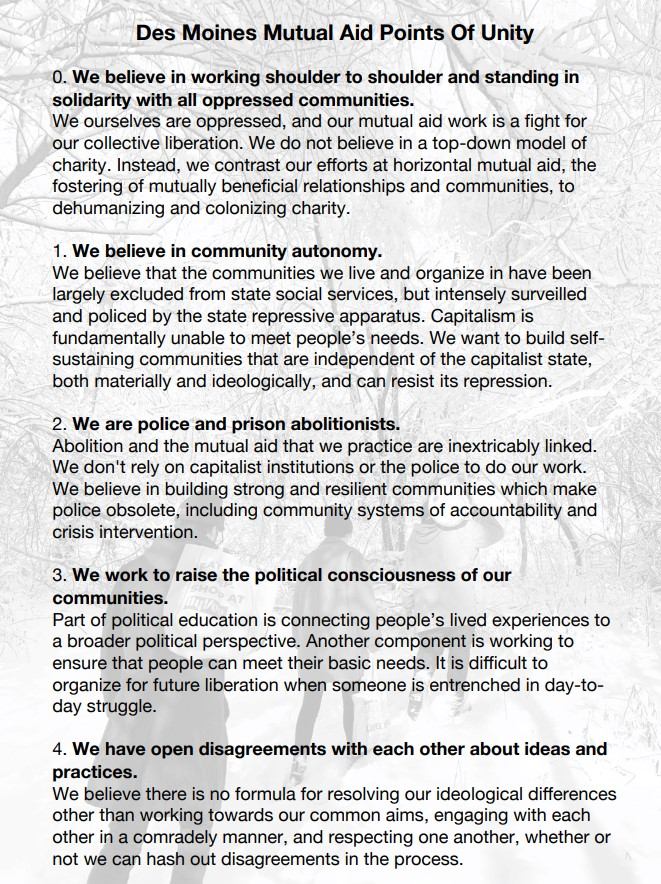
We are police and prison abolitionists. Abolition and the mutual aid that we practice are inextricably linked. We don’t rely on capitalist institutions or the police to do our work. We believe in building strong and resilient communities which make police obsolete, including community systems of accountability and crisis intervention. Des Moines Mutual Aid

What does it mean that abolition is not one of our Query topics?

  • Meeting for Worship
  • Outreach
  • Meeting for Business
  • Harmony within the Meeting
  • Mutual Care
  • Education
  • Home and Family
  • Personal Responsibility
  • Civic Responsibility
  • Environmental Responsibility
  • Social and Economic Justice
  • Peace and Nonviolence

I think that is because abolition touches several of these topics and illustrates why I think we need new queries.


Quakers are pretty white, and that comes with quite a bit of power and privilege. A Quaker in Omaha, Nebraska is going to have probably more weight in what they say to a legislator than a Black Lives Matter activist in Brooklyn, New York. I think there’s a need for Quakers to step out of their meeting and away from a lot of these phenomenal institutions that they’ve created and speak to individuals in an interfaith setting (from Black churches or Black Lives Matter) and have a cross-cultural understanding of what that experience is like because you’ll find that it’s very different, and I think the more we can do of that the more effective we’ll be in addressing these problems. These exchanges and fusion coalitions are what I think it’s going to take, not only for Friends to be effective in dismantling these systems of racism, classism, and white supremacy in American society, but also for all of us to better address these problems in our country.

José Santos Woss (FCNL), Quaker Faith and Justice Reform, QuakerSpeak video

Perhaps the revolutionary Quaker faith we imagine ourselves to inhabit has never really existed, and if we tell the whole truth and commit to the healing the truth-telling calls us to, perhaps together we can embody and create the prophetic religion we thirst for.

Abolitionist thinking is holistic—that ending the system of punishment and incarcerating control itself is necessary—and invites us to imagine a whole new way of not only dealing with harm but of how we think of ourselves in community. It provokes questions like, what does true justice look like? What does it mean to center healing and transforming relationships and create community safety from authentic accountability and relational reconnection? Abolition does not minimize the reality of harm or violence but rather invites us to consider a way of doing things that interrupts cycles of harm, violence, and trauma, and restores perpetrators and victims into community and their humanity.

We as White Quakers like to think of ourselves as ahead or better than dominant culture, but we have been complicit in a system and mindset that are ubiquitous. Claiming the full truth of our history and committing to repair the harms done are deeply spiritual acts of healing our own wounds of disconnection. I would argue it is the pathway upon which we can, perhaps for the first time, discover and invigorate our faith with its full promise.

A Quaker Call to Abolition and Creation by Lucy Duncan, Friends Journal, April 1, 2021

Jed Walsh and Mackenzie Barton-Rowledge are close friends who do police and prison abolition work together. They sent Western Friend a conversation about what abolition means to them, and how it fits into their lives as Quakers.

The way I think about abolition is first, rejecting the idea that anyone belongs in prison and that police make us safe. The second, and larger, part of abolition is the process of figuring out how to build a society that doesn’t require police or prisons.

Abolish the Police by Mackenzie Barton-Rowledge and Jed Walsh, Western Friend, Nov 2020

Jeff Kisling: Mutual Aid and Abolition

I grew up in rural Iowa, where there was very little racial diversity and interactions with police and the court system were rare. About ten years ago, I was blessed to become involved with the Kheprw Institute, a Black youth mentoring and empowerment community. I’ll never forget how shocked I was when a Black mother broke down in tears, explaining how terrified she was every minute her children were away from home. It was obvious that every other person of color in the discussion knew exactly what she was saying.

After retiring, I was led to connect with Des Moines Mutual Aid, a multiracial organization founded to support houseless people. For over a year, I’ve helped my friends fill and distribute boxes of donated food, while continuing to learn about the framework of mutual aid.

To me, mutual aid is about taking back control of our communities. Besides the food giveaway, we support houseless people and maintain a bail fund to support those arrested agitating for change. We also work for the abolition of police and prisons.

Mackenzie Barton-Rowledge and Jed Walsh: Introducing the Quakers for Abolition Network, Western Friend, Sept 2021

Some queries about police and prison abolition:

  • What is your understanding of the term “abolition” and what does it entail? How does it differ from the reform or improvement of the existing system?
  • What are some historical and contemporary examples of abolitionist movements and practices, such as the abolition of slavery, the anti-apartheid struggle, the prison strike movement, the mutual aid networks, and the community defense initiatives?
  • What are some of the root causes of violence, harm, and crime in our society, and how do they relate to the structures of white supremacy, capitalism, heteronormative patriarchy, and settler colonialism?
  • How do the police, courts, and prisons perpetuate and exacerbate violence, harm, and crime rather than prevent or reduce them? How do they disproportionately target and oppress Black, Indigenous, and people of color (BIPOC), poor people, LGBTQIA+ people, immigrants, and other marginalized groups?
  • What are some of the alternatives to policing and incarceration that can address the needs and rights of survivors, perpetrators, and communities more humanely and effectively? How can we build and support these alternatives in our own contexts and networks?
  • What are some of the challenges and barriers to achieving abolition, internally (such as fear, doubt, or attachment) and externally (such as resistance, backlash, or co-optation)? How can we overcome or transform them through education, organizing, and action?

Sources:

Learn more:

1. https://www.newyorker.com/news/our-columnists/the-emerging-movement-for-police-and-prison-abolition
2. https://www.peoplesworld.org/article/prison-and-police-abolition-re-imagining-public-safety-and-liberation/
3. https://www.peoplesworld.org/article/on-becoming-police-and-prison-abolitionists-but-what-about-the-murderers/
4. https://www.autostraddle.com/police-and-prison-abolition-101-a-syllabus-and-faq/
5. https://www.radcliffe.harvard.edu/news-and-ideas/rethinking-incarceration


Advices and Queries

In yesterday’s post, Queries about our future, I made the mistake of concluding by saying “We need to…” That defeats the purpose of queries, intended to help Quakers discern what they are led to do by listening to the Spirit. “We look for our own truths and the truths of our meeting when we discuss the advices and answer the queries.”

Faith and Practice

Becoming aware of how we discern Spirit is important to our worship. The Quaker faith is not written in the form of a creed, but is experienced in our lives as a vibrant, living truth. Advices and queries serve to engage our minds and hearts in a process which may provide openings to the leadings of the Spirit within us. These leadings may speak to our individual and corporate needs. The advices and queries reflect experiences from many lives as they contribute to the gathered wisdom of the group. They serve to guide us on our spiritual journeys by opening our hearts and minds to the possibility of new directions and insights.

Uses of Advices and Queries

We look for our own truths and the truths of our meeting when we discuss the advices and answer the queries.

The Book of Discipline of Iowa Yearly Meeting of Friends (Conservative)
Religious Society of Friends


We refer to our use of queries as Advice and Queries. The ADVICE provides an introduction or the context for considering the subject. There are twelve query topics.

  • Meeting for Worship
  • Outreach
  • Meeting for Business
  • Harmony within the Meeting
  • Mutual Care
  • Education
  • Home and Family
  • Personal Responsibility
  • Civic Responsibility
  • Environmental Responsibility
  • Social and Economic Justice
  • Peace and Nonviolence

Here is an example of an Advice and the Queries related to social and economic justice.

ADVICE

We are part of an economic system characterized by inequality and exploitation. Such a society is defended and perpetuated by entrenched power.

Friends can help relieve social and economic oppression and injustice by first seeking spiritual guidance in our own lives. We envision a system of social and economic justice that ensures the right of every individual to be loved and cared for; to receive a sound education; to find useful employment; to receive appropriate health care; to secure adequate housing; to obtain redress through the legal system; and to live and die in dignity. Friends maintain historic concern for the fair and humane treatment of persons in penal and mental institutions.

Wide disparities in economic and social conditions exist among groups in our society and among nations of the world. While most of us are able to be responsible for our own economic circumstances, we must not overlook the effects of unequal opportunities among people. Friends’ belief in the Divine within everyone leads us to support institutions which meet human needs and to seek to change institutions which fail to meet human needs. We strengthen community when we work with others to help promote justice for all.

QUERIES

How are we beneficiaries of inequity and exploitation? How are we victims of inequity and exploitation? In what ways can we address these problems? What can we do to improve the conditions in our correctional institutions and to address the mental and social problems of those confined there?

How can we improve our understanding of those who are driven to violence by subjection to racial, economic or political injustice?

In what ways do we oppose prejudice and injustice based on gender, sexual orientation, class, race, age, and physical, mental and emotional conditions?How would individuals benefit from a society that values everyone? How would society benefit?

The Book of Discipline of Iowa Yearly Meeting of Friends (Conservative)

I think my Quaker community is going to be upset by the following. But as I look at these Queries and Advices after years of working in diverse communities, they seem rooted in maintaining the status quo of this country’s current economic and political systems. Systems of dominance, systemic racism, and White supremacy. I see an implicit view of ‘us versus them.’

I became so invested in Mutual Aid because our work is about alternatives to those systems of injustice. Mutual Aid is faith in action. Mutual Aid is about meeting survival needs NOW.

Our Advices and Queries are updated every so often. I’m led to believe now is the time to rewrite them. The Mutual Aid Points of Unity are a template for what our Advices might say. And then we can work on queries in the context of those new Advices.


Mutual Aid Points of Unity

We believe in working shoulder to shoulder and standing in solidarity with all oppressed communities.

We ourselves are oppressed, and our mutual aid work is a fight for our collective liberation. We do not believe in a top-down model of charity. Instead, we contrast our efforts at horizontal mutual aid, the fostering of mutually beneficial relationships and communities, to dehumanizing and colonizing charity.

We believe in community autonomy.

We believe that the communities we live and organize in have been largely excluded from state social services, but intensely surveilled and policed by the state repressive apparatus. Capitalism is fundamentally unable to meet people’s needs. We want to build self-sustaining communities that are independent of the capitalist state, both materially and ideologically, and can resist its repression.

We are police and prison abolitionists.

Abolition and the mutual aid that we practice are inextricably linked. We don’t rely on capitalist institutions or the police to do our work. We believe in building strong and resilient communities which make police obsolete, including community systems of accountability and crisis intervention.

We work to raise the political consciousness of our communities.

Part of political education is connecting people’s lived experiences to a broader political perspective. Another component is working to ensure that people can meet their basic needs. It is difficult to organize for future liberation when someone is entrenched in day-to-day struggle.

We have open disagreements with each other about ideas and practices.

We believe there is no formula for resolving our ideological differences other than working towards our common aims, engaging with each other in a comradely manner, and respecting one another whether or not we can hash out disagreements in the process.


Racism on Parade in Muscatine, Iowa

I woke up this morning at 4 am, unable to go back to sleep because of the awful image of a woman in a Native American costume being pulled by a rope behind a horse during the 4th of July parade in Muscatine, Iowa.

I learned of this yesterday from a blog post written by my friend Jessica Engelking, Representation Director at the Great Plains Action Society (GPAS), Racism on Parade in Muscatine, Iowa. Part of Jessica’s blog post follows.

There is also the issue of this act mocking the Missing and Murdered Indigenous Women crisis. Muscatine hosted a parade that featured a bound white woman pretending to be a Native woman in a cheap, sexually provocative Halloween costume being led beside a horse ridden by a white woman

Again, as the Representation Director of GPAS,it is my job to clearly state that great harm that was perpetuated by your parade. This wildly distasteful act that you allowed in your parade was dehumanizing and dangerous for Indigenous Peoples. Your parade represented Native women as 1) sexual and 2) powerless. A Native woman was displayed as a captive servant—a desirable candidate for possession for rape and violence. This was made even more evident by the “sexy” Halloween costume she was wearing, which mocks our traditional regalia and sexualizes us.

Regardless of whether this aspect of the parade was your intent, you allowed it to carry out. It should have been shut down immediately. We live in a world where real women, our not-so-distant ancestors, were bound and pulled beside horses like that. And they were raped and murdered. They watched their babies’ skulls be smashed. They witnessed and experienced unspeakable horrors. And, you allowed a part of that real history to be recreated for entertainment value. Shame on you. We expect an admission of accountability, an apology, and a forever ban for the racist organization who did this.

Miigwech,
Jessica Engelking
Anishinaabe
Representation Director
Great Plains Action Society

To Take Action Please call or email the City of Muscatine and the Greater Muscatine Chamber of Commerce & Industry to register a complaint about what they allowed to happen in their parade. It is important to note that Brad Bark is both the Mayor of Muscatine and the President and CEO of the Chamber of Commerce–so let’s contact him!

Contact Brad Bark though the City at: (563) 506-3161
bbark@muscatineiowa.gov
Contact Brad Bark through the Chamber of Commerce at:
(563) 263-8895
muscatine.com/contact

https://www.greatplainsaction.org/single-post/racism-on-parade-in-muscatine-iowa


Groups and individuals are responding to the display and costume as both shocking and sickening to Indigenous Iowans. A woman is seen dressed in a Native American costume, with her hands bound by a rope, being pulled by a woman on a horse.

Sikowis Nobiss, Executive Director at the Great Plains Action Society, says there’s no excuse for playing what she calls “Pretendian”.

“So, this is absolutely an act of racism. I don’t know how anybody could see it any way else. Excuses don’t change what happened and what everybody saw,” Nobiss said.

Nobiss says the costume was not just offensive because of deep wounds caused by colonization, but modern-day problems that still affect Native Americans.

“We also have a very high rate of being sold and taken into the sex trafficking industry. And so this really reminded me of like how, you know, settlers view us still. Like less than human.”

Nobiss says if you want to celebrate Indigenous heritage, costumes are off the table, but there are still ways to celebrate.

“Go to a powwow, buy from our indigenous-owned stores, support these indigenous-owned businesses. Find your local tribe or organization and ask them if there are ways you can volunteer or help out with any issues or causes they’re working on, Nobiss said

‘An egregious act of racism’ Muscatine Independence Day costume offends Indigenous Iowans By Conner Hendricks, KCRG.com, July 5, 2023

Find your local tribe or organization and ask them if there are ways you can volunteer or help out with any issues or causes they’re working on.

Sikowis Nobiss

In a statement, the Greater Muscatine Chamber of Commerce said:

“It was brought to the attention of the Greater Muscatine Chamber of Commerce and Industry (GMCCI), that there was a parade entry consisting of a woman dressed in Native American attire with a rope around her hands walking alongside a horseback rider holding the rope.

GMCCI does not condone this behavior and this entry does not represent our community.


Travel Advisories in Florida and Iowa

Recently, separately, the NAACP and Equality Florida (the state’s largest LGBTQ civil rights group) issued travel advisories in Florida. These advisories highlight the consequences of Florida’s relentless far-right political agenda and passage of legislation to implement its extreme policies.

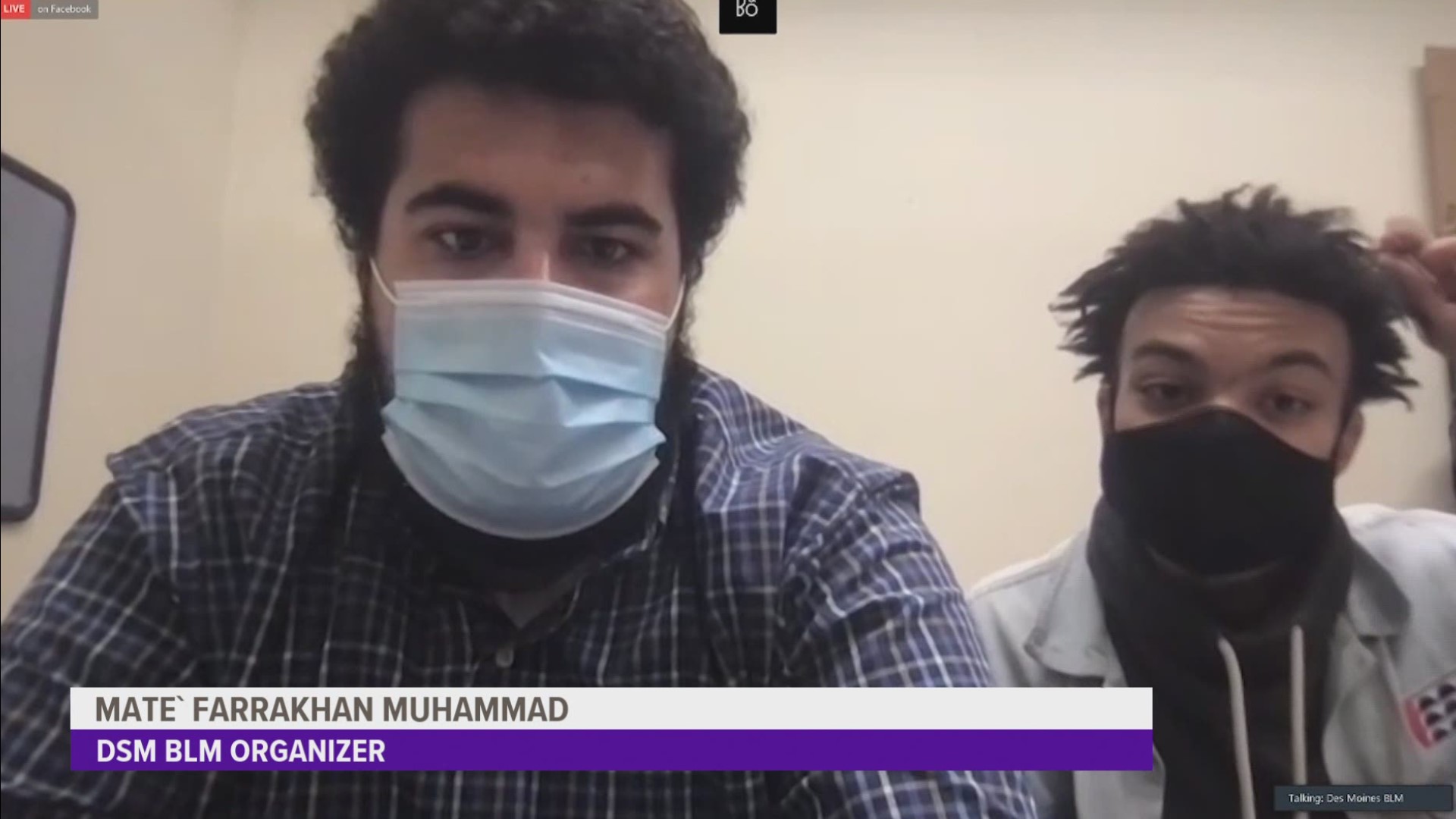
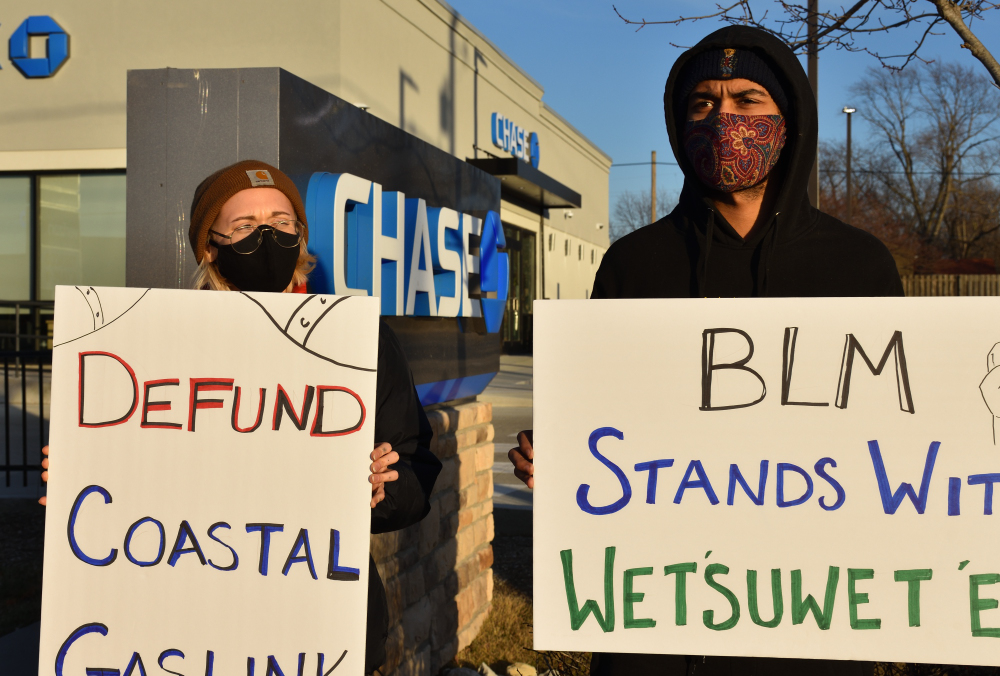
At the end of this is a description of Des Moines Black Liberation’s declaration of #BlackEmergencyIA in October 2020. Des Moines Mutual Aid has always supported Des Moines Black Liberation. Also, in one of the photos below you can see how Des Moines Black Liberation (BLM) supports the Wet’suwet’en peoples’ struggles against the Coastal GasLink pipeline in Canada, showing how justice groups support each other.

The #BlackEmergencyIA declaration was reissued at the time of President Biden’s inauguration in light of the January 6th attack (2021) on the U.S. Capitol.


NAACP Issues Travel Advisory in Florida

FOR IMMEDIATE RELEASE 

May 20, 2023

Contact: Chyna Fields cfields@naacpnet.org

WASHINGTON – Today, the NAACP Board of Directors issued a formal travel advisory for the state of Florida. The travel advisory comes in direct response to Governor Ron DeSantis’ aggressive attempts to erase Black history and to restrict diversity, equity, and inclusion programs in Florida schools. 

The formal travel notice states, “Florida is openly hostile toward African Americans, people of color and LGBTQ+ individuals. Before traveling to Florida, please understand that the state of Florida devalues and marginalizes the contributions of, and the challenges faced by African Americans and other communities of color.” 

“Let me be clear – failing to teach an accurate representation of the horrors and inequalities that Black Americans have faced and continue to face is a disservice to students and a dereliction of duty to all,” said NAACP President & CEO Derrick Johnson. “Under the leadership of Governor Desantis, the state of Florida has become hostile to Black Americans and in direct conflict with the democratic ideals that our union was founded upon. He should know that democracy will prevail because its defenders are prepared to stand up and fight. We’re not backing down, and we encourage our allies to join us in the battle for the soul of our nation.”

The travel advisory was initially proposed to the Board of Directors by NAACP’s Florida State Conference. NAACP’s collective consideration of this advisory is a result from unrelenting attacks on fundamental freedoms from the Governor and his legislative body. 

“Once again, hate-inspired state leaders have chosen to put politics over people. Governor Ron DeSantis and the state of Florida have engaged in a blatant war against principles of diversity and inclusion and rejected our shared identities to appeal to a dangerous, extremist minority,” said Chair of the NAACP Board of Directors, Leon Russell. “We will not not allow our rights and history to be held hostage for political grandstanding. The NAACP proudly fights against the malicious attacks in Florida, against Black Americans. I encourage my fellow Floridians to join in this fight to protect ourselves and our democracy.”

Following Gov. DeSantis’ so-called leadership in driving the state to reject students’ access to AP African American studies course in March, the NAACP distributed 10,000 books to 25 predominantly Black communities across the state in collaboration with the American Federation of Teachers’s Reading Opens the World program. The majority of the books donated were titles banned under the state’s increasingly restrictive laws. The NAACP continues to encourage local branches and youth councils to start community libraries to ensure access to representative literature.

The NAACP encourages Florida residents to join this effort to defeat the regressive policies of this Governor and this state legislature. Interested residents and supporters can visit www.naacp.org for additional information and updates. 

https://naacp.org/articles/naacp-issues-travel-advisory-florida


The advisory cited specific Florida policies including SB 266 and HB 7.

SB 266, signed into law just last week, effectively prohibits higher education institutions from spending state funds on diversity, equity, and inclusion (DEI) initiatives. In the words of Governor DeSantis, this law will help “treat people as individuals” by banning programs that “[stand] for discrimination, exclusion, and indoctrination.” This bill builds on SB 7044, which required periodic reviews of tenured faculty members and mandated professors to post their textbook lists online 45 days before their first classes.

In March, college students in Florida organized numerous walkouts in protest of HB 999, a similar proposal being worked on in the state’s House of Representatives.

HB 7, also known as the Stop Wrongs Against Our Kids and Employees Act (“Stop W.O.K.E. Act”), was enacted in 2022. It attempted to ban “woke indoctrination” by limiting the teaching of Critical Race Theory at public universities and restricting diversity training among employers. A federal court blocked parts of HB 7 after finding them unconstitutional.

NAACP issues travel advisory for Florida over state efforts to limit Black history classes and ban diversity programs in schools by Caitlin Williams, U. Pittsburgh School of Law, JURIST, MAY 22, 2023 06:53:27 PM


Florida’s largest LGBTQ rights group travel advisory 4/11/2023

Florida’s largest LGBTQ civil rights group has issued a travel advisory for the state.

Equality Florida says the advisory, issued Wednesday, was prompted by “the passage of laws that are hostile to the LGBTQ community, restrict access to reproductive health care, repeal gun safety laws, foment racial prejudice and attack public education by banning books and censoring curriculum.”

Florida has recently adopted a slate of hateful laws, and is fast-tracking additional measures that directly target the rights of LGBTQ+ individuals and basic freedoms broadly. Already, those policies have led Florida parents to consider relocating, prospective students to cross Florida colleges and universities off their lists, events and conferences to cancel future gatherings, and the United States military to offer redeployment for service members whose families are now unsafe in the state. These laws and policies are detailed below.

Florida travel advisory issued by state LGBTQ civil rights group. The group pointed to issues of gun violence, LGBTQ restrictions and more by Kiara Alfonseca, ABC News, April 13, 2023, 9:35 AM

The Equality Florida travel advisory describes the following concerns:

  • Assaults on Medical Freedom
  • Assaults on Academic Freedom
  • Censorship and Erasure of the LGBTQ Community
  • Assaults on Arts, Entertainment, and Sports Participation
  • Assaults on Business
  • Efforts to Foment Racial Prejudice
  • Repealing of Gun Safety Laws
  • Attacks on Immigrant Communities

Des Moines Black Liberation State of Emergency

This reminds me of the declaration of #BlackEmergencyIA in October 2020. Des Moines Mutual Aid has always supported Des Moines Black Liberation. In the video, you can see my Des Moines Mutual Aid comrade, Patrick Stahl, describing that support.

This blog post contains much more information about this.
Black State of Emergency in Iowa #BlackEmergencyIA


Patrick: Hi, I’m Patrick Stahl with Des Moines Mutual Aid.

Des Moines Mutual Aid is a collective that does outreach for homeless folks in our community, houseless folks in our community. We also assist BLM with their rent relief fund, and most of the work we’ve done is running the bail fund for the protests over the summer. In the course of that work, we have witnessed firsthand the violence that is done upon people of color, Black people specifically, by the white supremacist forces of the state – in this state, in this city, in this county. There is absolutely a state of emergency for people of color and Black people in Iowa. The state of emergency has been a long time coming. We will support – DMMA will absolutely support any and all efforts of this community – BLM, and the people of color community more generally- to keep themselves safe. Power to the people.


Des Moines BLM reissues travel advisory ahead of inauguration

The #BlackEmergencyIA advisory is set to go into effect Saturday ahead of the President-elect Joe Biden’s inauguration Jan. 20 in Washington.

Des Moines BLM reissues #BlackEmergencyIA travel advisory ahead of inauguration

Author: Hollie Knepper

Published: 7:08 PM CST January 14, 2021

Updated: 7:10 PM CST January 14, 2021 

DES MOINES, Iowa — Starting this weekend, a travel advisory reissued by the Des Moines Black Liberation Movement (DSM BLM) will go into effect for all Black Iowans and other people of color. 

The Iowa Coalition for Collective Change (ICCC) is also helping with the advisory, which is scheduled to go into effect on Jan. 16-27. 

ICCC and DSM BLM organizers held a press conference Thursday to go over more details.

“So last Wednesday, January 6, we all saw as white supremacists attacked the US Capitol,” said Jaylen Cavil, chair of DSM BLM’s advocacy department. “For many, we heard that this was a surprise, but for us at the Des Moines Black Liberation Movement, this was business as usual.”

“Here we are again and I’m tired of doing these press conferences, but unfortunately they are a necessity,” ICCC Executive Director Luana Nelson-Brown said. “The violence that we’ve seen over the past few months continues to escalate.” 

Nelson-Brown said the first travel advisory happened in September.

“As many are aware, authorities and other outlets are putting out warnings saying that in all 50 [states] and this nation’s capital there will be white supremacist violence that is being planned in the coming week surrounded around the inauguration of Joe Biden,” Cavil said.

That is why DSM BLM is reissuing the advisory. 

Basic measures include:

  • Do not travel alone or at night if at all possible
  • If you must, then make sure to inform someone of where you are going and when you plan to return
  • Know your rights
  • Make sure to have an exit plan for any situation you find yourself in

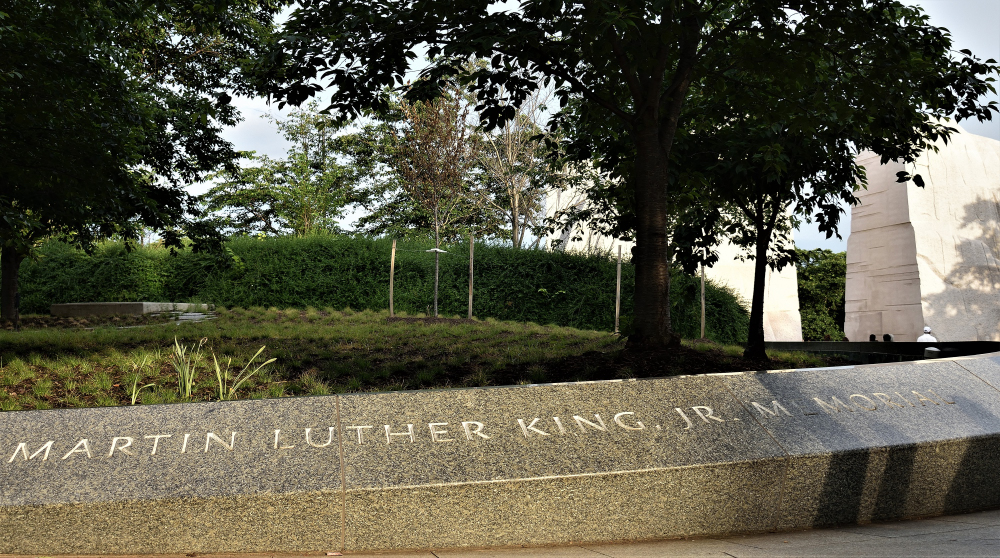
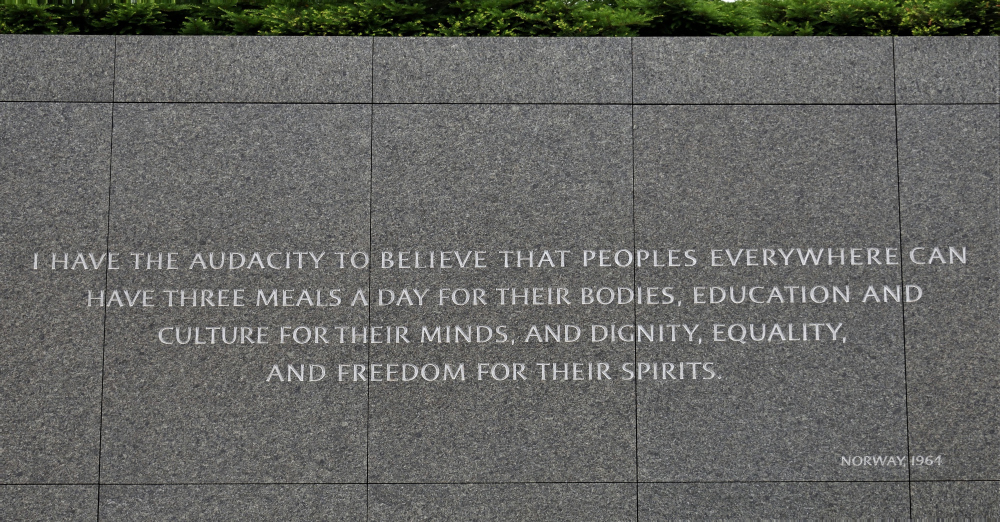
Martin Luther King, Jr. 2023

Yesterday, April 4th, was the anniversary of the assassination of Martin Luther King, Jr. Every year there is a solemn gathering at the Kennedy-King Park in downtown Indianapolis to commemorate the speech that Bobby Kenndy gave there in 1968, announcing King’s death. This was in the days before cell phones, and that was the first time most in the crowd heard the news. The Indianapolis police pleaded with him not to go to that neighborhood, fearing they could not protect him from the crowd. Indianapolis was one of the few major cities in the country where riots did not occur that night.

That event in Indianapolis was supposed to have been a campaign stop for Kennedy’s Presidential bid. Kennedy received the news on the plane to Indianapolis. There was no time to prepare a speech. The video at the end of this is the extemporaneous speech Kennedy gave that night.

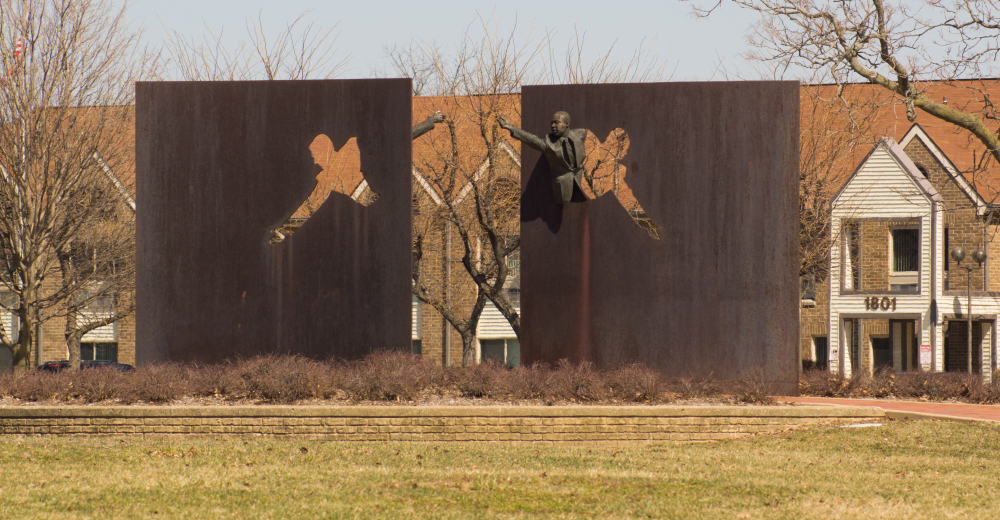
There is a remarkable sculpture at the Kennedy-King Park symbolizing the connections between Martin Luther King, Jr, and Robert Kennedy.

(c)Jeff Kisling, Kennedy-King Park, Indianapolis, IN

Martin Luther King has been an important part of my life. I was coming of age during his time, a Junior at Scattergood Friends School when he was killed. I had so much trouble trying to sort out what I should do about the Vietnam War. Martin Luther King was criticized by people in the civil rights movement when he began to speak out against the war, but that was a great help to me.

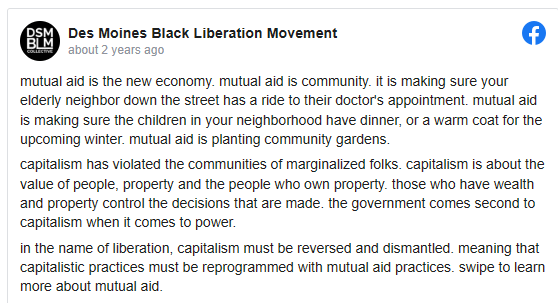
These days I’m working to replace capitalism by building mutual aid communities. Martin Luther King, Jr.’s work was as much about economics and poverty as it was about racial equality.


“I am much more socialistic in my economic theory than capitalistic,” Martin Luther King admitted to Coretta Scott, concluding that “capitalism has outlived its usefulness.”

Speaking at a staff retreat of the SCLC in 1966, King said that “something is wrong … with capitalism” and “there must be a better distribution of wealth” in the country. “Maybe,” he suggested, “America must move toward a democratic socialism.”

For King, the only solution to America’s crisis of poverty was the redistribution of wealth. In a 1961 speech to the Negro American Labor Council, King declared, “Call it democracy, or call it democratic socialism, but there must be a better distribution of wealth within this country for all God’s children.”

The Forgotten Socialist History of Martin Luther King, Jr. by Matthew Miles Goodrich, In These Times, January 16, 2023

“War Is An Enemy Of The Poor.”

Although seldom recognized, Martin Luther King Jr. was anti-war. His politics should be applied to demand an end to NATO and the war in Ukraine, say activists.

“We are here, honoring the legacy of Dr. Martin Luther King Jr.,” said co-executive director of The People’s Forum, Claudia De La Cruz, to a crowd of hundreds gathered in Times Square, in front of the US Army Recruiting Station, on January 14. “We are here to reclaim his legacy and say: no to war.”

The organizers and workers mobilized to demand an end to NATO and a peaceful resolution to the ongoing war in Ukraine. The rally and march was organized by the Act Now to Stop War and End Racism (ANSWER) Coalition, a US anti-war organization, and the People’s Forum. Activists raised slogans to demand a peaceful resolution of the war through negotiations rather than continued US weapons funding. Banners read “Money for our needs/Not the war machine” and “No to NATO/Yes to peace”.

With Congress passing a massive spending bill in December, containing over $44 billion in US aid to Ukraine, the United States is now set to spend over $100 billion total on the Russia–Ukraine War. Activists are demanding that these billions be used instead to fund public services, such as education, jobs and healthcare.

“We have to continue to fight for integration, collaboration, negotiations, because that’s been the only way of resolving conflict. War is a tool of our enemy,” said De La Cruz, in closing, to the crowd assembled inside The People’s Forum. “The only legit war is class war.”

US Activists Honor the Anti-War Legacy of Martin Luther King, Jr by Natalia Marques, People’s Dispatch, January 17, 2023

I’m of the firm opinion that a system that was built by stolen bodies on stolen land for the benefit of a few is a system that is not repairable. It is operating as designed, and small changes (which are the result of huge efforts) to lessen the blow on those it was not designed for are merely half measures that can’t ever fully succeed.

So the question is now, where do we go from here? Do we continue to make incremental changes while the wealthy hoard more wealth and the climate crisis deepens, or do we do something drastic that has never been done before? Can we envision and create a world where a class war from above isn’t a reality anymore?”

Ronnie James

The major threat of Martin Luther King Jr to us is a spiritual and moral one. King’s courageous and compassionate example shatters the dominant neoliberal soul-craft of smartness, money and bombs. His grand fight against poverty, militarism, materialism and racism undercuts the superficial lip service and pretentious posturing of so-called progressives as well as the candid contempt and proud prejudices of genuine reactionaries. King was neither perfect nor pure in his prophetic witness – but he was the real thing in sharp contrast to the market-driven semblances and simulacra of our day.

Martin Luther King Jr turned away from popularity in his quest for spiritual and moral greatness – a greatness measured by what he was willing to give up and sacrifice due to his deep love of everyday people, especially vulnerable and precious black people. Neoliberal soul craft avoids risk and evades the cost of prophetic witness, even as it poses as “progressive”.

If King were alive today, his words and witness against drone strikes, invasions, occupations, police murders, caste in Asia, Roma oppression in Europe, as well as capitalist wealth inequality and poverty, would threaten most of those who now sing his praises.

Today, 50 years later the US imperial meltdown deepens. And King’s radical legacy remains primarily among the awakening youth and militant citizens who choose to be extremists of love, justice, courage and freedom, even if our chances to win are that of a snowball in hell! This kind of unstoppable King-like extremism is a threat to every status quo!

Martin Luther King Jr was a radical. We must not sterilize his legacy by Cornel West, The Guardian, April 4, 2018

YouTube video I created of speeches by Martin Luther King, Jr, and Bobby Kennedy using photos I took at the Kenned-King Park in Indianapolis.


Quakers, abortion, and the white Christian problem

The Policy Committee of the Friends Committee on National Legislation (FCNL) is asking Quaker meetings for input for a statement about reproductive justice and abortion.

In the interest of time, I have not yet converted this to a blog post. You should be able to read and/or download “Quakers, Abortion, and the White Christian Problem” using the link below. We plan to discuss this at my Quaker meeting this weekend.

I began collecting various statements about abortion from my Yearly Meeting. Reproductive justice has always been a concern of Indigenous people in this country, so I also included some writings from my Indigenous friends. As can be seen in this document, young people, and especially my Indigenous friends see abortion as a problem of White Christians. I’m wondering what my White Quaker Friends think about that. Does that change how White Friends think and act about reproductive justice? Isn’t this an opportunity to build community amongst all of us?

DISCLAIMER: I am the author of this, and it is not an official publication of any group or organization.


Police vs Atlanta and the rest of us

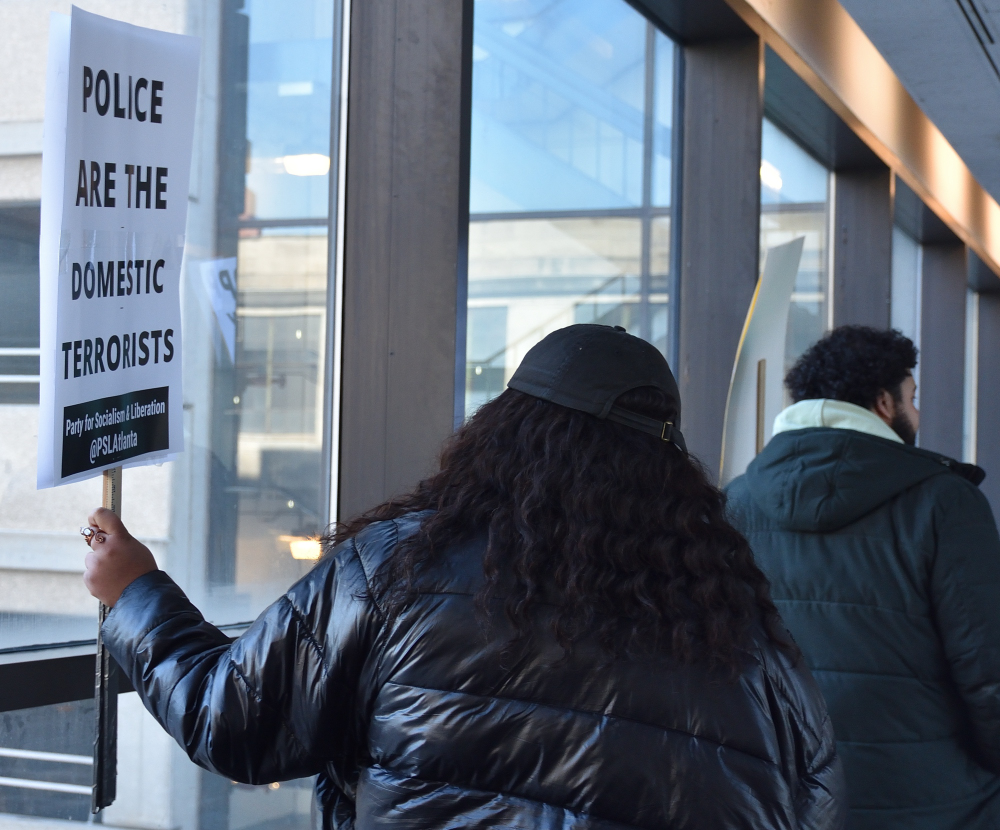
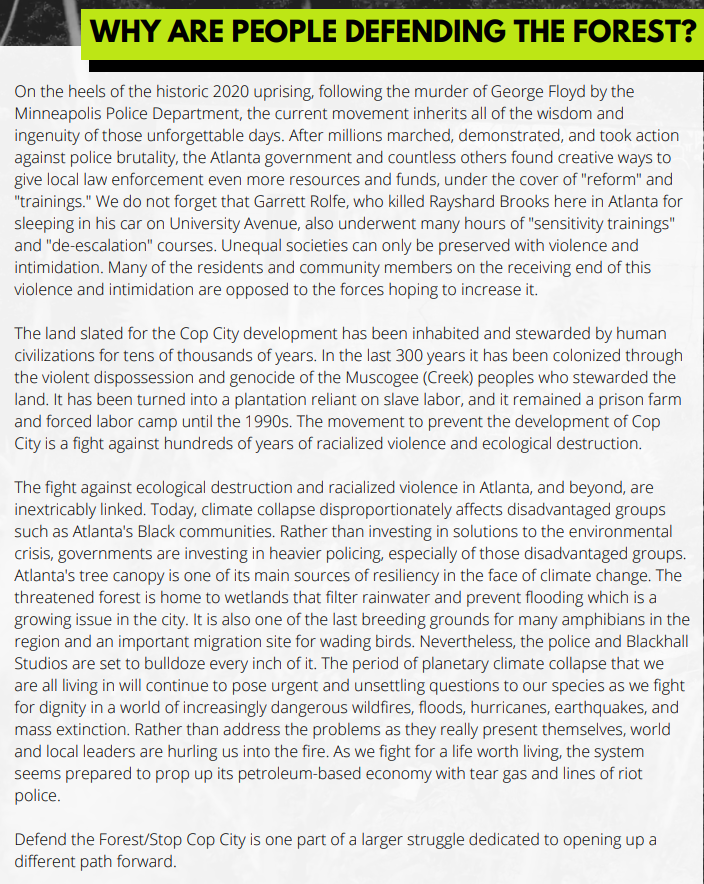
The proposed construction of “Cop City”, an 85-acre, $90 million dollar project to build a police training facility in the South River Forest in Atlanta, is a prime example of so many injustices.

  • Land theft from the Muskogee people
  • Forced displacement of the Muskogee, the “Trail of Tears”
  • Enslavement of people of color
  • Once a prison with a history of abuse
  • Environmental injustice
  • Attempted corruption of city council members
  • Killing Manuel Teran (Tortuguita)
  • Charges of terrorism against people protesting the training center, and the death of Tortuguita

And these concerns are not limited to Atlanta, or Georgia. The plan is to train police there from all over the country.


FULTON COUNTY, Ga. — Groups who oppose the construction of Atlanta’s future public safety training facility are asking the courts to block construction at the site until the appeal against its land disturbance permit is sorted out. 

In Monday’s complaint, individuals said that despite an appeal against its permit, the Atlanta Police Foundation — who is the main funder of the project — is still clearing land at the planned site of the future training facility. The site has been the epicenter of a more than yearlong protest movement that refers to the area as “Cop City.”

Those who oppose the facility said the appeal should mean that the foundation must stop all construction or clearing of the site until the zoning board reaches a decision — but the foundation has continued business as usual.

Complaint filed to stop construction at Atlanta Public Safety Training Center amid permit appeal, Documents allege crews are still working on the land when they shouldn’t be by Gabrielle Nunex, 11Alive News, Feb 15, 2023


This video from Al Jazeera explains the many problems related to the proposed “Cop City” project in Atlanta.

From the transcript:

I’m not sure they’re trying to force us out of the community and just take over the whole Community overall but that’s what it looked like. The path we headed down to Atlanta’s proposal to construct the police facility here speaks to the land’s painful history.

The site was a prison farm until 1995. Prisoners there were subjected to harsh punishments and slave conditions including poor sanitation nutrition and overcrowding. Some critics say claims of unmarked graves have not yet been properly investigated.

Before that the land is thought to have been a plantation that enslaved at least 19 people. It was originally stolen from the Muskogee who lived there until the U.S government forcefully displaced them to Oklahoma. Today both activists and tribal members have reclaimed the indigenous name as Weelaunee People’s Park. Local Advocates have long called for the area to be preserved as a historical site. They just can’t wait, they cannot wait, they just want to go in and bulldoze everything and then write the history the way they want. They haven’t even done proper you know, ecological surveys yet. But Cop City isn’t the only facility that the residents have opposed. Around the forest is a Hollywood studio, sanitation Center, juvenile prison and asphalt and trucking factories, and KIRO landfill. Nobody wants to address the environmental Injustice of this. Those issues have never been vetted. The facilities have severely polluted Muscogee Creek which flows downstream to the South River.


History of the Land

Until the 1830s, the Weelaunee Forest — now called the South River Forest, located southeast of Atlanta — was occupied by the Muscogee people. The Muscogee were known as the first tribe to become “civilized” through George Washington’s civilization plan, a six-step plan to disrupt Native culture, occupy native land, and teach Indigenous people how to live like white settlers. 

The Muscogee were forcefully removed from the forest in the 1830s through the “Trail of Tears,” a decades-long movement to forcibly remove Indigenous people from their homelands, resulting in thousands of deaths. Following their removal, the land was purchased by plantation owner Lochlin Johnson. During the Civil War, it was the site of the Battle of Atlanta.

In 1918, 1,250 acres of the forest were bought by the Bureau of Prisons and United States Federal Penitentiary in Atlanta for $160,000. Until the early 1990s, the land was used as a prison farm.

Atlanta Is Starting Construction of ‘Cop City.’ Here’s What You Need to Know. We take a deep dive on the history of the land, the environmental and political implications, and the growing movement against the facility by Adam Mahoney, Madeline Thigpen, and Adam Mahoney, Capital B News, Feb 9, 2023


This is a link to posts I’ve written about “Cop City”. https://quakersandreligioussocialism.com/?s=%22cop+city%22


On January 31st, we had a solidarity action in Des Moines related to “Cop City” and the killing of Tortuguita. We visited the local office of Cushman and Wakefield. They are a global corporation and John O’Neill is the President of U.S. Multifamily Capital Markets of the global firm. We asked the president at the local office to contact him to cut ties with the Atlanta Police Foundation. He confirmed that he did, for what it’s worth.

Following are some of the photos I took at our action that morning.


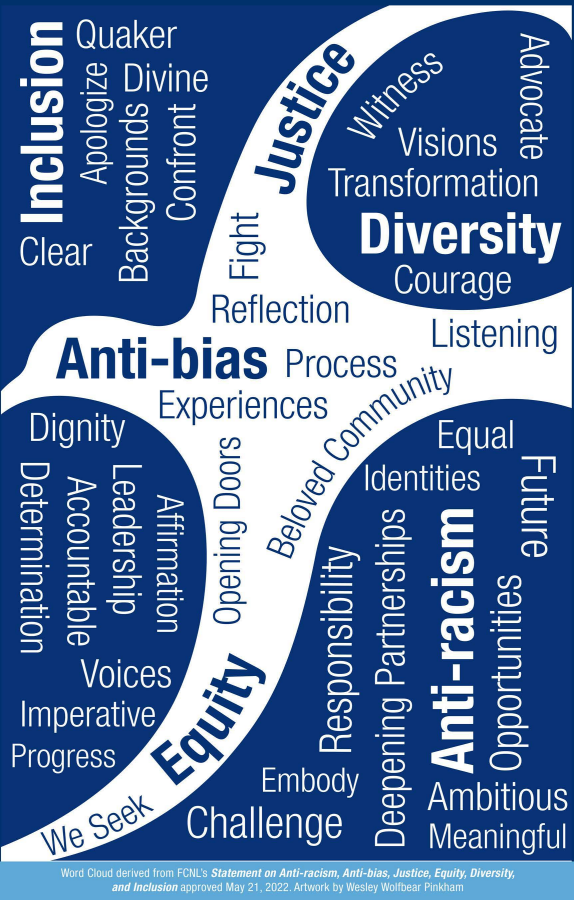
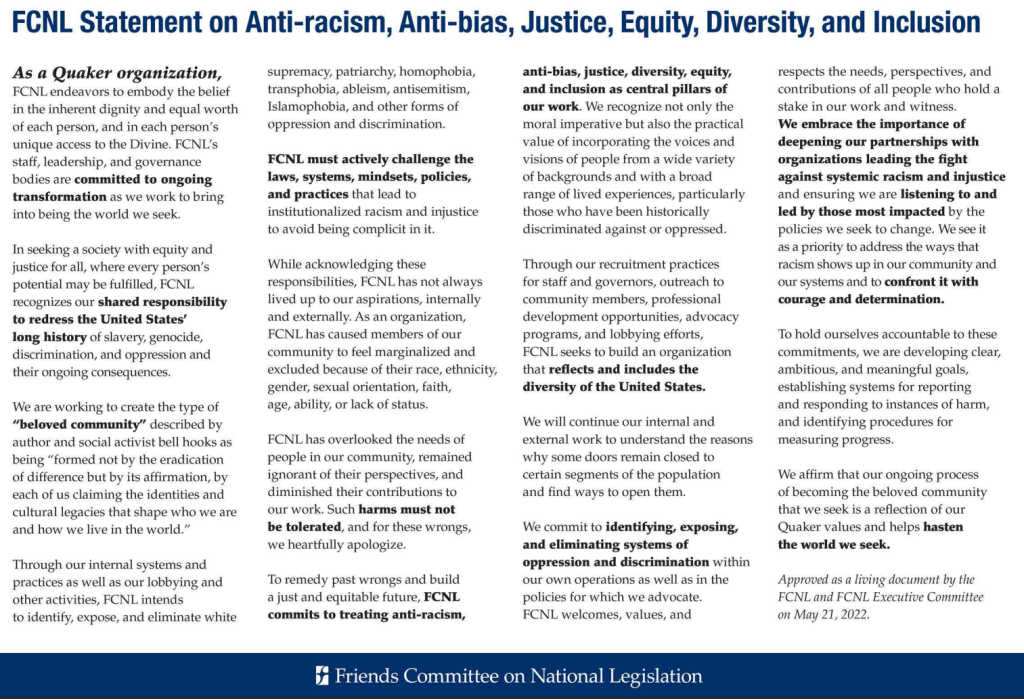
FCNL Statement on Anti-racism, Anti-bias, Justice, Equity, Diversity, and Inclusion

My parents, Burt and Birdie Kisling, were involved with the Friends Committee on National Legislation (FCNL) for many years. I’m very grateful they persuaded me to become involved, too. I was on the General Committee for nine years.

I was reluctant at first because I refused to have a car, so the trip from Indianapolis to Washington, DC, took twenty-two hours via the train, if it was on time, which it usually wasn’t. I would arrive sometime around 9 pm and walk from Union Station to William Penn House. I just had to stop by the US Capital building on the way to take photos, as it was lit so beautifully. I was sometimes approached by Capitol police, but I guess I appeared to be harmless. (Don’t tell my friends at FCNL that I mainly went to DC so I could take photos of all the monuments and memorials. Some of those photos can be found at the end of this.)

As Black History Month begins, here is an article by Lauren Brownlee. Following that is the new FCNL Statement on Anti-racism, Anti-bias, Justice, Equity, Diversity, and Inclusion that I wanted to share with you.


“I Rage Because I Love”

I strive every day to put my faith, and the love at its heart, into action. I will always remember sitting in a Meeting for Worship in the early days of the Black Lives Matter movement and realizing that I rage because I love. Gwen Carr, Eric Garner’s mother, said, “I had to change my mourning into a movement, my pain into purpose, and sorrow into a strategy.” As Quakers say, ‘friend speaks my mind.’  

As Black History Month begins, I again feel rage in mourning for Keenan Anderson, Tyre Nichols, and too many others. I strive to channel my righteous indignation into grounded action. Sometimes that action is reaching out to loved ones to check in on them. Sometimes it is going to a rally, a protest, a vigil, or a march.

Sometimes it is organizing and advocating to change the systems that maintain white supremacy, and those are the moments that I am most grateful for FCNL. While the world we live in was built on a foundation of white supremacy, the world we at FCNL seek centers racial justice.  

Dr. Martin Luther King said, “The arc of the moral universe is long, but it bends toward justice.” We are the ones who help bend it and there are myriad ways that we can do so. Each of our FCNL issue areas are designed around bending that arc, and our new Statement of Anti-racism, Anti-bias, Justice, Equity, Diversity, and Inclusion (AJEDI) guides how we bend it. 

(article continues here: https://www.fcnl.org/updates/2023-02/i-rage-because-i-love)  

As Black History Month begins, I again feel rage in mourning for Keenan Anderson, Tyre Nichols, and too many others. by Lauren Brownlee, FCNL, February 2, 2023


The Friends Committee on National Legislation is a national, nonpartisan Quaker organization that lobbies Congress and the administration to advance peace, justice, and environmental stewardship.

Founded in 1943 by members of the Religious Society of Friends (Quakers), FCNL fields an expert team of lobbyists on Capitol Hill and works with a grassroots network of tens of thousands of people across the country to advance policies and priorities established by our governing General Committee.

Indigenous Land Acknowledgement
As we bear witness and lobby in solidarity with Native Americans, we also honor the Nacotchtank tribe on whose ancestral land the FCNL, FCNL Education Fund, and Friends Place on Capitol Hill buildings stand. They are also known as the Anacostans, the Indigenous people who lived along the banks of the Anacostia River, including in several villages on Capitol Hill and what is now Washington, D.C. By the 1700s, the Nacotchtank tribe had merged with other tribes like the Pamunkey and the Piscataway, both of which still exist today.


https://www.fcnl.org/sites/default/files/2022-05/fcnl-statement-on-antiracism-antibias-justice-equity-diversity-and-inclusion-may2022.pdf


Confluence

Doesn’t it seem that we are in a time when many swollen tributaries are coming together, causing massive flooding?

Not only literally from environmental chaos.

While I’ve been devasted by the killing of land defender Manuel Teran Tortuguita in Atlanta, there is the emerging story of yet another police murder, that of Tyre Nichols in Tennessee. This against a background of mass shootings occurring nearly daily. Sometimes more than one a day. School children drilled on what to do in response to an active shooter.

The violence of the militarization of policing. When Congress cannot pass laws related to gun safety and reforms of policing. The violence of the attack on the US Capital. The authoritarian practices and legislation passed there. The example this provides to other countries around the globe. The extreme gerrymandering and voter suppression.

Against a background of the violence of poverty, hunger, and houselessness. The epidemic of missing and murdered Indigenous relatives. The ongoing discovery of the remains of thousands of native children on the grounds of the institutions of forced assimilation. Children continuing to be removed from their homes. Continued violence against women, including criminalizing abortion.

The continued colonization and broken treaties.

The violence of US military around the world. The escalating proxy war against Russia in the Ukraine.

The violence against Mother Earth. Monocropping, CAFOs, fertilizers, pipeline construction and leaks. The violence against the water.

The violence of substance abuse and deaths. And suicides.

The violence of banning books. Violent suppression of free speech. Eradicating study of the multicultural peoples that many of the students are members of. Forced assimilation continues.

The violence of the southern border, against those seeking asylum, and against those in the country who are immigrants.

This violence and oppression fueled by systems of capitalism, institutional racism, white supremacy, and dominance.

It’s both enraging and exhausting to hear people who are supposed to be leaders lament these tragedies and offer the same tired ideas that have never worked before. Why would they work now?


Mutual Aid

Trying to make incremental changes to the system will never work because the system is the problem.

As my friend Ronnie James says:

I’m of the firm opinion that a system that was built by stolen bodies on stolen land for the benefit of a few is a system that is not repairable. It is operating as designed, and small changes (which are the result of huge efforts) to lessen the blow on those it was not designed for are merely half measures that can’t ever fully succeed.

So the question is now, where do we go from here? Do we continue to make incremental changes while the wealthy hoard more wealth and the climate crisis deepens, or do we do something drastic that has never been done before? Can we envision and create a world where a class war from above isn’t a reality anymore?”

Ronnie James

Mutual Aid is “where we go from here.”

This morning Ronnie and I were in Des Moines as usual, distributing donated food.
(See: https://quakersandreligioussocialism.com/mutual-aid/)

So I work with a dope crew called Des Moines Mutual Aid, and on Saturday mornings we do a food giveaway program that was started by the Panthers as their free breakfast program and has carried on to this day. Anyways, brag, brag, blah, blah.

So I get to work and I need to call my boss, who is also a very good old friend, because there is network issues. He remembers and asks about the food giveaway which is cool and I tell him blah blah it went really well. And then he’s like, “hey, if no one tells you, I’m very proud of what you do for the community” and I’m like “hold on hold on. Just realize that everything I do is to further the replacing of the state and destroying western civilization and any remnants of it for future generations.” He says “I know and love that. Carry on.”

Ronnie James