Building a coalition

I’m reflecting and praying about what happened this past weekend during the Climate Summit of the newly formed Buffalo Rebellion, a new coalition of Iowa organizations that are growing a movement for climate action that centers racial and economic justice.

Buffalo Rebellion is a new coalition of Iowa organizations that are growing a movement for climate action that centers racial and economic justice. The Earth Day Rally will be an afternoon of honoring Mother Earth through sharing stories and visions for climate justice and taking action together for a world that puts people and the planet before profits for a few.

Following the Earth Day Rally, Buffalo Rebellion will be holding two days of immersive training to develop 100 grassroots leaders who will build local teams to take on climate justice issues in their community and come together to create a thriving state-wide movement.

Formed in 2021, Buffalo Rebellion is comprised of seven Iowa organizations: Great Plains Action Society, DSM Black Liberation Movement, Iowa Migrant Movement for Justice, Sierra Club Beyond Coal, Cedar Rapids Sunrise Movement, SEIU Local 199, and Iowa CCI.

Buffalo Rebellion


Extremely thankful for this community we built this weekend. Looking forward to fighting for the future alongside all of you.
Thank you to the organizers, and big love to the participants.
Keep an eye out for Buffalo Rebellions next move.

Photo by @karl.ajconrad
@iowacci@iowammj@desmoinesblm@greatplainsactionsociety@sunrisemvmtcr
#climatecrisis#climatejustice#landback#racialjustice
Buffalo Rebellion 4/24/2022


How do you build a coalition? You bring together organizations and people who have demonstrated they are effective at building community and organizing for change. And who are aligned in their purpose.

My experience is there are a small number of people and organizations who shoulder justice work in a city or geographical area. Which means they are acquainted with each other. A given individual often belongs to multiple organizations.

But these groups often don’t work together. Building a coalition is how to remedy that. The organizations listed above are growing a movement for climate action that centers racial and economic justice. That is our common purpose. Rapidly evolving environmental chaos is an existential threat that requires radical action now.

Centering on racial and economic justice is crucial for many reasons. Blatant environmental racism is seen over and over again by the location of hazardous infrastructure in Black, Indigenous and other people of color (BIPOC) communities. Conversely, solar panels are not often seen there.

There are many aspects of economic injustice as well. Those economically disadvantaged also tend to live in areas of environmental hazards. And supply the labor for jobs such as coal, oil, and tar sands mining, while white capitalists receive (steal) the profits.

Building a coalition requires us to know and trust each other. And to learn about each other’s work. Tools that we can bring to our organizations. Or know who has expertise we can turn to for help.

This past weekend of Buffalo Rebellion meetings and action went a long way in beginning to accomplish these goals. It was important to have the action of marching to the offices of MidAmerican Energy. Demonstrating how direct actions work.

The many excellent presentations shared the tools and knowledge of experts in our coalition. The following table of presentations gives an idea of what was done.

Community Building & StorytellingCedar Rapids Sunrise
End-Stage Iowa, Indigenous Land Stewardship & the Green
(Red) New Deal
Great Plains Action Society (GPAS), Iowa Citizens Community Improvement (ICCI)
NoDAPL Reunion Panel
Fundamentals of Organizing (Starting an Issue Based Campaign
and Fundraising 101)
DSM Black Liberation, ICCI, Sierra Club Beyond Coal
Police, Prison, & Military Abolition for Climate JusticeDSM Black Liberation Movement
Lobbying: Get Your Local Green New Deal Passed into LawCedar Rapids Sunrise
Migration in Iowa and Big-AgIowa Migrant Movement for Justice
Art and ActivismSay Poetry, DSM Black Liberation Movement
Frontline Tactical Methods to Protect the Land: From Direct Actions and Resistance Camps
Landscapes: The Kinship of Climate, Wildness, and Community
Mutual Aid: Bail Funds, Court Solidarity, and Incarceration Support in Resistance MovementsGPAS, DSM Mutual Aid
Linking the Origins of Iowa’s Contemporary Environmental Problems to the Extractive Nature of White Settlement
Ending White Supremacy in Climate OrganizingCPAS, DSM Black Liberation Movement, Sierra Club Beyond Coal
Launching the Movement: Strategic Applications of Drones for Grassroots ActionsGPAS
Building Power with Public NarrativeCedar Rapids Sunrise, ICCI, DSM People’s Town Hall
Damn Lies and C02 pipelinesScience and Environmental Health Network
Deep Canvassing ICCI, DSM People’s Town Hall
Urban Farming and Community FridgesSweet Tooth Farms
Bird-Dogging 101Cedar Rapids Sunrise, ICCI, DSM Black Liberation Movement
Youth Caucus ReportSeventh Generation Youth Climate Caucus

You can see the videos of most of these presentations on the Buffalo Rebellion Facebook page.

For example, this is the presentation by my friend Ronnie James of Des Moines Mutual Aid and Great Plains Action Society.

Mutual Aid: Bail Funds, Court Solidarity, and Incarceration Support in Resistance Movements

– Ronnie James, DSM Mutual Aid & Great Plains Action Society

An introduction to the how and why of supporting frontliners that suffer arrest during Movement activities. Instruction will cover the reason for, creation of, and implementation of a Bail Fund. We will also touch on the main phases of the arrest and court process: Arrest, Pre-Trial, Trial, Post-Trial, Sentencing, and Incarceration, and some of the avenues of support the defendant will require during these phases. We will discuss the role of the Defense Committee, and how they compare and contrast with the Legal Defense Team. Finally, there will be a brief summary of how this works in Des Moines, Iowa in the present moment.

Click here to see video.


The goal of this weekend of immersive training was to develop grassroots leaders who will build local teams to take on climate justice issues in their community and come together to create a thriving state-wide movement. I think that was accomplished.


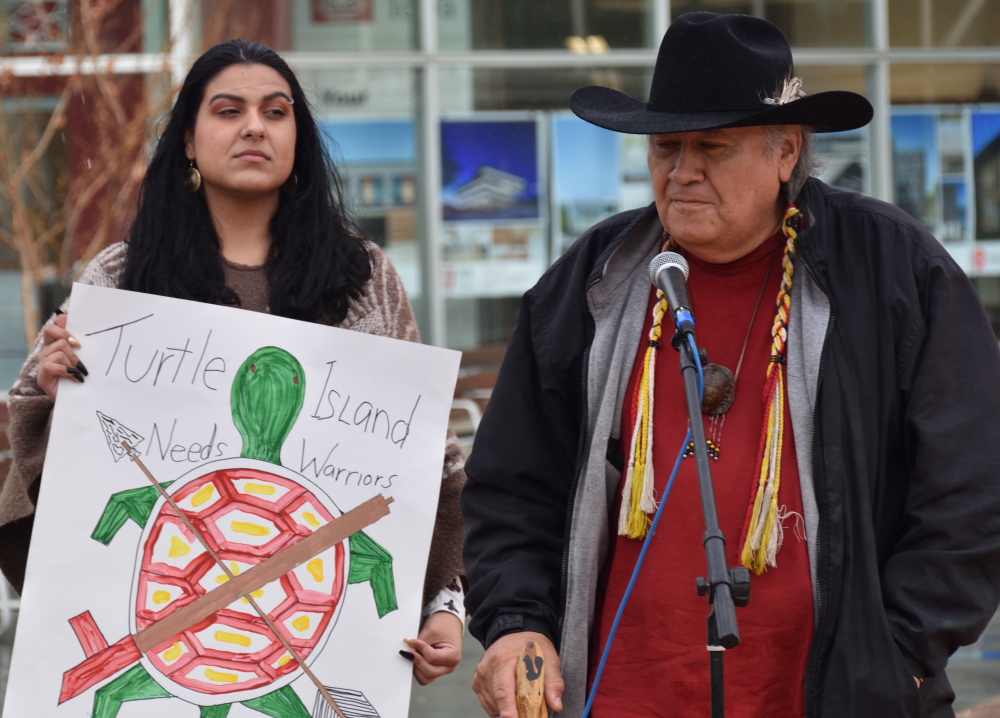
#IAClimateJustice #ClimateJustice @NoCCSIowa

@iowacci @iowammj @desmoinesblm @greatplainsactionsociety @sunrisemvmtcr
#climatecrisis #climatejustice #landback #racialjustice

Martin Luther King Jr was a radical

“Hero” isn’t a word I hear much these days, but Martin Luther King, Jr, is one to me. Other heroes are the men and their families who also resisted cooperation with the systems of war. That includes a number of those in my Quaker community. And includes Muhammad Ali. People whose lives reflected their faith and beliefs. Because even as a child it was clear so many people did not do so. This was and continues to be spiritually traumatic.

In this brief celebratory moment of King’s life and death we should be highly suspicious of those who sing his praises yet refuse to pay the cost of embodying King’s strong indictment of the US empire, capitalism and racism in their own lives.

Martin Luther King Jr was a radical. We must not sterilize his legacy.  Cornel West

Martin Luther King’s beliefs and actions related to racism are well known.

He was late to publicly come out against the Vietnam War and was harshly criticized by most in his own community for doing so. The argument was that would weaken his work against racism. But he could clearly see the ties between racism, capitalism, and militarism.

A historic speech delivered by Martin Luther King Jr. is remembered even 55 years later as one of the most courageous speeches ever made. This speech stated those truths which no other leading political leader or even leading activist was willing to state in such a clear and sharp way.  The reference here is of course to the speech delivered by Dr. King at Manhattan’s Riverside Church on April 4 1967—a speech remembered also as the ‘Beyond Vietnam: A Time to Break Silence’ speech.

The great importance of this speech is due to several factors. Firstly, he drew a very clear linkage between why a civil rights activist like him has to be a peace activist at the same time. He stated very clearly that the high hopes he had from the poverty program started getting shattered from the time of increased spending on Vietnam war. So he realized that in order to really help the poor it is important also to prevent wars and to have peace. Secondly, he expressed deep regret that it is mainly the children of the poor (black as well as white young men from poor households) who were being sent to fight a very unjust and oppressive war, while they should have been contributing to reducing distress of their own settlements. Thirdly, he exposed the great injustices and bitter realities about US military intervention with such clarity and conviction that it was bound to have a strong nationwide and in fact worldwide impact.

April 4 – Remembering Martin Luther King on his Death Anniversary by Bharat Dogra, Counter Currents, April 4,2022


The major threat of Martin Luther King Jr to us is a spiritual and moral one.
Martin Luther King Jr turned away from popularity in his quest for spiritual and moral greatness – a greatness measured by what he was willing to give up and sacrifice due to his deep love of everyday people, especially vulnerable and precious black people.

If King were alive today, his words and witness against drone strikes, invasions, occupations, police murders, caste in Asia, Roma oppression in Europe, as well as capitalist wealth inequality and poverty, would threaten most of those who now sing his praises.
Today, 50 years later the US imperial meltdown deepens. And King’s radical legacy remains primarily among the awakening youth and militant citizens who choose to be extremists of love, justice, courage and freedom, even if our chances to win are that of a snowball in hell! This kind of unstoppable King-like extremism is a threat to every status quo!

Martin Luther King Jr was a radical. We must not sterilize his legacy.  Cornel West

New heroes for me are the young people I’ve been blessed to work with and learn from, particularly in Mutual Aid communities. Working against “capitalist wealth inequality and poverty.”

King’s radical legacy remains primarily among the awakening youth and militant citizens who choose to be extremists of love, justice, courage and freedom.”


Martin Luther King, Jr and Bobby Kennedy

April 4th is the anniversary of the assassination of Martin Luther King, Jr, in Memphis, Tennessee. There is always a somber gathering in Indianapolis, at the site where Bobby Kennedy announced the death to a crowd. In the days before cell phones and instant communication, most in the crowd had not heard the news.

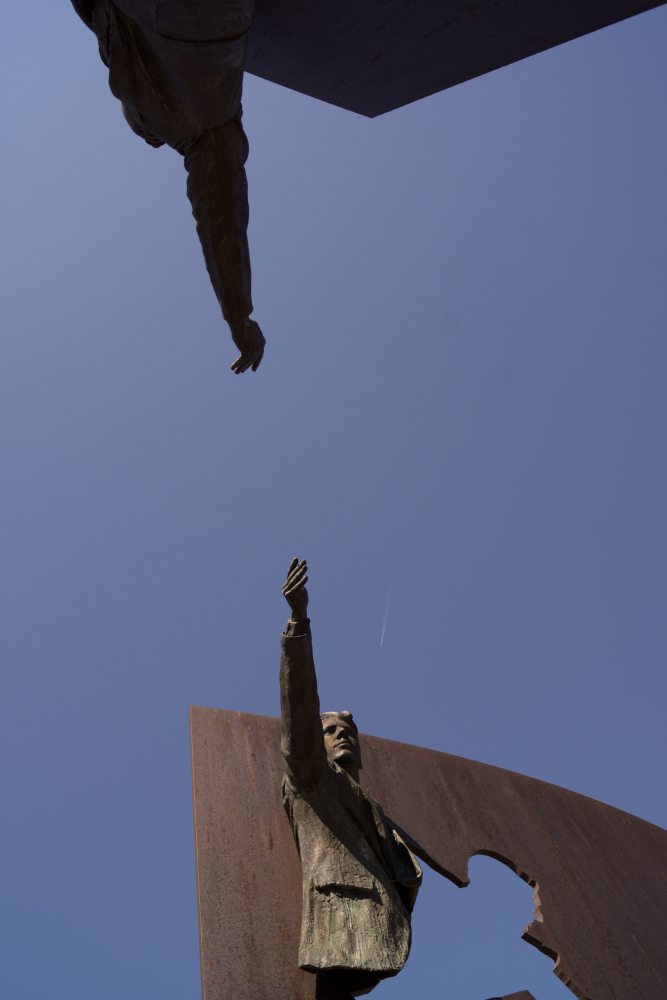
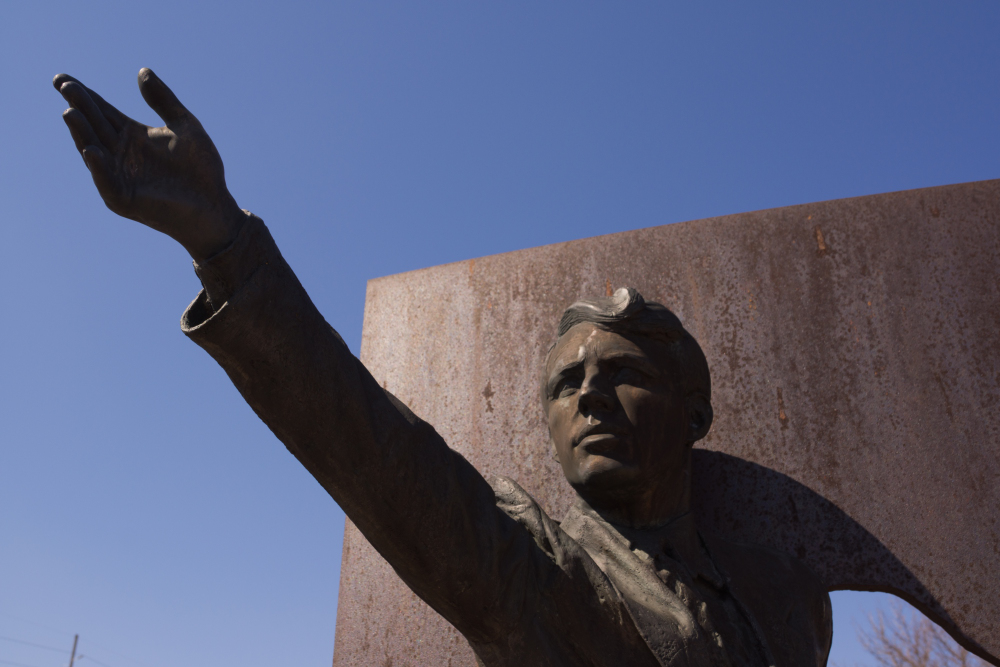
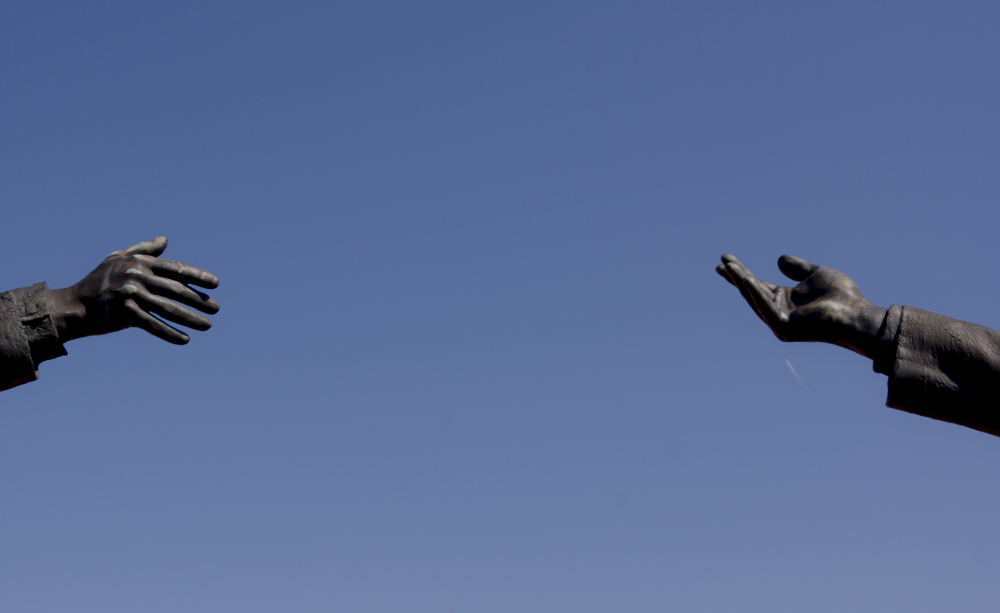
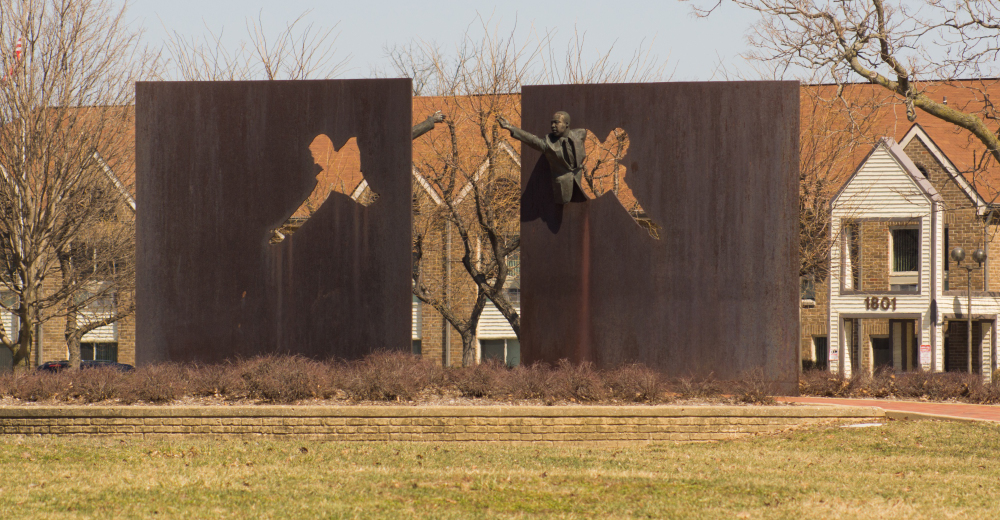
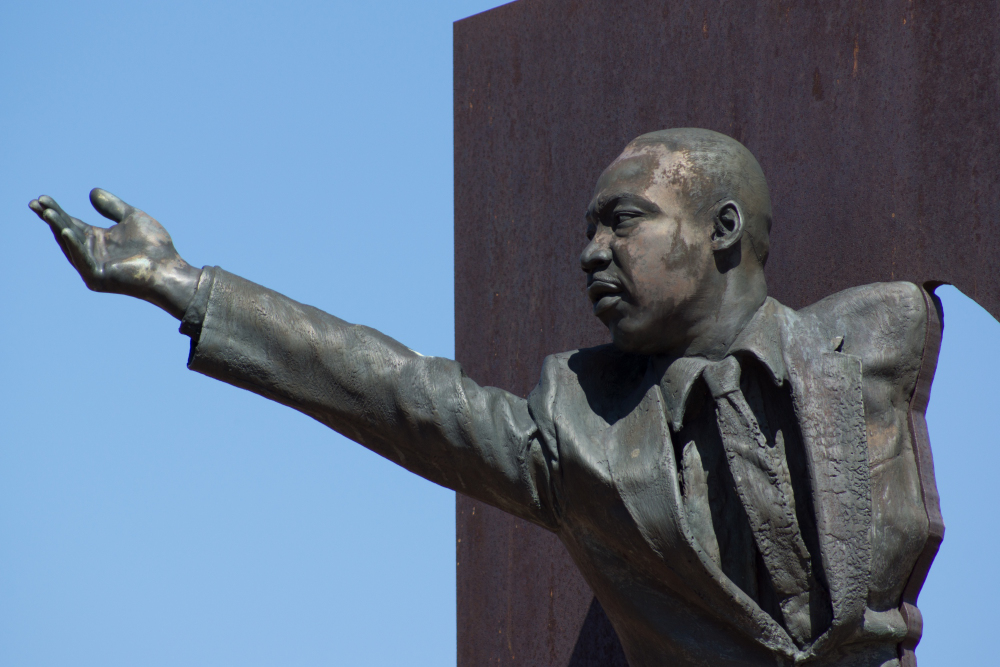
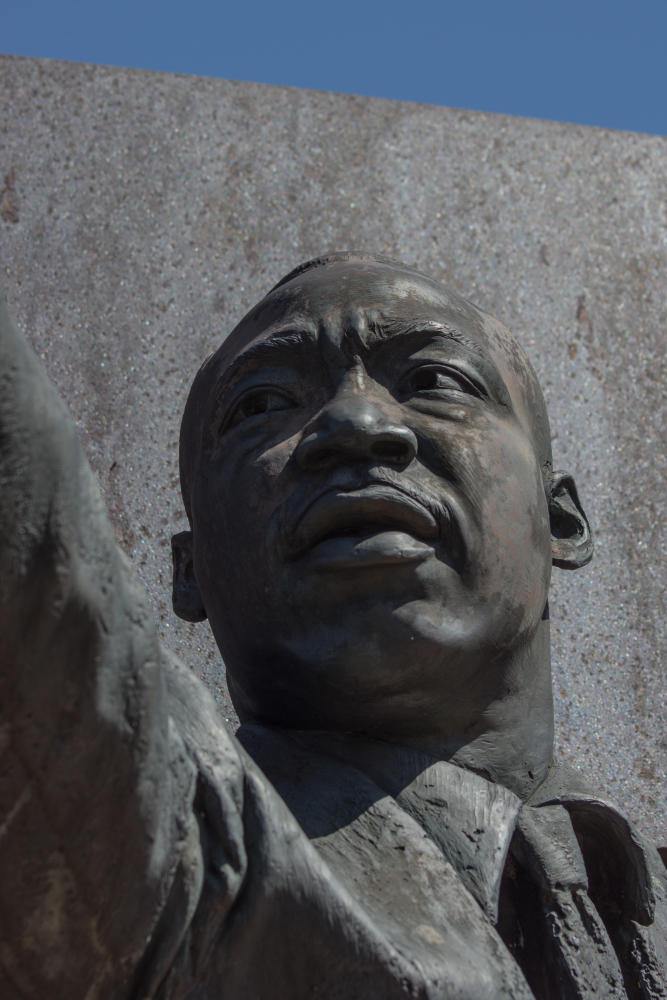
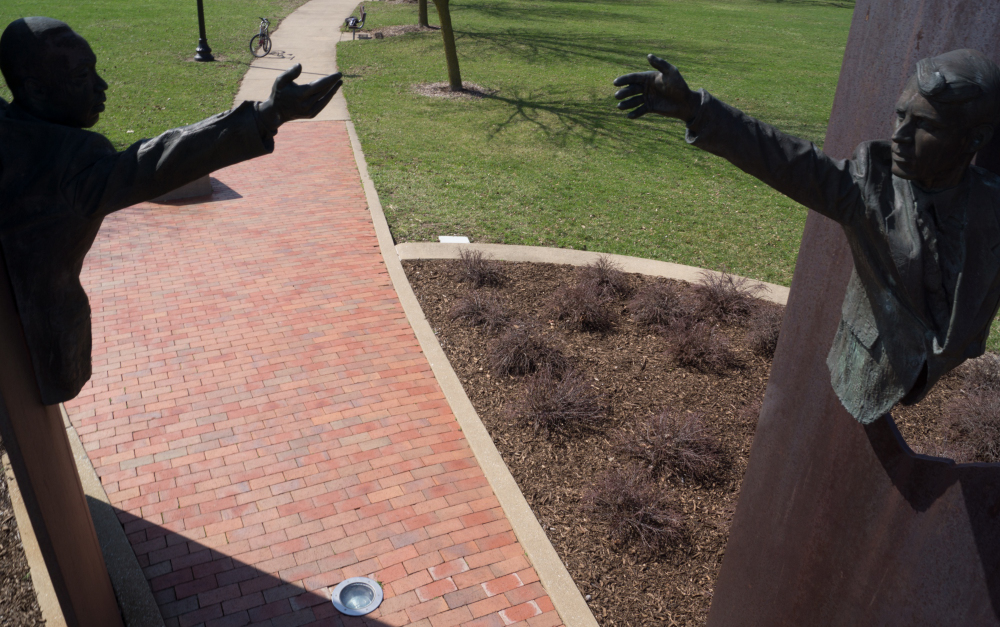
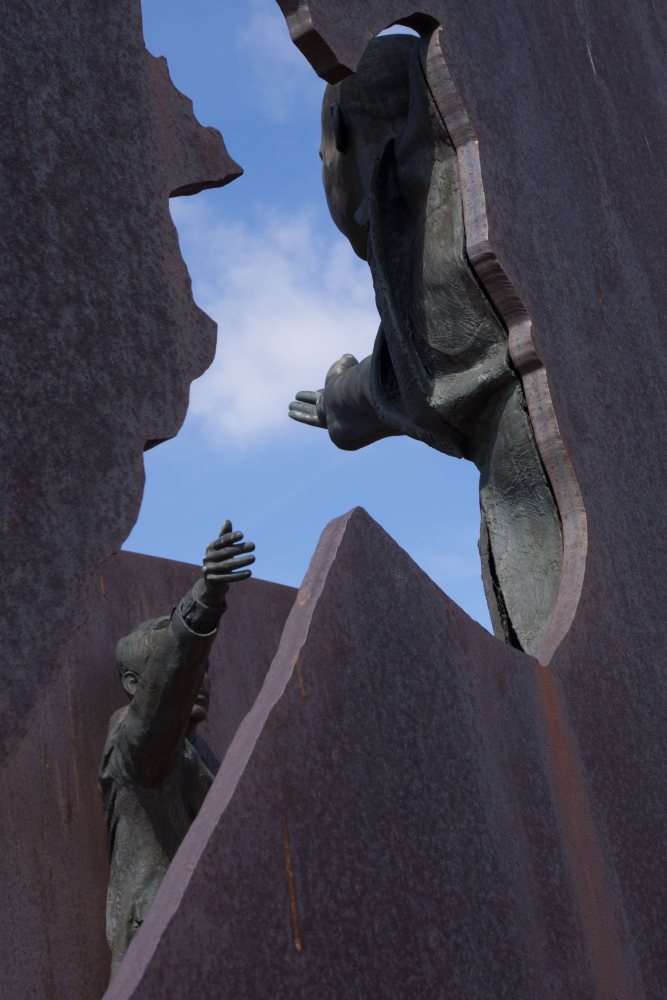
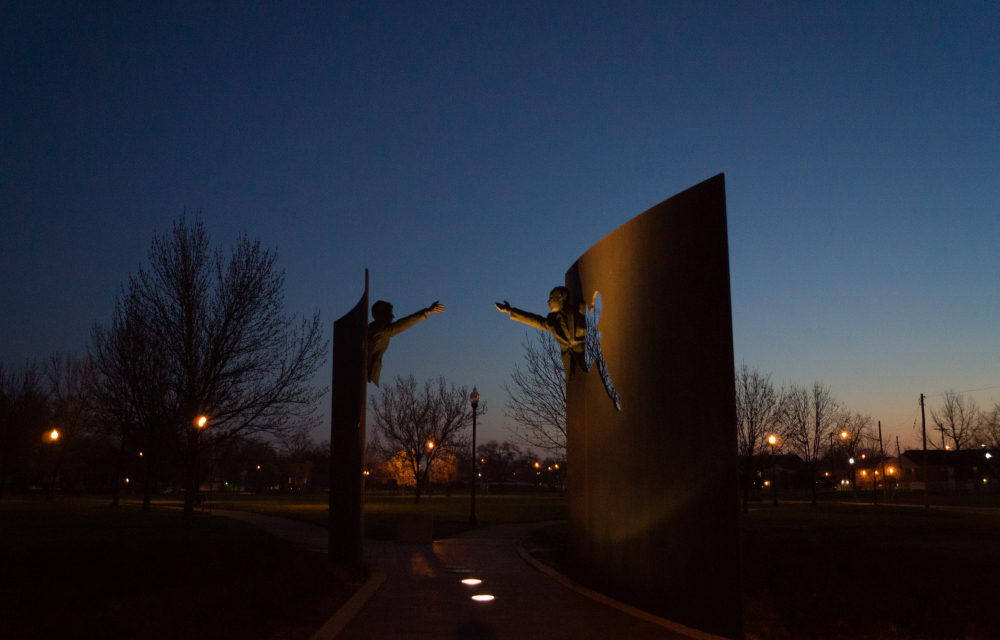
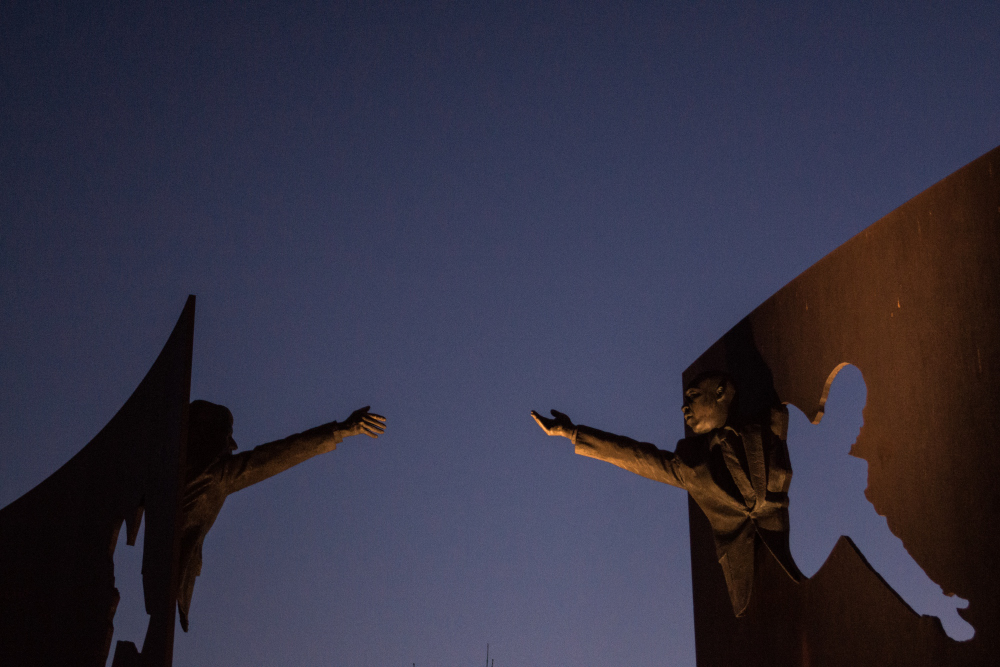
As a photographer I was fascinated by the sculpture of Martin Luther King, Jr, and Robert F Kennedy in the park where Bobby Kennedy spoke. I visited it many times, day and night. I put together the video below with some of the photos. There are two speeches as part of the video. The first is the last speech Martin Luther King gave, the night before he was killed. The second is the speech Bobby Kennedy delivered that day in Indianapolis.

There were riots in many cities that day, but not in Indianapolis.

“We’ve got some difficult days ahead,” Martin Luther King, Jr., told an overflowing crowd in Memphis, Tennessee, on 3 April 1968, where the city’s sanitation workers were striking. “But it really doesn’t matter with me now, because I’ve been to the mountaintop … I’ve seen the Promised Land. I may not get there with you. But I want you to know tonight, that we, as a people, will get to the Promised Land” (King, “I’ve Been,” 222–223). Less than 24 hours after these prophetic words, King was assassinated by James Earl Ray.

Martin Luther King, Jr

April 4, 1968, Robert F Kennedy gave several speeches in Indiana as he campaigned for the Democratic nomination for President of the United States. This young white man, as the United States Attorney General, along with his brother the President, had been thrust into the middle of the civil rights struggle. And then his brother was assassinated.

At Notre Dame he spoke about the Vietnam War and told the students there that college deferments for the draft discriminated against those who could not afford to attend college and should be eliminated.

After speaking about racism at Ball State, an African American student said, “Your speech implies that you are placing a great deal of faith in white America. Is that faith justified?” Kennedy answered “Yes” and added that “faith in black America is justified, too” although he said there “are extremists on both sides.” Before boarding a plane to fly to Indianapolis, Kennedy learned that Martin Luther King, Jr. had been shot. On the plane, Kennedy told a reporter “You know, it grieves me. . . that I just told that kid this and then walk out and find that some white man has just shot their spiritual leader.”

It wasn’t until the flight had nearly arrived in Indianapolis that he learned Martin Luther King, Jr, had died of his wounds. There wasn’t time to write something to cover this news. The Indianapolis event was to be held at a park in a predominantly black neighborhood downtown. The Indianapolis police and city leaders tried to get him to cancel the speech, telling him they couldn’t protect him if there was a riot.

But he insisted. At the park, from the back of a flatbed truck, he said:

Ladies and Gentlemen,

I’m only going to talk to you just for a minute or so this evening, because I have some–some very sad news for all of you — Could you lower those signs, please? — I have some very sad news for all of you, and, I think, sad news for all of our fellow citizens, and people who love peace all over the world; and that is that Martin Luther King was shot and was killed tonight in Memphis, Tennessee.

Martin Luther King dedicated his life to love and to justice between fellow human beings. He died in the cause of that effort. In this difficult day, in this difficult time for the United States, it’s perhaps well to ask what kind of a nation we are and what direction we want to move in. For those of you who are black — considering the evidence evidently is that there were white people who were responsible — you can be filled with bitterness, and with hatred, and a desire for revenge.

We can move in that direction as a country, in greater polarization — black people amongst blacks, and white amongst whites, filled with hatred toward one another. Or we can make an effort, as Martin Luther King did, to understand, and to comprehend, and replace that violence, that stain of bloodshed that has spread across our land, with an effort to understand, compassion, and love.

For those of you who are black and are tempted to fill with — be filled with hatred and mistrust of the injustice of such an act, against all white people, I would only say that I can also feel in my own heart the same kind of feeling. I had a member of my family killed, but he was killed by a white man.
But we have to make an effort in the United States. We have to make an effort to understand, to get beyond, or go beyond these rather difficult times.

My favorite poem, my–my favorite poet was Aeschylus. And he once wrote:

Even in our sleep, pain which cannot forget
falls drop by drop upon the heart,
until, in our own despair,
against our will,
comes wisdom
through the awful grace of God.

What we need in the United States is not division; what we need in the United States is not hatred; what we need in the United States is not violence and lawlessness, but is love, and wisdom, and compassion toward one another, and a feeling of justice toward those who still suffer within our country, whether they be white or whether they be black.

So I ask you tonight to return home, to say a prayer for the family of Martin Luther King — yeah, it’s true — but more importantly to say a prayer for our own country, which all of us love — a prayer for understanding and that compassion of which I spoke.

We can do well in this country. We will have difficult times. We’ve had difficult times in the past, but we — and we will have difficult times in the future. It is not the end of violence; it is not the end of lawlessness; and it’s not the end of disorder.

But the vast majority of white people and the vast majority of black people in this country want to live together, want to improve the quality of our life, and want justice for all human beings that abide in our land.

And let’s dedicate ourselves to what the Greeks wrote so many years ago: to tame the savageness of man and make gentle the life of this world. Let us dedicate ourselves to that, and say a prayer for our country and for our people.

Thank you very much

At the ceremony in 2016, I was surprised see my friend, Chinyelu Mwaafrika from the Kheprw Institute in the crowd. I hadn’t known he would be there. He saw me before he went onstage to perform part of the rap song, “The revolution will not be televised” by GIL SCOTT-HERON, 4/5/2016. We had a nice visit after his performance. I thought about the many ways we are all connected with one another.

Spirituality over religion

People ask me if I believe in god… I tell them I pray to creator.
They tell me Jesus died for me… I tell them my ancestors did.
They say I will burn in hell for not following the Bible, but it has been used as weapon to colonize and murder my people…
for me it’s spirituality over religion. I don’t hate people for going to church, but I do hate what the churches have done to us…
before colonization we had our own ways and ceremonies, I choose the path of my ancestors.

Indigenous

I find myself in a spiritual crisis regarding Christianity. I realize being a Christian and professing to be a Christian are often not the same.

The Christianity I cannot be part of is the weaponized version of a religion. One that created and enforced the doctrines of discovery which gave permission to steal indigenous lands and instructed killing the people living on them. That codified white supremacy and empire. That drove global colonization.

One that raised great wealth from stolen lands and labor. And then built ostentatious churches in the midst of profound poverty.

One that tore native children from their families and took them far away, to places of forced assimilation where every kind of abuse was visited upon them. Where thousands died or were killed. And their families were often not even told of their deaths. Where other children were sometimes forced to dig the graves. The trauma passed from generation to generation. An open wound in Indigenous communities to this day that I have witnessed in my native friends. A wound that has been ripped open with the verification of the remains of thousands of native children. With many more places that haven’t been scanned yet.

Part of the reason for my crisis is reading “American Holocaust: Columbus and the Conquest of the New World” by David Stannard. Recent scholarship has revealed sophisticated Indigenous communities in the Americas prior to the arrival of white men. And much larger numbers of Indigenous people, millions more than previously thought. Meaning millions more deaths occurred.

American holocaust.

The destruction of the Indians of the Americas was, far and away, the most massive act of genocide in the history of the world.

Stannard, David E. American Holocaust: Columbus and the Conquest of the New World. Oxford University Press. Kindle Edition.

More often than we realize, in ways we don’t recognize, white Quakers continue to benefit from the American Holocaust. Continue white domination.

We made a small step in learning about land acknowledgements. But those are empty statements if we don’t take the next steps. We need actions, not more words.

The reason I write and talk so much about my experiences with Mutual Aid is because that gets to the root causes of white supremacy. Mutual Aid exemplifies what Christianity is supposed to be. Mutual Aid is a means to begin decolonization.

As painful as it is, I know out of my confusion and distress, I will be led to a better place.

Real radicalism implores us to tell the whole ugly truth, even when it is inconvenient.

Brittney Cooper, Eloquent Rage: A Black Feminist Discovers Her Superpower (2018)

Capitalism must end

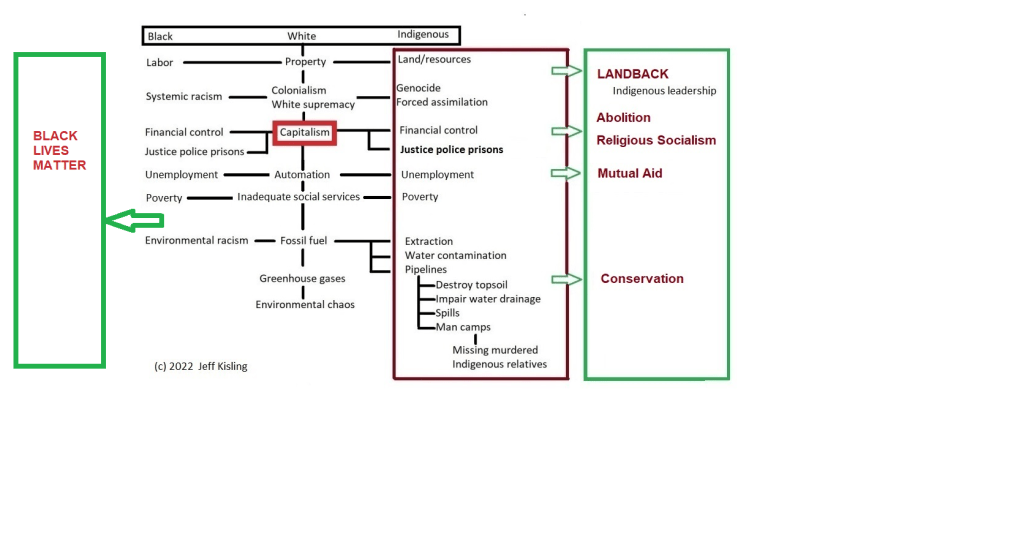
The two major themes of justice work I have been forced to spend so much time and effort on are trying to convince White people to understand their privileges, and why capitalism is so wrong and must end. Capitalism is the system that enforces White supremacy and power, enforces racism. Capitalism is economic slavery of those of any race who are of a certain class, i.e. struggling for basic necessities. Which is ironic because the enslavement of people of color, and the theft of land and natural resources from native peoples was and continues to be the foundation of White supremacy and capitalism.
A system that requires money for any purchase or service is morally reprehensible because that denies anyone without money to obtain basic necessities. How have we accepted millions of children going hungry? Millions denied food, housing, education, healthcare? I am so invested in the work of Des Moines Mutual Aid because we are doing what we can to feed the hungry and provide shelter for the houseless.

I’m always looking for other sources that can express this better. Because this message is critical. The following is from the interview “Bree Newsome Bass: ‘Capitalism Has to Collapse’” by Kelly Hayes, Truthout, January 20, 2022.

“So, the goal is to have that resilient plan, that plan for resiliency there and to have those connections and community there as kind of like our base of operation, while we organize and resist and fight.”

As I’ve been saying and doing, those resiliency connections and community are Mutual Aid.

On a personal note, I have an indirect connection to Bree.  My friend Todd Zimmer, who trained me to be an Action Leader in the Keystone Pledge of Resistance in 2013 and led the Change the Course training I attended in Louisville, was then working for the Rainforest Action Network.  Much of that training focused on nonviolent civil disobedience, direct action planning and execution.

Todd also helped organize the act of civil disobedience by Bree Newsome, who was arrested after she scaled the flagpole to remove the confederate flag at the South Carolina State House June 28, 2015.

The NAACP praised Newsome as a “courageous young woman” and asked for leniency from prosecutors.

“We commend the courage and moral impulse of Ms. Newsome as she stands for justice like many NAACP activists including Henry David Thoreau, Dr. Martin Luther King Jr. and numerous Americans who have engaged in civil disobedience,” it said. “The NAACP calls on state prosecutors to consider the moral inspiration behind the civil disobedience of this young practitioner of democracy.”

“On June 28, in the early hours of the morning, 30-year-old helmeted activist Bree Newsome scaled the flagpole at the South Carolina State House and cut down the controversial Confederate flag, which was first raised there in 1961, almost 100 years after the Civil War.”

Bree Newsome’s Superwoman-style, Confederate flag pole climb was an artistic statement, the conversation, July 1, 2015


Open Letter to Sports Page

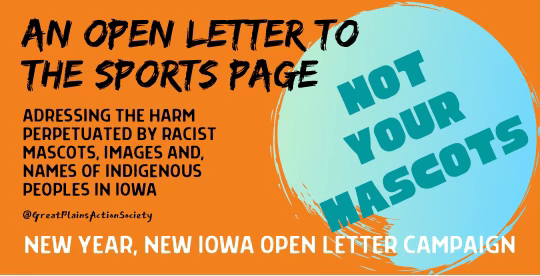
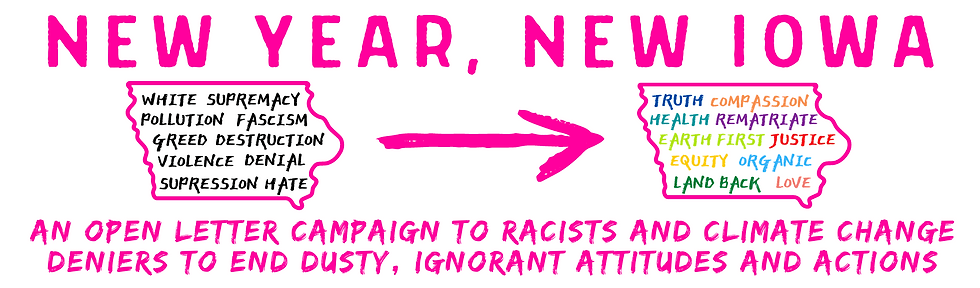
I’ve been writing about the New Year, New Iowa Open Letter Campaign of my friends at the Great Plains Action Society. See: Your Invitation to be an Ally. At the end of this is a statement by GPAS related to a racist image found in the Sports Page restaurant in Indianola.

I called the Sports Page, where someone took a message from me, and passed it on to one of the owners. The message returned was they didn’t know anything about a mascot. Which was an unfortunate way I put the message to them, but I’m sure they got the point of follow-up concern about the imagery in their restaurant.


Great Plains Action Society makes the following points response to this issue, applicable to all persons or establishments that continue to display racist imagery.

THIS IS NOT A MATTER OF ‘OPINION’: FOR DECADES, MULTIPLE SCIENTIFIC STUDIES HAVE SHOWN THAT THESE IMAGES AND MASCOTS HARM INDIGENOUS CHILDREN. Exposure to this racist imagery also correlates to increasing negative views of Native people in non-Native children. Too often this issue gets brushed aside as a matter of “differing opinions” about what is or is not “offensive.” To be very clear, this is not about what is or is not offensive, or whether there is consensus about this among the vastly diverse Indigenous communities. Experts have weighed in and it is clear that children mascots hurt Indigenous children, full stop.

I spent my entire adult life working in a children’s hospital and this concerns me. Following is part of a policy statement on the Impact of Racism on Child and Adolescent Health from the American Academy of Pediatrics.

Racism is a “system of structuring opportunity and assigning value based on the social interpretation of how one looks (which is what we call ‘race’) that unfairly disadvantages some individuals and communities, unfairly advantages other individuals and communities, and saps the strength of the whole society through the waste of human resources.” Racism is a social determinant of health that has a profound impact on the health status of children, adolescents, emerging adults, and their families.  Although progress has been made toward racial equality and equity, the evidence to support the continued negative impact of racism on health and well-being through implicit and explicit biases, institutional structures, and interpersonal relationships is clear. Failure to address racism will continue to undermine health equity for all children, adolescents, emerging adults, and their families.

The Impact of Racism on Child and Adolescent Health, FROM THE AMERICAN ACADEMY OF PEDIATRICS, POLICY STATEMENT, AUGUST 01, 2019

GOOD OR BAD INTENTIONS ALONE DO NOT DETERMINE THE WRONGNESS OR RIGHTNESS OF AN ACTION. So often we see people claim that because they have good intentions, their use of racist imagery and mascots is not problematic. However, it’s still problematic, because regardless of an individual’s intention, it is still an act that harms children.

RETIRING MASCOTS AND DISCARDING STEREOTYPED IMAGE IS NOT AN ERASURE OF ANYONE’S IDENTITY; IN FACT, THE EXISTENCE OF THESE MASCOTS IS A CONTRIBUTING FACTOR TO INDIGENOUS ERASURE. Many supporters of racist images and mascots are under the impression that retiring them is taking away from their identity because being a [insert racist mascot here] is a huge part of who they are. It’s unfortunate that people have built their identity around “being” a [racist mascot], because identifying as something that harms children and society in general is problematic, and that identification should especially cease when they learn about the harmful effects on children.

An Open Letter to Amanda and Joe Ripperger, the owner of the Sports Page restaurant in Indianola, and all other owners of establishments with racist mascot decor:

It was brought to the attention of Great Plains Action Society that an Indianola community member contacted the owners of the Sports Page restaurant about their racist “R*dman” mascot sign hanging at their establishment. Though the owners, Amanda and Joe Ripperger, said they took time to think about removing the sign, they eventually declined to do so based on typical, problematic reasoning. The reasons they gave are among the most common rationalizations in defense of racist images and mascots and so we are taking this opportunity to, once again, clarify some points about the racist images and mascots “debate.” We are including text from their response to the community member for context and transparency. From the community member:

They approached the restaurant owners and this was their answer:

On our first request to remove their racist signs, we were told they were “decor,” nostalgia and history.

In a second response the Ripperger’s said:

I am very sorry for your families hurt that you have experienced in our community, and we do hear your concerns. We have decided that the signs will remain up. Our restaurants are a piece of Indianola’s community, but most importantly they are ours. We have owned and operated these restaurants for 10 years on January1 and we are so proud to be part of the Indianola community that it seems like we would be erasing something that is near to our hearts. Nothing hung on our walls is meant to be derogatory. We hope that you and all our customers know that.

Thank you for sharing your perspective with us.

Sincerely,

Amanda and Joe Ripperger

We believe they would be sensitive to additional feedback and might hopefully change their position. Great Plains Action Society

#greatplainsactionsociety #NotYourMascot #NewYearNewIowa

Your invitation to be an ally

I’ve been blessed to have had many opportunities to become friends with a number of native people, including those from the Great Plains Action Society (GPAS). I’ve been involved in Des Moines Mutual Aid for the past two years. My friend Ronnie James has been mentoring me about Mutual Aid and is a member of GPAS.

The following are ways you can join in this work. New Year/New Iowa is explained below.

We have always appreciated when allies and accomplices approach us to ask how they can be of help. Things can be complicated, and it is considerate to be mindful of how one engages. This is absolutely a situation that we request your help with. We need your voices to make something happen.

Great Plains Action Society

Copy of New Year, New Iowa (2).png

Resolutions are not just for January! As we are gathering momentum for the daunting work 2022 has in store for us, we would like to invite you to join us in ushering in a New Year/New Iowa. Things need to change. The harm we are doing to the environment is devastating. The attack on truth in public education is a contributing factor to our attempted erasure. The ongoing use of racist mascots harms children, and perpetuates dehumanization. Iowa has a lot of issues. The work we need to do to make Iowa better is not going to be easy. But it can be done, and the best chance we have is working together. And that is why we are coming to you with our Open Letter Campaign.​

Over the course of 2022, we will be sharing with you Open Letters we’re addressing to those who are in positions of power. We’re doing this in the format of an Open Letter for a few reasons. First, these issues are important, and this is an opportunity to explain the issues to a broader audience. The more people who understand what is going on, the better. Second, we need numbers. We are mighty, but we are few. The more people we have putting pressure on those with power, the more likely we are to see results. And finally, it’s something that you can do that doesn’t require much of you. Although it’s only February, 2022 can already feel exhausting. The thought of having to leave home to do things can be overwhelming, even frightening as COVID is still a very real threat. But this is something you can do from home, without investing energy you are probably running low on. Working with us can be as simple as tweeting out a hashtag. But it can be more too, if you’d like. It’s an opportunity to write the words that express your frustration and join them in an agitated choir. This is a chance to remind yourself that you deserve to be heard and that you are capable of taking action that affects change.​

We have always appreciated when allies and accomplices approach us to ask how they can be of help. Things can be complicated, and it is considerate to be mindful of how one engages. This is absolutely a situation that we request your help with. We need your voices to make something happen. Our land, our water, our children are under attack. The truth is under attack. We need to stand strong together to create the change that so desperately needs to happen. This Open Letter Campaign is a means for us to unite our voices to call for change. You are welcome to use the words we share, or to express your own. If all you have it in you to do is share an article or use a hashtag, every little bit helps. If you have letters of your own you’d wish to share with us, we’d love to hear from you! Again, we look forward to putting our voices together with you, to call for the New Year/New Iowa we so desperately need. Thank you.

Contact

The New year, New Iowa Open Letter Campaign is led by Jessica Engelking. If you have ideas or thoughts to share, please contact her at jengelking@greatplainsaction.org 

We look forward to putting our voices together with you, to call for the New Year/New Iowa we so desperately need. Thank you.

Great Plains Action Society

I live in Indianola, where the Sports Page restaurant is located. Imagery at the Sports Page is the subject of the Open Letter that I’ll be writing about soon.

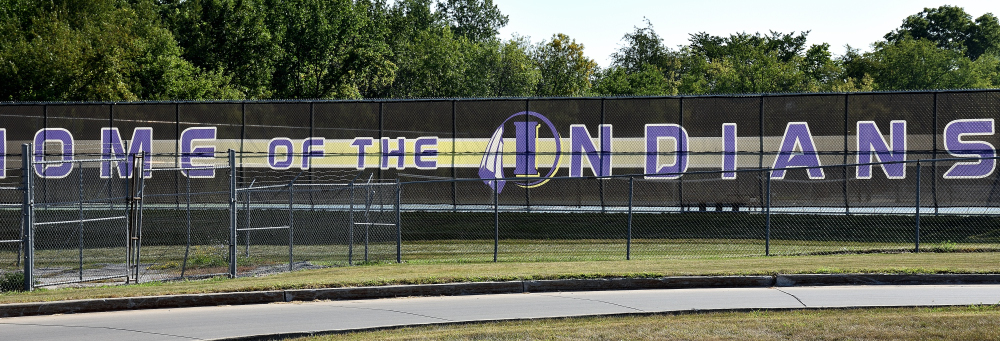
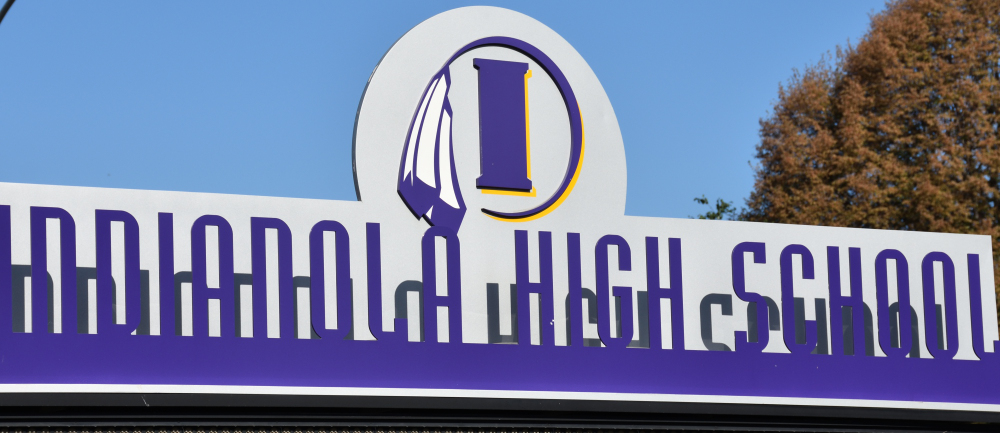
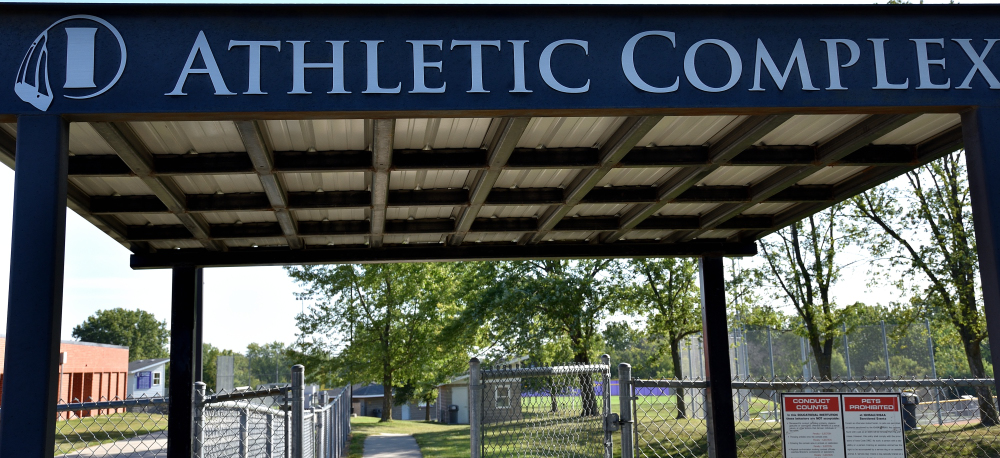
Ronnie James (mentioned above) also once lived in Indianola. He wrote about his experiences with the Indianola School board when he asked them to stop using native imagery for their sports teams. Knowing I am a photographer and live in Indianola, he asked me to take some photos of that imagery, which I was glad to do.

See: Battle of the Indianola “Indians”


#greatplainsactionsociety #NotYourMascot #NewYearNewIowa

Quakers for Abolition Network

The tragic news of the recent killings of police officers ratchets up calls for more policing. Demonizing those of us who call for defunding the police. New York City’s mayor refers to defunding the police as a bumper sticker.

President Joe Biden’s meeting with New York City Mayor Eric Adams on February 3, 2022, comes as cities across the U.S. face a rise in violent crimes and represents a politically awkward shift in how the Democratic Party is approaching policing and criminal justice.

As a Senator in the 1990’s, Biden was known to be tough on crime, and Adams, a former NYPD captain, has been vocal about his support for police and the criminal justice system. They both find their long-held positions on policing and crime back in the Democratic mainstream, as some mayors and elected officials have shifted their stance on crime and the “defund the police” movement over the past several months.

During his meeting with Adams, Biden expressed his opposition to defunding the police as he said, “the answer is not the defund the police, it’s to give you the tools, the training, the funding, to be partners [and] to be protectors.”

Joe Biden, Eric Adams Meeting Marks Democrats U-Turn on ‘Defund the Police’ BY MATTHEW IMPELLI, Newsweek, 2/3/22

As an abolitionist, it feels like menace is in the air. I’m reminded of my teen days when I resisted the draft while the Vietnam war was raging. It was great to be living in the Scattergood Friends School community then.

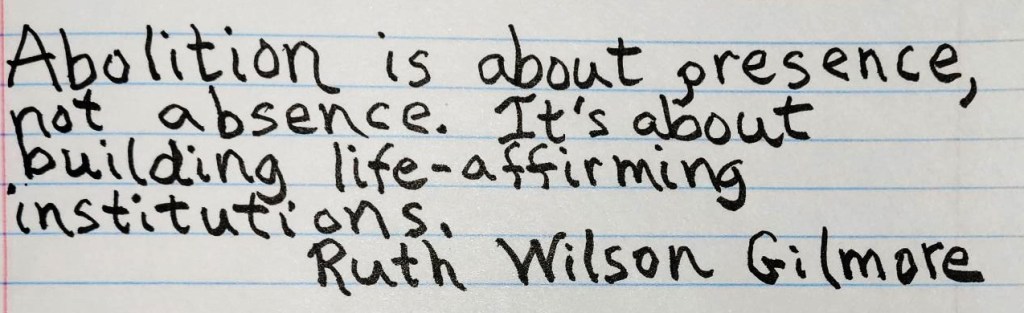
Most people think about abolition in terms of what it is against. Against the institution of slavery, against police and prisons. I like to think about what abolition is for.

I am a member of the Quakers for Abolition Network. Mackenzie Barton-Rowledge and Jed Walsh have been organizing this effort. Following are two articles published in Western Friend. To join the Quakers for Abolition Network, email Jed Walsh (jedwalsh9 [at] gmail.com) or Mackenzie Barton-Rowledge (mbartonrowledge [at] gmail.com).

Mackenzie: Let’s start with: What does being a police and prison abolitionist mean to you?

Jed: The way I think about abolition is first, rejecting the idea that anyone belongs in prison and that police make us safe. The second, and larger, part of abolition is the process of figuring out how to build a society that doesn’t require police or prisons.

M: Yes! The next layer of complexity, in my opinion, is looking at systems of control and oppression. Who ends up in jail and prison? Under what circumstances do the police use violence?

As you start exploring these questions, it becomes painfully clear that police and prisons exist to maintain the white supremacist, heteronormative, capitalist status quo. The racial dynamics of police violence are being highlighted by the recent uprisings and the Black Lives Matter movement.

We are in the same place, with a call to imagine a culture radically different than the one in which we live. Abolishing police and prisons, like abolishing slavery, would change the structure of our society: dramatically decreasing violence and undoing one set of power relationships that create domination and marginalization. And in place of this violence, we could, instead, have care.

Abolish the Police by Mackenzie Barton-Rowledge and Jed Walsh, Western Friend, Nov 2020

Perspectives from the Quakers for Abolition Network

In late 2020, the two of us wrote an article for this magazine, called “Abolish the Police.” Through writing the piece, we realized we wanted to convene a larger space where Friends with an interest in police and prison abolition could have conversations with one another. Quaker abolitionists today face major pushback from our Meetings; we hoped that drawing Friends together would support and strengthen our work.

In this context, the Quakers for Abolition Network is being born. We are a collection of Friends from at least five Yearly Meetings; we range in age from high school to our 80s; we are disproportionately queer and trans. While AFSC and FCNL staff are participating, this is a grassroots project without any formal connections to existing organizations. We are in the process of defining our mission statement, structure, and our methods for addressing white supremacy when it shows up in our work, while building relationships with each other as we go. Below, four Friends write about their approaches to abolition, their lessons, and their visions for where Quakers might be headed.

Jeff Kisling: Mutual Aid and Abolition

I grew up in rural Iowa, where there was very little racial diversity and interactions with police and the court system were rare. About ten years ago, I was blessed to become involved with the Kheprw Institute, a Black youth mentoring and empowerment community. I’ll never forget how shocked I was when a Black mother broke down in tears, explaining how terrified she was every minute her children were away from home. It was obvious that every other person of color in the discussion knew exactly what she was saying.

After retiring, I was led to connect with Des Moines Mutual Aid, a multiracial organization founded to support houseless people. For over a year, I’ve helped my friends fill and distribute boxes of donated food, while continuing to learn about the framework of mutual aid.

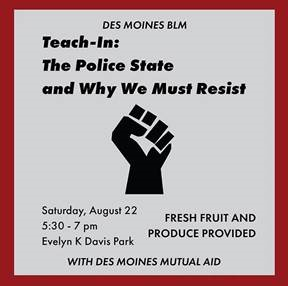
To me, mutual aid is about taking back control of our communities. Besides the food giveaway, we support houseless people and maintain a bail fund to support those arrested agitating for change. We also work for the abolition of police and prisons.

To join the Quakers for Abolition Network, email Jed Walsh (jedwalsh9 [at] gmail.com) or Mackenzie Barton-Rowledge (mbartonrowledge [at] gmail.com).

Mackenzie Barton-Rowledge and Jed Walsh: Introducing the Quakers for Abolition Network, Western Friend, Sept 2021

Black Lives have always mattered

Every time I hear this interview, I am reminded of some of my own experiences related to Black Lives Matter.

This is a dream unrealized. MSNBC

Dr. Clarence Jones, former speechwriter and counsel to Martin Luther King, Jr., reflects on what Dr. King would think about the nation today.
Jonathan Capehart
What would Martin Luther King say about what’s going on in the United States today?
Dr. Clarence Jones
He would say Black lives have always mattered, always matter. The challenge has been for us to get the majority of society to recognize and to respect that.

These stories are about white Friends recognizing and respecting that Black Lives have always mattered.

2014

Racial justice, and Black Lives Matter, need vocal, visible and spiritual support from White Quakers now. How often has the Underground Railroad been invoked during discussions of Friends and enslavement and racial justice? Have you wondered what you would have done if you had been alive then? Twenty years from now what will you remember when you think back to this time and what you did, or did not do?

When I was living in Indianapolis, I attended the peace vigil every Friday afternoon in downtown Indianapolis. There were usually just three or four attending. We held signs about peace, including the Friends Committee on National Legislation’s ‘War is Not the Answer’.

I had been thinking a lot about peace building and feel that addressing economic, environmental and racial injustice is what constitutes peace building today in the United States.

After Michael Brown’s killing in 2014, and the ongoing killings of people of color, there were multiple demonstrations in Indianapolis.

I changed my message to Quakers Black Lives Matter. I made the sign below to take to our weekly peace vigil in front of the Federal Building in downtown Indianapolis. I was very unsure of how that sign would be received by people of any race, but felt called to do it

However, I had forgotten the first time I carried the sign to the vigil (I didn’t own a car) was the weekend of Indy Black Expo. As I was walking to the Federal Building and entered the downtown mall, I was suddenly in the middle of thousands of people of color. I was unsure of what the reaction would be. I was tempted to turn around and go home. But I mostly got looks of surprise and puzzlement. No one said anything then (there was music, food, etc.).

But during the hour of the peace vigil that day, there were a lot of interactions, both with people driving and those walking past our group of three, and they were all positive. Many people said “thanks” with smiles. Someone said, “that’s a good sign, a damn good sign”. “Our lives DO matter”, said another.

Carrying the sign on the way home after the peace vigil, I was surprised by the sound of an air horn, and looked up into the cab of the tractor trailer passing by, where two young black men were grinning and waving their arms.

Another day a young Black man stopped, got out of his car, and walked up to us. I wasn’t sure how that was going to go. But he said, “a white man holding a Black Lives Matter sign”. I said, “yes, a white man holding a Black Lives Matter Sign”. He started to go away, but returned and asked, “why are you doing it?” I told him about the Kheprw Institute (KI) that mentors Black youth that I had been involved with for several years now. And how those kids had become friends of mine. And I want a better life for them. He nodded, then said it was a brave thing to do. I only mention this to show how other people might see what you do in public. He went on to say he felt justice had to be grounded in faith.

Many times a car of people of color would honk, and people smile and cheer and wave their hands. Many times take photos with their phones.

Another day an energetic young Black man came and said “Quakers, Black Lives Matter”, and began to take a video of us, then had a friend take more video as he stood with his arms around our shoulders, narrating all the time–“Quakers”, “Black Lives Matter”.

Bear Creek Friend Jenny Cisar created this decal and made 100 copies, which people were eager to obtain.

JennyBLM

Kathy Hall, of Whittier meeting, made this sign. Pictured is the Peace and Social Concerns Committee of Iowa Yearly Meeting (Conservative).

Peace and Social Concerns Committee of Iowa Yearly Meeting (Conservative).

July 12, 2016

Friends, this is a pivotal moment.  Silence means supporting the status quo, which means supporting white privilege and racial injustice.  Black Lives Matter is a nonviolent movement seeking to correct these injustices.

We are all aware of Friends’ history of speaking out publicly to witness against injustice.  Many of us continue our weekly peace vigils and display our “War is Not the Answer” signs.  Peace making now means speaking out for racial justice.

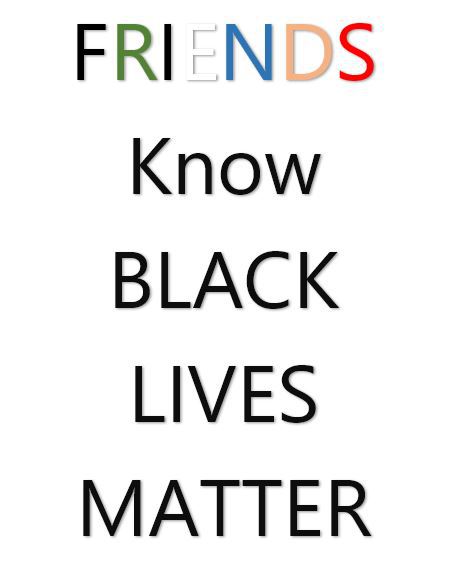
Here is one graphic you can make a sign from.

Friends, our small and rural communities especially need to hear these messages

This is the time to stir up uncomfortable conversations.  My black friends wonder why white people are not helping them.  We need to show visible signs of support.   We need to attend the Black Lives Matter rallies.  We need to put Black Lives Matter signs on our meetinghouse and home lawns.

Dallas surgeon Brian Williams, who helped care for the police shot there, said “I understand the anger and the frustration and distrust of law enforcement. But they’re not the problem. The problem is the lack of open discussions about the impact of race relations in this country. . . . The killing, it has to stop.’’

Please move away from the sidelines and unite together — regardless of your faith or religious practice — to seek an end to hatred and violence . . . What happened to our family is part of a larger attack on Black and Brown bodies . . . We call on all people, public officials, faith leaders and Americans from all walks of life to help address the festering sores of racism as it spurs an unforgiving culture of violence.” -Rev. Waltrina Middleton, longtime organizer, whose cousin Rev. Depayne Middleton, was killed in the massacre at Emanuel AME Church

2016

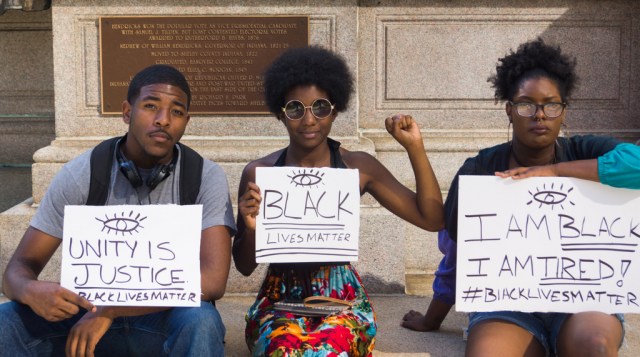
I’ve often looked at, and thought about this photograph I took at a Black Lives Matter protest in Indianapolis in July, 2016.

It was a warm, sunny summer evening, around sunset.  I arrived about half an hour early and there weren’t many people gathered on the lawn of the Indiana Capitol, yet.

I almost walked past the trio above, but something made me stop.  I thought they created an excellent image of the Black Lives Matter Movement…poised, stressed and tired, respectful, determined, nonviolent, hurt, angry, but very, very intent and serious. 

It was important to me that I ask for their permission to take this photo, something I didn’t usually do then at public events. These days I no longer take photos that show people’s faces, because law enforcement uses such photos to bring charges.

They each considered my request for a moment, then each, with varying degrees of enthusiasm, indicated that would be permissible.  I knelt in front of them, framed and then shot the photo, and thanked them.  Silent nods, but also slight smiles.

I like each of the facial expressions, the story each person’s posture tells, and the raised fist salute.  I like the sense of support, leaning in toward each other.  I like the messages on the signs.

But the reason I keep coming back to this is because I also feel a real challenge from them to me/us.  I think they are saying “we’ve taken the time and effort (and I would say courage) to come out in public to support our community and each other, and demand that these injustices stop.”

And they seem to be asking me/us, “what are you going to do?  Do you have a little courage yourself?  Will you make yourself, and others uncomfortable by speaking the truth about these things?”

A Hierarchy Resister

Recently I described why Quakers should dismantle vertical hierarchies. The hierarchies that structure everything Western peoples live, work, and worship by. Every vertical hierarchy creates structures where one, or a select few, take power and benefit from those beneath them. We have been lulled into accepting these structures as the way things are. Such as a supervisor over workers. But the consequences of these hierarchies are more extensive and significant than often realized.

Des Moines Mutual Aid

Reflecting on what I last wrote, Hierarchy and Quakers, I realize I shouldn’t have made such a sweeping statement. When I wrote that means Black, Indigenous, and other people of color (BIPOC) don’t want to be associated with these Friends, I was speaking about the BIPOC people I know. By associate I meant there will be this awareness that there will be frustrations when those who are aware of hierarchies try to work with those who aren’t. Might make it impossible in some cases.

I say this from my two years of experience in a Mutual Aid community. This is not some theory I’ve read somewhere. This has changed me so much I now have trouble being in hierarchical situations myself.

I am a hierarchy resister.

I spend so much time praying and writing about Mutual Aid because I want to share what I am learning with Friends. I believe this can energize our peace and justice work. Mutual Aid is the framework that models the Beloved communities Friends strive to create. Gets to the roots of injustice. Some of the articles I’ve written about Mutual Aid can be found here: https://landbackfriends.com/mutual-aid/

  • My introduction to Mutual Aid was in response to a strong Spiritual leading.
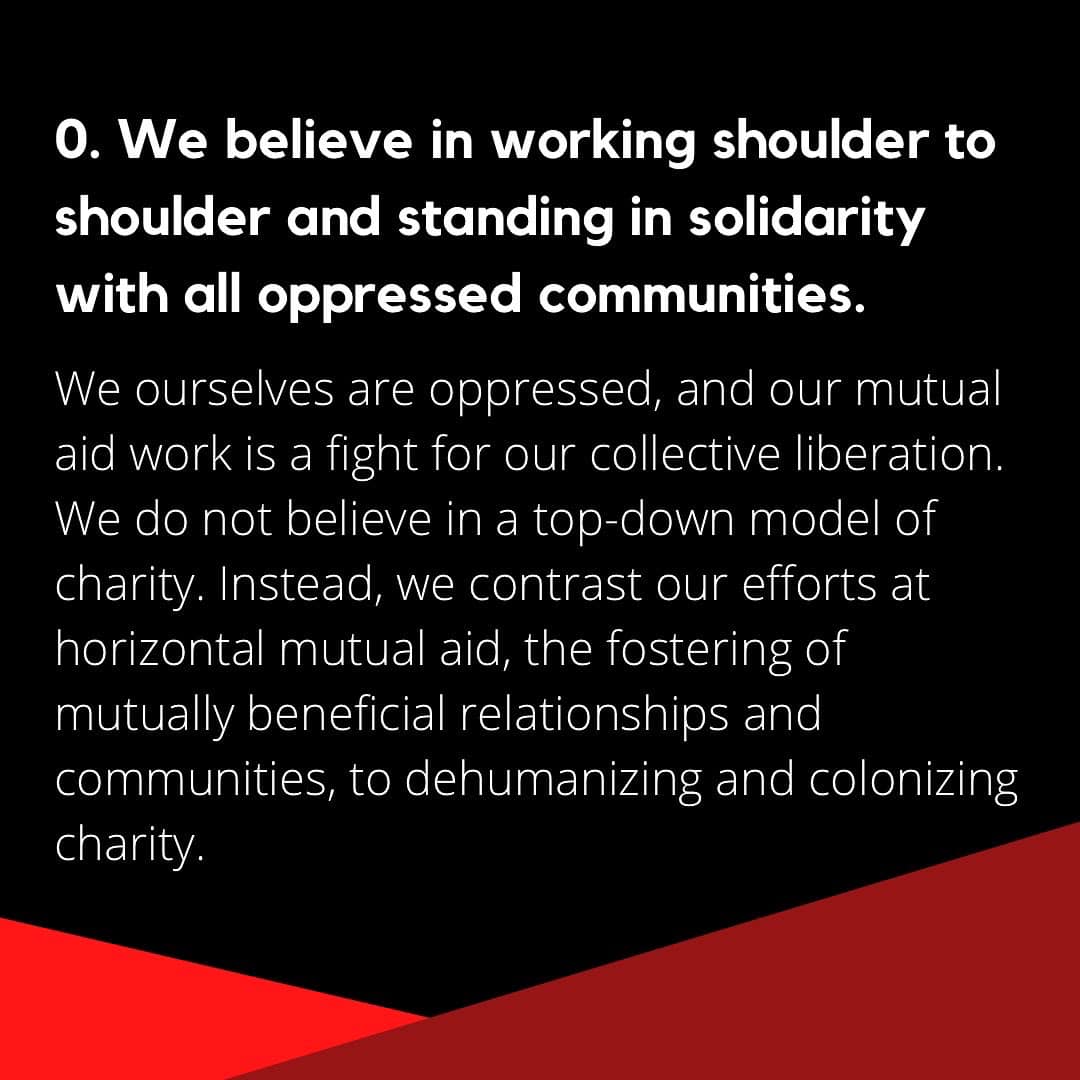
  • Mutual Aid is NOT charity.
  • Maintaining a flat or horizontal hierarchy is what makes Mutual Aid work.
    • MUTUAL is the key.
  • Removing the artificial hierarchies eliminates grouping people by race, class, gender, education, etc. There cannot be white supremacy, for example, if there is no vertical hierarchy.
  • Mutual Aid resists authoritarianism and colonization.
  • I believe Mutual Aid is the Quaker way of being in the world.

Mutual Aid represents a paradigm shift away from capitalism, white supremacy, insurance-controlled healthcare, militarized police and punishment oriented judicial system, prisons, education that resists teaching critical thinking and promotes white supremacy, and domestic and global militarism. Away from commodifying all natural resources and continued extraction and burning of fossil fuels.

Queries related to Mutual Aid
Do we recognize that vertical hierarchies are about power, supremacy and privilege? What are Quaker hierarchies?
Do we work to prevent vertical hierarchies in our peace and justice work?
What are we doing to meet the survival needs of our wider community?
How are we preparing for disaster relief, both for our community, and for the influx of climate refugees?
Are we examples of a Beloved community? How can we invite our friends and neighbors to join our community?

What Is Mutual Aid?

Mutual aid is collective coordination to meet each other’s needs, usually from an awareness that the systems we have in place are not going to meet them. Those systems, in fact, have often created the crisis, or are making things worse. We see examples of mutual aid in every single social movement, whether it’s people raising money for workers on strike, setting up a ride-sharing system during the Montgomery Bus Boycott, putting drinking water in the desert for migrants crossing the border, training each other in emergency medicine because ambulance response time in poor neighborhoods is too slow, raising money to pay for abortions for those who can’t afford them, or coordinating letter-writing to prisoners. These are mutual aid projects. They directly meet people’s survival needs, and are based on a shared understanding that the conditions in which we are made to live are unjust.

There is nothing new about mutual aid— people have worked together to survive for all of human history. But capitalism and colonialism created structures that have disrupted how people have historically connected with each other and shared everything they needed to survive. As people were forced into systems of wage labor and private property, and wealth became increasingly concentrated, our ways of caring for each other have become more and more tenuous.

Today, many of us live in the most atomized societies in human history, which makes our lives less secure and undermines our ability to organize together to change unjust conditions on a large scale. We are put in competition with each other for survival, and we are forced to rely on hostile systems— like health care systems designed around profit, not keeping people healthy, or food and transportation systems that pollute the earth and poison people— for the things we need. More and more people report that they have no one they can confide in when they are in trouble. This means many of us do not get help with mental health, drug use, family violence, or abuse until the police or courts are involved, which tends to escalate rather than resolve harm.

In this context of social isolation and forced dependency on hostile systems, mutual aid— where we choose to help each other out, share things, and put time and resources into caring for the most vulnerable— is a radical act.

Dean Spade. Mutual Aid: Building Solidarity During This Crisis (and the Next) (Kindle Locations 104-120). Verso.