My previous postwas a description of the beginnings of my foundational stories, which related to the intersection between my Quaker faith, protecting Mother Earth, and photography. The intention of this series of articles is to show how these foundational stories changed over time.
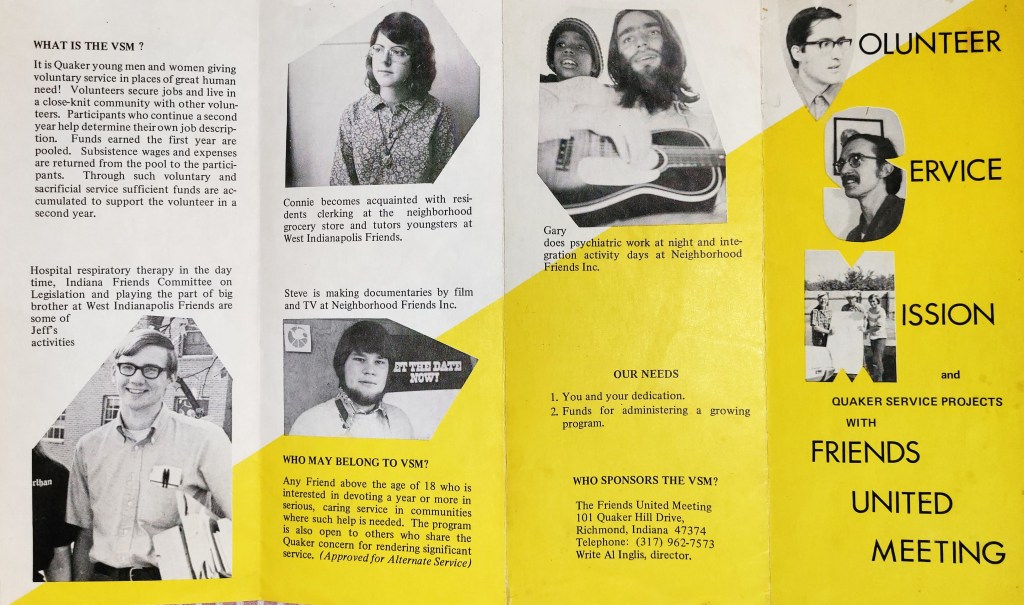
The beginnings of the stories were about my struggles and eventual decision to resist the draft. Although I wasn’t prosecuted for that felony offense, there were other consequences. During the time it took for my family to adjust to my intention to resist the draft, I joined the Friends Volunteer Service Mission (VSM) in inner city Indianapolis in 1971. This was a Quaker part of my foundational story.
Quaker
VSM was set up to provide alternative service work for conscientious objectors. The two-year program involved working at the type of job that qualifies for alternative service, most often in a hospital. And saving enough money from that job to support yourself to work full time in the community. Others, not doing alternative service, were also able to apply.
VSM was impactful in my life in two ways. The work I found was in respiratory therapy, then called “inhalation therapy”. I received on-the-job training to do this work during my first year at VSM. After my VSM experience, I obtained a degree in respiratory therapy and worked for about five years as a neonatal respiratory therapist. And for the rest of my career worked in an infant pulmonary function research lab.
VSM was also where I began to learn important (foundational) lessons about community organizing, Quaker faith in action. Others at VSM did what I thought of as traditional organizing, which included many meetings about setting up a neighborhood health clinic or trying to prevent the construction of an interstate highway through the local community.
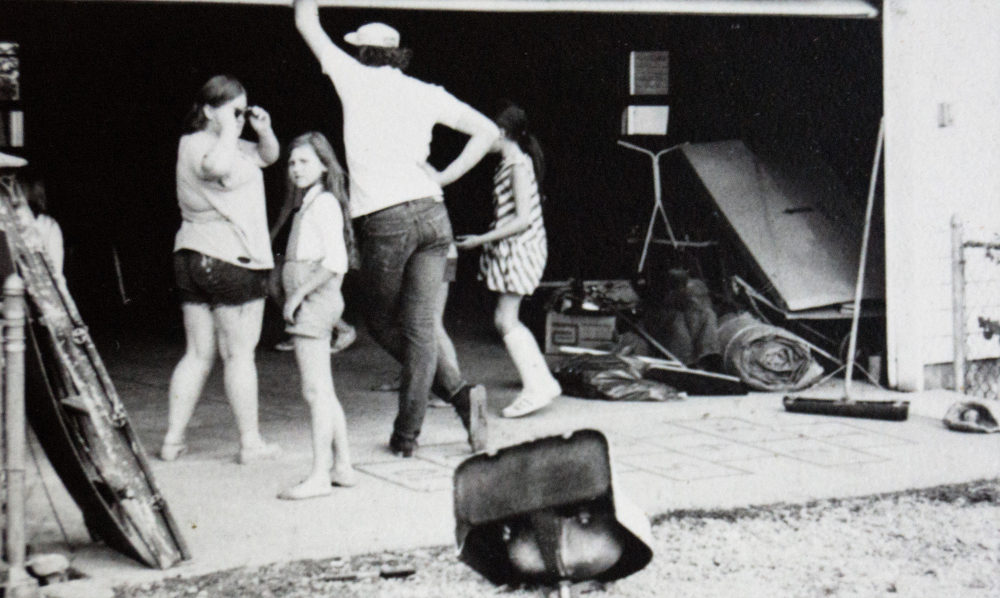
I quickly found I didn’t like that type of community organizing. And felt a little guilty that I didn’t. But I eventually discovered what kind of community organizing I was led to do. During my first year at VSM I spent a lot of time with the kids in the neighborhood. The VSM house was next to Second Friends Church, which had a nice yard where we played games like capture the flag. One of our VSM projects involved setting up a basketball hoop in front of the garage of the church.
There were no programs for kids in the neighborhood and I really enjoyed working with them. When thinking about what to do during my second year at VSM, it became clear I should continue to work with the kids full time. We organized a 4-H club, went swimming, and rode bicycles to shopping centers, where we played “wall ball” on the walls at the back of the stores.
This would determine my approach to social justice work for the rest of my life. What was important was being in the communities where the work was to be done. And to focus on building friendships.
Photography
At VSM, there became another way photography became important in my life. I knew how to set up a basic darkroom and did that in the VSM house bathroom. Photography became one of the kids’ favorite things to do. We would ride around the city on bicycles with a couple of (film) cameras. Then develop the negatives and print the photos. I can still see the wonder in their faces as the image gradually appeared on the paper (in the red light of the darkroom).
Now, fifty years later, on two separate occasions, kids from that time found me on Facebook. They both talked about those darkroom experiences.
Protecting Mother Earth and photography
During this time in Indianapolis (early 1970’s) I didn’t have a car, simply because I couldn’t afford one. So, riding a bicycle everywhere, including to the hospital for work, was my routine.
But moving to Indianapolis had a major (foundational) impact on me, which influenced the rest of my life. I couldn’t believe how foul the air was. I saw clouds of fumes pouring out of the exhaust of every car. This was before the availability of catalytic converters, which cut out the visibility of the exhaust, but didn’t stop the greenhouse gas emissions. No one was talking about global warming and greenhouse gases then.
But I had a profound vision of clouds of pollution blocking the view of my beloved mountains. Specifically, obscuring Long’s Peak in this photo I took and developed around the time I moved to Indianapolis. That horrific vision stayed with me the rest of my life. As a consequence, I refused to have a personal automobile for the rest of my life. (Protecting Mother Earth).
Long’s Peak, Rocky Mountain National Park, Colorado
These are more of the ways my foundational stories are about the intersection between my Quaker faith, protecting Mother Earth, and photography.
Recently I heard a Quaker friend speak about returning to the beginning of a foundational story in our lives. And then think about how that story changed as we grew older. And how we view it today.
That was amazing because I had begun to do just that before she spoke. My foundational story is related to the intersection between my Quaker faith, protecting Mother Earth, and photography. This combination has remained a powerful, yet evolving, influence throughout my life.
I’m praying about my foundational story for several reasons. Thinking of how drastically our world has changed since the beginning of my story. And wondering how I might be most helpful or effective now. Because my Quaker faith, care for Mother Earth, and photography have always been about doing what I’m led to do to help all my relations.
I often think of this quote:
If we are to find a new kind of good life amid the catastrophes these myths have spawned, then we need to radically rethink the stories we tell ourselves. We need to dig deep into old stories and reveal their wisdom, as well as lovingly nurture the emergence of new stories into being.
So, this is me radically rethinking the stories I tell myself (and you). We are being forced to nurture the emergence of new stories into being because of the catastrophes that are ever worsening because of environmental devastation.
As I explain in the following, there have been times when I’ve kept a record of what I was thinking and feeling, documenting my foundational stories. Of course, I didn’t have a way to share what I was writing in my journal at the beginning of my story. That is one difference in how my story has changed, now that there are so many ways to share writings on the Internet. This has stimulated me to write nearly daily blog posts for more than the past five years. I don’t know how many people read them. Although the main reason has always been for me to think through, pray about, what was going on at the time.
Now I have ways to share what I was learning about spirituality with others. Some of this might be helpful for the declining number of those involved in organized religion. This is the Quaker piece of my story.
I began a journal in 1969 when I was a senior at Scattergood Friends School. (see: journal). This is my first journal entry.
Sept 29, 1969
Journal, Sept 29, 1969
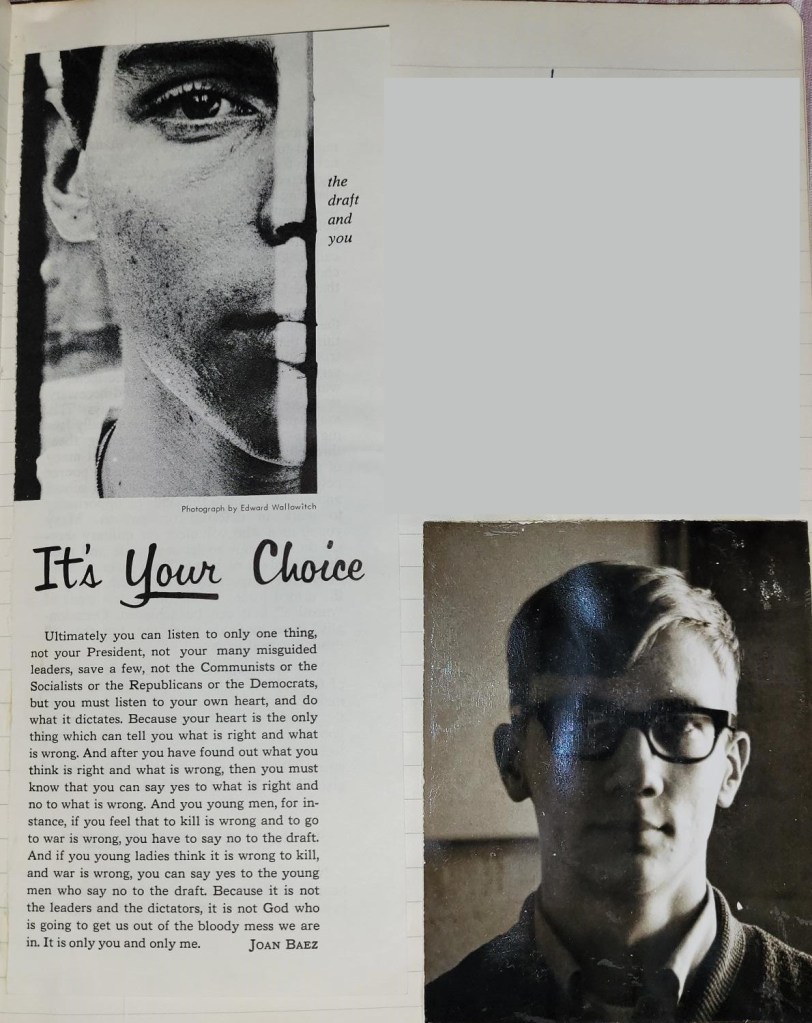
I sometimes included printed material in my journal. The following, It’s Your Choice, was written by Joan Baez, a folk singer and peace advocate. Which includes a photo of half of a young man’s face. I put a photo of myself at the time on the right-hand page of the journal entry for November 6, 1969. (Photography as part of my foundational story). Getting close to my eighteenth birthday, Nov. 21, 1969, when I would have to decide whether to register for the draft.
I would disagree with one thing she wrote. I believed it WAS God who was going to get us out of the bloody mess we were in, the Vietnam War.
Journal, Nov 6, 1969
It’s your choice Ultimately you can listen to only one thing, not your President, not you many misguided leaders, save a few, not the Communists or the Socialists or the Republicans or the Democrats, but you must listen to your own heart, and do what is dictates. Because your heart is the only thing which can tell you what is right and what is wrong. After you have found out what you think is right and what is wrong, then you must know that you can say yes to what is right and no to what is wrong. And you young men, for instance, if you feel that to kill is wrong and to go to war is wrong, you have to say no to the draft. And if you young ladies think it is wrong to kill, and war is wrong, you can say yes to the young men who say no to the draft. Because it is not the leaders and the dictators, it is not God who is going to get us out of the bloody mess we are in. It is only you and only me.
Joan Baez
Mother Earth
Anyone who has farmed is intimately connected to our environment. The first ten years of my life we lived on dairy farms. I took the beauty for granted and remember much of the time was taken up with hard work. We had a large pond with a narrow strip of land through the middle, dividing it in half. There were many times I was so frustrated when I got the herd of cows moving around the pond, heading to the barn for milking, when half of them would turn back, going the wrong way down that narrow strip on the pond. And of course, when I went to get them, others would turn around, going along the side of the pond. One day it was so muddy I stepped out of my boots and that was the last straw. I went to the house in tears, without the cows.
In those days (1950’s) living on the farm usually meant living with very little money. But my parents were able to rent small campers that we loaded with food and went camping for two weeks. We usually went to National Parks. One of the first was Rocky Mountain National Park, which immediately became our favorite.
Photography
As a teenager I was blessed to be led to photography. I was a lifeguard at the YMCA in Marshalltown, Iowa, one summer. To show appreciation (we didn’t get paid) we were taken to the YMCA in Racine, Wisconsin, where we were taught to scuba dive in the swimming pool there.
On the way home, we stopped in downtown Chicago. I was amazed to find a camera so inexpensive; I could buy it with the small amount of cash I had with me. In those days cameras didn’t have automatic focus or built-in light meters. So, you used a standalone light meter to see what settings were needed for the shutter speed and aperture, and manual set those on the camera. The focus was also set manually. The camera looked like this picture on a tee shirt I have.
I don’t know why I was so drawn to photography. My mother and brother were artists. I couldn’t draw or paint well, though I didn’t spend much time practicing. This is my portrait of my best friend, Randy Porter.
Part of it was the science of photography. My career was to be computer programming and medical research. But the exacting process of film and paper development was often frustrating. For example, the temperature of all the chemicals and water bath could not vary more than one degree without causing problems in creating the negative of the film. I developed this photo of Long’s Peak in a darkroom.
Long’s Peak, Rocky Mountain National Park, Colorado Jeff Kisling
I was born into a Quaker family and community, Bear Creek Friends, near Earlham, Iowa. So, I grew up seeing how faith was an integral part of people’s lives.
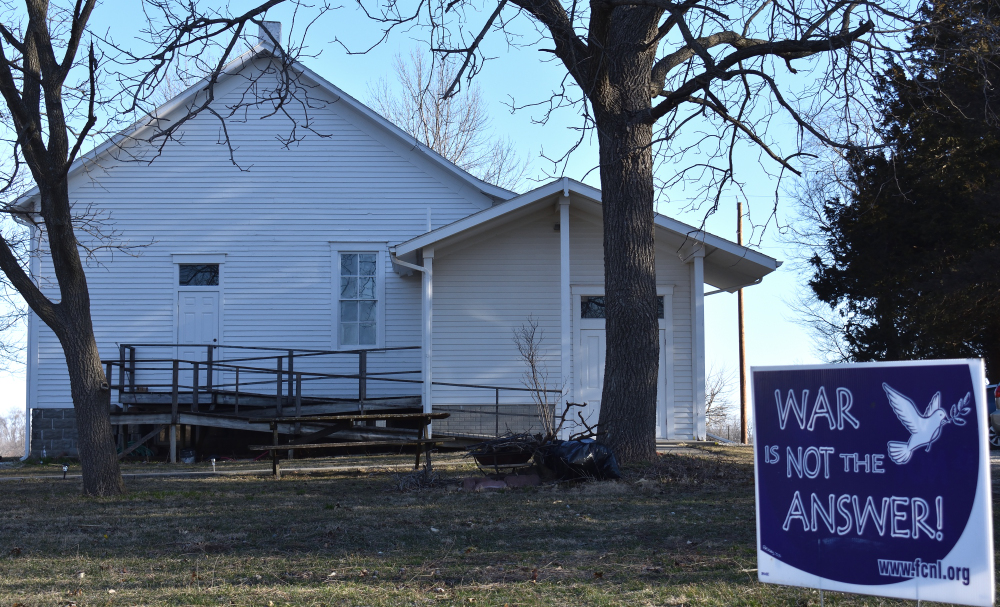
Bear Creek Friends Meeting near Earlham, Iowa
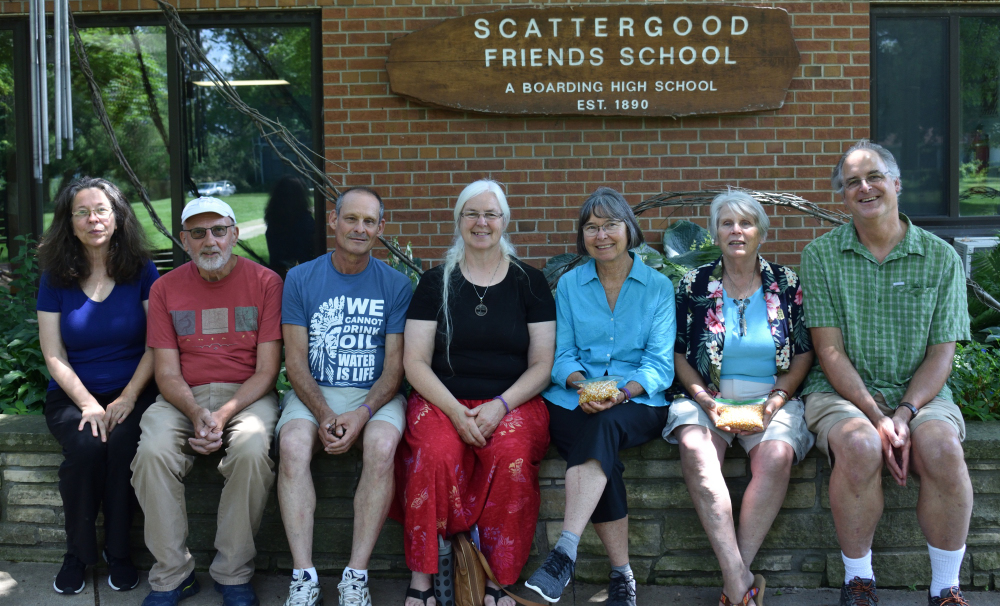
Attending Scattergood Friends School, a co-ed Quaker boarding high school, continued my Quaker education. Not so much intellectually, but in the way we worked together, and made decisions in community. We rotated through a crew system, where we prepared meals, baked bread, cleaned, did laundry, raised pigs, and did other work on the farm.
Scattergood Friends School
It’s not at all that we were indoctrinated. In fact, what we value is how we are challenged to examine our beliefs and whether we are living those in our lives. We have a spiritual practice of reflecting on questions, or queries, about our lives at that moment.
Queries related to peace and nonviolence:
What are we doing to educate ourselves and others about the causes of conflict in our own lives, our families and our meetings? Do we provide refuge and assistance, including advocacy, for spouses, children, or elderly persons who are victims of violence or neglect?
Do we recognize that we can be perpetrators as well as victims of violence? How do we deal with this? How can we support one another so that healing may take place?
What are we doing to understand the causes of war and violence and to work toward peaceful settlement of differences locally, nationally, and internationally? How do we support institutions and organizations that promote peace?
Do we faithfully maintain our testimony against preparation for and participation in war?
The first time I was really challenged in my faith was while a senior at Scattergood. All eighteen-year-old boys were required to register with the Selective Service System (military draft). That was consequential because the draft at that time was inducting boys into the armed forces, where many were sent to the war in Vietnam.
Quakers could apply for conscientious objector status, which would allow you to spend two years working as a civilian, most often in hospitals. Many of us found doing so was still participating in the military and refused to cooperate with the draft. To refuse was a felony offense.
I was convinced becoming a conscientious objector was wrong for me. But I struggled with the idea of facing time in prison. There were over a dozen Quaker men who refused to cooperate in the 1950’s when there was a peacetime draft. And they were imprisoned. Muhammad Ali also refused to be drafted. That showed me there are people who act according to their beliefs, no matter the consequences. Without their example, I imagine I might not have resisted the draft myself. I did refuse to cooperate but was not prosecuted for that.
Quakers don’t believe in proselytizing, instead believing the way they lived their lives might be an example for others. Like those who resisted the draft mentioned above.
Together
My faith led me to try to share my spiritual experiences and show my love for the beauty of Mother Earth through photography. These three things, together, concern for Mother Earth, photography, and faith, came into play in many ways, and at various times during my life. I love this quotation, which pulls these things together.
(Barry) Lopez could not have known the effect he was having on one impressionable member of the audience. Yet I believe he established a connection with me that evening—a thin strand in the elaborate web that is community—by describing a path that was utterly new to me, and by suggesting that, as others had walked that path, it was safe for me to do so as well. This all happened in the space of a few seconds, as he mulled over the central question plaguing the men and women at the conference, namely: How could we convince lawmakers to pass laws to protect wilderness? Lopez argued that wilderness activists will never achieve the success they seek until they can go before a panel of legislators and testify that a certain river or butterfly or mountain or tree must be saved, not because of its economic importance, not because it has recreational or historical or scientific value, but because it is so beautiful.
His words struck a chord in me. I left the room a changed person, one who suddenly knew exactly what he wanted to do and how to do it. I had known that love is a powerful weapon, but until that moment I had not understood how to use it. What I learned on that long-ago evening, and what I have counted on ever since, is that to save a wilderness, or to be a writer or a cab driver or a homemaker—to live one’s life—one must reach deep into one’s heart and find what is there, then speak it plainly and without shame.
Reid, Robert Leonard. Because It Is So Beautiful: Unraveling the Mystique of the American West. Counterpoint. Kindle Edition.
I’m still working on my foundational story. It is taking much longer than expected. I’ve been following a recent suggestion to examine my foundational story at its beginning, how it has evolved along the way, and what it is now.
Much of my foundational story is about care for Mother Earth. I lived my entire adult life without owning a car, being able to do so in part because of the barely adequate city bus system in Indianapolis. I don’t keep bringing this up for self-promotion. Rather, to point out everyone living in the early 1970’s could see the damage being done by the clouds of noxious fumes coming out of tailpipes. Since then, catalytic converters hid the visible damage, but the greenhouse gases continue to spew out.
We each made a choice.
either stop the pollution
or deem fouling the air with automobile exhaust an acceptable choice for our convenience
If we had decided to tackle the pollution and greenhouse gases then, we would not be in this environmental catastrophe now.
No one knows what the future holds, but it is no longer possible to hide the consequences of greenhouse gas emissions. High temperature records are broken daily. We see shrinking lakes and rivers, violent storms, flooding, and forest fires.
I’ve studied and prayed about this my whole life. I’m broken down by the continuous stress of knowing. At times I’ve felt like giving up. Wanting to stop thinking about all of this.
I don’t have a plan for what to do when water stops flowing from the faucet. When the grocery stores no longer have food. When no one picks up the trash. When there is no gas for cars and trucks. When hospitals close. When houses are destroyed by fires, winds, or floods. When there is no Internet. No electricity.
But I do have two tools to help me make a plan. For some hope.
My Quaker faith and faith community
And my Mutual Aid accomplices, who are not just making plans but implementing solutions now
People often mistake hope for a feeling, but it’s not. It’s a mental discipline, an attentional practice that you can learn. Like any such discipline, it’s work that takes time, which you fail at, succeed, improve, fail at again, and build over years inside yourself.
Hope isn’t just looking at the positive things in this world, or expecting the best. That’s a fragile kind of cheerfulness, something that breaks under the weight of a normal human life. To practice hope is to face hard truths, harder truths than you can face without the practice of hope. You can’t navigate dark places without a light, and hope is that light for humanity’s dark places. Hope lets you study environmental destruction, war, genocide, exploitative relations between peoples. It lets you look into the darkest parts of human history, and even the callous entropy of a universe hell bent on heat death no matter what we do. When you are disciplined in hope, you can face these things because you have learned to put them in context, you have learned to swallow joy and grief together, and wait for peace.
Our country is primed for an overthrow of power within rapidly shifting currents. The land has seen devastation over the winter’s long night, but now sings songs of rebirth inside the blossoms of the cherry tree. At least in this hemisphere. The people…well, we’re all a little worn out thanks to a heavy hitting astrological and planetary realignment. Does anyone else feel like they’ve hardly had a moment to process and catch a breath before Mercury went Gatorade? Again? We’re being tested. Within each survivor is a warrior. Can we captain this ship through unknown waters? Are we braver than our fears? Will we earn a seat at the table, our place as a future ancestor? Oh, hell yes.
Nahko Bear
When I realized this, I felt even more hopeless, but, thankfully, my Quakerism led me to another definition, which is also in the dictionary. In addition to defining hope in terms of desire, expectation, and fulfillment, most dictionaries provide a secondary, archaic definition based on faith. This older and much less common meaning is about trusting life, without the expectation of attaining particular outcomes any time soon. This type of hope has a quiet but unshakeable faith in whatever happens and in the human capacity to respond to it constructively. It is a positive, but not necessarily optimistic, attitude to life that does not depend on external conditions or circumstances.
I call this “intrinsic hope” because it comes from deep inside us. Václav Havel, former president of Czechoslovakia, said in Disturbing the Peace that hope “is a dimension of the soul, and it’s not essentially dependent on some particular observation of the world or estimate of the situation. . . . It is an orientation of the spirit, and orientation of the heart; it transcends the world that is immediately experienced, and is anchored somewhere beyond its horizons.” To me, intrinsic hope is also that of God in everyone; the inner light; the quiet, still voice; and the experience of the Great Mystery.
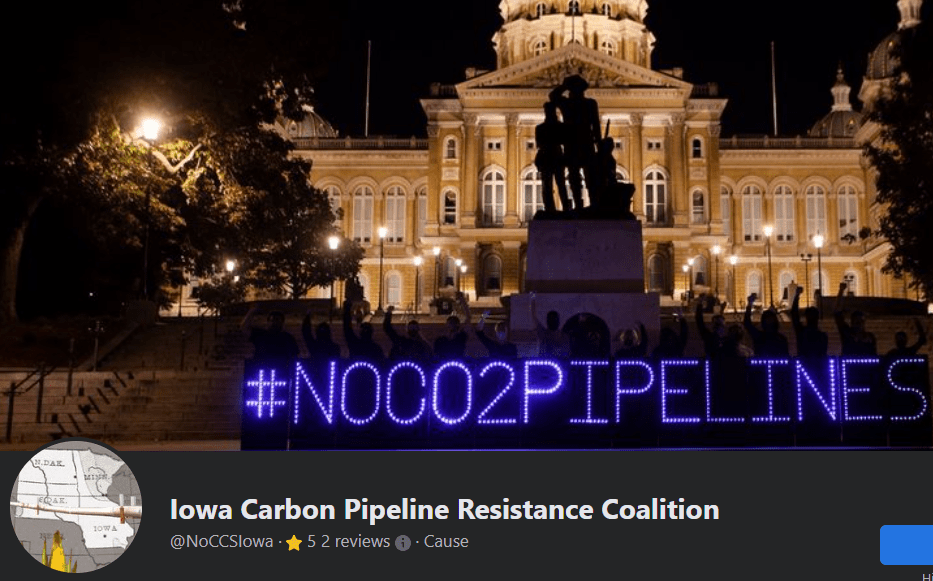
As expected, I would estimate forty people did show up at the Iowa Utilities Board (IUB) to express their opposition to the construction of carbon pipelines in Iowa. Which is about what those of us working for change have come to expect. But that’s a ridiculously small number when the entire state of Iowa will suffer the consequences if those pipelines are built.
Iowa Utilities Board
According to the American Psychological Association, learned helplessness occurs when someone repeatedly faces uncontrollable, stressful situations, then does not exercise control when it becomes available.
They have “learned” that they are helpless in that situation and no longer try to change it, even when change is possible.
Learned helplessness has helped me understand, a little, why so many people seem to have given up on working for change. Any change, anywhere. It is an understatement to say we face “uncontrollable, stressful situations” today. Situations that have significantly worsened in just the past few months. To name just a few:
a collapsing economy
significantly rising gas prices
impacting the personal budget of everyone
affecting the prices of all good
global, dangerously high air temperatures
widespread drought and significantly diminished rivers and lakes
pandemics
famine
war
domestic terrorism
abusive policing
paralyzed legislatures
rogue Supreme Court
This blog post has gone in an unanticipated direction, but that’s often the case. I had intended to discuss the many positive effects of Mutual Aid. It looks like that is going to be delayed. Because it won’t do much good to talk about the positive changes Mutual Aid can bring about, if people are really stuck in learned helplessness. If they will not change.
“everywhere people ask, “what can we do?”The question, what can we do, is the second question.
The first question is “what can we be?”Because what you can do is a consequence of who you are.Once you know what you can be, you know what you can do”
Arkan Lushwala
In May 2018, I was blessed to hear Arkan Lushwala speak about “Indigenous Ways of Restoring the World” during a call sponsored by the Pachamama Alliance. “Arkan Lushwala is a rare indigenous bridge of the global north and south, carrying spiritual traditions from the Andes in his native Peru as well as being adopted and initiated by the Lakota people of North America.”
Speaking about what is happening on Earth right now, many of the conditions of life that we used to take for granted, now are really out of balance. Hopefully we still have time to get back into balance so life may continue. I travel around the world and meet people and talk to people from all different cultures. And everywhere people ask, “what can we do?” The question, what can we do, is the second question. The first question is “what can we be?” Because what you can do is a consequence of who you are. Once you know what you can be, you know what you can do, and we cannot afford wasting time; we have little time. We need to be precise now. When someone sincerely asks, “what can I do?” my humble answer, the only answer that I find in my heart to be sincere is, “First find out what you can be.” Action is extremely necessary at this time. This is not a time just to talk about it. The most spiritual thing now is action. To do something about what’s happening. To go help where help is needed. To stand up when we need to stand up, and protect what is being damaged. And still, this action needs to be born from a place in ourselves that has real talent, real intelligence, real power, real connection to the heart of the Earth, to universal wisdom, so our actions are not a waste of time. So our actions are precise, our actions are in harmony with the movement, the sacred movement, of that force that wants to renew life here on Earth and make it better for the following generations.
Arkan Lushwala
The most spiritual thing now is action. This action needs to be born from a place in ourselves.
In response to a recent article I wrote, Ideological commitment to destroying life on Earth, there was an objection, that simply changing to another political system will not result in the changes we need.
I had quoted George Monbiot. “Until we change our political systems, making it impossible for the rich to buy the decisions they want, we will lose not only individual cases. We will lose everything.”
I agree with the objection about political systems. The changes needed now go far beyond political systems. What is needed is a complete change in the structure of how we live with each other and all our relations. A change in how we prioritize among the urgent needs, and how we come together to address them.
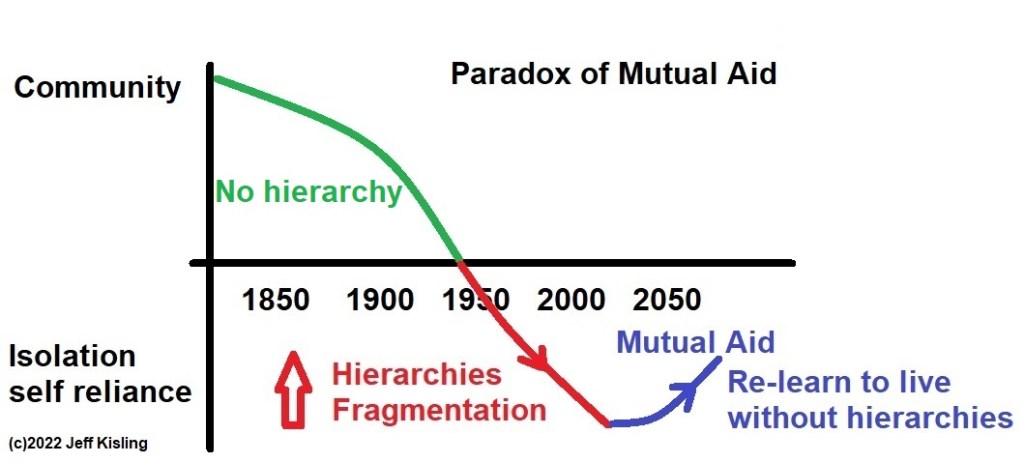
Today, in industrialized countries, all of our systems have become vertical hierarchies. Supervisors, teachers, politics, medicine, military, priests, and police. These hierarchies came about because of population growth and industrialization, which made our society more complex.
The primary reason for this switch to vertical hierarches was for control. The hierarchy for governance, for example, begins with the president, vice president, etc. Then Federal agencies, state governors, state agencies, mayors and city councils. These systems attempt to control us with laws, enforced by courts and police.
In a broader sense, the whole framework of capitalism and colonialism requires, and has viciously enforced vertical systems for control.
How does Mutual Aid replace these hierarchies? It does so by bringing governance and care back to local communities. At an earlier time, there might have been a debate about whether to do this. But since our current political chaos has paralyzed city, state, and federal governance, we will increasingly see the collapse of those systems. Hence another significant reason to build Mutual Aid communities now.
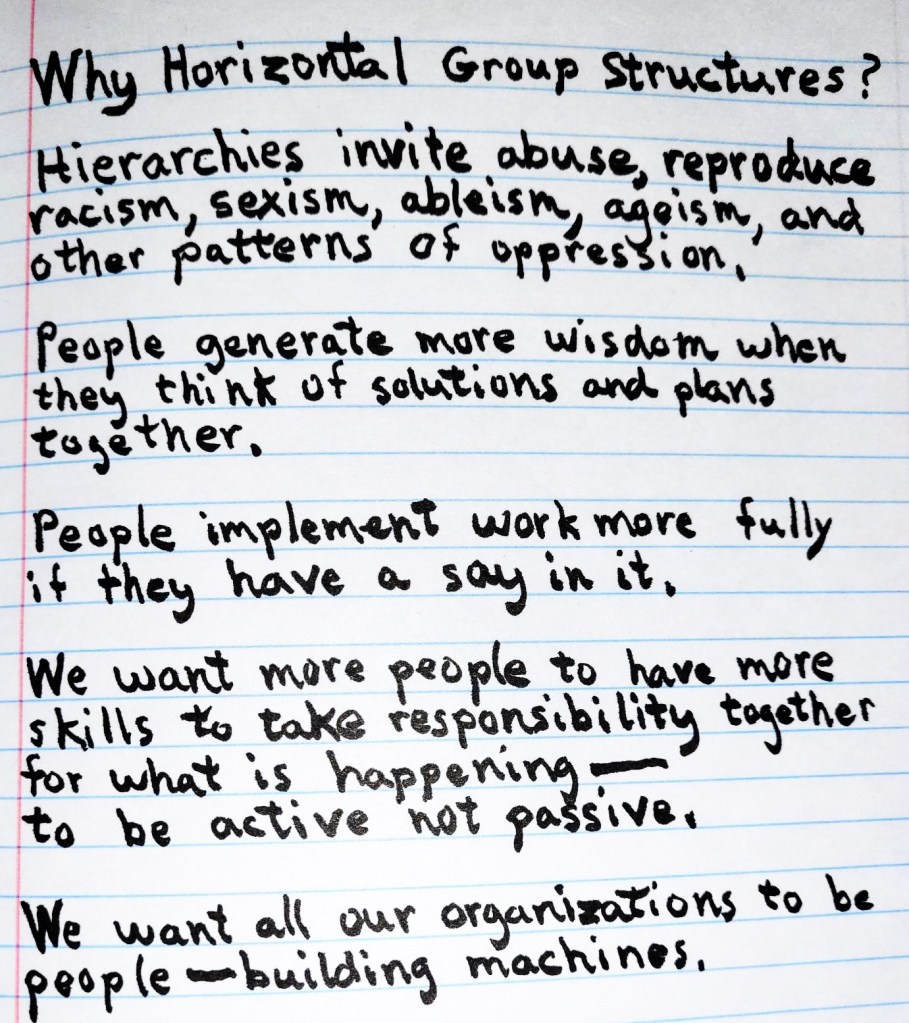
Mutual Aid is about a fundamentally different system of living in community. Mutual Aid is about living in a system of horizontal, flat, or no hierarchy. In horizontal group structures. A system that works in local neighborhoods and communities.
Trying to explain Mutual Aid is paradoxical, because that is the way peoples all over the world lived prior to industrialization. The way those in non-industrial places continue to live. The way our ancestors once lived.
People in our current, vertical hierarchies, don’t understand why we have to return to those ways. And why, if we decided to do so, it wouldn’t be easy to return to living without vertical hierarchies.
The problem is we bring our learned practices of hierarchy with us. We have forgotten how to live in a community without hierarchies. People become very uncomfortable when they realize they have forgotten how to act when order is not imposed by those above them in a vertical hierarchy.
“Mutual Aid is essential to our survival” by Dean Spake, Truthout, October, 28,2020
Because we bring our learned practices of hierarchy with us, a learning process is required to return to horizontal group structures.
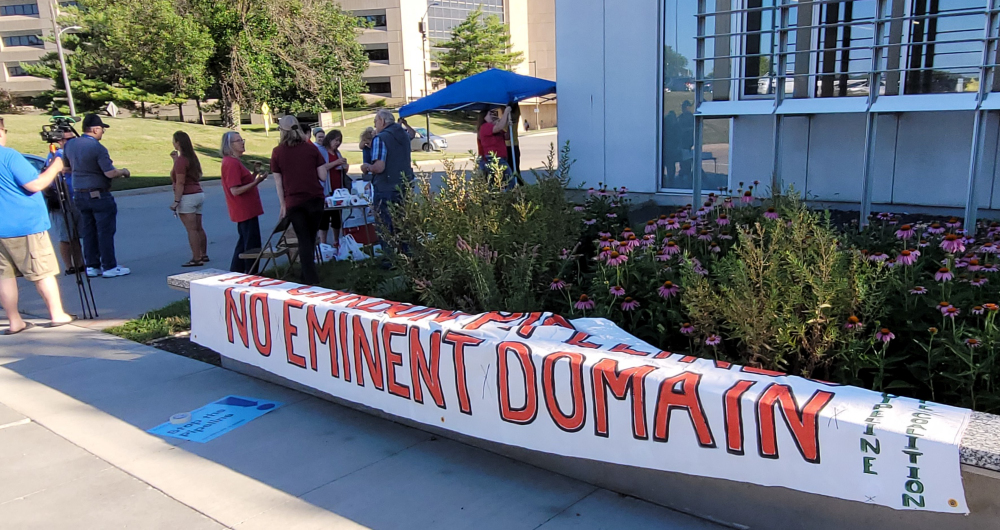
As I was researching this, I came across this description of a book that I look forward to reading. Which describes my own experiences as a middle-class settler activist. It has taken me several years to learn how to be in a Mutual Aid community, and I’m still learning. Giving away food and providing for the houseless are public political actions. As have been public political actions for reproductive justice, against carbon pipelines, removing racist monuments and celebrating Indigenous Peoples Day. All of these actions occurred out in the community, on the streets. We have to be there to be transformed. There is no alternative to doing this together, in public.
And I’ve prayed a lot, with critical self-reflection, about all these things. And continue to pray.
Decolonizing Solidarity: Dilemmas and Directions for Supporters of Indigenous Struggles by Clare Land
Land argues that the predominant impulses which drive middle-class settler activists to support Indigenous people cannot lead to successful alliances and meaningful social change unless they are significantly transformed through a process of both public political action and critical self-reflection.
The recent article by George Monbiot (excerpts below) explains that the multitude of recent government policies and judicial capitulations that are dismantling any efforts to protect Mother Earth are not based on financial interests. The ideology of the ultra-rich is one committed to destroying life on Earth. “It’s no longer about money for them. It’s about brute power: about watching the world bow down before them. For this rush of power, they would forfeit the Earth.”
As Monbiot writes below, the changes needed to protect Mother Earth and all our relations cannot happen until we change our political systems.
Indigenous peoples have always known how to protect our environment. Which makes the policies of forced assimilation of native children and peoples all the more ignorant and reprehensible. We would not be in this catastrophic situation now if settler colonists had learned from native peoples. Can you imagine what that would have looked like?
What would be the political system that would allow us to honor the earth and each other? One alternative would be to build communities based on the concepts of mutual aid. (see: https://quakersandreligioussocialism.com/mutual-aid/ )
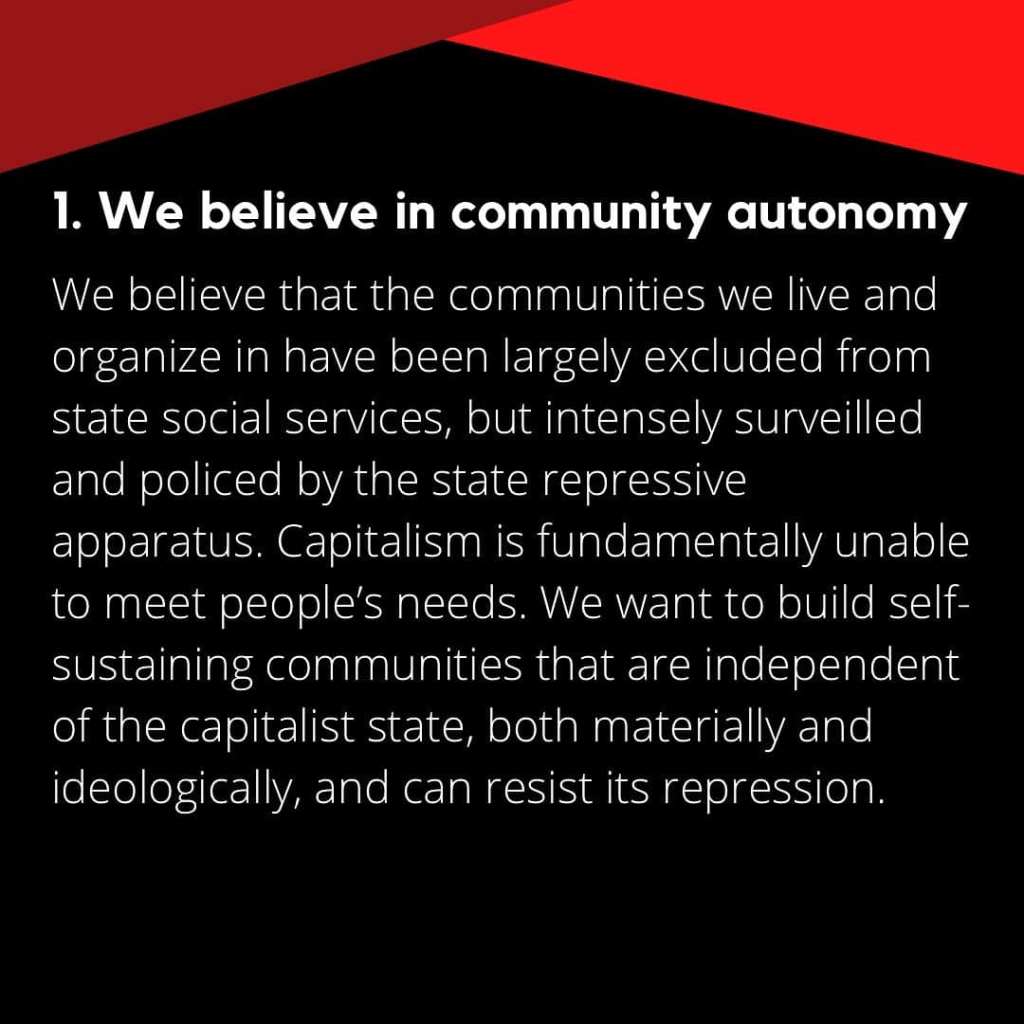
The following is from my mutual aid community, Des Moines Mutual Aid (DMMA).
But the final straw for me was a smaller decision. After two decades of disastrous policies that turned its rivers into open sewers, Herefordshire county council, following a shift from Tory to independent control, finally did the right thing. It applied to the government to create a water protection zone, defending the River Wye against the pollution pushing it towards complete ecological collapse. But in a letter published last week, the UK’s environment minister, Rebecca Pow, refused permission, claiming it “would impose new and distinct regulatory obligations on the farmers and businesses within the catchment”. This is, of course, the point.
…
When I began work as an environmental journalist in 1985, I knew I would struggle against people with a financial interest in destructive practices. But I never imagined that we would one day confront what appears to be an ideological commitment to destroying life on Earth. The UK government and the US supreme court look as if they are willing the destruction of our life support systems.
…
But even financial interests fail fully to explain what’s going on. The oligarchs seeking to stamp out US democracy have gone way beyond the point of attending only to their net worth. It’s no longer about money for them. It’s about brute power: about watching the world bow down before them. For this rush of power, they would forfeit the Earth. …
Since 1985, I’ve been told we don’t have time to change the system: we should concentrate only on single issues. But we’ve never had time not to change the system. In fact, because of the way in which social attitudes can suddenly tip, system change can happen much faster than incrementalism. Until we change our political systems, making it impossible for the rich to buy the decisions they want, we will lose not only individual cases. We will lose everything.
It’s democracy v plutocracy – this is the endgame for our planet by George Monbiot, the Guardian, July 6, 2022
Our path to planetary rebirth is paved with fear. …These unacknowledged fears feed our depression, and if allowed to fester in our unconscious mind, they will eventually drown us in a sea of despair. But there is a great secret in all this that makes it a lot less intimidating. Like the darkness which is now consuming our world, fear cannot withstand the light. In this case, the bright light shines forth in the form of simple awareness. In politics, information is power. But when it comes to the climate crisis, awareness is where our power lies. Please do not underestimate it.
Consider that the only power fear has is in its unacknowledged state. As psychologists have appreciated for some time now, our actions are largely controlled by our shadow selves, and our shadow selves are shaped by our unacknowledged fears. By acknowledging, confronting, and processing these fears, through awareness we emerge from the self-imposed darkness, into the warm glow of that light, we human beings can do anything we put our minds to. Thus, in every emergency, there is the potential for emergence into some transformed state of being. That is the latent, unlimited power of awareness.
I look forward to worshiping with my Quaker meeting this morning. We speak of the Inner Light as the expression of the presence of the Spirit in our lives. Knowing this Spirit is in all things, human and nonhuman, helps us value everything. In our silent Quaker meetings, we seek to hear what this Spirit is telling us in the present moment. We have this awareness of the Spirit which can conquer our fears. “By acknowledging, confronting, and processing these fears, through awareness we emerge from the self-imposed darkness, into the warm glow of that light, we human beings can do anything we put our minds to.”
To practice hope is to face hard truths, harder truths than you can face without the practice of hope. You can’t navigate dark places without a light, and hope is that light for humanity’s dark places.
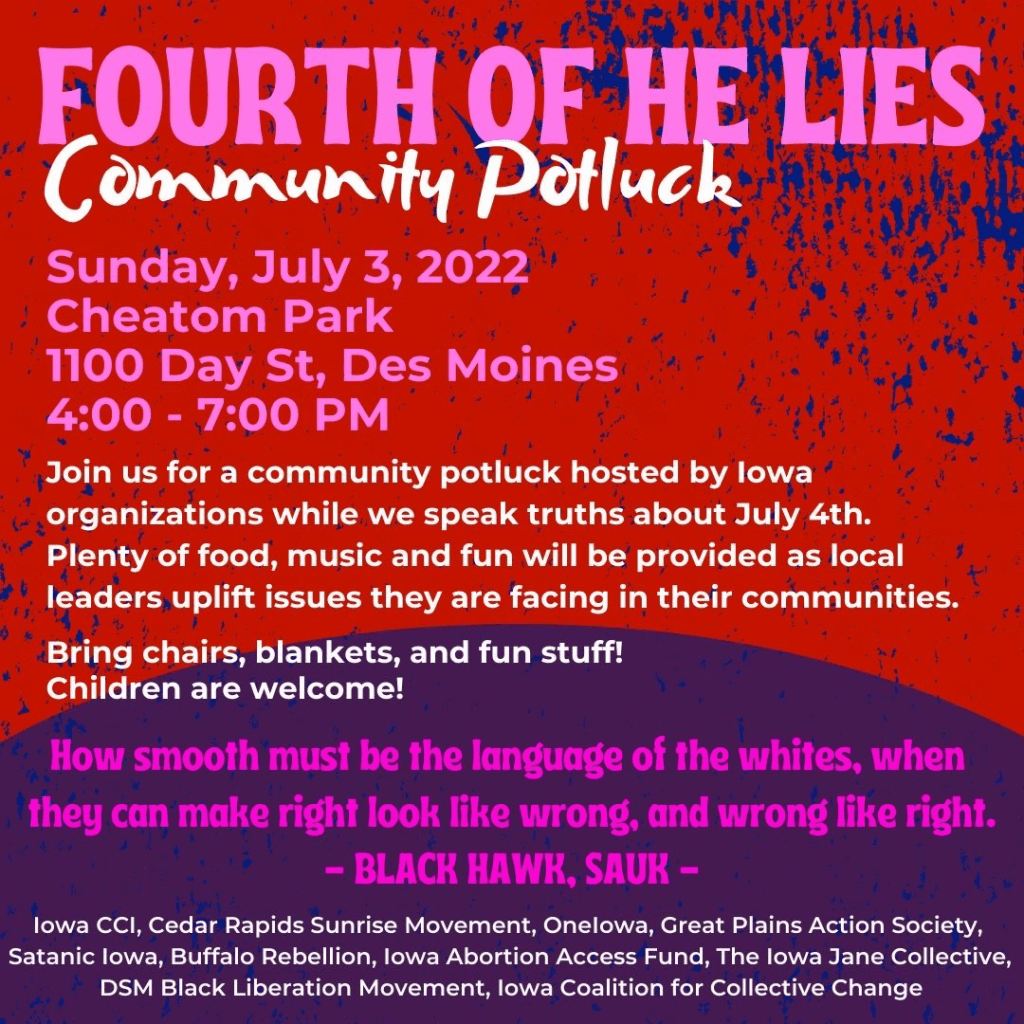
I especially hope many of my white friends, especially Quakers, might attend the Fourth of He Lies community potluck. If you are a white person, like me, try to imagine how black, indigenous, and other people of color (BIPOC) feel about all the celebrations and speeches going on now related to the 4th of July.
You can find out how some BIPOC folks feel by attending the Fourth of He Lies community potluck Sunday, July 3rd at Cheatom Park, 1100 Day Street, Des Moines, from 4 – 7 pm. Children welcome.
In 2017 I retired to Iowa after my career at Indiana University Medical Center. It was difficult to leave the many friends I have in numerous justice communities in Indianapolis.
I am blessed to have made so many new friends in the Midwest and work with their/our organizations today. That includes working, directly or indirectly with all of the organizations below that are sponsoring the community potluck, with the exception of Satanic Iowa. I made an assumption that didn’t turn out to be true, i.e., that they were related to what I thought Satanic was. All I know is what I found on Wikipedia this morning. “The Satanic Temple, often abbreviated TST, is a nontheistic religious and human rights organization that is primarily based in the United States,[1][2][3][4] I hope I can make it to the potluck and learn more.
Before I learned what The Satanic Temple really was about, I had no doubt my friends in the other organizations below approved of them being included as sponsors of the potluck.
This also brings to mind the term “fusion politics” that I learned from Rev. William Barber. The concept is to unite disparate organizations around the issues they agree on and can work on together.
Finally, I’m working to get Quaker communities to embrace the concepts of Mutual Aid. An important part of Mutual Aid is to work with all of the justice organizations in the vicinity of the Mutual Aid community. This potluck is an opportunity for Friends to learn about organizations doing great work in our communities. Organizations they might become involved with in their own Mutual Aid communities.
Join us for a community potluck hosted by Iowa organizations while we speak truths about July 4th. Plenty of food, music, and fun will be provided as local leaders uplift issues they are facing in their communities.
Bring chairs, blankets, and fun stuff! Children are welcome!
Hosted by Great Plains Action Society, Iowa CCI, Cedar Rapids Sunrise. Other organizations are welcome to join–to bring some food, to table and speak! Please contact Sikowis at sikowis@greatplainsaction.org for more information. https://www.facebook.com/events/369803928574457
The colonists obsessed about British regulations on immigration and trade and what they considered an excessive number of British officials present in the colonies. They ignored the injustices they inflicted on others. They rose up against figurative enslavement by the Crown while literally enslaving people in America.
What we get wrong about the Fourth of July. If our deepest values are democracy and equality, then why do we celebrate a slaveholders’ rebellion as the birth of our nation? By Kermit Roosevelt III, The Boston Globe, June 30, 2022
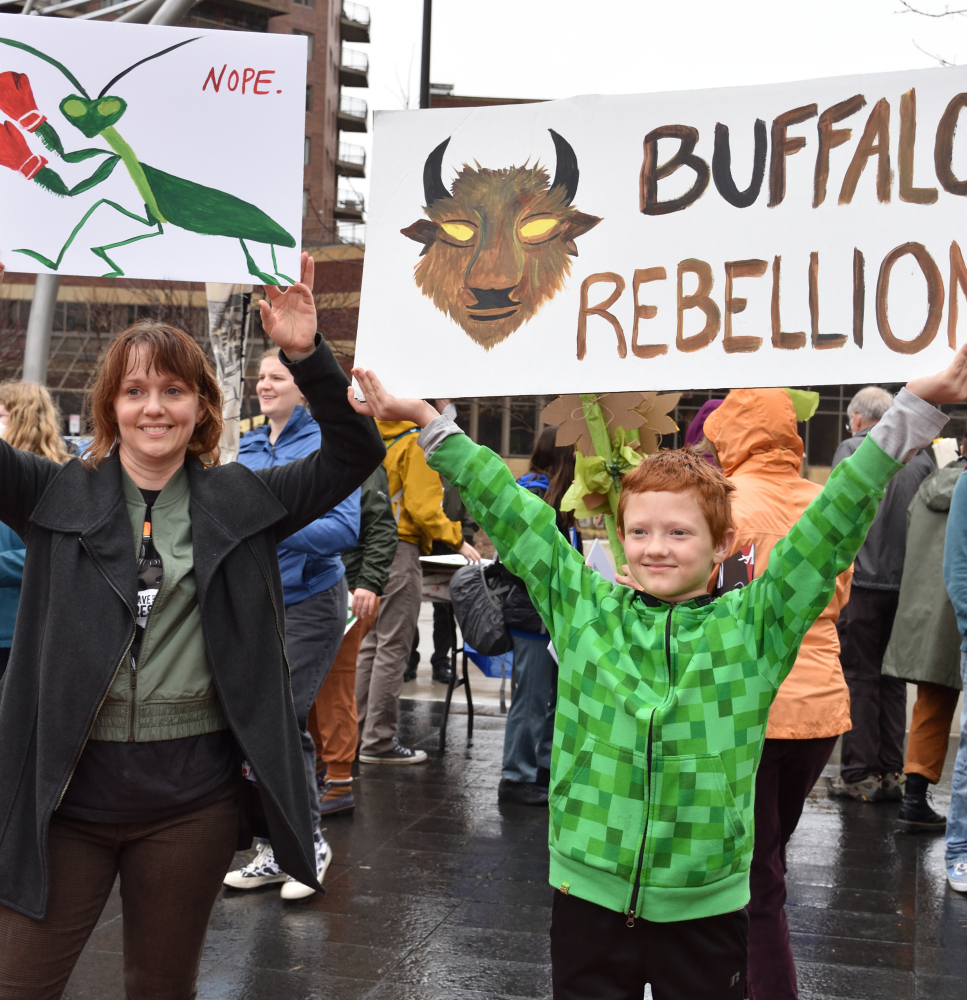
Buffalo Rebellion is a coalition of Iowa grassroots organizations that are growing a movement for climate action that centers racial and economic justice!
Formed in 2021, Buffalo Rebellion is comprised of seven Iowa organizations: Great Plains Action Society, DSM Black Liberation Movement, Iowa Migrant Movement for Justice, Sierra Club Beyond Coal, Cedar Rapids Sunrise Movement, SEIU Local 199, and Iowa CCI https://www.facebook.com/IowaBuffaloRebellion
Iowa Citizens for Community Improvement With thousands of members from all walks of life, we get things done on critical issues https://www.facebook.com/iowacci
The Satanic Temple, often abbreviated TST, is a nontheistic religious and human rights organization that is primarily based in the United States,[1][2][3][4] with additional congregations in Canada, Australia, and the United Kingdom.[5][6] Co-founded by Lucien Greaves, the organization’s spokesperson, and Malcolm Jarry,[7][8] the organization uses Satanic imagery to promote egalitarianism, social justice, and the separation of church and state, supporting their mission “to encourage benevolence and empathy [among all people].”[9] The Satanic Temple has utilized satire, theatrical ploys, humor, and legal action in their public campaigns to “generate attention and prompt people to reevaluate fears and perceptions”,[10] and to “highlight religious hypocrisy and encroachment on religious freedom.”[7][11][12][13]
The Satanic Temple does not believe in a supernatural Satan; instead it employs the literary Satan as a metaphor to promote pragmatic skepticism, rational reciprocity, personal autonomy, and curiosity.[8] Satan is thus used as a symbol representing “the eternal rebel” against arbitrary authority and social norms.[14][15] Adherents generally refer to their religion as “Satanism” or “Modern Satanism“,[16] while others refer to TST’s religion as Compassionate Satanism or Seven Tenet Satanism.[17][18]
The organization’s participation in public affairs includes political actions as well as lobbying efforts,[19][20] with a focus on exposing Christian privilege when it interferes with personal religious freedom. It considers marriage a religious sacrament that should be governed under the First Amendment’s protection of religious liberty which should prevail over state laws.[21] Because the group regards inviolability of the body as a key doctrine, it also views all restrictions on abortion, including mandatory waiting periods, as an infringement on the rights of Satanists to practice their religion.[22]
The crown and the colonists were both determined to seize lands from native peoples and to continue enslavement. But their interests were also hostile to one another and war was the inevitable result. White settlers wanted full independence for themselves and no control over their actions at all.
The indigenous populations were nearly eradicated in the decades long quest for conquest. Expanding slavery was an integral part of those efforts against native peoples. Genocide could not be carried out completely nor could any accommodation be made with European nations in the quest to control land from sea to shining sea. That is why the settlers declared their independence.
The process of decolonizing ourselves is a difficult one. We have been cut off from our history and we don’t know where or how our people played a part. As we try to educate ourselves we may find it difficult to give up traditions that we have claimed as our own. Regardless of personal choices made on July 4th, the causes of the Declaration of Independence must be known and acknowledged. That is the beginning of true independence for Black people.
THE TERRIBLE ORIGINS OF JULY 4TH By Margaret Kimberley, Black Agenda Report. July 3, 2021
Yesterday I wrote, “for millennia, people lived in sustainable ways. Life was often a struggle. But people did not use more resources than what could be replenished. They lived sustainably. What has been different over the past several generations has been the wealthy and powerful asserting their dominance not only over people, but over Mother Earth herself with disastrous consequences.”
The reason I wanted for so long to find connections with indigenous peoples was because of their sustainable lifestyles. And from what little I knew, how spirituality was the basis of their lives.
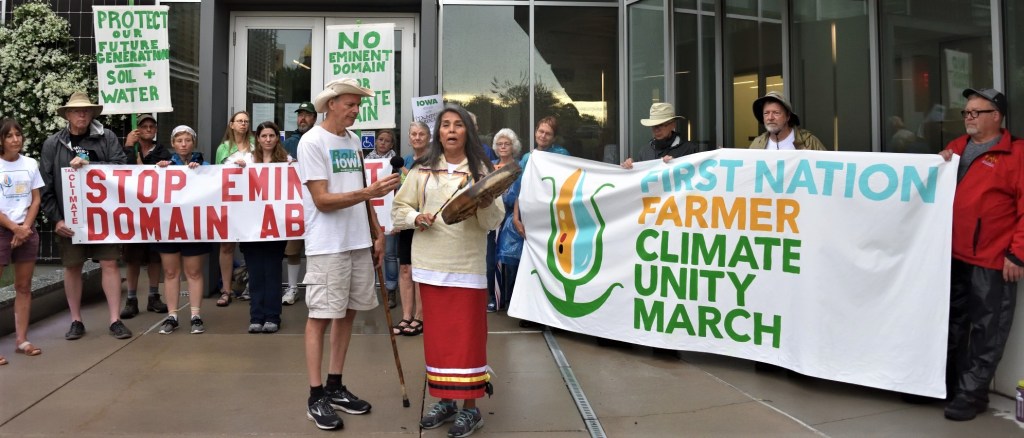
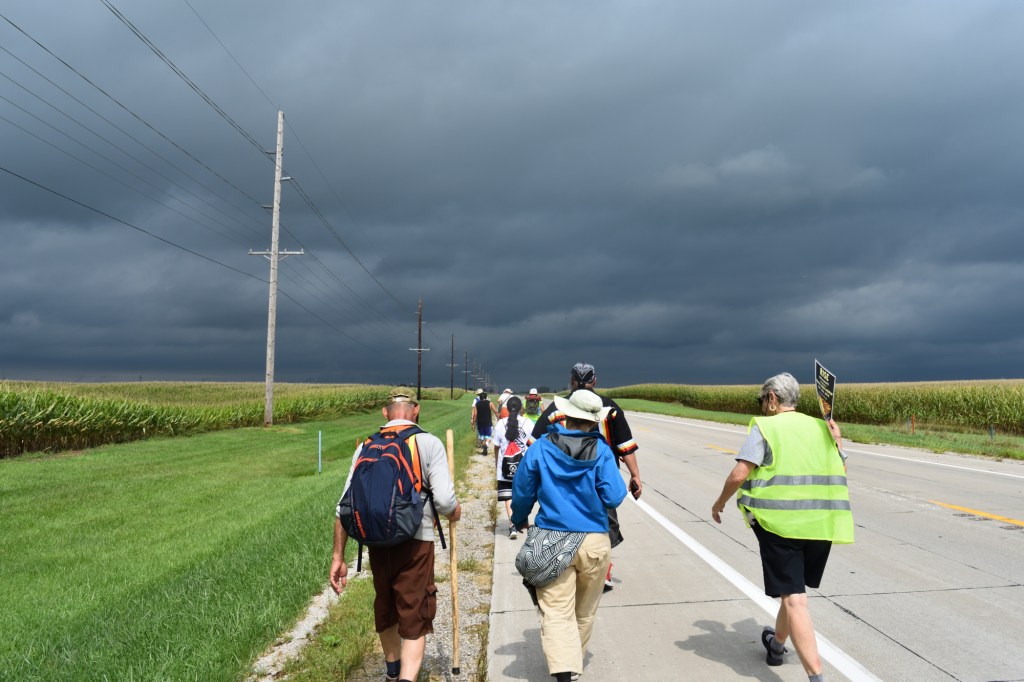
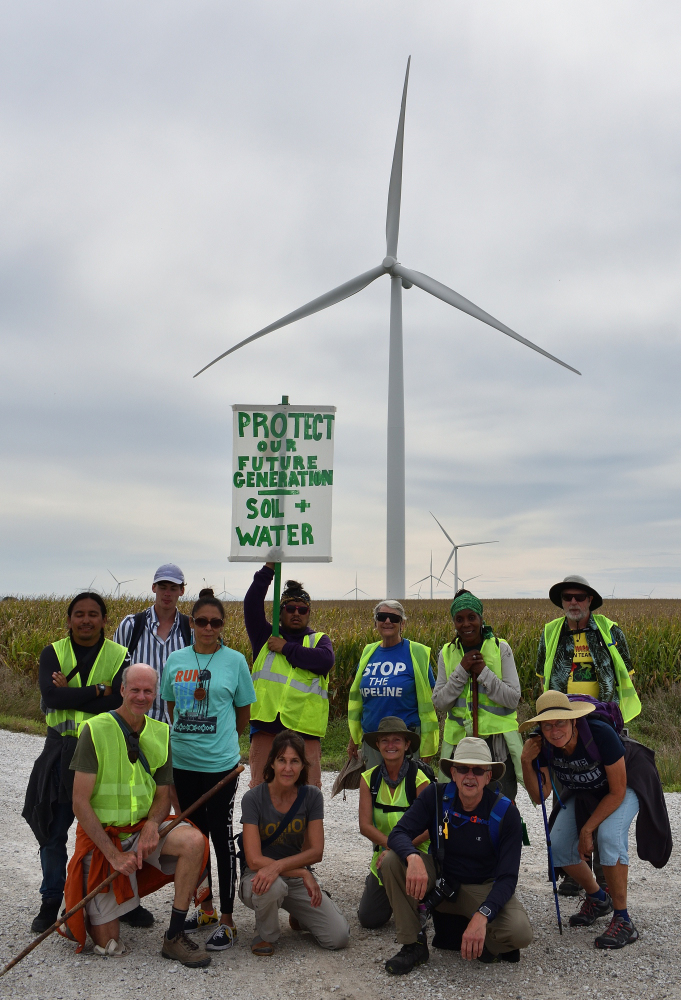
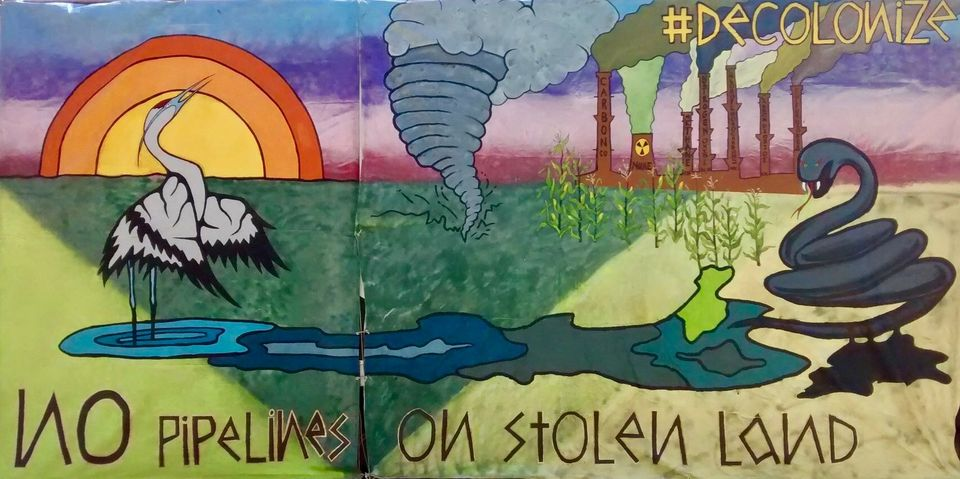
I am blessed to now have many indigenous friends. Most of those friendships began as we walked and camped together along the path of the Dakota Access pipeline for eight days in 2018 on the First Nation-Farmer Climate Unity March. https://firstnationfarmer.com/
I really wanted to learn about the spirituality of my indigenous friends, but I didn’t know how to bridge the barriers between us, because of the Quaker involvement in the Indian boarding/residential schools. The Spirit led me to speak to some of these friends about the Quaker involvement in forced assimilation. I won’t say more than that, in fear of others doing something similar without first having deep relationships, and Spiritual guidance to do so.
I will say this has resulted in opportunities for further Spiritual sharing. Recently one friend said she was glad to hear Quakers grieved for Friend’s participation in forced assimilation. Among other things, this made it possible for her to ask me if Quakers might support a video documentary being made about the residential school of her nation. Which we did.
Zhiwa Woodbury is an Earth Protector. Wildlife Advocate. Doctor of Natural Law(yer), Ecopsychologist, Long-time devoted dharma practitioner and hospice volunteer. Motivated by compassion. View all posts by ecopsi2day
The climate crisis we face is not an environmental problem, and there is no environmental solution. It is not a political issue, and there will be no timely political solutions forthcoming. It is certainly a moral issue, as recognized by Pope Francis and every religion should treat this as such. But given the deep psychological roots of our behavior, moralizing about climate change is also not the solution. No, this is a crisis of spirit, a crisis in relationship, raising the question who we humans really are. We can think of it as a kind of collective identity crisis-one that will only be resolved when a critical mass of human beings heal the split between our Psyche, or collective soul, and nature, the soul of the world.
In gaining mastery over nature, asserting unimaginable control over the very forces of creation and destruction, we seem to have severed our connection to nature at its very root, objectifying the earth and each other, commodifying our lives, designing artificial living environments called suburbs, and creating an entirely new, virtual reality to soothe our aching souls. In the process, we unintentionally isolated ourselves from our own true nature as earthlings – creatures of the earth. We created a social and cultural matrix of isolation, and then we proceeded to act out this story of separation, objectification, modification, and alienation in increasingly harmful ways, until now we are unraveling the very fabric of life and assaulting the global ecosystem that has nourished and supported us, and all beings since beginningless time.
That locomotive force of ignorance and greed rolled right over and through the ancient inhabitants of this new world, and quickly laid waste to the natural abundance that they had been caretakers of for millennia. Certainly, it would be difficult to imagine a more traumatic war against nature than the genocide that Europeans visited on the Earth-based cultures of the indigenous tribes of Turtle Island, or a more heart-breaking ecocide than reducing the dominant species here when we landed, the majestic and socially developed American Buffalo, bison bison, from 60 million to fewer than 6000 today-a thousand-fold reduction via slaughter.
While we see the result in the extreme polarization of society, this split is not irreparable, we humans are not irredeemable, and the truth and reconciliation process that needs to happen is not all that complicated. To become whole again, to restore the natural part of “human nature,” requires only that we hear the deafening call of the natural world, and recognize that something is terribly amiss within, as well as reflected without. Only then can we actively engage in a concerted, conscientious effort to heal the psychic wound we can all still feel in our hearts whenever we stop numbing ourselves to the dreadful pain inherent in our present predicament.
“In our prophecies they say we are now at the crossroads: we either unite spiritually as a global nation, or face chaos, disasters, sickness and tears from our relatives’ eyes.”
Chief Arvol Looking Horse, from the Standing Rock Tribe of Lakota Nation
We’re at the intersection of so many things we could once rely on and have no choice but to find different ways to move into the future. We’re bewildered by the collapse of so many things we took for granted. Such as our political, education, healthcare, and economic systems. Our communities, including family, neighborhoods, and faith. Mother Earth herself.
Above I first wrote “find new ways to move into the future”. But part of what follows is about returning to “old ways”. But not as nostalgia.
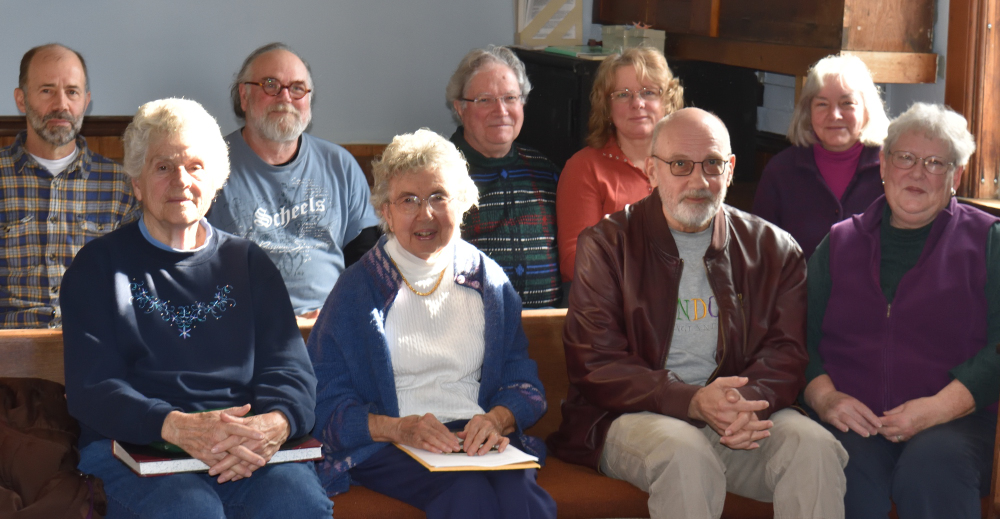
I’m excited to hear what Quakers will say about work they’re doing at a meeting tonight, which is why I’m praying about this now. This meeting is an invitation to Friends to talk about the history, and current relationships among Quakers and Indigenous peoples.
One part of this will be to research the history of Quaker involvement in the Indian boarding, or residential schools. Quakers were involved in some of these institutions of forced assimilation. We don’t know what individuals did and aren’t judging them. But looking back from here, we are learning of the terrible damage done to native children and their families and nations by these attempts to make children fit into white society. Devastating feelings are triggered as the remains of thousands of children continue to be located on the grounds of those residential schools.
In order for native peoples and Friends to work together, this history must somehow be acknowledged. In my own case, I only raised this with those I was becoming friends with. Then I said, “I know about Quakers’ involvement in the residential schools, and I’m sorry that happened.” And wait for their response. In every case I learned they and their families had been affected by those schools. I’m not sure that was the right way. I’ve since heard such apologies might better be done with more of a ceremony. In my case raising this was important for deepening friendships.
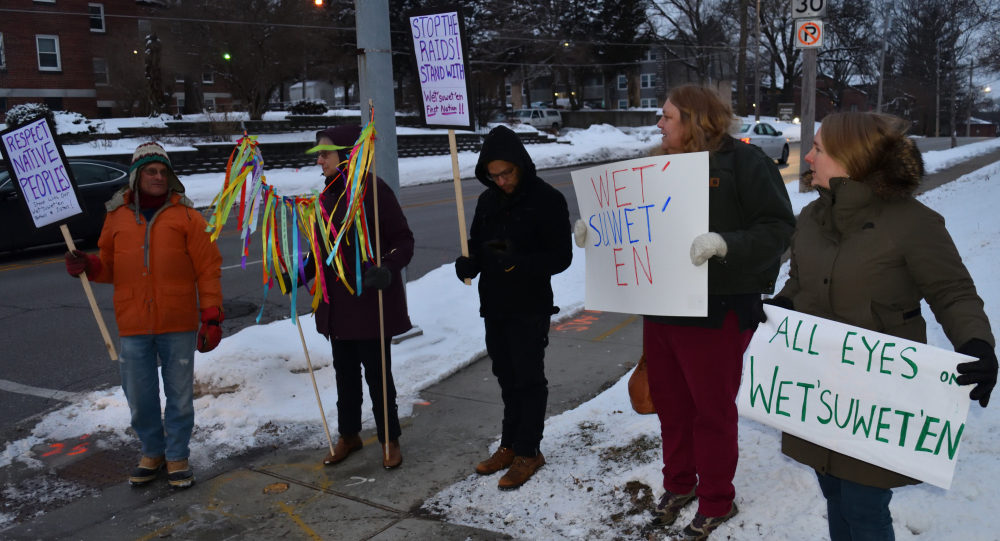
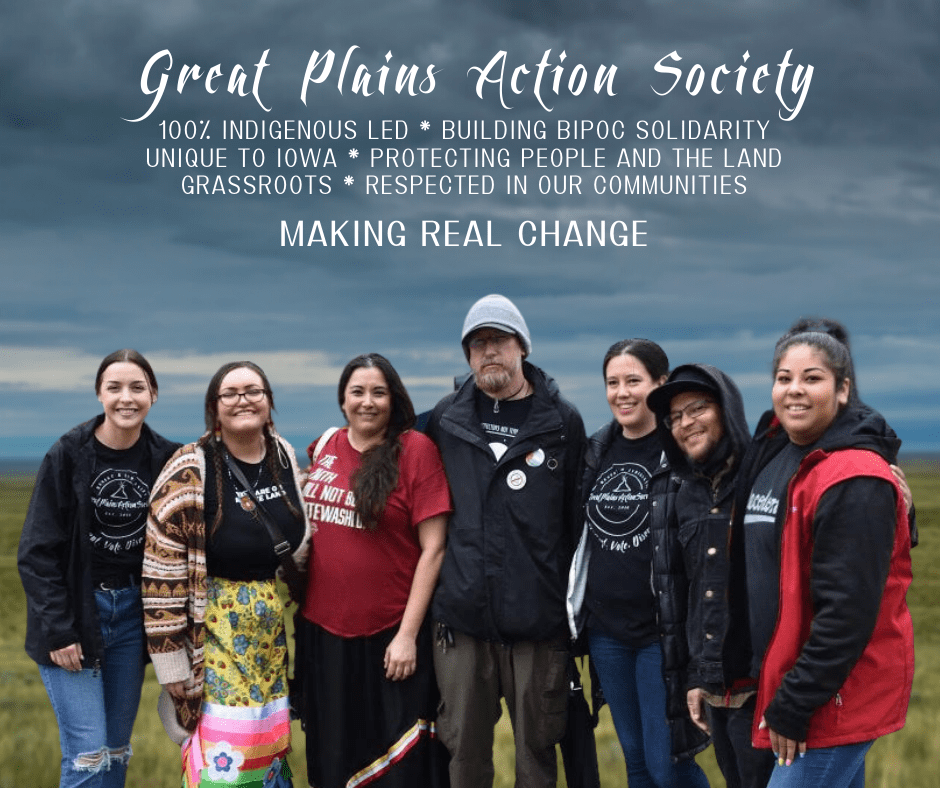
This is also in part the idea behind the title of this article. I’ve become increasingly involved in the work of Des Moines Mutual Aid, a concept I wasn’t aware of. It was a Spirit led meeting that brought my now good friend, Ronnie James, and I together two years ago. Ronnie is an Indigenous organizer and I’m very grateful he has been willing to be my Mutual Aid mentor. Ronnie is also part of the Great Plains Action Society (GPAS) established by another friend of mine, Sikowis Nobiss. Several other Indigenous friends of mine are involved with GPAS.
All that is why I believe the concept of Mutual Aid is the way Friends and Indigenous peoples can work together.
It is a bit confusing when you first learn about Mutual Aid, because it is essentially a framework to return to the ways of life of our grandparents. Communities where the people knew and cared for each other. Communities that were self-sufficient.
The basic concept of Mutual Aid is to remove vertical hierarchies, which by definition removes power structures of dominance and superiority. No matter what you call it, vertical hierarchies cannot exist if Quakers are going to be able to work with Indigenous peoples.
Mutual is the key concept, which is easiest to see in contrast to charity. Charity is not mutual. Resources are given to someone or some organization with no expectation of anything returning to the giver. The recipient never sees the giver.
Mutuality is essential, so there are no separate groups. So there are not, for example, people designated as providers or clients. So there is not a stigma associated with need. Mutual Aid communities teach us we are not in need through our own fault, but because systems have failed us. Those of us distributing food, for example, emphasize we ourselves may need food in the future. This type of political education is part of Mutual Aid.
The other thing that makes Mutual Aid communities so successful is the focus on meeting immediate needs, such as food, shelter or court support. Besides meeting urgent needs, this focus is highly motivating to those involved. This makes for long-term engagement and satisfaction. And attracts people to expand Mutual Aid communities. In the two years I’ve been involved I can’t remember a single instance of conflict among us. When everyone is there, voluntarily, to help, what would there be to complain about?
This is the background for my proposal for Indigenous peoples and Quakers to work together as Mutual Aid communities. Endeavoring to avoid hierarchies and instead facilitate working together on mutual, immediate needs has worked excellently in my experience.
Of course this requires Friends to build friendships with native people. This is happening more often now, as Indigenous peoples are emerging to reassert their authority and leadership on so many issues. How else can Quakers be guided how to contribute to this work? How else will we be welcome by Indigenous peoples?
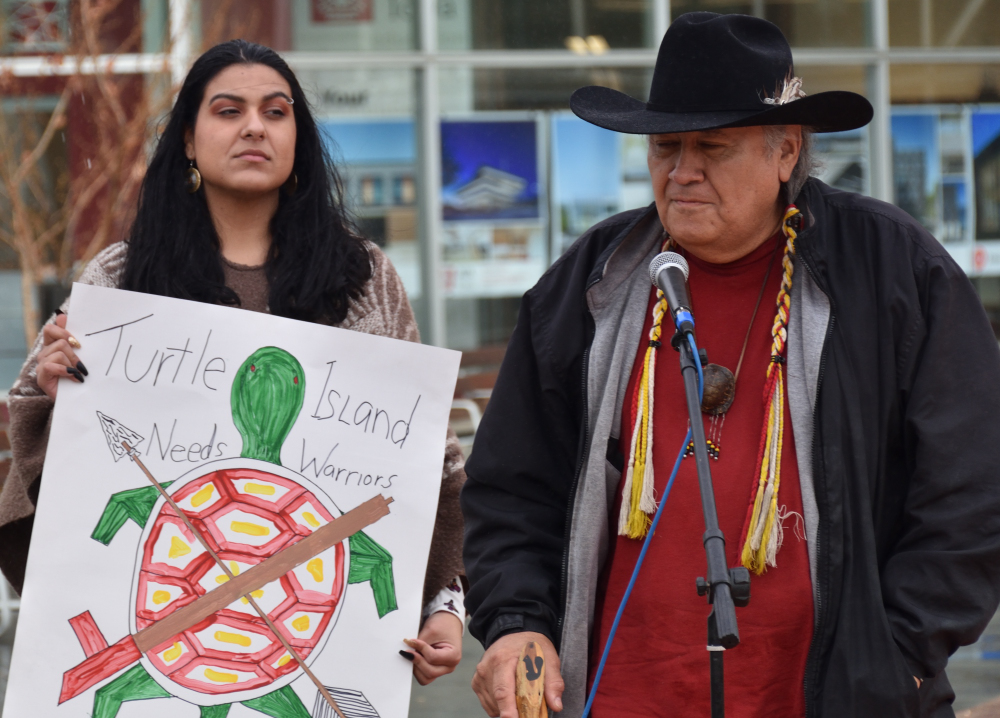
I talked with an Indigenous friend of mine who indicated his support for these ideas.

































 Quakers and Mutual Aid