Friends Committee on National Legislation

The Friends Committee on National Legislation (FCNL) is a national, nonpartisan organization that lobbies Congress for peace, justice, and environmental stewardship.

FCNL has an 80-year-old history of bringing the concerns of Quakers and Quaker meetings to the US Congress. The following four principles guide this work.

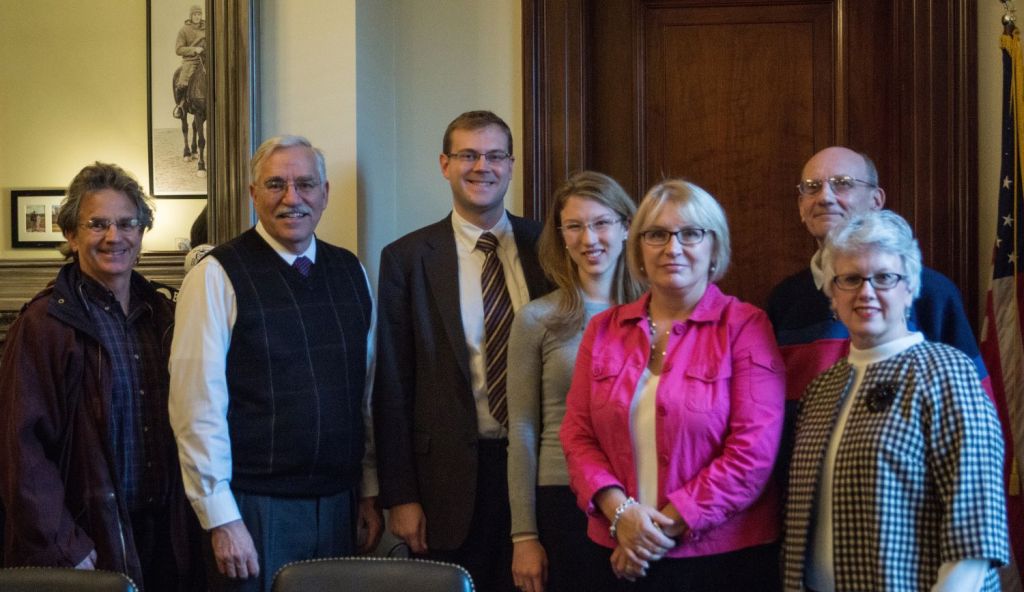
I have been blessed to be involved in the work of FCNL in a number of ways over the years. For nine years I was a member of the General Committee, which meets annually to help determine what priorities FCNL’s lobbyists should bring to Congress. One of the unique aspects of FCNL’s approach is to train Quakers and others how to lobby Congress themselves. I’m second from the right at this visit to a Congressperson’s office.

Training sessions for FCNL Advocacy are provided online monthly. The next session will be January 18, 2024. You can register here: Intro to Advocacy with FCNL


Following are several updates I’d like to share about FCNL’s work.


Addressing Patterns of Racial Wounding and Racial Justice in Quaker Communities

Join FCNL’s Lauren Brownlee and Zenaida Peterson, both members of the Steering Committee of the Quaker Coalition for Uprooting Racism, online for Pendle Hill’s First Monday lecture on Jan. 8, 2024.

Members of the Steering Committee of the Quaker Coalition for Uprooting Racism believed they had a responsibility to name the pain from patterns of white supremacy culture and racism that they have experienced, witnessed, and heard throughout the Religious Society of Friends and associated organizations. To that end, they created a guide with examples of harm and interventions towards racial justice. This guide, inspired by the work of Tema Okun and several Quaker institutions, points to the ways that they see white supremacy culture weaving its way into Quaker culture and suggests methods to disrupt it.

In this lecture, Lauren Brownlee and Zenaida Peterson will share ways that the guide has been and can be used in Quaker communities.

You can view that guide here: https://friendsgc.wpenginepowered.com/wp-content/uploads/2023/08/Racial-Wounding-and-Racial-Justice-In-Quaker-Communities-Guide.pdf

Register for the event here: https://pendlehill.org/events/addressing-patterns-of-racial-wounding-and-racial-justice-in-quaker-communities/


Virtual Witness Wednesday Silent Reflection

FCNL hosts a Virtual Witness Wednesday Silent Reflection. This event is in line with the Quaker practice of silent worship. It’s an opportunity for participants to join virtually via Zoom or by phone for a period of shared reflection.

I’ve been attending Witness Wednesday for several years, (including yesterday) and find it to be a powerful way to reflect on faith, peace, and justice work. I highly recommend it. Simply use this link to attend online any Wednesday at 4:15 pm Central time. http://fcnl.org/ww-stream


Spring Lobby Weekend

Spring Lobby Weekend brings hundreds of young adults to Washington, DC, where they learn about a specific issue, and then actually go to their Congressional offices to lobby related to that issue.

Several years ago my good friend Rezadad Mohammadi attended one spring lobby weekend. The next year he organized a group of fellow students at Simpson College to attend, successfully obtaining funding from the College to help with expenses. If you know of young adults who might be interested, please share this with them.

In March 2024, hundreds of young adults will gather again for Spring Lobby Weekend—our young adult advocacy conference and day of action. This year, we’ll be lobbying Congress to address the harmful legacy of the Indian Boarding School era.

We know that our strength comes from the stories we tell and the community we build, so we hope that you will join us March 16-19, 2024—in Washington, D.C. or online—to advocate for change!

Please check this page for more updates in the coming weeks. If you are not already signed up for our Young Adult Program updates, please sign up here to receive emails about Spring Lobby Weekend 2024.

https://www.fcnl.org/events/spring-lobby-weekend-2024


Reproductive Health Care and Abortion

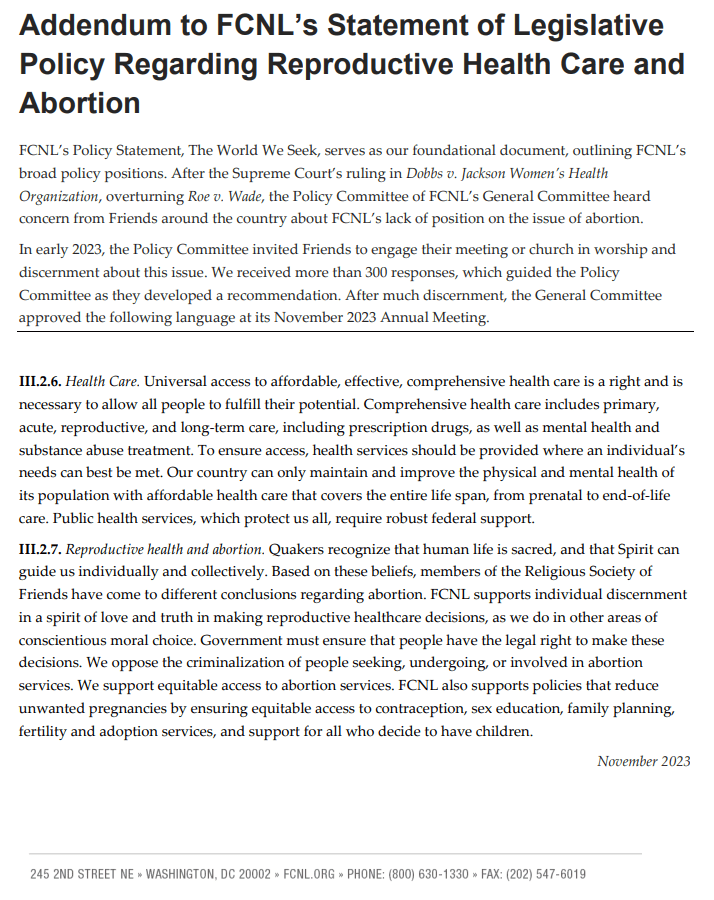
In an example of how FCNL engages with Quaker communities in this country, FCNL asked Quaker meetings about their views regarding reproductive health and abortion. This came about because there are different beliefs about abortion among Quakers, so FCNL did not have a policy related to that. But with the recent national debate about abortion, FCNL asked Quakers to share what they thought about this issue today. Following is the statement that came out of this national discussion among Quakers.

The War in Israel-Palestine

Working for peace has always been a fundamental belief among Quakers. “We seek a world free of war and the threat of war” is one of the guiding principles of FCNL.

We are heartbroken by the violence in Israel and Palestine. As Quakers, we deeply mourn the loss of all lives and pray for those who have lost loved ones due to this latest escalation. We unequivocally condemn Hamas’ attacks and inhumane treatment of civilians and call for the release of all hostages. We also condemn Israel’s indiscriminate bombing of Gaza that has claimed thousands of civilian lives. More war and weapons won’t bring peace. In the face of growing violence, lawmakers must push for a permanent ceasefire and address the root causes underlying this explosion of violence.

https://www.fcnl.org/issues/middle-east-iran/israelpalestine/israel-palestine-war

Following is a statement calling for a ceasefire from the national Quaker organizations.

https://www.fcnl.org/sites/default/files/2023-10/quaker-statement-10-17-23.pdf

Indigenous Land Acknowledgement

As we bear witness and lobby in solidarity with Native Americans, we also honor the Nacotchtank tribe on whose ancestral land the FCNL, FCNL Education Fund, and Friends Place on Capitol Hill buildings stand. They are also known as the Anacostans, the Indigenous people who lived along the banks of the Anacostia River, including in several villages on Capitol Hill and what is now Washington, D.C. By the 1700s, the Nacotchtank tribe had merged with other tribes like the Pamunkey and the Piscataway, both of which still exist today.

Quakers, abortion, and the white Christian problem

The Policy Committee of the Friends Committee on National Legislation (FCNL) is asking Quaker meetings for input for a statement about reproductive justice and abortion.

In the interest of time, I have not yet converted this to a blog post. You should be able to read and/or download “Quakers, Abortion, and the White Christian Problem” using the link below. We plan to discuss this at my Quaker meeting this weekend.

I began collecting various statements about abortion from my Yearly Meeting. Reproductive justice has always been a concern of Indigenous people in this country, so I also included some writings from my Indigenous friends. As can be seen in this document, young people, and especially my Indigenous friends see abortion as a problem of White Christians. I’m wondering what my White Quaker Friends think about that. Does that change how White Friends think and act about reproductive justice? Isn’t this an opportunity to build community amongst all of us?

DISCLAIMER: I am the author of this, and it is not an official publication of any group or organization.


Request for Discernment Regarding Reproductive Health and Abortion

Every two years the Friends Commitee on National Legislation (FCNL) distributes questions to ask which legislative policies Quaker meetings and churches support. All of these are collected, and FCNL’s Policy Committee distills those responses into the legislative priorities that will determine what issues FCNL’s lobbyists will focus on as they work with Congress.

After the Supreme Court’s ruling in Dobbs v. Jackson Women’s Health Organization, overturning Roe v. Wade, the Policy Committee of FCNL’s General Committee heard concern from Friends around the country about FCNL’s lack of position on the issue of abortion. 

FCNL’s Policy Committee is seeking the help of Friends in discerning what FCNL should say about reproductive health care in its policy statement.


Queries for Discernment on FCNL’s Policy on Reproductive Health Care

“Friends seek to establish a way of being in the world that grows out of and embodies prayer, worshipful listening for the whisper of divine guidance, and seasoning in the community of faith.”

Margery Post Abbott, A Theological Perspective on Quaker Lobbying

FCNL’s Policy Statement, The World We Seek, serves as our foundational document, outlining FCNL’s broad policy positions.

The statement currently reads:

III.2.6: Health Care. Universal access to affordable, effective, comprehensive health care is a right and is necessary to allow all people to fulfill their potential. Comprehensive health care includes primary, acute, and long-term care, including prescription drugs, as well as mental health and substance abuse treatment. To ensure access, health services should be provided where an individual’s needs can best be met. Our country can only maintain and improve the physical and mental health of its population with affordable health care that covers the entire life span, from prenatal to end-of-life care. Public health services, which protect us all, require robust federal support.

III.2.7. NOTE: Members of the Society of Friends are not in unity on abortion issues. Therefore, FCNL takes no position and does not act either for or against abortion legislation. On occasion, FCNL may appeal to lawmakers not to use the abortion debate to paralyze action on other legislation.”

FCNL’s Policy Committee invites your Quaker discernment group to focus on the issue of reproductive health care, including abortion, and advise us on whether FCNL should revise our policy statement.

Queries and structure to support discernment:

  • What does reproductive health care look like in the world that you and your community seek?
  • How are the Quaker values and testimonies relevant to the issue of abortion?
  • Should the FCNL Policy Statement be revised on the issues of abortion and reproductive health and abortion?
  • If so, what should the Policy Statement say?

Frequently Asked Questions

Guidelines for Group Discernment

Whether you are gathering in person, online, or in a hybrid format, we hope that your discernment will be spiritually grounded and a result of group conversations. These discussions may take many forms, including discernment by a committee, an informal group, or a First Day discussion topic. Some meetings or churches may adopt a minute expressing the sense of their group, although this is not a requirement.

You may want to prepare for discernment by reading the pamphlet, A Guide to Dialogue About Abortion. Tools such as this can help your conversation honor the complexity and urgency surrounding this topic.

To allow for the inclusion of a diversity of voices, we hope you will include people of different ages, backgrounds, and lived experiences in your discernment. Please identify at least one person who will submit your group’s responses.


Supporting Friends’ Discernment on Reproductive Health

FCNL’s Policy Committee has invited Friends to listen deeply in their communities around issues of reproductive health care, including abortion. Friends are invited to share the results of their discernment and to offer guidance on what FCNL should say about these issues in its policy statement.

Friends hold complex and nuanced perspectives on these topics. Sometimes, conversations about abortion and reproductive health can evoke strong emotions and reactions, forming polarized “sides” that don’t leave room for empathy, compassion, and understanding. How can we hold these difficult conversations in ways that prevent harm and support spiritual discernment?

On March 22 at 6:30 p.m. EST, join members of FCNL’s Policy Committee and Friends who are organizing these sessions for perspectives and advice on engaging your Quaker meeting or church in discernment to guide FCNL’s policy going forward.

When you sign up to attend, please share questions and topics you would like addressed. Please note: this event is intended to support people organizing or participating in discernment in their communities. It will not itself be a discernment or listening session.

Speakers

  • Moderator: Ebby Luvaga, Clerk of FCNL’s Policy Committee
  • Genie Stowers, Member of FCNL’s Policy Committee
  • Lauren Brownlee, FCNL’s Associate General Secretary for Community and Culture

ZOOM information

MARCH 22, 2023, 6:30 – 7:30 PM EDT |  ONLINE

Join the Zoom video conference online or via telephone. Time: March 22nd, 6:30 p.m. EDT.

Go to: fcnl.org/qwc-stream

Or call: US: +1 301 715 8592. Then enter the Meeting ID: 820 2927 5353#
You shouldn’t need this, but just in case: Meeting ID: 820 2927 5353Passcode: 273787
We will send you this information to join the event via email as well.
If you do not receive a confirmation email presently, please check your spam folders.
Questions? Reach out to Clare Carter (ccarter@fcnl.org).


Reproductive Justice

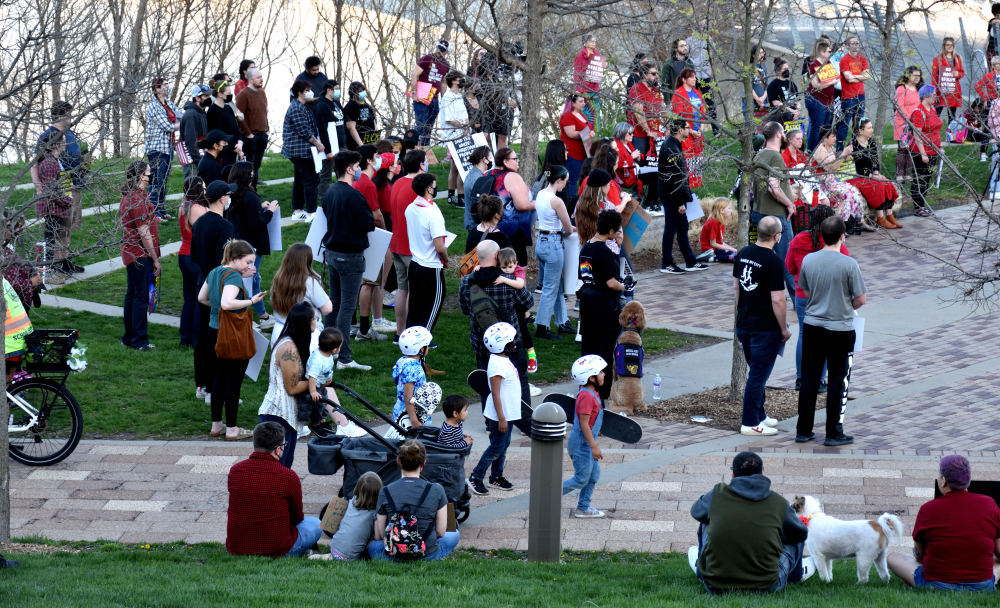
Last May I was honored to attend and take photos at the Rally for Productive Justice for my friends.

The draft to end Roe and Casey was leaked just two days before the National Day of Awareness for Missing and Murdered Relatives (aka, Missing and Murdered Women and Girls). We are honoring this day by uplifting radical solidarity within all communities affected by colonial violence when body sovereignty is stolen from us.

Join our coalition of organizations and grassroots activists for a rally to demand abortion access, which plays a huge role in ending the MMIR crisis. Lack of access increases violence and health disparities in BIPOC, Disabled, LGBTQIA+, and Two-Sprit communities. Learn more from speakers and crowd testimony on how this affects these communities and take action on a wider scope than just abortion. We must abolish white supremacist and christian institutions that perpetuate colonial harm to oppress those that don’t fall into their manifest destiny paradigm.

Thank you to the Iowa Coalition Against Domestic Violence for lighting the bridge and amphitheater red on May 5th in honor of MMIR Day of Awareness! The bridge will also be lit red on May 6th for our event!

ASL provided.
LiveStreamed to this page.

This event was organized by:
– Iowa Coalition for Collective Change
– Great Plains Action Society
– The Disability Caucus of the Iowa Democratic Party
– Iowa CCI
– Des Moines BLM
– Sierra Club Beyond Coal
– Deaf Dome
– The Progressive Caucus of the Iowa Democratic Party
– Iowa Abortion Access Fund
– One Iowa


Resources:

https://whatisessential.org/sites/default/files/resource/file/2022-06/Guide%20to%20Dialogue%20About%20Abortion.pdf

White Christian Problem

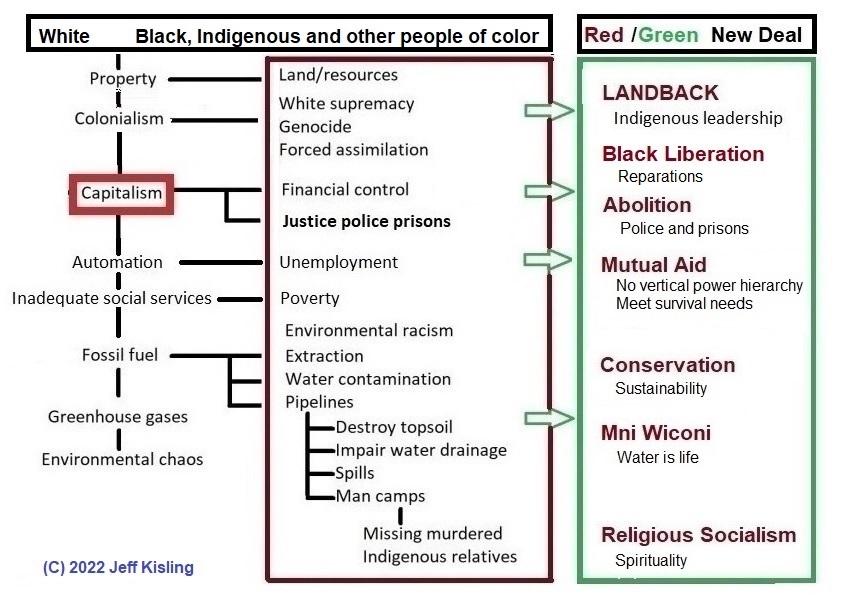
Yesterday I wrote Building the Future We Want describing concepts to transition from current systems that are rapidly collapsing. What umair haque describes below as a Theocratic-Fascist Revolution.

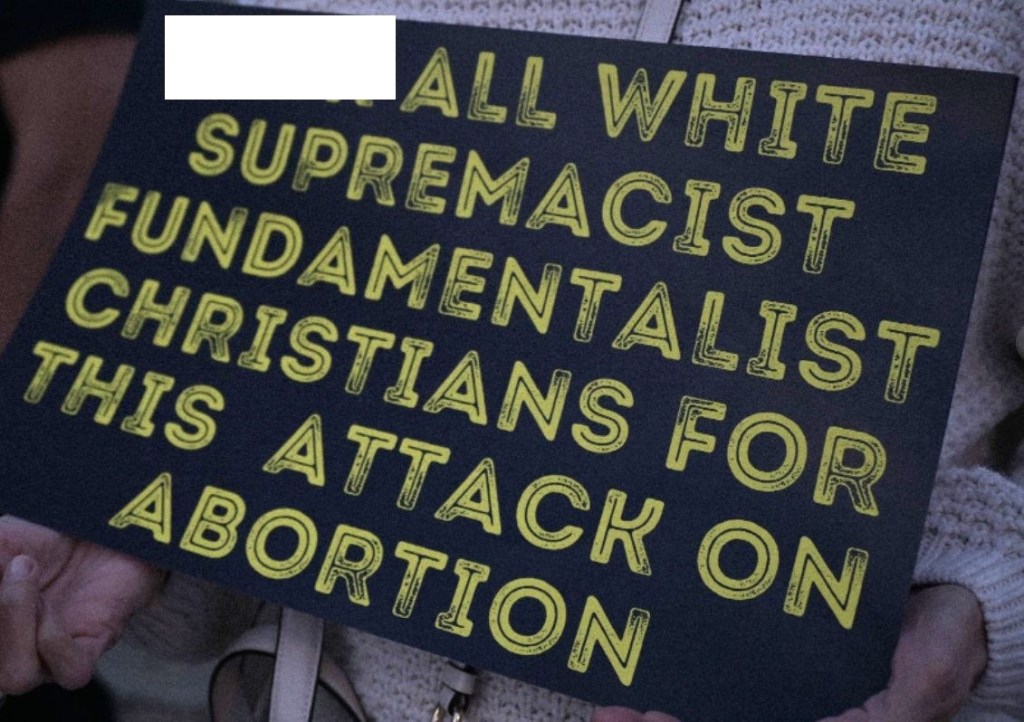
At the Missing and Murdered Indigenous Relatives (MMIR) Day dedicated to Reproductive Justice there were signs that had variations of “**** all white supremacist fundamentalist Christians for this attack on abortion.”

Edited from photo by Emma Colman

And the title of this post from the Great Plains Action Society is “End the White Christian Problem and Keep Abortion Legal.”

End the White Christian Problem and Keep Abortion Legal


Great Plains Action Society

Our MMIR Day dedicated to Reproductive Justice and solidarity with BIPOC, LGBTQIA+, and the Disabled communities went well. The draft to end Roe and Casey was leaked just two days before the National Day of Awareness for Missing and Murdered Relatives (aka, Missing and Murdered Women and Girls). We honored this day by uplifting radical solidarity within all communities affected by colonial violence when body sovereignty is stolen from us.

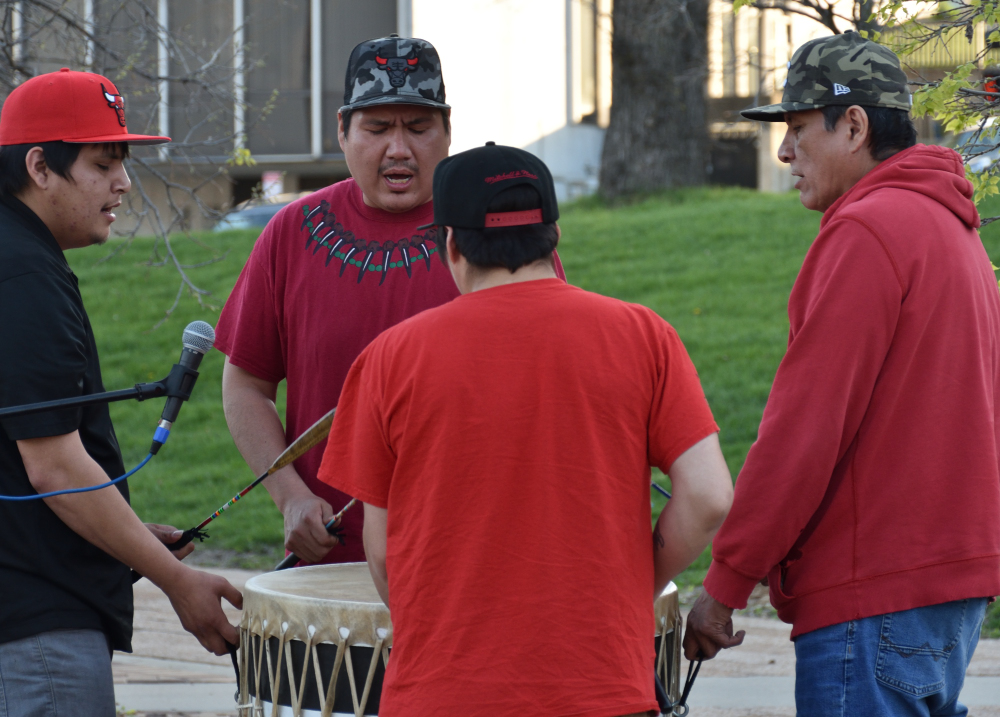
We would like to thank the speakers, drummers, ASL interpreters, singer, drone operators, light board artists, projection artists, photographers, organizers, and the crowd!

The livestream is at: https://fb.watch/cWeodvqt27/
Pics by Emma Colman and Jeff Kisling

This was a coalition event organized by:
– Iowa Coalition for Collective Change
– Great Plains Action Society
– The Disability Caucus of the Iowa Democratic Party
– Iowa CCI
– Des Moines BLM
– Sierra Club Beyond Coal
– Deaf Dome
– The Progressive Caucus of the Iowa Democratic Party
– Iowa Abortion Access Fund
– One Iowa

#reproductivejustice #abortion #abortionrights #mmiw #mmiwg #mmir #solidarity


What’s happening in America is a revolution. But it’s not a good one.

Remember the Irani Revolution? The mullahs suddenly seized power from the Shah, backed by a militant faction of religious lunatics. And the next day, Iranis began to live under theocracy. What’s happening in America is a lot like that. A revolution, but not a forward moving one. Sometimes the wheel moves backwards — and crushes everyone under its path. This is such a time. America is having a totalitarian revolution, which combines all the flavours of social collapse, where theocrats, fascists, supremacist, and authoritarians have all made common cause, to slit democracy’s throat.

Revolutions are strange things. Americans are taught to lionise them, because of course their country was born in one. But every revolution has two sides. America’s revolution was the worst thing that ever happened to Native Americans or a whole lot of Africans.

And revolutions are, above all, shocking, surprising things — to the ones being revolted against. The French nobility could scarcely believe they were under the guillotine even as the blade fell.

This is where America is. It is in the midst of a revolution — and it doesn’t yet understand that. History will, because when so many lunatics take this much power this fast, and things change, suddenly, overnight, the only word to describe it is “revolution.” Americans are in shock precisely because, like so many before them, they are now facing the guillotines of revolution, and don’t understand how or why this happened. And yet the blade is falling — on a modern, democratic America.

What’s Happening to America? A Theocratic-Fascist Revolution. When a Fanatical 30% Suddenly Seizes Control of Your Society, It’s Called a Revolution by umair haque, Eudaimonia and Co, May 10, 2022