Modern-Day Lynchings

Modern-Day Lynchings

Last week I visited the National Memorial for Peace and Justice and the Legacy Museum in Montgomery, AL.  Together, they memorialize the legacy of enslaved Black people, especially the victims of racial terror lynchings in the United States.

I realized then that racial terror lynchings still exist today, though they have shape shifted. Lynchings still exist today when police use lethal force to harass, harm, and kill Black people. Lynchings have shape shifted when African Americans, like Breonna Taylor, are shot to death by police while sleeping in her bed. Lynchings still exist today when 28% of those killed by police in 2020 are Black people, despite being only 13% of the population.

It is truly difficult to fathom the violence and terrorism that was allowed, even encouraged, during the Jim Crow era. It is equally difficult to recognize that we still don’t always see the injustice of police actions today against Black people as deadly, terrorizing, and inhumane. Or, that we don’t act to change these racial injustices.

As we watch the trial of Derek Chauvin for the killing George Floyd, I am not only outraged, I am motivated to persistently lobby for the elimination of the modern-day lynchings of hundreds of Black people.

Modern-Day Lynchings by Diane Randall, Friends Committee on National Legislation, April 14, 2021

Who polices the police?

That is a perennial question. That is why there are calls for an independent investigation into the death of land defender Manuel Terán (Tortuguita). Now U.S. Congressional Representatives Cori Bush (D-Missouri) and Rashida Tlaib (D-Michigan) have joined in calls for an independent investigation.

Progressive lawmakers are calling for an independent investigation into the death of climate justice activist Manuel Terán, who also went by the name Tortuguita, who was killed by police last week as law enforcement officers were carrying out a violent raid of a protest camp in a wooded area in Atlanta, Georgia.

Activists say that the police raid of the camp was only law enforcement’s most recent attempt to clear the camp, where activists have been protesting a proposed $90 million police training facility that activists have nicknamed “Cop City.” The construction of “Cop City,” as proposed by the City of Atlanta and the Atlanta Police Department,” would involve razing nearly 100 acres of forest to build “a domestic version of a military base in the heart of a working-class Black community,” as Atlanta forest defender Kamau Franklin wrote for Truthout.

Representatives Rashida Tlaib (D-Michigan) and Cori Bush (D-Missouri) called for an independent investigation into the police killing of Tortuguita this week, echoing activists’ calls.

“Last week, police killed Tortuguita, a climate justice protester in Atlanta who was defending a forest set to be destroyed for Cop City, a police training center,” Bush wrote on Twitter on Monday. “I am calling for an independent investigation into their death. There must be accountability.”

Tlaib repeated Bush’s call in a tweet on Wednesday, saying: “I echo Rep. Bush’s call for an independent investigation. We demand justice for Tortuguita. I stand with the forest protectors righteously fighting Cop City.”

CORI BUSH CALLS FOR INVESTIGATION INTO POLICE KILLING OF ACTIVIST TORTUGUITA. Activists have questioned law enforcement’s narrative about the killing of the Atlanta climate justice activist by SHARON ZHANG, TRUTHOUT, JANUARY 26, 2023

On the morning of Jan. 18, during what had become routine police operations to clear protesters from the site of a future training facility nicknamed “Cop City” in Atlanta’s forested outskirts, shots were fired. When the smoke cleared, an activist had been killed and a state trooper was wounded. Questions about what happened have elevated the case into a flashpoint in the national debate about policing and environmental activism.

The Georgia Bureau of Investigation has said the shooting was not recorded on body cameras. Police said the gun used in the shooting against the trooper was purchased by Teran in September 2020. On Wednesday, the Georgia Bureau of Investigation announced that a special prosecutor will be assigned to review the case, but critics are calling for an independent investigation. 

What we know about “Cop City” and the standoff between police, protesters in Atlanta by Cara Tabachnick, CBS News, 1/26/2023

Questions about what happened have elevated the case into a flashpoint in the national debate about policing and environmental activism

Cara Tabachnick, CBS News, 1/26/2023

What is “Cop City”?

For years, Atlanta police have trained officers in temporary facilities, but in 2021 the police department and partners proposed building a facility to boost recruitment and retention efforts.

“We’re excited, because first class cities have first class investment in their training, in their public safety first responders,” Deputy Chief Darin Schierbaum told CBS News Atlanta during an overview of the project. “Training is the lifeblood of any public safety organization.”

The $90 million, 85-acre center, which includes a shooting range, mock city and burn building, among other facilities, will “reimagine law enforcement training and Police/Fire Rescue community engagement,” said the Atlanta Police Foundation, a not-for-profit that helps fund police initiatives through private-public partnerships in a statement on its website.

But the training center drew opposition almost immediately, coming on the heels of a tumultuous year of high-profile cases of police brutality and strained community relations. “We’re talking about spending millions of taxpayer dollars to fund another failed proposal that will only line the pockets of wealthy people and not actually address the issues of our day,” James Woodall, a policy associate with the Southern Center for Human Rights, told CBS News Atlanta. “City council members have even admitted that this will not impact crime,” he added.

What we know about “Cop City” and the standoff between police, protesters in Atlanta by Cara Tabachnick, CBS News, 1/26/2023

On Thursday, Governor Brian Kemp declared a state of emergency in response to protests Saturday night sparked by Tortuguita’s death, during which participants threw rocks, broke windows, and burned a police car. Kemp’s order, effective until February 9, allows up to 1,000 National Guard troops to police the streets of Atlanta.

To allies, Tortuguita’s killing was the climax of an escalation of police and legal tactics meant to stifle the wide-ranging movement to stop construction of the training center, which includes parks advocates, prison abolitionists, and area neighborhood associations. Over the course of December and January, 19 opponents of the police training center have been charged with felonies under Georgia’s rarely used 2017 domestic terrorism law. 

Documents show how 19 ‘Cop City’ activists got charged with terrorism by Alleen Brow, Grist, 1/27/2023

There are also heightened tensions now in Memphis related to the police killing of Tyre Nichols.

Video of the encounter will be released after 6 p.m. local time Friday, officials said. Memphis police chief Cerelyn “C.J.” Davis said Thursday that she expected citizens to be outraged by what she called the “heinous, reckless and inhumane” conduct captured in the video. She said she expected people to protest and called on them to remain peaceful.

Memphis police set to release video showing fatal beating of Tyre Nichols Story by Doha Madani and David K. Li and Deon J. Hampton, NBC News
Killing and Criminalizing Activists

Do you know about the appalling frequency of the killing of environmental protesters globally? And the accelerating trend of new laws defining fossil fuel infrastructure as “critical infrastructure” to justify charges of terrorism against even nonviolent protestors?

Monday 13 September, 2021  A report released today reveals that 227 land and environmental activists were murdered in 2020 for defending their land and the planet. That constitutes the highest number ever recorded for a second consecutive year.

Global Witness reports 227 land and environmental activists murdered in a single year, the worst figure on record

Since 2016, 13 states have quietly enacted laws that increase criminal penalties for trespassing, damage, and interference with infrastructure sites such as oil refineries and pipelines. At least five more states have already introduced similar legislation this year. These laws draw from national security legislation enacted after 9/11 to protect physical infrastructure considered so “vital” that the “incapacity or destruction of such systems and assets would have a debilitating impact on security, national economic security, national public health or safety.”

Many industry sectors are designated critical infrastructure, including food and agriculture, energy, water and wastewater, and communications, but most state critical infrastructure laws focus more narrowly on oil and gas pipelines. While protecting critical infrastructure is a legitimate government function, these laws clearly target environmental and Indigenous activists by significantly raising the penalties for participating in or even tangentially supporting pipeline trespassing and property damage, crimes that are already illegal. Many laws are modelled on draft legislation prepared by the American Legislative Exchange Council, also known as ALEC, a powerful lobbying group funded by fossil fuel companies like ExxonMobil and Shell.

Anti-Protest Laws Threaten Indigenous and Climate Movements. “Critical infrastructure” laws in over a dozen states wrongly invoke national security to justify targeting pipeline protesters by Kaylana Mueller-Hsia, Brennan Center for Justice, March 17, 2021

Following are stories about the killing of forest defender Manuel Teran “Tortuguita”. It is still not clear what led to his murder.

The snowballing militarization of police in the U.S. has coincided with a heightened criminalization of protests. Both efforts share the generous backing of corporate funders. If both phenomena continue to proceed apace, it’s easy to imagine more protesters may soon, like Terán, be hurt or killed.

Police killings of environmental defenders are much more common in other countries with major extractive industries, including Brazil, Honduras, and Nigeria; research released last year from Global Witness has found that an environmental defender was killed every 2 days over the last decade. While Terán’s shooting is the first known police killing of a forest defender in the U.S., a drumbeat of recent bills have increasingly depicted those protesting major development projects as public enemy number one. If the post-9/11 security state has a mantra, it’s that it’s easier to get away with killing someone if you can call them a terrorist. And the South Woods Forest case seems, tragically, to illustrate that principle: Seven of the forest defenders swept up in last week’s raid have now been charged with domestic terrorism, on top of the six Stop Cop City activists charged with domestic terrorism and a host of other felony and misdemeanor charges last month.

The Atlanta Police Shooting Is a Warning Sign for the Safety of Environmental Activists. Environmental defenders get killed at appalling rates in other countries. Could that trend come to the U.S.? by Kate Aronoff, The New Republic, January 24, 2023


Atlanta Police Kill Forest Defender at Protest Encampment Near Proposed “Cop City” Training Center. Democracy NOW! https://youtu.be/8dXn-LVXfII

Atlanta Police Kill Forest Defender at Protest Encampment Near Proposed “Cop City” Training Center

We get an update on calls for an independent investigation into the Atlanta police killing of an activist during a violent raid Wednesday on a proposed $90 million training facility in a public forest, known by opponents to the facility as “Cop City.” Law enforcement officers — including a SWAT team — were violently evicting protesters who had occupied a wooded area outside the center when they shot and killed longtime activist Manuel Teran, who went by the name “Tortuguita.” Police claim they were fired on, though protesters dispute this account. We hear a statement from an Atlanta forest defender about what happened, and speak with Kamau Franklin, an anti-“Cop City” activist and the founder of the Atlanta organization Community Movement Builders.


Manuel Esteban Paez Terán. Photograph: Gabe Eisen

Standing Rock

The police are attacking protestors again. And this past Wednesday, things went to another level. Law enforcement officers in Georgia may have just executed environmental activist Manuel Esteban Paez Terán in cold blood. Terán opposed “Cop City,” a planned $90 million police and fire department training facility being constructed in an Atlanta-area forest previously designated to be used as carbon-buffering parkland. He was killed by a raiding party consisting of dozens of officers from a host of agencies.  

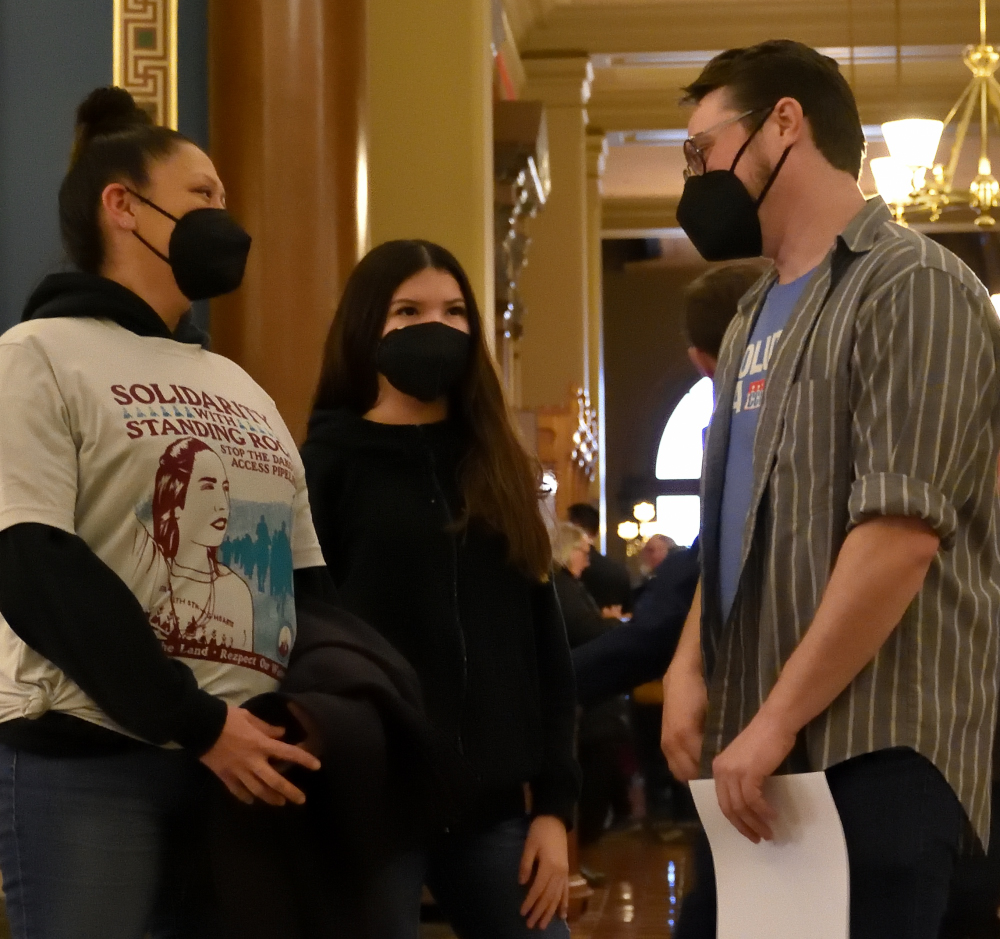
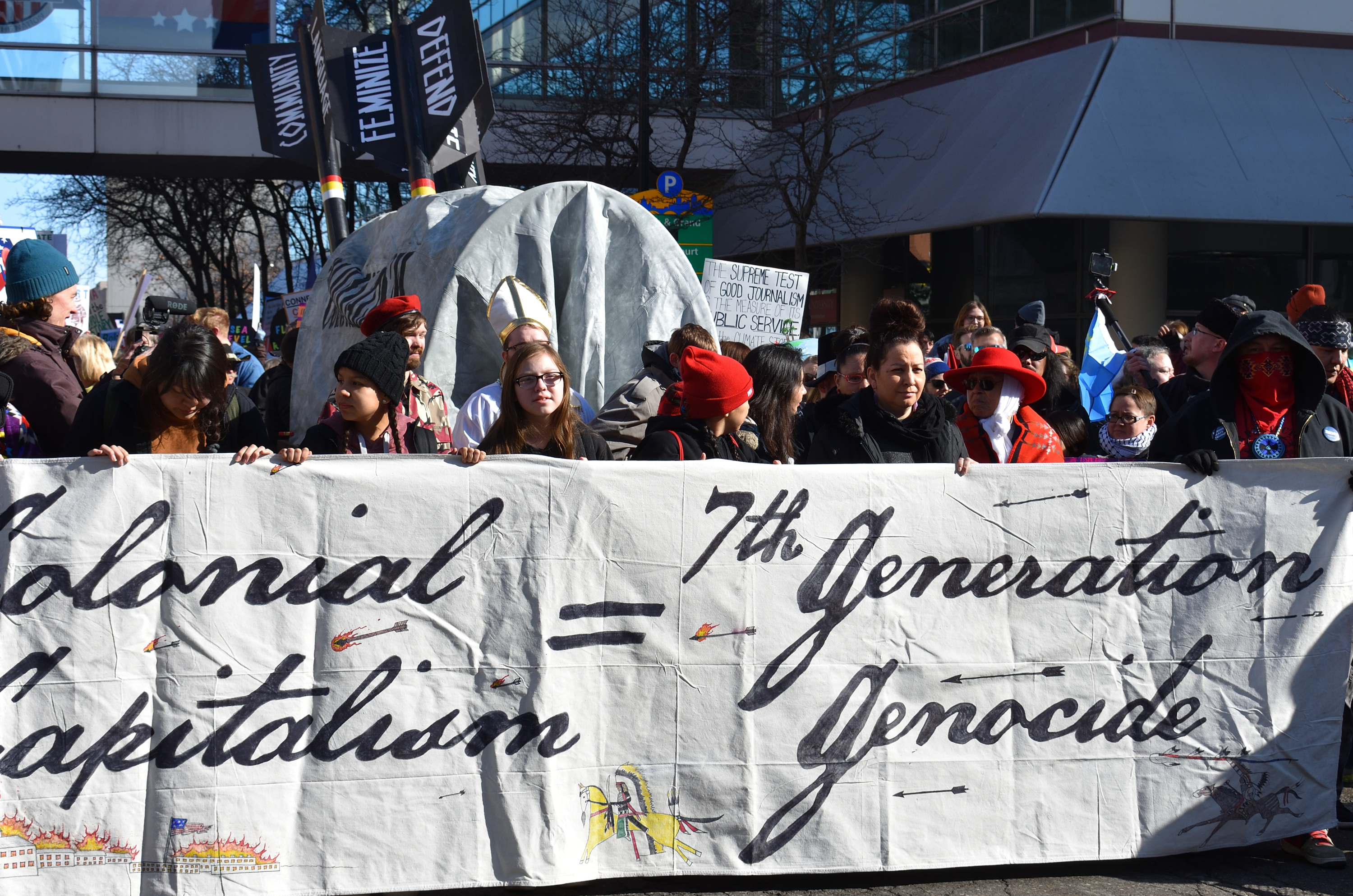
This incident — the potential murder by cop of an environmental activist — would be unprecedented on U.S. soil, but it’s undeniably emblematic of the times. With great sadness, I recall the heavily militarized police force and hired private army deployed to confront us at Standing Rock during the NoDAPL movement. And I remember all too well being labeled a terrorist in response to my stand on behalf of our Grandmother Earth. But peaceful, legal dissent — whether it be on the front lines of a pipeline fight or in an Atlanta forest — must be protected! That’s the foundation of a healthy democracy, and we have to push back on this shameful activist-as-terrorist narrative at every turn. 

On that note, I want to take a moment to say thank you. You may recall that, last congressional session, Lakota Law created a blog and action alert after the U.S. House of Representatives passed H.R. 1374. Had the bill passed the Senate and been signed off on by the White House, this hideous law would, for all intents and purposes, have given law enforcement carte blanche to kill water protestors under the guise of protecting “infrastructure” (read: pipelines). But thanks in part to more than 33,000 of you who sent messages of dissent to your senators, the law died in the Senate. 

Wopila tanka — thank you for your willingness to take a stand!

Chase Iron Eyes, Dakota Peoples Law


This video, “Love Letters to God” by Nahko and Medicine for the People, filmed at Standing Rock, vividly displays the actions of the militarized police against unarmed people peaceably assembling and praying.


Nahko and Medicine for the People. Love Letters to God.

T-MAPs Section 5: Support

This is a continuation of the series on Transformative Mutual Aid Practices (T-MAP’s)
(See: https://quakersandreligioussocialism.com/t-maps/ )

Section 5 is about where you find support. There are sections where you list the names of people and organizations that you find supportive. I won’t list my support people here, but you get the idea. This section ends with the following:


Conclusion – T-MAPs as a Tool for Mutual Aid 

We hope the process of completing your T-MAP has given you new insights into your own story and inspiration to engage in this process with others. It’s a living document – you can keep revising it and adding to it as you gain more ideas and visions. While T-MAPs can help you map your individual transformation and growth, we think it’s more powerful as a collective practice. T-MAPs is a tool that is designed to be developed in groups, shared with groups, and practiced in groups. Our vision is that T-MAPs and tools like it will play an important role in evolving the ability of creative activist movements and mental health support networks to communicate with each other and build the kinds of stronger, more effective communities and forms of resistance that our current historical moment requires.

By reflecting deeply on our own experiences and developing a stronger connection with ourselves and what’s important to us, we can become more comfortable sharing that knowledge; we can learn from each other and more easily collaborate with one another. By having a better awareness of each other’s personal struggles, it’s easier to understand our similarities and differences and navigate them with respect, love, and understanding. T-MAPs is really our attempt to help operationalize mutual aid.

Crisis = Opportunity

Taking the time to articulate basic needs and desires about wellness and support when someone is in a clear head space can make an enormous difference when any kind of crisis emerges. Having others who already know what your needs and desires are can turn crisis into an opportunity for growth and transformation, for building solidarity and grounded friendship. Understood and articulated, our weaknesses can actually become our strengths.

At the same time, by opening up space to talk about life lessons and personal stories it can become easier to talk about collective dynamics, and things that are often challenging to talk about in groups, like power and larger structures that affect all of us in different ways depending on our social location, like race and class and gender and ability. While there are many ways that our differences can end up separating us, if we can learn to talk about the difference our stories can actually bring us together and raise levels of awareness. T-MAPs is an invitation to a collective practice of transformation and growth. Skillfully facilitated, a group using these questions can evolve to trust and support each other in the hard times on the horizon. 

https://tmapscommunity.net/t-maps-section-5/


Completing the T-MAP workbook online has been beneficial to me. Now I’d like to see if there is a group who wants to explore this together.

I’m also working on a T-MAP workbook related to Spiritual Mutual Aid.


Linda Lewis, AFSC Country Representative for China/North Korea, and Dan Jasper, AFSC Public Education and Advocacy Coordinator for Asia, visited Iowa at the invitation of Jeff Kisling, clerk of the Peace and Social Concerns Committee of Iowa Yearly Meeting (Conservative) and Patti McKee, director of Catholic Peace Ministry. Linda spoke at Bear Creek Friends Meeting in Earlham, Iowa. Linda and Dan both spoke at Des Moines Valley Friends Meeting House. They were interviewed by WHO-TV, local videographer Rodger Routh, and talk show host Ed Fallon. They met Iowa Immigrant Rights Program staff Jody Mashek, Erica Johnson and Berenice Nava and travelled to Scattergood Friends School to meet Thomas Weber, Head of School, and Mark Quee, Farm Manager. Mark gave them a tour of the school’s farm. In 2001, AFSC hosted a North Korean agricultural tour of Iowa.

Photo credit: Jon Krieg, American Friends Service Committee


Transformative Mutual Aid Practices (T-MAPs) are a set of tools that provide space for building a personal “map” of wellness strategies, resilience practices, unique stories, and community resources. Creating a T-MAP will inspire you to connect your struggle to collective struggles. When we make and share our T-MAPs with others they become potent tools for healing and liberation.

One of the main benefits of making an T-MAPs document is being able to get clarity on the things that are important to us and being able to share it with other people. In this section, we identify the people, services, and resources that are the most important sources of support for us. This helps us remember where we can turn when things get hard, and who to stay in touch with along the way.

https://tmapscommunity.net/t-maps-section-5/

Creative Commons License

 T-MAPs is licensed by Jacks McNamara and Sascha DuBrul under a Creative Commons Attribution-NonCommercial-NoDerivatives 4.0 International License.

Do you trust the police?

There continue to be conflicting versions about the first killing of an environmental activist in this country, Manuel Teran “Tortuguita”. I am also an environmental activist.

So many times, the initial versions of police killings from the police have proven to be false. In this case the police say Tortuguita fired at them. Do you trust the police version? There is supposed to be body cam video, but that hasn’t been released. We are waiting for more details, but the truth may never be known

I know people have different ideas and/or experiences related to policing in this country. My attitude has changed dramatically over the past decade because of being involved in Black, Indigenous, and other people of color’s communities.


We as White Quakers like to think of ourselves as ahead or better than dominant culture, but we have been complicit in a system and mindset that are ubiquitous. Claiming the full truth of our history and committing to repair the harms done are deeply spiritual acts of healing our own wounds of disconnection. I would argue it is the pathway upon which we can, perhaps for the first time, discover and invigorate our faith with its full promise.

What would it mean for us to take seriously and collectively as a Religious Society a call to finish the work of abolition, hand in hand and side by side with those affected and their loved ones? What would it mean for us to stand fully with the calls to abolish the police and fully fund community needs instead? What would it mean to reckon with our past complicity with harm and fully dedicate ourselves to the creation of a liberating Quaker faith that commits to build the revolutionary and healing faith we long to see come to fruition? What would it look like to finally and fully abolish slavery?

A Quaker Call to Abolition and Creation by Lucy Duncan, Friends Journal, April 1, 2021

Lucy’s article includes this correction, that so many White people do unintentionally:
Correction: The author and FJ editors realize that an earlier version of this article inadvertently erased BIPOC (Black, Indigenous and people of color) Quakers in describing Quakers as though we were/are all White. Certainly there have been Black Friends and Friends of Color in our body from our earliest history. We apologize for this error. This online article has been updated accordingly. We have also clarified the relationship of George Fox with Margaret and Thomas Rous.


I have learned much more about community safety from my experiences with my Mutual Aid community. Mutual Aid is about rejecting hierarchies. Policing is about enforcing, often violently, hierarchies, systems of dominance.

I would like to see more people join our efforts to abolish police and prisons.


I’ve been participating in the Quaker for Abolition Network, initiated by Mackenzie Barton-Rowledge and Jed Walsh. The following is from an article they wrote for Western Friend.

Mackenzie: Let’s start with: What does being a police and prison abolitionist mean to you?
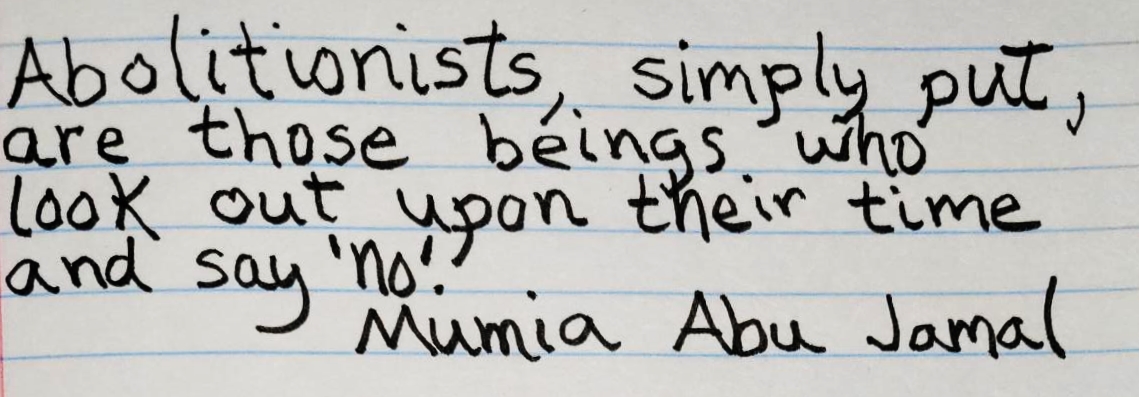
Jed: The way I think about abolition is first, rejecting the idea that anyone belongs in prison and that police make us safe. The second, and larger, part of abolition is the process of figuring out how to build a society that doesn’t require police or prisons.
Mackenzie: Yes! The next layer of complexity, in my opinion, is looking at systems of control and oppression. Who ends up in jail and prison? Under what circumstances do the police use violence?
As you start exploring these questions, it becomes painfully clear that police and prisons exist to maintain the white supremacist, heteronormative, capitalist status quo.

Abolish the Police by Mackenzie Barton-Rowledge and Jed Walsh, Western Friend, November December 2020

I contributed to another article in Western Friend.

In late 2020, the two of us wrote an article for this magazine, called “Abolish the Police.” Through writing the piece, we realized we wanted to convene a larger space where Friends with an interest in police and prison abolition could have conversations with one another. Quaker abolitionists today face major pushback from our Meetings; we hoped that drawing Friends together would support and strengthen our work.
In this context, the Quakers for Abolition Network is being born. We are a collection of Friends from at least five Yearly Meetings; we range in age from high school to our 80s; we are disproportionately queer and trans. While AFSC and FCNL staff are participating, this is a grassroots project without any formal connections to existing organizations. We are in the process of defining our mission statement, structure, and our methods for addressing white supremacy when it shows up in our work, while building relationships with each other as we go. Below, four Friends write about their approaches to abolition, their lessons, and their visions for where Quakers might be headed.

Jeff Kisling: Mutual Aid and Abolition
I grew up in rural Iowa, where there was very little racial diversity and interactions with police and the court system were rare. About ten years ago, I was blessed to become involved with the Kheprw Institute, a Black youth mentoring and empowerment community. I’ll never forget how shocked I was when a Black mother broke down in tears, explaining how terrified she was every minute her children were away from home. It was obvious that every other person of color in the discussion knew exactly what she was saying.
After retiring, I was led to connect with Des Moines Mutual Aid, a multiracial organization founded to support houseless people. For over a year, I’ve helped my friends fill and distribute boxes of donated food, while continuing to learn about the framework of mutual aid.
To me, mutual aid is about taking back control of our communities. Besides the food giveaway, we support houseless people and maintain a bail fund to support those arrested agitating for change. We also work for the abolition of police and prisons.

Mackenzie Barton-Rowledge and Jed Walsh: Introducing the Quakers for Abolition Network, Western Friend, Sept 2021


Points of Unity. Des Moines Mutual Aid

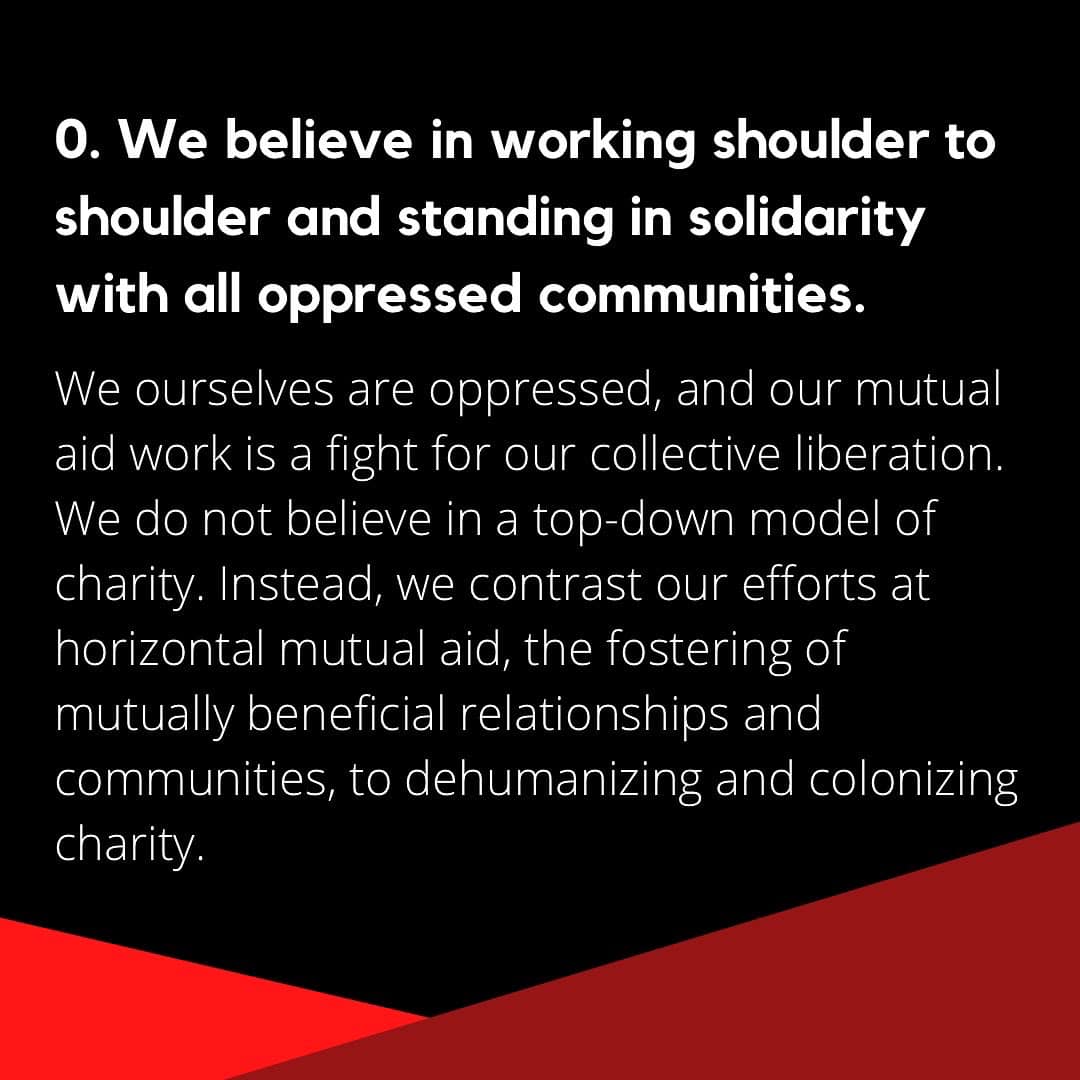
  • We believe in working shoulder to shoulder and standing in solidarity with all oppressed communities
    We ourselves are oppressed, and our mutual aid work is a fight for our collective liberation. We do not believe in a top-down model of charity. Instead, we contrast our efforts at horizontal mutual aid, the fostering of mutually beneficial relationships and communities, to dehumanizing and colonizing charity.
  • We believe in community autonomy.
    We believe that the communities we live and organize in have been largely excluded from state social services, but intensely surveilled and policed by the state repressive apparatus. Capitalism is fundamentally unable to meet people’s needs. We want to build self-sustaining communities that are independent of the capitalist state, both materially and ideologically, and can resist its repression.
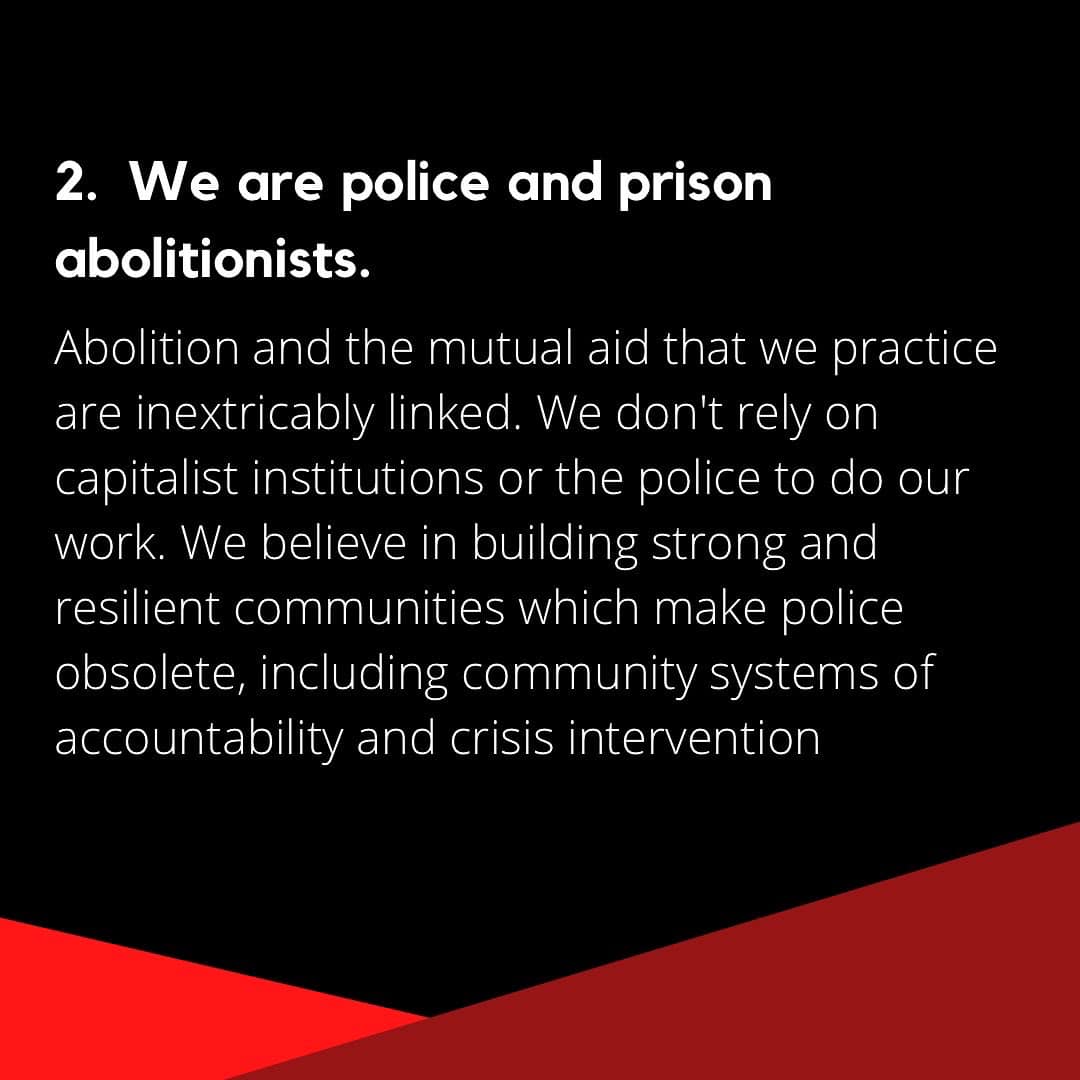
  • We are police and prison abolitionists.
    Abolition and the mutual aid that we practice are inextricably linked. We don’t rely on capitalist institutions or the police to do our work. We believe in building strong and resilient communities which make police obsolete, including community systems of accountability and crisis intervention.
  • We work to raise the political consciousness of our communities.
    Part of political education is connecting people’s lived experiences to a broader political perspective. Another component is working to ensure that people can meet their basic needs. It is difficult to organize for future liberation when someone is entrenched in day-to-day struggle.
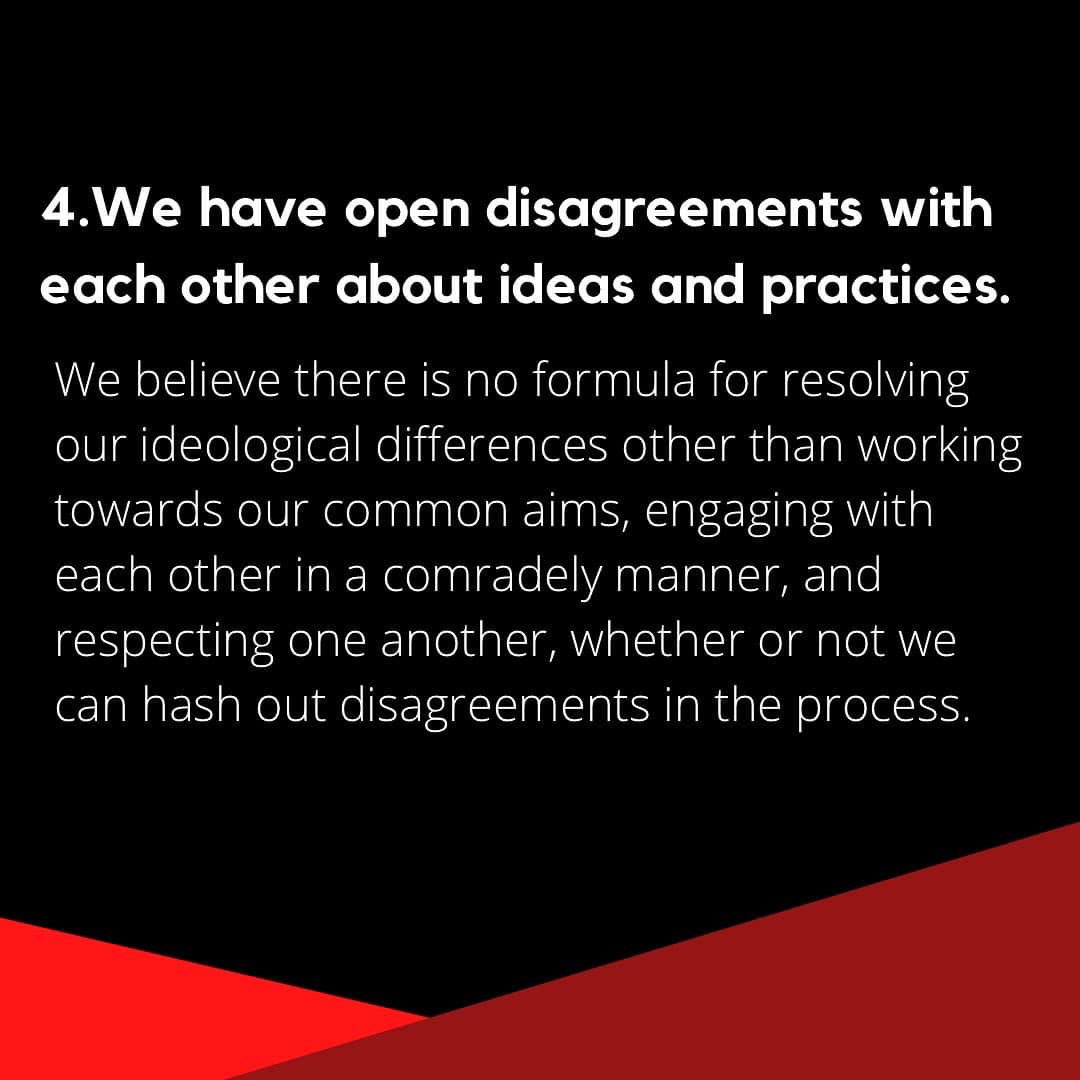
  • We have open disagreements with each other about ideas and practices.
    We believe there is no formula for resolving our ideological differences other than working towards our common aims, engaging each other in a comradely manner, and respecting one another, whether or not we can hash out disagreements in the process.

In Solidarity with Atlanta’s Forest Defenders

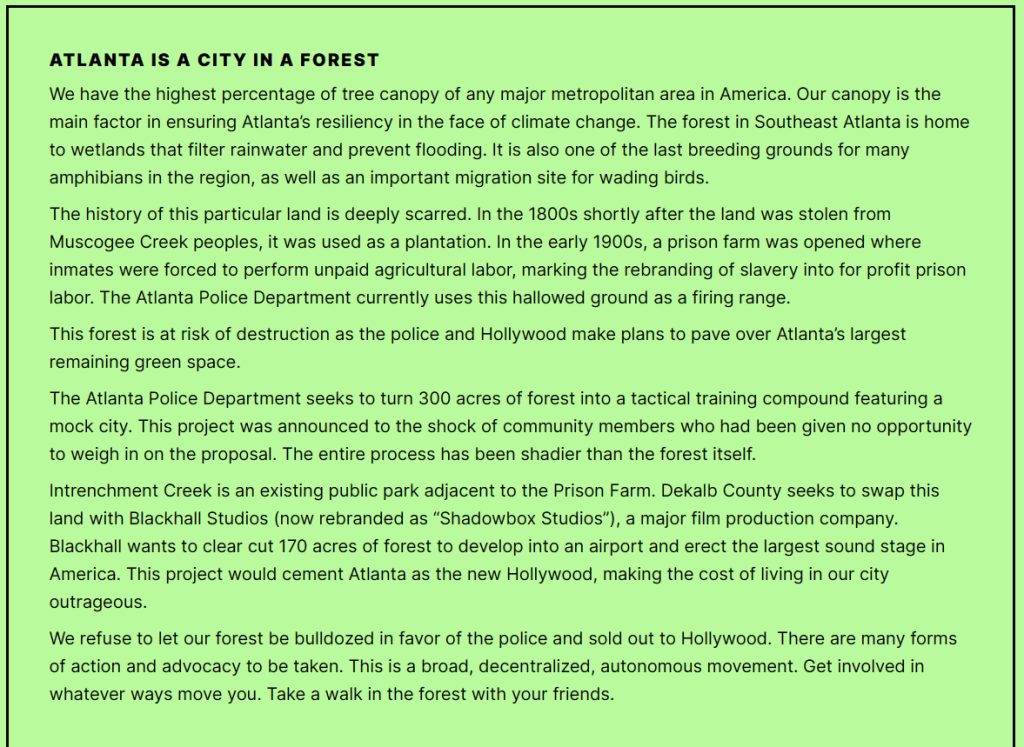
I’ve heard of tree sitting as a form of civil disobedience/protest for many years and admire those who do that. The Atlanta Defend the Forest movement of this story is also directly related to abolition and defunding the police. The Atlanta Police Foundation wants to destroy the forest in order to construct a national police training facility.

This article is a moving remembrance to the police killing of Tortuguita.

Little Turtles’s War. The shooting death of a protestor at the hands of police feels like both an inevitable outcome of this long battle over Atlanta’s South River Forest and a completely preventable tragedy by David Peisner, The Bitter Southerner, January 20, 2023
https://bittersoutherner.com/feature/2023/little-turtles-war-cop-city-atlanta


“We call on all people of good conscience to stand in solidarity with the movement to stop Cop City and defend the Weelaunee Forest in Atlanta.”

Defend the Altanta Forest

DEFEND THE ATLANTA FOREST
an autonomous movement for the future of South Atlanta

https://defendtheatlantaforest.org/


Rising Tide Statement on Tortuguita’s Murder: In Solidarity with Atlanta’s Forest Defenders

JANUARY 21, 2023ANNOUNCEMENTSFEATURED NEWSFRONTRT NEWSWIRERT PRESS RELEASES

Rising Tide North America statement on the murder of Tortuguita by the police in Atlanta, Georgia:

“The news has spread around the country and around the world. On the morning of January 18, police began an attack on the Weelaunee Forest in south Atlanta. In this assault, they shot and killed Cami Teran, known by friends in the movement to defend the forest as Tortuguita.
Tortuguita, remembered by many as “fierce and loving,” was a Black and Indigenous anarchist. Their life was spent seeking a world without prisons and without police where people could care for each other and be in relationship with the natural world. This moving rememberance shares just a small part of their spirit and their story.

The Atlanta Police Foundation wants to clear hundreds of acres of forest to build a massive training facility that would include a mock city and be a site for police forces from across the country to come train in urban warfare.  Tortuguita was part of the movement to protect the Atlanta forest and stop this project.  The movement is centered in Atlanta and includes community groups, forest defenders, lawyers, activists fighting gentrification, racism, and police brutality, and neighbors of the forest. But the movement is not only in Atlanta. Everywhere that police oppress indigenous people to protect pipelines, everywhere that forests are cleared, everywhere that profit and control are valued more than life, this movement resonates. The struggle in Atlanta is all of our struggle.

You can learn more about this movement and how communities in Atlanta and around the country are responding in recent reports from Democracy Now and Rolling Stone. Police would like to blame their brutality on Tortuguita and their fellow forest defenders. There must be an independent investigation of Tortuguita’s murder.

Our hearts are filled with love, sorrow, and rage in solidarity with all those grieving their death.

If you are moved to gather or act in Tortuguita’s memory, vigils are planned in many towns and cities through the weekend. If there is nothing planned near you, organize something with your friends and invite your communities. Support the people arrested in the raid. The outpouring of love and solidarity feeds those grieving and gathering in Atlanta as they care for each other in coming days and weeks.

Here are some other ways to support the movement from the statement in Solidarity with the movement to stop Cop City & defend the Weelaunee Forest, endorsed by RTNA:

  • Donate to the Atlanta Solidarity Fund to support legal costs for arrested protestors and ongoing legal action.
  • Call on investors in the project to divest from Cop City (list of APF investors). Call on builders of the project to drop their construction contracts.
  • Organize political solidarity bail funds, forest defense funds, and forest defense committees where you live.
  • Organize or participate in local solidarity actions.
  • Endorse and circulate this statement of solidarity.”

https://risingtidenorthamerica.org/2023/01/in-solidarity-with-atlantas-forest-defenders-rising-tide-statement-on-tortuguitas-murder/


On January 18, in the course of their latest militarized raid on the forest, police in Atlanta shot and killed a person. This is only the most recent of a series of violent police retaliations against the movement. The official narrative is that Cop City is necessary to make Atlanta “safe,” but this brutal killing reveals what they mean when they use that word.

Forests are the lungs of planet Earth. The destruction of forests affects all of us. So do the gentrification and police violence that the bulldozing of Weelaunee Forest would facilitate. What is happening in Atlanta is not a local issue.

Politicians who support Cop City have attempted to discredit forest defenders as “outside agitators.” This smear has a disgraceful history in the South, where authorities have used it against abolitionists, labor organizers, and the Civil Rights Movement, among others. The goal of those who spread this narrative is to discourage solidarity and isolate communities from each other while offering a pretext to bring in state and federal forces, who are the actual “outside agitators.” The consequence of that strategy is on full display in the tragedy of January 18.

Replacing a forest with a police training center will only create a more violently policed society, in which taxpayer resources enrich police and weapons companies rather than addressing social needs. Mass incarceration and police militarization have failed to bring down crime or improve conditions for poor and working-class communities.

In Atlanta and across the US, investment in police budgets comes at the expense of access to food, education, childcare, and healthcare, of affordable and stable housing, of parks and public spaces, of transit and the free movement of people, of economic stability for the many. Concentrating resources in the hands of police serves to defend the extreme accumulation of wealth and power by corporations and the very rich.

What do cops do with their increased budgets and their carte blanche from politicians? They kill people, every single day. They incarcerate and traumatize schoolchildren, parents, loved ones who are simply struggling to survive. We must not settle for a society organized recklessly upon the values of violence, racism, greed, and careless indifference to life.

The struggle that is playing out in Atlanta is a contest for the future. As the catastrophic effects of climate change hammer our communities with hurricanes, heat waves, and forest fires, the stakes of this contest are clearer than ever. It will determine whether those who come after us inherit an inhabitable Earth or a police state nightmare. It is up to us to create a peaceful society that does not treat human life as expendable.

The forest defenders are trying to create a better world for all of us. We owe it to the people of Atlanta and to future generations everywhere to support them.

Here are some ways to support the defense of the forest in Atlanta:

  • Donate to the Atlanta Solidarity Fund to support legal costs for arrested protestors and ongoing legal action.
  • Call on investors in the project to divest from Cop City (list of APF investors). Call on builders of the project to drop their construction contracts.
  • Organize political solidarity bail funds, forest defense funds, and forest defense committees where you live.
  • Participate in or organize local solidarity actions.
  • Endorse and circulate this statement of solidarity. Email defendweelaunee@riseup.net.

https://defendtheatlantaforest.org/solidarity/


T-MAPs 4: Slipping off the Tracks

This is a continuation of the series on Transformative Mutual Aid Practices (T-MAP’s)
(See: https://quakersandreligioussocialism.com/t-maps/ )

This section is a bit odd for me. The questions relate to significant stresses, deeper than I’ve had to deal with. There were significant stresses related to my career as a neonatal respiratory therapist, software and medical hardware engineer, database developer, and researcher. But I’m retired now.

The point of this section is to map out what is hard for us, what we struggle with, and help us develop self-knowledge to be able to figure out what to do about it. This section is often the hardest one to fill out because it asks us to think about hard times, but the information we gather is really useful in our journey. Often unresolved things from our past can make us feel unsafe or upset in the present – this is called getting triggered. Sometimes our triggers contain useful information about what needs to heal in us, and what we need to express. If you find yourself getting triggered or overwhelmed as you complete your map, take a break and do one of the practices in your wellness toolkit. It can also help to do the T-MAPs process with other people and realize you are not alone.

My Stressors

Do my job, school, or finances contribute to my stress?

Check off any of these examples that apply to you, and write in your own answers at the bottom:

Add your own:

My stressors relate to conflicts that arise from my spiritual guidance and trying to get Quakers and/or others to understand that guidance and follow it with me. Or for certain guidance, finding out how to implement it, and then do it myself. I realize this isn’t much compared to the awful things many people have gone, are going through.

Do my relationships negatively impact my wellness?

I get stressed when Quakers, friends and/or others feel I’m on the wrong track with my spiritual journey.

What health factors negatively impact my wellness?

Sleep Deprivation

Getting Sick

Add your own:

Sleep deprivation commonly triggers migraine headaches. Or becoming irritable more easily. Fortunately, I don’t get sick very often, but I don’t like to feel unwell.

Do stressors related to my cultural background or identity negatively impact my wellness?

Describe your experiences:

I suppose being a Quaker and my spirituality are my cultural background. It can be hard to hear what I am led to do spiritually. And sometimes to be led to do difficult things like write blog posts expressing some things I know will upset others. And sometimes it is difficult to join public events related to justice.

Do any traumatic events from my past cause me to get triggered in the present?

People criticizing or judging me in a way that brings back past experiences of emotional/​verbal abuse

Add your own:

My first public expressions of spiritual leading were when a teenager I really upset my parents when I turned in my draft cards during the Vietnam War. I know they had my best interests in mind, but I felt betrayed that they didn’t support draft resistance despite their Quaker beliefs in peace. That often comes to mind as I do many things related to justice work.

Now we’re going to ask some questions about what we’re like when we’re not well.

We get to decide what “not well’ means for each of us. There’s nothing wrong with having a hard time, but sometimes things feel like more than we can handle.  Try to identify what is a “warning sign” for you that danger is ahead, and what is just part of the natural ebb and flow of how you experience life. It can be very useful to have this information so we can share our insights with others.

What it looks like when I’m not doing well:

How I feel when I’m not well:

Check off any of these examples that apply to you, and write in your own answers at the bottom:

Anxious

Everything seems like too much effort

Describe your own experiences

I sometimes take on too much related to justice work. Also, responsibilities related to my Quaker community. That can add to the stresses related to spirituality. On the other hand, I don’t usually get too anxious because I do have a strong spiritual basis in my life (most of the time).

The following sections explore warning signs that we are having a rough time and could even be headed for crisis.

We’ve offered suggestions of different warning signs people might have, but feel free to move these around and make them your own – for example, for one person not sleeping enough might be an early warning sign, and for someone else it’s an advanced warning sign. Trust your own intuition and arrange your answers in a way that works for you – at the end of each question, you can always write in your own responses.

Warning Signs that I’m having trouble

Check off any of these examples that apply to you, and write in your own answers at the bottom:

I’m not sleeping enough.

I can’t get excited about things I usually love

Everyone and everything irritates me

Add your own

I usually notice this right away when I find I’m having trouble writing, since I write a blog post almost every day. And I have trouble finding things I want to take photos of, since I walk with my camera almost every day.

Advanced Warning Signs that I’m Approaching Crisis

Check any that apply to you, and write in your answers at the bottom:

Add your own:

I don’t even attempt writing or photography. I consider leaving my faith community altogether. Think about just giving up on my blog.


You are free to share — copy and redistribute the material in any medium or format under the following terms:

 T-MAPs is licensed by Jacks McNamara and Sascha DuBrul under a Creative Commons Attribution-NonCommercial-NoDerivatives 4.0 International License.

The Great Carbon Boondoggle

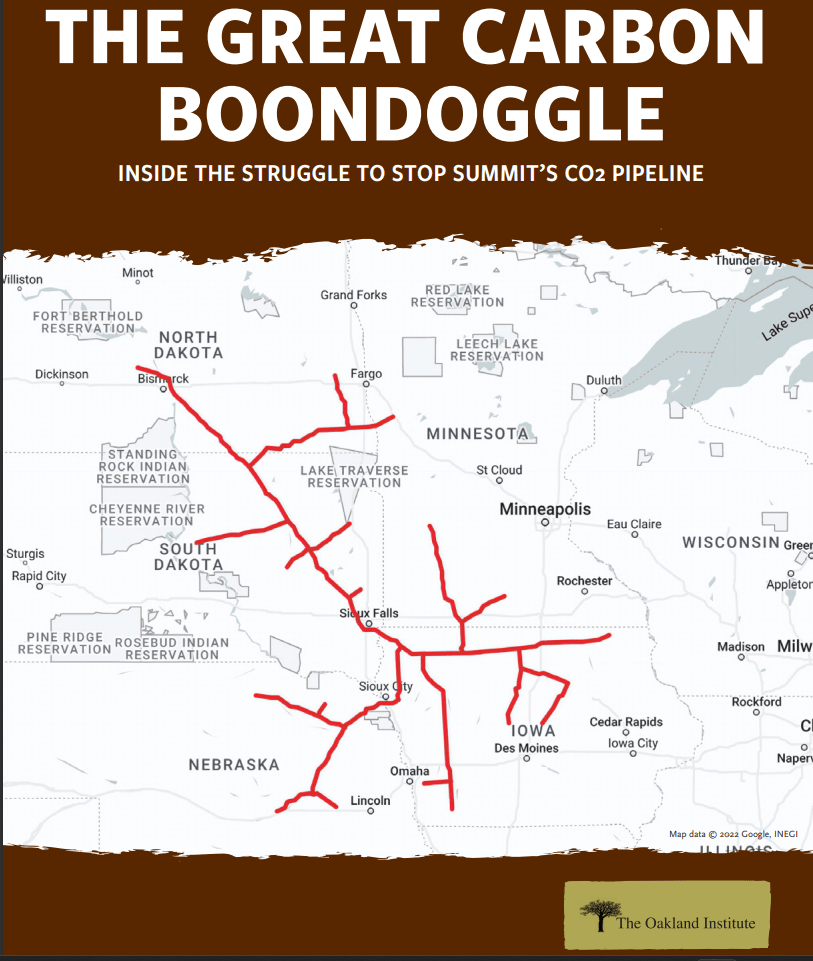
I’ve written about a new report from the Oakland Institute titled The Great Carbon Boondogglewhich focuses on the resistance to Summit’s CO2 (carbon) pipeline here in the Midwest. Summit is one of three proposed CO2 pipelines, so far, to be built in the Midwest. (See: Oakland Institute Report)

Boondoggle: work or activity that is wasteful or pointless but gives the appearance of having value

Notice how the proposed pipeline route travels past so many Native American reservations. A different pipeline, the Dakota Access pipeline was moved from passing near Bismarck, North Dakota, when the (primarily White) people there raised concerns about contamination of their water. Instead, the pipeline was constructed on the edge of the Standing Rock reservation. These pipeline routes are just one example of environmental racism.


Map courtesy of Pipeline Fighters, pipelinefighters.org

The report opens with a statement from my friend, Sikowis Nobiss.

https://www.oaklandinstitute.org/sites/oaklandinstitute.org/files/great-carbon-boondoggle-final.pdf

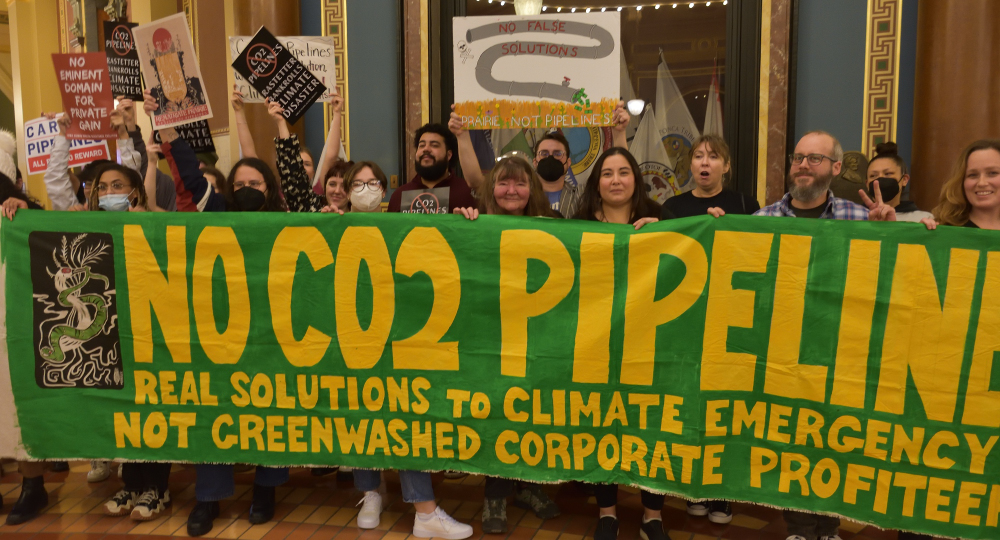
I won’t repeat all the work we have done to try to stop carbon pipelines. (Seehttps://quakersandreligioussocialism.com/?s=carbon) But I want to share our most recent actions yesterday, which included delivering a copy of The Great Carbon Boondoggle to Governor Reynolds.

We’ve been attending meetings of the Iowa Utilities Board, which will make the decision about approving the carbon pipelines. Following is a video of the presentations made yesterday to argue against approval of the pipelines.


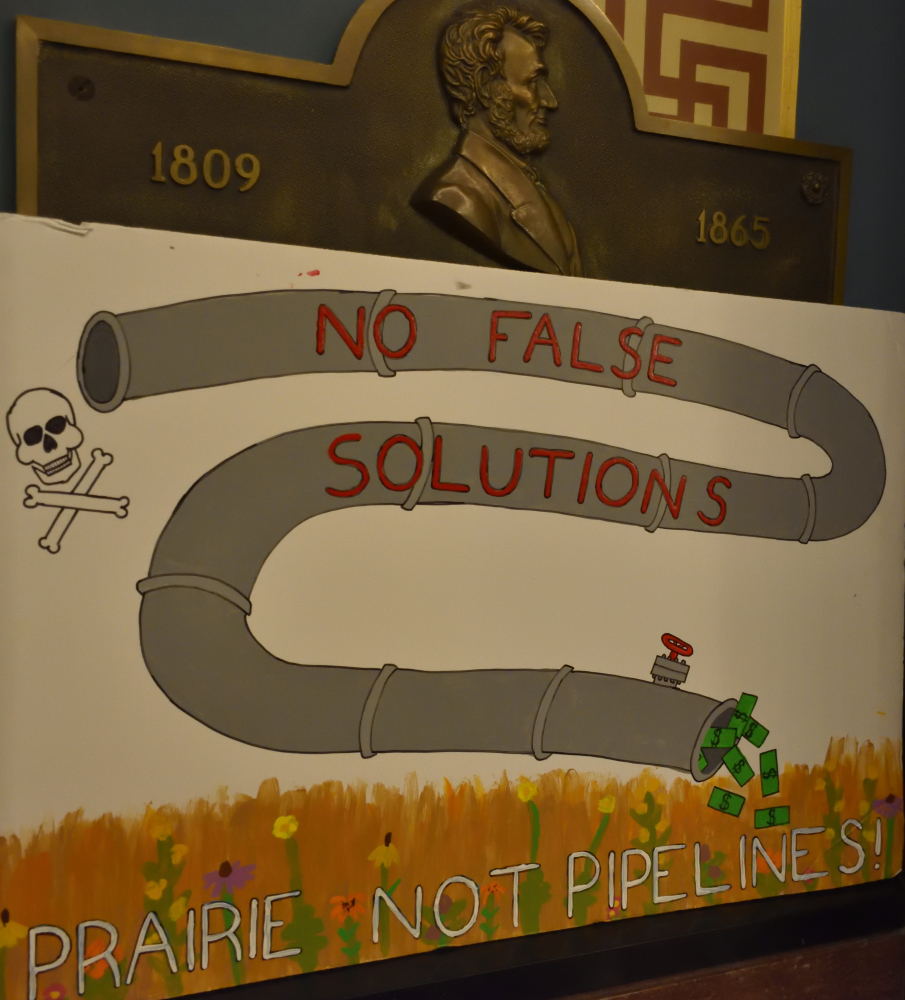
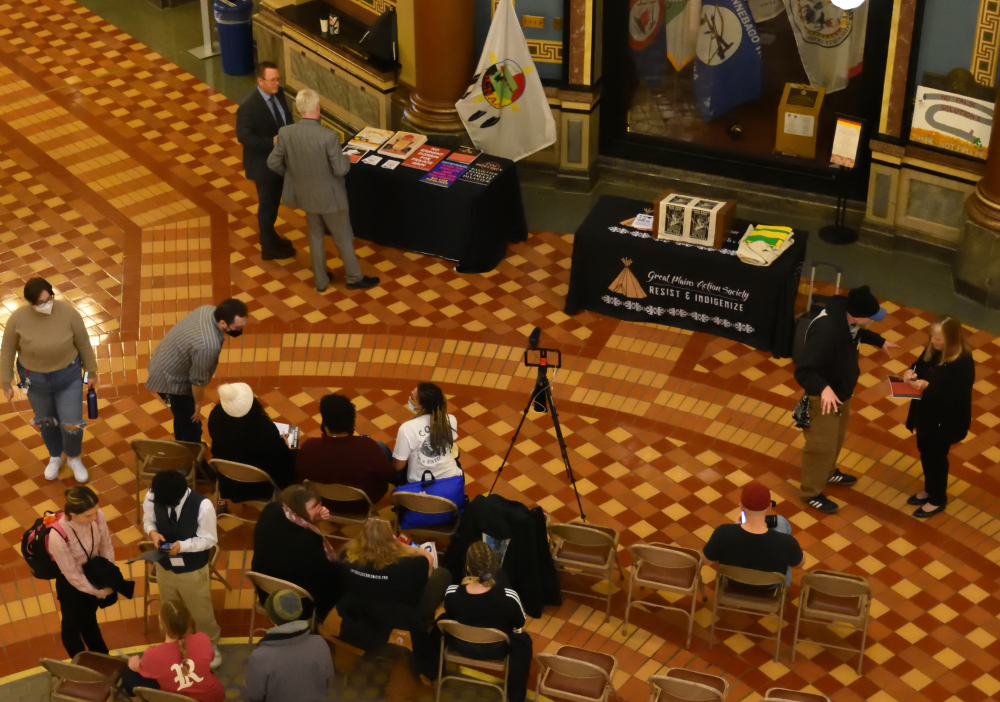
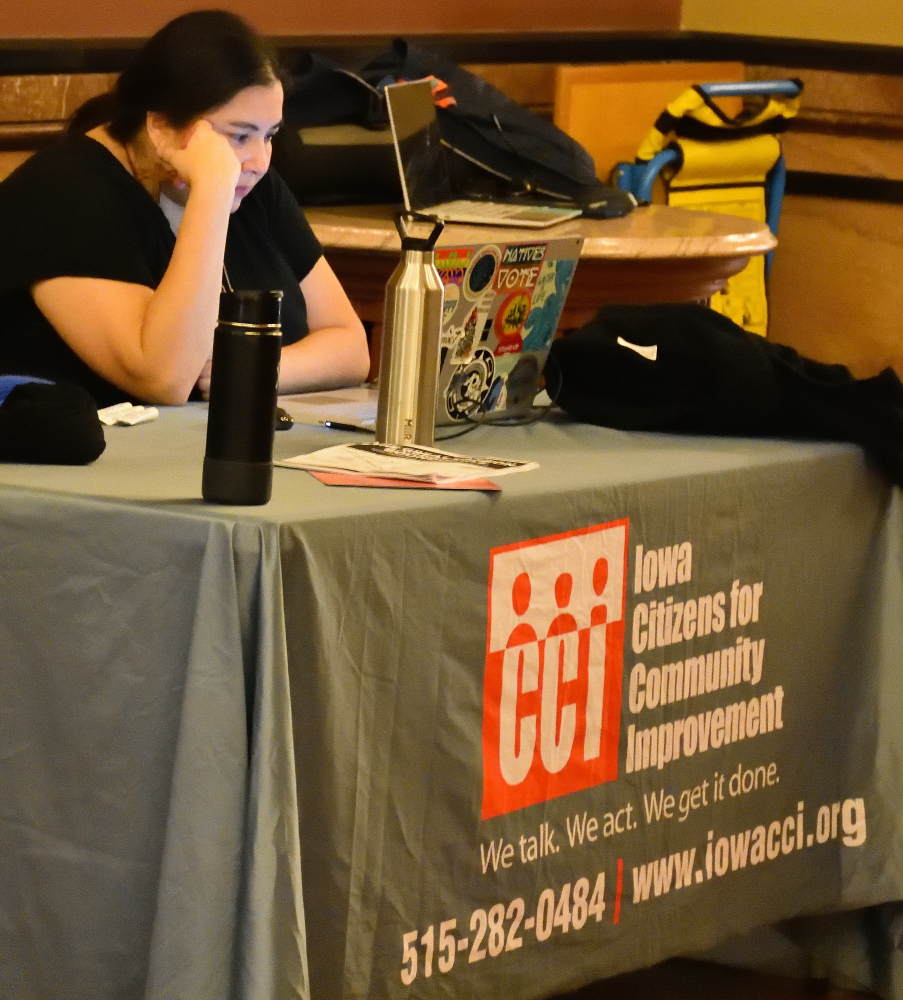
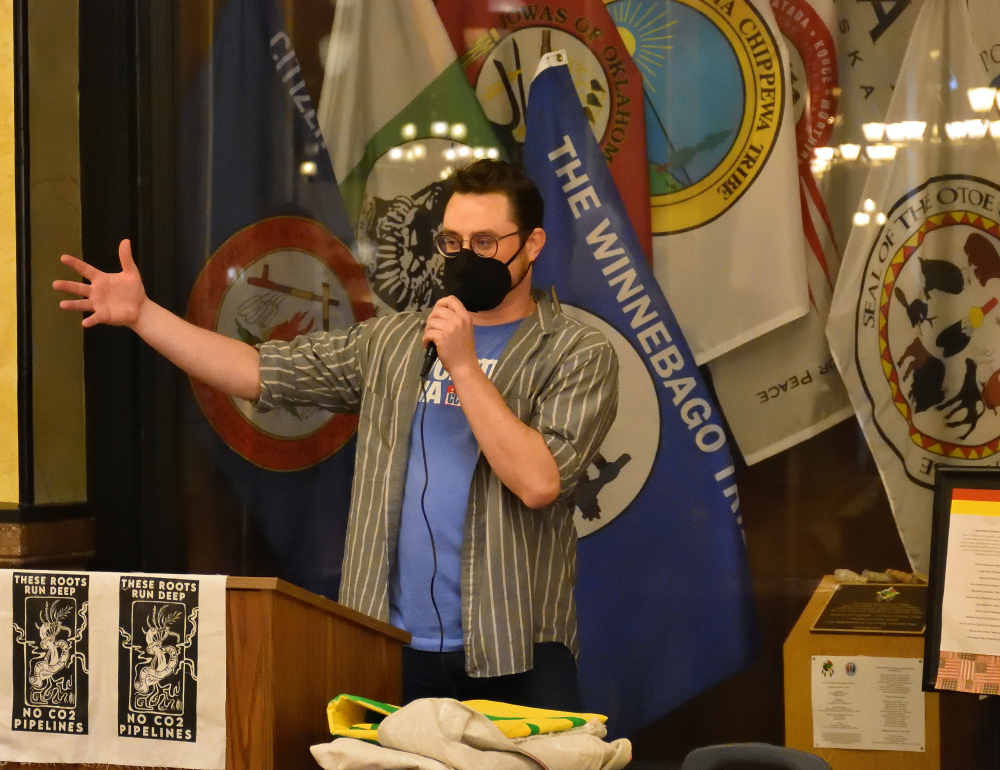
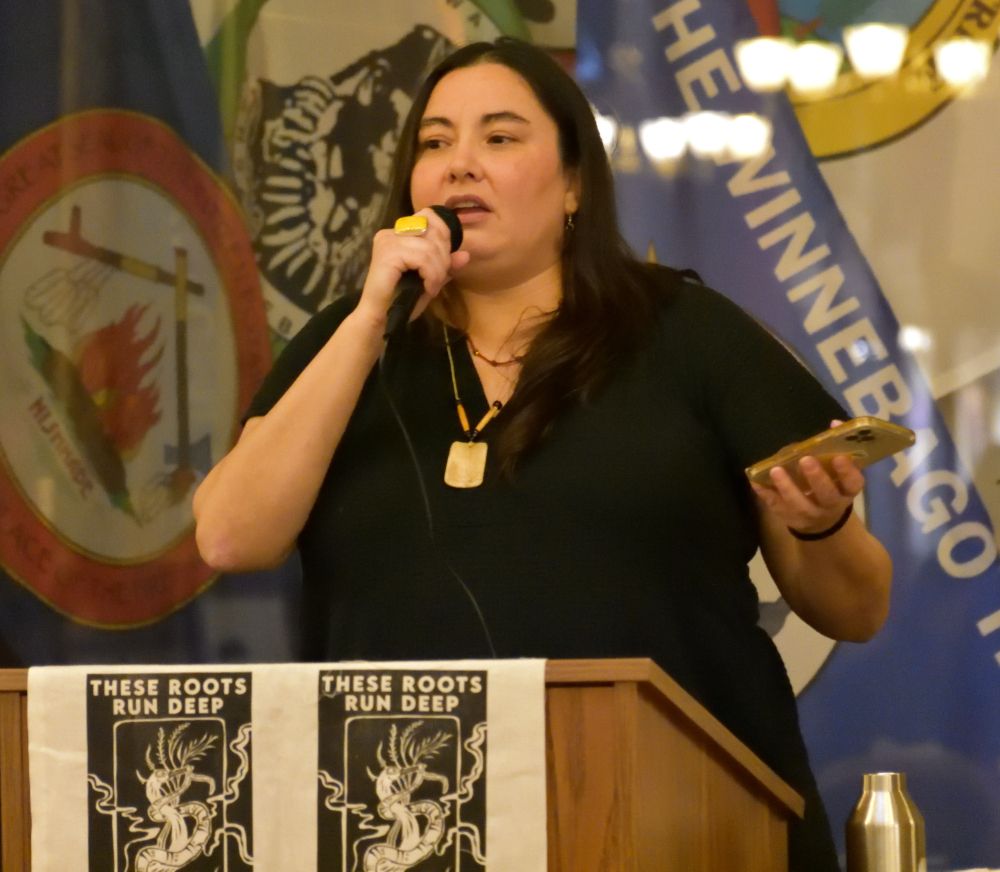
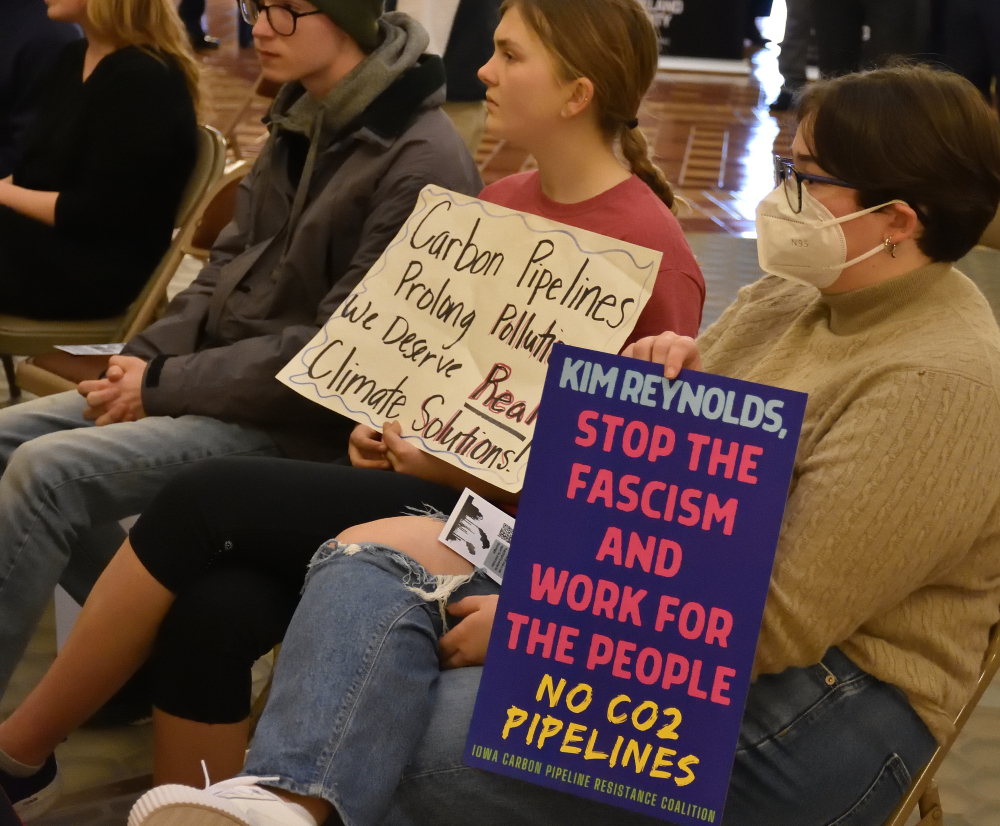
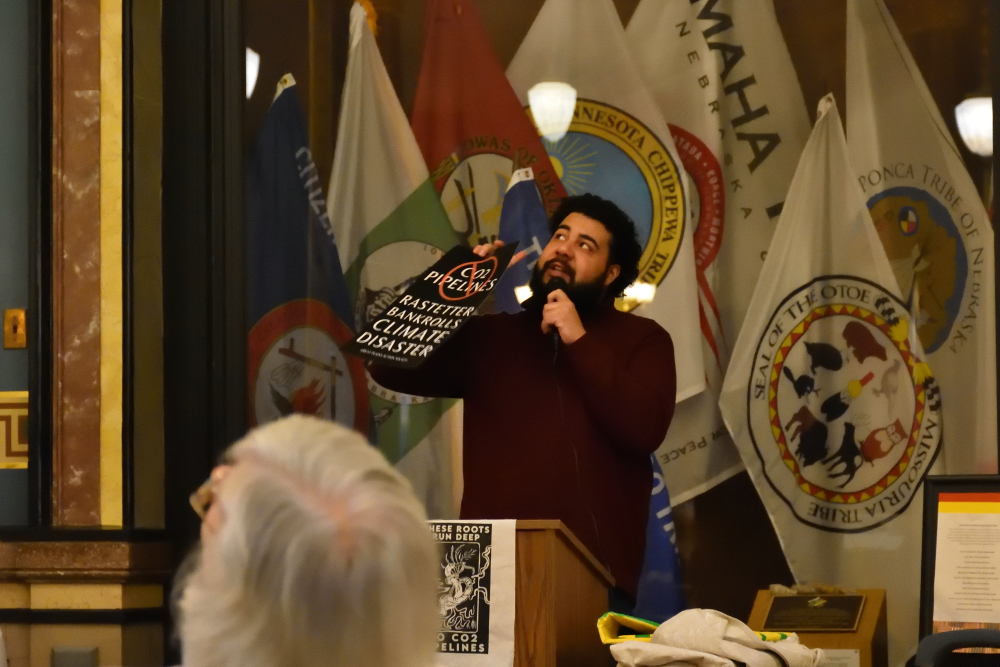
Then we met at the Iowa State Capitol, where the legislature is in session.


Photos: Jeff Kisling


Why Is Carbon Capture & Storage A False Climate Solution?


The promoters of the Midwest Carbon Express fail to reckon with the growing body of evidence exposing CCS as a false climate solution. CCS projects have systematically overpromised and underdelivered. Despite billions of taxpayer dollars spent on CCS to date, the technology has failed to significantly reduce CO2 emissions, as it has “not been proven feasible or economic at scale.” [27]

Crucially, the ability to capture and safely contain CO2 permanently underground has not been proven, a dangerous uncertainty given CO2 must be stored underground for thousands of years without leaking to effectively reduce emissions. [28]

It also risks permanently contaminating underground aquifers and poisoning precious drinking water for nearby communities.[29]

Additionally, applying CCS to industrial sources such as ethanol plants requires the creation of massive infrastructure and transportation of carbon to storage sites, and injecting it underground poses new environmental, health, and safety hazards in communities targeted for CCS infrastructure. As carbon capture infrastructure needs to be built near emitting sites, facilities would further impact those already burdened by industrial pollution. [30]

In many cases, this disproportionately impacts lower-income,Indigenous, Black, and Brown communities—furthering a vicious cycle of environmental racism.[31] To date, CCS has primarily been used to prop up the ineffective and environmentally unsustainable fossil fuel energy system. In the US, a dozen carbon capture plants are in operation—the majority of which are attached to ethanol, natural gas processing, or fertilizer plants—which generate emissions that are high in CO2. [32] Over 95 percent of the CO2 captured by these plants is currently used for enhanced oil recovery (EOR)—where instead of storing the captured CO2, it is injected into depleted underground oil reservoirs to boost oil production in wells.[33]

There are legitimate concerns that investing billions in carbon capture infrastructure to lower emissions from fossil fuels and ethanol production will reduce incentives for investors and policymakers to transition towards more sustainable and effective solutions. These include investing in wind or solar energy sources, phasing out of industrial agricultural production, developing infrastructure and services such as public transport. [34]

The Great Carbon Boondoggle


It is disturbing that the Biden Administration is strongly supporting Carbon Capture and Storage.

The Biden administration has hailed CCS and carbon pipelines as vital infrastructure to meet climate targets and claimed that the US needs 65,000 additional miles of pipeline by 2050. [3] The Infrastructure Investment and Jobs Act signed in November 2021 provides over eight billion dollars as federal grants, loans, and loan guarantees for carbon storage and pipelines.[4] In 2022, President Biden signed the Inflation Reduction Act (IRA), which substantially increased the already abundant tax credits for CCS projects and made it easier for projects to qualify for these credits.[5] This flood of public money has resulted in over 40 CCS projects announced in 2021 alone. [6]
In Midwestern US, Archer-Daniel Midlands (ADM), Summit Carbon Solutions, and Navigator CO2 Ventures are currently advancing three major CCS projects. The Great Carbon Boondoggle

End notes

[27] Center for International Environmental Law. Confronting the Myth of Carbon-Free Fossil Fuels: Why Carbon Capture Is Not a Climate Solution. July, 2021.
https://www.ciel.org/wp-content/uploads/2021/07/Confronting-the-Myth-of-Carbon-Free-Fossil-Fuels.pdf
[28] Center for International Environmental Law. Carbon Capture and Storage: An Expensive and Dangerous Plan for Louisiana. June 25, 2021.
https://www.ciel.org/wp-content/uploads/2021/07/Confronting-the-Myth-of-Carbon-Free-Fossil-Fuels.pdf
[29] Physicians for Social Responsibility. “Danger Ahead: The Public Health Disaster That Awaits From Carbon Capture and Sequestration (CCS).” February 10, 2022.
https://www.ciel.org/carbon-capture-and-storage-an-expensive-and-dangerous-proposition-for-louisiana-communities/
[30] Ibid.
[31] For example, in Louisiana, proposed CCS infrastructure would impact Black and Brown, lower-income communities living in “Cancer Alley,” the industrial region named after decades of poor air and water quality from industrial pollution increased cancer rates and other health risks. Ibid.
[32] Kusnetz, N. “Fossil Fuel Companies Are Quietly Scoring Big Money for Their Preferred Climate Solution: Carbon Capture and Storage.” Inside Climate News, August 17, 2021.
https://insideclimatenews.org/news/17082021/carbon-capture-storage-fossil-fuel-companies-climate/
[33] Iowa Chapter of Physicians for Social Responsibility. Fact Sheet: Low Carbon Standard, Ethanol and Carbon Capture. August 24, 2022. https://psriowa.org/event_ccs2022.html
[34] Ibid.

Martin Luther King and Capitalism

Whenever I try to talk about the necessity of rejecting capitalism, people don’t seem to even comprehend what that means. Why it must happen. When I asked Ronnie, my Mutual Aid mentor about this, he said he’s been having that experience for the twenty years he’s been an activist. He said that was because people hadn’t experienced the collapse of capitalism in their lives, yet. I believe he’s right. Unfortunately, that is changing as the capitalist economy is collapsing. Yet another reason to form more Mutual Aid communities.

I’m of the firm opinion that a system that was built by stolen bodies on stolen land for the benefit of a few is a system that is not repairable. It is operating as designed, and small changes (which are the result of huge efforts) to lessen the blow on those it was not designed for are merely half measures that can’t ever fully succeed.

So the question is now, where do we go from here? Do we continue to make incremental changes while the wealthy hoard more wealth and the climate crisis deepens, or do we do something drastic that has never been done before? Can we envision and create a world where a class war from above isn’t a reality anymore?”

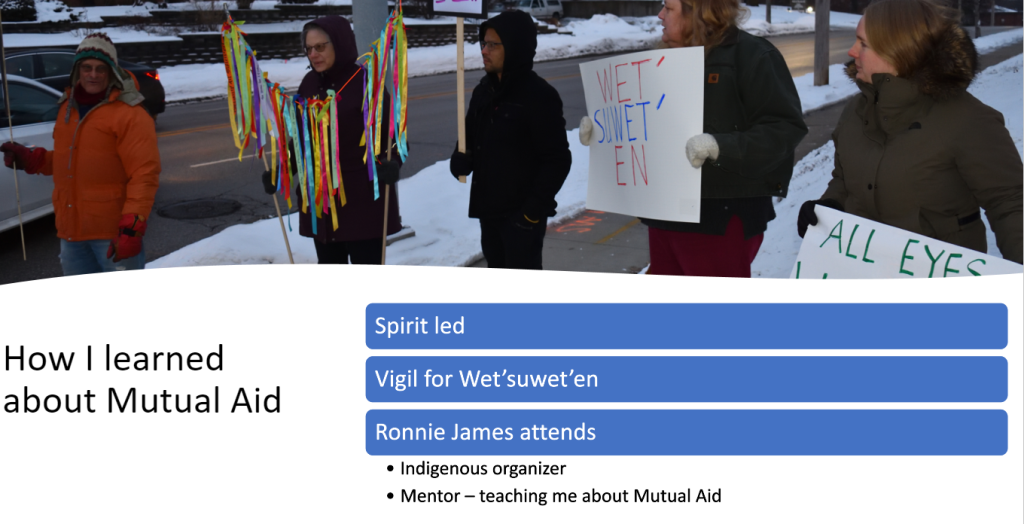
Ronnie James, Des Moines Mutual Aid

I too have become fully convinced of the evils of capitalism. Moreover, I have come to the conclusion that my faith dictates that I work to replace it.

Fran Quigley, Director of the Health and Human Rights Clinic at Indiana University McKinney School of Law

Martin Luther King, Jr.’s work was as much about economics and poverty, as it was about racial equality.


“I am much more socialistic in my economic theory than capitalistic,” Martin Luther King admitted to Coretta Scott, concluding that “capitalism has outlived its usefulness.”

Speaking at a staff retreat of the SCLC in 1966, King said that “something is wrong … with capitalism” and “there must be a better distribution of wealth” in the country. “Maybe,” he suggested, “America must move toward a democratic socialism.”

For King, the only solution to America’s crisis of poverty was the redistribution of wealth. In a 1961 speech to the Negro American Labor Council, King declared, “Call it democracy, or call it democratic socialism, but there must be a better distribution of wealth within this country for all God’s children.”

The Forgotten Socialist History of Martin Luther King, Jr. by Matthew Miles Goodrich, In These Times, January 16, 2023


Again, we have deluded ourselves into believing the myth that Capitalism grew and prospered out of the protestant ethic of hard work and sacrifice, the fact is that Capitalism was built on the exploitation and suffering of black slaves and continues to thrive on the exploitation of the poor both black and white, both here and abroad. If Negroes and poor whites do not participate in the free flow of wealth within our economy, they will forever be poor, giving their energies, their talents and their limited funds to the consumer market but reaping few benefits and services in return.”

I wish that I could say that this is just a passing phase in the cycles of our nation’s life; certainly, times of war, times of reaction throughout the society but I suspect that we are now experiencing the coming to the surface of a triple prong sickness that has been lurking within our body politic from its very beginning. That is the sickness of racism, excessive materialism and militarism

The Three Evils of Society – Delivered at the National Conference on New Politics August 31, 1967, Chicago, Ill

“And one day we must ask the question, ‘Why are there forty million poor people in America? And when you begin to ask that question, you are raising questions about the economic system, about a broader distribution of wealth.’ When you ask that question, you begin to question the capitalistic economy. And I’m simply saying that more and more, we’ve got to begin to ask questions about the whole society…”

Excerpts from King’s speech “Where Do We Go From Here?” delivered at the 11th Annual SCLC Convention, Atlanta, Georgia, August 16, 1967

The title for this blog, Quakers and Religious Socialism, came from exchanges of messages with my friend Fran Quigley. The following was in response to my blog post, The Evil of Capitalism.  

This post of yours struck me close to home. I too have become fully convinced of the evils of capitalism. Moreover, I have come to the conclusion that my faith dictates that I work to replace it. Turns out I am far from alone, so I’ve been devoting much of my time this past year to the Religion and Socialism Committee of the DSA, www.religioussocialism.org .

And, as part of a book project on religious socialism, I have published several articles profiling activists from different faith and spiritual traditions who feel called to advocate for a socialist society.  (Examples, if you are interested: a Catholic socialist, a Jewish rabbi socialist, a Black Presbyterian minister socialist, a Liberation Theologian Lutheran minister/professor,  Muslim socialists , a Buddhist socialist and a Black Baptist minister socialist.  I also co-wrote with longtime Religion and Socialism activist Maxine Phillips a short, one-stop primer on the argument for Christian socialism: https://mphbooks.com/democratic-socialists/ )

I do not know of a definitive guide to Quaker socialism, but I know Bayard Rustin, Staughton Lynd, and AJ Muste (late-in-life switch to being a Friend) at various times identified as socialists, and there is a robust UK Quaker Socialist Society: https://quakersocialists.org.uk/  Willard Uphaus was a Christian socialist and pacifist Earlham alum, but it’s not clear to me if he was a Quaker: https://www.americanswhotellthetruth.org/portraits/willard-uphaus

Fran Quigley, director of the Health and Human Rights Clinic at Indiana University McKinney School of Law and a religioussocialism.org editorial team member


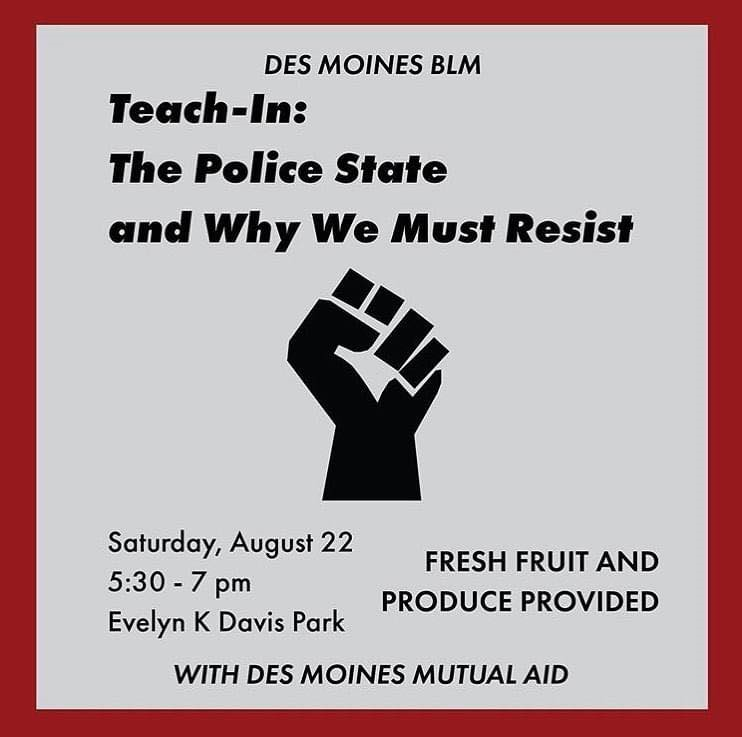
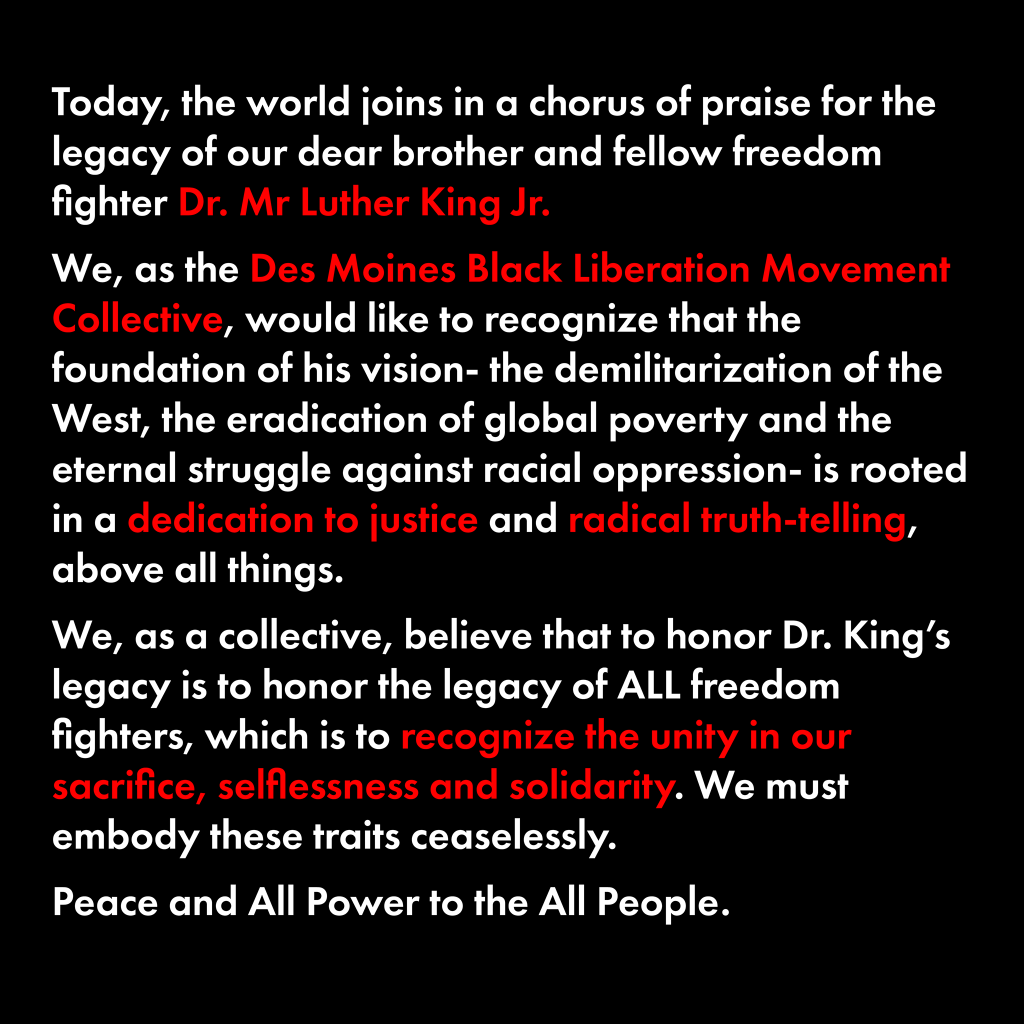
Des Moines Black Lives Matter/ Black Liberation
https://www.facebook.com/desmoinesblm

Early in our lifetimes, industry provided nearly full employment. Nearly every household had someone who was working, and bringing home a paycheck. All commerce was based on capitalism. Money was required for every transaction. Money was the only way to obtain goods and services.

Then with increasing automation, and moving jobs overseas for cheap labor, the unemployment rate began to increase. Soon millions of people no longer had the income needed to pay for goods and services. The numbers of those without jobs has increased dramatically from the economic impact of the COVID pandemic. Those without jobs have to rely on social safety nets, which often means people are living in poverty, at subsistent levels.

As a society we failed to address the loss of wages for millions of people who no longer had money, in a system that required money for everything–food, shelter, healthcare, etc.

It is clear to me that capitalism is an unjust, untenable system, when there is plenty of food in the grocery stores, but men, women and children are going hungry, living on the streets outside the store. There is no justification for this.

Conscientiously Object to Capitalism, Jeff Kisling, 12/4/2020


T-MAPs Section 3: Life Lessons and Personal Stories

This section goes more deeply into our personal experiences. I appreciate how the list of statements can evoke our responses and stories. Following the list of statements on each page, there is an open-ended text box to tell your stories related to those statements you chose.

I’m beginning to see how this can be very useful to share with someone else, or a group of people. These lists and responses provide a focused way to share our life lessons and personal stories with each other. That can begin by comparing which statements we checked on a given page with each other.

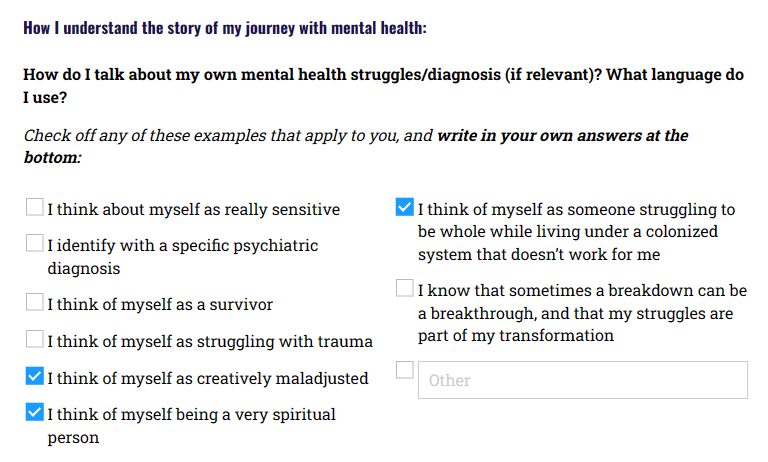
An example of the list of statements:


What Language do you use?

For years I’ve wondered if I would have been diagnosed as being on the autism spectrum if that had been more commonly looked at when I was younger. I think of myself being a very spiritual person. My spirituality is a very important part of my mental health. And language is important because in my culture we don’t have good ways to express spirituality.
I have been learning a lot about settler colonialism from my Indigenous friends. While I continue to learn of all the ways I benefit from white superiority, life as a Quaker has meant many struggles against white dominance. At 18 years of age, I became a draft resister. I was led to live my life without a car for environmental reasons. I’ve spent the past decade working to protect the water, working against pipelines. I’ve found a home in my Mutual Aid community that works against systems of dominance and hierarchy.


Where we come from and how we tell stories about ourselves is so important. In this section we have a series of questions to help you think about your own personal story and find good language for it. Society has so many expectations and frameworks for understanding your life that might not fit at all, or might fit in some ways but not others. There is an incredible power in creating a personal narrative of your life that fits well for you.

This section has two parts – the first is on understanding your journey with mental health and emotional distress, and the second on social and cultural context as it informs mental health. If you don’t identify as someone who’s been through intense mental health struggles and and/or the diagnosis process, some of the questions in the first half might not feel like they apply – it’s fine to skip them. In the second half of this section, some of these questions might be new to you – you might not have thought a lot about your cultural or class background, for example – and that’s ok. Consider these questions a starting point for your explorations.

https://tmapscommunity.net/t-maps-section-3/

This is the PDF of my work on Section 3.


Creative Commons License

 T-MAPs is licensed by Jacks McNamara and Sascha DuBrul under a Creative Commons Attribution-NonCommercial-NoDerivatives 4.0 International License.

Martin Luther King and Mutual Aid

For the past three years my justice work has focused on Mutual Aid.
(See: https://quakersandreligioussocialism.com/mutual-aid/ )

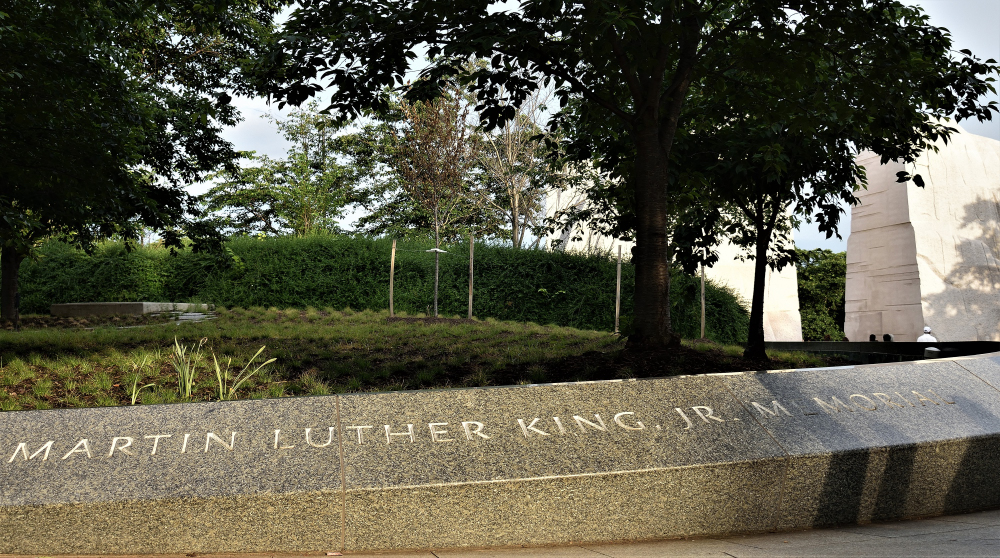
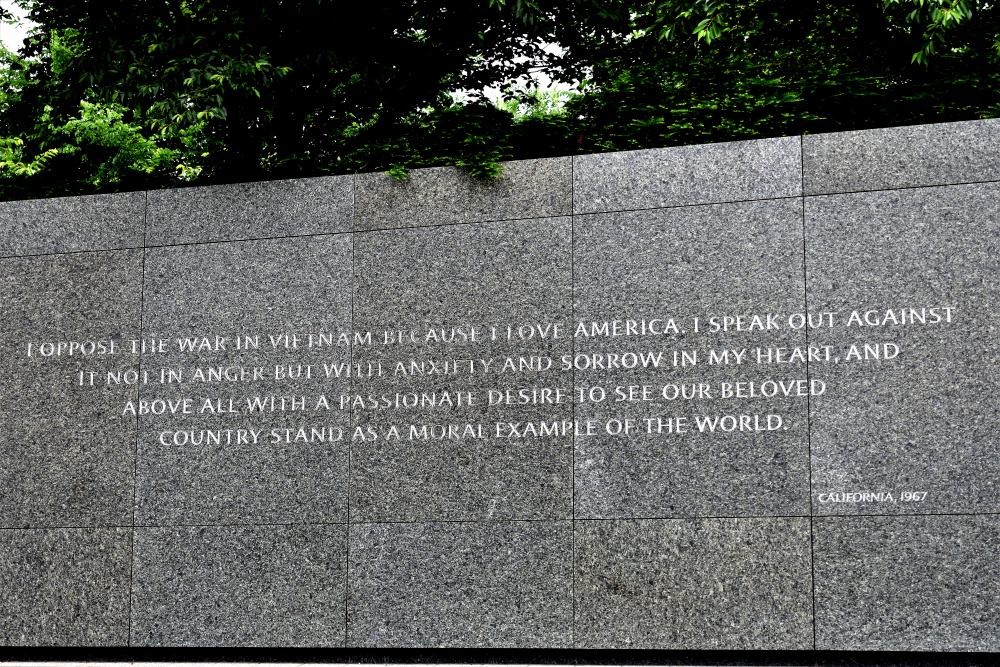
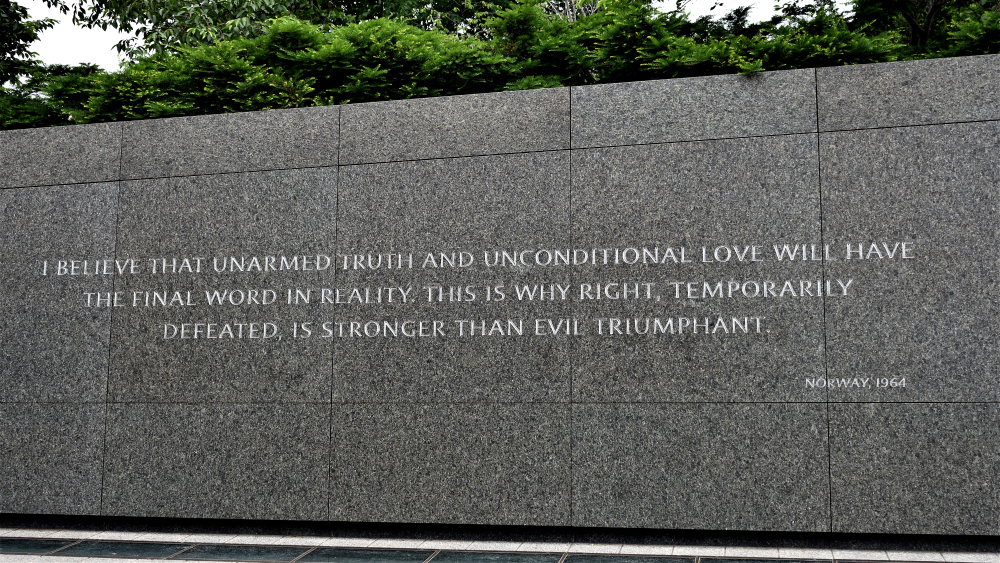
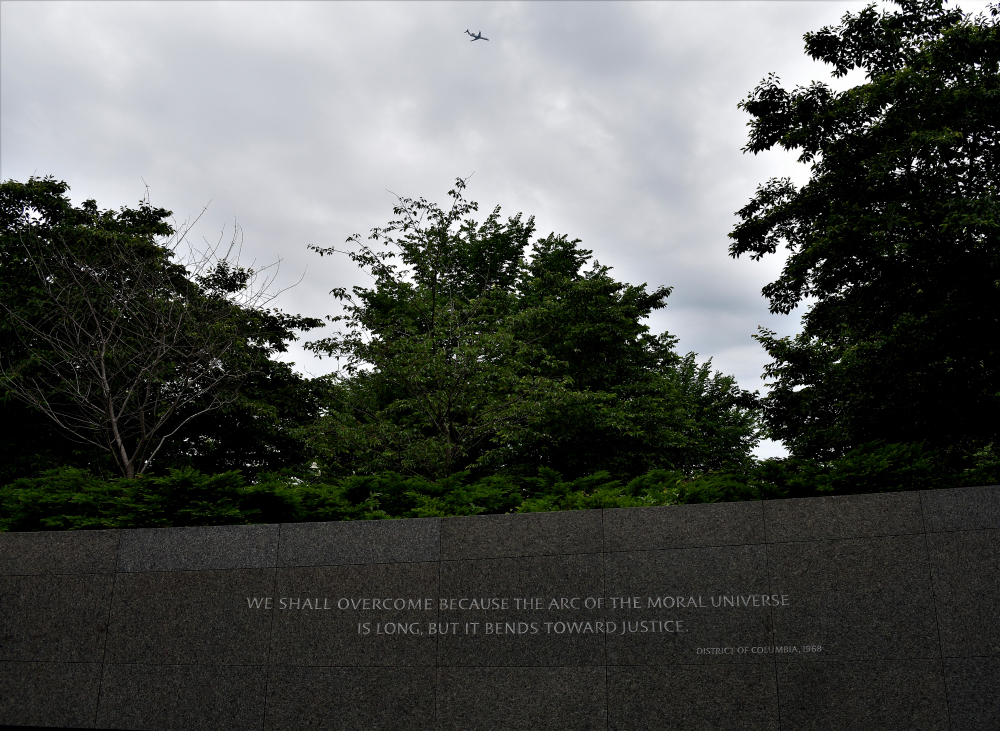
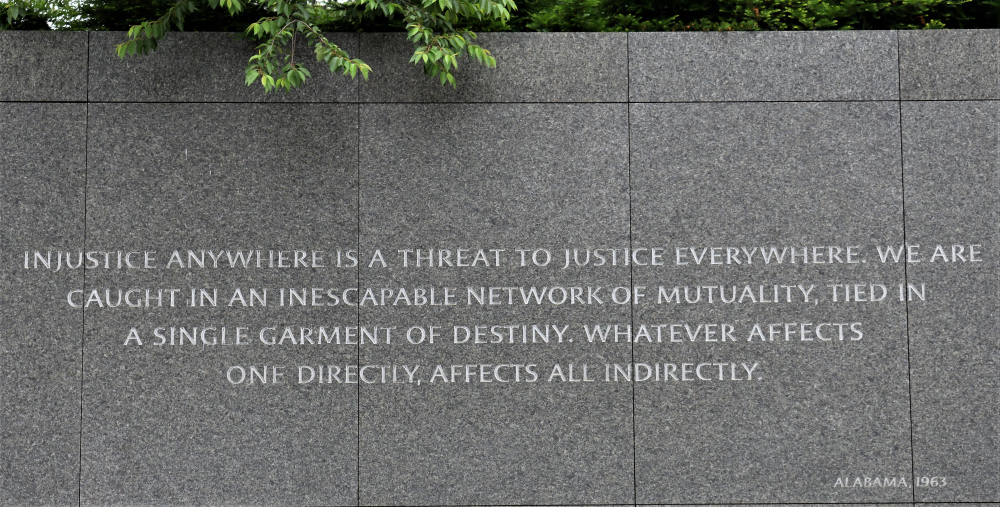
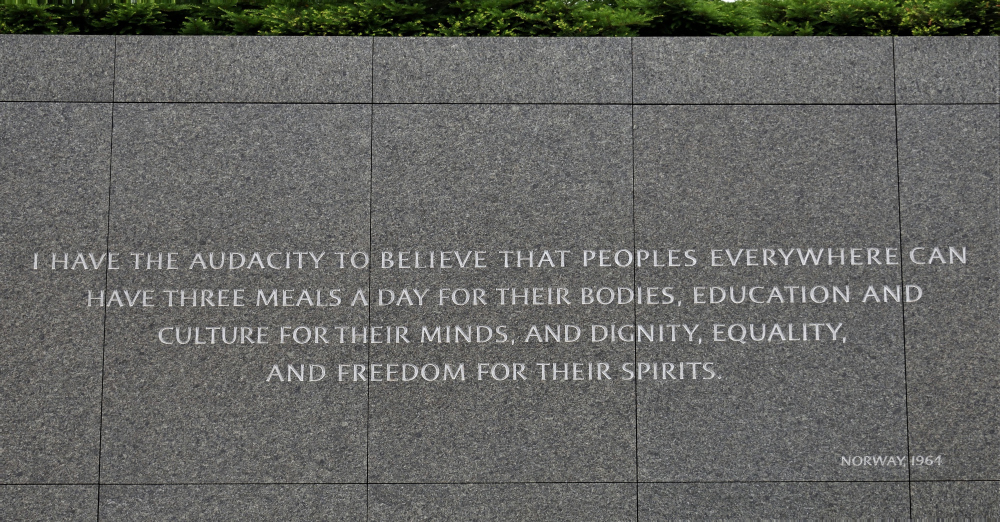
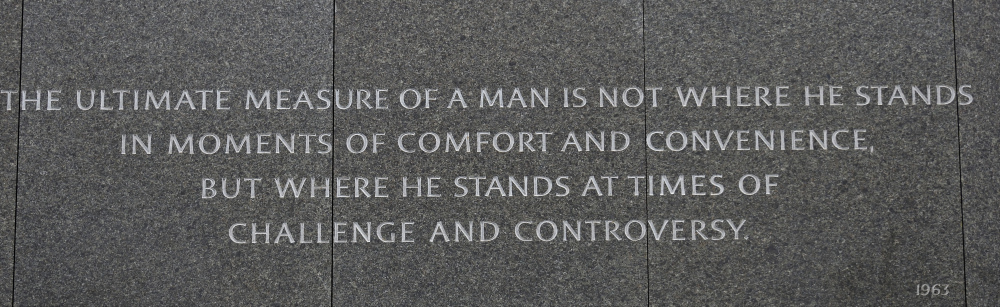
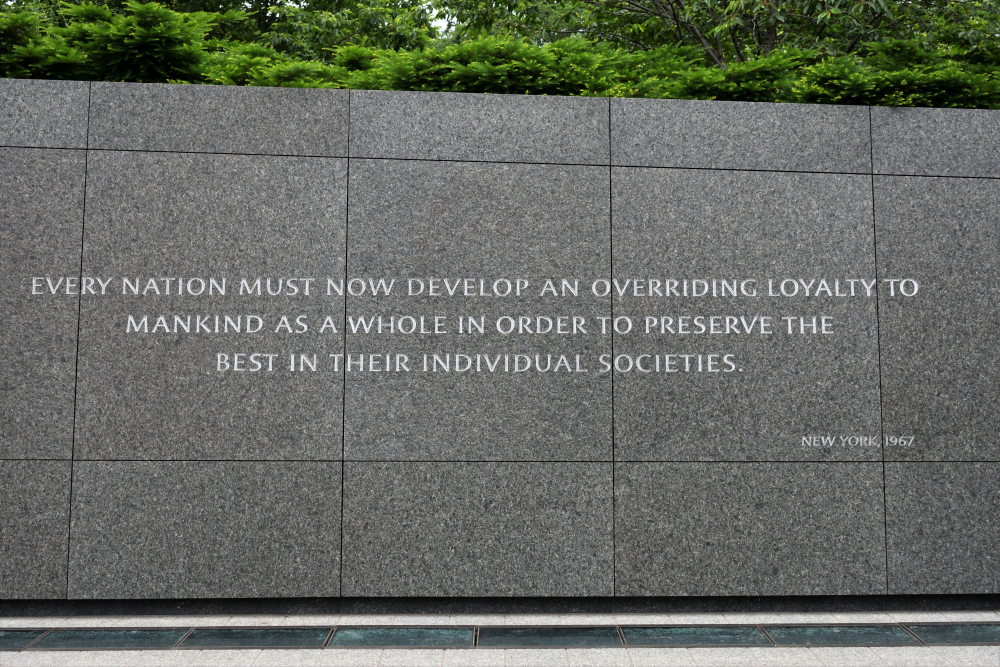
On this Martin Luther King Day, I’m sharing some questions (queries) related to Mutual Aid. And photos I’ve taken of the Martin Luther King Memorial in Washington, DC.


Queries about Mutual Aid

  • How are we working to deal with existing chaos and preparing for further collapse?
  • Do we provide for everyone’?
  • What is our relationship with Mother Earth? Do we honor and conserve the resources we use?
  • What systems of dominance, of hierarchies are we involved in?
  • Do we work to ensure there aren’t hierarchies in our communities, in our relationships with all our relatives?
  • Do we have the courage to follow what the Spirit is saying to us? To not force those messages to conform to our existing beliefs and practices.
  • How do we connect with communities beyond our Quaker meetings? What are we learning about spiritual connections beyond our meetinghouses? Are we sharing these spiritual lessons with others?

Jeff Kisling


Mutual aid means something more specific than just “helping each other out.” It conscientizes people (makes them aware of social conditions) and mobilizes them for transformative mass action like protests, strikes, or boycotts. Furthermore, it is not sponsored by the state or by philanthropists. 

Mutual aid: material and spiritual by Abby Rampone, Call to Action, March 8, 2021

Activist and prison-industrial complex abolitionist Mariame Kaba celebrated the legacy of Dr. Martin Luther King Jr. by praising NU Community Not Cops and speaking to the importance of mutual aid and political organizing in Wednesday’s MLK Dream Week virtual keynote.

“Abolitionists have a lot to learn from Dr. King,” Kaba said. “If King were alive today… I have no doubt that what he would be addressing in our current historical moment is the violence and destruction of the prison-industrial complex.”

The prison-industrial complex abolition movement hinges on two key principles, Kaba explained: the belief that police perpetuate — not mitigate — harm and the practice of mutual aid. 

Mutual aid — or the extension of community-based assistance, services, funds and care with no requirements or expectations of the recipients — was a core tenant of the Montgomery Bus Boycott, she said. In order to provide boycotters a viable transportation alternative, the community coalesced to create an elaborate rideshare system and provide parking, funds and other forms of support. 

King also frequently spoke out against police brutality, Kaba said, adding that King was jailed 29 times during his lifetime for civil disobedience and related infractions. 

In her work, Kaba has focused on ending the racialized and gender-based institutions of violence, maintained by policing, prisons and surveillance. 

However, Kaba emphasized, prison abolition is more than just the dissolution of what she calls “death-making institutions.” A crucial piece is rebuilding a system that celebrates the flipside — “life-giving institutions,” or systems that offer support, accountability and care to communities. 

“I’m a (prison-industrial complex) abolitionist really, in its simplest terms, because I want to dismantle a system predicated on premature death,” Kaba said. “And build one instead focused on life and true safety.”

Activist Mariame Kaba talks abolition and mutual aid, condemns campus police in Dream Week keynote by Binah Schatsky, The Daily Northwestern, January 13, 2021


The major threat of Martin Luther King Jr to us is a spiritual and moral one. King’s courageous and compassionate example shatters the dominant neoliberal soul-craft of smartness, money and bombs. His grand fight against poverty, militarism, materialism and racism undercuts the superficial lip service and pretentious posturing of so-called progressives as well as the candid contempt and proud prejudices of genuine reactionaries. King was neither perfect nor pure in his prophetic witness – but he was the real thing in sharp contrast to the market-driven semblances and simulacra of our day.

Martin Luther King Jr turned away from popularity in his quest for spiritual and moral greatness – a greatness measured by what he was willing to give up and sacrifice due to his deep love of everyday people, especially vulnerable and precious black people. Neoliberal soul craft avoids risk and evades the cost of prophetic witness, even as it poses as “progressive”.

If King were alive today, his words and witness against drone strikes, invasions, occupations, police murders, caste in Asia, Roma oppression in Europe, as well as capitalist wealth inequality and poverty, would threaten most of those who now sing his praises.

Today, 50 years later the US imperial meltdown deepens. And King’s radical legacy remains primarily among the awakening youth and militant citizens who choose to be extremists of love, justice, courage and freedom, even if our chances to win are that of a snowball in hell! This kind of unstoppable King-like extremism is a threat to every status quo!

Martin Luther King Jr was a radical. We must not sterilize his legacy by Cornel West, The Guardian, April 4, 2018