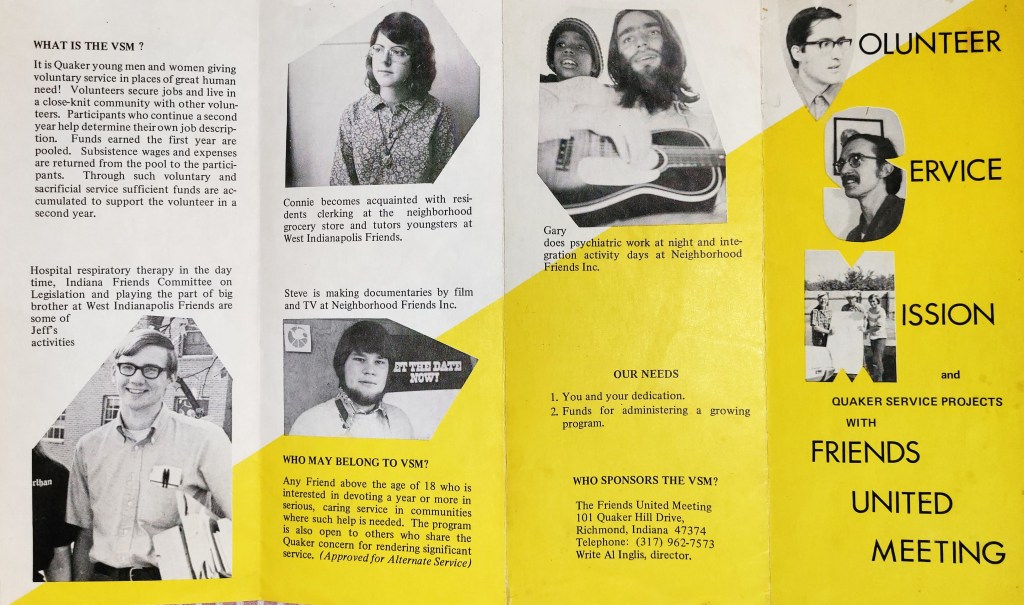
As I continue to write about my foundational stories, I was reminded of this document that describes the two years I spent in Indianapolis in the early 1970’s at the Friends Volunteer Service Mission.
“Alternative Service During the Vietnam War’ may be confusing to those who know I was a draft resister. At the time I joined the Indianapolis VSM Unit, I was struggling to discern whether I could accept doing alternative service. Joining VSM was a backup plan if I decided to do that
In the end I was led to turn in my draft cards, to resist the draft. And expected to be arrested as a result. But I was finding VSM so rewarding, I remained there for the two-year period.
During this time, the US Supreme Court case of another draft resister affected my situation, so I was not arrested.
Re-reading this fifty years later, the style and thinking seem a bit awkward, but I guess that is part of the story, as well.
Kenny and Curtis photo: Jeff Kisling4H Club photo: Jeff KislingDennis photo: Jeff KislingFriends Volunteer Service Mission house. 1971 photo: Jeff Kisling
October 2, 2022, is World Quaker Day. The theme this year is Becoming the Quakers the World Needs. “Becoming” implies we are not, presently, the Quakers the World Needs, which I agree with. Quakers are too comfortable living in a capitalist system that is inherently unjust. A system whose goal is the accumulation of wealth no matter how unethical the means are to acquire it. A system that commodifies all resources, even those that should be part of the commons. A system not intended to care for those without wealth.
How can Friends achieve the 2022 theme of World Quaker Day, “Becoming the Quakers the World Needs,” while functioning in a blatantly and politically corrupt, racialized world? In engagement with this exciting theme, offered by the Friends World Committee for Consultation (FWCC), the Black Quaker Project would like to remind Friends of the tools at our disposal to challenge those aspects of society which we wish to change and to see changed. Our fractured societies are further divided by enormous gaps of inequality in almost every imaginable category—psychological, social, political, cultural, economic. How might we, as Quakers, achieve justice, equity, and peace under these circumstances?
Black Quaker Project
“Quakers will only be truly prophetic when they risk a great deal of their accumulated privilege and access to wealth. Prophets cannot have a stake in maintaining the status quo. Any attempt to change a system while benefiting and protecting the benefits received from the system reinforces the system. Quakers as much as anyone not only refuse to reject their white privilege, they fail to reject the benefits they receive from institutionalized racism, trying to make an unjust economy and institutionalized racism and patriarch more fair and equitable in its ability to exploit. One can not simultaneously attack racist and patriarchal institutions and benefit from them at the same time without becoming more reliant upon the benefits and further entrenching the system. Liberalism at its laziest.” Scott Miller
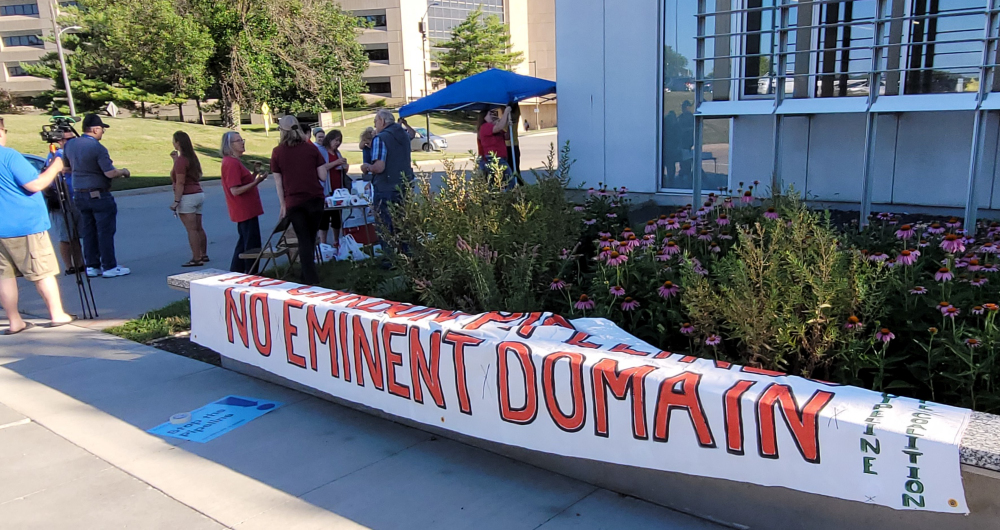
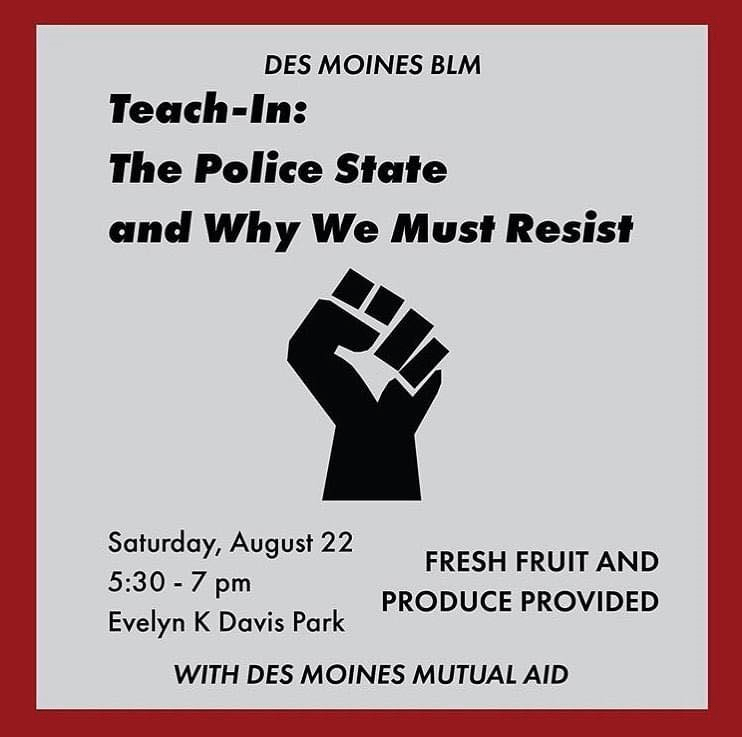
How can we escape the capitalist society we live in? We build communities that care for one another. Sometimes called beloved communities. An example is Mutual Aid. I’ve been involved in Des Moines Mutual Aid for two years and have written extensively about my experiences. https://quakersandreligioussocialism.com/mutual-aid/
Capitalism is so repugnant that we use other terms to refer to ourselves and the work we do, such are anarchists, communists, Black Liberationists, or accomplices.
Des Moines Mutual Aid
Randomly passing an accomplice on the street and throwing up a fist at each other as we go our separate ways to destroy all that is rotten in this world will never fail to give me extra energy and a single tear of gratitude for what this city is creating.
member of Des Moines Mutual Aid
mutual aid is the new economy. mutual aid is community. it is making sure your elderly neighbor down the street has a ride to their doctor’s appointment. mutual aid is making sure the children in your neighborhood have dinner, or a warm coat for the upcoming winter. mutual aid is planting community gardens.
capitalism has violated the communities of marginalized folks. capitalism is about the value of people, property and the people who own property. those who have wealth and property control the decisions that are made. the government comes second to capitalism when it comes to power.
in the name of liberation, capitalism must be reversed and dismantled. meaning that capitalistic practices must be reprogrammed with mutual aid practices.
Des Moines Black Liberation
World Quaker Day, SUNDAY, 2 OCTOBER 2022 “Becoming the Quakers the World Needs:” Taking Action Now for Retrospective Justice.
Dear Friends and friends of Friends,
How can Friends achieve the 2022 theme of World Quaker Day, “Becoming the Quakers the World Needs,” while functioning in a blatantly and politically corrupt, racialized world? In engagement with this exciting theme, offered by the Friends World Committee for Consultation (FWCC), the Black Quaker Project would like to remind Friends of the tools at our disposal to challenge those aspects of society which we wish to change and to see changed. Our fractured societies are further divided by enormous gaps of inequality in almost every imaginable category—psychological, social, political, cultural, economic. How might we, as Quakers, achieve justice, equity, and peace under these circumstances?
Our ministry has long advocated that retrospective justice is the key to bringing peace and equality to the world and to dismantling White Supremacy. As a reminder, retrospective justice is “an attempt to administer justice years after the commission of a severe injustice or series of injustices against persons, communities, or racial and ethnic groups.” Our definition draws upon the 2006 Brown University report, Slavery and Justice, which notes the following three steps as necessary to implement retrospective justice: (1) acknowledge an offense formally and publicly; (2) commit to truth-telling and ensure the facts are uncovered, discussed, and shared; and (3) make amends in the present to give substance to expressions of regret. While the all-too visible injustices of direct violence may command our attention, they are only symptoms of the structural violence deeply rooted in our societies. British Peace Studies founder, Friend Adam Curle, defines structural violence as “the political and economic inequalities which are built into the social structure.” This violence can be economic, political, cultural, religious, or environmental–classifications outlined in Occupied With Nonviolence: A Palestinian Woman Speaks (2008) by Palestinian Friend Jean Zaru and expanded upon to include educational and health structural violence in our Pendle Hill pamphlet, Race, Systemic Violence, and Retrospective Justice: An African American Quaker Scholar-Activist Challenges Conventional Narratives(2020). It is these various types of STRUCTURAL violence that we must keep in mind when implementing retrospective justice, not only direct violence. As we reminded readers in our 2008 Beacon Hill Friends pamphlet, Facing Unbearable Truths: “[Violence] must be treated at its roots if we are to abolish it. Just as a doctor must treat the root causes of an illness, not merely the symptoms, so must we act similarly as social, progressive, analytical activists. We must be “anti-violent,” not merely “non-violent.”
In recent years, we have seen notable truth-telling initiatives which our ministry recognizes as actions of retrospective justice. A few notable examples include: the groundbreaking New York Times publication and institutionalization of The 1619 Project; the National Museum of African American History and Culture in Washington, DC; the International Slavery Museum in Liverpool, UK; the Apartheid Museum in Johannesburg, South Africa; and the United Nations establishment of an International Day of Remembrance for Victims of Slavery and the Transatlantic Slave Trade, itself a prelude to the UN Decade for People of African Descent (2015-2024). What do we–Quakers and friends of Quakers–have to offer in these needed efforts of Retrospective Justice? To answer this query, our ministry offers three responses:
Reason #1: Justice Drawing again on the words of Friend Adam Curle, we agree that justice has a dual meaning: “one, spiritual—righteousness, the observance of the divine law; the other temporal—fairness, righteous dealing. … [Our] vision of justice is the result of seeking to live [in alignment with] non-violence, compassion, redemption, and love.” For too long this crucial Quaker testimony has been neglected in favor of acronyms such as “SPICES,” which mislead about the essence of Quakerism and fail to include justice. Can we have peace without justice? Can we have equality without justice? Our ministry challenges Friends to return the justice testimony not only to the front-burner but to front-and-center within the Religious Society of Friends by engaging in this important work of Retrospective Justice.
Reason #2: Truth Like justice, truth and integrity are at the root of Quakerism, so much so that early Quakers called themselves the Friends of Truth, a name to keep in mind as we reckon with our own history of past misdeeds. Our ministry encourages Friends to collectively shoulder the responsibility of telling the truth, in all its complexity, including the reality that Quakers, despite our well-known anti-slavery activities, were participants, profiteers, and supporters of the slave trade. A truth Harold D. Weaver has called on the Religious Society of Friends to acknowledge in the past, most recently, in his January 2021 Friends Journal article, “A Proposed Plan for Retrospective Justice.” Friends need to confront and atone for the 400-year legacy of oppression, economic exploitation, and human degradation that affects people of African descent worldwide, such as Jim Crow, colonialism, and apartheid. Perhaps we will never know to what extent current Friends–individuals, Meetings, and organizations– have profited from the inheritance of significant sums of money for the past exploitation of people of African descent worldwide. However, Friends can still work to correct misinformation and disinformation so that we may understand the roots of the issues we seek to resolve. Quakers in some monthly, quarterly, and yearly meetings seem to be grappling with this process.
Reason #3: Reputation, Influence, and Expectations Since the publication of Uncle Tom’s Cabin in 1852, Quakers have had a reputation as being among history’s foremost abolitionists. While we question whether Friends fully deserve this reputation, it is one that has endured. Across history, and around the world, Quakers have been involved in movements of peace and justice. Friends organized relief efforts for the starving masses of the Irish potato famine, cared for the sick and injured as World War I ravaged Europe, and aided interned Japanese Americans during World-War II. Celebrated Quaker human rights activist, writer, and social critic Bayard Rustin emerged as a leading figure in the Civil Rights Movement which Quakers widely participated in (Rustin is just one of the trailblazing African American Quakers we document in Black Fire: African American Quakers on Spirituality and Human Rights). Friends would also make their presence known during South Africa’s struggle against apartheid, peace efforts throughout the “Troubles’’ era of Northern Ireland, and beyond.
In 1947, the Friends Service Council in the UK and the American Friends Service Committee were jointly awarded the Nobel Peace prize ON BEHALF OF ALL QUAKERS for post World-War-II peace, reconstruction, and recovery efforts. While some people might forget that Quakers even exist today, many remember our historical image as leaders in truth, peace, justice, abolition, and equity. It is this reputation that we are expected to maintain and which our ministry recommends we live up to. As the population of Quakers decreases in the Global North, the future of the Religious Society of Friends will be greatly defined by Friends of Color across Asia, South America, and, most prominently, Africa, which, as of 2017, is home to over 180,000 Friends. As we become further unmoored from our Eurocentric roots, the growing majority of Friends in the Global South are vulnerable to the very worst effects of systemic racism and structural violence. We hope Friends participate in plans of Retrospective Justice, “Becoming the Quaker’s The World Needs,” by taking action now.
What additional reasons might there be for Quakers to be actively involved in USA and worldwide Retrospective Justice efforts? Please write to us at theblackquakerpoject@gmail.com with your suggestions.
Note: The above narrative is adapted from Dr. Harold D. Weaver’s 21 September 2022 presentation to the Joseph Rowntree Charitable Trust Interim Working Group at Friends House, London, UK. We appreciate the invitation of collaboration from Friend Nozizwe Madlala-Routledge, the new, dynamic Director of the Quaker United Nations Office-Geneva.
My foundational story is related to the intersections between my Quaker faith, protecting Mother Earth, and photography. This combination has remained a powerful and evolving influence throughout my life. My faith led me to try to share my spiritual experiences and show my love for the beauty of Mother Earth through photography. These three things came into play in many ways throughout my life.
Finally, I’m getting to the state of my foundational stories now.
Care for Mother Earth is brought into focus as we struggle to comprehend the utter devastation from Hurricane Ian. People are forced to finally begin to realize how bad environmental devastation can be, how horrific the chaos is, and will increasingly be.
People are wondering whether they should try to rebuild their homes or businesses in these parts of the country that will see worsening storms. Many have become climate migrants.
Other climate migrants will come from areas of ferocious wildfires. Places that no longer have water or are flooded by storms and/or rising ocean levels. Places too hot to live in.
There will be shrinking habitable areas and increasing numbers of migrants. Where will they go? What can we do to prepare for and welcome them? Will we become climate migrants?
Even if we are not forced to move, life as we know it will change dramatically. We will either choose to or be forced to decarbonize. That will require us to rebuild all our basic systems.
We need to rebuild all our basic systems. All of them. Let’s take food. We have next to no idea how to make food without industrial grade fertilizer, which comes from…fossil fuels. Our entire food system is heavily carbonized. Take energy. Much of the world is struggling without Russian oil and gas — precisely because we’re still dependent as a civilization on dirty fuel. Take water — where are we going to get it, precisely, in places like the American West, or as the temperature crosses 50 degrees? Or take construction — we have no idea, really, how to make the basic material building blocks of our lives, glass, steel, cement, without fossil fuels. Finally, take manufacturing: it’s obvious, painfully so, that we can’t just buy-use-dispose anymore, but that economics need to be made of closed loops — but where’s the infrastructure for it? When is Amazon going to send the Prime Guy over to pick up your rubbish so it can be remanufactured into tomorrow’s stuff?
Joy is the soul stirred underneath the journey, gaze snagged on wonder, not knowing final destination, blessed as a witness, moored to ground, worshipful tears dripped into grateful smile.
It is obvious that environmental devastation is a global problem which demands a global response. But I’ve been so discouraged by the paralysis in this country, that I haven’t had the energy to think globally. Didn’t think a global response was ever going to be possible.
The Secretary General of the UN just called for a Global New Deal. And nobody listened. But they should have, because this is precisely the idea we need if our civilization is going to survive. What he means by Global New Deal is all the above — taxing windfall profits, so that investments can be made, now, urgently, in basic systems for all, which we so clearly need, from food to water to energy and so on.
But he doesn’t stop there. He’s not just proposing, but demanding, a reinvention of the global financial system to invest even more. He calls on the IMF to expand its Special Drawing Rights, and create a Global Stimulus Package.
In this latest version of a diagram I’ve been working on, newly added are attention to the global aspects of environmental chaos and the need for a global new deal.
We have a duty to act. And yet we are gridlocked in colossal global dysfunction.
The international community is not ready or willing to tackle the big dramatic challenges of our age. These crises threaten the very future of humanity and the fate of our planet.
Let’s have no illusions. We are in rough seas. A winter of global discontent is on the horizon. A cost-of-living crisis is raging. Trust is crumbling. Inequalities are exploding. Our planet is burning. People are hurting — with the most vulnerable suffering the most.
Our world is in peril — and paralyzed. Geopolitical divides are undermining the work of the Security Council. Undermining international law. Undermining trust and people’s faith in democratic institutions. Undermining all forms of international cooperation. We cannot go on like this. Even the various groupings set up outside the multilateral system by some members of the international community have fallen into the trap of geopolitical divides, like in the G-20.
But the reality is that we live in a world where the logic of cooperation and dialogue is the only path forward. No power or group alone can call the shots. No major global challenge can be solved by a coalition of the willing. We need a coalition of the world.
There is another battle we must end — our suicidal war against nature. The climate crisis is the defining issue of our time. It must be the first priority of every government and multilateral organization. And yet climate action is being put on the back burner — despite overwhelming public support around the world. Global greenhouse gas emissions need to be slashed by 45 percent by 2030 to have any hope of reaching net zero emissions by 2050. And yet emissions are going up at record levels — on course to a 14 percent increase this decade.
Excellencies, let’s tell it like it is. Our world is addicted to fossil fuels. It’s time for an intervention. We need to hold fossil fuel companies and their enablers to account. That includes the banks, private equity, asset managers and other financial institutions that continue to invest and underwrite carbon pollution.
And it includes the massive public relations machine raking in billions to shield the fossil fuel industry from scrutiny. Just as they did for the tobacco industry decades before, lobbyists and spin doctors have spewed harmful misinformation. Fossil fuel interests need to spend less time averting a PR disaster — and more time averting a planetary one.
Of course, fossil fuels cannot be shut down overnight. A just transition means leaving no person or country behind. But it is high time to put fossil fuel producers, investors and enablers on notice.
Polluters must pay.
Today, I am calling on all developed economies to tax the windfall profits of fossil fuel companies. Those funds should be re-directed in two ways: to countries suffering loss and damage caused by the climate crisis; and to people struggling with rising food and energy prices.
I’ve been looking forward to describing the current state of my foundational story. The article below about Cai Quirk is remarkably similar to parts of my story now.
My foundational story is related to the intersections between my Quaker faith, protecting Mother Earth, and photography. This combination has remained a powerful, yet evolving, influence throughout my life. My faith led me to try to share my spiritual experiences and show my love for the beauty of Mother Earth through photography. These three things came into play in many ways throughout my life.
I continue to rely on my Quaker faith to guide these decisions. Sometimes the guidance is clear. Other times either I’m not discerning what the Spirit is telling me, or there isn’t anything new to hear. It’s all too easy to stay on a path we are comfortable with, to the extent we might not hear, or might ignore leadings that say we need to change direction, to do something we are uncomfortable with. One thing I was blessed to realize early in my life was the times I took risks resulted in significant growth. Which led me to search for ways to take risks.
The reason I invested in the idea of the evolution of my foundational stories is because I’m feeling I might need to change how I think about and put into practice faith, protecting Mother Earth, and photography. I don’t have a way to know how many people read my blog posts but have a better indication of how people see my photography. My impression is that more people see my photographs. I’m sensing I should “focus” more on photography to express my spirituality and encourage more people to work to protect Mother Earth. Although the main reason I write so much is to try to organize and clarify what I discern about my spiritual life, and what that means, how to put these leadings into practice, how to practice hope.
People often mistake hope for a feeling, but it’s not. It’s a mental discipline, an attentional practice that you can learn. Like any such discipline, it’s work that takes time, which you fail at, succeed, improve, fail at again, and build over years inside yourself.
Hope isn’t just looking at the positive things in this world, or expecting the best. That’s a fragile kind of cheerfulness, something that breaks under the weight of a normal human life. To practice hope is to face hard truths, harder truths than you can face without the practice of hope. You can’t navigate dark places without a light, and hope is that light for humanity’s dark places. Hope lets you study environmental destruction, war, genocide, exploitative relations between peoples. It lets you look into the darkest parts of human history, and even the callous entropy of a universe hell bent on heat death no matter what we do. When you are disciplined in hope, you can face these things because you have learned to put them in context, you have learned to swallow joy and grief together, and wait for peace.
“One of the pieces of Quaker witness I have been carrying in the world for many years now is around gender diversity and using art and storytelling as a way to explore that. This is some of the ministry that I carry.”
Cai Quirk (they/them or ey/em pronouns) shared this reflection with FCNL staff in a late-June Zoom lunch, along with the ways Spirit has been leading them to explore gender, faith, and nature through art.
Cai is a life-long Quaker. After years of spiritual deepening through writing poetry and creating self-portraits, Cai will soon release their first book. “Transcendence: Queer Restoryation” includes words and images that offer an expansive understanding of faith.
In speaking to FCNL staff, Cai showed many of their self-portraits, focusing especially on those exploring gender in the natural world. “I was finding new ways to create new stories that are empowering,” they told us. “Through these self-portraits, I found how far I can go in following Spirit. A lot of these photos were very freeing and empowering and have given me more connection to Spirit.” Cai explained that nature itself holds some inherent queerness; “Even when society tries to erase queer stories, they are still there in the landscape.”
…
Growing up Quaker, Cai learned the history of the social disruption inherent in Quaker faith. Yet today, Cai has noticed that only certain kinds of social disruption and ministry are accepted within some circles of Friends. “My art is an invitation to see how Spirit invites us all in different ways,” they said. While not all Quaker communities can feel welcome to those who rock the boat, social disruption and rage can be sacred as well. Changemaking occurs in many ways for many different people, and Cai is working to create more spaces where this kind of expansion and ministry are accepted, where more people can exist as their true selves.
…
“If I change myself to match society’s conventions, then I am not being authentic, I am not being faithful to Spirit,” Cai told us. Can we as the Religious Society of Friends expand our ideas of faith and community to invite everyone in? What would it take to seek and live into that welcoming Quakerism moving forward?
Minute There is that of God in every being. We support those of all gender identities and sexual orientation. And respect and will endeavor to use the pronouns each person identifies themselves by.
Approved by Iowa Yearly Meeting (Conservative) 2022
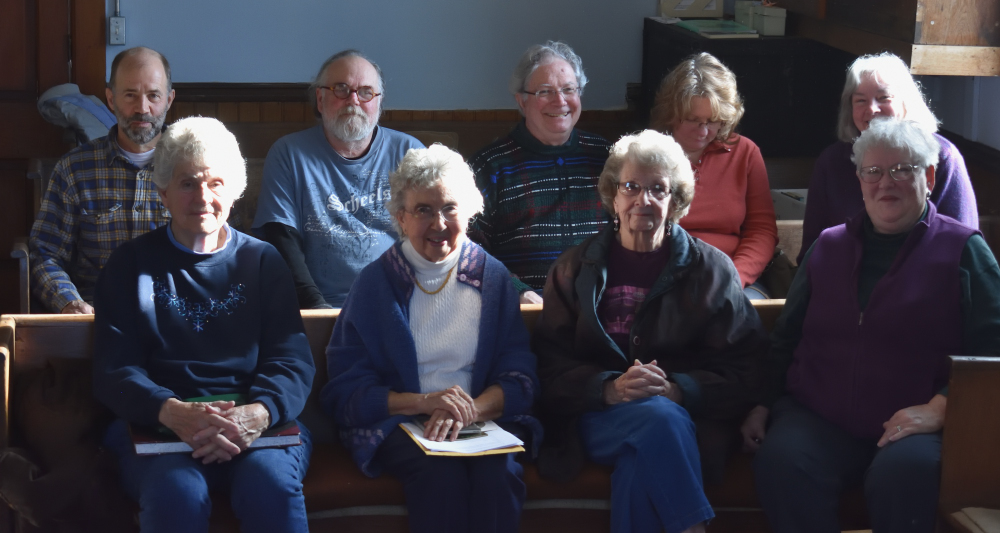
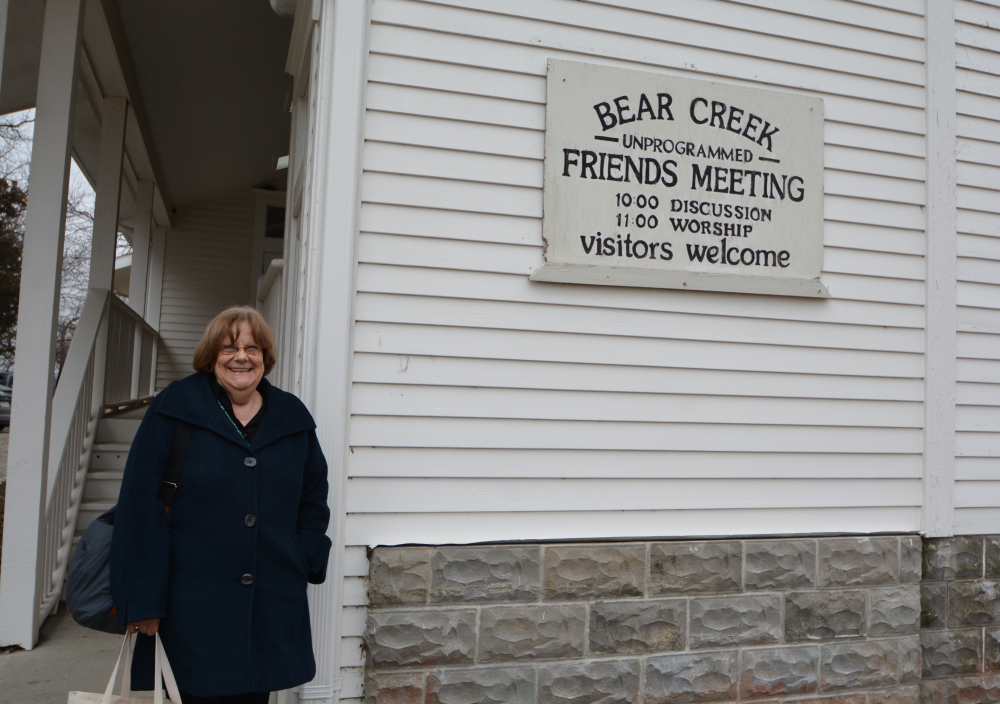
Bear Creel FriendsPlayground at Bear Creek FriendsBear Creek FriendsMidyear Meeting at Bear CreekLinda Lewis, AFSC Country Representative for China/North Korea, and Dan Jasper, AFSC Public Education and Advocacy Coordinator for Asia, visited Iowa at the invitation of Jeff Kisling, clerk of the Peace and Social Concerns Committee of Iowa Yearly Meeting (Conservative) and Patti McKee, director of Catholic Peace Ministry. Linda spoke at Bear Creek Friends Meeting in Earlham, Iowa. Linda and Dan both spoke at Des Moines Valley Friends Meeting House. They were interviewed by WHO-TV, local videographer Rodger Routh, and talk show host Ed Fallon. They met Iowa Immigrant Rights Program staff Jody Mashek, Erica Johnson and Berenice Nava and travelled to Scattergood Friends School to meet Thomas Weber, Head of School, and Mark Quee, Farm Manager. Mark gave them a tour of the school’s farm. In 2001, AFSC hosted a North Korean agricultural tour of Iowa.Scattergood Friends School and FarmBear Creek FriendsPaula Palmer and toward right relationship with native peoplesBear Creek Friends Meeting
We are entering week 3 of NABS’s 7 Weeks of Action! We have been receiving positive feedback from your phone calls so please keep making these calls into the Congressional offices. This week we ask you to call into the Senate Committee on Indian Affairs to ask them to schedule a markup for S.2907, the Truth and Healing Commission on Indian Boarding Schools Policies Act.
NABS thanks you for joining us in this advocacy. Together we will get S.2907 /H.R. 5444, the Truth and Healing Commission on Indian Boarding School Policies Act passed!
Please CALL these Senators Today and Request The SCIA hold a markup session for “S. 2907, the Truth and Healing Commission on Indian Boarding School Policies Act” so the bill may move forward.
“When we begin to cry, that’s part of the healing process. Our tears are meant to cleanse us, they’re meant to cleanse our spirit, our mind, and our body. When we cried as children, no one was there. We were left to cry alone. But today we have each other.”
SANDY WHITE HAWK (SICANGU LAKOTA), NABS BOARD PRESIDENT
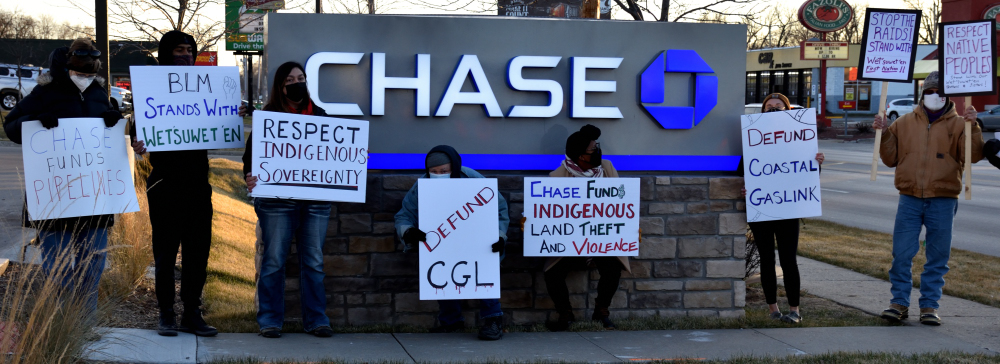
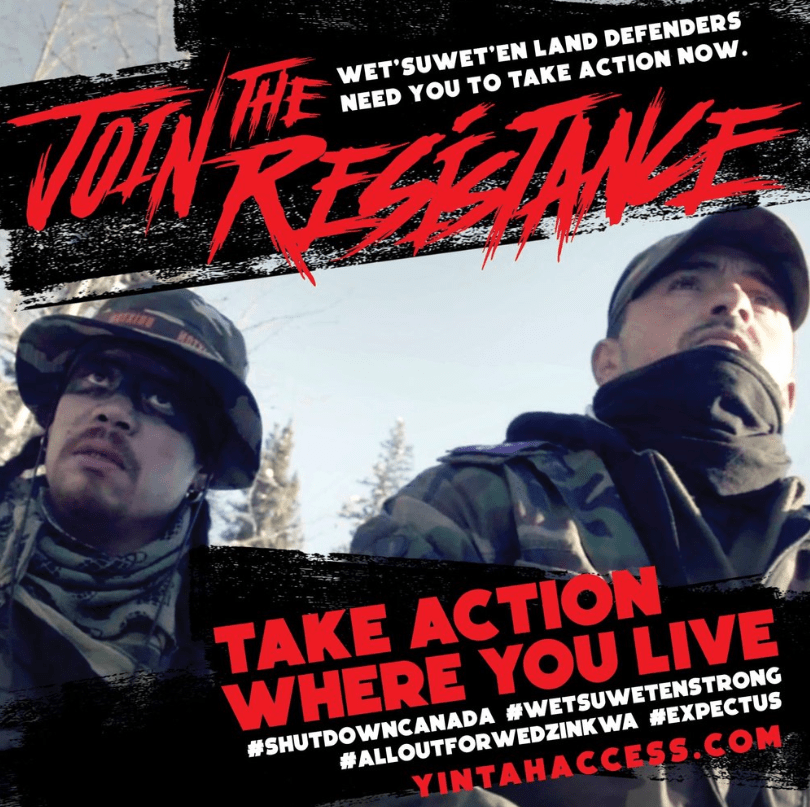
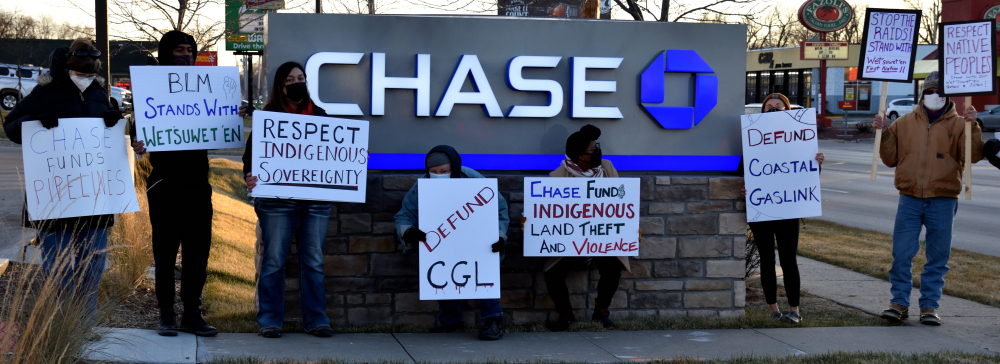
As you will know, we have reached another flashpoint in the Wet’suwet’en’s struggle against the CGL pipeline. Having fought to protect the sacred headwaters of Wedzwin kwa, they are now faced with the possibility of imminent drilling. Today, the hereditary chiefs are holding a press conference and issuing an eviction notice. They are issuing a call to action, which we are relaying to you.
The chiefs are calling for people to take on three targets: BC government, contractors, and the funder, RBC. Decolonial Solidarity members will rally to pressure the latter. For organized groups, we are issuing a call for in-person action. For everyone else, we are inviting you to call the global head of sustainability at RBC.
We have managed to get this man’s personal phone number. It is important that we stay polite and firm in denouncing the actions of the bank. Remember: it can freeze its investment until the hereditary chiefs consent to the project. It can stop the drilling. It is this man’s job to ensure that the bank is sustainable. Let’s remind him there’s a ways to go.
Wet’suwet’en Land Defenders have not given up and nor will we. We will continue to build our movement, to show solidarity, to turn up at branches, to talk to our neighbors and to passers by, to mobilize in protest, to confront RBC executives, and to send our love to the admirable Land Defenders whose leadership has inspired us throughout these difficult times.
In solidarity, The organizing team
(This message from decolonial solidarity on behalf of the Gidimt’en land and water protectors is forwarded with the permission of the Unist’ot’en in solidarity with their neighboring clan within the Wet’suwet’en Nation.)
Spirituality is rarely spoken of in the tsunami of information and stories found on all types of media, related to the dangerous times we are living in. And the future our children face. The unfolding apocalyptic reality.
As the reality of escalating environmental chaos becomes impossible to ignore, vast numbers of people are demanding immediate solutions. And with the realization there are no quick fixes, panic spreads. Dystopian stories emerge. Hopelessness sets in.
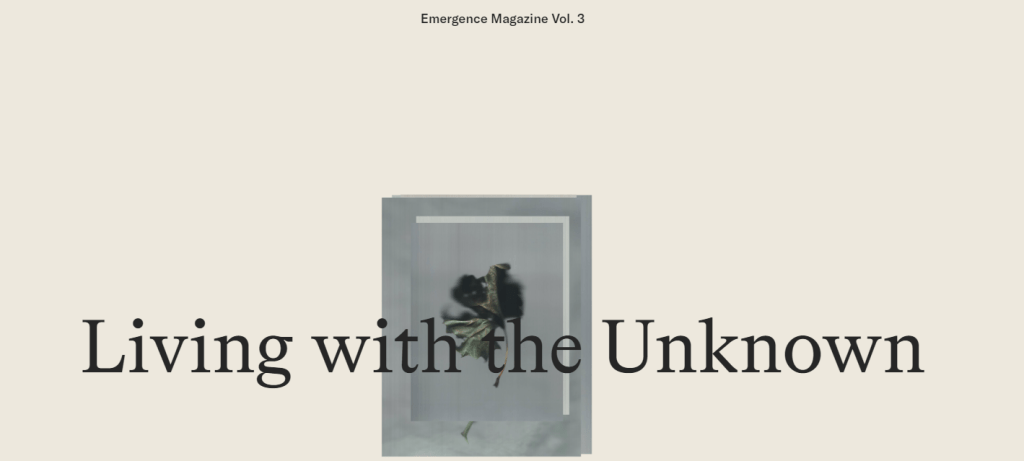
I’m glad to have found Emergence Magazine, which asks the question “what does living in an unfolding apocalyptic reality look like?”
”Emergence is an essential and exquisite addition to our way of seeing and honoring this extraordinary planet.”
-Camille Dungy, editor of B1ack Nature: Four Centuries ofAfrican American Nature Poetry
Launched in Spring 2018, Emergence Magazine is an award-winning quarterly online publication with an annual print edition exploring the threads connecting ecology, culture, and spirituality.
“If we are to find a new kind of good life amid the catastrophes these myths have spawned, then we need to radically rethink the stories we tell ourselves.”
James Allen
Stories are the way we share our lived experiences, thoughts, and calls for change. And express our views of the present and the future. The stories in Emergence Magazine explore these things.
Some of the ways I’m involved in sharing stories include:
Social media platforms are where so many stories are found today.
“The end of the world as we know it is not the end of the world full stop. Together, we shall find the hope beyond hope, the paths that lead to the unknown world ahead of us.” Paul Kingsnorth & Dougald Hine
Most of us lack the stories that help imagine a future where we thrive in the midst of unstoppable ecological catastrophe. To borrow a phrase from storyteller Martin Shaw, this is because our imaginations have been colonised by things that don’t always mean us well.
We have been propelled to this point by the myths of progress, limitless growth, our separateness from nature and god-like dominion over it. These myths have shown up in our stories in peculiar ways of late. Since around the turn of the millennium there has been a surge in post-apocalyptic fiction. A steady stream of films, television series and novels have portrayed desolate and barely habitable future landscapes, often roamed by marauding bands of psychopaths, flesh-eating zombies or similar agents of malevolence. The frequent appearance of post-apocalyptic themes undoubtedly reflects our rising collective existential anxiety about our future. But perhaps more telling is the recurring themes of horror, deprivation and dystopian political order that nearly always characterise these depictions of the future. It seems our minds have been so thoroughly colonised by the myths of growth and progress that we cannot imagine how the collapse of the current order could possibly produce a future that resembles anything short of hell.
If we are to find a new kind of good life amid the catastrophes these myths have spawned, then we need to radically rethink the stories we tell ourselves. We need to dig deep into old stories and reveal their wisdom, as well as lovingly nurture the emergence of new stories into being. This will not be easy. The myths of this age are deeply rooted in our culture. The talking heads (even the green ones) echo these myths with the dogmatic fervour of zealots. They talk of “saving the planet” through transitioning to a “sustainable” future, primarily through new renewable energy technologies. They seem only able to conceive of a good life that mirrors our lives more or less as they are now, where the living standard continues to improve and rate of consumption continues to grow, yet somehow decoupled from all the pollution, destruction and guilt.
Quiet friend who has come so far, feel how your breathing makes more space around you. Let this darkness be a bell tower and you the bell. As you ring, what batters you becomes your strength. Move back and forth into the change. What is it like, such intensity of pain? If the drink is bitter, turn yourself to wine. In this uncontainable night, be the mystery at the crossroads of your senses, the meaning discovered there. And if the world has ceased to hear you, say to the silent earth: I flow. To the rushing water, speak: I am.
The following story and poem are from an online magazine I recently discovered, Emergence Magazine.
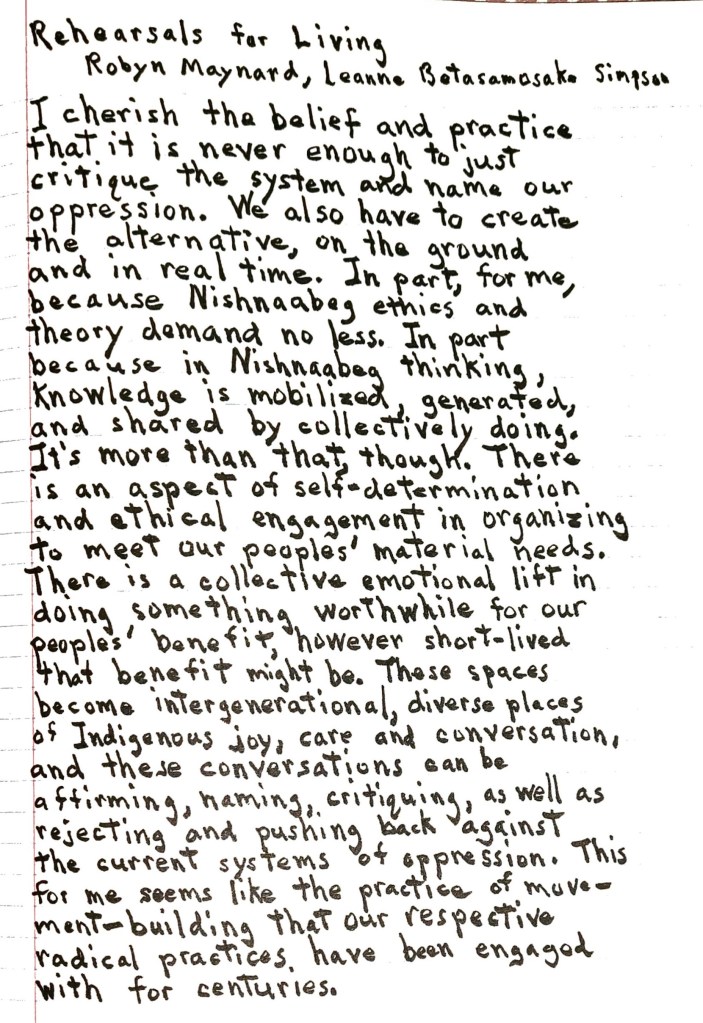
The title caught my attention because joy is one of the main benefits of Mutual Aid communities. It has been true for my involvement in Des Moines Mutual Aid for the past two years. Especially in these times of growing fear about the baffling breakdown of so many things we took for granted, finding joy is so important. This quote from the book “Rehearsals for Living” by Robyn Maynard and Leanne Betasamosake Simpson describes this well.
“Rehearsals for Living” by Robyn Maynard and Leanne Betasamosake Simpson
Roots anchor and support us. Firmly and deeply established, they can carry us through difficult times. When we do the work of rooting, we find those threads that can nourish us in the face of adversity.
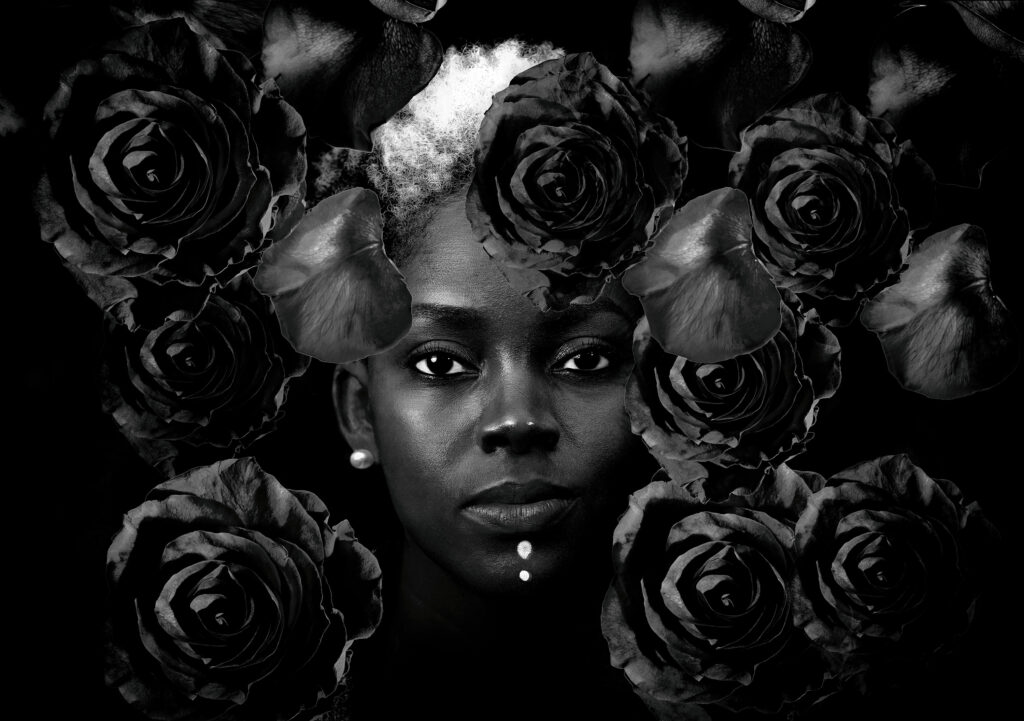
In “Joy Is the Justice We Give Ourselves,” poet J. Drew Lanham grounds his vision of racial justice in quiet moments of awe in nature. Celebrating radical acts of joy, he lifts up liberation, reparations, and deep connection to ancestors and the living world.
Joy is the justice we give ourselves. It is Maya’s caged bird sung free past the prison bars, holding spirits bound— without due process, without just cause.
Joy is the steady run stream, rights sprung up through moss-soft ground— water seeping sweet, equality made clear from sea to shining sea, north to south, west to east.
Joy is the truth, crooked lies hammered straight, whitewashed myths wiped away. Stone Mountain —just stone. Rushmore —no more. Give the eagles their mountains back.
POET J. Drew Lanham is a birder, naturalist, and hunter-conservationist. He is the author of The Home Place: Memoirs of a Colored Man’s Love Affair with Nature, which received the Reed Award from the Southern Environmental Law Center and the Southern Book Prize, and was a finalist for the John Burroughs Medal. His essays and poetry can be found in Orion, Audubon, Flycatcher, and Wilderness, and in the anthologies The Colors of Nature, State of the Heart, Bartram’s Living Legacy, and Carolina Writers at Home. He is an Alumni Distinguished Professor of Wildlife Ecology and Master Teacher at Clemson University.
PHOTOGRAPHER Sheila Pree Bright is an acclaimed fine-art photographer known for her series Young Americans, Plastic Bodies, and Suburbia. Her documentation of responses to police shootings in cities across the US inspired her book #1960Now: Photographs of Civil Rights Activists and Black Lives Matter Protests.



























 Quakers and Mutual Aid