Gas Prices

I have no idea how high gas prices will go or how long they will remain high.

“High” is a relative term. Shouldn’t gas prices reflect the environmental damage from both the horrendous destruction of the land and water from fossil fuel extraction and the many and extensive damages from burning fossil fuels?

What I find fascinating today is hearing so many people saying if gas prices go much higher, they will walk or take public transportation! Exactly what should have been done decades ago. I always thought there should have been high government gas taxes to try to drive this behavior modification.

Thinking of the impacts on those who are impoverished, this population tends not to have personal automobiles. Are already using public transportation. Similar to food subsidies there might be a need for something similar for transportation.

Most of us have gotten used to remote video/audio conferencing because of the pandemic. If gas prices remain high or go even higher, that will probably result in a return to that. It is likely even more people will work remotely.

This has the potential to significantly reduce fossil fuel emissions.


I love this story about Barry Lopez.

How could we convince lawmakers to pass laws to protect wilderness? Lopez argued that wilderness activists will never achieve the success they seek until they can go before a panel of legislators and testify that a certain river or butterfly or mountain or tree must be saved, not because of its economic importance, not because it has recreational or historical or scientific value, but because it is so beautiful. His words struck a chord in me. I left the room a changed person, one who suddenly knew exactly what he wanted to do and how to do it. I had known that love is a powerful weapon, but until that moment I had not understood how to use it. What I learned on that long-ago evening, and what I have counted on ever since, is that to save a wilderness, or to be a writer or a cab driver or a homemaker—to live one’s life—one must reach deep into one’s heart and find what is there, then speak it plainly and without shame.

Reid, Robert Leonard. Because It Is So Beautiful . Counterpoint. Kindle Edition.

We can’t put a price on beauty. I hadn’t thought of it this way, but if we believe in preserving beauty, wouldn’t it have been amazing if we demanded any resource mining could not be done if it harmed the beauty?

Instead, there are hundreds of square miles of filthy pits from tar sands extraction. Instead, the tops of mountains were blown off.

Instead, the fossil fuel industry receives billions of dollars in government subsidies. How insane is that? Environmental and Energy Study Institute

Likewise, a price cannot be put on all the damage done by burning fossil fuels.

And there is the incomprehensible situation of an energy returned on investment of only 3:1 for tar sands mining. The unit of energy it takes to extract tar sands produces only 3 units of energy. In other words, it takes almost as much energy to mine tar sands as the energy produced. Unbelievable.

Split Screen

I’m trying to sort out confused feelings about war and peace through a split screen of foreign versus domestic.

I was caught off guard by the Russian invasion of Ukraine. It was unrealistic to think there wouldn’t be another war between nations anytime soon.

But we haven’t had peace in this country, either.

I had forgotten Martin Luther King, Jr, was outside a California prison, which was holding Vietnam War protesters when he said, “there can be no justice without peace, and there can be no peace without justice.” December 14, 1967.

So, there is this dichotomy of war between nations versus domestic injustices. Domestic injustices mean there is no peace here.

This quote from Muhammad Ali relates to this.

Under no conditions do we take part in war and take the lives of other humans.

It is in the light of my consciousness as a Muslim minister and my own personal convictions that I take my stand in rejecting the call to be inducted. I do so with the full realization of its implications. I have searched my conscience.

Man, I ain’t got no quarrel with them Vietcong…they never called me ______.

Muhammad Ali

I’ve been blessed to have become part of numerous oppressed communities in this country. Where there are so many injustices. Where there is so much violence, much of it state sanctioned.

The scenes and stories from Ukraine are devastating to see. And while it is good to see the response of so many who want to help, I wish there were similar responses to our own domestic tragedies.

A friend this morning tells me others have noted similar disparities in the response to the plight of Palestinians. He said, “Once again I am reminded of how ‘White’ my thinking is.”

And there are the dispiriting stories of racial discrimination in support among the Ukrainian refugees.

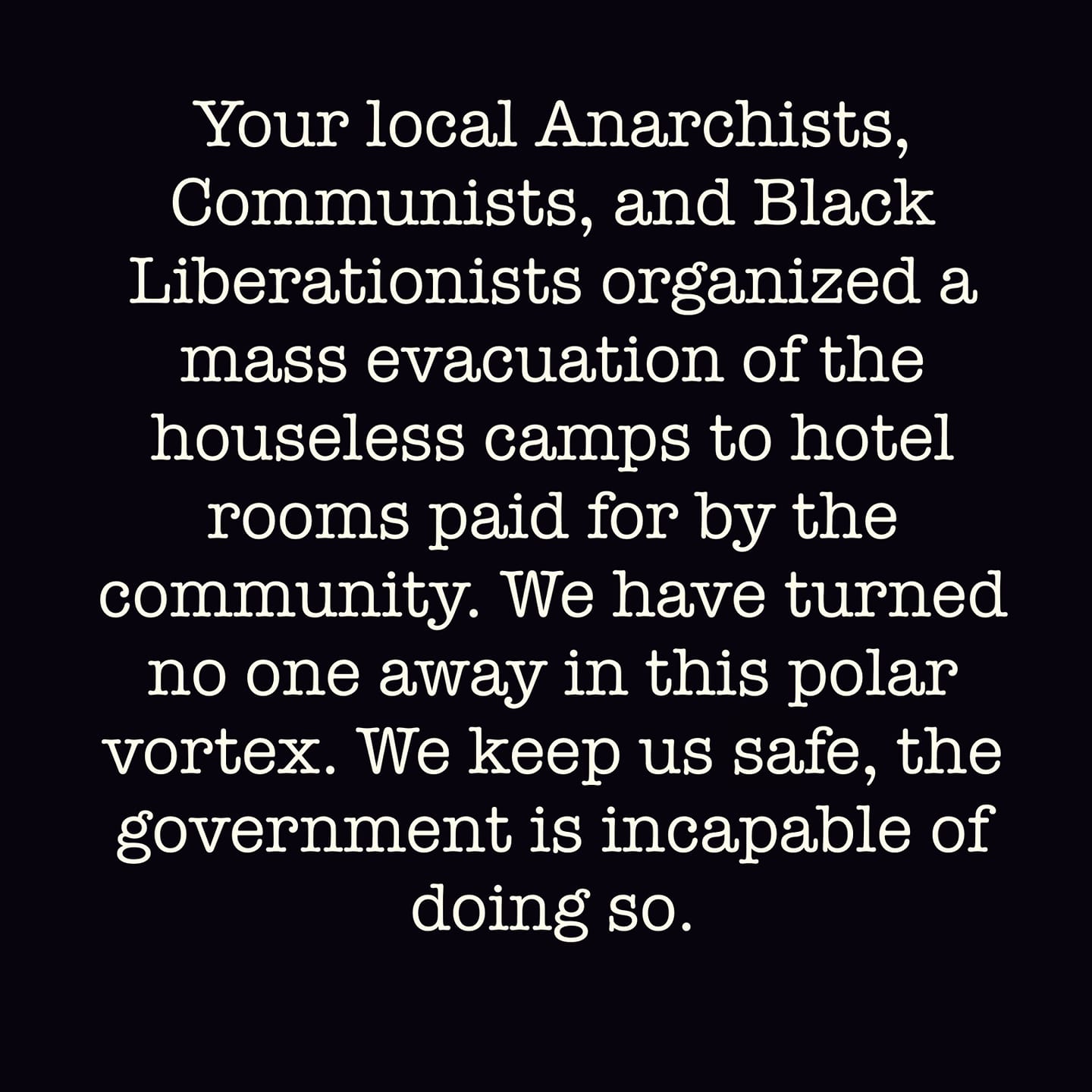
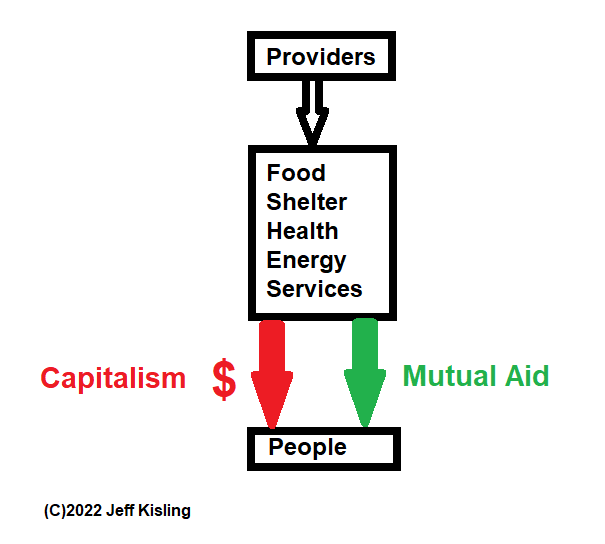
My experiences with Mutual Aid have convinced me that is a way to peace.


The recent past shows us that mutual aid is not only a tool of survival, but also a tool of revolution.

Ronnie James

The first, and possibly the most important, is that it was not always this way, which proves it does not have to stay this way. 

What we have is each other. We can and need to take care of each other. We may have limited power on the political stage, a stage they built, but we have the power of numbers.

Those numbers represent unlimited amounts of talents and skills each community can utilize to replace the systems that fail us.  The recent past shows us that mutual aid is not only a tool of survival, but also a tool of revolution. The more we take care of each other, the less they can fracture a community with their ways of war. Organized groups like The American Indian Movement and the Black Panther Party for Self Defense showed that we can build not only aggressive security forces for our communities, but they also built many programs that directly responded to the general wellbeing of their communities. This tradition began long before them and continues to this day. Look into the Zapatistas in Southern so-called Mexico for a current and effective example.

Ronnie James, The Police State and Why We Must Resist

Support for Ukraine

Here is some information related to support for Ukraine.

  • There is news from Quakers of Kyiv, Ukraine, including how to connect for meeting for worship.
  • Information from Mennonite Central Committee who have been in Ukraine since the 1920’s
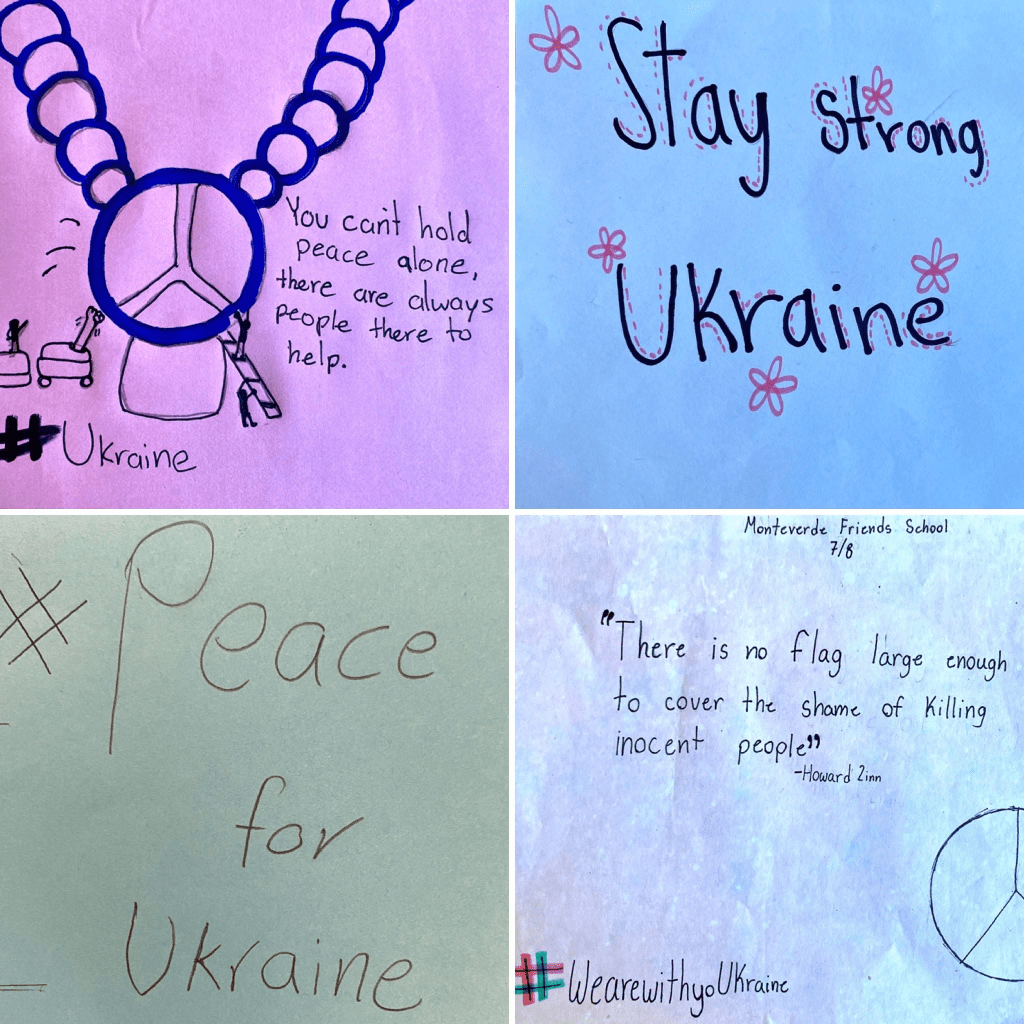
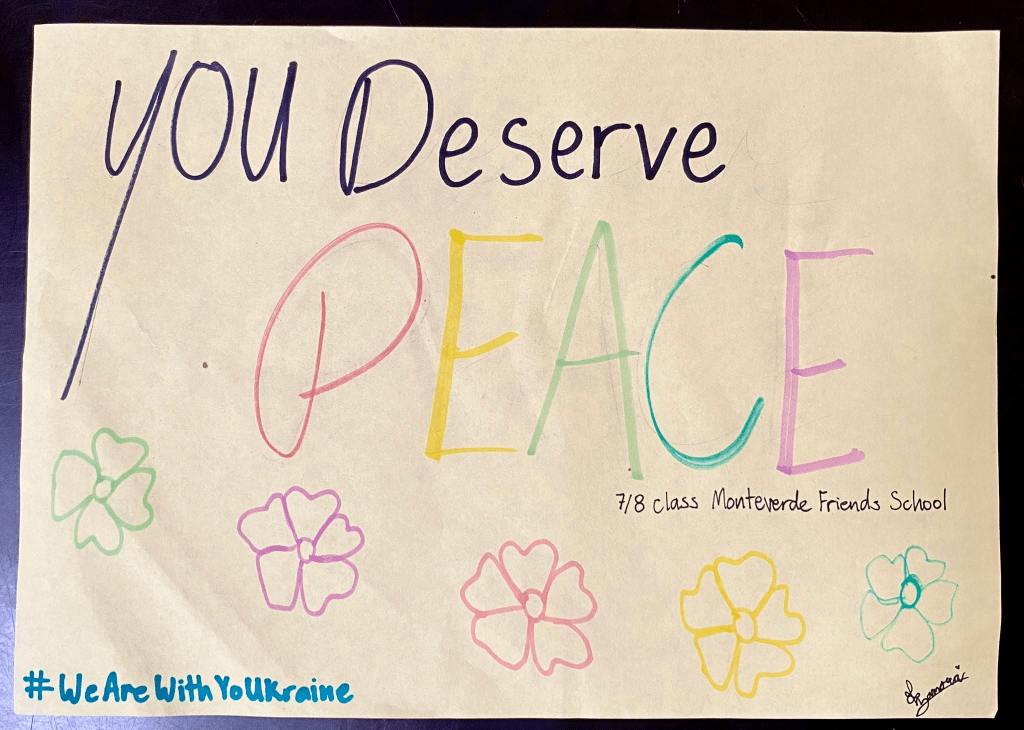
  • Posters of support 7/8 grade students at Monteverde Friends School in Costa Rica. sent to Ukraine Quakers.
  • There will be a ZOOM meeting for worship sharing related to Ukraine at 7:00 pm Central on Thursday, March 3. Everyone is welcome. Email me for the link. jakislin@outlook.com

Quakers Of Kyiv, Ukraine / Квейкери Києва

Welcome to the page of Ukrainian supporters of Quakerism.
Religious Society of Friends is a Protestant Christian church, known for its humanistic orientation, human rights and environmental guidelines, etc.
The Quaker prayer meeting is first and foremost a time of peace. This is an hour free from unnecessary words.
Quakers in the world have different currents. We, the Quakers of Kyiv, belong to the liberal trend without the well-known religious speechifying and lexicon.
Seekers of friendship, peace, truth, and equality are cordially invited to the meeting, following the Spirit’s guidance in affairs, ready for the hour of silent worship.
Details on messenger:
m.me/QuakersKyivUkraine
by e-mail: quakers@ukr.net

February 25, 2022

Despite everything, we prepare for silent prayer worship on Sunday at 10:30 Kyiv Time EET Eastern European Time UTC/GMT +2 hours
We did it and we’ll do it again!

zoom.us/j/718459680
Passcode: 002873

🇺🇦

If you are unable to enter this conference due to the limited number of participants, there will be an opportunity behind this link to enter:
https://zoom.us/j/95573361111
Passcode: d02uNj

February 24, 2022

Dear Friends!

We don’t know anything about how our traditional meeting of worship will go. It is not clear whether the Internet and electricity will be available, whether we will be in the capital or evacuated.

Today all Kyiv people were warned that the city will be bombed. And that all citizens should be ready to hear the sound of sirens go to the bomb shelter.

We don’t lose our temper. God and your prayers help us.

This is the kind of lovely support we get from Costa Rica. (see the following from Monteverde Friends School.)


When I contacted Monteverde Friends School for permission to share the signs from the students, Ellen told me, “The post with the 7/8 class posters for the people of Ukraine has already gone to over 11,000 people, with 112 shares on the post. “

The post with the 7/8 class posters for the people of Ukraine has already gone to over 11,000 people, with 112 shares on the post.

Ellen, Monteverde Friends School

Monteverde Friends School / Escuela de los Amigos de Monteverde

February 24, 2022

Update: Quakers in Kyiv have shared these posters on their page!

Our 7/8 grade social science class discussed the war in Ukraine today and made these posters for the Ukraine people. https://www.facebook.com/QuakersKyivUkraine/

#wearewithyouUkraine


Mennonite Central Committee

MCC has worked in Ukraine since our beginnings in 1920, opening soup kitchens to provide relief to thousands of starving families. Our current projects include relief, peace, health and education.

Since the beginning of the conflict in eastern Ukraine, MCC has worked with partners to assist internally displaced people (IDPs) and to build peace. The UNHCR reports there are some 1.8 million IDPs and conflict-affected people in Ukraine.

“We pray that hard hearts of conquest will be softened. We pray that the very best practices of peace will prevail among leaders. We pray gratefully that your spirit of healing and hope is present.” Rick Cober Bauman and Ann Graber Hershberger, executive directors of MCC, share a prayer for peace in Ukraine. We invited you to pray, give and advocate for peace for our global neighbours in Ukraine.

For more information, or to make a gift, please visit,
mcc.org/crisis-ukraine

Break up with Canada

Last night I attended the “Fighting to stop oil and gas pipelines and start building a better world!” updating what is happening in Wet’suwet’en territory.

Image

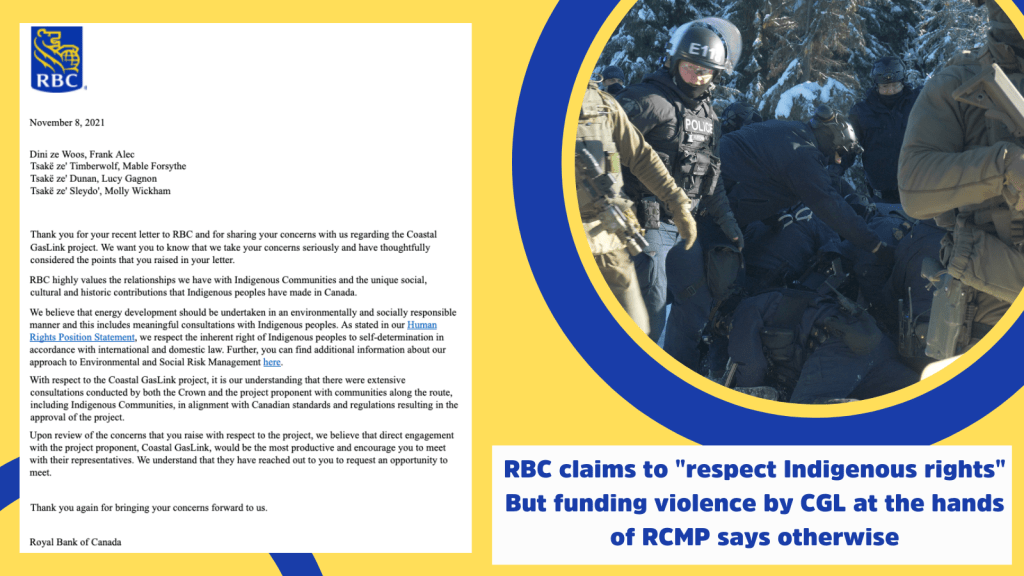
Sleydo, Molly Wickham, spoke about the Coastal GasLink pipeline. I hadn’t realized that pipeline was supposed to be the proof of concept that multiple pipelines could be built to transport fossil fuel through Wet’suwet’en territory, to the west coast to be loaded onto oil tankers. It’s called the “carbon corridor”. Which is why the Royal Canadian Mounted Police (RCMP) are working with the fossil fuel industry to force construction of the Coastal GasLink pipeline.

Sleydo said RBC has invested $400 million in the Coastal GasLink pipeline.

Iowa Solidarity with Wet’suwet’en

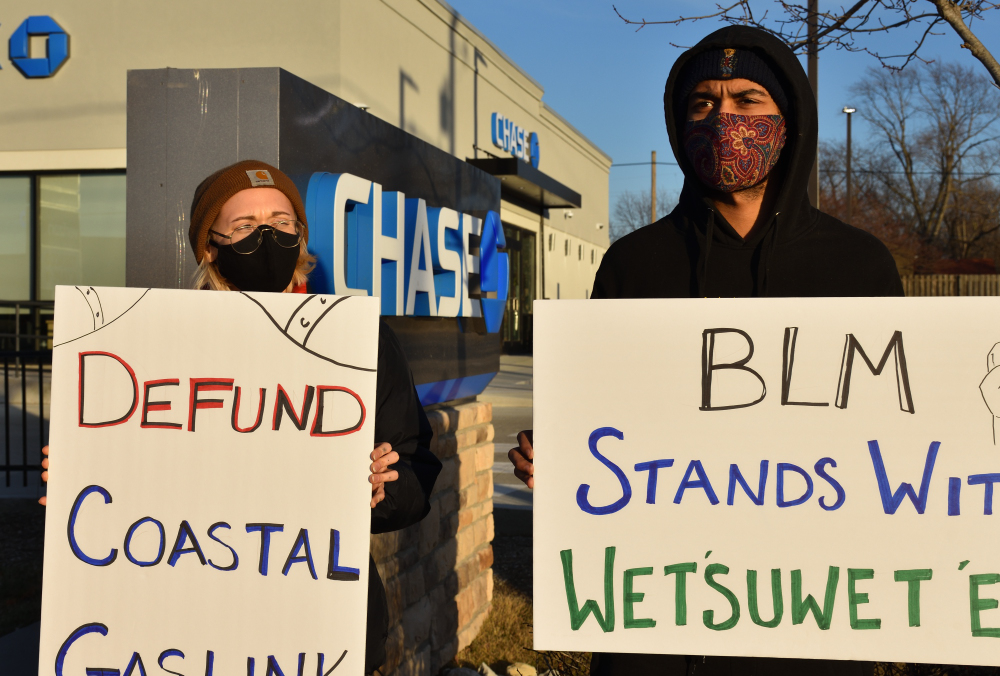
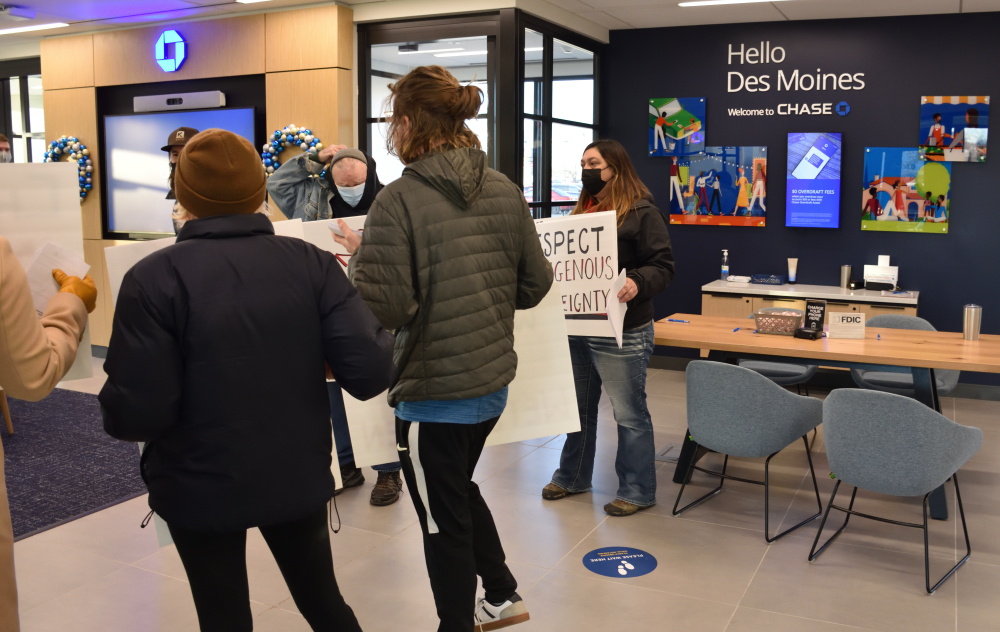
On December 22, 2021, we went to Chase bank in Des Moines to protest the bank’s funding of fossil fuel projects. In support of the Wet’suwet’en’s calls for solidarity.


First Nations land defenders on Monday filed a submission to the United Nations detailing how their territory and human rights are being violated by Canadian and British Columbian authorities in service of a fossil fuel corporation’s gas pipeline.

“We are intimidated and surveilled by armed RCMP, smeared as terrorists, and dragged through colonial courts. This is the reality of Canada.”

The submission to the United Nations Human Rights Council was filed by the Gidimt’en—one of the five clans of the Wet’suwet’en Nation—who for years have been fighting to stop the construction of Coastal GasLink’s pipeline through their territory in northern British Columbia.

The filing notes that “ongoing human rights violations, militarization of Wet’suwet’en lands, forcible removal and criminalization of peaceful land defenders, and irreparable harm due to industrial destruction of Wet’suwet’en lands and cultural sites are occurring despite declarations by federal and provincial governments for reconciliation with Indigenous peoples.”

Submission to UN Human Rights Council. “Wet’suwet’en is an international frontline to protect the rights of Indigenous peoples and to prevent climate change.” by Brett Wilkins, Common Dreams, February 7, 2022

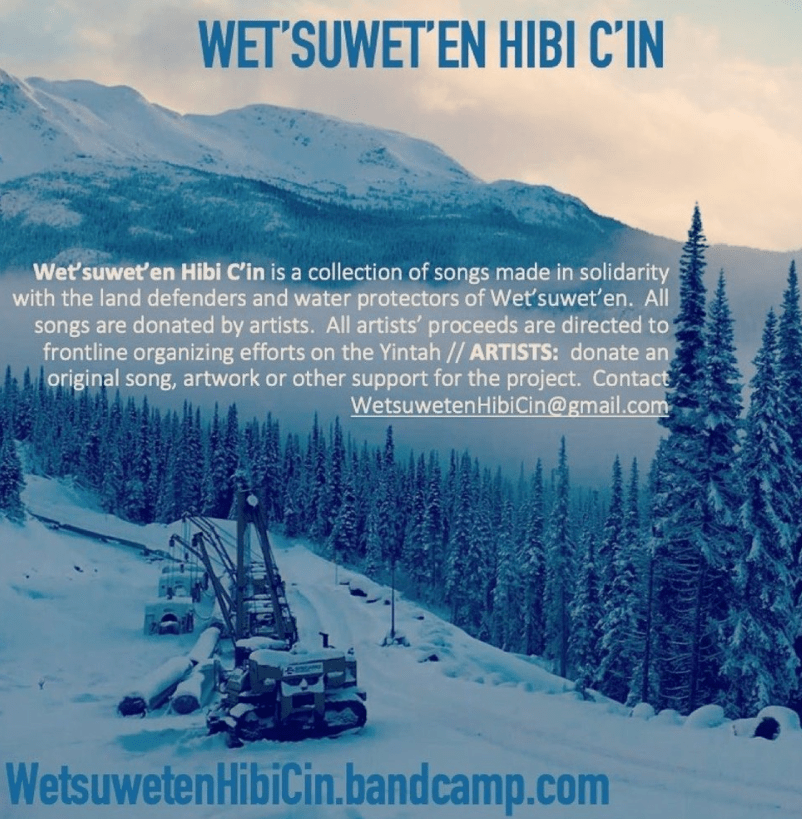
One way you can support the Wet’suwet’en is to purchase music donated by artists.

https://wetsuwetenhibicin.bandcamp.com/releases

Purchase TINY HOUSE to support Wet’suwet’en. I purchased TINY HOUSE and others. https://wetsuwetenhibicin.bandcamp.com/track/tiny-house

Eco Socialism

I’m spending hours searching for information about religion and socialism since learning about the idea of Religious Socialism.

Socialism has a negative connotation for many that is related to Marxism and its support of revolution by any means.

In one of our nation’s best moments, the civil rights movement of the mid-20th century, Christian socialists played major roles. A. Philip Randolph and Bayard Rustin were very open about their socialism, and Dr. Martin Luther King Jr., who praised democratic socialism both publicly and privately, stood on the shoulders of previous generations of socialist African American social gospel leaders.

These Christian socialists agreed with Karl Marx’s ground-breaking analysis of the devastating impact capitalism wreaks on working people. But they parted ways when it came to Marx’s antipathy to religion, and they rejected Marx’s exhortations to revolution by any means. For religious socialists, the instrument of revolutionary reform is a political one at the ballot box and nonviolently in the streets. That approach works. Consider the many nations comparable to the United States, particularly in western and northern Europe, where socialist advocacy within the democratic process has led to universal healthcare, progressive taxation, and comprehensive social services that assure safe housing and a minimum income. Compared to the United States, life there is far closer to the kingdom of God on earth.

Christian Socialist by MAXINE PHILLIPS and FRAN QUIGLEY

I’ve long known evolving environmental chaos would be the end of capitalism. This chaos will increasingly lead to the physical destruction of the infrastructure that produces and distributes goods and the shops where they are sold, resulting in widespread financial ruin. The impact of severe drought and storms will significantly impact food production and supplies of clean water. These things will increasingly impact housing, energy, healthcare, education, finance, transportation, and other social and political systems.

We are finally at a place where the public can no longer refuse to recognize the impacts of climate change. The fear that generates, and the realization things will only get worse, is fueling social unrest. Movement toward authoritarianism, and domestic violence and terrorism.

I have become interested in religious socialism to create communities to support each other as current systems fail. This interests me as an opportunity to revitalize my Quaker communities. Or for more people to turn to whichever spiritual community meets their needs.

But it is unclear how many people will turn to spirituality, especially those who previously felt disenfranchised from churches and religious organizations.

As I’ve searched for information about religious socialism I’ve found a lot of information about Eco socialism, a term new to me. But which encapsulates what I’ve always believed about environmental chaos and the need for socialism to respond.

In the wake of Australian fire storms, global crop loss and catastrophic climate shifts, billions of people are recognizing the dangers to society and life itself presented by capitalism’s profit-driven despoiling of nature. At the same time, the last 40 years of deepening inequality inside virtually all nations have undermined their social cohesion, and increasingly, capitalism’s mechanisms are being blamed. Anti-capitalism is exploding across many political landscapes.

One broad socialist response to ecological crisis has produced a global eco-socialist movement and a rich set of eco-socialist writings. They rightly argue that a solution to the ecological crisis requires a transition from capitalism to socialism. Profit-driven capitalism is the problem that socialism can solve. Likewise, socialists argue, today’s extreme economic inequalities flow from capitalism. Socialism’s traditionally egalitarian focus on state redistributions of wealth and income has attracted mass interest and support.

Will Climate Change Provoke a Widespread Revival of Socialism? by Richard D. Wolff, TRUTHOUT, Feb 13, 2020

Illusion of Caring

I keep coming back to my failure to convince people we had to give up having personal automobiles if we were going to prevent the environmental catastrophe unfolding now. I was hoping the examples of those of us who refused to have cars combined with the warning signs about greenhouse gas emissions would make change happen.

I am similarly discouraged about the prospects of convincing people of the evils of capitalism, as I summarize here: The Evil of Capitalism.

But the global capitalist systems are collapsing now. The question is whether we will build alternatives before the worst happens.

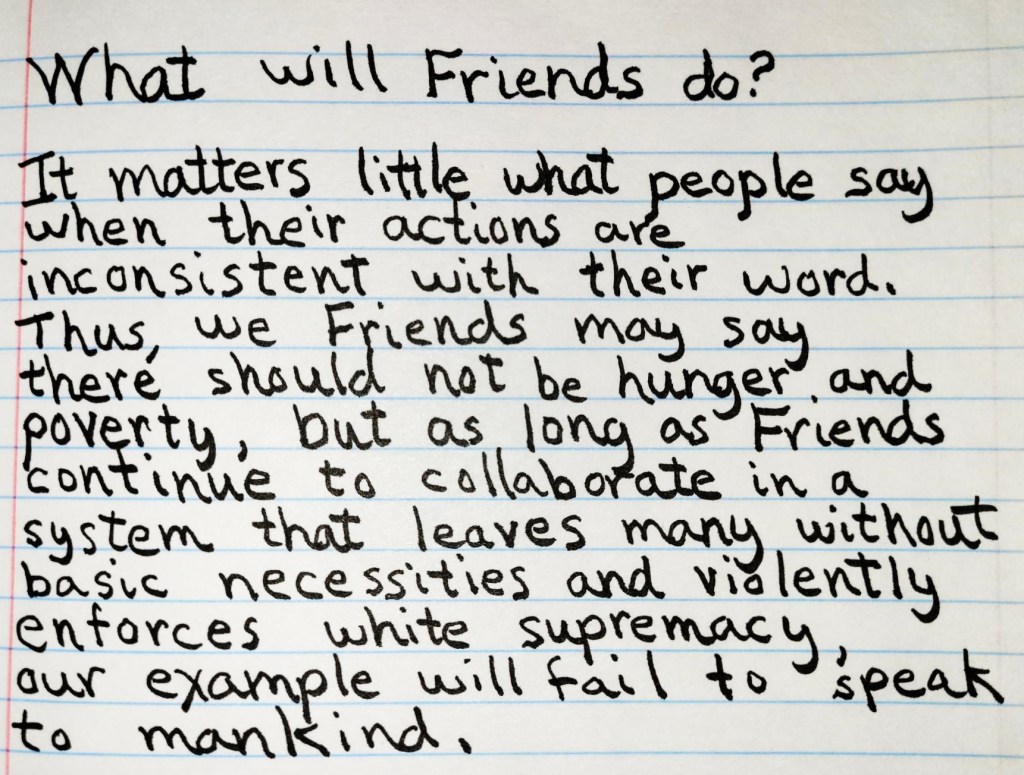
when we join in a walkathon for the homeless or make an online donation for a food bank, we are relieved from the burden of confronting the underlying injustice of a society where great wealth exists alongside grinding poverty

Fran Quigley

My friend Fran Quigley has written Religious Socialism: Faith in Action for a Better World. One of the main premises of his book is “the grim, daily evidence of capitalism’s failures”. The following is from the Introduction of his book.

Rev. George Washington Woodbey is a member of a determined group of Americans who, over the course of 150 years, has insisted that there is an unbreakable connection between their religious values and the political and economic system of socialism. To make their case, they have pointed to the grim, daily evidence of capitalism’s failures. Today, the United States is one of the wealthiest nations in human history yet with far higher poverty rates than similar countries. The disparity reveals itself through health insurance company CEO’s making as much as $83 million per year, while tens of millions of the nation’s residents go without health care. It is shown by the richest Americans owning multiple homes, some worth as much as a quarter-billion dollars, while a half-million Americans are homeless. Three American men own more wealth than the bottom 50 percent of the nation’s population combined. At the same time, one of every six children in America—12 million overall—live below the poverty line.

Every faith tradition condemns this state of affairs. So does socialism. These faith traditions and socialism prescribe the same, straightforward remedy: all humans have the right to the necessities of life.

Note the word right. The capitalist U.S. system has survived its conflict with religious principles in significant part by projecting the illusion of caring about the suffering of the poor, while at the same time rejecting the recognition of any rights that would alleviate poverty. How is that tricky balancing act performed? By promising the U.S. public that the fortunate few will extend their charity to meet all the needs of the poor. If that promise is believed, massive concentrations of wealth do not seem so outrageous.

But that promise is a lie, demonstrated by the millions of American children going hungry while the wealthy luxuriate. Yet the false narrative persists, likely because it is so comforting to all of us who are not poor. In her 1998 book Sweet Charity, the sociologist Janet Poppendieck concludes that the American preference for charity over public welfare programs relieves the pressure for more fundamental solutions. Charity, she writes, acts as a “moral safety valve.”

From an individual perspective, that safety valve effect means that when we join in a walkathon for the homeless or make an online donation for a food bank, we are relieved from the burden of confronting the underlying injustice of a society where great wealth exists alongside grinding poverty. As for our political engagement, high-profile donations of plutocrats make us less likely to demand curbs on their lavish wealth. Charity may not be very effective at alleviating injustice, but it is quite good at relieving our sense of outrage about it.

Quigley, Fran. Religious Socialism: Faith in Action for a Better World (pp. 10-11). Orbis Books. Kindle Edition.

Thich Nhat Hanh Dies at 95

Thich Nhat Hanh, a Vietnamese Buddhist monk who was one of the world’s most influential Zen masters, spreading messages of mindfulness, compassion and nonviolence has died.

Thich Nhat Hanh began writing and speaking out against the war in Vietnam and in 1964 published a poem called “Condemnation” in a Buddhist weekly. It reads in part:

Whoever is listening, be my witness:
I cannot accept this war.
I never could I never will.
I must say this a thousand times before I am killed.
I am like the bird who dies for the sake of its mate,
dripping blood from its broken beak and crying out:
“Beware! Turn around and face your real enemies
— ambition, violence hatred and greed.”

“Condemnation” by Thich Nhat Hanh

His connection with the United States began in the early 1960s, when he studied at Princeton University and later lectured at Cornell and Columbia. He influenced the American peace movement, urging the Rev. Dr. Martin Luther King Jr. to oppose the Vietnam War.

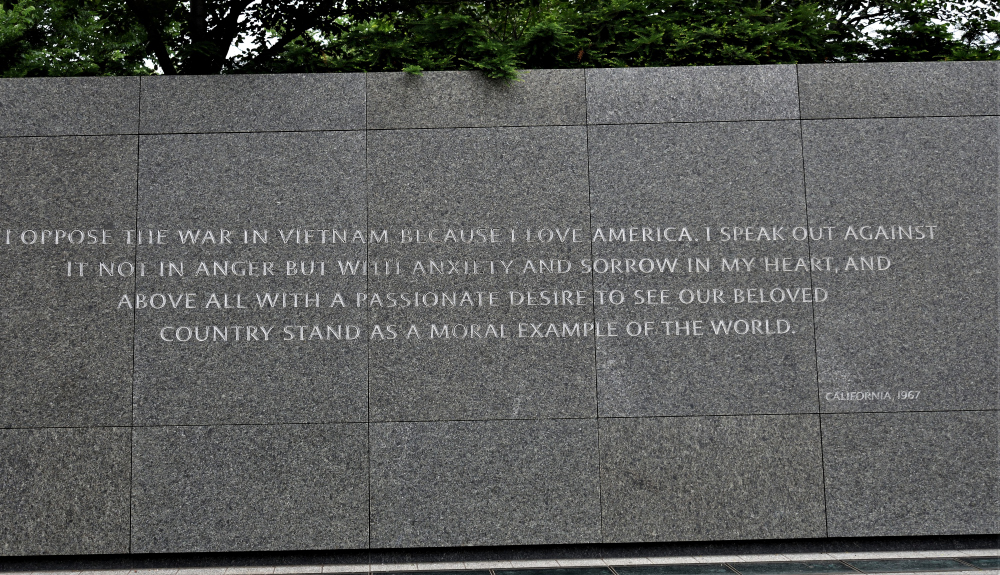
I oppose the war in Vietnam because I love America. I speak out against it not in anger but with anxiety and sorrow in my heart, and above all with the passionate desire to see our beloved country stand as a moral example of the world.
Martin Luther King, Jr.

I was aware of the teachings of both Thich Nhat Hanh and Martin Luther King, Jr, as I struggled with my decision to resist the war in Vietnam in the late 1960’s while a student at the Quaker boarding school, Scattergood Friends School.

I was also influenced by the Quakers in my community who worked for peace. Many of whom were imprisoned for their refusal to participate in war, during the many wars in our history. Who resisted militarism in this country even when we were not at war.

The late Don Laughlin, my friend, mentor, and a Quaker, collected these stories. They are unfortunately relevant today as Russia threatens to invade Ukraine.

This is the link to those stories. Young Quaker Men Facing War and Conscription