Social and Economic Justice

One of the things that means the most to me as a Quaker is the practice of considering advices and queries. The queries are sets of questions meant to ask ourselves what we are doing in our own lives, and in the work of our Quaker meetings in the present moment.

This is an example of how Quaker faith is grounded in what is happening in our lives today. And our belief that God, or the Spirit, is present in every being today, human and nonhuman. Can guide us now. The practice in our meeting is for the advice and queries to be read aloud. Then we sit in silent reflection. When we feel we have been given a message to share, we speak.

This helps keep our faith active, rather than passive.

There are twelve sets of queries, each about some part of our lives. The usual practice is for Quaker meetings to reflect on one set, each month. Topics include education, environmental responsibility, outreach, peace and nonviolence. Today at my meeting we will be reflecting on social and economic justice.


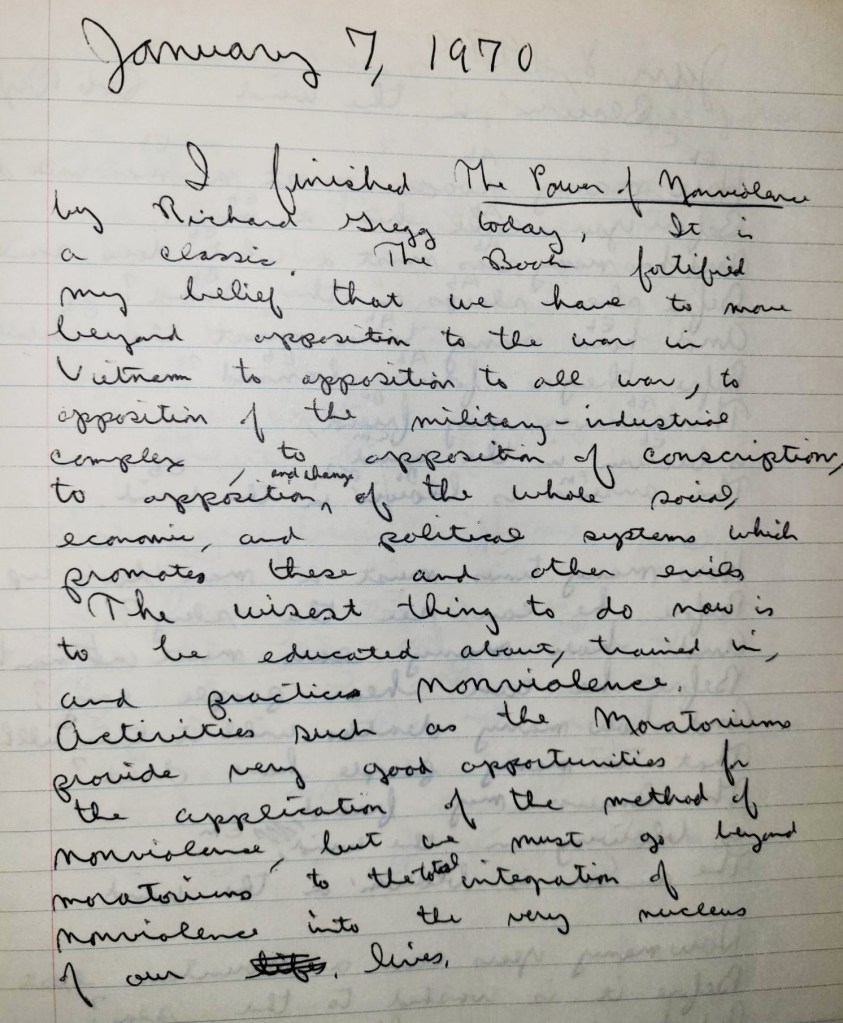
Often, I reflect on these queries outside the Quaker meeting gathering. That is why I write so much. Writing is a Spiritual exercise for me. Writing helps me listen for what the Spirit is saying. And helps me organize my thoughts. This is similar to keeping a journal as I did in the 1970’s. It looks like handwriting was a challenge.
Social and economic justice is something I’ve been thinking and praying about a lot lately. Over the past two years I’ve been deeply involved in Des Moines Mutual Aid. I mean Mutual Aid is something I’ve been studying and thinking a lot about outside the actual time spent at our weekly food giveaway.

A recent summary is this blog post, Mutual Aid is the Quaker way of being in the world.

As the advice says below, “we are part of an economic system characterized by inequality and exploitation. Such a society is defended and perpetuated by entrenched power.”

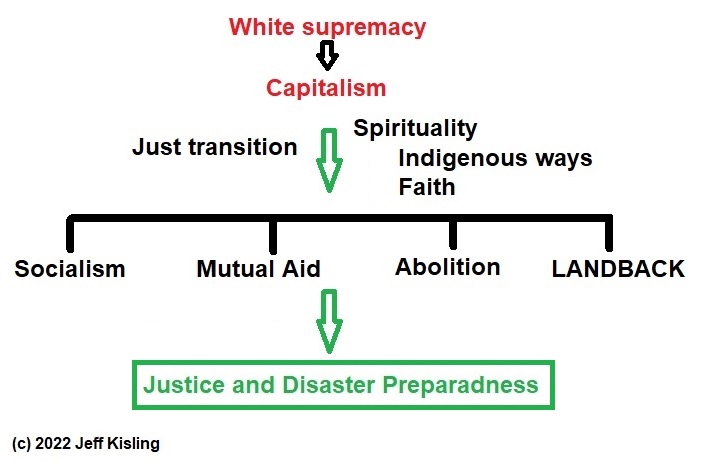
That is exactly what Mutual Aid is about. The capitalist economic system we are living in is designed to be unequal. Those who are skillful, or ruthless enough, accumulate wealth. Fundamentally, everything and everyone is seen as a resource that can be harnessed to create wealth. The result is millions of people trying to survive on subsistent wages. The result is the rape of the resources of Mother Earth. Which has put us on the road to extinction.

The capitalist economic system is enforced by political and criminal justice systems. Systems built on vertical hierarchies of power.

Mutual Aid is just the opposite. We work to maintain a flat or horizontal hierarchy, where everyone is equal.

One query for today is “how are we beneficiaries of inequity and exploitation? How are we victims of inequity and exploitation? In what ways can we address these problems?” I believe the answer involves building Mutual Aid communities.

I’ve met a great deal of resistance to the idea of replacing capitalism with Mutual Aid. When I asked a (Mutual Aid) friend why people had so much trouble recognizing the evils of capitalism, he said it was because they hadn’t experienced the failures of capitalism in their own lives, yet.


I wrote my own queries about Mutual Aid

Queries related to Mutual Aid
Do we recognize that vertical hierarchies are about power, supremacy and privilege? What are Quaker hierarchies?
Do we work to prevent vertical hierarchies in our peace and justice work?
What are we doing to meet the survival needs of our wider community?
How are we preparing for disaster relief, both for our community, and for the influx of climate refugees?
Are we examples of a Beloved community? How can we invite our friends and neighbors to join our community?

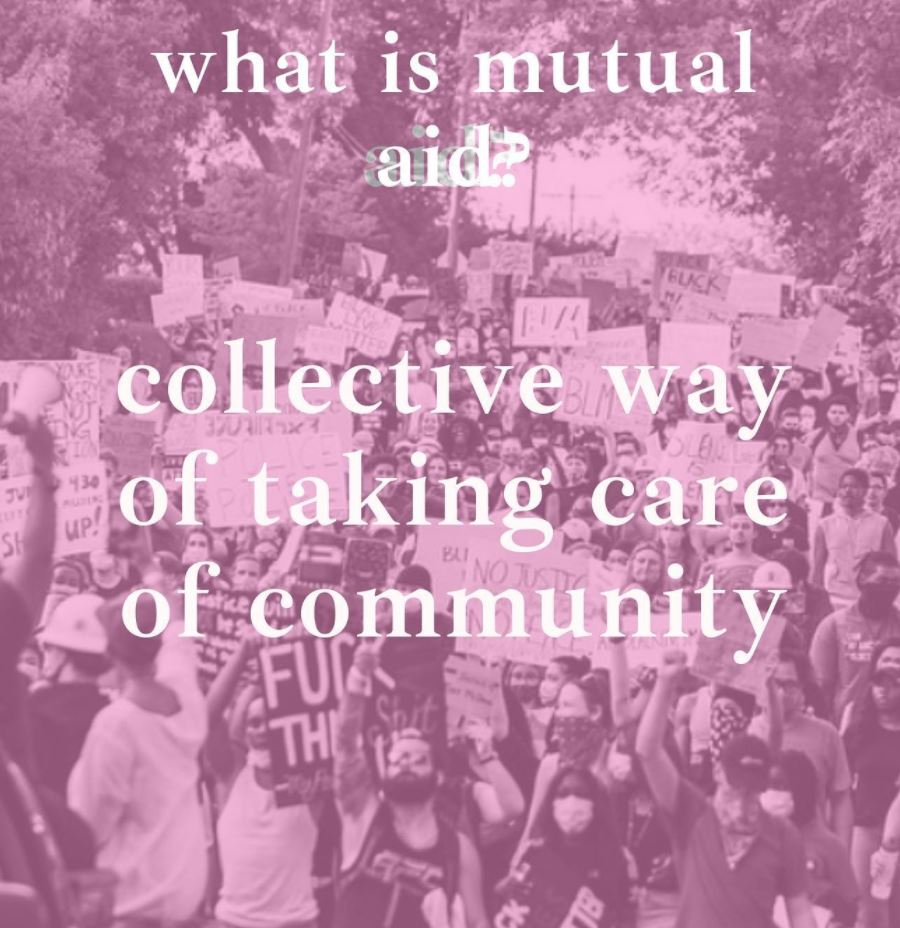
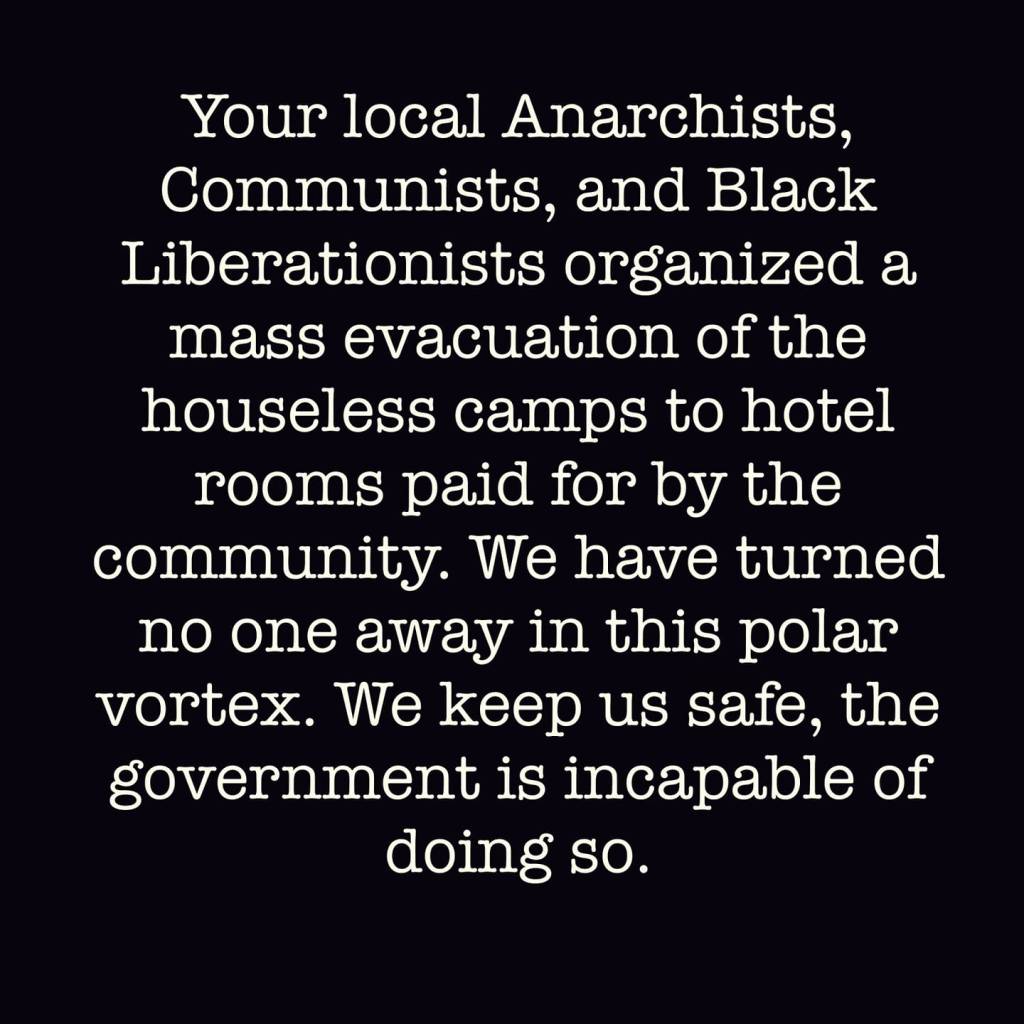
mutual aid is the new economy. mutual aid is community. it is making sure your elderly neighbor down the street has a ride to their doctor’s appointment. mutual aid is making sure the children in your neighborhood have dinner, or a warm coat for the upcoming winter. mutual aid is planting community gardens.

capitalism has violated the communities of marginalized folks. capitalism is about the value of people, property and the people who own property. those who have wealth and property control the decisions that are made. the government comes second to capitalism when it comes to power.

in the name of liberation, capitalism must be reversed and dismantled. meaning that capitalistic practices must be reprogrammed with mutual aid practices.

Des Moines Black Liberation

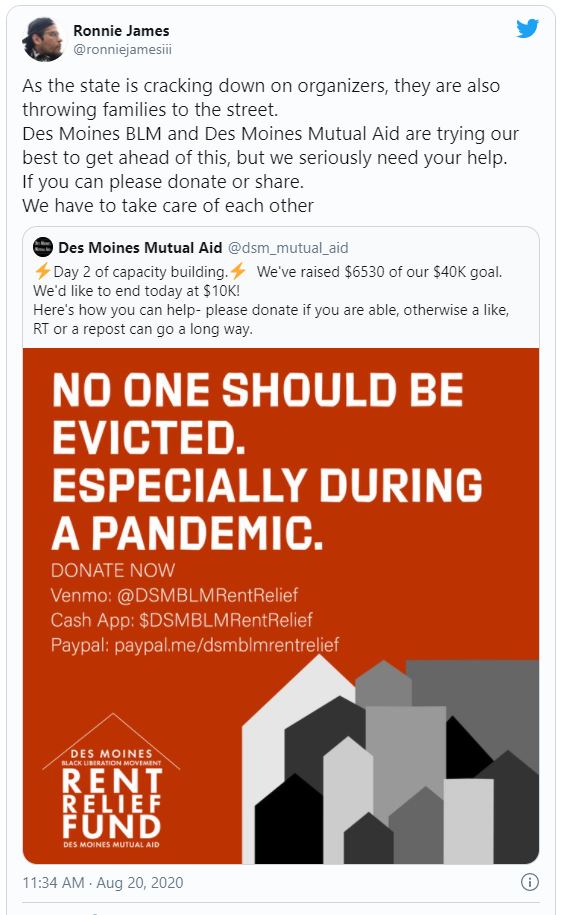
Des Moines Mutual Aid is a collective that does outreach for homeless folks in our community, houseless folks in our community. We also assist BLM with their rent relief fund, and most of the work we’ve done is running the bail fund for the protests over the summer. In the course of that work, we have witnessed firsthand the violence that is done upon people of color, Black people specifically, by the white supremacist forces of the state – in this state, in this city, in this county. There is absolutely a state of emergency for people of color and Black people in Iowa. The state of emergency has been a long time coming. We will support – DMMA will absolutely support any and all efforts of this community – BLM, and the people of color community more generally- to keep themselves safe. Power to the people.

Patrick Stahl, Des Moines Mutual Aid

SOCIAL AND ECONOMIC JUSTICE

Advice and Queries

“For when I was hungry you gave me food, when thirsty you gave me drink, when I was a stranger you took me into your home, when naked you clothed me, when in prison you visited me.”     Matthew 25:35‑36

ADVICE

We are part of an economic system characterized by inequality and exploitation. Such a society is defended and perpetuated by entrenched power.

Friends can help relieve social and economic oppression and injustice by first seeking spiritual guidance in our own lives. We envision a system of social and economic justice that ensures the right of every individual to be loved and cared for; to receive a sound education; to find useful employment; to receive appropriate health care; to secure adequate housing; to obtain redress through the legal system; and to live and die in dignity. Friends maintain historic concern for the fair and humane treatment of persons in penal and mental institutions.

Wide disparities in economic and social conditions exist among groups in our society and among nations of the world. While most of us are able to be responsible for our own economic circumstances, we must not overlook the effects of unequal opportunities among people. Friends’ belief in the Divine within everyone leads us to support institutions which meet human needs and to seek to change institutions which fail to meet human needs. We strengthen community when we work with others to help promote justice for all.

QUERY

  • How are we beneficiaries of inequity and exploitation? How are we victims of inequity and exploitation? In what ways can we address these problems?
  • What can we do to improve the conditions in our correctional institutions and to address the mental and social problems of those confined there?
  • How can we improve our understanding of those who are driven to violence by subjection to racial, economic, or political injustice? In what ways do we oppose prejudice and injustice based on gender, sexual orientation, class, race, age, and physical, mental, and emotional conditions? How would individuals benefit from a society that values everyone? How would society benefit?

Faith and Practice

Dearly Beloved Friends, these things we do not lay upon you as a rule or form to walk by, but that all, with the measure of light which is pure and holy, may be guided and so in the light walking and abiding, these may be fulfilled in the spirit, not the letter, for the letter killeth, but the spirit giveth life. Letter from the meeting of Elders at Balby, 1656

We are seekers but we are also the holders of a precious heritage of discoveries. We, like every generation, must find the Light and Life again for ourselves. Only what we have valued and truly made our own, not by assertion but by lives of faithful commitment, can we hand on to the future. Even then we must humbly acknowledge that our vision of truth will again and again be amended. Quaker Faith and Practice of Britain Yearly Meeting, 1994 page 17

Faith and Practice, The Book of Discipline of Iowa Yearly Meeting of Friends (Conservative) is a statement of principles and beliefs by which our society endeavors to learn and express lessons in Christian living. It provides guidance for the conduct of daily life and for carrying on the business of the meeting. Faith and Practice suggests rather than commands, and raises questions or queries rather than giving specific answers. It places upon the individual and corporate conscience, rather than upon external authority, the responsibility for the discipline of the Spirit.

Faith and Practice is based on an earlier document called the Discipline of Iowa Yearly Meeting (Conservative). It is intended as a handbook and guide for those of the Religious Society of Friends who belong to Iowa Yearly Meeting of Friends (Conservative), also known as Iowa Yearly Meeting (Conservative) or IYM(C). The first written disciplines among Friends appeared in Britain Yearly Meeting in manuscript form in 1718. At about the same period or a little later, in America, minutes of the yearly meetings were gathered in manuscript book form under captions alphabetically listed. The first printed Book of Discipline of Philadelphia Yearly Meeting appeared in 1797. The first Friends settling in Iowa lived under disciplines of Indiana Yearly Meeting and of Ohio Yearly Meeting.


ECONOMIC JUSTICE

May we look upon our treasures, the furniture of our houses, and our garments, and try whether the seeds of war have nourishment in these our possessions. John Woolman, A Word of Remembrance and Caution to the Rich published posthumously, 1793

I will never adjust myself to economic conditions that will take necessities from the many and give luxuries to the few. Martin Luther King, Jr., speaking in Cleveland Heights, Ohio, [St Paul’s Episcopal Church] 1963

Friends’ historical testimony has included the message that all people are equal, and deserve to share equally in the blessings of creation. The world is far from this ideal, and most in Iowa Yearly Meeting (Conservative) have benefited from global and local inequalities, however inadvertently. But we also suffer spiritually and otherwise because of the injustice in which we participate.

Friends believe that we should live in ways that do not “sow seeds of war.” Many are called to act in quiet or public ways to promote lifestyle choices, policies, laws, and treaties that will ensure the basic human rights of all people, including the rights to safe and healthy places to live and work. Historically, Friends have been able to help correct major injustices such as slavery, inhumane conditions for prisoners, and inequality in the treatment of women. The magnitude of current problems caused by economic injustice does not excuse Friends from the struggle against it, but makes obedience to God’s call all the more necessary.

Friends are reminded that there can be no peace without justice, and to live simply, so others may simply live. Many Friends find seeds of war and injustice in their lifestyles. Friends are challenged to participate constructively in the economy by supporting fair trade, choosing investments with attention to their social impact, and purchasing products produced under safe and healthy conditions. What each can do individually may not seem like much, but, guided by the Spirit and added to the efforts of others, it can make a difference.

The Book of Discipline of Iowa Yearly Meeting of Friends (Conservative)
Religious Society of Friends

Ed Fallon interviews me about the Wet’suwet’en emergency

I returned to Iowa in 2017 after spending my entire adult life in Indianapolis. First as a neonatal respiratory therapist, then thirty years doing research related to infant lung development and disease at Riley Hospital for Children, Indiana University Medical Center.

In Indianapolis I was fortunate to have been led to become involved with numerous environmental and social justice organizations, including the Kheprw Institute, a youth mentoring community, and efforts to stop the construction of the Keystone XL and Dakota Access pipelines. I made a lot of close friends. It was hard to leave them.

And I wondered what organizations and people I would find in Iowa. Ed Fallon and Bold Iowa were often mentioned as I looked for environmental groups in Iowa. We began to know each other via social media and email. But we didn’t meet until 7:00 am, February 3, 2018. Ed had organized a group to travel in a van to Minneapolis Super Bowl weekend to protest US Bank’s funding of the Dakota Access pipeline. US Bank’s headquarters are in downtown Minneapolis, and the Super Bowl was played in the US Bank stadium.

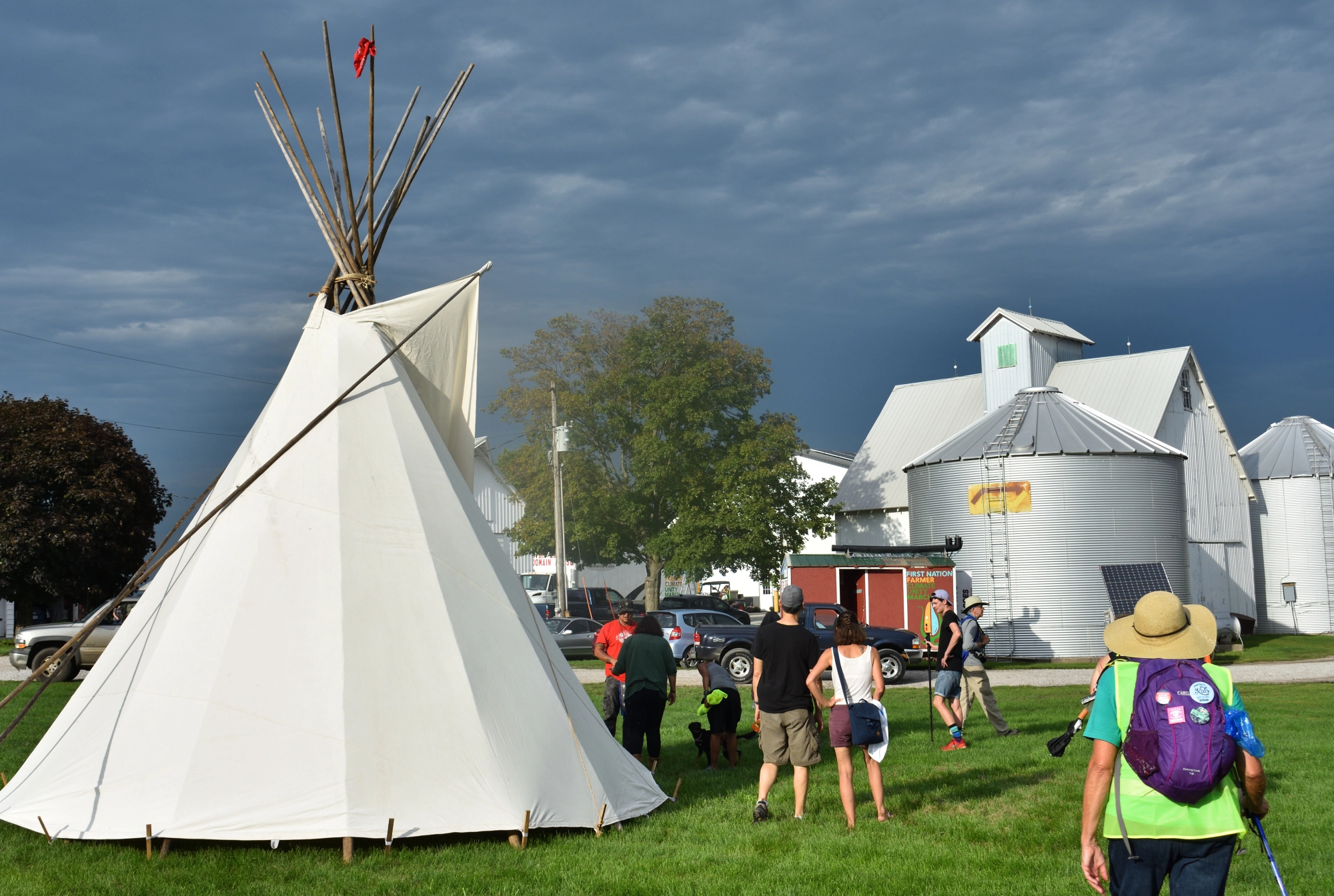
Ed, of Bold Iowa, and Christine Nobiss, of Indigenous Iowa, organized the First Nation-Farmer Climate Unity March, that I participated in. A small group of about a dozen native and a dozen non-native people walked and camped along the route of the Dakota Access pipeline from Des Moines to Ford Dodge, ninety four miles over eight days. See: https://firstnationfarmer.com/

The purpose of the march was for us to share our stories and get to know one another so we could work on things of common concern. That was hugely successful, and we have done many things together since.

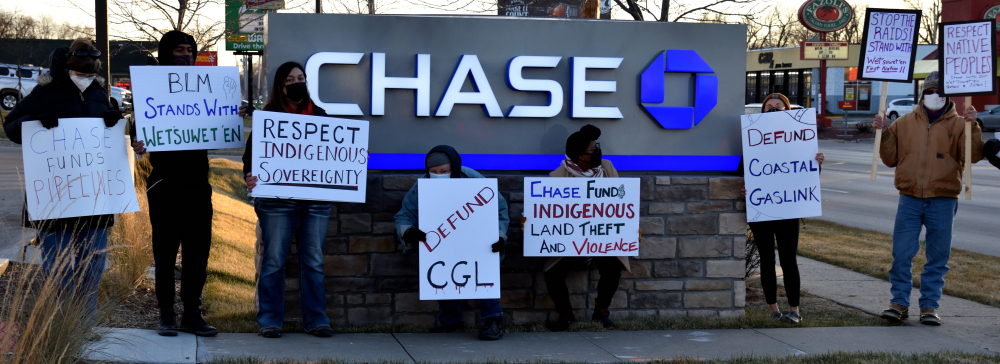
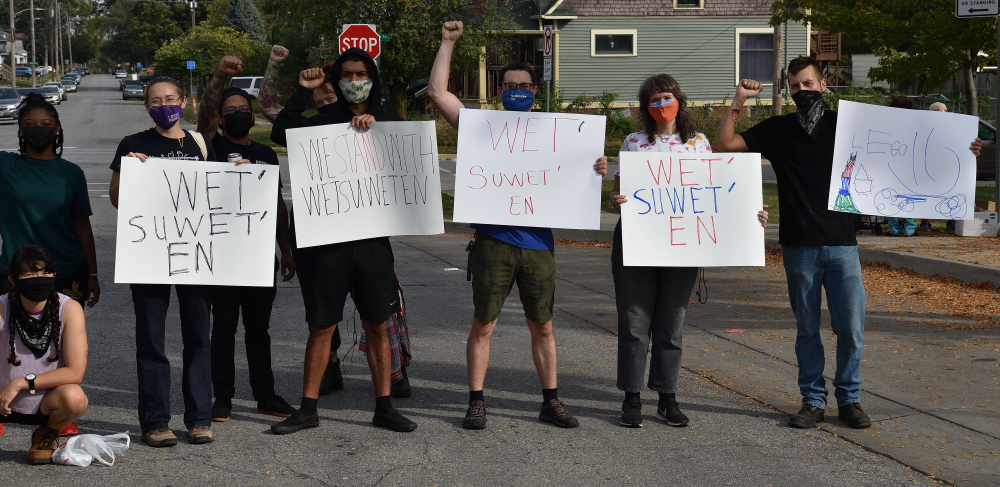
Ed is familiar with my involvement with the Wet’suwet’en people’s struggles to keep the Coastal GasLink pipeline from being built through their beautiful lands. When he read my recent blog post, Wet’suwet’en emergency, he asked if I’d like to be interviewed about this on his weekly radio program, the Fallon Forum.

The Wet’suwet’en people of British Columbia have been fighting to stop Coastal GasLink from building a pipeline through their land. That effort takes on additional importance now as the company threatens to drill under a river central to the Wet’suwet’en’s existence. Advocate Jeff Kisling joins me for that discussion.

Ed Fallon interviews Jeff Kisling about the Wet’suwet’en emergency

#KillTheDrill #WetsuwetenStrong #AllOutForWedzinKwa

U.S. Indian Boarding Schools

The Department of Interior recently released the first volume of the Federal Indian Boarding School Initiative’s report. There were 408 schools across 37 states in the United States. 53 burial sites have been found so far.


FCNL welcomed the release of the first volume of the Federal Indian Boarding School Initiative’s long-awaited investigative report. Assembled by the Department of the Interior, this report serves as historic documentation of the trauma inflicted by Indian boarding schools. It also underscores the need for further reckoning on this vital issue, both in Congress and in the Quaker and faith communities.

According to the report, between 1819 and 1969, there were 408 schools across 37 states (or then-territories). Quakers managed at least 30 Indian boarding schools, and the conditions at these institutions were often horrific. These schools aimed to “assimilate” Native children through tactics such as renaming children with English names, cutting their hair, prohibiting the use of Native languages and religions, extensive military drills, and manual labor. Abuse ran rampant, including the withholding of food, solitary confinement, and physical punishment.

The investigation also found 53 burial sites at boarding school locations so far. As the Interior Department continues their investigation, they will produce a list of marked and unmarked burial sites and approximate the total amount of federal funding used to support the Indian boarding school system.

“This new report shines a much-needed light on the atrocities committed at Indian boarding schools, some of which were run by Quakers,” said FCNL General Secretary Bridget Moix. “We commend the Department of the Interior for doing this difficult work and we remain committed to doing our part to advance the reckoning and healing process for this dark chapter in American history.”

Further, we call on the faith community at large to share records and accounts of their administration of these schools. Only through complete honesty and transparency can we begin moving towards a more just future,” she continued.

Quaker Lobby Welcomes Long-Awaited Report on Indian Boarding Schools by Alex Frandsen, Friends Committee on National Legislation, May 12, 2022

Friends Committee on National Legislation
Native American Legislative Update

MAY 2022

The Interior Department also announced the launch of “The Road to Healing,” a year-long tour across the country to allow survivors to share their stories, connect tribal communities with trauma-informed support, and facilitate the collection of a permanent oral history.

Bill Tracker

Truth and Healing Commission on Indian Boarding School Policies Act (H.R. 5444):
On May 12, the House Natural Resources Subcommittee for Indigenous Peoples of the U.S. held a hearing to receive testimony from boarding school survivors, tribal leaders, and the head of the National Native American Boarding School Healing Coalition.

FY2023 Budget Hearings:
On May 11, the Senate Interior and Environment Appropriations Subcommittee received testimony from the Indian Health Service (IHS) on its proposal to move IHS funding from discretionary to mandatory funding in fiscal year 2023. If approved, this change would stabilize the tribal healthcare system.

MONTHLY ACTION

Portia K. Skenandore-Wheelock
Congressional Advocate
Native American Advocacy Program

The following is a searchable list of Indian boarding schools identified by the Department of the Interior as part of the Federal Indian Boarding School Initiative. The information is drawn from Appendix A of Volume 1 of the Federal Indian Boarding School Initiative Investigative Report. It shows the 408 schools were identified in 37 states, including 21 in Alaska and seven in Hawaii. Over time, the schools were located at 431 sites.“The research conducted has resulted in the identification of hundreds of boarding schools that have been considered against four criteria,” the 27-page document reads. “All four criteria must be met for an institution to be considered a FIBS.”

The four criteria follow:

  1. Housing – Institution ever described as providing housing or overnight lodging to attendees on site.
  2. Education – Institution ever described as providing formal academic or vocational training or instruction.
  3. Federal Support – Institution ever described as having federal government funds or other support provided to the institution.
  4. Timeframe – Institution operational at any time prior to 1969.

The schools in Iowa are listed here:

Toledo Industrial Boarding SchoolToledo Sanatorium; Sac & Fox Indian Boarding and Mission School; Sac & Fox Sanatorium; Tama School; Tama SanatoriumToledoIowa
White’s Manual Labor Institute – IowaIowa Boys Training School; Iowa Girls Training School; Indian Boarding School; Home and School for Boys and GirlsHoughtonIowa
Winnebago Mission SchoolYellow River SchoolAllamakee CountyIowa

List of Federal Indian Boarding Schools as of April 1, 2022, Indianz.Com, May 11, 2022


Quaker Statements on Indigenous Justice and Indian Boarding Schools. Minutes, Statements, and Resources from Quaker Organizations, Friends Committee on National Legislation, May 10, 2022

https://www.fcnl.org/updates/2022-05/quaker-statements-indigenous-justice-and-indian-boarding-schools

Quakers need to step out of their meeting

I’m grasping for anything I can do to reduce the chances of yet another atrocity of violence, another massacre of children. I feel anger and sorrow at the pitifully inadequate legislation being discussed in Washington, DC. Even those measures are unlikely to pass.

I’ve been part of a local Mutual Aid community for almost two years now. And I have experienced how powerful and effective Mutual Aid is in building community and addressing community needs immediately. It is by working in our local communities that we can address community safety, providing alternatives to guns and violence. It is the only way.

Des Moines Mutual Aid

My experiences with this type of community justice work strongly supports what José Santos Woss, Director for Justice Reform at the Friends Committee on National Legislation, says in this video, “Quaker Faith in Justice Reform” (below).

In particular, he says “there’s a need for Quakers to step out of their meeting.”

When I was in Indianapolis, North Meadow Circle of Friends were part of the pilot program of the American Friends Service Committee (AFSC) called Quaker Social Change Ministry (QSCM). The idea was to get Quakers out of the meetinghouse by finding a community near them that was experiencing injustice, and spend time being physically present with that group. Spending a lot of time there by consistently showing up.
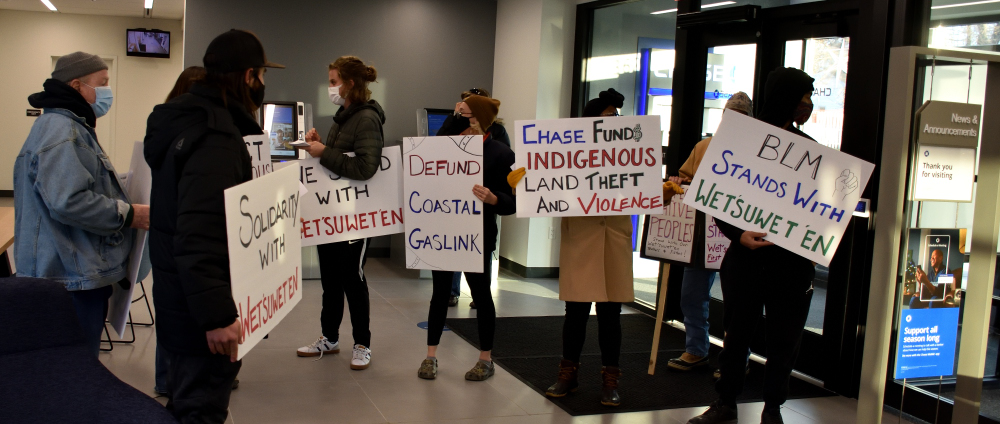
QSCM brings a spiritual focus to Quaker justice work by having the Quakers involved reflect on the spirituality of the experiences they were having. QSCM also taught us how important it is to listen deeply to those in the community we were working with. To wait to be asked by the community to do something. To be students, not teachers.

This blog post summarizes what I learned with QSCM. Out of the meetinghouse.


Quakers are pretty white, and that comes with quite a bit of power and privilege. A Quaker in Omaha, Nebraska is going to have probably more weight in what they say to a legislator than a Black Lives Matter activist in Brooklyn, New York. I think there’s a need for Quakers to step out of their meeting and away from a lot of these phenomenal institutions that they’ve created and speak to individuals in an interfaith setting (from Black churches or Black Lives Matter) and have a cross-cultural understanding of what that experience is like because you’ll find that it’s very different, and I think the more we can do of that the more effective we’ll be in addressing these problems. These exchanges and fusion coalitions are what I think it’s going to take, not only for Friends to be effective in dismantling these systems of racism, classism, and white supremacy in American society, but also for all of us to better address these problems in our country.

José Santos Woss, Quaker Faith and Justice Reform, Quakerpeak video

https://youtu.be/aHtmwaCi2PI

White Quakers need to “speak to individuals in an interfaith setting (from Black churches or Black Lives Matter) and have a cross-cultural understanding of what that experience is like because you’ll find that it’s very different.”

That is what we did when North Meadow Friends engaged with the Kheprw Institute, a Black youth mentoring community in Indianapolis. We spent at least one Sunday afternoon a month there, participating in discussing books about justice issues.

When I said a sad goodbye, I told them I felt I had received a graduate degree from them. Alvin said “your diploma is in the mail.”

I began to receive a similar education when I walked and camped for eight days, for ninety four miles with a small group of native and nonnative people along the path of the Dakota Access pipeline.

And it is the education I’m receiving from my work with Des Moines Mutual Aid (as described above).

White Friends cannot receive this education without leaving the meetinghouse. Neither committee meetings, lectures or workshops can do this.

And those in oppressed communities will not listen to what you have to say until you have demonstrated you have experienced and learned these things.

These exchanges and fusion coalitions are what I think it’s going to take, not only for Friends to be effective in dismantling these systems of racism, classism, and white supremacy in American society, but also for all of us to better address these problems in our country.

José Santos Woss, FCNL

One thing we can do is work to promote community violence interruption. Mutual Aid communities are a framework for doing this.

“Trust, credibility, and relationships are core pillars of the Safe Streets Baltimore program and other programs around the country like it,” said Moix. “Local violence interrupters are able to respond quickly to potential incidents and de-escalate the situation, while building relationships and strengthening community resilience over time. These locally-led programs are impactful and cost-effective, and they deserve more federal support and funding from Congress.”

Growing Support for Investing in Community Violence Interruption, FCNL’s General Secretary Bridget Moix, May 23, 2022

Build Safer Communities: Invest in Violence Interrupters

Traditionally, cities have responded to community-level violence by increasing the presence of a militarized police force. This solution has repeatedly failed with sometimes fatal consequences. A new solution, one that comes from within the community itself, offers a new way forward: violence interrupters.

Violence interrupters work within their communities to deescalate violence before it happens, without police intervention. These evidence-based programs are tailored to the unique needs of the neighborhoods they serve and lay the groundwork for lasting communal change.

Urge Congress to make our communities safer by dedicating federal funding to violence interrupters programs.

Use this button to send this message to your Congressional representatives.


“It takes a monster to kill children. But to watch monsters kill children again and again and do nothing isn’t just insanity – it’s inhumanity.”

Amanda Gorman

The Light that Never Fails

I sense universal despair from the unbelievable tragedy of the deaths of elementary school children, yet again. Part of the hopelessness is that these things have happened in the past and we fear they will continue to happen. That there will be no changes for better community safety. We feel personally responsible for these failures. And we are, aren’t we, if we do nothing?

Many disparage the idea of “thoughts and prayers” which admittedly is usually an empty sentiment. But as people of faith, we do believe in prayer, don’t we?

Amanda Gorman recently wrote “It takes a monster to kill children. But to watch monsters kill children again and again and do nothing isn’t just insanity – it’s inhumanity.”


Many Quakers look for hope in statements and suggestions for action from our national political lobbying organization, the Friends Committee on National Legislation (FCNL).

The gun violence epidemic is both a public health crisis and a troubling reflection on our country’s spiritual state. As we seek policy solutions, we must also look critically at the culture that enables so many people to kill each other with guns.

Friends Committee on National Legislation (FCNL)

Information on the FCNL website today follows, including a link to send a message to your Congressional representatives to enact universal background checks.

When will it be enough?

The mass shooting at an elementary school in Uvalde, TX is horrific and heartbreaking. We grieve for the children, the teachers, and the families. We grieve for America. And we will continue to demand that our lawmakers act to disrupt this cycle of violence and terror.

Tell Congress to Enact Universal Background Checks

Universal background checks legislation would save lives by implementing background checks for every firearm purchase or transfer. The House recently pass two such bills – the Bipartisan Background Checks Act of 2021 (H.R. 8) and  Enhanced Background Checks Act of 2021 (H.R. 1446).  

Urge your senators to support this common-sense measures and save lives!


Gun Violence Prevention Principles

Gun violence in the United States is so common that it rarely makes the news. As a nation, we have seemingly accepted that ordinary activities – going to a house of worship, a nightclub, a school – carry the risk of violent death.

But our current levels of gun violence are not inevitable. Policymakers’ failure to pass common sense, responsible legislation contributes to appalling rates of gun violence in the United States.

Lawmakers must take every available step to reduce harm and loss of life. Easy access to guns will continue to make it horrifyingly easy to escalate fear, hatred, and rage into slaughter.

We support efforts to reduce gun violence by limiting gun ownership, possession, and use. In particular, a comprehensive gun violence prevention strategy will:

  • Address the many forms of gun violence, including mass shootings, accidental shootings, police shootings, domestic and intimate partner violence, and suicide, through context-sensitive approaches
  • Advance evidence-based gun violence prevention
  • Preserve civil liberties and anti-discrimination protections
  • Prioritize systemic changes over individual punishment
  • Limit access to equipment that makes mass shootings deadlier
  • Implement safety checks for all gun buyers
  • Promote and strengthen community engagement by implementing community-based violence intervention and prevention programs

The gun violence epidemic is both a public health crisis and a troubling reflection on our country’s spiritual state. As we seek policy solutions, we must also look critically at the culture that enables so many people to kill each other with guns. As Quakers, we believe that there is that of God in every person and that all creation has worth and dignity. We call on Congress to act immediately to protect each sacred life.

Gun Violence Prevention Principles
Friends Committee on National Legislation (FCNL)


“The Light That Never Fails”
(from “Meru” soundtrack)

When the cold bites your bones
And gets in your heart
It can make you feel hopeless
And fear will come to steal your sun and make it dark
But don’t believe you’re lonely

We’ve all had that moment when our shoulders sink
And we sit back and think
We could just run

But we’re not born to chase the fading light
We’re not born to fall and lose the fight
Never letting go
Oh no oh
I’m askin’ you to lift me, lift me higher than I ever been
Hold your breath and say you’re gonna come with me
We were born to follow
The light that never fails

You’re scared to fight
You’re scared to climb
Afraid to die
But I can be your courage
And help you see you’ve already won this

We all have that moment when our head hangs low
We question if we should go
Or turn back and run

But we’re not born to chase the fading light
We’re not born to fall and lose the fight
Never letting go
Oh no oh
I’m askin’ you to lift me, lift me higher than I ever been
Hold your breath and say you’re gonna come with me
We were born to follow
The light that never fails

Come along
We’re settin’ sail
Never looking back again

We’re not born to chase the fading light
We’re not born to fall and lose the fight
Never letting go
Oh no oh
I’m askin’ you to lift me, lift me higher than I ever been
Hold your breath and say you’re gonna come with me
We were born to follow
The light that never fails
We were born to follow
The light that never fails
Light that never fails
The light that never fails

Andra Day

Wet’suwet’en emergency

Last night I attended the online Wet’suwet’en organizing call, along with eight hundred others. We heard from Sleydo’ (Molly Wickham), Chief Woos and Chief Na’ Moks, all of whom I’ve seen in videos and read their writings over the past several years. Below are ways you can support the Wet’suwet’en.

There is great urgency now to #KKillTheDrill, referring to Coastal GasLink’s preparations to start drilling under the Wedzin Kwa, the sacred headwaters of the Wet’suwet’en.


Why do we need your help to #KillTheDrill?

After a decade of fierce resistance, Coastal GasLink is currently preparing the site to  start drilling under the Wedzin Kwa, the sacred headwaters of the Wet’suwet’en since time immemorial. Now is the time to come together and demand drilling stop.

The Coastal Gaslink pipeline and associated LNG terminal is the largest private fracked gas investment in Canadian history. The Wet’suwet’en Hereditary Chiefs have been resisting the construction of the fracked gas pipeline on their territories for more than a decade, and the hereditary chiefs of all five Wet’suwet’en clans have refused to give their consent to the project.

In late April, the UN Committee on the Elimination of Racial Descrimination (CERD) issued Canada a third letter urging Canada to end their colonial violence on the territory. CERD urged Canada to cease construction of the Coastal GasLink pipeline, as well as the TMX pipeline, until free, and prior informed consent was received from the Wet’suwet’en and Secwepemc people (respectively); engage in negotiations with these impacted communities; and end forced evictions from traditional territories. 

And yet, key decision makers continue to ignore these recommendations, continue construction on Coastal GasLink, and condone violence against the Wet’suwet’en on their traditional lands. In late November 2021, the world watched as RCMP conducted militarized raids against Wet’suwet’en Land Protectors at Gidimt’en Checkpoint. Shocking images of assault rifles being pointed at unarmed protectors and doors being hacked down circulated widely, as did reports of humiliating treatment and abuse by RCMP. Now, tensions are rising as drilling beneath the sacred headwaters of the Wedzin Kwa river edges closer. 


The Big Picture: How do we stop the drilling? 

The UN is once again calling out Canada for their colonial violence, and it’s time to strike while there is international attention. So who are those key players? The contractors on the ground, the government officials who condone RCMP harassment and break their own promises of title negotiations and reconciliation,  and the funders behind the scenes.

Taking action during key moments when an issue is in the news cycle or on people’s news feeds can be very impactful in building momentum on a campaign. It helps bring people along who care about the issue but aren’t sure where or how to start. Digital actions are also a great way to mobilize people to take more action in the future! 

Contractors:

NameKey peopleSocials
OJ Pipelines
(Annual General Meeting May 27th 2022, 8am)
Russell Keller, President, Linkedin
Blaine Collet, Senior Director of Indigenous Relations and Community Relations, Linkedin
Phone: 1 780 955 3900
Fax: 1 780 955 3518
Parent Company: Quanta Services Steve Sousa, Managing Director and Chief commercial officer, LinkedinTwitter: @Quanta_Services, Instagram: @Quantaservices, Facebook: Quanta Services

Below are a list of financial institutions in the USA involved in the financing of the CGL pipeline. 

Name of investor/bankTwitter handleEmail address
USA
JP Morgan Chase@jpmorganCEO jamie.dimon@jpmchase.com 
Bank of America@BankofAmericaCEO brian.t.moynihan@bankofamerica.com 
Citi@CitiCEO jane.fraser@citi.com
CEO North America sunil.garg@citi.com
Chief of staff margo.pilic@citi.com
Chief risk officer  zdenek.turek@citicorp.com General counsel rohan.weerasinghe@citigroup.com 
Truist@TruistNews
Fluor Corp@FluorCorp

Sample tweet

I stand with  Wet’suwet’en and demand your immediate divestment + withdrawal of financing for Coastal GasLink and LNG Canada @jpmorgan @BankofAmerica @Citi @TruistNews @FluorCorp @KKR_Co. Stop financing climate chaos and Indigenous rights violation. #WetsuwetenStrong


Government targets: 

NamesKey Locations Socials 
Justin Trudeau, Prime Minister80 Wellington StreetOttawa, ON K1A 0A2Fax: 613-941-6900@JustinTrudeau
John Horgan, Premier of BCBC Legislative Building: 501 Belleville St, Victoria, BC V8V 2L8
Community office, 122 – 2806 Jacklin RoadVictoria, BC V9B 5A4
john.horgan.mla@leg.bc.ca.Telephone: 250-391-2801 Fax: 250-391-2804
@jjhorgan
David Eby, BC Attorney GeneralMLA David Eby’s Community Office
2909 West Broadway (at Bayswater, two blocks west of MacDonald)
Vancouver, BC V6K 2G6Phone: 604-660-1297Email: david.eby.mla@leg.bc.ca 
@Dave_Eby
Mike Farnworth
BC Minister of Public Safety 
MLA Consultancy office:

107A – 2748 Lougheed HwyPort Coquitlam, BC   V3B 6P2
@mikefarnworthbc
Marc Miller, Minister of Crown-Indigenous RelationsMain office – Montréal3175 Saint-Jacques Street, Montréal, Quebec, H4C 1G7Telephone: 514-496-4885Fax: 514-496-8097 Marc.Miller@parl.gc.ca@MarcMillerVM

January, 2020, Bear Creek Friends (Quaker) meeting sent the following letter to British Columbia Premier, John Horgan.

John Horgan.
PO BOX 9041 STN PROV GOVT
VICTORIA, BC V8W 9E1.
Email premier@gov.bc.ca

John Horgan,

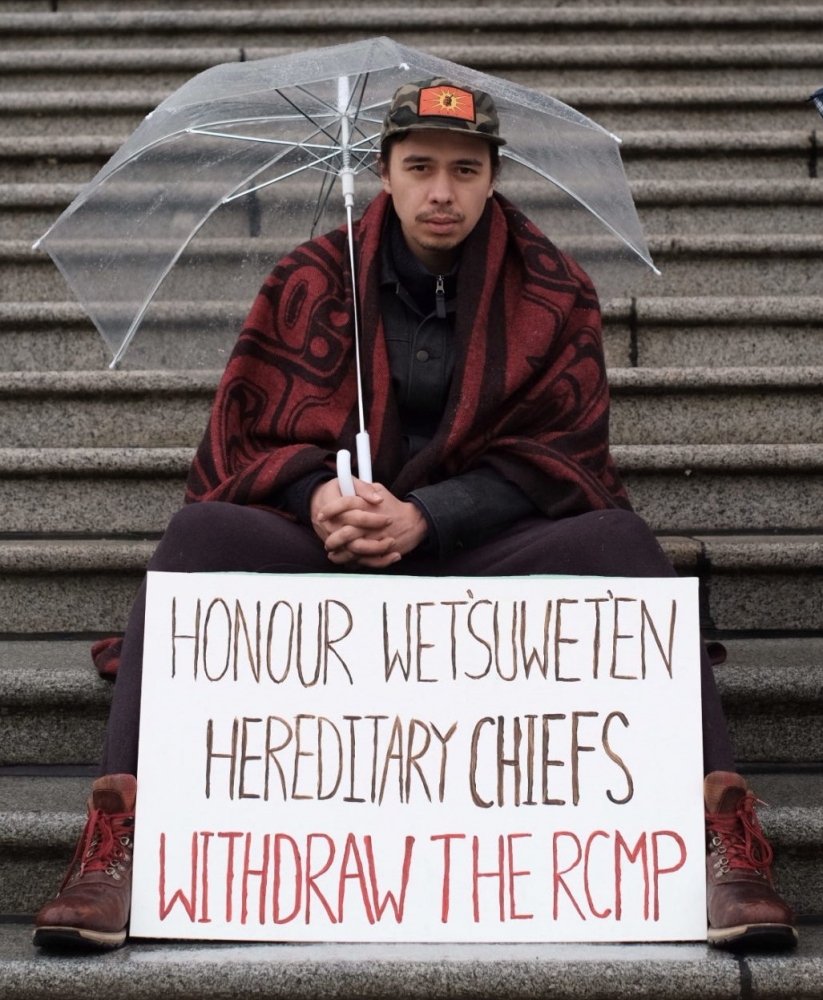
We’re concerned that you are not honoring the tribal rights and unceded Wet’suwet’en territories and are threatening a raid instead.
We ask you to de-escalate the militarized police presence, meet with the Wet’suwet’en Hereditary Chiefs, and hear their demands:
That the province cease construction of the Coastal Gaslink Pipeline project and suspend permits.
That the United Nations Declaration on the Rights of Indigenous Peoples (UNDRIP) and tribal rights to free, prior and informed consent (FPIC) are respected by the state and RCMP.
That the Royal Canadian Mounted Police (RCMP) and associated security and policing services be withdrawn from Wet’suwet’en lands, in agreement with the most recent letter provided by the United Nations Committee on the Elimination of Racial Discrimiation’s (CERD) request.
That the provincial and federal government, RCMP and private industry employed by Coastal GasLink (CGL) respect Wet’suwet’en laws and governance system, and refrain from using any force to access tribal lands or remove people.

Bear Creek Monthly Meeting of Friends (Quakers)
19186 Bear Creek Road, Earlham, Iowa, 50072


Gidimt’en social media accounts

Tiktok: Mention @RCMPoffyintah in your caption!


#KillTheDrill #WetsuwetenStrong #AllOutForWedzinKwa

Indian Boarding Schools and White Supremacy

Washington, DC. The Friends Committee on National Legislation (FCNL) welcomed the release of the first volume of the Federal Indian Boarding School Initiative’s long-awaited investigative report. Assembled by the Department of the Interior, this report serves as historic documentation of the trauma inflicted by Indian boarding schools. It also underscores the need for further reckoning on this vital issue, both in Congress and in the Quaker and faith communities.

“This new report shines a much-needed light on the atrocities committed at Indian boarding schools, some of which were run by Quakers,” said FCNL General Secretary Bridget Moix. “We commend the Department of the Interior for doing this difficult work and we remain committed to doing our part to advance the reckoning and healing process for this dark chapter in American history.”

“Further, we call on the faith community at large to share records and accounts of their administration of these schools. Only through complete honesty and transparency can we begin moving towards a more just future,” she continued.

Quaker Lobby Welcomes Long-Awaited Report on Indian Boarding Schools by Alex Frandsen, May 12, 2022

Portia Kay^nthos Skenandore-Wheelock, is the Friends Committee on National Legislation (FCNL) Congressional Advocate, Native American Advocacy Program. She makes an important point when she writes about connecting boarding schools to broader practices of White supremacy. This is important for White Quakers to understand as we search for ways to support Indigenous peoples today.
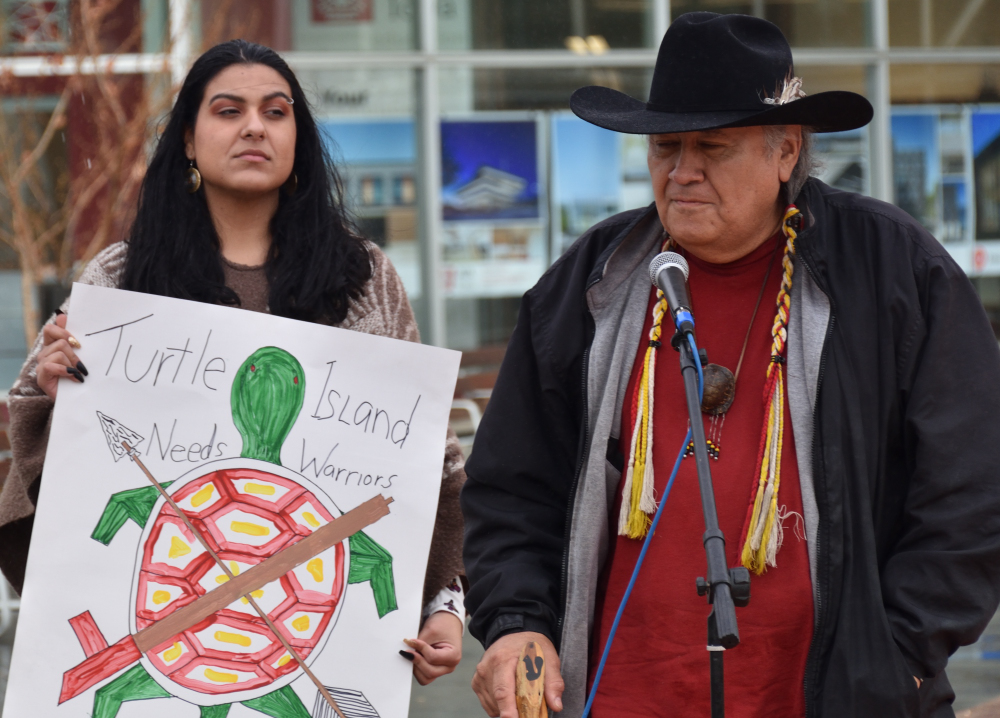
The consequences of separating young children from their families and tribal homes, a curriculum of child labor, and punishments akin to those inflicted on prisoners of war are deeply felt within Indigenous communities to this day.

Further, beneath the cruel assimilation policy lies the true purpose of this government strategy: an effort to seize Native land. Federal records confirm that the creation of the federal Indian boarding school system coincided with land dispossession. An assimilation policy targeted at Native children was thought to be easier and less costly than war in separating tribes from their land. The schools would discourage tribal land and food practices and encourage western agricultural practices that require less land.

Another tactic was to encourage tribes to purchase goods on credit to support the western agricultural lifestyle. Thus, tribes would fall into debt and have no option but to cede lands to the U.S. for payment—those funds were then mostly used to fund the boarding school system.

Survivors left these institutions abused, in poor health, and without the language and cultural knowledge to connect with the homes they returned to.

A First Look at the Federal Indian Boarding School Initiative Report by Portia Kay^nthos Skenandore-Wheelock May 16, 2022

Separating Native children from their families continues today as social service agencies create excuses to remove them from their homes.

And there was the practice of separating children from their families at the southern border.

It is the ultimate manifestation of White Supremacy to violently and cruelly force anyone who is not white to abandon their culture, practices and beliefs, to assimilate into White culture.

Global White supremacy was codified in the Doctrine of Discovery

Doctrine of Discovery Factsheet

What is the Doctrine of Discovery? Why Should It Be Repudiated?

For thousands of years, Indigenous Peoples lived free in their territories in the Western Hemisphere. When European monarchies invasively arrived in the Western Hemisphere in the fifteenth, sixteenth, and later centuries, during the so-called Age of Discovery, they claimed the lands, territories, and resources of the Indigenous Peoples, asserting that the monarchies had a right to appropriate on behalf of Christendom. The monarchies’ claims of a Christian dominion (dominance) over Indigenous Peoples and their lands served them pragmatically to fend off competing monarchies and to de-legitimate the long-established autonomous indigenous peoples’ governments.

The Doctrine of Discovery is a key premise for non-Indigenous government claims to legitimacy on and sovereignty over Indigenous lands and territories. It is used in particular by former British colonies, specifically, Canada, Australia, New Zealand and the United States of America.

(The fact sheet continues at the following link)

New York Yearly Meeting


Buffalo Rebellion

juxtaposition 2

It’s difficult to write this morning. Writing is a spiritual practice for me. But my heart and Spirit are heavy from the news of yet another horrendous school shooting.

There are so many questions, and so few answers.

Just because something like the second amendment is interpreted to enshrine guns doesn’t mean that is the right thing to do. Why do those in power choose guns over the lives of children?

We should beat guns into plowshares.

He shall judge between the nations, and shall arbitrate for many peoples; they shall beat their swords into plowshares, and their spears into pruning hooks; nation shall not lift up sword against nation, neither shall they learn war any more.

Isaiah 2:4

Today’s juxtaposition is related to an online event about the trauma, and deaths that occurred in the Indian Boarding Schools in this country and Canada. The genocide. Trauma that has been passed from generation to generation. Trauma those living today experience.

That is in juxtaposition to the elementary school massacre in Texas yesterday.

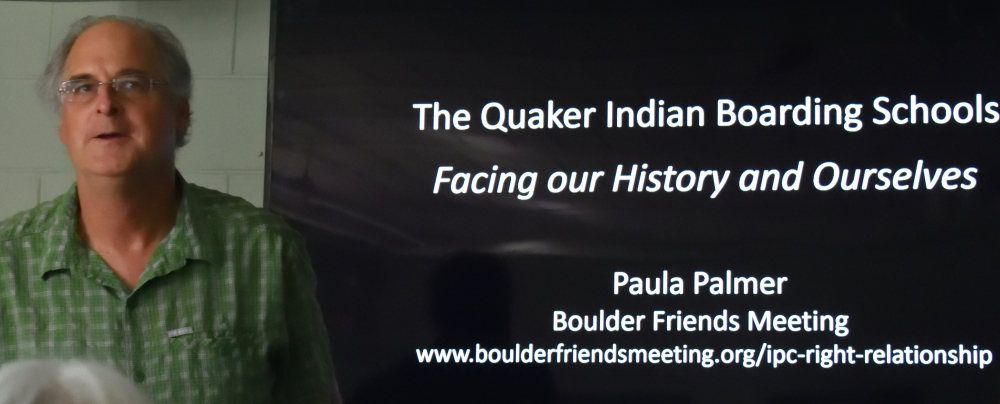
Seeking Truth, Healing, and Right Relationship: Quakers and the Legacy of Indian Boarding Schools, MAY 25, 2022, 6:30 – 7:30 PM EDT 

FCNL and Friends advocate in solidarity with Indigenous peoples. Yet, historically, Quakers played a role in colonization and the cultural genocide of Native people through the operation of more than 30 Indian boarding schools. With legislation now before Congress to investigate the legacy of Indian boarding schools, how are Friends communities engaging to address Quaker complicity in these atrocities?
Join us on Weds. May 25 at 6:30 p.m. EDT to learn how FCNL and F/friends are reckoning with this history and advocating in solidarity with Native communities.

In conversation with Paula Palmer and Jerilyn DeCoteau, FCNL’s Congressional Advocate for Native American Advocacy Portia Kay^nthos Skenandore-Wheelock will discuss FCNL’s work to build support for the bipartisan Truth and Healing Commission on Indian Boarding School Policies in the United States Act (S. 2907/H.R. 5444). Paula and Jerilyn will share from their expertise and experience co-directing Towards Right Relationship with Native Peoples with Friends Peace Teams. Director of Quaker Leadership Alicia McBride will moderate the conversation.

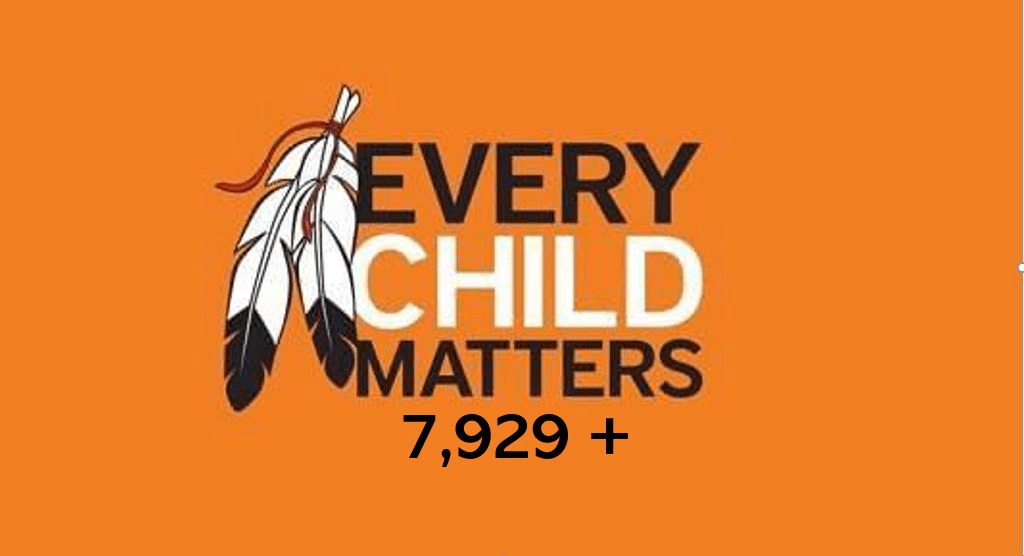
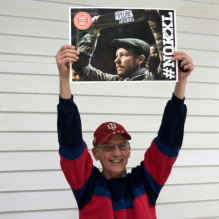
There is a Facebook group, Every Child Matters related to the atrocities of the Indian Boarding Schools. The number on the graphic tracks the number of remains of children found so far.

https://www.facebook.com/groups/125050373031500

A community to provide educational resources, generate awareness, share events and actions, and build community. Recognizing the legacy of colonization in all of Turtle Island, and working together as a community to create a world our 7 generations yet to come can feel proud to be a part of.

“Every person will do their work in their own way as we move forward.

Some will take direct action and take action. That is important. Some will write policy. That is important. Some will do ceremony. That is important. Some will share stories. That is important. Some will build relationships and understanding. That is important. Some will teach. That is important. If we all do what we know how to do, with what we know, it will be good.

Every one and every thing has purpose. Keep your ears and minds and hearts open. Try to listen to each other without forming an opinion. Listen to things as information. You don’t have to agree with it. But you can validate it as someone’s experiences, feelings and ways of healing.”

Following is a link to the poem every child, found on the Intrepid Muse Poetry blog.

https://intrepidmusepoetry.blogspot.com/2022/05/every-child-matters.html

juxtaposition is the title of an earlier blog post.

It is a juxtaposition to see the rapidly accelerating, multiple effects of environmental devastation and chaos versus the struggles of Indigenous peoples trying to protect their pristine lands and waters.
https://quakersandreligioussocialism.com/2022/05/23/juxtaposition/

No Way Out but War

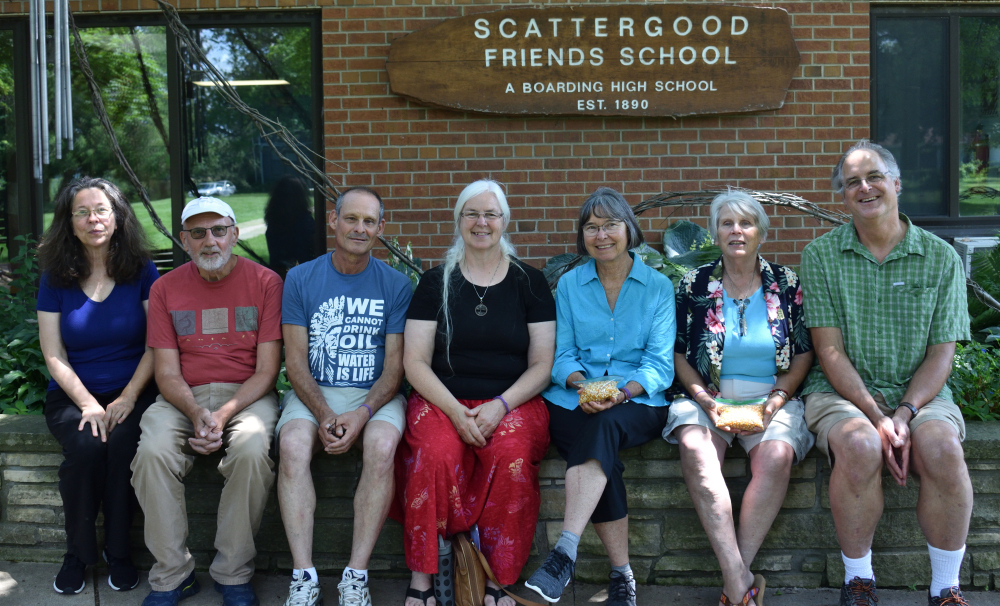
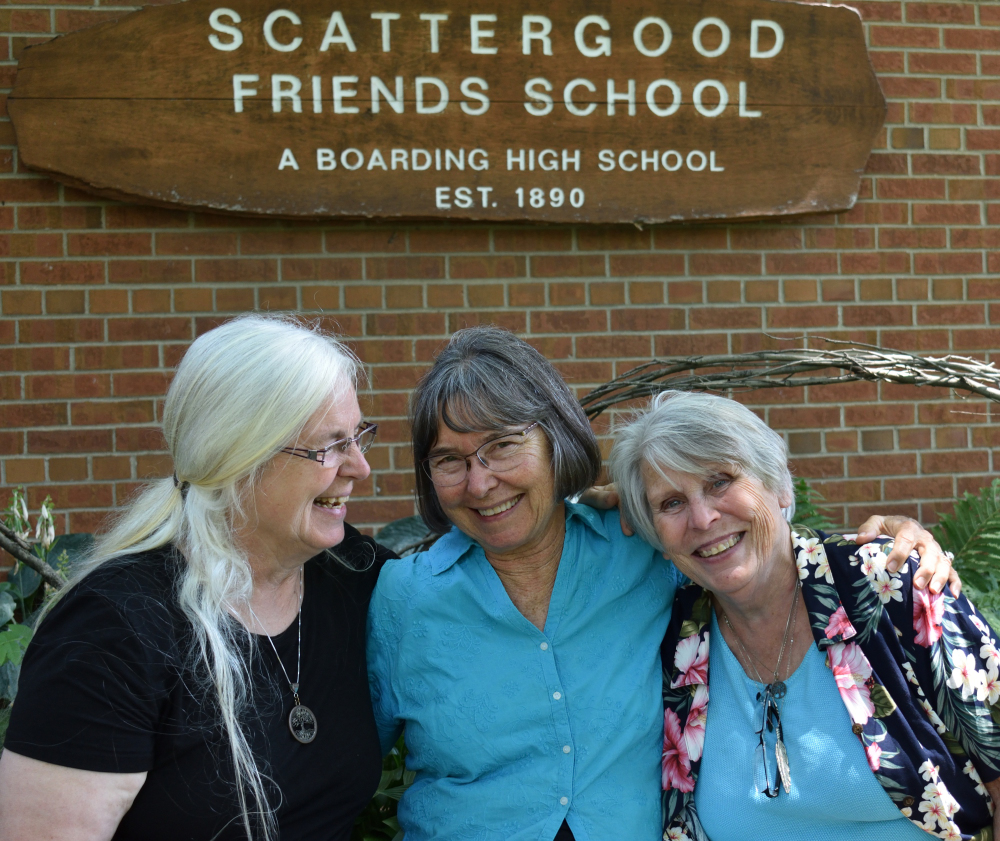
I came of age during the Vietnam War years. Organized a draft conference, walked with the entire student body of Scattergood Friends School (all sixty of us) fourteen miles into Iowa City during the Moratorium to End the War in Vietnam, became a draft resister. The entire country was in an uproar. Young men and their families lived in fear of induction based on a lottery system. Over 58,000 Americans were killed.

A key component to the sustenance of the permanent war state was the creation of the All-Volunteer Force. Without conscripts, the burden of fighting wars falls to the poor, the working class, and military families. This All-Volunteer Force allows the children of the middle class, who led the Vietnam anti-war movement, to avoid service. It protects the military from internal revolts, carried out by troops during the Vietnam War, which jeopardized the cohesion of the armed forces.

NO WAY OUT BUT WAR By Chris Hedges, Scheer Post. May 23, 2022. Permanent War Has Cannibalized The Country. It Has Created A Social, Political, And Economic Morass.

I’ve often despaired at the absence of an antiwar movement since our plunge into a ‘war on terror’ that is an excuse to have military presence and conflict in any place politicians define a threat. To terrorize children by the sounds of drones circulating overhead. With untold civilian casualties from drone strikes. Death by remote control.

What should I have done? What should I be doing now?

Shortly after the Vietnam years, I moved to Indianapolis (1970). The filthy air, the clouds of smoke pouring out of every tailpipe, traumatized me. Especially as I imagined how the air in the beautiful National Parks I had visited might become polluted.

We went on vacation to California around this time. The first day in Los Angeles we could hardly breathe. We coughed and our eyes were irritated. We were told we would get used to it.

It was this war against Mother Earth I devoted my efforts to, including refusing to own a car, which I called a weapon of mass destruction. And against the wars of White supremacy on black, Indigenous, and other people of color (BIPOC).

But the armed wars of this country continued, expanded internationally. And turned inward, bringing the tactics, equipment, and attitudes of war to our cities.

The United States, as the near unanimous vote to provide nearly $40 billion in aid to Ukraine illustrates, is trapped in the death spiral of unchecked militarism. No high speed trains. No universal health care. No viable Covid relief program. No respite from 8.3 percent inflation. No infrastructure programs to repair decaying roads and bridges, which require $41.8 billion to fix the 43,586 structurally deficient bridges, on average 68 years old. No forgiveness of $1.7 trillion in student debt. No addressing income inequality. No program to feed the 17 million children who go to bed each night hungry. No rational gun control or curbing of the epidemic of nihilistic violence and mass shootings. No help for the 100,000 Americans who die each year of drug overdoses. No minimum wage of $15 an hour to counter 44 years of wage stagnation. No respite from gas prices that are projected to hit $6 a gallon.

The permanent war economy, implanted since the end of World War II, has destroyed the private economy, bankrupted the nation, and squandered trillions of dollars of taxpayer money. The monopolization of capital by the military has driven the US debt to $30 trillion, $ 6 trillion more than the US GDP of $ 24 trillion. Servicing this debt costs $300 billion a year. We spent more on the military, $ 813 billion for fiscal year 2023, than the next nine countries, including China and Russia, combined.

We are paying a heavy social, political, and economic cost for our militarism. Washington watches passively as the U.S. rots, morally, politically, economically, and physically, while China, Russia, Saudi Arabia, India, and other countries extract themselves from the tyranny of the U.S. dollar and the international Society for Worldwide Interbank Financial Telecommunication (SWIFT), a messaging network banks and other financial institutions use to send and receive information, such as money transfer instructions. Once the U.S. dollar is no longer the world’s reserve currency, once there is an alternative to SWIFT, it will precipitate an internal economic collapse. It will force the immediate contraction of the U.S. empire shuttering most of its nearly 800 overseas military installations. It will signal the death of Pax Americana.

NO WAY OUT BUT WAR By Chris Hedges, Scheer Post. May 23, 2022. Permanent War Has Cannibalized The Country. It Has Created A Social, Political, And Economic Morass.

Chris Hedges goes on to explain

There were three restraints to the avarice and bloodlust of the permanent war economy that no longer exist. The first was the old liberal wing of the Democratic Party, led by politicians such as Senator George McGovern, Senator Eugene McCarthy, and Senator J. William Fulbright, who wrote The Pentagon Propaganda Machine. The self-identified progressives, a pitiful minority, in Congress today, from Barbara Lee, who was the single vote in the House and the Senate opposing a broad, open-ended authorization allowing the president to wage war in Afghanistan or anywhere else, to Ilhan Omar now dutifully line up to fund the latest proxy war. The second restraint was an independent media and academia, including journalists such as I.F Stone and Neil Sheehan along with scholars such as Seymour Melman, author of The Permanent War Economy and Pentagon Capitalism: The Political Economy of War. Third, and perhaps most important, was an organized anti-war movement, led by religious leaders such as Dorothy Day, Martin Luther King Jr. and Phil and Dan Berrigan as well as groups such as Students for a Democratic Society (SDS). They understood that unchecked militarism was a fatal disease.

NO WAY OUT BUT WAR By Chris Hedges, Scheer Post. May 23, 2022. Permanent War Has Cannibalized The Country. It Has Created A Social, Political, And Economic Morass.

Where was the organized anti-war movement?

I wasn’t there. As I said, I was led to the ‘fight’ to protect Mother Earth, protect the water. The damage we’ve done to our environment has led to the collapse we are experiencing now. As I wrote just yesterday, collapse is already here. Significantly worsening environmental chaos is everywhere and will only worsen, rapidly.

What does this mean regarding militarization now? As Chris Hedges writes above, there is no political resistance to continued military spending, leaving little for domestic needs. “The permanent war economy, implanted since the end of World War II, has destroyed the private economy, bankrupted the nation, and squandered trillions of dollars of taxpayer money.”

The US military is the largest polluter in the world because of the combustion of fossil fuels by the machines of war and the energy needed by steel production.

Depletion of fossil fuel supplies will eventually render those machines useless. But they will be a priority for dwindling supplies. I guess time will tell how long armored tanks and planes will have fuel in the timeline for our collapsing society.

So many military installations are on ocean shores and will be flooded by rising waters.

As oil supplies are depleted, the US armed forces will continue to take over fossil fuel sources anywhere in the world.

At the time when it is absolutely essential to stop burning fossil fuels, the military will continue doing the opposite. Might this be the way we finally rise up against the tools of war?

As our economy continues to collapse, the armed forces and militarized police will increasingly be used to quash civil unrest.

I was led to the fight to protect Mother Earth, protect the water. Much as I wish I had been able to do more to stop militarization, I know I have tried to hear what the Spirit was leading me to do. And then do it.


juxtaposition

It is a juxtaposition to see the rapidly accelerating, multiple effects of environmental devastation and chaos versus the struggles of Indigenous peoples trying to protect their pristine lands and waters. Such as the work of the Wet’suwet’en peoples in British Columbia.

I use the word pristine (in its original condition; unspoiled) when I think and write about the Wet’suwet’en because I am so moved by the beauty I see there. It makes me ill to think of the desecration of those lands and waters that would occur, is occurring there by pipeline construction.

I’ve often written about this photo I took and developed (in a darkroom) of Long’s Peak, in Rocky Mountain National Park, Colorado. When this farm boy from Iowa moved to Indianapolis in 1970, I was horrified by the filthy air (this being before catalytic converters hid the damage). I was devastated by the thought of my beautiful mountains obscured by smog. This led me to live without a car.

Long’s Peak, Rocky Mountain National Park

To save a wilderness, or to be a writer or a cab driver or a homemaker — to live one’s life — one must reach deep into one’s heart and find what is there, then speak it plainly and without shame.

Because It Is So Beautiful: Unraveling the Mystique of the American West by Robert Reid

This video, INVASION, shows many things. Most significantly for me are the images of the beautiful lands and waters. As soon as I saw it, I was drawn to the Wet’suwet’en struggles as if by a powerful magnet. And have done what I could in support since.

Also shown are the violent, militarized invasions (multiple) by the Royal Canadian Mounted Police). And testimony at the United Nations permanent forum on Indigenous issues.


Everybody needs to stand up, not just Indigenous people. Everybody needs to stand up the political powers that be that they need to change. And quit making legislation and policies to make us look like criminals when we’re just trying to protect what is ours. It’s not just this little court house, the whole world is watching what Canada is doing. What the province of BC is doing. They haven’t done their job. They’re skirting the responsibility over to industry. I know I’m doing the right thing.

It’s inspiring to see the support world wide that we have and it’s not just our Indigenous people that are standing up. It’s people all around the world are concerned about the environment. And concerned because they know it impacts them no matter where they live.

(The United Nations) The fifth meeting of the 18th session of the permanent forum on Indigenous issues is called to order.

I am Freda Huson of the Unis’ot’en Wet’suwet’en people of Canada. I am here today to express concerns for human rights violations happening to my people. This year a pipeline company forced a court injunction on us. And if we stop them from entering our territory because they don’t have consent we face arrests.

They are trying to erase us from our own land. All these acts that continue are the acts of genocide. I am here today to make UN aware of our continuous genocide happening in Canada. And to demand that our Indigenous rights and laws are respected.

We’re wondering why our own people weren’t standing up besides us and the more and more we realize that a lot of my family that are standing up, all the females in my family. We’ve done a lot of healings in our lives, we’ve gone through the same trauma as everybody us in our reservations. That’s the reason why we’re able to stand up and stand up against what we know is wrong. So that’s what we identified, that other people aren’t able to stand up, because they’re still stuck in their trauma and oppression. And everything that comes with being oppressed and living in a system that discriminates against you.

Partial transcript from the video INVASION.


The struggles continue. This Thursday there will be an emergency Wet’suwet’en solidarity call out event.


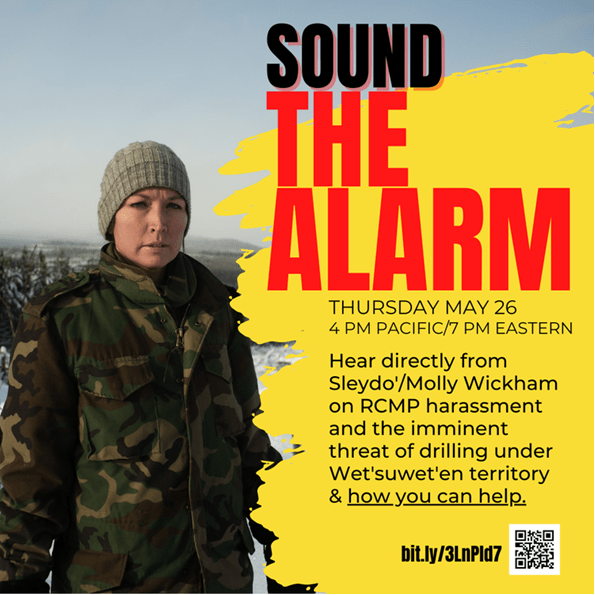
SOUND THE ALARM
Emergency Wet’suwet’en solidarity call out event, featuring Sleydo’
Thursday, May 26, 4pm PT / 7pm ET
Drilling underneath the sacred waters of the Wedzin Kwa could begin any day on Wet’suwet’en territory. On Thursday May 26, join us for “Sound the Alarm for Wet’suwet’en ” a live zoom meeting at 4pm PT / 7pm ET. 
With Sleydo’ Molly Wickham of Gidimt’en Checkpoint, together we’ll understand the situation on the ground and strategize together about how to #KillTheDrill.

https://bit.ly/3LnPld7 

#KillTheDrill