Process as Solution

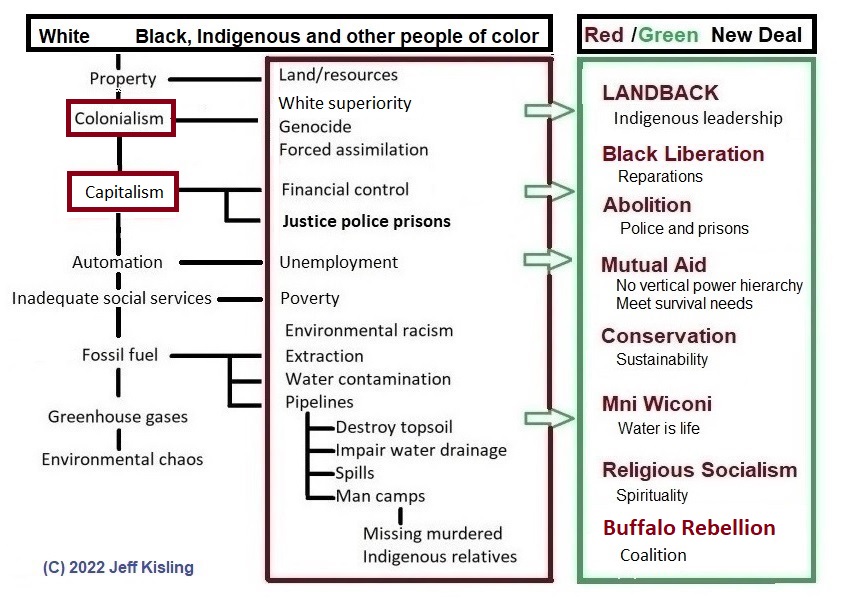
When I’m overwhelmed with complexity and questions, I try to express things visually. Following is the most recent iteration of something I’ve been working on for years.

The most recent change is the red line, representing how failing and corrupt institutions, authoritarianism, and environmental chaos, are blocking solutions like LANDBACK, Black Liberation, Abolition, and Mutual Aid. The forces being used by empire to crush dissent are escalating rapidly.

I still believe Mutual Aid, Abolition, and all the pieces of the Red/Green New Deal are how we will continue to build just communities. Those are the ways we will address the rising forces of injustice. But rather than just the goal of the Red/Green New Deal, they are also the means by which we defeat the forces of empire.


Authoritarianism

It has been apparent for decades that rapidly escalating environmental chaos would overwhelm the resources of our government and society. What I hadn’t given enough attention to was how rapidly authoritarianism would spread.

That is exactly what the idea is here, as it is with all these laws. It’s not just just about bloggers or kids or books. It’s about a strategy. That strategy is blitzkrieg. Again, a classic fascist maneuver. See how hard and fast these laws and bills are coming? You can scarcely catch your breath before there’s another one. The very same day news broke of the “we’re going to keep a file on you if you write about us” bill, news also broke of a bill to give women the death penalty for the crime of…miscarriages.

The point is to overwhelm the system, society, institutions. Sure, maybe all these bills won’t pass. But a few just might. And where they do, they set precedents. Those precedents are like cracks in a dam, that open whole fissures, and eventually — the deluge. This crackpot legislator, tomorrow, can point to that precedent, in that state. This lunatic lawyer can use to it to appeal, when a court strikes down some law.

The idea here is to accelerate. Propose a thousand crackpot bills. Pass maybe three. But those three become precedents, footholds, spearheads, for nine. And those nine become fifty. And those fifty become…and so it goes. This is a classic form of destabilizing democracy, loved by fanatics and extremists, who’ve failed at using hard power — open violence, like Jan 6th. They resort to a kind of blitzkrieg from the ground up, where a top down approach — storming Congress — failed. Accelerate the breakdown of democracy. Just one crackpot bill passes — and the precedent is set for another hundred.

Welcome to the GOP’s Vision for an Authoritarian America. The GOP’s Blitzkrieg of Hate on Peaceful, Innocent People — And Why It’s Fascism by umair ahque, Medium, March 4, 2023

The question is, how are we living today? Are we comfortable with a status quo based upon white superiority, materialism, militarism, and oppression, i.e. empire? To do nothing is to support this status quo.

I’ve been writing about a new campaign from the Climate Mobilization Network that hopes to build a movement of movements, a network of Mutual Aid groups.
(See: https://quakersandreligioussocialism.com/?s=climate+mobilization)


This collective visioning, movement incubation and learning gathering will equip you with space for reflection, new ideas, inspiration, and next steps to participate in this new campaign.

Together we will build relationships and explore:

  • How survival and mutual aid programs can grow the movement
  • New, creative approaches to taking action against fossil fuels
  • Ways to integrate healing into our work
  • And how to create space for reflection, intentionality and strategic clarity
https://www.theclimatemobilization.org/


No Cop City Anywhere

Simultaneously, as the climate warms, as storms and disasters worsen, as infrastructure crumbles, and as more and more people are left jobless and houseless, the true reason the political class pumps ever more resources into militarization is being revealed: It’s not to protect against some so-called ​“crime wave” the corporate media constantly fear mongers about, but instead to police the very collapse of capitalism itself. 

BENJI HART, In These Times

There are many efforts emerging to address the racism, militarism, and violence of policing in this country. These efforts are growing because they are at the intersection of capitalism, white supremacy, racism, militarism, authoritarianism, ongoing environmental devastation, and police and prison abolition.

A monumental struggle is currently taking place in the Weelaunee Forest in DeKalb County near Atlanta, Georgia.

The local government plans to level 85 acres of the forest to build a $90 million police training facility. The natural environment that would be lost is not only a precious recreational resource for Atlanta residents, but a crucial bulwark protecting against flooding and other climate change-related disasters, which are on the rise. Despite city leaders’ commitment to ramming the project through undemocratically, a decentralized campaign known as #StopCopCity is fighting back. 

The movement is connecting police and prison abolition with environmental justice, and uniting organizations and individuals from across the political spectrum in demanding the city divert resources away from militarization and towards fighting climate change and protecting Black and brown lives.

The threat of a militarized megadevelopment, and the intersectional, multiracial coalition mobilizing to resist it, bear some striking parallels with the recently-opened police academy in Garfield Park, Chicago — and the youth-led #NoCopAcademy campaign that fought its construction nearly six years ago.


Simultaneously, as the climate warms, as storms and disasters worsen, as infrastructure crumbles, and as more and more people are left jobless and houseless, the true reason the political class pumps ever more resources into militarization is being revealed: It’s not to protect against some so-called ​“crime wave” the corporate media constantly fear mongers about, but instead to police the very collapse of capitalism itself. 

Keeping poor and working people at bay while their communities are dismantled, their lands are poisoned, and their lives deemed insignificant can only be achieved through brute force. We are witnessing the robber barons barricade themselves in, sealed away from the catastrophes they created, with the same resources they stole from the people on the other side of the wall. 

No Cop City Anywhere. Chicago’s #NoCopAcademy campaign and #StopCopCity in Atlanta are part of the same movement: to end violent policing, protect the environment and defend Black and brown lives by BENJI HART, In These Times, FEBRUARY 22, 2023


As one example, solidarity is being built to support cities facing proposed construction of huge police training facilities. Some of these projects are referred to as No Cop City (Atlanta), No Cop Academy (Chicago), and Detroit Cop City (Detroit).


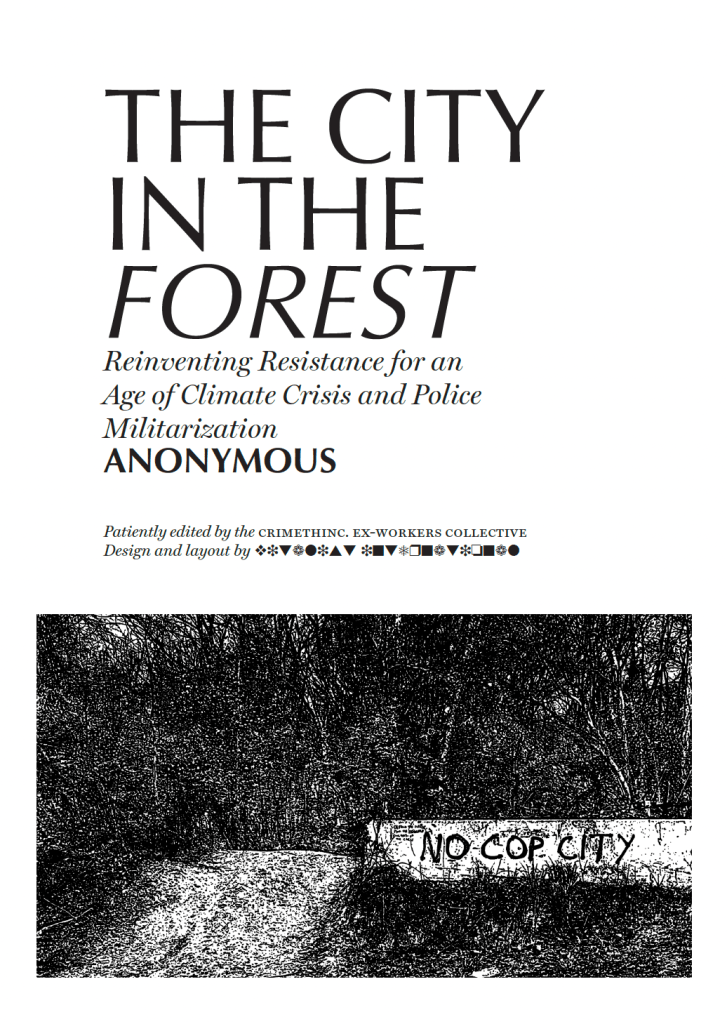
Since april 2021, police abolitionists and environmentalists have been engaged in a furious struggle to prevent the destruction of a precious stretch of forest in Atlanta, Georgia, where the government aims to build a police training compound and facilitate the construction of a giant soundstage for the film industry. In this essay, participants in the movement chronicle a year of action, tracing the movement’s victories and setbacks and exploring the strategies that
inform it. This campaign represents a crucial effort to chart new paths forward in the wake of the George Floyd Rebellion, linking the defense of the land that sustains us with the struggle against police.

CRIMETHINC. EX-WORKERS COLLECTIVE
CrimethInc. is a rebel alliance—a decentralized network pledged to anonymous collective action—a breakout from the prisons of our age. We strive to reinvent our lives and our world according to the principles of self-determination and mutual aid. www.crimethinc.com | USA, May 2022


Environmental Justice

The term “environmental justice” recognizes that environmental “bads” are not distributed evenly. Over generations, the effects of systematic racism concentrate environmental “bads” among the marginalized. Specifically, those cumulative effects concentrate the “bads” among people of color.

In June 2022, Kwame Olufemi of Community Movement Builders told 11Alive News, “If you know anything about Atlanta at (all) then you know the places that flood the most are on the south side … In destroying the forest they’re going to exasperate those issues they’ve already had with peoples town flooding … It’s clearly not for us, it’s not for our community, and it’s going to be adverse to us and our people.”

“Cop City is a catalyst for further nationwide militarization of the police and the continued expansion of the surveillance state,” Defend the Atlanta Forest argues. “This development would remove a natural barrier to flooding and pollution for communities downstream … These [effects] would primarily affect BIPOC [Black, Indigenous, and People of Color] communities in Dekalb County that the city has chosen to ignore.”

The effort to save Atlanta’s Forests by Sean McShee, The Wild Hunt, June 14, 2022


The campaign to defend the forest in Atlanta, Georgia has become one of the most vibrant movements of the post-Trump era, interweaving environmentalism, abolitionism, and the fight against gentrification. Yet as police shift to employing lethal violence and indiscriminate terrorism charges, it has reached a critical juncture. Participants explore how this struggle has developed over the past year, reflecting on the practices that have given it strength and analyzing the challenges before it.

Our society is at a crisis point. Decades of escalating economic pressure have created rampant inequality and desperation. Rather than addressing the root causes of these, politicians across the political spectrum continue channeling more and more money to police, relying on them to suppress unrest by force alone. This dependance has enabled police departments and their allies to consume a vast amount of public resources. Meanwhile, driven by the same economic pressures, catastrophic climate change is generating hurricanes, forest fires, droughts, and widespread ecological collapse.

In this context, starting in April 2021, a bold movement set out to defend a forest in Atlanta, Georgia, where local politicians and corporate profiteers want to build a police training compound and a soundstage for the film industry. The training compound, known as Cop City, would be the largest police training facility in the United States. It would devastate the South River Forest, also known as Weelaunee Forest in honor of the Muscogee Creek people who lived there until they were deported in the Trail of Tears.

The Forest in the City. Two Years of Forest Defense in Atlanta, Georgia, Crimethinc, 2023-02-22


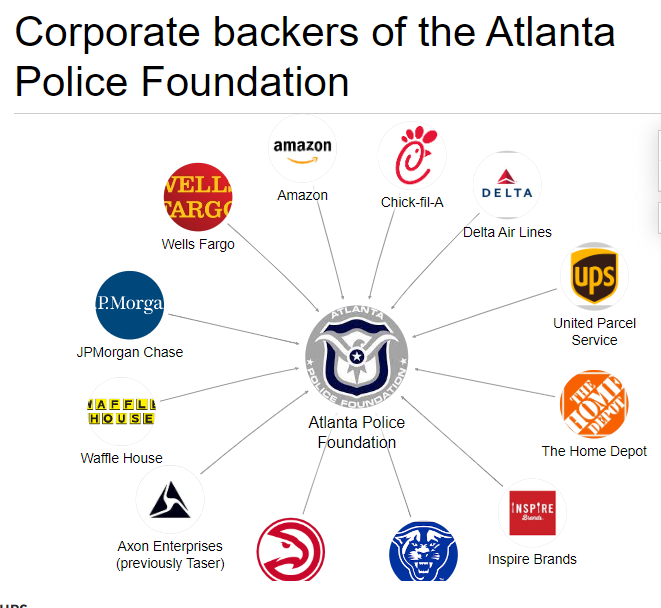
The Atlanta Police Foundation has plans–backed by $60 million in corporate funding and $30 million in taxpayer money–to build an enormous police training facility over the city’s Weelaunee Forest.

Activists and forest defenders are calling the plan “Cop City,” as it will include a mock village (complete with a nightclub), a Black Hawk helipad, an emergency vehicle driving course, dozens of firing ranges, and an area for explosives training.

The neighborhoods that surround the forest are largely made up of lower-income Black residents. Cop City will decimate green space, which is already so rare in BIPOC communities, and replace it with a playground for the police to practice warfare tactics.

Communities of color live with police-induced trauma every day. Now this Atlanta community will feel and hear the presence of a training facility where cops learn new ways to enact violence against Black and Brown communities, right in their own backyard.

In addition to the terror of an ever-present police force, Cop City is an environmental racism nightmare. The Weelaunee Forest provides ecological relief for the people of Atlanta. It offsets stormwater runoff, which might otherwise push unwanted sediment into the drinking water. The mere presence of trees helps to keep the city cool during the long, hot, humid summers, and improves air quality by reducing carbon dioxide released into the air.

Cop City has been gaining nationwide attention, and for good reason. The city of Atlanta, its police force, and its corporate sponsors are actively cooperating to increase police power, at a time when police departments are under scrutiny for abusing that power.

Cop City will do irreparable harm to the city of Atlanta, and inspire more play villages for cops across the country. But there’s hope. Cop City does not have the full funding necessary to scale the project from private entities, meaning there is still time to put pressure on these investors to halt all funding to the Atlanta Police Foundation and APF Support Inc.

Sign the petition to private investors: No massive police training complex. Stop Cop City!  

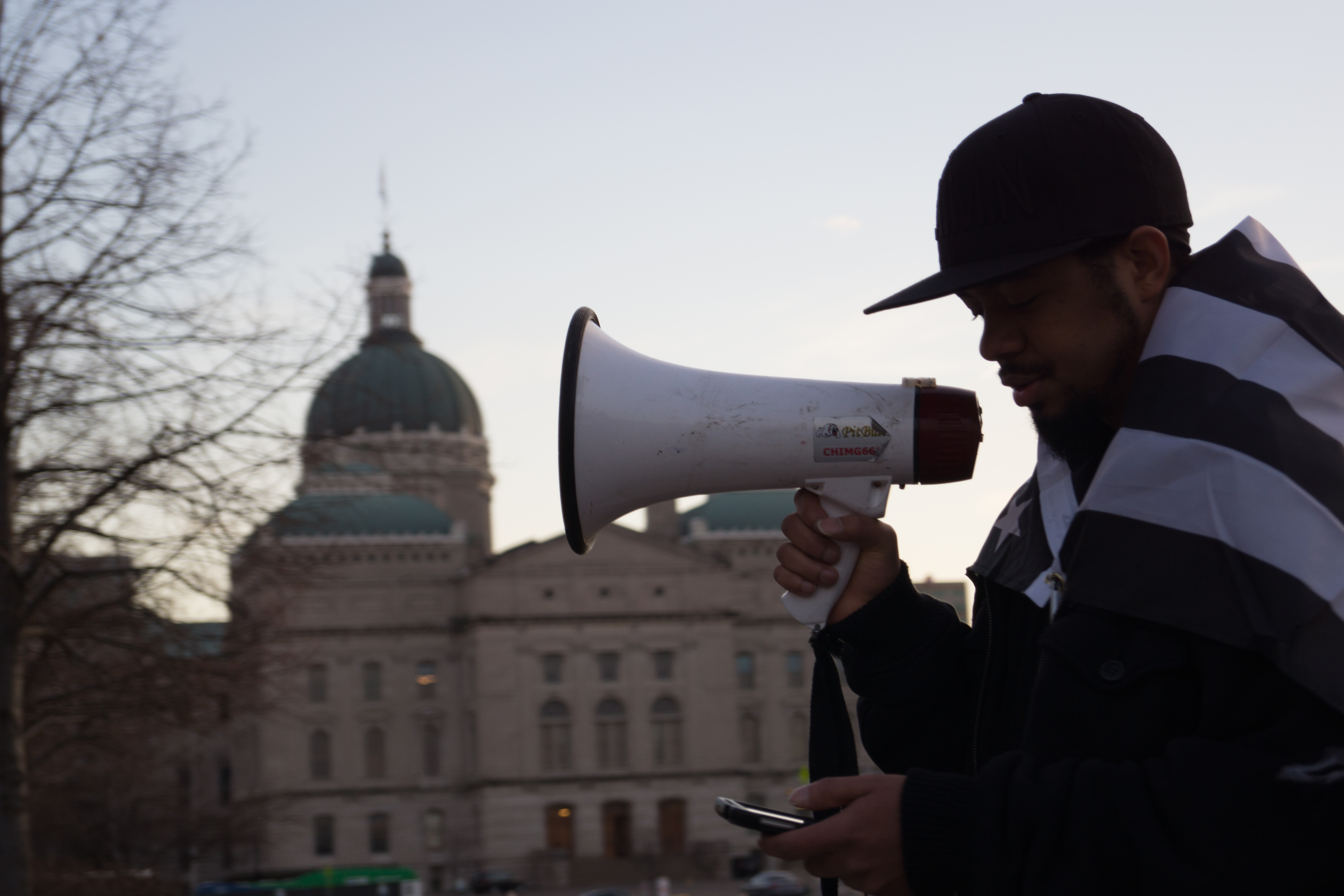
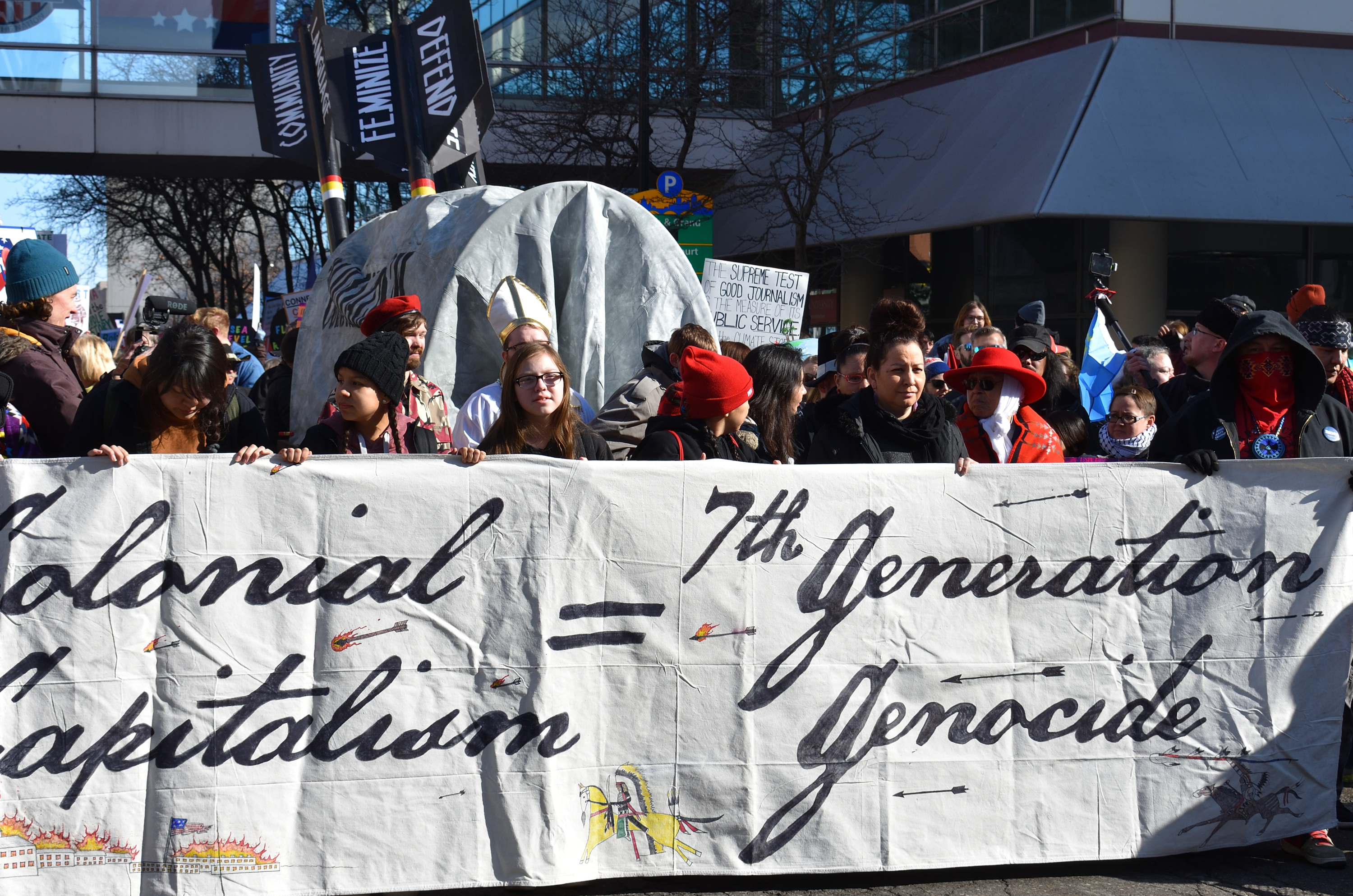
Dozens of protesters made their way through downtown Detroit Friday afternoon before halting to a stop in the middle of Congress and Griswold, blocking traffic and prompting angry drivers to blare their horns. 

“Stop Cop City!” the crowd chanted. “I am…a revolutionary!” 

The march followed a rally with members of the Michigan Environmental Justice Coalition, Michigan Liberation, Detroit Will Breathe and several other social and environmental justice groups in a show of solidarity with protesters in the Atlanta area. For nearly two years, organizers and activists in Georgia have been protesting against “Cop City,” an 85-acre, $90 million police training center being developed in a forested area near Atlanta. In recent weeks, the “Stop Cop City” movement has spread across the country after an environmental protester defending the Georgia forest was killed by state police, and more than a dozen protesters were arrested. 

In Detroit, protesters Friday spoke in opposition to a similar situation in Michigan – the expansion of Camp Grayling, a military training facility in the northern part of the state. Last year, the Michigan Department of Natural Resources began notifying locals that the National Guard wants to lease 162,000 acres of state-owned land across several counties, more than doubling its current training grounds, reported Bridge Michigan. The Guard said it needs the land to make Camp Grayling a destination for year-round cyber, electronic and space warfare training.

Detroit ‘Cop City’ rally held in solidarity with Atlanta environmental defenders by Micah Walker and Jena Brooker, Bridge Detroit, February 24, 2023


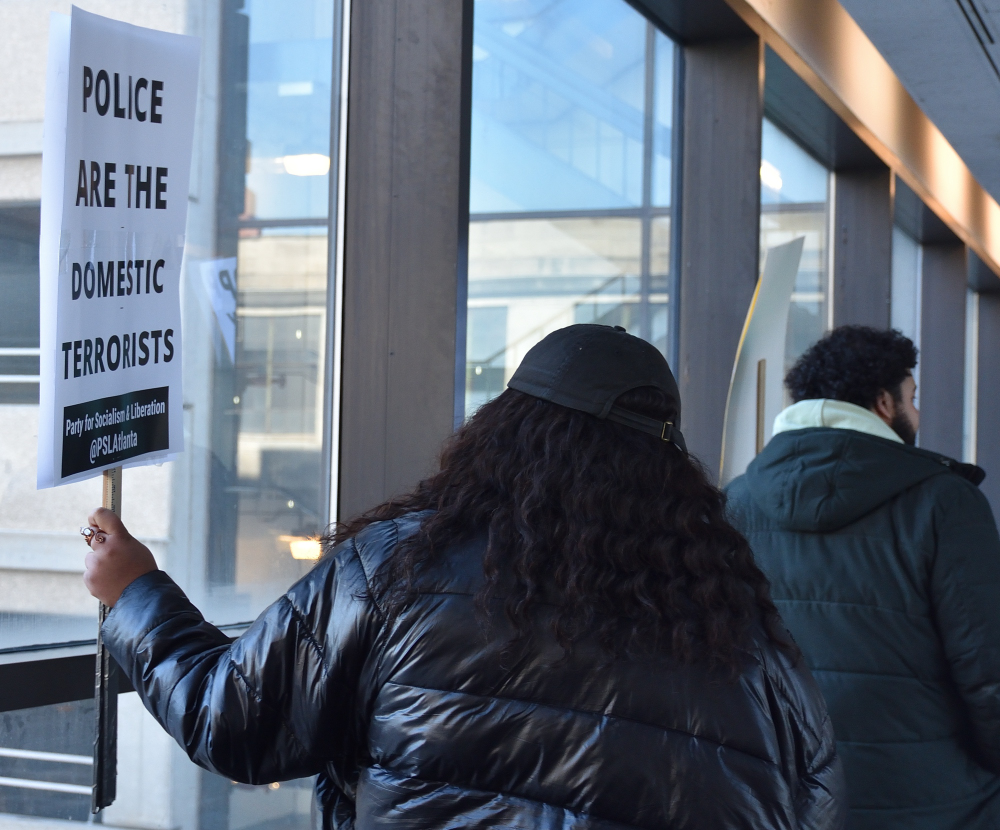
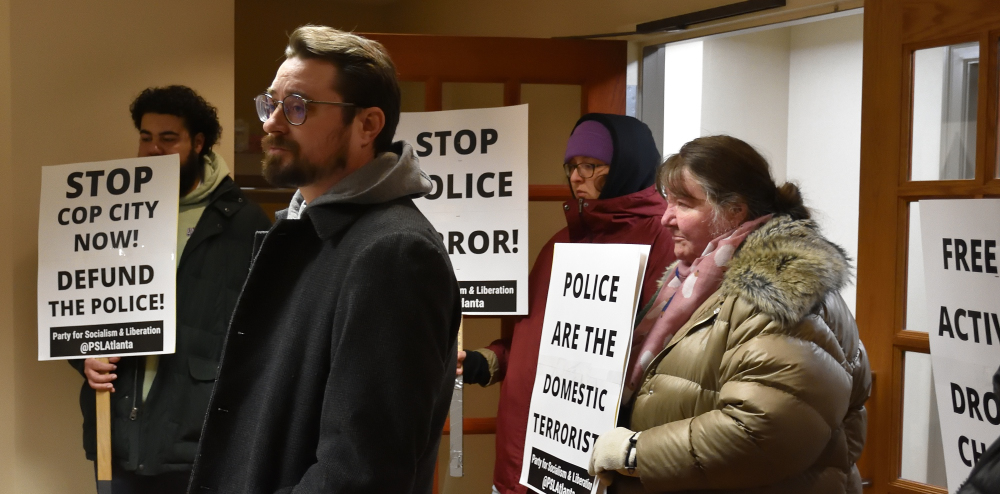
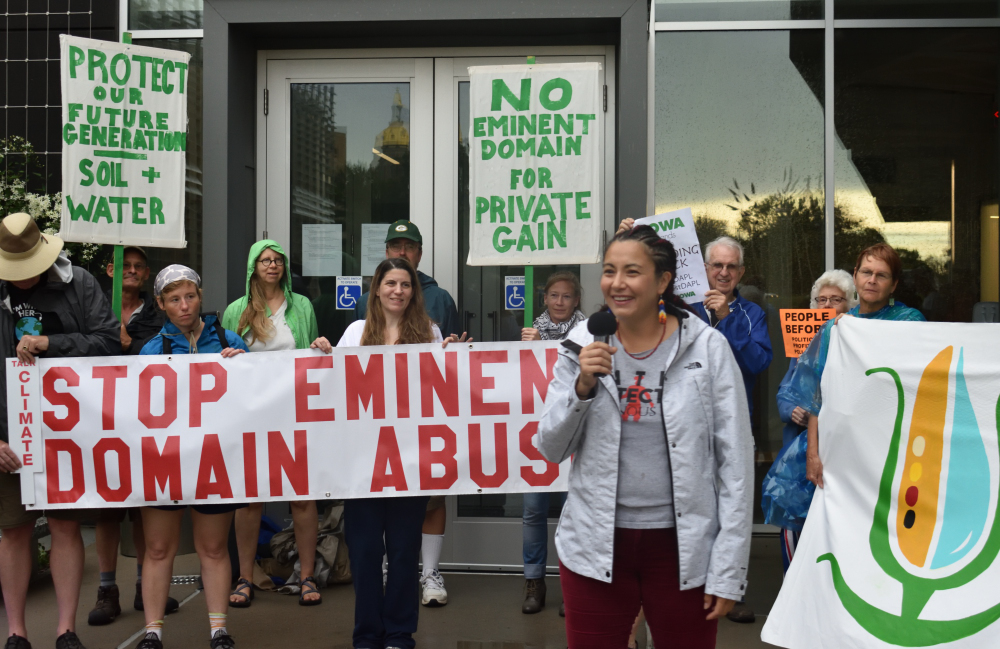
This morning (1/31/2023) a number of people who are involved in justice work in central Iowa gathered at the offices of the law firm that represents Corporation Services Company. Which in turn represents U.S. Multifamily Capital Markets at Cushman and Wakefield. John O’Neill is the President of U.S. Multifamily Capital Markets. He sits on the executive committee board for the Atlanta Police Foundation, which is building “Cop City” in Atlanta. Where Manuel Teran (Tortuguita) was killed by police who were clearing tree sitters from the proposed construction area.

Following are some of the photos I took at our action that morning.

The real war

There is a lot of analysis regarding the war in Ukraine on this one-year anniversary of its beginning.

I have so many questions.

  • What role did the US and NATO’s increasing militarization of the countries near Russia play?
  • What about the role of increased sanctions against Russia?
  • How is it acceptable to pay Ukraine to fight a proxy war for us?
  • Where will the increasing escalation of armaments the US gives to Ukraine end?
  • In how many ways does tremendous pressure from arms manufacturers control foreign policy?
  • Why is the US President suddenly sounding so belligerent? Not only against Russia, but now China?
  • How can billions upon billions be spent on arming Ukraine at a time when so many in this country and around the world struggle to afford basic necessities?
  • How can we countenance making so many children orphans?

There are things I do know.

  • The Spirit is about peace.
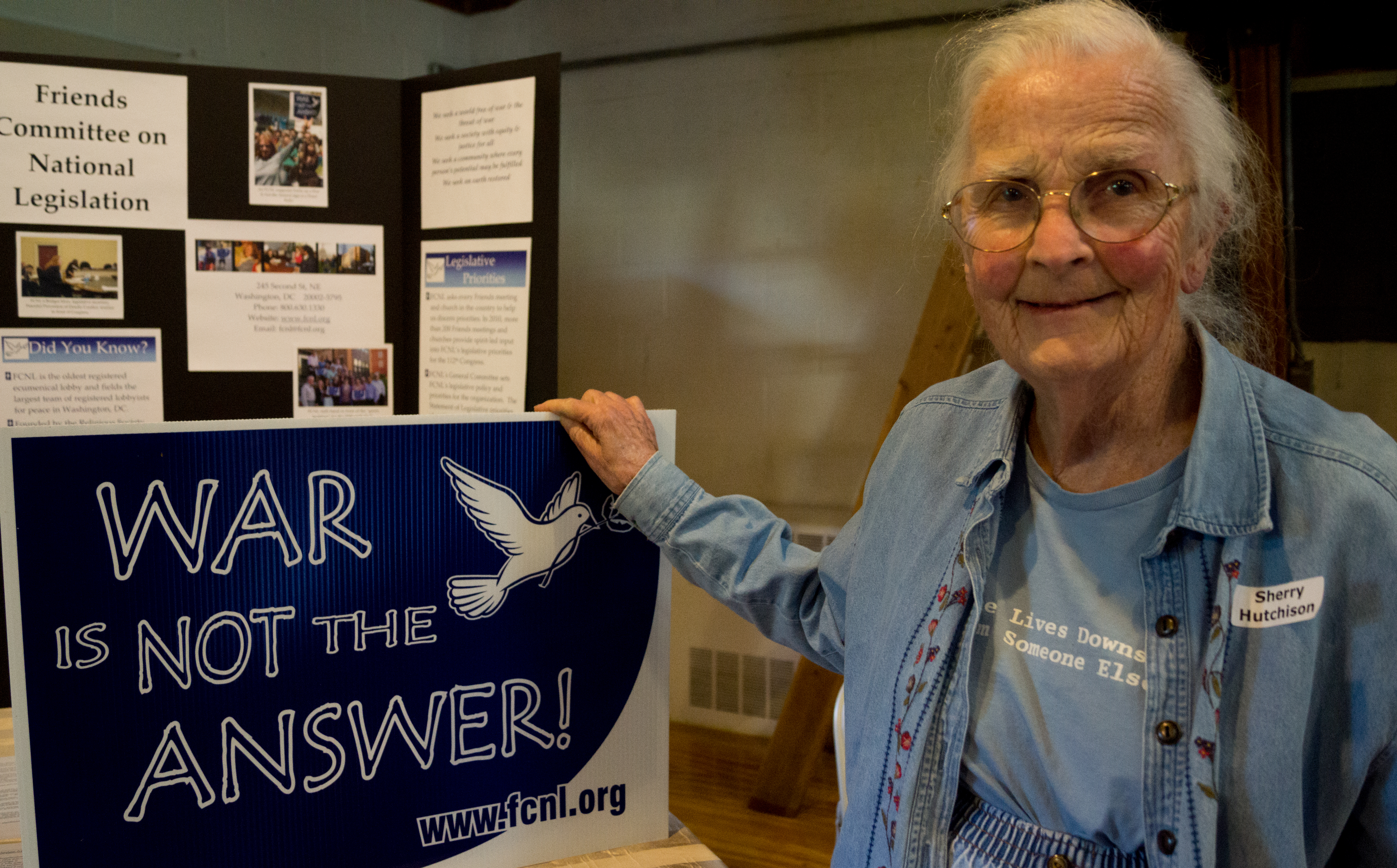
  • War is Not the Answer.
  • All military activities must cease, because that is the main source of pollution and greenhouse gas emissions.
  • The real war, the existential threat, is humanity against Mother Earth.

We lost someone unnecessarily to police violence

How do you feel about the police shooting treesitter Manuel Teran (Tortuguita) in Atlanta?

I’ve been wondering why I felt so much sorrow about this. Some of the statements below have shed some light on this. My whole life I have been in resistance to capitalism and the state. I quickly learned there were such a small number of others engaged in this work, at least in this country. I felt a connection to, respect for them.

I’ve been a lifelong environmentalist. Among other things, refusing to own a car. So, I identify with the treesitters trying to protect the forest, the environment, Mother Earth.

For the past several years I’ve become involved in the abolition of police and prisons work.

I’ve just recently come across the concept of prefigurative work, which is living today in a manner consistent with the society you are working to create. All these concepts guide our Mutual Aid work (see: Points of Unity, Des Moines Mutual Aid below).

My heart is hurting over the death of Tortuguita, a forest defender I never met, for so many reasons. One is the loss of this young person, under any circumstance. Theirs was a life cut far too short. I also feel a sense of kinship in loss. I know many other activists who have worked encampments and tree-sits are also feeling this way, because there’s something special about that kind of struggle. There’s something in the prefigurative work, in the effort to rehearse the world we want, to care for each other, in the face of the elements, in the face of police, even when you’re under siege – it’s beautiful, messy work, and whether our battles are won or lost, we carry it with us, always

The Death of a Forest Defender at “Stop Cop City” by Kelly Hayes, TRUTHOUT, January 26,2023

I’m sharing this video from Unicorn Riot again, to show the excessive police presence at the Weelaunee Forest.

Those in the forest at the time of the police raid refute the police contention that Tortuguita first fired at the police. But the statement in this video, “today we lost someone unnecessarily to police violence” is true. They would not be dead if the police had not raided the forest.


So, today we lost someone unnecessarily to police violence. I believe everybody here agrees with the fact that nobody should die at the hands of the state. And in the midst of this grief and sorrow I want you to make space for that. We are organizing for a future free from oppression, free from violence.

Title: Atlanta Community Reacts to Police Killing of Forest Defender Manuel Teran
Uploader: Unicorn Riot
Uploaded: Thursday, January 19, 2023 at 4:16 PM EST via Parallel Uploader
License bync


  1. We believe in working shoulder to shoulder and standing in solidarity with all oppressed communities
    We ourselves are oppressed, and our mutual aid work is a fight for our collective liberation. We do not believe in a top-down model of charity. Instead, we contrast our efforts at horizontal mutual aid, the fostering of mutually beneficial relationships and communities, to dehumanizing and colonizing charity.
  2. We believe in community autonomy.
    We believe that the communities we live and organize in have been largely excluded from state social services, but intensely surveilled and policed by the state repressive apparatus. Capitalism is fundamentally unable to meet people’s needs. We want to build self-sustaining communities that are independent of the capitalist state, both materially and ideologically, and can resist its repression.
  3. We are police and prison abolitionists.
    Abolition and the mutual aid that we practice are inextricably linked. We don’t rely on capitalist institutions or the police to do our work. We believe in building strong and resilient communities which make police obsolete, including community systems of accountability and crisis intervention.
  4. We work to raise the political consciousness of our communities.
    Part of political education is connecting people’s lived experiences to a broader political perspective. Another component is working to ensure that people can meet their basic needs. It is difficult to organize for future liberation when someone is entrenched in day-to-day struggle.

Atlanta, Georgia – The ongoing protests against the construction of a police training center in the Weelaunee Forest in Atlanta, Georgia are a testament to the spirit of resistance that was ignited by the Black Lives Matter movement and the George Floyd Protests of 2020. For two years, brave activists and protesters have occupied the forest and taken to the streets to demand that the city reverse its decision to spend tens of millions of taxpayer dollars to further fund a police force that has historically been used to violently repress, control and limit the power of working class people and people of color in particular.

But the protesters in Atlanta are not only fighting against further wasteful spending on police and the “Cop City” training center, they are also fighting against the destruction of the region’s natural environment and the further pollution and degradation of land that will disproportionately affect the poor and working-class who live in the area. As those who oppose the massive development (which would include, among other things, several shooting ranges and a landing pad for Black Hawk helicopters!) have made clear, the forest is a vital part of the wetlands that help to contain and filter pollution and rainwater, preventing and limiting the threat of floods to the predominantly Black neighborhoods that border the forest.

IN STANDOFF OVER COP CITY, POLICE ARE THE REAL TERRORISTS by James Dennis Hoff, Left Voice, January 29, 2023


In this episode of “Movement Memos,” Atlanta organizer Micah Herskind and host Kelly Hayes discuss the death of Tortuguita, a forest defender who was gunned down by police while resisting the construction of “Cop City.” “It’s all hands on deck for the forces of the prison-industrial complex, the forces of capitalism … they are willing to use any and all tactics and tools available to them, whether that’s literal murder, whether that’s trying to deter the broader movement by slapping people with domestic terrorism charges. As environmental catastrophe is upon us, I think the forces of capital are organizing themselves,” says Herskind.

Kelly Hayes: Welcome to “Movement Memos,” a Truthout podcast about organizing, solidarity and the work of making change. I’m your host, writer and organizer Kelly Hayes. Today, we are talking about the struggle to Stop Cop City in Atlanta and DeKalb County, Georgia, and the death of forest defender Manuel Esteban Paez Terán, who was gunned down by police on the morning of January 18. The Guardian has called the deadly shooting “unprecedented” in the history of U.S. environmental protest. While the killing of protesters, including environmentalists, is not unprecedented by any means in this country, law enforcement entering a forest occupation and killing a protester does mark an escalation of state violence for this era. Co-strugglers have described Terán as “a trained medic, a loving partner, a dear friend, a brave soul, and so much more.”

A lot of people may shy away from solidarity with the forest defenders, because the police are claiming that Tortuguita fired first. But we have plenty of reasons to be skeptical of the police narrative, and we cannot abandon this struggle, as the violent and legal repression of protesters has implications for all of our fights against state violence and environmental destruction.

My heart is hurting over the death of Tortuguita, a forest defender I never met, for so many reasons. One is the loss of this young person, under any circumstance. Theirs was a life cut far too short. I also feel a sense of kinship in loss. I know many other activists who have worked encampments and tree-sits are also feeling this way, because there’s something special about that kind of struggle. There’s something in the prefigurative work, in the effort to rehearse the world we want, to care for each other, in the face of the elements, in the face of police, even when you’re under siege – it’s beautiful, messy work, and whether our battles are won or lost, we carry it with us, always. Ruth Wilson Gilmore tells us that “where life is precious, life is precious.” In every encampment and forest defense scenario I’ve been a part of, people were trying to cultivate a place where life was precious and where people were precious to one another. In those spaces, I have seen things that made me believe we could remake the world. When I think about all of that power and potential, the thought of a young person, who was out there for the love of the trees, being struck down — it just rips right through me.

The Death of a Forest Defender at “Stop Cop City” by Kelly Hayes, TRUTHOUT, January 26,2023


In Tortuguita’s own words, 

“The right kind of resistance is peaceful because that’s where we win. We’re not going to beat them at violence. They’re very, very good at violence. We’re not. We win through nonviolence. That’s really the only way we can win. We don’t want more people to die. We don’t want Atlanta to turn into a war zone.”

and

“The abolitionist mission isn’t done until every prison is empty,” Teran told me. “When there are no more cops, when the land has been given back, that’s when it’s over.” I must’ve shaken my head a little at the grandiosity of this statement because Teran immediately broke into a sheepish smile. “I don’t expect to live to see that day, necessarily. I mean, hope so. But I smoke.” 


On Wednesday, January 18, Georgia State Patrol murdered Manuel “Tortuguita” Teran, who was camping in a public park to defend the Weelaunee Forest and stop the construction of Cop City. Over the weekend, six protesters were arrested and charged with domestic terrorism. In solidarity with the protesters, the National Lawyers Guild (NLG) calls for an end to the construction of Cop City and the ongoing police brutality against demonstrators.

NLG National joins our Atlanta and University of Georgia Chapters and comrades in mourning the devastating loss of a beloved community member. Tortuguita was a kind, passionate, and caring activist, who coordinated mutual aid and served as a trained medic. The Atlanta Community Press Collective is compiling memories and accounts of their life, and we encourage everyone to honor and remember Tortuguita through the words of those who love them.

As radical movement legal activists, NLG recognizes that this horrific murder and the related arrests are part of a nationwide attack on protesters, land defenders, and marginalized folks, especially Black, Indigenous, and other activists of color. Labeling these demonstrators “domestic terrorists” is a harrowing repetition of No DAPL activist Jessica Reznicek’s terrorist enhancement last year, and both are clear indicators that the people in power view protesters and environmental activists as enemies of the state.

Though Atlanta city officials continue to insist that Cop City will keep the community “safe,” the destruction of the Weelaunee Forest will undoubtedly exacerbate the climate crisis and expand the policing of Black, Indigenous, and other communities of color in Atlanta. The ongoing arrests and brutalization of demonstrators opposing the deforestation of stolen Muscogee land proves that policing is the true threat to our collective safety.

We reject the various attempts by the Georgia State Patrol and Atlanta officials to disregard these community members as “outside agitators.” This kind of language attempts to discredit the very important, justice-oriented goals of the community members defending the Forest.

Our comrades defending the Weelaunee Forest are advocating for racial, environmental, and economic justice. In solidarity with their efforts, NLG encourages everyone to support the movement in whatever way is most accessible to them. Please see below for information directly from the organizers about the best ways to support their efforts:

  • Donate to the Atlanta Solidarity Fund to support legal costs for arrested protestors and ongoing legal action.
  • Call on investors in the project to divest from Cop City (list of APF investors). Call on builders of the project to drop their construction contracts.
  • Organize political solidarity bail funds, forest defense funds, and forest defense committees where you live.
  • Participate in or organize local solidarity actions.
  • Endorse and circulate this statement of solidarity.

NLG STATEMENT IN SOLIDARITY WITH ATLANTA FOREST DEFENDERS, January 28, 2023


PRESS RELEASE: Emory doctors condemn police violence against Cop City protests

Monday, January 23, 2023
Defend the Atlanta Forest has received the following submitted statement:

As health care workers, we strongly condemn the repeated escalation of police violence in their interactions with members of the public protesting the construction of Cop City. On various instances, in both the streets of Atlanta as well as in the Weelaunee Forest/Intrenchment Creek Park which is under threat of destruction, police have used violence including reports of toxic chemical irritants such as tear gas, rubber bullets and now live ammunition which most recently resulted in the police killing of one of the forest defenders, Manuel ‘Tortuguita’ Teran. A year after police in the U.S. killed more people than any prior year since records started to be tracked in 2013, we recognize violence perpetrated by police to be harmful to public health. We are also concerned by the detentions and the charges of domestic terrorism levied at individuals arrested while protesting the destruction of the forest. This fits within the context of a disturbing pattern and threat to public health whereby the USA has one of the highest incarceration rates in the world; perpetuated by a judicial and legislative system that targets Black and Indigenous peoples, migrants, those living in poverty, those who are unhoused, as well as environmental and social activists.

The construction of Cop City will not solve a government’s failures to listen to the wishes of members of the community, its failure to stop the widening gap between rich and poor, the lack of affordable housing, the negative effects of gentrification and racism, or the poor and unequal access to nutritious food, healthcare and mental health services. As physicians, we recognize that these failures have negative consequences on the public’s mental and physical health. Instead of strengthening community health, Cop City will be a dangerous attempt to invest in harmful and violent solutions, strengthening the corporate and political powers that seek profit over the well-being of the people, while simultaneously eroding and transforming natural and public spaces into privately owned property. The public health evidence for developing healthy and thriving communities strongly opposes the expansion of policing and its subsequent violence. All Atlanta communities deserve more life affirming investments, not those that value private property over human life.

Signed,
Michel Khoury, MD, Co-director of Georgia Human Rights Clinic
Amy Zeidan, MD, Co-director of Georgia Human Rights Clinic
Mark Spencer, MD, Co-Leader, Internal Medicine Advocacy Group
Suhaib Abaza, MD, Co-founder, Campaign Against Racism ATL chapter
Social Medicine Consortium


Confluence

Doesn’t it seem that we are in a time when many swollen tributaries are coming together, causing massive flooding?

Not only literally from environmental chaos.

While I’ve been devasted by the killing of land defender Manuel Teran Tortuguita in Atlanta, there is the emerging story of yet another police murder, that of Tyre Nichols in Tennessee. This against a background of mass shootings occurring nearly daily. Sometimes more than one a day. School children drilled on what to do in response to an active shooter.

The violence of the militarization of policing. When Congress cannot pass laws related to gun safety and reforms of policing. The violence of the attack on the US Capital. The authoritarian practices and legislation passed there. The example this provides to other countries around the globe. The extreme gerrymandering and voter suppression.

Against a background of the violence of poverty, hunger, and houselessness. The epidemic of missing and murdered Indigenous relatives. The ongoing discovery of the remains of thousands of native children on the grounds of the institutions of forced assimilation. Children continuing to be removed from their homes. Continued violence against women, including criminalizing abortion.

The continued colonization and broken treaties.

The violence of US military around the world. The escalating proxy war against Russia in the Ukraine.

The violence against Mother Earth. Monocropping, CAFOs, fertilizers, pipeline construction and leaks. The violence against the water.

The violence of substance abuse and deaths. And suicides.

The violence of banning books. Violent suppression of free speech. Eradicating study of the multicultural peoples that many of the students are members of. Forced assimilation continues.

The violence of the southern border, against those seeking asylum, and against those in the country who are immigrants.

This violence and oppression fueled by systems of capitalism, institutional racism, white supremacy, and dominance.

It’s both enraging and exhausting to hear people who are supposed to be leaders lament these tragedies and offer the same tired ideas that have never worked before. Why would they work now?


Mutual Aid

Trying to make incremental changes to the system will never work because the system is the problem.

As my friend Ronnie James says:

I’m of the firm opinion that a system that was built by stolen bodies on stolen land for the benefit of a few is a system that is not repairable. It is operating as designed, and small changes (which are the result of huge efforts) to lessen the blow on those it was not designed for are merely half measures that can’t ever fully succeed.

So the question is now, where do we go from here? Do we continue to make incremental changes while the wealthy hoard more wealth and the climate crisis deepens, or do we do something drastic that has never been done before? Can we envision and create a world where a class war from above isn’t a reality anymore?”

Ronnie James

Mutual Aid is “where we go from here.”

This morning Ronnie and I were in Des Moines as usual, distributing donated food.
(See: https://quakersandreligioussocialism.com/mutual-aid/)

So I work with a dope crew called Des Moines Mutual Aid, and on Saturday mornings we do a food giveaway program that was started by the Panthers as their free breakfast program and has carried on to this day. Anyways, brag, brag, blah, blah.

So I get to work and I need to call my boss, who is also a very good old friend, because there is network issues. He remembers and asks about the food giveaway which is cool and I tell him blah blah it went really well. And then he’s like, “hey, if no one tells you, I’m very proud of what you do for the community” and I’m like “hold on hold on. Just realize that everything I do is to further the replacing of the state and destroying western civilization and any remnants of it for future generations.” He says “I know and love that. Carry on.”

Ronnie James


Killing and Criminalizing Activists

Do you know about the appalling frequency of the killing of environmental protesters globally? And the accelerating trend of new laws defining fossil fuel infrastructure as “critical infrastructure” to justify charges of terrorism against even nonviolent protestors?

Monday 13 September, 2021  A report released today reveals that 227 land and environmental activists were murdered in 2020 for defending their land and the planet. That constitutes the highest number ever recorded for a second consecutive year.

Global Witness reports 227 land and environmental activists murdered in a single year, the worst figure on record

Since 2016, 13 states have quietly enacted laws that increase criminal penalties for trespassing, damage, and interference with infrastructure sites such as oil refineries and pipelines. At least five more states have already introduced similar legislation this year. These laws draw from national security legislation enacted after 9/11 to protect physical infrastructure considered so “vital” that the “incapacity or destruction of such systems and assets would have a debilitating impact on security, national economic security, national public health or safety.”

Many industry sectors are designated critical infrastructure, including food and agriculture, energy, water and wastewater, and communications, but most state critical infrastructure laws focus more narrowly on oil and gas pipelines. While protecting critical infrastructure is a legitimate government function, these laws clearly target environmental and Indigenous activists by significantly raising the penalties for participating in or even tangentially supporting pipeline trespassing and property damage, crimes that are already illegal. Many laws are modelled on draft legislation prepared by the American Legislative Exchange Council, also known as ALEC, a powerful lobbying group funded by fossil fuel companies like ExxonMobil and Shell.

Anti-Protest Laws Threaten Indigenous and Climate Movements. “Critical infrastructure” laws in over a dozen states wrongly invoke national security to justify targeting pipeline protesters by Kaylana Mueller-Hsia, Brennan Center for Justice, March 17, 2021

Following are stories about the killing of forest defender Manuel Teran “Tortuguita”. It is still not clear what led to his murder.

The snowballing militarization of police in the U.S. has coincided with a heightened criminalization of protests. Both efforts share the generous backing of corporate funders. If both phenomena continue to proceed apace, it’s easy to imagine more protesters may soon, like Terán, be hurt or killed.

Police killings of environmental defenders are much more common in other countries with major extractive industries, including Brazil, Honduras, and Nigeria; research released last year from Global Witness has found that an environmental defender was killed every 2 days over the last decade. While Terán’s shooting is the first known police killing of a forest defender in the U.S., a drumbeat of recent bills have increasingly depicted those protesting major development projects as public enemy number one. If the post-9/11 security state has a mantra, it’s that it’s easier to get away with killing someone if you can call them a terrorist. And the South Woods Forest case seems, tragically, to illustrate that principle: Seven of the forest defenders swept up in last week’s raid have now been charged with domestic terrorism, on top of the six Stop Cop City activists charged with domestic terrorism and a host of other felony and misdemeanor charges last month.

The Atlanta Police Shooting Is a Warning Sign for the Safety of Environmental Activists. Environmental defenders get killed at appalling rates in other countries. Could that trend come to the U.S.? by Kate Aronoff, The New Republic, January 24, 2023


Atlanta Police Kill Forest Defender at Protest Encampment Near Proposed “Cop City” Training Center. Democracy NOW! https://youtu.be/8dXn-LVXfII

Atlanta Police Kill Forest Defender at Protest Encampment Near Proposed “Cop City” Training Center

We get an update on calls for an independent investigation into the Atlanta police killing of an activist during a violent raid Wednesday on a proposed $90 million training facility in a public forest, known by opponents to the facility as “Cop City.” Law enforcement officers — including a SWAT team — were violently evicting protesters who had occupied a wooded area outside the center when they shot and killed longtime activist Manuel Teran, who went by the name “Tortuguita.” Police claim they were fired on, though protesters dispute this account. We hear a statement from an Atlanta forest defender about what happened, and speak with Kamau Franklin, an anti-“Cop City” activist and the founder of the Atlanta organization Community Movement Builders.


Manuel Esteban Paez Terán. Photograph: Gabe Eisen

Standing Rock

The police are attacking protestors again. And this past Wednesday, things went to another level. Law enforcement officers in Georgia may have just executed environmental activist Manuel Esteban Paez Terán in cold blood. Terán opposed “Cop City,” a planned $90 million police and fire department training facility being constructed in an Atlanta-area forest previously designated to be used as carbon-buffering parkland. He was killed by a raiding party consisting of dozens of officers from a host of agencies.  

This incident — the potential murder by cop of an environmental activist — would be unprecedented on U.S. soil, but it’s undeniably emblematic of the times. With great sadness, I recall the heavily militarized police force and hired private army deployed to confront us at Standing Rock during the NoDAPL movement. And I remember all too well being labeled a terrorist in response to my stand on behalf of our Grandmother Earth. But peaceful, legal dissent — whether it be on the front lines of a pipeline fight or in an Atlanta forest — must be protected! That’s the foundation of a healthy democracy, and we have to push back on this shameful activist-as-terrorist narrative at every turn. 

On that note, I want to take a moment to say thank you. You may recall that, last congressional session, Lakota Law created a blog and action alert after the U.S. House of Representatives passed H.R. 1374. Had the bill passed the Senate and been signed off on by the White House, this hideous law would, for all intents and purposes, have given law enforcement carte blanche to kill water protestors under the guise of protecting “infrastructure” (read: pipelines). But thanks in part to more than 33,000 of you who sent messages of dissent to your senators, the law died in the Senate. 

Wopila tanka — thank you for your willingness to take a stand!

Chase Iron Eyes, Dakota Peoples Law


This video, “Love Letters to God” by Nahko and Medicine for the People, filmed at Standing Rock, vividly displays the actions of the militarized police against unarmed people peaceably assembling and praying.


Nahko and Medicine for the People. Love Letters to God.

Martin Luther King and Capitalism

Whenever I try to talk about the necessity of rejecting capitalism, people don’t seem to even comprehend what that means. Why it must happen. When I asked Ronnie, my Mutual Aid mentor about this, he said he’s been having that experience for the twenty years he’s been an activist. He said that was because people hadn’t experienced the collapse of capitalism in their lives, yet. I believe he’s right. Unfortunately, that is changing as the capitalist economy is collapsing. Yet another reason to form more Mutual Aid communities.

I’m of the firm opinion that a system that was built by stolen bodies on stolen land for the benefit of a few is a system that is not repairable. It is operating as designed, and small changes (which are the result of huge efforts) to lessen the blow on those it was not designed for are merely half measures that can’t ever fully succeed.

So the question is now, where do we go from here? Do we continue to make incremental changes while the wealthy hoard more wealth and the climate crisis deepens, or do we do something drastic that has never been done before? Can we envision and create a world where a class war from above isn’t a reality anymore?”

Ronnie James, Des Moines Mutual Aid

I too have become fully convinced of the evils of capitalism. Moreover, I have come to the conclusion that my faith dictates that I work to replace it.

Fran Quigley, Director of the Health and Human Rights Clinic at Indiana University McKinney School of Law

Martin Luther King, Jr.’s work was as much about economics and poverty, as it was about racial equality.


“I am much more socialistic in my economic theory than capitalistic,” Martin Luther King admitted to Coretta Scott, concluding that “capitalism has outlived its usefulness.”

Speaking at a staff retreat of the SCLC in 1966, King said that “something is wrong … with capitalism” and “there must be a better distribution of wealth” in the country. “Maybe,” he suggested, “America must move toward a democratic socialism.”

For King, the only solution to America’s crisis of poverty was the redistribution of wealth. In a 1961 speech to the Negro American Labor Council, King declared, “Call it democracy, or call it democratic socialism, but there must be a better distribution of wealth within this country for all God’s children.”

The Forgotten Socialist History of Martin Luther King, Jr. by Matthew Miles Goodrich, In These Times, January 16, 2023


Again, we have deluded ourselves into believing the myth that Capitalism grew and prospered out of the protestant ethic of hard work and sacrifice, the fact is that Capitalism was built on the exploitation and suffering of black slaves and continues to thrive on the exploitation of the poor both black and white, both here and abroad. If Negroes and poor whites do not participate in the free flow of wealth within our economy, they will forever be poor, giving their energies, their talents and their limited funds to the consumer market but reaping few benefits and services in return.”

I wish that I could say that this is just a passing phase in the cycles of our nation’s life; certainly, times of war, times of reaction throughout the society but I suspect that we are now experiencing the coming to the surface of a triple prong sickness that has been lurking within our body politic from its very beginning. That is the sickness of racism, excessive materialism and militarism

The Three Evils of Society – Delivered at the National Conference on New Politics August 31, 1967, Chicago, Ill

“And one day we must ask the question, ‘Why are there forty million poor people in America? And when you begin to ask that question, you are raising questions about the economic system, about a broader distribution of wealth.’ When you ask that question, you begin to question the capitalistic economy. And I’m simply saying that more and more, we’ve got to begin to ask questions about the whole society…”

Excerpts from King’s speech “Where Do We Go From Here?” delivered at the 11th Annual SCLC Convention, Atlanta, Georgia, August 16, 1967

The title for this blog, Quakers and Religious Socialism, came from exchanges of messages with my friend Fran Quigley. The following was in response to my blog post, The Evil of Capitalism.  

This post of yours struck me close to home. I too have become fully convinced of the evils of capitalism. Moreover, I have come to the conclusion that my faith dictates that I work to replace it. Turns out I am far from alone, so I’ve been devoting much of my time this past year to the Religion and Socialism Committee of the DSA, www.religioussocialism.org .

And, as part of a book project on religious socialism, I have published several articles profiling activists from different faith and spiritual traditions who feel called to advocate for a socialist society.  (Examples, if you are interested: a Catholic socialist, a Jewish rabbi socialist, a Black Presbyterian minister socialist, a Liberation Theologian Lutheran minister/professor,  Muslim socialists , a Buddhist socialist and a Black Baptist minister socialist.  I also co-wrote with longtime Religion and Socialism activist Maxine Phillips a short, one-stop primer on the argument for Christian socialism: https://mphbooks.com/democratic-socialists/ )

I do not know of a definitive guide to Quaker socialism, but I know Bayard Rustin, Staughton Lynd, and AJ Muste (late-in-life switch to being a Friend) at various times identified as socialists, and there is a robust UK Quaker Socialist Society: https://quakersocialists.org.uk/  Willard Uphaus was a Christian socialist and pacifist Earlham alum, but it’s not clear to me if he was a Quaker: https://www.americanswhotellthetruth.org/portraits/willard-uphaus

Fran Quigley, director of the Health and Human Rights Clinic at Indiana University McKinney School of Law and a religioussocialism.org editorial team member


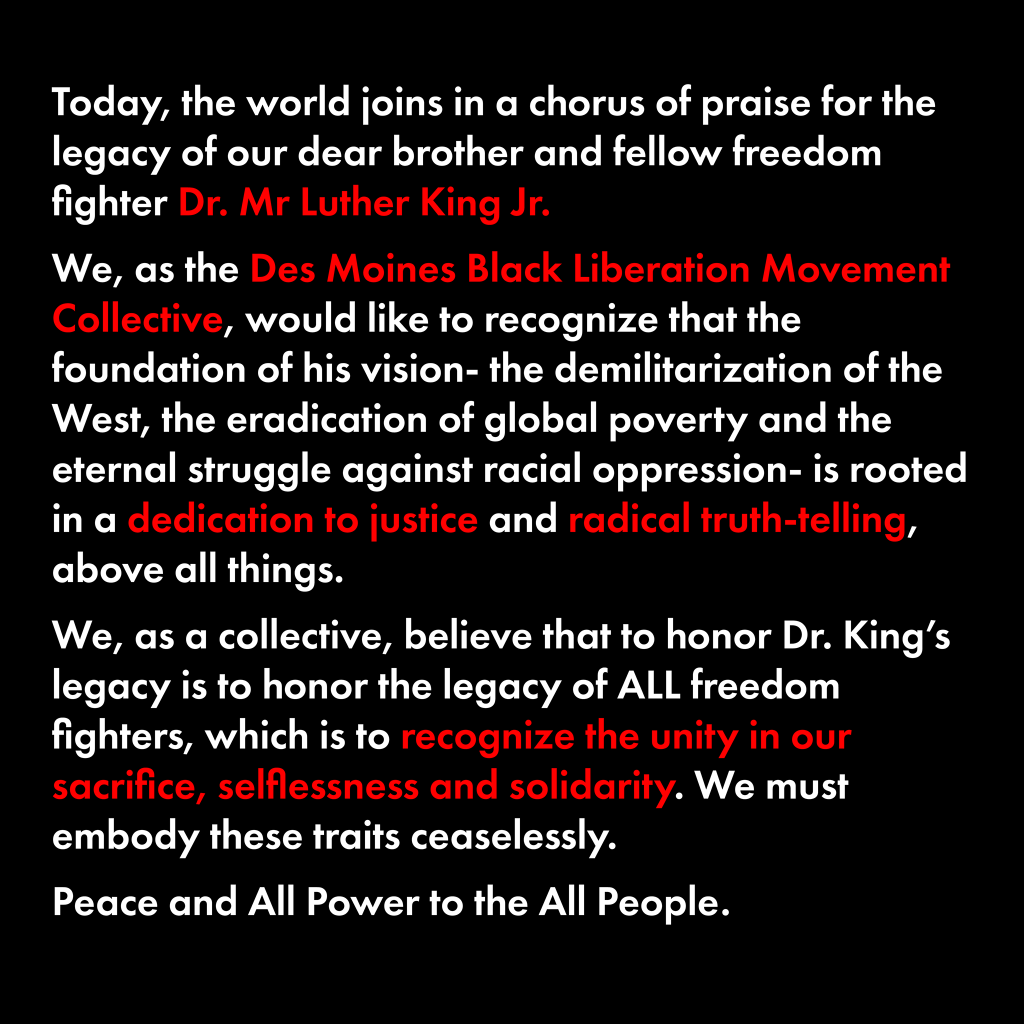
Des Moines Black Lives Matter/ Black Liberation
https://www.facebook.com/desmoinesblm

Early in our lifetimes, industry provided nearly full employment. Nearly every household had someone who was working, and bringing home a paycheck. All commerce was based on capitalism. Money was required for every transaction. Money was the only way to obtain goods and services.

Then with increasing automation, and moving jobs overseas for cheap labor, the unemployment rate began to increase. Soon millions of people no longer had the income needed to pay for goods and services. The numbers of those without jobs has increased dramatically from the economic impact of the COVID pandemic. Those without jobs have to rely on social safety nets, which often means people are living in poverty, at subsistent levels.

As a society we failed to address the loss of wages for millions of people who no longer had money, in a system that required money for everything–food, shelter, healthcare, etc.

It is clear to me that capitalism is an unjust, untenable system, when there is plenty of food in the grocery stores, but men, women and children are going hungry, living on the streets outside the store. There is no justification for this.

Conscientiously Object to Capitalism, Jeff Kisling, 12/4/2020


Prefigurative politics

Fleeting thoughts often return to my consciousness. One of my life’s goals has been to catch those thoughts or prayers before they disappear. Because when they reappear, they are significant. Perhaps that gap is needed for the thought to incubate. For me to become ready to accept the thought.

In the early days of being in my Mutual Aid community, a fleeting thought was “this reminds me of the way Quakers used to be”. And “I wish Quakers today were like this”.

What about Quakers changed? Why are we no longer the way we used to be? In part it is because we have become too invested in the status quo.

Quakers have always believed we should let our lives speak. How we live should reflect our spirituality. What is the way we live now saying?

But my fleeting thoughts reveal our methods of resistance and social change are no longer effective. The society we (White Quakers) grew up in, the State, is itself unjust.

As my friend and Mutual Aid mentor, Ronnie James, wrote:

I’m of the firm opinion that a system that was built by stolen bodies on stolen land for the benefit of a few is a system that is not repairable. It is operating as designed, and small changes (which are the result of huge efforts) to lessen the blow on those it was not designed for are merely half measures that can’t ever fully succeed.

So the question is now, where do we go from here? Do we continue to make incremental changes while the wealthy hoard more wealth and the climate crisis deepens, or do we do something drastic that has never been done before? Can we envision and create a world where a class war from above isn’t a reality anymore?”

Ronnie James

Prefigurative politics

Yesterday I learned of a new (to me) concept, prefigurative politics. Returning to fleeting thoughts, my Mutual Aid community is an example of prefigurative politics. When my thought was “I wish Quakers today were like this”, I’m realizing I mean embracing the concepts of prefigurative politics, for example, Mutual Aid.


Something new is happening – something new in content, depth, breadth and global consistency. Societies around the world are in movement. Since the early 1990s millions of people have been organizing similarly, and in ways that defy definitions and former ways of understanding social movements, protest and resistance. There is a growing global movement of refusal – and simultaneously, in that refusal is a creative movement. Millions are shouting No!, as they manifest alternatives in its wake.

Prefigurative Societies in movement by Marina Sitrin, Popular Resistance, December 21, 2022


Prefigurative politics are the modes of organization and social relationships that strive to reflect the future society being sought by the group. According to Carl Boggs, who coined the term, the desire is to embody “within the ongoing political practice of a movement […] those forms of social relations, decision-making, culture, and human experience that are the ultimate goal”.[1] Besides this definition, Leach also gave light to the definition of the concept stating that the term “refers to a political orientation based on the premise that the ends a social movement achieves are fundamentally shaped by the means it employs, and that movement should therefore do their best to choose means that embody or prefigure the kind of society they want to bring about”. [2]

Prefigurative politics, Wikipedia
  1.  Boggs, Carl. 1977. Marxism, Prefigurative Communism, and the Problem of Workers’ Control. Radical America 11 (November), 100; cf. Boggs Jr., Carl. Revolutionary Process, Political Strategy, and the Dilemma of Power. Theory & Society 4,No. 3 (Fall), 359-93.
  2. Leach, D. K. (2013). Prefigurative politics. The Wiley-Blackwell encyclopedia of social and political movements, 1004-1006.


With God on Our Side

I often don’t know what I’ll write when I sit in quiet prayer. I didn’t think I’d be led to listen to a Bob Dylan song this morning.

I know I’m not the only one feeling heartsick these days. For so many reasons. But it has been more than I can bear to watch the pomp and circumstance of the visit of Ukraine President Volodymyr Zelensky to this country. The dichotomy of the adulation of a Congress that resists the smallest sums for the basic necessities for millions of people it is supposed to represent. And yet lavishly sends billions upon billions of dollars to Ukraine for war. Warmongers.

So now as I’m leavin’
I’m weary as Hell
The confusion I’m feelin’
Ain’t no tongue can tell
The words fill my head
And they fall to the floor
That if God’s on our side
He’ll stop the next war

With God on Our Side, Bob Dylan

That is a jarring juxtaposition to the idea of Christmas, Joy to the World, Peace on Earth.

But likely the gravest consequence of war now is this potentially mortal blow to Mother Earth. Militaries are the greatest source of greenhouse gas emissions.

Perhaps the best argument for peace on earth now is the protection and healing of Mother Earth. Including the immediate cessation of all military operations.

Despite all that, I have hope. Another Bob Dylan song is ‘The Times They Are A-Changin’. That is what I see in my Mutual Aid community.


The last U.S. ambassador to the Soviet Union before it collapsed, Jack Matlock, wrote last week: “Since President Putin’s major demand is an assurance that NATO will take no further members, and specifically not Ukraine or Georgia, obviously there would have been no basis for the present crisis if there had been no expansion of the alliance following the end of the Cold War, or if the expansion had occurred in harmony with building a security structure in Europe that included Russia.”

But excluding Russia from security structures, while encircling it with armed-to-the-teeth adversaries, was a clear goal of NATO’s expansion. Less obvious was the realized goal of turning Eastern European nations into customers for vast arms sales.

Bob Dylan and the Ukraine crisis by Norman Solomon, Nation of Change, February 23, 2022

“With God on Our Side”

Oh, my name—it ain’t nothin’
My age—it means less
The country I come from
Is called the Midwest
I’s taught and brought up there
The laws to abide
And that the land that I live in
Has God on its side

Oh, the history books tell it
They tell it so well
The cavalries charged
The Indians fell
The cavalries charged
The Indians died
Oh, the country was young
With God on its side

The Spanish-American
War had its day
And the Civil War too
Was soon laid away
And the names of the heroes
I’s made to memorize
With guns in their hands
And God on their side

The First World War, boys
It came and it went
The reason for fighting
I never did get
But I learned to accept it
Accept it with pride
For you don’t count the dead
When God’s on your side

The Second World War
Came to an end
We forgave the Germans
And then we were friends
Though they murdered six million
In the ovens they fried
The Germans now too
Have God on their side

I’ve learned to hate the Russians
All through my whole life
If another war comes
It’s them we must fight
To hate them and fear them
To run and to hide
And accept it all bravely
With God on my side

But now we got weapons
Of chemical dust
If fire them we’re forced to
Then fire them we must
One push of the button
And a shot the world wide
And you never ask questions
When God’s on your side

Through many dark hour
I’ve been thinkin’ about this
That Jesus Christ
Was betrayed by a kiss
But I can’t think for you
You’ll have to decide
Whether Judas Iscariot
Had God on his side

So now as I’m leavin’
I’m weary as Hell
The confusion I’m feelin’
Ain’t no tongue can tell
The words fill my head
And they fall to the floor
That if God’s on our side
He’ll stop the next war

“With God on Our Side” Bob Dylan


Moraine Park, Long’s Peak, Rocky Mountain National Park, Colorado. Jeff Kisling

Foundational stories now: Quaker faith

[My foundational stories are related to the intersections between my Quaker faith, protecting Mother Earth, and photography. My faith led me to try to share my spiritual experiences and show my love for the beauty of Mother Earth through photography.]

I’ve been praying and struggling for many days to discern how to express the state of my Quaker faith today. Quakerism is the faith community I was born into and have remained in. I was raised in a White Quaker family and community. I had a Spiritual experience at the Bear Creek Meetinghouse when I was about ten years old, an experience that I have drawn upon for the rest of my life. I attended Scattergood Friends School, a Quaker high school, and Earlham College, a Quaker institution.

One of the reasons I accepted the challenge of reflecting on my foundational stories is because of my crisis of faith now.

I think it is common for people to be disappointed by their faith community at various times, for a variety of reasons. That has been true for me. Coming of age during the Vietnam War I wished more young men had resisted the draft. I wish we all had done more to reign in the use of fossil fuels. And that White people like myself had worked, harder to acknowledge our complicity in the oppression of Black, Indigenous, and other people of color (BIPOC), of various gender identities, and certain social and economic classes. I wish we were working harder now on acknowledging and trying to heal these injustices.

This country was built on the historical injustices of the institution of slavery, and the genocide and removal of Indigenous peoples from their lands. And the forced assimilation of native children in institutions where they were often physically and sexually abused, where thousands of children were killed or died.

Many people, including Quakers today question how complicit our ancestors were in these injustices. There were White Quakers who were involved in the slave trade, and who enslaved Black men, women, and children. Our ancestors were settler colonists. As are we who are now living on these lands. Quakers were involved in the Indian residential schools.

being involved with others in wrongdoing

complicity

These issues often generate significant emotional responses. I don’t have all the answers. But I have had spiritual and community experiences that I am led to speak and work from today. Many of these experiences have led me to understand we are living in a country, a society of structural racism and white superiority. As much as many of us White Quakers wish it weren’t so, our skin color automatically gives us many significant advantages in this country.

Our mainstream social, economic, and political systems are predicated on White superiority and dominance. I say mainstream because many people, including myself, are building alternative systems today. I’ve been deeply involved in Mutual Aid for a couple of years and believe this to be part of the answer. Mutual Aid is included in the following graphics.

NOTE: White supremacy is different from white superiority. “White supremacy or white supremacism is the belief that white people are superior to those of other races and thus should dominate them.”

Wikipedia

I’ve also seen in the lives of my friends what I once thought of as isolated historical traumas have been passed from generation to generation. They profoundly affect the lives of people today. What does that mean for White Quakers now?


“…capitalism and colonialism created structures that have disrupted how people have historically connected with each other and shared everything they needed to survive. As people were forced into systems of wage labor and private property, and wealth became increasingly concentrated, our ways of caring for each other have become more and more tenuous.”

Dean Spade, Mutual Aid: Building Solidarity During This Crisis (and the Next) (Kindle Locations 111-121). Verso

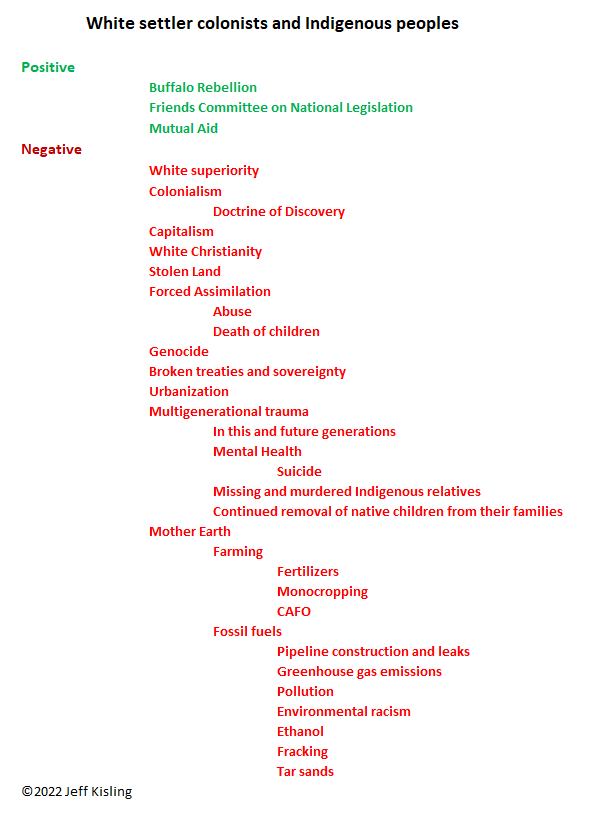
Following is another way of looking at the relationships between White settler colonists and Indigenous peoples. White Quakers need to acknowledge that when our ancestors came to these Indigenous lands, they were settler colonists. And since we are still occupying these lands, we are settler colonists, too. Some White Quakers were involved in the forced assimilation of Indigenous children. We are implicated in most of the “negative” things listed below.

Acknowledgement of wrongs is the necessary first step in the healing process.


On the positive side are Mutual Aid, the Buffalo Rebellion, and the Friends Committee on National Legislation (FCNL). I’ve written a lot about my experiences with Mutual Aid https://quakersandreligioussocialism.com/mutual-aid/

I’m fortunate to be part of the Buffalo Rebellion, a newly formed Green New Deal coalition in Iowa formed to protect the planet by demanding change from politicians and convincing the public that climate should be a priority. Buffalo Rebellion, is a coalition of grassroots, labor, and climate justice organizations growing a movement to pass local, state, and national policies that create millions of family-sustaining union jobs—ensuring racial and gender equity and taking action on climate at the scale and scope the crisis demands. It was formed in November 2021 and consists of: 

The Friends Committee on National Legislation (FCNL) has years of experience advocating for legislation related to Native American affairs. Recently FCNL has been supporting legislation to form a Truth and Healing Commission related to the Indian Boarding Schools. I’ve been blessed to have many years of experience with FCNL and have been working with my native friends in creating connections with FCNL, including several visits to our US Senators.