Day 5: First Nation Farmer Climate Unity March

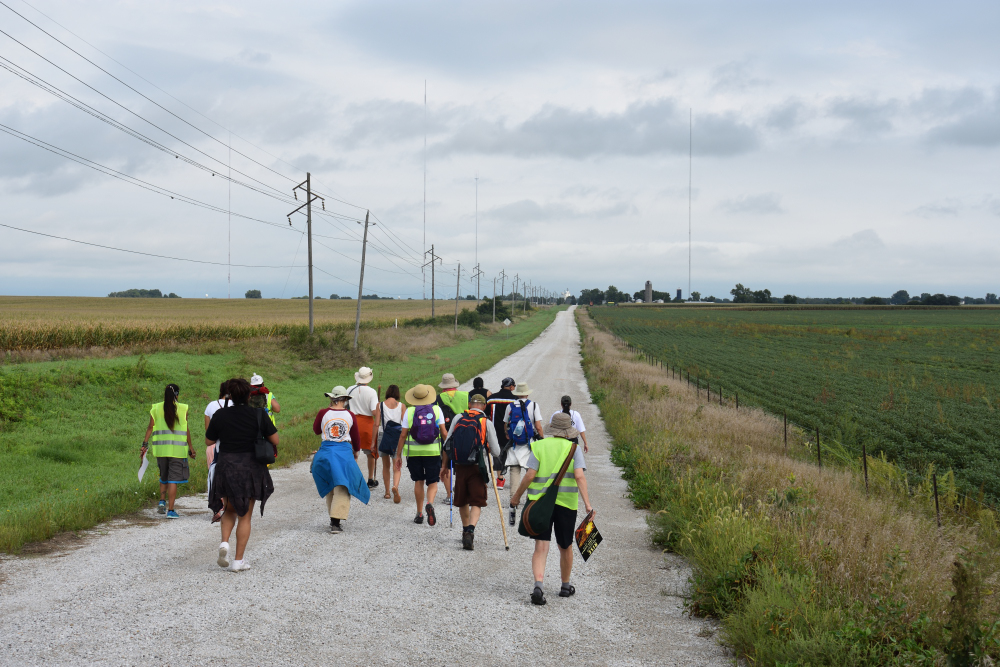
Day 5. September 5, 2018.  14 miles from the Boone County Fairgrounds to Pilot Mound, Iowa.

Once again I was pleasantly surprised to awaken feeling fairly refreshed, despite being pretty tired at the end of yesterday’s 15 miles, and staying up late to write. Since we were all sleeping in the same large room, the lights went out a little after 10 p.m. There were no windows so it was pretty dark. Several others and I were in a smaller ‘media’ room writing. I didn’t get to bed until 11:30. It was a little tricky finding my way through the large darkened room to my sleeping bag

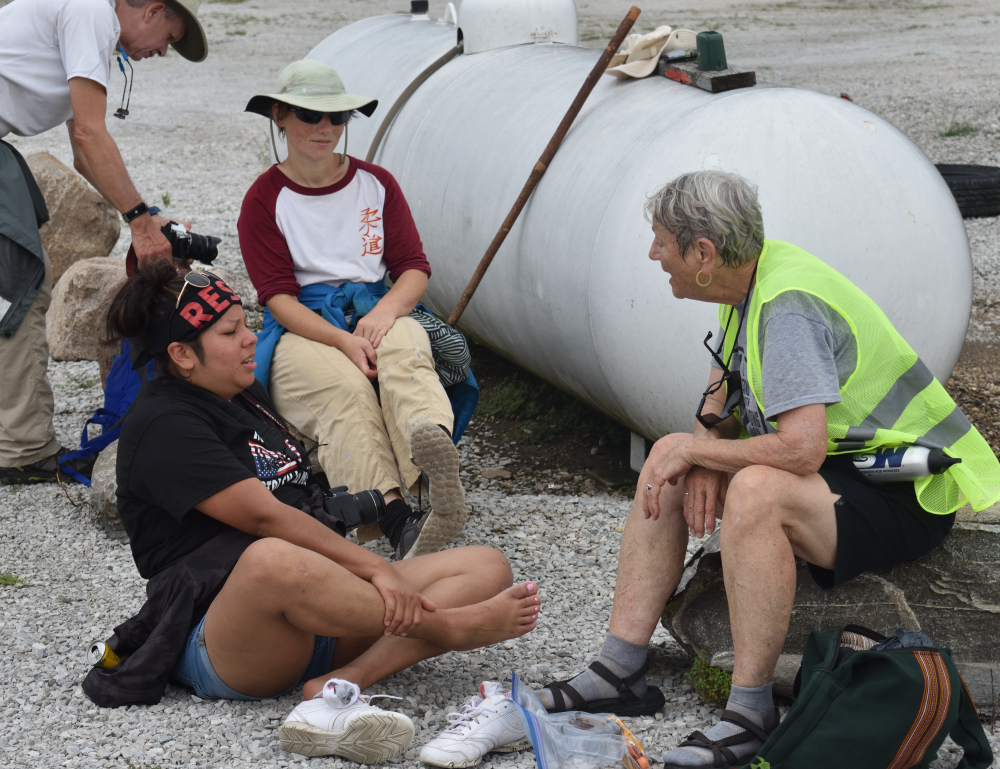
When we arrived yesterday I discovered I had worn a hole into the sole of my shoes, and developed a blister. I would have been more concerned but I had seen Miriam work on a number of other people’s blisters. She cut a piece of adhesive foam larger than the blister, then cut a hole in the middle of that the size of the blister, to help keep pressure off it. Then the ever useful duct tape was wrapped around the foot to hold things in place. And it worked pretty well. A photo of my bandaged foot was included in the article about the March in the Fort Dodge Messenger, Many Steps, One Journey.

Miriam Kashia foot doctor extraordinaire

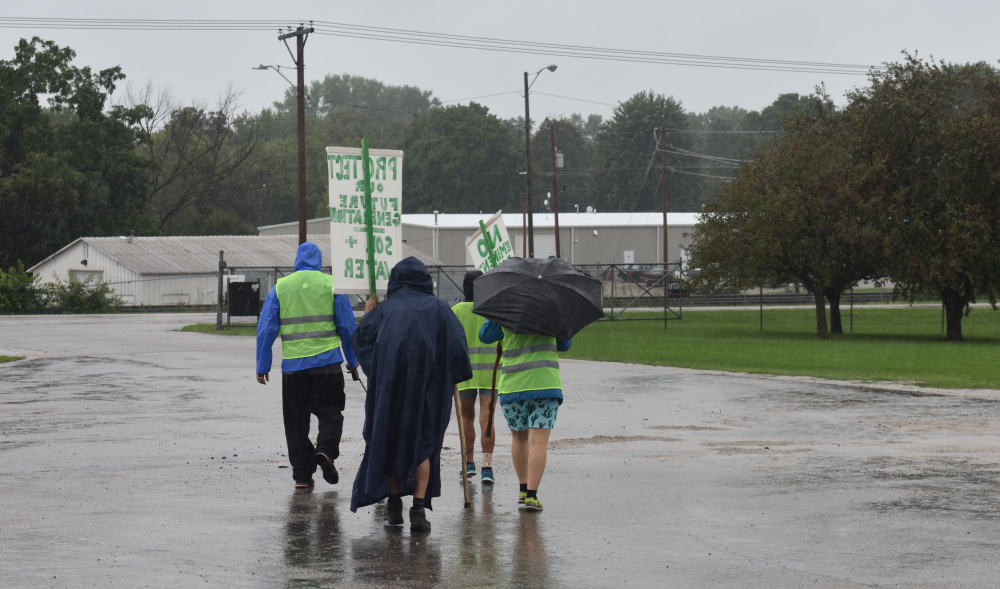
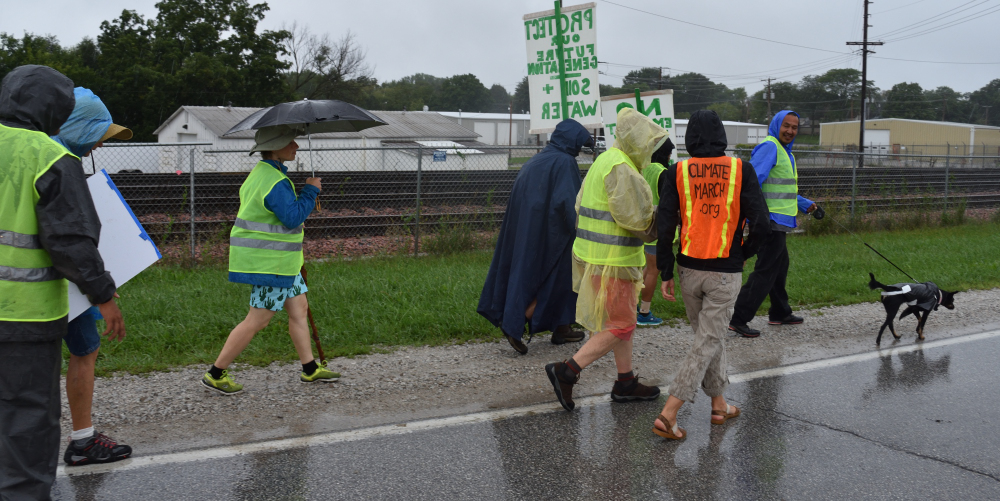
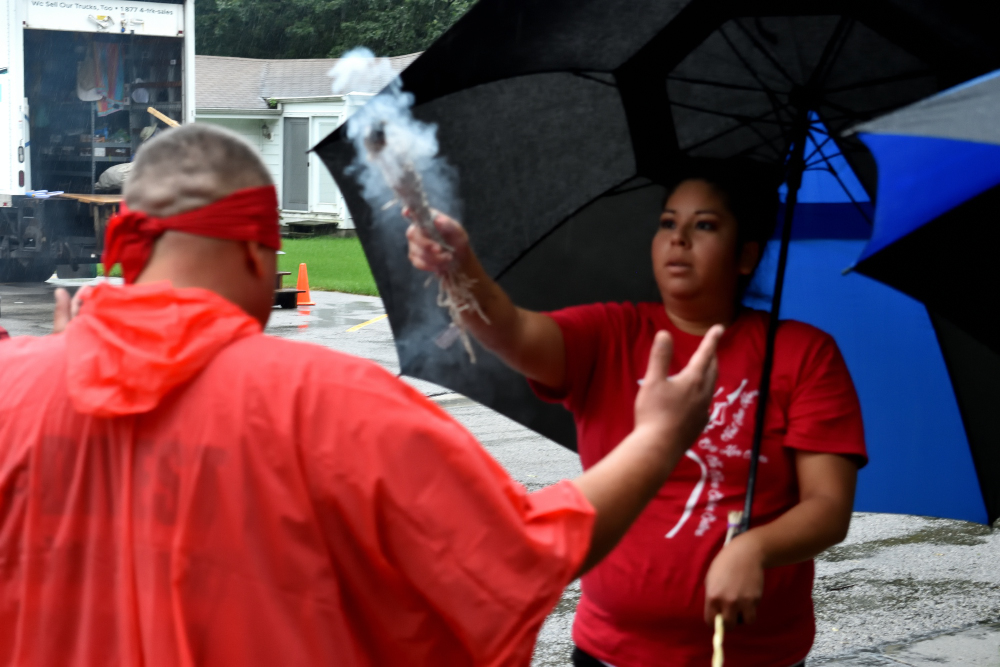
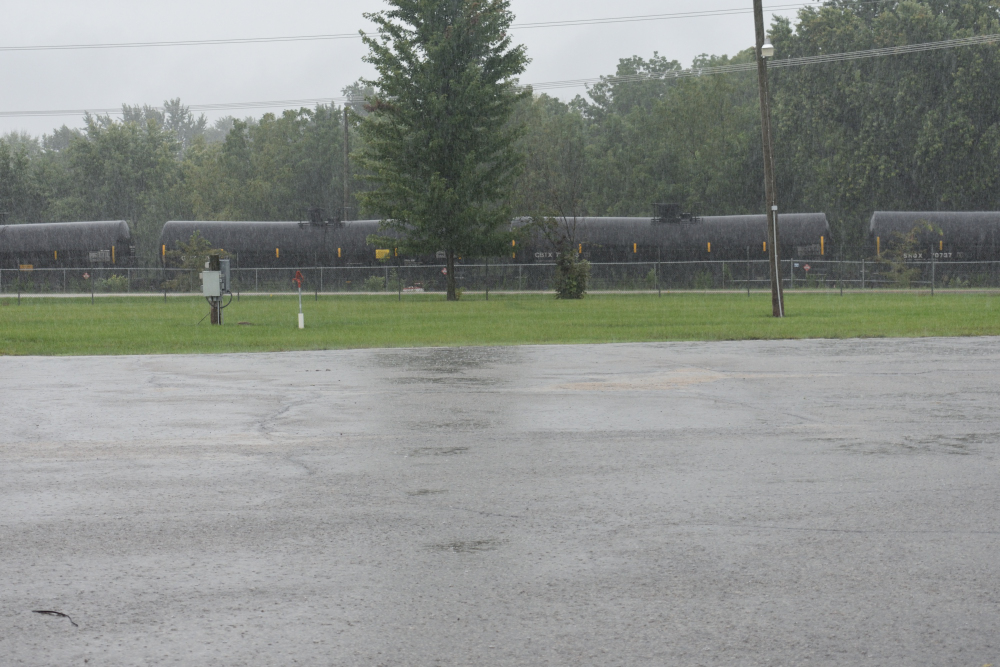
It was raining harder than ever when we started out that morning. But again, I didn’t hear any complaints. We were warned to be more aware of traffic because we started out going through town. Before we started burning sage was brought to each of us. And Alton made a raincoat for his dog Oceti.


Being outside all day, and sometimes sleeping outside (sometimes in some strong thunderstorms) has made me more and more aware of the natural world. I’ve mentioned before how I enjoyed being outside as I trained for this March. Walking has been much more interesting now that I am aware, as Indigenous people have always been, that everything: trees, water, plants, rocks, wind, etc. has the Spirit in them. I found myself focusing on talking to the trees, squirrels and birds as I walked.

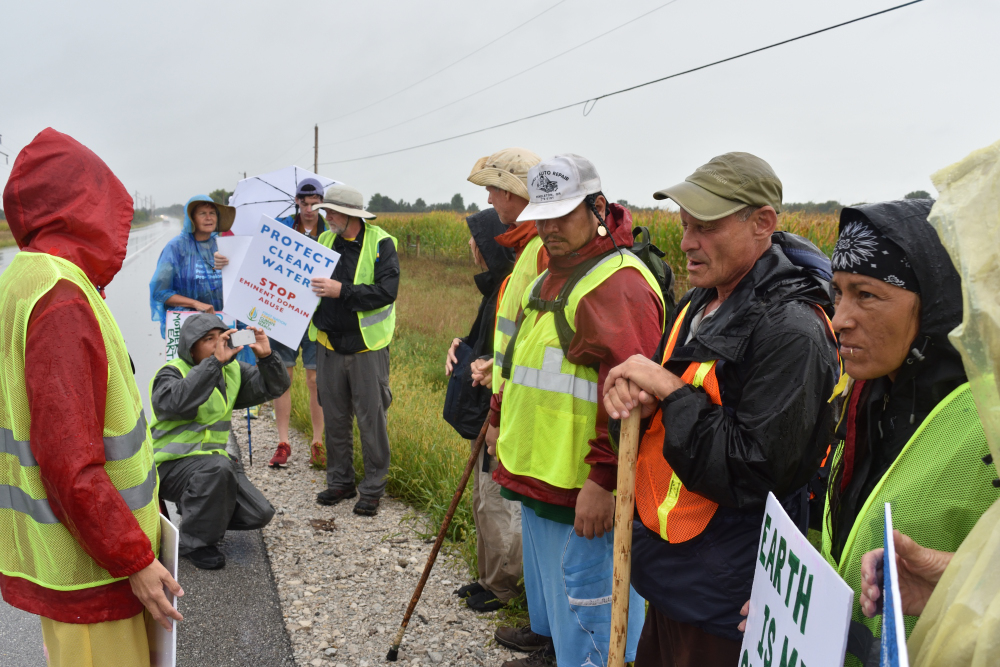
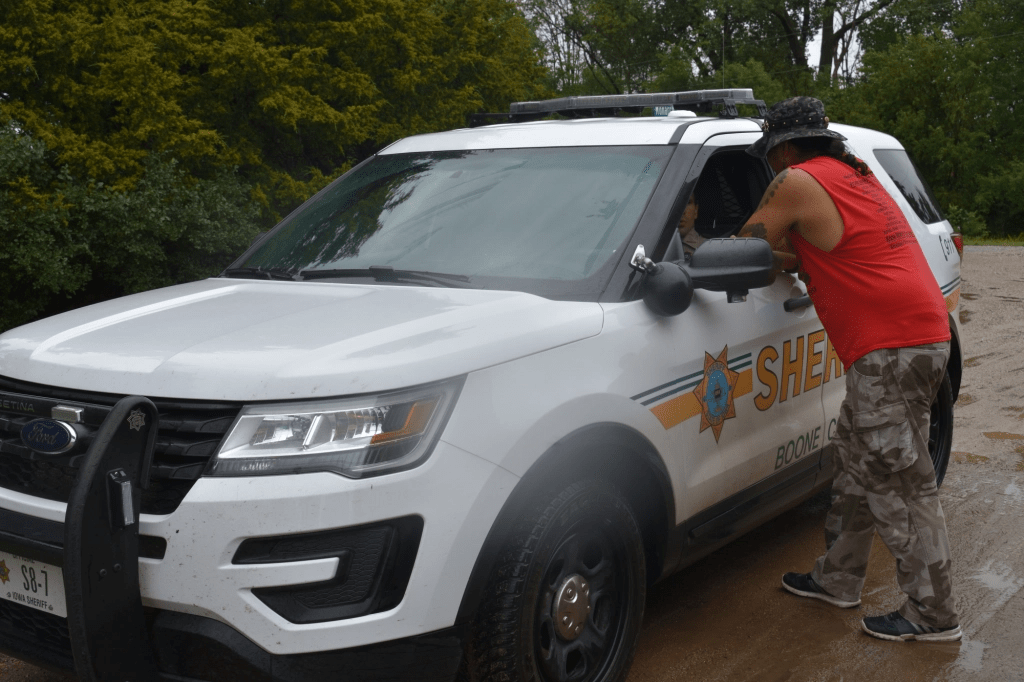
At one rest stop a police officer stopped to see what we were doing. Manape spoke to him. We were careful to use a system to announce when a car was approaching from the front (“car up”) or back (“car back”). Everyone then immediately formed a single file and got as far off the road as possible. Even so, the police often seemed to have heard about us marching, though none of the policemen caused us any trouble.
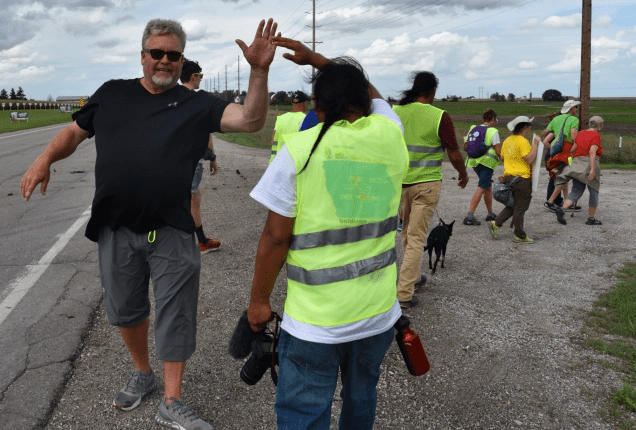
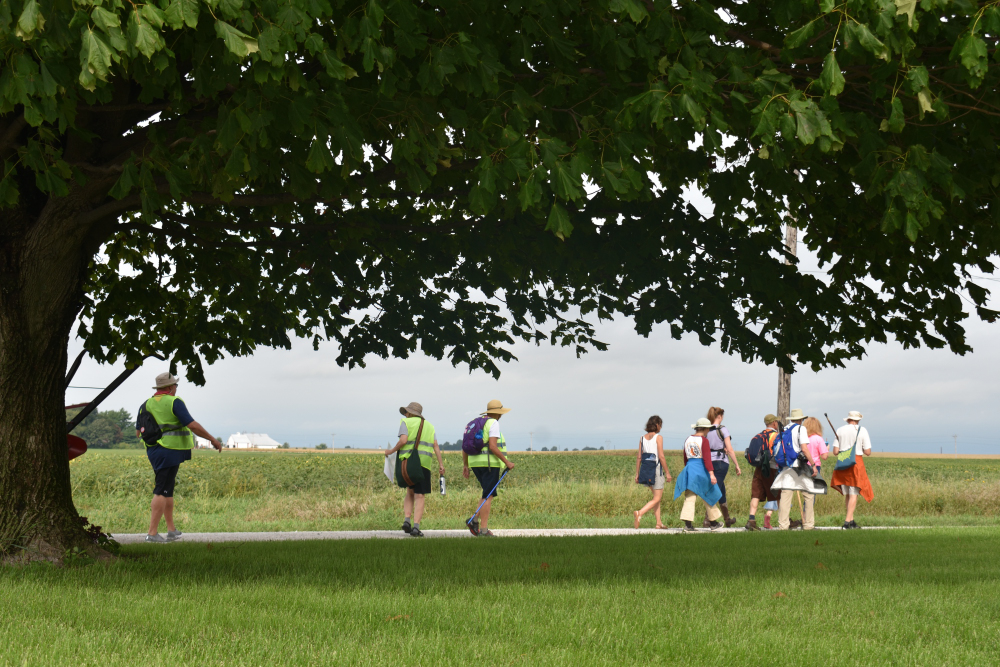
There wasn’t quite as much talking today since there wasn’t much of a shoulder on the road, so we had to walk in single file.

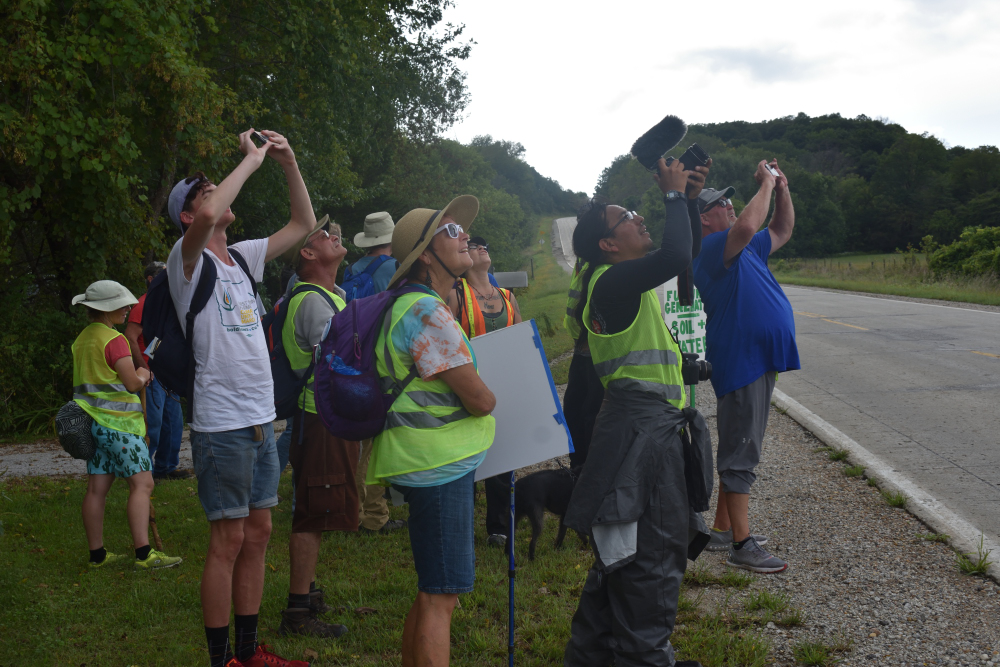
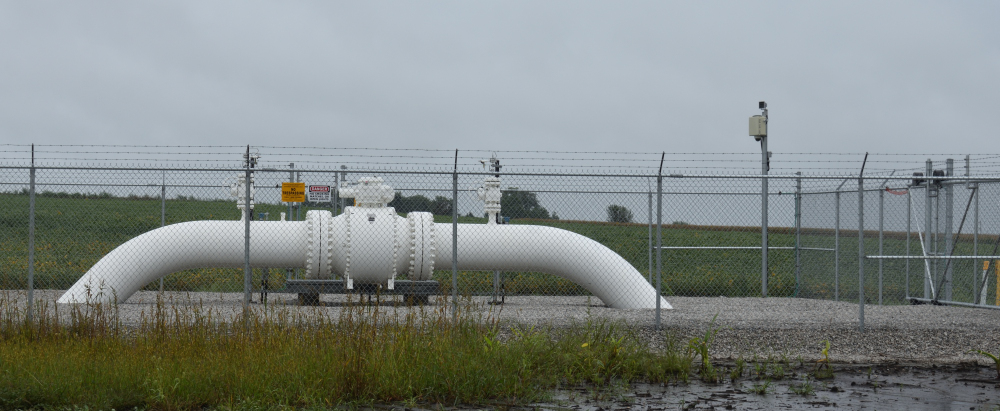
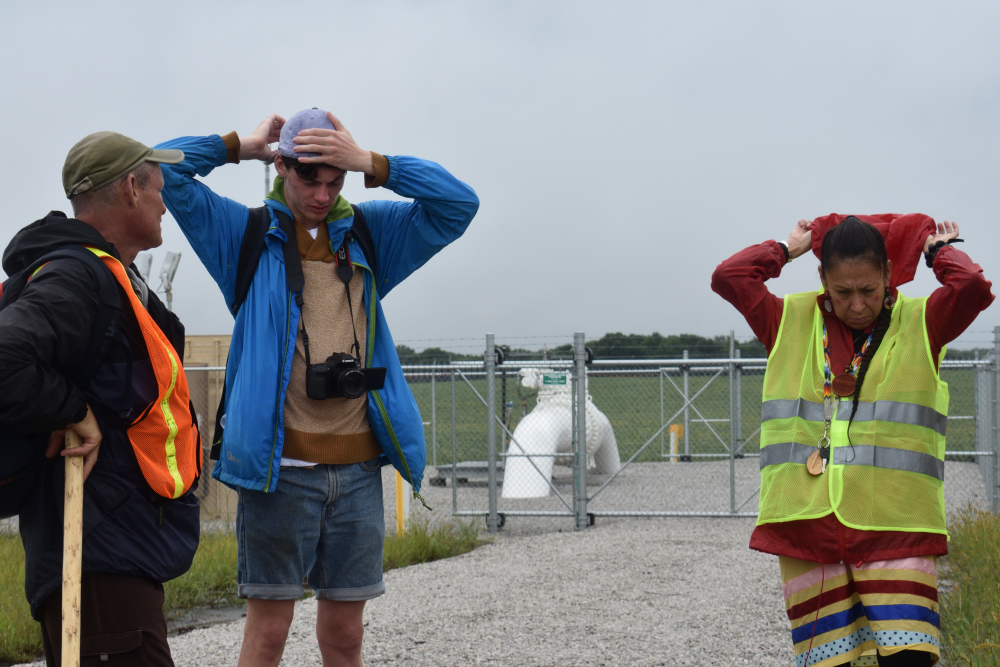
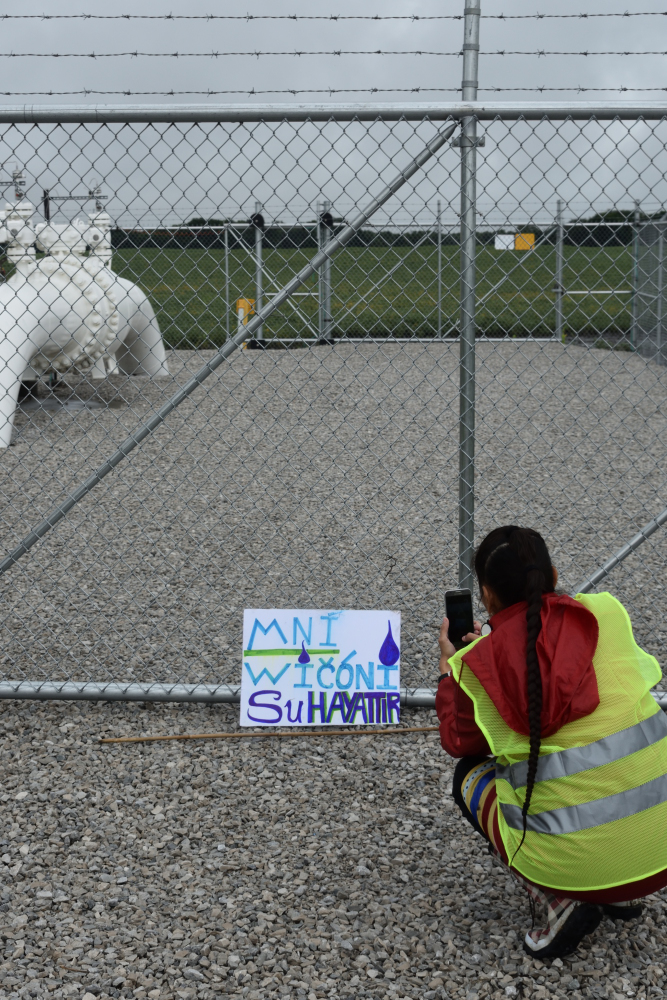
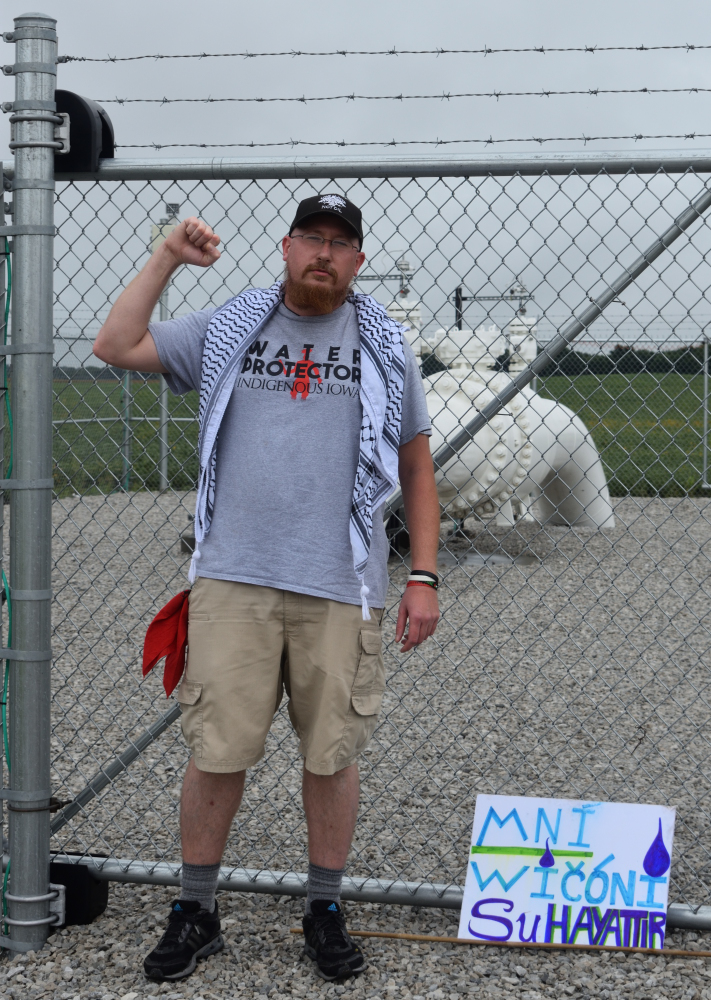
Before crossing the river just before reaching our destination of Pilot Mound, we came to another pipeline crossing. We could see the area where trees had been removed to build the pipeline on the hill on the other side of the river.

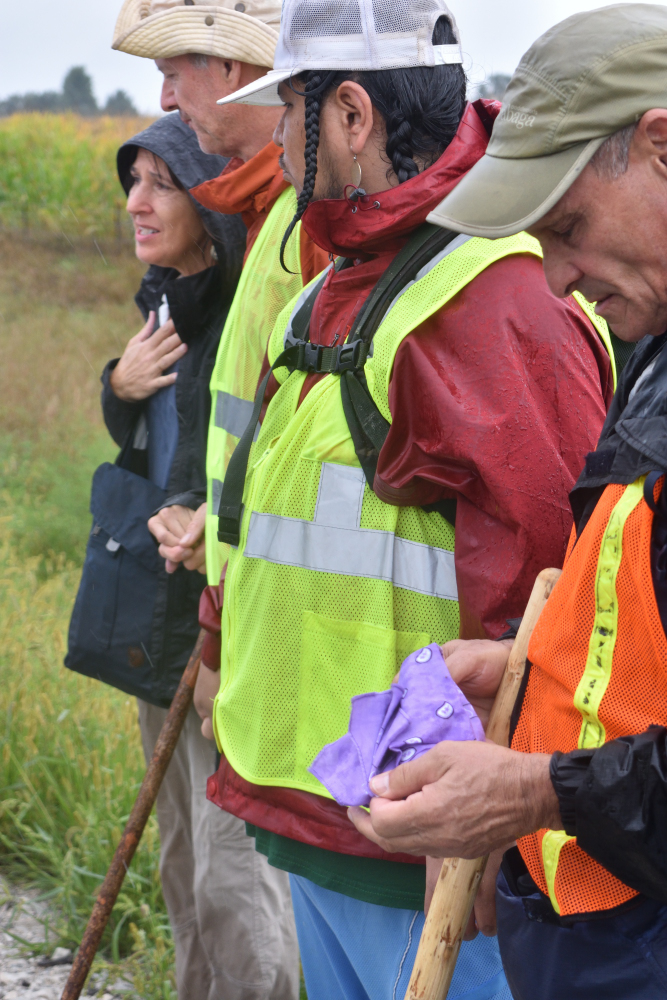
As always, we stopped for prayers. This time I was asked to lead them. I was very happy to have this opportunity to share some about Quakers and the Spirit. As we stood in a circle holding hands, I mentioned that Peter Clay, Lee Tesdell, and I were Quakers. And that I hoped they would meet my brother Randy, also a Quaker, when he comes to Fort Dodge at the end of the March, for the celebration and give me a ride home. I’ve been trying to share about Quakers as opportunities come up for several reasons. I think there are many parts of Quakerism that are common with the spirituality of Indigenous people.

And as Manape has said, the reason we are marching together is to make it possible for us to continue to work together in the future. For that to happen, we need to trust each other. And for trust to be established, we need to understand each other. That was why I shared about Quakerism when it seemed appropriate.

As we stood in the circle I said that Quakers do not believe spirituality is just a matter of Sunday morning services. We try to be attentive to the spirit all the time, though we often get distracted. We do also gather together Sunday morning to worship in silence. That sometimes someone is given a spiritual message that they speak into the silence. During the March someone had asked if I was a minister and before I could answer, Miriam said, “he’s a Quaker and all Quakers are ministers.”

During the ceremony at this pipeline crossing I asked the circle of my friends to listen together to the Spirit (saying we wouldn’t do so for a whole hour). But in the time we spent worshiping together, I felt the presence of the spirit among us. Afterward several people gave me hugs and thanked me. As I think about it now, I have felt the spirit among us all week.

Once we arrived in Pilot Mound some of us noticed we were being followed by a car for a while. We learned the driver was Manape’s father, Frank, and he was just enjoying watching us march together. Frank has been a very active activist.

One of the most moving parts of this journey occurred as Frank spoke to us before we ate dinner. He began by saying he was honored to be with us and how blessed he felt as he watched us marching. He said it made his “heart soar like a hawk.” He spoke of the many issues he has worked on in his life. And how it takes many, many years to see results (40, more). That it is not the number of people involved that is important. It is their persistence in raising up the truth. Once a certain concern starts to see a shift toward what is right, others remember the people or person who never went away during all those years.

We found there was no cell phone or internet service available in Pilot Mound. In a way that seemed to symbolize that we were cut off from civilization. The whole marching and camping experience felt like we were back in a simpler time. We felt more in touch with nature. We also knew things like the severe storms and flooding we experienced were related to climate change, and to what we were trying to call attention to by marching.
Day 4: First Nation Farmer Climate Unity March

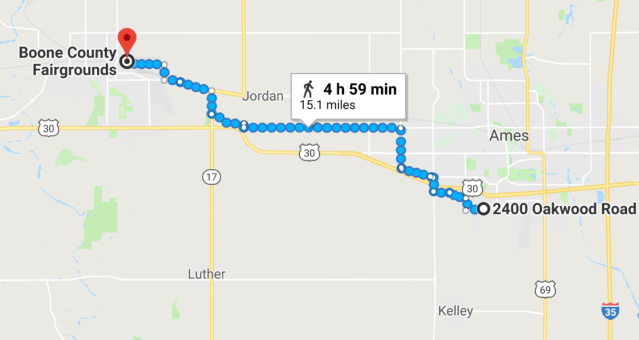
Day 4 Sept 4, 2018 Ames – Boone 15.1 miles

I believe today is our longest mileage march–15 miles. More rain is predicted for this afternoon and there are flash flood warnings.

The group is becoming more cohesive as we share our stories. As Donnielle said, “we are a tribe.”

We are a tribe

Tim Dwight walked with us today. He used to play in the National Football League. Now his work relates to solar energy. I learned a lot about how he can work with communities to build solar energy systems. He has been involved in lobbying efforts in the Iowa legislature to support solar energy.  Tim is going to talk more about that for the whole group tomorrow or the next night.

Those of you from the Bear Creek area might recognize the name Gary Clague, who grew up in Earlham. He knows the Knights and others.

Gary Clague

Alton was talking about the strong bond that forms between a child and an animal. He spoke fondly of a horse from his youth. When he and his friends went to ride their horses, his was the only one who came up to him every time. He talked about how easy is was to ride the horse that was in tune with where he wanted to go. “I really miss that horse.” I spent a lot of time visiting Foxy Jackson, who we learned is going to marry Alton in a couple of weeks.

Alton Onefeather

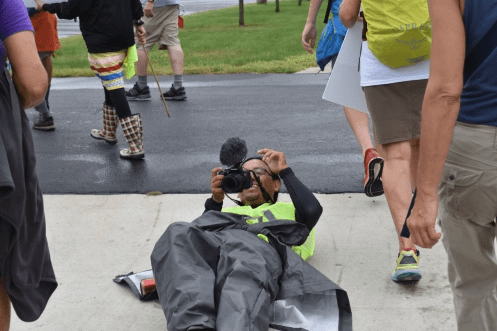
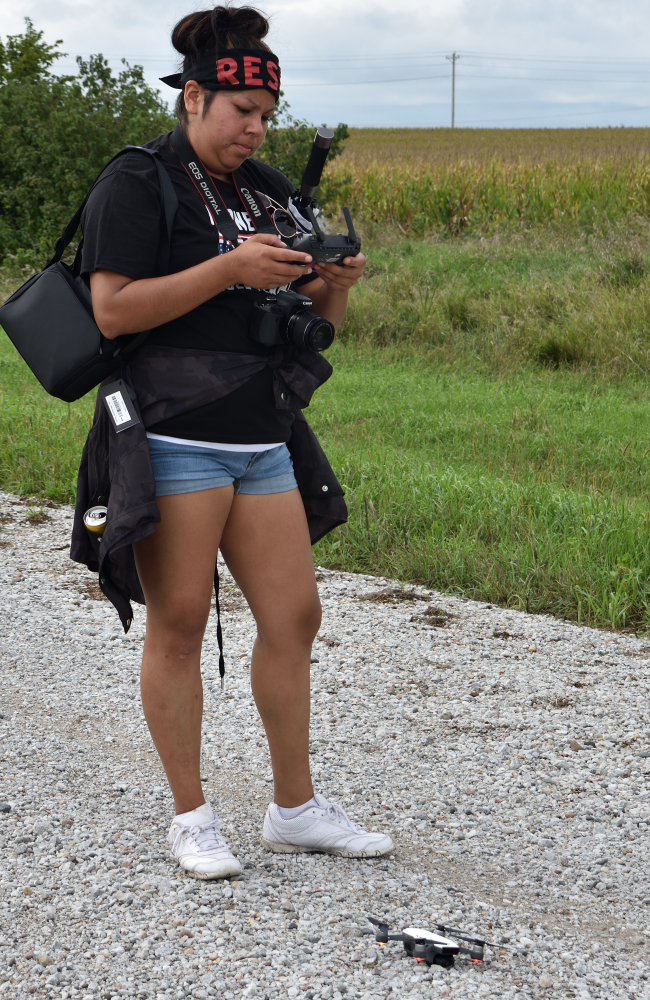
Matthew Lone Bear and I continue to talk a lot about photography, videography, and drones. He sometimes goes for unusual camera angles, for example lying on his back. I think that is a sign of a good photographer.

Matthew Lone Bear

Mahmud Fitil shared stories related to tar sand spills, saying most commercial labs won’t analyze the water samples from tar sand spills because they fear repercussions from the government. Fitil went to Doon, Iowa, site of a train derailment and oil spill of an estimated 230,000 gallons in June. He said there was little activity related to the cleanup. The smell was worse than that of raw gasoline, causing some to vomit.

Mahmud Fitil

Miriam Kashia and I compared my Quakerism to her Universal Unitarian church and community. I told her the Quaker Social Change Ministry program we used at North Meadow Circle of Friends in Indianapolis was modeled after the program created by the Universalists. Miriam says her new church is the greenest church in Iowa.

Miriam Kashia

At 5:30 pm we all straggled into the Boone County Fairgrounds, fifteen miles from our Ames camp. Everyone seems to be limping a little. I discovered I had worn a hole in my shoe, which resulted in a blister! Fortunately, we have Miriam, who plugged the hole, and will treat my blister in the morning. Several others also developed blisters. It was a rough day.
The building we are in is actually the site where the Public Utilities Commission had a meeting for public comments about the Dakota Access Pipeline in November, 2015. Peter Clay spoke and Miriam Kashia attended. That was where Peter had his first contact with Native Americans, who came from South Dakota to fight the pipeline.

Before dinner, someone described how they went to the Bakken oil fields to see what tar sands oil looked like. He was able to obtain a couple of quarts of it and found an independent lab to analyze it. As expected, it was full of toxic chemicals.  He found that the tar sands product became suspended in water, so a spill cannot be cleanup up simply by skimming it off the top of the water.

Someone else talked about the damage to the fields done by the pipeline construction. Heavy treaded vehicles traveled over the fields in wet weather, compacting the soil. Where the pipeline was laid, the rich topsoil was scraped off. It was supposed to be saved to put pack in place but wasn’t. The clay layer was dug up, then a mixture of the topsoil and clay refilled in the trench. The clay disrupts the flow of water and nutrients through the topsoil/clay mixture. It is common to see ponds of water over areas of the pipeline because of nonporous clay layer.

Standing water in fields

Dinner that included buffalo meat and fry bread followed. Looking around the table I thought it would be nice if this was a “real” Thanksgiving dinner. Manape said, we call it Thanks-taking.

Storms are predicted for tonight and tomorrow so we are glad to be inside. This was the first night we all slept in the same space together, which I thought added another dimension to us growing closer as a group.


Day 3: First Nation Farmer Climate Unity March

Day 3 Sept 3, 2018 Huxley – Ames 9.2 miles

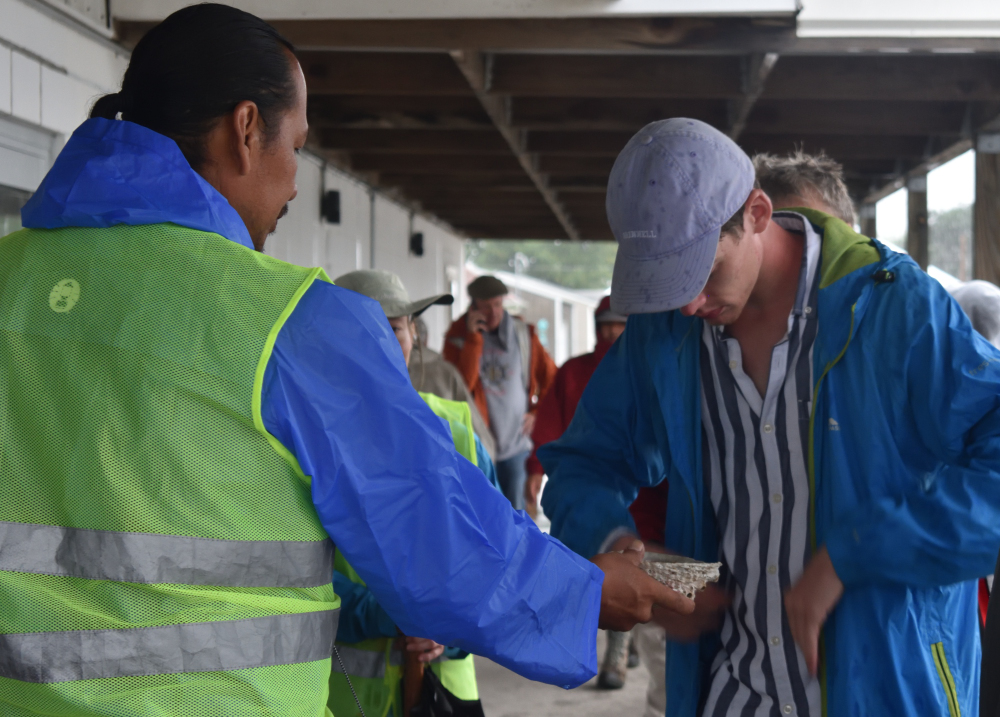
Prior to beginning today, Tricia performed smudging for us, to remove negative energy and bring positive energy. That this was offered to all of us, sharing this Native practice, is just one of many examples of all of us sharing with each other. This sharing was crucial to our growing interconnections, and building a single community, together.


This video was shot by Mahmud Fitil who is marching with us. My feet felt better after that. Mahmud told me when he went to the site of a tar sands train derailment the smell was so bad people nearly vomited.

For the first several hours it was raining pretty hard. Prior to this march, I never would have ventured out into such heavy rain. But this morning I didn’t hear one person suggest we should wait until it wasn’t raining so hard.  Not one person complaining. We just put on our rain gear, had our morning circle to discuss the day’s route, and began to march and continue sharing our stories. One of the most remarkable and most meaningful things that happened on this march was the extended length of time we were with each other, and the conversations went on almost non-stop.
After Lee Tesdell’s presentation last night, he took me to see where the pipeline crossed the highway we would be traveling on when we left Huxley. We planned to have a ceremony when we reached the pipeline. Donnielle Wanatee offered good prayers, asking for protection for the walkers, and for their families at home. I was surprised at what an emotional time this was. It was especially difficult for Kathy Byrnes, bringing back a lot of bad memories of her past experiences with the construction of the pipeline on her neighbor’s land. Many offered her hugs.

I could see from the expressions and body language that every one of us was feeling the trauma of the land and water being desecrated by the black snake.

These deep emotions were felt by all of us every time we crossed the pipeline. I could see from the expressions and body language that every one of us was feeling the trauma of the land and water being desecrated by the black snake.

So today was mostly about walking in the rain, sharing more stories, and experiences at the pipeline sites.


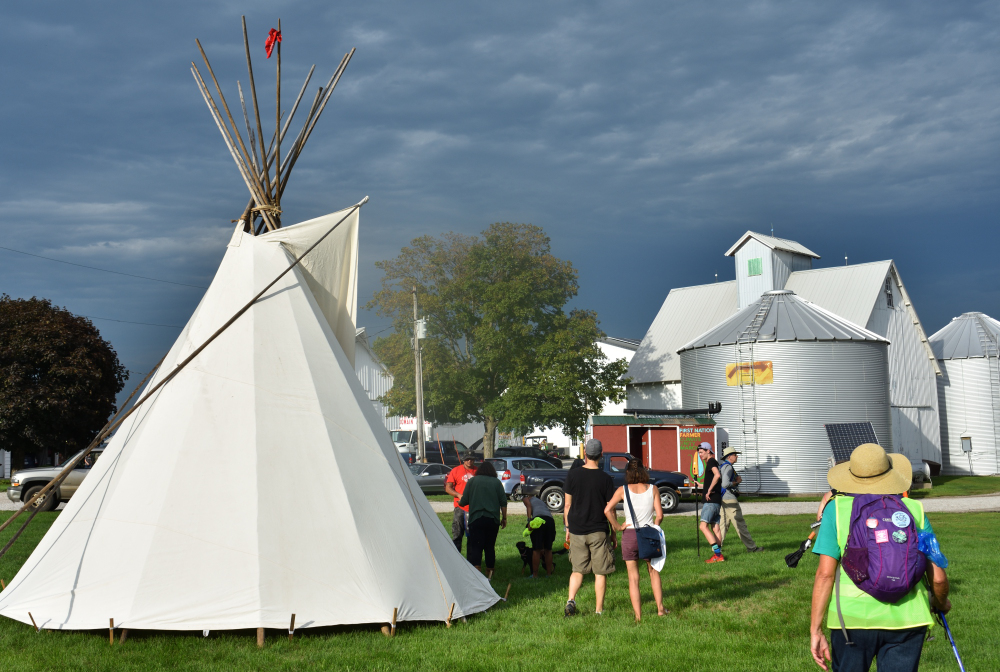
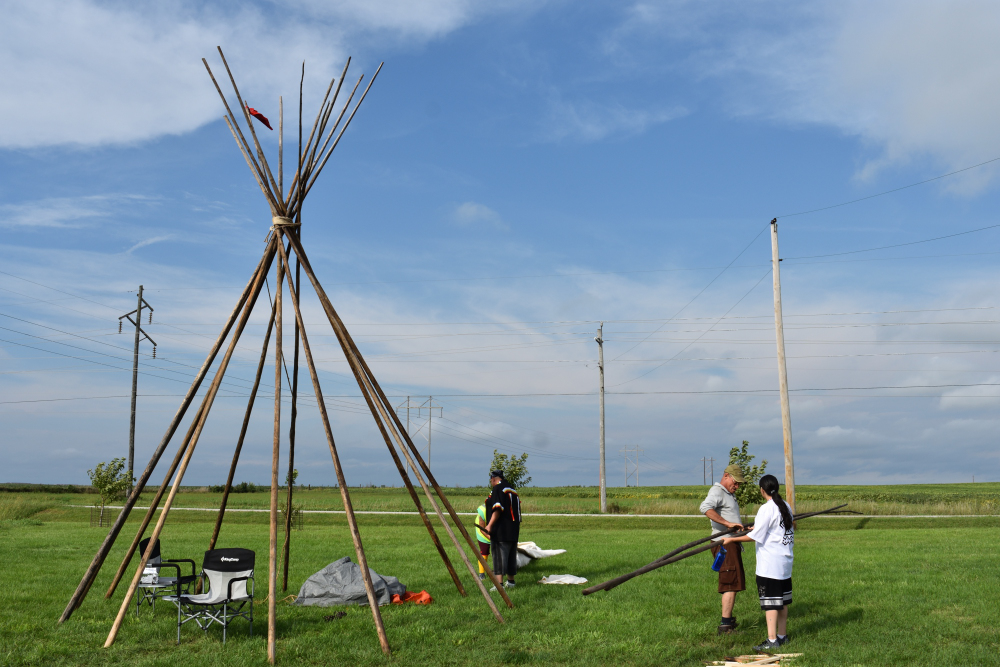
The tipi was set up again in Ames. Here is a short video of putting the cover on the tipi.

Day 2: First Nation Farmer Climate Unity March

Day 2 Sept 2, 2018 Ankeny – Huxley 9.0 miles

Day 2 Griffieon Farm to Huxley
Day 2 Matthew Lone Bear video
Forum on Agricultural Practices with Lee Tesdell

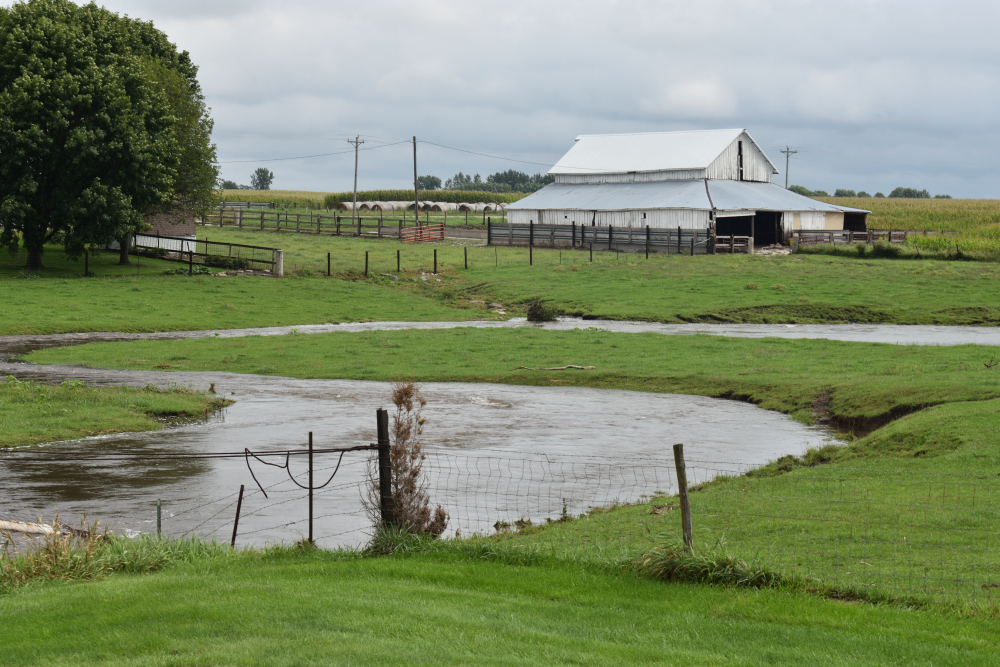
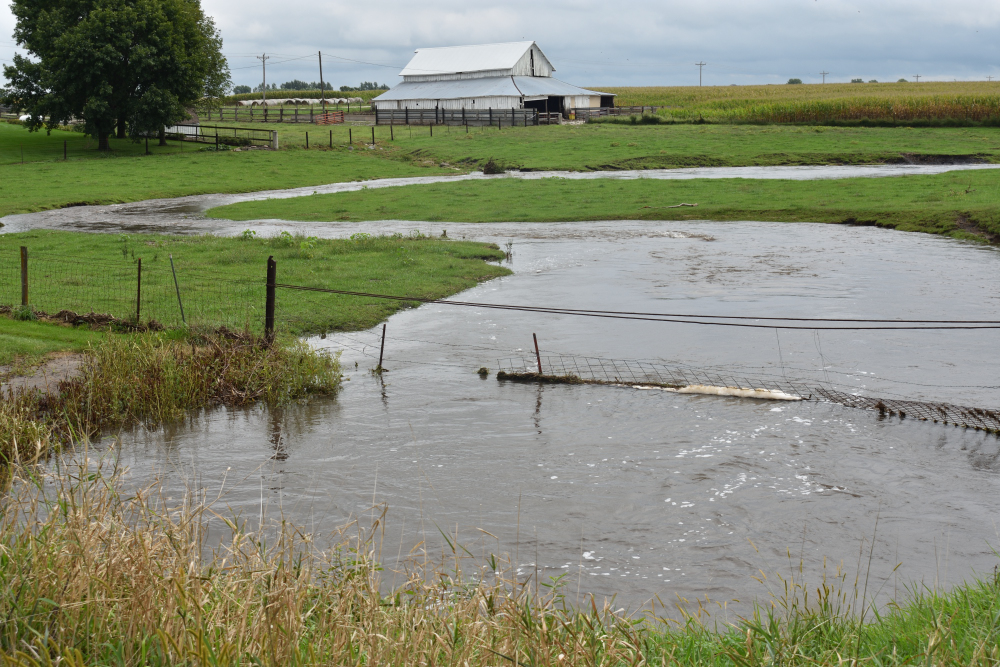
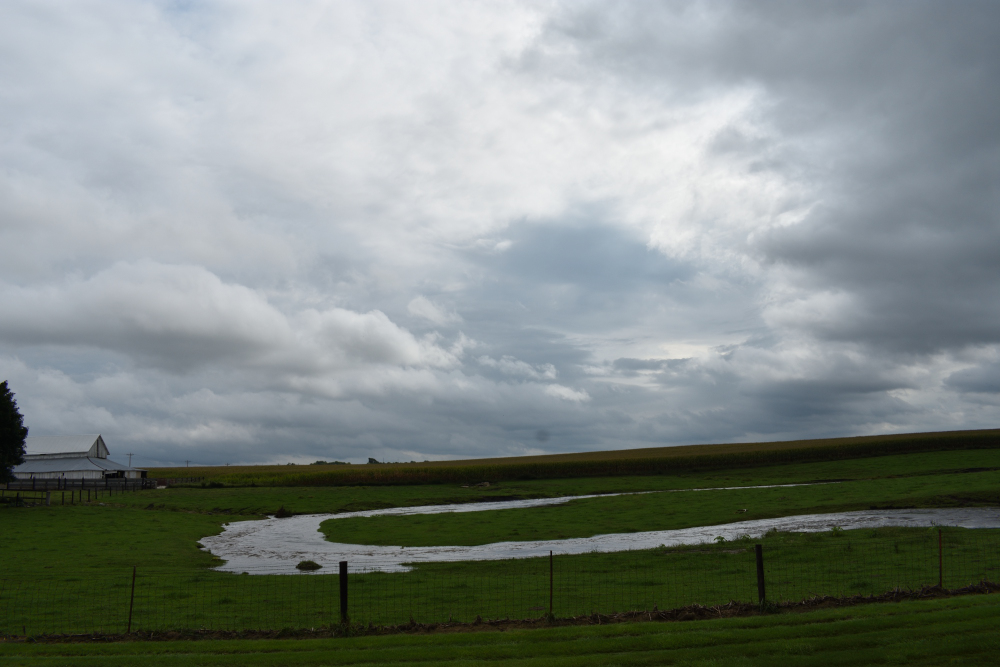
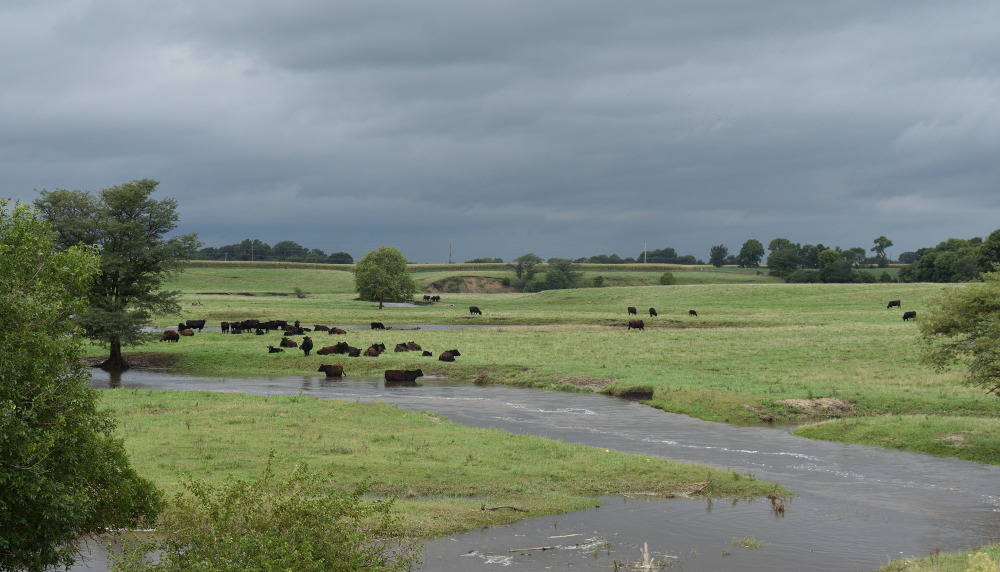
From the photos below you can see we encountered stormy skies and overflowing creeks. The tipi was erected at most of our stops. And we all participated in smudging with burning sage. Learning about each other.

As would happen often, our planned camping site in Huxley was flooded. Sam became adept at finding alternatives. The Fjeldberg Lutheran Church allowed us to sleep there.

The video by my friend Matthew Lone Bear (see link above) was taken during this day of the March and provides a nice overview of our journey.

Each evening there would be a community discussion. This evening my Scattergood roommate, Lee Tesdell, spoke about progressive agricultural practices he’s using on his farm including a denitrifying bioreactor. The link in the above describes an interesting discussion about agricultural practices today compared to Indigenous methods as described by Sikowis Nobiss.

Lee Tesdell
denitrifying bioreactor


First Nation-Farmer Climate Unity March Anniversary

This is the fourth anniversary of the First Nation-Farmer Climate Unity March that occurred September 1-8, 2018.

One of the main goals of the March was to create a community of native and nonnative people who began to get to know and trust each other. I’m in the process of writing about the many things that happened as a result of this March. That is taking a while since so much has happened. While I continue that, I thought I’d review some of what happened during the March.


The First Nation Farmer Climate Unity March website contains extensive stories, photos, and videos.

You can view the Introduction here: https://firstnationfarmer.com/2020/04/02/introduction/

Following are stories about the first night before leaving and the first day of the March.


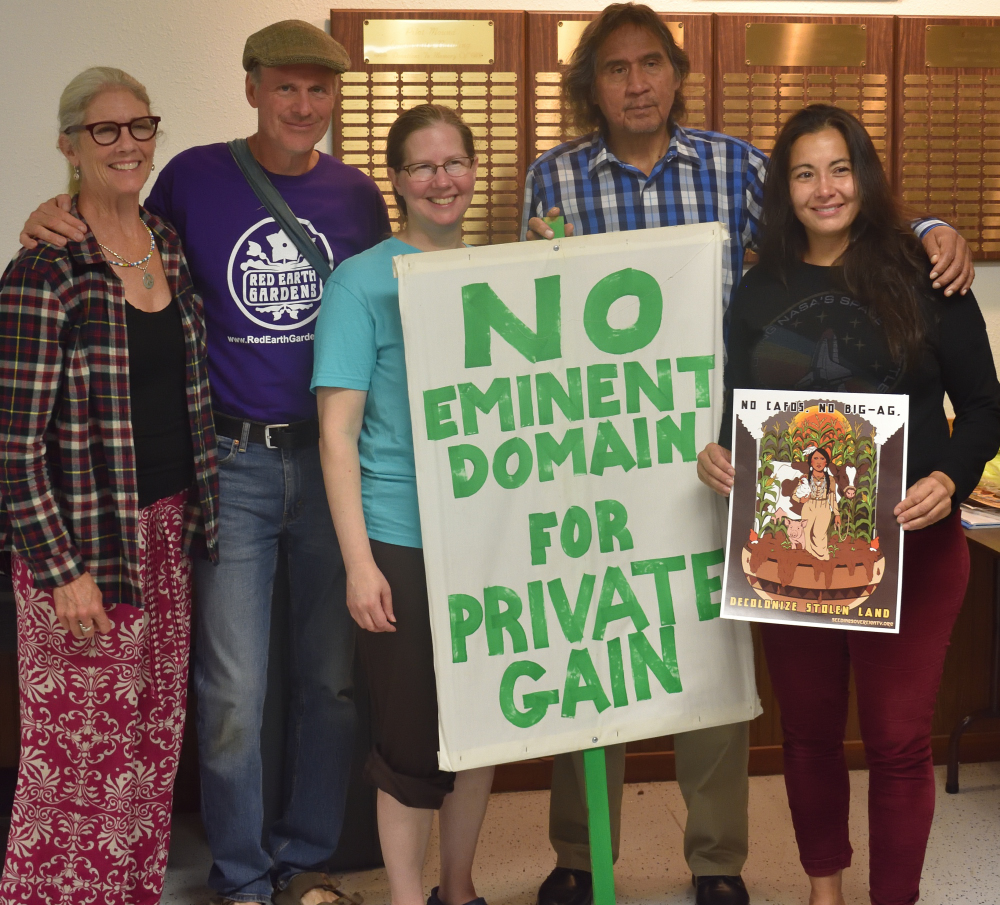
Regina Tsosie sings at the press conference at the Iowa Utilities Board regarding the improper use of eminent domain for the Dakota Access Pipeline


Rodger Routh video – Ankeny camp